
Light on the Path
Mabel Collins
View PublicationPublication Subject
Western esotericism is a broad term used by historians to describe a diverse collection of mystical, philosophical, and spiritual traditions that developed within Europe and the Western world outside the boundaries of mainstream religious and scientific thought. Rather than forming a single religion or organized movement, it encompasses a wide range of teachings that share an interest in hidden knowledge, symbolic interpretation, spiritual transformation, and the belief that deeper truths about reality can be discovered through personal experience and initiation.
Because many of these traditions existed alongside, rather than within, established religious institutions, scholars have often described Western esotericism as Europe’s “rejected knowledge.” Although its many branches differ in doctrine and practice, they generally seek to understand the hidden structure of the universe and humanity’s place within it by exploring the relationship between the material and spiritual worlds.
The foundations of Western esotericism extend back to Late Antiquity, drawing upon a synthesis of Greek philosophy, Egyptian religion, Jewish mysticism, and early Christianity. During the Renaissance, renewed interest in classical texts led European scholars to recover and reinterpret ancient traditions such as Hermeticism, Neoplatonism, alchemy, and Kabbalah. Over the following centuries these ideas influenced the emergence of Rosicrucianism, Freemasonry, ceremonial magic, and numerous other initiatory societies.
During the nineteenth century, esoteric traditions experienced another revival through organizations such as the Theosophical Society and the Hermetic Order of the Golden Dawn, which combined classical Western esoteric teachings with ideas drawn from Hinduism, Buddhism, and other Eastern philosophies. These movements would later influence much of twentieth-century occultism and the modern New Age movement.
Modern scholars commonly describe Western esotericism through a framework developed by the French historian Antoine Faivre, who identified several recurring characteristics shared by many esoteric traditions.
The first is Correspondence, the belief that every level of existence is interconnected through hidden relationships. This principle is often summarized by the Hermetic maxim, “As above, so below,” expressing the idea that patterns governing the cosmos are reflected within nature and the human being.
A second principle is Living Nature, which views the universe as a living, conscious organism rather than a collection of lifeless matter. Nature is understood as permeated by divine intelligence and capable of revealing spiritual truths to those who learn to read its symbols.
The third characteristic is Imagination and Mediation, emphasizing that symbols, rituals, sacred geometry, angels, dreams, and visualization are not merely artistic expressions but legitimate means of perceiving deeper levels of reality.
Finally, esoteric traditions emphasize Transmutation, the belief that true knowledge must transform the individual. Learning is valued not simply as intellectual achievement but as a process of inner spiritual development analogous to the alchemist’s symbolic transformation of lead into gold.
Western esotericism encompasses numerous philosophical and religious traditions that developed over many centuries.
Hermeticism, originating in Hellenistic Egypt, is based upon writings attributed to Hermes Trismegistus and teaches that the universe operates according to universal spiritual laws that can be understood through philosophy, contemplation, and symbolic interpretation.
Gnosticism comprises a variety of early religious movements emphasizing gnosis—direct experiential knowledge of the Divine—as the means of spiritual liberation.
Alchemy evolved from both practical chemistry and symbolic philosophy, eventually becoming a metaphor for the purification and transformation of human consciousness.
Astrology sought to understand the correspondence between celestial movements and earthly events, while ritual magic developed methods intended to direct the will through symbolic ceremonies, prayer, and sacred symbolism.
Kabbalah, originating within Jewish mysticism, explored the nature of God, creation, and the structure of reality. During the Renaissance, many of its concepts were incorporated into Christian Kabbalah and later Hermetic traditions.
Beginning in the seventeenth century, initiatory societies such as the Rosicrucians and Freemasons preserved and expanded many of these ideas through symbolic rituals and systems of progressive instruction. During the nineteenth century, organizations including Helena Petrovna Blavatsky’s Theosophical Society and the Hermetic Order of the Golden Dawn synthesized classical Western esotericism with Eastern religious philosophy, laying much of the foundation for modern occultism and contemporary New Age spirituality.
Despite their diversity, most Western esoteric traditions share a common objective: the transformation of the individual through the pursuit of hidden wisdom. Rather than separating scientific inquiry, philosophy, religion, and psychology into distinct disciplines, they seek to integrate them into a unified understanding of reality. Through study, contemplation, symbolic practice, and personal experience, the student aims to cultivate greater self-knowledge, spiritual insight, and harmony with the universal laws believed to govern both the cosmos and the human soul.
Mabel Collins
View Publication
William Walker Atkinson
View Publication
Yogi Ramacharaka
View Publication
William Walker Atkinson
View Publication
Edward Carpenter
View Publication
Édouard Schuré
View Publication
Édouard Schuré
View Publication
William Walker Atkinson
View Publication
William Earnshaw Cooper
View Publication
Yogi Ramacharaka
View Publication
Ali Nomad
View Publication
Frater Achad
View Publication
Dr. H. B. Pullen-Burry
View Publication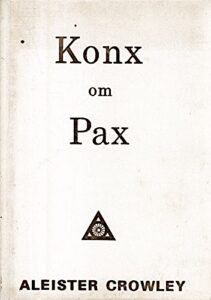
Aleister Crowley
View Publication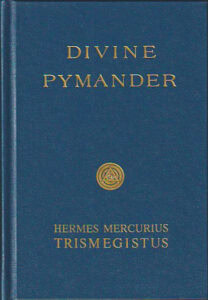
Hermes Mercurius Trismegistus
View Publication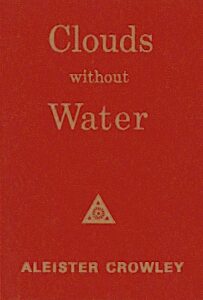
Aleister Crowley
View Publication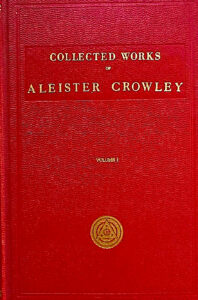
Aleister Crowley
View Publication
Mary Anne Atwood
View Publication