About This Publication
Qabalism by Dr. Henry B. Pullen-Burry is an introduction to the principles of Western Hermetic Qabalah. Dr. Pullen-Burry, who was an advanced initiate of the Hermetic Order of the Golden Dawn, intended the work to cut through centuries of obscurity and present the Qabalah as a practical and systematic path to psychological, spiritual, and philosophical development. Rather than treating the subject as an abstract mystical tradition, Pullen-Burry presents it as a coherent system through which the structure of the universe and the nature of human consciousness may be understood.
The book opens by explaining that the word Qabalah literally means “reception,” describing it as the sacred wisdom of the ages transmitted through direct experience, proper instruction, and spiritual initiation. Throughout the work, Pullen-Burry emphasizes that the Qabalah is not merely a collection of symbols or doctrines, but a living tradition intended to be understood through disciplined study and personal realization.
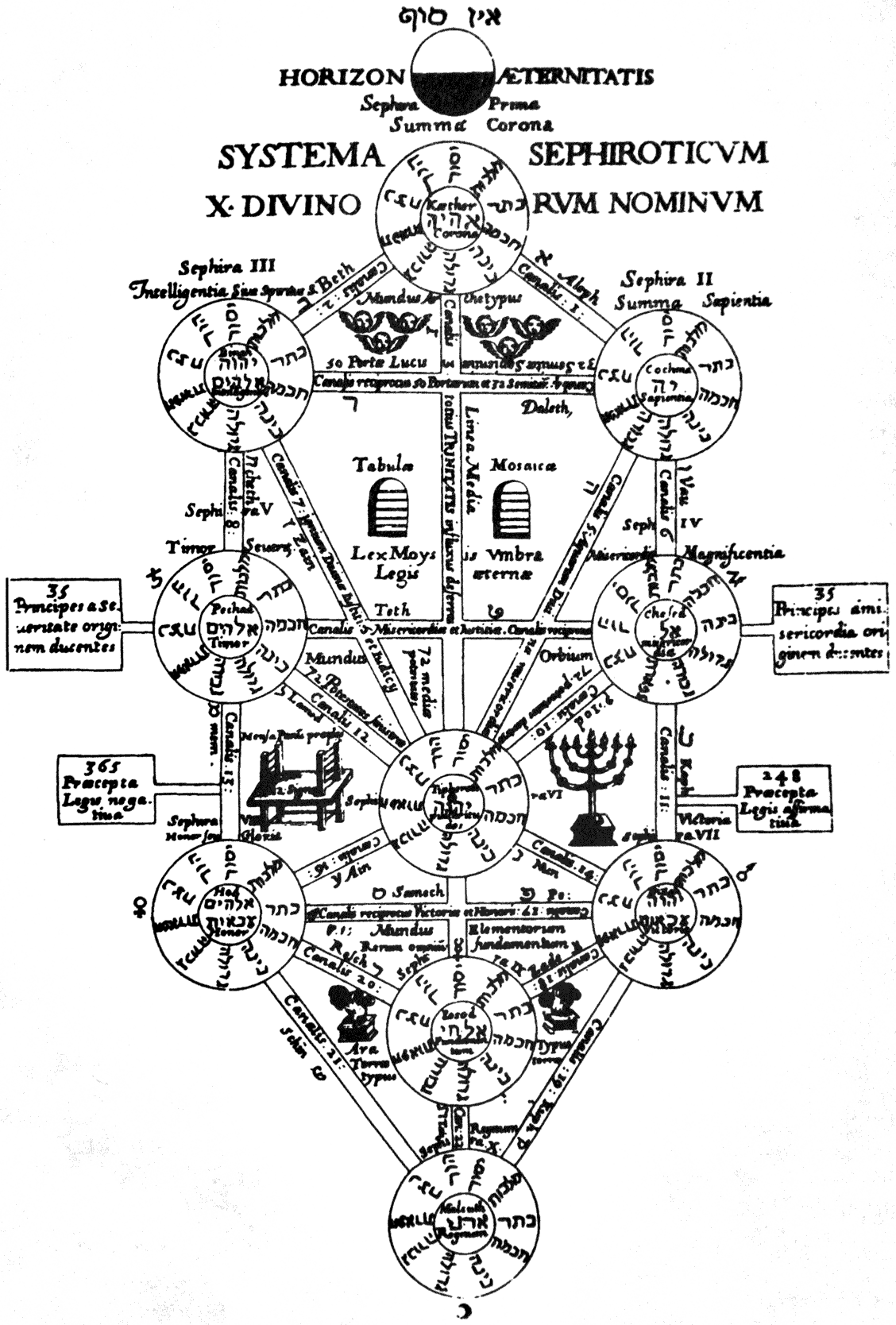
At the center of the book is the Tree of Life, which Pullen-Burry presents as both a blueprint of the universe and a map of the human mind. Each of the ten Sephiroth, or divine emanations, represents a stage in the unfolding of creation as well as a corresponding level of human consciousness. The relationships between these spheres demonstrate how spiritual energy descends from the unmanifest source into the material world while also providing the initiate with a pathway of spiritual ascent.
A substantial portion of the text is devoted to the twenty-two paths connecting the Sephiroth and their relationship to the letters of the Hebrew alphabet. Pullen-Burry teaches that these letters are far more than written characters, functioning instead as creative forces, geometric principles, and vibratory expressions of universal consciousness. By studying their symbolic relationships, the student gains insight into both the structure of creation and the hidden laws governing spiritual development.
Unlike many earlier writers on the subject, Pullen-Burry challenges the excessive emphasis placed upon traditional Qabalistic techniques such as Gematria, Notariqon, and Temura. While recognizing their historical importance, he argues that these systems become little more than intellectual exercises when separated from spiritual intuition. According to the author, such methods originally served to conceal deeper truths from the uninitiated rather than constituting the essence of Qabalistic practice.
The latter portion of the book shifts from theory to practical application, presenting methods of meditation, creative visualization, and Hermetic pathworking intended to guide the student through the Tree of Life. These exercises are designed to cultivate higher states of awareness, strengthen the will, and facilitate the gradual transformation of consciousness through direct spiritual experience.
Pullen-Burry’s presentation closely reflects the teachings of the Hermetic Order of the Golden Dawn. Throughout the work he employs the same elemental, astrological, and Tarot correspondences that characterized the Order’s system of instruction, making the book an important guide to the intellectual and practical foundations of modern Western esotericism.
Dr. Henry B. Pullen-Burry
Dr. Henry B. Pullen-Burry (1855–1926) was a British physician, occultist, and prominent member of the Hermetic Order of the Golden Dawn. Initiated into the Order’s Isis-Urania Temple in 1892 under the magical motto Anima Pura Sit (“Let the Soul Be Pure”), he quickly rose through its leadership, serving as Sub-Cancellarius in 1894 and later as Cancellarius in 1896. As one of the Order’s senior officers, he was responsible for maintaining its records and helping oversee the administration of one of the most influential occult organizations of the late nineteenth century. During the internal disputes that divided the Golden Dawn, Pullen-Burry remained loyal to its co-founder, Samuel Liddell MacGregor Mathers.
In the late 1890s, Pullen-Burry left England and emigrated to North America during the Klondike Gold Rush. Although he abandoned both his medical practice and his position within the London temple, he remained active in the occult movement after settling in the United States. He became an influential figure in the development of several American organizations modeled on the Golden Dawn and maintained a long correspondence with Paul Foster Case, encouraging him to establish what later became the Builders of the Adytum, one of the most influential Hermetic schools in twentieth-century America.
Pullen-Burry was also acquainted with Sir Arthur Conan Doyle, who later recalled visiting the physician at his home in England before his departure for North America. According to Conan Doyle, Pullen-Burry introduced him to discussions of occult philosophy, Rosicrucianism, astral projection, and the teachings of the Golden Dawn, even inviting him to join the Order. Although Conan Doyle ultimately declined membership, he later wrote that he encountered Pullen-Burry again during a visit to America, where he found him deeply immersed in Rosicrucian and Hermetic studies.
Through his leadership within the Golden Dawn, his influence on early American Hermetic organizations, and his writings on Qabalism, Pullen-Burry became an important figure in the transmission of Golden Dawn teachings to a wider audience. His work helped preserve and popularize many of the Order’s core interpretations of the Tree of Life, ceremonial symbolism, and Western esoteric philosophy during the early twentieth century.