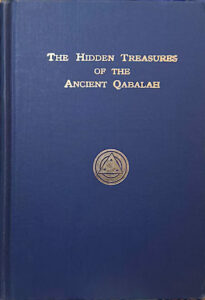
The Hidden Treasures of the Ancient Qabalah
Elias Gewurz
View PublicationPublication Subject
Qabalah is the Western esoteric adaptation of the Jewish mystical tradition known as Kabbalah. While rooted in the symbolism and theology of medieval Jewish mysticism, Hermetic Qabalah developed into a comprehensive philosophical system that combined Jewish Kabbalah, Christian mysticism, Hermetic philosophy, alchemy, astrology, ceremonial magic, and other esoteric traditions into a unified framework for understanding the universe and the spiritual development of humanity. During the nineteenth and early twentieth centuries, it became one of the foundational systems of Western occultism and served as the philosophical framework for many influential esoteric societies.
The word Kabbalah derives from the Hebrew word meaning “reception” or “tradition,” referring to wisdom received through spiritual transmission. Over time, three distinct traditions emerged.
Kabbalah refers to the traditional Jewish mystical system, developed primarily during the Middle Ages through works such as the Zohar. It seeks to understand the infinite nature of God (Ein Sof), the process of creation, and the hidden spiritual meanings contained within the Hebrew Scriptures.
Cabala developed during the Renaissance, when Christian scholars including Giovanni Pico della Mirandola and Johannes Reuchlin adapted Jewish mystical teachings to support Christian theology. Their writings attempted to demonstrate that Kabbalah contained hidden evidence for Christian doctrines such as the Trinity and the divinity of Christ.
Qabalah, most commonly spelled with a “Q,” refers to the later Hermetic tradition that emerged from Renaissance occultism. This system expanded Jewish and Christian mystical concepts by integrating Hermetic philosophy, alchemy, astrology, ceremonial magic, Tarot, and classical mythology into a comprehensive symbolic map of the universe.
The central symbol of Hermetic Qabalah is the Tree of Life (Etz Chaim), a diagram consisting of ten interconnected spheres known as the Sephiroth connected by twenty-two pathways.
The Sephiroth represent successive manifestations of the Divine, ranging from the unknowable unity of God to the material world. They also symbolize different aspects of human consciousness, allowing the Tree of Life to function simultaneously as a map of creation, the human psyche, and the path of spiritual development.
The twenty-two connecting paths correspond symbolically to the letters of the Hebrew alphabet and represent the relationships between the various levels of existence.
Hermetic Qabalah teaches that divine energy unfolds through four progressively denser planes of existence.
Atziluth, the World of Emanation, represents the pure expression of Divine consciousness.
Briah, the World of Creation, is the realm of archetypal ideas and spiritual intelligences.
Yetzirah, the World of Formation, contains the symbolic, psychological, and angelic structures that shape creation.
Assiah, the World of Action, is the physical universe experienced through ordinary human life.
Together these four worlds describe the process through which the Infinite becomes manifest within the material universe while maintaining its essential unity.
One of the defining characteristics of Hermetic Qabalah is its extensive system of symbolic correspondences. Every Sephirah is associated with particular colors, planets, metals, angels, divine names, virtues, vices, elements, and psychological qualities.
Hermetic Qabalists also employ traditional interpretive methods such as Gematria, which assigns numerical values to Hebrew letters in order to reveal hidden relationships between words and concepts; Notarikon, which forms new meanings from initials and abbreviations; and Temurah, which explores symbolic meaning through the rearrangement and substitution of letters.
These methods are intended not merely as intellectual exercises but as tools for meditation, philosophical inquiry, and spiritual insight.
Unlike traditional Jewish Kabbalah, Hermetic Qabalah establishes a direct relationship between the Tree of Life and the Tarot. The twenty-two Major Arcana are associated with the twenty-two paths connecting the Sephiroth, while the Minor Arcana correspond to the various worlds and elemental principles represented within the Tree.
This synthesis transformed the Tarot from a system of symbolic cards into a comprehensive philosophical and meditative tool used for studying the structure of consciousness and the progression of spiritual development.
During the nineteenth and early twentieth centuries, Hermetic Qabalah became the principal philosophical framework for many Western esoteric organizations. The Hermetic Order of the Golden Dawn incorporated the Tree of Life into nearly every aspect of its system of ceremonial magic and initiation. Aleister Crowley’s philosophy of Thelema likewise relied heavily upon Qabalistic symbolism and correspondences, while Paul Foster Case’s Builders of the Adytum (B.O.T.A.) emphasized meditation upon the Tree of Life and the Tarot as complementary paths toward self-realization.
Beyond these organizations, Hermetic Qabalah profoundly influenced Rosicrucianism, ceremonial magic, modern occultism, and many twentieth-century interpretations of comparative religion and psychology. Today it remains one of the most influential symbolic systems within Western esotericism, serving as a bridge between Jewish mysticism, Christian symbolism, Hermetic philosophy, and the traditions of the Western mystery schools.
Elias Gewurz
View Publication
Elias Gewurz
View Publication
Frater Achad
View Publication
Dr. H. B. Pullen-Burry
View Publication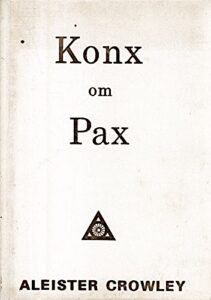
Aleister Crowley
View Publication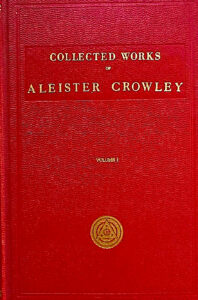
Aleister Crowley
View Publication
Mary Anne Atwood
View Publication
John Frederick Charles Fuller
View Publication