
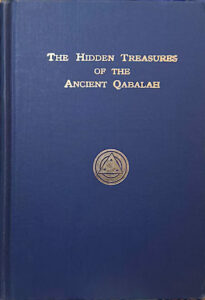
The Hidden Treasures of the Ancient Qabalah
Elias Gewurz
View PublicationPublication Subject
Alchemy is an ancient philosophical and experimental tradition that sought to understand the hidden laws governing nature, matter, and human existence. Practiced throughout Egypt, Greece, the Islamic world, India, China, and Europe, it combined laboratory experimentation with philosophy, medicine, and spirituality. Although popularly associated with the attempt to transform lead into gold, alchemy encompassed a much larger system concerned with the perfection of both nature and humanity. Its practical investigations laid important foundations for the development of modern chemistry and pharmacology, while its symbolic teachings profoundly influenced Western esotericism, Rosicrucianism, Hermeticism, and later psychology.
The earliest alchemical traditions emerged in Hellenistic Egypt, particularly in Alexandria, where Egyptian metallurgy, Greek philosophy, and Near Eastern religious thought merged into a unified philosophical system. These ideas were later preserved and expanded by Islamic scholars before returning to Europe during the Middle Ages, where alchemy became one of the principal intellectual disciplines of the Renaissance.
Although alchemical practices differed across cultures, they shared the belief that nature operated according to hidden laws and that careful observation, experimentation, and spiritual discipline could reveal the processes through which both matter and human consciousness evolved toward perfection.
Historically, alchemy pursued three closely related goals.
The first was Chrysopoeia, the transmutation of base metals such as lead into noble metals, especially gold. Whether understood literally or symbolically, this represented the perfection of imperfect matter.
The second was the search for the Philosopher’s Stone, the legendary substance believed capable of transforming metals, healing disease, and bringing all things to their highest state of perfection. More than a physical object, it came to symbolize the completion of the alchemist’s work and the attainment of perfect wisdom.
The third objective was the discovery of the Elixir of Life, a universal medicine believed capable of curing disease, preserving youth, and greatly extending human life. Many alchemists regarded the search for the Elixir as inseparable from the pursuit of spiritual purification and harmony with nature.
Alchemy developed simultaneously as both an experimental science and a spiritual philosophy.
In the laboratory, alchemists pioneered techniques that later became fundamental to chemistry, including distillation, sublimation, crystallization, calcination, and filtration. Their investigations led to the discovery and refinement of numerous chemical substances, laboratory apparatus, and pharmaceutical preparations that contributed directly to the emergence of modern scientific chemistry.
At the same time, many alchemists interpreted their experiments symbolically. The purification of metals represented the purification of the soul, while the transformation of lead into gold became a metaphor for the refinement of human character. External operations within the laboratory were understood to mirror an inner process of moral, intellectual, and spiritual development.
The spiritual dimension of alchemy became known as the Great Work (Magnum Opus), describing the gradual transformation of the individual toward wisdom and enlightenment.
Traditionally, this process unfolded through three symbolic stages. Nigredo (Blackness) represented the dissolution of ignorance, pride, and false identity. Albedo (Whiteness) symbolized purification, clarity, and inner balance. Rubedo (Redness) marked the completion of the work, representing spiritual perfection and the realization of humanity’s highest potential.
These stages profoundly influenced later Rosicrucian, Hermetic, and mystical traditions, where alchemy came to represent the transformation of consciousness rather than merely the manipulation of physical substances.
Although the chemical goals of traditional alchemy were eventually replaced by modern scientific methods, its intellectual and symbolic influence has remained remarkably enduring. Alchemy contributed directly to the development of chemistry, medicine, and experimental science while simultaneously shaping Western esoteric philosophy, Rosicrucianism, Hermeticism, and Christian mysticism.
Elias Gewurz
View Publication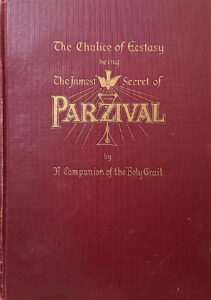
Frater Achad
View Publication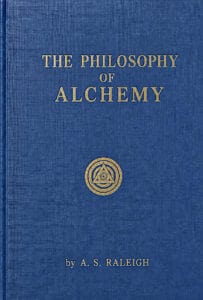
Albert Sidney Raleigh
View Publication
Aleister Crowley
View Publication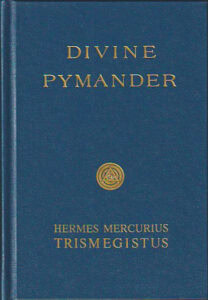
Hermes Mercurius Trismegistus
View Publication
Aleister Crowley
View Publication
Arthur Edward Waite
View Publication
Mary Anne Atwood
View Publication
Ernest Thurston
View Publication
John Frederick Charles Fuller
View Publication
Ernest Thurston
View Publication