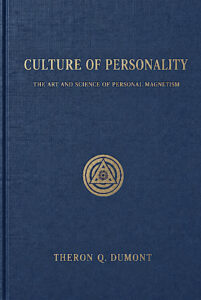
Theron Q. Dumont was a pseudonym used for a substantial body of books on personal magnetism, concentration, will-power, character building, mental influence, personality, salesmanship, memory, and self-mastery. The Dumont books appeared within the publishing world of the Yogi Publication Society and its related Chicago mental-science publishers during the 1910s and 1920s.
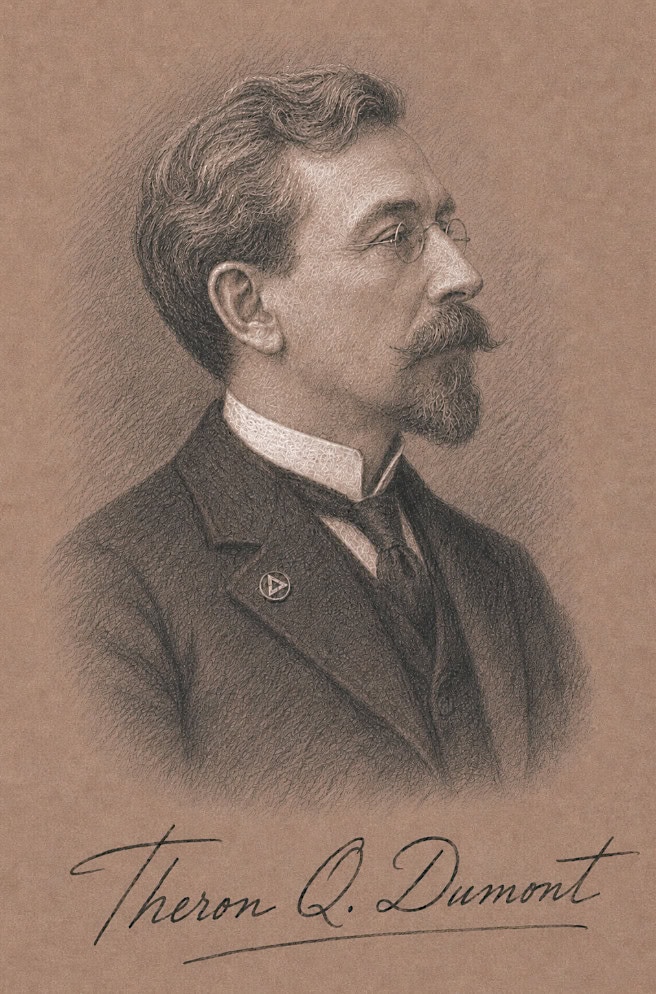
The books under the name Theron Q. Dumont have often been assigned automatically to William Walker Atkinson, largely because Atkinson was deeply involved in YPS and because later bibliographies grouped many YPS identities under his name. The evidence developed through the Yogi Publication Society History Project points toward a more specific origin for the teaching itself. The system presented under the Dumont pseudonym closely follows the one Herbert A. Parkyn had already begun teaching in 1895 and later developed through the Chicago School of Psychology and his Special Mail Course in Hypnotism and Suggestive Therapeutics.
That relationship is important because the Dumont books do more than share a few general New Thought ideas with Parkyn. They repeatedly employ the same underlying mental structure, the same habit model, the same relation between thought and action, and the same emphasis on deliberate self-direction. The strongest chronological clue appears in The Power of Concentration, whose 1913 preface claims eighteen years of teaching experience. Counting back from 1913 lands exactly in 1895, the year Parkyn began teaching. That claim matches Parkyn’s documented career with striking precision and gives the Dumont pseudonym a historical depth that cannot be explained well by a simple one-to-one identification with Atkinson.
Read the article: How the Meaning of Theron Q. Dumont’s Name and Backstory Point Directly to Herbert A. Parkyn
Who Was Theron Q. Dumont?
Theron Q. Dumont was a publishing pseudonym, not an independently documented public teacher with a separate verifiable career outside the books. The identity speaks with the authority of an experienced instructor, and the books repeatedly present their material as the product of long teaching experience. That authorial voice is important because it gives the series continuity, but it should not be confused with a proven standalone biography.
The better way to understand Dumont is as a specialized teaching identity within the YPS publishing system. Yogi Ramacharaka carried the Eastern and Yogi philosophy side of the program. Swami Panchadasi developed clairvoyance and occult powers. Swami Bhakta Vishita dealt with psychic perception and related subjects. Dumont occupied the Western mental-development branch, concentrating on personality, concentration, will, habit, influence, and personal power.
The Eighteen-Year Teaching Claim
The 1913 preface to The Power of Concentration contains one of the most important clues attached to the Dumont identity. The author claims eighteen years of teaching experience. That dates the beginning of the claimed teaching career to 1895. Parkyn began teaching in 1895.
This is much more significant than a loose chronological resemblance. Parkyn had already been working in the field before that year, but 1895 is the correct point from which his actual teaching career begins. By the following year he had founded the Chicago School of Psychology, and his system soon expanded through classroom instruction, clinics, magazines, the University of Psychic Science, and correspondence teaching. The Dumont preface points back to the same starting year.
Atkinson does not fit that timeline nearly as well. In 1895 he was still in Pennsylvania and had not yet entered the Chicago mental-science world. This does not rule out later literary or editorial participation by Atkinson, but it makes the origin of the teaching itself far more naturally connected with Parkyn.
Herbert A. Parkyn and the Foundation of the Dumont System
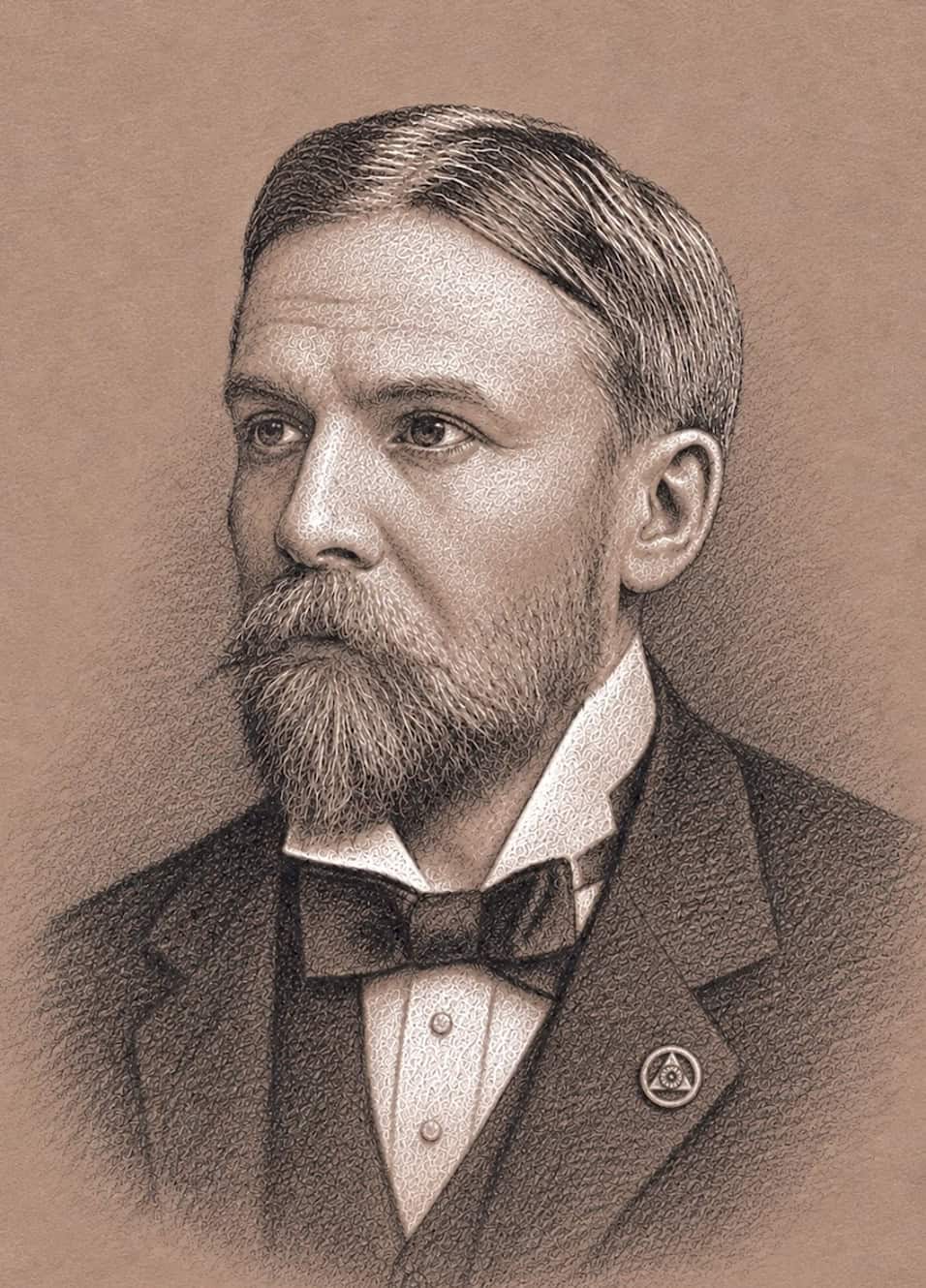
Parkyn’s work had already established the basic framework later seen in Dumont. His school taught the deliberate control of mental processes, the use of suggestion and auto-suggestion, the development of attention and will, the formation and replacement of habits, and the outward expression of thought in conduct.
The Dumont books later reorganize these ideas around personal development and influence. The language changes, but the internal logic remains familiar. Mental discipline becomes concentration. Character formation becomes a course in personality. Suggestion becomes a tool of personal influence. Habit is still explained through repeated mental pathways. Thought still becomes action. This is why the Dumont material reads less like a newly invented system from the 1910s and more like a later presentation of an established one.
Why Has Dumont Been Attributed to William Walker Atkinson?
The conventional attribution comes mainly from association. Atkinson was closely tied to YPS, wrote prolifically, and became connected with many pseudonymous works. Later bibliographies simplified that publishing history by assigning a large number of identities directly to him. That approach blurs two different questions.
One question is who may have written or shaped the prose. The other is who supplied the system being taught. Atkinson may well have played a literary role in some Dumont material. His abilities as a writer, editor, lecturer, and synthesizer made him valuable within the YPS network. But the teaching chronology and the content itself point back to Parkyn’s system. The Dumont pseudonym therefore should not be treated as a simple Atkinson alias without qualification.
Personal Magnetism
Personal magnetism is one of the central Dumont subjects. The books present it as something that can be cultivated through disciplined personality development instead of as a mysterious fluid or inborn gift.
The method begins with self-mastery. Confidence, mental steadiness, control of attention, voice, posture, expression, and decisive action all contribute to the impression one person makes upon another. Influence is strongest when the outward expression matches the inner state. This makes personal magnetism a developed condition of character. The student is not simply taught tricks for controlling others. The entire personality is trained so that influence becomes the natural expression of a disciplined mind.
Concentration
Concentration is probably the most important single discipline in the Dumont series. The mind is treated as powerful when its activity is directed and weak when it is scattered.
The student is taught to hold attention upon one purpose, resist distraction, strengthen voluntary control, and continue until the chosen object dominates the mental field. This faculty then supports memory, decision, habit change, personal influence, and achievement. This is also one of the clearest points of continuity with Parkyn. His earlier teaching had already made voluntary attention and conscious control central to mental development. Dumont expands this into a specialized course of concentration.
Will-Power and Action
Will is presented as the force that turns intention into performance. The books repeatedly stress that a decision gains value only when it passes into action. Small acts of self-control strengthen will because they teach the mind to obey conscious direction.
This is where Parkyn’s earlier formulas become especially important. “I Can and I Will” expresses the same combination of confidence and volition that runs through Dumont. “Do it Now” reflects the same emphasis on immediate action after decision. Both fit the central Dumont idea that self-command is built through use. The student becomes stronger by repeatedly acting in accordance with deliberate intention.
“Thought Takes Form in Action”
One of the strongest links between Parkyn and the Dumont system is the teaching that thought becomes action. Parkyn had already used the phrase “Thoughts take form in action.”
Dumont’s system is built around the same chain. Repeated thought creates a tendency. Repeated tendencies create habit. Habit shapes character. Character expresses itself in conduct. The internal mental pattern becomes an outward life pattern. This principle helps explain why so many Dumont lessons focus on replacing weak or unwanted thought with a stronger opposite. The aim is not endless introspection. The aim is to change the mental condition until conduct changes with it.
Habit and the Line of Least Resistance
The habit teaching is another major point of continuity. Repeated action creates a mental path. Once established, that path becomes easier to follow and begins to operate automatically. The familiar response becomes the line of least resistance. This idea is central to both Parkyn’s earlier system and the Dumont books.
The solution is to create another path. The student repeatedly directs attention and action toward the desired quality until the new route becomes easier to follow. Fear can be displaced by courage. Hesitation can be displaced by decisive action. Weak concentration can be displaced by trained attention. This is also where the psychological importance of the name Dumont becomes interesting.
Léon Dumont and the Psychology of Habit
Léon Dumont was a French philosopher whose discussion of habit became well known in American psychology through William James. James used Dumont’s analogy of water cutting a channel to explain the way repeated action establishes habit. The analogy fits perfectly with the mental-path teaching found in Parkyn and later in Dumont. Repetition creates a channel. Once the channel exists, later activity follows it more easily.
The Name Theron Q. Dumont
The full name appears deliberately constructed. The surname Dumont has the psychological association just described. The first name Theron carries classical associations with hunting and pursuit, which fit a system built around directed attention, aim, concentration, and the movement of thought toward a target.
The middle initial “Q.” adds another layer. The YPS History Project has explored the possibility that it reflects an older Latin scribal convention in which Q could abbreviate forms such as qui, quam, or quod. If that reading was intended, the name may have been constructed to carry a grammatical or symbolic meaning in addition to serving as an ordinary American-style name.
The “L. N. D.” Clue
Material connected with the Dumont program also contains references to “Mr. L. N. D.” This is important because it suggests another layer of collaboration or coded authorship within the Dumont material. The evidence does not yet allow a definitive identification, but it supports the point that the Dumont books should be studied as products of a publishing network instead of being reduced automatically to a single known writer. The clue becomes even more interesting when considered beside the possible importance of Léon Dumont to the pseudonym.
The Power of Concentration
The Power of Concentration is one of the clearest statements of the Dumont system and one of the most valuable books for identifying its historical foundation.
Its importance comes from both content and chronology. The course presents concentration as the governing faculty behind self-mastery, will, achievement, and personal development. The 1913 preface then claims eighteen years of teaching experience, pointing directly back to 1895. This one statement makes the book central to the authorship question because it places the teaching career at the exact point when Parkyn began teaching.
The Art and Science of Personal Magnetism
The Art and Science of Personal Magnetism presents influence as something governed by laws and capable of development through training. The “science” lies in understanding the mental processes involved. The “art” lies in applying them successfully to real interactions.
The book treats personal magnetism as a developed expression of character, confidence, concentration, voice, bodily control, mental atmosphere, and deliberate influence. This gives the subject a psychological foundation while still allowing it to retain the language of magnetism familiar to occult and New Thought readers.
The Culture of Personality
The Culture of Personality expands the Dumont system into the deliberate development of the complete person. Personality is treated as something that can be cultivated through self-observation, mental discipline, voice, expression, character, confidence, and controlled action. The title itself captures the central belief of the series. Personality is not fixed. It can be trained.
This makes the book one of the clearest bridges between the earlier psychology of Parkyn’s school and the later personal-development literature of YPS.
Dumont and Salesmanship
The salesmanship books apply the same system to business. The successful salesperson must first control his own state. He must then secure attention, establish confidence, understand the other person, guide interest, and lead the interaction toward action. Suggestion enters here as applied psychology. Tone, timing, confidence, wording, expectation, and personality all affect the response of the other person. Salesmanship becomes one specialized use of the same mental laws taught elsewhere in the Dumont series.
Dumont and New Thought
The Dumont books also belong comfortably within New Thought. They share New Thought’s interest in mental states, confidence, thought, health, achievement, and individual development, but Dumont adds a stronger emphasis on training, habit, will, concentration, and mental discipline. The result sits between psychology, New Thought, personal development, and occult mental science. This position helps explain why the Dumont books fit so well within the YPS catalog.
Dumont and Yogi Ramacharaka
Dumont and Yogi Ramacharaka occupy complementary positions. Ramacharaka presents self-mastery through Hindu philosophy, Raja Yoga, concentration, the higher Self, and spiritual development.
Dumont presents related disciplines in a Western psychological and personal-power language. A reader could therefore encounter concentration in one identity as a Yogi discipline and in another as a method of personal power. The teaching fields overlap, but the presentation is adapted to a different audience and purpose.
Dumont and the Other YPS Pseudonyms
The larger YPS system becomes easier to understand when the pseudonyms are viewed as specialized teaching branches.
- Yogi Ramacharaka presented Yogi philosophy and Eastern spiritual development.
- Theron Q. Dumont specialized in concentration, personality, will, and personal magnetism.
- Swami Panchadasi focused on clairvoyance and occult powers.
- Swami Bhakta Vishita dealt with psychic perception and related mental phenomena.
- The Three Initiates presented Hermeticism through The Kybalion.
This organization allowed YPS to present a large connected body of teaching without forcing every subject into the same authorial voice.
Dumont and The Kybalion
Dumont also fits naturally beside The Kybalion. The Three Initiates describe mental transmutation, polarity, vibration, rhythm, and mental mastery through Hermetic language. Dumont approaches self-transformation through concentration, habit, will, suggestion, and personality.
The two works use different frameworks, but both assume that the individual can learn to govern mental states that otherwise operate automatically. This shared emphasis on conscious mastery is one of the major continuities running through the YPS program.
Dumont and Western Esotericism
Theron Q. Dumont belongs within Western esotericism in a modern psychological form. Older occult traditions spoke of hidden powers, initiation, and the mastery of forces. Dumont translates much of that language into concentration, mental influence, will, personality, and habit. The occult element does not disappear. It is recast in the language of personal development. This helps explain why the books could appeal both to readers of New Thought and to readers already interested in occultism.
Why Theron Q. Dumont Was a Natural YPS Pseudonym
The Yogi Publication Society needed recognizable authorial identities for different branches of its teaching program. Dumont gave the personal-magnetism and concentration literature a stable voice. The pseudonym could present the material as the work of a seasoned teacher while separating it from Atkinson’s public identity and from the Eastern persona of Ramacharaka.
It also allowed the teaching to develop into a complete series with its own authority, tone, and subject area. This was especially useful for material rooted in Parkyn’s earlier school because the psychological system could now be repackaged for a new audience without appearing as a medical or hypnotic course.
What Does Theron Q. Dumont Represent Historically?
Theron Q. Dumont represents one of the clearest examples of how the YPS publishing system transformed an established body of teaching into a specialized authorial identity.
The pseudonym’s books present concentration, will, habit, character, personal magnetism, and mental influence as a unified method of self-development. The claimed teaching chronology points back to 1895, the exact year Parkyn began teaching. The content repeatedly follows the mental structure Parkyn had already developed through his school and mail course.
Atkinson may have played a literary or editorial role, and the possibility of additional collaboration remains open. But the historical significance of Dumont lies in the system behind the prose. That system was already in place before the Dumont pseudonym appeared.
What Was the Central Teaching of Theron Q. Dumont?
The central Dumont teaching is that personality can be deliberately developed through control of thought, attention, habit, and action. The student learns to concentrate, direct the will, replace weak habits with stronger ones, cultivate confidence, and turn thought into conduct. Personal magnetism then becomes the outward expression of that trained internal condition.
This is why Theron Q. Dumont matters so much to the history of Herbert A. Parkyn and the Yogi Publication Society. The pseudonym preserves one of the clearest later forms of the system Parkyn began teaching in 1895, while also showing how YPS could recast that system into a distinct branch of personal development literature for a new generation of readers.