
Copyright © 2026 D. Parkyn Jackson. Published by the Yogi Publication Society History Project. All rights reserved.
The Yogi Publication Society is a publishing house founded in Chicago in the spring of 1903. During the first decades of the twentieth century, it became one of the most influential English-language publishers of books on yoga, Hindu philosophy, Hermeticism, Rosicrucianism, New Thought, and the mental science of Suggestion. Through its publications, the Society introduced thousands of Western readers to Eastern philosophical traditions while presenting them through the practical framework of the Law of Suggestion, emphasizing the power of thought, mental discipline, health, and personal development.

From its earliest years, the Society published a wide range of books and correspondence courses exploring subjects such as yogic philosophy, breathing exercises, meditation, psychic development, mental healing, diet, water consumption, concentration, and the hidden laws governing mind and nature. Rather than presenting these teachings as mystical, the Society interpreted them as universal psychological principles that could be applied to everyday life.
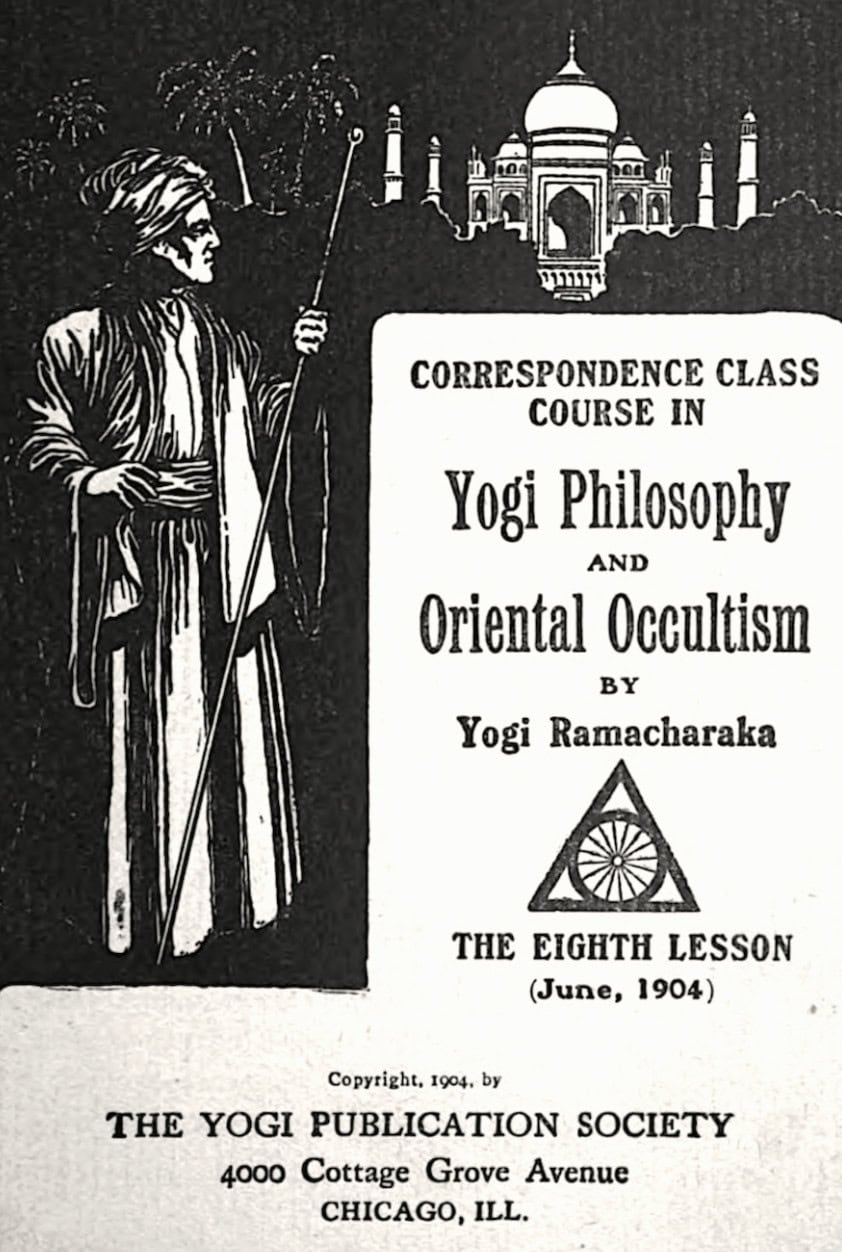
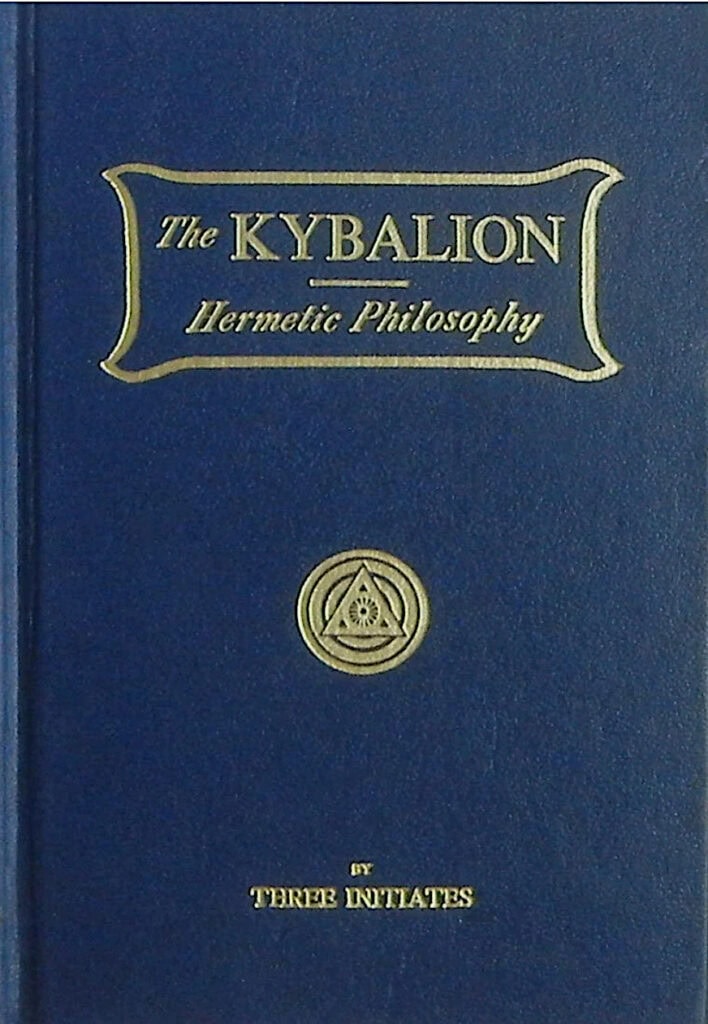
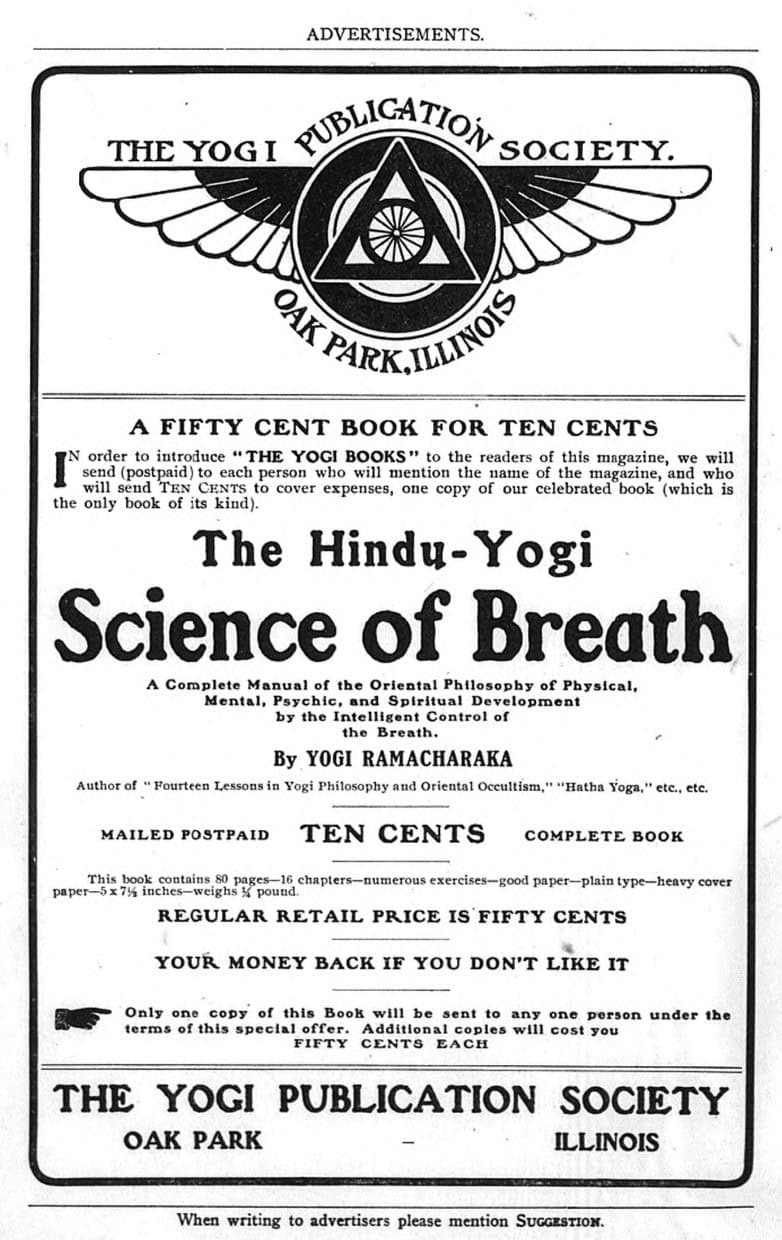
The Society is best known for publishing the works of pseudonymous authors such as Yogi Ramacharaka, the Three Initiates, Theron Q. Dumont, Swami Panchadasi, and Swami Bhakta Vishita, alongside many books issued under the name of William Walker Atkinson and other New Thought writers. Its catalog included influential original works such as The Hindu-Yogi Science of Breath, Hatha Yoga, Raja Yoga, Gnani Yoga, The Science of Psychic Healing, and The Kybalion, while also producing new English editions of important historical texts including The Bhagavad Gita and The Divine Pymander by Hermes Trismegistus.
The Yogi Publication Society deliberately brought Eastern and Western occultism traditions together. Its books taught that the underlying principles found in Vedanta, Yoga, Hermetic philosophy, Rosicrucianism, and practical mental science all expressed the same universal Laws of Suggestion. This distinctive approach helped shape the New Thought movement and introduced generations of readers to ideas that would later become central to modern self-improvement, metaphysical, and spiritual literature.
Many of the Society’s publications remained continuously in print long after its most active publishing years and continue to be reprinted throughout the world. Classics such as The Kybalion and the Yogi Ramacharaka series have never fallen out of circulation, making the Society’s catalog one of the most enduring bodies of metaphysical literature published during the twentieth century. The YPS also operated several related publishing entities, including the Yogi Publishing Company, the Yogi Publication House, and the Yoga Publication Society.
Founding
The origins of the Yogi Publication Society are inseparable from Dr. Herbert A. Parkyn and the publishing and educational network he had built in Chicago during the decade before its founding. The Society began in his offices at 4000 Cottage Grove Avenue, using his organization that already operated schools, magazines, correspondence courses, publishing businesses, and a nationwide mail-order network. William Walker Atkinson, who became the principal writer associated with the Society, was one of Parkyn’s closest protégés.

Parkyn’ network
Parkyn had founded the Chicago School of Psychology in 1896, the first school in America devoted to the teaching of Suggestive Therapeutics, followed by the University of Psychic Science in 1900 and numerous affiliated schools throughout the Midwest. From these institutions, he built an expanding network centered on his system of Suggestion. Its principal publishing outlets were Suggestion magazine and The Journal of Suggestive Therapeutics, which became some of the most influential voices within the New Thought movement. Through his schools and publications, Parkyn developed a network of writers and researchers who carried the teachings of the Law of Suggestion into the movement.
Atkinson’s path into the network is particularly important to the history of the Yogi Publication Society. For years, Atkinson had been a successful attorney, but the stress of his career had eventually caused him to suffer a severe mental breakdown. In 1900, he first came to see Parkyn in Chicago seeking a cure for his condition. After Parkyn successfully treated him, Atkinson moved to the city, enrolled at the Chicago School of Psychology, and was trained in Parkyn’s system. Recognizing his abilities as a skillful attorney, Parkyn brought Atkinson into his organization, developed him as one of his writers for his magazine, and made him principal lecturer at his University of Psychic Science.
One of Parkyn’s closest collaborators and protégés, Sydney B. Flower, would also work to train Atkinson, and they would eventually co-edit the hugely influential New Thought magazine. Flower worked with Parkyn as his business manager, publicist, secretary of his Chicago School, and editor and writer for The Hypnotic Magazine and Suggestive Therapeutics.
Read the article: From Mental Breakdown to Atkinsonia: How Herbert A. Parkyn Turned William Walker Atkinson into a New Thought Phenomenon
.
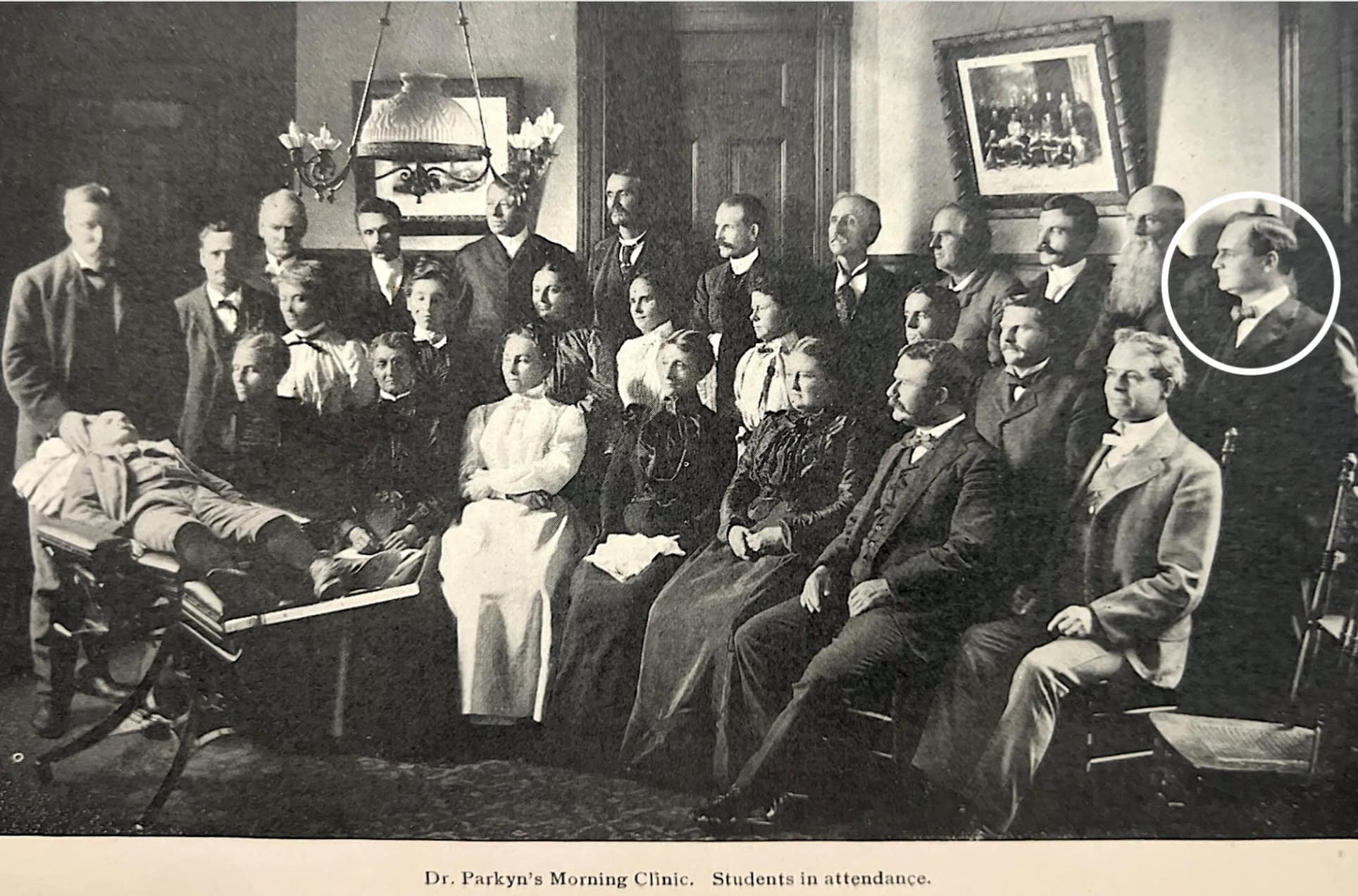
Parkyn’s Cottage Grove Avenue enterprises
By 1903, the corner of 40th and Cottage Grove Avenue, which was one block from his Chicago School, housed Parkyn’s many enterprises. These included the Mail Course Exchange Company, the Premium Subscription Agency, affiliated correspondence schools of Osteopathy and Electro-Therapeutics, the Natural Healers Protection League, the University of Psychic Science, and his mail-order distribution business. The offices had the staff, advertising channels, customer lists, and distribution system required to publish and sell books throughout the country. It was directly within Parkyn’s operation that the Yogi Publication Society was launched.
Read the article: The Yogi Publication Society started in the offices of Herbert A. Parkyn on Cottage Grove Ave.
Read the article: Herbert A. Parkyn’s Foundation in Eastern Philosophy
Principal Publications
Early Publications
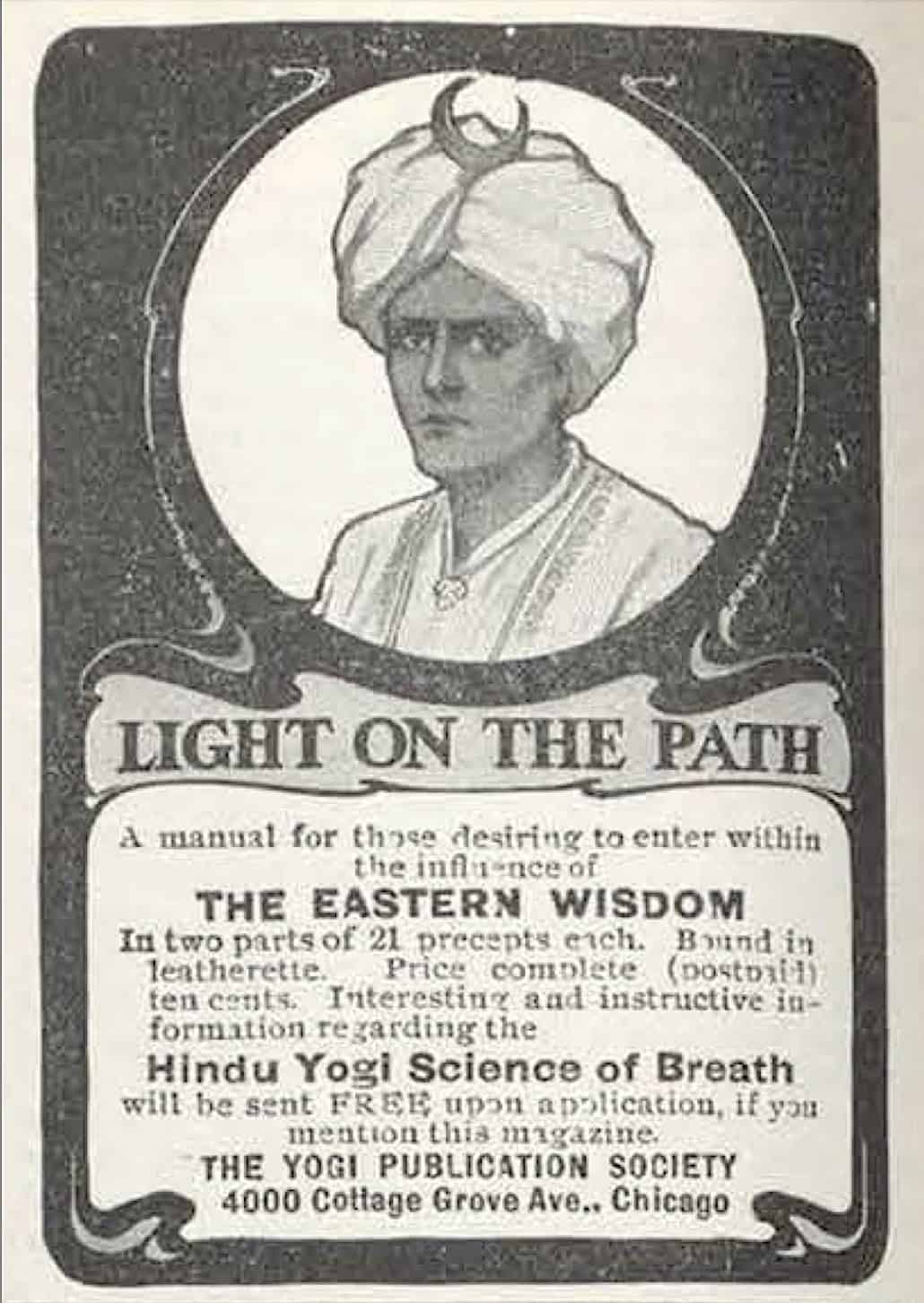
The Yogi Publication Society began publishing in the spring of 1903 with a new edition of Light on the Path, a small but influential spiritual work originally issued by the Theosophical Society in 1885. Written by Mabel Collins, the book had become one of the most widely read introductions to Eastern philosophy among English-speaking readers. The Society’s edition included a new preface introducing the previously unknown Yogi Ramacharaka, establishing the name that would soon become synonymous with the Society itself. This was followed shortly afterward by a new edition of Collins’s sequel, The Illumined Way, first published in 1887. Although these were reprints of established Theosophical classics, they served an important purpose by introducing readers to the Society’s interpretation of Eastern philosophy and preparing the way for its own original publications.
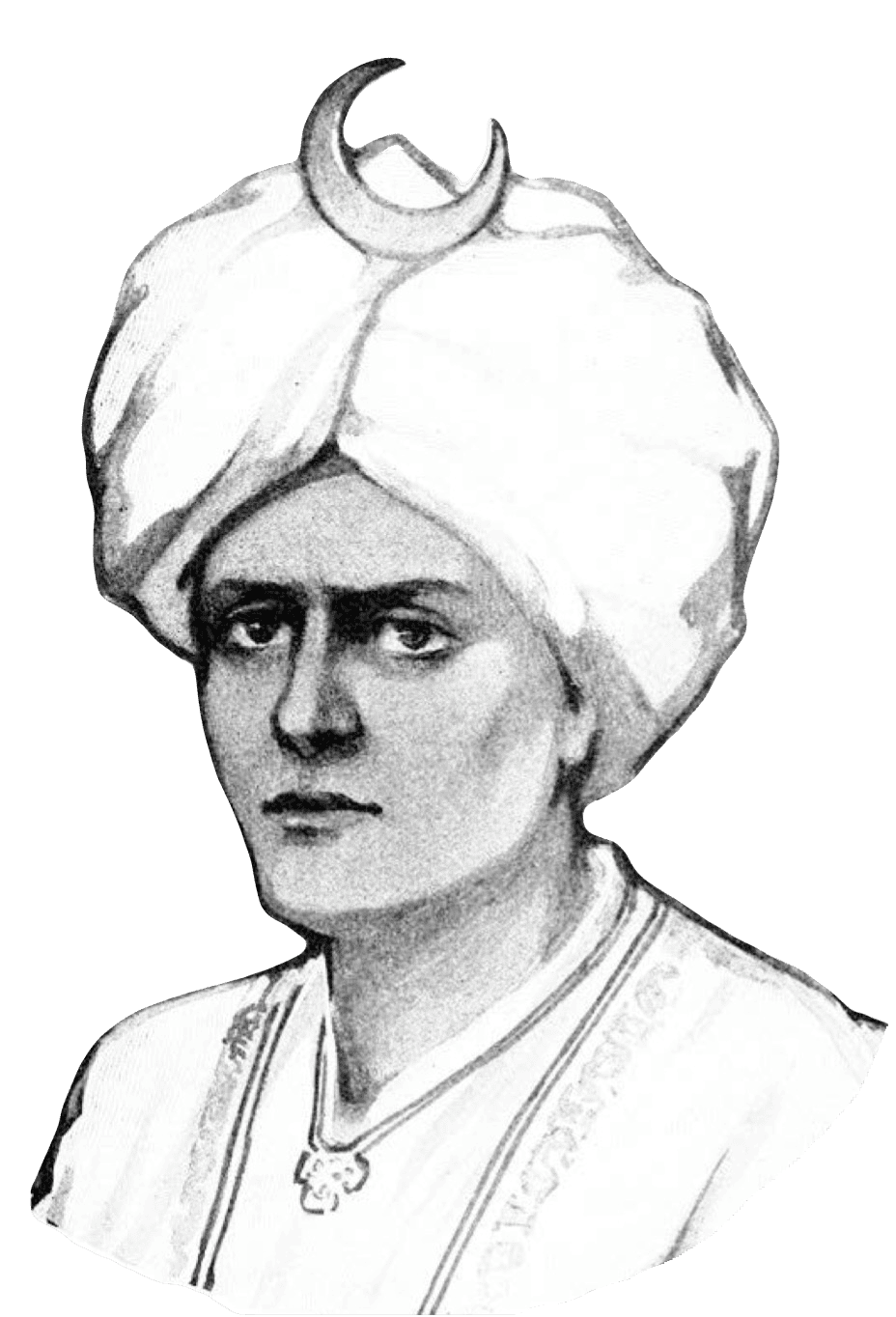
The Yogi Ramacharaka Series
During the next several years the Society produced what became known as the Yogi Ramacharaka series, one of the most influential collections of yoga and Eastern philosophy published in the English-speaking world. The titles included Fourteen Lessons in Yogi Philosophy and Oriental Occultism (1903), The Hindu-Yogi Science of Breath (1904), Hatha Yoga (1904), Raja Yoga (1905), The Science of Psychic Healing (1906), Gnani Yoga (1906), The Bhagavad Gita (1907), The Spirit of the Upanishads (1907), Mystic Christianity (1907), The Religions and Philosophies of India (1908), and The Hindu-Yogi System of Practical Water Cure (1909).
These books presented a unified system of physical health, mental development, spiritual philosophy, and practical psychology. Rather than treating Yoga as merely a religious tradition, the series emphasized its application to everyday life, combining ancient Indian teachings with the practical methods of Suggestion.
Read the article: Yogi Ramacharaka: The True Meaning and Origin of the Name
Expansion into Hermeticism and New Thought
Beginning in 1907, the Society gradually broadened its publishing program beyond Yoga and Vedanta. While Eastern philosophy remained central to its identity, new titles increasingly explored Hermeticism, Rosicrucianism, Christian mysticism, and New Thought ideas.
Their 1907 release, Mystic Christianity, interpreted the teachings of Jesus through the framework of Western esotericism and universal spiritual law. The following year, the Society published The Kybalion, attributed to the anonymous authorship of the Three Initiates. Its presentation of the Seven Hermetic principles as universal mental laws paralleled Paryn’s teachings on Suggestion and the power of the mind. The expansion continued into new Thought with Reincarnation and the Law of Karma (1908), the first YPS title issued under William Walker Atkinson‘s name. By the end of the decade, the Yogi Publication Society had evolved from a publisher devoted primarily to Yoga into a metaphysical publishing house that sought to demonstrate the underlying unity of Eastern philosophy, Hermetic wisdom, and New Thought.
Read the article: From Suggestion to the Seven Hermetic Principles: Herbert A. Parkyn and the Psychological Roots of The Kybalion
Read the article: The Sacred Geometry of the Yogi Publication Society Logo
.
The Yogi Publishing Society and Pseudonyms
The use of pseudonyms was a defining feature of the Yogi Publication Society’s publishing program, where, for its first five years, all of its original titles were issued under the name Yogi Ramacharaka. This continued for years, as many more pseudonymous authors appeared in its catalog.
Pseudonyms as “masked suggestions”
The technique of using symbolic figures and anonymous initiates as literary identities was a common practice within classical esoteric traditions, and Parkyn had long referred to it as the use of “masked suggestions,” the practice of presenting an idea through a mystical or trusted authority that reduces conscious resistance and allows the Suggestion to reach the involuntary mind more effectively. Parkyn stated that ideas are often accepted or rejected not on their intrinsic merit but according to the authority through which they are presented. Rather than introducing a lesson as the opinion of an ordinary author, a pseudonym could embody the qualities most closely associated with the subject being taught.
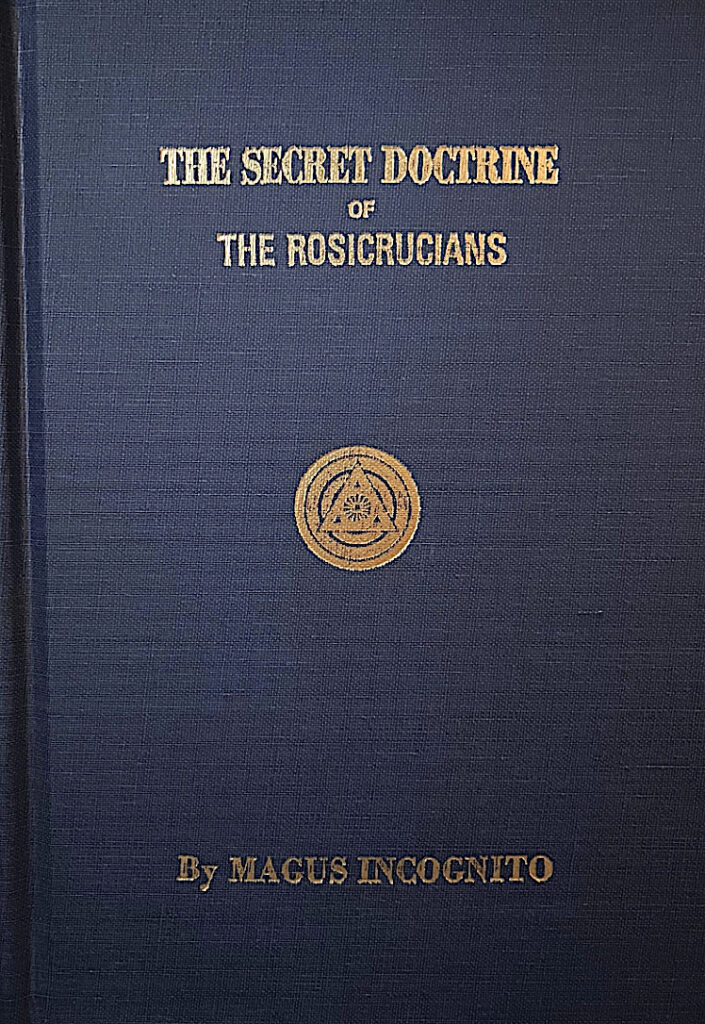
Yogi Ramacharaka was presented as an Indian spiritual adept transmitting the wisdom of Yogic philosophy. Theron Q. Dumont was a mysterious French psychological authority on mental powers. The Three Initiates and Magnus Incognito as anonymous initiates of ancient secret societies presenting long concealed Hermetic and Rosicrucian knowledge to the public. These identities provided a “masked suggestion” through which the material could be presented with the authority necessary to strengthen the reader’s reception of the ideas being conveyed.
Read the article: Astra: Herbert A. Parkyn’s First Yogi Pseudonym and the Foundation for the Yogi Publication Society
Authorship of the pseudonym titles
The actual authors behind these pseudonyms have long been a subject of discussion. William Walker Atkinson has been widely regarded as the principal writer associated with the pseudonyms specifically because he claimed authorship of all of the titles in his self-profile in Who’s Who in America, starting in 1908. This assertion has been debated, as it would include over fifty-six books written by Atkinson between 1903 and 1909. During this period, he also contributed regularly to several magazines and served as editor of New Thought, The Segnogram and The Mystic. For this reason, it has been suggested that Atkinson’s public claims were intended to establish a record of authorship for the pseudonymous titles that had been published anonymously. Because of the massive popularity of several of the authors and the growing practice of pirated publishing, such claims would have prevented outside publishers from releasing books under the same pseudonyms.
1919 postal investigation into the pseudonyms

In 1919, the Yogi Publication Society was investigated by postal authorities for claims of fraud. While the YPS was cleared of the charges, one of the central questions of the investigation was to learn the identity of Yogi Ramacharaka. During the hearing, Arthur Gould testified that there was no such person as Yogi Ramacharaka and that several of the books published under the pseudonym were written by friends of Atkinson.
Read full transcripts of the investigation: The 1919 Post Office Investigation of the Yogi Publication Society and Advanced Thought Publishing Company
William Walker Atkinson as a “masked suggestion”
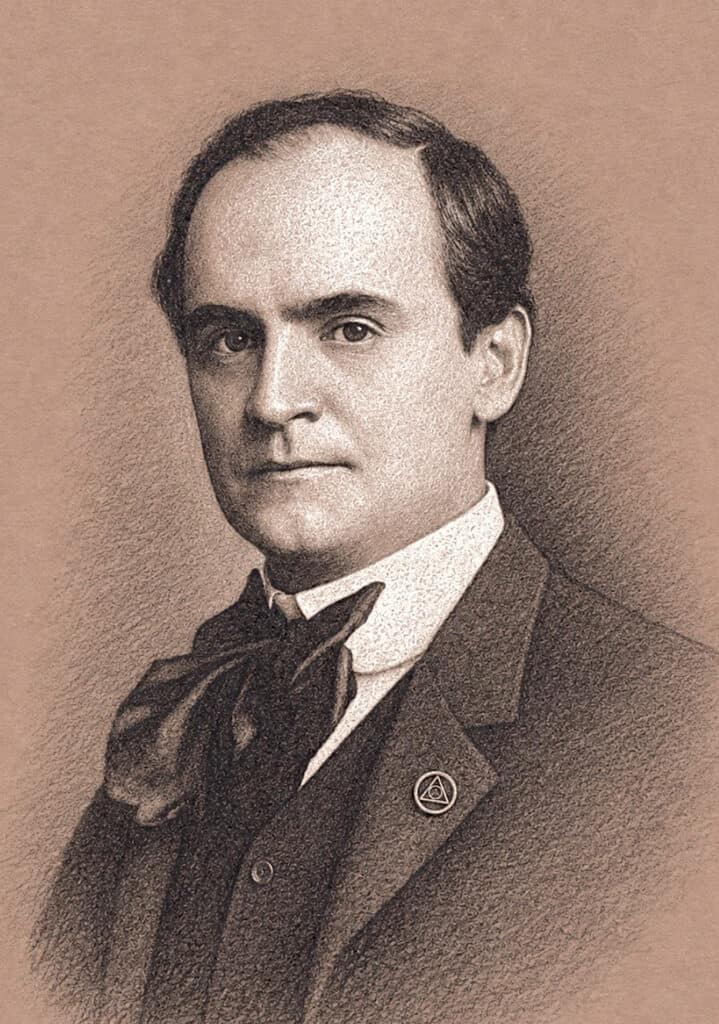
There is no doubt that the books published under the pseudonyms were written by several people. We have direct testimony to that fact from the 1919 postal investigation. Research conducted by the YPS History Project has also demonstrated that Dr. Herbert A. Parkyn and the publishing network he and his collaborators built around his Chicago School of Psychology were at the center of the founding of the Yogi Publication Society. Also, that Parkyn’s characteristic phrases and specific teachings appear repeatedly throughout works published under the various pseudonyms, as well as those carrying the name William Walker Atkinson.
We have also uncovered evidence that Atkinson served as a principal literary vehicle for Dr. Parkyn and that, through his Suggestion magazine and publishing network, Parkyn created what he termed “Atkinsonia.” From the start, Parkyn presented Atkinson according to the same principles of “masked suggestion” that would later be used for the long list of pseudonyms. When Parkyn first introduced Atkinson to his readers, he claimed that Atkinson was a longtime student of psychic science who had written several books on the subject. Yet the timeline shows that Atkinson had arrived in Chicago only about four months earlier, and by Atkinson’s own later accounts, he knew nothing of the New Thought movement before arriving in Chicago. Newspaper accounts from the period clearly document Atkinson as having spent years as a busy Pennsylvania attorney, handling prominent cases and representing substantial business interests before his mental breakdown and journey to Chicago seeking treatment from Parkyn.
The discrepancy becomes even more striking with the publication of Thought=Force in Business and Everyday Life in February 1901, only about six months after Atkinson’s arrival in Chicago. Nothing about the book reads like the work of a newcomer to Suggestion. Atkinson writes as an authority, confidently challenging established figures in the field while presenting a fully developed system of mental control centered around Suggestion. Throughout the work are Parkyn’s characteristic phrases and teachings, while its subjects extend directly from material Parkyn had already introduced in his Course in Suggestive Therapeutics and Hypnotism. Topics that Parkyn had touched upon but could not pursue too far without moving beyond the medical and scientific character of his work.

What can be discerned from Atkinson’s earliest writings under Parkyn is that his primary contribution was to bring his skills as a well-seasoned attorney and researcher to the material. In Atkinson, Parkyn had found something rare: a highly successful attorney in the middle of his career who now wanted to devote himself entirely to promoting the Laws of Suggestion. This was truly finding a unicorn. For Parkyn, who had been an expert at building championship sports teams since his college days and had already been assembling a stable of writers and collaborators through his schools, Atkinson was a star recruit.
The timing was also key, as Parkyn had just opened his University of Psychic Science and had the perfect venue to introduce Atkinson into his network. He could supply material from his own teachings along with the enormous collection of correspondence courses, books, and educational systems accumulated through his Mail Course Exchange Company. Atkinson could then research, organize, and, under Parkyn’s editorial direction, recast the material into forceful, accessible arguments, extracting memorable phrases and presenting it in a manner designed to influence readers, just as he had done with juries.
A Collective Authorship
The extraordinary volume of books produced in such a short period becomes easier to understand when viewed as a collective effort rather than the work of any single author. As the principal writer within Parkyn’s network, Atkinson would have worked on many of the pseudonymous books, but he did so in coordination with a network that included other accomplished writers and researchers, as well as Parkyn himself. While Parkyn was the principal architect, teacher, and main financial supporter behind the network, the books were the product of a coordinated collective working toward the same goal of sharing the Laws of Suggestion as widely as possible.
Read the article: The Science of Psychic Healing: A Bridge Between Yogi Philosophy and the Law of Suggestion
Parkyn and his collaborators saw Suggestion as a fundamental law capable of changing the individual and, ultimately, the world. It was not merely another branch of psychology but a law underlying all thought, shaping behavior, health, and circumstance. If enough people could be taught to understand and consciously use it, its effects could ultimately transform society itself. The network therefore carried the same teaching of Suggestion into nearly every field in which a New Thought reader or esoteric searcher might seek truth. Whether that reader turned toward psychology, personal magnetism, business success, mental healing, yoga, Vedanta, psychic phenomena, Rosicrucianism, Qabalah, Christian Mysticism, or Hermetic philosophy, the Law of Suggestion would be there waiting to be discovered at its core.
The question of whether Atkinson, Parkyn, or another collaborator wrote any particular book or passage becomes meaningless when the core message and purpose are understood. A deep examination of the works published under Atkinson’s name and the various pseudonymous authorships reveals the same teachings repeatedly expressed with the same distinctive phrases and principles first taught by Parkyn. In this sense, the real author was the message of Suggestion itself and the source from which that message originated.

Perhaps the clearest expression of this principle appears in The Kybalion, where authorship is assigned not to those who put the pen on paper, but to the primal source from which those teachings originated, the “Three Initiates.” For decades, there has been widespread debate over who these three people might have been, or even whether there were three people at all. This debate has largely rested on interpreting an “initiate” only as someone initiated into a secret or esoteric Order. But another meaning becomes apparent when the title is considered alongside the sacred geometrical symbol used by the Society as its printer’s mark. In this interpretation, the “Three Initiates” are not three people, but the three primal initiators: the point, which initiates the unified center; the straight line, which initiates the triangle; and the curved line, which initiates the circle as the reflection of the unified center. The symbolism also corresponds with the title Trismegistus, “thrice-great,” given to Hermes, as he was known as the “messenger of the gods” who shared the secrets of sacred geometry.
Read the article: The Sacred Geometry of the Yogi Publication Society Logo
Advanced Thought Publishing Company
In 1905, Yogi Publication Society and the publishing business conducted under the name of William Walker Atkinson, moved into shared offices with the Advanced Thought Publishing Company. The new offices were in Suite 1408 of Chicago’s Masonic Temple Building, which was built by the Knights Templar Masons and was one of the tallest and grandest buildings in the world at the time. Much like Parkyn’s former Cottage Grove headquarters, the new offices included facilities for processing correspondence, a retail bookstore where the public could purchase publications, and a New Thought reading room that served as a gathering place for readers and students.
Theosophy and the Knights Templar masons
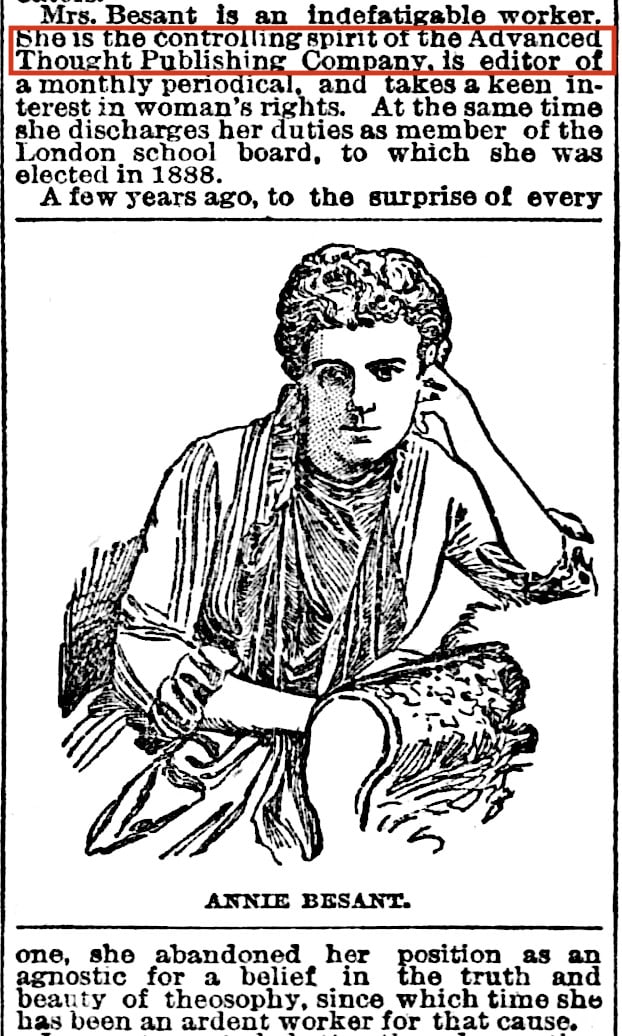
While it is often stated that Atkinson formed the Advanced Thought Publishing Company, the company had already existed for many decades as part of the Theosophical Society in Madras, India, and was managed by Annie Besant. Further, the Macoy Publishing and Masonic Supply Company, originally founded by the famous Knight Templar mason Robert Macoy, had purchased the Theosophical Society’s entire publishing network, including the Theosophical Publishing Company, the Occult Publishing Company, and the Advanced Thought Publishing Company in the early 1900s.
The Mason’s involvement with Theosophical and occult publishing was in response to a growing Masonic interest in recovering the deeper meaning of its own symbols and traditions. This literature was seen as a means of helping Masonry recover “that which was lost,” the Masonic legend of Hiram Abif and the Lost Word. The Macoy Publishing, the largest Masonic publisher in the world, consequently started publishing works by H. P. Blavatsky and William Q. Judge alongside older mystical writers such as Jacob Böhme. These works were approached as different expressions of a common underlying wisdom. The concept of the Sutratma, the continuous thread running through the religions and philosophies of different ages, expressed the idea that these traditions could be studied as surviving portions of a much older universal tradition.
The move of YPS and Atkinson into shared offices with Advanced Thought in Chicago’s Knights Templar Masonic Temple reveals the significant connection with the Macoy Publishing and Masonic Supply Company, which was actively promoting and publishing the same Theosophical and occult ideas. Macoy’s acquisition of the Occult Publishing Company also placed it in control of the American publishing rights to Light on the Path and The Illumined Way, both of which had originally been issued in the United States by Occult Publishing as part of the American Theosophical publishing network. The fact that these were the first two works published by the Yogi Publication Society is therefore particularly telling and suggests that YPS emerged as part of a larger Masonic-Theosophical network.
Parkyn’s uncle was the Commander of the Knights Templar for the State of Vermont
These connections run directly through Parkyn. Robert Macoy, founder of the Macoy Publishing and Masonic Supply Company, was a nationally prominent Mason and an especially important figure within the Knights Templar. He served as Grand Recorder of the Grand Commandery of Knights Templar of New York for more than forty years. When he died in 1895, 500 Knights Templar in full regalia joined his funeral procession through the streets of New York, accompanied by Grand Commanders from across the country and watched by thousands of spectators lining the streets.
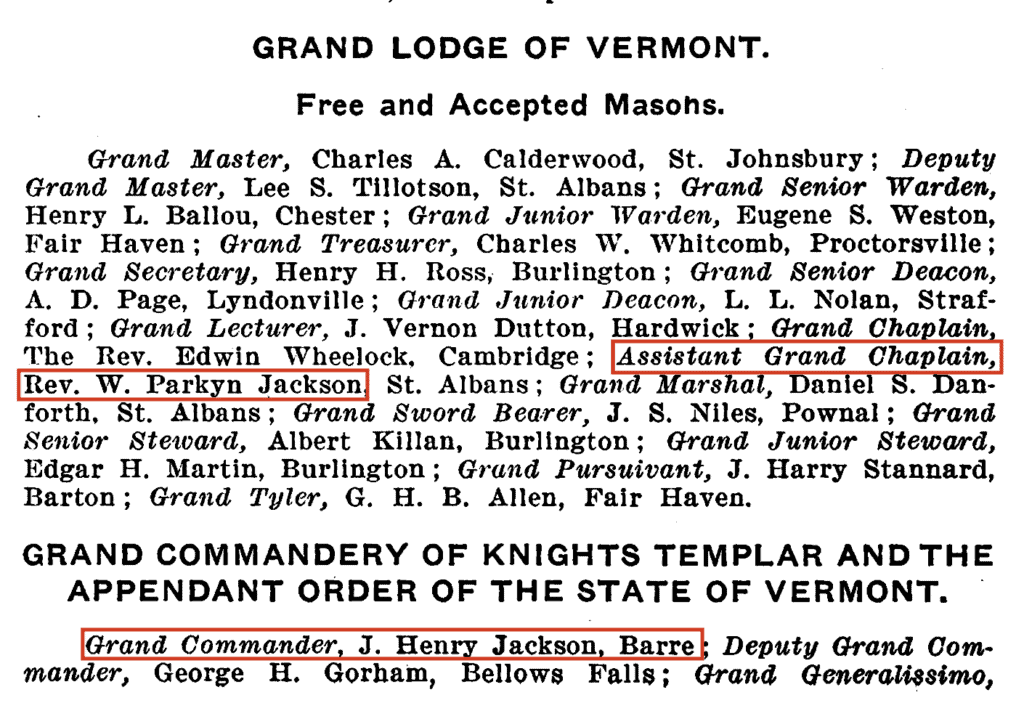
Among the Knights Templar who marched in Macoy’s funeral procession was Parkyn’s uncle, John Henry Jackson, himself a prominent Mason and Templar who was the Grand Commander of the State of Vermont. Parkyn’s Jackson cousins were all Masons and Templars as well, with several holding important positions within the Order and would later serve as Grand Commanders themselves. This connected Parkyn directly into the network of the Macoy Publishing and Masonic Supply Company.
.
Parkyn and Annie Besant
Annie Besant and Parkyn were also connected through their close association with J. C. F. Grumbine, in which she was a regular contributor to his Immortality magazine alongside Swami Vivekananda. Besant, like Mabel Collins, who authored Light on the Path, had been co-editor of Helena Blavatsky‘s Lucifer magazine before becoming editor after Blavatsky’s death, when it became The Theosophical Review.
Read the article: Herbert A. Parkyn’s Foundation in Eastern Philosophy
In 1905, Besant would co-author Thought-Forms with C.W. Leadbeater, exploring ideas involving color, vibration, and cymatics (visible forms produced by sound) that closely paralleled experiments Parkyn had conducted years earlier at his school. Her 1913 book There Is No Death would subsequently be published by Advanced Thought Publishing and then later by the Yogi Publication Society. Besant also provided an important connection between YPS and India through the Latent Light Culture, which was established in 1905 and became the official Indian distributor of YPS books and a close collaborator for many years. The Latent Light Culture was created directly from the Theosophical Society’s third core objective that states: “To investigate unexplained laws of Nature and the powers latent in man.” The concept that every human contains an inner, divine spark or “light” that remains hidden until developed through occult training.
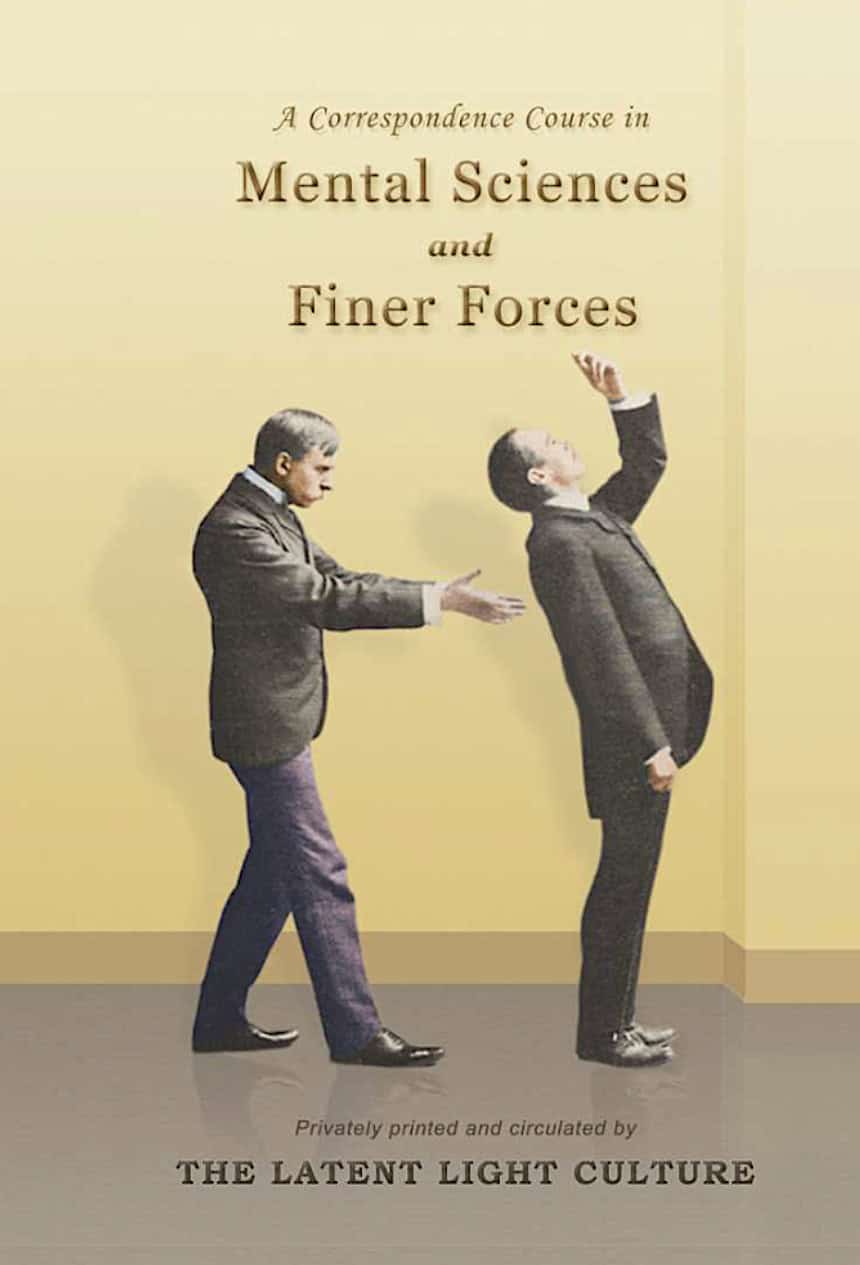
The organization still exists today and continues to use an image originally appearing in Parkyn’s Mail Course in Suggestive Therapeutics and Hypnotism on the cover of its principal teaching course, A Correspondence Course in Mental Sciences and Finer Forces.
.

.
Read the article: Who Was the Author Behind the Name “Bhikshu”? The Case of Swami Pareswara Bikshu vs. Charles Henry Allan Bennett
Suggestion magazine and William Walker Atkinson Publishing are sold
The YPS move also coincided with Parkyn selling Suggestion magazine to his relative, Henry Clay Hodges, a Detroit multimillionaire businessman and prominent Mason, who devoted his later years to his passion for Astrology and New Thought. He would continue the magazine with the same mission statement that Parkyn had set up. Soon afterward, Parkyn also closed the Chicago School of Psychology to devote his attention to the extensive agricultural and mining enterprises he had organized to finance his publishing and educational network and also to expand it to Denver and Los Angeles, which were rapidly emerging as important centers of the New Thought movement.

Atkinson had already been spending time in L. A. to establish these western operations. In 1905, he spent several months overseeing Alexander J. McIvor-Tyndall in establishing an affiliated School of Psychic Science. He then returned to Los Angeles in 1906 to work with A. Victor Segno, a graduate of Parkyn’s Chicago School, and assist with the editing of The Segnogram. Atkinson’s arrival coincided with a major infusion of capital that led to the construction of a massive, Masonic-style headquarters for the enterprise. Atkinson would also start and edit The Mystic magazine as part of the Segno Publishing Company.
In 1907 Atkinson returned for several months to his previous home in Palmyra, New Jersey. His time on the West Coast had been difficult, and trying to run his new Mystic magazine and still write books and articles for other journals had brought on an attack of nervous prostration. A condition that he had originally sought out Dr. Parkyn to help him with in 1900. When periods of intense stress arose, he frequently withdrew from public life altogether.
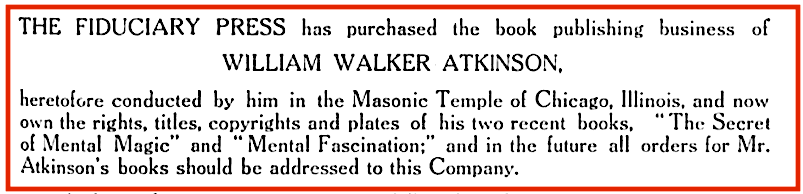
During this period, the William Walker Atkinson publishing imprint was sold to the Fiduciary Press, which was run by another Chicago School graduate and longtime associate, Edward E. Beals. The company was also strongly connected to the Knights Templar Masons. Its president was E. I. Rosenfeld, who was also the general manager of the Knights Templar and Masons Life Indemnity Company, and worked closely with its president, George M. Moulton, the current Grand Master of the Knights Templar for the United States. Their offices were in Chicago’s Masonic Temple Building, which also became the YPS’s new home.
Arthur Gould and Ollie I. Bedwell run the Yogi Publication Society and Advanced Thought Publishing
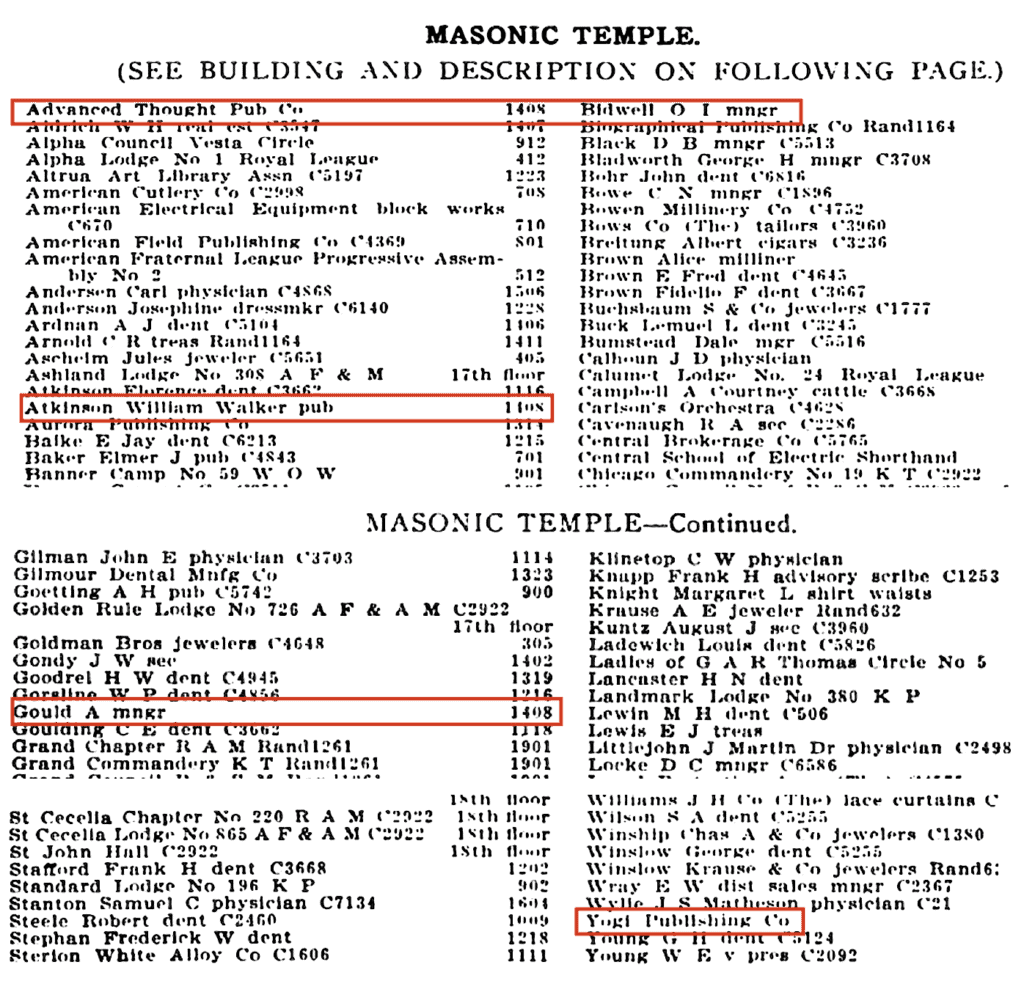
With Atkinson working in California and returning to New Jersey, and Parkyn increasingly occupied with his larger business ventures, management of the Chicago publishing headquarters was placed in the trusted hands of Ollie Bedwell and Arthur Gould. Bedwell, the daughter of prominent Chicago newspaper owner Hiram Jackson Bedwell, had worked as a secretary within Parkyn’s network since 1900 and became office manager, while Gould, an aspiring writer and graduate of the Chicago School of Psychology, took charge of the publishing business. The two would marry shortly afterward.
It doesn’t appear that Advanced Thought Publishing released any titles until 1908, when they published two books under the authorship of Atkinson: The Inner Consciousness and The Secret of Success. Both books would later be published by YPS as well.
Although the two publishing companies remained separate businesses, they became increasingly connected. According to testimony contained in court records from 1919 and 1920, ownership of the Yogi Publication Society was transferred to Ollie I. Bedwell in 1909, while ownership of the Advanced Thought Publishing Company was transferred to Arthur Gould in 1911. The same court records state that in 1916 Ollie Bedwell Gould relinquished active control of the Yogi Publication Society to her husband, Arthur Gould, who thereafter managed the Society while paying her a royalty. From 1916 to 1921, most of the Yogi Publication Society’s back catalog was consequently marketed through Advanced Thought Publishing in its catalogs and advertisements.

The expansion of pseudonymous authors and Advanced Thought magazine
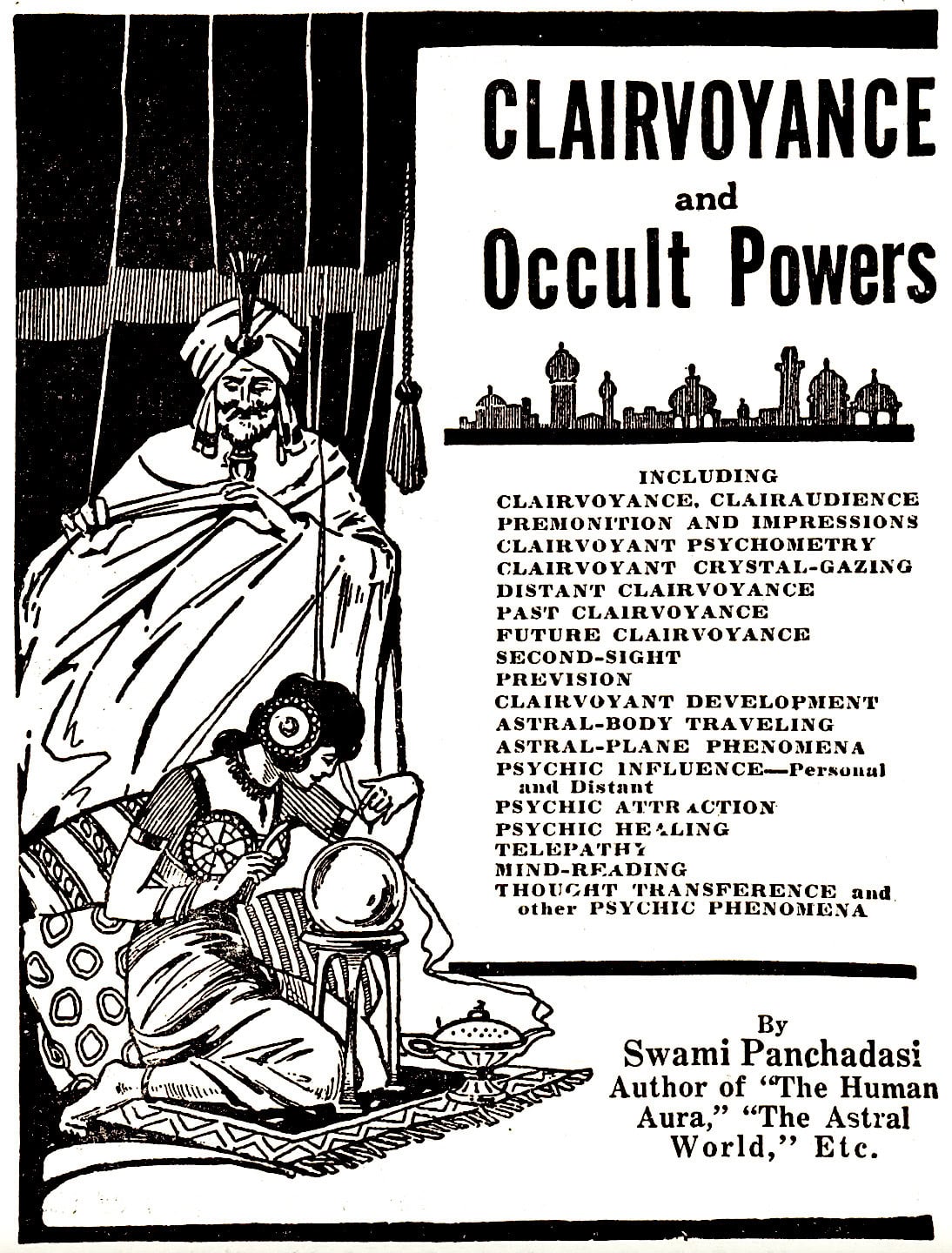
The Advanced Thought Publishing Company was the first to publish many of the titles that are now closely associated with the Yogi Publication Society catalog. During this period, it published numerous books under William Walker Atkinson’s own name, along with works attributed to pseudonymous authors including Theron Q. Dumont, Magus Icognito, Swami Bhakta Vishita, and Swami Panchadasi.
In 1916, Advanced Thought magazine was started with Atkinson as the editor and main contributor and Arthur Gould as the owner and manager. The magazine regularly featured articles attributed to Yogi Ramacharaka, Theron Q. Dumont, and Swami Panchadasi, the same pseudonymous authors whose books they were publishing. In 1922, the Advanced Thought Publishing Company filed for bankruptcy, and subsequently all its titles were consolidated within the YPS catalog.
.
Later Years
Under the Gould’s management, the Society continued publishing the established Yogi Ramacharaka series while expanding its catalog with additional works by William Walker Atkinson and other New Thought authors.
By the mid-1920s, the Society’s catalog began to include works by authors associated with the Latent Light Culture of India, which had served as the Yogi Publication Society’s principal Indian distributor since 1905. This brought additional Indian authors and works on Eastern philosophy into the Society’s catalog. During the same period, the Yogi Publication Society increasingly published reprints of earlier esoteric works. These included books by authors associated with the Theosophical Society, as well as writers connected with the Hermetic Order of the Golden Dawn and related Western esoteric traditions. By this point, its catalog had expanded well beyond the original Yogi Ramacharaka series to include a large collection of Eastern philosophy, Theosophy, Hermeticism, occultism, and New Thought.
The original Yogi Publication Society continued publishing books through the remainder of the 1920s before ceasing new publication around 1930.
Read the article: Who Was the Author Behind the Name “Bhikshu”? The Case of Swami Pareswara Bikshu vs. Charles Henry Allan Bennett
Revival of the Yogi Publication Society
In 1970, the Yogi Publication Society name was revived in Des Plaines, Illinois, after approximately forty years without new publications. The revived company returned to the Society’s earlier focus on Hermetic and esoteric literature. Among its publications were several works by Aleister Crowley and related authors, together with reprints of older Hermetic and occult texts. The revived Yogi Publication Society continued publishing until 1985, when publication under the name again came to an end.
.
Sources & Citations
- Newspaper. Parkyn's University of Psychic Science with Atkinson" . Chicago Tribune. 1901-03-10. p. 21. Retrieved 2026-06-06.
- Newspaper. "Parkyn's University of Psychic Science 2 week classes in Personal magnetism" . Chicago Tribune. 1901-04-14. p. 21. Retrieved 2026-06-06.
- PDF / Digital Archive. Hatha Yoga book , published by Yogi Publication Society at 4000 Cottage Grove.
- Newspaper. "Chicago Pure Food Company incorporates with Canadian business friends of James Parkyn" . Chicago Tribune. 1898-12-14. p. 14. Retrieved 2026-06-06.
- PDF / Digital Archive. Suggestion V7 Advertisements 1900
- PDF / Digital Archive. Suggestion Magazine advertisements 1901
- PDF / Digital Archive. Suggestion magazine advertisements V12
- PDF / Digital Archive. Atkinson , William Walker (1901). Thought-force in Business and Everyday Life: Being a Series of Lessons in Personal Magnetism, Psychic Influence, Thought-force, Concentration, Will Power, and Practical Mental Science. Sydney Flower.
- PDF / Digital Archive. Suggestion magazine V1 N1 August 1898
- Newspaper. "Lackersteen lived right next door to Parkyn at 4010 Drexler" . Chicago Tribune. 1895-05-12. p. 33. Retrieved 2026-01-19.
- Newspaper. "Dr. Lackersteen on the history of mesmerism" . Chicago Tribune. 1890-10-05. p. 5. Retrieved 2026-01-19.
- Newspaper. "Dr. Lackersteen pushed for Parkyn's hypnotic clinic. Had an office at 100 State St" . Chicago Tribune. 1896-02-18. p. 7. Retrieved 2026-01-19.
- Website. Tribe, Vedic (2020-12-28). "Astra; Ancient Divine Weapons as Mentioned in Hindu Puranas". Vedic Tribe. Retrieved 2025-08-28.
- Website. Ramesh (2019-12-26) . "10 Most Powerful Astra Weapons in Hindu Epic Mahabharata". Retrieved 2025-08-28.
- Newspaper. "M. H. Lackersteen obituary. Was a professor at post graduate medical college" . The Chicago Chronicle. 1897-12-08. p. 1. Retrieved 2026-01-19.
- PDF / Digital Archive. Suggestion Magazine issues 1-5
- Website. Tribe, Vedic (2020-12-28). "Ancient Divine Weapons as Mentioned in Hindu Puranas". Vedic Tribe. Retrieved 2025-08-28.
- Website. "Swami Vivekananda and His 1893 Speech" . The Art Institute of Chicago. 2010-09-11. Retrieved 2026-06-06.
- Newspaper. "Jenkin Lloyd Jones married Lackersteen's wife in 1915" . Chicago Tribune. 1918-09-13. p. 11. Retrieved 2026-01-19.
- Newspaper. "Dr. H. M. Lackersteen is Cremated. Jenkin Loyd Jones does service" . The Chicago Chronicle. 1897-12-10. p. 12. Retrieved 2026-01-19.
- Website. "1893 Chicago - Parliament of the World's Religions" . parliamentofreligions.org. Retrieved 2026-06-11.
- Website. "Swami Vivekananda" . Ramakrishna Vedanta Society. Retrieved 2026-06-11.
- Website. "San Francisco" . Ramakrishna Vedanta Society. Retrieved 2026-06-11.
- Website. "Swami Vivekananda and His 1893 Speech" . The Art Institute of Chicago. 2010-09-11. Retrieved 2025-07-31.
- PDF / Digital Archive. "Immortality (IAPSOP)" . iapsop.com. Retrieved 2025-09-02.
- PDF / Digital Archive. Immortality V1 N3 , December 1898
- Newspaper. "Elmer Ellsworth carey travels to Orient regularly" . The Oregonian. 1901-12-25. p. 5. Retrieved 2025-07-05.
- PDF / Digital Archive. Light On The Path , 1903. Yogi Publication Society
- Book. https://theosophy.wiki/en/LightonthePath(book)
- PDF / Digital Archive. "Internet Archive: Yogi Ramacharaka" . archive.org.
- PDF / Digital Archive. Ramacharaka (1909) . The Hindu-Yogi System of Practical Water Cure: As Practiced in India and Other Oriental Countries. Yogi Publication Society.
- PDF / Digital Archive. Yoga Breath , list of books by Yogi Ramacharaka.
- Website. William Walker Atkinson : An Intellectual Biography by John Haller Jr, 2021
- PDF / Digital Archive. 1919, Advanced Thought and Yogi Publication Society fraud file
- PDF / Digital Archive. The Lakeside Annual Directory of the City of Chicago . Williams, Donnelley & Company. 1912.
- PDF / Digital Archive. Advanced Thought magazine V1 N7 September 1906 pg . 8
- PDF / Digital Archive. "Advanced Thought [Chicago] (IAPSOP)" . iapsop.com. Retrieved 2026-06-11.
- Newspaper. "Ad for Advanced Thought magazine, 1916" . The Indianapolis Star. 1916-05-28. p. 2. Retrieved 2026-06-11.
- Newspaper. "Annie Beasant is part of Advanced Thought Publishing Company in 1891" . The Boston Globe. 1891-04-05. p. 17
- Newspaper. Suggestion magazine ad using Advanced Thought" . The Daily Item. 1906-08-03. p. 5. Retrieved 2026-06-11.
- Website. "Lucifer | Theosophy World" . www.theosophy.world. Retrieved 2026-06-11.
- PDF / Digital Archive. "Lucifer (IAPSOP)" . iapsop.com. Retrieved 2026-06-11.
- Website. "Besant, Annie | Theosophy World" . www.theosophy.world. Retrieved 2026-06-11.
- PDF / Digital Archive. Panchadasi , Swami (1916). Clairvoyance and occult powers. University of California Libraries. Hackensack, N. J. : [Yogi Publication Society, Distributed by Wehman Bros.
- PDF / Digital Archive. Leonard , John William; Marquis, Albert Nelson (1908). Who's who in America. A.N. Marquis.
- PDF / Digital Archive. Hartmann's Who's who in Occult , Psychic and Spiritual Realms...in the United States and Foreign Countries. Occult Press. 1927.
- PDF / Digital Archive. Marquis , Albert Nelson; Leonard, John W. (1900). Who's who in America. Chicago: Marquis Who's Who etc.
- PDF / Digital Archive. The Segnogram V6 N2 May 1906 . page 32
- PDF / Digital Archive. The Segnogram V6 N2 May 1906 . page 32
- Magazine. polly.angelova (2023-07-11). "Who was Yogi Ramacharaka?". Watkins MIND BODY SPIRIT Magazine. Retrieved 2025-07-31.
- Primary Source. "WHO WAS YOGI RAMACHARAKA" . www.scribd.com. Retrieved 2026-06-13.
- PDF / Digital Archive. Charaka Samhita
- Website. "Ramayana | Summary, Characters, Themes, & Facts | Britannica" . Encyclopedia Britannica. Retrieved 2026-06-13.
- Website. "The Ramayana, A Telling Of the Ancient Indian Epic" . Maxwell School. Retrieved 2026-06-13.
- PDF / Digital Archive. "Ayurveda" . Archived from the original on 2026-04-16. Retrieved 2026-06-13.
- Website. admin (2021-08-24) . "What is Ayurveda? A Complete Beginner's Guide to Principles, Doshas & Healing". Ayurveda. Retrieved 2026-06-13.
- Primary Source. "The Science of Breath The Essential Works of Yogi Ramacharaka (The Library of Spiritual Wisdom) Instant EPUB Download | PDF | William Walker Atkinson" . Scribd. Retrieved 2025-08-01.
- PDF / Digital Archive. "A comparison of the institutions of Moses with those of the Hindoos and other ancient nations" , by Joseph Priestly, 1799
- Magazine. Today, Hinduism (2021-07-01). "John Adams' View of Hinduism". Hinduism Today. Retrieved 2026-06-13.
- Website. Staff, A. V. (2018-06-15). "The Roots of Vedanta in America". American Vedantist. Retrieved 2026-06-13.
- PDF / Digital Archive. Du sommeil et des états analogues , by Ambroise-Auguste Liébeault, 1866, Paris.
- Newspaper. "Liebeault, Ambroise Auguste (1823-1904) | Encyclopedia.com" . www.encyclopedia.com. Retrieved 2026-06-13.
- Newspaper. "The first school in the US to teach Suggestive Therapeutics" . The Des Moines Register. 1898-05-08. p. 16. Retrieved 2025-05-09.
- Newspaper. "Herbert A Parkyn opens the Chicago School of Psychology" . Chicago Tribune. 1896-07-19. p. 33. Retrieved 2025-04-22.
- Website. "Swami Vivekananda — Eastern and Western Disciples" . www.ramakrishnavivekananda.info. Retrieved 2026-06-13.
- Website. VivekaVani (2019-06-18) . "Swami Vivekananda's Education Life". VivekaVani. Retrieved 2026-06-13.
- Website. "baba" . dictionary.cambridge.org. 2026-06-10. Retrieved 2026-06-13.
- Newspaper. "India, that is Bharat: The origin and meaning of the ancient name" . The Economic Times. 2023-09-06. ISSN 0013-0389. Retrieved 2026-06-13.
- Website. "Swami Vivekananda and His 1893 Speech" . The Art Institute of Chicago. 2010-09-11. Retrieved 2026-06-14.
- PDF / Digital Archive. "Suggestion (IAPSOP)" . iapsop.com. Retrieved 2026-06-14.
- PDF / Digital Archive. Atkinson , William Walker (1907). A Series of Lessons in Mystic Christianity. Yogi publication society.
- PDF / Digital Archive. Ramacharaka (1909) . The Inner Teachings of the Philosophies and Religions of India. Yogi Publication Society. ISBN 978-0-524-01711-1.
- PDF / Digital Archive. Atkinson , William Walker (1908). Reincarnation and the Law of Karma: A Study of the Old-new World-doctrine of Rebirth and Spiritual Cause and Effect. Advanced Thought Publishing Company. ISBN 978-1-989743-19-5.
- PDF / Digital Archive. Atkinson , William Walker (1909). The New Psychology: Its Message, Principles and Practice. Yogi Publishing Company.