Copyright © 2026 D. Parkyn Jackson. Published by the Yogi Publication Society History Project. All rights reserved.
For over a hundred years, people have told the story of the Yogi Publication Society by focusing on William Walker Atkinson. His name is so closely linked to the group that many believe he was its sole founder. However, the Society’s early history suggests otherwise. Before publishing its first book, Atkinson spent years studying under Dr. Herbert A. Parkyn, a major figure in the American New Thought movement. Through Parkyn’s schools, magazines, publishing businesses, and organizations, Atkinson went from an obscure attorney to one of the movement’s most recognized writers.

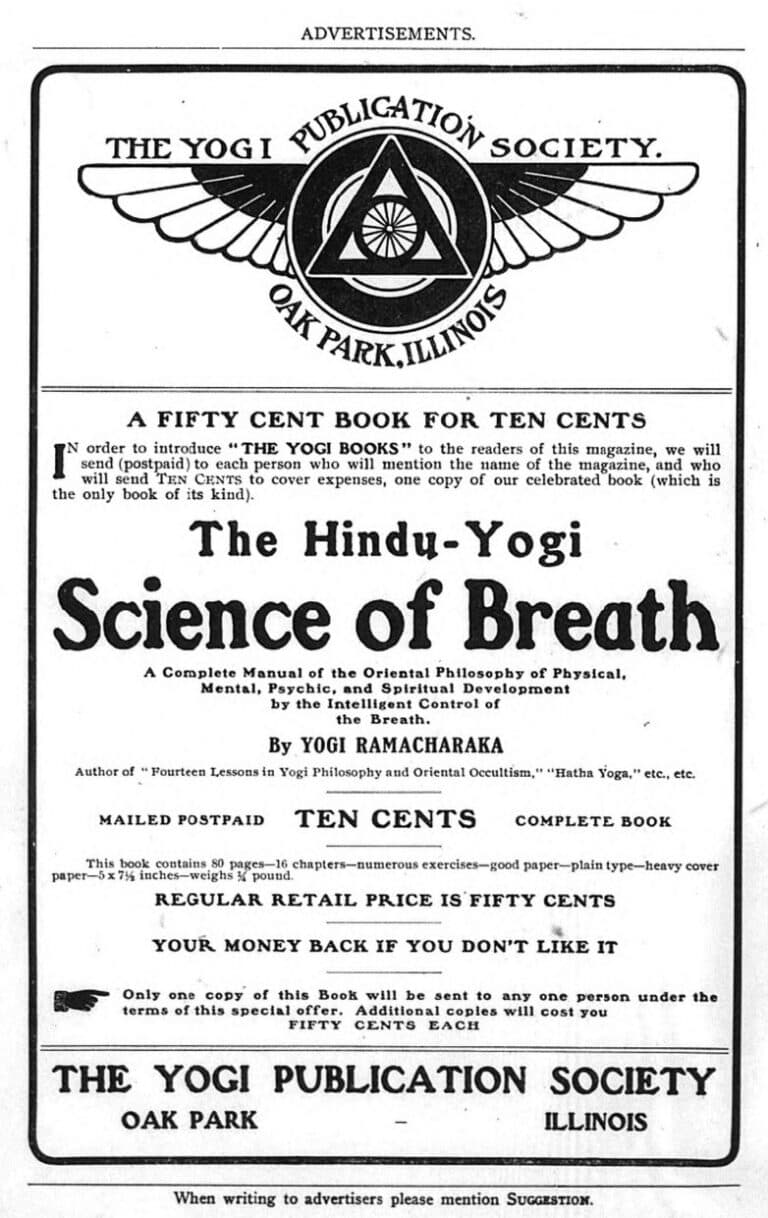
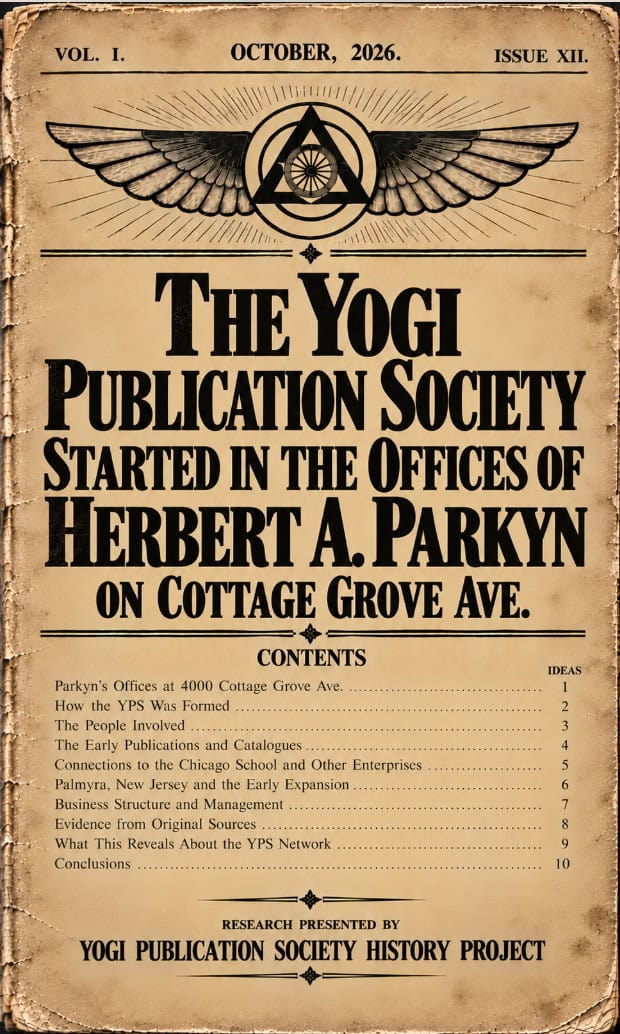
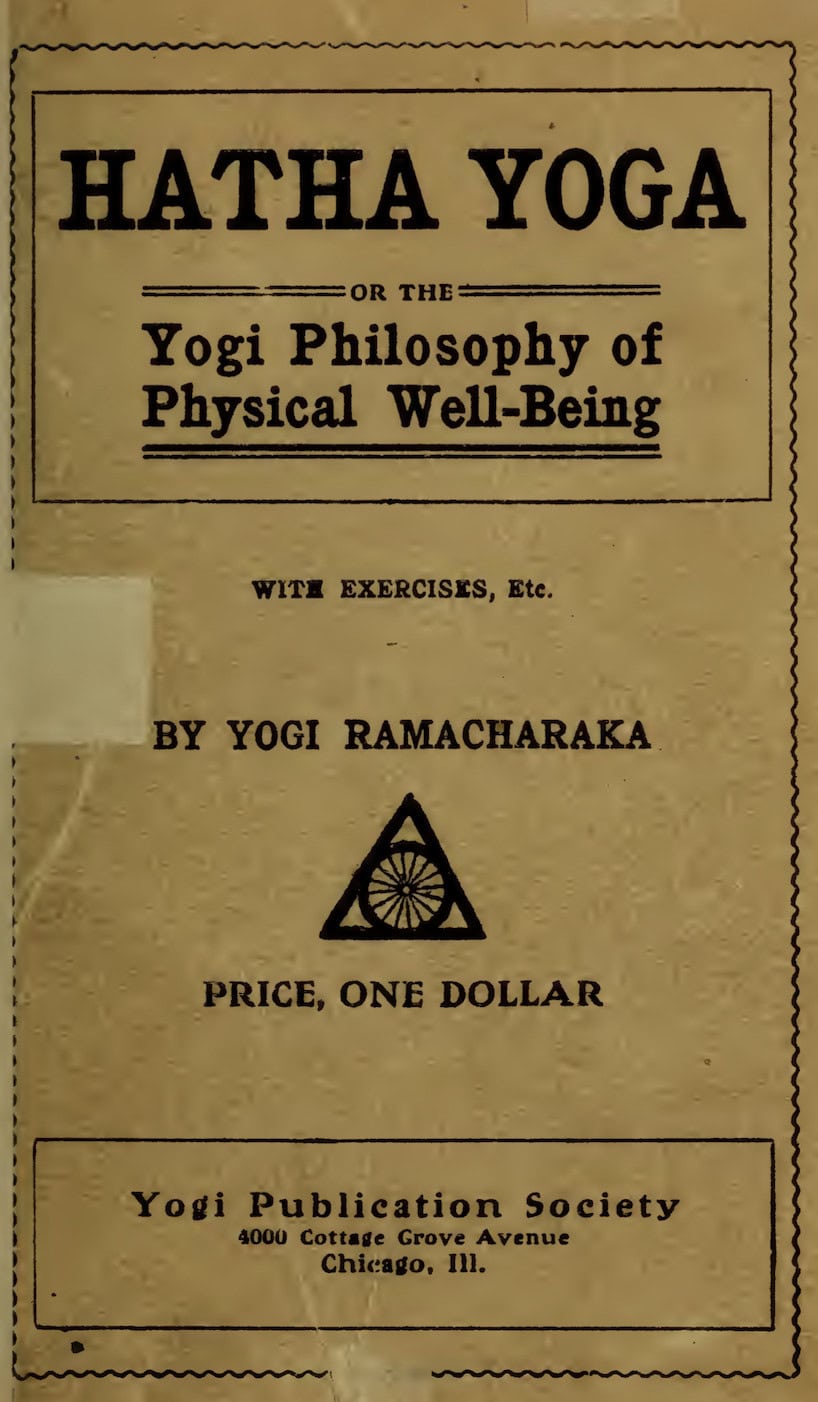
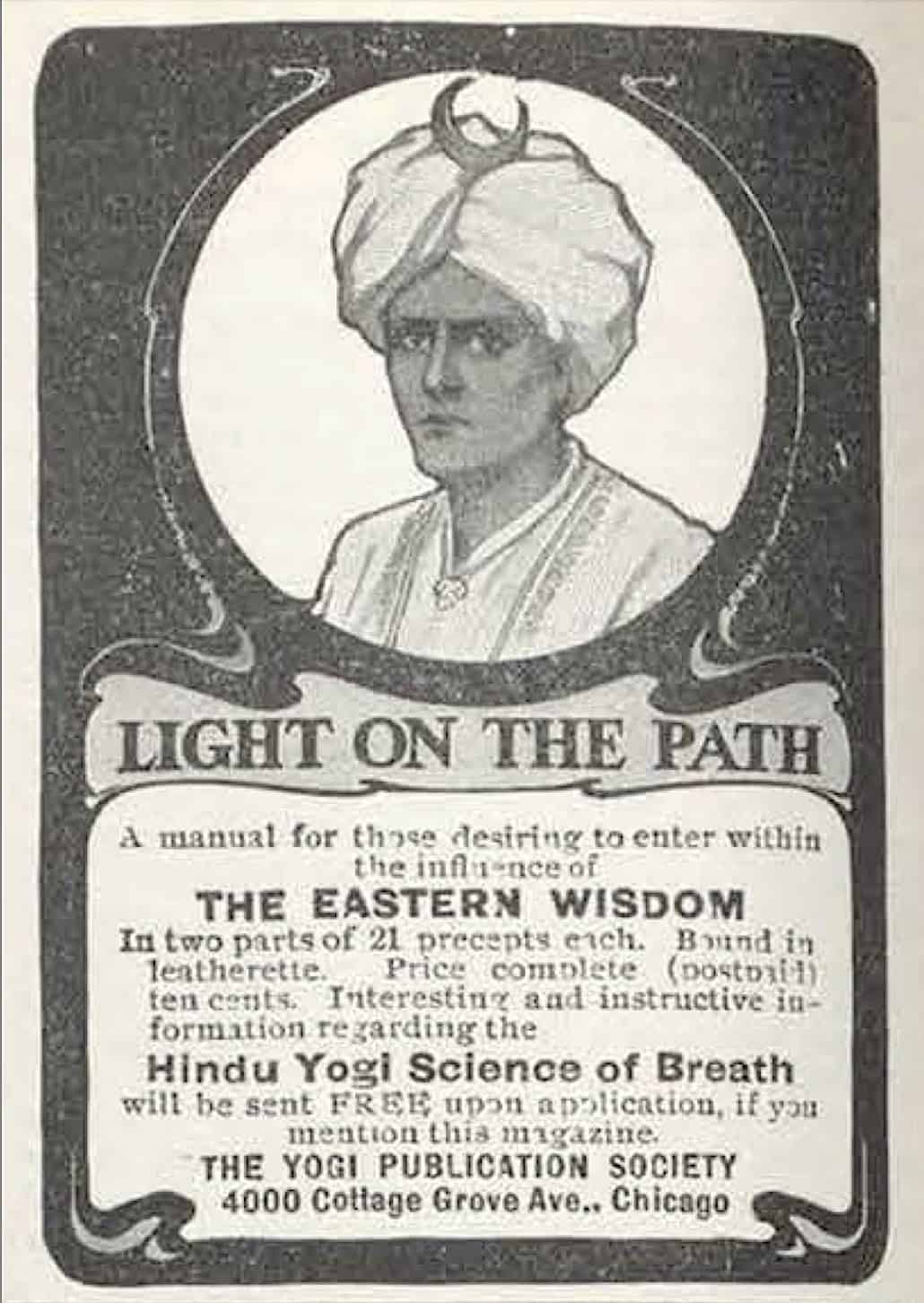
The Yogi Publication Society was not set up in its own office but inside Parkyn’s offices at 4000 Cottage Grove Avenue. This detail is an important clue about its beginnings. Rather than starting as a separate publishing project, the Society grew out of a network Parkyn had built over many years.
This article looks at the various organizations and businesses that operated out of Parkyn’s Cottage Grove headquarters and nearby properties, which he turned into a hub for his publishing, education, and mail-order businesses. These enterprises show that the Yogi Publication Society was just one part of a much bigger operation. By examining Parkyn’s work at Cottage Grove, we can better understand the setting in which the Society began and the role Parkyn played in its early days.
The Yogi Publication Society started in the spring of 1903 at 4000 Cottage Grove Avenue in Chicago, where it spent its early years. While most New Thought organizations in Chicago were downtown, Parkyn’s operation on the South Side’s Grand Boulevard was one of the few major centers outside the city’s business district.
Parkyn’s Offices at 4000 Cottage Grove Ave.
Parkyn’s offices were just a block away from his Chicago School of Psychology, located in a two-story building that also housed the Station M post office, making it an ideal location for publishing, mail-order, and correspondence work. Inside, there were rooms for processing mail orders, storage for books and merchandise, a walk-in bookstore, and a New Thought reading room. Several of Parkyn’s businesses operated there, such as the Magnetic Healing Cup Company, the Premium Subscription Agency, the Yogi Publication Society, the National School of Osteopathy, and later, even a Truth Center.

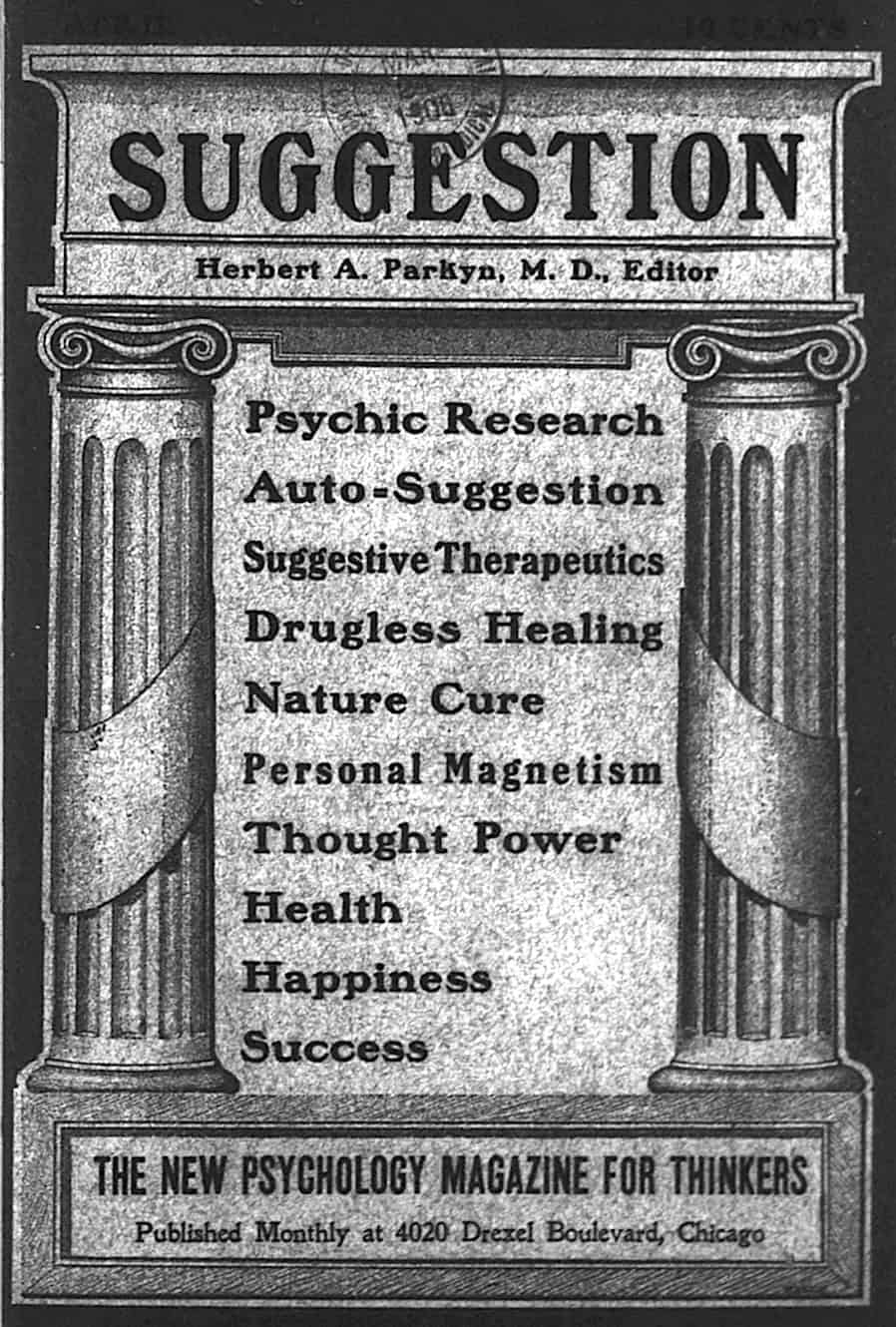
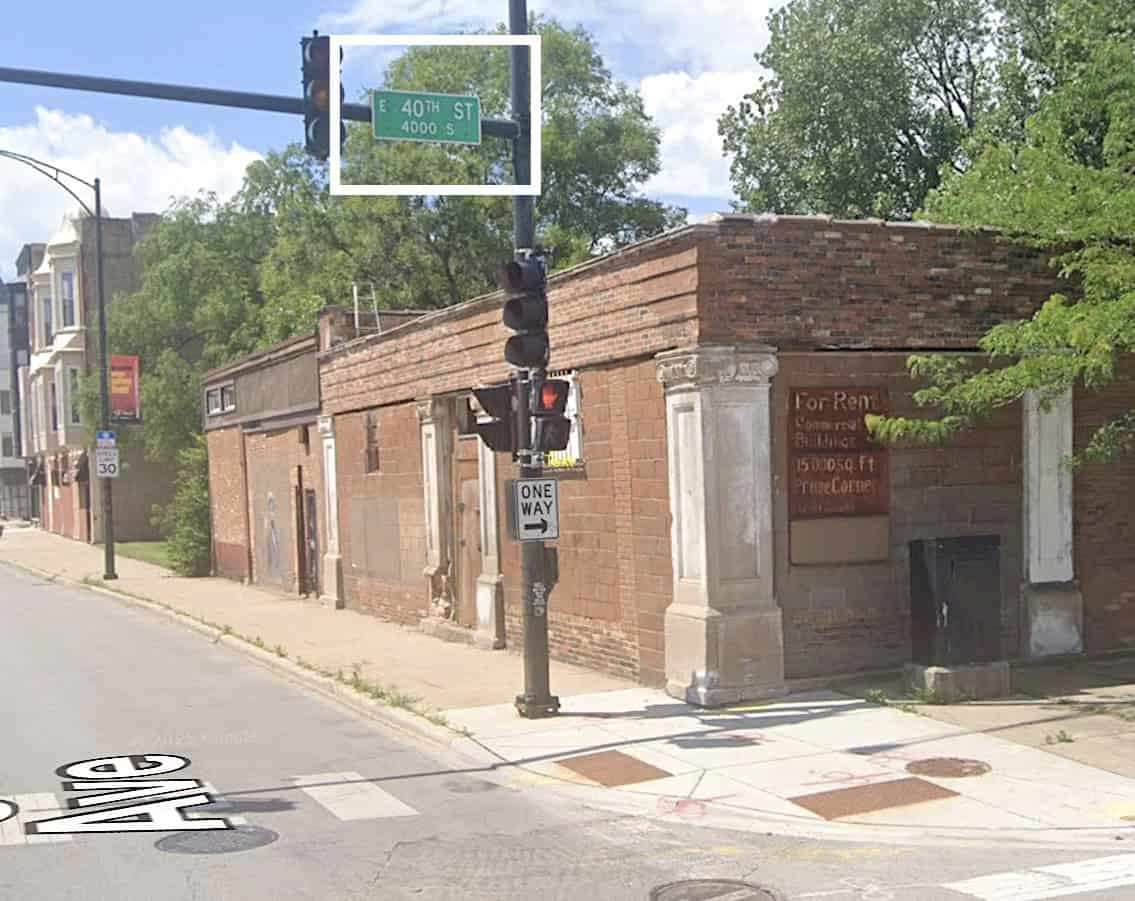
Parkyn soon grew his operations on Cottage Grove Avenue to include the University of Psychic Science at 3975 and 3987 Cottage Grove, the College of Electro-Therapeutics at 3977 Cottage Grove, and the Natural Healers’ Protective League at 3985 Cottage Grove, all right across the street. On the same side as his main building, he added the Chicago Pure Food Company at 3990 Cottage Grove and the Mail Course Exchange Company at 4004 Cottage Grove, both right next door. All these ventures were part of Parkyn’s plan to create a central hub for studying, teaching, and experimenting with the Laws of Suggestion.
The University of Psychic Science
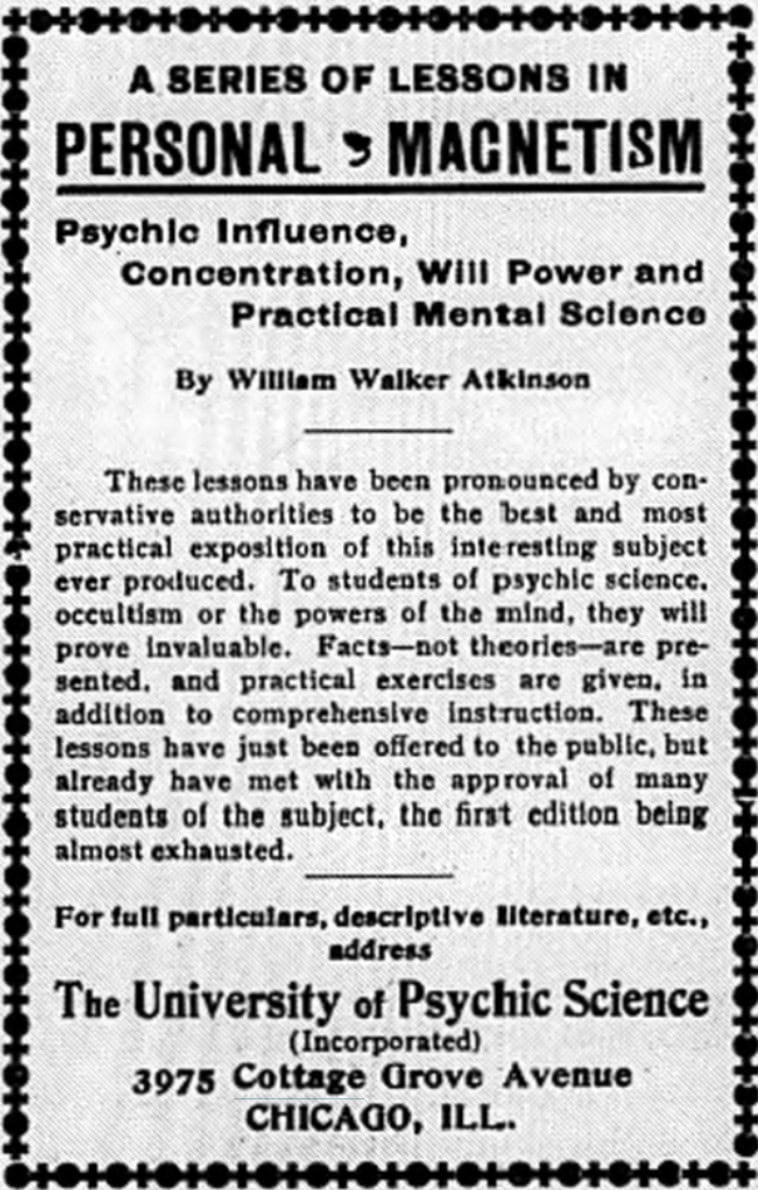
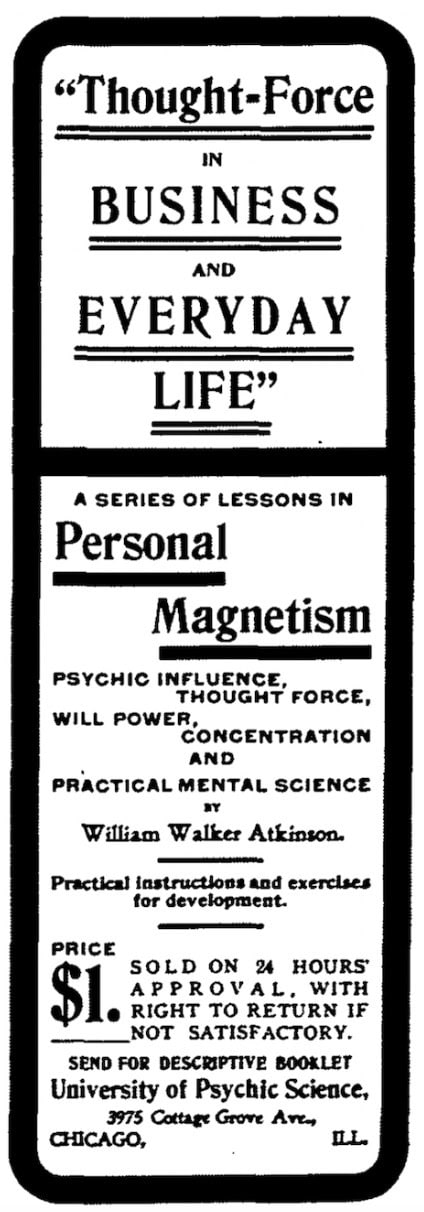
In September 1900, Dr. Parkyn opened the University of Psychic Science at 3975 and 3987 Cottage Grove Avenue, also just one block from the Chicago School of Psychology. The University occupied offices above Oakland Music Hall, with the hall itself serving as the venue for lectures, demonstrations, and classes. William Walker Atkinson became the University’s principal lecturer and public face, and it was through the University that his first book was published. Parkyn intended the University to become the model for opening similar institutions across the United States and overseas. Together with his Chicago School of Psychology and his surrounding publishing and educational ventures, the new University helped create a concentrated campus centered around 40th and Cottage Grove Ave. When the magazine New Thought was established in 1902, its headquarters where soon moved 3835 South Vincennes Avenue, only three blocks away from Parkyn’s growing educational and publishing district.

Parkyn purposely kept his name hidden from many of his ventures
At the turn of the twentieth century, alternative systems of healing were under constant attack from the organized medical establishment. Homeopathy, osteopathy, chiropractic, mental healing, hypnotism, suggestion, and many other emerging therapeutic movements faced legal challenges, hostile medical societies, and repeated efforts to prevent their practitioners from receiving recognition or the right to practice. As founder of the Chicago School of Psychology, Parkyn stood at the center of this struggle. His school was the first institution in the United States to teach Suggestive Therapeutics systematically and confer the degree of Doctor of Psychology. The reputation of the school was therefore critical not only to Parkyn himself but also to the growing network of affiliated schools across the United States and Canada that relied upon its curriculum, its degrees, and its professional standing. Maintaining credibility with physicians, legislators, licensing authorities, and the public was essential if graduates were to be accepted as legitimate practitioners.
For that reason, Parkyn carefully separated his public medical work from his private investigations into Eastern philosophy, psychical research, and other subjects that many physicians dismissed as occult or unscientific. Any public suggestion that the founder of the country’s leading school of Suggestive Therapeutics was promoting mystical or esoteric doctrines could have damaged the school’s reputation, undermined its graduates, and provided critics with ammunition against the entire movement. While Parkyn’s published medical work remained firmly grounded in clinical practice and psychology, he pursued many of these broader interests through separate organizations, publications, and trusted associates.
The Incorporation of the University of Psychic Science

One example of this approach was the creation of the University of Psychic Science in September 1900. Three attorneys from the Chicago law firm Church, McMurdy & Sherman handled the incorporation, and their names, not Parkyn’s, appeared in the legal notice. When a reporter sought additional information, attorney Roger Sherman explained that the people behind the new university were not yet prepared to make their identities public. He did, however, state that the institution would focus on Suggestive Therapeutics, psychology, and other studies relating to the powers of the mind.
Roger Sherman was more than the attorney who handled the University’s incorporation. He was a longtime friend and trusted associate of Parkyn, and their relationship extended well beyond legal matters. The two had known one another since their college football days, where they were both star players, and they remained close throughout their professional careers. Sherman also served as president of the Kenwood Club, where Parkyn organized one of Chicago’s early hockey teams and where Sydney Flower, Parkyn’s secretary, competed and won several club tennis tournaments. Their families were also close. When Sherman’s brother was married, Parkyn and Roger Sherman served as the wedding’s only two ushers.
Sherman also became an important ally in defending Suggestive Therapeutics and other emerging psychological methods against legal challenges. As Assistant State’s Attorney for Chicago, he took a public interest in the legal status of hypnotism and mental therapeutics, contributing an article to Parkyn’s Suggestion magazine entitled “The Attitude of Courts Toward Hypnotism.” At a time when new forms of medical practice were frequently challenged in the courts and by organized medical societies, Sherman provided both legal expertise and public support for Parkyn’s work. He would later go on to serve as president of the Illinois State Bar Association, giving additional weight to his longstanding association with Parkyn and the Chicago School of Psychology.

Parkyn’s Cottage Grove Enterprises
Mail Course Exchange

Dr. Parkyn started the Mail Course Exchange at 4004 Cottage Grove Avenue to gather correspondence courses from many mail-order businesses. The collection featured materials from large publishers as well as lesser-known or short-lived companies whose courses might have been lost. These courses offered a wealth of content from the self-improvement and mental science movement of the early and mid-nineteenth century.
The courses covered nearly every area of personal growth. Some focused on fascination, personal magnetism, character building, memory, concentration, physical fitness, hygiene, breath control, and moral improvement. Others looked to astrology, phrenology, palmistry, crystal gazing, mind reading, and various forms of practical occultism. Many also taught ways to influence others using mental focus, confidence, posture, voice, and disciplined thinking.
Instead of just republishing the courses, Parkyn used them as starting points. He had William Walker Atkinson and other graduates review, update, rename, and expand the material using the Law of Suggestion as the central theme that each topic would eventually land on. This turned a wide range of older and forgotten nineteenth-century lessons into a unified system of practical psychology.
Many of these updated courses were first published by the Psychic Research Company, and later appeared in the catalogs of the Yogi Publication Society and other related publishers. Over time, they became the foundation for books and correspondence courses on topics like Mind Power, Concentration, Personal Magnetism, Memory Training, Crystal Gazing, Mind Reading, and many other subjects that combined psychology, self-improvement, and practical occultism into one collection.
The Edison College of Electro-Therapeutics
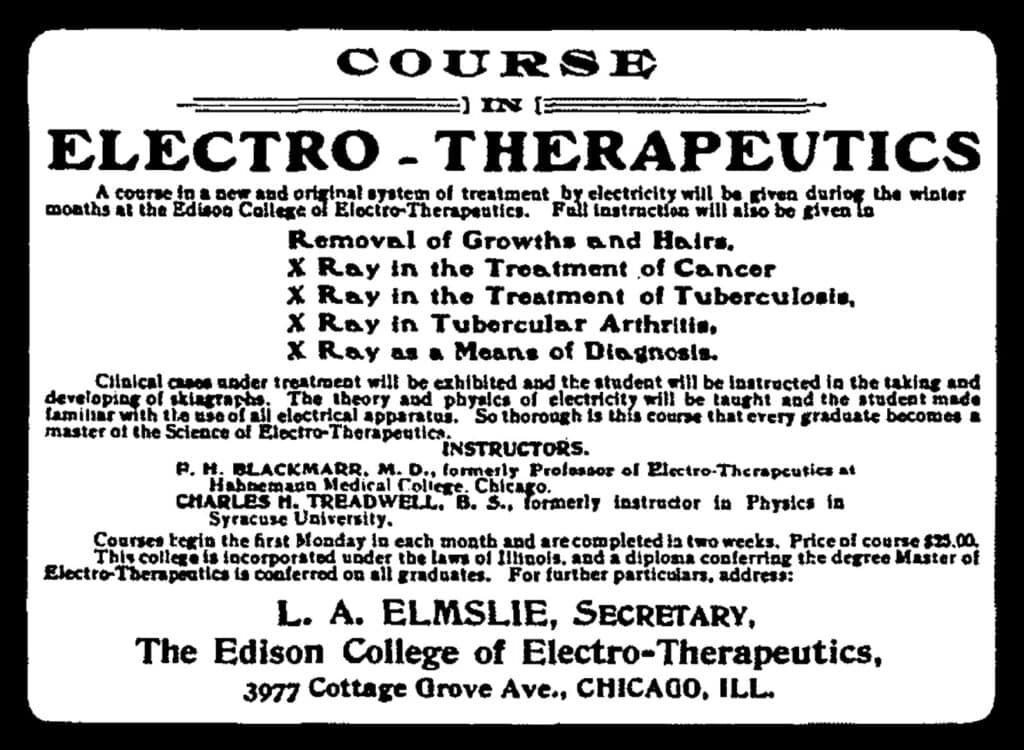
Parkyn also started a school of Electro-Therapeutics in the same offices as the University of Psychic Science. The college taught the main types of electrical healing that were popular in the New Thought movement. The school was led by P. H. Blackmarr, who had taught Electro-Therapeutics at Hahnemann Medical College in Chicago, and Charles H. Treadwell, a former physics instructor at Syracuse University.
The National School of Osteopathy
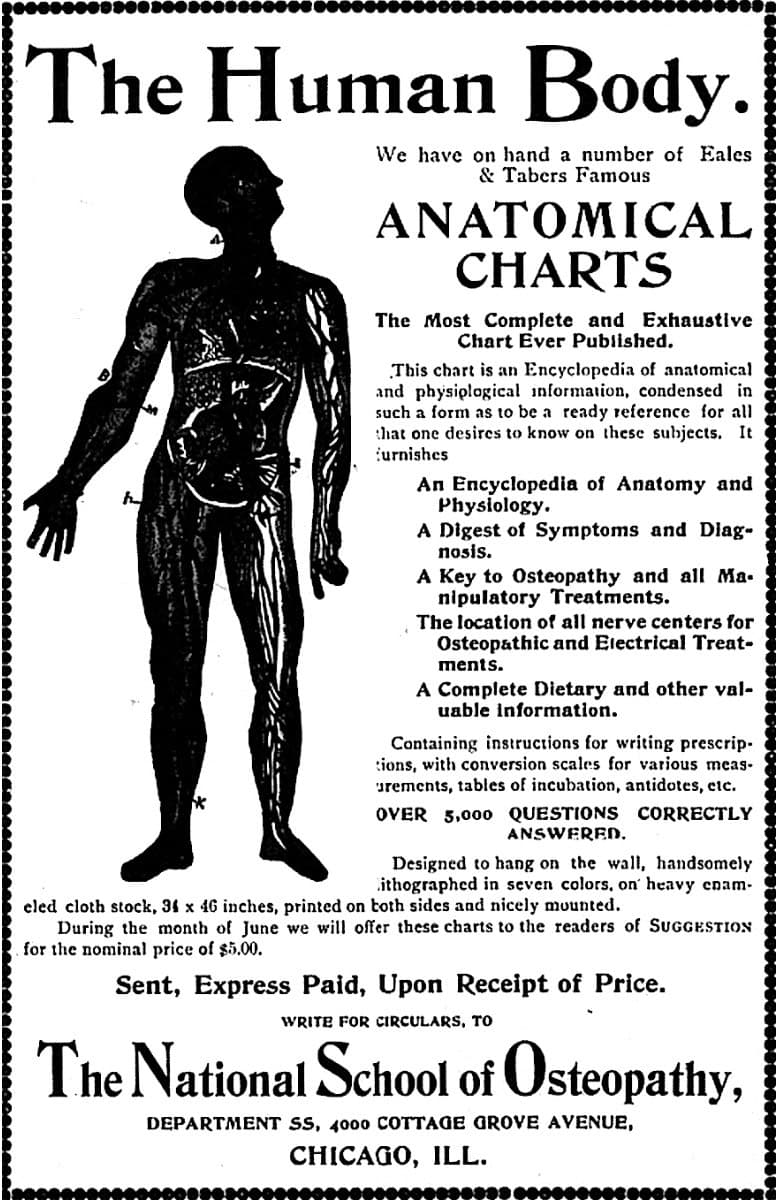
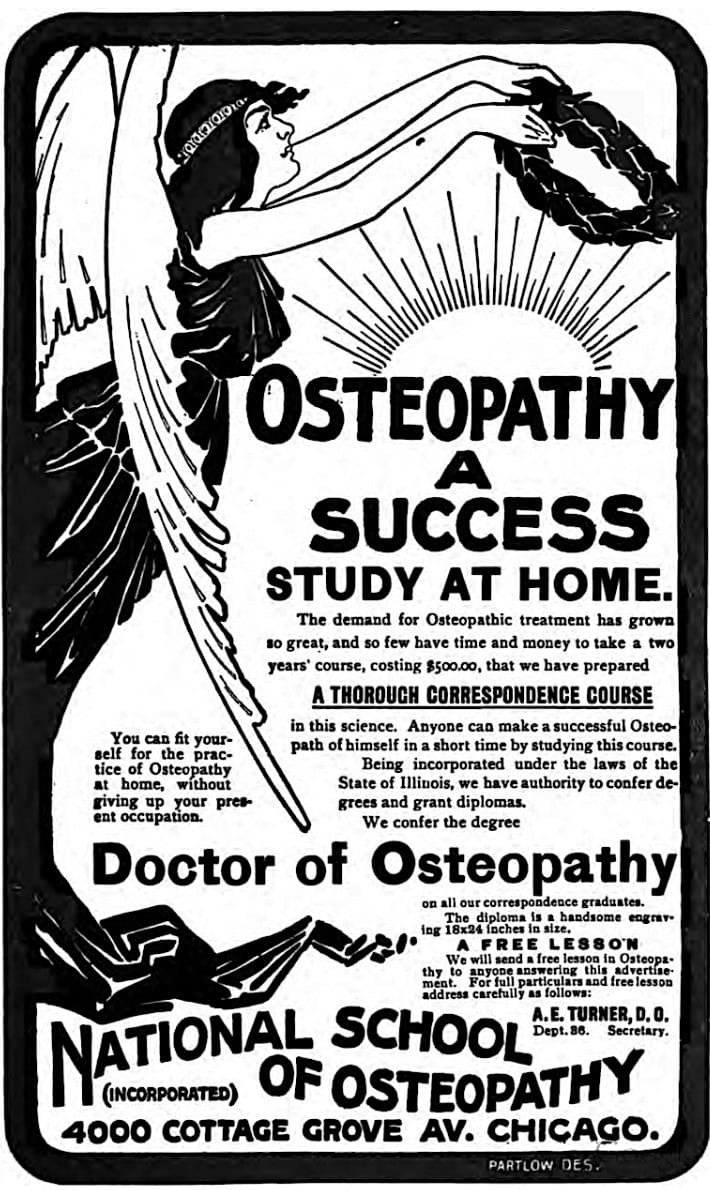
Parkyn started a school of Osteopathy at 4000 Cottage Grove Avenue. It began as a correspondence branch linked to the National Schools of Osteopathy in Missouri and St. Louis. After getting more space, Parkyn turned it into a full teaching center. Dr. E. A. Russ gave the lectures and instructions. Parkyn hired Partlow Designs of Chicago to create an advertisement for the school that depicted a woman in the Art Nouveau style holding a laurel wreath. He would also have the firm design an ad for his Magnetic Healing Cup and to expand the YPS logo.
Combined courses
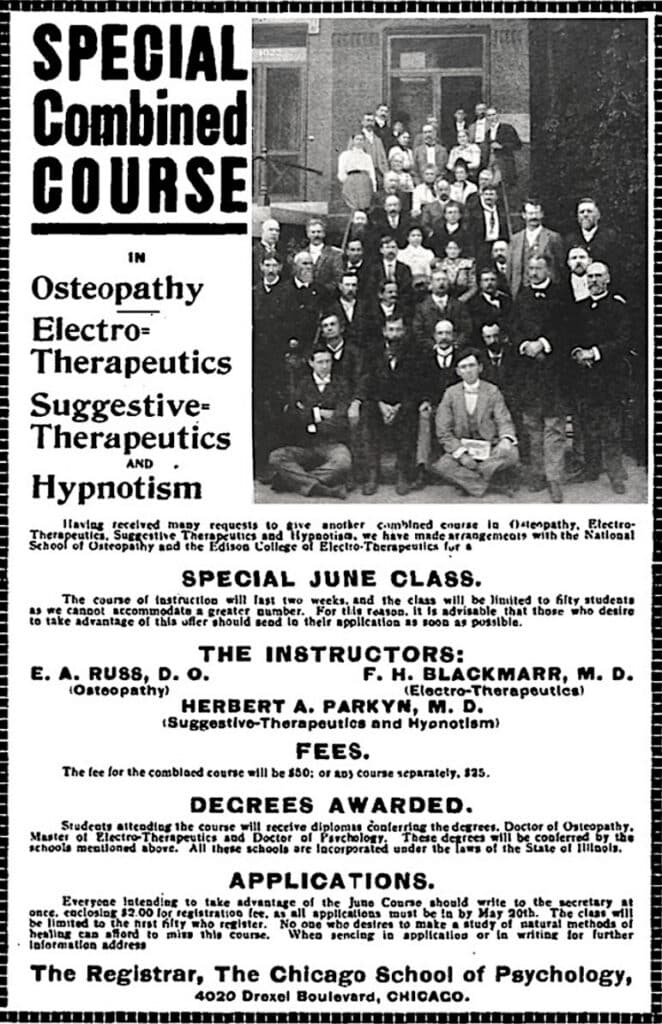
Dr. Parkyn combined the Electro-Therapeutic and Osteopathy courses with his Chicago School of Psychology classes on Suggestive-Therapeutics and Hypnotism. He offered a single tuition package so students could earn degrees in all three areas.
The Magnetic Healing Cup
In 1900 Dr. Herbert A. Parkyn invented and patented the Magnetic Healing Cup. He promoted it as both a scientific tool and an experiment in psychic research. The Magnetic Healing Cup Company, based at his Chicago office at 4000 Cottage Grove Avenue, marketed the device. Parkyn designed the cup to test whether a physical object could amplify the effects of suggestion by giving patients something tangible to focus their beliefs and expectations on. He believed it could help direct mental influence, which he called the vital healing force, into the subconscious. Drinking from the magnetized cup, along with the idea that it could heal, was meant to trigger the body’s natural recovery. This project was also part of a greater effort to determine whether physical aids could make patients more responsive to mental and psychological treatments.
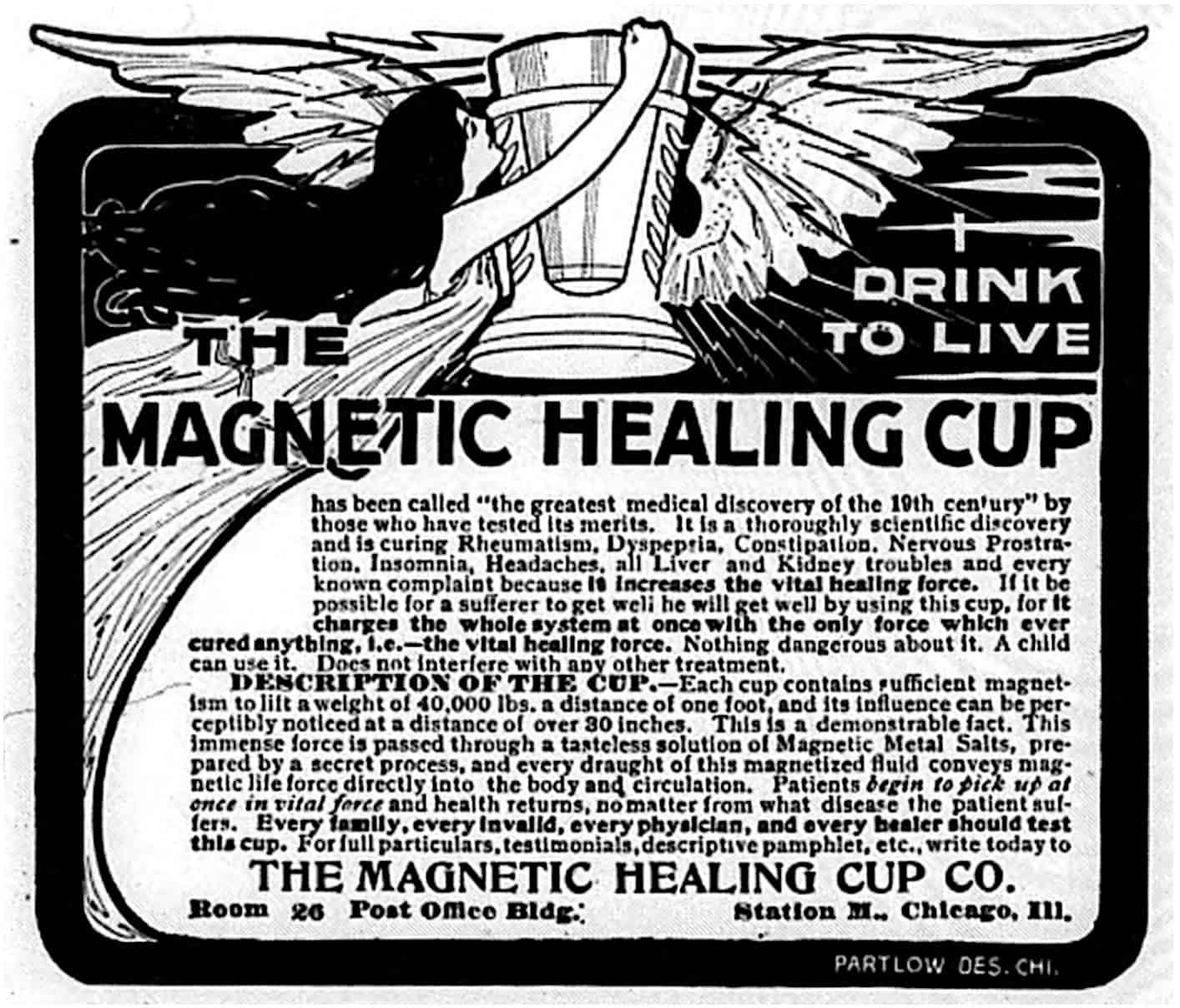
The Magnetic Healing Cup was advertised as a major advance in suggestion-based medicine. It was said to transfer magnetic energy into liquids, creating what promoters called “liquid magnetism” or “liquid life.” Ads often described it as “the last and greatest discovery of the nineteenth century.” Dr. Parkyn claimed that drinking the magnetized liquid would send this energy through the bloodstream, refresh the body at the cellular level, and cure disease by restoring the patient’s internal vital force. Promotional materials said the cup could charge the body “with the only force which ever cured anything,” and claimed it held enough magnetism to lift 40,000 pounds from a foot away, with a magnetic field reaching over 30 inches. The magnetic effect was said to be infused into a tasteless solution of Magnetic Metal Salts, made by a secret process, to create a drink meant to restore energy, improve circulation, and help with chronic illness.
Parkyn gave away the cups for free as part of a plan to collect feedback from users. Patients were asked to write letters describing their health conditions, and in return, they received a cup with instructions and information. This process helped Parkyn gather data on how well the cup worked and also spread the word about his larger system of psychic healing. The campaign went beyond individual patients; Parkyn also found agents to distribute the cups nationwide, promoting them as safe, drug-free, and suitable for use alongside other treatments. Although sold commercially, the Magnetic Healing Cup was really an experiment to see if belief, focused through a physical object, could lead to real health improvements.
The Natural Healers’ Protective League

In the spring of 1900, Dr. Parkyn started the Natural Healers Protective League from his office at 3985 Cottage Grove. He noticed that drugless healing movements were growing quickly. Parkyn believed that if the medical profession kept ridiculing or legally disputing these groups, it would only make them more determined. He thought that, if left unchecked, these groups would organize, grow stronger, and eventually push for the right to practice freely.
The Natural Healers Protective League was Parkyn’s answer to this growing challenge. Its goal was to unite different natural healing groups into a national organization that could protect its members from restrictive laws and defend their rights. Parkyn said the League would not just protect members from prosecution, but also teach both healers and the public about the real principles behind their work, especially the law of suggestion. He wanted to raise the standards of the healing movement and keep it free from superstition or fraud. To help spread the League’s message, Parkyn started The Natural Healer magazine as its official publication. The magazine was meant to bring members together and provide information to help healers defend their work and understand the psychology behind their success.

The Chicago Pure Food Company
Dr. Parkyn started the Chicago Pure Food Company at 3990 Cottage Grove, with offices across the street at 3983 Cottage Grove. The company made nut-based foods that were advertised as healthy and therapeutic alternatives to meat, especially for people with digestive problems. Products like Choc-O-Lets, Cocoa-Nut-Bread, and Malted Nut Cheese were promoted for their nutrition and taste. With help from his father’s contacts in the Canadian milling business, Parkyn got bulk ingredients and sent out samples and information by mail, urging people to “stop eating so much meat and try fruits and nuts.”

Premium Subscription Agency and Premium Department
Dr. Parkyn ran his Premium Subscription Agency at 4000 Cottage Grove and the Premium Department from his school offices. These were important parts of his publishing and marketing efforts. The services let customers combine several magazine subscriptions at big discounts, a practice called magazine clubbing. The agency handled payments, checked addresses, and filled orders. It also managed subscriptions for libraries and promoted local reading rooms with New Thought books. Through Suggestion magazine, Parkyn offered bundled deals with other New Thought publications, often including free books or health products as bonuses. Since the agency was independent, it could avoid some advertising rules and promote more freely.

Magazine clubbing with Suggestion
Dr. Parkyn set up clubbing deals with many New Thought magazines. Many of these magazines were started by his former students from the Chicago School of Psychology or by other New Thought leaders he knew well. Some of the well-known publications included The Nautilus, Fred Burry’s Journal, Thought, Mind, Now, Success, It, Unity, The Philistine, The Segnogram, The Balance, The Liberator, New Thought, and Medical Talk. By working together with these magazines, Parkyn helped build a network that brought together people interested in New Thought and mental science. This network gave them a place to share new findings, therapy methods, and ideas.

Mail-order products
Dr. Parkyn used his magazine Suggestion to sell a range of products aimed at the New Thought community. Along with many books, he offered devices like the Hypno-Metronome, which the University of Psychic Science claimed could hypnotize anyone. He also sold a Vacuum Treatment device to improve circulation, the Simplex Spirometer to improve lung capacity, and items like alcohol gas stoves and silver utensil sets.

Sources & Citations
- Suggestion V7 Advertisements 1900
- Nautilus Magazine , November 1907
- “Parkyn’s University of Psychic Science with Atkinson” . Chicago Tribune. 1901-03-10. p. 21.
- “Parkyn’s University of Psychic Science 2 week classes in Personal magnetism” . Chicago Tribune. 1901-04-14. p. 21
- “Herbert A. Parkyn’s University of Psychic Science” . Chicago Tribune. 1901-03-17. p. 21
- “University of Psychic Science incorporates” . Chicago Tribune. 1900-09-16. p. 7
- Parkyn starts the University of Psychic Science with attorneys as incorporators” . The Inter Ocean. 1900-09-16. p. 18
- “Herbert A. Parkyn and Roger Sherman are the 2 ushers for wedding” . The Inter Ocean. 1898-11-06. p. 18
- Suggestion Magazine , April 1899.
- “1893 Football Team — University of Michigan Athletics” . bentley.umich.edu
- Suggestion Magazine advertisements 1901
- Parkyn's Magnetic healing cup" . The Philadelphia Inquirer. 1901-03-10. p. 7
- Parkyn's Magnetic healing cup" . The Journal Times. 1900-07-09. p. 7.
- The Journal of Borderland Research v52_q2_1996 , on patent of Magnetic Healing Cup. pages 55-58.
- "On suggestion and his invention of the Magnetic healing cup" . Leader-Telegram. 1900-07-03. p. 2
- Suggestive Therapeutics magazine ads 1899 and 1900
- Correspondence class course in Yogi philosophy and Oriental occultism by Yogi Ramacharaka .
- Suggestion magazine , Aug. 1900 pages 33-37
- Unity magazine , July 1900, Page 186
- "Pure Food Co incorporates with Canadian business friends of James Parkyn" . Chicago Tribune. 1898-12-14. p. 14
- Suggestion Magazine Feb . 1904
- Suggestion Magazine advertisements V13 1904
- Suggestion magazine advertisements V12
- Now magazine , San Francisco, March 1904
- Suggestion Magazine advertisements V13 1904
- PDF / Digital Archive. Suggestion V7 Advertisements 1900
- PDF / Digital Archive. Nautilus Magazine , November 1907
- Newspaper. "Parkyn's University of Psychic Science with Atkinson" . Chicago Tribune. 1901-03-10. p. 21. Retrieved 2025-06-05.
- Newspaper. "Parkyn's University of Psychic Science 2 week classes in Personal magnetism" . Chicago Tribune. 1901-04-14. p. 21. Retrieved 2025-06-05.
- Newspaper. "Herbert A. Parkyn's University of Psychic Science" . Chicago Tribune. 1901-03-17. p. 21. Retrieved 2025-06-05.
- Newspaper. "University of Psychic Science incorporates" . Chicago Tribune. 1900-09-16. p. 7. Retrieved 2025-06-05.
- Newspaper. "Herbert A Parkyn starts the University of Psychic Science with attorneys as incorporators" . The Inter Ocean. 1900-09-16. p. 18. Retrieved 2025-06-05.
- Newspaper. "Herbert A. Parkyn and Roger Sherman are the 2 ushers for wedding" . The Inter Ocean. 1898-11-06. p. 18. Retrieved 2025-06-05.
- PDF / Digital Archive. Suggestion Magazine , April 1899.
- Website. "1893 Football Team -- University of Michigan Athletics" . bentley.umich.edu. Retrieved 2025-06-05.
- Newspaper. "Harpers Weekly responses to football scandal with Parkyn" . Harper's Weekly Journal of Civilization. 1895-12-14. p. 55. Retrieved 2025-06-05.
- Newspaper. "Parkyn and Sherman both accused by Casper W Whitney in his Haper's piece" . The Minneapolis Journal. 1895-11-26. p. 3. Retrieved 2025-06-05.
- PDF / Digital Archive. Suggestion Magazine advertisements 1901
- PDF / Digital Archive. Magnetic cup in March 1900 issue of Suggestion . Page 72 and 73
- Newspaper. "Dr. Herbert A Parkyn's Magnetic healing cup" . The Journal Times. 1900-07-09. p. 7. Retrieved 2025-06-08.
- Newspaper. "Herbert A Parkyn's Magnetic healing cup" . The Philadelphia Inquirer. 1901-03-10. p. 7. Retrieved 2025-06-08.
- PDF / Digital Archive. The Journal of Borderland Research v52q21996 , on patent of Magnetic Healing Cup. pages 55-58.
- Newspaper. "Herbert A Parkyn's Magnetic healing cup" . Leader-Telegram. 1900-12-13. p. 7. Retrieved 2025-06-08.
- Newspaper. "On suggestion and his invention of the Magnetic healing cup" . Leader-Telegram. 1900-07-03. p. 2. Retrieved 2025-06-08.
- PDF / Digital Archive. Hatha Yoga book , published by Yogi Publication Society at 4000 Cottage Grove.
- PDF / Digital Archive. Suggestion magazine , Aug. 1900 pages 33-37
- PDF / Digital Archive. Unity magazine , July 1900, Page 186
- Newspaper. "Chicago Pure Food Company incorporates with Canadian business friends of James Parkyn" . Chicago Tribune. 1898-12-14. p. 14. Retrieved 2025-06-12.
- PDF / Digital Archive. Suggestion magazine advertisements V12
- PDF / Digital Archive. Suggestion Magazine year 1903
- PDF / Digital Archive. Suggestion Magazine Feb . 1904
- PDF / Digital Archive. Suggestion Magazine advertisements V13 1904
- PDF / Digital Archive. Suggestion magazine advertisements V12
- PDF / Digital Archive. Now magazine , San Francisco, March 1904.
- PDF / Digital Archive. Suggestion magazine advertisements V12
- PDF / Digital Archive. Suggestion Magazine advertisements V13 1904