Copyright © 2026 D. Parkyn Jackson. Published by the Yogi Publication Society History Project. All rights reserved.
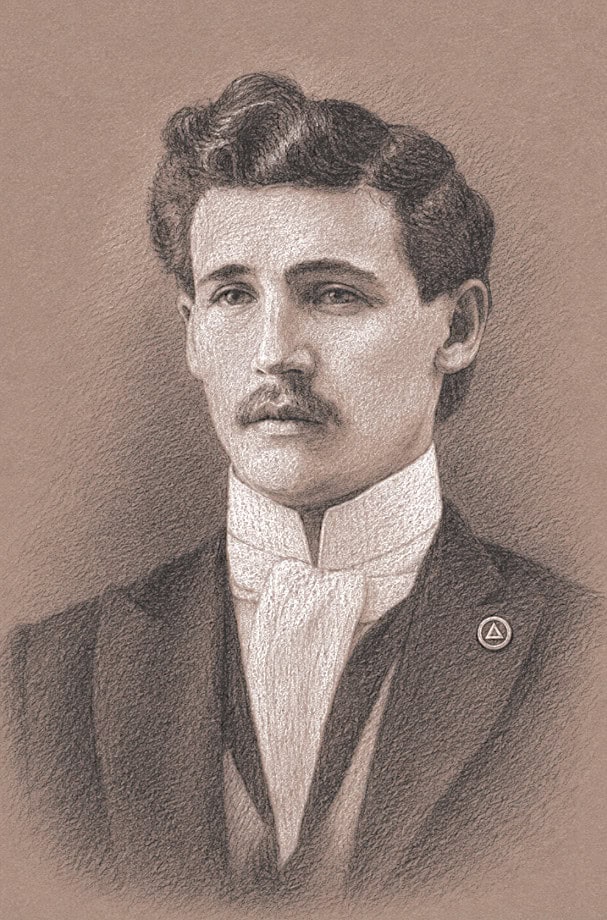
One of the defining stories in the life of Paul Foster Case concerns a mysterious encounter on the streets of Chicago in 1909 or 1910. At the time, Case was still pursuing a career as a professional musician when, according to the account he later related, he was approached by a man he did not know, a prominent Chicago physician who knew who Case was and had sought him out deliberately. The physician told Case that he had reached a crossroads where he could continue his musical career or he could dedicate his life to serving humanity by transmitting esoteric inner teachings. Case chose the second path.
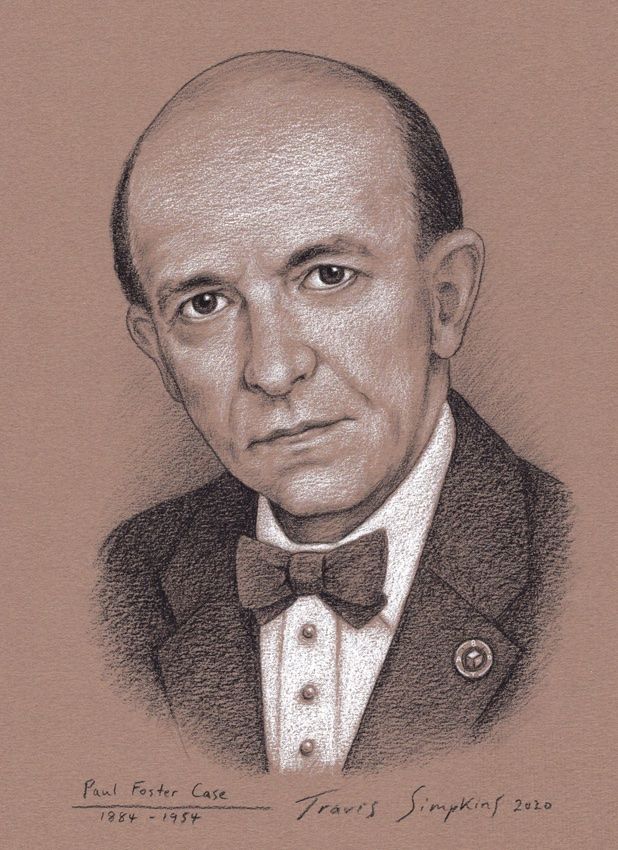
The encounter has become one of the legendary episodes in Case’s biography because of everything that followed it. Case increasingly devoted his life to the study and teaching of the Tarot, Qabalah, Hermetic philosophy, Rosicrucian teachings, and the Western Esoteric Tradition, eventually establishing Builders of the Adytum and developing the system of instruction for which he is remembered. The Chicago encounter has accordingly been memorialized as the moment when Case made the commitment that determined the direction of the remainder of his life. Yet the identity of the physician who delivered the message has remained a mystery.
Case provided only minimal information about the physician, which has left many to believe that the mystery person was a member of a secret inner brotherhood. Some accounts by Case refer to the prominent Chicago physician as going by the name “Dr. Robert Fludd,” a name with obvious significance because Robert Fludd was the seventeenth-century English physician and Rosicrucian writer whom Case himself frequently discussed in his writings. No surviving document yet discovered identifies the physician by his actual name, and absolute proof of his identity may no longer be possible.
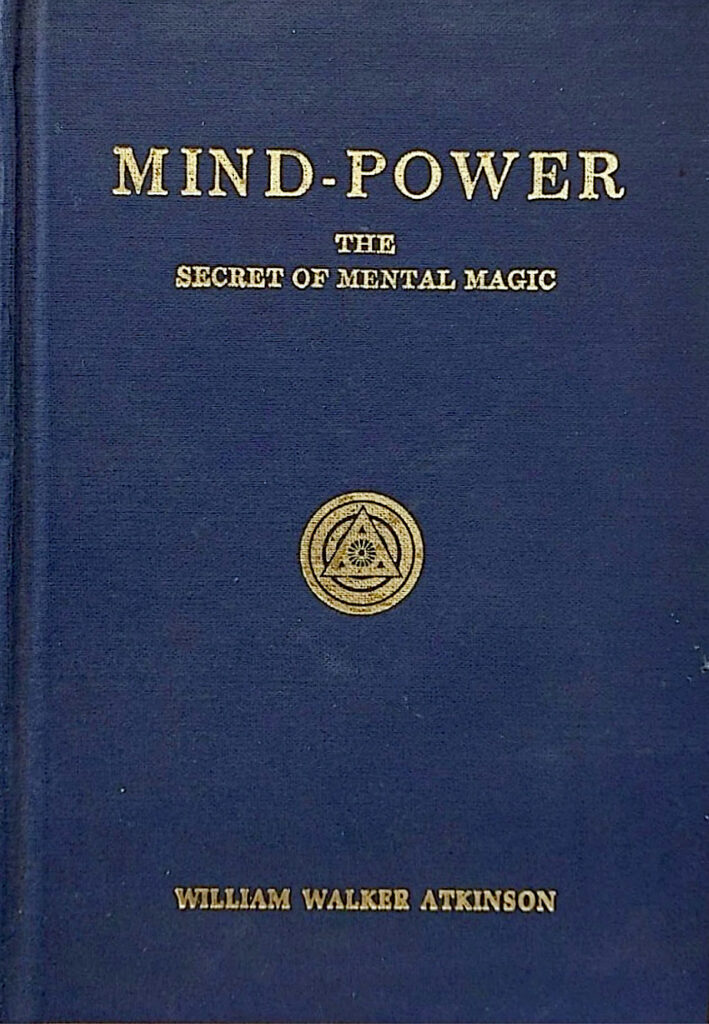
But there was, however, one very prominent Chicago physician whose life, teachings, associations, and connections with Case fit the circumstances of the encounter to an extraordinary degree. That physician was Dr. Herbert A. Parkyn. Case had even entered Parkyn’s immediate circle shortly before the mysterious meeting ever occurred. In 1907, Case reportedly read William Walker Atkinson’s The Secret of Mental Magic and then began corresponding with him. If the account of the 1907 correspondence is correct, Case was communicating directly with Dr. Parkyn’s principal literary writer just a couple of years before an unidentified Chicago physician sought him out by name.

Several other connections also bring the two men together, including their families’ strong ties to leadership within the Congregational Church and their shared connection to the Macoy Publishing and Masonic Supply Company. Macoy not only owned the Advanced Thought Publishing Company, which published numerous books produced by Parkyn’s network, but later became the publisher of several of Case’s books as well.
These connections become difficult to ignore when placed beside what is known about the physician himself. He was in Chicago, he was a physician, and he belonged to an esoteric environment in which the idea of hidden teachers or Masters was meaningful. Parkyn satisfies each of these conditions. He was also a member of a Rosicrucian order, which the mysterious physician was associated with because he used the symbolic name “Dr. Robert Fludd.” Case would also later write extensively about Rosicrucianism.
This article examines that famous meeting in detail, beginning with Case’s contact with Atkinson and then the encounter itself, and the clues Case left concerning the physician’s identity. Based only on the information Case provided, the man’s identity can never be stated as proven unless new evidence is discovered, but historical uncertainty does not require treating every possible identity as equally plausible.
Among the prominent physicians who can presently be placed in Chicago and within Case’s surrounding world in 1909 or 1910, Dr. Herbert A. Parkyn fits the surviving evidence with remarkable precision. Until evidence is found that identifies another man or contradicts the connections documented here, Dr. Parkyn must be considered the most plausible identity for the mysterious Chicago physician whose message helped change the course of Paul Foster Case’s life.
Paul Foster Case and the Chronology Leading Up to the Mysterious Chicago Meeting
Who Was Paul Foster Case?
Paul Foster Case became one of the most influential American teachers of the Western Mystery Tradition during the twentieth century. He was an important figure within the American branches of the Hermetic Order of the Golden Dawn before developing his own system of teaching and eventually founding Builders of the Adytum, better known as B.O.T.A. His interpretation of the Tarot as a symbolic system containing psychological and spiritual teachings became one of the central features of his work.
None of this, however, was the life Case expected to pursue. As a young man in 1909, he earned his living primarily through music and entertainment. He was a gifted pianist and organist who also incorporated card tricks into his repertoire. It was through a combination of spiritual intuition and an increasing fascination with occult subjects that Case began his investigation to understand the deeper connections of the mind and the Tarot.
The “Inner Voice” That Guided Case Since Childhood
Case’s journey into the hidden world of esoteric knowledge had its beginnings when he was a young boy and would experience unusual states of consciousness that he would later understand as evidence of an inner source of guidance. From about the age of five, Case reportedly experienced vivid lucid dreams in which he remained aware that he was dreaming and could consciously observe and interact with the dream state. Alongside these experiences came what he described as an “Inner Voice,” an experience that would remain an important part of his spiritual development as he grew older.
Case did not describe the Voice as though someone were physically speaking to him. He understood the experience as a form of inner hearing or clairaudience and distinguished it from his normal stream of thought. The Voice appeared to possess a character and intelligence of its own, communicating ideas that Case believed did not originate with his ordinary conscious mind. His lucid dreams and inner hearing became intertwined aspects of his early experience, with the Voice at times functioning as a guide through states that the young Case did not yet have the knowledge to explain.

As he entered his teenage years, however, these experiences also became a source of concern. Case reportedly began to wonder whether hearing an apparently independent inner Voice and experiencing such vivid conscious dreams might mean that something was wrong with him. In an extraordinary step for a young man, he apparently sought the advice of the famous British author Rudyard Kipling.
Case began corresponding with Kipling about his experiences, describing the inner hearing and unusual dream states that had accompanied him since childhood. According to the later account, Kipling took Case seriously and reassured him that these experiences did not mean that he was losing his mind, encouraging him to continue observing and developing the unusual faculties he appeared to possess.
The importance of these childhood experiences to Case’s later development is that his “Inner Voice” became part of the background against which his later investigations unfolded, while his lucid dreams had given him personal experiences that he understood as evidence that the mind could operate consciously beyond the limits of ordinary waking awareness. When Case eventually began searching for an intellectual and symbolic system capable of explaining such experiences, he was approaching the occult from something he believed he had already experienced for himself.
How Did Playing Cards Lead Case to the Tarot?
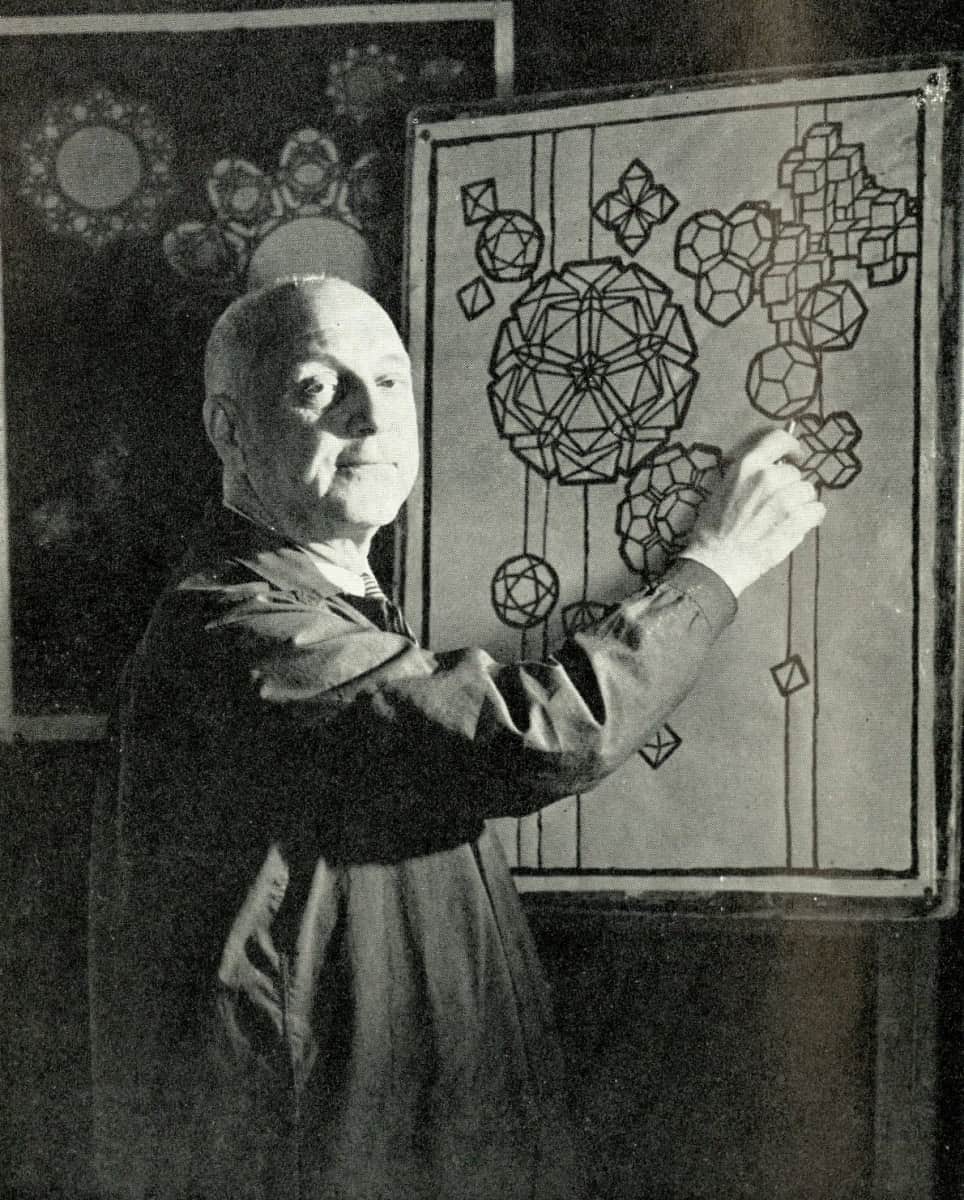
The first decisive encounter in Case’s occult development came in 1901 at the age of 17, while he was performing at a charity event in Rochester, N.Y. There he met Claude Fayette Bragdon, the architect, writer, and publisher whose interests extended into sacred geometry and esoteric philosophy. Bragdon watched the young Case perform his card tricks and asked him a deceptively simple question. “Where do you suppose playing cards came from?”
Case did not know the answer, but the question triggered a massive wave of intuition and direction from his inner voice, setting him on a path of studying the history and symbolism of playing cards that soon brought him to the Tarot and the body of hidden knowledge it contained.
Case collected Tarot decks and sought out books dealing with the cards and their connections with occult philosophy. His investigation gradually expanded into the systems associated with the Tarot, including Qabalah, astrology, Hermeticism, and Western esotericism. By the time of Case’s encounter with the physician on the streets of Chicago, he had already spent several years attempting to understand the inner structure of the Tarot and the body of teaching that lay behind it.
Case Starts Corresponding With William Walker Atkinson
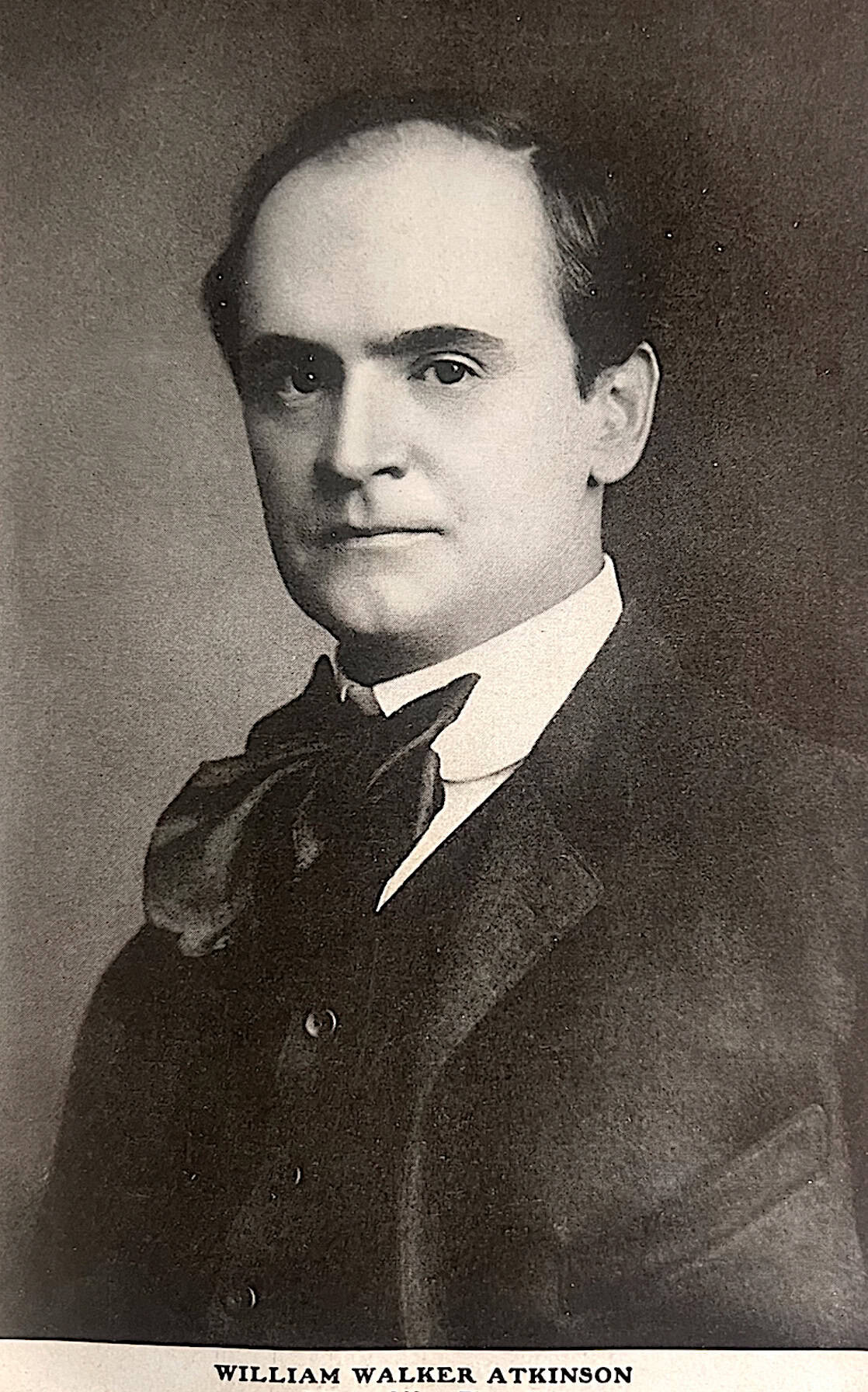
Another important moment in Case’s development came in 1907 when he encountered William Walker Atkinson’s The Secret of Mental Magic. The book presented mental influence and the powers of mind through a mixture of psychology, mental science, personal magnetism, occultism, healing, and self-development. Its teachings dealt repeatedly with Suggestion and mental control, including Voluntary Suggestion, Involuntary Suggestion, Auto-Suggestion, concentration, imagination, will, repetition, mental habit, therapeutic influence, and the deliberate replacement of one mental condition by another.
According to the account given by Case, The Secret of Mental Magic made enough of an impression upon him that he contacted Atkinson and began corresponding with him. What the two men discussed in their correspondence has never been revealed, but what matters for the chronology is that Case’s reported contact with Atkinson preceded the mysterious Chicago meeting by just a couple of years.
Paul Foster Case’s Legendary Meeting with the Mysterious Physician on the Streets of Chicago
According to Case’s account, the event occurred in 1909 or 1910, while he was living and working as a professional musician in Chicago, and it would be one of the most decisive events of his life. At the time, Case was still pursuing music as his profession while continuing the private study of Tarot and related occult subjects. One day, while he was on the streets of Chicago, he was approached by a man he did not know. The stranger, whom Case would describe as a prominent Chicago physician, approached him and introduced himself as “Dr. Robert Fludd.” What immediately made the encounter extraordinary was that the physician already knew Case’s name and considerably more about him than Case could explain.
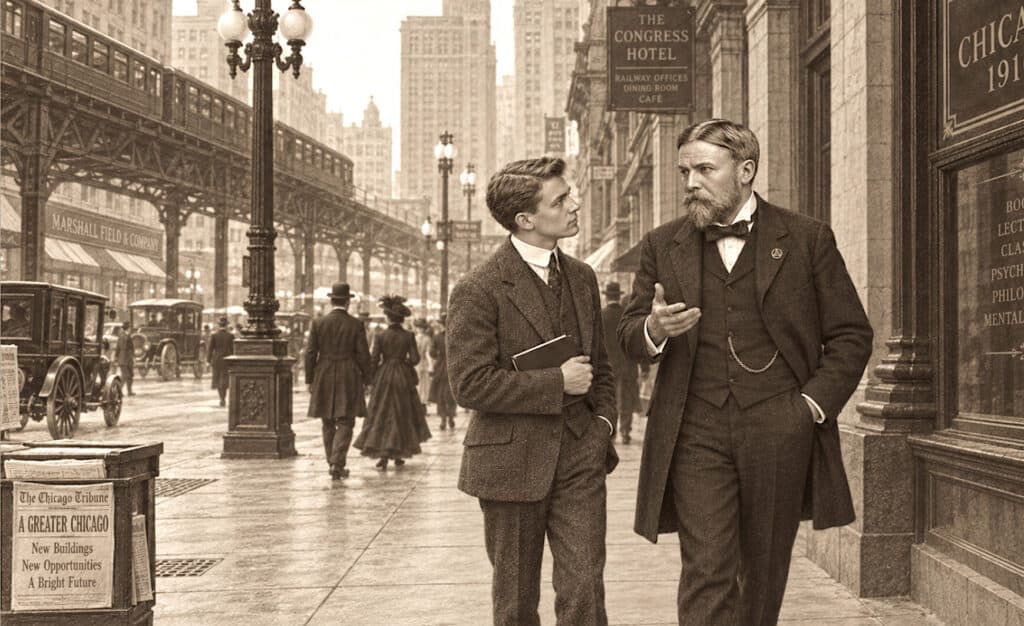
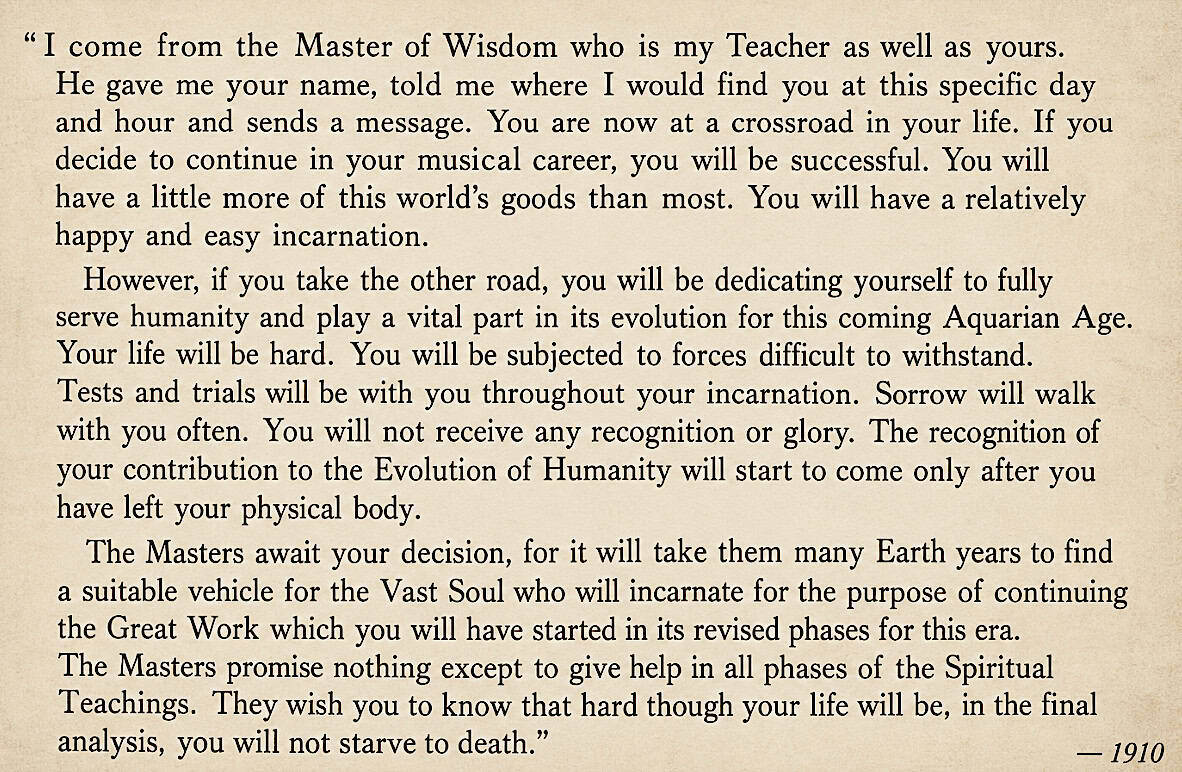
The mysterious stranger told Case that their meeting had not occurred by chance. He had been sent to find him and had been given both Case’s identity and the exact place and time at which he could be found. Then the physician began his message by telling Case, “I come from the Master of Wisdom who is my Teacher as well as yours.” He explained that this Master had given him Case’s name and had told him where he would find him on that specific day and at that specific hour. He had come because the Master had a message for Case.
The message concerned a choice that would determine the course of Case’s life. The physician told him that he had reached a crossroads. If Case continued with his musical career, he would be successful. He could expect to possess somewhat more of the world’s riches than most people and would enjoy a relatively happy and easy incarnation. Music therefore represented no failure or wrong path. According to the physician, it offered Case a genuinely successful life.
The alternative was entirely different. If Case chose the other road, he would dedicate himself fully to the service of humanity and take a vital part in its evolution during the coming Aquarian Age. He was warned plainly about what accepting such a life would entail. His life would be hard. He would encounter forces that would be difficult to withstand, and tests and trials would accompany him throughout his incarnation. Sorrow would frequently be part of his life, and he should not expect recognition or glory for the work he performed.
Faced with the two paths, Case chose the second. He accepted the life of spiritual work and service that the physician had described, placing the development and transmission of the inner teachings ahead of the professional musical career. The encounter with the mysterious physician thus became the legendary turning point in the story of Paul Foster Case, the moment at which he committed himself to the work that would occupy the rest of his life.
The Paul Foster Case story of meeting the mysterious physician on the streets of Chicago.
Another telling of the story:
Sometime, during the summer of 1909 a stranger, who called to Case by name, approached Paul on a downtown street in Chicago. This stranger turned out to be Dr. Robert Fludd, whom may have been one of the three initiates. At the time, Dr. Fludd was a prominent local physician and he explained to Case that he was approaching him on behalf of their mutual teacher (the voice that had been guiding Paul for years.)
Fludd relayed that this “voice” was, in reality, a Master of the Wisdom. To gain his confidence Dr. Fludd further revealed to Case a list of Paul’s “most secret thoughts, hopes and activities.” Fludd then went on to explain to Paul that “their” teacher had a message for him. This is the essence of the conversation that followed:
“Paul you are at a crossroad. Two paths are open to you. You can continue to pursue a career in classical music. You will be successful and will live a life of relative comfort. Or, you can dedicate yourself to unreservedly serve humanity and play a vital role in the coming Aquarian Age. If you choose this path, you will be given the task to reinterpret the teachings of the Ageless Wisdom and put them into a form more accessible to modern seekers. This journey of service may be difficult, with many tests and trials, but in the end I can assure you that you will not starve.”
Case made his choice without hesitation. From that moment on, he dedicated himself fully to the extension of the Mysteries of Light and the Way of Initiation.
The Connections Between the Mysterious Chicago Physician and Herbert A. Parkyn
Paul Foster Case’s Connection to Parkyn’s Network Through William Walker Atkinson
One of the strongest connections to Dr. Parkyn being the mysterious physician is that Case had already made a direct connection to Parkyn’s network before the mysterious meeting in Chicago. This occurred through his correspondence with Atkinson after reading his The Secret of Mental Magic. The connection is straightforward, as Atkinson was Parkyn’s principal literary vehicle and the central writer within the network Parkyn had created. The complete history of that relationship is examined elsewhere, but for the present investigation the essential fact is that Case was already communicating with Parkyn’s principal writer just a couple of years before the mysterious Chicago physician approached him.
Read the article: From Mental Breakdown to Atkinsonia: How Herbert A. Parkyn Turned William Walker Atkinson into a New Thought Phenomenon
The book that brought Case to Atkinson makes the connection even more interesting. The Secret of Mental Magic was grounded in Parkyn’s teachings on the Law of Suggestion and was another treatment of Parkyn’s system under the publishing name of William Walker Atkinson, reworded into metaphysical language for a New Thought audience. The book repeatedly employs principles and terminology central to Parkyn’s system of Suggestion, including Involuntary Suggestion, Voluntary Suggestion, Auto-Suggestion, repetition, concentration, will, imagination, mental habit, and the deliberate substitution of one mental condition for another.
Case had spent several years searching for the inner meaning of occult traditions like the Tarot, and now he had encountered the principles of Parkyn’s system presented within the kind of occult framework that intersected directly with his own investigations. Something about this material interested him enough to write to Atkinson.
There is currently no surviving record that tells us what Case and Atkinson actually wrote to one another, but the account does indicate that their communication continued for some time leading up to the Chicago meeting. This opens a much larger field of possibilities than a single letter sent to an author whose book had interested him. Case may have told Atkinson how his investigation had begun with Claude Bragdon’s question about the origin of playing cards, how deeply he had become involved in the Tarot, what he believed he was discovering, and where he thought the investigation was leading. He could have described his professional life as a musician, his ambitions, his personal circumstances, and the increasingly different direction in which his private studies were taking him. Over a couple of years of correspondence, Atkinson had ample opportunity to learn a great deal about the young man with whom he was communicating.
There was also another part of Case’s experience that could have entered those letters. Case could have described his experiences since his youth of hearing an “Inner Voice” that guided his investigations. We cannot know whether Case told Atkinson about the “Inner Voice,” but it would have been entirely relevant to correspondence concerning the esoteric search Case was pursuing. If he did discuss it, he could have revealed not merely that the experience was occurring but what he believed the Voice represented, how it directed him, what kinds of guidance he believed he was receiving, and how it related to the work he was attempting to understand.
The possibilities become even more interesting if Case was already making connections between the Tarot and the Law of Suggestion. If his letters discussed relationships he perceived between Tarot symbolism and Suggestion, mental polarity, concentration, imagination, will, the creation and transformation of mental states, or other principles he had encountered through The Secret of Mental Magic, he would have presented himself as much more than an enthusiastic reader. He would have demonstrated an ability to carry these teachings into a field that required a very different kind of knowledge. Parkyn’s network already included Atkinson and other writers producing works that presented the central truths underlying many ancient esoteric traditions as expressions of the same fundamental principles found in the Law of Suggestion. What Case potentially offered was the ability to extend that work into another major esoteric system. He had independently spent years investigating the Tarot and attempting to penetrate the system concealed beneath its symbolism. If he was beginning to recognize ways in which the Tarot could be connected with the mental laws developed by Parkyn and presented through Atkinson, he could have appeared as an unusually promising person to develop that part of the work.
Case did not necessarily need to reveal everything spontaneously. If his first letters attracted attention within the network, the correspondence itself provided an easy means of learning more about him. Questions could have been asked about how Case became interested in Tarot, what he had discovered, what he thought the cards represented, how he understood the teachings in The Secret of Mental Magic, what he believed the Voice was, what it had told him, how frequently he experienced it, what he wanted to accomplish, and what kind of life he was living outside these investigations. Case could have understood such questions simply as the interest of an established occult writer in the work of a younger correspondent. If Case had come onto the radar as someone with unusual potential, however, the same correspondence could have revealed almost everything necessary to determine whether he was someone worth approaching. There is no surviving evidence that Atkinson questioned Case on Parkyn’s behalf or that the correspondence served this purpose. What matters is that a correspondence lasting several years provided a remarkably easy way for it to have happened.
This possibility becomes much more significant when the correspondence is placed beside what the mysterious physician later appeared to know. The man who approached Case on the streets of Chicago supposedly knew Case’s identity before introducing himself. He knew enough about Case’s musical career to tell him that he could continue along that road and become successful. He knew that another side of Case’s life was sufficiently developed that he could be offered an alternative future devoted entirely to spiritual work. He understood the conflict between the outward career that could provide Case with comfort and success and the private esoteric search that had already occupied years of his life. All of this was information Case could easily have disclosed during an extended correspondence with Atkinson.
The most important parallel, however, concerns the “Inner Voice.” The physician did not merely approach Case with knowledge of his career and occult interests. He began by claiming a connection to the very source from which Case believed he had already been receiving guidance. “I come from the Master of Wisdom who is my Teacher as well as yours,” he told him. According to the story, the physician then explained that this Master had supplied Case’s name and the precise place, day, and hour at which he could be found. If Case had previously told Atkinson about the Voice, the physician’s opening statement would have touched the most private and extraordinary element of Case’s spiritual experience. A stranger knowing his name and musical career would have been surprising. A stranger claiming to represent the intelligence Case already believed was guiding him would have possessed an entirely different level of authority in Case’s eyes.
The claim that the same Master guided both men is crucial because it also explains why information that might otherwise have exposed ordinary prior knowledge could instead have strengthened the supernatural character of the encounter. The physician could know Case’s name because the Master had given it to him. He could know where to find Case because the Master had directed him there. He could understand the spiritual direction of Case’s life because, according to his opening declaration, the same Master was already Case’s Teacher. The more accurately the stranger appeared to understand Case and his private experiences, the more convincing his claim of access to the source of the Voice would have become.
While none of this establishes that Case actually wrote this in his letters or that Atkinson passed information about him to Parkyn, it does, however, show how remarkably easily the known circumstances could accommodate exactly such a sequence. If the physician was Dr. Parkyn, there was already a direct and ordinary route by which he could have known a great deal about Paul Foster Case before the two men ever met on the streets of Chicago.
Dr. Parkyn and the Use of Masked Suggestion
One of the most revealing connections between the mysterious physician and Dr. Parkyn is found in the method by which the physician approached Case. Parkyn had spent years studying how ideas could be introduced into the mind without appearing in the form of an obvious command. His use of Suggestion extended far beyond one person simply telling another person what to think or do. As Parkyn expressed the principle, “anything that suggests is a suggestion.” A person’s surroundings, expectations, beliefs, associations, words, images, rituals, treatments, and the apparent authority behind an idea could all become vehicles through which suggestion operated.
Dr. Parkyn also used what he called “masked suggestion,” in which the real source or purpose of a suggestion could be concealed behind another identity or presentation. Parkyn and his network repeatedly used pseudonyms in this way, with Yogi Ramacharaka being one of the most famous examples. The teachings could be presented through an identity that carried its own authority and associations, allowing the reader to receive the ideas through the character of the apparent source.
This makes the identity and method of the mysterious physician especially interesting. He appears as “Dr. Robert Fludd” and immediately claims to represent the same spiritual authority Case already believed was guiding him. “I come from the Master of Wisdom who is my Teacher as well as yours.” If Parkyn had learned about Case’s “Inner Voice” through his correspondence with Atkinson, he would already have known the spiritual framework through which Case understood his experiences. The stranger’s apparent knowledge of Case could then strengthen his authority, since he claimed that the Master himself had supplied Case’s name and told him exactly where and when he could be found.
The message that follows also closely resembles the indirect form of suggestion Parkyn taught. The physician never orders Case to abandon music or become an occult teacher. Instead, he creates two vivid pictures of Case’s future. Music promises success, comfort, and an easy life, while the other path promises hardship and sorrow but also service to humanity, participation in the coming Aquarian Age, and a place within the Great Work. For someone who had spent years pursuing occult knowledge and believed himself guided by an inner intelligence, the spiritual path carried an obvious appeal. The physician only had to present the alternatives and allow Case to make the decision himself.
If the physician was Parkyn, the encounter fits remarkably well with his use of masked suggestion. Case’s Inner Voice supplied an existing belief, the Master supplied the authority behind the message, “Dr. Robert Fludd” supplied the mask, and the two possible futures created the mental images from which Case made his choice. While this can’t prove that Parkyn constructed the encounter, the method attributed to the mysterious physician does, however, bear a striking resemblance to the methods Parkyn had spent years studying and teaching.
The Rosicrucian Connection Behind the Name “Dr. Robert Fludd”

The name used by the mysterious physician provides another important connection. According to the account, the Chicago physician introduced himself as “Dr. Robert Fludd,” an obvious reference to Dr. Robert Fludd, the seventeenth-century English physician, Hermetic philosopher, and famous defender of the Rosicrucian movement. Fludd became closely associated with the early history of Rosicrucianism following the appearance of the Fama Fraternitatis and Confessio Fraternitatis, making the choice of his name especially fitting for a physician claiming to represent hidden Masters and a continuing spiritual work. Case himself later wrote extensively about Rosicrucianism and discussed Dr. Robert Fludd as one of the men who understood the true purposes behind the original Rosicrucian manifestoes. For anyone already familiar with Rosicrucian history, a mysterious physician introducing himself as “Dr. Robert Fludd” would hardly have been a subtle choice of name.
Parkyn and his network were deeply connected to the American Rosicrucian movement. Parkyn was a member of J. C. F. Grumbine’s Rosicrucian “Order of the White Rose,” while R. Swinburne Clymer, a graduate of Parkyn’s Chicago School of Psychology and close collaborator within the network, became head of the Fraternitas Rosae Crucis. Ella Wheeler Wilcox, another prominent writer within the network, was closely connected with H. Spencer Lewis and the Rosicrucian Research Society from which AMORC developed. Through Grumbine, Clymer, Wilcox, and other connections running directly through the same network, Parkyn occupied a central position within the interconnected world of American Rosicrucianism during the early twentieth century.
The choice of “Dr. Fludd” fits naturally within this world. Parkyn was a physician, a member of a Rosicrucian order, and the central figure in a network with strong ties running through several of the most important currents of American Rosicrucianism. The historical Dr. Robert Fludd provided an ideal symbolic identity for a physician presenting himself as the representative of a hidden spiritual order, while also pointing directly toward the tradition that would later become central to Case’s own work.
The Macoy Publishing and Masonic Connection
Another connection between Parkyn and Case runs through the Macoy Publishing and Masonic Supply Company. Macoy Publishing owned the Advanced Thought Publishing Company that became an important part of the Parkyn network. Parkyn also had direct family ties to the Knights Templar Mason leadership from which Macoy Publishing itself had developed. Years later, the same Macoy Publishing company would publish several works by Paul Foster Case, including his famous The Tarot: A Key to the Wisdom of the Ages and The Masonic Letter “G.” Parkyn and Case were thus connected to the same Masonic and occult publishing organization, and the history behind that organization leads directly into the intersection of Freemasonry, the Knights Templar, Rosicrucianism, and the occult publishing world in which Parkyn’s network operated.
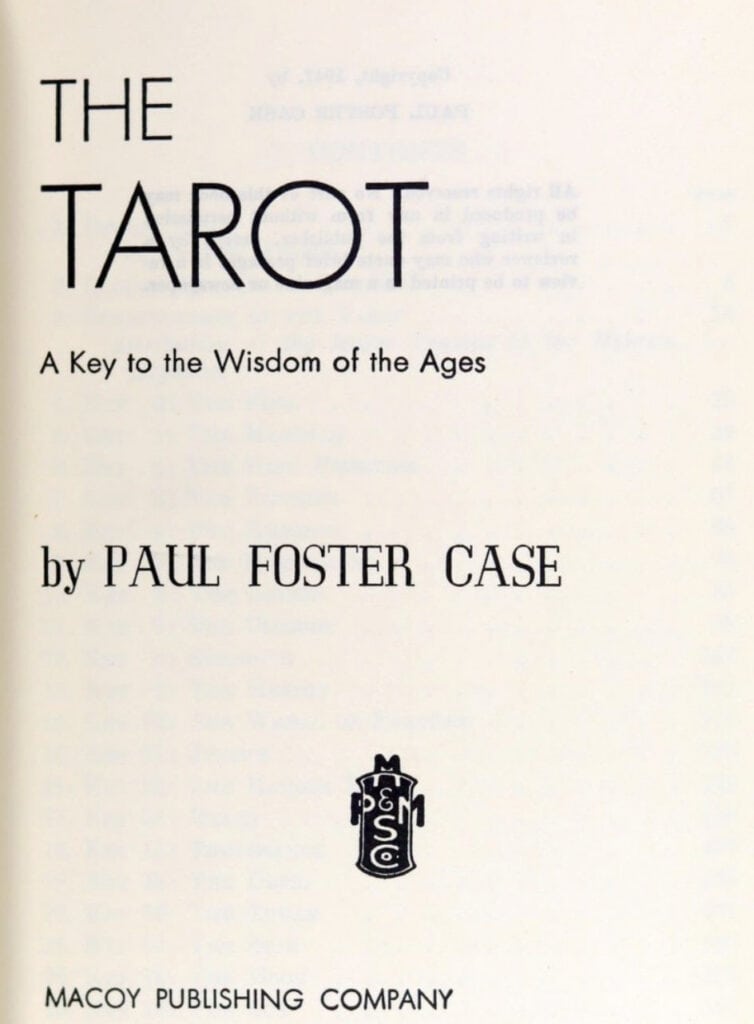
Macoy had been founded by Robert Macoy, a nationally prominent Mason and one of the leading figures within the Knights Templar, serving for more than forty years as Grand Recorder of the Grand Commandery of Knights Templar of New York. By the early twentieth century, the company had also moved deeply into Theosophical and occult publishing, acquiring a publishing network that included the Theosophical Publishing Company, the Occult Publishing Company, and the Advanced Thought Publishing Company. Advanced Thought is often described as though it had been created by William Walker Atkinson, but the company and name had a history extending back before his involvement and had been associated with the Theosophical publishing operation in India under Annie Besant before becoming part of Macoy’s publishing network.
Macoy’s expansion into Theosophy and occult literature reflected an increasing Masonic interest in recovering the deeper meanings behind its own symbols and traditions. The company published works by H. P. Blavatsky and William Q. Judge alongside older mystical writers such as Jacob Böhme, bringing Masonic, Theosophical, Hermetic, Rosicrucian, and other esoteric literature into the same publishing environment. These traditions could be approached as surviving expressions of an ancient wisdom running through different religions and philosophies, while the Masonic search for “that which was lost,” embodied in the legend of Hiram Abif and the Lost Word, provided a natural setting for this exploration.
The Knights Templar formed an important part of this Masonic and esoteric world, with strong historical connections to Rosicrucian symbolism and the Rose Cross within higher Masonic traditions. This makes the Macoy connection especially relevant following Parkyn’s own ties to American Rosicrucianism. The same network in which Rosicrucian figures such as Grumbine, Clymer, Wilcox, and others appeared also intersected with a Masonic publishing world actively investigating Theosophy, Hermeticism, Rosicrucianism, and the supposed ancient sources underlying them.
The connection to Parkyn was also personal. When Robert Macoy died in 1895, his funeral became an enormous Knights Templar event, with approximately five hundred Knights in full regalia joining the procession through New York. Among the Knights who marched in Macoy’s funeral procession was Parkyn’s uncle John Henry Jackson, himself a prominent Mason and Grand Commander of the Knights Templar of the State of Vermont. Parkyn’s Jackson cousins were also Masons and Knights Templar, with several holding important offices within the Order and later serving as Grand Commanders themselves. The Macoy and Parkyn worlds were connected through the same Knights Templar leadership well before Advanced Thought became part of the publishing environment surrounding Parkyn and Atkinson.
Dr. Parkyn, the Recruiter
By the time of Case’s mysterious Chicago encounter, Parkyn had spent years building an extraordinary network of writers, teachers, publishers, physicians, lecturers, and students around the system he had developed at the Chicago School of Psychology. Many of the people who later became important within this network had first come to Parkyn as students of his school. Parkyn identified people with useful abilities, brought them into his circle, and found places for them within the expanding organization. The remarkable collection of talent that eventually surrounded Parkyn was not accidental. Recruiting people and building organizations had been one of his strengths for years.
Parkyn had developed many of these skills long before creating the Chicago School. Throughout his earlier life he had been heavily involved in athletics and in forming and organizing sports teams, experiences that required him to find capable people, judge their individual strengths, and bring them together around a common purpose. He later applied much the same talent to the network he built around Suggestive Therapeutics, assembling what became his “Suggestion family” and drawing new people into the different schools, publications, and enterprises that developed from it.
This makes Parkyn an obvious person to consider if the purpose of the Chicago meeting was to recruit Case. If Case’s correspondence with Atkinson had already brought him to the attention of the network as someone with unusual knowledge and potential, Parkyn was precisely the person within that network who had spent years identifying such people and bringing them into the work. A personal approach by Parkyn would fit a role he had already been performing for years.
The Congregational Church Connection
Another possible connection between Case and Parkyn existed through their families, and family heritage carried considerable importance within the network Parkyn built. Several of its members were directly related to Parkyn or were close family friends, while others came from backgrounds that closely paralleled his own.
William Walker Atkinson is a good example. Parkyn’s mother was Margaret Beale Atkinson, and her brother, Parkyn’s uncle, was William Kirby Atkinson, who owned and edited the major newspapers The Leader and The Telegram in nearby Eau Claire, Wisconsin. Both families traced their ancestry to the Scotch-Irish migration from Ulster, Northern Ireland. In the early twentieth century, immigrants with a shared surname combined with the same ancestral background were readily understood as evidence of membership in the same extended family tree, and it was common for them to use family titles such as Aunt, Uncle, cousin, etc., between each other.
Paul Foster Case came from a background that would have been equally important to Parkyn. His parents, Charles Decatur Case and Ella Case, were deeply involved in the Congregational Church and civic activities in Northern New York. Charles was a Congregational deacon and Sunday-school teacher in Fairport, N.Y., wrote and lectured on the history of the church, was active in Congregational home missionary work, and also founded and served as chairman of the Fairport YMCA and acted as the town’s notary. Ella was also a prominent and active member of the Fairport Congregational church.
Parkyn’s family had an equally substantial Congregational background. His uncle, Rev. Samuel Nelson Jackson, was a Congregational minister, Chairman of the Congregational Union of Ontario and Quebec, editor of the Canadian Independent, president of the Congregational Publishing Company, and General Secretary of the Congregational Missionary Society. For eighteen years he served as a director and member of the faculty of the Congregational College, and he authored A Handbook of Congregationalism. He was also a key figure in the movement to establish the Pan-Congregational Council, conceived as an organization capable of bringing Congregational churches throughout the world into closer communication.
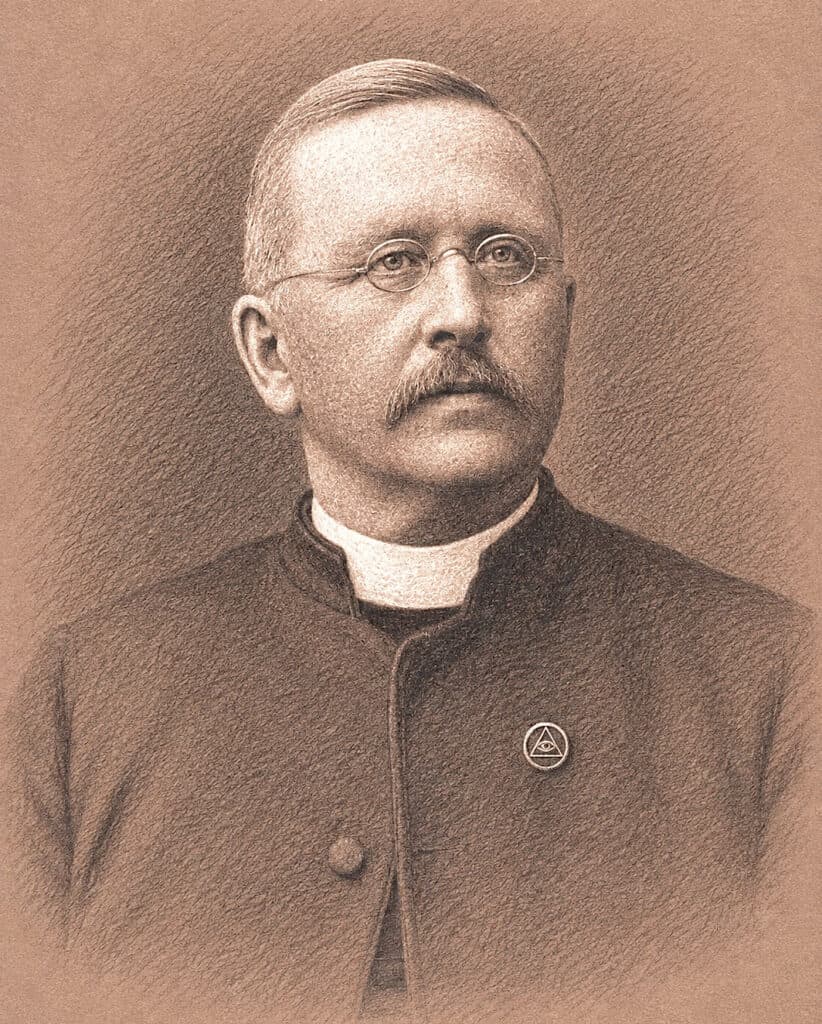
Jackson’s work repeatedly crossed the Canadian-American border. In 1884 he introduced the resolution that helped set in motion the international Congregational movement, and when the first International Congregational Council assembled in London in 1891, he attended and was asked to address Canada’s relationship with the Congregational churches of the United States. Then, in 1895, Jackson became pastor of the Congregational Church in Barre, Vermont. He was now working directly within the same New England Congregational circle. The geographical and institutional overlap makes some degree of connection between the two family networks highly plausible.
The families also shared similarities with music. Jackson’s son, S. Hollister Jackson, who was not only Parkyn’s 1st cousin but also his brother-in-law, earned his Bachelor of Music at the University of Toronto and moved with the family to Barre, where, from 1896 to 1900, he taught piano, organ, and composition while also playing organ in his father’s church. Paul Case was likewise raised within a Congregational household, trained in piano and organ, played organ in his father’s church, and went on to make music his profession.
For Parkyn, who had repeatedly recruited people through networks in which family, education, shared background, and existing relationships mattered, Case’s heritage made him an especially attractive candidate. Even if the two families had never met directly, Parkyn had access through his own family to the Congregational world from which Case came and to people capable of learning more about him. Given Samuel Nelson Jackson’s prominence, his deliberate work connecting Canadian and American Congregationalism, his move into nearby Vermont, and the Case family’s own extensive participation in Congregational life in New York, the possibility that the families or their immediate networks already had some connection is substantial.
Was Dr. Parkyn the Mysterious Chicago Physician?
Once the connections are brought together, the identification of the mysterious physician becomes difficult to separate from Dr. Herbert A. Parkyn. What initially appears in the Case story as an inexplicable encounter with a stranger begins to look very different when placed beside what was already happening around Case. For more than a year he had been communicating directly with the principal literary writer in Parkyn’s network while pursuing exactly the kinds of subjects that could have made him valuable to that network.
This changes the central mystery of the encounter. The physician’s apparent prior knowledge of Case no longer requires us to imagine an unknown Chicago doctor somehow discovering an obscure young musician with an unusual private interest in Tarot. There was already a direct path leading from Case to Parkyn before the physician appeared. There were also other paths running through the religious, family, publishing, Masonic, and esoteric worlds explored above. We cannot reconstruct which of those channels, or combination of them, supplied Parkyn with information about Case, but the remarkable fact is that they existed.
The encounter itself then falls into place with unusual precision. A physician with Parkyn’s background approaches a young man who was already connected to his network, uses a Rosicrucian identity, presents himself through a form of authority that would have carried enormous meaning for Case, employs a method closely resembling Parkyn’s own approach to suggestion, and places Case before a decision whose result is his commitment to a larger spiritual work. The man who had spent years building a network by finding and developing people with useful abilities appears to have found another.
That is the real strength of the identification. It does not depend upon the coincidence of two Chicago physicians, a similarity of interests, or one suggestive association. The deeper the circumstances surrounding the encounter are investigated, the more completely they lead into Parkyn’s world.
Conclusion; Dr. Herbert A. Parkyn was the Mysterious Chicago Physician
Historical identification does not require a document in which an unidentified person conveniently records his real name and explains exactly what he was doing. It is routinely established through convergence, when independent lines of evidence point repeatedly toward the same individual and no competing identification accounts for the evidence nearly as well. The investigation presented here has reached that point with Herbert A. Parkyn. The connections are too numerous, too specific, and too closely aligned with the surviving account to continue treating him simply as one possible candidate.
At this level of convergence, the burden has shifted to any competing identification. It is no longer enough to suggest that some other Chicago physician could theoretically have been “Dr. Fludd.” Another candidate would have to account for the evidence surrounding the encounter at least as completely as Parkyn does. Until such a person can be identified, supported by comparable evidence, or substantial evidence appears contradicting Parkyn’s identification, there is no historical reason to leave the identity unresolved.
On the evidence presently available, the case should be considered settled. The mysterious Chicago physician who approached Paul Foster Case in 1909 or 1910 on the streets of Chicago was Dr. Herbert A. Parkyn.

How to Cite This Article
D. Parkyn Jackson, “Was the Mysterious Chicago Physician Who Changed Paul Foster Case’s Life Dr. Herbert A. Parkyn?” Yogi Publication Society History Project, originally published September 2026.
Publication note: This article contains original research by the Yogi Publication Society History Project. It was first published on this website in September 2026 and archived by the Internet Archive’s Wayback Machine.
Sources & Citations
- Newspaper. "Mother dies. Was prominent in Congregational church. Charles is deacon" . Democrat and Chronicle. 1898-08-26. p. 4. Retrieved 2026-09-23.
- Newspaper. "Paul Foster Case's Father" . The Rochester Herald. 1900-08-16. p. 3. Retrieved 2026-09-23.
- Newspaper. "Father is clerk of Fairport" . The Rochester Herald. 1900-03-24. p. 3. Retrieved 2026-09-23.
- Newspaper. "Paul Foster Case's Father 2" . The Rochester Herald. 1900-03-29. p. 3. Retrieved 2026-09-23.
- Newspaper. "Paul Foster Case's Mother death" . The Rochester Herald. 1898-08-26. p. 3. Retrieved 2026-09-23.
- Newspaper. "Paul Foster Case's Father was a notary" . Rochester Journal and the Post Express. 1885-04-02. p. 3. Retrieved 2026-09-23.
- Newspaper. "Father Director of YMCA" . Rochester Journal and the Post Express. 1890-02-18. p. 6. Retrieved 2026-09-23.
- Newspaper. "Case's Father dies" . Democrat and Chronicle. 1919-04-09. p. 15. Retrieved 2026-09-23.
- Newspaper. "Paul Foster Case plays the organ at wedding" . The Rochester Herald. 1899-05-10. p. 3. Retrieved 2026-09-23.
- Newspaper. "Paul Foster Case lecturing on Rosicrucianism" . Brooklyn Eagle. 1924-04-03. p. 5. Retrieved 2026-09-23.
- Newspaper. "Paul Foster Case's wife helps out the Congregational Church in Fairport" . Democrat and Chronicle. 1926-04-03. p. 24. Retrieved 2026-09-23.
- Newspaper. "Paul Foster Case gives a lecture on the Emerald tablet of Hermes" . Los Angeles Evening Citizen News. 1933-08-05. p. 11.
- PDF / Digital Archive. A Handbook of Congregationalism , by Rev. Samuel Nelson Jackson CONGREGATIONAL PUBLISHING COMPANY, 1894
- PDF / Digital Archive. Jackson , Samuel N. (Samuel Nelson) (1911). A branch of the Jacksons and correlated families, 1730-1911. Boston Public Library. [New York : Bartlett-Orr Press].
- Newspaper. Herbert A Parkyn Passes the College of Physicians and Surgeons of Ontario exams" . The Kingston Daily News. 1892-06-01. p. 1.
- Newspaper. Herbert A Parkyn sets up hockey matches" . The Kingston Daily News. 1891-12-21. p. 1.
- Website. OHA HISTORY | Ontario Hockey Association" . www.pointstreaksites.com. Retrieved 2025-03-26.
- Newspaper. "Dr. Herbert A Parkyn elected secretary of the Ontario Hockey Assoc. Will determine Stanley cup" . The Hamilton Spectator. 1893-12-12. p. 8. Retrieved 2025-03-30.
- Newspaper. "Herbert A Parkyn is president of early hockey union of teams" . The Kingston Whig-Standard. 1891-01-15. p. 1. Retrieved 2025-04-02.
- Newspaper. "Herbert A Parkyn sets up hockey games" . The Kingston Daily News. 1893-12-18. p. 1. Retrieved 2025-04-02.
- Newspaper. "Herbert A Parkyn is captain of Toronto hockey team" . The Winnipeg Tribune. 1891-12-12. p. 4.
- Newspaper. Herbert A Parkyn organizes hockey team and games . Played with Chicago Hockey Club". Chicago Tribune. 1897-01-23. p. 7. Retrieved 2025-04-25.
- Newspaper. "Parkyn on board of Kenwood Club and will make a hockey team" . The Inter Ocean. 1901-11-03. p. 9
- PDF / Digital Archive. Suggestion Magazine 1898--1906 Monthly , Chicago, IL. Publisher: Suggestion Publishing Company. Editor: Herbert A. Parkyn and William Walker Atkinson. Issue Nov. 1899 Pages 81-85
- Magazine. The “Chicago School of Psychology” and Hypnotic Magazine : Suggestive Therapeutics, Public Psychologies, and New Thought Pluralism, 1895–1910
- Website. Robinson , Samuel (2021-01-31). "Paul Foster Case: Emissary of the True and Invisible Rosicrucian Order". Rosicrucian Tradition Website
- Website. "Paul Foster Case and the Chicago encounter" . www.scribd.com.
- Website. "Timeline of Paul Foster Case's life" .
- Newspaper. Kennedy , Rick (2000-02). Colman, Benjamin (1673-1747), Congregationalist minister. American National Biography Online. Oxford University Press
- Book. Chandra , Rakesh; Shukla, Malay; Mathur, Pankaj (2007), "OHA and Pregnancy: Current Scenario", Medicine Update (Volume 17, 2007), Jaypee Brothers Medical Publishers (P) Ltd., pp. 253–253, ISBN 978-81-8448-038-2,
- Newspaper. Baker, Anne Pimlott (2004-09-23). Willis, Sir (Zwinglius) Frank (1890–1974), educationist and YMCA official. Oxford Dictionary of National Biography. Oxford University Press.
- PDF / Digital Archive. Charles Decatur Case wrote for Sunday School Times . The Sunday-school Times - Volume 29 - Page 689