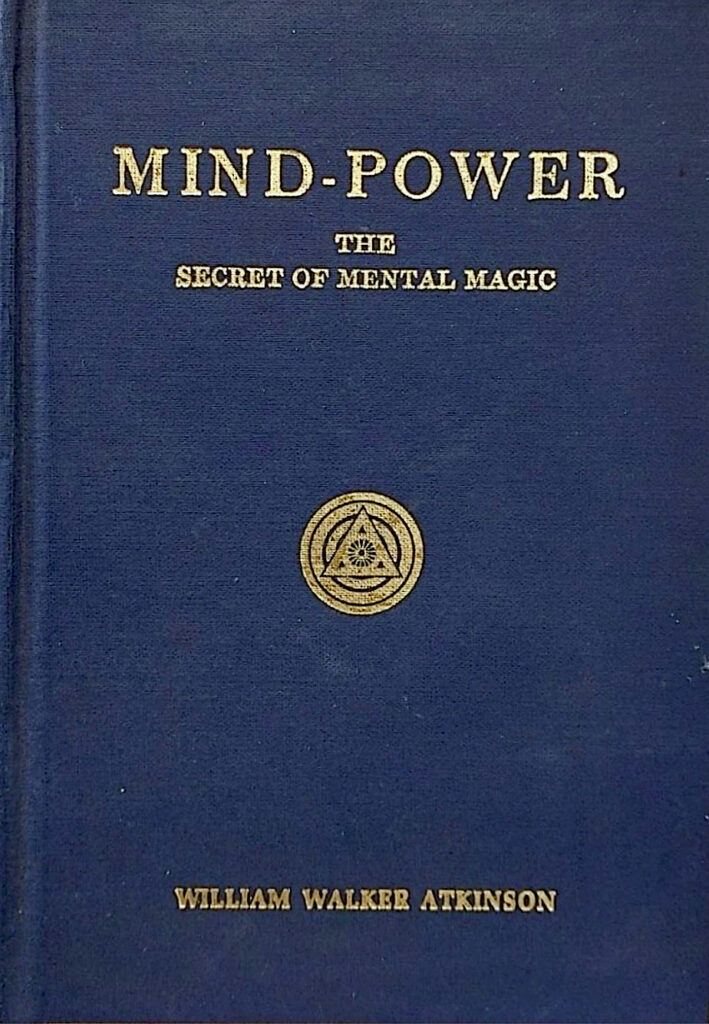
William Walker Atkinson’s Mind-Power: The Secret of Mental Magic is a 1907 work on mental influence, suggestion, personal magnetism, will-power, thought-force, mental healing, and self-development. First published by the Advanced Thought Publishing Company and later issued by the Yogi Publication Society, the book incorporates and substantially expands material that had previously appeared in Atkinson’s Mental Magic and Mental Fascination. The publisher described the resulting volume as Atkinson’s “Masterpiece,” explaining that the earlier material had been revised, corrected, enlarged, and supplemented. Across twenty-nine chapters, Mind-Power moves from a universal theory of mental force into increasingly practical applications involving Desire-Force, Will-Power, Mentative Induction, Personal Magnetism, Mental Suggestion, Telementation, mental healing, Mental Architecture, and Mind-Building.
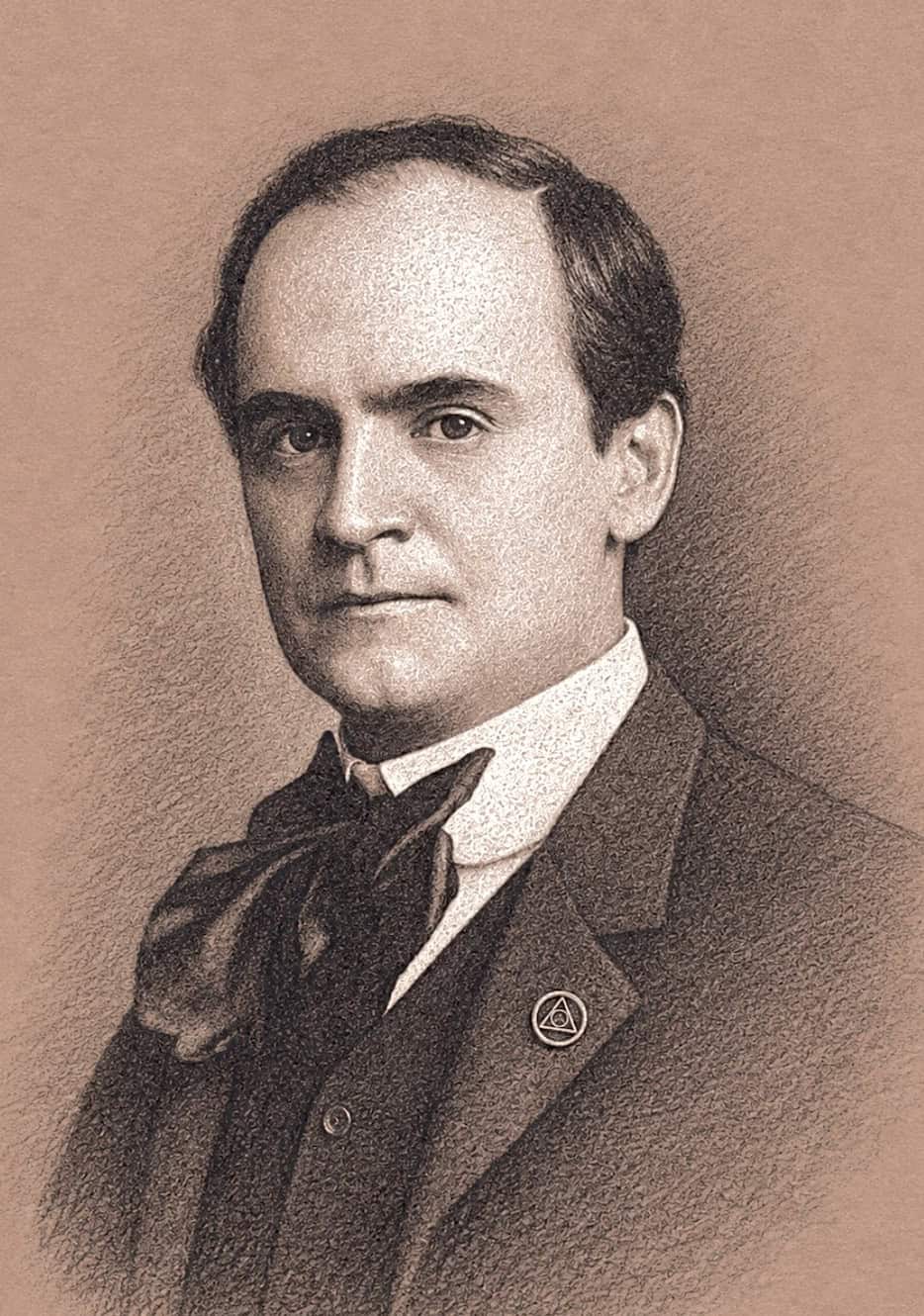
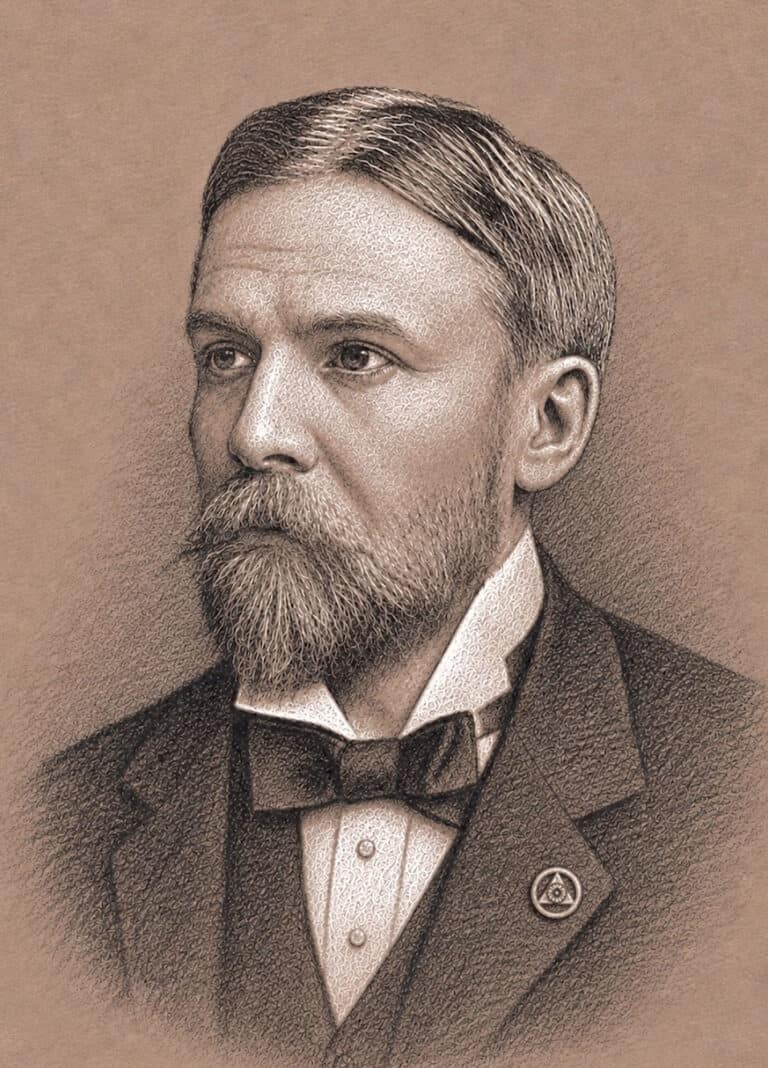
William Walker Atkinson
Running beneath Atkinson’s stylized writing is a continuation of the teaching of the Laws of Suggestion that Dr. Herbert A. Parkyn developed and taught at his Chicago School of Psychology The connection becomes increasingly clear as Mind-Power progresses from its occult and metaphysical language into practical mental operation. Suggestion, repetition, concentration, will, imagination, mental habit, and the deliberate substitution of one mental condition for another repeatedly form the system through which the various forms of “Mind-Power” are made effective. Most revealingly, the book later uses Parkyn’s established categories of Involuntary Suggestion and Voluntary Suggestion directly, alongside Auto-Suggestion, and applies the same laws to personal influence, healing, business, character formation, and self-development. Mind-Power can therefore be read as another vehicle through which the laws of Suggestion were carried into the characteristic Atkinsonian language.
What Does Mind Power: The Secret of Mental Magic Teach?
Mind-Power teaches that mental influence is a natural and universal process through which mental states may be formed, strengthened, communicated, resisted, and replaced. The book describes Desire-Force and Will-Power as two active poles of mental energy; Mentative Induction as the reproduction of corresponding states between minds; Personal Magnetism as direct personal influence; Mental Suggestion as influence through words, manner, imitation, association, repetition, and other physical channels; Telementation as mental influence across distance; Mental Therapeutics as the application of these principles to healing; and Mental Architecture and Mind-Building as their deliberate use in reconstructing habits and character. Throughout these subjects, the practical operation repeatedly returns to Suggestion, concentration, repetition, imagination, expectation, and will.
This underlying continuity is important because the terminology changes far more than the basic mental laws being taught. A reader interested in personal magnetism encounters the laws of Suggestion through influence and personality. A reader interested in occultism encounters them through mental currents, vibration, polarity, and the Ocean of Mind-Power. A reader interested in healing encounters them through Mental Therapeutics. A reader interested in self-development encounters them through Auto-Suggestion, Mental Architecture, and Mind-Building. The subject and literary setting change, but the central process remains the deliberate establishment of one mental condition and its strengthening until it becomes dominant over competing impressions.
The Mental Dynamo and Universal Mind-Power
Mind-Power begins with the idea of a universal dynamic mental principle that Atkinson calls Mind-Power. It is described as “pervading all space” and “immanent in all things,” placing mental force not merely inside the individual mind but throughout nature itself. The human being is pictured as a “Mental Dynamo,” a center capable of receiving, concentrating, and directing this universal energy. Desire, emotion, will, imagination, attraction, personal influence, and healing are all presented as different expressions of the same underlying power rather than unrelated mental faculties.
The language is modeled upon the physical sciences of the period. Mental activity is described through currents, vibrations, induction, polarity, attraction, radiation, force, and dynamism. Just as a physical dynamo concentrates and directs energy, the individual is said to concentrate and direct Mind-Power. Some people function as weak centers because their desires are uncertain, their attention scattered, and their wills poorly developed, while others become stronger centers by organizing their mental activity around definite purposes. In this form, the familiar importance of concentration and will in Parkyn’s teaching of Suggestion is carried outward into a larger metaphysical setting. The ability to hold a thought, strengthen a desired condition, resist contrary impressions, and repeatedly direct the mind toward a purpose becomes evidence of the individual’s capacity to control Mind-Power.
This pattern continues throughout the book. A practical mental law is introduced and then extended through the language of mental magic. Concentration is not merely the ability to keep attention fixed; it becomes the focusing of mental force. Will is not merely determination; it becomes an active pole of Mind-Power. Suggestion is not limited to therapeutic practice; it becomes one of the fundamental channels through which mental states are transmitted throughout ordinary life. The Atkinsonian vocabulary enlarges the field in which the law operates while preserving the practical mental process beneath it.
What Is Mentative Induction?
Mentative Induction is the term used in Mind-Power for the tendency of a mental state in one individual to awaken a corresponding state in another. The term is deliberately analogous to electrical and magnetic induction. Just as one physical body may induce a corresponding condition in another without direct mechanical contact, a strongly established mental state is said to reproduce itself in surrounding minds. Fear tends to awaken fear, enthusiasm stimulates enthusiasm, confidence communicates confidence, and a strong desire may arouse corresponding desire in another person.
This immediately places Mentative Induction beside the laws of Suggestion. Human beings continually influence one another through the mental conditions they carry and express, often without any deliberate intention to do so. A confident person communicates confidence through voice, posture, manner, words, expression, and action. A nervous person does the same with anxiety. Within Mind-Power, these visible and audible expressions are forms of Suggestion, while the invisible influence believed to accompany them is described as a mentative current. The two are repeatedly presented as working together rather than as competing explanations.
The distinction allows the book to carry the laws of Suggestion beyond ordinary sensory influence. Suggestion explains the mental impressions conveyed through physical channels, while Mentative Induction supplies an additional occult explanation for the supposed transmission of mental states without those channels. The practical operation, however, remains centered on the same fact: one mental condition tends to awaken or establish a corresponding condition in another mind.
Mental Magic in Animal and Human Life
The book looks to animal behavior as evidence that mental influence precedes sophisticated reasoning and language. Animals communicate fear, attraction, hostility, dominance, submission, and intention without elaborate speech, and these conditions often spread rapidly through groups. A frightened animal may communicate fear to others, while a dominant animal may impose its mental condition upon weaker animals without anything resembling logical argument. These examples are used to portray mental influence as something fundamental to life rather than a specialized human accomplishment.
Human beings retain these primitive forms of influence while adding language, authority, imagination, social custom, reputation, imitation, habit, and conscious Suggestion. A person may communicate nervousness before saying anything. A confident leader may alter the mental condition of an entire group. Fear can spread through a crowd, while enthusiasm can move in the same manner. People continually receive and reproduce the mental states of others, and much of this occurs unconsciously.
This anticipates the later use of Parkyn’s category of Involuntary Suggestion. Long before the book formally reaches Mental Suggestion, it has already described human beings as continuously communicating impressions through their mental condition, manner, behavior, and expression. The later terminology simply names the law that has already been operating throughout the preceding examples.
Desire-Force and Will-Power
Desire-Force and Will-Power are presented as the two active poles of Mind-Power. The emotive pole manifests through desire, feeling, attraction, emotion, and longing, while the motive pole manifests through will, direction, control, persistence, and determination. Desire supplies the impulse toward an object or condition; will directs and sustains that movement. Desire without sufficient will remains an unrealized longing, while will without definite desire lacks an object toward which its force may be directed.
The practical teaching beneath this polarity is the disciplined direction of mental activity. A desired condition must first be clearly established and then held against competing impressions. The person who continually changes his purpose, doubts his objective, or permits contrary suggestions to dominate his attention dissipates his mental force. The person who knows what he wants and repeatedly holds the corresponding condition before the mind becomes increasingly effective. In the Atkinsonian presentation, this familiar discipline is dramatized as the interaction of Desire-Force and Will-Power.
These two poles are also used to explain influence over others. Desire-Force attracts and tends to awaken corresponding desire, while Will-Power directs, commands, resists, and attempts to overcome opposition. Their combined operation produces Dynamic Mentation. Yet when the book turns from theory to method, their effectiveness repeatedly depends upon concentration, definite expectation, mental imagery, repetition, forceful expression, and Suggestion. The terminology gives the operation its mental-magic form, while the practical law remains the establishment and direction of a mental condition.
Mind-Power in Action
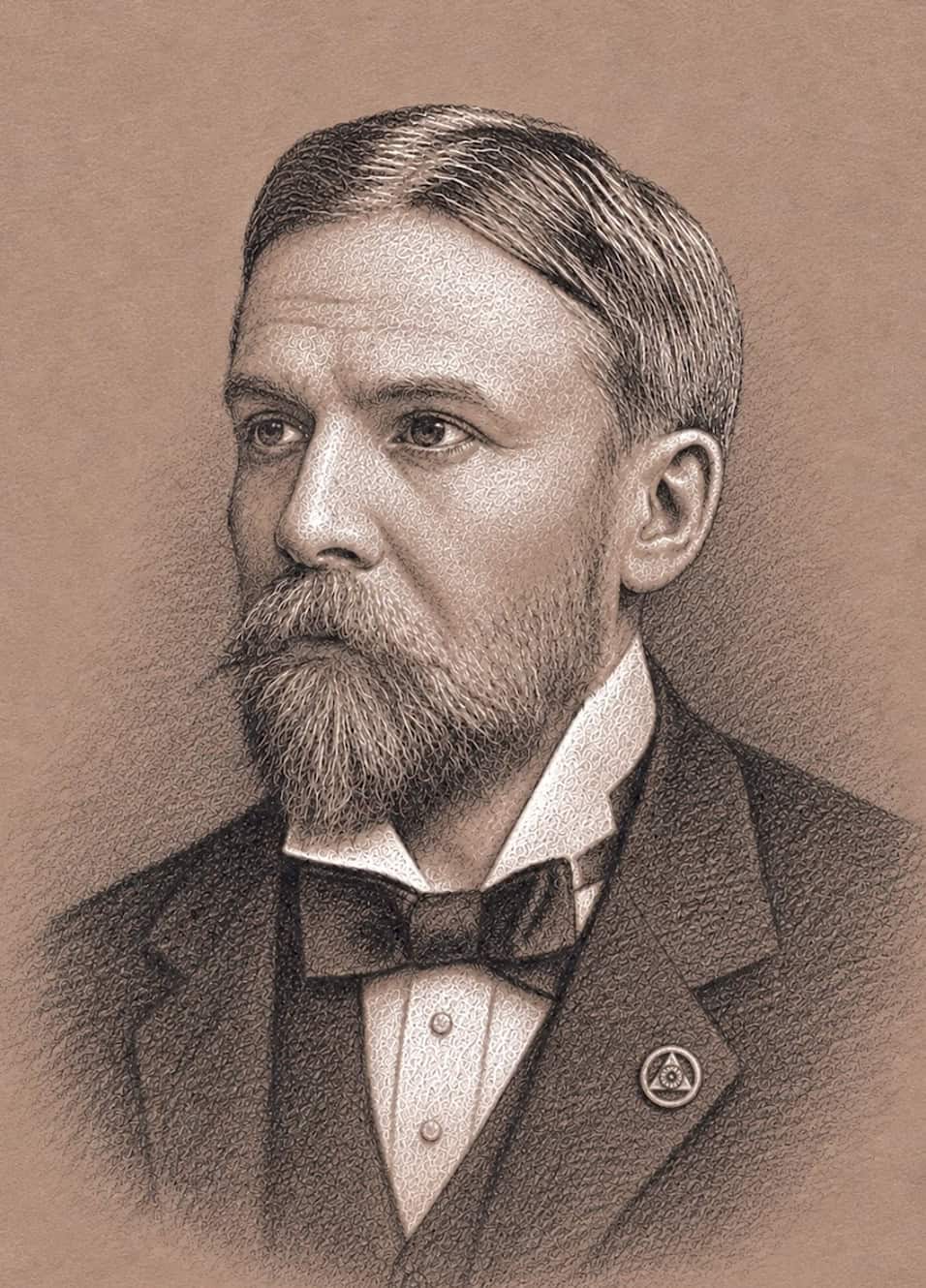
Herbert A. Parkyn, “Thought Takes Form in Action”
When Mind-Power moves from theory into ordinary life, successful businesspeople, speakers, organizers, leaders, salesmen, and forceful personalities are presented as individuals who have learned, consciously or unconsciously, to concentrate mental power. Some may possess no occult theory at all, yet they understand from experience that confidence, persistence, expectation, concentration, and force of personality affect the responses of other people.
A central principle emerges from these examples: the mental condition of the operator precedes the influence exerted upon others. A person cannot convincingly communicate confidence while inwardly dominated by fear and uncertainty. The desired condition must first be established within the individual. Once present, it expresses itself through voice, eyes, posture, manner, words, actions, and general bearing. These expressions then become suggestions to surrounding minds. The sequence is consistent with the laws of Suggestion: establish the condition internally, hold it through concentration and will, and communicate it through the channels available.
This principle is especially close to the practical operation of Suggestive Therapeutics. Suggestion is not merely the mechanical repetition of words. The mental condition accompanying the suggestion affects the voice, manner, expectation, and general influence of the operator. Confidence, concentration, and will strengthen the communication because they shape the entire suggestive act. Mind-Power carries this principle beyond therapeutic practice and into business, leadership, personal influence, and everyday human relations.
How Mind-Power Explains Personal Magnetism
Personal Magnetism is presented as the effect of a strongly organized mental personality rather than as a mysterious physical fluid. A person appears magnetic when desire, will, confidence, concentration, expectation, emotional intensity, and expression operate together. Such an individual impresses his mental condition upon others more readily than someone whose thoughts and emotions are scattered or contradictory.
The practical channels of Personal Magnetism are the same channels through which Suggestion operates. Voice, eyes, facial expression, posture, manner, confidence, and expectation all communicate mental states. A confident tone suggests authority before the literal statement has been considered. Hesitation suggests uncertainty. A forceful bearing suggests strength. An anxious manner suggests danger or insecurity. The entire personality becomes a continuous suggestive instrument.
Mind-Power itself acknowledges that Mental Suggestion ordinarily assists Personal Magnetism. The internal mental state and its outward expression are therefore treated as parts of the same act of influence. The Atkinsonian language adds Desire-Force, Will-Power, and mentative currents around the process, but the visible and practical operation remains Suggestion acting through the individual’s personality.
Dynamic Mentation and Dynamic Individuality
Dynamic Mentation is concentrated and purposeful mental activity directed toward a definite result. Ordinary thought may shift continually among conflicting impressions, while Dynamic Mentation organizes the mind around a selected condition. Desire supplies energy, will gives direction, concentration holds the condition steadily before consciousness, and Suggestion helps establish or communicate it.
From this develops Dynamic Individuality, the condition of a person who has formed a sufficiently strong center of self-direction that surrounding suggestions no longer control his mental condition automatically. The principle is important because Suggestion operates in both directions. A person seeking to influence others must also understand how he himself is being influenced. The uncertain individual easily absorbs the fears, expectations, judgments, and emotional conditions surrounding him, while the person with a definite purpose and trained concentration is better able to reject impressions that conflict with his chosen direction.
Will and concentration therefore serve both an active and defensive purpose. They strengthen the suggestions a person deliberately wishes to establish while increasing resistance to suggestions that should not be accepted. Mental training becomes a process of deciding which impressions will be admitted, strengthened, repeated, and ultimately converted into habitual states.
Mental Atmosphere
Mental Atmosphere describes the characteristic mental environment that develops around individuals, families, businesses, organizations, and crowds. A room may appear cheerful, anxious, energetic, hostile, confident, or depressed. A business may reflect the personality of its leader. A household may become dominated by recurring emotional conditions. A crowd may magnify fear, excitement, anger, or enthusiasm.
Within the language of Mind-Power, some of these effects are attributed to accumulated mentative currents, but the examples are equally direct expressions of Involuntary Suggestion. People continually reveal their mental states through voice, expression, habits, expectations, manner, and behavior. Others receive these impressions and tend to reproduce them. A mental atmosphere is therefore built through countless suggestions passing continuously among the members of a group.
Leadership provides one of the clearest examples. The head of an organization influences employees not merely through direct instructions but through his habitual mental condition. Energy communicates energy, carelessness encourages carelessness, confidence creates an expectation of success, and pessimism spreads uncertainty. The law of Suggestion operates beneath formal communication and becomes part of the atmosphere of the organization itself.
Channels of Influence and Instruments of Expression
As Mind-Power approaches its formal treatment of Suggestion, increasing attention is given to the physical channels through which mental conditions are communicated. Words are only one instrument. Voice, facial expression, eyes, posture, gesture, physical bearing, emotional tone, reputation, surroundings, and expectation all contribute to the total impression received by another person. A statement spoken confidently may produce an entirely different effect from the same words delivered hesitantly because the manner supplies an additional suggestion.
The voice is particularly important because tone can communicate confidence, sympathy, command, uncertainty, fear, or expectation independently of literal language. The eyes, facial expression, and physical bearing perform similar functions. A strongly established internal condition naturally expresses itself outwardly, and these expressions become suggestions to other minds. The desired state must therefore first be developed within the person attempting to communicate it. When thought, feeling, voice, manner, and words all express the same condition, the suggestion is reinforced from several directions at once.
Here Parkyn’s system becomes increasingly visible within the practical machinery of Mind-Power. Concentration and will establish the condition within the operator; Suggestion communicates it; imagination and expectation help reproduce the condition in the recipient; and repetition strengthens the resulting impression. The mental-magic vocabulary changes the literary presentation, but the operating laws remain those of Suggestion.
What Is Mental Suggestion?
Mental Suggestion is the process by which mental states are induced through physical channels such as words, voice, manner, appearance, behavior, imitation, association, and repetition. Its importance becomes unmistakable when three consecutive chapters are devoted to “Mental Suggestion,” “Four Kinds of Suggestion,” and “How Suggestion Is Used.” The book distinguishes Suggestion from the invisible mentative currents described elsewhere. Personal Magnetism may combine both processes, but Suggestion itself operates through observable channels by which ideas and conditions are presented to another mind.
This distinction shows that the elaborate terminology of mental magic does not replace the laws of Suggestion. Suggestion remains intact within the larger presentation and is treated as a natural process operating continuously throughout waking life rather than as something confined to hypnotic sleep. Parents, teachers, employers, newspapers, advertisements, political speakers, friends, crowds, social customs, and repeated personal thoughts all become sources of suggestion.
This is the territory in which Parkyn had already established his teaching of Suggestive Therapeutics. Suggestion rather than hypnotic sleep was the operative principle, and its laws extended beyond formal treatment into ordinary behavior. Mind-Power carries that same message into mental magic, personal magnetism, business influence, occultism, and self-development. The setting changes, but Suggestion remains central to explaining how mental states are established and communicated.
The Four Kinds of Mental Suggestion
Mind-Power explains Mental Suggestion through four principal forms of action: acquiescence, imitation, association, and repetition. Acquiescence operates when resistance is lowered and an idea is accepted because of the circumstances or manner in which it is presented. Imitation causes individuals to reproduce the actions, expressions, emotional conditions, or behavior they observe in others. Association links a new impression with an existing idea, memory, emotion, or response already established in the mind. Repetition continually presents the same idea until familiarity reduces resistance and the suggestion begins to operate almost automatically.
Repetition receives particular emphasis as a fundamental law of Suggestion. An unfamiliar proposition may initially provoke scrutiny or resistance, but repeated exposure gradually makes it familiar. Advertising, politics, public opinion, reputation, education, and social custom can all make use of this law. People may eventually accept an idea not because they have independently established its truth but because repeated presentation has made it psychologically familiar.
The same law applies to personal development. Repeated thoughts become familiar mental conditions; familiar conditions become habitual; habitual states increasingly operate automatically. Repetition therefore connects Mental Suggestion with character development. The same law that can shape public opinion can shape individual habit, and deliberate repetition can be used to establish a new condition where an older one has previously dominated.
Involuntary Suggestion
Involuntary Suggestion is suggestion communicated without a conscious intention to influence another person. This is one of the clearest direct appearances of Parkyn’s established terminology within Mind-Power. Words, actions, tones, manner, expression, appearance, expectations, habits, and general personality continually communicate impressions whether or not the person giving them intends to produce an effect.
The examples show how widely the law operates. A business leader may unconsciously communicate energy and confidence throughout an organization or just as readily communicate carelessness, uncertainty, and pessimism. Parents may repeatedly suggest characteristics to children by treating them as though those characteristics are already established. Calling a child shy, stubborn, dishonest, weak, troublesome, incapable, or fearful can become a continuing suggestion through which the child gradually accepts and reproduces the identity supplied. Constructive qualities such as courage, honesty, ability, self-control, and confidence can likewise be encouraged through repeated words and behavior.
Involuntary Suggestion had already formed a direct category in Parkyn’s teaching, and its role in Mind-Power is essentially the same: to demonstrate that Suggestion is operating continuously outside formal hypnotism or treatment. Every person is simultaneously giving and receiving suggestions throughout ordinary life. The earlier discussions of Mental Atmosphere, Personal Magnetism, leadership, and social influence all become further expressions of this same law.
Voluntary Suggestion
Voluntary Suggestion is the deliberate use of suggestion to establish an idea, expectation, feeling, or mental condition in another person. This is the corresponding category to Involuntary Suggestion and another direct term from Parkyn’s system. Words may be deliberately selected, the voice controlled, repetition employed, existing associations awakened, circumstances arranged to encourage acceptance, or the imagination stimulated so that the recipient begins constructing the intended condition within his own mind.
The pairing of Involuntary Suggestion and Voluntary Suggestion is especially significant because the terminology is not incidental. Together they provide the practical classification through which the operation of Suggestion is explained. Involuntary Suggestion accounts for the unconscious influence constantly passing between people, while Voluntary Suggestion describes the conscious direction of the same law.
The surrounding language of Personal Magnetism, Desire-Force, Will-Power, and Dynamic Mentation places this established teaching within the Atkinsonian mental-magic framework. Yet the practical sequence remains recognizable: establish a definite mental condition, concentrate upon it, communicate it through carefully directed physical channels, and seek to awaken the corresponding condition in another mind.
Auto-Suggestion
Herbert A. Parkyn’s 1905 book Auto-Suggestion was reworked for much of the book.
Auto-Suggestion is the application of Suggestion to one’s own mental states and habits. If repeated suggestions from other people can establish beliefs, expectations, emotional reactions, and habits, the individual can deliberately use the same law upon himself. Auto-Suggestion therefore connects interpersonal influence with conscious self-development.
Here the core elements of Parkyn’s teaching come together especially clearly. Suggestion, repetition, concentration, will, and the deliberate substitution of one mental condition for another become parts of a single process. The individual must stop continually reinforcing the condition he wishes to escape. Repeated attention to fear, weakness, failure, sickness, or incapacity keeps those ideas mentally active and familiar. The desired opposite condition must instead be repeatedly established until it becomes increasingly dominant.
Mental habits are therefore understood as the result of repeated impressions and repeated mental activity. Auto-Suggestion makes it possible to select those impressions deliberately rather than merely receiving them accidentally from parents, teachers, associates, environment, and personal habit. This principle becomes the foundation for the later teachings of Mental Architecture and Mind-Building.
Induced Imagination
Induced Imagination is the use of Suggestion to cause a person to form a mental image of the suggested condition. A suggestion becomes more effective when the recipient does not merely hear the words but begins mentally experiencing the condition being described. Imagination then awakens corresponding feelings, expectations, desires, and bodily responses.
A suggested danger may produce genuine fear even when no objective danger is present. An expected sensation may become subjectively real. A mental image of confidence, strength, or health may similarly produce a corresponding internal condition. Suggestion therefore supplies more than words; it gives the imagination material from which an experience can be constructed.
The relationship among the faculties becomes increasingly clear. Suggestion introduces the idea. Imagination gives it mental form. Desire supplies emotional force. Concentration keeps attention fixed upon it. Will maintains the chosen direction. Repetition strengthens the resulting mental pathway. These are not isolated powers operating independently but parts of a single process through which a mental condition is formed, intensified, and eventually made habitual.
Induced Imagination and the Occult
Mind-Power carries induced imagination into examples associated with India and occult phenomena. Extraordinary experiences traditionally interpreted as magical are considered in relation to expectation and suggestion. A spectator who has been strongly prepared to anticipate a particular event may mentally complete what he believes he is perceiving, with Suggestion establishing the expectation and imagination supplying the resulting experience.
This is characteristic of the wider publishing method represented by Mind-Power. The laws of mental influence are carried into fields that would attract readers interested in occultism, psychic phenomena, personal magnetism, and Eastern teachings. Suggestion is not left confined to therapeutic psychology but becomes a means through which apparently mysterious phenomena can be interpreted and explained.
The Ocean of Mind-Power and Telementation
The Ocean of Mind-Power is the universal mental medium through which Mind-Power imagines all individual minds to be connected. After the practical chapters on Suggestion and imagination, the book returns to the metaphysical scale of its opening pages and asks the reader to picture individual minds as centers within a vast mental ocean. Mental states generate currents or waves in this medium, much as physical disturbances create waves in other forms of energy.
This universal field allows mental influence to be extended beyond direct physical contact. When two people are together, influence may operate through both Suggestion and the supposed mentative currents associated with Personal Magnetism. When they are separated by distance, the physical channels of Suggestion are absent, but the theory proposes that mental currents may still move through the Ocean of Mind-Power. This distant form of influence is called Telementation or Telementative Induction.
The metaphysical explanation expands the scale of the teaching, but the practical method remains familiar. A definite condition must be established, concentration must hold attention upon it, imagination must construct it, desire must supply emotional energy, and will must maintain the direction. The same mental discipline used in Suggestion and Auto-Suggestion is projected outward and presented as a method of distant influence.
A Glimpse of the Occult World
Mind-Power next asks the reader to imagine what ordinary human life might look like if mental currents were visible. Individuals would appear surrounded by moving forces, continually influencing and being influenced by one another. One person unconsciously induces a condition in another; another communicates suggestion through words and manner; another deliberately concentrates Desire-Force and Will-Power; groups create larger currents; and entire environments develop Mental Atmospheres.
This imagined occult picture gathers the earlier teachings together. Involuntary Suggestion, Voluntary Suggestion, Personal Magnetism, Mentative Induction, Desire-Force, Will-Power, imitation, association, repetition, and mental atmosphere all operate at once. Human society becomes a network of mental impressions in which people continually create, receive, reinforce, and transmit mental states.
The practical message remains the conscious understanding of the laws of Suggestion. Individuals who do not recognize these processes are continually moved by surrounding impressions, while those who learn their operation can begin selecting which states they will accept, reject, cultivate, communicate, and make habitual.
Self-Protection and Resistance to Suggestion
Self-protection in Mind-Power is primarily the ability to resist unwanted mental influence by maintaining a strong and definite mental condition of one’s own. Fear of influence is itself considered dangerous because fear creates an expectation of susceptibility. A person who continually imagines himself being controlled is already giving himself the suggestion that he is vulnerable.
The principal defense is therefore not an elaborate occult ritual but confidence, concentration, will, and a strong consciousness of individuality. The mind deliberately refuses acquiescence to undesirable suggestions and maintains a contrary state instead. The same laws that allow a suggestion to gain strength through acceptance, repetition, imagination, and emotional reinforcement can therefore be reversed through conscious rejection and substitution.
Mental self-control becomes more important than fear of another person’s supposed power. The individual who understands Suggestion is less likely to accept every repeated claim, emotional atmosphere, authoritative manner, pessimistic expectation, or strongly expressed opinion encountered in ordinary life.
Indirect Influence
Indirect Influence extends deliberate mental action beyond face-to-face contact. The individual forms a clear mental image of another person or desired circumstance, concentrates upon the intended result, energizes the image through desire, and holds it through will. Within the metaphysical language of Mind-Power, the resulting mental current travels through the universal medium and tends to awaken a corresponding condition elsewhere.
Although the explanation is occult, the actual discipline consists of the same familiar operations. The desired condition must be definite rather than vague. Attention must remain fixed upon it. Contradictory thoughts must not repeatedly weaken the mental suggestion. Imagination must construct the result, desire must energize it, and will must sustain the direction. The same laws used in Auto-Suggestion and deliberate mental conditioning are therefore projected outward and presented as distant influence.
Mental Therapeutics and Mental Healing
Mental Therapeutics applies the laws of Mind-Power and Suggestion to healing. The book presents mental healing as a natural operation governed by mental law rather than as something requiring acceptance of a particular religious creed. The object of treatment is to establish a mental condition opposed to disease, fear, weakness, or abnormal functioning. Confidence, expectation, imagination, concentration, and Suggestion all become therapeutic instruments.
Here Parkyn’s system of Suggestive Therapeutics is especially visible. The essential therapeutic task is the establishment of the desired mental condition through Suggestion rather than the production of hypnotic sleep. Fear and negative expectation must be displaced, the patient’s attention redirected, a mental representation of health or normal functioning established, and the new state reinforced until it becomes stronger than the habitual condition it is intended to replace. The language of Mind-Power adds Desire-Force, Will-Power, and mentative currents around this process, but the practical mechanism remains the law of Suggestion applied therapeutically.
The healer’s own mental condition is also important. Confidence, expectation, voice, manner, expression, and general personality become suggestions to the patient. The patient’s imagination responds to those suggestions, repetition reinforces them, and concentration and will sustain the desired condition. Mental healing thus becomes another specialized application of the same laws already applied to leadership, personal magnetism, education, business, and self-development.
Mental Healing Methods
The practical healing methods make this continuity clearer still. The operator is expected to establish confidence and certainty within himself rather than approach treatment from a condition of doubt. This state is then communicated through voice, manner, expectation, expression, and direct suggestion. The patient’s attention is redirected away from habitual fear and preoccupation with symptoms and toward health, strength, normality, and recovery.
Repeated negative suggestions are treated as capable of maintaining undesirable mental conditions. Continually discussing illness, anticipating failure, fearing symptoms, or identifying oneself with weakness repeatedly strengthens the associated idea. The corrective method is substitution. Constructive suggestions are introduced and reinforced until the new pattern begins to replace the old one.
By this point the same law has appeared across nearly every subject in the book. Repetition can create public belief, establish reputation, influence a child, shape an organization, strengthen fear, build confidence, form a habit, or assist therapeutic suggestion. The field changes, but the law does not.
Mental Architecture and Making Over Oneself
Mental Architecture is the deliberate use of these mental laws to build and rebuild habits and character. Existing character is not treated as permanently fixed. Mental states become habitual through repetition, association, attention, imagination, and continued expression. If undesirable states have been built through those processes, desirable states can be constructed by consciously applying the same laws in another direction.
Suggestion, Auto-Suggestion, repetition, concentration, imagination, and will therefore become parts of a systematic method of self-development. The individual identifies the quality he wishes to establish, forms a definite conception of it, concentrates upon that condition rather than its opposite, repeatedly suggests it to himself, imagines himself expressing it, and reinforces the new condition through corresponding action. Familiarity develops into habit, and habit gradually becomes part of character.
The central principle is substitution. Continually fighting an unwanted state may keep attention fixed upon it. The more effective method is to establish the desired opposite. Fear is displaced by courage, indecision by determination, weakness by strength, pessimism by confidence, and scattered attention by concentration. The desired condition receives the repetition and attention that had previously been strengthening the undesirable state.
Making Over Oneself develops this process into a deliberate program of character formation. The individual first determines the kind of person he intends to become and constructs a clear mental ideal. The desired qualities are then repeatedly brought into consciousness until they cease to feel artificial and begin operating habitually. Thought, imagination, affirmation, emotion, will, and action are all directed toward the same end.
This is the natural culmination of the laws of Suggestion developed throughout Mind-Power. Involuntary Suggestion explains how character may be unconsciously shaped by parents, teachers, associates, social expectations, and environment. Voluntary Suggestion explains deliberate influence from another person. Auto-Suggestion allows the individual to apply the same law inwardly. Mental Architecture then organizes these processes into the deliberate reconstruction of character.
Mind-Building
Mind-Building is the final application of the laws developed throughout the book to the deliberate training of mental faculties and character. Attention can be trained, will strengthened, emotional tendencies redirected, habits altered, and desired qualities established through repeated exercise. The mind is therefore treated as plastic rather than fixed.
By this point the specialized terminology resolves into a consistent sequence. Desire identifies the condition sought. Will maintains the direction. Concentration prevents attention from continually wandering toward contrary impressions. Imagination constructs the desired condition. Auto-Suggestion repeatedly impresses it upon the mind. Repetition establishes habit, and habit develops into character. The individual who understands these laws can begin consciously directing processes that otherwise operate automatically through environment, circumstance, and accumulated suggestion.
This ending reveals the continuity running through the whole book. Mind-Power begins with the enormous conception of a universal mental force but concludes with the practical laws by which mental conditions are formed and made habitual. The cosmic language of mental currents and the Ocean of Mind-Power ultimately returns to Suggestion, concentration, will, imagination, repetition, substitution, and self-direction.
What Is the Central Teaching of Mind-Power?
The central teaching of Mind-Power is that mental states are not passive but can be established, communicated, strengthened, resisted, substituted, and made habitual through definite laws. Mind-Power provides the metaphysical background; Desire-Force and Will-Power describe two poles of directed mental activity; Dynamic Mentation describes their concentrated use; Mentative Induction explains the reproduction of mental states; Personal Magnetism applies the process to direct human contact; Mental Atmosphere extends it into groups and environments; Mental Suggestion explains influence through physical channels; Induced Imagination gives suggestions mental form; Telementation extends influence across distance; Mental Therapeutics applies the laws to healing; and Mental Architecture and Mind-Building turn the same laws inward toward deliberate character reconstruction.
Within this progression, Parkyn’s established system of Suggestion repeatedly comes into view as the practical machinery beneath the wider mental-magic presentation. Involuntary Suggestion and Voluntary Suggestion appear directly as organizing terms. Auto-Suggestion carries the law inward. Repetition establishes impressions and habits. Concentration holds a selected condition before the mind. Will sustains it. Imagination makes the suggested condition mentally real. In therapeutic application, an undesirable condition is replaced by a constructive one. In character development, the same process establishes new habits and qualities. These are not isolated similarities appearing around the edges of Mind-Power but recurring laws through which much of the book’s practical teaching operates.
What changes is the field in which the message is presented. The laws Parkyn had taught through Suggestive Therapeutics are carried into mental magic, personal magnetism, occult influence, business and social relations, psychic phenomena, healing, and self-development through the literary style associated with Atkinson. Terms such as Desire-Force, Will-Power, Mentative Induction, Dynamic Mentation, Telementation, and the Ocean of Mind-Power give the material its distinctive form, but beneath that vocabulary the reader continually returns to the same central principle: mental conditions may be consciously directed through the laws of Suggestion.
Mind-Power therefore provides an especially clear example of how the message of Suggestion could be presented to audiences far beyond the clinical setting of Suggestive Therapeutics. A reader interested in personal magnetism could encounter the laws through Mental Suggestion and Dynamic Mentation. A reader interested in occultism could encounter them through mental currents and the Ocean of Mind-Power. A reader interested in healing could encounter them through Mental Therapeutics. A reader interested in personal development could encounter them through Auto-Suggestion, Mental Architecture, and Mind-Building. The terminology and subject matter repeatedly change, but the underlying teaching returns to the same practical objective: understanding how mental states are formed and then consciously applying those laws to health, influence, habit, character, and self-mastery.
Frequently Asked Questions About Mind-Power
What does Mind-Power mean in the book?
Mind-Power is presented as a universal dynamic mental principle existing throughout nature and expressed through desire, will, emotion, imagination, attraction, mental influence, and other forms of activity. Human beings are described as centers within this larger power and as capable of concentrating and directing it. In practical application, the operation repeatedly involves definite mental states strengthened through concentration, will, repetition, imagination, expectation, and Suggestion.
What are Desire-Force and Will-Power?
Desire-Force and Will-Power are the two active poles through which Mind-Power is described as operating. Desire-Force represents attraction, longing, emotion, and the impulse toward a particular object or condition, while Will-Power represents direction, persistence, control, and the ability to hold the mind upon a selected purpose. Their combined action produces Dynamic Mentation, but their practical effectiveness depends upon concentrated attention, definite expectation, repeated mental impressions, and Suggestion.
How is Mind-Power connected to Herbert A. Parkyn and Suggestive Therapeutics?
Mind-Power repeatedly uses principles and terminology already central to Dr. Herbert A. Parkyn’s system of Suggestive Therapeutics. Most notably, the book directly uses the categories Involuntary Suggestion and Voluntary Suggestion, while also emphasizing Auto-Suggestion, repetition, concentration, will, imagination, mental habit, therapeutic suggestion, and the deliberate substitution of one mental condition for another. Rather than standing apart as a competing system, these teachings appear within the wider Atkinsonian presentation of mental magic, personal magnetism, occult influence, healing, and self-development. Mind-Power therefore provides a particularly clear example of the laws of Suggestion being carried into another literary field and adapted to a different audience.