Copyright © 2026 D. Parkyn Jackson. Published by the Yogi Publication Society History Project. All rights reserved.
The Accepted Story
In late 1901, William Walker Atkinson and Sydney B. Flower joined forces as co-editors to launch New Thought magazine, a publication that quickly became the most popular and influential journal in the New Thought movement. How Atkinson and Flower came together has been repeated with the same story by historians and writers. According to their accepted account, both men had previously worked with Dr. Herbert A. Parkyn before leaving to pursue independent careers. Flower had been with Parkyn from 1895 to 1898, serving as editor of The Hypnotic Magazine and secretary of Parkyn’s Chicago School of Psychology before departing to establish a supposedly competing journal called Suggestive Therapeutics. Atkinson served as associate editor of Parkyn’s Suggestion magazine and lectured at his school from mid 1900 to Nov. 1901, before also leaving to join Flower.
But when the history of this time is researched, the story is much more complex and does not hold up the way it has been portrayed. What we find instead is a much closer relationship among these three men and strong evidence that they never truly stopped collaborating, even though they publicly gave the appearance that they had. The evidence points to a coordinated network of schools, publications, and publishing companies that operated under separate public identities while continuing to teach the same system and pursue the same purpose.
This article examines the evidence for this conclusion and explains why Dr. Parkyn’s position within the mainstream medical community made such an arrangement necessary. It shows, for the first time, how Parkyn brought two of his closest protégés together to launch New Thought magazine and continued working closely with them for years afterward.
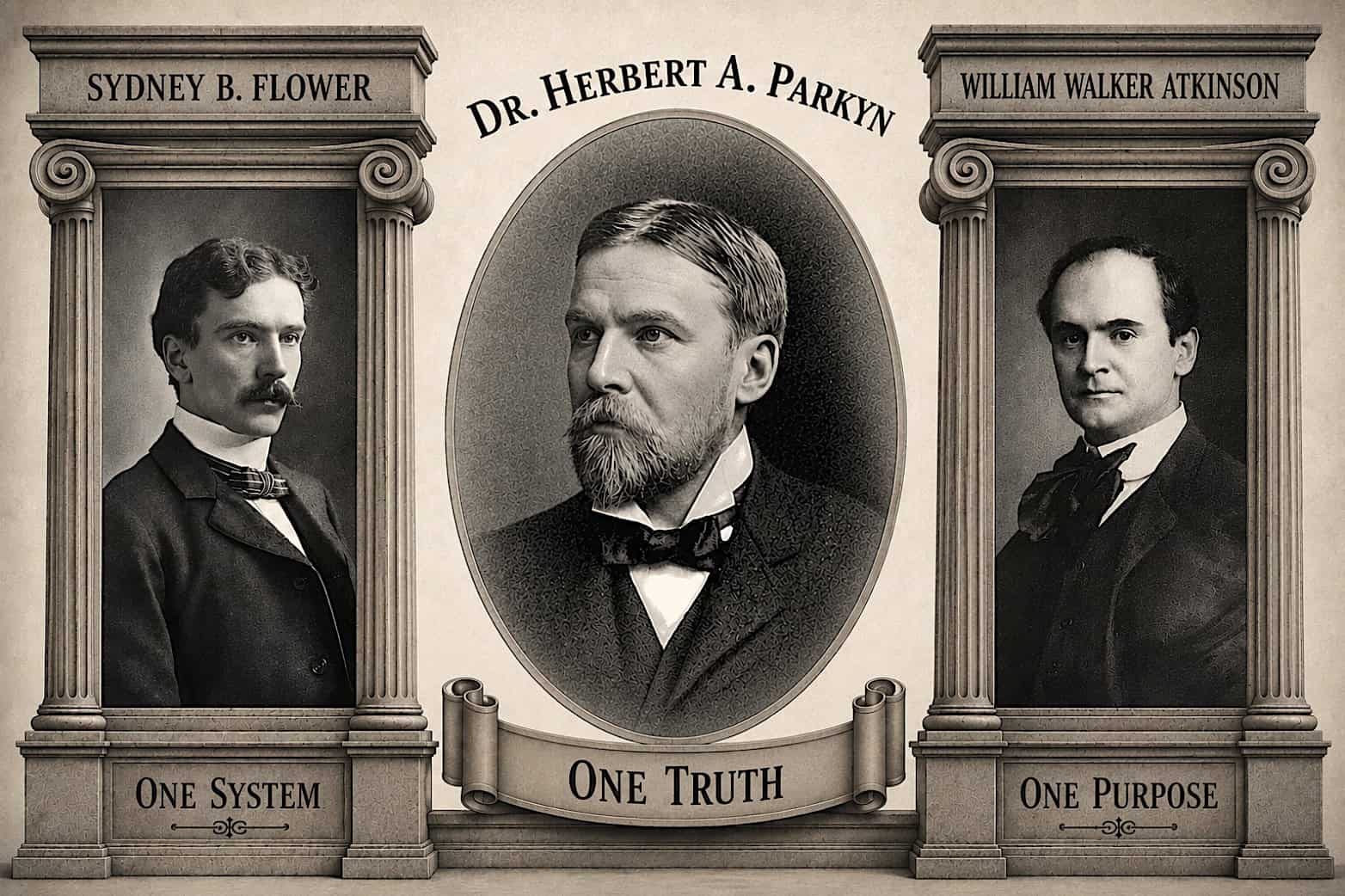
Parkyn’s Place Within Both the Medical Community and the New Thought Movement
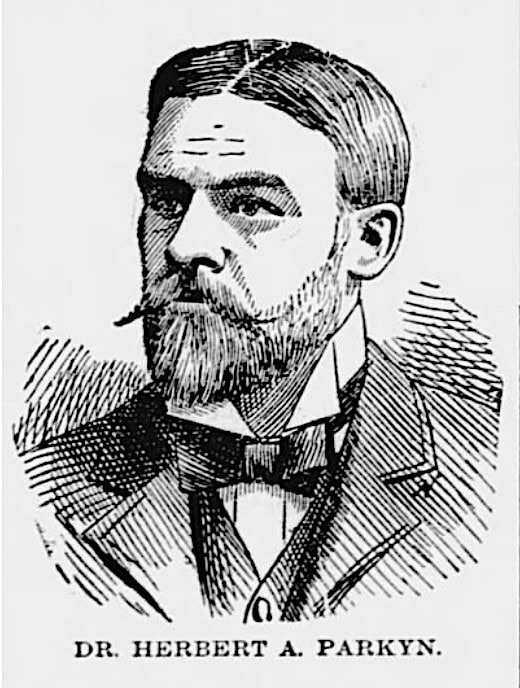
To understand why Parkyn remained behind the scenes and why this hidden arrangement existed, it is first necessary to understand the position he occupied within both the medical community and the New Thought movement during the late 1890s. By that time, he had become one of the most prominent physician-scientists associated with the science of Suggestion and one of its principal intellectual authorities. Parkyn received his medical education at Queen’s University before undertaking postgraduate study at both McGill University and the University of Toronto. During the following decade, he devoted himself to clinical practice and experimental research into hypnotism and the psychology of suggestion, helping establish one of the largest bodies of clinical research on the subject in North America.
Parkyn’s work also placed him alongside many of the leading medical authorities then investigating the therapeutic applications of suggestion. Among the most important was Dr. W. Xavier Sudduth, one of America’s foremost physicians and educators. Sudduth had served as Dean of the Dental School at the University of Minnesota, extension lecturer at the University of Chicago, chairman of the Psychological Society of the Medico-Legal Society of New York, professor of morbid psychology at the Chicago Post-Graduate College of Medicine, and had studied directly at the famous Nancy School in France. Parkyn and Sudduth were among the leading medical professionals attempting to move the scientific study of Suggestive Therapeutics into universities, medical education, and the mainstream medical profession.
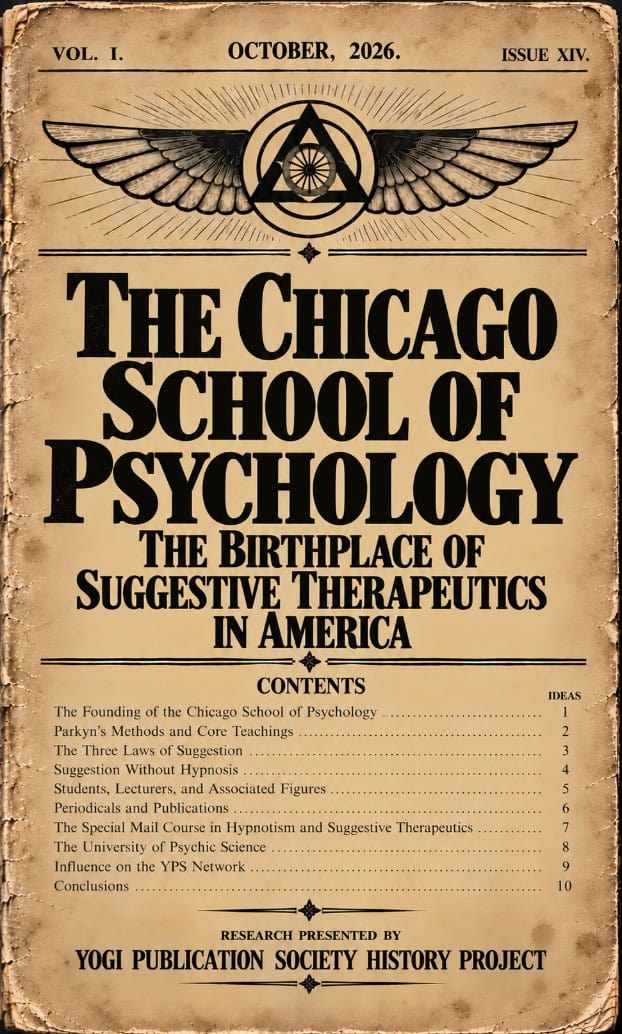
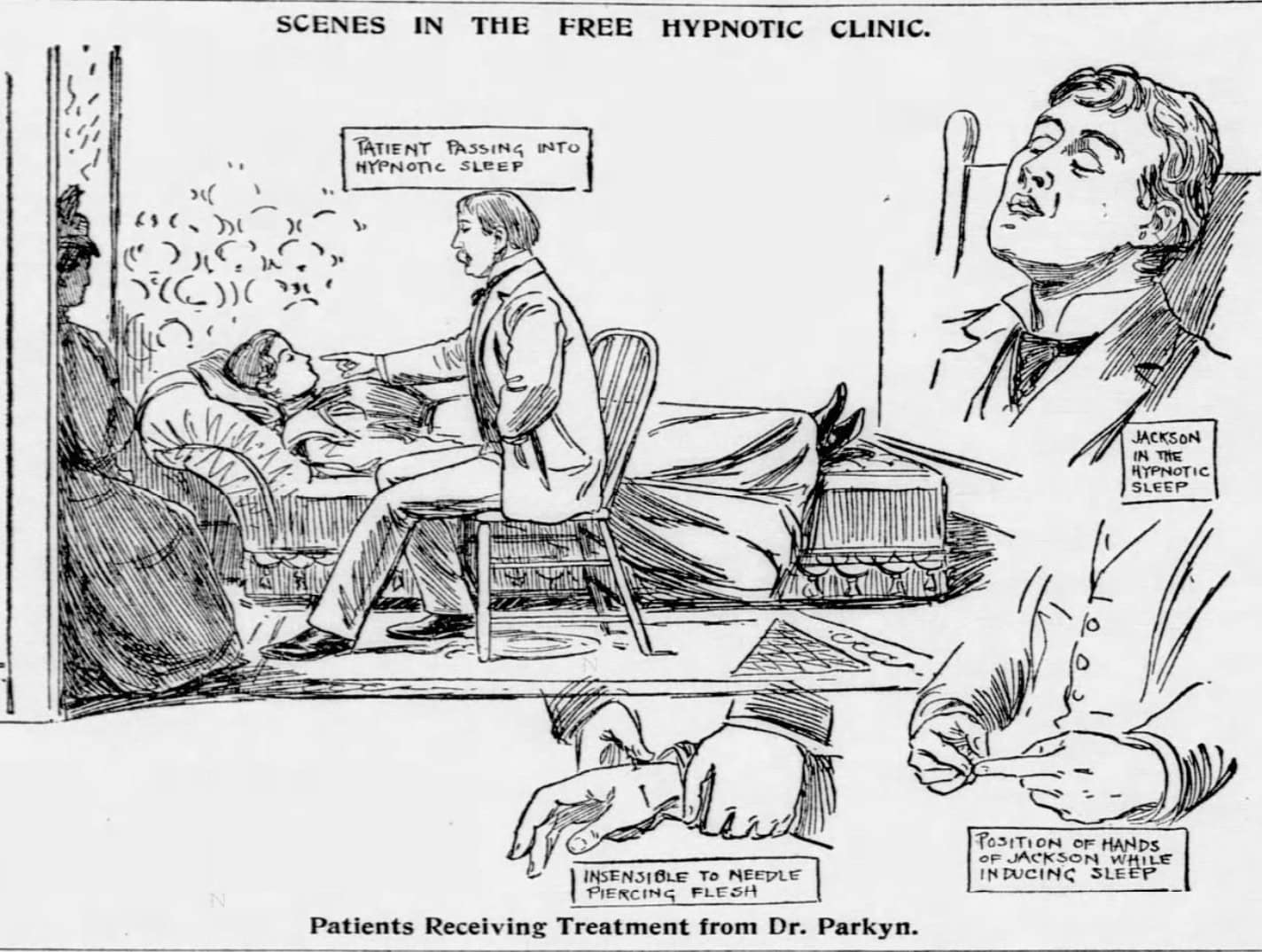
At the University of Minnesota, Parkyn and Sudduth established the nation’s first public clinic devoted to the therapeutic use of hypnotic suggestion, where they conducted thousands of clinical treatments and experiments. Their work greatly expanded the scientific understanding of Suggestive Therapeutics and surpassed the scale of much of the earlier European research, placing them among the small group of recognized authorities in the field. Parkyn later founded the Chicago School of Psychology, the first educational institution in the United States devoted exclusively to teaching the Law of Suggestion. Through its clinics, lecture courses, and correspondence instruction, the school quickly gained national attention through extensive newspaper coverage and became the leading center for the scientific study of Suggestive Therapeutics in America. Parkyn’s affiliated journals, including The Hypnotic Magazine and later Suggestion, likewise became the principal scientific publications devoted to the subject, serving as the primary forum where many of the leading investigators in Suggestive Therapeutics published their research, theories, and clinical findings.
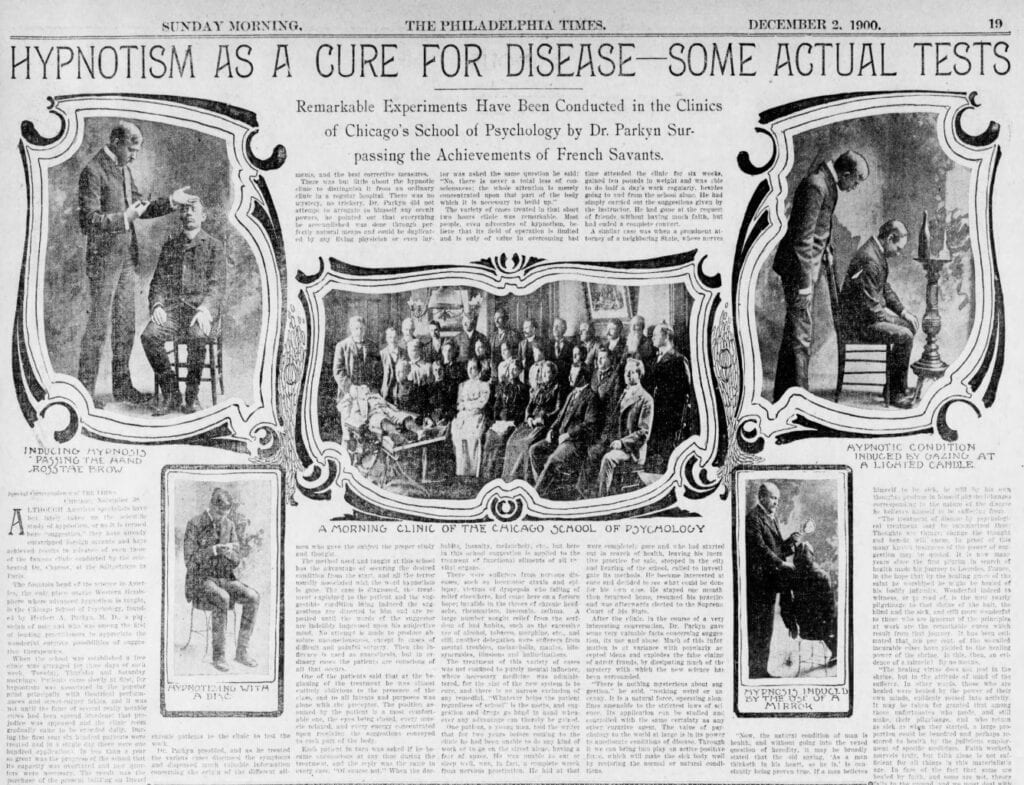
With the Law of Suggestion becoming a central part of the New Thought movement in the late 1890s, Parkyn also emerged as one of its leading figures. However, he occupied a unique position. While many of the movement’s most influential voices were former Spiritualists, ministers, philosophers, metaphysical teachers, or occultists, Parkyn stood as one of the very few highly trained physicians attempting to establish the movement upon a scientific and medical foundation. At a time when New Thought was searching for intellectual legitimacy, Parkyn supplied much of its scientific framework. His writings on the Law of Suggestion and the functions of the mind became foundational for many of the teachers and organizations that followed. Few possessed the scientific training necessary to explain how Suggestion affected the physical body in measurable terms, and that responsibility naturally fell to professionally trained experts like Parkyn.
The Responsibilities of Scientific Leadership
That position carried responsibilities that few other New Thought leaders faced. Parkyn was not simply writing for people interested in metaphysics or mental healing. He was trying to establish Suggestive Therapeutics as a legitimate branch of psychology and medicine. His audiences included physicians, educators, and members of the medical profession whose acceptance could determine whether Suggestive Therapeutics would become recognized as a scientific discipline or dismissed as another passing metaphysical movement. The professional reputation he had spent years building was one of the movement’s greatest assets, and it could not be placed at unnecessary risk.
For that reason, Parkyn was careful not to have his deep interests in Eastern & Hermetic philosophy, psychical research, and related subjects presented to the public. While such topics were attracting increasing attention within New Thought circles, they were still regarded by many members of the medical establishment as occult, mystical, or unscientific. Had Parkyn, as the founder of the nation’s leading school of Suggestive Therapeutics, openly attached his name to books promoting Yogic philosophy, psychic healing, and ancient occult teachings, critics would have seized upon it as evidence that his psychological system lacked scientific legitimacy. Such associations would have damaged the reputation of his Chicago School and provided opponents with ammunition in their efforts to discredit the movement.
Enter Parkyn’s Protégés
For this reason, Parkyn needed trusted collaborators who could publicly represent areas of research that, if too closely associated with his own medical institutions, risked undermining the scientific credibility he had worked so hard to establish. This included investigations into psychic phenomena such as telepathy, mediumship, and psychic healing, as well as his growing conviction that the Law of Suggestion formed the central psychological principle underlying many of the world’s ancient philosophies and religions. Sydney B. Flower and William Walker Atkinson became two of Parkyn’s closest protégés and collaborators in this work. Flower emerged as the public voice for the movement’s investigations into psychic research, overseeing the publication of books, magazines, and articles presenting the latest findings in the field. Atkinson, in turn, became the principal interpreter of the Hermetic, Yogic, and spiritual traditions, presenting them as different expressions of the same psychological laws that Parkyn had developed through the science of Suggestion.
Parkyn’s college athletic years of captaining and starting championship teams taught him the skills of recruiting athletes, organizing clubs, and building systems. He could easily identify talent, cultivate it, and place people where they would be most effective. Before either Flower or Atkinson connected with Parkyn, neither had any background in medicine, psychology, hypnotism, or the mental sciences. Flower came from newspapers and sports journalism, while Atkinson had been a business attorney before suffering a severe mental breakdown that brought him to Parkyn seeking a cure. Their education in the field, their first opportunities to write and lecture on the subject, and the public reputations they later carried throughout the New Thought movement all developed through Parkyn’s schools, journals, lectures, and publishing enterprises.
This raises a question historians have largely overlooked. Why would two of Parkyn’s closest protégés, whose careers and reputations had been established through his institutions, suddenly leave to become his competitors? Why did so many of Parkyn’s other close associates continue working alongside them after the supposed separation? The documentary record points in a different direction. Rather than revealing the end of a partnership, it reveals the continuation of one..
The First Public Separation: Sydney Flower and Parkyn, 1898
To understand the collaboration between Sydney B. Flower and Dr. Herbert A. Parkyn at the time of their supposed separation, a brief look at their earlier partnership is helpful.
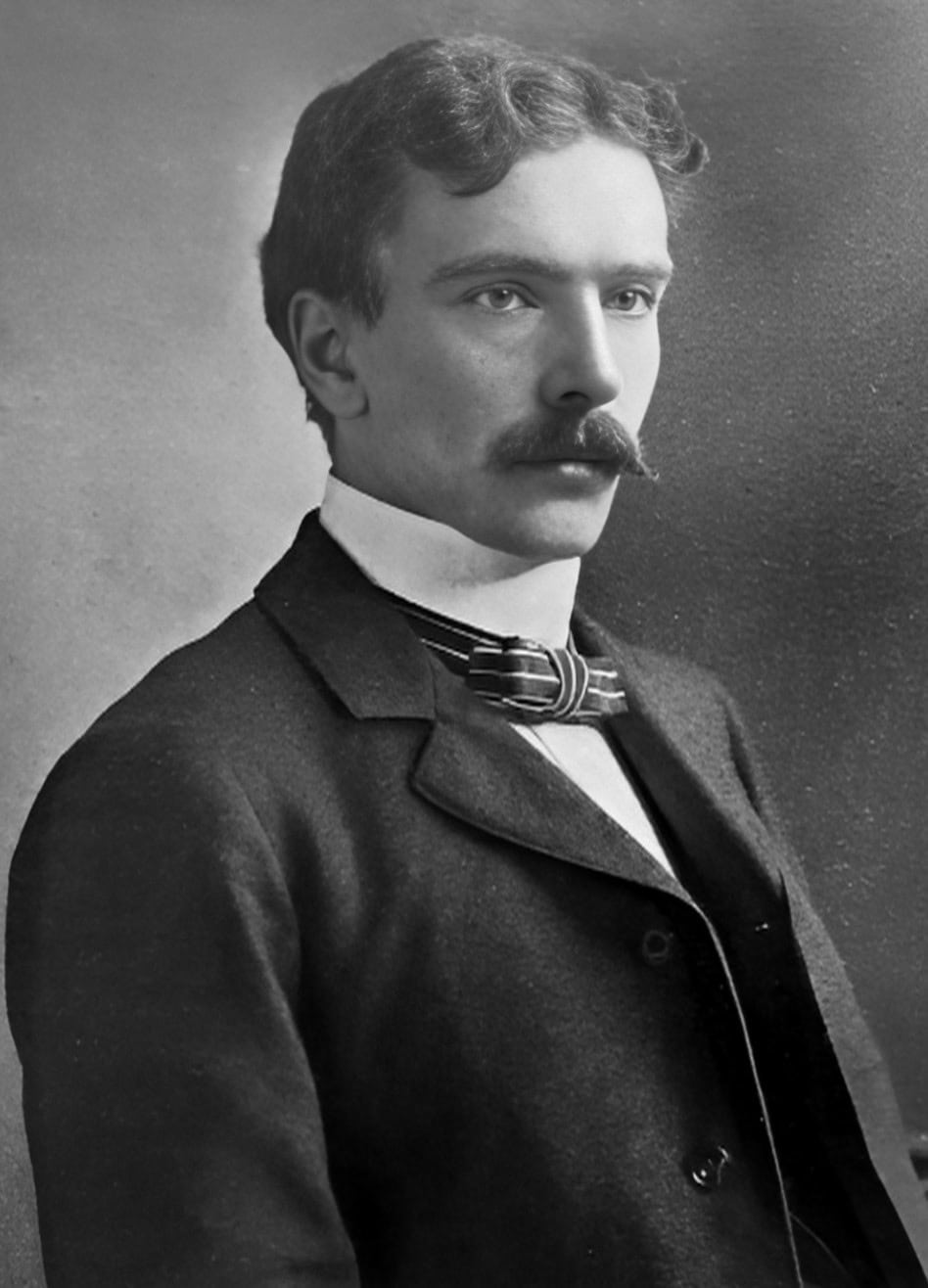
Flower first joined Parkyn in 1895 after interviewing him while covering what is believed to have been the first international hockey match ever played, organized by Parkyn between his newly formed Minnesota Gophers team and the well-established Winnipeg Victorias. Flower, then the sports journalist for the Winnipeg Free Press, had been sent to cover Parkyn as the team’s captain and manager as well as the game. At the same time, Parkyn was also a well-known physician at the University, whose hypnotic suggestion experiments were making national headlines. Flower became intrigued by Parkyn and his teachings on the science of Suggestion and recognized that his ideas would make a popular book. The two men soon collaborated on two books. The first, Hypnotism Up to Date, presented Parkyn’s teachings in an interview format. The second, A Study in Hypnotism, was a fictional narrative in which a young physician-scientist defends hypnotism against the mockery of high society while also confronting the public fascination with women being mentally controlled against their will. Both books were used to promote Parkyn as he prepared to open the Chicago School of Psychology.
When the school opened in the spring of 1896, Flower became Parkyn’s official publicist and personal manager, while also serving as secretary of the school. Later that year, the two men organized the Psychic Publishing Company and launched The Hypnotic Magazine as the school’s official journal. Parkyn supplied the feature articles describing the school’s experiments, treatments, and the success of its public clinics, while Flower served as editor and managed the publication.
Both the school and the journal were immediate successes. Parkyn was already a well-established name in the field through his widely reported experiments at the University of Minnesota with Dr. W. Xavier Sudduth, and that reputation generated tremendous interest in his new ventures. Major newspapers across the United States and Europe covered the Chicago School of Psychology, while graduates soon began expressing interest in establishing similar schools in other parts of the country. As the network expanded, Flower stepped down as secretary of the school and was placed in charge of organizing the new affiliated schools and promoting their work through The Hypnotic Magazine.
This was still a time when much of the public associated the word hypnotism with stage performances, charlatans, and claims of supernatural powers. In an effort to distance the movement from that image, they first renamed the magazine The Journal of Medical Hypnosis. Soon afterward, they dropped the term hypnotism altogether and adopted the title Suggestive Therapeutics, a name that accurately reflected the science they were promoting. The new title also reflected the growing organization itself. Suggestive Therapeutics became the official journal of the affiliated Schools of Suggestive Therapeutics, including the St. Louis School of Suggestive Therapeutics, the Kingston School of Suggestive Therapeutics, and so on. By that time, the network had grown to seven affiliated schools.
The Separation
This is where the public separation between Flower and Parkyn took place in the spring of 1898. With Suggestive Therapeutics now serving as the official journal of the network of affiliated schools, it could no longer also function as the primary journal of the Chicago School of Psychology. There were several reasons for this.
One was Parkyn’s determination to protect the medical reputation of the Chicago School. While he remained deeply involved in investigating psychic phenomena, he also understood that many of these subjects could easily be portrayed by the mainstream medical community as unscientific. However, the affiliated schools provided an ideal place to pursue this work, while Suggestive Therapeutics could present the findings in a careful, grounded, and scientific manner rather than allowing them to become associated with the sensational supernatural claims that were common at the time.
The Chicago School also needed a journal devoted exclusively to its own scientific and medical work. Postal regulations of the period only allowed an educational institution to have one publication that could receive the discounted second-class mailing rates. By creating the public appearance that Flower, who had been organizing the affiliated schools and editing the magazine that was covering them, was separating from Parkyn and the Chicago School, they could maintain one journal representing the affiliated schools and another representing the Chicago School, with both receiving discounted postal rates.

The arrangement also offered significant publishing advantages. Suggestive Therapeutics retained the subscribers and reputation it had already established while continuing as the journal of the affiliated schools. At the same time, Parkyn could launch Suggestion as the official journal of the now nationally known Chicago School of Psychology and promote it as the continuation of The Hypnotic Magazine. This was particularly important because the postal authorities already recognized The Hypnotic Magazine as the official publication of the Chicago School.
The public separation of Flower and Suggestive Therapeutics from Parkyn and the Chicago School proved highly successful. With Suggestion and Suggestive Therapeutics operating side by side, the network effectively dominated the growing field of the Law of Suggestion while maintaining the appearance of two independent publishing enterprises. That is, until Flower and the editors of The Star of the Magi magazine got into a public fight.
Suggestive Therapeutics is investigated by postal authorities and is found to be a promotional outlet for Parkyn’s Chicago School
In 1900, Sydney Flower became involved in a public dispute with the editors of The Star of the Magi over an advertisement he had placed in their magazine. While the details of that controversy fall outside the scope of this article, the complete exchange can be read HERE.
The dispute had unexpected consequences. The editors of The Star of the Magi reported Flower and Suggestive Therapeutics magazine to the United States Post Office, prompting a formal postal investigation. The initial complaint focused on advertisements for Absent Treatment, an area the postal authorities had been aggressively investigating. Although Suggestive Therapeutics was ultimately cleared of fraudulent advertising, the deep investigation into the magazine and its advertisements and editorials made it impossible to conceal that the magazine was functioning as a promotional publication for Parkyn and the Chicago School of Psychology.
Postal authorities investigation
The review of Suggestive Therapeutics revealed a clear pattern that over the preceding two years the magazine had overwhelmingly promoted Dr. Parkyn and his associated ventures. Investigators observed that the magazine had previously operated as a promotional platform for Parkyn’s school during its earlier incarnation as The Hypnotic Magazine and that Parkyn had also served as a primary contributor to the first four issues of Suggestive Therapeutics. Adding to these concerns, both magazines prominently featured S. F. Meacham as a lead contributor. Meacham had been the lead writer for Parkyn’s Suggestion magazine since its launch in August 1898, contributing to every issue. Beginning in October 1899, he began contributing original material to both publications simultaneously, an unusual arrangement for a principal writer and a supposed competitor in the same city. These factors raised strong suspicions that Suggestive Therapeutics was not an independent journal, but rather a second magazine created under a different name to serve the same promotional purpose.
Each issue of Suggestive Therapeutics carried, on average, four to five advertisements for Parkyn’s various enterprises, often placed in the most prominent positions. The pattern extended further with the release of Parkyn’s book, A Mail Course in Suggestive Therapeutics and Hypnotism. Several issues featured four-page spreads dedicated to the book, with subsequent issues including multiple full-page ads for it, as well as editorial pieces and featured letters promoting its content.
Investigators were concerned to find that many letters addressed to Dr. Herbert A. Parkyn were being sent directly to Suggestive Therapeutics, indicating that the public believed he was associated with the journal. The same pattern appeared with the Psychic Research Company, which was also under investigation (it will be examined in the next section). Investigators found that correspondence for the Chicago School of Psychology was being sent “care of the Psychic Research Company.” Flower attempted to address the issue publicly while the postal investigation was underway by publishing an editorial stating that although the Psychic Research Company received mail intended for the Chicago School of Psychology, the two organizations were in no way affiliated. The editorial appears to have been an effort to get ahead of what postal authorities were discovering and to preserve the public separation between the Chicago School of Psychology and the Psychic Research Company, whose investigations into the psychic sciences would have been harmful for the Chicago School to be publicly associated with.
.

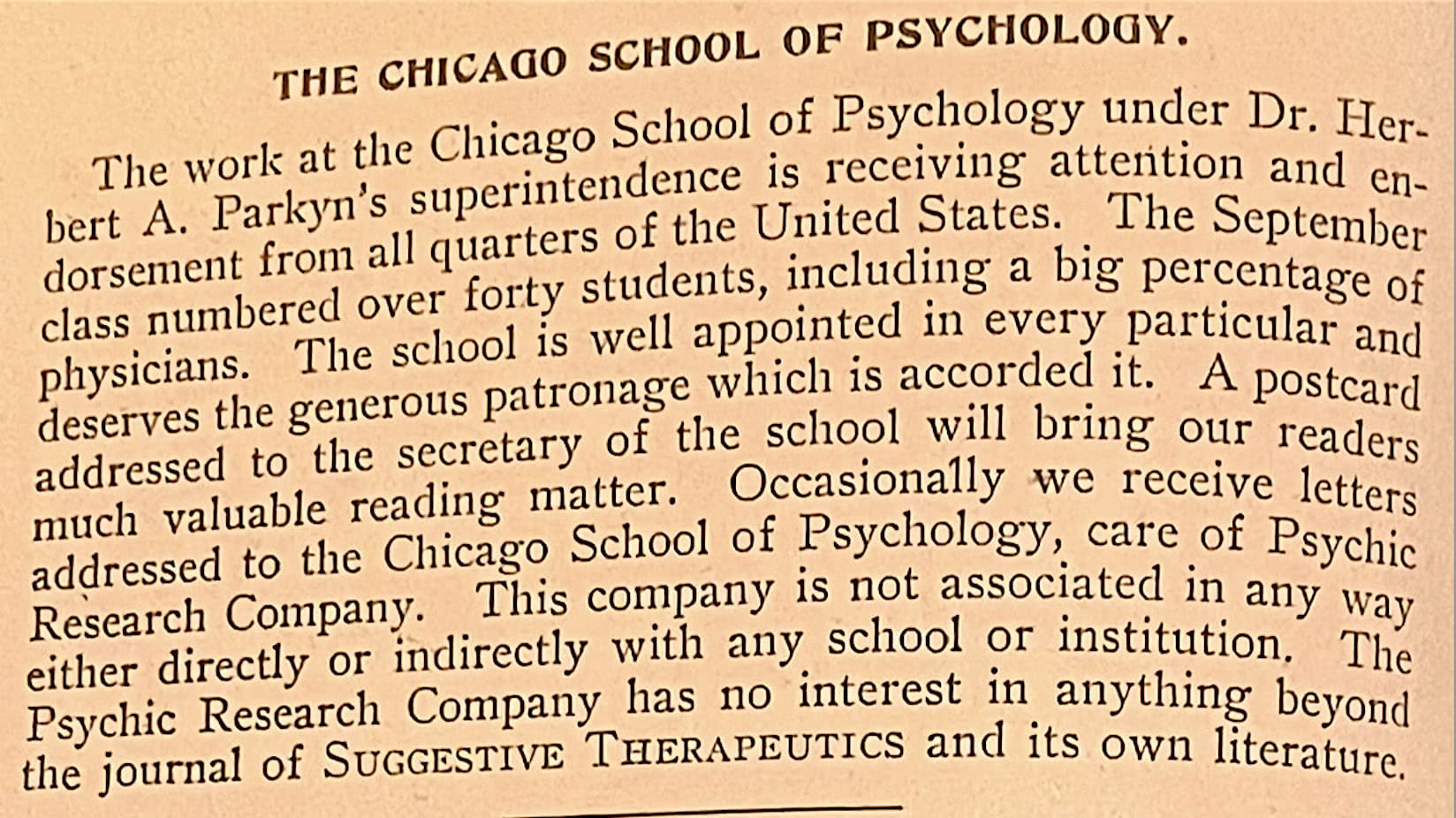
Suggestive Therapeutics loses its second-class postage rate
In late July 1900, the postal authorities ruled to permanently revoke the second-class postage rate for Suggestive Therapeutics magazine, granting a grace period through the end of the year to fulfill existing prepaid subscriptions. Without access to the discounted mailing rate, the journal was effectively forced to cease operations at the end of 1900.
Conclusion on Suggestive Therapeutics magazine
These events make it impossible to accept that Parkyn and Flower had truly gone their separate ways in 1898. While they publicly presented their magazines as independent, the record shows they continued working closely together. The postal investigation supports this conclusion, finding that Suggestive Therapeutics was still functioning as a promotional outlet for the Chicago School of Psychology despite the supposed separation. But this is only one of many examples.
The Psychic Research Company
Going back to June 1899, before the postal investigation of Suggestive Therapeutics, the Psychic Research Company had been created as the official publishing house for Suggestive Therapeutics magazine and to distribute research materials and correspondence courses on psychic phenomena. Its creation also marked the first step toward establishing a University of Psychic Science, regional Schools of Psychic Science, and even a Psychic Club to organize and support a community of committed participants.
In early 1900, Parkyn opened the University of Psychic Science in Chicago, just around the corner from his Chicago School of Psychology. In coordination with its founding, the Psychic Research Company launched a series of mail-order courses covering nearly every topic associated with the popular mental sciences of the New Thought movement. These included instruction in Hypnotism, Mesmerism, Personal Magnetism, Clairvoyance, Telepathy, Absent Healing, Mind Reading, Mediumship, Concentration, Self-Culture, Auto-Suggestion, and Zoism. The aim was to flood the market before competing practitioners could do so and guide readers toward the truth that the power behind these practices was the Law of Suggestion. Many of the courses, such as A Complete Course in the Art of Mind Reading and the course on Mediumship, were aimed at exposing the methods used by well-known performers, revealing them to be clever tricks rather than supernatural powers. They were presented as entertaining feats one could demonstrate to amuse friends, much like a magic show.
A Complete Course in the Art of Mind Reading, authored by Parkyn
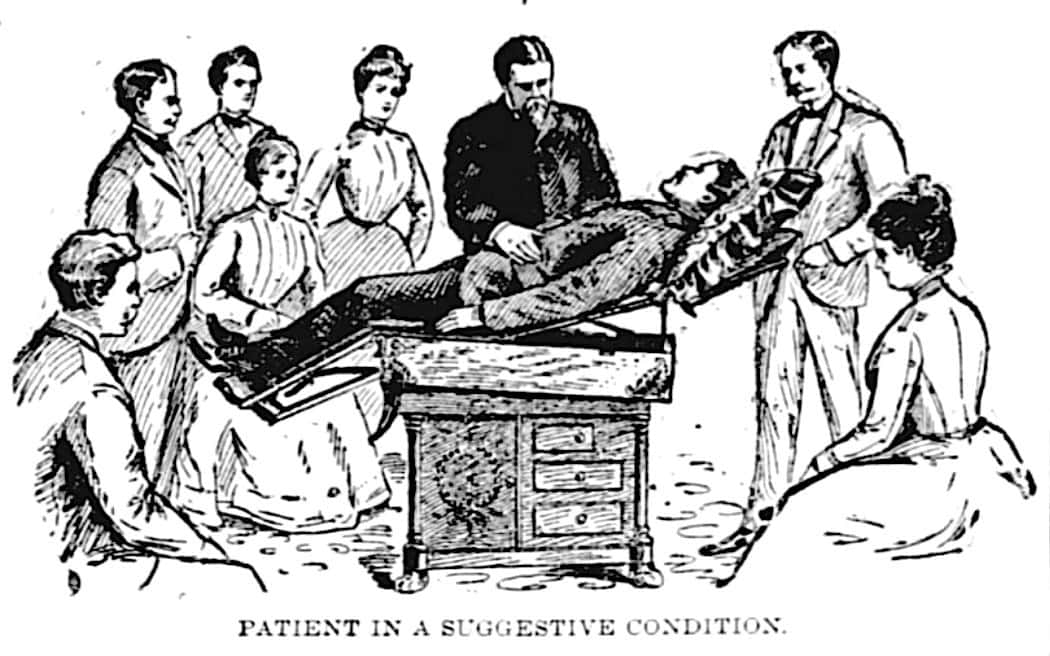
While the Complete Course in the Art of Mind Reading was published anonymously, the YPS History Project has uncovered that it was actually authored by Dr. Parkyn. It featured his signature phrase, “thought tends to take form in action,” used exactly as in his Mail Course in Suggestive Therapeutics and Hypnosis, and the course worked as a continuation of the several chapters he had included in his mail course on stage hypnotism. The book included many illustrations clearly showing Parkyn himself conducting muscle reading experiments inside his Chicago School of Psychology. Releasing these works anonymously allowed Parkyn to include ideas that would not have been appropriate to address in a formal medical context.
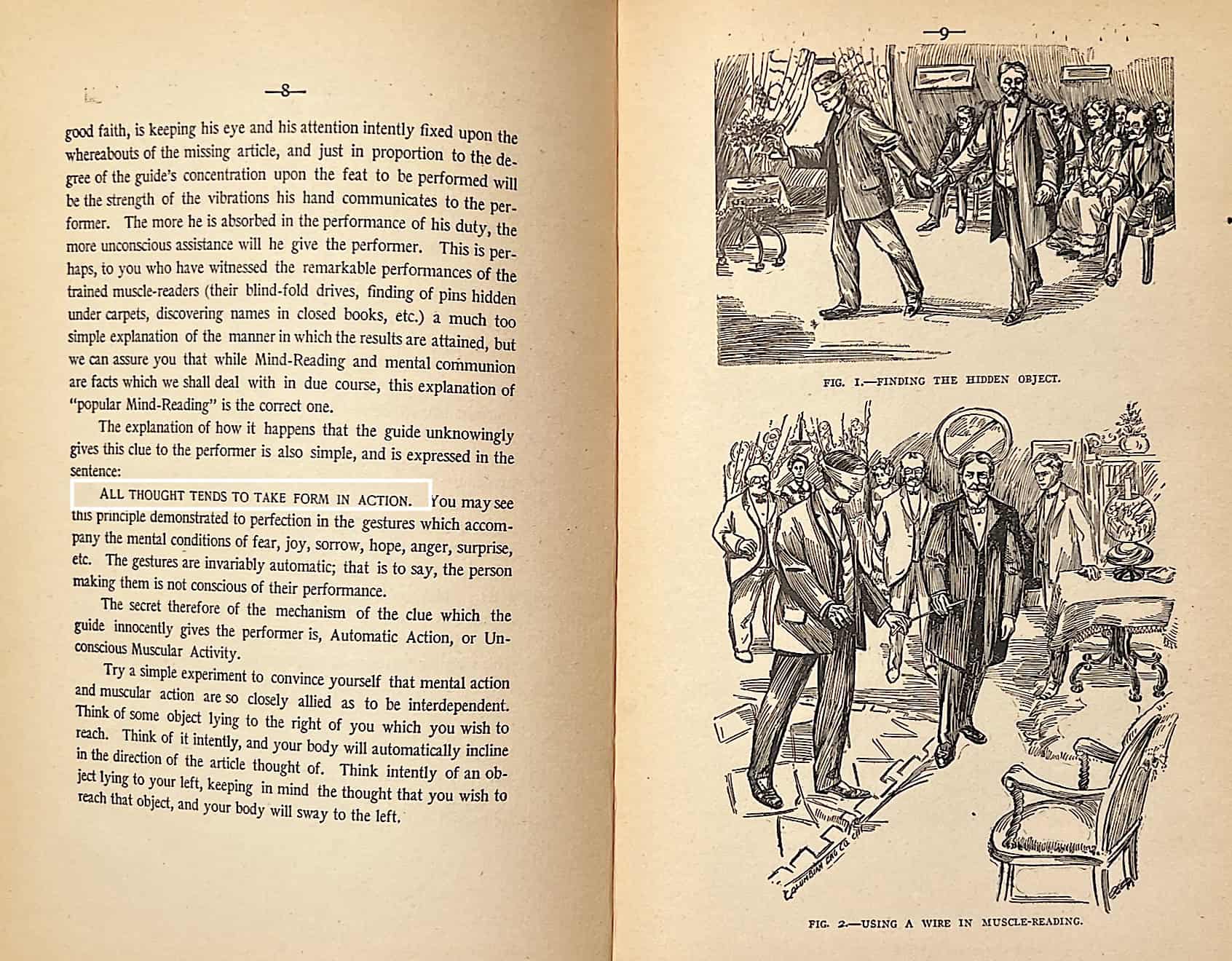
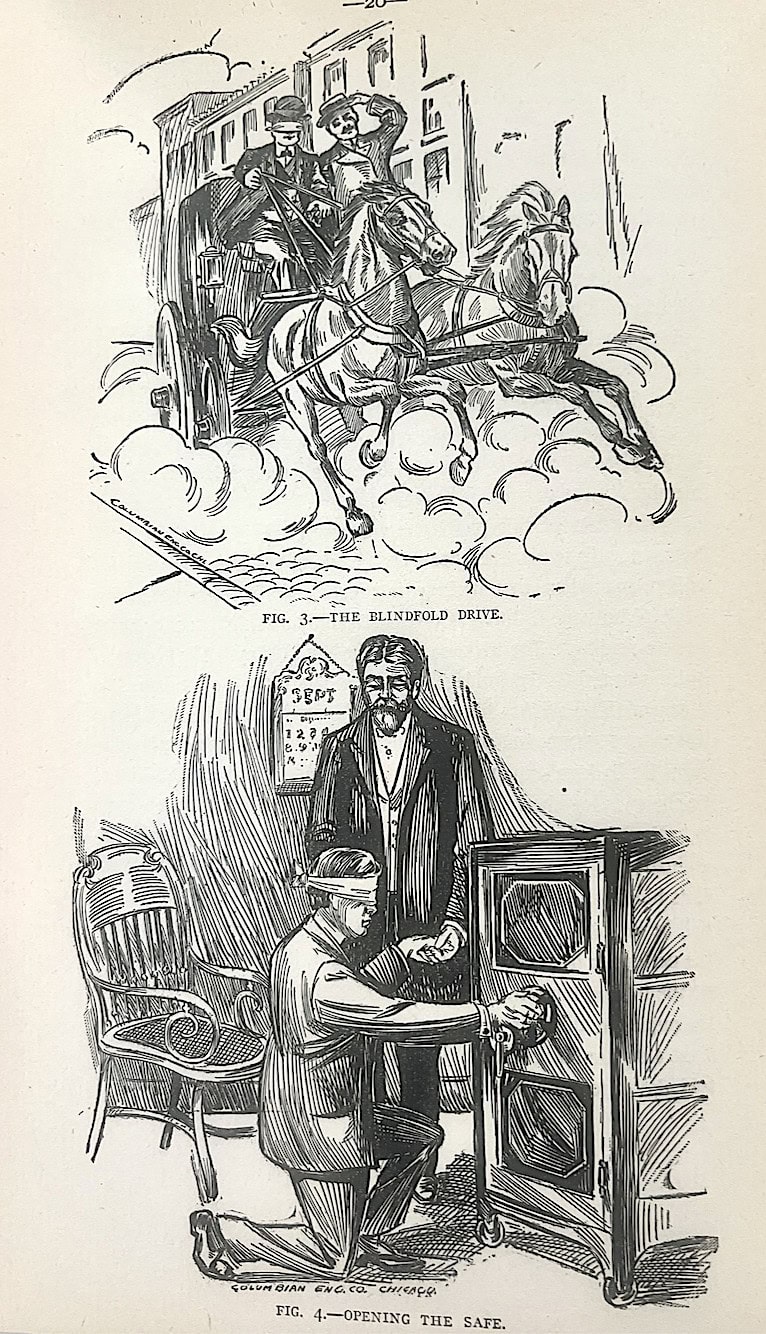
Here are several other illustrations of Dr. Parkyn that show that he is without a doubt the doctor depicted in the Art of Mind Reading course by the Psychic Research Company.

Parkyn’s Minneapolis connection, the Daniels family
On September 20, 1899, Jay V. Daniels, with his cousin Van Ness Daniels Smith, and Sydney B. Flower incorporated the Psychic Research Company in Chicago with the minimum allowable capital stock of $2,500. Dr. Parkyn had known the Daniels family from Minneapolis, where in 1894 Jay’s father had become seriously ill with a progressive paralytic condition. In an effort to find relief, the family turned to Parkyn and Dr. Sudduth, hoping Suggestive Therapeutics might offer help. Although the treatment was ultimately unsuccessful in halting the disease, both Jay and his mother Mary L. Daniels developed a lasting interest in psychic healing. Van Ness Daniels Smith was a practicing attorney in Chicago and oversaw the legal incorporation of the company and managed the family’s interests in the venture.
In 1899, incorporating a company and getting its charter required at least three names on the incorporation papers. This was called the “rule of three.” It was quite common for the names to be three lawyers who worked for the firm that was hired to draft and file the paperwork, since it was only after the state approved the charter that the bylaws and Board of Directors would be created. As soon as the directors and shareholders took over, the incorporators’ job was complete. Using attorneys or dummy names for incorporating a company was also a common practice to keep the real people behind an enterprise secret. Parkyn would use this practice for many of his enterprises, including the University of Psychic Science.
Because Van Ness Daniels Smith was an attorney, he drafted the paperwork, and Daniels and Flower served as the other two incorporators. After the meeting of the directors and shareholders, Daniels was appointed president of the new company to handle daily execution, contracts, and operations, and Van Ness Smith was appointed corporate secretary to officially sign off on all contracts, meetings, etc… Flower would serve as the face and principal editor for the new company.

By 1899, Jay V. Daniels had acquired extensive experience in newspaper management, editing, publishing, advertising, and business, and Parkyn considered him an ideal candidate to run the Psychic Research Company’s operations. Daniels would also be the means of expanding the Psychic Research Company internationally by first establishing a London office at 146 Temple Chambers and subsequently moving into France and then into Germany, where the company operated under the name Psychologischer Verlag (Psychological Publishing) and eventually published the German-language version of New Thought magazine titled Neue Gedanken (New Thought).
Daniels and Parkyn would continue working together for many years. In 1910, Daniels joined Parkyn’s mining venture, the American Placer Corporation, where he became the company’s representative in securing major European investment.

One of Parkyn’s earliest graduates and longtime collaborator, Lloyd Kenyon Jones, authors several of the Psychic Research Company courses
The involvement of Lloyd Kenyon Jones provides further evidence that the Psychic Research Company remained closely connected to Dr. Parkyn and his network. Jones had been one of Parkyn’s earliest students and a longtime collaborator.
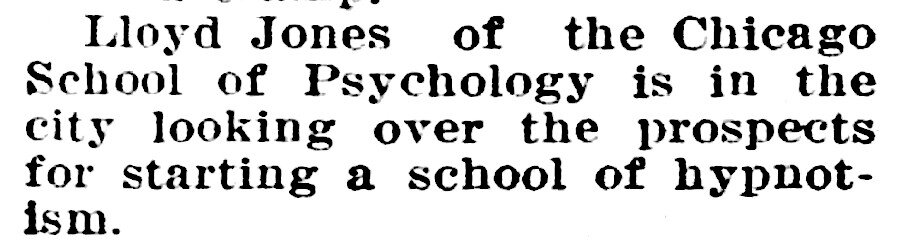
Born in Marshfield, Wisconsin, Jones began his career with The Marshfield Times, where he became close with its publisher, John H. White, who in turn was a close associate of Parkyn’s uncle, who was the owner and editor of the nearby Eau Claire Telegram. Through this connection, Jones learned of Parkyn’s newly established Chicago School of Psychology soon after it opened. Having already developed a strong interest in mental science, he moved to Chicago in 1896 and enrolled as one of the school’s earliest students. Jones remained closely associated with Parkyn for years afterward. He lectured and gave public demonstrations on Parkyn’s teachings on hypnotism and suggestion throughout the region, published articles in The Hypnotic Magazine, and assisted at the Chicago School of Psychology. In 1900, Jones authored several instructional courses for the Psychic Research Company, including those on psychometry, clairvoyance, and phrenology
Sydney Flower travels around the Midwest looking to open Schools of Psychic Science
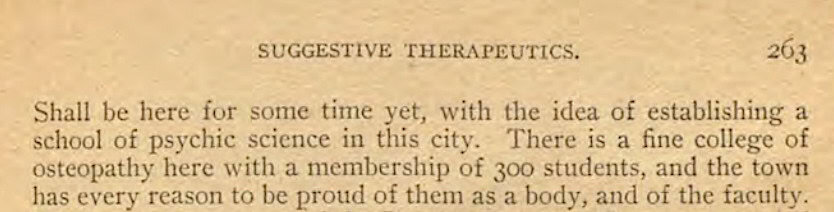
Just a few months after Parkyn opened the University of Psychic Science, Flower was once again traveling throughout the region establishing affiliated Schools of Psychic Science, as he had previously done with Parkyn’s Chicago School of Psychology. Just as Parkyn and Flower had worked to define and control the public understanding of the terms Hypnotism, Suggestive Therapeutics, and Suggestion, they were now doing the same with Psychic Science, a term that had become extremely fashionable at the time. Before long, those efforts would expand to include Magnetism as applied to healing and, ultimately, the term New Thought itself.
Conclusion on the Psychic Research Company
The evidence leaves little doubt that Dr. Parkyn was closely involved in the Psychic Research Company. He was the author of A Complete Course in the Art of Mind Reading, opened the University of Psychic Science in coordination with the company’s first mail courses, arranged for the company’s operations to be managed by his associate Jay V. Daniels, relied on trusted collaborators such as his former student Lloyd Kenyon Jones to prepare several of its instructional courses, and Flower worked to open affiliated schools with the University of Psychic Science.
The Journal of Magnetism takes over the subscribers and staff of Suggestive Therapeutics
With the loss of Suggestive Therapeutics magazine at the end of 1900, a replacement publication was needed immediately to absorb much of the old operation, including its subscribers, contributors, advertisers, and staff. Parkyn turned to Lloyd Kenyon Jones to launch and edit a new magazine titled The Journal of Magnetism. The title was carefully chosen to capitalize on the growing fascination with magnetic healing and magnetic science that was sweeping through New Thought circles at the time. Flower remained largely in the background while the attention surrounding the postal investigation subsided, gradually resuming editorial control as conditions improved.
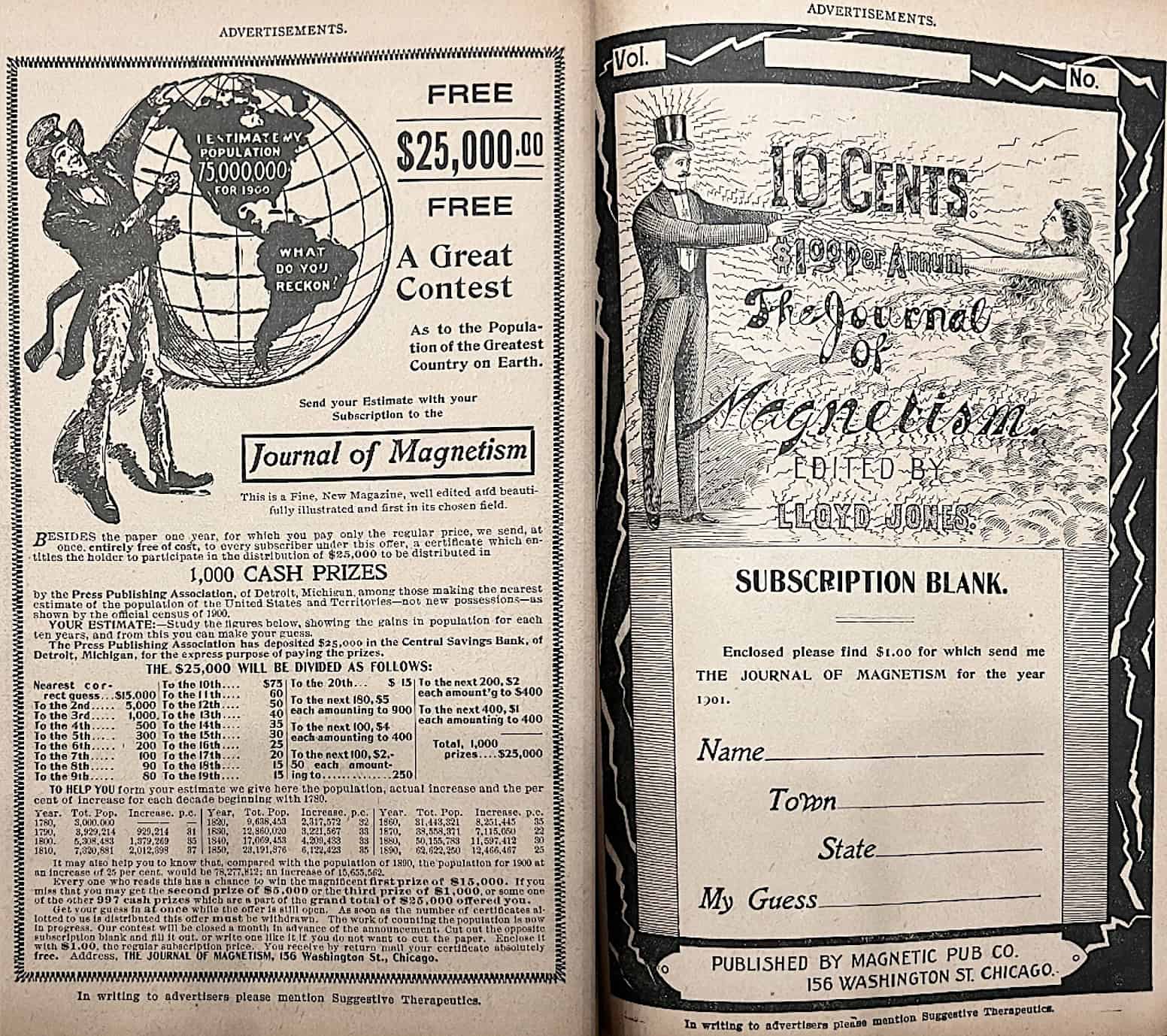
Plans to launch The Journal of Magnetism as a replacement for Suggestive Therapeutics began in the fall of 1900. Although Suggestive Therapeutics was granted a grace period to fulfill its subscriptions through the end of the year, it was essentially a dead man walking. With very few advertisers or contributors remaining, most were held back for the launch of The Journal of Magnetism. As a result, the magazine’s final issues were filled almost entirely with editorials by Flower and advertisements for the Psychic Research Company. These issues were used to heavily promote the science and health benefits of magnetism for the coming new journal. Their pages featured editorials such as “How to Magnetize,” “Magnetic Currents,” “Magnetic Handshaking,” “Magnetic Cures for Insomnia,” and even “Magnetizing Lizards.” Parkyn’s Suggestion magazine likewise became filled with articles and editorials devoted to the subject of magnetism.
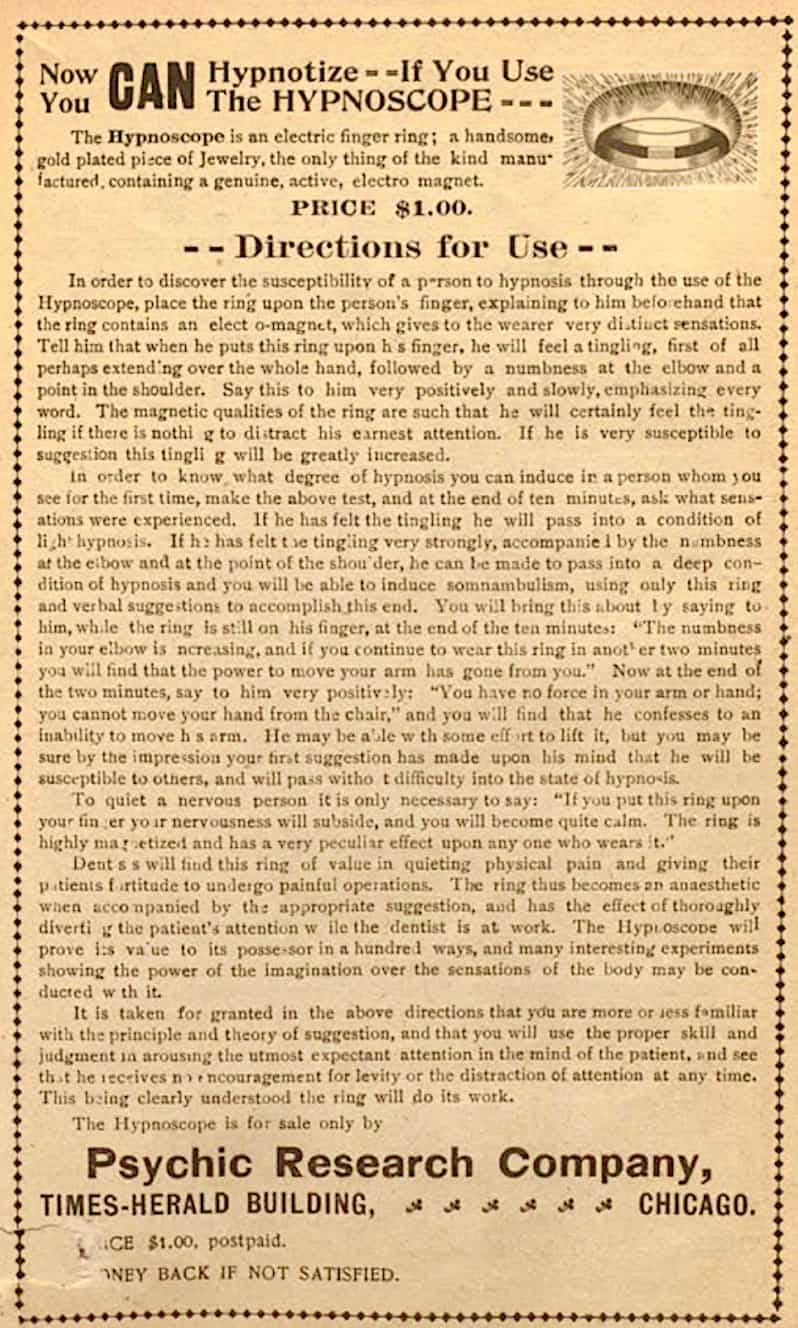
This also included numerous advertisements from the Psychic Research Company promoting products based on magnetism and courses in magnetic healing.
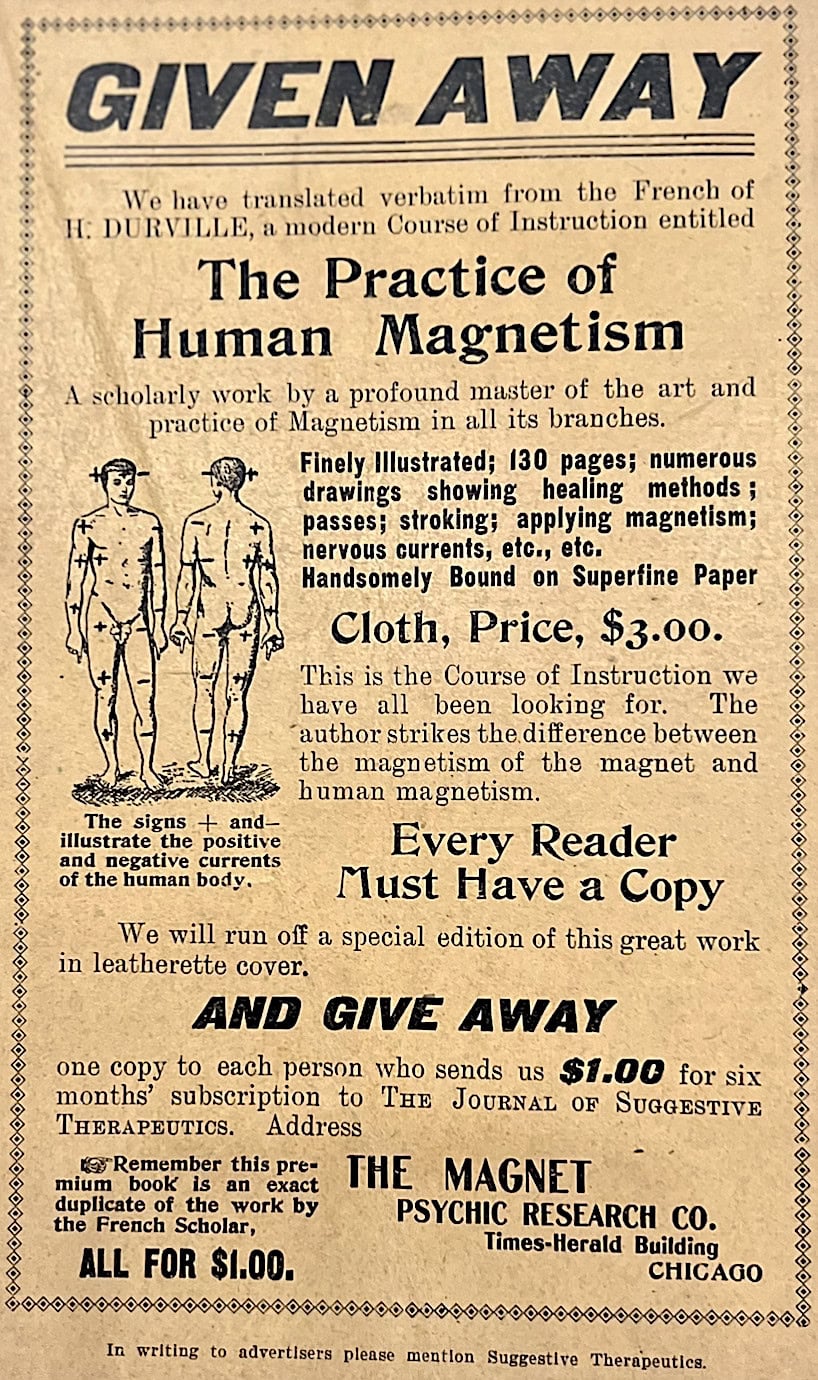
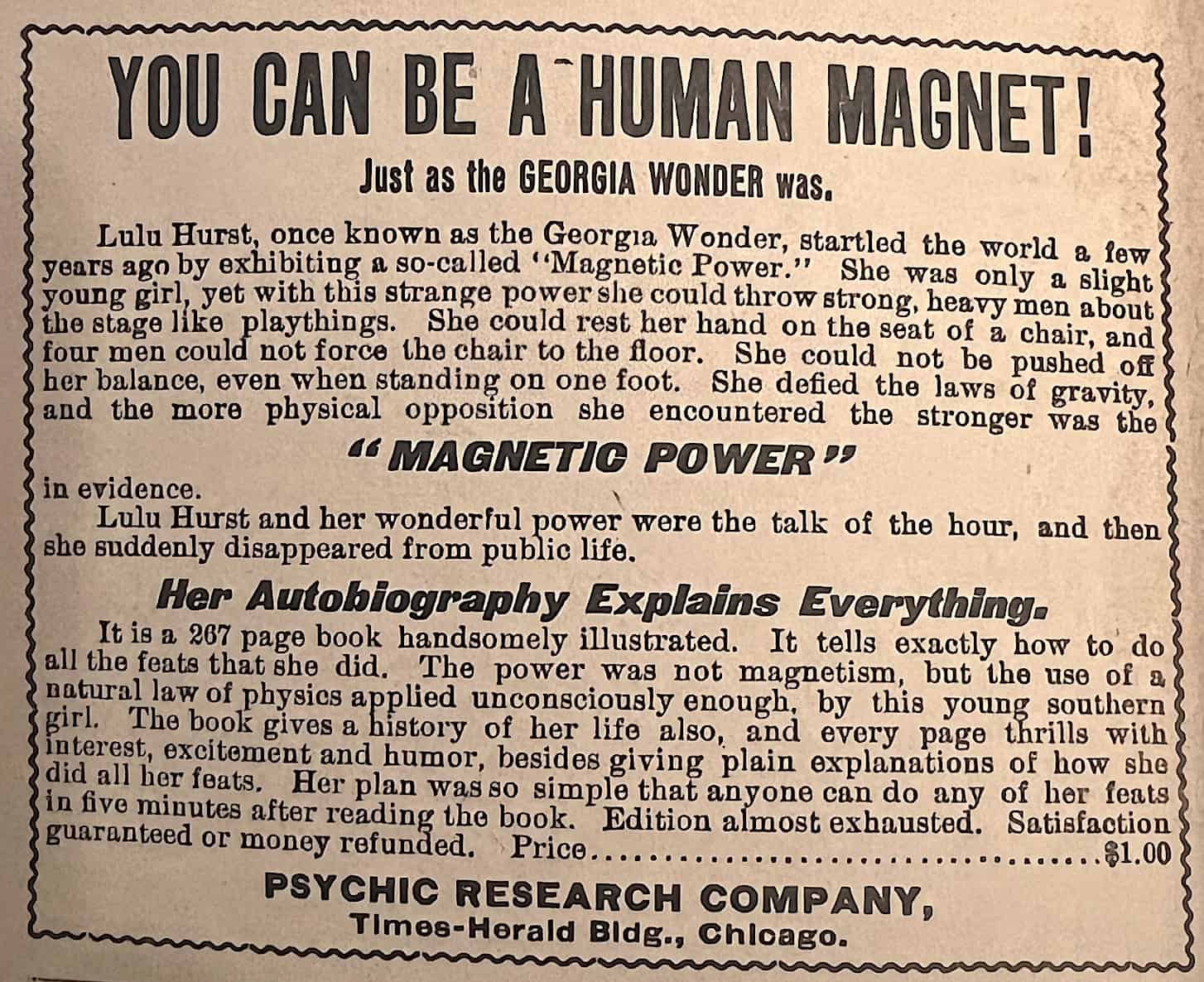
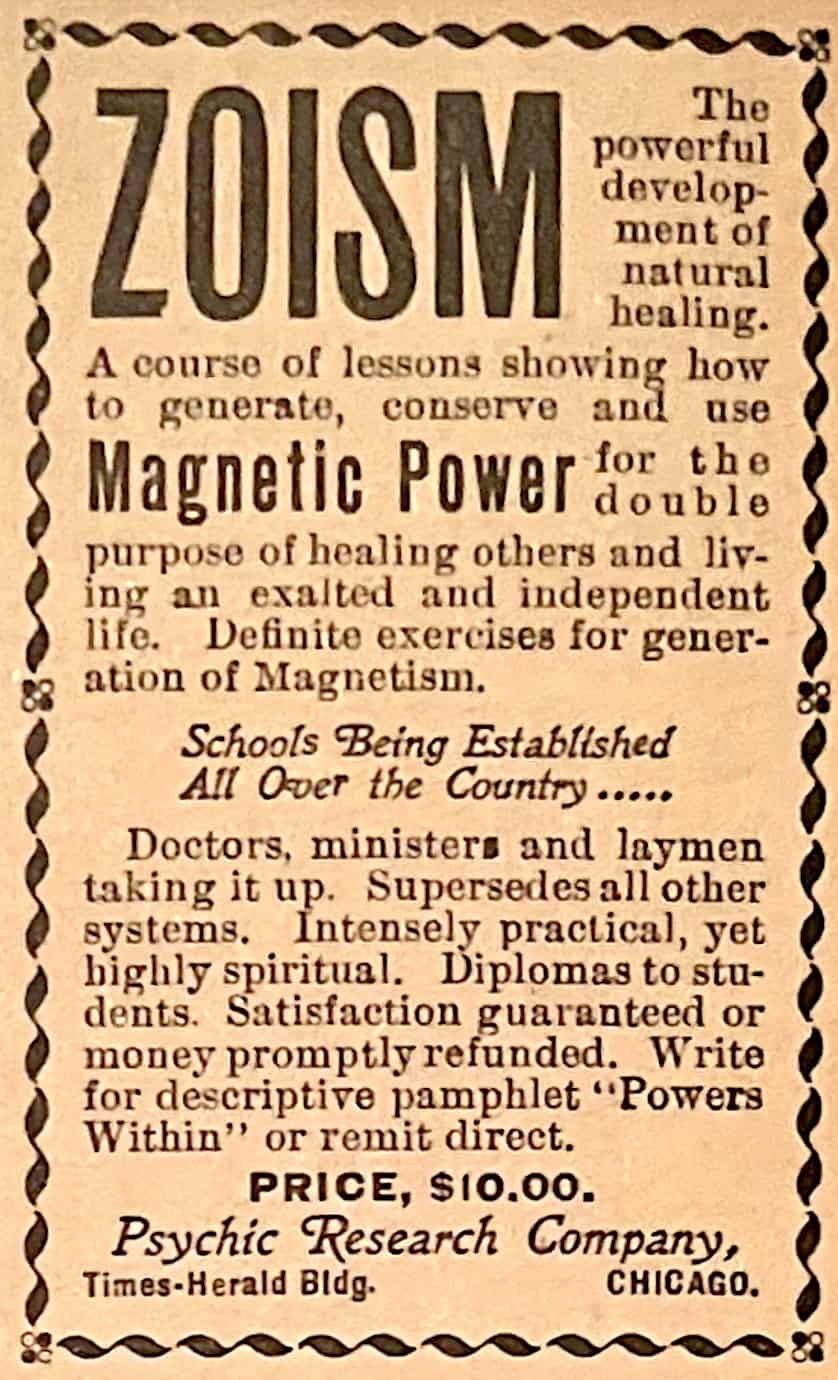
Among the ads was also a new invention by Parkyn himself called the Magnetic Healing Cup, described as “the last and greatest discovery of the nineteenth century.” While patent records now confirm that it was Parkyn’s invention, he did not attach his name to it at the time, instead using it as a tool for psychic research on the power of masked suggestion.
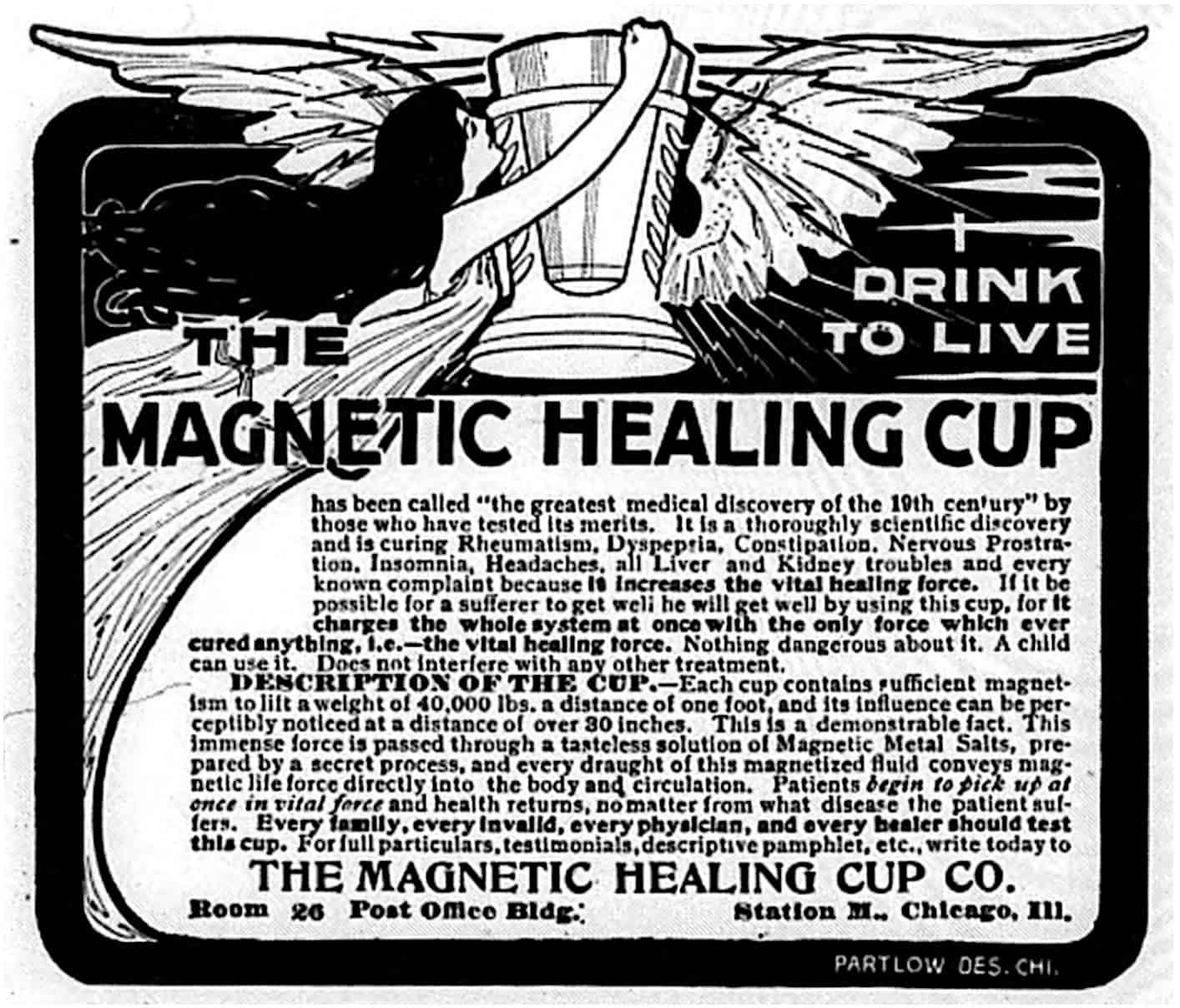
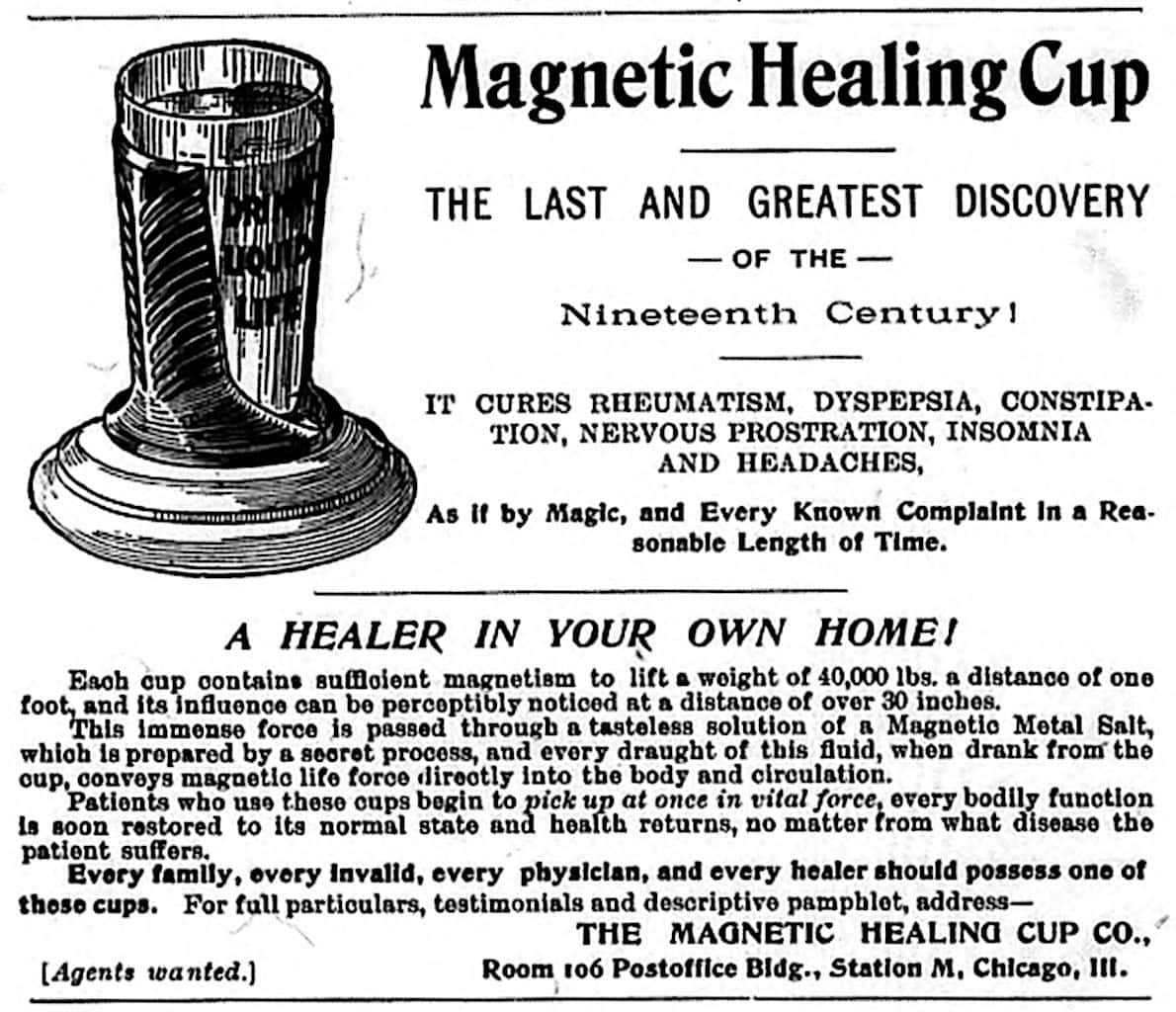
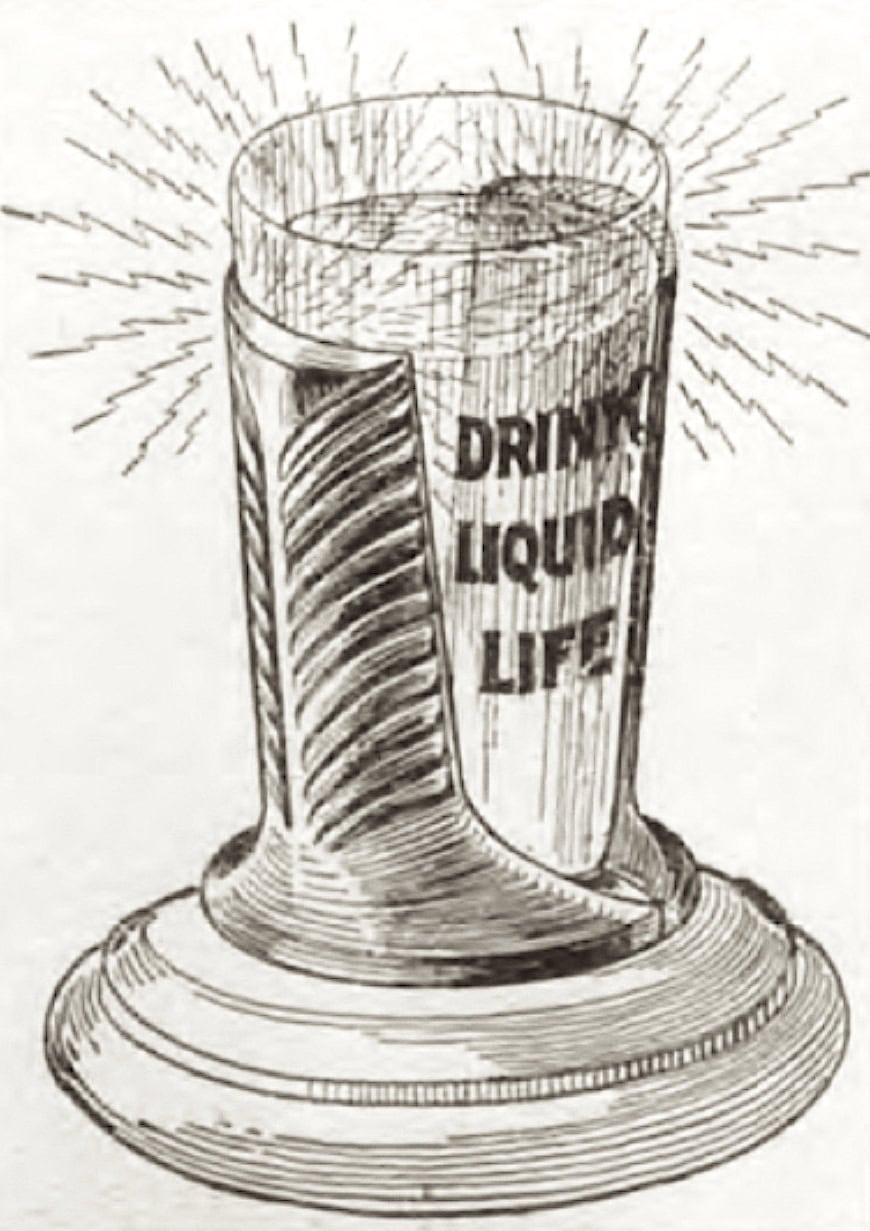
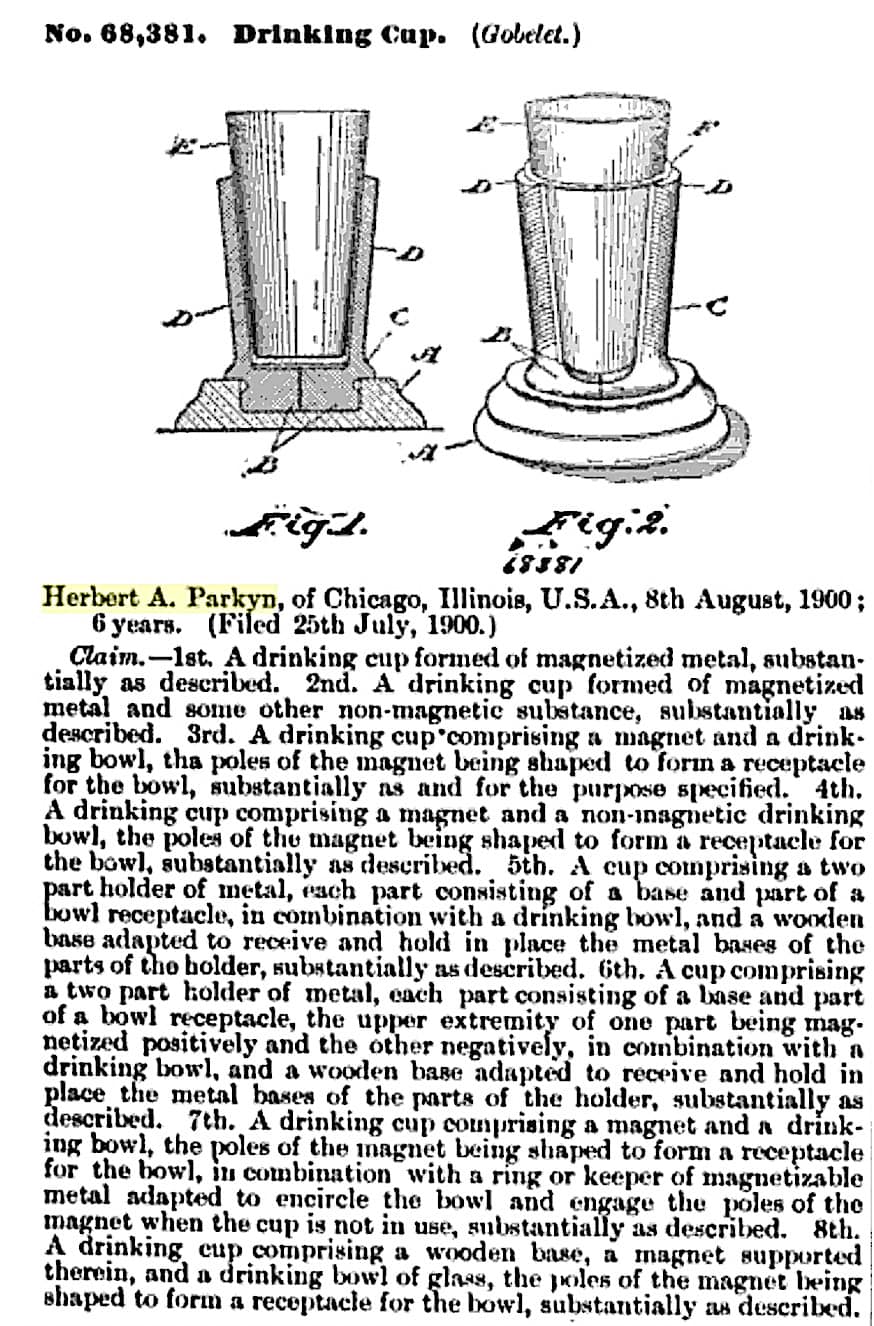
The magnetic waves depicted in the advertisement for The Journal of Magnetism and Parkyn’s Magnetic Healing Cup are identical in style and design, strongly pointing to the fact that both were created by the same engraving house.

Conclusion on The Journal of Magnetism
The evidence connecting Parkyn to The Journal of Magnetism is difficult to ignore. One of his earliest students and longtime collaborators, Lloyd Kenyon Jones, launched and edited the magazine. At the same time, Suggestion and the final issues of Suggestive Therapeutics coordinated efforts to promote magnetism before the launch of the new magazine. Suggestive Therapeutics was filled with advertisements from the Psychic Research Company, all focused on Magnetic Power and healing. This also included Parkyn’s own Magnetic Healing Cup. The same distinctive magnetic-wave artwork appeared in advertisements for the journal, the Magnetic Healing Cup, and the Psychic Research Company’s Hypnoscope. These facts strongly suggest that The Journal of Magnetism was another publication developed within Parkyn’s publishing network. Within a year, it will become New Thought magazine, co-edited by Flower and Atkinson.
Before turning to Atkinson, we will first fast-forward to examine two additional examples of Parkyn’s continued collaboration with Sydney Flower in 1902 and 1903, after Flower and Atkinson had started New Thought magazine.
Coordinated advertisements in The Nautilus and working with Elizabeth Towne
Parkyn developed a close relationship with Elizabeth Towne over the years, and her magazine, The Nautilus, became part of the Suggestion family. With Parkyn’s help, The Nautilus grew from a small eight-page fold-over journal into a full 40-plus-page national magazine. He brought substantial advertising to the publication, regularly featured its articles in the editorials of Suggestion, and encouraged several of his leading writers to contribute to it, helping establish it as a major voice within the New Thought movement. He also invited Towne to contribute an article to each issue of New Thought, further expanding her influence within the movement.

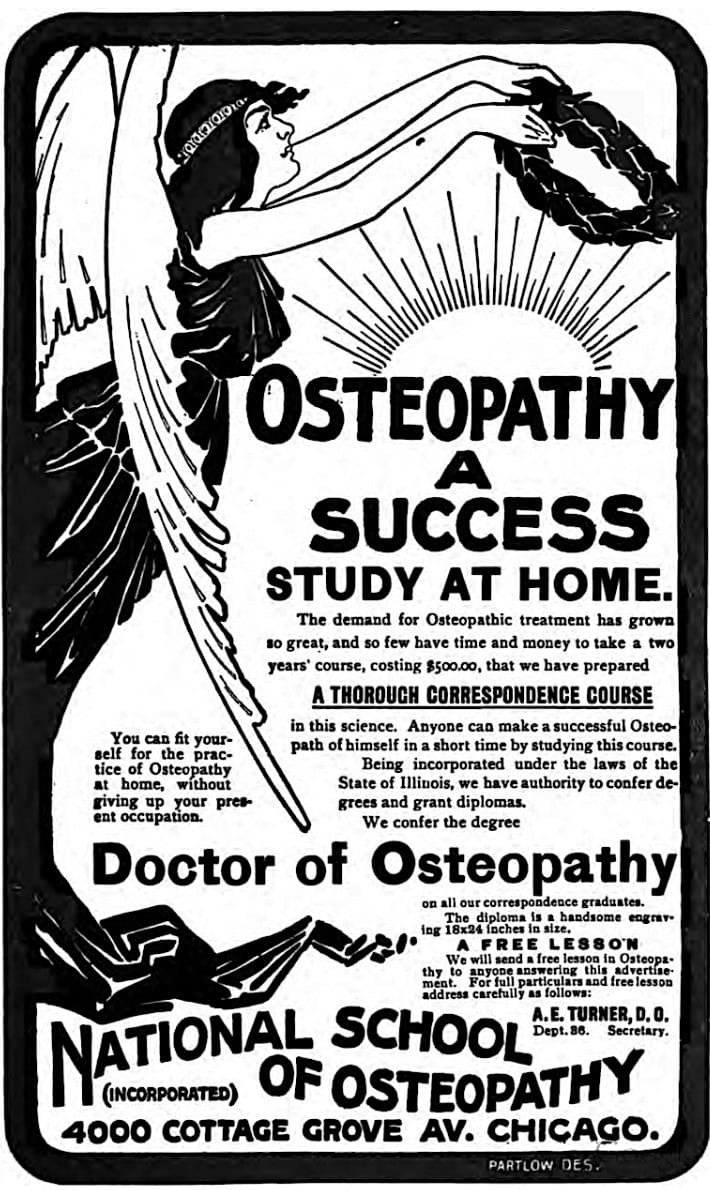
Parkyn and his associated ventures began advertising heavily in The Nautilus in the spring of 1902. Advertisements for his Chicago School, Suggestion magazine, and his correspondence-based National School of Osteopathy appeared in every issue. Also included were advertisements for Atkinson’s Thought-Force book and his “I Am” pamphlet, as well as the correspondence-based Columbia School of Osteopathy, which was managed by Jay V. Daniels. This was still when The Nautilus was just an eight-page fold-over journal and devoted just the last two pages to advertising. These advertisements alone accounted for approximately 80 percent of all the ads not placed by Elizabeth Towne or her husband, William Towne.
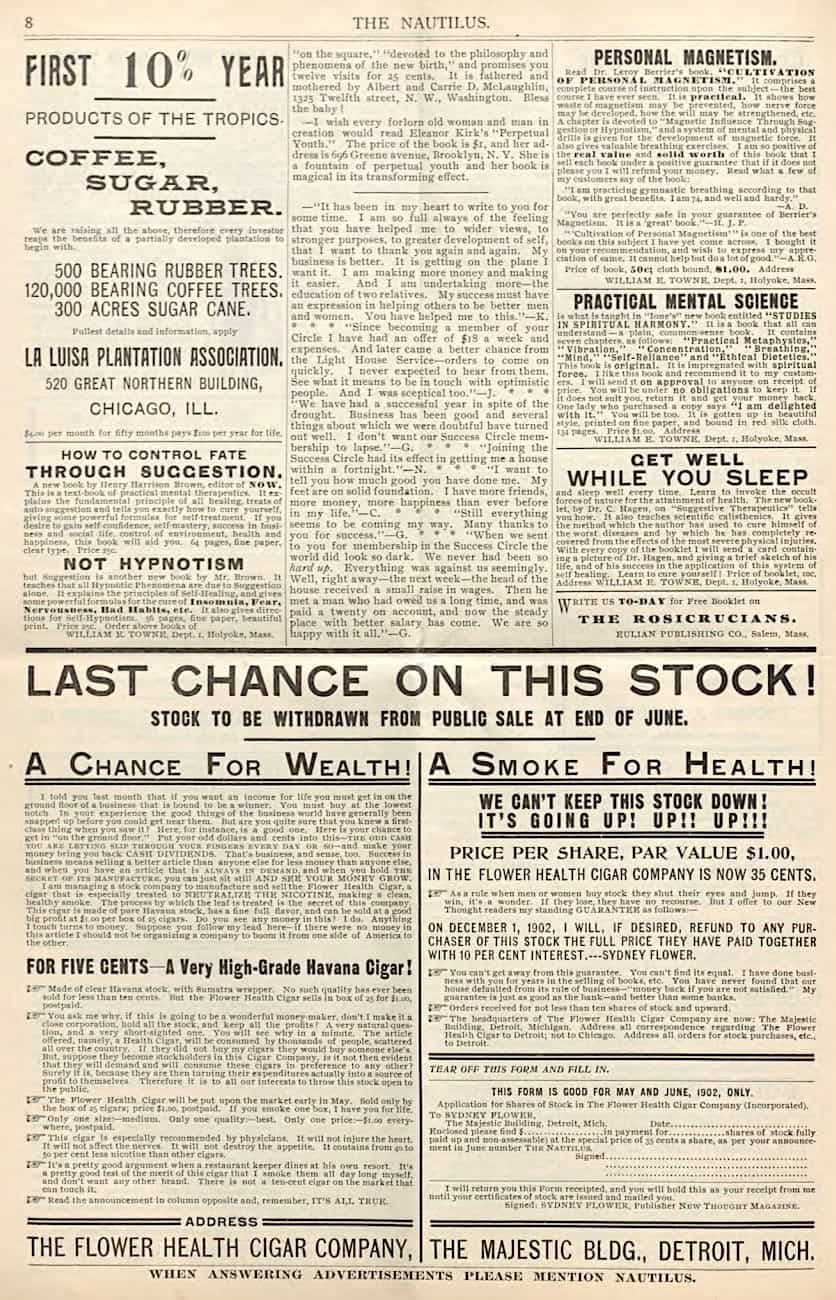
This culminated in the June 1902 issue of The Nautilus, when both Parkyn and Sydney Flower placed the largest advertisements yet to appear in the journal. Both were investment advertisements. Parkyn’s promoted the La Luisa Plantation Association, which he had recently organized with his father, James Parkyn, while Flower’s advertised the Flower Health Cigar Company. This marked the beginning of the network’s efforts to generate substantial wealth to finance the schools, publishing ventures, and educational enterprises they hoped would spread Suggestion throughout the world.
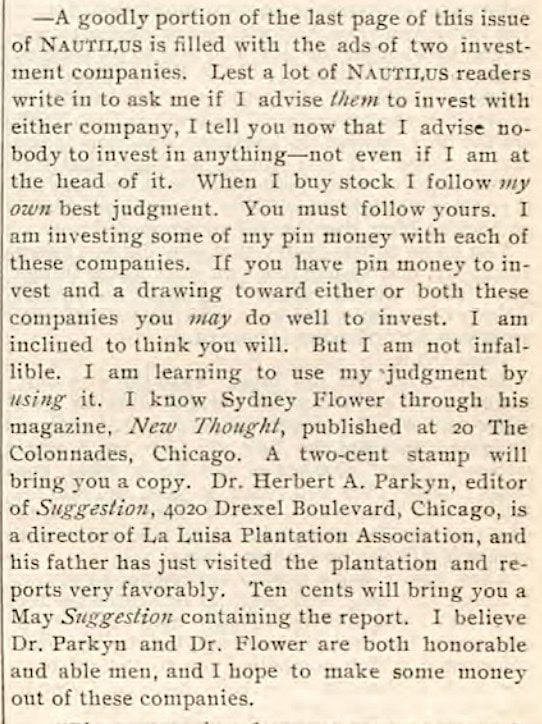
The two advertisements occupied most of the magazine’s final page and represented a noticeable shift in its advertising tone. Elizabeth Towne addressed their sudden appearance in an editorial note, explaining that she was not offering financial advice and urging readers to exercise their own judgment when considering such investments. She disclosed that she had personally invested in both companies and expressed confidence in their promoters. Towne described the favorable report she had received from Dr. Parkyn’s father following a recent visit to the plantation and stated her belief that both Parkyn and Flower were honorable and capable men, expressing optimism about the potential returns on her investments.
Conclusion on collaboration with Towne
The appearance of these two investment advertisements in the June 1902 issue is significant in itself. They were the largest advertisements yet published in The Nautilus, occupied most of the magazine’s final page, and represented a dramatic departure from its normal advertising content. Their simultaneous appearance was so unusual that Elizabeth Towne felt compelled to address them directly in an editorial note, explaining why they had been accepted and assuring readers of her personal confidence in both Parkyn and Flower. Their coordinated placement in the same issue provides clear evidence that the two men were still working closely together.
The Lovett Magnetic Separator
Before moving on to Atkinson, we will first fast-forward to show another clear, ongoing collaboration between Parkyn and Sydney Flower in 1903, after he and Atkinson were running New Thought magazine.
At the center of the connection were Thomas J. Lovett and John H. McFarland. Lovett was one of Parkyn’s closest friends and neighbors, living directly across Drexel Boulevard from Parkyn’s school and residence at 4001 Drexel Boulevard, while another friend, John H. McFarland, also lived in the same building. The three men became close companions through the Oakland Club, later known as the Waupanseh Club, located only a half block down on Drexel. The club served as a gathering place for many of Chicago’s leading businessmen, inventors, and professionals.

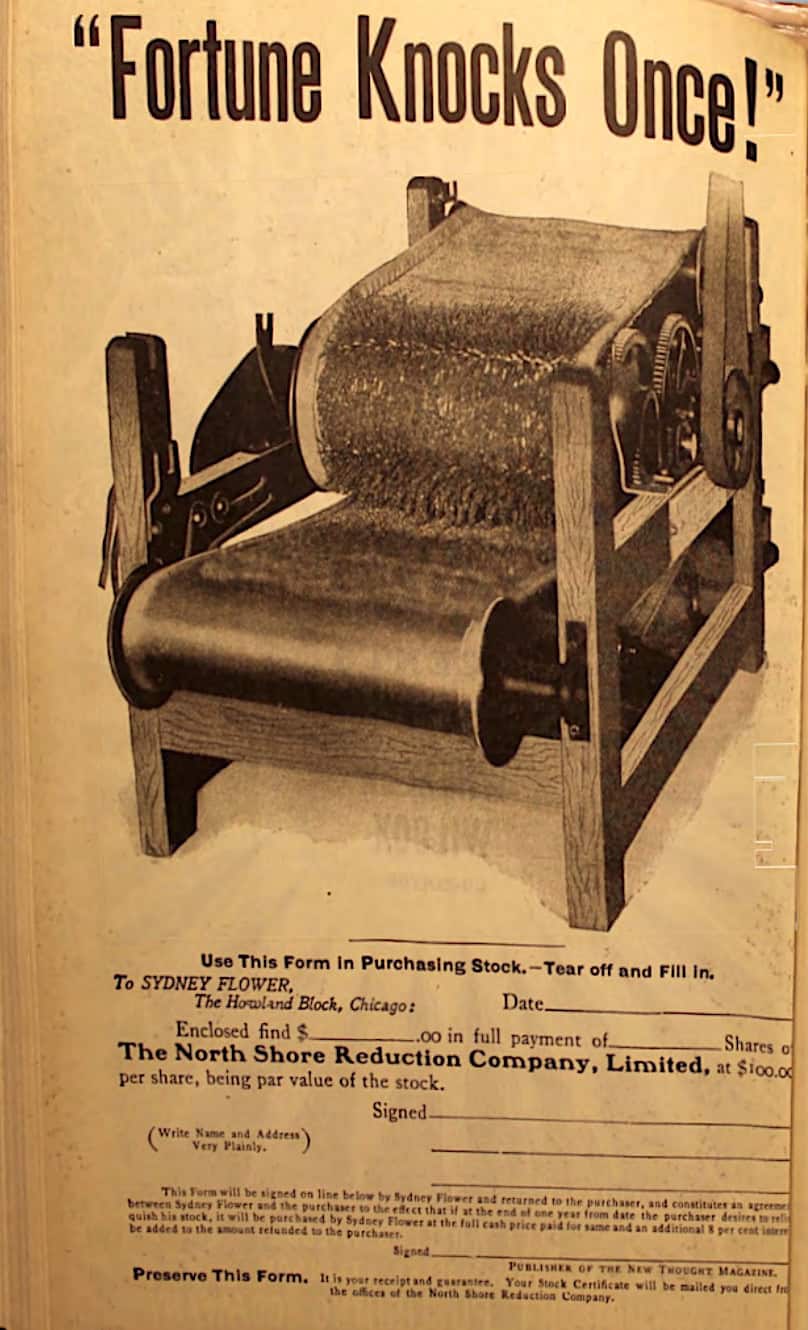
Back in 1892, Lovett had patented a magnetic separator capable of extracting metals from black sand, but the opportunity to commercialize the invention did not emerge until 1903, when a Canadian government investigation confirmed that the black sand deposits along the north shore of Lake Superior contained enormous quantities of valuable minerals. With the official Canadian report driving public interest, the North Shore Reduction Company was formed, with Parkyn helping to assemble a group of prominent businessmen from Chicago and Minneapolis as investors.
With the massive audience that New Thought magazine was receiving, it was decided to use the magazine to solicit investments from the general public. This was a common practice among many journals of the day, but it would not have been appropriate in a scientifically and medically focused publication like Suggestion. Sydney B. Flower stepped down as editor to oversee the investment campaign through the magazine and to serve as the company’s fiscal agent. As a result, investments came flooding in. Flower, however, proved to be an unsuitable choice for managing the company’s finances. Instead of forwarding the invested funds to the company for the development and perfection of the process, he diverted nearly $100,000 into speculative horse-race gambling and high-risk stock market investments. The resulting loss of capital forced the Canadian operation to close and sent Flower into hiding. Having appointed Flower as fiscal agent, Parkyn accepted responsibility and assured Lovett and the investors that, once the United States government had completed its investigation, he would personally assume the role of fiscal agent.
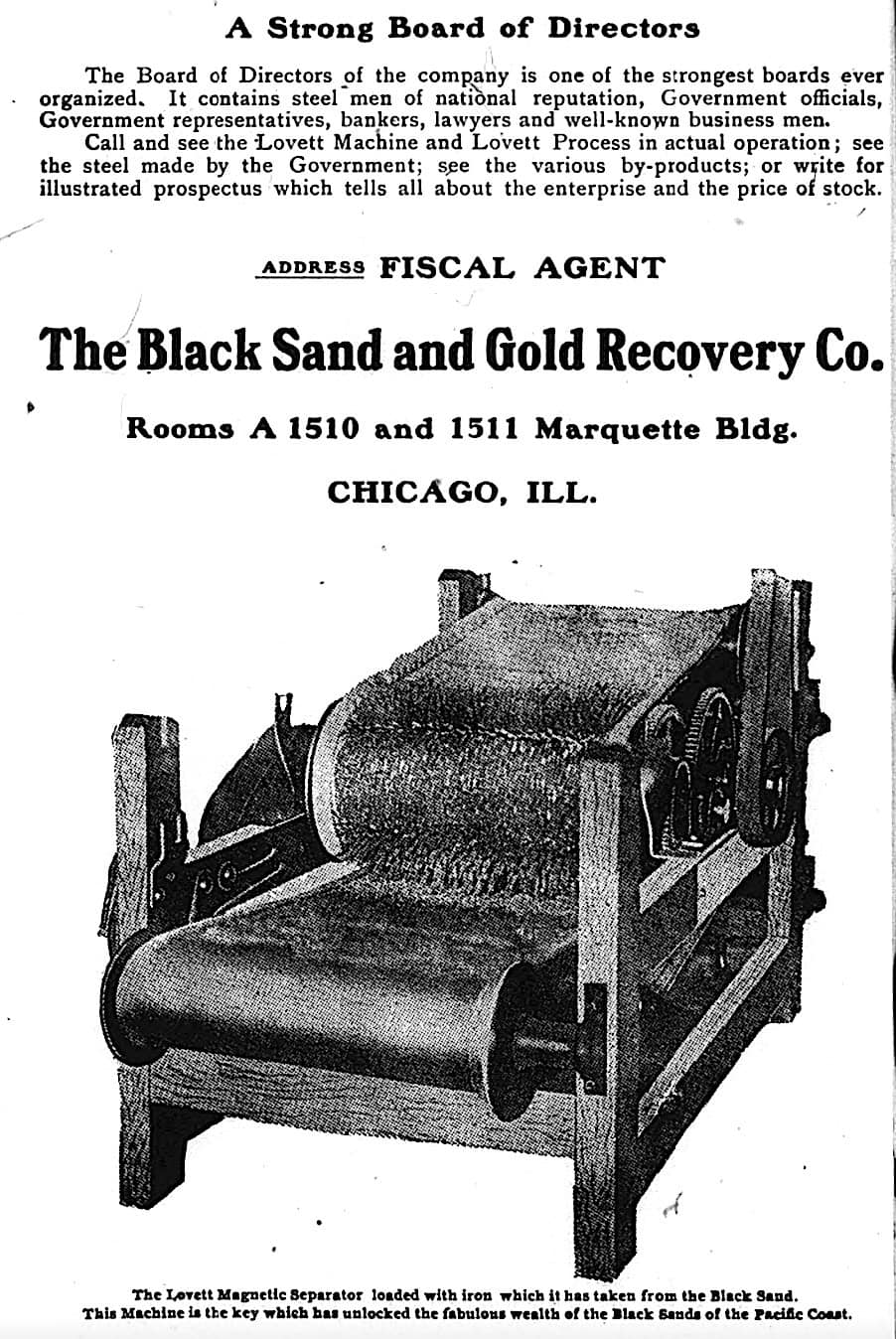
Three years later, in 1906, the U.S. government concluded its investigation, confirming that the black sands of the Pacific Coast contained vast quantities of valuable metals. Parkyn and Lovett then formed the Black Sand and Gold Recovery Company, with Parkyn serving as fiscal agent. This time, he used his Suggestion magazine to raise investment from the public. LINK to promotional pamphlet. Shortly afterward, he sold the magazine and devoted all of his resources to the company.
Conclusion on both Parkyn and Flower’s involvement with the Lovett Magnetic Separator
If Parkyn and Flower had truly gone their separate ways in 1898, it is difficult to explain their close cooperation in this enterprise. New Thought became the vehicle for promoting a business organized by Parkyn and his closest associates, with Flower serving as fiscal agent while Parkyn remained actively involved behind the scenes. When the venture failed because of Flower’s financial mismanagement, Parkyn accepted responsibility and later fulfilled his promise to become fiscal agent himself when he and Lovett organized the Black Sand and Gold Recovery Company in 1906. This effectively destroys the narrative that Parkyn and Flower separated after 1898.
The Evidence for Continued Collaboration Between Parkyn and Flower
The evidence in this section shows that Parkyn and Flower did not truly separate in 1898. Although their magazines appeared to be independent, the same people, publications, advertising networks, financial ties, and educational projects kept working together. The postal investigation found that Suggestive Therapeutics remained a promotional outlet for Parkyn’s Chicago School of Psychology despite the supposed break. The Psychic Research Company showed a similar pattern. Parkyn wrote A Complete Course in the Art of Mind Reading, started the University of Psychic Science alongside the company’s first mail courses, had his associate Jay V. Daniels manage its operations, and worked with trusted collaborators like Lloyd Kenyon Jones to create several courses. These connections were close and intentional, placing Parkyn directly in the company’s educational, financial, and publishing activities.
The same group was also behind The Journal of Magnetism. Lloyd Kenyon Jones, one of Parkyn’s first students and longtime partners, started and edited the magazine. Suggestion and the last issues of Suggestive Therapeutics helped by strongly promoting magnetism before its launch, running multiple ads for Magnetic Power and healing, including Parkyn’s Magnetic Healing Cup. The same magnetic-wave artwork appeared in the journal ads and on the Magnetic Healing Cup ad, strongly suggesting the same designer.
The joint investment ads in the June 1902 issue of The Nautilus are another clear example. Parkyn and Flower placed the two biggest ads the magazine had ever published, both in the same issue, and both promoted investment opportunities. These ads were so different from anything The Nautilus had run before that Elizabeth Towne had to explain their presence in an editorial note, and publicly stated her trust in both men. The Lovett magnetic-separator project showed even more collaboration. New Thought was used to attract investors for a company set up by Parkyn and his closest partners, while Flower acted as fiscal agent. When Flower redirected almost $100,000 and the business failed, Parkyn took responsibility for choosing him and promised to take over. He kept that promise in 1906 by joining Lovett in the Black Sand and Gold Recovery Company and using Suggestion to seek public investment.
All these events show that Parkyn and Flower did not go their separate ways after 1898. Instead, they kept working together in publishing, education, psychic research, advertising, investment promotion, and business. Their supposed split changed how their relationship looked to the public, but it did not stop their partnership.
The Second Public Separation: William Walker Atkinson and Parkyn, 1901
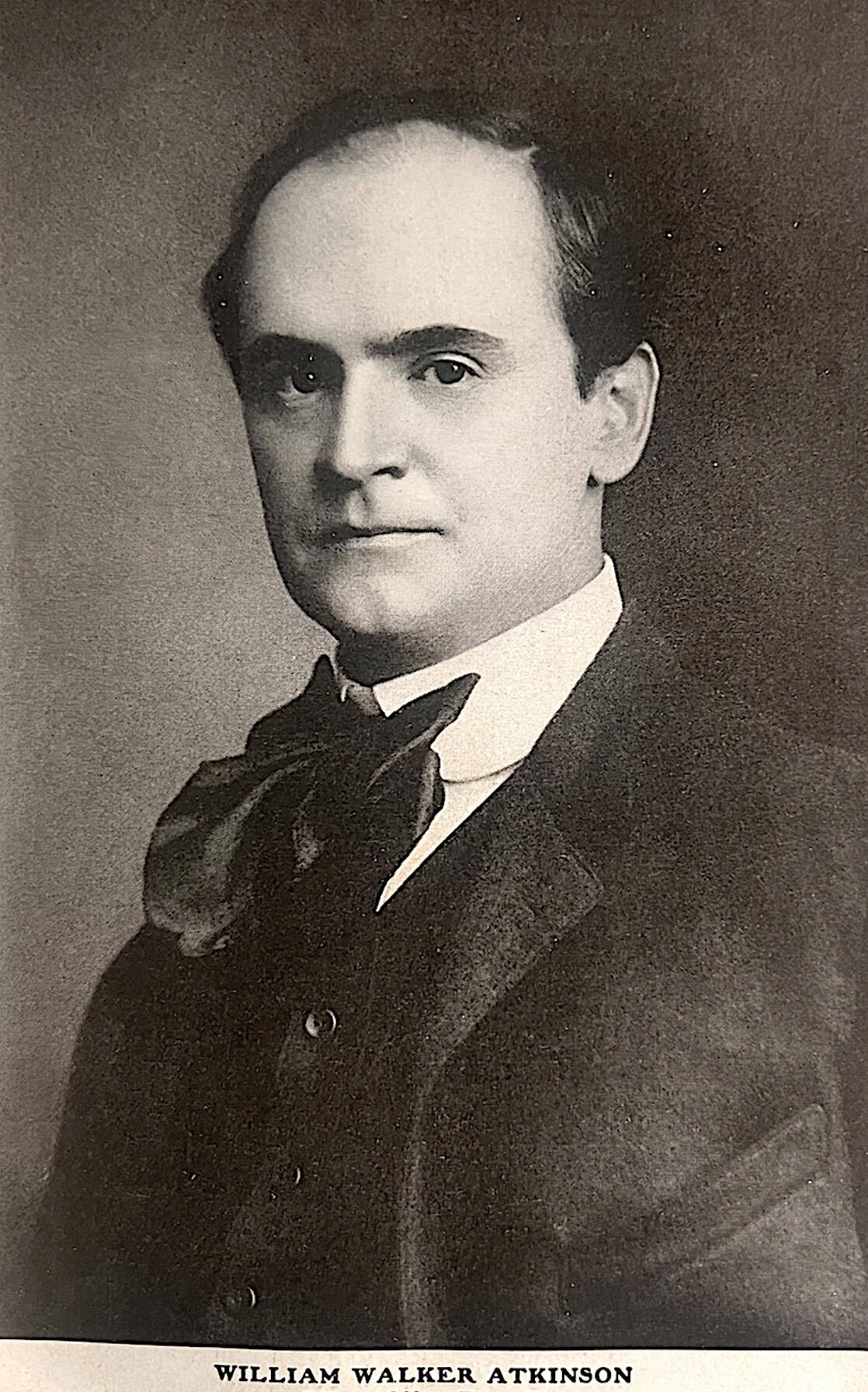
If the evidence presented in the previous section shows that Sydney Flower never truly separated from Parkyn in 1898, then the accepted story of William Walker Atkinson’s departure in late 1901 becomes impossible to accept. Historians have treated Atkinson’s move from Suggestion magazine to The Journal of Magnetism, which was renamed one month later to New Thought magazine, as the moment he left Parkyn to join Flower. But if Flower was still working within Parkyn’s network, and The Journal of Magnetism itself was another publication created from that same network, then Atkinson’s move can no longer be seen as a departure from Parkyn at all. Instead, it becomes a reassignment within the same organization.
Before examining the evidence, it is first necessary to briefly review the relationship between Parkyn and Atkinson leading up to late 1901. Just as we did with Flower, understanding where the two men stood before their supposed separation provides the context needed to evaluate what actually happened when Atkinson left Suggestion magazine for New Thought.
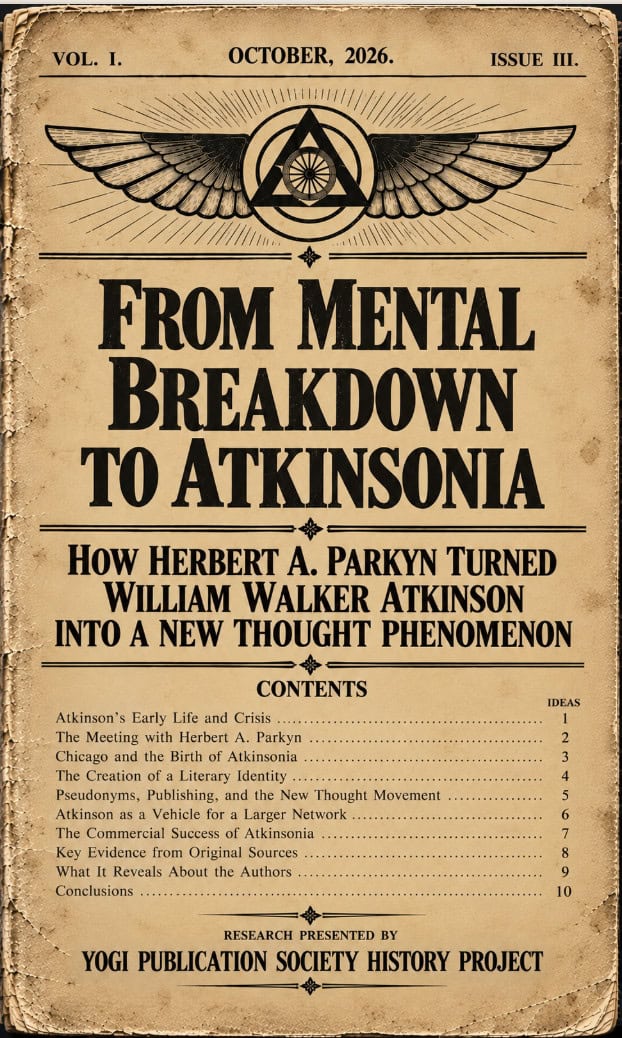
Atkinson first came to Parkyn while searching for help for what physicians of the day called nervous prostration. Before that, he had been a successful attorney in Pennsylvania, specializing in business law. A series of professional setbacks eventually brought his legal career to an end and led to his mental breakdown. In May 1900, he disappeared for six weeks without telling anyone, including his wife and child, becoming the subject of a widely publicized search throughout the region. When he suddenly resurfaced in New York, he claimed to remember little of his disappearance except for a vague recollection of having been in Chicago. Soon afterward, he moved his wife and child to Chicago, where he enrolled in Parkyn’s Chicago School of Psychology. Read the full story HERE

After moving to Chicago, Atkinson devoted himself to the study of Dr. Parkyn’s system of Suggestive Therapeutics and quickly became one of his closest students and collaborators. Recognizing Atkinson’s background in law, business, and the occult, Parkyn saw in him an ideal spokesman who could communicate the principles of Suggestion to audiences beyond the medical profession. He gradually developed Atkinson as a writer through anonymous editorials in Suggestion magazine, refined his ideas through lectures at the University of Psychic Science, and introduced him as the university’s principal lecturer. Together they developed the lecture material that became Atkinson’s first major book, Thought=Force in Business and Everyday Life, published by Parkyn. The work established the distinctive style that would define Atkinson’s career.
By early 1901, after only being exposed to the ideas of Suggestion for 6 months, Atkinson had become associate editor of Suggestion magazine, and Parkyn publicly introduced his first article series as a major contribution to the science of the mind. In doing so, Parkyn had applied one of his own central principles of Suggestion called “masked suggestion.” Before readers encountered Atkinson’s ideas, they first encountered the carefully constructed image of an established authority behind them. Rather than presenting Atkinson as a recently recovered patient and former attorney new to Mental Science, he introduced him as an established investigator of psychic phenomena and a recognized authority whose ideas deserved careful attention.
Atkinson’s articles confidently challenged leading Mental Science figures while presenting Parkyn’s own psychological system almost point for point, making it difficult to believe they represented the work of a newcomer. As Atkinson’s articles were reprinted in journals and newspapers around the world, Parkyn continued using him as the principal literary vehicle through whom the philosophical and metaphysical implications of the Law of Suggestion could be presented to the New Thought movement. Parkyn capitalized on the success and branded the phenomenon with the term “Atkinsonia,” creating an atmosphere in which followers felt they were entering an exclusive world of New Thought ideas and special truths.
The popularity of Atkinson’s articles brought a surge of readers requesting more metaphysical and occult material, but Suggestion had been established as the leading medical and scientific journal devoted to the Law of Suggestion. Parkyn had no intention of allowing the magazine’s reputation, or the work of its many distinguished contributors, to be overshadowed by a single style of writing. Recognizing that Atkinson’s growing audience had outgrown the magazine, Parkyn saw the opportunity to create a new publication devoted entirely to the philosophical and spiritual dimensions of the New Thought movement. That publication would become New Thought.
The Separation
In November 1901, Atkinson announced that he was stepping down from his position as associate editor of Suggestion magazine. In a brief personal notice to readers, Atkinson stated that he had “severed” his connection with the journal and would be devoting himself to “new fields of work and new methods of bread-winning.” He also emphasized that relations between himself, Dr. Parkyn, and the magazine remained “of the friendliest nature.”

The public announcement was carefully crafted to maintain a degree of separation from Parkyn. As would soon be revealed, Atkinson was leaving Suggestion to partner with Sydney Flower to create New Thought magazine. With both Flower and Atkinson widely recognized as Parkyn’s closest associates, a magazine edited by the two men could easily have been viewed as simply another branch of Parkyn’s organization. Yet the new publication was intended to explore a wider range of metaphysical, spiritual, and philosophical subjects than would have been appropriate for the Chicago School of Psychology. Establishing it under its own identity created the necessary distance while allowing those subjects to be explored freely.
Besides the opportunity to launch a new publication built upon the success of the Atkinsonia phenomenon, Parkyn also needed to create a new role for Sydney Flower after the loss of Suggestive Therapeutics. Parkyn felt responsible for the loss because it was the promotion of his own ventures that had brought about the magazine’s demise. More specifically, it was the extensive advertising campaign for his anonymously authored A Complete Course in the Art of Mind Reading that triggered the dispute with the editors of The Star of the Magi and ultimately led to the postal investigation.
By first having Atkinson join Flower at The Journal of Magnetism and then transforming that publication into New Thought, Parkyn solved both problems at once. Flower was restored to a prominent editorial position, while Atkinson was placed under the guidance of an experienced editor who had helped build Parkyn’s publishing network from the beginning and was ideally suited to cultivate and promote the “Atkinsonia” phenomenon.

The following information shows that the public separation between Atkinson and Parkyn was staged.
The Atkinson Book Company: Flower and Atkinson had already worked together a year before the supposed separation
In the fall of 1900, Parkyn began working with Atkinson to develop material that could be used for a lecture series at the new University of Psychic Science and eventually compiled into the book Thought=Force. Much of this material would be drawn from the extensive collection of older mail-order and instructional courses that Parkyn had acquired through his Mail Course Exchange Company, located on Cottage Grove Avenue directly across the street from the university.
Parkyn, in collaboration with Flower, Lloyd Jones, and others, had already been using this material to produce the series of books published by the Psychic Research Company on older self-culture subjects such as Personal Magnetism, Mediumship, Concentration, Memory, Mesmerism, and Fascination, while blending them with the modern sciences of Auto-Suggestion, Hypnotism, and psychic research topics such as Clairvoyance, Telepathy, Absent Healing, Mind Reading, and Zoism (a breathing course built around the concept of ozone).
Parkyn would now use Atkinson as the literary vehicle through which to blend metaphysical and occult philosophy with these same subjects. Flower was well suited to present the more scientific investigation of psychic phenomena that still lay outside mainstream medicine, but he was openly dismissive of metaphysical and spiritual interpretations for those phenomena. He had also become involved in a very public dispute with the editors of The Star of the Magi, a leading occult periodical, making him a poor choice to serve as the public face of this new direction.
The Atkinson Book Company
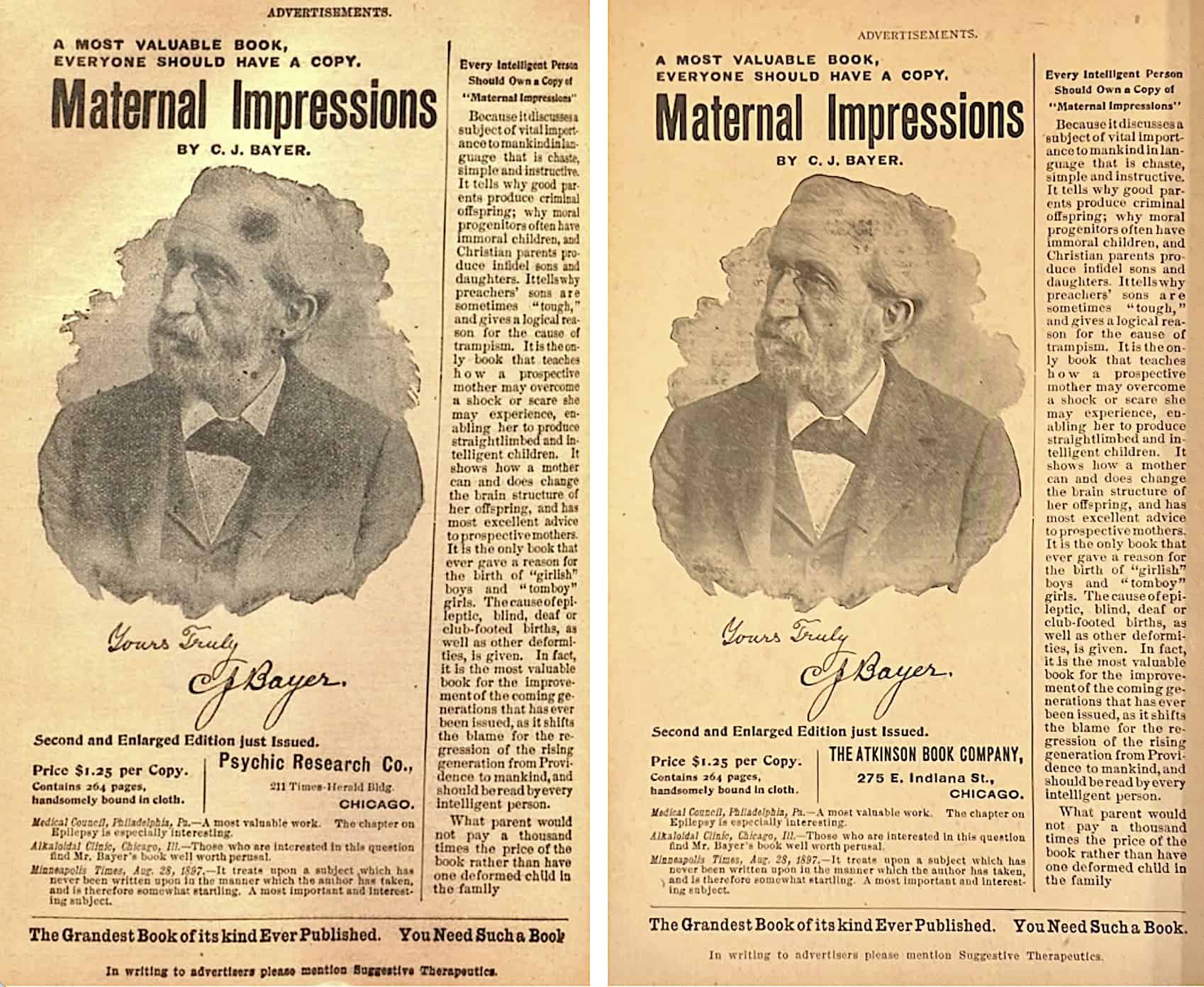
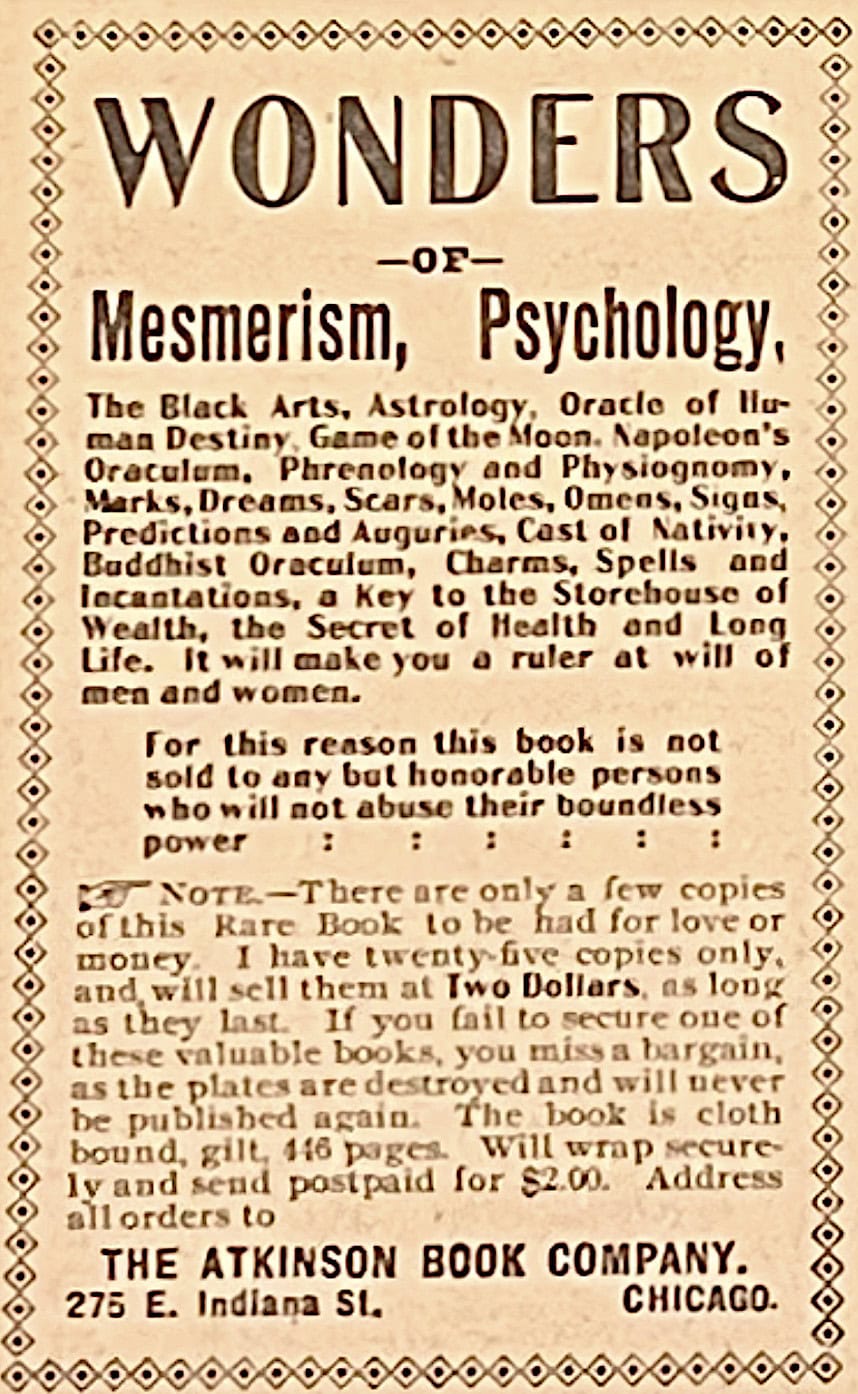
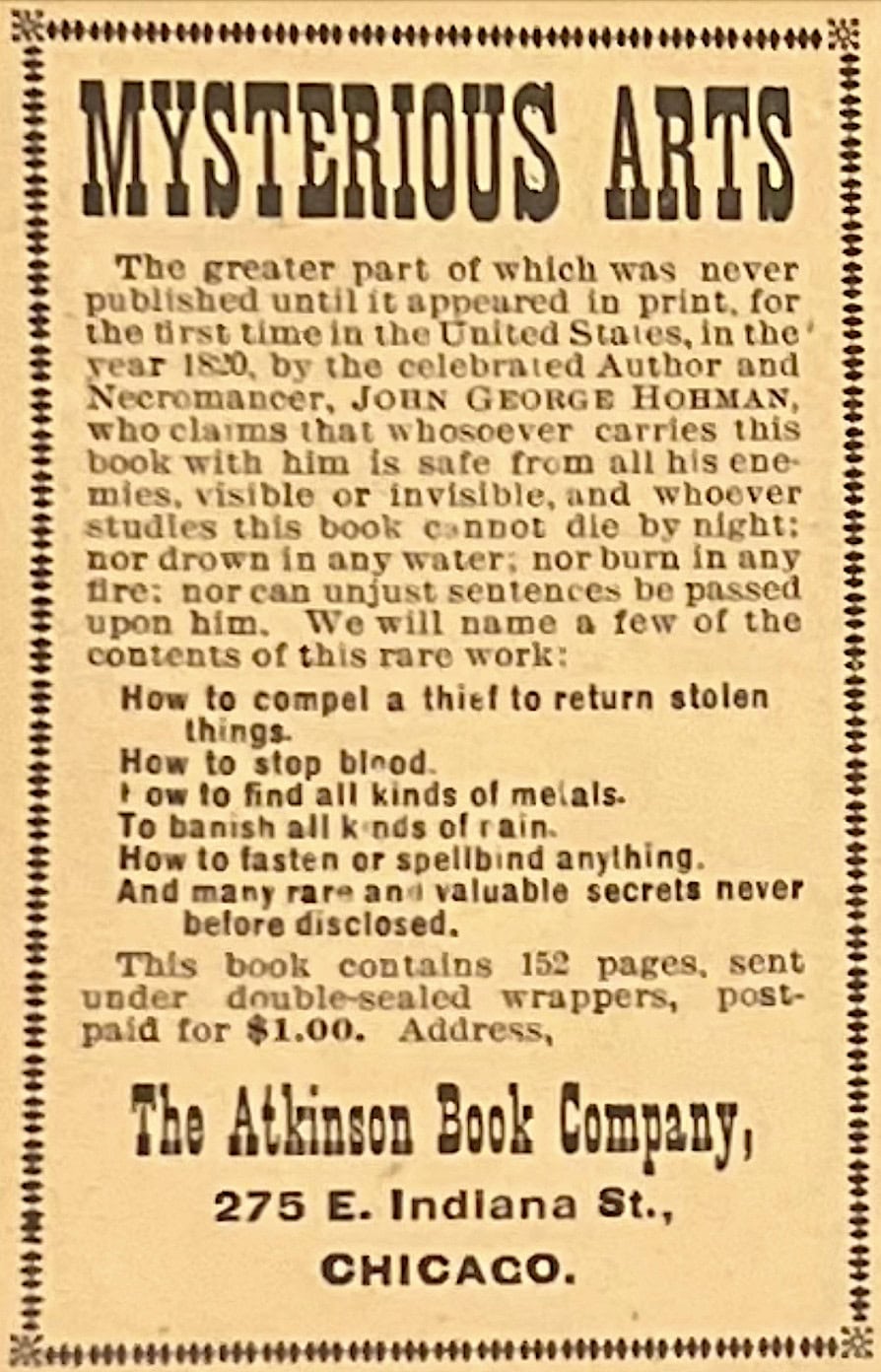
The initial idea for the Atkinson material was to build a book publishing platform for it by creating a separate publishing company called The Atkinson Book Company that could issue similar material as well as titles under Atkinson’s name.
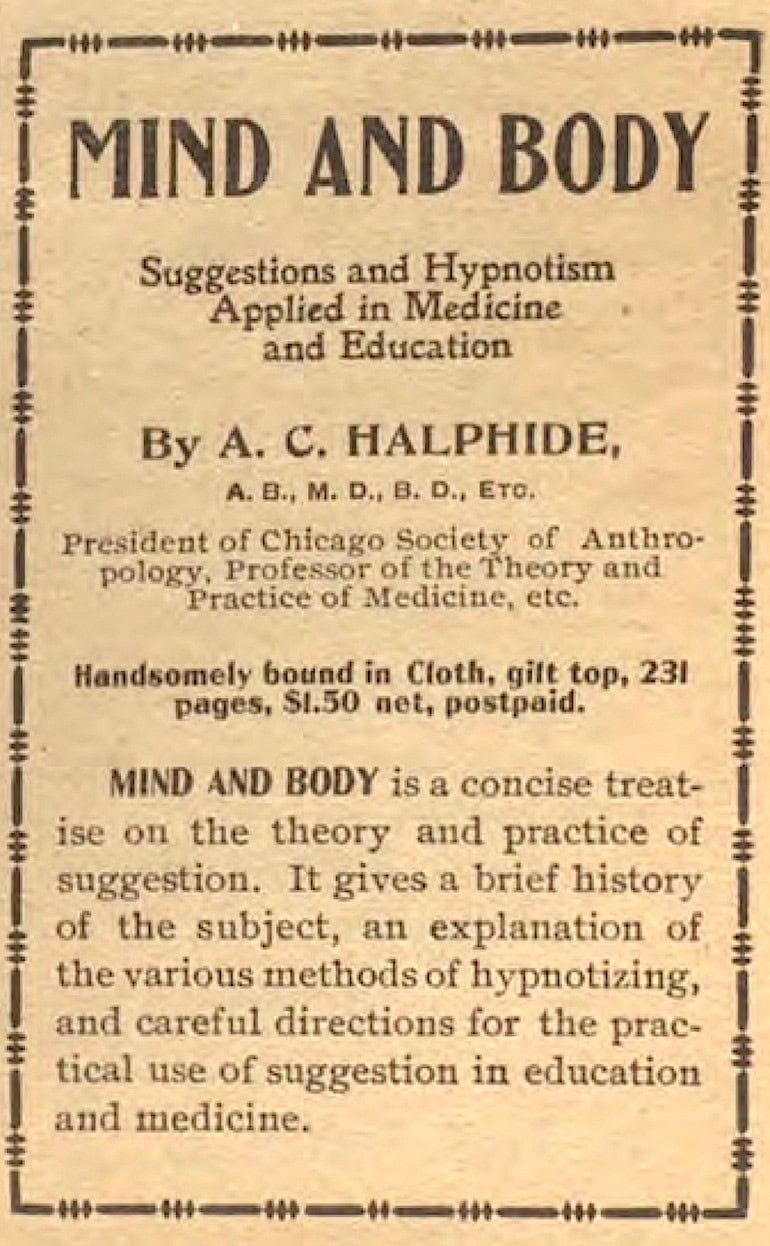
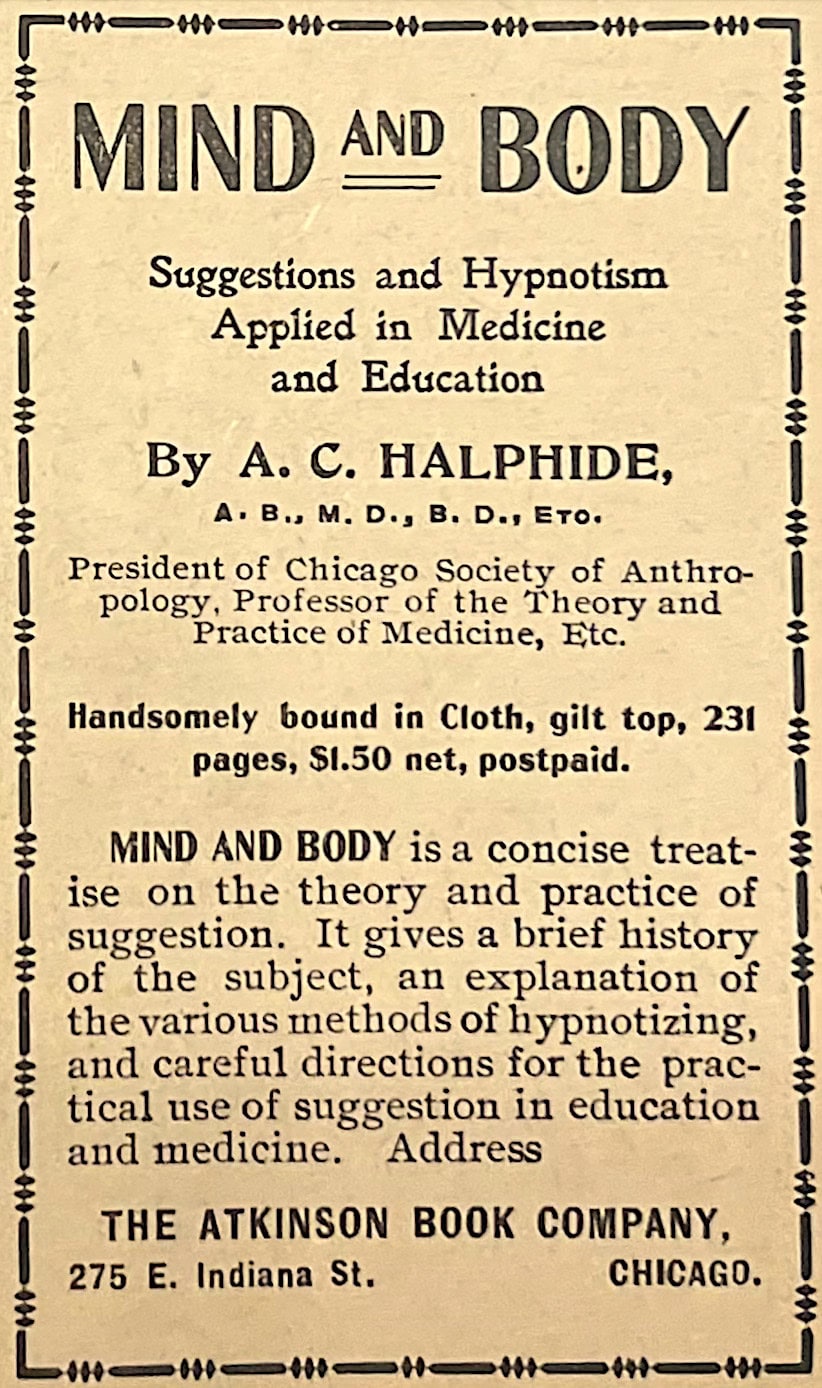
Flower transferred the more metaphysical titles being sold by the Psychic Research Company to the new company, where they would now be offered under the Atkinson Book Company imprint. One of Parkyn’s close associates and regular Suggestion contributors, Alvan C. Halphine, also had his new book, Mind and Body, Hypnotism and Suggestion Applied in Therapeutics and Education, sold through the company, along with several rare and out-of-print works, including Mysterious Arts, a reprint of John George Hohman‘s early nineteenth-century book, and Wonders of Mesmerism, Psychology, Black Arts, Astrology, and related subjects. The overall theme emphasized the historical, more spiritual, and metaphysical understanding of these subjects.
The Atkinson Book Company was created before the decision was made to change The Journal of Magnetism to New Thought magazine and to combine Atkinson and Flower together. The short-lived venture ran from October 1900 until December 1900, when Parkyn decided to put the Atkinson material in Suggestion. It was only ever advertised in Suggestive Therapeutics, which was edited by Flower.
** In 1910, Atkinson released a book with the same main title as Halphide’s, titled Mind and Body; or Mental States and Physical Conditions, under his name. It was essentially the same book as A. C. Halphide’s Mind and Body, Hypnotism and Suggestion Applied in Therapeutics and Education from 1900, with the identical information and topics but with a different structure. One of Atkinson’s strongest talents was repurposing older material.
Conclusion on the Atkinson Book Company
The creation of the Atkinson Book Company, the transfer of Psychic Research Company titles into it, and its promotion through Suggestive Therapeutics clearly demonstrate coordination between Parkyn, Flower, and Atkinson. At a time when Flower was supposedly no longer associated with Parkyn, he was helping build a publishing platform for Atkinson using resources drawn directly from Parkyn’s own network. It also provides the first glimpse of Parkyn’s developing plan for his two protégés, a collaboration that would reach its full expression when he brought them together to launch New Thought magazine.
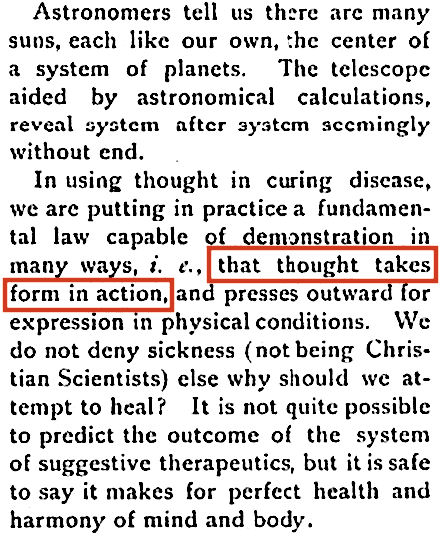
“Thought Takes Form in Action.” Parkyn’s Voice Never Left Atkinson’s Writings
As we have shown in the article From Mental Breakdown to Atkinsonia: How Herbert A. Parkyn Turned William Walker Atkinson into a New Thought Phenomenon, the material first published under Atkinson’s name in Suggestion magazine and later collected in Thought=Force in Business and Everyday Life could not have been written by Atkinson in the way we normally think of an author creating a book. Rather than originating the material, Atkinson worked as an exceptionally talented compiler and literary interpreter. Parkyn supplied the terminology, instructional material, and scientific framework, while Atkinson organized that material and gave it a persuasive, passionate style that he had developed through years of writing legal arguments. Like an attorney presenting a case before a judge or jury, Atkinson understood the use of repetition, carefully reinforcing central ideas and phrases in a way that mirrored the very Law of Suggestion he was promoting. His style would have been out of place in a serious medical or scientific journal, but for the general public it was remarkably effective.
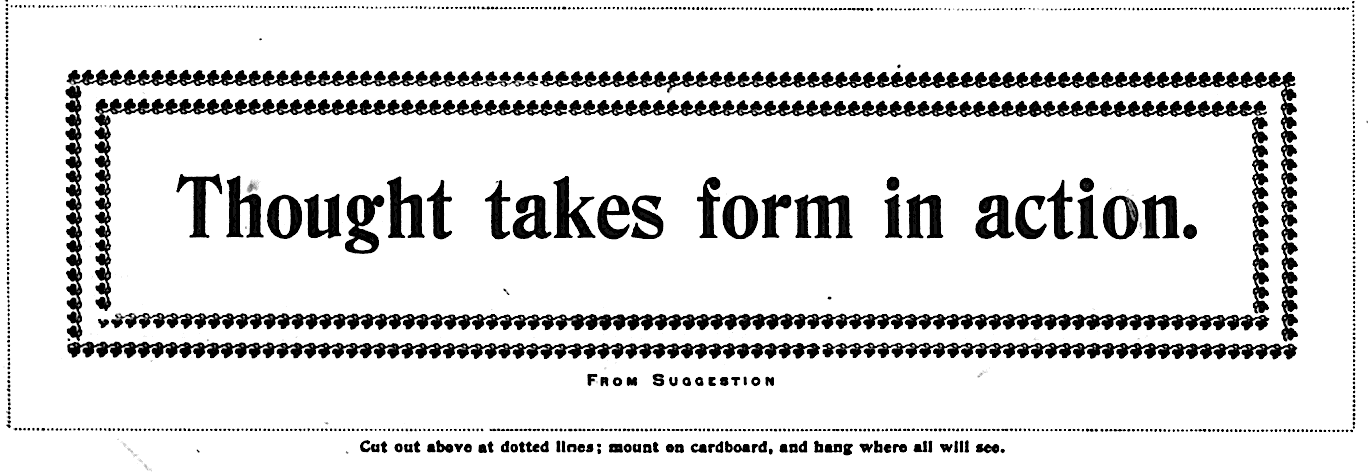
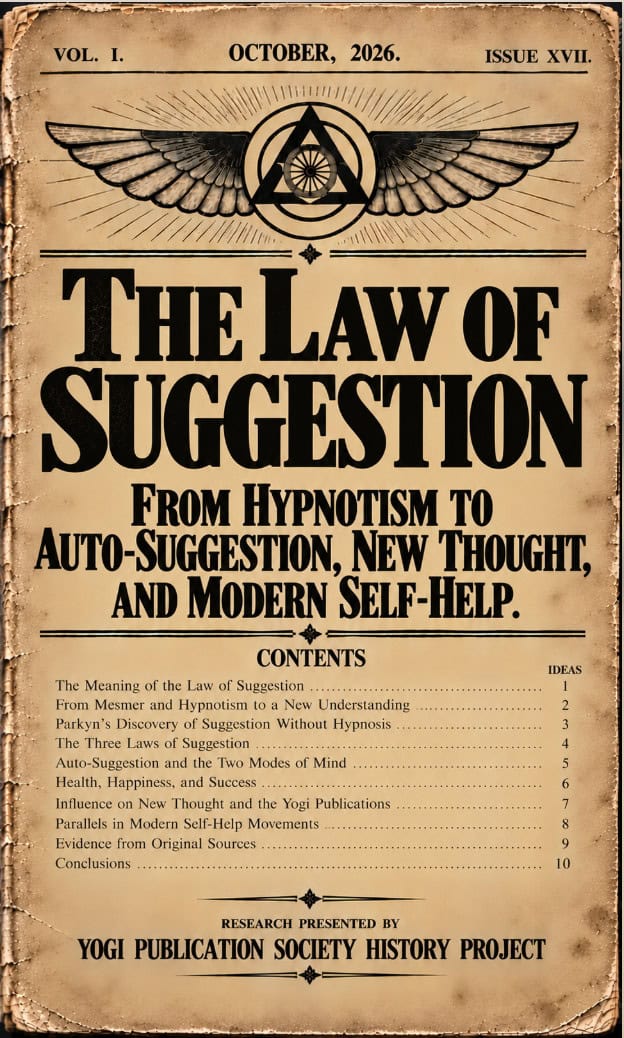
A close examination of Atkinson’s writings throughout his career reveals the repeated repackaging of Parkyn’s teachings, often in remarkable detail. Nothing illustrates this more clearly than Atkinson’s continual use of one of Parkyn’s best-known phrases: “Thought takes form in action.” Beginning with Thought=Force in Business and Everyday Life, first published in early 1901 by Parkyn’s University of Psychic Science, phrases that Parkyn had been using repeatedly since 1896 in his lectures, books, magazine articles, and educational courses continued to appear throughout Atkinson’s writings for years afterward. They were carried not only into Atkinson’s own books, but also into the publications of the Yogi Publication Society and Advanced Thought Publishing Company. Although other familiar Parkyn expressions, such as “I can and I will,” and “Masked Suggestion,” also reappeared, none was used more consistently than “Thought takes form in action,” a phrase that became a recurring feature of many books and articles published under Atkinson’s name.
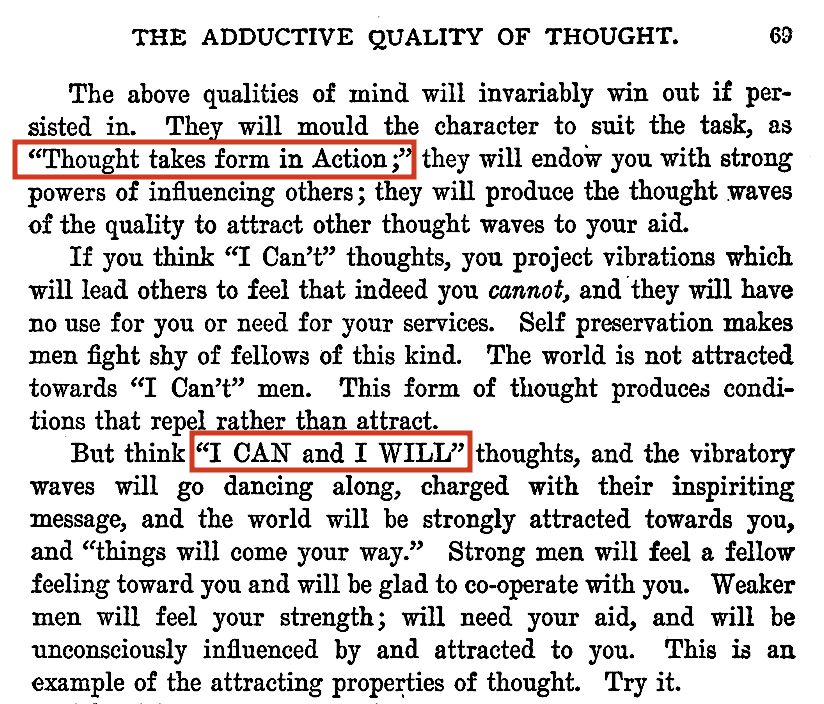

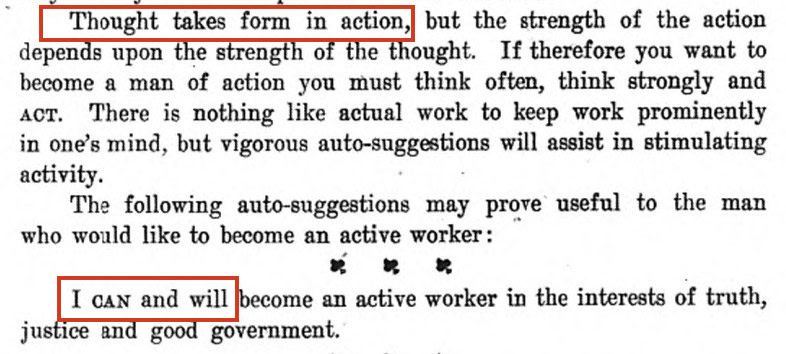
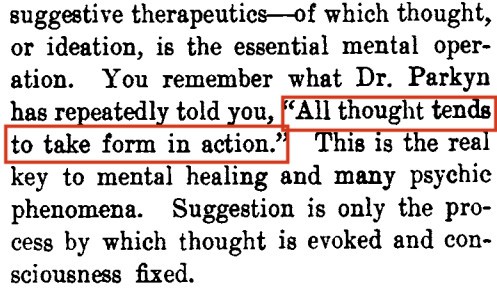
William Walker Atkinson books that use Parkyn’s “Thought takes form in action.”
- Thought=Force in Business and Everyday Life (1900)
- Nuggets of the New Thought (1902)
- The Law of the New Thought (1902)
- Dynamic Thought; or, The Law of Vibrant Energy (1906)
- Thought Vibration; or, The Law of Attraction in the Thought World (1906)
- Self-Healing by Thought Force (1907)
- The Secret of Success (1908)
- Suggestion and Auto-Suggestion (1909)
- The New Psychology: Its Message, Principles and Practice (1909)
- The Art of Expression and the Principles of Discourse (1910)
- Telepathy: Its Theory, Facts and Proof (1910)
- The Will: Its Nature, Power and Development (1917)
Yogi Publication Society books with the phrase
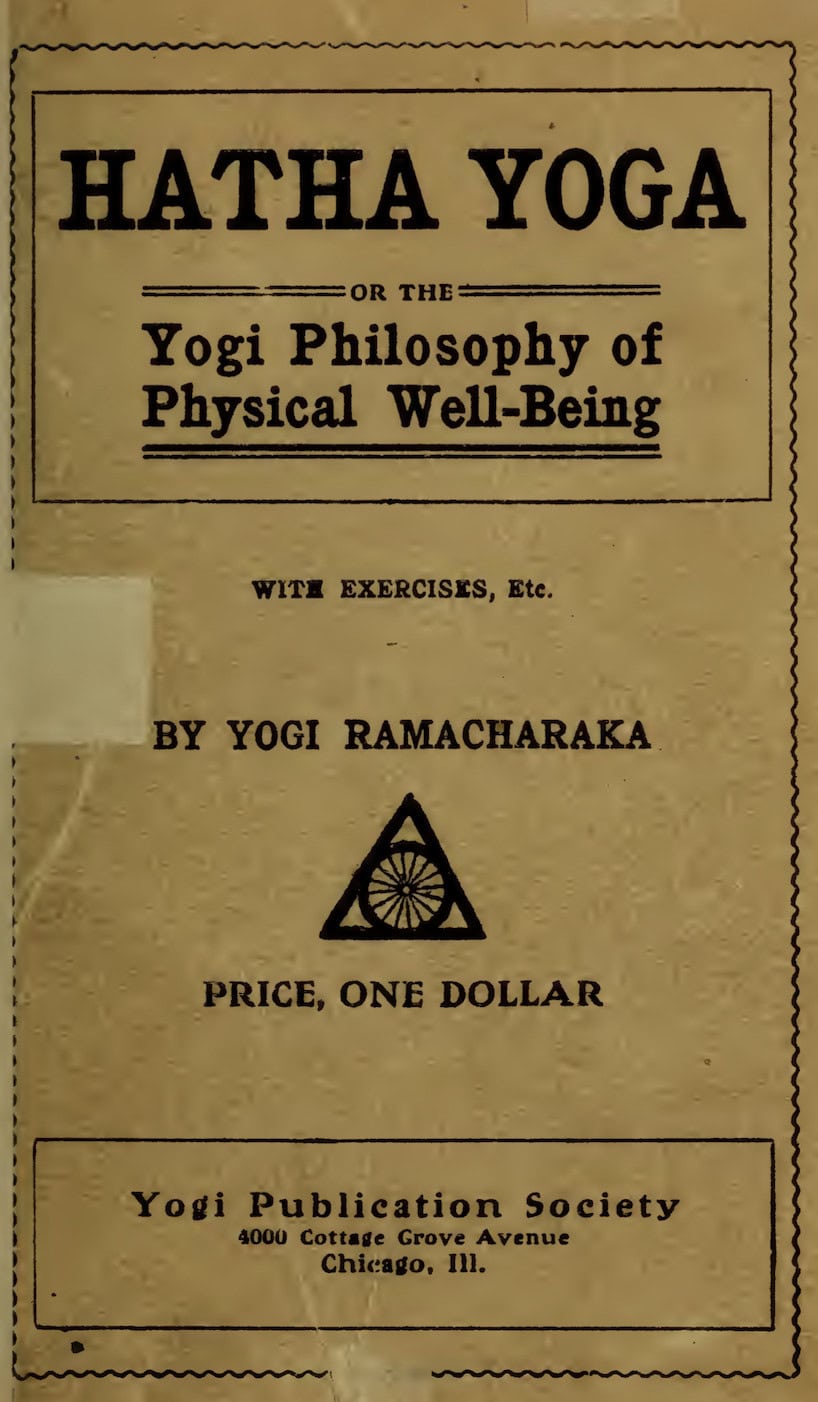
- Hatha Yoga (1906) Yogi Ramacharaka
- The Science of Psychic Healing (1906) Yogi Ramacharaka
Advanced Thought Publishing with the phrase
- Mental Therapeutics (1908) Theron Q. Dumont
- The Master Mind (1918) Theron Q. Dumont
- Poise and Power (1919) Arthur Gould
Atkinson with Edward E. Beals / Edward Walker books with the phrase
- The Law of Financial Success (1907) – by Edward E. Beals (Atkinson claimed authorship in his Who’s Who profile. Probably co-wrote it with Beals)
- Thoughts Are Things (1909) – by Edward Walker (actually Edward E. Beals and William Walker Atkinson)
- Personal Power series (1922) – Atkinson with Edward E. Beals
*Edward E. Beals was a student and a close collaborator with Parkyn. In 1905, he helped publish Parkyn’s book Auto-Suggestion through his Science Press.*
Conclusion on use of Parkyn’s signature phrase
Atkinson’s repeated use of Parkyn’s own language points to something more than influence. A student may sometimes partially repeat a teacher’s ideas, but it is an entirely different matter to repeatedly present that teacher’s distinctive phrases and technical scientific and medical concepts as integral parts of major books on the subject without attribution. Several students of Parkyn’s had written books on the subject and frequently quoted him with attribution. The fact that so many of Parkyn’s teachings appear throughout Atkinson’s books without attribution suggests that he was not acting independently but was working in concert with the person responsible for developing and promoting the system.
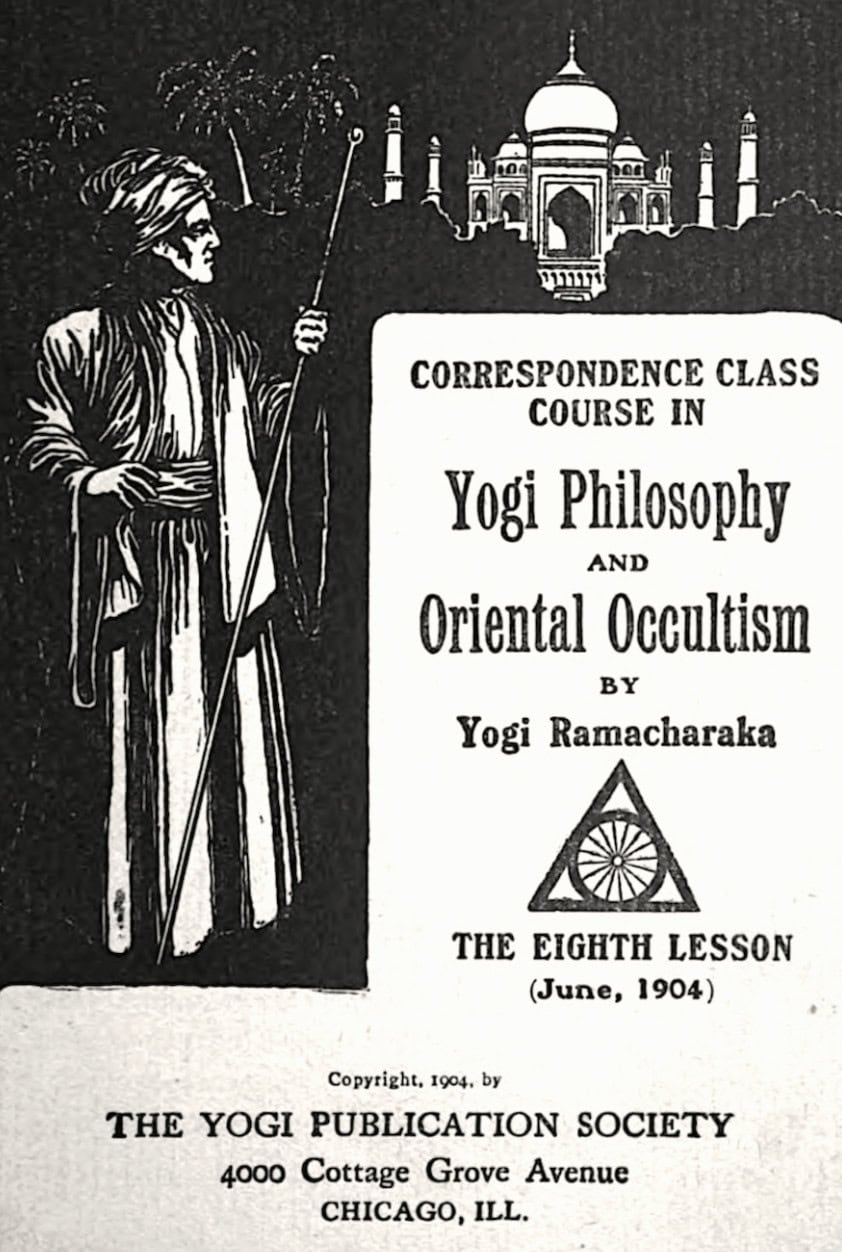
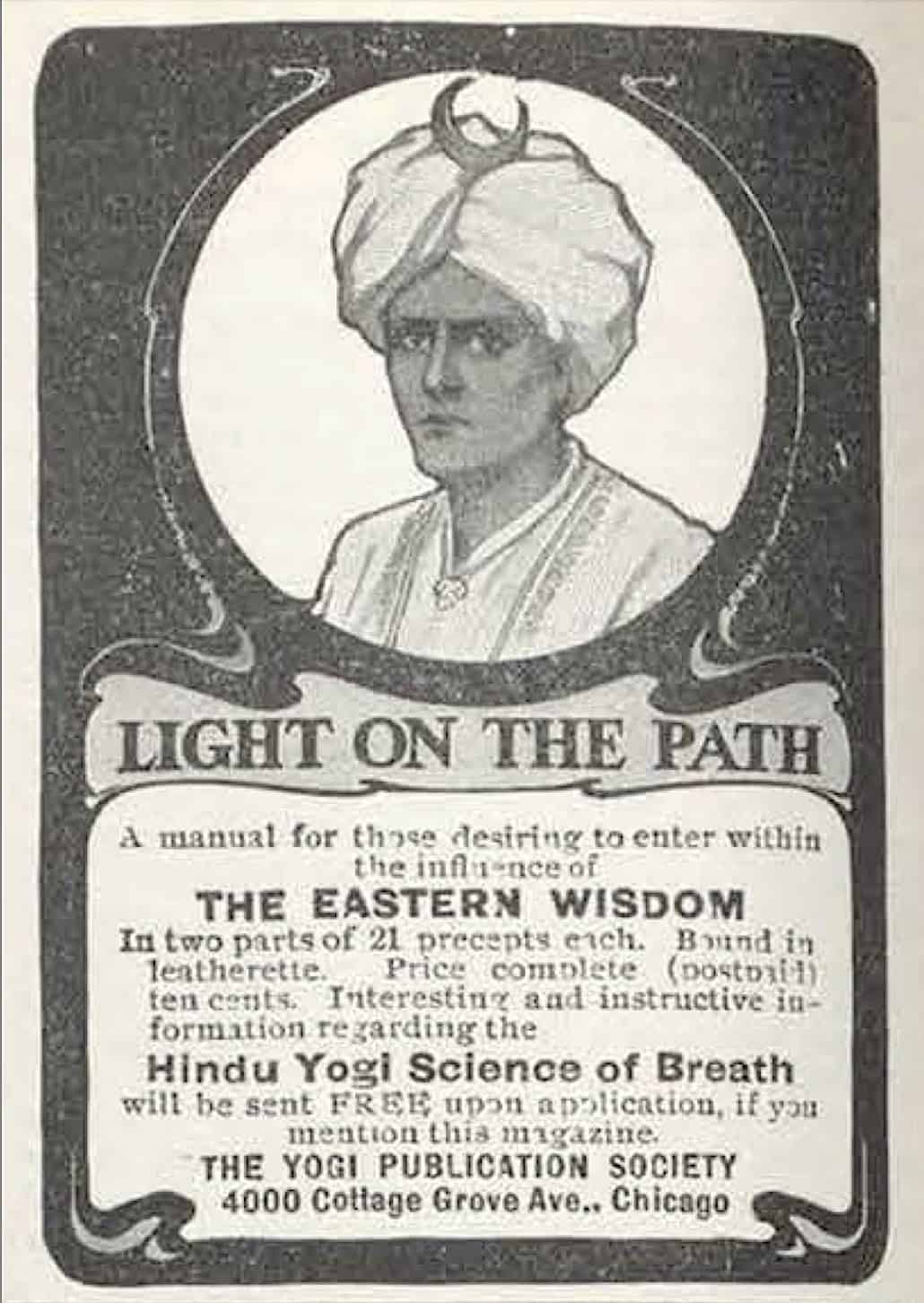
The Yogi Publication Society was run out of Parkyn’s offices at 4000 Cottage Grove Avenue
*For more information real the article “The Yogi Publication Society started in the offices of Herbert A. Parkyn on Cottage Grove Ave.”
The Yogi Publication Society was founded in the spring of 1903 and operated from Parkyn’s offices at 4000 Cottage Grove Avenue in Chicago, where it remained for its first two years. The offices were located one block from the Chicago School of Psychology and directly across the street from the University of Psychic Science. Parkyn had used the second floor of the two-story building for many years to operate his publishing companies, correspondence courses, and mail-order businesses. Located above the Station M post office, it was an ideal location for managing his extensive network of mail enterprises.
Inside were rooms for processing mail orders, storage for books and merchandise, a walk-in bookstore, and a New Thought reading room. Among Parkyn’s businesses that operated from these offices were the Mail Course Exchange Company, the Magnetic Healing Cup Company, the Premium Subscription Agency for Suggestion magazine, the correspondence-based National School of Osteopathy, and the Yogi Publication Society.
With the addition of offices across the street, where he established the University of Psychic Science above the Oakland Music Hall, which served as the venue for lectures, demonstrations, and classes, Parkyn also operated the Natural Healers Protective League and the Edison College of Electro-Therapeutics.
Conclusion on YPS starting in Parkyn’s offices
The establishment of the Yogi Publication Society in Parkyn’s own offices directly contradicts the traditional account that he and Atkinson had already separated. While Atkinson was publicly presented as pursuing an independent course, the organization responsible for publishing many of his most influential works was operating from the center of Parkyn’s publishing network, alongside his schools, correspondence courses, and other business enterprises. Rather than appearing as separate ventures, the evidence shows the Yogi Publication Society functioning as another part of the Parkyn network.
To be Continued…
More on Atkinson’s ongoing collaboration with Parkyn is coming soon, including his work with Edward E. Beals and the transfer of his author name to Beals’ Fiduciary Press. It will also trace his work with Christian D. Larson and Beals through the Progress Company, his move to Los Angeles, his collaboration with A. Victor Segno and The Segnogram, his editorial work for The Mystic and Advanced Thought magazines, and many other aspects of his later career. Along the way, we will show that he and Parkyn never stopped working closely together.
Here is a collaboration between Parkyn, Flower, and Atkinson in 1923.
Parkyn, Flower, and Atkinson collaborate on The Thinker magazine, 1923

In late 1923, Herbert A. Parkyn and his longtime collaborators Sydney B. Flower and William Walker Atkinson formed a new publishing partnership centered on the magazine The Thinker. Flower assumed editorial control, while Parkyn contributed a year-long series on Auto-suggestion that restated and clarified the system he had developed decades earlier. Atkinson also contributed a year-long series titled Self-Treatment Through Thought=Force, that restated the approach to mental self-regulation and applied psychology that he had lectured on at Parkyn’s University of Psychic Science decades earlier.
With Parkyn’s public return to active authorship, the magazine was formally branded as The Thinker and given the descriptive subtitle identifying it as “The World’s Leading Magazine of Constructive Thinking, Psycho-Analysis, Health, Hygiene, Happiness, and Success.” The language followed the phrasing Dr. Parkyn had used consistently since the 1890s in his earlier books, journals, and promotional literature, signaling a continuity with this earlier work. The publication also brought together a familiar circle of contributors from their earlier publishing ventures including longtime associates such as Ella Wheeler Wilcox and Charles Edmund DeLand.
How to Cite This Article
D. Parkyn Jackson, “The Continuing Collaboration of Herbert A. Parkyn, Sydney Flower, and William Walker Atkinson” Yogi Publication Society History Project, originally published July 2026.
Publication note: This article contains original research by the Yogi Publication Society History Project. It was first published on this website in July 2026 and archived by the Internet Archive’s Wayback Machine.