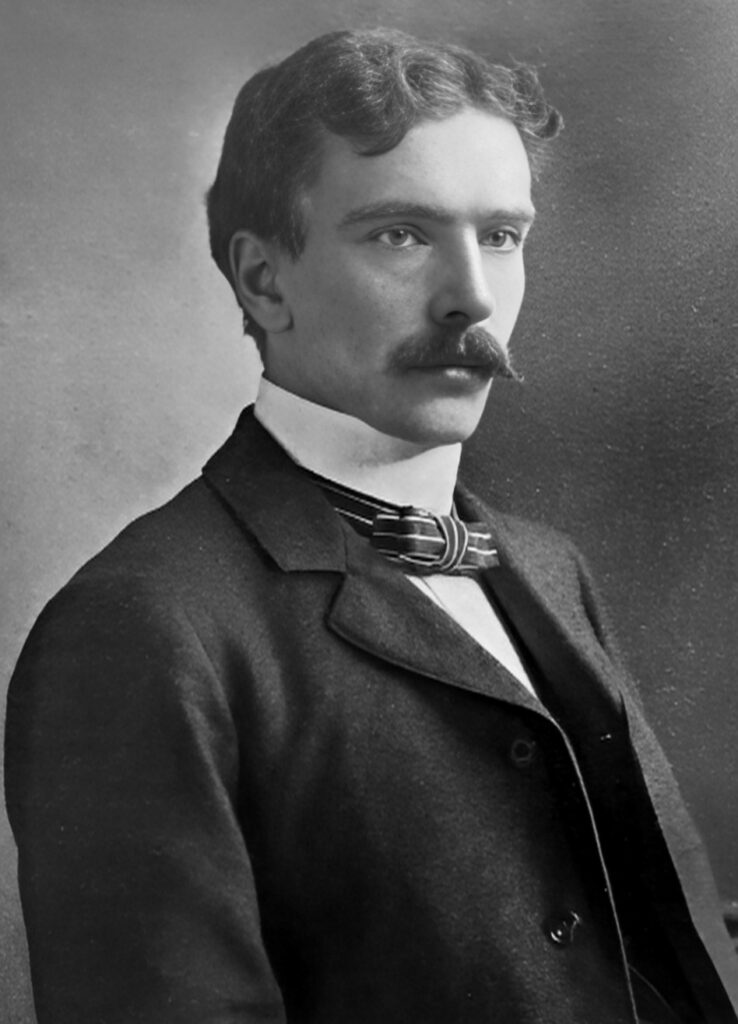
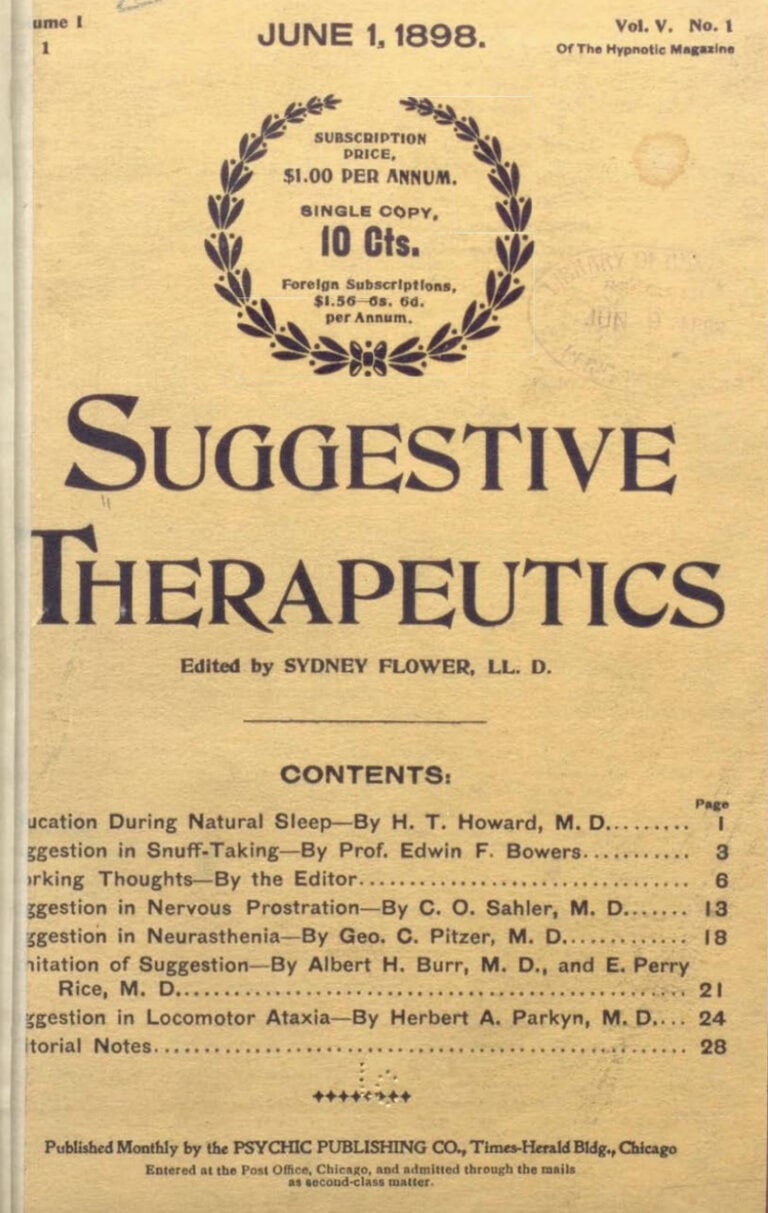
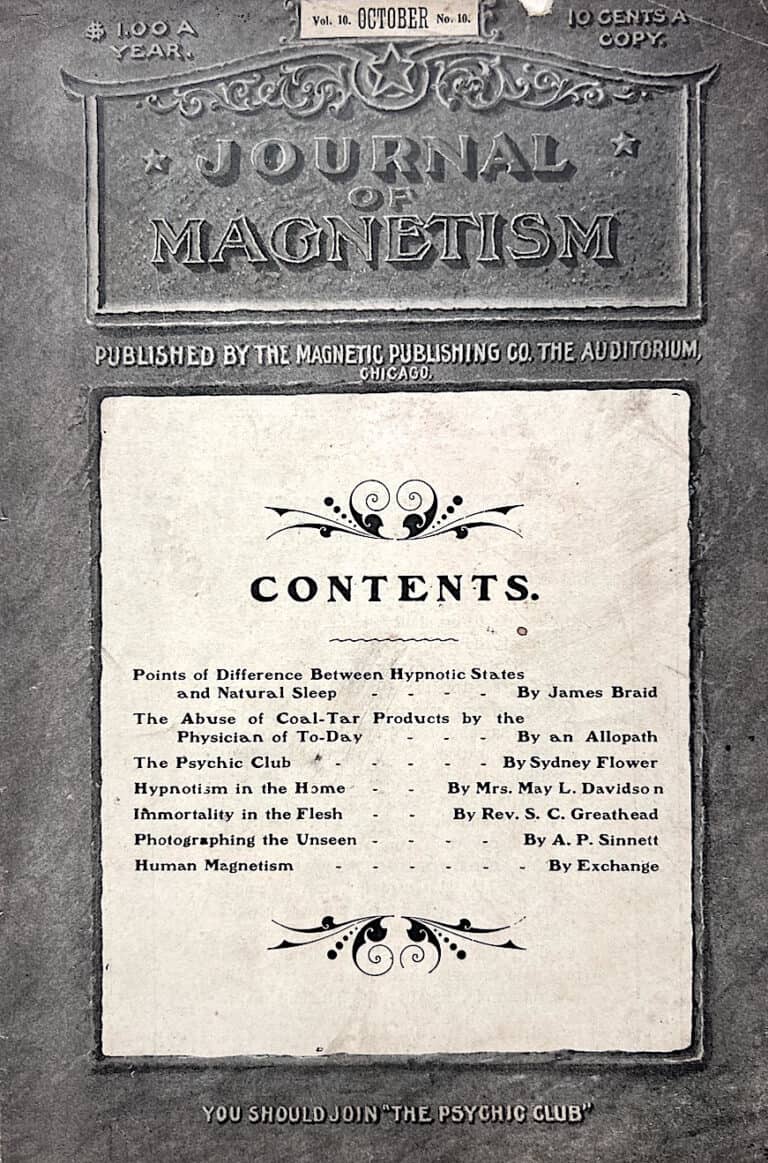
Flower was Parkyn's promoter, serving as secretary for his school and editor for several publications, including New Thought, and managing the Psychic Research Company.
Sydney B. Flower was a British-born Canadian-American journalist, editor, publisher, businessman, and one of the principal organizers of the early New Thought movement. Beginning his career in newspaper publishing in Winnipeg, Flower became one of the most influential publishers of mental science literature after joining Dr. Herbert A. Parkyn in Chicago during the mid-1890s. As Parkyn’s secretary, editor, and business associate, he helped establish the Chicago School of Psychology, edited several of its journals, organized a network of affiliated Schools of Suggestive Therapeutics, and played a central role in introducing the Law of Suggestion to a national audience.
Sydney Blanshard Flower
Early Life
Born in England, Flower immigrated to Winnipeg, Manitoba, in his late teens, where he established himself as both an accomplished athlete and newspaper journalist. He was the tennis champion of Manitoba and the Dakotas in 1895, ranked among Winnipeg’s leading cricket players, and spent several years as a sports reporter for the Winnipeg Free Press.
Meeting Dr. Herbert A. Parkyn
Flower’s association with Dr. Herbert A. Parkyn began in 1895 while covering the celebrated international hockey game between the Winnipeg Victorias and Parkyn’s newly organized University of Minnesota team. After interviewing Parkyn and becoming increasingly interested in his pioneering medical research into hypnotism and suggestive therapeutics, Flower resigned from the Winnipeg Free Press in December 1895 and relocated to Toronto, where he spent the winter working with Parkyn on Hypnotism Up to Date. Published in April 1896, the book introduced Parkyn’s scientific approach to hypnotism through a series of dialogues between Flower and Parkyn. It was followed up with a companion volume, A Study in Hypnotism, shortly after. That same spring, Flower accompanied Parkyn to Chicago, where they established the Psychic Publishing Company to publish and promote their educational literature.
Business Manager and Publicist
In April 1896, Flower became Dr. Parkyn’s business manager, secretary, publicist, and publisher, directing publicity for the newly established Chicago School of Psychology while organizing newspaper interviews, advertising campaigns, and promotional literature that introduced Parkyn’s work to a national audience.
Building the Publishing Network
During the late 1890s and early 1900s, Flower edited a succession of influential journals, including TheHypnotic Magazine, Journal of Medical Hypnotism, Suggestive Therapeutics, Journal of Magnetism, and New Thought. Through these publications he introduced the work of physicians, psychologists, educators, and New Thought writers to an international readership while promoting Parkyn’s educational enterprises, correspondence courses, lectures, and clinical research. He also helped organize the growing network of affiliated Schools of Suggestive Therapeutics, transforming what began as a single Chicago institution into a coordinated educational movement extending across the United States and Canada.
The Psychic Research Company
Flower played an important role in the Psychic Research Company, continuing his long association with Parkyn through the publication of correspondence courses and investigations into psychic phenomena. Working with fellow graduates of the Chicago School, including J. V. Daniels and Lloyd Kenyon Jones, the company produced instructional material on mind reading, psychical research, and related subjects that had originated at the Chicago School of Psychology.
New Thoughtmagazine
As co-editor of New Thought with William Walker Atkinson, Flower became one of the movement’s most influential publishers. Although later histories often portrayed Flower, Atkinson, and Parkyn as pursuing separate careers, surviving documentation demonstrates that the three men continued working closely together.
Alongside his publishing activities, Flower became involved in numerous commercial enterprises, including many self-culture products, mining, and investment promotions. These ventures reflected his entrepreneurial ambitions but also led to periods of controversy as some projects became the subject of public criticism and government investigation. He was investigated several times by the Post Office General for mail fraud.
In 1900, the magazine Suggestive Therapeutics was effectively shut down after a postal investigation found it was primarily serving as a promotional journal for the Chicago School of Psychology. (Read the full story HERE) In 1904, Flower was again investigated while managing New Thought magazine. This led him to resign from the magazine and go into hiding in Nevada.
Goldfield Gossipand Prison
Flower moved to the Nevada mining country in early 1905 as investigations into his business affairs intensified. Through New Thought magazine, he had raised substantial sums from investors to finance mining ventures, but much of the money was subsequently lost through speculative stock trading and horse-race gambling. After working in the mining trade for a year, he was given the opportunity to start a journal on the booming industry. It was titled Goldfield Gossip, which he edited under the alias Parmeter Kent.
With the new journal’s success, Flower eventually had to come clean about his real name and history. He wrote down his whole story of leaving Chicago and coming to Nevada in an editorial, written in his wonderful style.
This led the authorities to find him and bring him back to Chicago to face charges. He ended up spending several months in prison, but always wanting to keep writing, he started another journal while in prison called The Yogi.
The Thinker magazine
Flower, Parkyn, and Atkinson reunite in The Thinker magazine. 1923
After his prison term, Flower joined the military during WWI and spent several years in service. In 1918, he became involved again in the New Thought movement, continuing to write, publish, and edit magazines and maintaining his long-standing collaboration with Parkyn. In 1920, he revived New Thought magazine, and in late 1923 relaunched it under the new title The Thinker, with Parkyn’s public return to active authorship. Parkyn contributed a year-long series on Auto-Suggestion, restating and clarifying the scientific system he had developed decades earlier. William Waker Atkinson would also return and publish a parallel year-long series titled Self-Treatment Through Thought-Force.
The Thinker continued the numbering sequence established when New Thought was revived in 1920 following its original cessation in 1910. The magazine adopted the subtitle “The World’s Leading Magazine of Constructive Thinking, Psycho-Analysis, Health, Hygiene, Happiness, and Success,” reflecting a continuation of the themes that had characterized the earlier journals published by Flower, Parkyn, and Atkinson since the 1890s. The Thinker reunited many of the contributors who had helped shape their earlier publishing ventures, including Ella Wheeler Wilcox and Charles Edmund DeLand, while newer voices expanded the magazine’s reach. These included a serialized contribution by Margaret Sanger on birth control and several articles by prominent journalist Arthur Brisbane
Later Life
In 1920 Flower married his second wife Ethel G Stahl. After Parkyn’s death in 1927, Flower returned to mainstream journalism and became a correspondent with the Waukegan News-Sun in 1928. He and his wife eventually settled in Oregon, where he died in 1943.
Sources & Citations
Newspaper."Hypnotism up to date" . Syracuse Herald-Journal. 1896-03-31. p. 3. Retrieved 2025-04-10.
Newspaper."Hypnotism up to date" . The Woman's Tribune. 1896-04-18. p. 3. Retrieved 2025-04-10.
PDF / Digital Archive.Flower , Sydney Blanshard (1896). Hypnotism up to date. The Library of Congress. Chicago, C.H. Kerr & Company.
PDF / Digital Archive.Sanger , Margaret (1922). The Birth Control Review. M. Sanger.
Research Articles
From Mental Breakdown to Atkinsonia: How Herbert A. Parkyn Turned William Walker Atkinson into a New Thought Phenomenon
This article explores how Dr. Herbert A. Parkyn's treatment, mentorship, and network transformed William Walker Atkinson from mental breakdown into the most prolific and influential writer in the New Thought movement.
The Chicago School of Psychology: The Birthplace of Suggestive Therapeutics in America
Herbert A. Parkyn’s Chicago School of Psychology was the first school in America to teach Suggestion and many of its graduates would become leading voices in New Thought, including William Walker Atkinson.
The Continuing Collaboration of Herbert A. Parkyn, Sydney Flower, and William Walker Atkinson
Historians have claimed that Sydney B. Flower and William Walker Atkinson left Herbert A. Parkyn to establish competing organizations. This article reexamines that story and presents evidence that the three men continued working together…