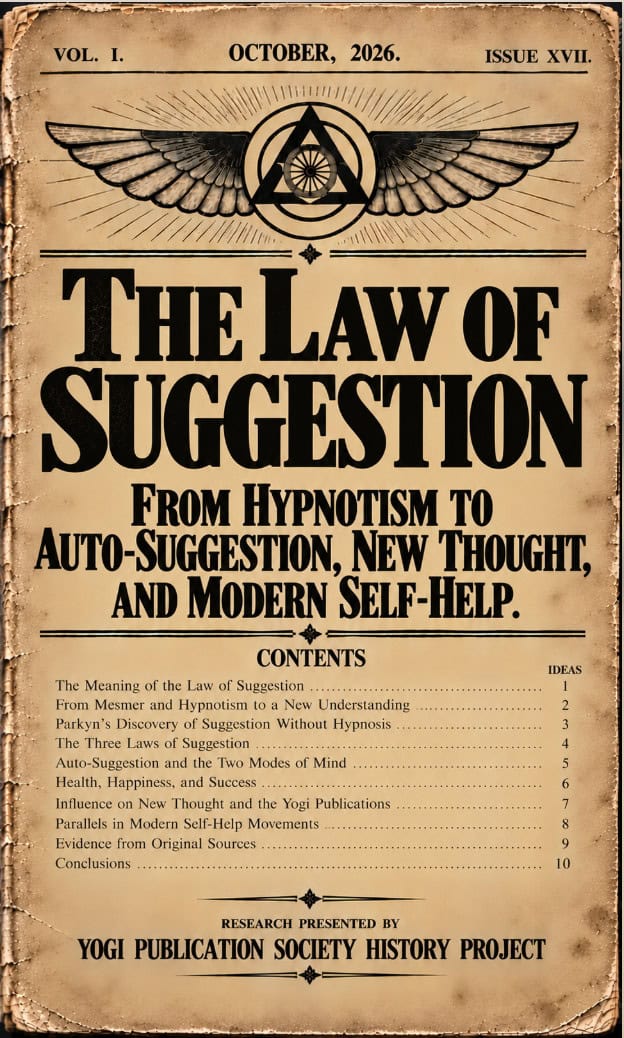
Suggestion, also called Suggestive Therapeutics, is the influence of an idea upon the mind and the response produced by it. An idea may come from another person, from repeated messages and surroundings, or from an individual’s own thoughts through Auto-Suggestion. Once received, it can affect expectation, emotion, belief, perception, physical response, and behavior. No hypnotic sleep or supernatural force is required. Suggestion works through ordinary features of mental life such as attention, expectation, imagination, repetition, association, and habit. Its importance came from the realization that these familiar processes could explain phenomena long attributed to animal magnetism, hypnotic power, mysterious mental forces, and religious healing. The investigation of hypnosis had uncovered something far more common and far more useful: ideas themselves could produce measurable responses in waking human beings.
The Law of Suggestion gave this discovery a practical form. An idea sufficiently impressed upon the mind tends to produce a corresponding mental, emotional, physical, or behavioral response. Its strength depends on the conditions surrounding it. Attention can make an idea more vivid, repetition can make it familiar, expectation can prepare a person to respond, emotion can intensify its effect, and mental imagery can give it a definite form. A frightening expectation can create tension before anything has happened. Repeated criticism can become part of a person’s habitual conception of himself. Confidence practiced and reinforced can change how someone approaches a difficult situation. A mental picture repeatedly rehearsed can prepare the actions that follow. The same process can operate between physician and patient, parent and child, teacher and student, salesman and customer, advertiser and consumer, speaker and audience, or inside the individual’s own mind.
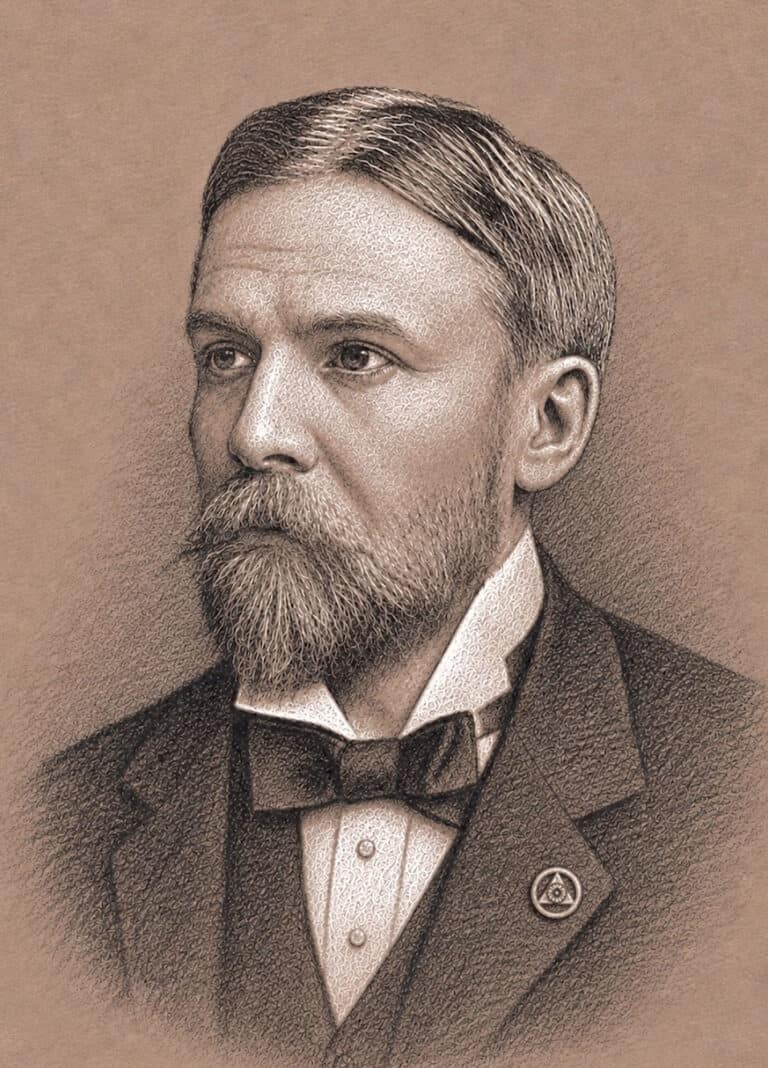
The history of suggestion follows this principle as it moved out of hypnotism and into everyday life. It led to waking Suggestion, Suggestive Therapeutics, Auto-Suggestion, mental training, habit formation, business psychology, salesmanship, and advertising. Within New Thought, Dr. Herbert A. Parkyn and the network surrounding his Chicago School of Psychology made the Law of Suggestion central to a natural explanation of mental influence and healing. Parkyn developed Auto-Suggestion into a systematic method of self-direction, carried the principles into business and major advertising campaigns, and recorded suggestions on the phonograph for repeated use at home. His phrase “Thought takes form in action” captured the practical direction of the system: an idea gained its real importance through the response and conduct it helped produce.
The story then moved into a striking new field. Through the publishing network associated with the Yogi Publication Society, the laws studied through modern Suggestion were connected with teachings found in Yogi philosophy, Hermeticism, alchemy, psychic science, and Western esotericism. Concentration, control of thought, mental imagery, transformation of mental states, disciplined will, polarity, and cause and effect gave the network points of comparison between modern psychological experimentation and much older systems of mental training. The books published under names such as Yogi Ramacharaka and William Walker Atkinson carried these ideas to readers interested in philosophy, mental development, healing, and ancient traditions.
The language changed again during the twentieth century, while many of the methods remained familiar. Auto-Suggestion fed into positive thinking and self-help; repeated formulas became affirmations; Parkyn’s “psychic pictures” found later counterparts in visualization and mental rehearsal; and deliberate changes in habitual thought were increasingly described as subconscious “reprogramming.” These practices passed through success literature, the Human Potential movement, the New Age, and modern personal development. They can now be found in motivational training, sports psychology, business coaching, guided visualization, self-hypnosis, meditation programs, manifestation practices, advertising, and digital self-development. Parkyn’s use of phonograph recordings also has a striking modern descendant in guided audio, affirmation tracks, meditation programs, and personalized recordings delivered through a smartphone. The names and technologies have changed repeatedly, but the central question that drove the history of Suggestion remains the same: how does an idea become strong enough to influence the way a person feels, responds, and acts?
Understanding this history requires following suggestion far beyond hypnosis. It begins with mesmerism and the first attempts to explain extraordinary mental phenomena, passes through James Braid and the transformation of mesmerism into hypnotism, Phineas Parkhurst Quimby‘s investigations of belief and mental healing, Jean-Martin Charcot and the Salpêtrière School, Ambroise-Auguste Liébeault and Hippolyte Bernheim at the Nancy School, Thomson Jay Hudson‘s theories of objective and subjective mental activity, and Parkyn’s decisive development of waking suggestion and Auto-Suggestion. From there, the Law of Suggestion moves outward into New Thought, business, advertising, Yogi philosophy, Hermeticism, alchemy, positive thinking, the Human Potential Movement, the New Age, and modern self-help. What connects that enormous history is a remarkably simple idea: thoughts and suggestions are not merely passive contents of the mind. When sufficiently impressed and reinforced, they can become forces that shape expectation, establish habit, influence behavior, and ultimately produce action.
Where Did the History of Suggestion Begin?
Long before suggestion was identified as the active principle behind hypnotic phenomena, many of the effects later attributed to it were explained through animal magnetism. During the late eighteenth century, the German physician Franz Anton Mesmer developed a system based upon the existence of an invisible force that he believed permeated living organisms and connected them with the larger natural world. Mesmer proposed that illness could result from disturbances in the proper distribution of this force and that a trained operator could restore its balance through magnetic treatment. His methods became famous for producing dramatic reactions in patients, including convulsions, muscular rigidity, altered consciousness, unusual sensory experiences, apparent anesthesia, and states resembling sleep or trance. To Mesmer and many of his followers, these effects appeared to confirm that an actual magnetic influence was passing between operator and patient.

The lasting historical importance of mesmerism, however, was not the theory of magnetic fluid but the extraordinary collection of phenomena that mesmeric practice brought to public and scientific attention. Even as Mesmer’s explanation came under attack, the effects associated with his methods could not simply be dismissed. Other practitioners continued producing trance-like states, changes in sensation, temporary paralysis, muscular rigidity, apparent insensibility to pain, automatic movements, altered memory, and unusual responsiveness to the operator. The central problem survived the theory that had first attempted to explain it. If no magnetic fluid was actually passing from one person to another, what was causing subjects to respond in such remarkable ways?
That question became the starting point for the eventual discovery of suggestion. The rituals of mesmerism contained many elements that later investigators would recognize as psychologically important. The operator possessed authority, the patient expected something unusual to occur, attention was concentrated upon the procedure, repeated actions reinforced expectation, and the atmosphere surrounding the treatment often heightened emotional anticipation. Patients observing the dramatic reactions of others could also develop expectations about what they themselves were supposed to experience. Mesmer interpreted the resulting effects as evidence of magnetism, but later investigators would progressively remove the supposed magnetic force while discovering that many of the same phenomena could still be produced. The less necessary the magnetic explanation became, the more attention shifted toward what was occurring within the mind and nervous system of the subject.
Why Did Mesmerism Survive After Animal Magnetism Was Challenged?
The survival of mesmerism after Mesmer’s theory had been seriously challenged created one of the most important problems in the early history of psychology. Critics could attack the theory of animal magnetism, but demonstrations continued to produce effects that appeared too consistent and unusual to ignore. This separated the observed phenomenon from the explanation attached to it. Investigators no longer had to choose between accepting Mesmer’s magnetic fluid and denying everything associated with mesmerism. A third possibility emerged. The phenomena might be genuine while Mesmer’s explanation of them was wrong.

This distinction opened an entirely new field of investigation. Some practitioners continued defending magnetic theories, but others began experimenting with alternative explanations involving imagination, expectation, attention, physiological response, and the relationship between the operator and subject. The crucial shift was gradual, because nineteenth-century investigators did not yet possess the psychological vocabulary that would later make these processes easier to describe. Nevertheless, the location of the supposed cause was beginning to move. Mesmer had placed the active force primarily in the operator, who transmitted something to the patient. The developing psychological interpretation increasingly placed the active processes inside the subject, whose own mind and nervous system generated the observable response. The implications of this reversal were enormous. If the operator was not transmitting an invisible force, then the gestures, words, rituals, and authority of the operator might function primarily by shaping the subject’s expectation and directing attention. The operator could still be important without possessing a mysterious power. What appeared to be a transfer of force could instead be an interaction between an idea, an expectation, and the subject’s response to it. The Law of Suggestion had not yet been fully formulated, but the investigation was already moving toward the conditions necessary for its discovery.
How Did James Braid Transform Mesmerism into Hypnotism?
The decisive break with animal magnetism came through the work of Scottish surgeon James Braid, who began investigating mesmeric phenomena during the 1840s. Braid initially approached mesmerism as a skeptic and expected to uncover deception or misunderstanding. After observing demonstrations closely and conducting experiments of his own, however, he became convinced that many of the phenomena were genuine. What he rejected was the claim that they depended upon a magnetic fluid passing from the mesmerist into the subject. Braid discovered that comparable effects could be produced by manipulating the subject’s own attention and physiological condition without invoking animal magnetism at all.

One of Braid’s most important methods involved sustained visual fixation. By directing a person to concentrate intensely upon an object held in a particular position, he found that changes in attention and nervous activity could produce a condition resembling the mesmeric state. The experiment was conceptually powerful because the supposed magnetic operator could be stripped of his mysterious force without eliminating the phenomenon. The subject’s own concentrated attention was capable of producing the condition. Braid shifted the explanation inward, away from an external magnetic fluid and toward processes occurring within the person undergoing the experience.
Braid initially used the terminology of “neuro-hypnotism” and helped establish the word hypnotism, drawing upon the Greek association with sleep because the resulting condition appeared superficially to resemble a specialized form of nervous sleep. The new terminology helped separate the investigation from Mesmer and animal magnetism, but it also created another misconception that would have to be overcome. If magnetism was not the cause, perhaps hypnotic sleep itself was. Much of the subsequent history of suggestion would involve progressively dismantling this second explanation just as Braid had helped dismantle the first.
Did Braid Eventually Realize That Hypnotism Was Not Really Sleep?
As Braid continued his investigations, the description of hypnosis as sleep became increasingly inadequate. A hypnotized person might appear asleep because the eyes were closed and awareness of the surrounding environment seemed reduced, yet the subject could remain extraordinarily responsive to selected instructions. A person might ignore ordinary sounds while immediately responding to the operator’s voice, experience a suggested sensation that had no external physical cause, display muscular rigidity after being told that a limb could not move, or show altered sensitivity in one area while remaining responsive elsewhere. These were not the ordinary characteristics of sleep, and the more closely the phenomena were studied, the more obvious it became that the word itself could mislead investigators about what was actually occurring.
Braid’s later thinking increasingly emphasized concentrated attention rather than sleep as the essential feature of the condition. This was a major conceptual advance because attention offered a mechanism that belonged to normal mental life. Sleep appeared to separate hypnosis from ordinary consciousness, while attention connected it to ordinary consciousness. People concentrated attention every day while reading, praying, studying, listening intently, becoming absorbed in music, performing skilled work, or focusing intensely upon a particular thought. Hypnotism could begin to be understood not as entry into an entirely separate world of consciousness but as an unusual intensification and direction of processes already present in ordinary mental activity.
This change also prepared the way for later investigators to ask an even more important question. Concentrated attention might help create the condition, but what determined the specific response that followed? Why would one subject experience rigidity, another anesthesia, another warmth, and another an imagined visual scene? Concentration alone did not supply the content of the experience. Something had to direct the concentrated mind toward a particular result. Increasingly, that directing element would be recognized as the suggestion.
Why Was Concentrated Attention So Important to the Discovery of Suggestion?
Concentrated attention became one of the essential links between hypnotism and suggestion because it helped explain why an idea could acquire unusual influence without requiring a magnetic force. Ordinary consciousness is occupied by competing sensations, memories, judgments, expectations, fears, desires, and environmental impressions. When attention narrows intensely around a particular idea, many of those competing impressions temporarily lose some of their prominence. The idea occupying the center of attention acquires an unusual opportunity to influence expectation and response.
The elaborate rituals of mesmerism could now be reconsidered from this perspective. The passes, staring, silence, repeated instructions, dramatic atmosphere, confidence of the operator, and expectation that an unusual state was about to occur may all have contributed to concentrating attention and preparing the subject for a particular experience. If simpler methods could create the same concentration, then the ritual was not the cause. It was a means of producing psychological conditions under which the subject became more responsive to the ideas being presented.
This discovery would eventually undermine the necessity of formal hypnotism itself. Concentrated attention did not exist only during hypnosis. It could occur during emotional excitement, religious devotion, fear, intense study, repetitive activity, meditation, persuasive speech, or absorption in a vivid mental image. If an idea became unusually influential because attention was concentrated upon it, then the same principle might operate in ordinary waking life whenever circumstances produced sufficient attention, expectation, or repetition. The investigation was moving steadily toward waking suggestion, even though that conclusion had not yet been fully developed.
How Did Phineas Parkhurst Quimby Move Mesmerism Toward Mental Healing?
At roughly the same historical period that Braid was stripping mesmerism of its magnetic explanation in Britain, Phineas Parkhurst Quimby was pursuing another important development in the United States. Quimby began his investigations through mesmerism and became deeply interested in the unusual effects that mesmeric practices appeared capable of producing. His work, however, increasingly led him toward the influence of belief, expectation, interpretation, and the patient’s mental condition. This created an American line of development that would become enormously important to mental healing and eventually New Thought.

Quimby’s developing insight was that patients did not experience illness independently of the ideas they held about it. A diagnosis, fear, expectation, religious belief, previous experience, or interpretation of a symptom could become part of the condition through the influence it exercised upon the patient. If a person became convinced that a particular treatment would help, that expectation could itself become significant. If the patient believed a condition to be hopeless, the opposite expectation could likewise influence experience. Quimby increasingly concentrated upon changing the patient’s understanding and belief rather than manipulating an invisible magnetic substance. In doing so, he helped move American mental healing toward the same fundamental territory that European investigators were approaching from hypnotism.
The parallel between Braid and Quimby is important because they were approaching the old mesmeric problem from different directions. Braid increasingly asked what happened within the subject during the mesmeric condition. Quimby increasingly asked what happened within the patient when beliefs about illness and recovery changed. One line moved toward the psychology of hypnosis, while the other moved toward the psychology of mental healing. Both weakened the necessity of animal magnetism, and both increasingly placed the decisive process within the individual rather than in a mysterious force transmitted by the operator.
Why Were Belief and Expectation So Important to Quimby’s Work?
Quimby’s investigations helped expose the possibility that the meaning attached to an experience could influence the experience itself. A patient did not simply possess a symptom in isolation. The person also possessed ideas about the symptom, including what caused it, what it meant, whether it was dangerous, whether recovery was possible, and what authority should be trusted to explain it. Those ideas could intensify fear, reinforce attention upon the condition, or establish an expectation concerning what would happen next. Changing the belief could change an important part of the patient’s mental relationship to the condition.
Seen through the later Law of Suggestion, the significance becomes clearer. A frightening diagnosis could function as a powerful suggestion. Repeated fear could become a continuing Auto-Suggestion. Confidence in a healer could establish a favorable expectation. The authority attached to a treatment could strengthen the patient’s acceptance of the ideas accompanying it. None of this required a magnetic fluid, and none of it required supernatural intervention. The mental state of the patient could itself become part of the chain of causation.
Quimby did not simply reproduce the later systematic psychology of suggestion before it had been developed, but his work occupies an essential place in the path toward it. He helped establish the American mental-healing tradition around the proposition that ideas and beliefs mattered to human experience. Later investigators would provide increasingly systematic explanations of how those ideas operated.
Why Did Quimby’s Work Become So Important to New Thought?
Quimby’s influence became particularly important because the American mental-healing tradition that followed him eventually expanded beyond illness into a much larger philosophy concerning the power of thought. New Thought developed through multiple teachers, organizations, publications, and schools, but one of its recurring principles was that habitual thought and belief exerted influence upon human life. Health remained important, yet the same general principle was increasingly extended to happiness, character, prosperity, confidence, personal development, and success.
This created an important unresolved question that would shape the later movement. If thought and belief produced effects, what law explained those effects? Different movements supplied very different answers. Christian Science developed a theological and supernatural interpretation. Other metaphysical systems described the process through spiritual or universal mind. Still others increasingly turned toward psychology. The eventual introduction of the Law of Suggestion into New Thought offered a natural mechanism through which many of the observed effects of belief, expectation, mental imagery, and repeated thought could be explained without requiring the theological system of Christian Science.
That later development is essential to understanding the importance of Dr. Herbert A. Parkyn and the network surrounding his Chicago School of Psychology. Parkyn would eventually challenge Christian Science precisely because he believed it had attached a supernatural explanation to effects that belonged to natural psychological law. Quimby’s earlier movement from magnetic treatment toward the influence of belief helped create the American intellectual environment in which that later confrontation could occur.
How Did the Search for a Natural Explanation Lead to the Science of Suggestion?
By the later nineteenth century, the investigation that had begun with mesmerism had divided into several interconnected lines of inquiry. Braid had demonstrated that the mesmeric condition did not require an invisible magnetic force and had redirected attention toward processes occurring within the subject. Quimby had moved mental healing toward the influence of belief and expectation. Physicians and investigators throughout Europe and the United States continued experimenting with hypnotic anesthesia, altered sensation, memory, muscular responses, automatic behavior, and therapeutic applications. The phenomena were becoming increasingly difficult to explain through either animal magnetism or ordinary sleep.
What the field still lacked was a sufficiently broad principle capable of explaining why the subject responded in one particular way rather than another. Concentrated attention could help produce a receptive condition, but attention by itself did not explain why a person’s arm became rigid after being told it was rigid, why pain disappeared after being told it was absent, or why an imagined object could temporarily be experienced as though it were present. The specific response followed the specific idea that had been presented. The suggested idea was increasingly emerging as the missing element.
The decisive confrontation over that interpretation would occur in France. Jean-Martin Charcot and the Salpêtrière School developed an influential neurological interpretation of hypnosis closely associated with hysteria and distinctive hypnotic stages. At Nancy, however, Ambroise-Auguste Liébeault and Hippolyte Bernheim reached a radically different conclusion. The extraordinary phenomena attributed to hypnotism did not require a pathological condition at all. Their essential cause was suggestion. The conflict between the Salpêtrière and Nancy School interpretations would become the next great turning point in the history of the Law of Suggestion.

Why Did Charcot and the Nancy School Disagree About Hypnosis?
By the final decades of the nineteenth century, hypnotism had moved well beyond the experiments of James Braid, but physicians and researchers still disagreed fundamentally about what the hypnotic condition actually represented. The old theory of animal magnetism had lost much of its scientific authority, yet removing magnetic fluid from the explanation had not solved the central problem. Hypnotized subjects continued to display extraordinary changes in sensation, movement, memory, perception, and behavior, and investigators wanted to know what produced those effects. The most important dispute developed in France between Jean-Martin Charcot and the Salpêtrière School in Paris on one side and Ambroise-Auguste Liébeault, Hippolyte Bernheim, and the Nancy School on the other. Their disagreement would become one of the decisive turning points in the history of suggestion because it shifted the argument away from whether hypnotic phenomena were real and toward what actually caused them.
The two schools observed many of the same kinds of phenomena but interpreted them in fundamentally different ways. Charcot approached hypnosis largely through neurology and his work with hysterical patients at the Salpêtrière. He regarded hypnosis as a distinctive pathological condition with recognizable stages and physical characteristics. The Nancy investigators increasingly placed the emphasis elsewhere. They found that the particular responses displayed by hypnotized subjects depended heavily upon the suggestions communicated to them. If the response changed when the suggestion changed, then the suggested idea had to occupy a central place in the explanation. This distinction was crucial. The Nancy School did not yet remove hypnosis from the process. Its great contribution was identifying suggestion as the force directing what occurred within hypnosis, thereby preparing the foundation for the later development that would separate suggestion from hypnotic sleep altogether.
What Did Charcot Believe Hypnosis Revealed?
Jean-Martin Charcot was among the most celebrated neurologists of his generation, and his position at the Salpêtrière Hospital gave his interpretation of hypnosis enormous scientific prestige. His investigations were conducted largely among women diagnosed with hysteria, and he came to regard hypnotic susceptibility as closely connected with that neurological condition. The Salpêtrière School described characteristic stages of hypnosis and attempted to identify physical signs associated with each stage. From this perspective, hypnosis was not simply the result of imagination or an individual’s willingness to follow instructions. It appeared to represent a genuine neurological condition that could be produced, observed, classified, and studied medically.

Charcot’s public demonstrations became famous and attracted physicians, psychologists, intellectuals, and observers from across Europe. Subjects could display muscular rigidity, altered sensation, dramatic postures, apparent anesthesia, and striking changes in responsiveness. These demonstrations helped move hypnotism into serious medical discussion, but they also strengthened the impression that hypnosis was a highly specialized condition occurring most dramatically among neurologically abnormal subjects. Because Charcot’s reputation was so formidable, the Salpêtrière interpretation carried considerable authority and appeared for a time to provide hypnotism with the neurological foundation it had lacked since the decline of animal magnetism.
The difficulty was that many of the supposed characteristics of hypnosis did not appear consistently outside the environment in which Charcot’s subjects had been trained and repeatedly examined. If subjects had undergone similar demonstrations many times, knew what was expected of them, responded to physicians who anticipated particular stages, and had become familiar with the sequence of the experiments, the possibility arose that the observed stages were being shaped by expectation and suggestion. What Charcot interpreted as fixed neurological signs could include responses that had been learned, anticipated, and suggested. This became one of the principal points upon which the Nancy School challenged the Salpêtrière interpretation.
What Did Liébeault Discover at Nancy?
Ambroise-Auguste Liébeault approached hypnotism through medical practice with ordinary patients rather than primarily through the study of hysteria in a neurological hospital. At Nancy he used hypnosis therapeutically and accumulated experience with patients suffering from a wide range of complaints. His method relied heavily upon verbal suggestion administered during the hypnotic condition. Suggestions might concern sleep, appetite, pain, comfort, confidence, habits, or the expected improvement of a particular symptom. Over time, the relationship between the suggestion given and the response produced became increasingly difficult to separate from the supposed hypnotic state itself.

Liébeault’s work suggested that hypnotic responsiveness was not restricted to the pathological population upon which Charcot’s conclusions had largely been based. Ordinary individuals could be hypnotized and could respond to suggestions without exhibiting the fixed neurological sequence associated with the Salpêtrière. More importantly, the particular response followed the particular suggestion. If rigidity was suggested, rigidity could appear. If altered sensation was suggested, the subject could experience altered sensation. If improvement in a symptom was repeatedly suggested, the therapeutic response could follow the direction of that idea. The content of the hypnotic experience was not simply unfolding according to an automatic neurological program. It was being directed by suggestion.
This represented an important reversal in the investigation. Instead of treating suggestion as something added after hypnosis had produced its characteristic phenomena, Liébeault’s work increasingly placed suggestion at the center of those phenomena. Hypnosis created the condition in which the suggestions were administered, but the suggestion determined the direction the response took. That distinction became the foundation upon which Bernheim would build the theoretical position associated with the Nancy School.
How Did Bernheim Make Suggestion the Key to Hypnotic Phenomena?
Hippolyte Bernheim, a professor of medicine at Nancy, initially approached Liébeault’s work with skepticism. After investigating the results for himself, however, he became one of the strongest defenders and most influential theorists of the Nancy position. Bernheim’s medical standing helped bring Liébeault’s work greater recognition and turned Nancy into the principal rival of Charcot’s Salpêtrière School. Through Bernheim, suggestion became not merely a technique used during hypnosis but the central explanatory principle for understanding why hypnotized subjects responded as they did.

This was the crucial contribution. The hypnotic condition alone could not explain why one subject experienced rigidity, another warmth, another altered sensation, and another an imagined scene. The difference lay in what had been suggested. A hypnotized person did not simply enter a predetermined sequence of neurological events. The operator introduced an idea, and the subject’s response developed in accordance with that idea. Suggestion supplied what the neurological model could not adequately explain. It accounted for the specific direction of the hypnotic phenomenon.
The Nancy interpretation also weakened the idea that susceptibility to hypnosis was necessarily a symptom of hysteria or neurological disease. If ordinary people could be hypnotized and could respond to suggestions, then the underlying capacity could not be confined to a pathological class. Hypnotism could still produce remarkable states and responses, but the responsiveness itself increasingly appeared to belong to ordinary human mentality. This was a major step toward the later science of suggestion, even though the Nancy School remained within the framework of hypnotism when administering and studying these effects.
What Was the Real Difference Between the Salpêtrière and Nancy Schools?
The disagreement between the Salpêtrière School and the Nancy School ultimately concerned what should be regarded as the cause and what should be regarded as the condition. Charcot treated hypnosis as a distinctive neurological state whose characteristic stages and manifestations could be studied as part of nervous pathology. Nancy increasingly demonstrated that the manifestations attributed to that state were shaped by the suggestions given to the subject. The hypnotic condition remained part of the procedure, but suggestion explained why the condition expressed itself in one particular way rather than another.
This distinction also changed the apparent location of power within hypnotism. The older mesmeric tradition had placed the mysterious force in the operator. Braid had removed the necessity of magnetic fluid and shifted attention toward processes occurring within the subject. Nancy went further by showing that the idea communicated to the hypnotized subject directed the resulting response. The operator remained important, but the response was increasingly understood through the relationship between the suggestion and the mental processes of the person receiving it. The history was moving steadily away from mysterious forces and toward a law governing the influence of ideas.
What Nancy did not yet do was complete the separation of suggestion from hypnotism. That distinction matters enormously for the later history. The Nancy School established suggestion as the key force behind hypnotic phenomena, but the decisive development of using suggestion systematically without hypnosis belonged to Parkyn. Keeping those stages separate makes the progression much clearer. Braid broke with animal magnetism, Nancy established the centrality of suggestion within hypnosis, and Parkyn would later demonstrate that hypnotic sleep itself could be dispensed with.
Why Was Nancy’s Discovery So Important If Hypnosis Was Still Being Used?
Nancy’s contribution was revolutionary precisely because identifying the active principle made the next question unavoidable. If the specific effects produced under hypnosis followed the suggestions given to the subject, then investigators could no longer treat the hypnotic condition itself as a complete explanation. The idea being impressed upon the mind had become the central variable. That did not automatically prove that hypnosis was unnecessary, but it fundamentally changed what later investigators needed to test. Instead of merely asking how to produce deeper hypnosis, they could begin asking what hypnosis contributed to the action of suggestion and whether the suggestion could ultimately be separated from the sleep-like condition surrounding it.
That question would become enormously important to the next generation. For the moment, however, the Nancy School had accomplished something fundamental. Suggestion had emerged from the background of hypnotic practice and become the force that explained the direction of hypnotic response. The science had moved another step away from Mesmer’s invisible fluid and toward the influence of ideas upon the mind.
At the same time, something very different was happening outside the medical clinic. While physicians were gradually stripping hypnotism of its mystery, professional entertainers were making it more mysterious than ever.
How Did Stage Hypnotism Bring Hypnosis Before the Mass Public?

During the same years that Charcot, Liébeault, Bernheim, and other physicians were trying to define hypnosis scientifically, stage hypnotists were introducing it to the public on a completely different scale. Traveling operators filled theaters, lecture halls, fairs, and public exhibitions with demonstrations in which volunteers appeared unable to move, forgot familiar names, reacted to imaginary objects, assumed invented identities, or followed strange commands before fascinated audiences. Far more people encountered hypnotism through these performances than through medical experiments, and the stage created an image of the hypnotist that would remain fixed in popular culture for generations.
The performances were theatrical, but the best operators often developed impressive skill. Night after night before live audiences, they learned how to identify highly responsive subjects, capture attention, create expectation, establish authority, control the mood of a room, build a sequence of suggestions, and recognize quickly when a volunteer was likely to respond. Much of this knowledge came from experience instead of formal psychological theory. An operator might explain his success as personal magnetism, hypnotic force, or domination of another mind, while his actual technique depended heavily upon attention, expectation, confidence, selection of responsive subjects, and carefully delivered suggestion.
This combination of genuine skill and theatrical explanation made stage hypnotism important to the next phase of the story. The platform became a working laboratory for suggestion while also creating many of the myths that physicians and later teachers of Suggestive Therapeutics had to confront. Herbert A. Parkyn would later become a determined opponent of the sensational claims attached to stage hypnotism, yet he respected the abilities of accomplished operators and recognized the knowledge some had gained through years of handling subjects before audiences. He would even draw talented practitioners into the educational world surrounding his work. That relationship becomes important later. At this point in the history, the stage matters because it was teaching the public to associate hypnotism with the commanding personality of the operator.
Why Did Stage Hypnotists Seem to Possess Irresistible Mental Power?
A stage performance was almost perfectly designed to create the appearance that the hypnotist possessed extraordinary control. The operator stood before the audience as the unquestioned authority, delivered commands with confidence, concentrated attention upon the most successful demonstrations, and worked with volunteers who responded well enough to keep the performance moving. Each dramatic success strengthened the atmosphere in the room. The audience expected the next subject to respond, new volunteers had already watched others respond, and the operator’s apparent authority increased as the exhibition continued.
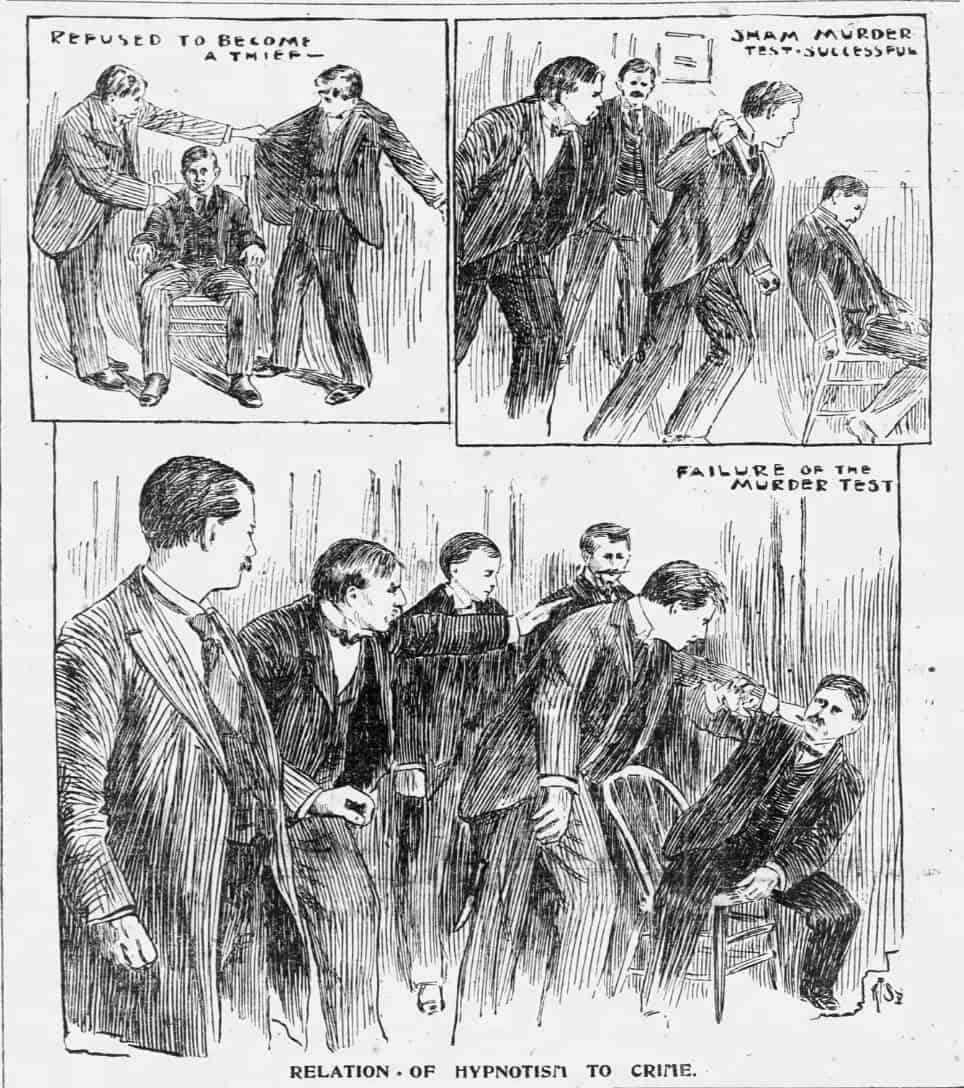
From this setting came the enduring image of the all-powerful hypnotist. Newspapers and popular literature added stories of hypnotic crime, forced obedience, seduction, exploitation, and people supposedly compelled to act against their wills. The fictional figure of Svengali gave this fear one of its most memorable forms, turning hypnotic influence into a cultural symbol of sinister mental domination. Stage exhibitions, sensational journalism, fiction, legitimate experiments, and outright fraud became tangled together in the public imagination.
Yet the performances themselves contained a clue that would become increasingly important to the science of suggestion. The hypnotist’s apparent power varied enormously according to the person standing in front of him. Some volunteers responded rapidly and dramatically, while others produced little worth displaying. Skilled operators became adept at finding the people who would make the strongest subjects, and those subjects naturally became the center of the show. The audience saw the successful command and response; it rarely saw the selection process with the same clarity.
This difference between the operator’s apparent power and the subject’s responsiveness would become crucial as Suggestive Therapeutics developed. The spectacular stage performance had placed the hypnotist at the center of the explanation. The next advances would look much more closely at the person responding to the suggestion and ask a different question: how much of the apparent power of the hypnotist actually belonged to the mental processes of the subject?
How Did Svengali Turn the Hypnotist into a Cultural Villain?

The public fear of hypnotic domination acquired its most famous symbol with George du Maurier’s 1894 novel Trilby. The character Svengali exercises an overwhelming hypnotic influence over Trilby and became so culturally powerful that his name eventually entered ordinary language as a description of a manipulative figure who dominates another person’s mind or career. The image condensed decades of anxiety about mesmerists and hypnotists into a single recognizable character. Hypnosis was no longer merely an unusual medical or theatrical phenomenon. It could be imagined as a weapon through which a sinister individual seized control of another person’s will.
Svengali appeared at an especially important moment in the history of suggestion. Scientific investigators were increasingly replacing the old idea of mysterious external power with an explanation centered upon suggestion and the response of the subject, yet popular culture was moving in almost exactly the opposite direction. The hypnotist became more powerful in fiction at the same time that science was making his supposed powers less mysterious. The gap between public mythology and the developing psychology of suggestion became enormous.
That contradiction would define the environment inherited by the next generation. Suggestion had emerged as the central force behind hypnotic phenomena, but hypnotism itself had become burdened with the imagery of stage domination, supernatural power, involuntary control, and Svengali. Before suggestion could become a general science of mental influence, it would have to be separated not only from hypnotic sleep but also from the cultural mythology that had grown around the hypnotist. That next transformation would come through the work of Dr. Herbert A. Parkyn, but first another influential theory of the period would help define the mental structure upon which suggestion was believed to act.
How Did Thomson Jay Hudson Explain the Mind’s Response to Suggestion?

By the 1890s, the growing importance of suggestion created a new problem for investigators. The Nancy School had established suggestion as the essential force directing hypnotic phenomena, but identifying the force did not fully explain how it operated within the mind. A suggestion could be consciously heard and understood, yet the response that followed might appear to occur automatically. A hypnotized subject told that an arm was rigid did not consciously calculate and direct every muscular action necessary to maintain the rigidity. A suggested sensation could appear without deliberate effort, and an idea impressed during hypnosis could continue influencing behavior after the immediate procedure had ended. Habit presented a similar puzzle in ordinary life. Actions that initially required conscious effort could, through repetition, become increasingly automatic. The science of suggestion needed a theory capable of explaining the relationship between consciously received ideas and the involuntary responses that followed them.
One of the most influential attempts to provide that explanation came from Thomson Jay Hudson, whose 1893 book The Law of Psychic Phenomena attempted to bring hypnotism, suggestion, mental healing, psychic phenomena, and other apparently mysterious subjects under a common system of natural law. Hudson’s importance to the history of suggestion lies particularly in his division of mental activity into what he called the objective and subjective minds. Rather than treating hypnotic phenomena as evidence of a mysterious force, Hudson argued that they could be understood by recognizing that the human mind operated through two distinct modes with different characteristics. His terminology would become enormously influential in the mental-science literature of the period and helped create an intellectual bridge between the psychology of hypnotism and the later language of conscious, subconscious, voluntary, and involuntary mental activity.
What Did Hudson Mean by the Objective and Subjective Minds?
Hudson described the objective mind as the part of mental activity concerned primarily with the external world and ordinary waking consciousness. It reasoned, compared, analyzed, examined evidence, and reached conclusions through deliberate intellectual processes. When a person evaluated an argument, compared alternatives, solved a problem, questioned a statement, or consciously decided how to act, Hudson associated these functions with the objective mind. It was the reasoning and discriminating side of mentality, capable of examining an idea before accepting it and of rejecting propositions that conflicted with experience or judgment.
The subjective mind, in Hudson’s system, operated very differently. It was associated with automatic mental processes, memory, emotion, intuition, bodily functions, habit, and the extraordinary responses observed during hypnotism. Most importantly for the developing theory of suggestion, Hudson argued that the subjective mind was highly responsive to ideas impressed upon it and did not employ the same type of independent inductive reasoning associated with objective consciousness. Once a premise or suggestion was accepted, the subjective processes tended to follow that idea toward its consequences. This offered a seemingly coherent explanation for the extraordinary literalness sometimes observed in hypnotic experiments. The subject could respond to an imagined situation as though it were real because the suggested premise had been accepted and the resulting response unfolded accordingly.
Hudson’s theory provided a mental structure through which the findings of the Nancy School could be interpreted. Nancy had demonstrated the centrality of suggestion within hypnotism. Hudson attempted to explain why suggestion could exert such remarkable influence once the ordinary critical and reasoning processes of the objective mind had been reduced. The hypnotic condition did not have to release an occult force or magnetic fluid. It could instead alter the relationship between different modes of mental activity, allowing the suggested idea to act more directly upon the subjective processes responsible for automatic response.
Why Did Hudson Believe the Subjective Mind Was So Responsive to Suggestion?

The apparent responsiveness of hypnotized subjects raised a difficult question for nineteenth-century investigators. In ordinary conversation, a person might immediately reject an absurd statement, yet under hypnosis that same person could respond to an imagined situation as though it were real. A suggestion that an ordinary object was impossibly heavy could produce visible effort when the subject tried to lift it. A suggested sensation could call forth a corresponding reaction, while an invented situation could temporarily guide perception and behavior. Thomson Jay Hudson used such phenomena to support his theory that mental activity operated in two distinct ways, which he called the objective and subjective minds.
Hudson associated the objective mind with conscious reasoning, judgment, and ordinary interaction with the external world. The subjective mind covered a large field of activity that could proceed without the same deliberate reasoning, including habit, memory, emotional response, automatic behavior, and processes connected with the body. Hypnotic experiments seemed to expose this second mode with unusual clarity because suggestions could produce responses that the waking, reasoning person might have questioned or rejected. Hudson gave the subjective mind an important role in explaining how an accepted idea could pass from thought into an automatic response.
His theory also drew attention to repetition and expectation. An idea encountered once might leave little impression, while an idea repeatedly reinforced could become increasingly familiar and begin influencing habitual responses. This connection between suggestion and habit would become increasingly important as investigators moved beyond the temporary phenomena of hypnosis and began asking how repeated ideas might shape more lasting patterns of thought and behavior.
How Did Hudson Connect Hypnotism with Mental Healing?
Hudson extended his objective and subjective theory beyond hypnotic demonstrations and applied it to mental healing. If the subjective processes of the mind could influence bodily conditions and respond strongly to suggestion, then the effects reported in mental healing might arise through the same mental processes visible in hypnotic experiments. This gave investigators a way to discuss such effects without depending upon animal magnetism or supernatural intervention.
Hudson’s work belonged to a long movement toward natural explanations of phenomena once treated as mysterious. James Braid had shifted attention away from Mesmer’s magnetic fluid and toward processes within the subject. Phineas Parkhurst Quimby had explored the role of belief and mental interpretation in healing. Liébeault and Bernheim at Nancy placed suggestion at the center of hypnotic phenomena. Hudson attempted to bring hypnotism, mental healing, automatic response, and other unusual mental phenomena within a single theory of objective and subjective mental activity.
This gave Hudson’s work special relevance in America, where mental healing was attracting intense interest. If belief, expectation, and suggestion could affect processes outside deliberate conscious control, some results credited to spiritual or supernatural causes might have a psychological explanation. That question would become much more important as Suggestive Therapeutics developed and came into direct contact with Christian Science, New Thought, and other systems of mental healing.
Why Was Hudson’s Theory Important to the Idea of the Subconscious Mind?
There was no single accepted nineteenth-century model for what later writers would commonly call the subconscious mind. Investigators used terms such as subjective mind, subliminal consciousness, secondary consciousness, unconscious cerebration, automatic action, and involuntary mentality, often with different meanings. Behind this changing vocabulary was a shared problem: conscious reasoning clearly represented only one part of mental activity. Habits could run automatically, memories could appear without deliberate effort, emotions could arise before conscious analysis, and practiced actions could be performed with little attention.
Hudson’s objective and subjective terminology offered an accessible framework for discussing this division. The objective mind handled deliberate reasoning and conscious judgment, while the subjective mind described the large field of automatic and highly suggestible activity. For writers concerned with hypnotism, mental healing, psychic phenomena, and mental development, the model offered a straightforward explanation for how an idea consciously received could lead to a response that seemed to occur on its own.
The influence of this framework continued after Hudson’s terminology began to fade. Twentieth-century New Thought and self-development literature increasingly spoke of the conscious and subconscious mind, often teaching that consciously selected ideas could be impressed through repetition until they influenced automatic thought and behavior. Later writers simplified and modified the theory, but Hudson had helped make the relationship between deliberate thought and automatic response a central problem in the study of suggestion.
Was Hudson Really Describing Two Separate Minds?
Hudson’s language created a problem that later investigators would have to resolve. Calling these activities the objective and subjective “minds” could make them sound like two independent mental beings occupying the same person. The observed distinction was valuable, but the evidence did not require such a literal division. Everyday habit already showed conscious and automatic activity passing into one another. A person could deliberately learn an action and, after enough practice, perform it with scarcely any conscious attention.
This point would become central to the work of Herbert A. Parkyn. Parkyn retained the useful distinction in Hudson’s theory while replacing the two-mind model with one mind operating through voluntary and involuntary modes. His formulation provided a cleaner explanation of the relationship between conscious direction, automatic response, habit, and suggestion, and it would become a foundation of the system taught through his Chicago School of Psychology.
How Did Suggestion Begin to Connect Thought with Habit?
Habit provided an everyday demonstration of the relationship Hudson and other investigators were trying to understand. Learning to write, play an instrument, operate a machine, or perform a skilled movement initially requires close attention. With practice, much of the same activity can be carried out automatically. Repetition changes the response until conscious supervision is needed less and less.
The study of suggestion opened the possibility that ideas could participate in a similar process. Repeated expectations and mental impressions could become familiar, while repeated responses could develop into established patterns. This moved the subject beyond the dramatic effects produced during hypnosis. Investigators now had reason to ask whether suggestion could help explain the formation of habits that continued long after a hypnotic experiment or therapeutic session had ended.
That question pointed directly toward the next major development. Nancy had established the importance of suggestion within hypnotism, and Hudson had supplied an influential theory for understanding the mental activity involved. The remaining problem was hypnosis itself. If suggestion was the active force, did the subject actually have to be hypnotized for it to work? The answer would lead Herbert A. Parkyn toward one of the decisive advances in the history of Suggestive Therapeutics.
How Did Herbert A. Parkyn Take Suggestion Beyond Hypnotism?
By the early 1890s, the essential pieces of the developing science of suggestion were present, but they had not yet been assembled into the system that would follow. James Braid had helped remove animal magnetism from the explanation of hypnotic phenomena. The Nancy School had established suggestion as the active principle directing what occurred during hypnosis. Thomson Jay Hudson had provided an influential framework for understanding the relationship between consciously received ideas and automatic mental responses. Yet hypnotism still remained the principal setting in which suggestion was studied and applied. The decisive next development was to separate the active principle from the hypnotic procedure itself, and this became the central achievement of Dr. Herbert A. Parkyn.
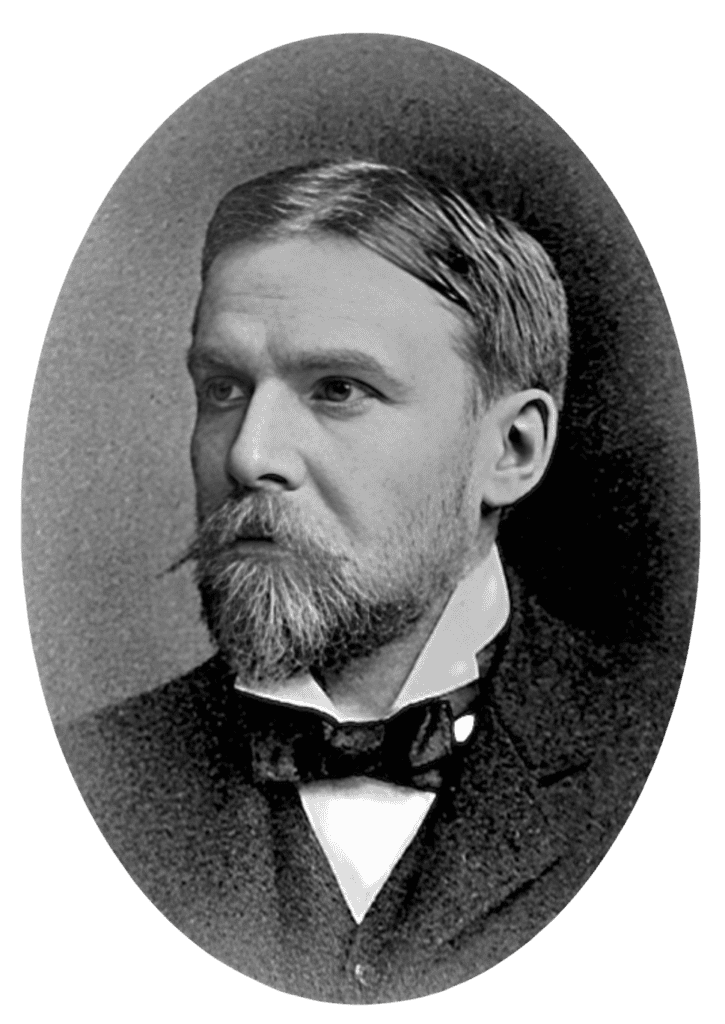
Parkyn approached the problem as a physician and investigator rather than as a purely theoretical writer. His conclusions emerged from an unusually large body of clinical and experimental work conducted first in Toronto and later in Minneapolis with Dr. W. X. Sudduth. Instead of assuming that the depth of hypnotic sleep determined the effectiveness of treatment, Parkyn compared what actually happened across hundreds and eventually more than a thousand demonstrations and cases. The accumulating evidence led him to a conclusion that fundamentally changed his understanding of the field. Hypnotic sleep was not the therapeutic agent. Suggestion was. Once Parkyn established that distinction, the elaborate effort to produce hypnosis could be discarded and suggestion could be applied directly to a person who remained awake.
This was the point at which suggestion broke free from hypnotism. Dr. Herbert A. Parkyn found through years of clinical work that hypnotic sleep was unnecessary for suggestion to produce a response. The patient could remain awake, understand the procedure, cooperate with the practitioner, and respond to ideas presented under favorable mental conditions. This discovery changed the direction of Suggestive Therapeutics. The central question was no longer how deeply a person could be hypnotized, but how an idea could be effectively impressed upon the waking mind. From that shift came Parkyn’s suggestive condition and the system he would develop around the laws governing suggestion, habit, voluntary and involuntary mental activity, and eventually Auto-Suggestion.
What Did Parkyn Learn from Hundreds of Cases in Toronto?
Parkyn began investigating hypnotism and suggestion during his early medical work in Toronto. Between 1892 and 1894, he accumulated experience with 243 cases, giving him a large body of clinical evidence at a time when hypnotism was still surrounded by competing theories and spectacular claims. Working case after case allowed him to compare the apparent depth of hypnosis with the responses that followed the suggestions being given. He could observe patients who entered pronounced hypnotic states, patients who showed much lighter effects, and patients whose responses did not fit the assumptions commonly made about hypnotic depth.
The comparisons steadily weakened the idea that hypnotic sleep itself was responsible for the therapeutic result. Deep hypnosis certainly looked impressive. A patient who appeared asleep or disconnected from the surroundings seemed to provide visible proof that the operator had produced a powerful condition. Yet outward depth did not reliably determine the effectiveness of the suggestion. Patients who did not enter profound hypnosis could still respond, while dramatic hypnotic effects did not guarantee a better therapeutic result. Parkyn began separating the spectacle of hypnosis from the process that mattered clinically. The suggestion itself was proving more important than the sleep that accompanied it.
What Did Parkyn and W. X. Sudduth Discover in Minneapolis?
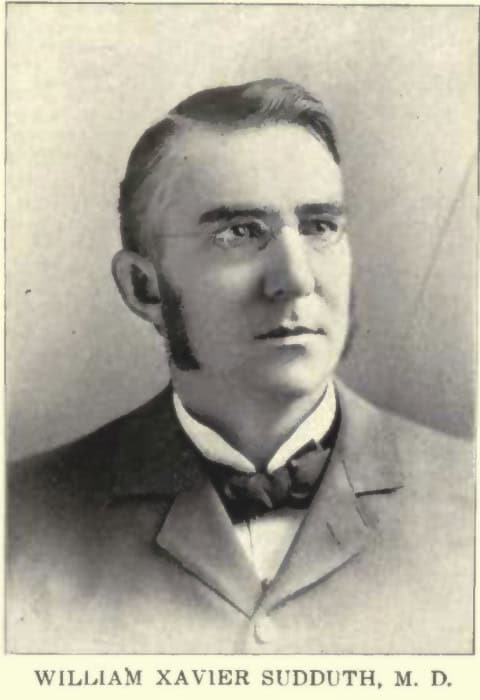
Parkyn gained a much larger field for testing these conclusions when he went to Minneapolis and worked with Dr. W. X. Sudduth at the University of Minnesota during 1894 and 1895. Their public clinics produced more than a thousand demonstrations, allowing Parkyn to examine the relationship between hypnosis and suggestion repeatedly under practical conditions. The scale mattered. What had first appeared across hundreds of Toronto cases could now be tested through another extensive series of demonstrations.
The Minneapolis work allowed Parkyn to separate the production of hypnosis from the response to suggestion with increasing confidence. If hypnotic sleep were the active therapeutic agent, deeper and more successful hypnosis should have produced correspondingly stronger results. His observations did not support that relationship. What consistently mattered was the suggestion given to the subject. Hypnosis could accompany the process, but it was not required to make the suggestion effective.
This carried the work of the Nancy School to a decisive new point. Liébeault and Bernheim had placed suggestion at the center of hypnotic phenomena. Parkyn’s clinical experience showed that suggestion could be separated from hypnosis itself. Once that distinction became clear, inducing sleep no longer had a necessary place in the procedure. The practitioner could concentrate directly on the conditions that allowed an idea to make a strong impression.
Why Did Parkyn Abandon Hypnotic Sleep?
Parkyn’s conclusion followed directly from what he had observed. If suggestion produced the response, putting the patient to sleep added a step that was not required. He could work with the patient awake and direct his attention toward the idea being introduced. The patient could hear it consciously, understand its purpose, and participate in the treatment without surrendering awareness or control.
This also stripped away much of the mystery attached to the hypnotic operator. The therapeutic effect did not depend upon an unusual force passing from practitioner to patient or upon the operator gaining control of another person’s mind. The important elements were found in the way an idea was presented, received, and acted upon. Attention, expectation, confidence, concentration, repetition, and other mental conditions could increase its effectiveness while the patient remained fully conscious.
Waking suggestion also answered one of the largest problems facing hypnotism in the 1890s. Stage performances, sensational newspaper stories, fears of hypnotic crime, and the cultural image of Svengali had taught the public to associate hypnosis with domination and loss of will. Parkyn could remove that fear from the treatment itself. The patient did not have to submit to hypnotic sleep in order to receive the benefits of Suggestive Therapeutics.
What Was Parkyn’s “Suggestive Condition”?
Parkyn’s rejection of hypnotic sleep did not mean that every suggestion had equal force. He found that certain circumstances made a person more receptive to an idea, and he described this favorable mental state as the suggestive condition. Focused attention could strengthen an impression. Confidence in the practitioner could help establish expectation. Repetition could reinforce an idea, while competing thoughts or doubts could weaken its effect. The practitioner now worked to create favorable conditions for suggestion without trying to produce hypnosis.
The suggestive condition gave Parkyn a way to explain why waking suggestion could be powerful while remaining part of ordinary mental life. A patient listening closely to a trusted physician could enter a favorable condition for therapeutic suggestion. Strong expectation could increase responsiveness. Fear could make a threatening idea unusually powerful. Concentrated attention could temporarily push competing ideas aside. These were recognizable mental experiences, and none required hypnotic sleep.
This concept greatly expanded the field because the conditions that strengthened suggestion were present far outside the clinic. People continually encountered ideas under conditions of trust, authority, expectation, fear, concentrated attention, and repetition. Parkyn’s discovery opened the way to studying those situations through the same Law of Suggestion. The implications would later reach education, personal development, business, advertising, and Auto-Suggestion, but the first task was to establish waking Suggestive Therapeutics as a systematic practice.
How Did Parkyn Turn Waking Suggestion into a Medical System?
Parkyn organized his findings into a method that physicians and students could learn and reproduce. Suggestive Therapeutics no longer depended on a practitioner’s ability to produce impressive hypnotic phenomena. Students could study the conditions governing suggestion, observe patients clinically, learn how ideas were presented and reinforced, and examine the responses that followed. This placed the emphasis on method, observation, and instruction instead of the supposed personal powers of the operator.
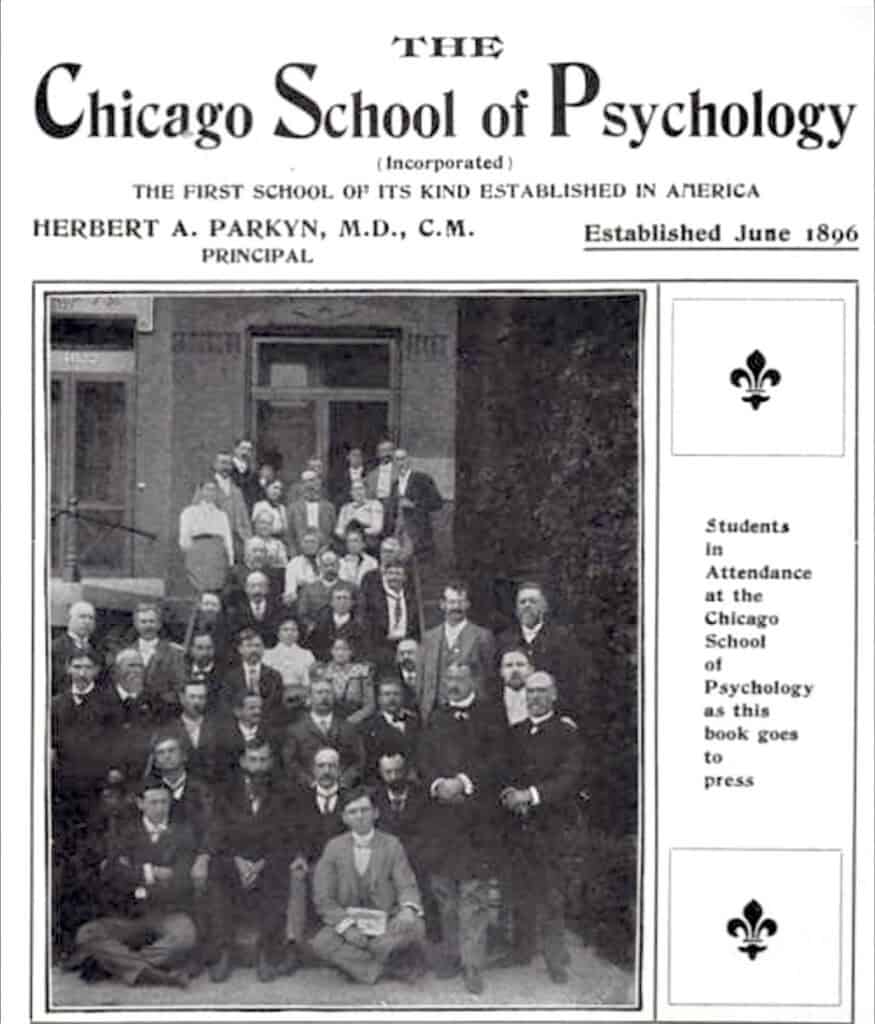
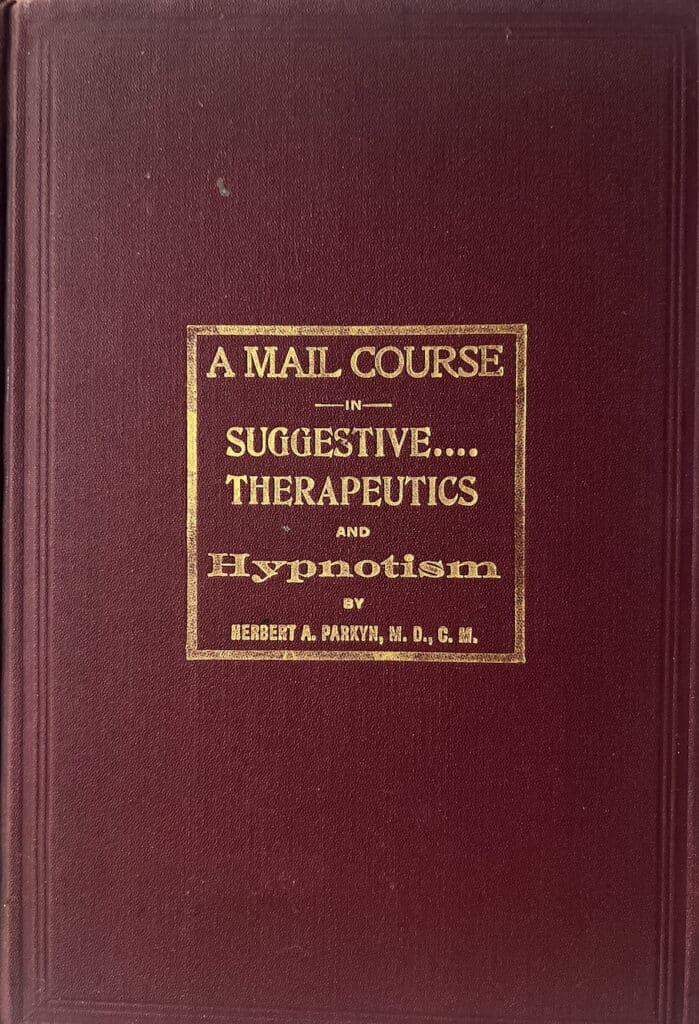
In June 1896, Parkyn founded the Chicago School of Psychology at 4000 Cottage Grove Avenue in Chicago. The school became the main institutional center for his system, combining lectures with clinical demonstrations and free clinics where students could observe Suggestive Therapeutics in practice. Parkyn later extended the instruction through his Special Mail Course in Hypnotism and Suggestive Therapeutics, allowing the methods developed through his clinical work to reach students far beyond Chicago.
The importance of Parkyn’s work rested on a simple change with enormous consequences. Suggestion no longer belonged to hypnosis. It could be studied and applied while a person was awake, aware, and participating in the process. Once that barrier fell, Suggestive Therapeutics had room to develop into a much larger study of how ideas influence human thought, habit, and action.
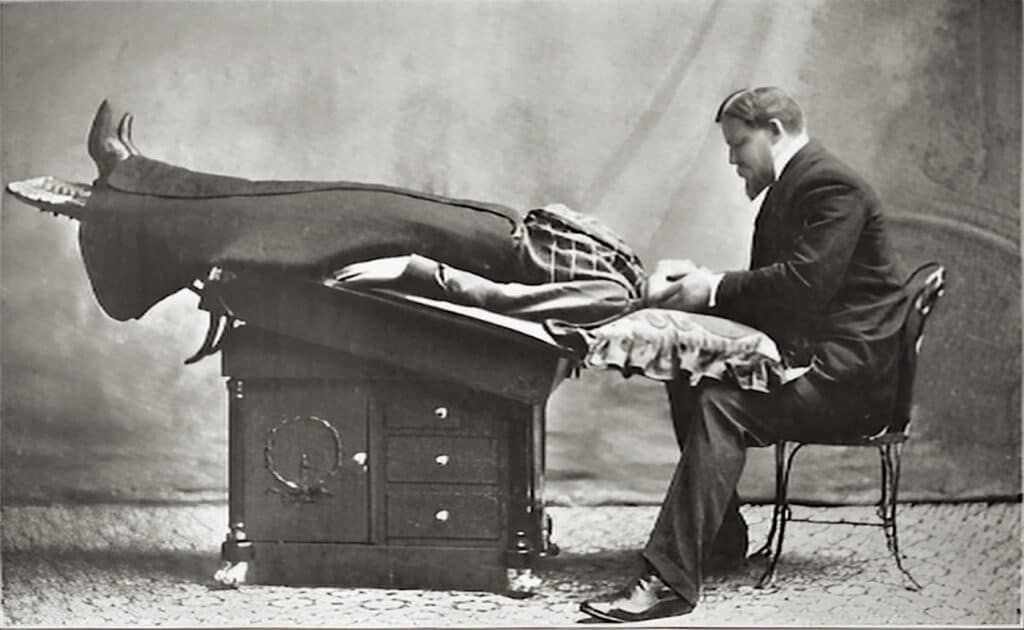
From Hypnotism to Suggestion
The Chicago School gave Parkyn a platform from which to redefine the field publicly. Instead of training students merely to become hypnotists, the school increasingly taught the principles governing suggestion, attention, mental response, habit, and therapeutic influence. This change can be followed through the publications that developed around the school. Hypnotic Magazine appeared in 1896, followed by the Journal of Medical Hypnotism in 1898. Suggestive Therapeutics appeared in June 1898, placing the operative principle rather than the hypnotic state in the title, and by August the school’s broader publication was simply Suggestion. The progression from hypnotism to Suggestive Therapeutics to Suggestion reflected Parkyn’s expanding conception of the subject: hypnotism was only one way of concentrating the Law of Suggestion, while the law itself operated continuously in health, habit, education, personal influence, mental development, and ordinary life.
Why Did Parkyn Move Away from the Word “Hypnotism”?
For Parkyn, hypnotism placed the emphasis in the wrong place. Scientifically, it focused attention upon sleep or a supposedly unique hypnotic state when the important factor was the increased power of suggestion. Publicly, the term had become inseparable from stage exhibitions, sensational claims, fears of mental domination, and the popular image of an all-powerful hypnotist controlling another person’s will. Parkyn’s clinical experience had led him in the opposite direction. The value of hypnosis was that it concentrated attention and increased responsiveness to suggestion, but once suggestion was recognized as the operative law, hypnotic sleep ceased to be necessary. Suggestive Therapeutics therefore described the medical method more accurately, while Suggestion eventually became the larger term because the same law extended far beyond therapeutics.
This distinction also explains why concentration, will, attention, memory, fascination, personal magnetism, habit, and related subjects became important within Parkyn’s system. These were not simply additional topics placed alongside Suggestion. They were ways in which the Law of Suggestion could be focused, strengthened, directed, resisted, remembered, or converted into action. Concentration held an idea before the mind; will directed attention; repetition strengthened the impression; memory and association allowed suggestions to be recalled; habit converted repeated suggestion and action into an increasingly automatic response; and personal influence concerned the means through which one person’s ideas impressed themselves upon another. Hypnotism therefore became only one specialized demonstration within a much larger science.
How Did Parkyn Deal with the Stage Hypnotists He Publicly Opposed?

Parkyn strongly opposed the mythology surrounding stage hypnotism, but he did not dismiss the abilities of experienced operators. What he rejected was the claim that the hypnotist possessed a mysterious magnetic force or an irresistible power capable of conquering another person’s will. Successful stage hypnotists were often doing something much more understandable: capturing attention, creating expectation, selecting unusually responsive subjects, delivering positive suggestions confidently, recognizing subtle reactions, and building one successful response upon another. Their abilities could be genuine even when their explanation of those abilities was wrong.
This distinction allowed Parkyn to separate useful experience from the theatrical theories surrounding it. An accomplished operator who had spent years observing suggestibility could understand attention, expectancy, responsiveness, confidence, resistance, and the timing of suggestions extremely well without possessing a correct psychological explanation for what he was doing. Parkyn could therefore publicly attack the false conception of hypnotic power while still recognizing that experienced operators had knowledge worth studying. The stage itself could even become evidence for the Law of Suggestion once the supposed magnetic or supernatural power of the hypnotist was removed from the explanation.
How Did the Chicago School of Psychology Help Transform Hypnotism into Suggestion?
The Chicago School of Psychology became important because it institutionalized this transformation. What had begun with the study and practice of hypnotism became a system devoted increasingly to understanding and applying the Law of Suggestion. Students could observe clinical cases, learn how suggestions were formulated and delivered, study attention and responsiveness, examine the relationship between thought and bodily action, and see how repetition, expectation, association, confidence, and habit affected results. The purpose was no longer simply to learn how to place another person into hypnosis. It was to understand the law that made hypnotism effective in the first place and then learn how to concentrate and apply that law.
Once hypnotic sleep was removed as a requirement, the field expanded enormously. Suggestion could operate through a physician’s words, a medicine, a religious healing practice, personal manner, expectation, repetition, education, advertising, habit, or the individual’s own thoughts. Parkyn’s concept of Masked Suggestion was especially important because it allowed apparently unrelated methods to be understood through the same law. Divine healing, magnetic healing, distant healing, medicines, physical treatments, and other methods could all carry suggestions that produced expectation and then auto-suggestion, even when the practitioner and patient attributed the result to an entirely different power. The external method could vary while the Law of Suggestion operating through it remained the same.
This expansion also explains why Parkyn’s physical laws of health belonged inside the same system rather than standing apart from it. Suggestion was not a substitute for the physical requirements of life. Health required sufficient food and nutrition, fresh air and deep breathing, exercise, rest and sleep, proper elimination and circulation, and sufficient water—including Parkyn’s repeated requirement of at least two quarts of fluid each day. These life essentials maintained and restored the body’s vital force, while Suggestion provided a means of directing thought, expectation, habit, and action toward their proper use. Drinking water, breathing deeply, eating correctly, exercising, and resting could themselves become repeated occasions for constructive auto-suggestion. Physical health and mental direction therefore operated together toward the same goal of health, happiness, strength, and success.
The larger importance of the Chicago School is that it brought these elements together into a practical system. Concentration, will, memory, personal magnetism, fascination, hypnotism, mental healing, physical health, habit, and self-development could all be understood as different ways of concentrating or applying the Law of Suggestion. This is the system that would subsequently spread through Parkyn’s magazines and later writings and then appear repeatedly throughout Atkinson’s work and the books issued under Yogi Ramacharaka, Theron Q. Dumont, Swami Panchadasi, and related names. The subjects could be separated into different books and presented as mental science, personal power, success, Yogi philosophy, psychic development, or occult instruction, but the structure remained centered upon the same law.
To explain how that law operated within the individual, however, Parkyn needed a psychological model of the mind itself. His answer moved beyond the common nineteenth-century division of an objective and subjective mind. Rather than treating them as two separate minds, Parkyn described one mind operating through two modes: voluntary and involuntary. The voluntary mode could reason, choose, concentrate, and direct attention; the involuntary mode carried accepted impressions into automatic mental and bodily action. That distinction became the psychological foundation for Parkyn’s laws of Suggestion, his theory of habit, his development of Auto-Suggestion, and the larger system that followed.
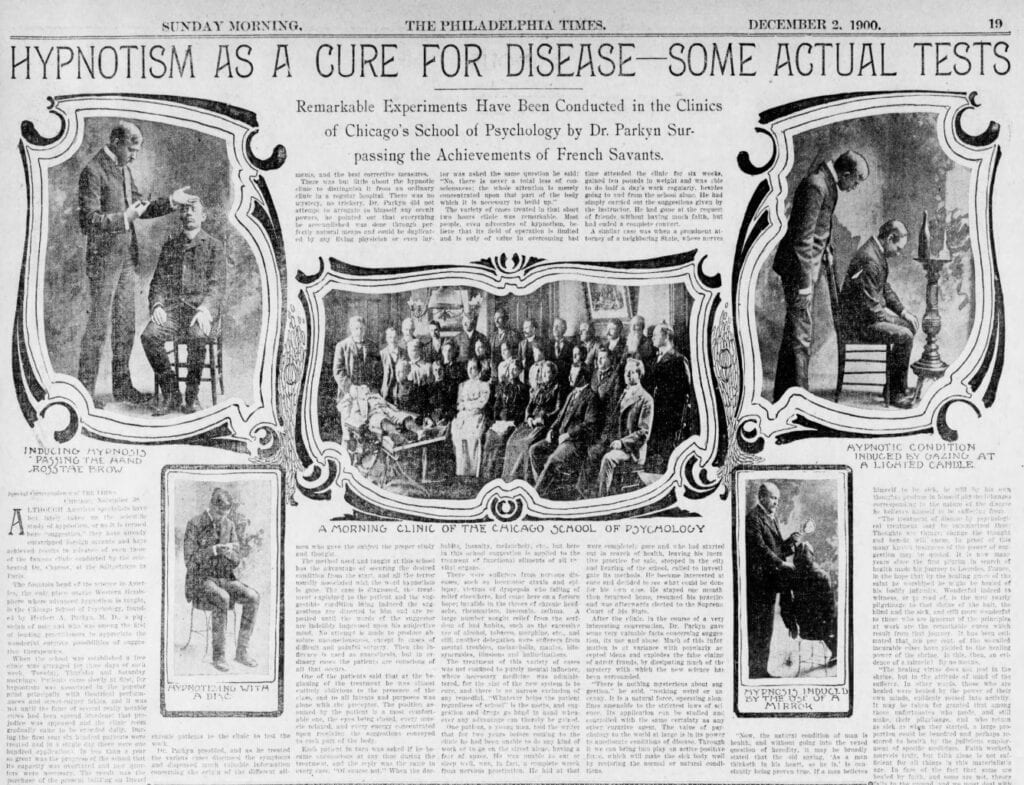
How Did Parkyn Explain What Suggestion Was Actually Doing?
Once Dr. Herbert A. Parkyn had established that suggestion could work without hypnotic sleep, he needed to explain how an idea received by a fully conscious person could pass into an automatic response. His answer was one mind operating through voluntary and involuntary modes. The voluntary mode included conscious thought, judgment, attention, choice, and deliberate action. The involuntary mode carried the habits, learned responses, associations, emotions, and automatic activities that could proceed with little conscious direction. The two were continually interacting, and activity that began voluntarily could pass into involuntary operation through repetition and practice.
Ordinary experience made the principle easy to see. A beginning pianist has to think about individual notes and movements, while an experienced pianist can play complicated passages with little attention to each movement of the fingers. Writing follows the same course. A child laboriously forms individual letters; an experienced writer directs attention to the thought being expressed while the hand performs the familiar movements automatically. Walking, speaking a language, operating machinery, and playing a sport all demonstrate the same process. Repeated practice transfers more and more of the work from conscious direction into habitual performance.
Parkyn’s formulation refined Thomson Jay Hudson’s influential distinction between the objective and subjective minds. Hudson had identified an important difference between conscious reasoning and the automatic mental activity revealed so dramatically in hypnosis, but Parkyn did not need two separate minds to explain it. One mind could act voluntarily in one instance and involuntarily in another. This gave Suggestive Therapeutics a much cleaner working model because it explained how conscious thought, repeated experience, suggestion, and habit could belong to a single continuous mental process.
How Does Suggestion Turn an Idea into a Habit?
Habit showed why this distinction mattered. The involuntary mode was being educated constantly by what a person repeatedly thought and did. A response practiced often enough became easier to perform, and familiar responses could eventually occur with little conscious preparation. Hesitation could become habitual through repeated hesitation. Continually anticipating embarrassment could make that expectation familiar. Fear, procrastination, confidence, prompt action, and countless other patterns could be strengthened by repetition until they began to feel automatic.
This gave Parkyn a explanation for changing established habits. The voluntary mind could select a different idea and begin practicing the response connected with it. The new action might initially require effort because the older pattern had already been strengthened by repetition. Continued practice gradually gave the new response the same advantage. Suggestion supplied a means of directing the idea, while action and repetition helped establish it as habit.
The importance of Suggestion now extended into character and conduct. Ideas could become habitual expectations, and habitual expectations could influence how a person responded when familiar circumstances returned. Mental education could shape these patterns deliberately. This connection between conscious direction and involuntary habit would become central to Parkyn’s later development of Auto-Suggestion.
What Were Parkyn’s Laws of Suggestion?
Parkyn organized Suggestion around laws that explained why an idea succeeded, weakened, or failed. Every suggestion entered a mind already filled with experiences, expectations, habits, beliefs, fears, associations, and other ideas. These existing mental conditions affected the response. A suggestion supported by what was already present could gain strength quickly, while a strong opposing idea could interfere with it. The same words could produce very different results in different people because the suggestion encountered a different mental history in each person.
Attention played a major role because an idea had to gain sufficient mental prominence to make an impression. Expectation could strengthen its reception, association could connect it with established ideas, and repetition could increase its familiarity. Competing thoughts could work against it. Parkyn’s system placed these relationships under identifiable laws, giving students a way to understand effects that stage operators had often learned to produce through years of experience.
One of the most useful applications was to keep attention directed toward the response being established. Continually presenting the unwanted condition could keep that very idea active in the mind. A frightened person repeatedly thinking about fear was still rehearsing fear, even when the conscious purpose was to escape it. Parkyn directed attention toward the desired response and strengthened that conception until it could compete with the established pattern.
Why Did Attention and Repetition Matter?
An established habit had the strength of its previous repetitions behind it. One contrary suggestion could rarely be expected to erase a response that had been practiced hundreds or thousands of times. Parkyn approached the problem as reeducation. The new idea needed enough repetition to acquire familiarity of its own.
Attention gave that repetition direction. Mechanical words accomplished little when the mind remained occupied elsewhere. A useful suggestion concentrated attention upon a definite conception and returned to it often enough to strengthen the impression. This favored clear, direct suggestions over unnecessarily complicated formulas.
Parkyn’s “psychic pictures” added mental imagery to the process. Fear already demonstrated how powerful internal pictures could become when a person repeatedly imagined an unwanted event. Parkyn deliberately turned the process toward the desired response, using a clear mental picture to reinforce the suggestion being established. Psychic pictures would later become an important part of his system of Auto-Suggestion.
Why Did Parkyn Say “Thought Takes Form in Action”?
Parkyn summarized the direction of his psychology with the phrase “Thought takes form in action.” The statement connected mental training with conduct. An idea could direct attention, establish an expectation, and encourage a response, but its expression came through what the person did. Repeated action then strengthened the pattern until the response became easier and increasingly habitual.
A person trying to develop decisiveness, for example, could repeat the idea of being decisive and form a clear mental picture of acting that way. The process had to continue into actual decisions. Each instance of decisive action reinforced the new pattern and gave the involuntary mode another experience from which to learn. Thought had taken form in action, and action was now helping educate future response.
This principle opened the next stage in Parkyn’s work. If voluntary thought could help educate involuntary habits, the individual could begin supplying the suggestions personally. The practitioner was no longer required to remain the source of every idea. Parkyn would develop that self-directed use of the Law of Suggestion into Auto-Suggestion.
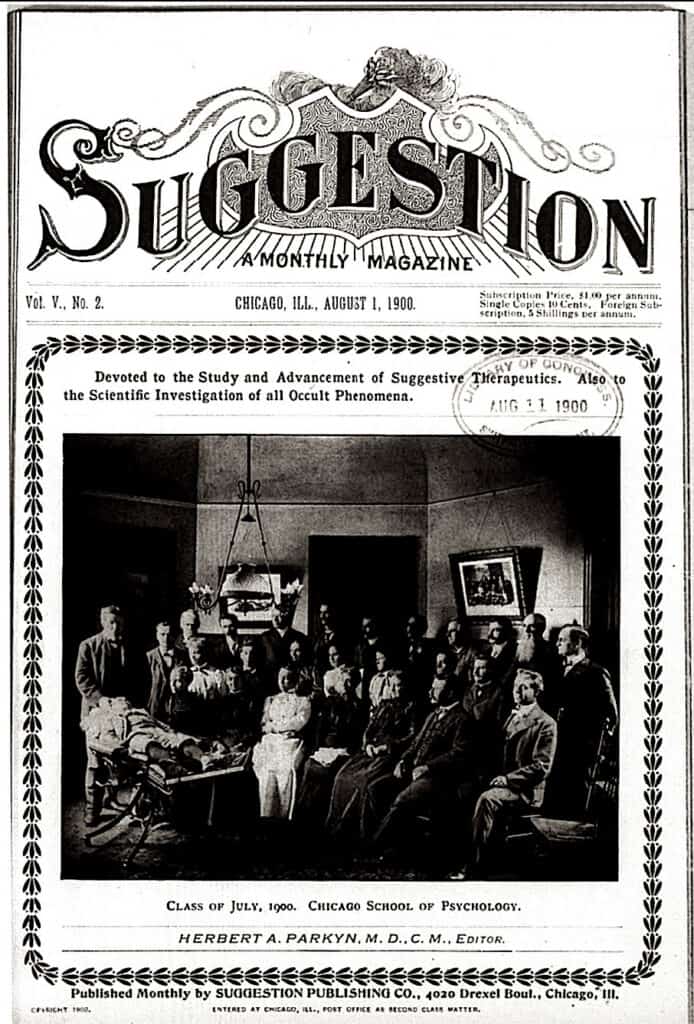
How Did Parkyn’s Theory Make Auto-Suggestion Possible?

Once Parkyn had established that one mind operated through voluntary and involuntary modes, Auto-Suggestion became the next step in his system. If suggestions from another person could influence involuntary activity, the individual could learn to direct the same process personally. A desired idea could be selected voluntarily, held before the attention, repeated, strengthened through mental imagery, and expressed through action until the new response became more familiar and habitual.
This marked another major change in the history of suggestion. Mesmer had placed the source of influence in the magnetizer. Braid moved the explanation toward processes occurring within the subject. Nancy identified suggestion as the active force within hypnotic phenomena. Herbert A. Parkyn removed the requirement of hypnotic sleep and developed waking Suggestion. Auto-Suggestion then placed the directing process in the hands of the individual. The person could consciously participate in shaping habits and responses that had previously developed with little deliberate direction.
Parkyn developed Auto-Suggestion into a system of self-direction, with methods for choosing the desired response, concentrating upon it, repeating the suggestion, creating a clear mental picture, and reinforcing the new pattern through action. This work established the blueprint that Émile Coué would later follow and popularize internationally under the same name.
How Did Parkyn Teach People to Give Suggestions to Themselves?
Parkyn began with the response a person wanted to establish. Continually thinking about the unwanted condition kept attention fixed upon the very idea the person hoped to remove. Someone trying to overcome fear gained little by repeatedly rehearsing frightening possibilities. Someone trying to develop confidence could not spend most of the time mentally practicing failure. The first task was to decide what should replace the old pattern and give that new conception a definite place in thought.
The suggestion itself needed to be clear enough to hold attention and easy enough to repeat. Repetition gave the new idea familiarity, while concentration prevented the exercise from becoming a string of empty words. Parkyn also used mental imagery, which he called “psychic pictures,” to make the desired response more vivid. The individual could picture performing the action successfully, experiencing the desired condition, or responding in the manner being cultivated. Words stated the direction; the psychic picture gave it form.
Action completed the process. When circumstances provided an opportunity to perform the desired behavior, the person acted in accordance with the suggestion. Each performance reinforced what had been mentally rehearsed and supplied another experience supporting the new habit. Auto-Suggestion worked as a continuous exchange between deliberate thought and conduct, with repeated action gradually making the desired response easier to perform.
Why Were “I Can and I Will” and “Do It Now” More Than Slogans?
Parkyn’s short formulas condensed this system into language that could be remembered and used immediately. “I Can and I Will” joined capability with intention. “I Can” established the expectation that the desired action was possible. “I Will” turned possibility into a decision to act. The formula gave the mind a direct statement of capability and purpose without repeatedly rehearsing inability, doubt, or failure.
“Do It Now” carried the process into conduct. Good intentions could become another form of postponement if the individual continually planned to act at some future time. Delay also practiced delay. Parkyn’s instruction shortened the distance between decision and execution by calling for action when the opportunity appeared.
The formulas fit directly with his statement that “Thought takes form in action.” “I Can” established capability, “I Will” supplied intention, and “Do It Now” demanded execution. Repeated action then helped establish the habit. Parkyn’s slogans were compact working instructions for the psychology he had developed, designed to move the individual from a selected thought into a corresponding response.
How Did Parkyn Use the Phonograph for Auto-Suggestion?
Parkyn also saw that recorded sound could extend Auto-Suggestion into the home. He recorded suggestions on the phonograph so people could listen to the same carefully prepared statements repeatedly without requiring the practitioner to be physically present. The recording preserved the suggestion and made regular repetition part of an individual’s daily routine.
This was a remarkably early use of recorded media for systematic self-development. The same basic method later appeared through self-improvement records, motivational recordings, cassette programs, guided visualization, self-hypnosis audio, affirmation tracks, meditation recordings, and digital applications. A smartphone can now perform instantly what Parkyn was attempting with the phonograph: deliver selected spoken suggestions repeatedly, privately, and wherever the listener chooses to use them.
Why Were Health, Happiness, and Success Central to Parkyn’s System?
“Health, Happiness, and Success” expressed the range Parkyn gave to Auto-Suggestion and mental training. Health connected the work with Suggestive Therapeutics and his medical practice. Happiness applied the same principles to emotional life and mental attitude. Success carried them into confidence, determination, efficiency, ambition, business, and personal achievement. Together they described a program concerned with how people lived and acted each day.
The phrase also shows how far Parkyn’s work had traveled from hypnotism. Auto-Suggestion could be used by an awake individual pursuing ordinary goals without entering a hypnotic state or receiving treatment from an operator. Habits affecting health could be addressed through mental training. Discouragement and fear could be met with new patterns of thought and conduct. Confidence, persistence, and prompt action could be deliberately cultivated. The Law of Suggestion had become a method of self-education.
These ideas also connected Parkyn’s work with the developing New Thought movement, where questions of health, happiness, prosperity, personal power, and mental development were attracting a large American audience. Parkyn approached these goals through the natural laws of Suggestion and habit that he had developed through his clinical and educational work. The system taught people to understand how their habitual patterns had been formed and then use the same mental laws deliberately to establish new ones.
“Health, Happiness, and Success” would later become important to the history of Émile Coué. Parkyn had already made the phrase central to his system before Coué became internationally famous for Auto-Suggestion and adopted “Health, Success, and Happiness” as his own formulation. The similarity extended well beyond the slogan. Coué’s later system followed the blueprint Parkyn had already established, making the relationship between the two men the next major chapter in the history of Auto-Suggestion.


Why Was Parkyn’s Book Auto-Suggestion a Blueprint for the Movement That Followed?
Parkyn eventually brought the system he had developed through clinical work, teaching, and experimentation together under the title Auto-Suggestion. The importance of the book came from the complete method it presented. Waking Suggestion, voluntary and involuntary mental activity, habit formation, repeated formulas, concentrated attention, psychic pictures, expectation, and action were brought into a single program that individuals could practice for themselves. Parkyn had moved step by step from investigating the effects of suggestion upon a patient to teaching people how to direct the same laws within their own mental lives.
The method followed a clear sequence. The individual selected the thought or response to be established, concentrated attention upon it, repeated it consistently, and reinforced it with a vivid psychic picture. Attention was kept away from continually rehearsing the opposing condition, while opportunities to put the new response into action were used to strengthen it. Repeated conduct helped turn the consciously selected response into habit. Auto-Suggestion gave the individual a method for participating in the education of the involuntary mode instead of depending upon an outside operator to supply the directing ideas.
Parkyn’s familiar formulas gave the system a language that could be carried into everyday life. “I Can and I Will” joined capability with intention. “Do It Now” moved intention immediately toward conduct. “Thought takes form in action” described the relationship between the mental conception and its physical expression. “Health, Happiness, and Success” defined the principal aims toward which the method could be directed. His psychic pictures added deliberate visualization, and his use of phonograph recordings allowed prepared suggestions to be repeated in the home. The major components later associated with popular self-suggestion were already assembled within Parkyn’s system.
Parkyn’s Auto-Suggestion became the blueprint for the form of self-suggestion that would soon reach an international audience. Later teachers changed formulas, simplified parts of the method, and introduced it to new audiences, but the structure Parkyn had developed was already in place. The individual selected the idea, repeated it, strengthened it mentally, directed expectation toward the desired response, and reinforced it through practice until it became habitual.
The most famous later example was Émile Coué. He became internationally identified with Auto-Suggestion and was widely presented as the leading figure behind the method, yet his system followed the path Parkyn had established years earlier. The similarities extended beyond the general practice of self-suggestion. Parkyn’s Auto-Suggestion, his use of repeated formulas, his emphasis on habit and involuntary response, his “Health, Happiness, and Success” formulation, and his teaching that “Thought takes form in action” all preceded the corresponding elements that appeared in Coué’s presentation. The relationship between the two systems provides one of the clearest examples of Parkyn’s influence continuing under the name of a later and far more widely publicized teacher.
How Did Émile Coué Repackage Parkyn’s System of Auto-Suggestion?

By the time Émile Coué became internationally famous for Auto-Suggestion in the early 1920s, Dr. Herbert A. Parkyn had already spent more than two decades developing, teaching, publishing, and applying the system Coué would later popularize. Parkyn had built upon the work of the Nancy School and carried it into new territory. Nancy had established suggestion as the active principle within hypnotism. Parkyn demonstrated that hypnotic sleep was unnecessary, developed waking Suggestive Therapeutics, explained mental activity through voluntary and involuntary modes, connected repeated suggestion with habit formation, and developed Auto-Suggestion as a systematic method of self-direction. His system included verbal formulas, psychic pictures, deliberate changes in habitual thought and behavior, and recorded phonograph suggestions that could be used repeatedly in the home. Coué’s later method followed this framework so closely that his contribution is best understood as the international repackaging and popularization of Parkyn’s Auto-Suggestion.
The chronology makes the relationship clear. Parkyn was developing and teaching Auto-Suggestion through the Chicago School of Psychology and his surrounding educational network beginning in the late 1890s, more than twenty years before the Coué craze swept Europe and America. His method taught people to select the ideas they wanted to establish, concentrate upon them, use repetition and mental imagery to strengthen them, replace undesirable habits with desired responses, and reinforce the new pattern through action. Auto-Suggestion placed the individual in control of the process. The person learned to apply the Law of Suggestion to his own involuntary mental activity without depending upon a hypnotist.
Coué later carried this same structure to an enormous popular audience. Newspapers followed his demonstrations, crowds gathered to see him, his formula became internationally famous, and Auto-Suggestion turned into a cultural craze. Millions of people who had never studied Suggestive Therapeutics could understand a method based upon repeating a simple formula every day. Coué’s genius lay in making the system easy to learn, easy to remember, and easy to spread. The methods he popularized, however, had already been developed within Parkyn’s work.
How Similar Were Parkyn’s and Coué’s Methods?
The similarities extended through the central features of both systems. Parkyn and Coué taught the deliberate repetition of selected ideas to influence involuntary mental and physical responses. Regular practice gave those ideas familiarity and strength. Expectation played an important role, and concise formulas allowed the desired thought to be repeated without lengthy analysis. Attention was directed toward the condition to be established, while continual rehearsal of the unwanted condition was discouraged. Both applied Auto-Suggestion to health, emotional well-being, personal improvement, and everyday life.
Parkyn had already placed these practices within a detailed psychology explaining how the process worked. His voluntary and involuntary modes showed how conscious direction could educate automatic response. His treatment of habit explained why repetition mattered. Psychic pictures supplied the visual component, while “Thought takes form in action” connected the mental conception with conduct. “I Can and I Will” joined capability with determination, and “Do It Now” carried intention into immediate action. These parts worked together as a system for turning consciously selected ideas into habitual responses.
Coué stripped much of that structure down to a simple daily practice that could be taught almost immediately. This simplicity was one of the reasons his version spread so rapidly. People did not have to study Parkyn’s psychology of voluntary and involuntary activity or understand the laws of Suggestion before beginning. They needed only a memorable formula and instructions for repeating it. Coué made Auto-Suggestion accessible to a mass audience, while the system behind his method had already been established by Parkyn.
Did Coué’s Famous Formula Come from Parkyn’s Earlier Auto-Suggestion?
The connection becomes especially striking in their formulas. Coué became famous for “Day by day, in every way, I am getting better and better,” one of the best-known affirmations of the twentieth century. Parkyn had already taught the closely corresponding formula, “Every day I am growing better, brighter, and happier.” Both were daily statements of progressive personal improvement created for repeated self-suggestion.
Coué’s formula condensed and reworded the same type of statement Parkyn had already incorporated into Auto-Suggestion. This similarity forms part of a much larger pattern. Coué used the same name for the practice, relied upon repeated verbal formulas, sought to influence involuntary processes, applied the method to health and personal improvement, and followed a system Parkyn had been teaching for years. Coué also adopted Parkyn’s “Health, Happiness, and Success,” changing the order to “Health, Success, and Happiness.” The repeated correspondence in method, terminology, formulas, and slogans makes the relationship between the two systems difficult to separate.
Why Did Coué Have People Repeat the Formula Again and Again?
Coué made repetition the centerpiece of his popular method. His followers repeated the formula regularly without stopping after every statement to test or debate it. The exercise kept returning the same idea to the mind until the practice itself became familiar. This followed the connection Parkyn had already established between repeated suggestion, involuntary response, and habit.
The famous “Coué beads” made the practice visible and easy to follow. A string of knots or beads allowed users to count each repetition and establish a regular daily routine. No hypnotist was needed. There was no complicated induction and no lengthy course of psychological instruction. Anyone could learn the procedure and repeat the formula at home.
That simplicity helped create the Auto-Suggestion craze of the early 1920s. Coué could explain the method quickly to a crowd, newspapers could reproduce the formula in a few lines, and readers could begin practicing immediately. His international fame brought Auto-Suggestion before millions of people and attached his name permanently to the movement. What appeared to the public as a new method was the mass popularization of a system Parkyn had already spent decades developing.
Did Coué Also Adopt Parkyn’s “Health, Happiness, and Success”?

The parallels between Parkyn and Coué extended to the promise attached to Auto-Suggestion. Parkyn had long used “Health, Happiness, and Success” to describe the aims of his system. Each word represented an area into which he had carried the Law of Suggestion. Health reflected his medical and therapeutic work, happiness covered mental and emotional life, and success carried the principles into character, efficiency, business, achievement, and personal development.
Coué later promoted his work with the strikingly similar formulation “Health, Success, and Happiness.” The same three objectives remained, with only their order changed. This correspondence sits alongside the similarity between Parkyn’s “Every day I am growing better, brighter, and happier” and Coué’s famous “Day by day, in every way, I am getting better and better.” By the time Coué became famous, Parkyn had already developed Auto-Suggestion, connected repeated formulas with involuntary response and habit, used daily improvement formulas, and placed health, happiness, and success at the center of the system.
These ideas had also circulated through Parkyn’s educational and publishing network for years. His Chicago School of Psychology, courses, periodicals, affiliated schools, students, and associated writers carried teachings on self-mastery, habit, mental imagery, personal development, health, and success to a large audience. Those teachings also entered the New Thought environment, where mental training and the deliberate direction of thought were becoming major subjects. Coué entered a field in which the principal ideas of his Auto-Suggestion method had already been developed and widely circulated.
Why Did Coué Become Famous While Parkyn’s Earlier Work Was Forgotten?
Coué arrived at an ideal moment for Auto-Suggestion to become a mass cultural phenomenon. By the early 1920s, decades of New Thought, mental healing, subconscious theories, success literature, and popular writing about the power of thought had prepared a huge audience for a simple method of self-improvement. Coué offered that audience an exercise anyone could understand in minutes. His formula was short enough for a newspaper headline, easy to memorize, and simple enough to begin practicing immediately.
His visits to the United States turned Auto-Suggestion into a national craze. Newspapers followed his demonstrations, his formula appeared in cartoons and popular commentary, and people began repeating it at home, before mirrors, and with strings of beads used to count repetitions. Coué became a celebrity, and his name became attached to Auto-Suggestion in the public imagination. A psychological method that had developed through specialized schools, clinical work, courses, and publications was suddenly part of everyday popular culture.
Herbert A. Parkyn had developed his system under very different conditions. His work came through medicine, clinical experimentation, Suggestive Therapeutics, formal instruction, correspondence courses, and the institutional network he built in Chicago. It contained a detailed psychology of voluntary and involuntary activity, habit, attention, imagery, action, and self-direction. Coué reduced the practice to its simplest popular form and reached an international audience at exactly the moment mass media could turn a memorable formula into a sensation.
Celebrity then reshaped the history. Once Coué became internationally synonymous with Auto-Suggestion, later accounts increasingly began the story with the man who had made it famous instead of tracing the method back through the work that had produced it. Parkyn’s role faded while Coué’s remained attached to the practice itself. The popularizer became remembered as the pioneer.
Why Did Parkyn Reject the Idea That Coué Had Discovered Something New?
Parkyn had spent decades studying the same phenomena that were being presented to the public as evidence of Coué’s new method. He had already developed Auto-Suggestion, studied differences in suggestibility, taught the relationship between repeated ideas and involuntary response, and observed large numbers of subjects through his clinical and educational work. When the Coué phenomenon arrived, Parkyn recognized both the method and the type of people producing its most spectacular results.
He drew attention to a class of exceptionally responsive subjects he called suggestible somnambules. These individuals could accept suggestions rapidly and display dramatic reactions, making them especially impressive during public demonstrations. In a large gathering, a person who responded immediately, discarded a crutch, announced sudden relief, or showed another conspicuous change naturally became the example everyone remembered. Such cases helped create the impression that Coué possessed a new method capable of producing extraordinary results almost on command.
Parkyn’s experience led him to a different explanation. Human responsiveness to suggestion varied greatly, and the most dramatic subjects represented an unusually receptive class he had identified and studied years earlier. Their reactions demonstrated how powerful suggestion could become in highly responsive individuals, but they did not establish that every person would react to the same formula with equal speed or intensity. Coué’s demonstrations were presenting an old phenomenon to a new mass audience, and the spectacular suggestible somnambule supplied the performances that helped turn Auto-Suggestion into an international sensation.
What Was Parkyn’s “Suggestible Somnambule”?

The suggestible somnambule was central to Parkyn’s explanation of the spectacular responses associated with hypnotism and public demonstrations. These were exceptionally receptive individuals who could accept suggestions quickly and produce unusually complete responses. In the hands of an experienced operator, a suggestible somnambule could make hypnotism appear almost limitless. A command was given and an extraordinary response followed, leaving the audience with the impression that the operator possessed an unusual power over another person’s mind.
Parkyn’s experience with stage hypnotists had taught him to look closely at the subject producing the response. Skilled performers knew how to find the best subjects in a crowd, whether or not they explained their technique in psychological terms. Once a highly responsive person had been identified, increasingly dramatic suggestions could be built upon the successful responses that came before them. The audience saw the command and its effect. Parkyn saw the crucial role played by the suggestibility of the person selected.
He applied the same explanation to the most dramatic demonstrations associated with Émile Coué. In a large gathering, the people who responded rapidly became the memorable examples. A person who suddenly announced an improvement or cast aside a crutch could dominate the audience’s impression of the entire event, while slower responses and failures naturally received less attention. Parkyn believed Coué’s spectacular cases reflected the exceptional responsiveness of suggestible somnambules he had studied long before the Auto-Suggestion craze.
What Did Parkyn Say About Coué’s Success in 1923?
Parkyn addressed Coué publicly in 1923 during a nationally broadcast radio appearance. By then Coué was an international celebrity and his demonstrations were widely reported as evidence of the remarkable power of Auto-Suggestion. Parkyn recognized the phenomena immediately. He explained Coué’s apparent wonders through the same principles of suggestion and suggestibility he had developed through decades of clinical work, demonstrations, and teaching.
The suggestible somnambule was the key to his criticism. A dramatic response before an excited audience could be genuine and still give a misleading impression of what the method would accomplish with the average person. Parkyn had observed enough subjects to know how widely responsiveness varied. The highly suggestible individual could respond almost immediately, while another person receiving the same suggestion might show a much weaker effect. Coué’s most impressive demonstrations highlighted the exceptional subject and made that response appear representative of Auto-Suggestion itself.
Parkyn also drew an important line between such compliance and the self-mastery he intended Auto-Suggestion to develop. His system taught individuals to understand the Law of Suggestion and consciously direct their own habits and responses. The goal was personal command of the process. A suggestible somnambule responding dramatically to Coué before an audience demonstrated exceptional receptivity to another person’s influence; Parkyn’s Auto-Suggestion taught the individual how to become the deliberate director of his own mental education.
How Did Auto-Suggestion Become a Worldwide Self-Help Method?
Coué’s international fame gave Auto-Suggestion a level of public exposure it had never received through the earlier schools of hypnotism and Suggestive Therapeutics. His simple formula made the practice immediately understandable. People did not need to study the psychology of voluntary and involuntary activity, attend a clinic, learn hypnotic techniques, or complete a course of instruction. They could select a formula, repeat it every day, and begin experimenting with self-suggestion at home.
That simplicity carried Auto-Suggestion into popular culture. Newspapers could explain it in a few sentences, demonstrations could introduce it to entire audiences at once, and readers could begin practicing as soon as they learned the formula. The idea that ordinary people could deliberately use repeated thoughts to influence their health, feelings, habits, and behavior reached an international audience and became part of the developing culture of self-improvement.
Coué’s success also helped separate Auto-Suggestion from the old image of the hypnotist. The commanding operator, mysterious trance, and theatrical performance could disappear from the practice entirely. The individual became both the source and recipient of the suggestion. This helped prepare the way for the enormous twentieth-century self-help movement, where Auto-Suggestion would continue under new names and increasingly lose its visible connection to the history of hypnotism and Suggestive Therapeutics.

This simplified structure became one of the foundations of twentieth-century self-help. The terminology changed repeatedly, but the method remained recognizable. Auto-Suggestion became affirmation. Psychic pictures became visualization. The education of involuntary habit became the programming or reprogramming of the subconscious mind. Repeated formulas became positive declarations, success statements, written goals, morning affirmations, recorded messages, and eventually digital audio programs. “Thought takes form in action” would reappear in countless variations asserting that repeated thought shapes behavior and that mental rehearsal prepares the individual for physical performance.
Coué’s importance should not be minimized simply because his system followed Parkyn’s earlier work. His achievement was enormous as a popularizer. He helped turn Auto-Suggestion into an international movement and demonstrated how readily a simplified method of self-directed mental training could spread through mass media. What needs to be corrected is the historical assumption that this popularity marked the origin of the system itself. Parkyn’s work shows that the essential method, terminology, theory, formulas, practical objectives, and applications had already been developed within the American science of Suggestion long before the Coué craze.
The distinction between development and popularization is essential to the history. Parkyn developed Auto-Suggestion from his earlier work in Suggestive Therapeutics and built it into a comprehensive system of self-directed mental training. Coué later simplified, repackaged, and popularized that system on an international scale. The extraordinary success of the latter helped obscure the chronology of the former, but it also ensured that the central principle Parkyn had developed would become one of the most influential ideas in modern self-help.
By the time the Coué craze swept America, however, the Law of Suggestion had already traveled much farther than Auto-Suggestion alone. Parkyn and the network surrounding his Chicago institutions had been carrying it directly into New Thought, where they challenged the supernatural explanations of Christian Science and presented Suggestion instead as a universal law of nature. At the same time, the same principles were being applied to personal success, salesmanship, business, and advertising. The next transformation would make Suggestion not simply a method for changing oneself, but a general explanation for how ideas shaped modern life.
How Did the Law of Suggestion Become Central to New Thought?
By the beginning of the twentieth century, the Law of Suggestion was moving well beyond medicine and hypnotism. The developing New Thought movement had created an enormous audience for teachings about mental healing, the power of thought, belief, expectation, and the influence of mental attitude upon health and human experience. Yet the question of how these effects occurred remained unsettled. Different schools offered different religious, metaphysical, and psychological explanations for similar phenomena. Dr. Herbert A. Parkyn brought a different answer into this debate. The same Law of Suggestion he had developed through clinical work could explain how belief, expectation, fear, confidence, repeated thought, and the authority of the healer produced real mental and physical responses.
This gave New Thought a natural law through which many of its central subjects could be understood. Suggestion did not belong to a religion or depend upon acceptance of a metaphysical doctrine. A physician could use it in treating a patient, a teacher in educating a student, a speaker in influencing an audience, or an individual through Auto-Suggestion. Fear could become a suggestion, confidence could become a suggestion, and repeated thoughts could educate habits without the person recognizing the process taking place. Parkyn and the network surrounding his Chicago School of Psychology carried this explanation directly into the New Thought movement and made Suggestion a unifying law behind subjects that were often presented separately.
Why Did Parkyn Fight Christian Science?
Parkyn’s conflict with Christian Science centered on its explanation of mental healing. He accepted that Christian Science practitioners could produce results, but he rejected the claim that those results proved the supernatural or theological system used to explain them. A patient could improve because treatment created confidence, expectation, focused attention, and a powerful suggestion of recovery. The result demonstrated the effect of the mental process, not the truth of the religious doctrine attached to it.
The history of hypnotism had already supplied Parkyn with a model for making this distinction. Mesmer had produced genuine phenomena while incorrectly attributing them to animal magnetism. Stage hypnotists produced extraordinary responses and credited them to personal power or domination. In each case, the observed effect could survive after the original explanation was discarded. Parkyn applied the same reasoning to Christian Science. A cure following religious treatment could be genuine while its cause remained entirely within natural mental law.
The issue also carried medical consequences. Parkyn opposed systems that encouraged patients to interpret disease through supernatural doctrine or reject appropriate medical treatment. Suggestive Therapeutics allowed mental influence to be studied alongside medicine. Its effects could be investigated, its limitations recognized, and its methods taught without asking the patient to accept a religious explanation of illness. Parkyn’s fight with Christian Science was part of his effort to place mental healing within psychology and natural law.
How Could Suggestion Explain Different Forms of Mental Healing?
The Law of Suggestion also helped explain why healing systems with conflicting doctrines could each produce impressive testimonials. One healer might attribute recovery to divine truth, another to magnetic force, another to spiritual power, and another to mind. Their explanations differed, yet the treatments could share many of the same conditions. The patient encountered an authoritative healer, received repeated assurances of improvement, developed confidence in the treatment, focused attention upon recovery, and was encouraged to expect a change.
Parkyn’s system located the common factor in these shared conditions. A physician’s reassurance, a healer’s declaration, a religious affirmation, a hypnotic command, and a self-directed formula could all communicate suggestions. Their effects varied with the recipient’s expectations, associations, habits, attention, emotional state, and responsiveness. The words and theories could differ while the Law of Suggestion continued to operate through the ideas being impressed.
The same law could work destructively. Fearful expectations could become powerful suggestions of their own. A frightening statement delivered by an authority could intensify anxiety and direct attention toward symptoms. Continual anticipation of pain or failure could establish a mental pattern that influenced future responses. Suggestion itself carried no guarantee of a beneficial result. Its effect depended upon the ideas being impressed and the conditions under which they were received.
This natural-law explanation gave Parkyn a way to discuss mental healing without separating it from ordinary psychology. Belief, fear, confidence, expectation, and repeated thought were already part of everyday mental life. Suggestive Therapeutics studied how these forces could be directed consciously and how they could influence mental and bodily responses. That approach would help shift a large part of New Thought away from arguments over supernatural healing and toward the study of mental influence.
How Did Parkyn’s Network Carry Suggestion into New Thought?
Parkyn had built an unusually effective system for spreading these ideas by the turn of the century. His Chicago School of Psychology combined lectures with clinical instruction. Affiliated schools extended his teaching into other cities, while his Special Mail Course in Hypnotism and Suggestive Therapeutics allowed students to study the system by correspondence. Periodicals created another channel through which the laws of Suggestion could be explained, debated, and applied to subjects far outside the original medical setting. The University of Psychic Science then extended the network into mental science, personal development, psychic investigation, and the expanding New Thought world.
The changing titles of the publications surrounding Parkyn captured the transformation. Hypnotic Magazine began with the language of hypnotism. The Journal of Medical Hypnotism emphasized its medical study. Suggestive Therapeutics shifted attention toward the process producing the effects. The eventual title Suggestion placed the law itself at the center. The progression followed the development of Parkyn’s work from hypnotic phenomena toward a psychology concerned with the influence of ideas in ordinary waking life.
This network also brought people together who would carry the teaching into new fields. William Walker Atkinson became a principal lecturer at Parkyn’s University of Psychic Science and developed into one of the most prolific writers associated with New Thought and mental development. The publishing world surrounding these institutions created channels through which Suggestion could move from healing into habit, character, personal influence, success, business, psychic phenomena, and ancient philosophy. The same law could be examined from many directions without losing its central psychological principle.
Suggestion now offered New Thought something more precise than the general statement that thought possessed power. A thought repeatedly impressed could function as an Auto-Suggestion. Repeated Auto-Suggestions could influence expectation and habit. Habits could shape conduct, while conduct reinforced the patterns behind them. The Law of Suggestion supplied the connecting mechanism, giving Parkyn and his network a framework that could be carried through New Thought and soon into business, advertising, personal success, and the publishing movement that would become the Yogi Publication Society.
What Role Did William Walker Atkinson Play in Carrying Suggestion into New Thought?
William Walker Atkinson became one of the most important writers through whom the psychology of Parkyn’s network entered the New Thought movement. After coming into Parkyn’s orbit, Atkinson absorbed the system of Suggestion, voluntary and involuntary mental action, habit, concentration, mental control, and self-directed thought that had been developing through the Chicago institutions. His writing then helped translate those principles into forms suited to audiences interested not only in therapy but in personal power, mental development, success, and metaphysical philosophy.
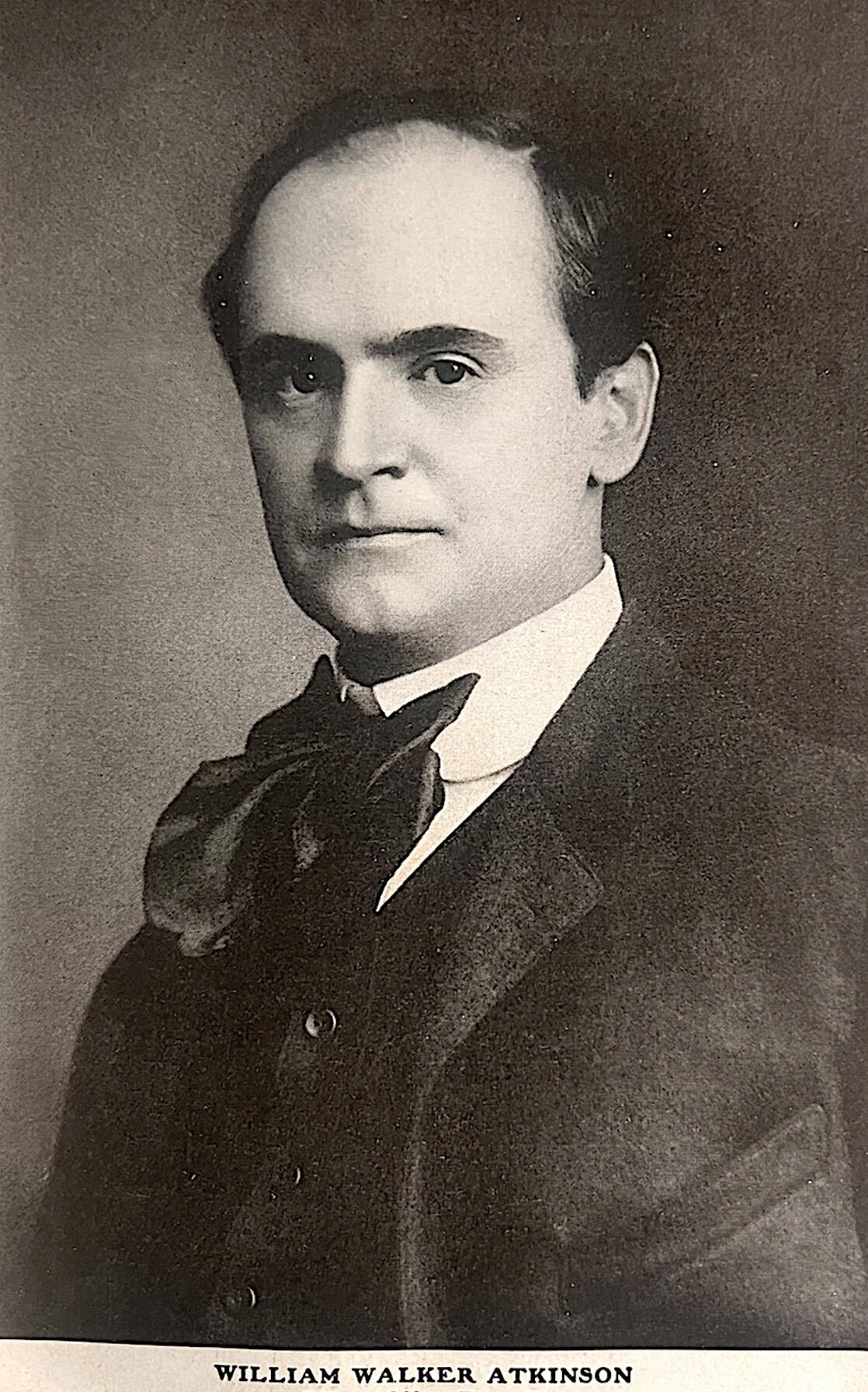
Atkinson’s 1901 Thought=Force captured the transition in its title. Thought was being presented not as passive contemplation but as something capable of producing effects. The idea followed directly along the path that Parkyn had expressed through “Thought takes form in action.” Mental force became meaningful through its ability to influence response, habit, character, and conduct. Atkinson’s later writing would carry this basic psychology into an extraordinary range of subjects, but the underlying structure remained recognizable. Control the thought, control the habitual mental response, and the resulting change eventually appears in action.
The institutional connection was equally important. Atkinson served as principal lecturer at Parkyn’s University of Psychic Science and participated directly in the educational environment growing from the Chicago School. His writing did not emerge in isolation from the development of Suggestion. It belonged to a network already attempting to extend the same mental laws into wider areas of human experience.
As that network expanded, the boundaries between Suggestive Therapeutics, New Thought, personal development, and psychic science became increasingly permeable. The same fundamental lessons could be presented through different vocabularies to readers approaching from different interests. This flexibility would eventually become crucial to the development of the Yogi Publication Society, where the network carried these mental laws into Yogi philosophy and ancient wisdom.
How Did Suggestion Change the Meaning of the “Power of Thought”?
The phrase “power of thought” could mean almost anything if no mechanism connected thought with a result. Suggestion supplied that mechanism. A thought could direct attention. Repetition could strengthen the thought. Mental imagery could make it more vivid. Expectation could prepare a corresponding response. Repeated response could establish habit. Habit could influence character and behavior. Behavior could alter circumstances. The apparently mysterious power of thought could be traced through a sequence of mental and practical effects.
This interpretation also placed limits upon the claim. A thought did not become powerful merely because it existed. A passing idea contradicted by years of habitual behavior might accomplish very little. The thought became practically important when it was impressed, reinforced, accepted, and translated into response. Parkyn’s insistence upon action was essential. “Thought takes form in action” described the completion of the process rather than promising that thought could replace effort.
The distinction became increasingly important as Suggestion moved into New Thought. Mental science could now emphasize the extraordinary importance of thought without requiring the conclusion that thought magically rearranged external reality. Change the habitual thought and the individual could change expectation. Change expectation and behavior could change. Change behavior repeatedly and circumstances could eventually change as a consequence. Suggestion offered a natural chain connecting the inner life with practical results.
How Did “Health, Happiness, and Success” Expand the Purpose of New Thought?

Parkyn’s phrase “Health, Happiness, and Success” captured how far his system had expanded beyond its medical origins. Health retained the connection with Suggestive Therapeutics, happiness carried the work into emotional life and mental attitude, and success applied it to confidence, persistence, efficiency, ambition, decision-making, personal influence, and achievement. The Law of Suggestion had developed into a system for shaping everyday thought and conduct.
This expansion also changed who had a reason to study Suggestion. Parkyn’s methods could be used by someone seeking greater confidence or trying to overcome procrastination, indecision, fear, or an expectation of failure. “I Can and I Will” supplied a direct formula for capability and determination, while “Do It Now” attacked the habit of postponing action. Students could apply the principles of concentration and habit, salesmen could study attention and influence, and business owners could use the same psychology to understand customers. Suggestion now had applications wherever ideas helped direct human behavior.
These developments helped move New Thought toward the culture of self-development that would become a major feature of the twentieth century. Health remained important, but mental training could now be directed toward confidence, emotional well-being, personal effectiveness, prosperity, and success. People could examine the ideas and expectations shaping their habits and deliberately introduce new ones through Auto-Suggestion. The emphasis shifted toward educating the individual to exercise greater direction over his own thought and conduct.
Success also carried the Law of Suggestion directly into the commercial world. The expanding economy of the late nineteenth and early twentieth centuries created intense interest in salesmanship, advertising, personal influence, efficiency, persuasion, and achievement. These subjects presented a natural field for a psychology concerned with attention, association, expectation, repetition, and action. The same principles Parkyn had studied in the clinic could now be applied to the relationship between a salesman and customer or between an advertiser and an entire market.
How Did the Law of Suggestion Transform Business and Advertising?
Advertising gave Suggestion a scale that clinical practice could never provide. A practitioner might work with one person at a time, while a newspaper, magazine, catalog, circular, sign, or direct-mail campaign could place the same carefully constructed idea before thousands of people. A national campaign could repeat a product name, slogan, image, or association across an enormous audience until it became familiar. The psychology of Suggestion had entered mass communication.
Dr. Herbert A. Parkyn recognized this potential and applied his principles directly to business and major advertising campaigns. His interest went beyond general theories of persuasion. Advertising gave him a setting in which attention had to be captured, an idea had to be remembered, associations had to be established, and the resulting impression had to lead toward a measurable response. The purchase, inquiry, subscription, or visit supplied the final evidence that the message had moved from thought into action.
Advertising also demonstrated how Suggestion could work without announcing itself as Suggestion. A consumer might encounter a product name repeatedly, associate it with a desirable quality, recognize its packaging, remember its slogan, and later feel familiar with the product when making a purchase. No formal therapeutic procedure was involved. The influence accumulated through repeated impressions encountered in ordinary life. Commercial culture gave Parkyn a vast field for studying how ideas could be planted, reinforced, associated, remembered, and acted upon.
Why Was Advertising a Form of Suggestion?
The first problem in advertising was attention. A message that nobody noticed had no opportunity to influence anyone, no matter how accurate or persuasive its contents might be. The advertiser had to make one idea stand out among countless competing impressions and give the reader something clear enough to remember. This made the construction of an advertisement a psychological problem from its opening words.
Once attention had been secured, association gave the product meaning. Repeated advertising could connect a name with comfort, strength, beauty, economy, prestige, cleanliness, security, health, or any other quality the campaign wanted consumers to remember. With enough reinforcement, the product itself could begin calling the associated idea to mind. The advertiser was building a mental connection that could survive after the reader had put down the newspaper or magazine.
Repetition strengthened that connection. An unfamiliar name seen once could easily disappear from memory, while repeated exposure created recognition and familiarity. A short slogan could become especially powerful because it was easy to remember and could carry the same central idea through an entire campaign. The advertisement did not have to explain everything on every appearance. Each encounter could reinforce an impression already established by those that came before it.
Parkyn’s principle that “Thought takes form in action” gave this process a clear commercial endpoint. Attention and association had value because the advertiser wanted the mental impression to produce conduct. The reader was expected to request information, enter a store, answer a circular, place an order, subscribe, or purchase the product. Advertising made the movement from idea to action visible and measurable.
How Did Parkyn Apply Suggestion to Major Advertising Campaigns?
Parkyn used the principles he had developed through Suggestive Therapeutics in the construction of major advertising campaigns. Here he faced a very different situation from the clinic. He could not speak personally with each member of the audience, adjust his words to an individual response, or rely upon the authority of a physician sitting directly before a patient. The advertisement itself had to capture attention, establish the desired conception, and leave an impression strong enough to survive after the reader moved on.
This placed great importance on clarity, repetition, memorable wording, and the associations surrounding the message. A complicated advertisement could lose the reader before its central idea registered. A strong phrase could remain in memory long after the rest of the copy had been forgotten. Repeated appearances could turn an unknown name into a familiar one, while consistent associations could influence what that name came to mean. Parkyn’s work in advertising showed how the principles of Suggestion could be designed into communication itself.
Mass circulation multiplied the effect. A newspaper could place the same suggestion before an entire city, while magazines and direct-mail campaigns could carry it across the country. Repetition could establish similar associations in thousands of people who never met one another yet encountered the same words, images, slogans, and appeals. The Law of Suggestion had moved from the individual encounter into the machinery of modern mass communication, opening a field that would become increasingly important as advertising developed into one of the dominant forces of twentieth-century commercial culture.


Why Was Attention the First Problem an Advertiser Had to Solve?
No commercial suggestion could exert much influence if it was never noticed. Attention became the gateway through which the rest of the advertising process had to pass. The problem was especially severe in the expanding newspaper and magazine culture of the late nineteenth and early twentieth centuries, where advertisements competed not only with one another but with headlines, illustrations, articles, entertainment, personal concerns, street signs, shop windows, and countless other demands upon consciousness.
An effective advertisement needed an immediate point of entry. A headline could create curiosity. An unusual image could interrupt ordinary scanning. A direct question could cause the reader momentarily to apply the message to himself. A striking claim could produce surprise. A familiar problem could trigger recognition. Whatever the technique, the first task was to interrupt the stream of competing impressions long enough for one particular idea to receive consideration.
Attention alone, however, was fleeting. The deeper problem was converting momentary notice into a lasting impression. This required simplicity and concentration. If the advertisement attempted to establish too many unrelated ideas simultaneously, the central suggestion could become diluted. A strong campaign repeatedly associated the product with a limited number of memorable qualities until the relationship became easy to recall. The advertiser was competing for something more valuable than physical space on a printed page. He was competing for mental space. The successful campaign occupied a small portion of the consumer’s memory and attempted to remain there until the moment when a relevant decision had to be made.
How Did Repetition Turn a Product Name into a Mental Habit?
Repetition gave advertising an advantage that a single persuasive argument could rarely equal. A consumer might ignore the first appearance of an unfamiliar name, vaguely recognize it the second time, consciously remember it after further exposure, and eventually experience it as something familiar. Nothing about the product itself necessarily changed during that process. What changed was its position within the consumer’s mind.
This made brand repetition particularly valuable. The product name, package, slogan, illustration, and principal selling idea could be presented together until they formed a connected group of associations. When one element later appeared, the others could be recalled with it. A familiar package might bring back the slogan. The slogan might evoke the promised benefit. The product name might produce a vague but influential feeling of recognition even when the consumer could no longer remember the individual advertisements that created it.
Commercial Suggestion could become cumulative. Each advertisement did not have to persuade the customer from the beginning. It could reinforce impressions established by earlier advertisements. The campaign gradually constructed a mental position that a competitor would have to overcome.
This also explains the extraordinary commercial value of the slogan. A long advertisement disappeared when the page was turned, but a short phrase could travel in memory. It could appear on signs, packaging, stationery, newspaper advertisements, circulars, and promotional material until the consumer began supplying the repetition internally simply by recognizing the brand. The suggestion had become attached to the name.
How Did Advertising Create Desire Before the Purchase?
The most effective advertising did more than describe the object being sold. It encouraged the prospective customer to imagine the experience associated with possessing or using it. An advertisement for a product promising comfort could direct attention toward the feeling of comfort. A business opportunity could be associated with independence or prosperity. A household product could be placed within an image of convenience, cleanliness, or domestic improvement. The physical object became connected with a desired future condition.
This is where mental imagery became commercially powerful. The advertiser could create a picture through an illustration, but words could perform the same function by encouraging the reader to imagine a situation. Once the prospective customer mentally placed himself inside that situation, the product was no longer merely an external object being examined. It had become part of an imagined personal experience.
The process would become one of the fundamental techniques of modern advertising. Automobiles would be sold through images of freedom and status rather than mechanical specifications alone. Travel would be sold through imagined experiences. Clothing would be connected with identity. Cosmetics would be connected with attractiveness. Financial products would be connected with security. The commercial object served as the bridge between the consumer’s present condition and the mental picture of the desired one. The eventual purchase could then appear to be the completion of an idea the advertisement had already encouraged the consumer to experience mentally. Desire had been cultivated before possession.
How Did Suggestion Become Part of Modern Salesmanship?

Salesmanship brought the Law of Suggestion into direct personal interaction. Advertising had to influence people from a distance, but a salesperson could watch the prospective buyer, discover which concerns mattered, emphasize the most relevant benefits, answer objections, reinforce favorable reactions, and adjust the presentation as the conversation developed. Sales became an ideal field for applied psychology because every response from the customer supplied information about where attention was moving and which ideas were gaining or losing strength.
Confidence played an important role in this exchange. A salesperson who appeared uncertain could communicate doubt even when the words themselves sounded persuasive. A confident presentation helped establish an expectation that the product deserved serious consideration. Demonstrations made claims tangible, testimonials supplied the experience of other customers, and guarantees reduced fears surrounding risk. Questions could be especially effective because they drew the buyer into the reasoning process. The customer identified a need, considered its consequences, examined a proposed solution, and began forming a conclusion through his own answers.
The most effective sales techniques organized attention around the decision instead of depending on force or the old mythology of irresistible mental control. The salesperson helped establish a sequence of ideas through which the proposed action became increasingly understandable and attractive. Salesmanship offered another clear example of Suggestion operating through ordinary waking mental processes.
Why Did the Mental Picture Become So Important in Sales?
A decisive moment often came when the customer began imagining ownership. The salesperson could move the prospect beyond the physical object and encourage a mental picture of using it, enjoying its benefits, solving a problem with it, or experiencing the circumstances the purchase promised to create. The future result became vivid before the transaction had occurred.
This closely paralleled Herbert A. Parkyn‘s psychic pictures. In Auto-Suggestion, the individual created a mental picture of the response he wanted to develop. Salesmanship applied the same power of imagination from outside, with the salesperson helping the customer construct the picture. Advertising could do the same thing through words and images, presenting an idealized experience and connecting that experience with a product.
Mental imagery thus linked self-development, salesmanship, and advertising through the same psychological principle. A person could picture himself acting confidently, a customer could imagine using a new product, and an advertisement could place an attractive future before thousands of readers. In each case, imagination helped make a possible experience mentally present and prepared attention for the action connected with it.
Where Is the Line Between Suggestion and Manipulation?
The commercial use of Suggestion raised an unavoidable ethical question. The ability to capture attention, create associations, establish expectations, repeat ideas, and stimulate mental pictures could help communicate a legitimate benefit, or it could be used to mislead. The Law of Suggestion itself supplied the mechanism. The purpose and honesty of the person using it determined the character of the application.
A truthful advertisement could make a genuine advantage memorable. A deceptive campaign could create impressions the product could not support. A salesperson could help a customer recognize a useful solution or exploit fear, uncertainty, status, and insecurity to produce an unnecessary purchase. Psychological skill increased the ability to influence without deciding whether that influence served the person receiving it.
This ethical problem followed directly from Parkyn’s treatment of Suggestion as a natural law. A law governing mental response carried no moral intention of its own. Knowledge of it increased human capability, placing greater responsibility on the person who understood how to use it. Suggestion could educate, encourage, heal, persuade, deceive, frighten, or manipulate according to the ideas being impressed and the purposes behind them.
Mass communication would magnify that problem enormously. Newspapers and magazines were followed by radio, motion pictures, television, and digital media, each providing new ways to repeat messages and surround products, political ideas, lifestyles, and identities with powerful associations. The questions Parkyn’s generation confronted in print advertising would become central questions of modern mass culture.
How Did Business Psychology Grow Out of the Law of Suggestion?

As psychological principles demonstrated commercial value, business became an important field for mental training. Salesmanship and advertising were accompanied by increasing interest in concentration, memory, confidence, personal efficiency, leadership, personality, persuasion, persistence, willpower, and achievement. Success could be studied as a set of qualities and habits that people could deliberately cultivate.
Auto-Suggestion fit easily into this environment. Procrastination, hesitation, fear of approaching customers, poor concentration, indecision, and lack of persistence could be treated as established patterns of response. The same methods Parkyn had developed for changing habits could be directed toward business performance. Confidence could be practiced, prompt action reinforced, concentration strengthened, and persistence made increasingly habitual.
This created a powerful connection between New Thought and the developing literature of business success. Mental principles previously discussed in connection with healing could be presented as tools for achievement and personal efficiency. Readers who had little interest in metaphysical healing could encounter closely related methods in books and courses promising better concentration, stronger will, greater influence, improved sales ability, or financial success.
Business also gave these teachings an appeal that helped move them into mainstream culture. Hypnotism could still carry associations with stage performances and mysterious control, while mental healing remained entangled with religious and metaphysical disputes. A course teaching a salesman to overcome hesitation or a businessperson to develop concentration appeared immediately useful. The language changed to match the audience, while the Law of Suggestion continued to provide the psychology beneath the training.
How Did Parkyn’s Network Carry Suggestion into the Literature of Success?
The educational and publishing network surrounding Parkyn was already positioned at the intersection of Suggestive Therapeutics, New Thought, personal development, and commercial psychology. William Walker Atkinson became especially important in carrying these principles into books and lessons on concentration, personal influence, mental power, achievement, and success. The ideas that had developed through Parkyn’s psychology could now reach readers primarily interested in becoming more capable and effective in everyday life.
Success literature treated the individual as someone capable of deliberate mental education. Attention could be trained. Discouraging expectations could be challenged. Confidence could be cultivated. Habits could be replaced. Decisions could be followed more quickly by action, and persistence could be strengthened through repeated practice. Personal influence became something that could be analyzed and developed instead of remaining an unexplained quality possessed by a fortunate few.
Parkyn’s formulas fit this literature almost perfectly. “I Can and I Will” joined confidence with determination. “Do It Now” attacked hesitation and postponement. “Thought takes form in action” connected mental preparation with the conduct required to produce results. These were concise expressions of a psychology built around capability, intention, action, and habit, and their principles could easily survive as later writers created new language for the same methods.
The next expansion would carry the Law of Suggestion far outside the subjects of health and business. Through the publishing network that culminated in the Yogi Publication Society, Parkyn’s circle began connecting these laws with Yogi philosophy, Hermeticism, alchemy, psychic science, mental influence, Rosicrucianism, Qabalah, and Christian mysticism. The laws developed through modern Suggestive Therapeutics would now be used to interpret teachings preserved in ancient philosophical and esoteric traditions, opening an entirely new phase in the history of Suggestion.
How Did the Law of Suggestion Become the Hidden Principle Behind Ancient Wisdom?
The expansion of Parkyn’s network into Yogi philosophy, Hermeticism, and other ancient traditions can appear at first to represent a dramatic departure from the medical and psychological work with which the movement began. In reality, the publishing program developed as an extension of the same search for universal laws that had guided the earlier investigation of hypnotism and Suggestion. The network had arrived at a set of principles concerning thought, habit, concentration, mental imagery, voluntary and involuntary action, personal influence, and self-mastery. It then turned increasingly toward older traditions and found the same fundamental processes described through different philosophical, religious, and symbolic languages. What modern Suggestion described psychologically, ancient systems had often described as mastery of mind, control of thought, transformation, will, polarity, correspondence, or spiritual discipline.
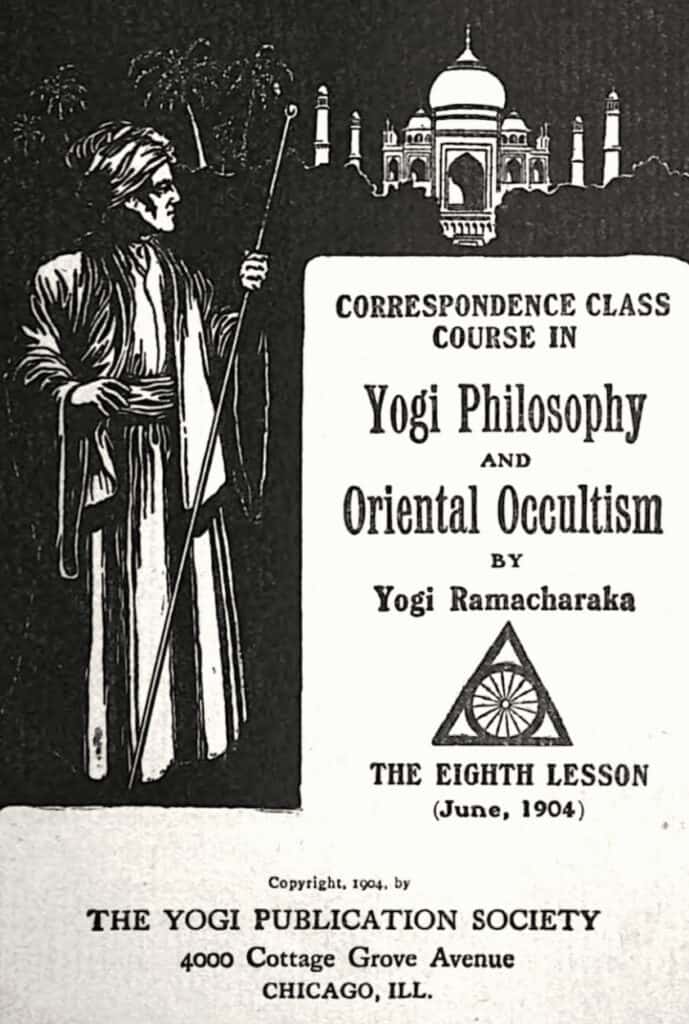
This interpretation helps explain the extraordinary breadth of the publishing network that eventually emerged as the Yogi Publication Society. A publishing organization growing directly from the world of Suggestive Therapeutics did not suddenly abandon psychology to become interested in unrelated occult subjects. The apparent change of subject concealed a deeper continuity. The network was expanding the field in which the laws of mind could be examined. Modern psychology represented one path toward those laws, while Yogi philosophy, Hermeticism, and Western esotericism represented others. The vocabulary changed, the historical setting changed, and the philosophical framework changed, but the central problem remained the same: how could the individual understand and deliberately direct the forces operating within the mind?
The result was a publishing program in which Suggestion functioned as the hidden connective principle. Readers entering through Yogi philosophy encountered concentration, mental control, habit, visualization, will, and mastery of involuntary processes. Readers entering through Hermeticism encountered mental transmutation, polarity, cause and effect, and the deliberate alteration of mental states. Readers interested in alchemy encountered transformation. Those drawn to psychic science encountered mental influence, thought transmission, and the extension of mental activity beyond ordinary assumptions. The subjects appeared different on the covers, but they repeatedly returned the reader to the disciplined direction of thought.
Why Did Parkyn’s Network Turn Toward Ancient Philosophy?
The movement into older philosophical systems provided an opportunity. If the laws being developed through modern psychology were genuinely fundamental laws of human mentality, then they should not have suddenly begun operating in nineteenth-century Europe or America. Human beings had been experimenting with concentration, meditation, imagination, breathing, self-discipline, ritual, repeated formulas, mental transformation, and the training of attention for thousands of years. Older traditions could contain observations of the same laws even when their practitioners described them through entirely different conceptual systems.
The question increasingly became not whether ancient teachers had possessed modern psychological terminology, but whether their practices could be understood through the principles modern Suggestion had revealed. A mantra involved repetition and concentrated attention. Meditation trained control of thought. Visualization created deliberate mental pictures. Ritual repeatedly associated ideas with actions, symbols, emotions, and expectations. Disciplines of will attempted to replace automatic responses with deliberate control. Mental transmutation described the intentional alteration of one mental condition into another. Viewed through the developing psychology of Suggestion, these practices could be interpreted as earlier methods for influencing precisely the mental processes Parkyn’s network had been studying.
How Did Yogi Philosophy Become a System of Mental Training?
Yogi philosophy offered an extensive framework through which the network could present the laws of mental discipline as ancient knowledge. The Yogi Ramacharaka books did not treat Yoga merely as physical exercise. They presented a system involving control of attention, concentration, breathing, habit, mental imagery, will, emotional regulation, bodily processes, consciousness, and the disciplined development of the individual. These themes overlapped the territory that Suggestive Therapeutics had already opened.
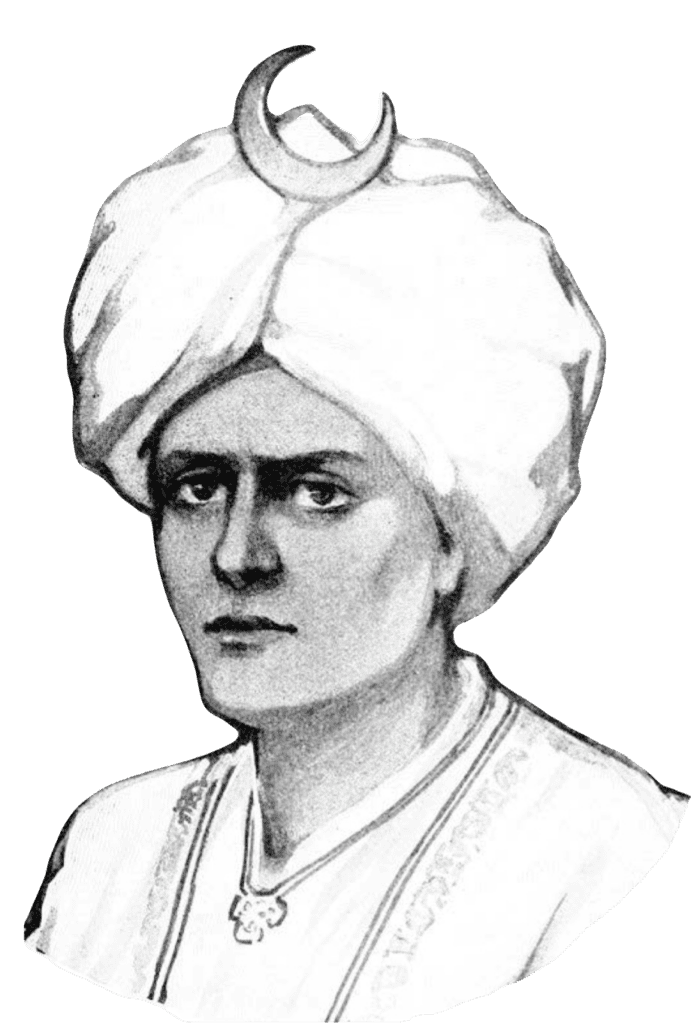
The relationship was particularly clear in Raja Yoga. The control of thought was presented as something that could be systematically trained. Attention could be strengthened. Unwanted mental habits could be observed and replaced. Concentration could be developed through repeated practice. The individual could learn to stop being carried passively by every thought and emotional impulse that appeared and instead become increasingly capable of choosing what occupied the mind. The language was Yogi philosophy, but the objective closely paralleled the self-mastery at the center of Parkyn’s Auto-Suggestion.
Other Ramacharaka works expanded the same general principle into different areas. Hatha Yoga addressed the relationship between conscious direction and bodily life. Gnani Yoga turned toward the nature of consciousness and identity. The Science of Breath presented deliberate regulation of breathing as part of physical and mental development. Across the series, the reader repeatedly encountered the proposition that processes ordinarily experienced as automatic or uncontrolled could become subjects of observation, discipline, and increasing mastery.
This made Yogi philosophy particularly compatible with Parkyn’s conception of voluntary and involuntary activity. The vocabulary and philosophical setting differed, but both systems emphasized the possibility of extending deliberate direction into areas previously governed largely by habit. The student trained attention, established new patterns through practice, and gradually acquired greater command over responses that had previously seemed automatic.
How Did Suggestion Become Mental Influence and Psychic Science?
The study of mental influence occupied a particularly interesting position because it sat directly between established psychological effects and claims of extraordinary mental communication. Suggestion had already demonstrated that one person’s ideas could influence another through words, behavior, expectation, authority, atmosphere, and other ordinary channels. Psychic science asked whether mental influence extended beyond those recognized means.
Parkyn’s network had been interested in such questions from an early period. Telepathy, mind reading, psychic phenomena, and related subjects appeared alongside the more conventional study of Suggestion. The presence of these subjects did not necessarily require abandoning natural law. On the contrary, the working assumption could be that apparently extraordinary phenomena, if genuine, must ultimately operate according to laws whether those laws were presently understood or not.
This approach distinguished investigation from supernaturalism. A phenomenon could be unusual without being outside nature. The appropriate response was to examine it, test explanations, identify fraud where it existed, and search for the mental processes involved. The network’s interest in mind reading, psychometry, telepathy, personal magnetism, and mental influence belonged to this larger effort to determine how far the laws governing thought and suggestion might extend.
The literature that followed often moved along the boundary between demonstrated suggestion and more speculative forms of mental influence. Yet even where the claims became more expansive, familiar principles continued to appear. Concentration strengthened the thought. Mental imagery gave it definite form. Will directed it. Repetition reinforced it. Emotional intensity increased its force. The same mental training used in Auto-Suggestion became the preparation for attempts to influence or communicate with others.
How Did Hermeticism Recast the Laws of Mental Transformation?
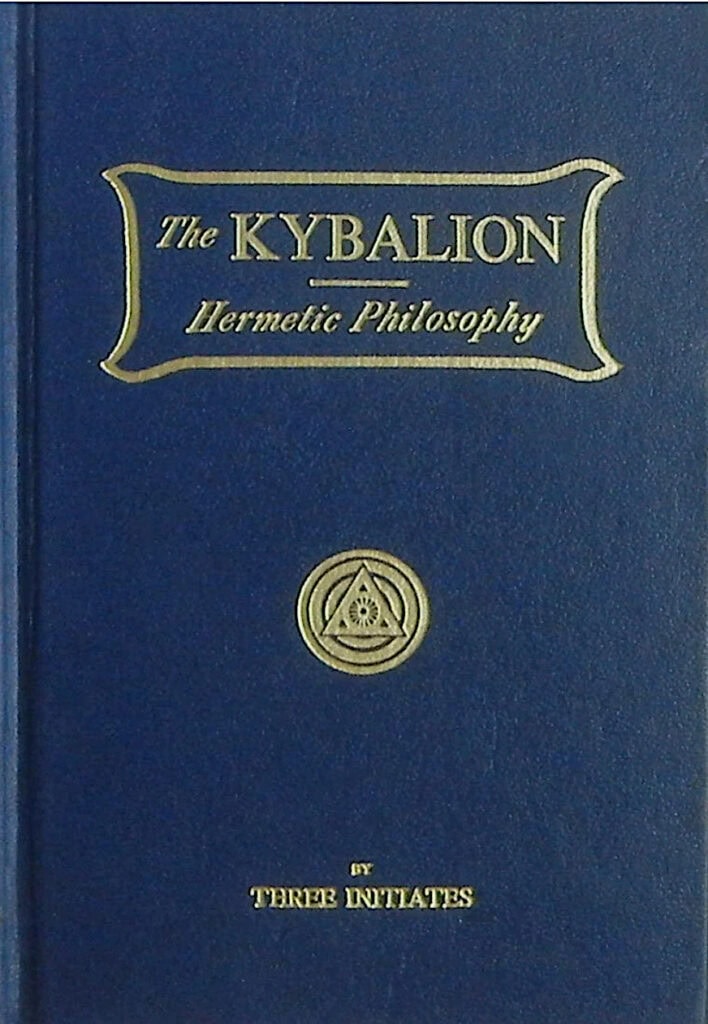
The movement into Hermeticism gave the Law of Suggestion a philosophical framework extending far beyond its therapeutic origins. In the literature associated with The Kybalion, mental change became part of a system of universal principles. Mentalism placed mind at the foundation of experience, while polarity, vibration, rhythm, cause and effect, correspondence, and mental transmutation supplied a language for understanding how mental states could be directed and transformed. The terminology belonged to Hermetic philosophy, yet the concern was familiar: human beings could learn the laws governing mental activity and use that knowledge deliberately.
Mental transmutation became especially important because it presented the mind as capable of movement between states. Fear and courage, pessimism and optimism, indecision and determination could be understood as conditions capable of change. The individual learned to recognize the state being experienced and deliberately move toward the desired pole. Mental transformation became something that could be practiced instead of simply hoped for.
How Did Mental Transmutation Resemble Parkyn’s Auto-Suggestion?
The connection with Dr. Herbert A. Parkyn‘s Auto-Suggestion can be seen in the shared emphasis upon deliberate mental direction. Parkyn taught that an established mental condition could be changed by withdrawing attention from the conception that sustained it and deliberately cultivating another. Repetition strengthened the new idea, psychic pictures made it vivid, and action helped establish it as habit. Hermetic mental transmutation expressed mental change through the language of polarity and transformation, while Parkyn’s system explained it through the deliberate education of voluntary and involuntary activity.
The relationship becomes clearest when applied to character. Fear could be met by cultivating courage and practicing courageous action. Indecision could be replaced through decisions followed promptly by conduct. An established conception of weakness could be countered through capability, intention, and repeated successful action. Parkyn’s “I Can and I Will” and “Do It Now” gave formulas to the same fundamental project of deliberately changing one’s habitual mental position.
This was one of the major developments that allowed the Law of Suggestion to travel between modern psychology and Western esotericism. The language changed from one tradition to another, but attention, concentration, mental imagery, repeated thought, control of mental states, and disciplined action continued to appear as methods through which the individual sought greater command of mind and conduct.
Why Did the Network Publish Christian Mysticism, Rosicrucianism, and Qabalah?
The expanding range of the Yogi Publication Society and its related publishing network reflected an effort to identify common laws across traditions that appeared very different on the surface. Christian mysticism approached transformation through inner spiritual development. Rosicrucianism used initiation, symbolism, hidden knowledge, and regeneration. Qabalah offered elaborate systems of correspondence connecting different levels of existence and consciousness. Alchemy supplied another language of transformation. These traditions gave the publishing network different ways of examining mind, discipline, will, transformation, and human development.
This helps explain a catalog that can otherwise appear almost impossibly eclectic. One book concerns Yogi philosophy, another Hermeticism, another psychic phenomena, another Christian mysticism, and another mental development. The subjects changed constantly, yet many of the same questions continued beneath them. How could thought be controlled? How could attention be concentrated? How could habits and mental states be transformed? How could the will be developed? What relationship existed between thought and action? Could apparently different systems preserve common laws beneath different terminology?
The network treated modern psychology and ancient philosophy as fields capable of illuminating one another. A principle identified through modern experimentation could have been observed centuries earlier and preserved through symbolic or philosophical language. Ancient teachings could contain observations about attention, concentration, imagination, and mental discipline whose operation could now be interpreted through the modern Law of Suggestion. This approach would become especially visible through works published under names such as Yogi Ramacharaka, Theron Q. Dumont, Swami Panchadasi, Swami Bhakta Vishita, and the Three Initiates.
Why Was This Expansion So Important to the History of Suggestion?
The ancient-wisdom literature gave Suggestion something its medical origins could never have supplied by themselves: an immense historical and philosophical setting. Suggestive Therapeutics had explained how ideas produced responses. Auto-Suggestion placed those laws in the hands of the individual. New Thought carried them into health, happiness, and success. Business psychology applied them to persuasion, personal efficiency, and achievement. Yogi, Hermetic, mystical, and esoteric literature now presented similar principles as part of humanity’s much older search for mastery of thought and transformation of character.
This expansion also made the original history easier to lose. Readers no longer needed to encounter the word “Suggestion” to learn its methods. Concentration could be encountered through Yoga, mental transmutation through Hermeticism, affirmation through New Thought, personal influence through business psychology, visualization through psychic development, and self-mastery through occult philosophy. The practices could spread long after their connection with nineteenth-century hypnotism and Suggestive Therapeutics disappeared from view.
That process would define much of the twentieth century. Auto-Suggestion became affirmation. Psychic pictures became visualization. Deliberate education of involuntary habit became subconscious programming. Personal Suggestion became influence and persuasion. Mental training became positive thinking and self-development. Suggestion became less visible as a distinct movement while its methods spread into an extraordinary range of fields.
How Did Suggestion Become the Modern Self-Help and New Age Movement?
By the early twentieth century, the methods developed through Suggestive Therapeutics had begun escaping the terminology and institutions that created them. Positive thinking, success philosophy, subconscious-mind teaching, motivational literature, metaphysical movements, and later the Human Potential and New Age movements could all use related practices without identifying them explicitly with Suggestion. Individuals were taught to monitor habitual thoughts, replace undesirable patterns, repeat constructive statements, visualize desired behavior or circumstances, cultivate expectation, and reinforce new habits through continued practice.
This makes the later history harder to recognize. The nineteenth-century development can be followed through mesmerism, hypnotism, Nancy, Suggestive Therapeutics, and Auto-Suggestion. During the twentieth century those ideas divided into multiple streams. Mental healing followed one path, success and achievement another, subconscious-mind teaching another, while visualization, metaphysics, spirituality, prosperity, and personal transformation created still more variations. The name changed repeatedly while many of the methods survived.
Mass media accelerated the process. What once required a clinic, school, lecture, correspondence course, or personal teacher could increasingly be learned through inexpensive books, magazines, public lectures, radio, and recorded sound. Parkyn’s early use of the phonograph for repeated suggestions anticipated an important part of this transformation. Self-development could now be packaged and delivered to people who never met the teacher.
How Did Auto-Suggestion Become Positive Thinking?
One of the largest changes was linguistic. “Auto-Suggestion” retained associations with hypnotism and Suggestive Therapeutics. “Positive thinking” communicated a similar program in language that could easily enter business, religion, motivational training, sports, and ordinary life. People were encouraged to recognize discouraging thought patterns, replace them with constructive ones, maintain confidence, visualize desired results, and repeatedly direct attention toward success instead of failure.
The new terminology dramatically widened the audience. Someone who would never have attended a school of hypnotism could accept advice about developing a positive mental attitude. A business organization could teach it to salespeople. An athlete could apply it to performance. A religious writer could connect it with faith. A motivational teacher could use it without explaining its roots in Suggestive Therapeutics.
The method could also be simplified as it traveled. Parkyn had connected Auto-Suggestion with voluntary and involuntary mental activity, habit, concentration, psychic pictures, and action. Later positive-thinking systems could reduce much of this psychology to memorable statements and inspirational formulas. The practice became easier to communicate while its historical foundation became increasingly difficult to see.
How Did the “Subconscious Mind” Become the New Language of Suggestion?
The subconscious became one of the twentieth century’s most popular explanations for the automatic side of mental life. Self-help writers increasingly described a conscious mind that selected ideas and a subconscious mind that received repeated impressions, preserved habits, and influenced behavior. The terminology differed among writers, but it gave ordinary readers an easily understood explanation for why repeated thoughts and mental pictures might become influential.
Auto-Suggestion could now be described as “programming the subconscious.” An old habit represented previous programming. An affirmation supplied a replacement. Visualization gave the subconscious a picture of the desired condition, and repetition impressed the new pattern until it became increasingly automatic. Technological language eventually replaced much of the older psychological terminology, but the sequence remained closely related to the education of involuntary activity Parkyn had described.
The language of the subconscious also allowed the same practices to move between psychological and metaphysical systems. One writer might treat the subconscious as habitual and automatic mental activity, while another could attribute much greater powers to it. Both could prescribe repetition, imagery, expectation, and deliberate mental direction. The exercise survived even when explanations of what it was doing differed dramatically.
How Did Visualization Become a Standard Method of Self-Development?
Parkyn’s psychic pictures gave deliberate mental imagery a defined place within Auto-Suggestion. Later systems increasingly detached the practice from his terminology and presented visualization or mental rehearsal as a method of its own. The individual imagined the desired performance, response, condition, or outcome and repeatedly returned attention to that picture.
The method could be adapted to almost any field. A salesperson could mentally rehearse a successful presentation. A public speaker could picture appearing confidently before an audience. An athlete could mentally perform a movement before competition. A student could imagine approaching an examination calmly. Someone pursuing a personal objective could repeatedly picture the actions and circumstances associated with reaching it.
Visualization also became a point at which psychological and metaphysical explanations could diverge. In a psychological interpretation, mental rehearsal prepared attention and behavior for later performance. In metaphysical systems, the mental image could be credited with influencing external circumstances themselves. Similar exercises could support very different explanations, allowing visualization to travel easily between self-help, psychology, New Thought, and later New Age systems.
How Did Success Philosophy Carry Suggestion Through the Twentieth Century?
Success literature became one of the strongest channels through which the methods of Suggestion continued. The subjects had already been developed within the Chicago network surrounding Parkyn and William Walker Atkinson, where concentration, confidence, will, personal influence, habit, prompt action, and mental control were connected with achievement. Twentieth-century success literature turned these subjects into an enormous publishing industry.
The typical success system asked the individual to establish a definite objective, maintain confidence, reject habitual expectations of failure, cultivate persistence, visualize achievement, repeat statements of intention, and act consistently with the goal. The terminology varied enormously, but the structure remained familiar. The goal supplied the central idea. Repetition held attention upon it. Visualization strengthened the conception. Confidence countered competing expectations. Action converted mental preparation into conduct.
This literature also carried Suggestion into thoroughly secular settings. A reader needed no interest in Yoga, metaphysics, Hermeticism, psychic science, or New Thought. The same methods could appear in a book about sales, leadership, wealth, productivity, executive performance, confidence, or personal efficiency. The philosophical explanation could vanish while the psychology survived.
How Did Affirmations Replace the Language of Auto-Suggestion?
The modern affirmation is one of the clearest descendants of Auto-Suggestion. The procedure remains simple: choose a concise statement expressing the condition or behavior to be established, repeat it regularly, direct attention toward its meaning, and allow the idea to become increasingly familiar through continued practice.
“Affirmation” proved exceptionally portable because it carried little of the medical or hypnotic history associated with Suggestive Therapeutics and Auto-Suggestion. Affirmations could appear in religion, New Thought, motivational seminars, business training, meditation programs, New Age practice, and secular self-development. Someone could begin using them without knowing anything about hypnotism, Nancy, Parkyn, or Coué.
By the later twentieth century, affirmations had become so familiar that they could appear to have no specific history at all. Yet their structure belongs directly to the development traced throughout this article. The repeated verbal formula used to impress a selected idea through Auto-Suggestion had survived under a simpler and more adaptable name.
How Did the Human Potential Movement Expand the Idea of Self-Mastery?
The Human Potential Movement expanded self-development into a much larger exploration of what human beings might become. Habit, social conditioning, fear, limiting beliefs, and inherited assumptions were increasingly treated as forces capable of restricting human potential. Personal growth involved identifying those patterns and learning methods for changing them.
Many of the questions were familiar. How could automatic patterns be changed? How did repeated beliefs influence behavior? Could expectations limit performance? Could imagery alter emotional response? Could a person deliberately establish a different conception of himself? The language had changed substantially from nineteenth-century Suggestive Therapeutics, but the problem of consciously transforming habitual mental life remained.
The Human Potential Movement also widened the objective. Self-development could involve creativity, relationships, identity, emotional expression, consciousness, spirituality, and the search for meaning alongside health and achievement. Western approaches to personal development increasingly encountered meditation, Yoga, breathing disciplines, visualization, altered states, and other practices drawn from Eastern traditions. A synthesis that the Yogi Publication Society had explored through publishing decades earlier was now unfolding across American culture.
Why Were the 1960s So Important to the History of Suggestion?
The 1960s accelerated the convergence of psychology, Eastern philosophy, esotericism, consciousness exploration, and personal transformation. Meditation, Yoga, mystical experience, experimental psychology, occult traditions, new therapeutic methods, and alternative communities entered a culture increasingly interested in whether habitual consciousness represented only a limited range of human possibility.
The descendants of Suggestion fit naturally into this environment. The question of automatic mental response could now be expressed through the language of conditioning. People examined ideas absorbed from parents, education, religion, advertising, social expectations, and mass culture and asked how deeply those influences shaped identity and behavior. Once conditioning was recognized as something learned, changing or “deconditioning” it became a major concern.
The relationship to the older psychology of habit was clear. A pattern repeatedly established could become automatic, and deliberate practice could be used to cultivate a different response. Meditation could help reveal habitual thought. Visualization could establish new mental patterns. Repeated statements could reinforce a new conception of oneself. Different social environments could expose the individual to entirely different streams of suggestion.
At the same time, Western interest in Yogi philosophy and meditation increased enormously. Teachings that had circulated through comparatively small esoteric and New Thought publishing networks now entered mass culture. The intersection of psychological self-development and ancient spiritual practice became one of the defining features of the period.
How Did the Human Potential Movement Become the New Age?
During the 1970s and 1980s, streams of consciousness exploration, alternative spirituality, metaphysical thought, Eastern philosophy, holistic health, occult revival, and personal development converged within what became known as the New Age movement. It had no single doctrine or organization. Its importance here lies in the way it gathered practices from many sources into a shared culture of personal and spiritual transformation.
Affirmations, visualization, guided imagery, meditation, breathing exercises, intention, and the deliberate changing of limiting beliefs became common. Some systems remained close to psychological explanations, while others assigned much greater metaphysical powers to thought and consciousness. The practices could move easily between the two.
The boundaries between New Thought, Yoga, Hermeticism, psychic development, alternative healing, and success philosophy became increasingly porous. A single bookstore could place these subjects within a few shelves of one another, allowing readers to move from meditation to prosperity, from Yoga to visualization, or from Western esotericism to subconscious-mind teaching without treating them as unrelated worlds.
The New Age repeated on a much larger cultural scale the synthesis that had appeared decades earlier in the publishing network surrounding the Yogi Publication Society. Different traditions could be explored as expressions of common principles concerning mind, consciousness, transformation, and human potential.
How Did “Reprogramming the Subconscious” Become a Modern Form of Auto-Suggestion?
As computers became part of everyday life, programming supplied a powerful metaphor for habitual mental activity. Beliefs became “programs,” early experiences became “conditioning,” and personal transformation became “reprogramming the subconscious.” A mental program could operate automatically once established, just as Parkyn had described learned activity passing from voluntary direction into involuntary operation.
The prescription remained familiar. Identify the unwanted pattern, introduce a replacement, reinforce it through repetition, use imagery to strengthen the new conception, reduce the influences that continually reactivate the old response, and practice behavior consistent with the desired condition until it becomes increasingly habitual.
The vocabulary made the method sound modern. “Reprogramming” replaced mental education, “subconscious” replaced involuntary activity, and affirmation replaced Auto-Suggestion. Beneath those terms remained a recognizable sequence of deliberate thought, repetition, imagery, action, and habit.
How Did Auto-Suggestion Become Manifestation?
Manifestation brought together several practices inherited from mental science and self-development: affirmations, visualization, expectation, emotional identification with a desired condition, and sustained attention upon a goal. In its practical form, these methods can organize attention around an objective. The individual defines what is wanted, repeatedly imagines the desired condition, watches for relevant opportunities, and attempts to act consistently with the goal.
Metaphysical manifestation systems carry the claim further by proposing that thought, intention, vibration, or consciousness can directly attract or produce corresponding external circumstances. This returns the history to an old tension surrounding mental influence: the distinction between observable psychological effects and expansive explanations attached to them.
The exercises themselves preserve an unmistakable collection of earlier methods. Affirmation continues repeated Auto-Suggestion. Visualization continues the psychic picture. Repetition establishes the selected mental pattern. Emotional reinforcement strengthens the conception, and goal-directed behavior carries thought into conduct. The language of manifestation combined these practices within another framework for personal transformation.
Why Did Recorded Suggestion Become So Important Again?
Recorded speech provides one of the clearest lines connecting Parkyn’s era with modern self-development. Parkyn’s use of phonograph recordings recognized that prepared suggestions could be delivered repeatedly without requiring the physical presence of the practitioner. Every major improvement in recording technology made that method easier to distribute.
Phonographs were followed by radio, self-improvement records, reel-to-reel recordings, cassette programs, compact discs, downloadable audio, streaming services, and mobile applications. Guided visualization, motivational recordings, meditation, self-hypnosis, sleep programs, and affirmation tracks could accompany individuals through daily life.
The smartphone brings the principle to a scale Parkyn could scarcely have achieved with the phonograph. Thousands of recorded programs can be carried in a pocket. A recording can be repeated automatically, reminders can prompt the exercise, and individuals can create personalized affirmation tracks for their own use. The technology has changed completely while the idea behind the practice remains strikingly familiar.
Where Does the Law of Suggestion Appear Today?
The Law of Suggestion has become so thoroughly integrated into modern culture that its descendants are often treated as unrelated techniques. Sports mental training uses visualization, cue words, mental rehearsal, structured self-talk, and pre-performance routines. Business coaching uses goals, habit formation, confidence training, visualization, and repeated behavioral exercises. Speakers and performers mentally rehearse successful performances. Students use deliberate self-talk to manage attention and anxiety. Modern self-development continues to teach people to monitor recurring thoughts and deliberately cultivate more useful patterns.
Advertising remains one of the clearest applications. Brands rely upon repetition, association, familiarity, slogans, social proof, authority, identity, and aspirational imagery to influence decisions. Digital advertising has multiplied the opportunities for the same idea to be placed repeatedly before an individual until a name, image, product, or message becomes familiar.
Social media has intensified the process still further. Suggestions now arrive continuously from corporations, influencers, celebrities, friends, communities, algorithms, and repeated exposure to cultural trends. Images establish expectations concerning beauty, wealth, success, relationships, and lifestyle. Engagement supplies reinforcement, while recommendation systems can repeatedly return users to subjects that have already captured their attention.
Modern life has made the individual both suggester and suggested. A person can deliberately use affirmations and visualization for self-direction while simultaneously receiving an unprecedented stream of suggestions from the surrounding digital environment. The old relationship between operator and subject has expanded into a culture in which ideas are constantly created, repeated, selected, personalized, and reinforced.
What Happened to Parkyn’s Auto-Suggestion in the Digital Age?
Parkyn’s Auto-Suggestion survives in methods whose names would be different but whose principles he would recognize immediately. “I Can and I Will” has countless descendants in motivational self-talk. “Do It Now” appears throughout productivity systems aimed at closing the gap between intention and action. Psychic pictures continue through visualization and mental rehearsal. Habit replacement appears through behavior-change programs and subconscious “reprogramming.” His phonograph experiments have become affirmation tracks, guided audio, self-hypnosis recordings, meditation apps, and personalized digital programs.
The largest change is accessibility. Parkyn’s students needed lectures, books, correspondence lessons, clinical instruction, or physical recordings. A modern smartphone can deliver a comparable exercise instantly, remind the user to practice it, repeat a selected recording, guide visualization, track a habit, and reinforce the behavior day after day.
This makes the history especially relevant to modern self-development. New terminology and new technologies can create the appearance of constant innovation, while many of the fundamental methods remain connected to a much older psychology of attention, repetition, imagery, expectation, habit, and action.
Why Does the History of Suggestion Matter?
The history of Suggestion shows how a system can become so influential that its original terminology eventually disappears beneath its descendants. What began amid nineteenth-century attempts to understand mesmerism and hypnotism developed into a study of how ideas influence mental, physical, and behavioral response. The Nancy School established suggestion at the center of hypnotic phenomena. Parkyn then carried the principle beyond hypnotism by demonstrating that hypnotic sleep was unnecessary and developing waking Suggestion into a practical system. His work led into Auto-Suggestion, voluntary and involuntary mental training, psychic pictures, repeated formulas, habit replacement, and recorded suggestion, while the network surrounding him carried these laws into New Thought, business, advertising, success, Yogi philosophy, Hermeticism, alchemy, psychic science, and other traditions.
Much of the later history consists of these principles acquiring new names. Auto-Suggestion became affirmation. Psychic pictures became visualization and mental rehearsal. The deliberate education of involuntary activity became subconscious programming and reprogramming. Suggestive formulas became positive self-talk. Success applications became motivational psychology and coaching. Recorded suggestions moved from phonographs to digital audio. The synthesis of psychology, Eastern philosophy, Hermeticism, spirituality, and self-development helped prepare the culture in which the Human Potential and New Age movements flourished.
Suggestion cannot be understood as an obsolete branch of hypnotism because hypnotism was the setting in which the law first became unmistakably visible. Once suggestion was separated from hypnotic sleep, its presence could be recognized throughout ordinary life. Parents influence the expectations of children. Teachers influence students’ conceptions of their abilities. Physicians can communicate confidence or fear. Advertisers establish associations. Groups reinforce norms. Media create familiarity through repetition. Individuals continually reinforce their own habitual conceptions through internal thought and self-talk.
That may be the most important lesson contained in the entire history. Suggestion matters because receiving, repeating, interpreting, and acting upon ideas are ordinary features of human life. The history began with attempts to explain apparently extraordinary phenomena and led to the recognition of a process operating continuously in everyday experience.
From Mesmer’s magnetic fluid to nineteenth-century hypnotism, from Nancy to Parkyn’s Chicago School, from Auto-Suggestion and New Thought to the Yogi Publication Society, from positive thinking to the Human Potential Movement and New Age, and from phonograph recordings to digital affirmations delivered through smartphones, the terminology and technology have changed again and again. The central question has endured: which ideas are being impressed upon the mind, how are they being reinforced, and what happens when those ideas become established strongly enough to take form in action?