
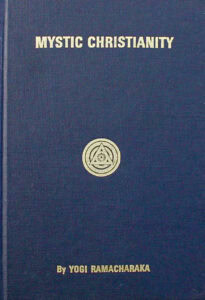
Mystic Christianity
Yogi Ramacharaka
View PublicationPublication Subject
Christian mysticism is a tradition within Christianity that seeks a direct, transformative, and personal experience of God through contemplation, prayer, and the inner life. Rather than viewing faith solely as a system of doctrine or moral instruction, Christian mysticism emphasizes the believer’s inward journey toward intimate communion with God. Its central aim is not simply to know God intellectually, but to experience the living presence of Christ through the continual transformation of the heart and soul.
Rooted in the teachings of the New Testament and developed by Christian monks, theologians, and saints over nearly two thousand years, the mystical tradition has shaped both Eastern Orthodox and Western Christianity. Although its methods and language vary among traditions, Christian mystics consistently describe the spiritual life as a gradual process of purification, illumination, and loving union with God.
Christian mysticism emerged during the earliest centuries of Christianity as believers sought to deepen their relationship with God beyond public worship and theological study. Influenced by Scripture, the writings of the Desert Fathers and Mothers, and later theologians such as Augustine, Pseudo-Dionysius the Areopagite, Bernard of Clairvaux, Meister Eckhart, Teresa of Ávila, John of the Cross, and the Eastern Orthodox Hesychast tradition, it developed into a rich spiritual discipline centered on contemplation and inner transformation.
Unlike many mystical traditions that describe enlightenment as the dissolution of the individual self, Christian mysticism maintains a clear distinction between the Creator and the created soul. Union with God is understood not as absorption into the Divine but as a perfect harmony of love and will, in which the individual remains fully human while becoming increasingly conformed to the character of Christ.
Christian mystics traditionally describe spiritual growth as unfolding through three successive stages.
Purgation is the process of purification. During this stage the believer seeks to overcome pride, selfish desires, unhealthy attachments, and sinful habits through repentance, self-discipline, prayer, fasting, and acts of charity. The purpose is to remove the obstacles that prevent a deeper relationship with God.
Illumination follows as the soul becomes increasingly aware of God’s presence. The believer experiences greater spiritual understanding, renewed love for Scripture, increased sensitivity to the guidance of the Holy Spirit, and a growing desire to live according to divine truth. This stage is often characterized by peace, insight, and a clearer perception of God’s activity in everyday life.
Union, sometimes called the Unitive Life, represents the mature goal of the mystical path. In this state the believer lives in continual communion with God, guided by love rather than obligation. The will becomes increasingly united with God’s will, producing humility, compassion, inner peace, and a life devoted to serving others.
Christian mysticism recognizes two complementary approaches to knowing God.
The Kataphatic Way, or positive way, seeks God through what can be perceived and affirmed. Scripture, creation, sacred symbols, liturgy, music, and the life of Christ all become means through which God’s presence is experienced and understood.
The Apophatic Way, or negative way, emphasizes that God ultimately transcends all human language and concepts. Through silence, stillness, and contemplation, the believer gradually releases mental images and intellectual definitions, recognizing that the Divine mystery can never be fully captured by words or reason.
Rather than opposing one another, these approaches work together, balancing intellectual understanding with direct spiritual experience.
Christian mysticism employs a variety of spiritual disciplines designed to cultivate awareness of God’s presence.
Contemplative Prayer emphasizes resting silently before God without seeking particular experiences or requests, allowing the mind and heart to become receptive to divine grace.
Lectio Divina, or “sacred reading,” is a meditative approach to Scripture in which a short passage is read slowly and prayerfully until its deeper spiritual meaning becomes personally transformative.
Within the Eastern Orthodox tradition, Hesychasm combines stillness with the repeated recitation of the Jesus Prayer—”Lord Jesus Christ, Son of God, have mercy on me”—often synchronized with gentle breathing to cultivate continual awareness of God.
Many Christian mystics also practice The Examen, a daily period of reflection in which they review the events of the day, discerning moments where God’s presence, guidance, or grace became evident.
The ultimate goal of Christian mysticism is the transformation of the whole person through an ever-deepening relationship with God. Rather than seeking extraordinary visions or supernatural experiences for their own sake, the Christian mystic pursues a life increasingly characterized by humility, love, wisdom, and selfless service. The measure of authentic mystical experience is therefore not unusual spiritual phenomena but a life more fully conformed to the example and love of Jesus Christ.
Yogi Ramacharaka
View Publication
Édouard Schuré
View Publication
William Walker Atkinson
View Publication
Jacob Behmen
View Publication
William Earnshaw Cooper
View Publication
Marguerite Louise Verdier
View Publication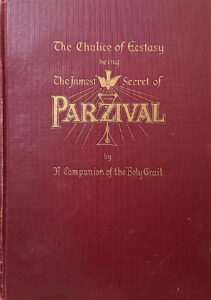
Frater Achad
View Publication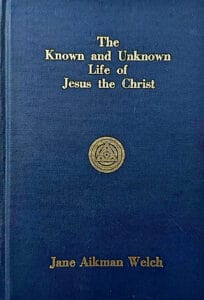
Jane Aikman Welch
View Publication
Aleister Crowley
View Publication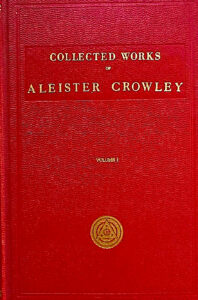
Aleister Crowley
View Publication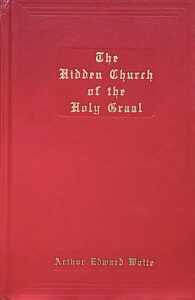
Arthur Edward Waite
View Publication
Ernest Thurston
View Publication
Ernest Thurston
View Publication