Jesus, the Last Great Initiate by Édouard Schuré presents the life and mission of Jesus through the framework of initiation, esoteric religion, and the ancient mystery traditions. Published in this edition by the Yogi Publication Society, the book approaches Christianity as one stage in a continuous spiritual tradition stretching through Egypt, Greece, Israel, and the mystery schools of antiquity.
Schuré treats Jesus as the culminating figure in a succession of great initiates who carried knowledge of divine reality into different civilizations. His central question is how Jesus became conscious of his mission as the Messiah and how his public teaching arose from an inner spiritual development that the canonical Gospels describe only indirectly.
Schuré openly states that he is interpreting the life of Jesus through what he calls the “esoteric point of view,” which he describes as a synthesis of religion and science. He accepts the Synoptic Gospels as primary records of the public words and actions of Jesus while giving the Gospel of John a special position as the record of Christianity’s inner doctrine. Matthew and Mark preserve public events, Luke reveals the spiritual and emotional dimensions of the story, and John contains what Schuré calls the “secret teaching” and “esoteric reserve” of Christ. This approach places Jesus, the Last Great Initiate within the history of Christian mysticism and Western esotericism, while its publication by the Yogi Publication Society placed Schuré’s interpretation alongside works devoted to Yogi philosophy, comparative religion, psychic development, occult philosophy, and the hidden traditions of East and West.
Jesus, the Last Great Initiate became one of the most influential works of the late nineteenth-century occult revival. Its interpretation of Christ as an initiate profoundly influenced later esoteric movements, particularly Rudolf Steiner and the development of Anthroposophy.
What Is Jesus, the Last Great Initiate About?
Jesus, the Last Great Initiate is an esoteric interpretation of the life of Jesus that presents his mission as the culmination of an ancient spiritual tradition. Schuré begins centuries before the birth of Christ because he believes the meaning of Jesus cannot be understood apart from the religious condition of the ancient world. The mysteries of Egypt and Greece had once preserved knowledge of a supreme divine unity behind the many gods and symbols of popular religion. In Schuré’s account, the sanctuaries of Memphis, Delphi, and Eleusis taught initiates that the visible universe concealed spiritual forces and that the diverse gods represented expressions of a deeper divine order. Over time, these teachings became obscured, the mysteries declined, and religion lost much of its spiritual power. Greece entered intellectual and political decay, while Rome expanded through military and political domination.
Schuré sees Alexandria as one of the crucial meeting places in this history. Greek philosophy, Egyptian esotericism, Judaism, and ideas arriving from the East encountered one another there, creating conditions for a new religious synthesis. He describes Alexander the Great as recognizing an underlying spiritual unity beneath Greek, Egyptian, Jewish, and Hindu religious symbols. The world into which Jesus was born was spiritually fragmented while still containing remnants of an ancient wisdom tradition. Egypt preserved memories of the science of Hermes Trismegistus and the mystery schools; Greece preserved Orphic, Pythagorean, and Platonic philosophy; Judaism preserved prophetic monotheism; and the East retained its own systems of spiritual discipline. Jesus enters Schuré’s narrative as the figure capable of bringing these streams into a new religious form centered on the spiritual transformation of humanity.
The Ancient Mysteries and the Coming of Christ
Schuré’s concept of initiation is the key to the entire book. An initiate is a person who has passed through disciplined stages of spiritual knowledge and experience until truths first received intellectually become realities of consciousness. Religious symbols, myths, sacred texts, ceremonies, and doctrines may contain fragments of this knowledge, yet their inner meaning becomes accessible only through spiritual development. This idea allows Schuré to read Christianity as part of the same history that includes the Egyptian mysteries, Pythagorean teaching, Greek philosophy, Jewish prophecy, and the esoteric schools surrounding the Mediterranean world.
His historical narrative describes a recurring pattern. A spiritual revelation is received by prophets or initiates, expressed through symbols and institutions, passed to later generations, and eventually hardened into external forms. The inner knowledge becomes increasingly difficult to recover as institutions gain authority over the original spiritual experience. New initiates then appear to restore contact with the source. Jesus occupies the highest position in this cycle because Schuré sees his mission as transforming an inherited esoteric doctrine into a religion capable of reaching humanity far beyond the closed mystery schools.
This helps explain why the book appealed to the audience cultivated by the Yogi Publication Society. The publishing house repeatedly presented apparently different religious systems as expressions of related spiritual laws. The writings issued under the name Yogi Ramacharaka explored Hindu philosophy, yoga, Vedanta, reincarnation, psychic development, and comparative religion, while other publications investigated Hermeticism, Qabalah, Rosicrucian traditions, alchemy, and Christian esotericism. Jesus, the Last Great Initiate fit naturally into a catalog built around the idea that ancient religions could be studied for the spiritual principles concealed beneath their different languages and symbols.
Mary and the Spiritual Development of Jesus
Schuré begins the personal history of Jesus with Mary and the childhood at Nazareth. He treats many traditional stories surrounding the birth of Jesus symbolically, suggesting that legends can preserve spiritual or psychic truths even when they cannot be read as conventional historical reports. Mary appears as a deeply religious woman connected in Schuré’s reconstruction with the Essene tradition, and Jesus is presented as a child dedicated before birth to a prophetic destiny. The familiar miraculous narratives surrounding his birth become signs of a consciousness developing under unusual spiritual conditions.
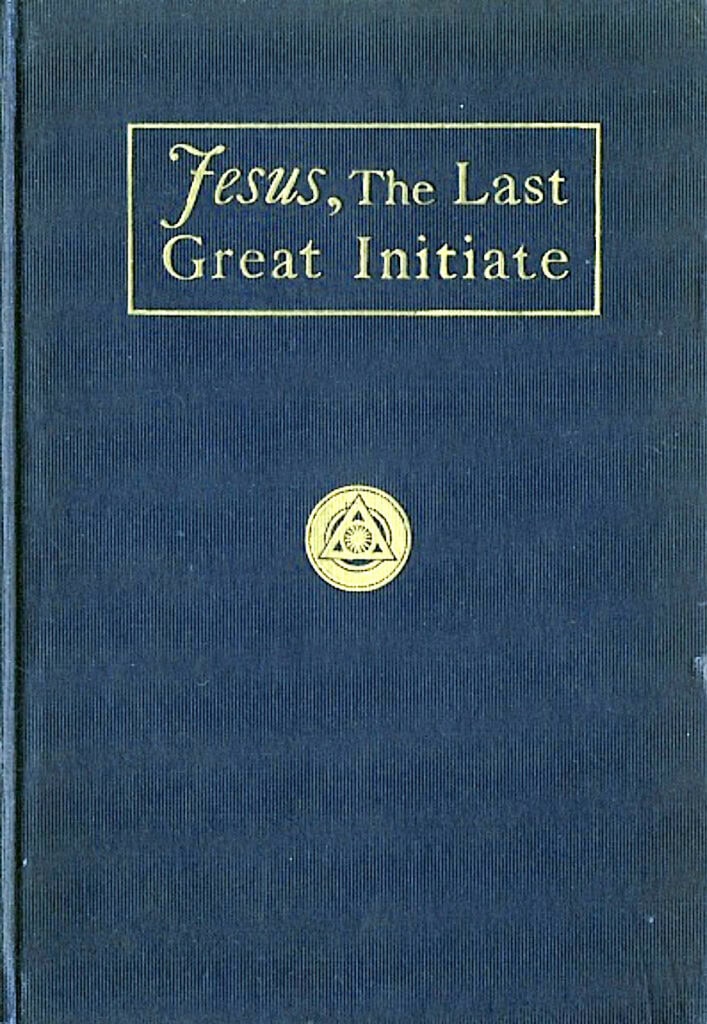
Jesus, the Last Great Initiate. Original cover.
The young Jesus gradually awakens to the suffering of humanity and to a profound inner relationship with God. Schuré emphasizes development because his central problem is the formation of the Messiah. Jesus does not simply appear as a fully explained figure at the beginning of his public ministry. His spiritual identity unfolds through childhood, contemplation, religious experience, study, and initiation. The silence of the Gospels concerning much of his early life becomes important to Schuré because it creates the historical space in which he places this period of preparation.
The result is a psychological and initiatory portrait of Jesus. His authority later in life comes from direct spiritual consciousness. His compassion grows alongside his perception of humanity’s condition, while his sense of vocation deepens until personal consciousness and divine mission become inseparable. Schuré uses this development to answer the question he believes conventional biographies leave unresolved: how the man of Nazareth acquired the certainty, knowledge, and spiritual power displayed at the beginning of his ministry.
Did Jesus Study with the Essenes?
Schuré gives the Essenes a central role in answering that question. He argues that the Gospel silence concerning the years before Jesus meets John the Baptist conceals a long period of initiation. In his reconstruction, the Essenes represented the surviving community within Judaism most capable of providing this education because they preserved prophetic traditions, disciplined communal living, spiritual interpretation of scripture, healing practices, and graded instruction. Schuré also points to the absence of criticism of the Essenes in the teachings attributed to Jesus, even though Jesus openly confronts other religious groups of his time, and treats this silence as evidence of a deeper connection.
The Essene community described in the book is organized through stages of admission and initiation. Novices pass through extended testing, maintain silence, observe strict rules, share communal meals, and receive progressively deeper interpretations of sacred texts. Schuré compares their organization with the Pythagorean schools and emphasizes their teaching concerning the preexistence and immortality of the soul. Their instruction encompasses divine principles, cosmology, morality, healing, and the spiritual interpretation of scripture. The ceremonial meals of the Essenes also become, in Schuré’s reconstruction, an important precedent for the later Christian Supper.
Jesus enters this world as a seeker whose spiritual capacities eventually surpass the institution that educated him. The Essenes provide knowledge of religions and mysteries and prepare him for his mission, while the mission itself demands that this knowledge leave the protected circle of initiation and enter ordinary human life. Schuré’s Jesus carries the mystery tradition into villages, homes, roads, marketplaces, and crowds. The hidden wisdom of initiates becomes the foundation for a public spiritual movement.
John the Baptist and the Awakening of the Messiah
John the Baptist stands at the threshold between preparation and mission. Schuré presents John as a powerful prophetic personality who recognizes something extraordinary in Jesus. Their encounter marks a decisive transition because the knowledge accumulated during Jesus’ years of preparation now becomes a conscious vocation. The baptism is interpreted as an initiatory event whose meaning reaches beyond an external ceremony. Jesus emerges from it with an intensified awareness of his relationship to God and of the work before him.
The temptation follows as an interior trial of this newly awakened power. Schuré interprets the temptations as tests confronting anyone who possesses great spiritual ability: the temptation to use power for personal needs, the temptation to demonstrate supernatural authority for admiration, and the temptation to obtain worldly dominion. Jesus must determine what kind of Messiah he will become. Political kingship, personal glory, and miraculous display would all divert the spiritual force of his mission into the ordinary structures of ambition and authority.
This stage completes the movement from student to initiator. Jesus has received knowledge, passed through discipline, confronted the possibilities created by spiritual power, and chosen the direction of his mission. The kingdom he will proclaim is rooted in transformed consciousness, moral regeneration, love, and the awakening of the divine life within humanity.
What Does the “Kingdom of Heaven” Mean?
The Kingdom of Heaven becomes one of the book’s central ideas. Schuré reads it as a spiritual reality that begins within human beings and then expresses itself through human relationships. Jesus gathers a small community around himself and begins creating, on a limited scale, the spiritual society he wishes to establish. Brotherhood, mutual assistance, confidence, compassion, forgiveness, and direct relationship with God become living principles inside the group.
The Sermon on the Mount expresses the public side of this teaching. The poor in spirit, the meek, the merciful, the pure in heart, the peacemakers, and those who hunger after righteousness possess qualities that prepare consciousness for the divine kingdom. Spiritual greatness is measured through inner character. Love becomes the governing force capable of transforming both individual consciousness and human society.
Schuré also distinguishes between levels of teaching. Crowds receive parables, moral instruction, and accessible images. Disciples receive deeper explanations. A smaller circle is gradually introduced to mysteries concerning the identity of Christ, spiritual rebirth, immortality, and the destiny of the soul. This division between public and inner instruction is fundamental to his interpretation of Jesus as an initiate.
The Secret Teaching of Jesus
The Gospel of John becomes Schuré’s chief doorway into this inner doctrine. The conversation with Nicodemus is one of his clearest examples. When Jesus speaks of being born of water and the Spirit, Schuré interprets the language through the ancient mysteries. Water represents truth first apprehended intellectually and the purification that prepares the soul. The birth through Spirit or heavenly fire represents a deeper stage in which spiritual truth enters the will and becomes a living power within the person.
Spiritual rebirth is thus an initiatory transformation. Knowledge passes from idea to experience, and experience becomes character and action. The individual acquires a different relationship with consciousness, life, death, and the divine. This interpretation connects Christian regeneration with the pattern Schuré finds in older mystery traditions, where candidates passed through symbolic death and rebirth as their understanding moved through successive degrees.
Several major ideas organize this inner teaching:
The human soul possesses a spiritual origin and destiny extending beyond physical life.
The Kingdom of Heaven can become an inward reality during earthly existence.
Spiritual truth must become lived experience before it becomes complete knowledge.
Love is a spiritual power capable of transforming consciousness and human relationships.
Initiation proceeds through degrees of understanding, purification, experience, and realization.
The Christ represents a union between human consciousness and the divine principle.
Death does not destroy the spiritual individuality of the human being.
These ideas explain why Schuré places so much weight on the distinction between the crowds and the disciples. Jesus can communicate moral truths publicly, while teachings concerning spiritual consciousness require preparation. The parable itself becomes a bridge between these levels: an ordinary listener receives an ethical lesson while a prepared disciple perceives another level of meaning.
Miracles, Healing, and the Power of Consciousness
Schuré’s discussion of miracles also follows his esoteric interpretation. Healing is associated with the extraordinary psychological and spiritual power of Jesus. The book describes him as possessing unusual insight into human character and the ability to recognize the inner condition of people almost immediately. His presence exerts a powerful influence on disciples and sufferers alike, and Schuré repeatedly describes this influence through the language of spiritual force, consciousness, faith, and what he calls magnetic power.
The healings are interpreted through the relationship between mind, soul, and body. Schuré discusses conditions once described as possession in connection with altered or divided states of consciousness and suggests that Jesus could restore equilibrium to disturbed personalities. Love is the central force behind this ability. Healing becomes one expression of a consciousness so completely centered in spiritual harmony that it awakens corresponding forces in another person.
This feature would have been familiar to early twentieth-century readers of New Thought and the psychological literature surrounding suggestion. Within the Chicago publishing environment from which the Yogi Publication Society developed, Herbert A. Parkyn and the Chicago School of Psychology had already devoted years to the relationship between mental states, involuntary processes, healing, and suggestion through instruction including Parkyn’s Special Mail Course in Hypnotism and Suggestive Therapeutics. Schuré uses his own esoteric vocabulary and places Jesus within an ancient initiatory lineage, yet the subjects of consciousness, mental influence, healing, and latent human faculties helped make the book well suited to the intellectual environment in which the Yogi Publication Society issued it.
Why Did Jesus Choose the Apostles?
Jesus needs more than followers if his teaching is to survive. Schuré presents the apostles as the nucleus of a future spiritual community, chosen from ordinary life because the new religion must take root among ordinary people. Peter embodies energy, faith, action, and leadership, though his character is vulnerable to fear and discouragement. John possesses a contemplative and inward nature capable of penetrating more deeply into the spiritual meaning of the teaching. Schuré gives John a special place as the “esoteric apostle,” the disciple whose temperament allows him to understand the inner thought of Christ and later preserve it in the Gospel associated with his name.
The apostles accompany Jesus while public preaching alternates with private instruction. Their understanding develops slowly. They recognize his extraordinary character before they comprehend his conception of the Messiah, and they repeatedly interpret his mission through inherited Jewish expectations of national restoration. Jesus must lead them from expectation of an earthly kingdom toward an understanding of a spiritual kingdom. Their education becomes another process of initiation within the book.
This tension becomes increasingly important as Jesus approaches Jerusalem. The disciples hope for victory, while Jesus becomes aware that his mission is moving toward sacrifice. Schuré presents the gulf between these two understandings as one of the central dramas of the Gospel story.
Women and the Inner Circle of Jesus
Women occupy an important position in Schuré’s reconstruction. Mary Magdalene receives the greatest attention. Her transformation under the influence of Jesus makes her a symbol of regeneration through love, and Schuré describes her as a “heart-initiate.” Her devotion gives her a form of spiritual perception distinct from the intellectual and institutional understanding represented elsewhere in the story.
Bethany becomes a refuge where Jesus can withdraw from the demands of public life. In the company of Martha and Mary Magdalene, he speaks with a freedom and tenderness absent from his confrontations with religious authorities. Schuré portrays these women as sensing the approaching tragedy even when the apostles remain unable to understand its full meaning. Mary Magdalene’s later experience of the risen Christ completes her symbolic role. For Schuré, her story represents the spiritual regeneration of woman through the religious principle Jesus brings into the world.
Why Did Jesus Clash with the Pharisees?
The conflict with the Pharisees marks the end of the comparatively peaceful Galilean ministry. Schuré describes them as a disciplined and influential religious body deeply committed to Jewish national and religious identity. They accept resurrection, angels, oral tradition, and a future life, yet the institutional form of their religion has become an obstacle to the mission Jesus is proclaiming. His increasing popularity makes confrontation unavoidable.
At stake is authority over spiritual life. Jesus teaches from direct consciousness and claims an immediate relationship between humanity and the divine. Institutional religion grounds authority in established interpretation, inherited law, office, and tradition. Schuré treats the collision as part of the recurring struggle between living revelation and religious structures that have lost access to their own inner source.
The danger forces Jesus and his disciples away from the centers of opposition. During this period the identity of Jesus becomes the decisive question. The disciples must confront what they actually believe him to be. The confession of Peter and the Transfiguration mark stages in their recognition that the teacher they have followed carries a significance far beyond that of another prophet.
What Does the Transfiguration Mean?
The Transfiguration is one of the climactic initiatory experiences in the book. Schuré treats it as a revelation of the spiritual identity of Christ to the disciples most capable of receiving it. The appearance of Moses and Elijah links the mission of Jesus with the prophetic tradition that preceded him, while the transformed appearance of Jesus expresses the spiritual reality hidden beneath ordinary physical perception.
The event also prepares the disciples for what is coming. Recognition of the Christ cannot remain dependent upon the physical presence of Jesus because his death is approaching. The spiritual principle embodied in the teacher must become capable of surviving the loss of the teacher himself. The Transfiguration anticipates the later experiences surrounding the Resurrection by teaching that the visible person is only one level of the reality the disciples have encountered.
Why Does Jesus Go to Jerusalem Knowing He Will Die?
Schuré portrays the final journey to Jerusalem as a conscious acceptance of sacrifice. Jesus understands that entering the city and publicly assuming the Messianic role will bring him into direct conflict with the religious authorities. The crowds greet him as the son of David and imagine political liberation. Even the apostles continue to carry hopes of earthly triumph. Jesus enters with a different understanding: the mission will be completed through death.
His acceptance of this fate gives the final chapters their spiritual force. The sacrifice is connected with the survival of the teaching. A public execution intended to destroy the movement will become the event through which the disciples are forced to discover the spiritual meaning they had previously failed to grasp. Jesus has spent his ministry teaching them that life extends beyond the visible body, that the soul possesses another dimension of existence, and that the Kingdom of Heaven belongs to a spiritual order. His death becomes the supreme test of those teachings.
The Last Supper condenses the relationship between teacher, disciples, sacrifice, and spiritual continuity into a final symbolic act. The communal meal recalls the initiatory meals Schuré earlier associated with the Essenes, while its Christian meaning points forward to a community united through remembrance of Christ. Jesus prepares the disciples for separation and gives them what Schuré calls the Promise: they will not simply be abandoned when his physical presence disappears.
Death, Resurrection, and the Meaning of the Christ
The Crucifixion appears as the physical destruction of the teacher and the apparent collapse of his mission. The disciples scatter, expectations of Messianic victory disintegrate, and the movement seems to have reached its end. Schuré makes the Resurrection the event that reverses this collapse. He gives serious weight to the post-Resurrection experiences of the disciples and later to Paul, arguing that the transformation produced by these experiences cannot be separated from the historical rise of Christianity.
Schuré considers attempts to dismiss all of the appearances as simple hallucination inadequate because the experiences produced a profound and lasting change in the people who reported them. The apostles move from fear and confusion to conviction, missionary activity, and willingness to suffer for their testimony. Paul provides an additional case because his experience occurs outside the original apostolic circle and changes him from an opponent of the movement into one of its strongest advocates. For Schuré, the importance of these experiences lies both in what they suggest about survival after death and in the historical effects they produced.
Faith in the Resurrection becomes the foundation of historical Christianity. The disciples finally understand ideas that had remained obscure during the life of Jesus. The Kingdom, the Christ, immortality, spiritual rebirth, and the Promise acquire a new meaning once they believe they have encountered their teacher beyond physical death. The outward catastrophe of the Crucifixion becomes the catalyst for the inward transformation of the disciples.
What Is the Promise?
The final chapter, “The Promise and Its Fulfilment—The Temple,” carries the argument beyond the biography of Jesus. The Promise concerns the continuation of the spiritual presence and work of Christ after his physical departure. The disciples themselves must become carriers of the force previously centered in their teacher. The spiritual temple is now built in human consciousness and in the community formed by those who have received the teaching.
This completes one of the central movements of the book. Ancient initiation had frequently been restricted to temples, sanctuaries, brotherhoods, and carefully guarded schools. Schuré’s Jesus takes the spiritual truths preserved within such traditions and sets in motion a religion capable of carrying them across nations and centuries. The inner teaching remains important, but the ethical force of love, brotherhood, spiritual rebirth, and immortality can now enter public religious life.
The title Jesus, the Last Great Initiate becomes clearer at this point. “Last” does not mean that spiritual development ends with Jesus. It identifies him as the culmination of the great initiatory lineage reconstructed throughout Schuré’s larger philosophy of religion. The wisdom previously carried through mystery schools and individual initiates reaches a decisive expression in Christ and becomes the foundation of a new spiritual era.
Jesus and the Idea of a Universal Esoteric Tradition
One of the most important ideas running through the book is that religions can share an inner spiritual source while expressing it through different symbols, languages, myths, and institutions. Egyptian initiation, Greek mysteries, Pythagorean philosophy, Jewish prophecy, and Christianity become stages within a long history of spiritual knowledge. The names and forms change while fundamental questions remain: What is the nature of the soul? What is its relationship to God? Does consciousness survive death? How can human beings awaken to spiritual reality? What is the purpose of earthly life?
This approach places Schuré close to the comparative religious environment in which the Yogi Publication Society operated. William Walker Atkinson and the writers working under such names as Theron Q. Dumont, Swami Panchadasi, and Swami Bhakta Vishita explored many of the same questions through different literary identities and subject areas. The catalog could move from yoga and Vedanta to psychic phenomena, Christian mysticism, mental science, Hermetic philosophy, and occultism because these subjects were presented as different avenues into the laws governing mind, soul, nature, and spiritual development.
That same search for common principles appears in The Kybalion, published under the name Three Initiates, though the two books construct their arguments differently. Schuré develops his ideas through a spiritual history of Jesus and the ancient mysteries; The Kybalion presents a compact system of Hermetic principles. Both belong to the early twentieth-century effort to recover a universal wisdom believed to lie behind the divisions of religion and philosophy. The presence of Jesus, the Last Great Initiate in the Yogi Publication Society catalog helps show how Christian esotericism formed part of that project alongside Yogi, Hermetic, psychic, and mental-science literature.
How Does the Book Relate to Yogi Philosophy?
Jesus, the Last Great Initiate is not a work of Yogi philosophy, yet several of its central ideas would have been immediately recognizable to readers of Yogi Publication Society books. The preexistence and immortality of the soul, progressive spiritual development, different levels of consciousness, direct experience of spiritual reality, disciplined control of the inner life, and the existence of common truths beneath different religious systems appear repeatedly across the publisher’s catalog. Schuré reaches these subjects through Christianity and the Western mystery tradition while Yogi Ramacharaka approaches comparable questions through yoga, Vedanta, reincarnation, psychic development, and Indian religion.
This also helps explain the importance of figures such as Swami Vivekananda to the religious environment of the period. Western readers were increasingly encountering Hindu philosophy as a sophisticated spiritual system capable of being compared with Christianity and Western philosophy. The Yogi Publication Society participated directly in this comparative environment. A reader could encounter Jesus as an initiate in one volume, Vedanta in another, Hermetic principles elsewhere, and practical methods of mental or psychic development in still another. The catalog encouraged readers to look across traditions for correspondences.
Why Was Jesus, the Last Great Initiate Important to the Yogi Publication Society Catalog?
The significance of the book within the Yogi Publication Society lies in the way it expands the publisher’s spiritual geography. Jesus is placed inside the same history of initiation that encompasses Egypt, Greece, Judaism, the mysteries, and the ancient East. Christianity becomes accessible to readers interested in esotericism without requiring them to abandon the comparative framework found throughout the publisher’s other books. The title page of this edition explicitly identifies the Yogi Publication Society at Chicago’s Masonic Temple as its publisher, placing Schuré’s study directly within the company’s early catalog.
This publishing environment also connected several currents that had been developing in Chicago during the preceding decade. Parkyn’s work on psychology and suggestion, the publishing activities associated with Sydney B. Flower, the psychical and spiritual investigations represented by figures such as J. C. F. Grumbine, Atkinson’s writing, and the later Yogi Publication Society catalog all addressed the possibility that human consciousness possessed capacities poorly explained by conventional materialism. They did not all use the same philosophy or reach the same conclusions, but the audience for one subject could readily become interested in the others.
Jesus, the Last Great Initiate gave that audience an extensive esoteric interpretation of Christianity. It presented Jesus as a spiritual master whose life could be understood through initiation, consciousness, healing, psychic experience, immortality, and the continuity of ancient wisdom. For a publishing house exploring Yogi philosophy, Hermeticism, mental science, psychic development, and comparative religion, Schuré’s Christ belonged naturally within the same intellectual world.
What Is the Central Message of Jesus, the Last Great Initiate?
The central message of Jesus, the Last Great Initiate is that the life of Jesus represents the culmination and transformation of an ancient initiatory tradition. Schuré reconstructs Jesus as a spiritually developing human being who becomes conscious of a Messianic mission through preparation, initiation, inner experience, and direct awareness of the divine. The Essenes preserve the knowledge that prepares him; John the Baptist marks the transition into his public mission; the temptation tests his use of spiritual power; the ministry carries inner truth into public life; the apostles become the nucleus of a new spiritual community; the conflict with religious authority leads toward sacrifice; and the Resurrection transforms the disciples’ understanding of everything they have been taught.
The book’s deepest theme is spiritual regeneration. To know a doctrine intellectually is only an early stage. Truth must penetrate consciousness, will, character, and action until the individual becomes transformed by it. Schuré finds this principle in Jesus’ language of rebirth, baptism by water and Spirit, the Kingdom of Heaven, love, immortality, and the coming of the Spirit. Initiation is the process through which spiritual truth becomes lived reality.
This interpretation explains why Schuré gives the Gospel of John such importance. Behind the public history of Jesus he sees an inner history: the awakening of the soul, the discovery of divine consciousness, the transmission of spiritual knowledge from master to disciple, and the continuation of that knowledge after the master’s death. Christianity begins when the disciples themselves undergo this transformation. They cease merely following Jesus and become witnesses to the spiritual reality he had attempted to reveal.
Jesus, the Last Great Initiate thus presents Christianity as one of the great expressions of humanity’s search for direct knowledge of the divine. Jesus stands at the meeting point of prophecy and initiation, East and West, ancient mystery and public religion, individual transformation and universal spiritual mission. His achievement, in Schuré’s interpretation, was to carry the inner wisdom of the initiates beyond the sanctuary and place love, spiritual rebirth, immortality, and the Kingdom of Heaven at the center of a religious movement capable of transforming the history of the Western world.
Édouard Schuré Biography
Édouard Schuré (1841–1929) was a French philosopher, poet, playwright, music critic, and one of the leading figures in the nineteenth-century revival of Western esotericism. Best remembered for his influential work The Great Initiates (1889), Schuré sought to demonstrate that the world’s great religions and philosophical traditions originated from a common source of ancient spiritual wisdom. His writings became foundational to the study of comparative religion, Theosophy, Anthroposophy, and modern esoteric philosophy.
Born in Strasbourg, the son of a physician, Schuré was educated in both French and German culture and studied law at the University of Strasbourg before devoting himself entirely to literature and philosophy. Early in his career he gained recognition as a music critic and became one of France’s foremost champions of Richard Wagner, publishing several important studies of the composer and his music dramas. Through Wagner he also became acquainted with Friedrich Nietzsche, although his admiration for Wagner eventually gave way to a deeper interest in mysticism and occult philosophy.
During the 1880s Schuré increasingly immersed himself in esoteric studies under the influence of French occultist Fabre d’Olivet. His introduction to Helena Petrovna Blavatsky in 1884 further strengthened his interest in Theosophy and the ancient wisdom traditions. These influences culminated in the publication of The Great Initiates, in which he portrayed figures such as Rama, Krishna, Hermes Trismegistus, Moses, Orpheus, Pythagoras, Plato, and Jesus as members of a continuous lineage of enlightened teachers who transmitted universal spiritual truths across civilizations. Schuré believed that the world’s religions were outward expressions of a single perennial wisdom tradition and that true spiritual progress required recognizing the unity underlying all faiths.
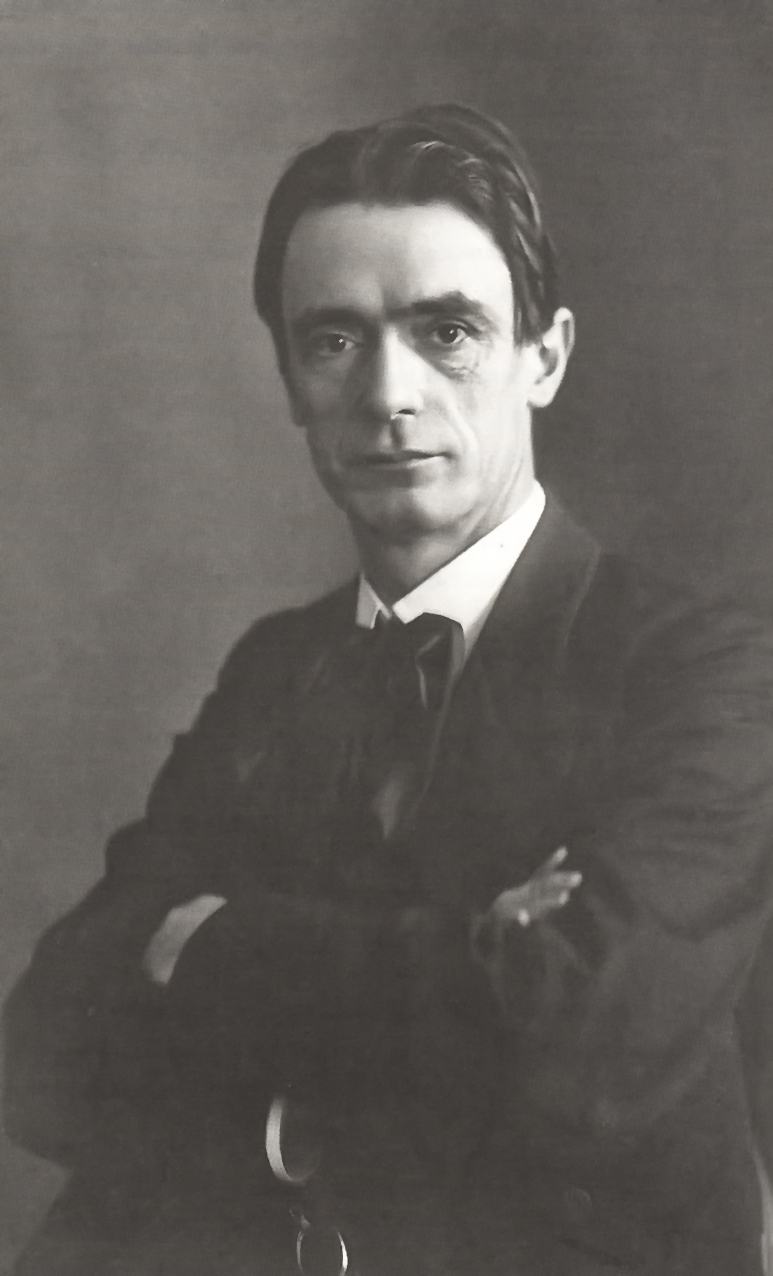
Schuré’s relationship with Rudolf Steiner became one of the most important collaborations of his later life. Introduced through Marie von Sivers in 1906, Schuré immediately regarded Steiner as an authentic initiate in the tradition described in The Great Initiates. After attending Steiner’s lectures in Paris, Schuré was so impressed that he reconstructed the lectures entirely from memory, later publishing them as Esoteric Cosmology. Steiner and von Sivers subsequently staged several of Schuré’s esoteric dramas at Theosophical congresses, while Schuré translated Steiner’s Christianity as Mystical Fact into French, helping introduce Anthroposophical ideas to a wider audience. Although the First World War temporarily strained their friendship, the two men later reconciled and remained important figures within the European esoteric movement.
In addition to The Great Initiates, Schuré authored Jesus, the Last Great Initiate, From Sphinx to Christ, numerous philosophical essays, historical studies, and dramatic works exploring the relationship between ancient mystery traditions and modern spirituality. His writings profoundly influenced Rudolf Steiner, the early Anthroposophical movement, and countless students of Western esotericism. By presenting history as the unfolding transmission of a universal spiritual wisdom, Schuré helped shape the modern understanding of Hermeticism, Theosophy, Rosicrucianism, and comparative religion throughout the twentieth century.