Édouard Schuré (January 21, 1841 – April 7, 1929) was a French writer, philosopher, playwright, music critic, and esotericist whose work became highly influential within Theosophy, Western esotericism, comparative religion, and the modern study of initiation. He is best remembered for his 1889 work Les Grands Initiés, translated as The Great Initiates, which presented the great religious teachers and philosophers of history as members of a common spiritual tradition preserving different expressions of the same universal wisdom.
Through his books, lectures, dramatic works, and criticism, Schuré sought to bring religion, philosophy, science, mythology, art, and esoteric tradition into a single account of human spiritual development. His central belief was that the world’s great religions contain fragments of one ancient truth and that the spiritual teachers of different civilizations expressed this wisdom in forms suited to their own peoples and historical periods.
Early Life and Education
Schuré was born in Strasbourg, France, in 1841. He studied law at the University of Strasbourg and received a law degree, though the legal profession never became the center of his life. His deepest interests were literature, philosophy, music, religion, mythology, and the spiritual history of humanity. These subjects drew him into a wide literary career that included poetry, drama, fiction, essays, public commentary, and music criticism.

From an early period, Schuré was interested in the possibility that artistic inspiration and religious experience arose from hidden spiritual forces operating behind ordinary life. That conviction shaped much of his later work. He came to view poetry, mythology, music, ritual, philosophy, and religion as different languages through which humanity had attempted to express realities that could not be fully contained by ordinary intellectual categories.
Music, Mythology, and Richard Wagner
Early in his career, Schuré became an important French advocate for the music and artistic philosophy of Richard Wagner. He traveled to Germany, encountered Wagner’s circle, and helped introduce Wagnerian ideas to French readers through essays and criticism. His Le Drame musical, published in 1875, examined the relationship between music, mythology, drama, and spiritual culture.
Wagner’s attempt to reunite myth, music, poetry, ritual, and drama made a deep impression on Schuré because it supported his own belief that ancient myths preserved spiritual teachings beneath their outward stories. Artistic symbolism could communicate truths that ordinary philosophical language could not always express directly.
Schuré later distanced himself from Wagner as political and nationalist tensions between France and Germany intensified, but his study of Wagner had already contributed to one of the major themes of his intellectual life. Myth, drama, religious symbolism, and music could preserve knowledge of spiritual realities across long periods of cultural change.
The Great Initiates
Schuré’s most important work, Les Grands Initiés or The Great Initiates, appeared in 1889. The book offered a sweeping interpretation of religious history centered on a succession of great teachers and initiates, including Rama, Krishna, Hermes, Moses, Orpheus, Pythagoras, Plato, and Jesus.
Schuré did not treat these figures as founders of completely separate and unrelated systems. He argued that each represented a different manifestation of the same primordial wisdom. Beneath the outward differences between Hindu philosophy, Egyptian religion, Greek mystery teaching, Judaism, and Christianity, Schuré believed there existed a common esoteric tradition concerning God, the soul, spiritual evolution, the structure of the universe, and humanity’s relationship to the divine.
The “initiates” of the title were those who had penetrated beyond ordinary belief and acquired direct knowledge of these universal principles. Their teachings were adapted to the language, symbols, customs, and spiritual needs of different peoples, but the underlying wisdom remained continuous.
This idea made The Great Initiates one of the most influential works of modern comparative esotericism. It offered readers a way of seeing apparently separate religions as stages within one spiritual history.
A Universal Spiritual Tradition
At the center of Schuré’s philosophy was the idea that humanity possesses a perennial spiritual tradition extending across civilizations. Religion, mythology, philosophy, mystery schools, and symbolic traditions were not isolated historical developments. They were different expressions of a continuing search for the same underlying reality.
This allowed Schuré to place Eastern and Western teachings within a single spiritual framework. Krishna could be studied beside Pythagoras, Moses, Plato, and Jesus because each represented a different expression of universal law. Egyptian initiation, Greek philosophy, Biblical revelation, and Indian religion could all be understood as branches of a deeper spiritual tradition.
Schuré also believed that the recovery of this ancient wisdom could help resolve the conflict between religion and modern science. He did not reject scientific inquiry. He sought a philosophy capable of accepting scientific knowledge while preserving a spiritual understanding of consciousness, morality, the soul, and the universe.
For Schuré, the conflict arose because religion had become separated from direct spiritual knowledge while science had restricted itself to physical phenomena. Initiatory wisdom offered a path by which the two could eventually be reunited.
Schuré and Theosophy
Schuré’s philosophy naturally brought him into contact with the Theosophy of his period. He became associated with the French Theosophical movement and personally encountered Helena Petrovna Blavatsky, whose Theosophical Society likewise promoted comparative religion, ancient wisdom, spiritual evolution, and the search for common principles underlying the world’s religious traditions.
Schuré retained his own philosophical independence, but his work shared many themes with Theosophy. These included reincarnation, spiritual evolution, hidden initiatory traditions, ancient wisdom, the connection between Eastern and Western philosophy, and the belief that humanity possesses latent spiritual faculties capable of development.
The Great Initiates became an important book among Theosophists because it gave literary and historical form to the idea of a universal succession of spiritual teachers. It also appealed strongly to students of Rosicrucianism and other forms of Western occultism.
Initiation as the Key to Religious History
One of Schuré’s most important contributions was his use of initiation as a way of interpreting history. Religious teachers were not important simply because they founded institutions or created doctrines. They were important because they had undergone direct spiritual experience and then translated that experience into forms their societies could understand.
This placed initiation at the center of religious development. Mysteries, temples, sacred schools, prophets, philosophers, and spiritual teachers became parts of a chain through which knowledge was preserved and adapted.
In Schuré’s system, public religion represented the outer form. Initiation represented the inner knowledge.
This distinction made his work highly attractive to readers of Western esotericism, where the idea of an outer doctrine concealing an inner teaching had long been central.
Hermes and the Ancient Wisdom Tradition
Hermes Trismegistus occupies an important place in Schuré’s account because Hermes represented the Egyptian expression of the ancient wisdom tradition. Through Hermes, Schuré could connect Egyptian religion, initiation, sacred science, symbolism, cosmology, and later Hermeticism with the larger history of spiritual teaching.
Hermes was not simply an isolated legendary figure in Schuré’s framework. He represented one stage in the transmission of universal knowledge. The same wisdom later appeared in different forms through Moses, Pythagoras, Plato, and Jesus.
This emphasis helps explain why Schuré’s books appealed so strongly to occult readers who were already interested in Qabalah, Rosicrucianism, alchemy, Hermeticism, and other traditions claiming continuity with ancient initiatory knowledge.
Rama, Krishna, and Hindu Philosophy
Schuré’s inclusion of Rama and Krishna at the beginning of The Great Initiates was significant because it placed Indian religion near the foundation of his universal spiritual history. Hindu philosophy was not treated as an exotic religion existing outside Western spiritual development. It became one of the earliest and most important expressions of the same perennial wisdom later found in Egypt, Greece, Judaism, and Christianity.
This approach anticipated the kind of comparative spirituality that became central to many later occult and metaphysical movements. It also placed Schuré close to the intellectual world in which teachers such as Swami Vivekananda were introducing Western audiences to Vedanta and Yoga.
Schuré’s framework made it possible for Western readers to study Indian teachings alongside Christian and Hermetic traditions without treating them as incompatible systems.
Moses, Orpheus, Pythagoras, and Plato
Schuré’s sequence of initiates was designed to show a movement of spiritual teaching across civilizations. Moses became a great Hebrew initiate who carried ancient sacred knowledge into the religious life of Israel. Orpheus represented the mystery tradition of Greece. Pythagoras united mystical initiation, number, philosophy, and the structure of the cosmos. Plato gave philosophical expression to truths that Schuré believed had deeper initiatory roots.
This sequence allowed Schuré to interpret philosophy itself as part of a spiritual lineage. Greek thought did not stand apart from ancient religion. It represented another stage in the transmission of the same knowledge.
Pythagoras was especially important because number, harmony, cosmology, and spiritual discipline could all be joined in one figure. Schuré’s presentation of Pythagoras helped strengthen the later occult interest in numerical symbolism, sacred mathematics, Qabalism, and the relationship between spiritual law and cosmic order.
Jesus as a Great Initiate
Jesus occupies the culmination of Schuré’s sequence in The Great Initiates. Schuré interprets him through the same initiatory framework applied to earlier teachers. Jesus represented a supreme expression of spiritual consciousness and divine knowledge adapted to the needs of his age.
This interpretation placed Schuré within the field of Christian mysticism and esoteric Christianity. The life of Jesus could be studied not only through church doctrine but through initiation, spiritual development, hidden teaching, symbolism, and the universal laws represented by earlier traditions.
This approach became especially influential in occult and Theosophical circles because it allowed Christianity to remain spiritually central while being integrated with Hindu philosophy, Hermeticism, Greek mysteries, reincarnation, and ancient wisdom.
Schuré and Rudolf Steiner
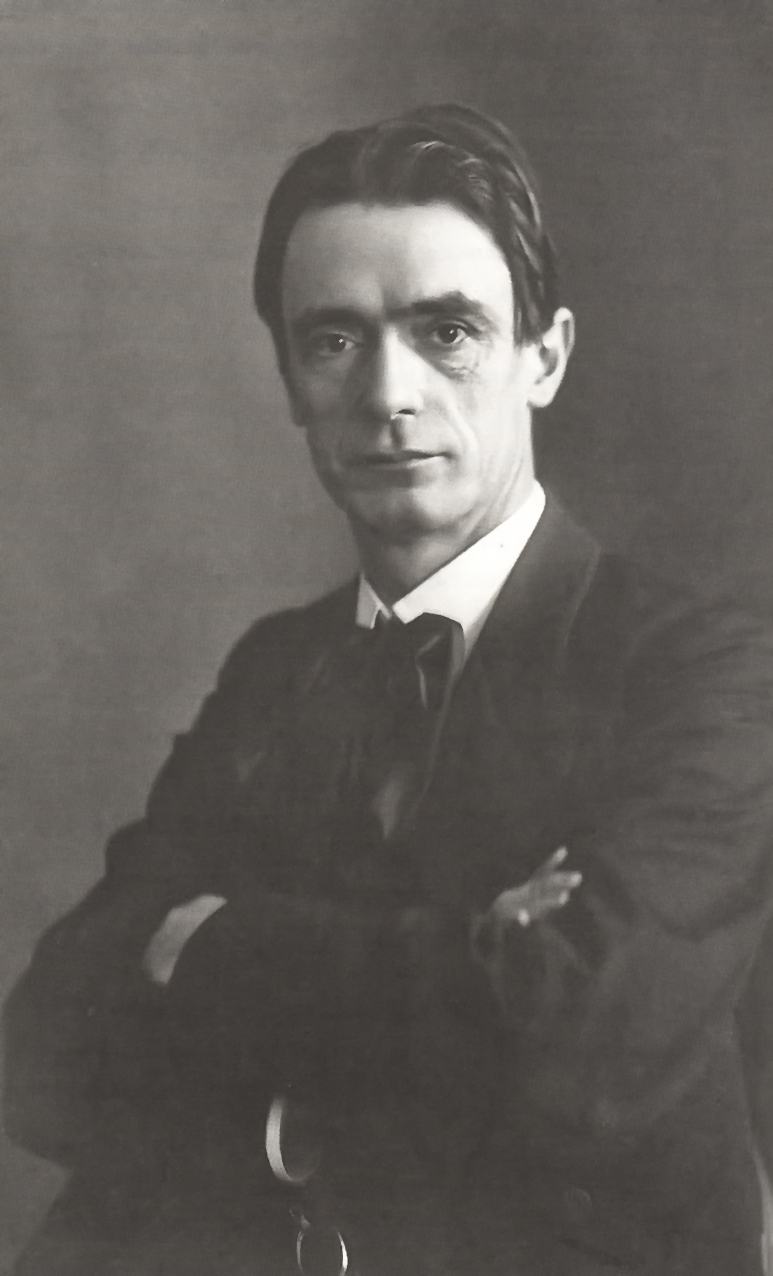
One of Schuré’s most important later relationships was with Austrian philosopher and esotericist Rudolf Steiner. The two developed a close intellectual friendship, and Schuré became deeply interested in Steiner’s spiritual teachings.
Steiner translated and staged several of Schuré’s dramatic works, while Schuré helped introduce Steiner and his ideas to French-speaking audiences. Their relationship linked Schuré’s philosophy of ancient initiation with the developing Anthroposophical movement.
Schuré regarded Steiner as a figure capable of joining philosophical rigor with direct spiritual perception. This was important because it matched Schuré’s lifelong search for a synthesis of reason, spiritual knowledge, science, and initiation.
Their relationship experienced periods of disagreement and distance, but Schuré remained an important figure in the intellectual world surrounding Steiner and the early development of Anthroposophy.
Schuré’s Introduction to The Way of Initiation
Schuré’s connection with Steiner became especially visible through his biographical introduction to The Way of Initiation. In that account, Schuré presents Steiner as both mystic and occultist and describes him as connected with Western Christian and Rosicrucian initiation.
Schuré makes an important distinction between Eastern and Western esoteric traditions. He presents Hindu wisdom as possessing immense knowledge of ancient cosmology and spiritual development, while Western Christian and Rosicrucian esotericism is directed toward humanity’s future spiritual evolution. He also describes Steiner as seeking a link between these traditions.
This is highly characteristic of Schuré himself. Throughout his career, he looked for the points at which apparently separate traditions could be understood as parts of one spiritual history.
Schuré, Rosicrucianism, and Western Initiation
Schuré’s writings became deeply influential among Rosicrucians because his conception of spiritual history strongly resembled the Rosicrucian belief in hidden schools preserving ancient wisdom through changing historical periods.
His initiates transmit knowledge across generations. Sacred teachings pass through mystery schools. Exoteric religion preserves fragments of truths known more fully to advanced teachers. Humanity develops through stages toward higher spiritual consciousness. These themes were central to many Rosicrucian and occult movements of the late nineteenth and early twentieth centuries. Schuré helped give them literary form.
Reincarnation and Spiritual Evolution
Schuré’s spiritual philosophy also included concepts closely associated with reincarnation and Karma. Humanity does not complete its spiritual development in a single moment or through simple intellectual belief. Consciousness develops through long cycles of experience.
This placed his work near Theosophical theories of spiritual evolution and helped explain why The Great Initiates became so widely read within Theosophy.
Religious history could then be understood as part of the same evolutionary process. Great teachers appear when humanity reaches stages at which new expressions of spiritual truth are required.
Schuré’s Dramatic and Literary Work
Although The Great Initiates became his most famous book, Schuré wrote extensively in many forms. His dramatic works attempted to restore something of the sacred function he believed ancient theater once possessed.
Drama, in his view, could do more than entertain. Mythic characters and symbolic action could awaken spiritual memory and insight in the audience.
This interest connected directly with his admiration for Wagner and later with Steiner, who shared the belief that drama, movement, speech, symbolism, and ritual could become instruments of spiritual culture.
Schuré’s literary career should therefore be understood as part of his esoteric work. His plays, criticism, religious studies, and philosophical books all grew from the same conviction that art could reveal spiritual realities hidden beneath ordinary appearances.
Schuré and Comparative Religion
Schuré helped popularize a form of comparative religion that differed from purely academic comparison. He was interested in relationships among religions because he believed those relationships pointed toward a real common source.
Rama, Krishna, Hermes, Moses, Orpheus, Pythagoras, Plato, and Jesus were not simply figures from different traditions placed next to one another for comparison. They formed a spiritual sequence.
This gave Schuré’s work enormous appeal among readers searching for a religious philosophy capable of including both East and West.
His method anticipated later forms of perennial philosophy, though Schuré’s version remained strongly connected to initiation, esotericism, spiritual evolution, and ancient mystery traditions.
Influence on Theosophy and Anthroposophy
Schuré’s influence within Theosophy came largely through The Great Initiates, while his later relationship with Steiner connected him with Anthroposophy.
Both movements shared his interest in spiritual evolution, hidden wisdom, initiation, and the relationship between ancient religion and modern consciousness.
Schuré did not simply disappear into either movement. He maintained his own voice and intellectual independence.
His significance lies in the bridge he created between them.
Influence on Rosicrucian and Occult Literature
Schuré became a major source for occult writers who wanted to present Rosicrucianism, Hermeticism, initiation, and comparative religion as parts of one ancient tradition.
His books were widely read by students of secret societies, occult philosophy, spiritual initiation, mythology, and comparative religion.
The idea of a succession of initiates carrying one body of wisdom through different civilizations became one of the defining structures of modern occult history writing.
Why Schuré Fits the Yogi Publication Society
Schuré’s work fit naturally within the intellectual world of the Yogi Publication Society. YPS likewise published books that crossed the boundaries between Yogi philosophy, Western esotericism, Hermeticism, Qabalah, Theosophy, Rosicrucianism, reincarnation, Christian mysticism, psychic development, and comparative religion.
Schuré’s vision of religious history strongly matched that publishing program. He treated Hindu teachers, Hermes, Moses, Greek initiates, and Jesus as members of one spiritual lineage. YPS likewise placed Eastern and Western teachings side by side and published works that encouraged readers to search for common laws behind them.
This helps explain why Schuré’s work belonged so comfortably in a catalog that could also contain Yogi Ramacharaka, The Kybalion by the Three Initiates, Theron Q. Dumont, Swami Panchadasi, and Swami Bhakta Vishita.
The Society’s catalog repeatedly moved between Hindu philosophy, Hermetic teaching, mental science, occult Christianity, psychic powers, Qabalah, Rosicrucianism, and ancient wisdom. Schuré had already supplied a historical and philosophical argument for reading these subjects together.
Schuré and the YPS View of Jesus
Schuré’s Jesus: The Last Great Initiate became especially relevant to the YPS program because the Society also published works presenting Jesus through occult and initiatory interpretations.
The connection is clear with Yogi Ramacharaka’s Mystic Christianity, where Jesus is likewise approached through hidden teachings, initiation, spiritual development, and a Christianity deeper than conventional church doctrine.
Schuré helped establish the interpretive model by which Jesus could be studied as part of a universal spiritual tradition without stripping Christianity of its spiritual importance. This became a central feature of early twentieth-century esoteric Christianity.
Schuré’s Lasting Influence
The Great Initiates remained Schuré’s most enduring contribution to modern esoteric thought and was translated into numerous languages. Its presentation of religious history as a succession of great initiates transmitting a common spiritual wisdom helped popularize ideas that later became central to twentieth-century comparative spirituality and perennial philosophy.
His work influenced Theosophy, Anthroposophy, Rosicrucianism, Western occultism, comparative religion, and generations of writers interested in connecting Eastern and Western traditions.
Artists, musicians, dramatists, philosophers, and religious thinkers also found value in Schuré because his system gave mythology and art a spiritual function. Symbols were not remnants of primitive belief. They were vessels through which deep truths could survive.
What Was Édouard Schuré’s Central Contribution?
Édouard Schuré’s central contribution was the idea that the great teachers of religious history belonged to a continuous spiritual tradition. Rama, Krishna, Hermes, Moses, Orpheus, Pythagoras, Plato, and Jesus represented different cultural expressions of the same ancient wisdom.
This allowed him to construct a spiritual history in which East and West, religion and philosophy, myth and science, art and initiation could be studied together. For Schuré, the outward forms changed. The inner truth remained.
That idea explains his lasting place within Theosophy, Western esotericism, Rosicrucianism, Anthroposophy, and the wider occult revival. It also explains why his work fit so naturally into the intellectual world of the Yogi Publication Society, where Hindu philosophy, Hermeticism, Christian mysticism, Qabalah, reincarnation, psychic development, and ancient initiation were continually presented as parts of a connected search for universal spiritual law.