Theosophy is a modern esoteric movement that sought to recover what its followers believed to be an ancient body of spiritual knowledge underlying the world’s religions, philosophies, and mystery traditions. It was organized in 1875 through the founding of the Theosophical Society by Helena Petrovna Blavatsky, Henry Steel Olcott, William Quan Judge, and others.
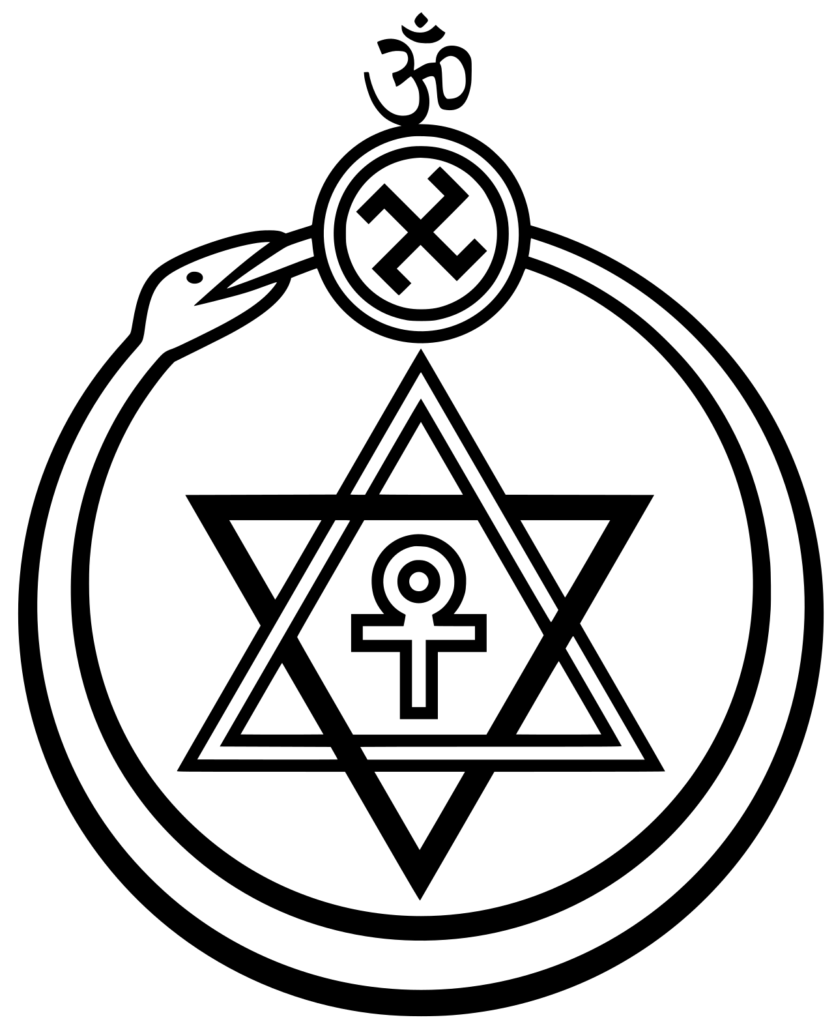
Theosophy combined Western occultism with an intensive study of Hindu and Buddhist philosophy and presented the universe as an ordered spiritual system governed by laws of evolution, Karma, reincarnation, and the progressive development of consciousness. Human beings were understood as multidimensional beings whose physical lives formed only a small part of a much longer spiritual existence.
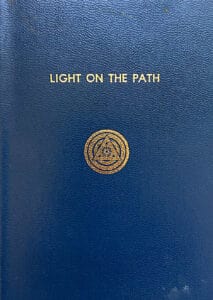
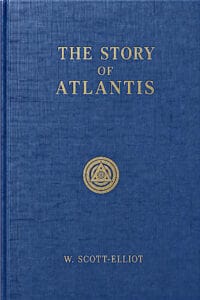
Theosophy is directly important to the history of the Yogi Publication Society. YPS did not merely publish books containing occasional ideas that resembled Theosophy. The Society published and distributed works by Theosophical writers themselves, and Light on the Path, one of the best-known devotional works of the Theosophical movement, was among the books at the beginning of the YPS publishing operation. The catalogue would continue to include works originating within or closely connected with Theosophy, while doctrines already familiar to Theosophical readers, including Karma, reincarnation, planes of existence, astral and mental bodies, occult development, clairvoyance, thought forms, and the spiritual evolution of humanity, became major subjects throughout YPS literature. The relationship between Theosophy and YPS is therefore part of the publishing history itself.
What Is Theosophy?
The word theosophy literally refers to divine wisdom and had been used in different religious and philosophical settings long before the nineteenth century. Modern Theosophy, however, usually refers to the movement associated with Helena P. Blavatsky and the Theosophical Society established in New York in 1875.
Theosophy proposed that behind the outward differences among religions lies an ancient body of spiritual knowledge. Hinduism, Buddhism, Christianity, the ancient mystery religions, Hermeticism, Qabalah, and other traditions were studied as partial expressions of deeper principles concerning consciousness, nature, humanity, and the universe. The purpose of comparative study was to recover the relationships between them and reconstruct what Theosophists believed to be an ancient wisdom tradition.
This gave Theosophy an unusually wide field of inquiry. Its literature discussed religion, mythology, occultism, human origins, psychic phenomena, ancient civilizations, spiritual development, death, reincarnation, Karma, consciousness, cosmology, and the hidden constitution of the human being. These subjects were not treated as unrelated curiosities. Theosophy attempted to place them within one enormous account of spiritual evolution.
How Did the Theosophical Society Begin?
The Theosophical Society was founded in New York City in 1875 during a period of intense American interest in Spiritualism, psychic phenomena, occultism, séances, mesmerism, and comparative religion. Helena Petrovna Blavatsky became its principal intellectual and literary figure, while Henry Steel Olcott became its first president. William Quan Judge, an Irish-born American lawyer, was also among its founders and later became one of the most important figures in American Theosophy.
The Society eventually identified three principal objects. It sought to establish a nucleus of universal brotherhood without distinction of race, creed, sex, caste, or color, to encourage the comparative study of religion, philosophy, and science, and to investigate unexplained laws of nature and powers latent in humanity. These aims reveal the unusual scope of the movement. Ethical and spiritual brotherhood existed alongside comparative religion and the investigation of occult or psychic phenomena.
The Society later transferred its international headquarters to Adyar, near Madras in India. This move placed Theosophy in sustained contact with Indian religious and philosophical traditions and greatly influenced the movement’s subsequent development. Sanskrit terminology and concepts drawn from Hinduism and Buddhism became increasingly prominent in Theosophical literature.
Who Was Helena Petrovna Blavatsky?

Helena Petrovna Blavatsky was the principal founder, theorist, and writer of modern Theosophy. Her major books attempted to demonstrate the existence of an ancient wisdom tradition behind religion, mythology, philosophy, and occultism.
Her first major work, Isis Unveiled, appeared in 1877. It attacked materialism and conventional religious dogmatism while surveying occultism, ancient religion, psychic phenomena, magic, and esoteric traditions. Her much larger The Secret Doctrine, published in 1888, attempted to present a comprehensive account of cosmic and human evolution derived from what Blavatsky described as ancient esoteric teachings. Blavatsky’s writings gave modern Theosophy much of its characteristic vocabulary and structure. Concepts from Hindu and Buddhist traditions were combined with Western occult terminology and interpreted through a vast evolutionary cosmology. The resulting system became one of the most influential sources for later Western esoteric literature.
What Is the Ancient Wisdom?
Theosophists frequently described their teachings as the Ancient Wisdom or Wisdom Religion. The basic proposition was that humanity once possessed knowledge concerning spiritual reality, the constitution of the human being, and the laws governing the universe. Fragments of this knowledge survived within religions, myths, philosophical systems, mystery schools, and esoteric traditions.
Under this interpretation, religions were not completely independent revelations. They contained different expressions of common principles. Similarities between traditions could therefore be treated as evidence of an older shared source.
Theosophy made comparative religion central to its method for this reason. A Hindu teaching could be placed beside a Buddhist doctrine, a Platonic concept, a Christian mystical teaching, or a Hermetic principle in an attempt to identify the law believed to exist beneath all of them. This approach had an enormous influence upon later esoteric publishing because it encouraged writers to move freely between traditions while treating them as different expressions of a common wisdom.
What Did Theosophy Teach About the Human Being?
Theosophy rejected the idea that a human being consists only of a physical body and a single immaterial soul. It developed a layered model in which human existence extended through several levels or principles.
Different Theosophical writers and periods used somewhat different classifications, but the sevenfold constitution became especially influential. The physical body represented only the densest aspect of the individual. Other principles were associated with vitality, desire, mind, higher consciousness, and spiritual identity. Terms such as astral body, Kama, Manas, Buddhi, and Atma became common in Theosophical discussions of human nature.
This model allowed Theosophists to explain a wide range of phenomena within one system. Dreams, psychic experiences, clairvoyance, telepathy, death, after-death states, reincarnation, and mystical experience could all be interpreted through the activity of different levels of the human constitution.
What Are the Planes of Existence?
Theosophy describes reality as extending through multiple planes or levels of existence. The physical world is only one of them. Finer planes were associated with forces, emotions, thought, and spiritual consciousness.
The exact terminology varied, but the astral and mental planes became especially familiar through later Theosophical literature. The astral plane was commonly associated with emotional and psychic phenomena and with states experienced after physical death. The mental plane was associated with thought and forms of consciousness operating beyond ordinary physical awareness. Still higher planes represented increasingly spiritual states of being.
These planes were not presented simply as distant locations. Human beings were believed to possess corresponding aspects of their own constitution. The multidimensional universe and the multidimensional human being mirrored one another, allowing consciousness to function upon different levels.
What Is the Astral Body?
The astral body became one of the most recognizable concepts in popular Theosophy, although the terminology changed considerably during the movement’s development. It referred to a nonphysical vehicle or aspect of the human being associated with a subtler plane of existence.
Later Theosophical writers developed increasingly detailed descriptions of astral experience. Dreams, visions, apparitions, psychic perception, and experiences during sleep could be interpreted through the temporary activity of consciousness outside the physical body. After death, consciousness was also believed to pass through states associated with nonphysical levels before continuing its longer evolutionary journey.
These teachings strongly influenced twentieth-century occultism. The language of astral bodies, astral planes, astral travel, and subtle vehicles spread far beyond formal membership in the Theosophical Society and became standard vocabulary in Western esoteric literature.
What Did Theosophy Teach About Karma?
Karma became one of the foundations of Theosophical teaching. The concept was drawn from Indian religions but interpreted within the movement’s own universal evolutionary system. Every thought, action, and choice was understood to produce consequences according to law.
Karma was not simply punishment. It represented cause and effect operating through moral and spiritual development. Present circumstances were connected with previous causes, while present actions established causes that would bear consequences in the future.
Because one physical lifetime could not contain the entire chain of causes and effects, Karma was closely connected with reincarnation. The two doctrines together supplied an explanation for continuity across multiple lives. The individual inherited consequences from the past while continually creating new conditions through present thought and action.
What Did Theosophy Teach About Reincarnation?
Reincarnation is the doctrine that the enduring spiritual individuality passes through repeated earthly lives. Each incarnation provides another field of experience through which consciousness develops.
Theosophy used reincarnation to construct an immense history of human development. A single lifetime represented only one stage in a process extending across many births and deaths. Talents, tendencies, relationships, difficulties, and opportunities could be interpreted in relation to previous lives and the Karma generated through them.
Death therefore did not represent the end of the individual. It marked a transition between incarnations. The personality associated with a particular earthly life was temporary, while a deeper spiritual individuality continued through the larger cycle.
What Is Spiritual Evolution?
Evolution is one of the central organizing ideas of Theosophy. Physical evolution formed only part of a much greater process involving consciousness itself. Humanity was understood as progressing through enormous cycles of experience toward increasingly developed states of spiritual awareness.
This evolution operated through reincarnation and Karma. Each life provided experience. Choices generated consequences. Those consequences created further opportunities for development. Over many incarnations, consciousness gradually unfolded capacities that had previously existed only in potential.
Theosophy extended the same principle to humanity as a whole and to the cosmos. Civilizations, worlds, and even planetary systems were placed within cycles of manifestation, development, decline, and renewal. Human evolution was one part of a universal process.
Who Were the Masters or Mahatmas?
Blavatsky claimed that the Theosophical movement was connected with advanced spiritual teachers commonly called Masters, Mahatmas, or Adepts. The best known were identified as Morya and Koot Hoomi. They were described as highly developed human beings who had attained knowledge and capacities far beyond ordinary humanity.
The Masters were important because they embodied the Theosophical doctrine of spiritual evolution. If consciousness could develop across many lifetimes, then some individuals might stand much further along that path than others. Adeptship represented an advanced stage of human development rather than an entirely separate order of being.
Claims concerning communications from the Masters became some of the most disputed aspects of Theosophical history. Whatever judgment is made concerning those claims, the concept of advanced teachers became enormously influential in later occult movements and in literature concerning initiation, hidden brotherhoods, and spiritual development.
What Is Initiation?
Initiation in Theosophy refers to stages of conscious spiritual development through which the student acquires deeper knowledge and greater control over the faculties of the mind and consciousness. It was not understood merely as membership in an organization or participation in a ceremony.
The path toward initiation required ethical development, self-control, disciplined thought, reduction of selfish desire, and the cultivation of spiritual perception. Psychic abilities alone were not considered proof of spiritual advancement. The ability to perceive unusual phenomena without corresponding development of character could even be regarded as dangerous. This distinction became important throughout later esoteric literature. Occult development was supposed to involve the transformation of the individual, not simply the acquisition of unusual powers.
What Is the Path?
The Path is the process of deliberate spiritual development through which an individual gradually moves from ordinary consciousness toward greater knowledge and spiritual realization. The idea appears repeatedly in Theosophical literature and became one of its most influential contributions to modern esotericism.
The Path required discipline. Desire had to be controlled, selfish motives examined, thought trained, and attachment to the personal self gradually overcome. Knowledge alone was insufficient. The student had to become capable of living according to the truths being studied.
The concept gave Theosophy a strongly developmental character. Esoteric knowledge was not simply information to be collected. The individual was expected to become different through its application.
What Is Light on the Path?
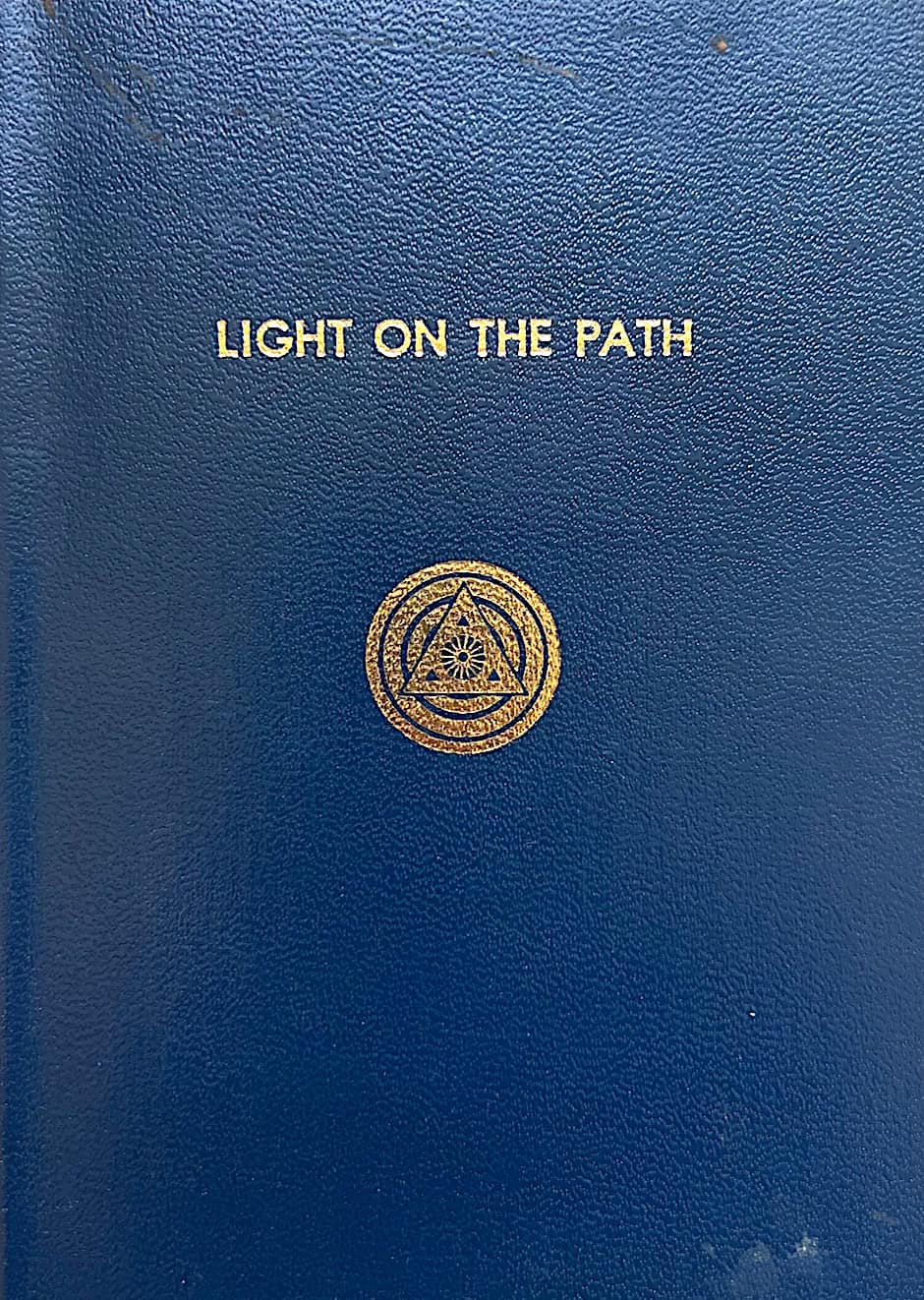
Light on the Path is one of the most important short devotional works associated with early Theosophy. First published in 1885 under the name Mabel Collins, it presents a series of instructions concerning spiritual discipline, desire, self-knowledge, suffering, inner perception, and the path toward initiation.
The book is constructed around brief statements that are then explained through commentary. Its instructions demand the conquest of personal ambition and selfish desire while cultivating the ability to hear, perceive, and act from a deeper spiritual level. Statements such as the instruction to “kill out ambition” express the severity of the discipline being proposed. The aspirant is expected to move beyond ordinary personal motives before genuine occult development can occur.
The work became widely read among Theosophists because it condensed the idea of the spiritual Path into a small manual that could be repeatedly studied. Its importance to the Yogi Publication Society is even more direct. Light on the Path stood at the beginning of the YPS publishing story, making Theosophical literature part of the Society’s catalogue from its earliest period.
What Is the Difference Between Psychic Development and Spiritual Development?
Theosophy drew an important distinction between the development of psychic faculties and spiritual advancement. Clairvoyance, psychometry, telepathy, visions, and other unusual perceptions could demonstrate capacities beyond ordinary sensory experience according to Theosophical teaching, but they did not automatically indicate wisdom or moral development.
A person could possess psychic sensitivity while remaining selfish, undisciplined, or confused. Spiritual development required mastery of desire, ethical conduct, discrimination, self-knowledge, and a movement away from domination by the personal ego.
This distinction helps explain why Theosophical literature could simultaneously investigate psychic phenomena and warn readers against becoming fascinated by them. Psychic faculties were part of the hidden constitution of humanity, while the ultimate purpose of occult training was the development of consciousness.
What Did Theosophy Teach About Clairvoyance?
Clairvoyance was understood as the ability to perceive information beyond the normal range of physical sight. Theosophical explanations generally connected it with the existence of subtler senses corresponding to the nonphysical aspects of the human being.
If humans possessed astral and mental vehicles, those vehicles could theoretically possess their own modes of perception. Clairvoyance could therefore be interpreted as consciousness functioning through senses associated with another plane.
Later Theosophical writers produced elaborate descriptions of clairvoyant perception, including observations of auras, thought forms, astral conditions, and nonphysical beings. These accounts became highly influential in later occult literature, whether or not readers accepted the claimed observations as literal.
What Are Thought Forms?
Theosophy developed the idea that thoughts could produce forms or structures upon subtler levels of existence. A thought was not treated merely as an invisible event confined within the brain. It could possess form, intensity, color, direction, and duration according to the character and strength of the thought producing it.
Repeated or emotionally intense thoughts were believed to create stronger forms. Thoughts directed toward another person could travel toward that individual, while habitual thoughts could surround their creator and influence subsequent mental activity.
The doctrine gave visual and occult form to the older proposition that thoughts possess consequences. It also connected Theosophy with contemporary interests in mental influence, telepathy, personal magnetism, and the power of concentrated thought.
How Did Theosophy Understand Death?
Death in Theosophy is the separation of consciousness from the physical body, not the extinction of the individual. The human being continues through a sequence of postmortem states associated with the subtler aspects of the human constitution.
The physical body is abandoned first. Other temporary elements connected with desire and personality are eventually left behind as consciousness passes through further stages. The enduring spiritual individuality continues and eventually returns to physical incarnation. This model allowed Theosophy to place death within the same evolutionary process as life. Birth and death became alternating phases within a much longer history of consciousness.
What Is Devachan?
Devachan is the term commonly used in Theosophical literature for a postmortem state in which the higher aspects of the individual assimilate the spiritual and mental experiences of the completed life. It is frequently compared with heaven, although Theosophical writers did not understand it as an eternal destination.
Devachan forms part of the interval between incarnations. The experiences and aspirations of the previous life are absorbed before the enduring individuality eventually returns to physical existence through reincarnation. The concept allowed Theosophy to reinterpret older ideas of heaven within its evolutionary system. Postmortem states were temporary stages in a continuing journey, while reincarnation and spiritual development remained the larger process.
How Did Theosophy Understand Religion?
Theosophy treated the religions of the world as different expressions of deeper spiritual truths. Their myths, symbols, scriptures, and doctrines could therefore be compared in search of common principles.
This approach allowed Theosophical writers to move between Hinduism, Buddhism, Christianity, ancient Egyptian religion, Greek philosophy, Hermeticism, Qabalah, and other traditions. Similarities were interpreted through the concept of an Ancient Wisdom from which later systems had inherited fragments.
The method profoundly influenced modern Western esotericism. It encouraged the construction of comparative systems in which terminology from different cultures could be placed within a single spiritual map.
Why Were Hindu and Buddhist Ideas So Important to Theosophy?
Theosophy played an important role in introducing Western readers to terminology and concepts derived from Indian religions. Karma, reincarnation, yoga, Maya, Atma, Buddhi, Manas, Prana, and other Sanskrit terms became increasingly familiar through Theosophical literature.
Theosophical interpretations were not identical with the teachings of any single Hindu or Buddhist school. Concepts were selected, translated, rearranged, and incorporated into the movement’s own esoteric system. The result was a distinct Theosophical synthesis.
This distinction matters when reading later Western literature on Yogi philosophy. A Sanskrit term appearing in an American occult book does not automatically demonstrate that its explanation came directly from an Indian source. By the beginning of the twentieth century, a substantial body of Indian religious terminology had already been circulating for decades through Theosophical publications and other Western interpreters.
What Was the Relationship Between Theosophy and Swami Vivekananda?
Swami Vivekananda represented a different route through which Indian philosophy reached Western audiences. His appearance at the World’s Parliament of Religions in Chicago in 1893 and his subsequent lectures and publications introduced Western readers to Vedanta and Yoga through an Indian religious teacher speaking from within a Hindu tradition.
Theosophy had already created substantial Western interest in Indian religion, Karma, reincarnation, occult philosophy, and Sanskrit terminology. Vivekananda entered a culture in which those subjects had become increasingly familiar, while frequently presenting them differently from Theosophical interpretations.
This distinction is important for the later YPS literature. Western interest in Yoga at the beginning of the twentieth century had several sources. Theosophy was one of them, Vivekananda and other Indian teachers were another, and the resulting literature cannot be understood by treating every Western presentation of Yoga as coming through a single line.
How Did Theosophy Influence Western Esotericism?
Few nineteenth-century movements did more than Theosophy to create a common vocabulary for modern Western esotericism. Ideas that had previously belonged to separate religious, occult, philosophical, and psychic traditions were gathered into an enormous comparative system.
Karma and reincarnation could be discussed alongside astral bodies and psychic perception. Hindu and Buddhist terminology could appear beside Hermetic and Qabalistic ideas. Spiritual evolution could connect ancient civilizations with modern humanity. The Masters could connect occult initiation with a continuing hidden tradition.
Theosophy also produced an enormous international publishing culture. Books, journals, pamphlets, lodges, lectures, study groups, and correspondence carried its terminology far beyond formal membership in the Theosophical Society. By the beginning of the twentieth century, many concepts originally popularized through Theosophical literature had entered the general vocabulary of occult and metaphysical publishing.
Why Was Theosophy So Important to the Yogi Publication Society?
The connection between Theosophy and the Yogi Publication Society is visible directly in the books YPS chose to publish. The Society began with Theosophical literature already present in its catalogue, including Light on the Path, and continued to issue works by writers associated with the Theosophical movement. Theosophy was therefore not an outside philosophy that later scholars have imposed upon YPS because of similarities in terminology. It was part of the literature the Society itself selected and distributed.
This matters when examining the later YPS catalogue. The reader repeatedly encounters subjects that Theosophy had spent decades presenting to Western audiences. Karma, reincarnation, planes of existence, astral bodies, mental bodies, spiritual evolution, psychic development, clairvoyance, thought forms, life after death, occult initiation, and the latent powers of humanity all became prominent subjects within YPS books. The terminology does not prove that every such passage was copied from a Theosophical source, but the direct publishing relationship makes Theosophy one of the bodies of literature that must be considered when tracing those teachings.
The connection also helps explain the breadth of the YPS catalogue. YPS did not restrict itself to books presented as Yogi philosophy. It published works representing multiple religious and esoteric traditions, including books already important within Theosophy. The resulting catalogue placed Indian philosophy, occult development, mental training, psychic phenomena, Hermeticism, Rosicrucian teachings, and Theosophical literature within the same publishing operation.
Why Is Light on the Path So Important to the Beginning of YPS?
The presence of Light on the Path at the beginning of the Yogi Publication Society is significant because it shows what kind of publishing enterprise YPS was becoming from the outset. Before the catalogue expanded into the large body of works now associated with Yogi Ramacharaka and the Society’s later pseudonymous authors, YPS was already drawing upon established esoteric literature with a substantial readership.
Light on the Path was an especially revealing choice. It dealt with the disciplined development of the individual, control of desire, spiritual perception, initiation, and the transformation required of someone pursuing occult knowledge. These subjects would remain central throughout much of the later YPS catalogue even when they were presented through different traditions and authorial identities.
The book also placed YPS immediately within a preexisting international esoteric literary tradition. The Society was not beginning with an empty vocabulary and gradually discovering occult subjects. Theosophical literature was present at the beginning, and its concepts provided readers with an already developed language for understanding Karma, reincarnation, planes, subtle bodies, psychic faculties, initiation, and spiritual evolution.
How Does Theosophy Help Explain the YPS Catalogue?
Theosophy is most useful for understanding YPS when specific doctrines are compared instead of treating every similarity as proof of direct borrowing. The sevenfold or multilayered constitution of the human being, the distinction between physical and subtler planes, postmortem states, reincarnation, Karma, occult faculties, thought forms, and progressive spiritual development all had substantial Theosophical literatures before or during the period in which YPS developed.
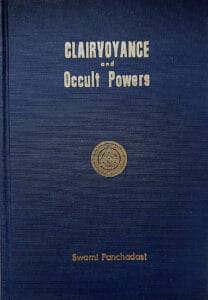
The Yogi Ramacharaka books frequently enter the same territory while presenting themselves through the language of Yoga and Indian philosophy. Later YPS works associated with Swami Panchadasi and Swami Bhakta Vishita address psychic development, clairvoyance, astral phenomena, thought influence, and other subjects already extensively developed within Theosophical literature.
The important research question is not whether these books can simply be labeled Theosophy. They cannot. The question is which teachings derive from Indian sources, which had already been reformulated through Theosophical literature, which came through other Western occult traditions, and how those elements were recombined within YPS. Because YPS itself published Theosophical authors and began with an important Theosophical work, that comparison rests upon a documented publishing relationship and not merely upon thematic resemblance.