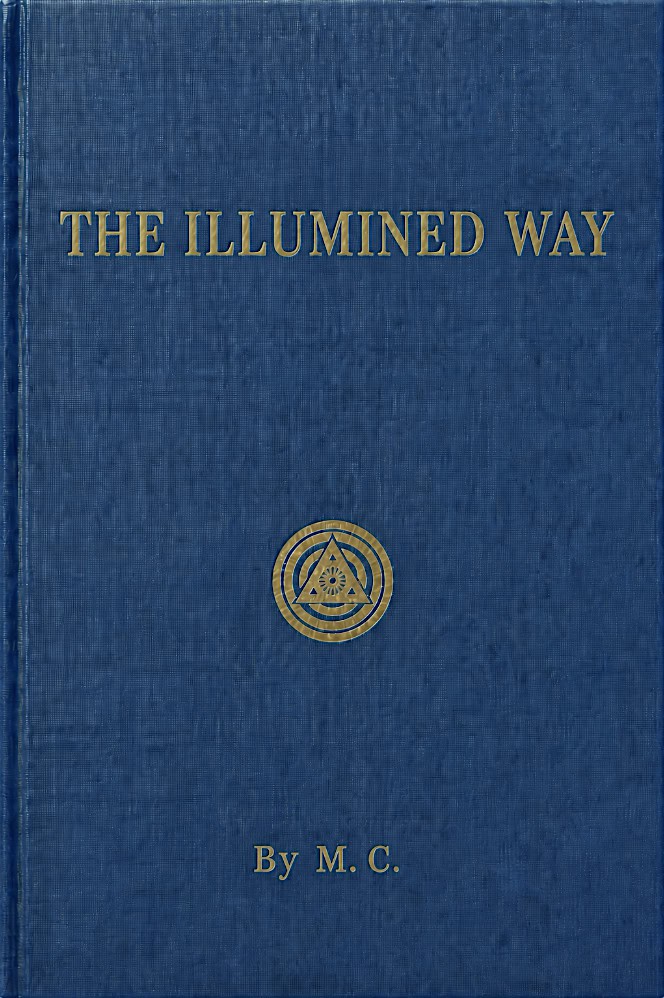
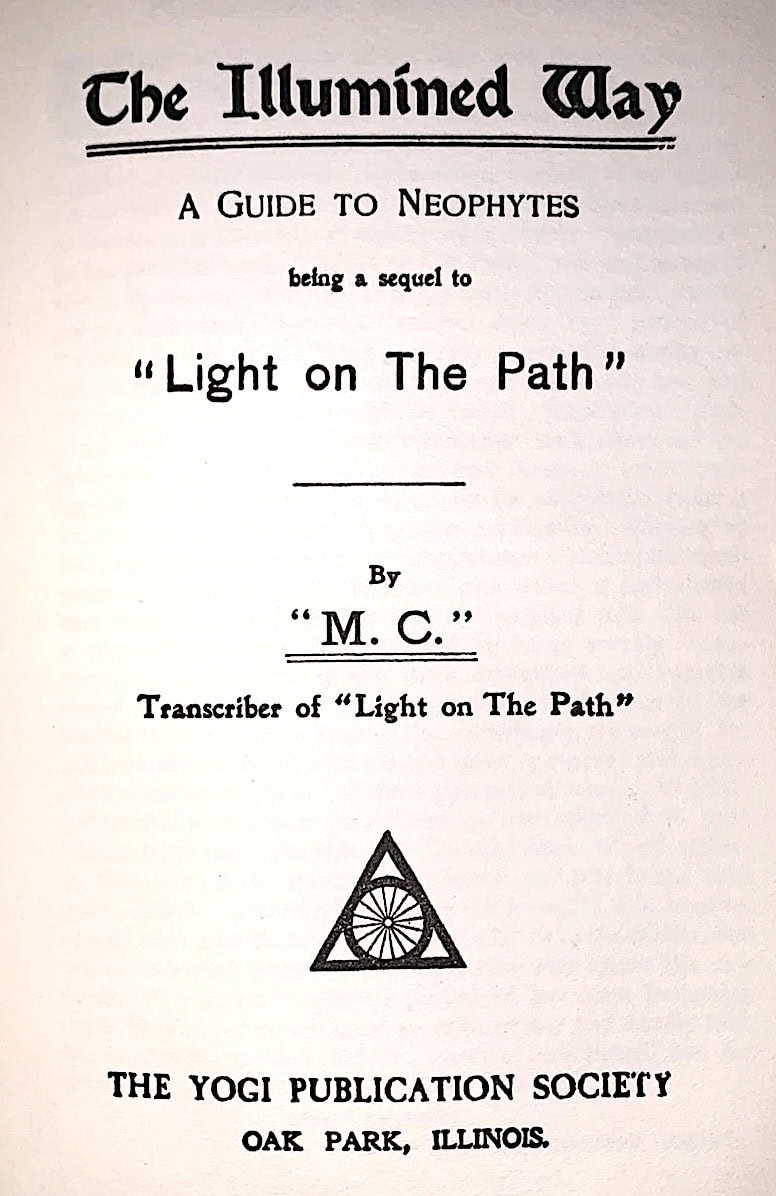
The Illumined Way: A Guide to Neophytes is an occult treatise by “M. C.,” the initials used by Mabel Collins, and was published in this form by the Yogi Publication Society as a sequel and explanatory companion to Light on the Path. The work was originally published under the title “Comments on Light on the Path,” appearing as a series of essays in the Theosophical Society‘s Lucifer magazine and later reprinted in various forms in England and America. When the Yogi Publication Society prepared its own edition, it gave the work the new title The Illumined Way because it considered the original description of the essays as mere “comments” inadequate for the book title.
Mabel Collins wrote under M. C.
The Illumined Way explains what Collins believed the opening rules of Light on the Path actually demanded from a person seeking occult initiation. Its central subject is the transformation of the ordinary human being into the neophyte or disciple. Collins describes this transformation through four symbolic requirements: the eyes must become incapable of tears, the ears must lose their sensitiveness, the voice must lose the power to wound, and the feet of the soul must be washed in the blood of the heart. These statements describe successive changes in consciousness through which the aspirant gains control over emotion, becomes independent of external influences, learns to act without selfish motive, and gives up the personal attachments that prevent direct knowledge of what she calls the divine or astral life.
The Illumined Way belongs to the early publishing program of the Yogi Publication Society, when the organization was simultaneously issuing older works of Yogi philosophy and developing its new series under the name Yogi Ramacharaka.
What Is The Illumined Way About?
The Illumined Way begins from the premise that Light on the Path cannot be understood by reading its sentences only in their ordinary sense. M.C. compares occult writing to a cipher and says that the same method of concealment can be found in old works of alchemy, philosophy, and poetry. The deepest teaching is hidden “within the words,” because certain truths cannot simply be transferred from teacher to student as ordinary information. The aspirant has to discover them through experience. M.C. compares this process to eating: another person can provide food, yet no one can eat it for you. Knowledge of the higher life must be assimilated by the individual in the same way.
This explains the purpose of The Illumined Way. M.C. says that she intends to place portions of Light on the Path into new and sometimes plainer language, while admitting that no explanation can substitute for the reader’s own perception. She concentrates on the opening aphorisms because she considers them the entrance requirements of occultism. They belong to what she calls the “trial initiation” of the would-be occultist. Until this initiation has begun, the aspirant has not yet reached the gate of knowledge. The rest of the teachings may be intellectually interesting, but they do not become living instructions until the first transformation has taken place.
What Are the Four Requirements for Entering the Path?
The argument of The Illumined Way revolves around four statements inherited from Light on the Path:
“Before the eyes can see they must be incapable of tears.”
“Before the ear can hear, it must have lost its sensitiveness.”
“Before the voice can speak in the presence of the Masters, it must have lost the power to wound.”
“Before the soul can stand in the presence of the Masters, its feet must be washed in the blood of the heart.”
M.C. treats these statements as a sequence. The first two are described as negative stages because they require the aspirant to withdraw from an existing condition of consciousness. The next two are active stages in which the transformed individual begins to participate consciously in another order of life. Sight means the awakening of inner perception. Hearing means becoming receptive to intuitive knowledge after the noise of personal reactions has been silenced. Speech marks the beginning of active participation and service. Standing before the Masters represents the establishment of the divine soul in a condition no longer ruled by fear, desire, pleasure, pain, or personal ambition.
Why Must the Eyes Become Incapable of Tears?
M.C. identifies the senses discussed in these opening rules as astral or inner senses. According to her account, ordinary physical perception is only the outermost layer of human consciousness. Behind the physical senses are subtler faculties that humanity has neglected through long habit. She calls the interior world perceived by these faculties “astral,” while acknowledging that the word itself is imperfect. Her central claim is that the visible world is animated by an interior life and that human beings possess corresponding faculties through which that life may be known.
Theosophical Society seal
The first requirement concerns emotional equilibrium. Tears symbolize the power of personal sensation to overwhelm consciousness. Pleasure, grief, disappointment, fear, and desire produce powerful movements within the individual, and the ordinary person experiences these movements as central facts of life. For M.C., the aspiring disciple must reach a condition in which these forces can be experienced without destroying inner stability. Being “incapable of tears” does not mean becoming emotionally dead, indifferent, exhausted, or hard-hearted. She explicitly rejects those interpretations. Hardness belongs to selfishness, indifference to spiritual weakness, and emotional exhaustion to a loss of vitality. None qualifies a person for discipleship.
The disciple, in fact, may experience sensation more keenly than other people. The requirement is that sensation no longer control the center of consciousness. M.C. compares the necessary poise to maintaining physical balance near a precipice. A sudden shock can cause someone who loses bodily control to fall; emotional shock can likewise cause the aspirant to lose the inner balance necessary for spiritual perception. The soul must retain its connection with what she calls the “starry spirit,” the still center behind the fluctuations of personal experience.
Why Does Suffering Appear So Often in the Book?
M.C. believes intense experience can force a person to discover the instability of a life organized around sensation. Pleasure changes into pain, pain passes away, circumstances alter, attachments disappear, and every condition produced by ordinary life eventually changes. The aspirant who sees this clearly begins to search for something that does not oscillate with circumstance. This produces what M.C. describes as a terrifying sense of blankness. Once the ordinary world has lost some of its apparent permanence, the individual may feel suspended between the familiar life of sensation and an inner reality that has not yet become intelligible.
She associates this experience with the neophyte portrayed in Bulwer-Lytton’s Zanoni. The first confrontation with the abstract or formless can resemble an abyss because the aspirant’s familiar sources of identity have been weakened before a new center of consciousness has become secure. Life itself can bring about this initiation through intense suffering. In other cases, M.C. says that the aspirant deliberately invokes it through occult training. The goal is to reach a place of inner peace in which the oscillation between pleasure and pain has lost its tyranny. Only then, in her system, do the eyes become capable of true sight.
What Does M.C. Mean by Astral Sight and Intuition?
The book describes genuine occult knowledge as intuitive knowledge. M.C. distinguishes this from knowledge accumulated through observation and experiment. She respects scientific investigation and describes scientists as pioneers of modern thought, but argues that empirical knowledge remains tied to the changing conditions of matter. Intuition belongs to another faculty, one inherent in what she calls the divine soul. Once awakened, it supposedly gives direct certainty instead of conclusions assembled gradually from sensory evidence.
M.C. insists that this faculty requires an intense act of will. The aspirant must become “indomitable,” capable of governing the personal self instead of being governed by external events, passing thoughts, social pressures, and emotional reactions. Faith also becomes important at this point. She calls faith a great engine or power because it creates a bond between the divine part of the individual and the lesser personality. If a person does not believe that intuitive knowledge exists within consciousness, she asks, how can that person attempt to awaken and use it?
The emphasis on will, mental mastery, inner control, and the capacity of consciousness to direct itself also helps explain why literature of this kind found a natural home in the early Yogi Publication Society catalog. The language is distinct from the psychological system of suggestion associated with Herbert A. Parkyn and the Chicago School of Psychology, yet both bodies of literature placed unusual weight on disciplined attention, will, control of internal states, and the development of capacities ordinarily left unused. In The Illumined Way, these ideas are placed inside the language of occult initiation and the awakening of the astral senses.
Why Must the Ear Lose Its Sensitiveness?
The second great requirement concerns hearing. Just as tears symbolize the domination of consciousness by personal emotion, ordinary hearing represents the constant intrusion of external voices, opinions, judgments, praise, criticism, comfort, anger, and social influence. M.C. says that the voice of the Masters is always present, yet it cannot be heard while consciousness remains absorbed in the changing voices of personal life. The inner place must become sufficiently still that outside reactions no longer determine the state of the soul.
The phrase “lost its sensitiveness” can easily be misunderstood. M.C. is describing freedom from compulsive reaction. The disciple reaches a state in which pleasant and painful impressions no longer exercise the old power over consciousness. She imagines a stage of profound silence in which the soul becomes so hungry for sensation that it would welcome pain almost as readily as pleasure simply to escape the emptiness. If the aspirant can remain steady through this condition, the distinction between attractive and repellent sensation loses its former authority. The ear can then open again because the person is no longer helplessly controlled by what enters through it.
M.C. considers this stage more difficult than the first. The intellect can assist a person in gaining some control over emotion, but the silence demanded by the second initiation reaches beneath ordinary reasoning. Heart, emotion, brain, and intellectual activity must all become quiet enough for the deeper principle of consciousness to act. This is why she presents the second trial as a dangerous stage. The individual has begun to detach consciousness from the mechanisms that previously supplied identity and direction.
Why Must the Disciple Enter the Silence Alone?
One of the strongest themes in The Illumined Way is that the decisive stages of initiation cannot be completed by another person. A teacher may instruct, encourage, and accompany the student to the threshold, yet the actual crossing belongs to the student alone. M.C. says that when complete silence and darkness arrive, awareness of friends, loved ones, predecessors, and teachers disappears. Even a teacher holding the disciple’s hand cannot remove the fundamental isolation of the experience.
At this stage, M.C. identifies the aspirant’s “great enemy” as the self. The lower or animal self lives through sensation and resists the loss of its control. The disciple has to face that self without relying upon ordinary sources of reassurance. This idea runs through the entire book: initiation is self-conquest before it is acquisition of hidden powers. The neophyte cannot simply learn secret doctrines, encounter Masters, or develop psychic faculties while leaving the old personality untouched. The transformation of the person is the condition upon which genuine occult knowledge depends.
What Is the Difference Between a Psychic and a Disciple?
M.C. draws a sharp distinction between psychic sensitivity and occult discipleship. A person may become aware of psychic or astral phenomena without possessing the self-control required of the disciple. She treats this as dangerous. In her view, the medium or psychic who enters the inner world without preparation violates the laws governing that realm in the same way that someone who ignores physical laws can injure the body. She warns that psychic development without moral and emotional discipline can lead to confusion, instability, self-deception, and destructive results.
This distinction is central to the book. Psychic phenomena are not presented as the goal of occultism. Someone may experience visions, unusual perceptions, or astral events and still remain governed by curiosity, sensation, vanity, and self-interest. M.C. describes such a person as repeating the ordinary pattern of physical life on another plane. The surroundings have changed, but the consciousness has not. Genuine discipleship begins when the individual develops mastery over the forces that previously governed thought, emotion, and action.
This subject also places The Illumined Way within an important area of early YPS publishing. The advertising material in the volume announces Ramacharaka lessons on clairvoyance, clairaudience, psychometry, telepathy, psychic influence, mesmerism, the astral world, occult therapeutics, and spiritual evolution. The Society was placing M.C.’s warning about uncontrolled psychic development before readers who were simultaneously being offered systematic instruction in psychic subjects. The book supplied an ethical and initiatory framework for a field that the YPS catalog was actively exploring.
What Are the Masters and the Brotherhood?
The Masters occupy an important place in M.C.’s account, yet they cannot simply be approached through desire or curiosity. They are presented as advanced beings who possess knowledge and control over themselves and the forces surrounding them. The aspirant becomes capable of recognizing and communicating with them only after reaching the necessary condition of consciousness. Physical proximity is irrelevant. M.C. even suggests that a neophyte might live in the same house as an adept and remain incapable of recognizing him.
Her conception of Brotherhood is similarly metaphysical. A true Brotherhood is not defined primarily as an organization created through constitutions, offices, or intellectual agreement. It represents a real stage of development in what she calls super-nature. Individuals who reach corresponding levels of consciousness discover one another through a likeness of spiritual condition. Their bond needs no ordinary verbal pledge because it rests upon what M.C. describes as a vital similarity of nature.
The imagery is drawn from the initiatory world of nineteenth-century Western esotericism, with references to lodges, ancient Egypt, Masters, neophytes, hidden adepts, astral planes, and secret traditions. M.C. claims that the four rules were written in the ante-chambers of living Brotherhoods and connects them with the traditions of a great Egyptian lodge. The historical claims belong to the occult framework of the text; within the book, their function is to establish the four rules as universal laws of initiation instead of the private opinions of one author.
What Does It Mean for the Voice to Speak Before the Masters?
The third stage marks a major change in the direction of the disciple’s development. The first two requirements involve withdrawal from domination by emotion and external sensation. With the acquisition of speech, the disciple begins to act. Speech symbolizes communication and participation in the new state of consciousness. M.C. says that the aspirant now acquires the right to seek contact with the highest element of the spiritual condition that has been entered.
Yet the power of speech immediately creates an obligation. The disciple cannot ask for knowledge solely for personal advancement. The attempt to reach upward simultaneously creates a responsibility to communicate downward. When the neophyte calls upon the Great One for guidance, M.C. describes the voice as echoing back into the depths of human ignorance, carrying the message that knowledge exists and can be attained. Every disciple who crosses the threshold must, in some fashion, place this knowledge on record for others.
Service is built directly into initiation. The Masters themselves are described as servants, and the new disciple becomes a servant as soon as genuine knowledge begins to appear. M.C. uses the statements “the laborer is worthy of his hire” and “Ask and ye shall have” to explain the principle. The right to receive spiritual help develops with the capacity to give help. Knowledge creates responsibility, and the power gained through initiation cannot remain a private possession.
Why Must the Voice Lose the Power to Wound?
Before this new speech can reach the Masters, M.C. says that it must lose the power to wound. This requirement reaches deeper than avoiding cruel language. The “power to wound” includes the defensive structure of the personal self: the desire to protect one’s status, assert one’s rights, defend one’s virtue, condemn others, and maintain a sense of superiority. The aspirant must cease organizing life around the preservation and advancement of the separate personality.
M.C. takes this idea to an extreme conclusion. The neophyte relinquishes the weapons of offense and defense in mind, heart, brain, and spirit. Criticism and condemnation cease to be available in the old personal sense. Self-defense and self-justification are surrendered. She describes the disciple after this symbolic renunciation as vulnerable as a newborn child, which becomes an image of rebirth into another level of consciousness.
Even virtue can become an obstacle. A person who takes pride in being wiser, purer, or more spiritual than others has preserved the same self-centered structure in a refined form. M.C. compares this persistent egoism to a snake that can disappear and return in another shape. Spiritual knowledge used for self-glorification becomes especially dangerous because increased power gives selfishness greater means of expression. In her scheme, the distinction between the constructive and destructive paths of occultism turns on this issue. Knowledge and power do not by themselves make the disciple good; the motive governing their use determines the direction of development.
Why Does M.C. Warn About the “Black” Path?
The book repeatedly warns that occult development magnifies the consequences of selfishness. A person who awakens unusual capacities while continuing to live for personal power can direct those capacities toward destructive ends. M.C. calls this the path of the black art and portrays it as a progressive narrowing of consciousness. Ordinary selfishness already isolates people from one another; intensified selfishness on the occult plane isolates consciousness on a far greater scale.
This is why purification precedes contact with the Masters. According to M.C., an impure demand cannot reach the divine adept. It instead attracts forces corresponding to the selfish condition from which the demand arose. The book’s repeated insistence on self-mastery is inseparable from this warning. Psychic power, knowledge, and occult experience are treated as morally neutral capacities whose value depends upon the consciousness using them. The neophyte has to confront motive before seeking power.
What Does “Washed in the Blood of the Heart” Mean?
The fourth great statement is the most dramatic: before the soul can stand in the presence of the Masters, its feet must be washed in the blood of the heart. M.C. explicitly interprets the language symbolically. The soul in this passage means the divine soul or “starry spirit.” To stand means to possess confidence and stability: the disciple has surrendered fear, anxiety, personal emotion, and attachment sufficiently to remain upright in the full light of the spiritual reality being approached.
Blood represents the vital creative principle that drives the human being toward experience. It is the hunger for life through pleasure and pain, joy and sorrow, desire and attachment. The washing of the feet in the blood of the heart signifies the surrender of this hunger. The disciple no longer seeks incarnation merely for sensation or personal experience. If further earthly lives remain, M.C. says that they are accepted for a divine purpose and for the work of the Masters.
This completes the movement begun with the first aphorism. At first the aspirant must learn not to be overthrown by emotion. Then consciousness must become silent enough to hear. Next the individual gains the power to communicate and serve without wounding. Finally, the deep desire for personal experience itself is surrendered. The disciple no longer asks primarily what life can provide to the separate self. Consciousness has expanded until its horizon, in M.C.’s closing image, reaches “the width of the whole universe.”
How Does The Illumined Way Understand Self-Mastery?
Self-mastery is the thread connecting nearly every subject in the book. M.C. repeatedly tells the reader that no Master can perform the decisive work on behalf of the aspirant. The first transformation must be accomplished through the individual’s own will. Teachers become useful only when the student has developed the capacity to receive their instruction. This is why the Masters remain hidden from ordinary consciousness: the barrier is presented as a difference in state, not merely a lack of information about their physical location.
The self that must be mastered includes emotional reaction, dependence upon approval, fear of pain, desire for pleasure, attachment to personal rights, spiritual pride, the need for recognition, and the desire to acquire occult power for private advantage. Each surrender opens another capacity. Emotional equilibrium makes sight possible. Silence makes hearing possible. Selfless service makes speech possible. The sacrifice of personal desire allows the soul to stand.
M.C.’s conception of self-mastery also explains why the book continually uses the language of strength. The neophyte is not supposed to become passive or weak. The aspirant needs greater vitality because the inner senses expose consciousness to experiences that cannot safely be approached without discipline. The person capable of entering the path must be strong enough to experience intense sensation without surrendering control to it and strong enough to face silence without fleeing back toward distraction.
Why Is Will So Important in The Illumined Way?
Will is one of the engines of spiritual development throughout the book. M.C. describes the awakening of intuitive consciousness as requiring a “fierce and resolute and indomitable effort of will.” The disciple must cease being moved automatically by circumstances and begin directing consciousness deliberately. This does not mean controlling every event in the outer world. Epictetus serves as one of M.C.’s examples precisely because a person may be externally enslaved while retaining inward freedom.
Freedom, in this sense, begins with the location of authority. If praise can inflate the personality, criticism crush it, pleasure command it, pain terrify it, and public opinion determine its choices, the individual has not yet become internally free. The occult path transfers authority toward the inner center that M.C. identifies with the divine soul. Faith supports this transfer because the aspirant must trust the existence of that deeper faculty before it has become fully conscious.
This combination of will, concentration, self-command, inner development, and confidence would become familiar across several branches of the literature circulated by the Yogi Publication Society and associated with William Walker Atkinson. The Illumined Way expresses these ideas through the older vocabulary of occult discipleship, astral consciousness, Masters, and initiation.
What Role Does Service Play in Occult Development?
Service becomes the test of whether spiritual development has escaped the gravitational pull of the personal self. M.C. says that as the disciple retreats inward and becomes less dependent upon others, a paradox appears: the individual becomes more capable of giving to others. When the heart stops demanding love, it becomes capable of giving love more freely. When consciousness stops demanding personal reward from life, duty becomes clearer. When the disciple acquires knowledge, the responsibility to communicate it appears at the same moment.
This explains why M.C. rejects the aspirant who seeks recognition as a spiritual teacher. Someone secretly hoping for fame, authority, reputation, or personal success has corrupted the work before beginning it. The genuine neophyte communicates because knowledge creates the impulse to help. There is no personal glory attached to the task; M.C. observes that mystics and seers have often been ridiculed, misunderstood, or ignored. The value of the work lies in transmission itself.
The Masters embody the same principle at a higher level. They possess knowledge, but their knowledge places them in service to humanity. Their withdrawal from ordinary society is not portrayed as abandonment of the world. M.C. says that they serve while remaining protected from the psychic disorder of ordinary human life. The adept becomes, in her imagery, a flower of humanity containing the seed of further development.
How Does the Book Describe the Path of the Neophyte?
The path can be understood as a movement through several connected transformations:
The aspirant discovers that ordinary sensory and emotional life is unstable.
Personal emotion loses the power to destroy inner equilibrium.
Astral or intuitive perception begins to awaken.
External voices and passing impressions cease to govern consciousness.
The aspirant enters the inner silence and confronts the isolated self.
Intuitive knowledge begins to replace dependence upon fluctuating impressions.
The disciple becomes capable of asking for higher instruction.
Knowledge creates an obligation to serve and communicate.
The power to wound is surrendered along with self-defense, spiritual pride, and personal claims.
The desire to live merely for sensation and personal experience is sacrificed.
The soul becomes capable of “standing” before the Masters as a conscious participant in the divine life.
The stages are interconnected. Each new capacity requires the surrender of an older dependency. Sight follows emotional equilibrium. Hearing follows silence. Speech follows the emergence of selfless purpose. Standing follows the sacrifice of the heart’s demand for personal experience. The progression gives The Illumined Way a clear initiatory structure despite its origin as a series of explanatory essays.
The Illumined Way and Light on the Path
The Illumined Way is best understood alongside Light on the Path because M.C. wrote it to explain the earlier work’s symbolic instructions. Light on the Path gives the aphorisms in concentrated form; The Illumined Way expands their psychological and occult implications. It explains why the rules are arranged as they are, what the symbolic language of eyes, ears, voice, blood, heart, and Masters signifies, and what the aspirant is supposed to experience while attempting to live according to them.
M.C. also provides information about the internal arrangement of Light on the Path. She says that its first seven numbered rules are subdivisions of the first two unnumbered rules, while rules eight through fifteen belong to the next great rule concerning the voice. This means that the famous opening statements function as organizing principles for the more detailed instructions that follow. The Illumined Way is valuable because it supplies an interpretive framework that is easy to miss when Light on the Path is read by itself.
The relationship between the two books also explains the Yogi Publication Society’s decision to rename the essays. In its publisher’s announcement, YPS says that “Comments on Light on the Path” understated the work’s importance and that The Illumined Way better expressed its purpose and scope. The title page calls it “A Guide to Neophytes” and explicitly identifies it as a sequel to Light on the Path. The publisher was presenting the two books as companion texts: one gives the compressed rules of the path, while the other guides the student through their inner meaning.
Why Did the Yogi Publication Society Publish The Illumined Way?
The surviving edition provides an unusually clear answer because the advertisements bound with it describe the Yogi Publication Society’s publishing plans in its own words. YPS announced that it intended to issue a series of works on “Hindu-Yogi Philosophy” covering physical, mental, psychical, and spiritual development. These were to be written under the name Yogi Ramacharaka in plain English for Western readers. The Society also announced that it would reprint “classical Occult works” by Oriental and other writers that had previously been difficult or expensive to obtain. The Illumined Way fits directly into that second part of the program.
The surrounding advertisements show how closely these two sides of the publishing program were joined. The volume promotes the Yogi correspondence course of fourteen monthly lessons beginning in November 1903. Its subjects include the seven principles of man, the astral body, prana, spiritual consciousness, the aura, thought dynamics, clairvoyance, clairaudience, psychometry, telepathy, human magnetism, occult therapeutics, psychic influence, mesmerism, the astral world, survival after death, spiritual evolution, cause and effect, and the Yogi path of attainment. Another advertisement promotes Science of Breath, while another presents Light on the Path itself as a classic guide to the “Path of Attainment.”
The juxtaposition is significant. Readers encountering M.C.’s discussion of astral senses, Masters, psychic development, spiritual evolution, will, intuitive knowledge, and initiation were immediately offered YPS courses and books dealing with many of the same fields from the Society’s developing Yogi framework. The Illumined Way served as one of the older occult works through which the early Yogi Publication Society could connect established esoteric literature with its expanding program of Yogi instruction.
What Is the Central Teaching of The Illumined Way?
The central teaching of The Illumined Way is that occult knowledge requires a transformation of the person seeking it. M.C. repeatedly returns to the same principle from different directions. Knowledge cannot simply be handed over as information. Psychic perception without self-control can become dangerous. A Master cannot make someone into a disciple. Spiritual power acquired for selfish reasons becomes destructive. Even virtue becomes an obstacle when it produces pride. Every stage of advancement depends upon the aspirant becoming less governed by the personal self and more capable of acting from what the book calls the divine soul.
The four great statements from Light on the Path provide the architecture for that transformation. Tears represent enslavement to emotional oscillation. The sensitive ear represents dependence upon external impressions. The wounding voice represents the self asserting, defending, judging, and elevating itself. The blood of the heart represents the deep appetite for personal experience. Each must be mastered before the corresponding higher faculty can operate freely.
For M.C., the result is not withdrawal into useless isolation. The disciple who becomes independent of the world’s emotional demands discovers a stronger obligation to participate in its spiritual life. Knowledge leads to service. Inner independence increases responsibility. The person who ceases demanding love becomes capable of giving it; the person who stops seeking spiritual knowledge for personal reward becomes capable of transmitting it; and the person who conquers the lower self becomes a link between ordinary humanity and the higher order of consciousness the book identifies with the Masters.
The Illumined Way is thus a sustained explanation of occult discipleship as self-conquest, awakening, and service. Its subject is the passage from a consciousness ruled by sensation toward one governed by inner knowledge. M.C. presents that passage as demanding and dangerous, requiring emotional equilibrium, silence, will, courage, selflessness, and the abandonment of spiritual vanity. The Yogi Publication Society’s decision to issue the work as A Guide to Neophytes accurately describes its purpose: it was meant for readers who had encountered the cryptic instructions of Light on the Path and wanted to understand what walking that path was supposed to require.
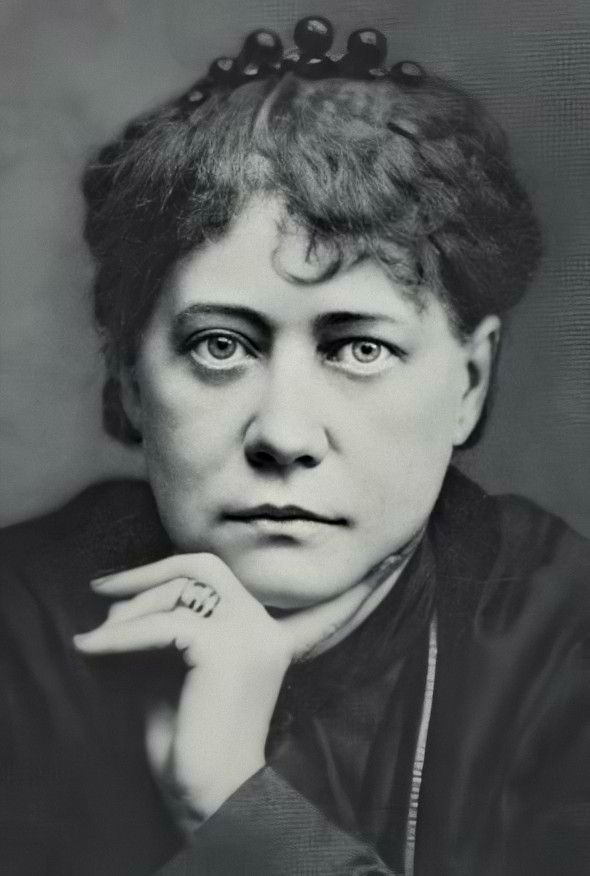
Mabel Collins (1851–1927) was a British author, occultist, and social reformer who emerged as a prominent literary figure in the early Theosophical movement. Throughout her career, she published more than forty-six books, including Victorian novels, romantic fiction, and influential works on mysticism and esoteric philosophy. She is best known for the spiritual classics The Idyll of the White Lotus (1884), Light on the Path (1885), The Illumined Way (1888), and Through the Gates of Gold, which became foundational texts in modern Western esotericism.
Collins was born in Guernsey, England, and married writer and stockbroker Keningale Robert Cook in 1871. In the 1880s, she became an active member of the Theosophical Society and collaborated closely with Helena Petrovna Blavatsky, serving as assistant editor of Lucifer magazine. While many Theosophists later asserted that her most notable works were dictated by spiritual “Masters” or adepts, Collins consistently refuted these claims, affirming her sole authorship despite acknowledging profound mystical experiences that influenced her writing. She reported that portions of Light on the Path were inspired during spiritual experiences in a “Hall of Learning,” where she perceived ancient teachings inscribed on its walls.
Collins departed from the Theosophical Society in 1889 after disagreements with Blavatsky and other leaders regarding doctrine and authority. Although she later criticized certain aspects of the Society, her writings remained widely read and influential, continuing to shape generations of students interested in Theosophy, Eastern philosophy, and Western mysticism.
Beyond her involvement in esotericism, Collins was a committed social reformer. As a lifelong vegetarian and vocal opponent of vivisection, she served as chairman of the Incorporated Parliamentary Association for the Abolition of Vivisection and actively promoted animal welfare throughout her life. She also supported women’s political activism, collaborating with suffragette Alice Chapin on the political play Outlawed, staged in London in 1911.
Collins sustained a successful literary career beyond her Theosophical involvement, contributing regularly to The Occult Review and continuing to publish novels, essays, and spiritual writings. Her life became associated with one of Victorian England’s enduring mysteries through her friendship with Robert Donston Stephenson, an occultist later identified by some researchers as a suspect in the Jack the Ripper murders. According to later accounts, both Collins and her close friend Vittoria Cremers developed suspicions regarding Stephenson’s possible involvement.
In her later years, Collins lived with her friend Catherine Metcalfe and continued to write until her death in 1927. Through her contributions to mystical literature, occult philosophy, social activism, and popular fiction, she became one of the most prominent female voices in the development of modern Theosophy and Western esoteric thought.
Related Research Articles
Herbert A. Parkyn’s Foundation in Eastern Philosophy
This article examines Dr. Herbert A. Parkyn's early study of Eastern philosophy and the network of individuals and ideas that helped lay the foundation for the Yogi Publication Society and its publishing program.
The Sacred Geometry of the Yogi Publication Society Logo
This article examines the Yogi Publication Society logo and its sacred geometry meaning, comparing it with Hindu, Hermetic, Rosicrucian, Masonic, and Theosophical traditions to show the intention behind the publishing network.
Yogi Ramacharaka: The True Meaning and Origin of the Name
This article breaks down the hidden symbolism and meaning behind "Yogi Ramacharaka", the pen name that was created by the Yogi Publication Society and shows the allegory that reflected the ideas the books were…