Yogi Philosophy is the system of spiritual and human development presented by the Yogi Publication Society during the early twentieth century, most extensively through the writings attributed to Yogi Ramacharaka.
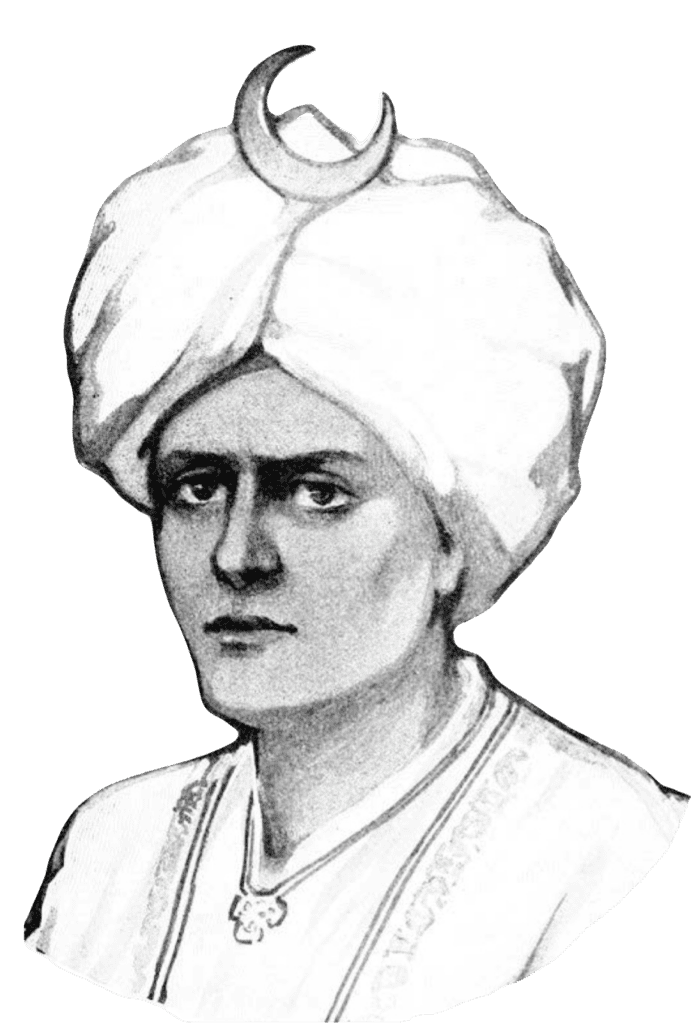
Drawing heavily upon Vedanta and other traditions of Hindu philosophy while incorporating several paths of Yoga, the books presented Western readers with a comprehensive philosophy embracing the body, mind, soul, and the individual’s relationship with the universe. Its central subjects included the unity underlying existence, mastery of the body and mind, Karma, reincarnation, spiritual evolution, and the gradual realization of the higher Self.
Within these writings, Yoga was presented as far more than a system of physical exercises or religious observances. It was described as a complete method of human development in which physical health, breathing, mental control, concentration, ethical conduct, philosophical understanding, and spiritual realization formed different aspects of the same process. Ancient Indian teachings were frequently expressed through terminology intended to be intelligible to early twentieth-century Western readers, with parallels drawn between traditional spiritual concepts and contemporary discussions of psychology, mental development, natural law, and the powers of the mind.
What are the foundations of Yogi Philosophy?
Much of the philosophical foundation of Yogi Philosophy comes from Vedanta, one of the major traditions of Hindu philosophy. Vedanta developed from interpretation of the Upanishads and was subsequently expressed through a large and diverse philosophical literature. Three foundational sources are traditionally grouped together as the Prasthanatrayi. These are the Upanishads, the Brahma Sutras, and the Bhagavad Gita. The Upanishads investigate the nature of the Self and ultimate reality. The Brahma Sutras systematically examine the philosophical teachings of the Upanishads, while the Bhagavad Gita brings philosophical and spiritual principles into questions of action, duty, devotion, knowledge, and everyday human life.
Among the central concepts encountered in Vedantic philosophy are Brahman, the ultimate reality underlying existence, and Atman, the innermost Self. Different schools of Vedanta interpret the precise relationship between Brahman, Atman, God, the individual soul, and the manifested universe in different ways. The Ramacharaka books introduce several of these ideas while repeatedly emphasizing the existence of a higher spiritual reality behind the changing world perceived through the senses.
Human beings ordinarily identify themselves with the physical body, personality, emotions, desires, and constantly changing activity of the mind. Yogi Philosophy teaches that these constitute only portions or expressions of the human being and do not represent the deepest Self. Spiritual development therefore involves progressively distinguishing the permanent from the temporary and discovering the spiritual identity that remains behind the changing experiences of individual existence.
How does Yogi Philosophy understand the universe?

Throughout the Ramacharaka books, the universe is presented as an ordered manifestation of a single underlying spiritual reality. Nature, mind, matter, and life operate according to universal laws, while the individual human being forms part of this larger order. Spiritual development involves gradually becoming conscious of this relationship instead of experiencing oneself as an isolated personality separated from the rest of existence.
The books frequently approach ideas associated with Advaita Vedanta, the non-dual Vedantic tradition most famously systematized by Adi Shankara. Advaita teaches that Brahman is the ultimate reality and that the apparent separation of the individual Self from that reality arises through ignorance. The Ramacharaka presentation does not reproduce every philosophical position of classical Advaita and should not simply be equated with it, yet non-dual themes form an important part of its explanation of the higher Self and the unity underlying manifested existence.
The traditional analogy of the rope and the snake illustrates this problem of perception. In dim light, a person may mistake a rope for a snake and experience genuine fear because of that mistaken perception. When sufficient light appears, the snake does not have to be destroyed because the person recognizes that it was never actually present in the manner imagined. The analogy illustrates how spiritual knowledge changes perception. What appears divided and threatening when viewed through ignorance may be understood differently when its underlying nature becomes known.
What are the different paths of Yoga?
Yogi Philosophy presents several paths of Yoga as methods suited to different aspects of human nature. These paths are not necessarily competing systems. They address the physical, mental, intellectual, devotional, and active dimensions of human life and can operate together within the larger process of self-development.
Hatha Yoga concerns the physical organism and gives extensive attention to breathing, diet, hygiene, exercise, bodily control, and healthy living. Within the Ramacharaka system, care of the body is not treated as an end in itself. The body is the instrument through which the individual functions during physical life and must therefore be developed and maintained accordingly.
Raja Yoga turns more directly toward the mind. Concentration, attention, mental discipline, meditation, control of thought, and recognition of the higher Self become central subjects. The student gradually learns to distinguish between consciousness itself and the thoughts, emotions, impulses, and impressions passing through the mind.
Jnana Yoga follows the path of knowledge and discrimination. It approaches spiritual realization through philosophical inquiry into the nature of the Self, reality, consciousness, and existence. The student seeks to distinguish the permanent from the temporary and the underlying reality from its changing manifestations.
Karma Yoga approaches development through action. Work, duty, service, and ordinary activity become opportunities for spiritual discipline when performed without excessive attachment to personal reward. Bhakti Yoga follows the devotional path through love, reverence, worship, and surrender to the Divine.
Taken together, these approaches express one of the central ideas of Yogi Philosophy. Human development involves the whole person. The body can be disciplined, the mind trained, knowledge cultivated, action purified, and the emotional nature directed toward higher ideals. Different individuals may naturally emphasize different paths, while each path contributes to the same movement toward greater consciousness and realization of the Self.
What role do Karma and reincarnation play?
Karma and reincarnation are fundamental to the account of spiritual evolution presented throughout Yogi Philosophy. Human existence is understood as extending beyond a single physical lifetime. The soul passes through repeated incarnations in which experience contributes to the development of character, understanding, and consciousness.
Karma provides the principle of continuity connecting these experiences. Thoughts, choices, actions, habits, and motives produce consequences that participate in the formation of future conditions. Karma is consequently presented as law, not simply as reward or punishment imposed from outside. The individual continually participates in the creation of character and future experience through thought and action.
Reincarnation places this development within an immense period of spiritual growth. Qualities that appear unequal or incomplete within one lifetime can be understood as stages within a much longer process. Experiences that educate the individual in one incarnation contribute to development that continues into later incarnations. The human being is therefore portrayed as an evolving spiritual entity passing through successive conditions while gradually unfolding latent capacities and becoming increasingly conscious of its deeper nature.
This evolutionary conception also makes self-mastery central to the system. If thought and action contribute to character, and character influences future experience, then disciplined thought, ethical conduct, self-knowledge, and conscious action allow the individual to participate knowingly in a process that otherwise proceeds unconsciously.
What is the higher Self?
One of the most persistent teachings throughout the Ramacharaka writings is that the ordinary personality is not the whole person. The physical body, instincts, emotions, intellect, memories, and personal identity belong to different levels of human experience, while behind them exists a deeper spiritual principle identified with the higher Self.
The development of consciousness therefore involves a progressive shift in identification. The individual begins by thinking almost entirely in terms of the physical body and personal desires. Greater mental development brings increasing awareness of thought, reason, will, and individuality. Spiritual development carries this process further as consciousness recognizes that even the thinking personality is not the final level of the Self.
This principle gives the different branches of Yogi Philosophy their common direction. Hatha Yoga develops the physical instrument. Raja Yoga disciplines the mind. Jnana Yoga investigates the nature of reality and the Self. Karma Yoga transforms action into a means of development, while Bhakti Yoga directs the emotional and devotional nature toward the Divine. Each approaches a different dimension of the human being while contributing to the progressive realization of a spiritual identity deeper than the ordinary personality.
What is the goal of Yogi Philosophy?
The final goal is liberation, commonly expressed through the Hindu concept of Moksha. Liberation involves overcoming the ignorance that causes the individual to identify exclusively with temporary forms and conditions. As this ignorance diminishes, the individual increasingly recognizes the spiritual Self and its relationship with the reality underlying existence.
Within the non-dual themes found throughout the Ramacharaka writings, this realization moves toward recognition of the unity behind apparent separation. The individual no longer understands existence solely from the standpoint of an isolated personality confronting an external universe. The Divine is recognized as present throughout creation, while the deeper Self is understood in relation to that universal spiritual reality.
Liberation is consequently presented as the culmination of a long process of development. Physical discipline, control of thought, concentration, philosophical inquiry, ethical action, devotion, Karma, reincarnation, and spiritual evolution all belong to a larger account of consciousness gradually awakening to its own nature.
How did Yogi Philosophy reach Western readers?
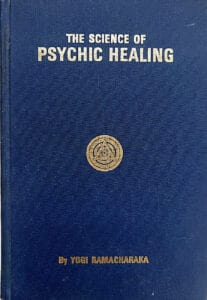
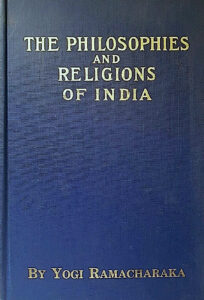
The books issued by the Yogi Publication Society under the name Yogi Ramacharaka became an important early twentieth-century vehicle through which Western readers encountered ideas associated with Vedanta and Yoga. Beginning with A Series of Lessons in Yogi Philosophy and Oriental Occultism, the Ramacharaka series developed into a substantial body of books addressing breathing, physical health, mental development, psychic phenomena, philosophical Yoga, the Upanishads, the Bhagavad Gita, reincarnation, life after death, and the major religious and philosophical traditions of India.
The distinctive character of the series came partly from the language through which these subjects were presented. Ancient Indian concepts were repeatedly placed beside contemporary Western discussions of psychology, mental development, evolution, vibration, natural law, and the powers of thought. This allowed readers who might have possessed little previous knowledge of Hindu philosophy to approach its concepts through terminology already circulating within Western mental and spiritual movements.
This also placed Yogi Philosophy in close conversation with New Thought and the developing Western interest in the systematic study and training of the mind. The resulting literature did not merely reproduce classical Hindu texts. It interpreted and reorganized selected teachings for a new audience, creating a distinctive early twentieth-century presentation in which Yoga, Vedanta, mental development, spiritual evolution, and the investigation of human consciousness were brought together as parts of a comprehensive philosophy of human development.