Raja Yoga, or Mental Development is a 1906 Yogi Ramacharaka work published by the Yogi Publication Society as a twelve-lesson course in mental training, self-mastery, concentration, Will, subconscious mental activity, and the realization of the true Self. Rather than treating Raja Yoga primarily as a system of physical postures, the book presents it as a practical method for gaining conscious control over the mind. Its central teaching is that the individual is not the body, emotions, desires, or even the stream of thought, but the conscious “I” that observes and directs them. From this foundation, the lessons develop a larger system involving the Will, attention, concentration, perception, the subconscious mind, character building, suggestion, affirmation, and the expansion of individual consciousness toward what the book calls the “One Life.”
What is Raja Yoga?
The “I” and the Real Self
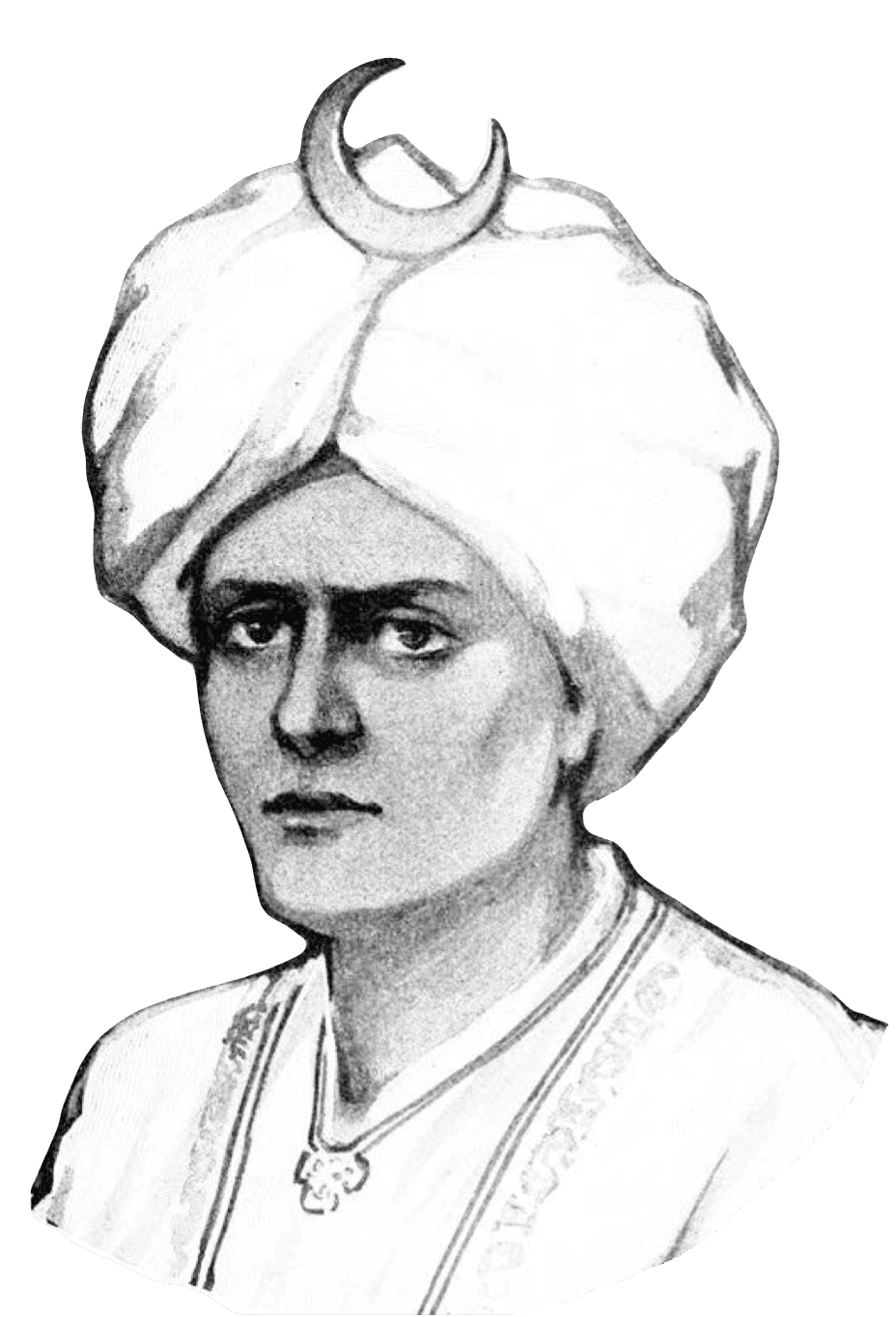
Yogi Ramacharaka
In Raja Yoga, the “I” is the conscious Ego or Real Self that observes the body, sensations, emotions, desires, and thoughts without being identical to them. The opening lessons develop this distinction through the division between the “I” and the “Not-I.” The student is instructed to examine everything ordinarily included within personal identity and progressively recognize it as something possessed or experienced by the Self rather than as the Self itself. The body can be observed and therefore cannot be the observer. Sensations arise and disappear while the observer remains. Desires and emotions can be examined, resisted, encouraged, or redirected. Memories and opinions change. Even thoughts themselves can be watched as they enter and leave consciousness. Behind these changing conditions remains the center that is conscious of them. Raja Yoga identifies this irreducible center of awareness with the Ego or Real Self, whose fundamental declaration is “I AM.” The “I” cannot finally be made an object of its own examination because it is always the examiner; everything else can be placed before consciousness and classified as “Not-I,” while the conscious center performing the classification remains. The practical purpose of the exercise is therefore to change the student’s habitual sense of identity. Instead of thinking of himself as a body possessing a mind, or as a collection of thoughts, feelings, and habits, he is taught to conceive of himself as a conscious center possessing both body and mind as instruments. This distinction becomes the foundation for everything that follows because mental control is impossible, within the logic of the book, until the student recognizes that the thoughts and tendencies to be controlled are not themselves the controlling Self.
Raja Yoga describes this realization as developing through increasingly expansive states of consciousness. The first is the “Consciousness of the I,” in which the student realizes himself as an enduring individual entity independent of the physical body and the changing contents of the mind. The second is the “Consciousness of the I AM,” in which this individual consciousness begins expanding into an awareness of its relationship with Universal Life. The first establishes the center; the second reveals that the center is not isolated from the greater Whole. The lessons therefore repeatedly direct the student back toward an immediate realization of existence rather than an abstract definition of it. Affirmations or “mantrams” are used to strengthen this realization by repeatedly presenting the mind with the conception that the individual is a center of consciousness, thought, influence, and power. These statements are not included merely as summaries of philosophical doctrine. They are practical exercises intended to impress a selected conception upon the mind until the student begins instinctively to think and act from the position of the directing Self rather than from whatever temporary emotion, sensation, habit, or external circumstance happens to dominate consciousness at a particular moment.
How Raja Yoga Defines the Mind
In Raja Yoga, the mind is not the true Self but an instrument used by the “I.” The book describes mental life as an organized collection of faculties and levels that can be observed, trained, developed, and increasingly brought under the direction of the Will. Memory, imagination, reasoning, comparison, judgment, perception, emotion, desire, habit, and the stream of ordinary thought all belong to the mental organization rather than to the Real Self. This distinction between the thinker and the instruments of thought is essential because the ordinary person is portrayed as having reversed their proper relationship. Instead of consciously directing the mind, the individual is continually directed by it. Thoughts arise automatically, memories intrude, habits repeat themselves, emotions seize attention, desires demand satisfaction, and external impressions pull consciousness from one object to another. The person consequently identifies with whatever mental condition happens to be strongest at the moment and becomes, in effect, the servant of his own mental machinery. Raja Yoga proposes the opposite arrangement. The “I” is to stand behind the mental faculties as their conscious director, observing their operation, determining which faculties require development, restraining those that have become excessive or disorderly, and gradually organizing the whole mental system around chosen purposes. Once a fear, habit, emotion, or thought is recognized as something occurring within the mind rather than as an inseparable part of the Self, it becomes something that can potentially be modified. The statement “I am afraid,” for example, contains an identification that Raja Yoga attempts to break apart: the “I” is not fear itself but the conscious center experiencing a mental condition called fear. This apparently simple distinction becomes one of the book’s principal mechanisms for mental and character development.
Will and Mental Control
Raja Yoga defines Will as the directing power through which the conscious Ego governs its mental instruments. Will is therefore much more than stubbornness, physical effort, or momentary determination; it is the active power of the “I” applied to the organization and direction of thought. The book repeatedly presents control of the mind as the foundation of Raja Yoga and insists that mastery must begin with the internal world before it can meaningfully extend to external circumstances. The first practical task is a form of mental housecleaning in which useless thoughts, uncontrolled habits, unnecessary emotional reactions, involuntary associations, and wasteful mental activity are recognized and gradually brought under direction. Ordinary mental energy is portrayed as being continually dispersed because attention jumps between objects, anxieties repeat themselves, emotions consume energy, and thought is permitted to follow whatever association happens to arise. Mental control reverses this process by establishing the Will as the directing force and training the mind to remain upon a chosen object or purpose. The importance of Will therefore follows directly from the earlier teaching concerning the “I”: if thoughts, emotions, desires, and habits are “Not-I,” then the conscious Self can take a position toward them, accepting some, rejecting others, strengthening useful tendencies, and weakening undesirable ones. The practical goal is not to suppress the mind but to make its faculties cooperative instruments of conscious purpose.
Concentration and the Training of Attention
Concentration, or Dharana, is presented in Raja Yoga as the deliberate holding of the mind upon a chosen subject or object while resisting its tendency to wander. It is one of the principal methods through which the Will acquires practical control over mental activity. The exercise appears simple until it is attempted, at which point the student discovers how frequently attention escapes conscious direction and follows unrelated sensations, memories, associations, worries, or external impressions. Practice therefore consists of selecting an object of attention and repeatedly bringing the mind back whenever it wanders. Each return represents an exercise of Will, and continued practice gradually establishes a new mental habit in which attention becomes increasingly obedient to conscious direction. Physical relaxation is recommended as an important aid because bodily tension continually produces sensations that compete for attention. The student is instructed to assume a comfortable position, relax the muscles and nerves, and establish a condition in which the body ceases making unnecessary demands upon consciousness. Raja Yoga describes this relaxation as a kind of “rest cure” for the body, nerves, and mind, after which concentration can proceed more effectively. The underlying principle is that scattered mental activity produces scattered power, while concentrated attention gathers mental energy around a single selected purpose.
Attention is therefore treated as the gateway through which mental development occurs. Whatever receives sustained attention becomes clearer, stronger, and more deeply impressed upon the mind, while faculties and ideas receiving little attention remain comparatively weak. Most people, according to Raja Yoga, allow their surroundings to determine what will occupy consciousness: sounds, sights, conversations, anxieties, desires, emotional reactions, and accidental impressions continually seize the mind. Mental training reverses this relationship by teaching the individual to select deliberately what will receive attention. The practice extends far beyond formal meditation. Reading, listening, studying an object, observing another person, examining a room, or performing ordinary work can all become exercises in controlled attention. Instead of allowing impressions to pass vaguely through consciousness, the student learns to look deliberately, listen deliberately, and think deliberately. This improves memory because impressions are received more distinctly, improves reasoning because the mind has clearer material upon which to operate, and strengthens Will because the individual repeatedly practices selecting and maintaining the object of consciousness. Concentration is thus not a separate mental power so much as attention intensified and sustained by Will.
Meditation and Mental Focus
Meditation in Raja Yoga develops the work begun through concentration by holding an idea steadily before consciousness until its deeper implications can unfold. Concentration fixes attention upon the chosen subject; meditation allows the mind to penetrate that subject without surrendering control of the direction of thought. The student is repeatedly instructed to meditate upon central ideas such as “I AM,” the distinction between the Self and its mental instruments, the existence of the One Life, and the relationship between individual consciousness and Universal Life. The purpose is not merely to repeat words but to convert an intellectual proposition into a realized mental condition. An idea first encountered as language is concentrated upon, contemplated, repeatedly recalled, and gradually impressed upon deeper levels of mind until it begins influencing habitual thought and conduct. This explains the repeated use of affirmations and mantrams throughout the lessons. They condense the central teaching of a lesson into a form that can be deliberately held before consciousness and repeatedly introduced into the mind.
Raja Yoga also presents concentration as a means of obtaining knowledge that may not arise through ordinary superficial thinking. When attention remains fixed upon a problem or subject, obvious associations gradually give way to less apparent relationships, details, and possibilities. Concentrated thought may be directed outward toward observation, investigation, invention, and practical reasoning, or inward toward the hidden operations of the mind itself. The book points to successful inventors and investigators as examples of individuals who may have developed this faculty without consciously identifying their methods as Raja Yoga, specifically discussing Thomas Edison and Professor Elmer Gates in connection with intense concentration and the emergence of ideas from mental regions beyond ordinary deliberate reasoning. The lesson therefore connects concentration with the later teaching concerning subconscious activity: deliberate thought can establish a subject so strongly within the mind that mental work may continue after conscious attention has been withdrawn from it.
Perception and the Development of the Senses
Raja Yoga treats perception as a trainable mental faculty and argues that seeing is not necessarily observing, just as hearing is not necessarily listening. People frequently believe they have observed an object or event when they have actually received only a vague and incomplete impression of it. The senses provide channels through which information reaches the mind, but the quality of that information depends upon the degree of attention brought to the act of perception. The student is therefore encouraged to exercise the senses deliberately by noticing forms, dimensions, colors, sounds, textures, distances, proportions, and relationships with increasing precision. These exercises strengthen the connection between the external world and the mental faculties responsible for receiving, classifying, and retaining impressions. Improved perception consequently supports memory, reasoning, imagination, and judgment because these faculties can work only with the material supplied to them.
The purpose of this training extends beyond ordinary sensory improvement. Raja Yoga presents the existing senses as parts of a larger evolutionary development of consciousness and suggests that faculties now regarded as normal represent stages in a continuing process of mental unfoldment. The student is encouraged to become “wide-awake” to the world and to regard the universe as a field from which knowledge can continually be gathered. The corresponding exercises therefore have both practical and philosophical significance. By learning to use existing faculties thoroughly, the student strengthens the general capacity for conscious awareness and prepares for the possibility of further mental development. The same pattern appears again: a faculty that ordinarily operates automatically is brought into consciousness, deliberately exercised, strengthened through attention and repetition, and finally made into a more effective instrument of the “I.”
The Unfoldment of Consciousness
Raja Yoga distinguishes consciousness from mind by arguing that the portion of mental activity of which a person is aware at any particular moment represents only a small part of the total mind. Consciousness can move, expand, contract, and illuminate different regions of mental activity, while enormous numbers of processes continue outside the ordinary field of awareness. The waking consciousness is therefore not presented as the whole mind but as a limited field within a much larger mental organization. Human mental development consists partly in expanding the range of what can be consciously recognized and directed. This distinction allows Raja Yoga to explain instinct, habit, intuition, automatic behavior, memory, inspiration, and subconscious problem solving as activities occurring within different regions or levels of mind rather than as unrelated phenomena.
The unfolding of consciousness is also presented as an evolutionary process. Lower forms of life possess increasingly complex sensation and instinct, while human development introduces self-consciousness and the capacity to recognize oneself as an individual center of thought. Raja Yoga proposes that ordinary human self-consciousness is itself only a stage and that further development may bring higher forms of awareness into conscious experience. What appears extraordinary from the standpoint of ordinary consciousness may represent a latent faculty awaiting development, just as abilities now regarded as normal would have been impossible at earlier stages of evolution. Raja Yoga therefore portrays its practices as a deliberate participation in a process already occurring naturally. Concentration, perception, meditation, introspection, and mental control accelerate the awakening and organization of faculties that otherwise develop slowly and unconsciously.
The “Highlands and Lowlands” of Mind
The “highlands and lowlands” of mind is Raja Yoga’s way of describing mental regions extending both below and above ordinary consciousness. Beneath the ordinary conscious field lie instinctive, habitual, automatic, associative, and physiological mental activities; above it lie intuitive, creative, inspirational, and spiritual possibilities. Conscious awareness occupies only a shifting territory between these regions. The subconscious is therefore much more than a storehouse of forgotten memories. It includes systems of automatic activity regulating habits, associations, behavior, and bodily processes without requiring continual conscious supervision. At the same time, Raja Yoga proposes higher regions from which intuition, creative insight, inspiration, and spiritual realization may emerge. The ordinary person experiences products from both directions while remaining largely unaware of the processes that produced them.
To establish that mental activity can occur outside ordinary consciousness, Raja Yoga draws extensively upon Western psychology and scientific writers, citing figures including Leibniz, William Hamilton, Taine, Sir Oliver Lodge, Wundt, Maudsley, Schofield, and Elmer Gates. These authorities are used to support the argument that Western psychology was recognizing the enormous extent of unconscious mental activity that Yogi psychology had long incorporated into its understanding of mind. The book points to familiar experiences in which a person concentrates unsuccessfully upon a problem, abandons it, and later finds the answer unexpectedly entering consciousness. From the standpoint of Raja Yoga, the conscious effort supplied the problem and material while activity outside ordinary awareness continued working upon it. Consciousness receives the result without having observed the process that produced it. This conception becomes the basis for one of the book’s most distinctive practical methods: “sub-consciousing.”
The Mental Planes
Raja Yoga organizes mental activity into broad planes associated with the Instinctive Mind, the Intellect, and the Spiritual Mind. These are not presented as three separate minds but as different levels or modes through which the individual mental organization operates. The instinctive region includes inherited tendencies, automatic processes, basic emotions, bodily regulation, and habits established through repetition. The intellectual region includes reasoning, analysis, comparison, judgment, deliberate imagination, and the ordinary conscious processes associated with human thought. Beyond these lies the spiritual region, associated with intuition, higher consciousness, and direct spiritual realization. These mental principles operate around the Ego or “I,” which remains the central conscious Self rather than another mental faculty.
This arrangement has a practical purpose. If mental activity extends beyond the region ordinarily illuminated by consciousness, then conscious direction can potentially influence processes it does not directly supervise. Actions practiced deliberately can become habitual until they are performed automatically. Ideas repeatedly impressed upon the mind can become established tendencies. Problems can be consciously formulated and then allowed to continue developing outside deliberate thought. Higher intuitions may emerge when ordinary mental activity becomes sufficiently quiet to permit them to enter consciousness. Raja Yoga consequently treats ordinary consciousness almost as the directing office of a much larger mental organization. The purpose is not for consciousness to perform every operation itself but to establish direction, select purposes, train subordinate faculties, and create cooperation between the conscious center and the wider regions of mental activity.
What Is “Sub-Consciousing”?
“Sub-consciousing” is Raja Yoga’s term for deliberately assigning a problem, task, or desired mental process to subconscious activity after first impressing it clearly upon the mind. The book argues that everyday experience already demonstrates this ability. Actions initially learned through conscious effort become automatic after repetition; forgotten names sometimes return after the conscious attempt to remember them has ceased; difficult problems may suddenly yield solutions after being temporarily put aside. Raja Yoga interprets such experiences as evidence that mental activity can continue outside conscious awareness. The practical method is therefore to define clearly what is wanted, concentrate upon it sufficiently to impress it upon the mind, and then withdraw conscious attention while allowing subconscious processes to continue the work.
The method depends upon a division of labor between conscious and subconscious mental activity. The conscious mind selects the purpose, gathers material, establishes the direction, and gives the mental command; subconscious activity continues association, organization, elaboration, and other processes outside awareness. Constant worry and repeated conscious interference can prevent this cooperation because the individual continually drags the problem back into the conscious field instead of allowing the deeper process to proceed. Raja Yoga therefore combines concentration with confidence and expectation: the task is consciously impressed and then mentally released. When an answer, idea, memory, or solution later rises into consciousness, the book interprets it as the product of work that continued beneath the threshold of awareness. The Western psychological authorities cited throughout these lessons are used to reinforce the claim that substantial reasoning and creative activity can occur outside consciousness, with conscious awareness receiving only the finished or partially finished result.
Subconscious Character Building
Raja Yoga applies the same principle of subconscious mental activity to the deliberate formation of character. Character is presented largely as the accumulated result of repeated thoughts, emotions, expectations, and actions that have gradually become habitual. A person repeatedly responds in a particular manner until the response becomes easier and increasingly automatic; repeated emotional reactions become tendencies; repeated modes of thought become habitual attitudes; repeated actions become established characteristics. Because these patterns were built through repetition and mental impression, Raja Yoga argues that they can also be modified through deliberate repetition, opposing mental patterns, and conscious direction. Character is therefore not treated as fixed but as a mental structure capable of gradual reconstruction.
The method emphasizes cultivating the desired quality rather than continually concentrating upon the defect to be removed. Fear is countered by repeatedly presenting courage to the mind; weakness by strength; indecision by decision; pessimism by confidence; uncontrolled impulse by self-command. The student is instructed to form a clear mental conception of the desired characteristic, imagine himself possessing and expressing it, hold the idea before consciousness, repeat appropriate affirmations, and reinforce the mental conception through corresponding actions whenever circumstances provide an opportunity. Repetition gradually establishes familiarity, familiarity develops into tendency, and tendency becomes increasingly automatic. The process brings together nearly all of the preceding lessons: the “I” selects the change, Will supplies conscious direction, attention holds the selected quality before the mind, concentration intensifies the impression, imagination gives it form, repetition strengthens it, and subconscious mental activity gradually converts the repeated pattern into habitual expression.
Suggestion, Affirmation, and Mental Habit
Suggestion is one of the practical mechanisms underlying Raja Yoga’s use of affirmation, repetition, visualization, concentration, and subconscious character building. Ideas repeatedly presented to the mind tend to establish associations and habits that make those ideas increasingly likely to reproduce themselves in thought, feeling, and behavior. The affirmations or “mantrams” placed throughout the lessons therefore function as more than inspirational conclusions. They condense the teaching into selected ideas that can be repeatedly introduced into consciousness and impressed upon deeper mental processes. The student does not simply read that he is a center of consciousness and power; he repeatedly affirms, concentrates upon, and meditates upon that conception until it becomes increasingly habitual. Likewise, the realization of the One Life is not left as an intellectual proposition but is repeatedly presented as something to be contemplated and mentally realized. The final lesson’s affirmation describes the individual as resting upon the “Great Ocean of Life,” supported by the One Life through changing conditions and experiences.
This makes mental habit one of the most important practical ideas in the book. Repeated thought is formative because what is continually entertained tends to become easier to reproduce. The same principle can therefore operate destructively or constructively. Repeated fear strengthens fearful associations; repeated resentment strengthens resentful reactions; repeated expectation of failure creates a habitual mental orientation toward failure. Raja Yoga’s answer is not merely to suppress an unwanted thought but to substitute and strengthen an opposing pattern. Attention determines which ideas receive continued mental energy, concentration intensifies them, repetition increases their familiarity, and subconscious activity eventually reproduces them with decreasing need for conscious effort. Mental development consequently requires the student to become increasingly selective about the suggestions, images, expectations, and ideas that are permitted to occupy the mind.
Raja Yoga and Herbert A. Parkyn’s System of Suggestion
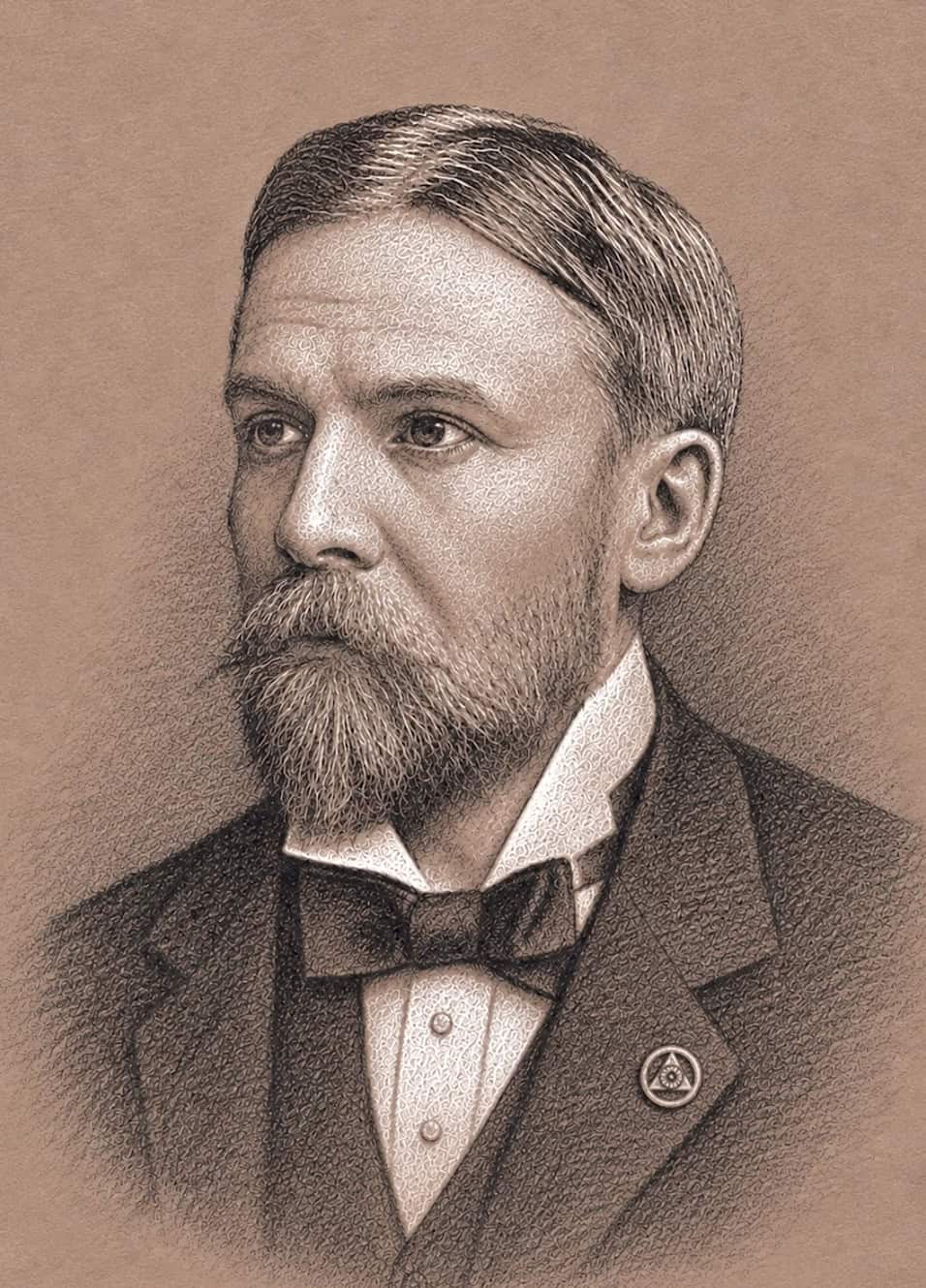
Herbert A. Parkyn
The mental system presented in Raja Yoga closely parallels the system of Suggestive Therapeutics that Dr. Herbert A. Parkyn had already been teaching through the Chicago School of Psychology and its associated publications before the appearance of the Yogi Ramacharaka series. The parallel is especially clear in the practical relationship between conscious direction and the passive or automatic regions of mind. In both systems, the individual learns to use conscious attention, concentration, Will, repeated thought, affirmation, and mental imagery to establish impressions that can become habitual within the less consciously directed portions of mental life. The purpose is not simply positive thinking. The underlying principle is that repeated mental impressions establish tendencies, tendencies become habits, and habits increasingly operate automatically. Raja Yoga’s instruction to select a desired quality, hold it in attention, repeatedly affirm and visualize it, and allow it to become established subconsciously follows the same practical logic of suggestion that Parkyn had made central to his system of mental training and Suggestive Therapeutics.
This parallel is particularly important because Raja Yoga does not treat concentration, Will, subconscious activity, character building, affirmation, and suggestion as unrelated subjects. They function together as parts of a single process. Conscious Will selects the direction; concentration fixes attention upon it; repeated thought and affirmation strengthen the impression; the subconscious receives and develops the pattern; and repeated expression eventually establishes habit and character. Parkyn’s system likewise placed suggestion at the center of the relationship between conscious direction and automatic mental activity, with concentration and Will essential to focusing the suggestion and repetition essential to establishing it. Raja Yoga therefore presents these same mechanisms within the language and framework of Yogi mental development, extending them into teachings concerning the “I,” the mental planes, the expansion of consciousness, and the One Life. Seen in this context, the book’s teachings on mental mastery are not a collection of separate exercises but another presentation of the laws of suggestion as a comprehensive method for directing mental development.
The Expansion of the Self and the One Life
Raja Yoga does not end with individual mental control. After teaching the student to recognize the “I” as a center of consciousness, it progressively expands that conception toward an awareness of the One Life underlying individual existence. The book repeatedly uses images of centers, circles, oceans, waves, suns, and planets to communicate the relationship between individuality and universality. Individual consciousness is not to be destroyed or dissolved; rather, the student becomes increasingly aware that the individual center exists within and participates in a greater Life. The first movement of Raja Yoga is therefore inward toward the discovery of the Self, while the later movement expands outward toward recognition of unity. The student first learns “I AM” and then begins to understand the relationship of that “I” to the larger Whole.
This teaching is developed through meditation and repeated mental realization rather than primarily through philosophical argument. Raja Yoga distinguishes its method from the more intellectual approach associated with Gnani Yoga by emphasizing that the student must experience these conceptions inwardly rather than merely assent to them as doctrines. The repeated treatment of the One Life, Universal Life, and the Expansion of the Self is therefore deliberate. Repetition is itself part of the method by which an unfamiliar conception is gradually established in consciousness. The student is encouraged to contemplate the same Life manifesting through himself, other human beings, animals, plants, and the surrounding universe until the conception of unity begins to become an experienced mental condition. The final teaching thus completes the progression begun with the discovery of individuality: the student first separates the true “I” from the body and mind, establishes conscious control over those instruments, and then recognizes that the conscious center itself exists within a universal field of Life.
Subconscious Influences and Mental Independence
Raja Yoga also warns that subconscious and habitual mental processes can make individuals receptive to influences they do not consciously recognize. A person who has not established a strong conscious center may be governed by moods, fears, habits, expectations, surrounding opinions, and suggestions that enter the mind without deliberate examination. The book’s answer is not withdrawal from mental influence but development of greater self-consciousness and discrimination. Realization of the “I,” strengthening of Will, control of attention, and conscious selection of thought provide the means by which the individual becomes less automatically responsive to whatever mental impression happens to reach him. The student is taught to recognize that an impression entering consciousness is not a command. It belongs to the “Not-I” and may therefore be examined, accepted, rejected, or replaced.
This brings the later teaching back to the book’s opening distinction between the Self and its mental instruments. Fear may enter the mind without being the Self. A habitual reaction may arise without being the Self. An external suggestion may be received without being accepted by the Self. The more clearly the student realizes this distinction, the greater the possibility of conscious choice. Raja Yoga therefore connects mental independence directly with self-knowledge. The person who identifies completely with every thought and feeling has little distance from which to exercise control, while the person who recognizes himself as the observing and directing center can increasingly decide which impressions will be allowed to develop into habitual mental patterns.
What Raja Yoga Ultimately Teaches
Raja Yoga ultimately teaches that the human mind should become an instrument of the conscious Self rather than the unconscious master of it. The ordinary individual is portrayed as being governed to a large extent by accumulated habits, involuntary associations, sensory impressions, emotional reactions, wandering attention, external suggestions, and subconscious patterns whose operation he scarcely recognizes. Raja Yoga attempts to reverse this relationship by first establishing the distinction between the true “I” and the mental conditions surrounding it. From that foundation, Will becomes the directing power of the Ego; attention determines what will occupy consciousness; concentration gathers mental energy around selected purposes; perception supplies clearer material to the mind; meditation deepens selected ideas; subconsciousing employs mental activity outside ordinary awareness; suggestion and repetition establish new patterns; and character building turns those patterns into increasingly automatic forms of thought and behavior. The later teachings concerning higher consciousness and the One Life then place this individual mental development within a larger spiritual framework.
The structure of Raja Yoga can therefore be understood as a continuous process of recognition, direction, concentration, suggestion, repetition, and realization. An idea is first consciously recognized, deliberately selected, and held before attention. Concentration intensifies it, repetition reinforces it, and continued mental impression allows it to penetrate the habitual and subconscious regions of mind. What initially requires deliberate effort may eventually become an automatic tendency, just as earlier uncontrolled repetitions created the habits the student is attempting to replace. Intellectual understanding alone is repeatedly treated as insufficient because the purpose of the lessons is to change the habitual operation of the mind. This explains why the book circles repeatedly around the same central ideas from different directions and why its mantrams, meditations, concentration exercises, and character-building practices are integral to the teaching rather than additions to it.
The central goal is mastery of what Raja Yoga describes as the internal world. Before attempting to exercise power over circumstances, the student is instructed to gain increasing control over attention, thought, imagination, emotion, habit, perception, and subconscious activity. The goal is not to eliminate these faculties but to organize them under conscious direction. The resulting ideal is a person who is increasingly “wide-awake,” self-directed, concentrated, perceptive, and conscious of both the individual center of power represented by the “I” and its relationship with the greater Life in which it exists. In this sense, Raja Yoga presents mental development as the progressive transformation of unconscious reaction into conscious direction: the individual learns what he is, distinguishes himself from the mental machinery he possesses, discovers how that machinery is influenced by suggestion and repetition, and then deliberately uses the same laws to shape thought, habit, character, and consciousness.