Yogi Ramacharaka was the principal Eastern teaching identity used by the Yogi Publication Society beginning in 1903, when the first Ramacharaka course appeared in Chicago. For more than a decade the pseudonym stood behind a large body of books on Yogi philosophy, breathing, physical culture, Raja Yoga, Gnani Yoga, psychic healing, reincarnation, Karma, occult psychology, mental development, the astral world, Christian mysticism, and the spiritual constitution of man.
Modern bibliographies often treat Ramacharaka simply as another pen name of William Walker Atkinson, but the publishing history uncovered through the YPS History Project points to a more complex arrangement. Ramacharaka functioned as a literary and instructional identity within the collaborative publishing system that developed around Herbert A. Parkyn, Atkinson, and the Yogi Publication Society. In 1919, testimony connected with the postal investigation of YPS stated that “Yogi Ramacharaka” was a pen name used by several writers. That evidence is especially important because it comes from within the publishing organization itself and contradicts the later habit of assigning the entire Ramacharaka library automatically to one man.
Read the article: The 1919 Post Office Investigation of the Yogi Publication Society and Advanced Thought Publishing Company
Who Was Yogi Ramacharaka?
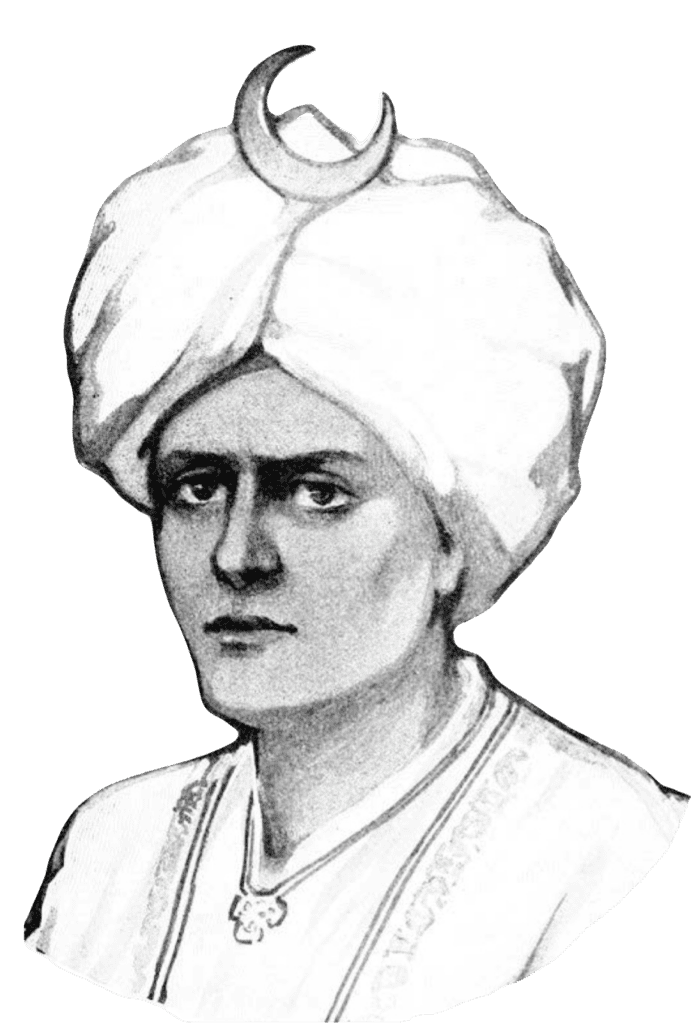
Yogi Ramacharaka was a publication identity created for a systematic body of Eastern and occult instruction presented to Western readers through the Yogi Publication Society. No independent biographical career matching the publishing persona is required to explain the books. The historical evidence surrounding YPS points instead toward a controlled authorial name through which material from several intellectual streams could be organized into a coherent teaching system. The Ramacharaka books speak in the voice of an experienced Yogi instructor, but their importance lies in the teaching program attached to the name and in the network that produced, edited, published, and distributed that program.
The conventional claim that William Walker Atkinson alone “was” Yogi Ramacharaka grew largely from later bibliographic attribution and from Atkinson’s very visible place in Chicago’s New Thought publishing world. Atkinson was unquestionably central to the YPS operation and served as one of its most important literary vehicles and public-facing writers. Yet the evidence now available makes it difficult to treat Ramacharaka as a simple one-to-one pseudonym. The 1919 testimony that the name was used by several writers fits the structure of YPS far better. Ramacharaka operated as a house identity under which a coordinated body of instruction could appear with a single authoritative voice even when the underlying material had several sources and contributors.
This also helps explain the extraordinary range of the books. The Ramacharaka series moves from physical breathing exercises to occult psychology, from Hindu philosophical concepts to psychic healing, from telepathy and clairvoyance to Christian esotericism, from mental concentration to reincarnation and cosmic evolution. A single public identity gave the series unity.
Read the article: Yogi Ramacharaka: The True Meaning and Origin of the Name
When Did the Ramacharaka Books Begin?
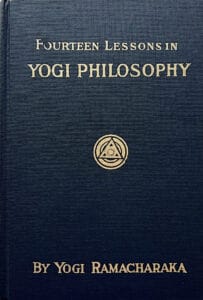
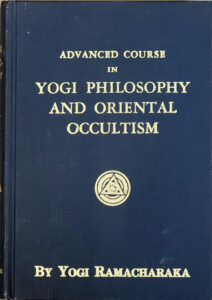
The Ramacharaka program began in 1903, the same period in which the Yogi Publication Society itself was being organized at Parkyn’s offices at 4000 Cottage Grove Avenue in Chicago. The earliest major work was the Fourteen Lessons in Yogi Philosophy and Oriental Occultism, first issued as a course and then as a book. It established the basic intellectual map that later Ramacharaka titles would expand.
The early course covered the constitution of man, Prana, thought force, psychic influence, human magnetism, the aura, telepathy, clairvoyance, healing, the astral world, spiritual development, and the higher stages of consciousness. In this sense, the first Ramacharaka course already contained much of the later YPS catalog in compressed form. Books that followed would isolate individual portions of this original program and develop them at greater length.
The timing is important. YPS did not arise in isolation. It developed from an established Chicago network built around Parkyn’s Chicago School of Psychology, his magazine Suggestion, his University of Psychic Science, correspondence instruction, affiliated teachers, and publishing experiments. Ramacharaka appears after that instructional structure was already functioning.
How Did Herbert A. Parkyn’s Work Prepare the Ground for Ramacharaka?
Parkyn had spent years creating a system in which psychology, mental control, healing, concentration, suggestion, auto-suggestion, will, attention, habit, psychic phenomena, and personal development could be taught through organized lessons. His Special Mail Course in Hypnotism and Suggestive Therapeutics gave students a structured course long before YPS began publishing Yogi lessons.

Parkyn’s system divided mental operation into voluntary and involuntary functions, emphasized the power of repeated suggestion, treated attention as a function of will, taught conscious habit formation, and repeatedly connected thought with action. His school also moved far beyond narrow medical hypnotism. Psychic research, telepathy, clairvoyance, thought transmission, mental healing, concentration, and occult questions all appeared within the network surrounding him.
The Ramacharaka books shift the vocabulary. Prana, Raja Yoga, Gnani Yoga, astral planes, the aura, and Eastern philosophy take the place of Parkyn’s medical and psychological language in many sections. Yet the instructional form remains the same. The student is given laws, exercises, stages, classifications, mental disciplines, and methods of personal development. The same Chicago environment that had already made mental training into a course could now present Hindu philosophy through another instructional identity.
This does not mean every Ramacharaka teaching should be reduced to Parkyn. The books contain genuine Eastern philosophical material, Theosophical ideas, occult literature, comparative religion, and concepts that belong to a larger field. The importance of Parkyn is structural and historical. His school supplied an established educational and publishing framework into which these subjects could be placed.
Read the article: The Yogi Publication Society started in the offices of Herbert A. Parkyn on Cottage Grove Ave.
Read the article: The Science of Psychic Healing: A Bridge Between Yogi Philosophy and the Law of Suggestion
Read the article: Herbert A. Parkyn’s Foundation in Eastern Philosophy
What Was William Walker Atkinson’s Role?
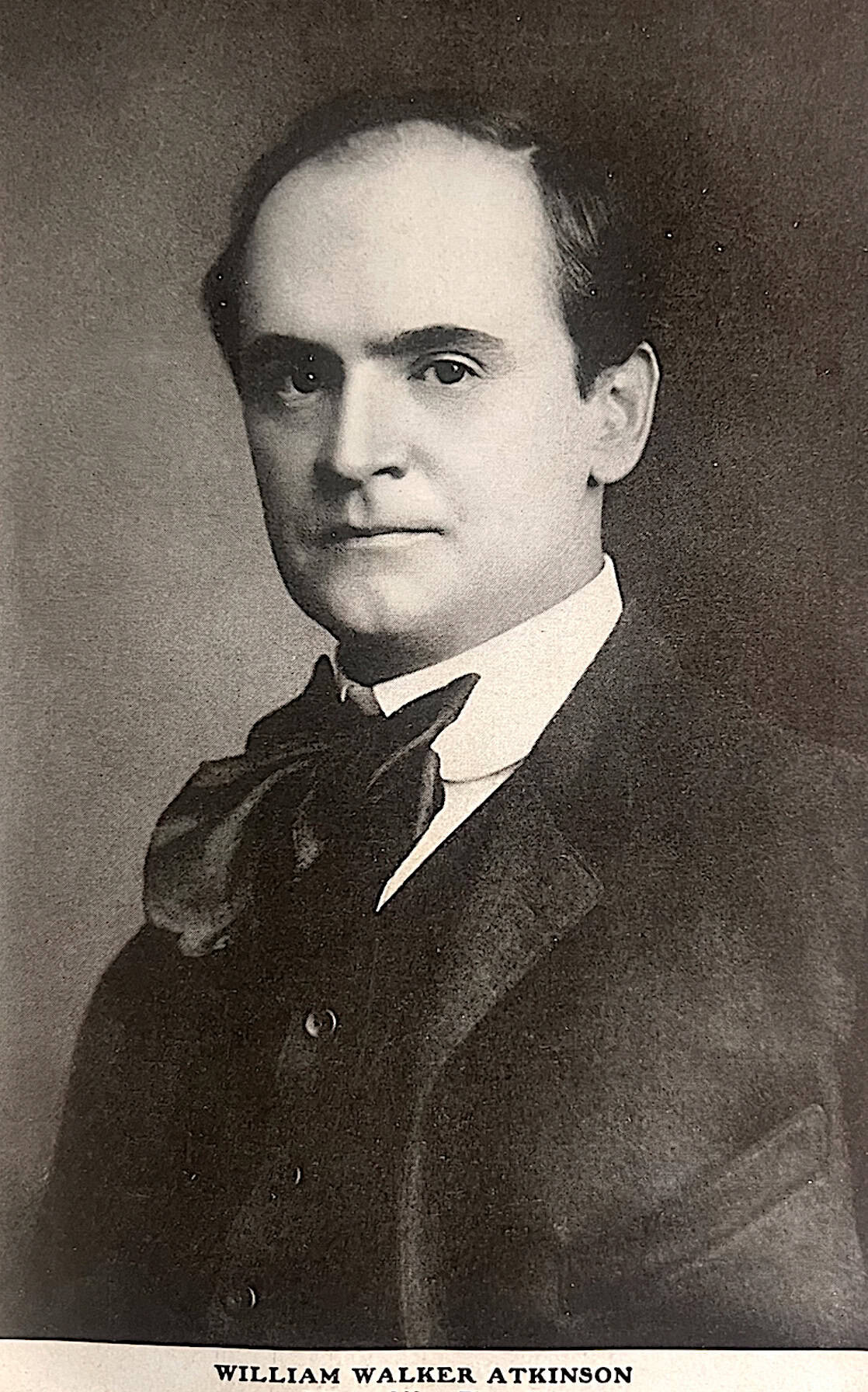
William Walker Atkinson was one of the principal literary forces behind the YPS publishing system and almost certainly responsible for a substantial portion of the prose appearing under Ramacharaka. His style, vocabulary, editorial habits, and later body of work connect him closely with the books.
But the historical problem begins when “substantial literary role” is converted into “sole author of everything.”
Atkinson arrived in Chicago in 1900 after a severe personal and professional collapse in Pennsylvania. Within months he appeared inside Parkyn’s educational network. He lectured for Parkyn’s University of Psychic Science, published in Suggestion, and rapidly entered the Chicago mental-science publishing world. His early A Series of Lessons in Personal Magnetism explicitly recommended Parkyn’s writings while presenting a psychological system that closely follows Parkyn’s earlier course in important areas.
This makes Atkinson’s place in the Ramacharaka story easier to understand. He was exceptionally useful as a writer, editor, lecturer, synthesizer, and literary organizer. He could take teaching material and turn it into readable courses for a mass audience. Under the YPS system, that ability could be applied to Hindu philosophy, occultism, mental science, Christianity, Hermeticism, and psychic development.
The Ramacharaka identity allowed the teaching itself to stand in the foreground while Atkinson’s personal biography remained outside the text.
Read the article: From Mental Breakdown to Atkinsonia: How Herbert A. Parkyn Turned William Walker Atkinson into a New Thought Phenomenon
Was Ramacharaka Supposed to Be an Actual Indian Yogi?
The books present Ramacharaka as a Yogi teacher speaking from within an Eastern tradition, and later readers often assumed that this represented an identifiable Indian swami whose teachings Atkinson translated or recorded. Yet the documentary evidence surrounding YPS does not require such a person.
The 1919 testimony that Yogi Ramacharaka was a pen name used by several writers is much more compatible with the publishing record. Ramacharaka functions like an institutional teaching identity. The voice remains consistent because the identity itself supplies continuity.
This also explains why the series can absorb material from many sources without presenting itself as an anthology. The books can draw from Indian philosophy, Theosophy, Western occultism, psychology, suggestion, mental healing, comparative religion, and contemporary psychical research while maintaining a single teacher persona. The name offered YPS something valuable. It created an authoritative Eastern voice around which the company could build an entire subject category.
How Did Swami Vivekananda Influence the World in Which Ramacharaka Appeared?
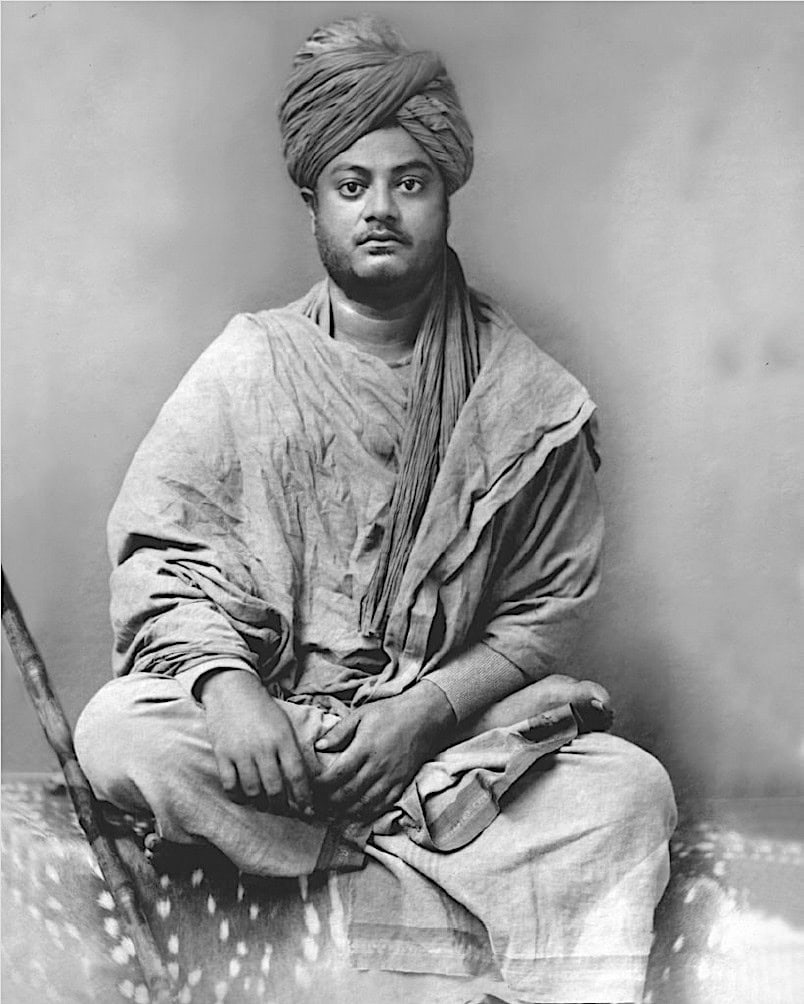
The rise of Ramacharaka cannot be separated from the immense Western interest in Indian philosophy created by teachers such as Swami Vivekananda. Vivekananda’s appearance at the World’s Parliament of Religions in Chicago in 1893 and his subsequent lectures introduced large Western audiences to Vedanta, Raja Yoga, the higher Self, concentration, Prana, and Indian religious philosophy.
By the time YPS began publishing Ramacharaka in 1903, there was already an American readership interested in Yoga and Hindu thought. What YPS added was a highly organized commercial publishing system capable of turning those interests into a sequence of affordable books and correspondence-style courses.
Ramacharaka’s success depended in part upon this earlier cultural groundwork. The American reader had already heard that India possessed ancient systems of mind and spirit. YPS could now present those systems in a simplified, systematic format designed for home study.
What Did the Fourteen Lessons in Yogi Philosophy Teach?
The Fourteen Lessons in Yogi Philosophy and Oriental Occultism established the architecture of the Ramacharaka system. Human beings were presented as multi-level entities composed of physical, mental, psychic, and spiritual principles. The physical body was only the lowest visible expression of a much larger constitution.
Prana supplied the vital force behind bodily and psychic functions. Thought possessed power and influence. The aura expressed qualities of the individual. Psychic faculties could be developed. Telepathy and clairvoyance belonged to latent human capacities. The astral world formed part of the human environment. Reincarnation and karma explained the long course of spiritual development. The higher Self stood beyond the ordinary personality.
The course is important because it shows that YPS began with a complete system. Later books such as The Science of Breath, Hatha Yoga, Raja Yoga, Gnani Yoga, and The Science of Psychic Healing expanded divisions already present in the original program.
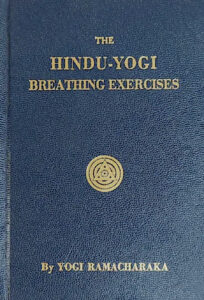
What Was The Science of Breath?
The Hindu-Yogi Science of Breath, published in 1904, became one of the best-known Ramacharaka books. It presented breathing as a link between ordinary physiology and the Yogi concept of Prana. The book teaches rhythmic breathing, lung development, vitality, nervous control, mental effects of breathing, and the direction of Pranic force. It combines anatomical explanation with occult interpretations of vitality. This mixture became characteristic of Ramacharaka. Western physiological language reassures the reader that the subject belongs to a knowable system, while the Eastern vocabulary expands that system into invisible forces and higher functions.
The book also reflects YPS’s method of taking a specialized subject from the larger Yogi course and turning it into a self-contained manual.
What Was Hatha Yoga?
Hatha Yoga, also published in 1904, addressed the physical side of Yogi development. It covered the body, health, digestion, circulation, relaxation, physical habits, cleansing, vitality, and the relationship between bodily condition and mental or spiritual work. Yet Ramacharaka did not present physical culture as the final goal of Yoga. The body was an instrument that had to be maintained so the higher faculties could operate effectively.
This hierarchy is repeated throughout the series. Physical development serves mental development. Mental development serves spiritual development. Psychic powers remain subordinate to higher realization.
What Was Raja Yoga?
Raja Yoga, published in 1905, moved directly into control of the mind. It teaches concentration, attention, mental discipline, mastery over thought, the distinction between the real Self and the stream of mental states, and the development of conscious command over mental processes.
This book is one of the clearest places where the Ramacharaka program intersects with the mental-training environment that had already developed in Chicago. The vocabulary is Yogi, but the student is once again being taught to observe thought, direct attention, cultivate concentration, control habit, and refuse automatic domination by mental impressions. The deeper teaching is identification with the higher “I.” The student learns that thoughts are objects appearing within consciousness and need not be mistaken for the Self itself.
What Was Gnani Yoga?
Gnani Yoga, published in 1906, develops the philosophical side of the system. It asks what the Self is, how consciousness relates to the universe, what lies behind individuality, and how the apparent multiplicity of existence relates to an underlying unity. The book moves toward metaphysical realization through discrimination and knowledge. It asks the student to distinguish the temporary personality from the enduring spiritual principle.
This gives the Ramacharaka program a complete ascending structure. Hatha Yoga develops the physical instrument. Raja Yoga develops mastery of mind. Gnani Yoga develops knowledge of the higher Self.
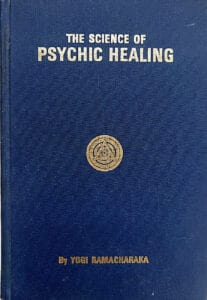
Psychic Healing and the Expansion of the Ramacharaka System
The Science of Psychic Healing, published in 1906, carried Ramacharaka directly into mental and psychic healing. It discusses Prana, magnetic treatment, mental influence, psychic forces, absent treatment, and the relationship between mind and bodily condition.
This subject had obvious connections with Chicago’s earlier healing culture. Parkyn’s work had been built around suggestive therapeutics and the use of mental processes in health. Sydney B. Flower and other New Thought publishers were likewise deeply involved in mental healing literature. Ramacharaka reinterpreted these concerns through an Eastern occult vocabulary. Suggestion could appear beside Prana. Mental influence could appear beside psychic force. Healing could be described through both psychological and occult mechanisms.
Reincarnation and Karma
Reincarnation and Karma are foundational to Ramacharaka’s account of human development. A single earthly life cannot contain the entire history of the individual. Character, ability, circumstance, spiritual development, and personal tendencies belong to a much longer evolutionary process. Karma supplies continuity between actions and consequences. Reincarnation supplies the sequence of lives through which those consequences and opportunities unfold.
These teachings also helped YPS connect Hindu philosophy with Theosophy and Western esotericism. Readers familiar with Theosophical literature could recognize reincarnation, astral existence, planes, spiritual evolution, and latent faculties while encountering them under the Yogi identity.
The Astral World and Psychic Development
Ramacharaka’s books repeatedly extend human experience beyond physical sensation. The aura, thought forms, astral bodies, telepathy, clairvoyance, and psychic influence appear as natural parts of the unseen constitution of man. This is important to the later YPS identities. Swami Panchadasi would later specialize in clairvoyance and occult powers. Swami Bhakta Vishita would likewise present psychic perception and mental influence in specialized form.
The later pseudonyms did not introduce an entirely new field. They divided and expanded material that had already been present within the Ramacharaka program.
Ramacharaka and Mystic Christianity
One of the most revealing developments in the series was Mystic Christianity. Here the supposedly Eastern Yogi identity turns toward Jesus, Christian initiation, hidden teachings, reincarnation, esoteric interpretations of the Gospels, and the spiritual meaning of Christ. This was not an accidental detour. YPS was building a library that treated religious traditions as different expressions of underlying spiritual laws. Christian mysticism could therefore stand beside Hindu philosophy without contradiction.
Jesus could be interpreted through initiation and occult development just as Hindu teachers were interpreted through Yoga. The religious language changed while the larger YPS interest in latent powers, higher consciousness, spiritual evolution, and hidden law continued.
How Did Ramacharaka Connect Eastern and Western Esotericism?
The Ramacharaka books repeatedly interpret Eastern teaching in language designed for Western readers. They do not simply reproduce Sanskrit texts or traditional commentaries. They reorganize concepts into lessons, explanations, analogies, and exercises familiar to readers of American mental science. This same publishing environment later produced The Kybalion under the Three Initiates, books under Theron Q. Dumont, works associated with Qabalah, Rosicrucianism, occult Christianity, and other forms of Western esotericism.
Ramacharaka is therefore central to understanding how YPS operated. The Society did not build separate libraries for East and West. It continually placed traditions beside one another and encouraged readers to treat them as related systems of spiritual and mental law.
Did Ramacharaka Influence the Later YPS Pseudonyms?
The later YPS authorial identities can be read as specialized extensions of subjects already gathered under Ramacharaka.
Theron Q. Dumont concentrates heavily on personal magnetism, concentration, will, personality, mental control, and influence.
Swami Panchadasi focuses more deeply on clairvoyance, astral perception, psychic influence, thought forms, and occult powers.
Swami Bhakta Vishita develops psychic sensing, telepathy, psychometry, and related subjects.
The Three Initiates move into Hermeticism and mental transmutation through The Kybalion.
Seen across the catalog, these names look less like isolated authors and more like teaching identities through which the publishing system could organize different branches of a large intellectual program.
Why Did YPS Need an Identity Like Ramacharaka?
Ramacharaka gave the Yogi Publication Society something that ordinary authorship could not provide as effectively. It gave the company a stable teacher identity that could stand above individual contributors. A reader who bought one Ramacharaka book could move naturally into another. The authorial identity itself guaranteed continuity. The books could be marketed as successive parts of a complete teaching.
This model also protected the coherence of the system when several writers or source traditions contributed to it. The reader did not need to know which individual supplied a paragraph on breathing, which writer shaped a discussion of reincarnation, or which source lay behind a psychic-development lesson. Ramacharaka unified the material.
That is why the 1919 statement that the name had been used by several writers is so important. It explains the publishing practice that the books themselves suggest.
Was Yogi Ramacharaka Simply William Walker Atkinson?
The best answer is no, not in the simple way the claim is usually made. Atkinson was central. His literary hand is deeply connected with the series. He was involved in the YPS network and had the ability to synthesize and present complex material in the lesson format that characterizes the books. But the identity of Ramacharaka belongs to the publishing system, not merely to Atkinson’s private bibliography. The postal testimony describing Ramacharaka as a pen name used by several writers must be given serious weight. So must the circumstances in which YPS developed, the collaborative publishing environment around Parkyn, and the movement of the same teachings through multiple later identities.
How Did Ramacharaka Fit into the Yogi Publication Society’s Larger Mission?
Ramacharaka was the foundation of the YPS subject program. Through Ramacharaka, YPS could offer a complete introduction to Eastern philosophy and occult development. From that base the company could move into more specialized works on psychic science, mental influence, Western esotericism, Hermeticism, Qabalah, Christianity, Rosicrucianism, reincarnation, healing, and personal development.
The early Ramacharaka course had already announced this range. It dealt with the physical, mental, psychical, and spiritual dimensions of human life. That four-part structure became almost a blueprint for the later catalog. This is also why YPS could publish works by very different authors without losing its identity. A book on Jesus, Qabalah, clairvoyance, alchemy, or the Grail could still fit because Ramacharaka had already taught readers to look for common spiritual laws operating behind different traditions.
What Is the Historical Importance of Yogi Ramacharaka?
Yogi Ramacharaka became one of the most successful vehicles through which Yoga and Hindu philosophical ideas entered popular English-language occult literature during the early twentieth century. The books remained in print for decades, were translated widely, and helped define what many Western readers understood by terms such as Prana, Raja Yoga, astral body, thought force, aura, reincarnation, and psychic development.
Their historical importance is also institutional. Ramacharaka was the identity through which the Yogi Publication Society first established itself as a major publisher of occult and spiritual literature.
The name stands at the meeting point of several movements. Indian philosophy had already attracted Western attention through teachers such as Swami Vivekananda. Theosophy had accustomed readers to reincarnation, karma, astral planes, and hidden Masters. New Thought had created a large audience for mental power and healing. Parkyn’s Chicago school had developed systematic training in suggestion, attention, will, habit, psychic research, and mental development. Atkinson brought exceptional literary ability and editorial energy. YPS combined these conditions into a publishing program. Ramacharaka became its first great teaching voice.
What Should Yogi Ramacharaka Be Understood to Represent?
Yogi Ramacharaka should be understood as one of the central authorial identities of the Yogi Publication Society and as the vehicle through which the Society organized its first major system of Eastern, occult, mental, and spiritual instruction. The books do not require the historical existence of a single Indian Yogi corresponding to the name. Nor does the evidence support reducing the identity completely to William Walker Atkinson. The strongest documentary evidence from within the YPS organization describes Ramacharaka as a pen name used by several writers.
Atkinson remains indispensable to the story because of his role as writer, lecturer, editor, and literary organizer. Parkyn is equally indispensable to understanding the system from which YPS developed. His Chicago School of Psychology, University of Psychic Science, Suggestion magazine, correspondence courses, and organized teaching of mental law supplied a working educational infrastructure before Ramacharaka appeared.
The Ramacharaka books then carried that course-based model into a much larger field. Suggestion became one part of a system that could also speak of Prana. Concentration became Raja Yoga. Psychic research entered the language of astral perception. Mental healing appeared beside Yogi healing. Character development became part of spiritual evolution. Reincarnation and karma extended the history of the individual across many lives. Christianity could be interpreted mystically. Eastern and Western occult systems could be read together.
That is the real historical importance of Yogi Ramacharaka. The name was not merely a disguise attached to a collection of books. It was the principal teaching identity through which the Yogi Publication Society first presented a unified system of physical, mental, psychic, and spiritual development, and it became the foundation upon which much of the later YPS publishing program was built.