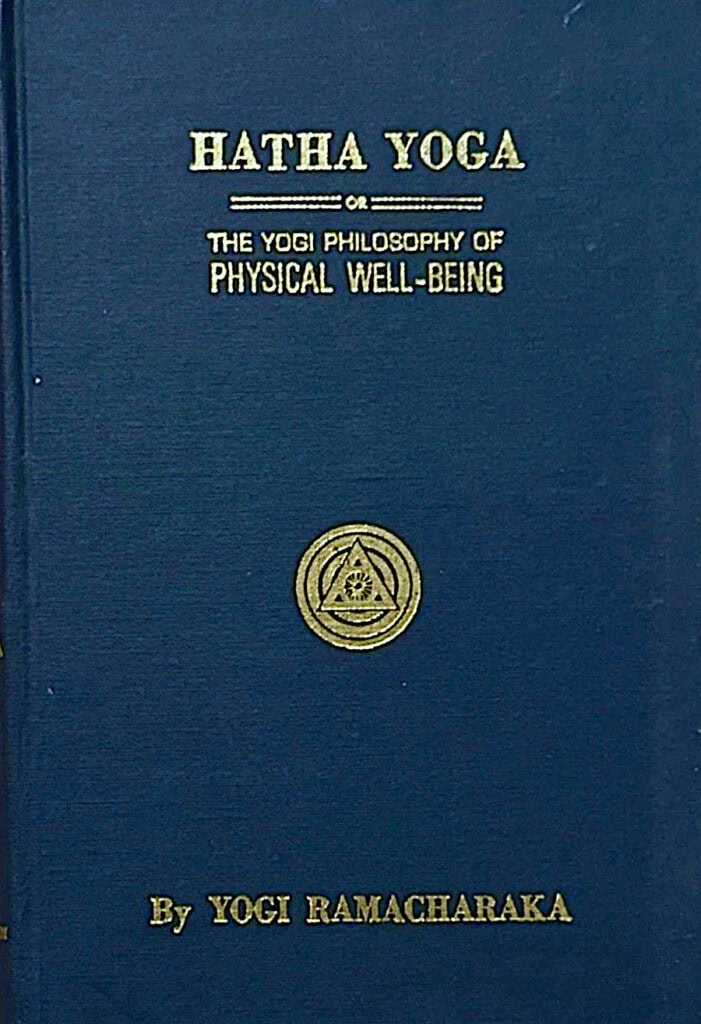
Published by the Yogi Publication Society in 1904, Hatha Yoga; or, The Yogi Philosophy of Physical Well-Being presents Hatha Yoga primarily as a system for maintaining the human body in its natural condition of health. Unlike later popular understandings of Hatha Yoga that identify it chiefly with postures and physical exercises, the book uses the term in a much broader sense. Hatha Yoga encompasses breathing, food, digestion, water, elimination, circulation, exercise, relaxation, bathing, sunlight, fresh air, sleep, mental attitude, and the cultivation of greater conscious influence over bodily processes. Its governing principle is remarkably simple: health is the natural condition of the body, the body possesses an inherent intelligence that continually works toward health, and human beings become ill largely because they interfere with the natural processes designed to maintain them. The purpose of Hatha Yoga is not primarily to cure disease after it appears, but to understand and cooperate with the laws through which health is naturally produced and maintained.
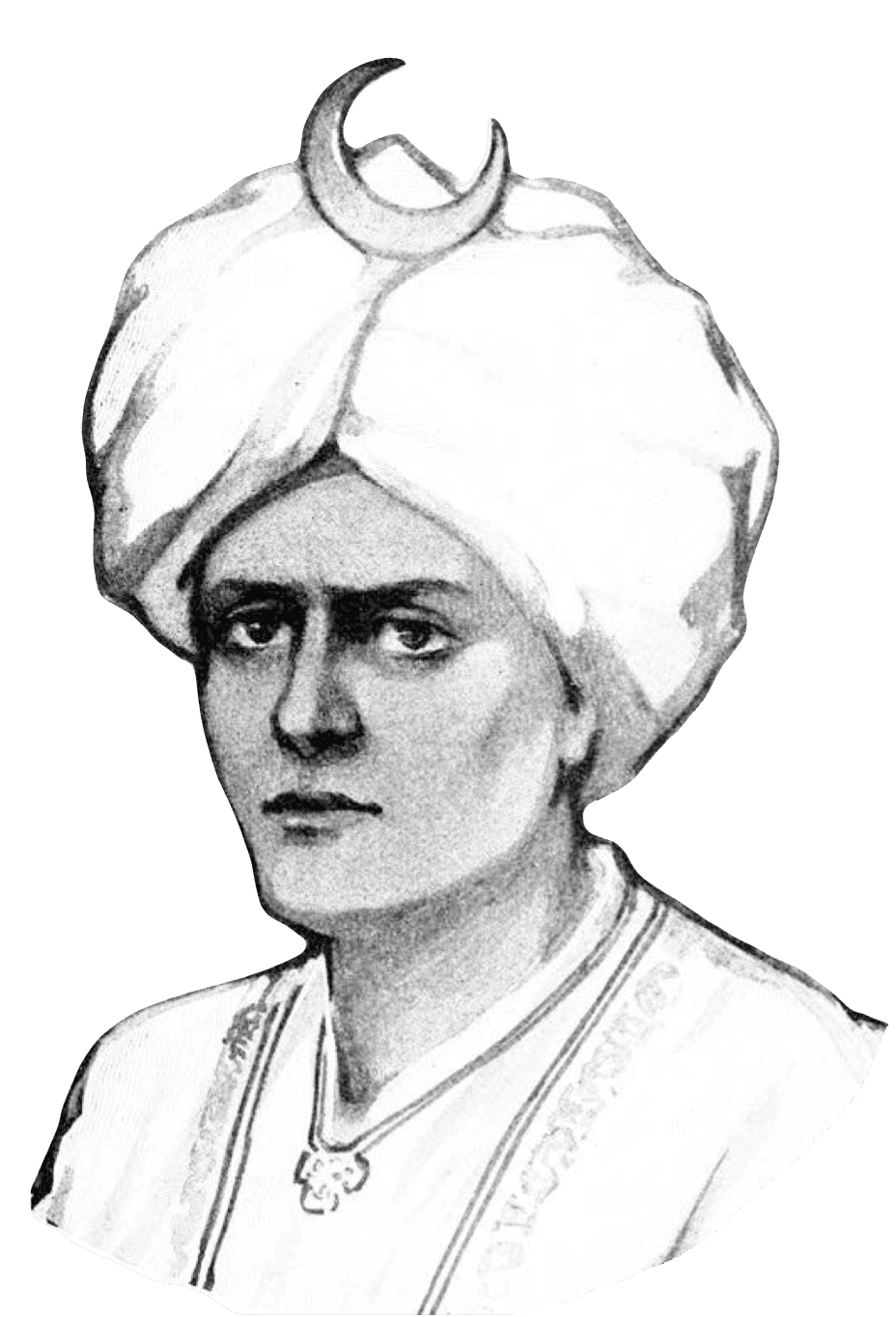
Yogi Ramacharaka
There is also an important historical context for understanding the health teachings presented throughout Hatha Yoga. Many of its central ideas strongly parallel the system of health and Suggestive Therapeutics that Dr. Herbert A. Parkyn had already been teaching for years before the book appeared. As the summary progresses, these parallels become increasingly specific, particularly in the book’s teachings on natural law, the body’s inherent healing power, water, breathing, elimination, the voluntary and involuntary mind, and the fundamental requirements of healthy living. For that reason, Parkyn’s earlier teachings are included throughout this summary wherever they provide a direct historical parallel to the health system presented in Hatha Yoga.
The Yogi Publication Society explicitly describes the book as dealing with the physical side of Yoga. The publisher’s notice explains that breathing material from The Science of Breath was incorporated because a complete treatment of Hatha Yoga could not reasonably omit such an important part of physical well-being. The resulting book contains thirty-two chapters moving from general principles of natural health through digestion, food, water, elimination, breathing, Prana, involuntary control, relaxation, exercise, bathing, sunlight, air, sleep, regeneration, and mental attitude. This structure is important because it reveals what the book actually means by Hatha Yoga: not a collection of isolated exercises, but an integrated philosophy of physical life in which every ordinary function of the body is governed by natural law and contributes to the maintenance of health.
What Hatha Yoga Means
The opening chapter defines Hatha Yoga as the branch of Yoga concerned with the physical body, including its care, strength, health, and preservation in a normal condition. Raja Yoga, Karma Yoga, and Gnani Yoga are acknowledged as other branches, but the present volume deliberately concentrates upon physical well-being. Its central instruction is to return to nature. Indeed, the book reduces its basic standard to “first, nature; second, nature, and last, nature.” Whenever confronted with a health theory, treatment, practice, or fashionable claim, the reader is instructed to ask which course most closely conforms to the natural way. Even the book’s own teachings are subjected to this standard: if they fail the test of nature, the reader is told to discard them.
This principle provides the foundation for virtually everything that follows. The body is not presented as an inherently defective mechanism requiring constant external correction. Nature is described as humanity’s friend instead of its enemy, and healthy living consists largely of removing artificial habits that obstruct normal bodily processes. The healthy person becomes the book’s standard of comparison. Its dedication tells readers to observe healthy men and women, discover what they naturally do and avoid, and compare those habits with the teachings presented in the book. Hatha Yoga combines metaphysical language about Life, Prana, and Vital Force with an unusually observational method: look at the normal functioning of the healthy body, determine the conditions under which it thrives, and imitate those conditions.
This conception immediately establishes one of the strongest parallels between Hatha Yoga and the teachings of Dr. Herbert A. Parkyn. From the founding of the Chicago School of Psychology in 1896 onward, Parkyn repeatedly presented health as the result of obedience to natural laws and disease as the consequence of violating them. Hatha Yoga adopts essentially the same starting point. Its repeated instruction to test health theories by asking whether they conform to nature could readily fit within the system of natural health, hygiene, and Suggestive Therapeutics that Parkyn had already been teaching through his school, correspondence courses, and Suggestion magazine.
The Body as an Intelligent Organism
The next stage of the book develops a particular attitude toward the physical body. The Hatha Yogi does not worship the body or regard physical development as the final purpose of existence, but neither does he despise it. The body is an instrument through which higher forms of human development become possible. A healthy nervous system, sound digestion, good circulation, proper breathing, and physical vitality provide the foundation upon which mental and spiritual development can proceed. Neglecting the body in the name of spirituality is treated as a misunderstanding of Yoga rather than an advanced expression of it.
Behind the body’s operations the book sees what it calls the “Divine Architect,” an intelligence manifested through the innumerable processes that construct and maintain the organism. The development of the human body from a single cell, the formation and repair of tissues, the circulation of blood, digestion of food, elimination of waste, and instinctive responses to injury are presented as evidence that an organizing intelligence is continually operating beneath ordinary consciousness. The conscious mind does not know how to manufacture blood, repair tissue, regulate digestion, or coordinate the countless cellular activities required to sustain life. Yet these things occur continuously. The lesson is that the conscious individual should learn to cooperate with the deeper intelligence already directing the organism.
This becomes fundamental to the book’s theory of health. The reader is repeatedly discouraged from thinking of the body as helpless or fundamentally dependent upon external intervention. The body is already engaged in maintaining itself. Hatha Yoga attempts to supply the conditions under which this internal work can proceed efficiently.
Vital Force and the Body’s Power to Heal Itself
The book names this underlying restorative agency the Vital Force. Vital Force is described as constantly working for the preservation, repair, and normalization of the organism. When the body is injured, poisoned, exhausted, improperly nourished, or otherwise disturbed, this force attempts to restore normal conditions. The Hatha Yogi’s task is not to substitute another power for the body’s own healing action but to remove obstacles and allow the Vital Force to operate freely.
This leads to one of the book’s most important reinterpretations of disease. Symptoms are not always treated as the disease itself. Fever, inflammation, abnormal secretions, digestive reactions, and other bodily disturbances may represent attempts by the organism to correct an underlying problem. Disease is frequently portrayed as a struggle between abnormal conditions and the body’s effort to restore equilibrium. The intelligent response is to identify what natural law has been violated, remove the obstruction where possible, and assist rather than suppress the body’s restorative processes.
Here again the correspondence with Parkyn is unusually close. Parkyn’s system of Suggestive Therapeutics likewise emphasized an inherent healing intelligence within the organism and taught that many bodily reactions commonly regarded only as symptoms of disease were actually efforts toward restoration. Hatha Yoga translates this principle into its vocabulary of the Vital Force, but the doctrine remains substantially the same: the organism tends toward health, healing arises from forces already operating within it, and treatment should cooperate with those forces rather than obstruct them.
Digestion: The Laboratory of the Body
A substantial portion of Hatha Yoga is devoted to digestion because nourishment is regarded as one of the primary foundations of vitality. The digestive system is described as a laboratory in which food is broken down and transformed into material the body can assimilate. Rather than treating eating merely as the act of filling the stomach, the book follows food through digestion, absorption, circulation, tissue formation, and waste removal. Health depends not simply upon how much food enters the body but upon whether it can be properly digested, assimilated, and converted into usable material.
The book repeatedly criticizes overeating, hurried eating, insufficient chewing, eating without genuine hunger, and the consumption of food merely because habit or social convention says that it is time to eat. The body is represented as possessing natural signals that indicate when nourishment is required, but civilized habits often weaken the individual’s ability to recognize them. Restoring health requires renewed attention to bodily signals rather than blind obedience to appetite, routine, or fashionable dietary systems.
Hunger, Appetite, and the Natural Instinct for Food
One of the book’s important distinctions is between genuine hunger and appetite. Hunger is presented as the body’s natural demand for nourishment, whereas appetite may be produced by habit, stimulation, taste, social custom, or the expectation of pleasure. A person may therefore possess a strong appetite while having little genuine physiological need for food. Conversely, illness or exhaustion may temporarily diminish hunger because the organism is directing its energy elsewhere.
The Hatha Yogi is instructed to recover the ability to recognize genuine hunger and to allow it to regulate eating more naturally. This does not produce a rigid dietary code. The book is suspicious of dietary fanaticism and repeatedly returns to observation, moderation, and natural instinct. Food should be wholesome, simple, adequately chewed, and consumed when genuinely needed. The larger principle is more important than any particular menu: the individual should cooperate with the body’s nutritional requirements rather than impose artificial habits upon it.
Prana and the Absorption of Energy from Food
The physical explanation of nutrition is supplemented by the Yogic doctrine of Prana. Food supplies chemical and material nourishment, but the book teaches that it also carries Pranic energy. Prana is the universal life-energy manifested through living processes and absorbed by the human organism through food, water, and especially air. The act of eating has both an ordinary physiological dimension and a subtler energetic dimension.
The book connects careful mastication with this process, arguing that chewing not only prepares food for digestion but facilitates the extraction of its useful qualities. Attention to eating becomes important as well. Instead of mechanically swallowing food while mentally distracted, the reader is encouraged to eat deliberately and allow the organism to receive what it needs. As elsewhere in the book, physical and mental processes are not treated as completely separate. Attention, expectation, bodily function, and Vital Force continually interact.
Water and the Irrigation of the Body
Water receives one of the book’s most extensive treatments. The body is compared to an irrigated system whose tissues require a sufficient supply of fluid to maintain circulation, digestion, elimination, and normal cellular activity. Water is necessary not merely for relieving thirst but for transporting substances throughout the organism and carrying waste products away. Insufficient water interferes with several bodily processes simultaneously.
The book recommends approximately one and a half to two quarts of water per day under ordinary circumstances, while recognizing that individual requirements vary. It encourages drinking water throughout the day and argues that many people have weakened their natural thirst through habit. The restoration of normal water consumption is presented as one of the simplest ways of returning the body to natural conditions.
This is one of the most specific connections between Hatha Yoga and Parkyn’s earlier health teachings. Parkyn repeatedly emphasized water as a basic requirement of health and connected adequate hydration with circulation, digestion, elimination, and the body’s ability to remove waste. Most significantly, his instruction also specified approximately one and a half to two quarts of water per day. The appearance of the same quantity within Hatha Yoga, combined with the same larger argument about water, circulation, and elimination, makes this considerably more specific than a general similarity between two natural-health systems.
Elimination and the “Ashes of the System”
If nourishment brings necessary material into the body, elimination removes the residue left by metabolism. Hatha Yoga calls these wastes the “ashes of the system.” The analogy is deliberate: just as combustion leaves ash behind, the body’s continual activity produces waste materials that must be removed. Health depends upon elimination just as surely as it depends upon nutrition.
The lungs, skin, kidneys, and bowels are all treated as channels through which waste leaves the organism. Constipation, inadequate respiration, insufficient perspiration, poor circulation, and inadequate water consumption are related problems rather than isolated complaints. The book’s holistic character is especially clear here. Water affects elimination; exercise affects circulation; circulation affects tissue nutrition and waste removal; breathing supplies oxygen and removes carbonic waste; food determines what enters the digestive system; and mental habits can influence bodily function. The body is treated as one coordinated system.
Yogi Breathing and the Importance of Oxygen
Breathing occupies a central place in the book because air supplies both oxygen and Prana. The physical explanation emphasizes the lungs, blood, circulation, and oxygenation. Poor breathing deprives the organism of the oxygen necessary for efficient bodily activity, while proper breathing improves the condition of the blood and assists the removal of waste. The Yogic explanation adds that breathing is also the principal means by which Prana is absorbed into the organism.
The book teaches the Yogi Complete Breath, which combines abdominal, middle, and upper breathing into a coordinated movement intended to use the lungs more fully. Various breathing exercises are then given for strengthening the respiratory system, expanding the chest, improving circulation, cleansing the lungs, and increasing control over respiration. These exercises are not presented merely as spiritual practices. Their immediate purpose is physical efficiency and vitality.
The orientation is important. Even when Hatha Yoga introduces Prana, it repeatedly connects the concept to recognizable bodily processes. Breath affects oxygenation, circulation, nervous activity, muscular action, and general vitality. The esoteric explanation is layered upon a physiological framework rather than substituted for it.
Nostril Breathing and the Rejection of Mouth Breathing
The book strongly favors breathing through the nose instead of the mouth. The nasal passages are described as the natural respiratory channel, designed to warm, filter, and prepare incoming air before it reaches the lungs. Mouth breathing is treated as an unnatural habit that bypasses these protective functions and may contribute to weakness of the respiratory system.
As throughout the book, anatomy is interpreted through the principle of natural design. If the body possesses a specialized structure for a particular function, the Hatha Yogi assumes that the natural use of that structure is preferable to an artificial substitute. Nose breathing becomes another application of the book’s basic rule: discover how nature constructed the organism to function and cooperate with that design.
The “Little Lives” of the Body
The discussion then moves from organs to the countless cells composing the organism. These are described figuratively as the “little lives” of the body, each possessing a limited form of intelligence and carrying out its particular function within the larger organism. Cells take nourishment, perform work, reproduce, eliminate waste, respond to conditions, and cooperate in organized groups.
This cellular conception allows Hatha Yoga to connect physiology with mental influence. Organs are composed of groups of living cells, and these groups operate largely below the level of ordinary conscious awareness. Nevertheless, the book argues that communication between conscious and involuntary processes is possible. Attention, expectation, mental commands, breathing, and directed Pranic energy can be used to influence bodily activity.
Control of the Involuntary System
The chapter on the involuntary system is one of the most revealing sections of the entire book. Functions normally regarded as automatic are said to be capable of increasing degrees of conscious influence. The reader is encouraged to direct attention and definite mental commands toward particular organs or bodily regions. The book gives examples involving circulation, bowel habits, menstruation, headaches, cold extremities, and tired areas of the body, maintaining that persistent attention and command can gradually alter involuntary activity.
The method is essentially suggestive. The individual mentally addresses an organ or group of cells, clearly states the desired action, expects obedience, and repeats the process until the response becomes habitual. The book even recommends establishing regular bowel movements by giving the colon a specific daily appointment and repeatedly reinforcing the expectation until the involuntary system adopts the routine. It similarly suggests directing circulation toward cold feet or away from the head and commanding uncomfortable parts of the body to improve.
This section creates an especially strong connection with Parkyn’s Suggestive Therapeutics. Parkyn’s system was built upon the relationship between voluntary and involuntary mental activity and upon the proposition that suggestion, auto-suggestion, concentration, and directed attention could influence physiological processes such as circulation, digestion, elimination, and other functions ordinarily controlled below conscious awareness. Hatha Yoga presents the same relationship in Yogic terminology, adding the language of Prana and cellular intelligence while retaining the central mechanism of conscious direction acting upon involuntary bodily processes.
Pranic Energy and Conscious Direction
Having established that bodily functions may respond to conscious direction, Hatha Yoga develops the concept of Pranic energy more explicitly. Prana is described as the active life-energy distributed throughout the organism, particularly through the nervous system. The body continually receives, stores, distributes, and expends this energy. Health depends partly upon obtaining sufficient Prana and partly upon using it intelligently instead of wasting it.
The accompanying Pranic exercises combine breathing, attention, visualization, muscular action, and will. The practitioner may imagine Prana being drawn into the body with the breath and directed toward particular areas. Exercises are given for stimulating circulation and energizing different parts of the body. The underlying principle is consistent with the preceding chapter: thought and attention can direct bodily energy, and deliberate mental control can gradually influence processes that usually operate automatically.
Relaxation and the Conservation of Energy
Relaxation is treated not as laziness but as intelligent conservation of energy. The book argues that many people waste enormous quantities of nervous and muscular force through unnecessary tension. They contract muscles that are not needed for the task at hand, maintain rigid postures, make excessive movements, and remain physically tense even when resting. This constant expenditure diminishes vitality.
True relaxation means releasing every unnecessary muscular contraction while remaining capable of immediate action. The book uses animals, particularly members of the cat family, as models. A resting cat may appear completely relaxed while retaining the ability to spring instantly into motion. The ideal is “live repose,” not inactivity. Energy is conserved when it is unnecessary and released efficiently when action is required.
The mental component is again emphasized. Physical tension often reflects mental tension, and control of one assists control of the other. Learning to relax deliberately becomes another example of the relationship between thought and bodily state. The body follows habitual mental patterns, and changing those patterns can alter the way physical energy is used.
Physical Exercise and Natural Movement
Hatha Yoga recommends physical exercise but rejects excessive muscular development as an end in itself. Exercise exists to maintain circulation, flexibility, strength, coordination, and normal function. The ideal body is useful, responsive, healthy, and balanced instead of merely large or impressive.
The exercises presented are comparatively simple and are intended to engage the body without elaborate equipment. They include stretching, bending, twisting, muscular contraction, movements for the trunk and limbs, and exercises coordinated with breathing. Again the emphasis is practical. The objective is not athletic exhibition but maintenance of the body as an efficient instrument.
The book also warns against exhausting exercise. Activity should stimulate rather than deplete vitality. Exercise, rest, breathing, nourishment, and sleep must remain in balance. Excessive exertion violates natural law just as surely as chronic inactivity.
Bathing, Cleanliness, and the Skin
The Yogi bath is presented as another component of natural hygiene. The skin is not treated merely as an outer covering but as an active organ associated with elimination, circulation, temperature regulation, and general health. Clean skin can perform these functions more efficiently, while accumulated dirt and waste interfere with them.
Bathing is connected with the same larger physiological system already developed through the chapters on water and elimination. The book favors regular cleanliness without turning bathing into an elaborate ritual. Friction and rubbing of the skin are encouraged because they stimulate circulation and leave the surface invigorated. Once again the principle is functional instead of cosmetic: cleanliness assists the body’s natural work.
Sunlight and Solar Energy
Sunlight is treated as a natural source of vitality. The book argues that modern civilization has unnecessarily separated people from direct exposure to the sun through indoor living, heavy clothing, and artificial habits. Plants and animals demonstrate the importance of sunlight throughout nature, and human beings are not considered exceptions.
Exposure should be sensible rather than excessive, but sunlight itself is portrayed as health-giving. The concept of “solar energy” also allows the book to connect ordinary natural-health advice with its wider doctrine of Prana. The sun is both a physical source of light and warmth and a great reservoir of vital energy. Receiving sunlight becomes another way of opening the organism to forces already provided by nature.
Fresh Air
Fresh air is treated with similar importance. The book opposes poorly ventilated rooms, sleeping in stale air, and the common fear of outdoor air. Because breathing is continuous, the quality of the air surrounding a person affects the body continuously as well. Fresh air supplies oxygen and Prana, while poor ventilation forces the individual repeatedly to breathe air already altered by respiration.
The reader is encouraged to ventilate living and sleeping spaces and spend more time outdoors. The recommendation belongs to the book’s larger attempt to restore ordinary natural conditions that civilization has displaced. Fresh air, sunlight, water, movement, and sleep are not medicines. They are normal requirements of life, and the need for them becomes obvious once health is understood as conformity with natural law.
Sleep and Restoration
Sleep is described as “Nature’s Sweet Restorer,” a period during which the organism repairs itself and replenishes energy. The body cannot remain in continuous activity without periods of restoration, and attempts to defeat this natural rhythm eventually produce exhaustion.
The book encourages regular, sufficient sleep in well-ventilated surroundings and emphasizes the importance of mental quiet at bedtime. Worry, fear, excitement, and continued mental activity can interfere with genuine rest even when the body is lying still. Sleep illustrates once more the inseparability of mental and physical health. Rest requires not only physical inactivity but release from unnecessary mental tension.
Regeneration and the Body’s Continual Renewal
The chapter on regeneration develops the idea that the body is continually rebuilding itself. Tissues are not fixed possessions maintained unchanged throughout life; they are constantly wearing out, being removed, and replaced. The person participates in the construction of the future body through present habits of nourishment, breathing, water consumption, elimination, exercise, rest, and thought.
This gives the natural-health philosophy a hopeful dimension. Poor physical condition is not necessarily viewed as permanent because the organism is continually renewing itself. If the conditions under which regeneration occurs are improved, subsequent bodily rebuilding can occur under better circumstances. Health becomes a process instead of a static possession.
This regenerative principle also reinforces the doctrine of Vital Force. The body is already attempting to rebuild and normalize itself. Hatha Yoga does not claim to manufacture that power; it attempts to stop interfering with it.
The Mental Attitude
Near the conclusion of the book, the mental attitude that has been present implicitly throughout becomes explicit. Fear, worry, pessimism, anger, and persistent negative expectation are treated as forces capable of disturbing bodily function, while confidence, cheerfulness, courage, and constructive thought support normal activity. The body responds to mental states because the nervous system, circulation, digestion, muscular activity, and involuntary functions are interconnected with consciousness.
The book refuses to separate physical hygiene from mental discipline. A person may eat carefully, breathe correctly, drink sufficient water, exercise, and sleep adequately while still undermining health through chronic fear or destructive thinking. Conversely, constructive thought cannot permanently compensate for continual violation of physical requirements. Mental and physical laws operate together.
This is another point at which Hatha Yoga closely approaches Parkyn’s system. Parkyn’s “Life Essentials” joined air, water, nourishment, exercise, rest, and other physical necessities with constructive mental activity. His Suggestive Therapeutics likewise taught that thought produces physiological consequences through the involuntary system. Hatha Yoga arranges its health philosophy around virtually the same combination of physical fundamentals and mental influence.
The Life Essentials and the Parkyn Connection
The structure of Hatha Yoga produces one of the clearest parallels between the Yogi Publication Society’s teachings and Herbert A. Parkyn’s earlier health system. Beginning in the late 1890s, Parkyn organized health instruction around what he called the “Life Essentials,” emphasizing the fundamental conditions upon which normal bodily functioning depends rather than reliance upon medicines. Air, water, nourishment, exercise, rest, elimination, and constructive thinking formed an interconnected system. Hatha Yoga is organized around essentially these same subjects: food and assimilation, water and elimination, breathing and fresh air, exercise and relaxation, bathing and sunlight, sleep and regeneration, followed by mental attitude.
The similarity extends beyond the selection of general health topics. Both systems begin with natural law. Both treat health as the normal condition and disease as arising substantially from interference with natural processes. Both teach that the organism contains an inherent restorative intelligence. Both interpret many symptoms as attempts by the body to correct abnormal conditions. Both emphasize water in relation to circulation and elimination and give the unusually specific recommendation of approximately one and a half to two quarts per day. Both connect mental activity with involuntary physiological function. Both teach that attention and directed thought can influence bodily processes. Both combine physical hygiene with mental training instead of treating them as unrelated subjects.
At times, Hatha Yoga reads less like an introduction to a foreign religious discipline than like Parkyn’s health system rewritten through a Yogic vocabulary. The body’s inherent restorative intelligence becomes the Vital Force; vital energy is explained through Prana; conscious influence upon involuntary processes is presented as Yogic control; and familiar natural-health principles are placed within the broader authority of ancient Yoga. Yet the program remains centered upon the same fundamental problem Parkyn had been addressing for years: how to create the conditions in which the body’s own physiological and mental laws can operate normally.
Hatha Yoga as a System of Preventive Health
One of the most important points for understanding the book is that Hatha Yoga is fundamentally preventive. Although it occasionally discusses ways of correcting abnormal functions, it explicitly distinguishes its purpose from that of a manual devoted to curing diseases. Its primary objective is to show readers how to live so that disease is less likely to arise in the first place.
This explains the extraordinary amount of attention given to apparently ordinary subjects. Water, chewing, breathing through the nose, ventilation, bowel habits, sleep, sunlight, relaxation, bathing, and exercise may appear mundane beside the more esoteric subjects associated with Yoga, but that is precisely the point. Health is produced by the cumulative operation of ordinary natural laws. There is no single secret technique that can compensate indefinitely for their violation.
The book’s philosophy can be summarized as cooperation rather than intervention. Nourish the body properly. Supply sufficient water. Breathe correctly. Allow efficient elimination. Exercise without exhaustion. Release unnecessary tension. Keep the skin clean. Receive sunlight and fresh air. Sleep sufficiently. Cultivate constructive mental states. Learn to influence involuntary functions through attention and suggestion. Then allow the Vital Force to perform the work of restoration for which the organism is naturally equipped.
Hatha Yoga Within the Yogi Publication Society System
Hatha Yoga also occupies an important place in the development of the Yogi Publication Society’s larger system. The publisher’s notice explains that the book incorporates material from The Science of Breath and was intended to establish the physical foundation upon which later works could build. Its thirty-two chapters move systematically through the ordinary requirements of bodily life before ending with mental attitude and the higher principle of being “Led by the Spirit.” The progression points toward the later Ramacharaka books while maintaining a clear division of labor: Hatha Yoga concerns physical well-being, while other branches will develop mental, philosophical, and spiritual subjects.
Seen within that larger sequence, the book establishes the healthy body as the foundation of further development. Before advanced mental control, occult study, or spiritual realization, the student must understand the organism through which these activities occur. The body is neither the whole person nor an obstacle to spirituality. It is an instrument governed by natural laws, and ignorance of those laws creates unnecessary weakness and disease.
The connection to Parkyn is not incidental to a few isolated passages about water or suggestion. It runs through the architecture of the book. Parkyn’s teaching had already connected natural law, self-healing, voluntary and involuntary mental action, suggestion, breathing, water, nourishment, elimination, exercise, rest, and constructive thought into a unified approach to health. Hatha Yoga reorganizes this same territory under the categories of Yoga, Vital Force, and Prana, while retaining the therapeutic orientation that characterized Parkyn’s work.
What Is the Central Teaching of Hatha Yoga?
The central teaching of Hatha Yoga is that health is the body’s natural state and that the human organism possesses an inherent intelligence continually working to preserve and restore that state. Disease arises when natural laws are repeatedly violated or when the body’s normal processes are obstructed. The task of Hatha Yoga is to understand those laws, remove unnecessary interference, provide the body with its essential requirements, and consciously cooperate with its restorative powers.
This is why the book gives equal importance to matters that might otherwise appear unrelated. Breathing supplies oxygen and Prana; food supplies material and vital energy; water irrigates the tissues and assists elimination; circulation distributes nourishment; the organs remove waste; exercise maintains function; relaxation conserves energy; bathing supports the skin; sunlight and fresh air restore natural environmental conditions; sleep permits repair; and constructive thought influences the involuntary system. These are not separate health tips but parts of one theory of the organism.
For that reason, Hatha Yoga is one of the clearest examples in the Yogi Publication Society catalog of the transformation of contemporary natural-health and Suggestive Therapeutic ideas into the language of Yogi philosophy. Instead of centering the book on Hindu theology, Sanskrit metaphysics, ritual, or elaborate postural practice, it concentrates on the everyday conditions of physical health and on the relationship between mind and bodily function. In both structure and doctrine, those teachings closely parallel the system Herbert A. Parkyn had already been developing and teaching for nearly a decade before the book appeared. The result is a work in which the language is Yogic, but much of the health philosophy belongs to the same intellectual and therapeutic current from which the Yogi Publication Society itself emerged.
The Parkyn Connections
Hatha Yoga and Herbert A. Parkyn’s teachings share many clear and specific similarities. At times, it even seems like Parkyn’s health ideas have just been rewritten using Yogic terms.
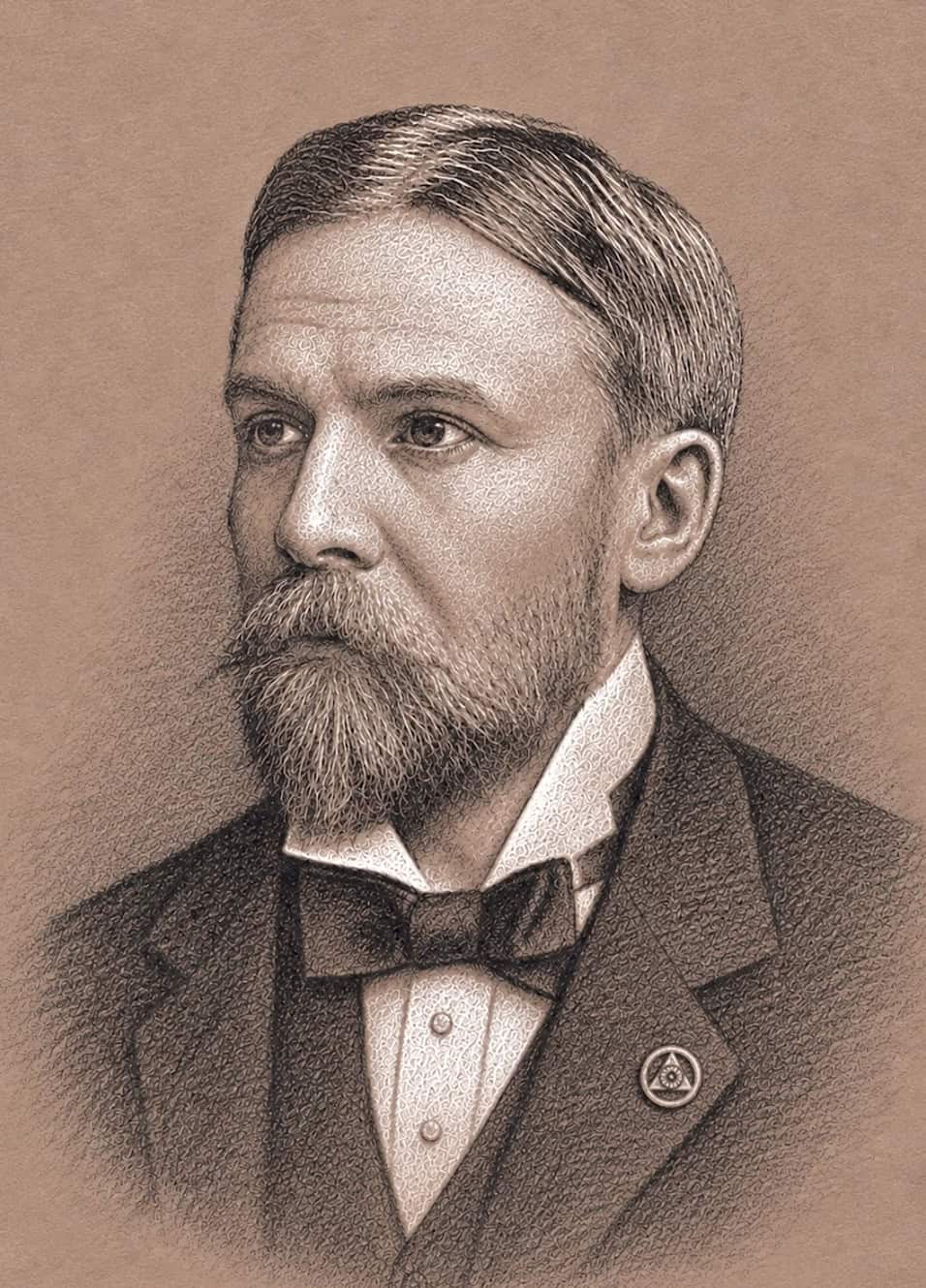
Herbert A. Parkyn
The most obvious connection is the concept of natural law. From the founding of the Chicago School of Psychology in 1896 onward, Parkyn repeatedly taught that health resulted from obedience to nature’s laws and that disease resulted from violating them. Hatha Yoga makes exactly the same argument. Its repeated instruction to test every health theory by asking whether it conforms to nature could easily have appeared in Suggestion magazine or Parkyn’s correspondence courses.
The book’s treatment of disease closely mirrors Parkyn’s doctrine of self-healing. Parkyn consistently taught that the body possessed an innate healing intelligence and that many symptoms represented nature’s efforts to restore health. In Hatha Yoga, disease is repeatedly described not as an enemy but as the Vital Force attempting to remove abnormal conditions and return the body to equilibrium. The philosophy is essentially identical.
The sections on water strongly connect to Parkyn, who was well known as one of the first to identify water as an essential foundation of health. His writings repeatedly emphasized hydration, circulation, elimination, and the therapeutic use of water, specifically saying that the body needed at least 1.5 to 2 quarts of water per day. Those same exact amounts appear in Hatha Yoga.
The discussion of involuntary bodily functions is equally significant. Parkyn’s entire system of Suggestive Therapeutics was built upon the relationship between the voluntary and involuntary aspects of the mind. He taught that suggestion, auto-suggestion, attention, and mental training could influence digestion, circulation, elimination, and other bodily processes. Hatha Yoga repeatedly teaches that these functions can be brought under increasing conscious control through attention, breathing, and mental discipline. This is one of the most distinctive parallels between the two systems.
The chapters on fresh air, sunlight, sleep, exercise, diet, water, and mental attitude correspond almost exactly to Parkyn’s doctrine of the “Life Essentials.” Beginning in the late 1890s, Parkyn organized health instruction around fundamental principles instead of medicines. Air, water, nourishment, exercise, rest, and constructive thinking were repeatedly presented as the foundations of health. Hatha Yoga is organized around precisely the same subjects and often reaches identical conclusions.
The overall tone of the book is Parkynian. Instead of focusing on Hindu theology, Sanskrit philosophy, or esoteric ritual, it consistently emphasizes health improvement. That therapeutic orientation is one of the defining characteristics of Parkyn’s work and is present throughout the entire volume. Hatha Yoga is one of the strongest examples in the YPS catalog of the overlap between Yogi philosophy and the health system that Herbert A. Parkyn had already been teaching for nearly a decade before the book appeared.