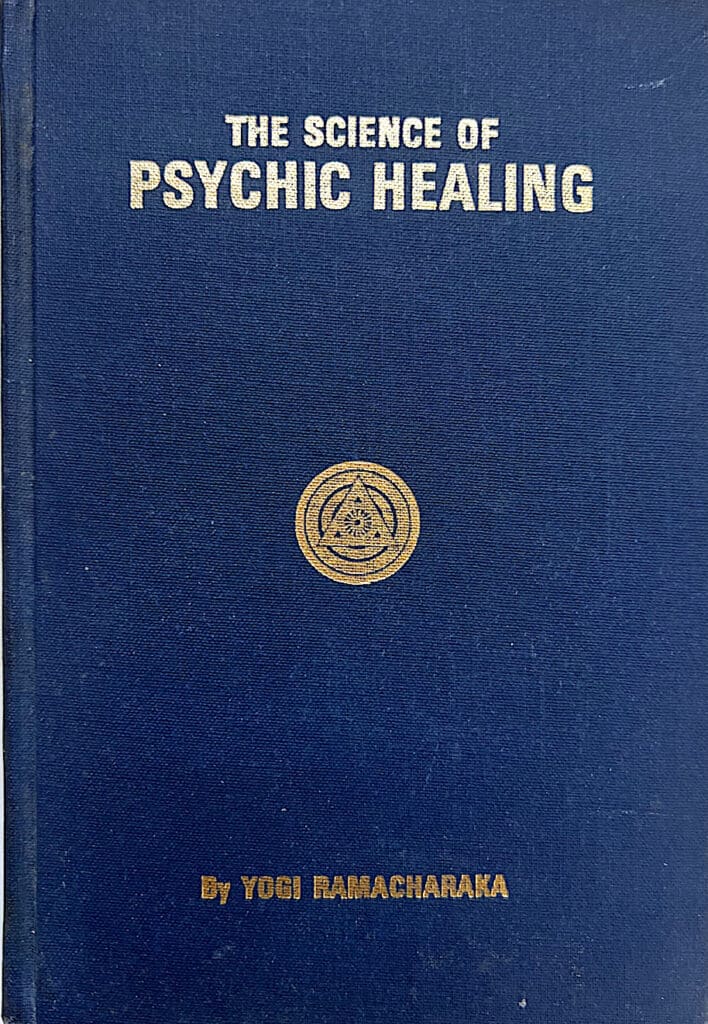
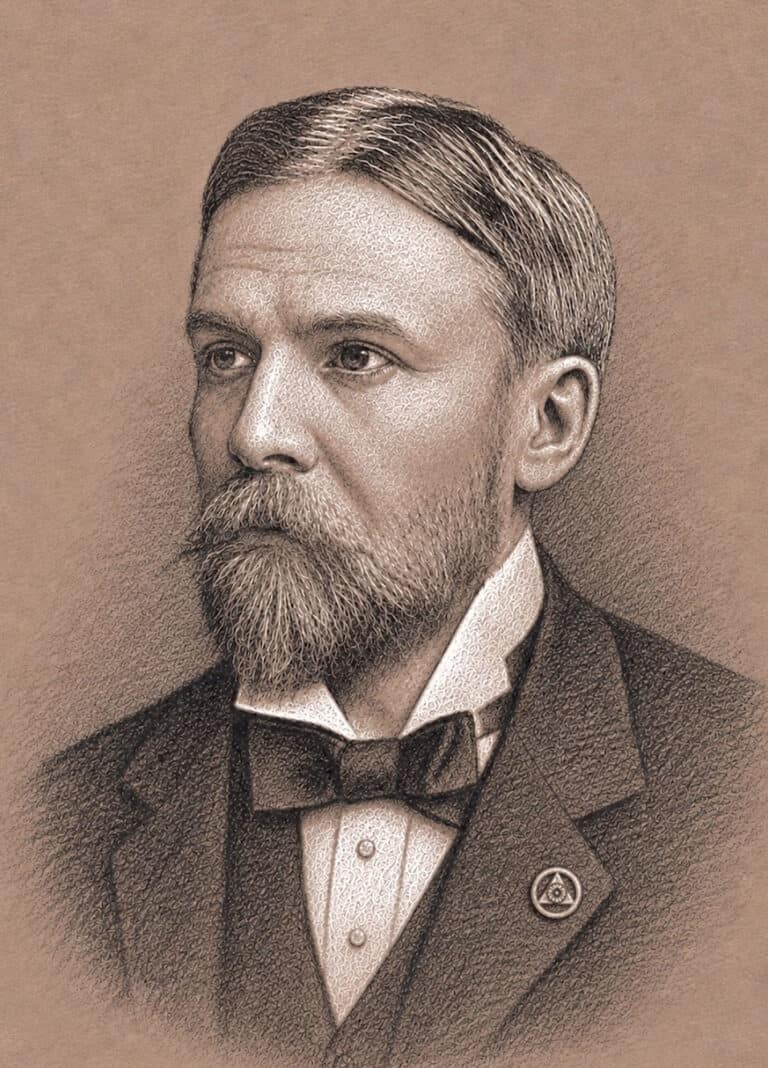
The Science of Psychic Healing is a manual of mental, pranic, suggestive, metaphysical, and spiritual healing issued under the name Yogi Ramacharaka. Published by the Yogi Publication Society of Chicago in 1906 it was advertised as a sequel to Hatha Yoga, and the book itself explains the relationship between the two works: Hatha Yoga teaches the natural laws governing physical health, while The Science of Psychic Healing turns to the mental and psychic forces that the authors believed could restore proper functioning when health had been disturbed. Together, the books are presented as providing a “Key to Health.”
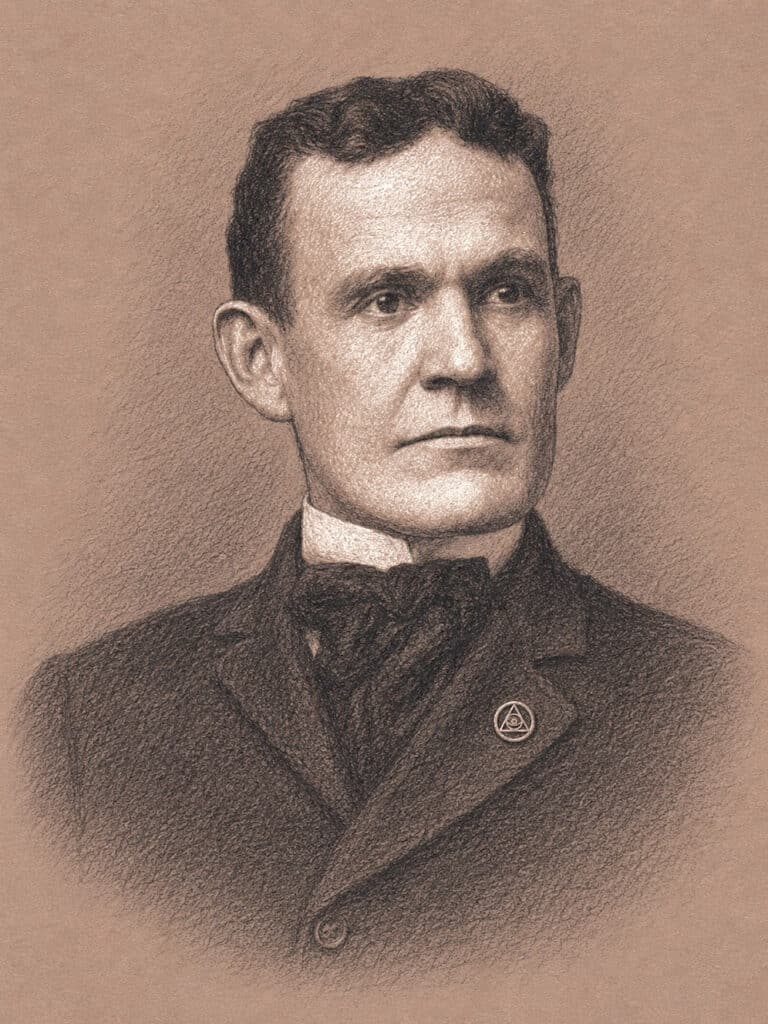
Yogi Ramacharaka
Rather than treating psychic healing as a supernatural gift or religious miracle, the book repeatedly describes healing as the operation of natural law, arguing that the forces involved are no more outside nature than electricity. Its central proposition is that the body is composed of living cells possessing their own forms of intelligence, that these cells and their larger organ communities operate under the direction of the Instinctive Mind, and that their activity can therefore be influenced through Prana, thought, suggestion, and higher forms of mental or spiritual influence.
An important historical context for understanding The Science of Psychic Healing is its many parallels with the teachings of Dr. Herbert A. Parkyn and the system of Suggestive Therapeutics taught at the Chicago School of Psychology. This becomes particularly clear in the book’s treatment of Natural Law, the involuntary or Instinctive Mind, the mental control of organs, therapeutic suggestion, repetition, auto-suggestion, circulation, nutrition, elimination, and the use of specific suggestions directed toward individual bodily functions.
The central idea of The Science of Psychic Healing is that healing ultimately occurs by restoring normal activity within the living cells of the body, and that the mind can participate directly in that restoration. Disease is therefore approached less as a collection of separately named illnesses than as a disturbance of normal cellular functioning. The authors deliberately avoid building the book around symptoms and diagnoses, arguing instead that symptoms are outward indications of something deeper. If the underlying cells and organs can be brought back into normal functioning, the symptoms should disappear as a consequence. This explains why the book moves repeatedly from the physical body to the Instinctive Mind, from the Instinctive Mind to the intelligence attributed to individual cells and organs, and finally to the various methods through which those lower levels of bodily intelligence are believed to be reached and directed.
The book treats several apparently different healing systems as variations of one underlying process. Pranic healing transfers or directs vital energy; thought-force healing directs concentrated mental influence; suggestion communicates instructions to the Instinctive Mind; self-suggestion allows an individual to perform essentially the same operation upon himself; mental and metaphysical healing employ thought at increasingly abstract levels; and spiritual healing attempts to work from what the Yogi philosophy calls the Spiritual Mind. These methods differ in their techniques and terminology, but the book insists that the divisions should not obscure their common foundation. Ultimately, it says, all psychic healing is mental healing because even Prana is moved and directed by mind, while physical disease itself is interpreted as abnormal activity in living cells whose “mental” element can be reached and stimulated.
Healing as Natural Law Rather Than Religion
One of the book’s strongest positions appears immediately: psychic healing should not be turned into a religion. The authors criticize the Western tendency to construct competing religious or metaphysical systems around healing and then claim that successful cures prove the exclusive truth of a particular doctrine. Because different schools employing different beliefs nevertheless report successful cures, the book argues that something more fundamental must be operating beneath their theological explanations. The proposed answer is Natural Law. Healing forces belong to nature, and different practitioners may reach the same underlying forces through different methods, explanations, rituals, or beliefs. From this perspective, a Christian mental healer, a magnetic healer, a practitioner of suggestion, a Yogi healer, and even a physician may sometimes be stimulating the same restorative processes while explaining what they are doing in entirely different language.
This position gives The Science of Psychic Healing an unusually inclusive character for a work of its period. Readers are explicitly advised not to become attached to a label, school, or system merely for the sake of belonging to it. They are encouraged to learn the various methods, experiment with them, discover what works best for them, and even combine elements from different approaches. The publishers’ notice tells readers that the wisest practitioner may “take a little from each,” while the opening chapter concludes with a warning against placing labels upon the mind. The emphasis is therefore pragmatic: learn the laws, understand the available methods, test them in practice, and use whichever combination proves most effective.
Why Must Healing Begin With the Natural Laws of the Body?
Before explaining psychic treatment, the book insists that health depends upon obedience to the Natural Laws of the Body. These are summarized as “Right Living and Right Thinking,” with readers referred back to Hatha Yoga for the fuller physical system. Nutrition, digestion, elimination, circulation, breathing, exercise, cleanliness, rest, and other basic bodily processes cannot simply be ignored because a person has learned mental or psychic techniques. The book strongly rejects forms of metaphysical healing that dismiss the physical body as unimportant or unreal. A healer may temporarily improve a condition, but if the patient continues the same habits that produced physical disorder, the authors argue that the disorder will eventually return.
This point remains important all the way through the final chapter. Psychic healing is not presented as permission to neglect the body. Proper nutrition and elimination must accompany treatment, and even an apparently instantaneous psychic cure will not remain permanent if the patient continues violating the physical conditions necessary for health. The book therefore attempts to join its occult or metaphysical concepts to a practical health philosophy: psychic forces may help restore normal functioning, but healthy functioning must then be maintained through healthy living. Its final warning captures the position neatly: metaphysics should never cause the healer to refuse to recognize physics.
What Is the Instinctive Mind?
The Instinctive Mind is the book’s bridge between conscious thought and bodily function. It is described as the level of mind responsible for the countless operations that occur without conscious supervision: digestion, circulation, assimilation, elimination, tissue repair, glandular activity, and the regulation of organs and cells. The conscious intellect does not need to tell the stomach how to digest food, direct the heart through every beat, or supervise the repair of a wound. These activities are attributed to the Instinctive Mind, which functions continuously beneath ordinary consciousness.
The problem arises when the conscious Intellect interferes with this normally orderly system. Fear, unhealthy expectations, persistent negative thoughts, destructive habits, and repeated violations of natural bodily requirements may impress themselves upon the Instinctive Mind and disturb its regulation of the body. The conscious mind can therefore become either an obstacle or an ally. Once it understands the proper relationship, it can stop continually communicating fear and disorder and instead begin sending confidence, expectation, and definite instructions toward normal functioning. Psychic healing becomes, in large part, a process of restoring proper communication between conscious mentality, the Instinctive Mind, and the bodily systems under its control.
What Does the Book Mean by “Mind in Cells”?
One of the most distinctive teachings in The Science of Psychic Healing is that every living cell possesses a rudimentary form of mind sufficient for its work. Cells select nourishment from the blood, reject what they do not need, reproduce, respond to changing conditions, repair damage, and cooperate with neighboring cells. The authors interpret these activities as evidence of a primitive cellular intelligence rather than as purely mechanical behavior. The human body is therefore pictured not as a single machine but as an immense organized society of living units, each performing specialized work while remaining subordinate to higher levels of organization.
Individual cells combine into what the book calls “cell-communities.” The cells composing an organ collectively form an organ intelligence or “community-mind.” The liver, for example, is described as possessing a “liver-mind” formed by the combined mentality of its millions of cells. The same principle is extended throughout the body. Individual cells form groups; groups form organs and tissues; organs participate in larger systems; and the whole organized cellular republic operates beneath the general direction of the Instinctive Mind. This concept is essential to everything that follows because the authors believe that these cell and organ minds are responsive to mental direction. If the liver, stomach, heart, bowels, or another organ can be mentally addressed through the Instinctive Mind, then thought and suggestion can theoretically be used to stimulate its return toward normal functioning.
What Are the Three Forms of Psychic Healing?
The book initially organizes psychic healing into three broad forms, although later chapters divide these into more specific techniques:
Pranic Healing uses Prana, or vital force, directed by the healer’s mind into the patient or into a particular part of the body.
Mental Healing acts more directly through thought and includes thought-force healing, suggestive healing, absent healing, self-suggestion, and many systems presented under religious or metaphysical terminology.
Spiritual Healing operates through the higher Spiritual Mind and is described as the rarest and highest form of healing.
These categories are not absolute divisions. The book repeatedly stresses that mind remains active behind all three. Prana is directed by thought, suggestion works through mental impression, and spiritual force operates through higher levels of mentality. The different systems are therefore presented as different points of access to an interconnected human organism rather than completely independent forms of treatment.
What Is Prana and How Is It Used for Healing?
Prana is presented as the universal principle of energy or vital force underlying bodily vitality and many phenomena that Western practitioners had called magnetism. It exists throughout nature and is absorbed into the human organism, particularly through breathing. In healing, the important point is not merely possessing Prana but learning to direct it. Thought acts as the controlling agency: the healer mentally directs Prana toward another person or toward a particular part of the body, where it is intended to stimulate sluggish cells, strengthen weakened functions, and reinforce the body’s own restorative activity.
The book connects this idea with the ancient practice of laying on of hands. What earlier cultures called healing power, animal magnetism, or magnetic force is interpreted through the Yogi vocabulary as Prana. The hands can be used as convenient channels through which this force is projected, but the force itself is not believed to originate in the hands. The healer draws upon universal Prana, accumulates and directs it through intention, and becomes a channel through which it passes. This also explains the book’s repeated warning against personal vanity: the successful healer should not imagine that he possesses a supernatural gift unavailable to others. Healing ability is described instead as a natural capacity that can be strengthened through practice, much like a muscle.
How Is Pranic Healing Practiced?
The practical chapters describe a variety of methods for transferring Prana. The healer may place the hands upon or near the affected area, use stroking or sweeping movements, direct energy toward particular organs, or combine physical movements with concentrated thought. The mental attitude is considered essential. The healer should hold a clear intention that vitality is flowing into the affected area and that the cells are becoming active, strong, and normal. Physical contact is therefore secondary to mental direction: the hands provide a focus and a channel, but thought is what gives the Pranic current its direction.
The book also teaches methods of “cleansing” or sweeping away unhealthy conditions before directing fresh vitality into an area, as well as methods intended to equalize the patient’s general Pranic condition. Treatments can therefore be local or general. A local treatment concentrates on a specific organ or painful region, while a general treatment seeks to invigorate the entire body. The authors repeatedly tell the reader that experience matters more than elaborate theoretical knowledge. A few minutes of actual practice with a willing friend is considered more valuable than pages of abstract discussion, provided the practitioner understands the method and approaches it with confidence.
What Is Pranic Breathing?
Because breathing is regarded as one of the principal means through which the body absorbs Prana, the book incorporates breathing methods into its healing system. Pranic breathing combines deliberate respiration with mental concentration. The practitioner breathes deeply while imagining that Prana is being drawn from the universal supply, accumulated within the body, and then directed toward the desired purpose. Breathing thus becomes more than oxygen intake within the book’s system: it becomes a method for charging the body with vital energy and preparing the healer for therapeutic work.
Rhythm is especially important. Controlled rhythmic breathing is said to strengthen concentration and make the direction of Prana more effective. The practitioner is encouraged to coordinate breath, thought, and intention until the process becomes unified: inhale and gather vitality, mentally hold or concentrate it, then direct or project it according to the desired treatment. The same basic method can be used for another person or adapted for self-treatment.
Can Pranic Healing Be Used on Yourself?
Yes. A substantial portion of the book is devoted to auto-pranic treatment. The individual may consciously direct Prana toward his own organs or affected areas while combining breathing, visualization, touch, and mental commands. A person might place the hands over a region, breathe rhythmically, imagine Prana accumulating, and then mentally direct the force into the cells while holding the idea of normal activity. This makes self-healing a central rather than secondary theme of the book. The publishers’ notice explicitly says that self-healing is probably the author’s “favorite idea,” reflecting the principle that people should learn to do as much as possible for themselves rather than remain permanently dependent upon a healer.
How Does Distant or Absent Healing Work?
The book extends Pranic treatment beyond physical contact through what it calls distant healing. Prana can supposedly be “colored” by the thought of the sender and projected toward a person at a distance. The healer first forms a strong mental image of the patient until a sense of connection or rapport is established, then directs the Pranic current toward that person. The book compares this invisible transmission to the wireless waves associated with Marconi, arguing that an unseen force can cross intervening space and reach a properly attuned receiver.
This concept connects Pranic healing with the later discussion of thought-force healing. Once physical proximity is no longer considered necessary, the decisive factor becomes the directed mental current itself. The healer visualizes the patient, forms a definite intention, generates the appropriate thought, and sends it outward. Distance is treated as a limitation of ordinary physical perception rather than an absolute barrier to psychic influence.
What Is Thought-Force Healing?
Thought-force healing shifts the emphasis from Prana itself to thought as the primary therapeutic force. The book teaches that thought is not merely a private mental event but something capable of producing effects within the thinker and, under certain circumstances, within another person. A strong, concentrated healing thought can therefore be directed toward a patient, particularly toward the patient’s Instinctive Mind and through it toward the cells and organs of the body.
The principle is straightforward: the healer should not mentally dwell upon the disease but upon the desired healthy condition. Instead of concentrating upon weakness, the healer holds strength; instead of visualizing a diseased organ, the healer pictures normal functioning; instead of mentally repeating the patient’s symptoms, the healer builds an image of health. Thought is thus used constructively, with the healthy condition serving as the mental pattern toward which bodily activity is encouraged to move. The principle running through this section is that thought tends toward expression in action and physical condition.
What Is Suggestive Healing?
Suggestive healing is one of the most detailed sections of the book and is presented as the deliberate use of spoken or mentally directed suggestion to influence the patient’s Instinctive Mind. The conscious mind normally acts as a gatekeeper, analyzing and resisting ideas, while the Instinctive Mind is more receptive when the conscious faculties are relaxed. The healer therefore attempts to produce physical and mental ease, establish confidence and rapport, and then repeatedly communicate clear suggestions of healthy functioning.
The patient does not necessarily need to be hypnotized. Instead, the book emphasizes relaxation, attention, confidence, repetition, and the directness of the suggestion. The patient may recline comfortably while the healer speaks in a calm but confident manner, encouraging relaxation before moving toward the therapeutic suggestions themselves. One of the stated axioms is that “Suggestions gain increased force by repetition.” Repetition fixes an idea more firmly in the patient’s mind and therefore increases the likelihood, within the system, that the Instinctive Mind will act upon it.
How Should a Suggestive Treatment Be Given?
The healer is instructed to begin by making the patient physically comfortable. Relaxation reduces muscular and nervous tension and is also intended to quiet conscious resistance. The healer then establishes a confident atmosphere and speaks as though normal functioning is already beginning. Suggestions should be definite, positive, understandable, and repeated. The book favors direct statements rather than vague wishes, and the healer is expected to speak with enough conviction that the patient feels the certainty behind the words.
The treatment then moves through general and specific bodily functions. The healer may begin by cultivating cheerful and hopeful mental states, followed by suggestions directed toward circulation, nutrition, digestion, assimilation, elimination, and particular organs. One sample treatment tells the patient to cultivate “bright, cheerful and happy thoughts” and then immediately turns to the equalization of circulation, describing the blood moving throughout the body, carrying nourishment to the tissues and removing waste products. The patient is encouraged to breathe deeply while the healer continues reinforcing the desired bodily processes.
Why Are the Organs Addressed Directly?
Because the book treats organs as cell-communities possessing their own subordinate forms of mind, it considers it reasonable to direct suggestions specifically toward them. The stomach can be encouraged to digest properly; the liver can be told to perform its normal functions; the bowels can be directed toward regular elimination; the heart and circulation can be encouraged toward balanced activity; and other organs can be addressed according to their physiological roles. These are not merely poetic metaphors within the book’s theory. The authors believe that the conscious mind is communicating through the Instinctive Mind to the actual intelligence of the organ’s cell-community.
The healer is therefore encouraged to understand basic physiology. Effective suggestion should correspond to the actual function that needs improvement rather than simply repeat a general command to “get well.” The treatment seeks to restore the chain of normal bodily operations: proper digestion makes possible proper assimilation; proper assimilation improves nutrition; improved circulation distributes nourishment; proper elimination removes waste; and the cells then receive better conditions in which to perform their work. The body is treated as an interconnected system rather than a collection of isolated symptoms.
What Is Self-Suggestion?
Self-suggestion applies the same principles without an outside healer. The individual deliberately impresses ideas upon his own Instinctive Mind through repeated statements, concentrated thought, visualization, and confident expectation. The conscious mind selects the desired condition and repeatedly presents it to the deeper mentality until the new idea becomes habitual. The method can be used for general health, emotional states, habits, or particular bodily functions.
The effectiveness of self-suggestion depends less upon elaborate wording than upon repetition, attention, and conviction. A phrase should be short enough to remember and definite enough to communicate a clear idea. The individual should not constantly alternate between giving a positive suggestion and then mentally affirming the opposite through fear. The deeper lesson is that everyone is already practicing a form of self-suggestion continuously through habitual thought. The question is therefore whether those repeated ideas are constructive or destructive. Deliberate self-suggestion attempts to replace uncontrolled negative impressions with consciously selected ones.
How Is Mental Healing Different From Suggestion?
Mental healing works through concentrated thought rather than depending primarily upon spoken words. Suggestion uses words as carriers of ideas; mental healing attempts to transmit the idea itself. The healer forms a strong mental picture of the patient in a healthy condition and holds that conception steadily, directing it toward the patient’s mind. Visualization, concentration, expectation, and what the book calls thought-force become the principal tools.
The difference is therefore more a difference of method than of underlying principle. Both are intended to influence the patient’s mental state and through it the bodily cells. Words can produce thoughts, while concentrated thoughts can theoretically be communicated without words. This is why the book repeatedly refuses to treat different healing schools as completely separate discoveries. Their external methods differ, but they frequently converge upon the same mental mechanism.
What Is Metaphysical Healing?
Metaphysical healing moves farther away from direct physiological suggestion and toward broad affirmations about the nature of being. Instead of telling a particular organ to function normally, the healer or patient may affirm health, harmony, perfection, wholeness, and unity with the universal source of life. Various New Thought and “Science” schools had developed different statements and formulas for this purpose, but The Science of Psychic Healing refuses to grant any particular school exclusive ownership of them.
The book explicitly argues that there is no magic in particular words. Different metaphysical schools may use different “Statements of Being,” but their effectiveness depends upon the thought and realization behind them rather than the verbal formula itself. Words change; the mental reality they are attempting to express is what matters. This allows the authors to absorb metaphysical healing into their larger system without accepting the sectarian claims surrounding it.
What Is Spiritual Healing?
Spiritual healing is described as the highest and rarest form of psychic healing. The book carefully distinguishes it from ordinary mental healing dressed in religious language. True spiritual healing, it says, is not something that the healer personally “does.” Instead, the healer becomes a channel through which a higher spiritual force passes into the patient. This requires the development or unfolding of what Yogi philosophy calls the Spiritual Mind, a level of consciousness above both the Instinctive Mind and the ordinary Intellect.
The Spiritual Mind is described as the source of higher intuition, illumination, moral insight, and the inner guidance sometimes experienced as the “Something Within.” In spiritual treatment, the healer enters a receptive state and allows the higher force to flow through him rather than attempting to force a result through personal will. The patient is metaphorically “bathed” in this spiritual current, which is said to stimulate the higher mentality, then the lower mental principles, and finally the physical organs and cells. Such cures may sometimes appear instantaneous, although the authors do not insist that they must always occur that way.
How Are the Different Healing Methods Connected?
Although The Science of Psychic Healing contains twenty-one chapters and moves through a wide range of terminology, its healing system can be reduced to a relatively clear sequence. The physical body consists of living cells. Cells combine into intelligent communities forming organs and tissues. These communities operate under the Instinctive Mind. The Instinctive Mind can be affected by conscious thought. Prana can be directed by thought. Suggestion can communicate definite instructions to the Instinctive Mind. Repetition can strengthen those impressions. Mental healing can communicate the desired pattern more directly through concentrated thought. Metaphysical healing works through larger conceptions of health and harmony. Spiritual healing attempts to bring an even higher level of consciousness into the process. Beneath all these methods lies the same objective: restore normal functioning.
This is why the book refuses to insist upon a single technique. A practitioner might combine breathing with Pranic treatment, follow it with suggestion, hold a mental image of health during the process, and conclude with a spiritual treatment. The methods are presented as complementary tools rather than mutually exclusive doctrines. The practitioner is repeatedly encouraged to learn all of them before deciding which are most useful.
The Role of Confidence, Expectation, and Repetition
Confidence is treated throughout the book as a practical force. The healer must have confidence in the process, and the patient should be led toward confidence in recovery. Doubt, fear, and constant attention to symptoms reinforce the very mental patterns the healer is attempting to overcome. This does not mean that the authors recommend simply pretending nothing is wrong; rather, they want attention shifted away from the diseased condition and toward the mental pattern of normal function.
Repetition strengthens this process. A single suggestion may produce an impression, but repeated suggestion is believed to establish a deeper pattern. The same principle applies to self-suggestion, visualization, breathing, and mental concentration. The system is fundamentally a system of training: repeated thoughts become mental habits, repeated mental habits influence the Instinctive Mind, and the Instinctive Mind directs the organs and cell-communities. In this way, repetition becomes the mechanism by which conscious intention is gradually translated into involuntary action.
Why Does the Book Focus on Health Instead of Disease?
A recurring feature of The Science of Psychic Healing is its refusal to spend much time cataloging diseases. The authors prefer to study the healthy condition and the processes required to restore it. Symptoms are treated as secondary expressions of deeper functional disturbance, while the healer’s task is to restore normal activity in the body as a whole. The book explicitly says that it is not intended as a treatise on disease and instead keeps the “Healthy Condition” before the student’s mind.
This orientation shapes the language of treatment. Instead of continually naming weakness, disease, or dysfunction, the healer speaks of strength, circulation, digestion, elimination, vitality, normal action, and health. The healthy state becomes both the goal and the mental model used to reach that goal. The practitioner is supposed to know what normal function looks like and then direct thought toward its restoration.
What Does The Science of Psychic Healing Ultimately Teach?
At its core, The Science of Psychic Healing teaches that the physical body, vital energy, subconscious or Instinctive Mind, conscious thought, and higher levels of mentality form an interconnected system. Health depends first upon obedience to the natural laws governing the body, but the mind can either assist or disturb those laws. Fear, destructive thinking, harmful habits, and improper living can interfere with the Instinctive Mind and its regulation of the cellular organism, while constructive thought, suggestion, Pranic direction, self-suggestion, and mental discipline can supposedly help restore normal order.
Its principal healing methods can therefore be understood as different ways of reaching the same underlying system:
Natural living provides the physical conditions required for health.
Pranic healing directs vital energy toward the body and its cells.
Pranic breathing is used to gather and direct that vital force.
Thought-force healing concentrates the mind upon the desired healthy condition.
Suggestive healing gives definite instructions to the Instinctive Mind and organ intelligence.
Self-suggestion applies the same process without an external healer.
Mental healing works through concentrated thought and visualization.
Metaphysical healing uses affirmations of health, harmony, and being.
Spiritual healing attempts to work through the higher Spiritual Mind.
The result is not simply a book about “psychic” cures in the modern paranormal sense of the word. It is an attempt to construct a complete theory of mind-body healing in which physiology, breathing, vital energy, suggestion, subconscious mental action, thought transmission, metaphysical affirmation, and spiritual consciousness are placed on a single ascending continuum.
A Practical System Rather Than a Healing Creed
The closing chapters return to the position established at the beginning: no practitioner should become narrow, sectarian, or hostile toward other healing systems. The reader is told not to attack physicians or assume that conventional medicine and psychic healing must be enemies. The book even suggests that some physicians may unconsciously or quietly employ psychological influence alongside their medical treatment. The standard by which a method should be judged is not its label but whether it helps restore the patient to health.
Most importantly, the authors end where they began—with Natural Law. Psychic treatment cannot permanently compensate for destructive habits of living. Proper nutrition, circulation, breathing, elimination, and other physical requirements remain indispensable regardless of how advanced a healer’s mental or spiritual methods may become. The book therefore places the highest forms of spiritual healing and the most ordinary requirements of bodily health within the same system rather than treating them as opposites. Matter, mind, Prana, and Spirit represent different levels through which the same universal order is believed to operate.
Why The Science of Psychic Healing Matters Within the Yogi Ramacharaka Series
Within the Yogi Ramacharaka books, The Science of Psychic Healing serves as a major connecting work. Science of Breath had developed the concept of Prana and the use of rhythmic breathing; Hatha Yoga had presented the body as an intelligent cellular organism governed by natural laws and the Instinctive Mind; Raja Yoga explored the control and development of mind; and The Science of Psychic Healing brings these ideas together and applies them specifically to healing. Its table of contents makes that progression particularly clear, moving systematically from Natural Law and the Instinctive Mind through cell intelligence, Prana, thought-force, suggestion, self-suggestion, mental healing, metaphysical healing, and finally spiritual healing.
The book is therefore best understood not as an isolated occult healing manual but as the therapeutic expression of the larger Yogi Ramacharaka system. Its argument begins with the physical cell and rises step by step toward Spirit, while continually insisting that the higher levels do not abolish the lower ones. The body must obey physical law; the cells respond to the Instinctive Mind; the Instinctive Mind can be influenced by thought and suggestion; Prana supplies vital energy; and higher mental and spiritual states can, according to the system, exert downward influence throughout the entire organism. This layered model is what allows The Science of Psychic Healing to combine apparently different subjects of physiology, natural health, Prana, suggestion, auto-suggestion, mental influence, metaphysics, and spirituality into a single theory of healing.