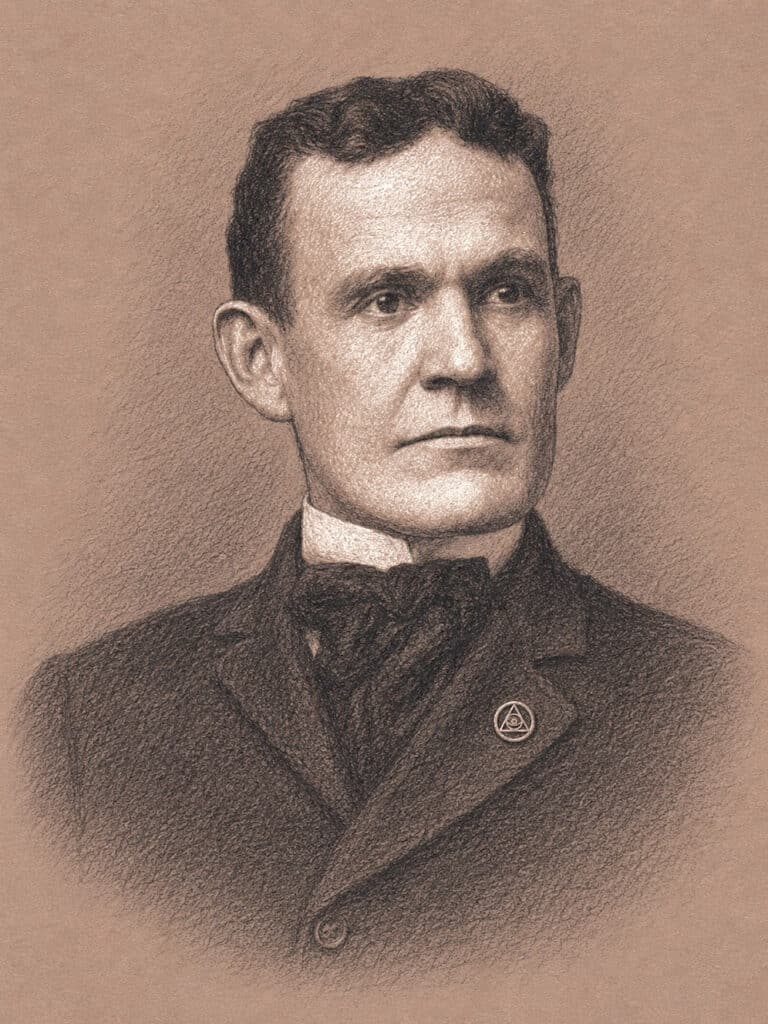
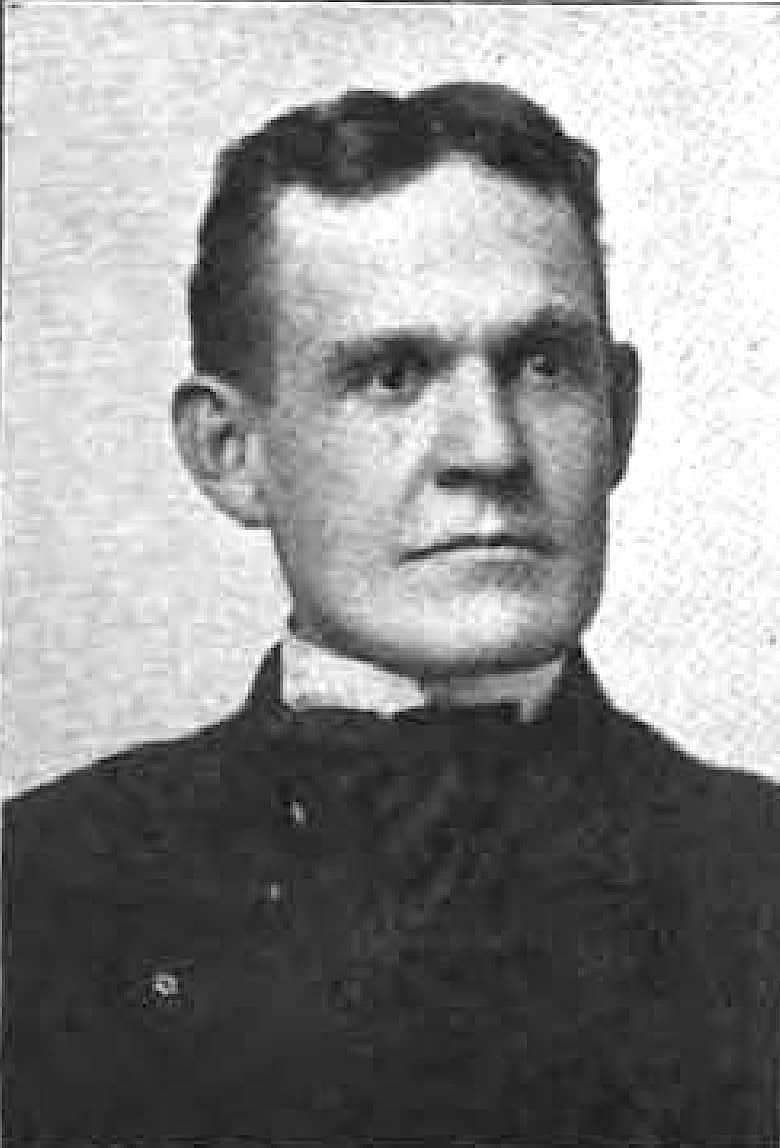
Carey was Parkyn's close associate, who managed Suggestion and helped form the New Thought Federation and the Yogi Publication Society.
Elmer Ellsworth Carey was an American journalist, editor, publisher, natural health advocate, and New Thought organizer whose career spanned the Pacific world, the rise of practical psychology, and the early development of the New Thought movement. After working as a newspaper editor and publisher in Hawaii and the Philippines, where he gained recognition as an investigative journalist and promoter of economic development, Carey became deeply interested in Eastern philosophy, natural health, and the mental science of Suggestion.
His studies eventually brought him into contact with Dr. Herbert A. Parkyn and the Chicago School of Psychology, where he joined the staff of Suggestion magazine in 1903 as assistant editor and manager. Working closely with Parkyn, Carey helped organize the Union New Thought Meetings and served as secretary of the committee that arranged the influential International New Thought Convention of 1903, which led to the formation of the New Thought Federation. In later years he continued his lifelong research into diet, purified water, and preventive health, eventually serving as Research Director for the Sparkletts Bottled Water Company. Through his work in journalism, publishing, public education, and natural health, Carey became one of the principal organizers and promoters of the early New Thought movement while advocating a practical philosophy centered on physical, mental, and spiritual renewal.
Early Life and Career
Elmer Ellsworth Carey was born on September 22, 1863, in Dayton, Oregon. From an early age he developed a career as a journalist, writer, editor, and publisher, establishing himself as a reform-minded newspaper man whose interests ranged from politics and economics to health, education, and social progress.
Elmer Ellsworth Carey
His work carried him throughout the Pacific world during the closing decades of the nineteenth century. Carey served as editor of The Californian Illustrated while living in Hawaii and later published Freedom magazine in the Philippines during the Spanish-American War. While there he became known for exposing corruption in military contracting and government administration, earning a reputation as an independent journalist willing to challenge entrenched interests. Alongside his investigative work, he promoted investment opportunities and economic development throughout the Pacific and became an outspoken advocate for the settlement and growth of California, eventually emerging as one of the state’s better-known public promoters.
Eastern Philosophy and the Search for Natural Health
Carey spent several years living in the Philippines and traveled extensively throughout the Far East, where he developed a deep interest in Eastern philosophy and traditional methods of preserving health. His studies focused particularly on vegetarianism, dietary reform, breathing exercises, and the relationship between mental discipline and physical well-being. After returning to San Francisco, Carey became active within the city’s growing Theosophical community, regularly attending lectures and discussions devoted to comparative religion and Eastern philosophy. In 1900 he attended several lectures delivered by Swami Vivekananda during the Swami’s extended visit to San Francisco and became a member of the Vedanta Society that Vivekananda established there.
Inspired by these studies, Carey began publishing newspaper articles that examined the emerging fields of mental science, psychology, and natural healing. Rather than presenting these subjects as mystical speculation, he approached them as topics worthy of careful research and practical investigation. His writings emphasized observation, experimentation, and systematic inquiry, encouraging readers to evaluate new ideas through reason rather than unquestioning belief.
Joining Dr. Herbert A. Parkyn and Suggestion Magazine
Suggestion magazine, May 1903 with Elmer Ellsworth Carey as the new manager
Carey’s writings soon attracted the attention of Dr. Herbert A. Parkyn, founder of the Chicago School of Psychology and editor of Suggestion magazine. Their interests in practical psychology, mental healing, and natural methods of health proved remarkably compatible. Carey published his first article in Suggestion in February 1903. His views closely reflected Parkyn’s developing doctrine that health rested upon what Parkyn described as the “life essentials”—pure air, pure water, and proper food—with water occupying the primary position after air.
In one of his earliest contributions, published in May 1903, Carey argued that “pure air and pure water are essential to perfect health” and maintained that distilled water represented the purest form of drinking water available. He further proposed that many of the processes associated with aging and disease resulted from minerals gradually accumulating within the body through ordinary drinking water, producing what he described as a slow process of petrification. Although these conclusions would remain controversial, they reflected Carey’s lifelong interest in water purification and preventive health.
Recognizing Carey’s experience in publishing and his growing knowledge of mental and psychic subjects, Parkyn invited him to Chicago in the spring of 1903 to join the staff of Suggestion magazine. In May he formally appointed Carey assistant editor and manager, praising both his publishing experience and his thoughtful studies of occult and psychic phenomena. Announcing the appointment, Parkyn wrote:
“It is with pleasure we announce the acquisition to our working force of our new manager, Mr. Elmer Ellsworth Carey… Mr. Carey’s long experience… renders him quite at home in all matters pertaining to the publishing department. That he is a careful student of occult phenomena is in evidence to all who have read his recent articles in Suggestion… The gentleman makes his bow, and is hereby installed a citizen of Chicago.”
The appointment made Carey not only assistant editor of the magazine but also one of Parkyn’s closest administrative associates, representing him in many of his expanding publishing and educational enterprises.
A Voice for Scientific Mental Healing
Soon after assuming his editorial responsibilities, Carey wrote an article explaining what distinguished Suggestion from every other publication devoted to mental healing. Rather than promoting speculative philosophy, he argued that the magazine rested upon the unique qualifications of Dr. Herbert A. Parkyn, whose work united professional medical training with extensive clinical research into suggestive therapeutics. Carey emphasized that Parkyn’s position as a practicing physician enabled Suggestion to present mental healing from both a scientific and medical standpoint, making it unlike journals that relied solely upon theory or metaphysical speculation. He described the magazine as occupying a class of its own by combining practical medical experience with systematic instruction in psychology, hygiene, and the application of mental influence to health and daily life.
Organizing the New Thought Movement
Carey’s organizational abilities quickly extended beyond publishing. In May 1903, he worked alongside Dr. Parkyn, Sydney B. Flower, and William Walker Atkinson in organizing a banquet welcoming Elizabeth Towne during her visit to Chicago. The gathering brought together more than a thousand members representing the city’s various New Thought organizations and demonstrated both the movement’s rapid growth and its desire for greater cooperation.
Inspired by the success of the event, Carey helped organize what became the Union New Thought Meetings. On June 28, 1903, approximately 1,200 people representing nearly twenty organizations assembled in the rooftop hall of Chicago’s Masonic Temple for the first regular meeting. The overwhelming response led to the decision that the gatherings would continue on the last Sunday evening of every month. The meetings quickly became the principal forum through which Chicago’s diverse New Thought organizations exchanged ideas and coordinated their activities.
Elmer Ellsworth Carey’s letter to Kate AtkinsonBoehme, editor of Radiant Center.
The International New Thought Convention
Elmer Ellsworth Carey, serves as the Secretary for the UnionNew Thought Committee and the New Thought Convention of 1903
During the Union New Thought Meetings, Carey proposed an even more ambitious undertaking—an International New Thought Convention that would unite organizations and independent teachers throughout the United States. His proposal to create what he described as “a great New Thought revival meeting” received unanimous approval. Planning immediately began for a convention to be held in Chicago during November 1903. Carey was appointed secretary of the organizing committee and became the principal correspondent responsible for coordinating convention business throughout the country. Working closely with Dr. Parkyn, he handled much of the practical organization while Parkyn continued to guide the movement from behind the scenes.
Other officers included T. G. Northrup, president of the Prentice Mulford Club, as chairman, and Mrs. Stanley Waterloo, proprietor of Chicago’s leading New Thought bookstore, as treasurer. The convention proved to be one of the most significant events in the early history of the movement.
Formation of the New Thought Federation
The massive Masonic Temple Building, with its grand rooftop, where the Union NewThought meetings were held, and next door the Central Music Hall, where the NewThought Convention was held.
The success of the Chicago convention resulted in the creation of the New Thought Federation, one of the first organizations intended to unite the many independent branches of the movement. Its constitution declared that the Federation existed to promote human development through the realization of humanity’s spiritual unity; to encourage health, happiness, and character through higher consciousness; to teach the universal fatherhood and motherhood of God and the brotherhood of humanity; to foster cooperation among New Thought organizations; and to publish literature advancing these ideals while preserving the independence of every affiliated organization.
The Federation summarized its central philosophy by affirming that one universal life permeates the entire universe and that every individual possesses a divine nature capable of expressing itself through right thinking and right living. These statements deliberately remained broad enough to welcome the many different schools of thought then emerging within the movement. Carey’s role in organizing both the convention and the Federation established him as one of the principal administrative figures behind the national consolidation of the early New Thought movement.
Later Career
Following the sale of Suggestion magazine in late 1906, Carey continued pursuing his long-standing interest in natural health. In February 1909 he attracted national attention by completing a forty-five-day fast in San Jose, California. The fast was intended as a public demonstration of the health principles he advocated, combining vegetarianism, purified water, and natural methods of physical renewal. During the same period he also turned his attention toward industrial chemistry, publishing articles in Scientific American and Engineering Magazine describing improved electrochemical and amalgamation methods for recovering gold from low-grade ores. These studies reflected his continuing fascination with purification, whether applied to the human body or to industrial processes.
Eventually Carey settled in Los Angeles, where he served for approximately seven years as Research Director for the Sparkletts Bottled Water Company. The position allowed him to continue promoting distilled and purified water as an essential element of health, carrying forward ideas that had occupied him since his earliest writings for Suggestion magazine.
Death and Legacy
Elmer Ellsworth Carey died on November 28, 1936, in Los Angeles County, California, at the age of seventy-three. He was cremated at Forest Lawn Memorial Park in Glendale. He was survived by a daughter, Mrs. Hannah Shepard of Washington, D.C.; a son, Elmer Ellsworth Carey of San Francisco; and a sister, Mrs. E. E. Skinner of San Francisco.
Throughout a career that spanned journalism, publishing, public education, natural health, and industrial research, Carey consistently sought to unite practical investigation with social reform. His work with Dr. Herbert A. Parkyn and Suggestion magazine placed him among the leading organizers of the early New Thought movement, while his lifelong advocacy of diet, distilled water, and preventive health anticipated themes that would continue to influence natural health movements throughout the twentieth century.