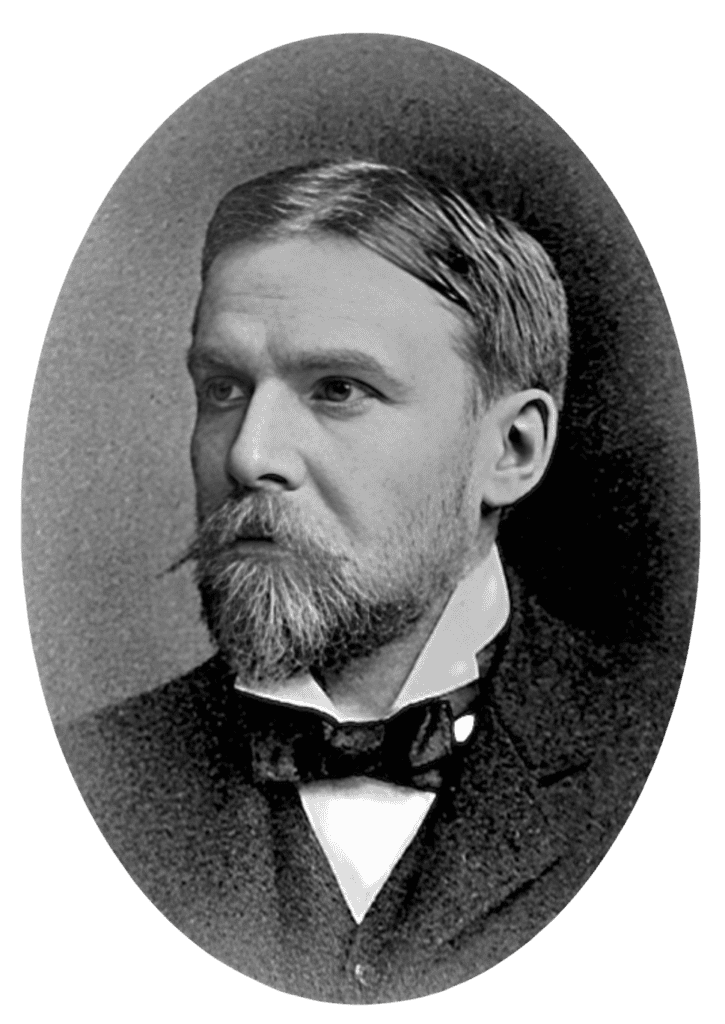
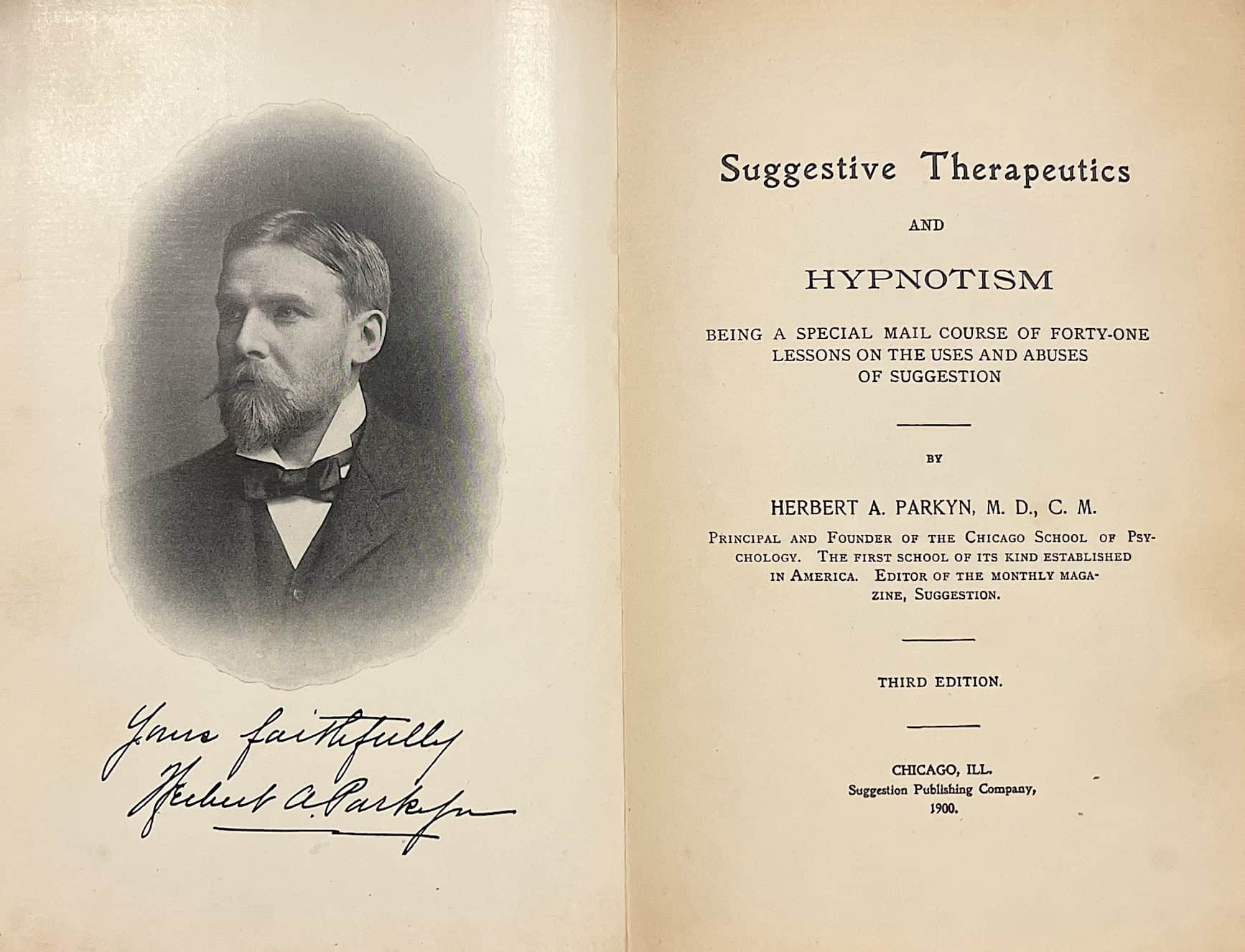
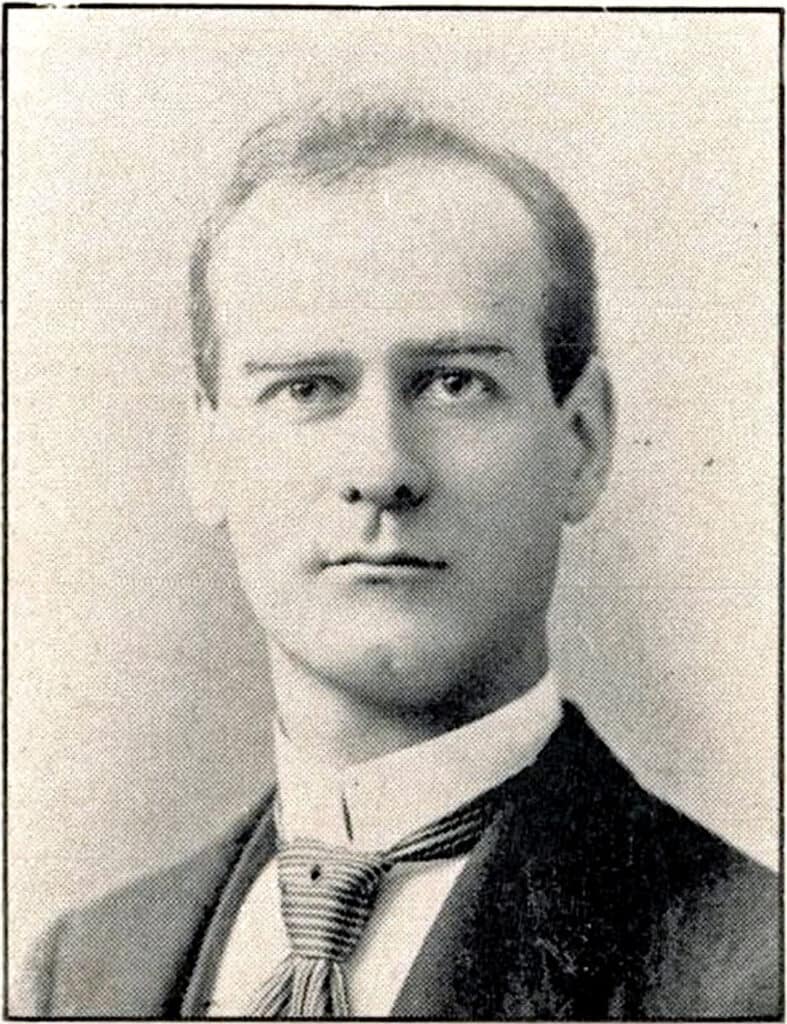
Herbert Arthur Parkyn was one of the principal architects of the New Thought movement. Although history largely remembered the authors, lecturers, and public personalities who emerged from his network at the turn of the twentieth century, Parkyn was the physician, educator, publisher, and organizer who worked behind the scenes to build many of the institutions that made the movement possible. He founded the first American school devoted to Suggestive Therapeutics and hypnotism, established its leading educational programs and journals, trained many of its most influential teachers, and helped create the publishing organization that introduced Yogi philosophy to the Western world.
In 1896, Parkyn founded the Chicago School of Psychology, the first institution in the United States to systematically train physicians in the scientific practice of hypnotism and Suggestive Therapeutics. Through its daily clinics, professional lectures, correspondence courses, and publications, the school became one of the country’s leading centers for psychological medicine. Among those who studied and worked under Parkyn were William Walker Atkinson and Sydney Blanshard Flower, two of the most influential figures in the history of New Thought. Working alongside collaborators such as Dr. William Xavier Sudduth, Thomson Jay Hudson, Stanley Lefevre Krebs, E. Virgil Neal, and others, Parkyn helped transform Chicago into the movement’s intellectual center.
Parkyn’s influence extended into nearly every major publishing enterprise of the early movement. He helped establish The Hypnotic Magazine, America’s first journal devoted exclusively to hypnotism, founded Suggestion magazine, pioneered one of the earliest large-scale correspondence schools in practical psychology, and later organized the Yogi Publication Society from his Chicago offices. Under his direction and with the collaboration of William Walker Atkinson, the Society became one of the most influential publishers of Eastern philosophy, yoga, and esoteric literature in the English-speaking world. His book Auto-Suggestion introduced a systematic method of self-suggestion years before similar techniques achieved worldwide fame through Émile Coué.
Outside psychology, Parkyn was equally accomplished. He captained championship hockey and football teams, helped organize the earliest years of competitive hockey in Canada and the United States, established the University of Minnesota’s first hockey team, directed major industrial enterprises in Canada, Mexico, and the American Southwest, and remained an active physician, researcher, lecturer, and businessman throughout his life.
Despite these accomplishments, Parkyn gradually disappeared from the historical narrative as the fame of his students, associates, and publishing ventures eclipsed that of their organizer. Yet his influence remains woven throughout the history of New Thought. The schools, journals, correspondence courses, publishing houses, and professional networks he created shaped the movement for decades, making Herbert A. Parkyn one of its least recognized, but most consequential founders.
Early Life and Education (1869–1892)
Family Heritage
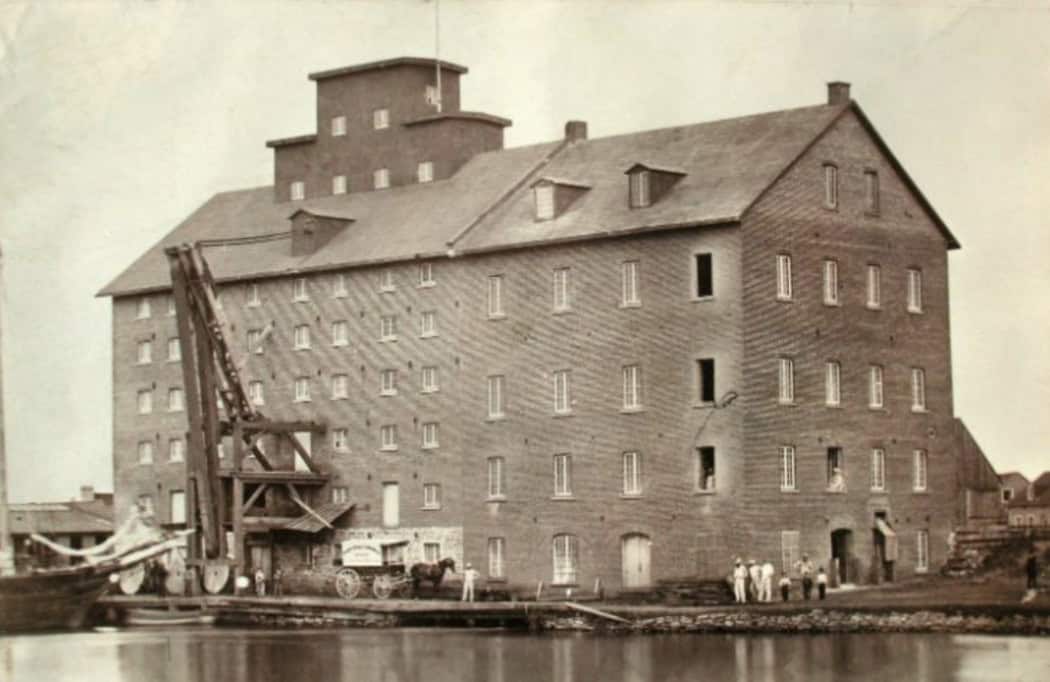
Parkyn was born in Goderich, Ontario, Canada, to Col. James Parkyn and Margaret Beale Atkinson. He entered a family whose influence extended across Canadian industry, business, and public service. His paternal grandfather, William Parkyn, played an important role in the early industrial development of Montreal. He launched the first iron steamships on the St. Lawrence River and harnessed the hydraulic power of the Lachine Canal at Côte Saint-Paul. There, the Parkyn family established the Mount Royal Mills, one of the most extensive milling operations in Canada, and helped develop the surrounding settlement. The family also constructed a large Gothic church that became a center of the community, where William Parkyn served as a deacon.
Herbert’s father, Col. James Parkyn, continued the family’s involvement in large-scale business and organization. He held interests in the Lake of the Woods Milling Company, then described as the largest flour-milling operation in the world, before selling those interests and relocating with the family from Toronto to Chicago in 1896. In addition to managing extensive business interests, he later became Herbert’s principal financial partner. Throughout Herbert’s life, James repeatedly demonstrated his willingness to invest his own resources in his son’s educational and publishing ventures, a level of family support that would prove decisive in the creation of the Chicago School of Psychology and the institutions that followed.
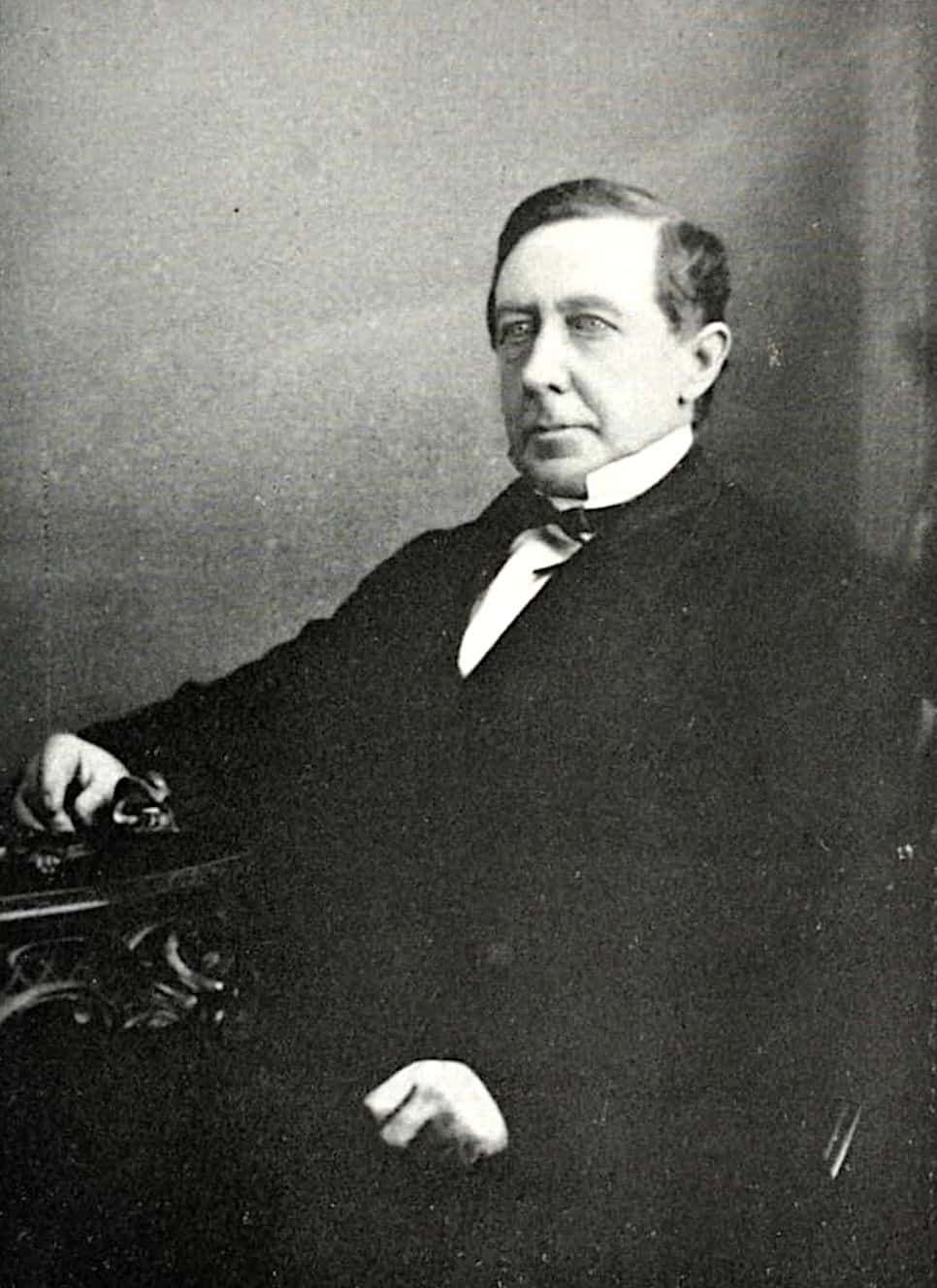
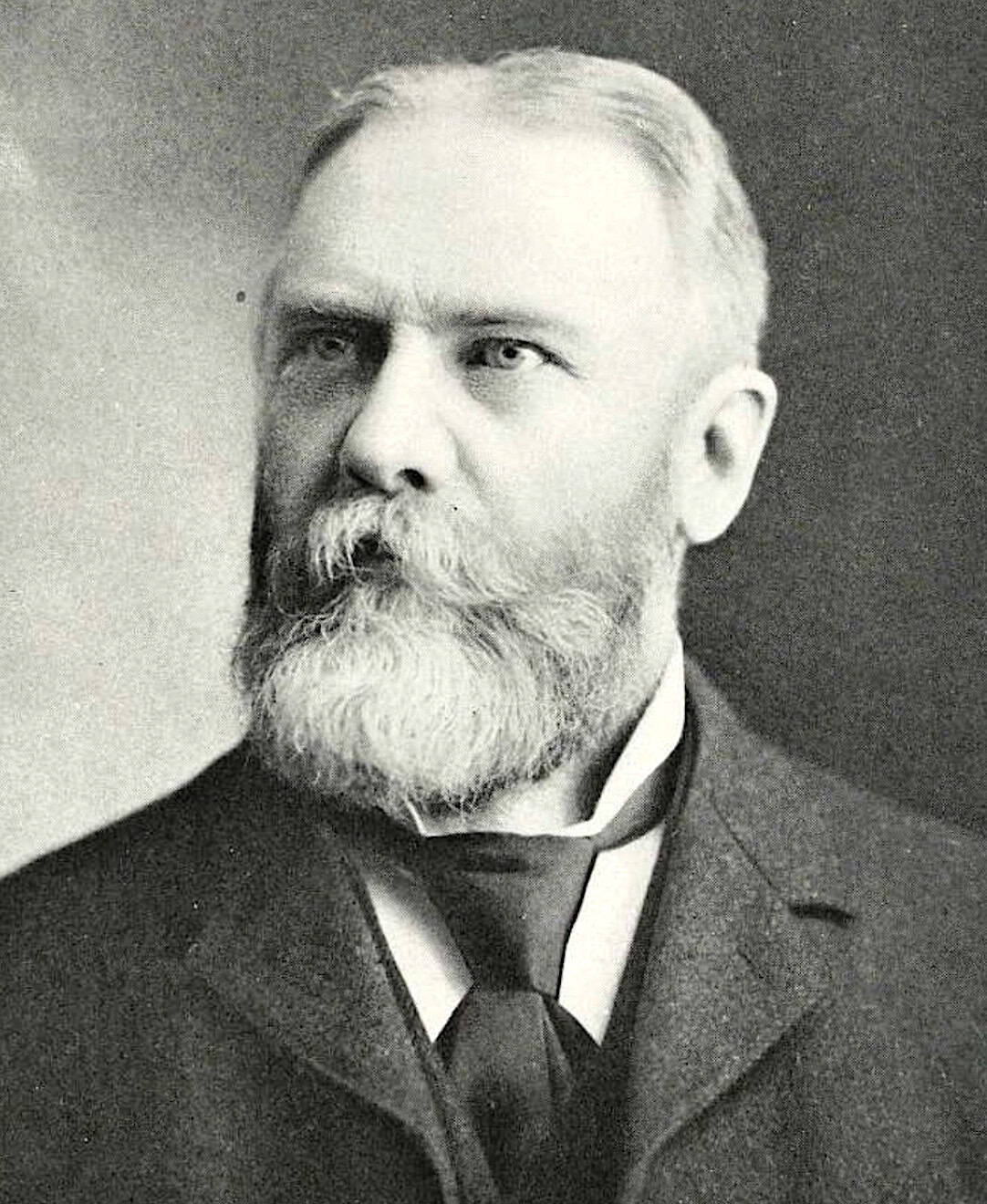
William ParkynCol. James ParkynParkyn’s Mount Royal Mills Company
The Atkinson and Jackson Families
Herbert Parkyn’s maternal family exerted an equally profound influence on his development. His maternal uncle, William Kirby Atkinson, served as mayor of Ailsa Craig, Ontario, before relocating to Eau Claire, Wisconsin, where he became owner and editor of the Leader-Telegram, one of the region’s leading daily newspapers. Through the Atkinson family, Herbert was exposed to the world of publishing and journalism from an early age, an experience that foreshadowed his own later career as an editor, magazine publisher, and author.
Rev. Dr. Samuel Nelson Jackson
Another major influence came through his paternal aunt, Mary Ann Parkyn, who married Rev. Dr. Samuel Nelson Jackson in 1866. The couple settled within the Parkyn family’s Côte Saint-Paul community near Montreal, where Herbert spent much of his youth in close association with the Jackson household.
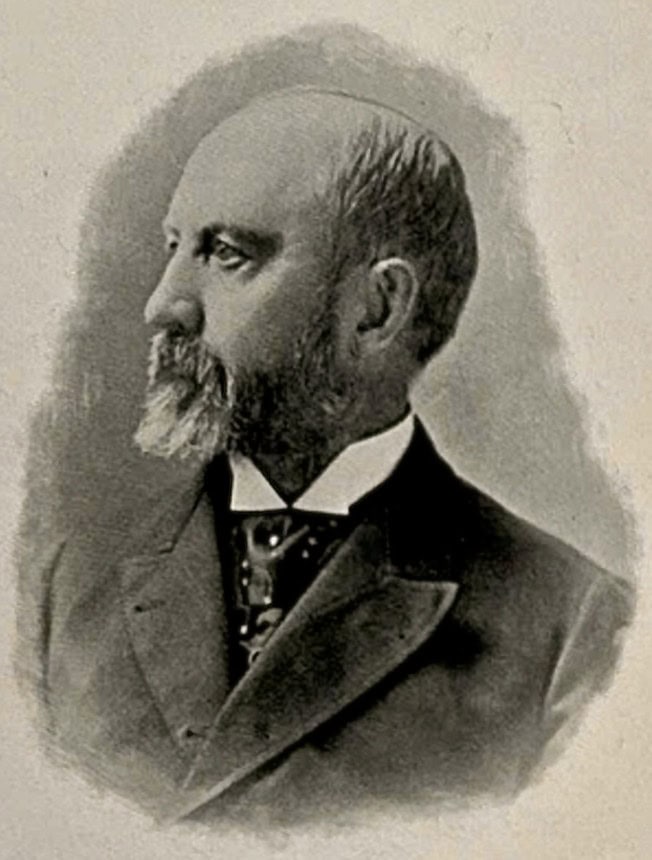
Rev. Samuel Nelson Jackson
Trained as both a physician and Congregational minister, he rose to become Chairman of the Congregational Union of Ontario and Quebec, editor of the Canadian Independent, president of the Congregational Publishing Company, and General Secretary of the Congregational Missionary Society. He was a key member in establishing the Pan-Congregational Council, the first organization created to unite Congregational churches throughout the world. For eighteen years he also served as a director and member of the faculty of the Congregational College affiliated with McGill University, where he authored A Handbook of Congregationalism.
The Jackson family also included distinguished physicians. Rev. Jackson’s brother, Dr. John Henry Jackson, became Professor of Physiology at the University of Vermont, a position he held for twenty-five years after postgraduate study at McGill University Medical College. His career extended well beyond medicine. He served as mayor of Barre, Vermont, president of the Vermont State Medical Society, a delegate to both the British Medical Association and the International Medical Congress in Berlin, and held leadership positions in banking and civic affairs. Equally prominent within American fraternal organizations, he became Grand Commander of the Knights Templar in Vermont, Past Potentate of Mt. Sinai Temple of the Shriners, and in 1888 received the Thirty-third Degree of the Ancient and Accepted Scottish Rite, one of the highest honors bestowed in Freemasonry.
His Jackson Cousins
Herbert likewise grew up alongside an extraordinary generation of Jackson cousins with whom Parkyn maintained close personal and professional relationships throughout their lives.
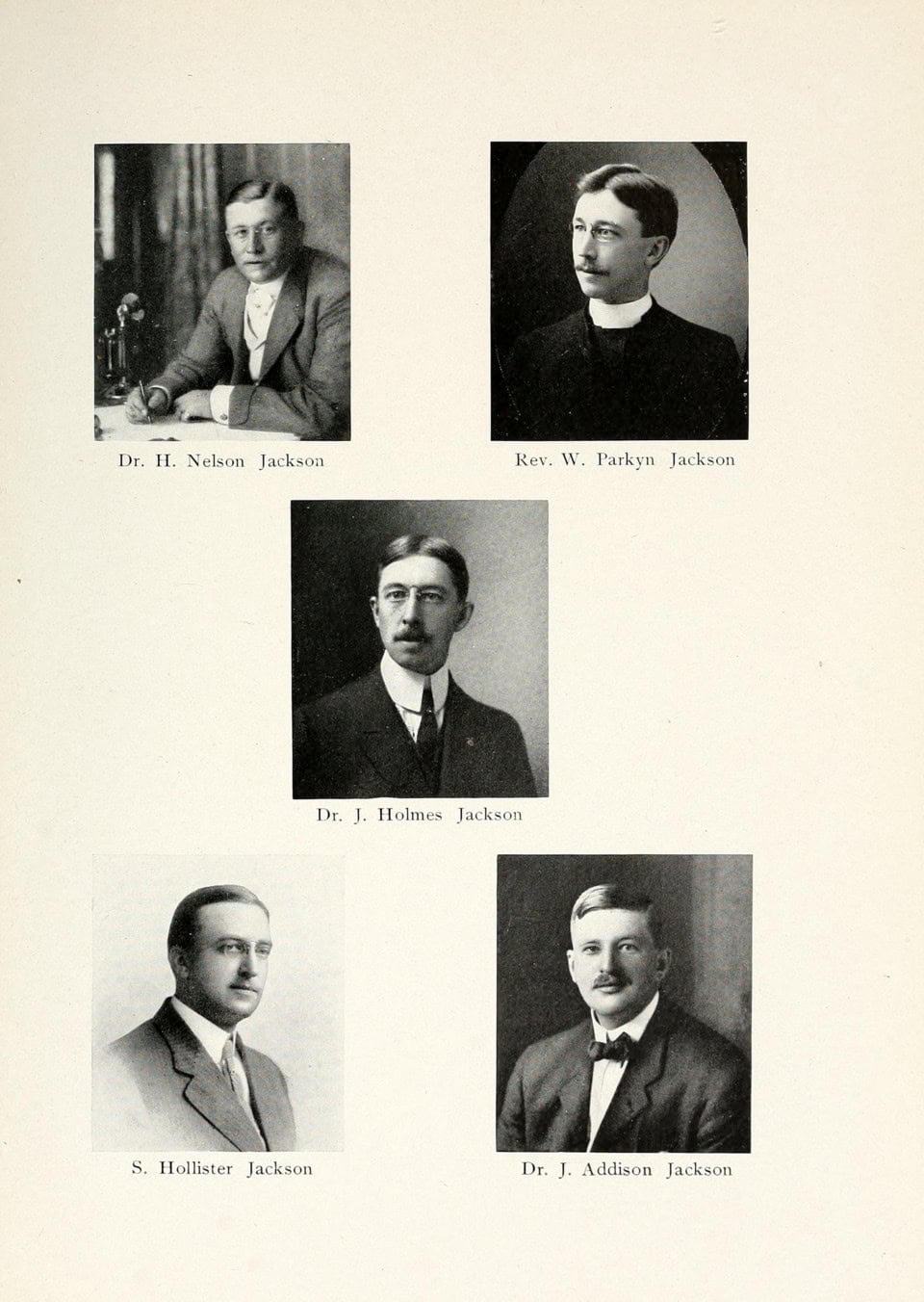
Samuel Hollister Jackson(1875-1927) attended Queen’s University beginning in 1893 and later the University of Toronto in 1896, overlapping with the years Herbert Parkyn studied at both institutions. He later married Parkyn’s sister, Mabel Maude Parkyn, making the two men not only first cousins but also brothers-in-law. Jackson went on to become the 56th Lieutenant Governor of Vermont while also serving as Chairman of the Vermont Railroad Commission, President of the National Granite Producers Association, President of the Vermont Bar Association, and co-owner of E. L. Smith & Company. He was active in numerous fraternal organizations, including the Knights Templar, Scottish Rite Masons, the Elks, and the Knights of Pythias. Hollister was the leading candidate for Governor of Vermont when he died in the 1927 Great Flood of Vermont.
Horatio Nelson Jackson(1872-1955) achieved national fame in 1903 as the first person to drive an automobile across the United States, but his career extended far beyond that singular accomplishment. A physician by training, he later co-founded the American Legion, owned and published the Burlington Daily News, served as president of the Burlington Trust Company, co-owned E. L. Smith & Company with his brother Samuel Hollister Jackson, and owned and operated radio station WCAX. He was also a friend of President Theodore Roosevelt and frequently vacationed with him at Roosevelt’s New York summer home. Like many members of the family, he was active in civic and fraternal organizations, including the Burlington Masonic Lodge and the Burlington Lodge of Elks. He would also be very active with Parkyn, with investments in Mexico and in mining operations. Nelson was twice the Republican nominee for Governor of Vermont but lost both times.
John Holmes Jackson(1871-1944) likewise established a distinguished public career. After graduating from the Philadelphia Dental College, where Dr. W. Xavier Sudduth, Herbert Parkyn’s future associate, served on the faculty, he became one of Burlington’s leading dentists and served twelve years as mayor of the city. He was also vice president of the Elias Lyman Coal Company and held leadership positions within several fraternal organizations, including Burlington Council No. 5 of the Royal and Select Masters, while serving as a past exalted ruler of the Burlington Lodge of Elks. Holmes was the Democratic nominee for Governor of Vermont in 1922 but lost the race.
William Parkyn Jackson (1873-1950) graduated from the Congregational College at McGill University in Montreal and entered the ministry. He became a leading figure within the Congregational church in Vermont before later serving in Asheville, North Carolina. He was a Mason under the Grand Lodge of Vermont and served as its assistant grand chaplain.
Joseph Addison Jackson (1878-1929) was a medical doctor who practiced in Hollywood, California. He was appointed surgeon for the Los Angeles Pacific Railway and served as a director of the Bank of Sherman. He and Parkyn would work together within the quickly growing LA New Thought movement of the early 1900s.
Samuel Nelson Jackson’s five sonsS. Hollister Jackson portrait in the Vermont State Capitol BuildingHoratio Nelson Jackson on his famous drive 1903
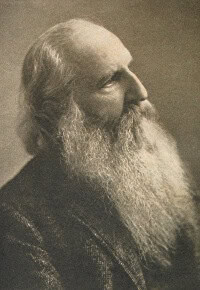
New Thought pioneer, Henry Wood, was a close family friend
Through the Jackson family, Parkyn was also connected to Henry Wood, who would become one of the most widely read authors of the New Thought movement and is often regarded as one of its foundational figures. The relationship originated with Rev. Samuel Nelson Jackson’s older brother, Joseph Addison Jackson, who graduated from Barre Academy in the same class as Henry Wood. The family connection became even stronger when Rev. Jackson’s younger brother, Dr. John Henry Jackson, married Henry Wood’s cousin, Cora Augusta Wood, in 1869. From that point forward, the Jackson and Wood families remained closely connected through their religious, civic, and business associations. Henry Wood and Parkyn would work closely together in helping direct the New Thought movement during its formative years.
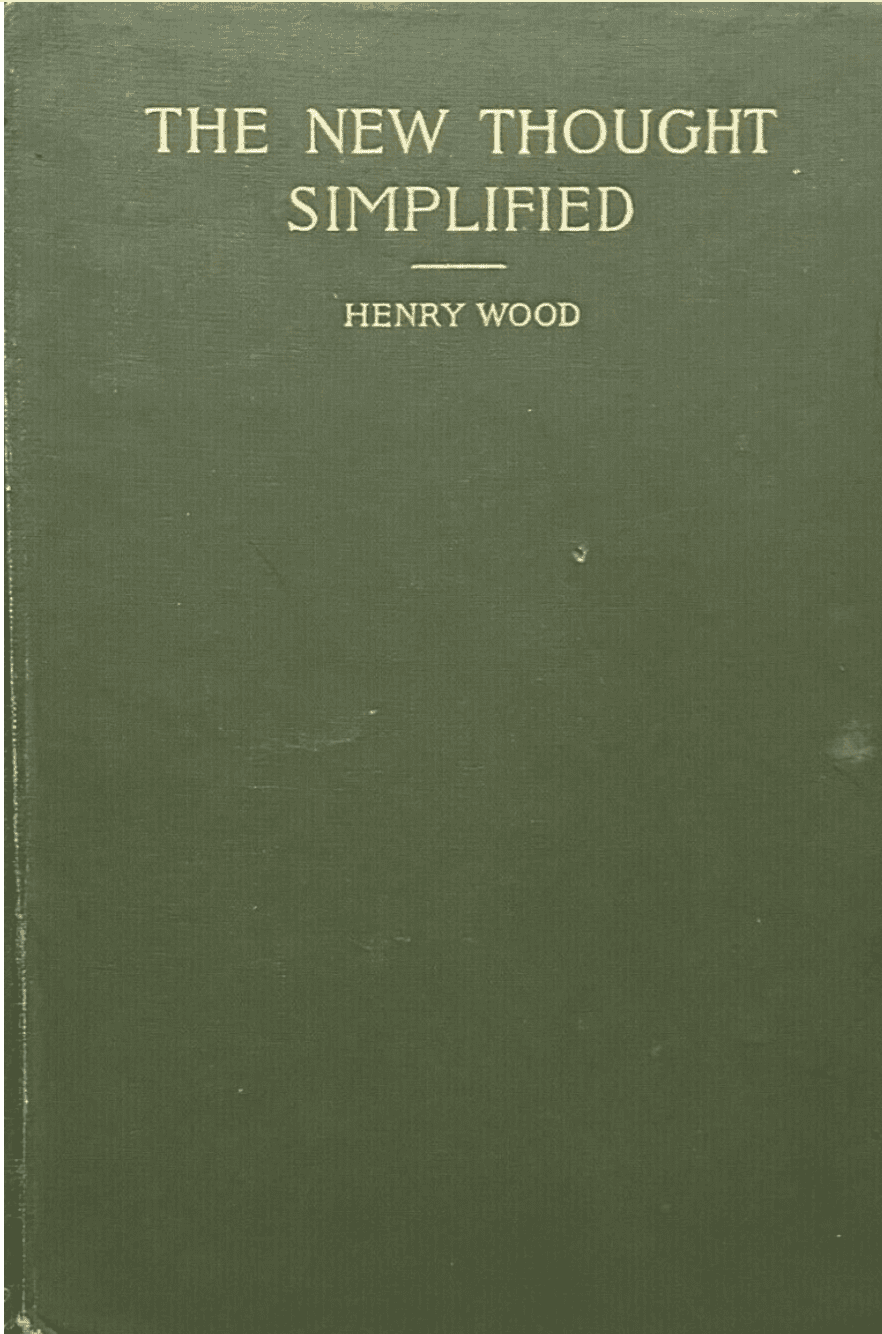
Henry WoodNew Thought Simplified by Henry Wood
Queen’s University and Medical Education
In 1888, Herbert Parkyn entered Queen’s University in Kingston, Ontario. That same year, his father relocated to Winnipeg to oversee construction of the Lake of the Woods Mills, leaving Herbert in the care of his Jackson relatives after Rev. Samuel Nelson Jackson accepted the pastorate of the First Congregational Church in Kingston. Also enrolled at Queen’s was Joseph Wells Jackson, the eldest son of Dr. John Henry Jackson, who was likewise studying medicine.
Parkyn graduated from Queen’s University in 1891. The following year he completed the examinations of the College of Physicians and Surgeons of Ontario and received his medical degree from the Queen’s University Faculty of Medicine. He then pursued postgraduate studies at McGill University Medical College in Montreal, following a well-established Jackson family tradition, as both Dr. John Henry Jackson and Dr. Joseph Addison Jackson had previously completed postgraduate medical training there. Parkyn continued his education at the University of Toronto Medical College, where he devoted particular attention to anesthetics.
While completing his postgraduate studies, Parkyn also began building his professional career. From 1892 to 1894 he maintained a medical practice in Toronto devoted to psycho-therapeutics, reporting more than 240 successful hypnotic cases during that period. At the same time, he entered the business world by organizing and managing the Incandescent Gas Light Exchange, a company established to compete with the monopoly then controlling Toronto’s lighting industry.
The Stevenson brothers and Richard Maurice Bucke
Throughout his medical education, Parkyn studied alongside Hugh A. Stevenson, with whom he shared not only nearly identical academic training but also an early research interest in the use of hypnotism as a medical anesthetic. Stevenson followed the same educational path through Queen’s University, postgraduate study at McGill, and advanced medical work at the University of Toronto. The two young physicians developed a professional relationship that continued long after graduation. Stevenson later established a successful medical practice in London, Ontario, where he also served three terms as mayor.
The Stevenson connection would prove especially significant because of Hugh’s younger brother, Dr. William J. Stevenson. William would later attend Parkyn’s Chicago School of Psychology and then travel to Nancy, France, to pursue advanced study under Professor Hippolyte Bernheim, whose work formed the scientific foundation of Suggestive Therapeutics. The careers of the Stevenson brothers closely paralleled Parkyn’s own and reflected a shared commitment to exploring the medical applications of psychological suggestion.
The Stevenson family also introduced Parkyn to one of the most original medical thinkers in late nineteenth-century Canada, Dr. Richard Maurice Bucke. Bucke was superintendent of the London Asylum for the Insane, founder of the medical school at the University of Western Ontario, and one of Canada’s most respected psychiatrists. Both Hugh and William Stevenson maintained close professional relationships with Bucke, helping support the establishment of his medical school and participating in the intellectual circle that developed around his ideas.
Richard Maurice Bucke
Although Bucke’s famous work Cosmic Consciousness would not be published until 1901, he had spent decades developing its central theory while Parkyn was still completing his medical education. Bucke proposed that human consciousness evolved through successive stages of development, culminating in what he termed “cosmic consciousness,” a higher state of awareness characterized by expanded perception, moral development, and intuitive insight. At the time, the concept was entirely new and represented one of the earliest attempts to place the evolution of consciousness within a scientific and psychological framework.
Parkyn absorbed many of these ideas during his formative years. Throughout his later writings, he repeatedly expressed the conviction that human consciousness was evolving toward progressively higher levels of development and that psychological training could assist this process.
Hockey Legend and Football Star
While pursuing his medical education, Parkyn established himself as one of the best hockey and football players in Canada and the United States and organized the first international hockey match. As a student at Queen’s University, Parkyn helped organize the 1886 hockey match against the Royal Military College on Kingston Harbour, recognized as the first organized game between two Ontario-based teams and the beginning of one of hockey’s oldest rivalries. Two years later, as captain and secretary of the Queen’s University Hockey Club, he led the team to the 1888 Kingston hockey championship, including a celebrated match against the Rideau Hall Rebels, whose roster included two sons of Governor General Lord Stanley.
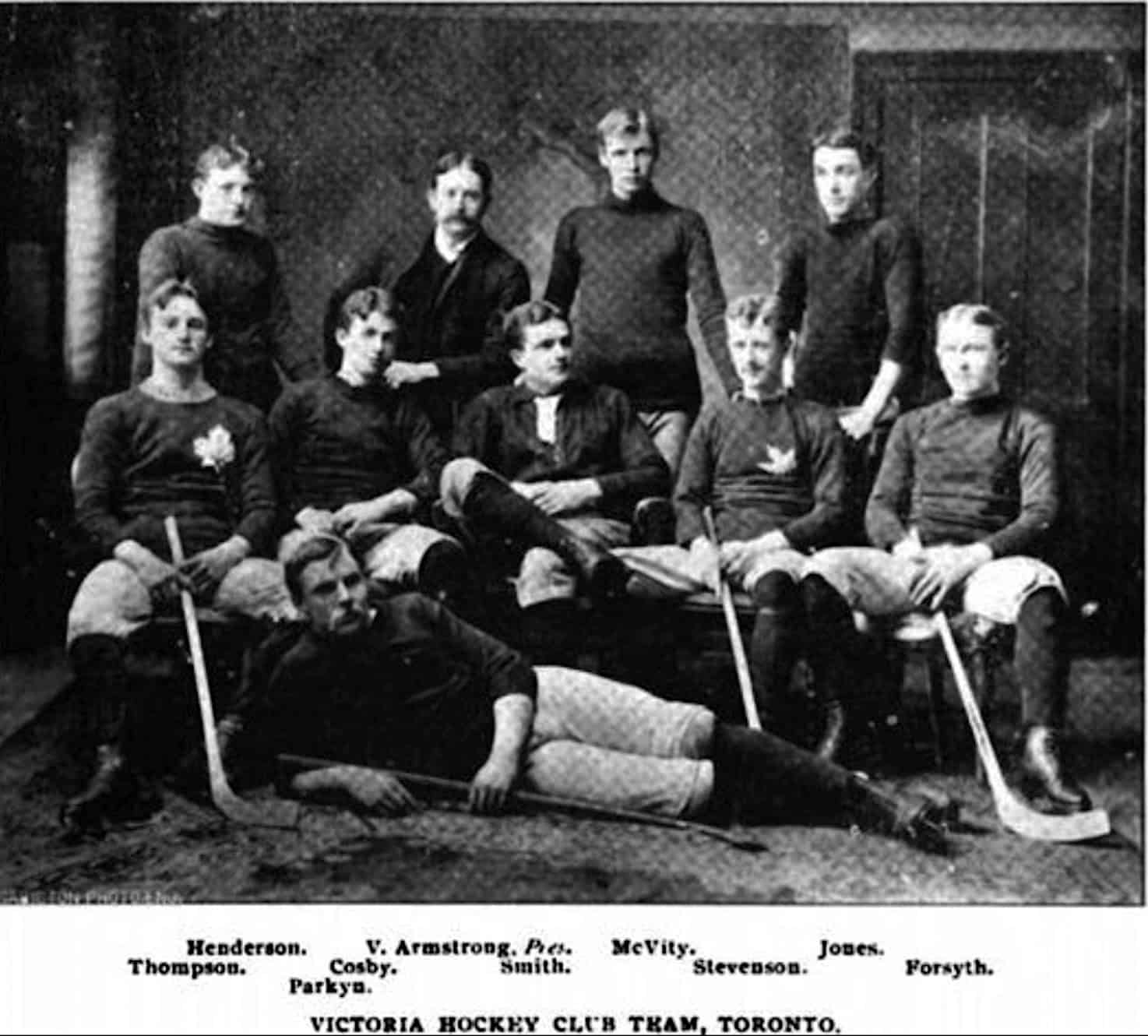
After transferring to the University of Toronto, Parkyn captained both the Victoria Hockey Club and the Toronto University College Hockey Club while serving as secretary of the newly formed Ontario Hockey Association. In that position, he helped organize competition throughout the province and played an important role in determining how Ontario clubs would compete for the newly established Stanley Cup championship.
Queen’s University Kingston Hockey Champions 1888. Parkyn bottom rightVictoria Hockey Club Team 1893. Parkyn laying.
Parkyn was equally accomplished on the football field. A standout fullback and center halfback, he was the leading scorer for Queen’s University and later helped the University of Toronto capture the 1892 Ontario Rugby Football Union championship. After moving to Minneapolis, he became the star fullback for the University of Minnesota, leading the Golden Gophers in scoring during both the 1894 and 1895 seasons. His powerful drop-kicking ability and dominant play earned him local nicknames including “The Hypnotizer” and “Svengali Parkyn.”
The Minnesota Golden Gophers football team 1894 & 1895
Parkyn was also a pioneer in the development of hockey in the American Midwest. In late 1894, he was elected director of winter sports at the University of Minnesota, where he organized, coached, and managed the university’s first hockey team. Under his leadership, the club played some of the earliest hockey games ever held in Minnesota and the first international hockey match against the celebrated Winnipeg Victorias, who would later capture the Stanley Cup.
Minneapolis and Dr. W. Xavier Sudduth
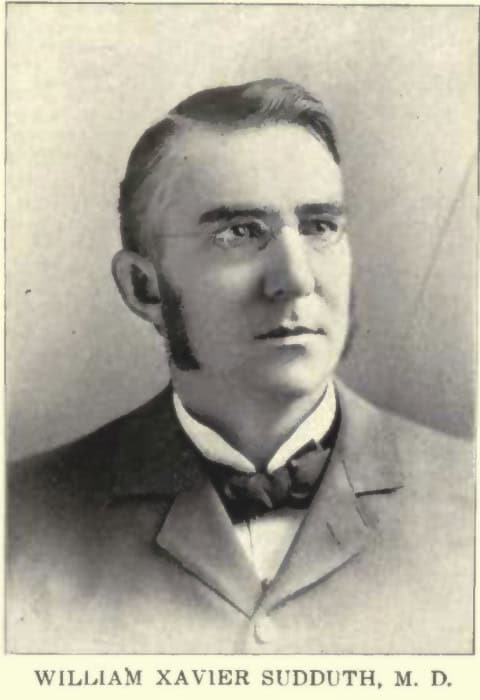
In 1894, Parkyn relocated to Minneapolis to study and work under Dr. William Xavier Sudduth, the internationally renowned dean of the University of Minnesota Dental School. Sudduth had devoted more than fifteen years to the study of hypnotism, receiving advanced training in Vienna, Berlin, and Heidelberg while closely following the revolutionary work of Hippolyte Bernheim and the Nancy School of Suggestive Therapeutics in France. Parkyn and Sudduth connected through Dr. John Holmes Jackson, Parkyn’s cousin, who had studied dentistry under Sudduth in Philadelphia. Together, the two physicians embarked on one of the earliest and most ambitious scientific investigations of hypnotic suggestion ever undertaken in the United States.
Dr. William Xavier Sudduth
With Parkyn’s arrival, Sudduth secured permission from the university president to introduce hypnosis into the Dental School’s public clinics. The result was the first public clinic in the country to employ hypnosis as part of its regular medical practice. Over the next two years, Parkyn and Sudduth conducted more than one thousand experiments investigating the therapeutic applications of suggestion. Their primary objective was to determine whether hypnosis could serve as a reliable alternative to chemical anesthesia during dental and surgical procedures. Operations ranging from difficult tooth extractions requiring deep incisions to the removal of tumors were successfully performed using hypnotic suggestion alone, with patients reporting little or no pain. Beyond surgery, they explored the treatment of addictions, stammering, nervous disorders, and even the improvement of musical ability through suggestion.
Hypnotic experiments
Parkyn and Sudduth did not limit their investigations to clinical medicine. They also became widely known for public demonstrations designed to test the popular claims then surrounding hypnosis. At a time when newspapers regularly published sensational accounts of criminals supposedly compelled to commit crimes while hypnotized, the two physicians conducted carefully designed experiments before audiences of physicians, attorneys, and other professionals. Volunteers were instructed under hypnosis to steal watches, forge checks, stab audience members with imitation daggers, and commit other simulated crimes. Again and again, the subjects refused. Some hesitated, others openly resisted the suggestions, and several physically confronted Parkyn rather than violate their own moral judgment. From these demonstrations, Parkyn and Sudduth concluded that hypnosis could influence perception and behavior, but it could not override an individual’s fundamental moral conscience or compel an otherwise unwilling person to commit a genuine crime.
The pair also investigated claims of telepathy, mind reading, and related psychical phenomena that were attracting widespread public attention during the 1890s. Rather than presenting such demonstrations as evidence of supernatural powers, Parkyn and Sudduth sought to explain them through natural psychological processes. Blindfold demonstrations, apparent thought reading, and other seemingly extraordinary feats were carefully analyzed and attributed to methods such as muscle reading, heightened observation, unconscious suggestion, and sleight of hand. Their purpose was not to encourage belief in occult powers, but to distinguish legitimate psychological research from stage performances and popular misconceptions.
The Minnesota experiments brought Parkyn and Sudduth national attention, but they also generated increasing controversy. Their success attracted criticism from members of the Minneapolis Dental Society and from newspapers that questioned the scientific legitimacy of hypnosis. As public pressure mounted, the University of Minnesota requested that all hypnosis-related experiments cease. Rather than abandon their work, Parkyn and Sudduth established a private medical office in Minneapolis where they continued their clinical investigations outside the university. When Sudduth accepted a position at the University of Chicago in the spring of 1895, the two physicians moved their collaboration to Chicago, opening a joint office at 100 State Street and laying the groundwork for what would soon evolve into Parkyn’s Chicago School of Psychology.
Sydney B. Flower joins with Parkyn
In the spring of 1896, Sydney Blanshard Flower became Dr. Parkyn’s official business manager and publicist with the publication of Hypnotism Up to Date, a book built around interviews with Parkyn and demonstrations of his methods. To promote both the book and Parkyn’s growing reputation, Flower organized a syndicated series of newspaper interviews highlighting Parkyn’s work, while also generating publicity for the hypnosis clinic and school that Parkyn planned to establish in Chicago later that summer.
Sydney Blanshard Flower
Parkyn and Flower’s professional partnership would continue throughout their careers, with Flower later emerging as one of the leading figures of the New Thought movement. Even before they began working together, however, their lives had intersected several times. Flower, a British immigrant from a prosperous family, had settled in Winnipeg, where he became well known as the Manitoba and Dakota tennis champion in 1895 and as one of the region’s leading cricket players. He also spent several years as a sports reporter for the Winnipeg Free Press. During the same period, Parkyn was active with Toronto’s Rosedale Cricket Club, serving as assistant secretary and organizing matches with clubs throughout Canada, including the team in Winnipeg. In early 1895, Flower reported extensively on Parkyn’s organization of the international hockey game between the Winnipeg Victorias and Parkyn’s newly formed University of Minnesota team. It was with this connection that Flower saw an opportunity to write a book on Parkyn and the emerging science of Hypnotism.
In December 1895, Flower resigned from the Winnipeg Free Press and announced that he was relocating to Toronto, where the Parkyn family lived and where Herbert A. Parkyn frequently spent the winter months. By January 1896, the two men were working together in Toronto on the completion of Hypnotism Up to Date, followed shortly afterward by A Study in Hypnotism. Although published under Flower’s name, both books were co-written with Parkyn and based directly upon his teaching and clinical philosophy. Flower openly acknowledged that his role was primarily to present Parkyn’s ideas to a wider audience. The books argued that the future of the field lay not in hypnotism as an isolated phenomenon but in the science of Suggestive Therapeutics. The two books were published in the spring of 1896 by Charles H. Kerr & Company at 56 Fifth Avenue. Shortly afterward, Parkyn and Flower established the Psychic Publishing Company in the same building, from which they began publishing and distributing their own works.
The Chicago School of Psychology
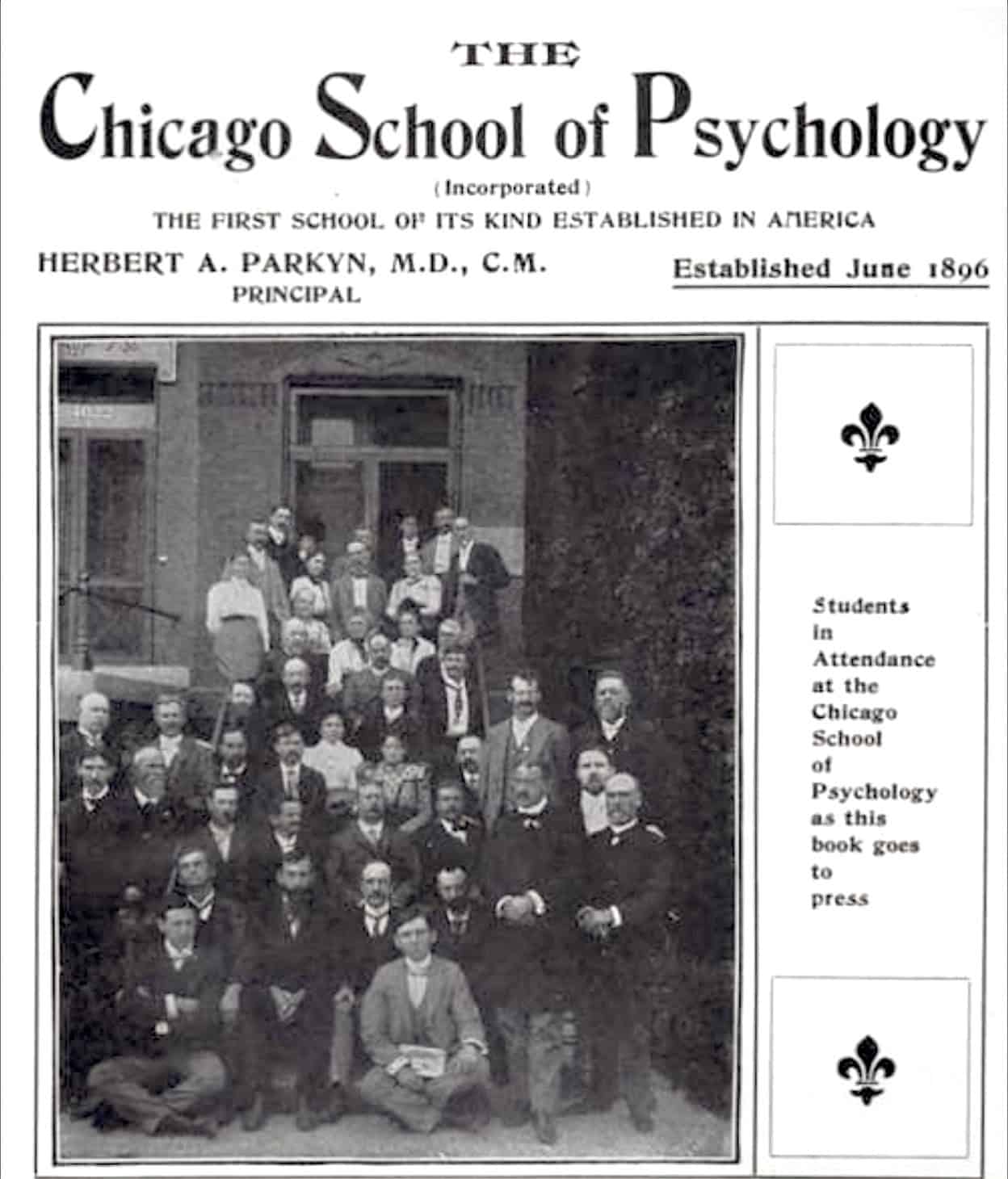
The Chicago School of Psychology with graduates 1896.
In June 1896, Dr. Parkyn founded the Chicago School of Psychology, the first institution in the United States devoted exclusively to the teaching and practice of Suggestive Therapeutics. The school was financed by his father, James Parkyn, who had sold his interest in the Lake of the Woods Milling Company, then the largest flour milling operation in the world, and relocated the family from Toronto to Chicago. James became a partner in the enterprise, and the family lived in the upper floors of the school building.
After incorporating in March 1897, the school moved to a large estate at 4020 Drexel Boulevard. Later that year, the First Church of Christ, Scientist, began constructing its national headquarters directly across the street, making the neighborhood an important center for the emerging mental sciences. Two of the most influential systems of mental healing in America thus developed side by side. Although both recognized the influence of mind upon health, Parkyn consistently argued that Suggestive Therapeutics rested upon demonstrable psychological laws rather than supernatural intervention. Throughout his career, he would distinguish his medical approach from healing systems that attributed therapeutic results primarily to divine or metaphysical agencies.
Parkyn taught that the mind could be trained to assist the body’s own restorative powers through the intelligent use of suggestion. The school offered a complete professional course leading to accreditation as a Doctor of Psychology, attracting physicians, dentists, and students from across the United States. Each course combined formal lectures with clinical instruction, culminating in Parkyn’s free public clinic, where patients were treated exclusively through verbal suggestion without the use of drugs or electricity. The clinic became one of the school’s defining features, drawing not only patients but physicians who came to observe the methods or bring difficult cases for treatment.
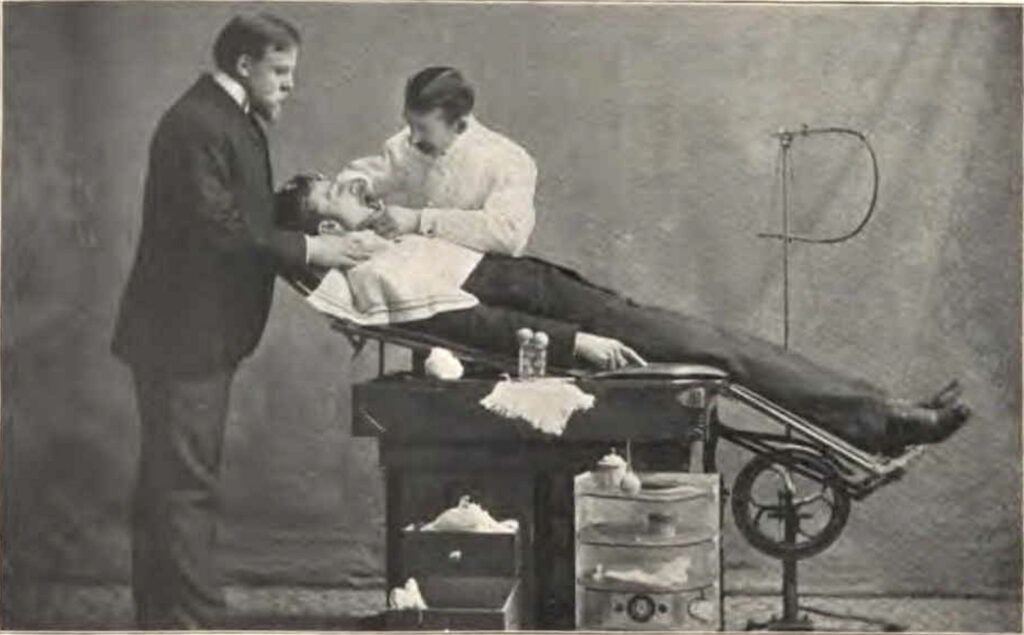
Herbert A Parkyn administering Hypnosis
The Chicago School emerged during a period when public understanding of hypnotism was dominated by theatrical performances and sensational newspaper reports. Stage hypnotists filled opera houses with demonstrations of apparent mind control, while critics frequently portrayed hypnosis as dangerous, fraudulent, or morally suspect. Parkyn deliberately positioned his school in direct opposition to this image. The institution emphasized therapeutics rather than spectacle. Students observed actual clinical cases, attended systematic lectures, and participated in free public clinics where psychological methods were applied to genuine medical conditions. Parkyn purposely avoided relying upon newspaper advertising or popular promotion, preferring instead to build the school’s reputation through professional medical journals, scientific publications, referrals, and word of mouth. This strategy distinguished the Chicago School from the many commercial enterprises that were beginning to exploit public fascination with hypnotism.
Clinical Instruction and a National Reputation
The school quickly earned an international reputation. Contemporary newspapers reported that Parkyn had treated more hypnotic patients than any physician in the United States, with more than two thousand documented cases by the late 1890s, including over twelve hundred during a remarkably productive two-year period. Physicians, dentists, educators, clergy, and interested laymen traveled to Chicago to study methods unavailable elsewhere in North America.
As the number of graduates increased, Parkyn encouraged them to establish practices throughout the United States and Canada. Many successfully incorporated Suggestive Therapeutics into their own professional work, while a smaller number founded schools capable of training additional practitioners. What had begun as a single institution in Chicago gradually evolved into the nucleus of a larger educational movement.
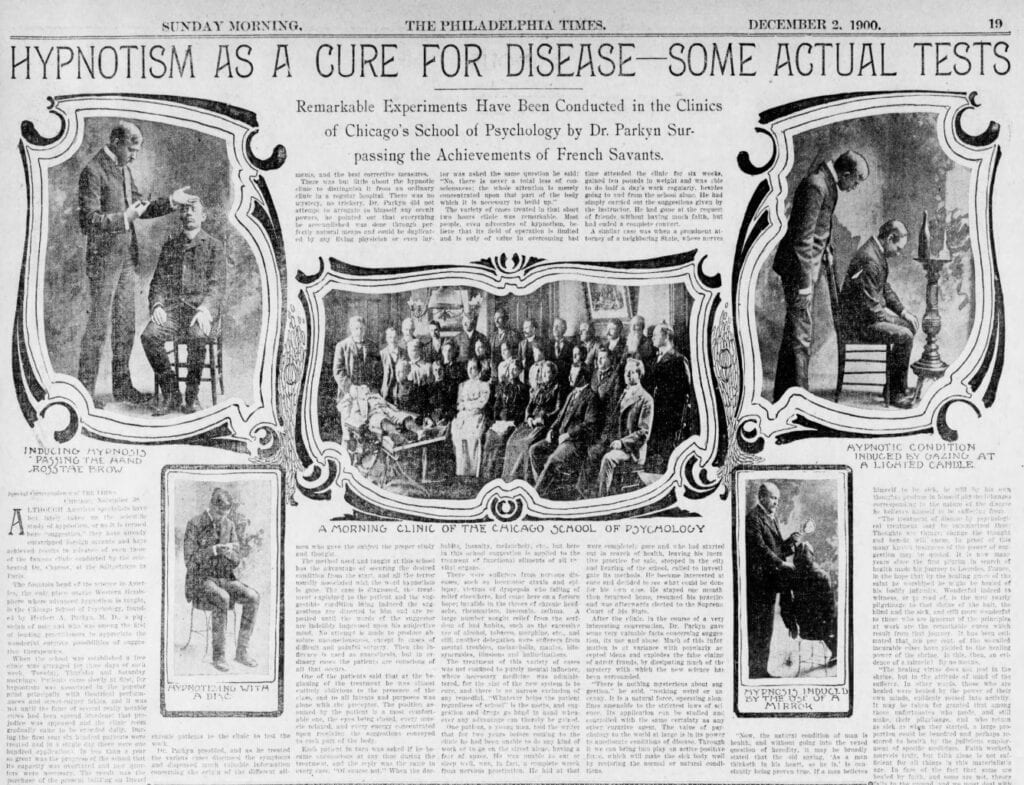
Feature on the Chicago School of Psychology in the Philadelphia Times
Building a National Educational System
Parkyn understood that a single school could not satisfy the growing demand for instruction. To coordinate practitioners across North America, he and Flower established TheHypnotic Magazine as the official publication of the Chicago School of Psychology. The journal published clinical reports, scientific articles, announcements, and discussions of current developments in hypnotism and Suggestive Therapeutics.
As public interest increased, however, Parkyn and Flower became concerned that the word “hypnotism” had become associated with entertainers, untrained practitioners, and sensational journalism. In December 1897 they renamed the publication The Journal of Medical Hypnotism, emphasizing its status as a professional medical journal and distinguishing it from the growing number of popular publications devoted to stage hypnotism. Its mission declared that the journal existed to teach the public “how simple in application and how powerful an agent for good hypnotic suggestion truly is,” while insisting that parents, clergy, teachers, lawyers, physicians, and dentists all had reason to understand the science of suggestion.
The Journal of Medical Hypnotism became the official bulletin for an expanding network of affiliated schools. By early 1898, institutions connected with Parkyn’s system were operating in Chicago, Des Moines, St. Louis, Minneapolis, Kansas City, Kingston, and New York. Flower personally traveled to establish additional schools, arranging for each issue of the journal to be printed from the city in which he was working as a way of introducing the new institution to local readers.
Moving Beyond Hypnotism
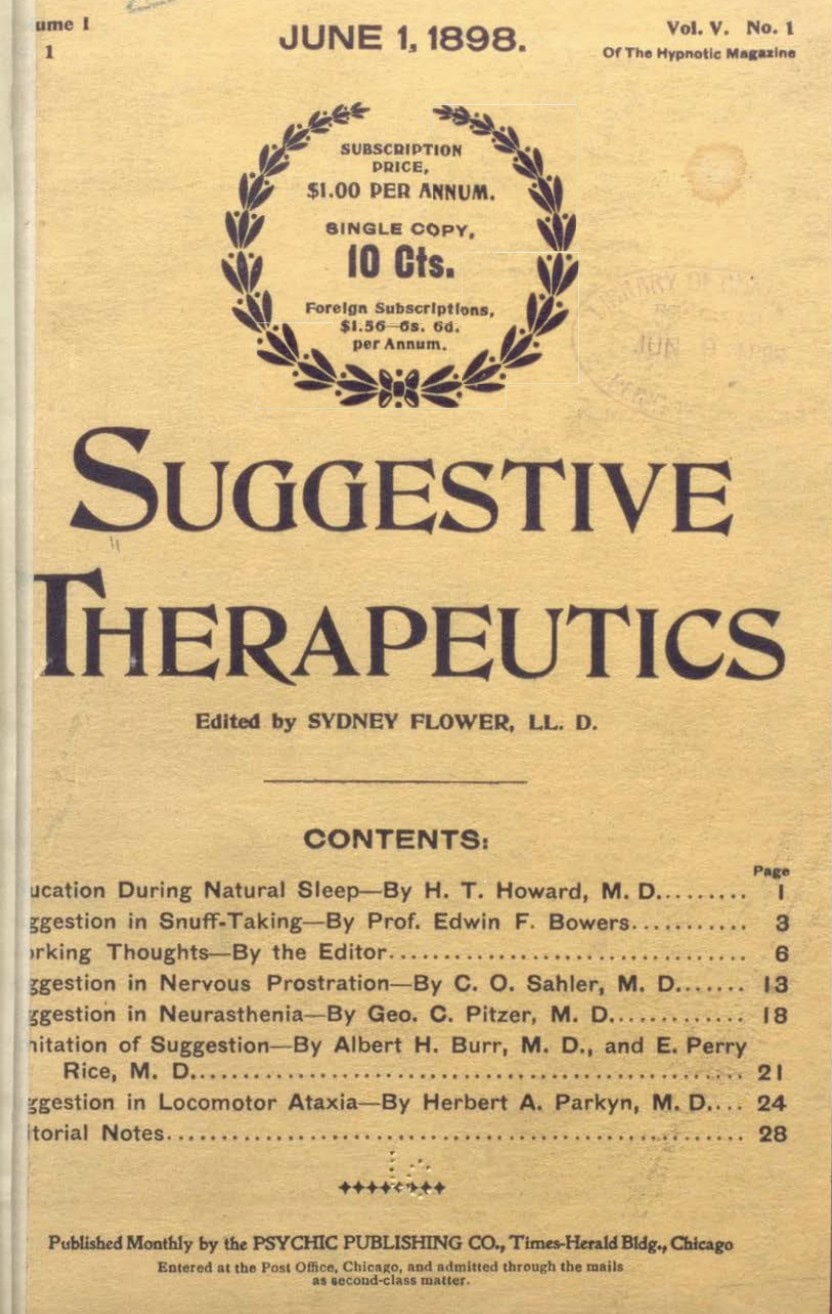
As Parkyn’s clinical experience continued to grow, so did his understanding of the psychological principles underlying successful treatment. Increasingly, he concluded that hypnotic sleep itself possessed no special healing power. Rather, the therapeutic results arose from suggestion and the patient’s receptivity to it. Hypnosis represented only one method of increasing that receptivity and was often unnecessary. This realization gradually transformed the movement’s identity. In June 1898, The Journal of Medical Hypnotism was itself renamed Suggestive Therapeutics. The new title reflected a profound shift in emphasis. The movement no longer defined itself by hypnosis but by suggestion, a principle Parkyn believed governed education, medicine, character development, habit formation, and human behavior generally. Suggestion could operate in deep hypnosis, in light hypnosis, or in ordinary waking consciousness. The therapeutic principle remained the same.
The Hypnotic MagazineSuggestive Therapeutics magazine
Regulations for second class postal rates
At the time, the financial success of magazines depended upon qualifying for the heavily discounted second-class postal rate, which required strict compliance with federal postal regulations. Publications had to demonstrate that they served a legitimate educational or informational purpose rather than functioning primarily as advertising for a business. Both editorial content and advertising were closely scrutinized by the Post Office. Educational institutions, however, enjoyed greater latitude, provided their publications offered genuine research, commentary, or instructional material to the public. To satisfy these requirements, Parkyn and his associates carefully presented Suggestive Therapeutics as an independent educational journal rather than a promotional organ of the Chicago School of Psychology.
Parkyn Launches Suggestion Magazine
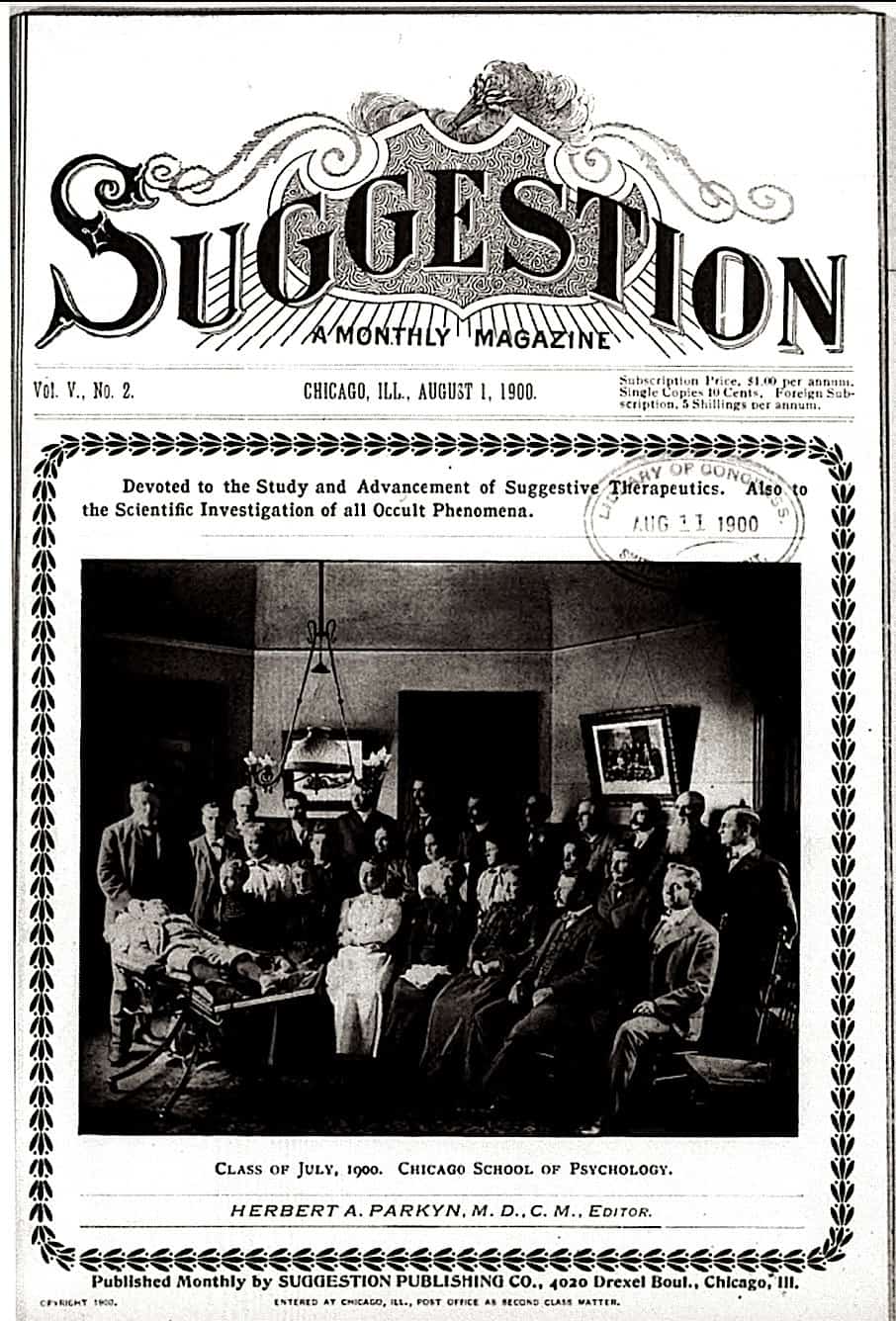
Suggestion magazine Aug 1900
In August 1898, Dr. Herbert A. Parkyn launched Suggestions magazine, later renamed Suggestion, with M. J. Murphy serving as assistant editor. The magazine described itself as featuring “choice literary gems by the world’s best known Mystics” while advancing the latest research in Suggestive Therapeutics, hypnotism, telepathy, suggestive education of children, dreams, visions, and other psychical phenomena. Although acknowledging the growing number of publications devoted to these subjects, Parkyn argued that few approached them from a truly scientific standpoint. While he believed many phenomena commonly regarded as supernatural would eventually be explained by natural law, he maintained that the boundary between the natural and supernatural had not yet been fully determined. For that reason, the magazine welcomed serious investigation of subjects such as telepathy, clairvoyance, mind reading, and crystal gazing, while deliberately excluding spiritism and spirit communication from its pages.
From its earliest issues, Suggestion attracted many of the leading writers in psychology, medicine, New Thought, and psychical research. Regular contributors included Dr. S. F. Meachem, Dr. W. Xavier Sudduth, Charles Gilbert Davis, Mary Scott Fielding, George Dutton, Edwin Hartley Pratt, George Bieser, Stanley LeFevre Krebs, Thomson Jay Hudson, Prof. William James,William Walker Atkinson, George W. Carey, Elmer Ellsworth Carey, Kate Atkinson Boehme, R. Swinburne Clymer, Prof. Edgar L. Larkin, Henry Harrison Brown, Harry Gaze, F. W. Southworth, Roger Sherman, Elbert Hubbard, Elizabeth Towne, William Towne, Dr. Isaac K. Funk, Charles Gilbert Davis, Prof. ElmerR. Gates, Carrie M. Hawley, A. Victor Segno, Albert Whitehouse , Frank Channing Haddock, Ernest Beltane, Alvan C. Halphide, Dr. Sheldon Leavitt, Henry W. Roby, Cleveland Moffett, Ellis Woodbury Rideout, Franklin H. Heald, Rev. Henry Frank, Horatio W. Dresser, L. W. Billingsley, M. H. Lackersteen, and poet Ella Wheeler Wilcox. and dozens of other prominent physicians, educators, scientists, and New Thought writers. Within a short time, Suggestion had become one of the most respected and influential journals devoted to the scientific study of the mental sciences and the emerging New Thought movement.
A Mail Course in Suggestive Therapeutics and Hypnotism
In 1898, Dr. Herbert A. Parkyn published his Special Mail Course in Hypnotism and Suggestive Therapeutics alongside the launch of Suggestion magazine. More than a year in preparation, the forty-one-lesson correspondence course comprised nearly 400 pages and was presented as the first complete, standalone system of instruction in Suggestive Therapeutics. Drawing upon Parkyn’s treatment of more than 5,000 patients, it emphasized not only what suggestions should be given, but precisely how and when they should be delivered. Students were taught to use simple, believable, and confidently expressed suggestions, with particular attention to rhythm, repetition, tone of voice, and mental attitude. Throughout the course, Parkyn stressed scientific observation, clinical experience, and clear, rational language, arguing that suggestion could be studied and applied without reliance on trance states, altered consciousness, or metaphysical explanations.
The course received enthusiastic praise from physicians and students throughout the United States, many of whom regarded it as clearer and more practical than the works of Hippolyte Bernheim, Thomson Jay Hudson, and Charles Lloyd Tuckey. Its straightforward explanations and systematic, step-by-step instruction helped establish it as one of the most influential early manuals on the scientific application of suggestion.
Parkyn’s theory of suggestion rested on seven key principles
That the mind is the originating power behind all physical states and that the universe of human experience is fundamentally mental.
That there is a direct correspondence between state of the body to the state of the mind; what exists within will express itself without. No ailment appeared that had not first been accepted, whether knowingly or through passive conditioning.
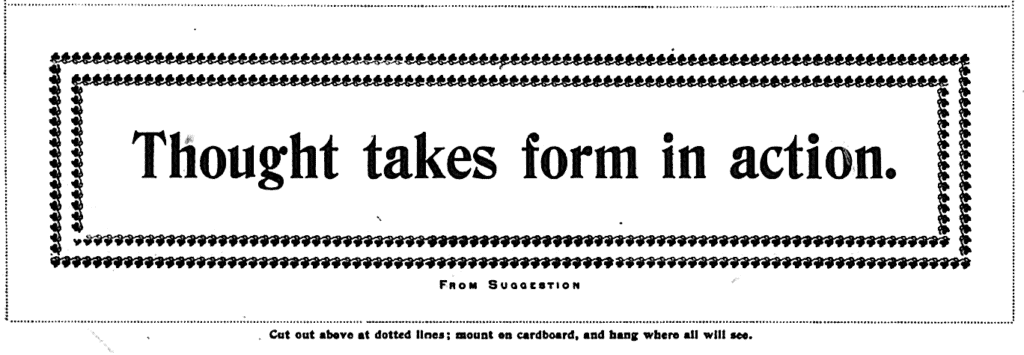
That everything moves according to vibration. Thought itself is vibratory, and suggestions, tones, and even colors can be used to restore the body’s vital force and vibratory harmony. “Thought takes form in action.”
That the mind has a dual nature consisting of two faculties: the active voluntary mind and the passive involuntary mind. These act in tandem, like the poles of a magnet. Healing occurs when the voluntary mind is in proper polarity with the involuntary mind.
That mental healing is cyclical in nature. Suggestion had to be repeated because the mind responds to rhythms. Habits are formed and reformed not in single moments, but through a steady rhythm of reinforcement. Nothing in nature occurs without rhythm, and the mind is no exception.
That the cause of disease, failure, or fear is the direct effect produced by the mind and can be identified and reversed. If a person suffers it’s not because of chance, fatalism, or hereditary determinism, but because some aspect of their inner life has set that condition in motion.
That the masculine gender mind wills, initiates, affirms, and commands healing, while the feminine gender mind receives, accepts, holds, and carries health into being. The discipline of repeating suggestions into the active voluntary mind will condition the passive involuntary mind
Parkyn’s teachings ultimately reflected his goal to use the language of science and psychology to give new form to the metaphysical systems of ancient ideas. While his philosophy never denied the presence of the supernatural, it simply and scientifically explained suggestive therapeutics as demonstrable, repeatable, and subject to the same laws that govern every other aspect of life
Parkyn on Auto-Suggestion
Parkyn taught that auto-suggestion was the process by which individuals influence their own involuntary mind and was central to all mental and physical change. He divided auto-suggestion into two forms: voluntary, which involves the deliberate repetition of desired thoughts to reshape behavior or bodily function and involuntary, which occurs unconsciously through repeated impressions from daily experience. Parkyn emphasized that the mind tends to act automatically on dominant ideas impressed upon it.
Parkyn insisted that suggestion is not limited to spoken commands stating that “anything that suggests is a suggestion,” highlighting that all sensory impressions and environmental cues contribute to shaping mental states. Because of this, he warned against the use of negative suggestions, explaining that repeating what not to do can unintentionally reinforce the very idea one is trying to eliminate. Instead, he advised, that it is better not to give negative suggestions, such as, you cannot, or you will not do this, that or the other thing, etc.. Pointing out what is not desirable does not suffice. In place of such suggestions, he taught to say what you really wish to do. “I Can and I Will” do this or that, etc… His method relied on planting positive, repeated thoughts that would be taken up by the involuntary mind and ultimately manifest in action.
“Thought takes form in action”
“Thought takes form in action” quote by Herbert A. Parkyn in Suggestion.
From Parkyn’s AMail Course in Suggestive Therapeutics and Hypnotism, his most famous and most re-quoted idea, “Thought takes form in action,” was born. In these lessons, Parkyn first set out the principle that every thought impressed upon the mind, whether by conscious repetition or unconscious acceptance, ultimately shapes behavior, health, and perception. He taught that this was not simply a figure of speech but a demonstrable law governing all human conduct. By this phrase, Parkyn meant that the mind is constantly translating ideas into physical expression. Repeated thoughts become habits. Mental attitudes produce measurable effects on the body and nervous system. Any suggestion, whether positive or negative, tends to work itself out in the form of action. He insisted that this process is automatic and impartial. Just as constructive affirmations strengthen and heal, careless or pessimistic statements can generate limitation and illness. Parkyn expressed this with the statement:
“Thought tends to take form in action. Get the thoughts you wish a patient to entertain drilled into his mind, keep them stimulated by repetition, and the desired action is almost certain to follow. Anything that suggests is a suggestion, therefore be careful when in the presence of a patient or a child never to say anything yourself or allow anyone else to say anything that you do not wish to take form in action.”
In another passage, he elaborated further:
“Thoughts take form in action. The converse of this is true also, for our actions take form in the thoughts of others.”
Parkyn’s insistence that “thought takes form in action” formed the foundation of his therapeutic system. Every technique of suggestion, every exercise in auto-suggestion, and every regimen of mental discipline he prescribed rested on this conviction that the mind impresses its dominant content on the body and conduct, inevitably and without exception. This phrase would go on to become a motto for understanding the power of thought in the New Thought movement. It has since become an axiom in psychology teachings even to this day, shaping the way countless practitioners and educators explain how mental patterns create outward results.
Parkyn’s “life essentials” and the ancient five elements
Central to Parkyn’s system of suggestive therapeutics was his teaching that the body must be furnished with what he termed the “life essentials” to create and maintain health. Parkyn taught that although the mind possessed a powerful capacity to influence physiological processes, such as by increasing blood flow to diseased areas, this capacity could only manifest fully if the body had an adequate quantity and quality of the life essentials, stressing that two quarts of fresh water a day were essential. Parkyn’s five life essentials were fresh air, sunshine, water, food, and exercise. He stated: “Thought tends to take form in action, and, with the life essentials properly supplied, thought action becomes a power in stimulating the organs of nutrition and elimination.”
The ancient five elements and the corresponding five Platonic Solids
He closely aligned these ideas with the ancient Hermetic doctrine of the five elements which taught that all matter and all processes in nature derive from a combination of five fundamental principles: Air, Fire, Water, Earth, and Aether/Spirit. These elements were understood not only as physical substances but as dynamic forces acting within the human being. When these forces fell into imbalance, disease and disorder followed. Parkyn emphasized that each life essential was a direct expression of one of these ancient elements. Air corresponded to fresh air and the deliberate practice of deep breathing. Fire was reflected in exposure to sunshine and the therapeutic influence of light and warmth. Water included the ingestion of sufficient quantities and the purifying benefits of distilled water. Earth related to nourishment, with Parkyn stressing that food should be consumed not with the temperance of a sick person but with the appetite of a healthy man. Spirit/Aether was present in the exercise of the body and mind, whether through movement in space or through meditation within inner space. This was similar to the eastern philosophy of Ayurveda with Yoga.
In the Hermetic and Platonic tradition, the five Platonic solids were seen as the pure geometric forms through which these elements were expressed and symbolized. Each shape was regarded as a manifestation of an elemental principle both in the structure of matter and in the ordering of thought and space itself. Parkyn regarded this ancient framework as supporting the idea that health arose when the visible and invisible elements of life were harmonized. Parkyn further stated:
“The mind is an important factor in building up the health and maintaining good health. Thoughts of health and strength promote health and strength, if the life essentials are properly supplied to the body. Thoughts of sickness and fear thoughts will produce sickness, for they interfere with the normal appetite for the life essentials, and the life essentials being neglected in consequence, the body grows weaker, and in this condition it is open to the inroads of all kinds of physical complaints and contagious diseases. The greatest preventive against diseases of all kinds is good health, and, next to the life essentials, the greatest factor in maintaining good health is healthy thinking.”
Parkyn’s “Life Essentials” teachings were also closely related to Yogi philosophy
Parkyn’s teachings were also related to the teachings of the Pancha Bhuta, the five elements that make up all of creation in Hinduism.
Earth (Prithvi): Represents the physical structure of all things.
Water (Jal): Symbolizes the capacity to nourish and sustain.
Fire (Agni): Represents the power of digestion and metabolism.
Air (Vayu): Corresponds to movement, respiration, and the circulation of vital energy.
Space (Akasha): Represents the mind and the medium through which things manifest.
In Ayurveda, the ancient Indian system of medicine, these elements are believed to be interconnected and are associated with overall health of human beings. Any disorder in the human body indicates imbalance of one or more of these elements. Like in Parkyn’s teachings, this system was made up of three fundamental biological energies called the Dosha that must be in balance. These were made up of combinations of the five elements:
Breath – Vata (Space + Air): Governs movement, creativity, and the nervous system.
Bile – Pitta (Fire + Water): Regulates digestion, metabolism, and body temperature.
Parkyn on Personal Magnetism, Magnetic Healing, and Distant Treatment
Parkyn acknowledges that among all related fields, none had drawn more interest than Magnetism and Telepathic distant healing. He chose to address both by devoting a chapter to each in his course. While noting that these fields were still in their infancy, he allowed that future technological developments might one day detect how magnetic energy could influence the mind and aid healing. However, he emphasized that, at present, the observable results attributed to these practices were entirely due to suggestion.
On Personal Magnetism, Dr. Parkyn said it was a matter of pleasing the five senses and satisfying the caprices of those with whom one comes in contact. That “personal magnetism is a delicate consideration for others, a kind of cultivated sympathy to the feelings, likes and dislikes of those with which we come in contact, a subjugating of the self in every direction that would be distasteful to the feelings of another.” But ultimately it is created by suggestion, stating, “Thoughts take form in action. The converse of this is true also, for our actions take form in the thoughts of others…Think the right thoughts and desirable actions will follow.”
Regarding Magnetic Healing and distant treatments, Parkyn demonstrated that these methods were essentially forms of Suggestive Therapeutics. He cited the common practice among such healers of instructing patients to “lie down several times a day, relax all over, and rivet their attention upon any part of the body which is in trouble, claiming that by so doing the circulation flows freely to that part and heals it.” To this, Parkyn responded, “What is this but a very sensible and potent suggestion?” He also included a letter from a former student who had become a Magnetic Healer. In it, the student acknowledged that his healing technique was fundamentally Suggestive Therapeutics, but noted that framing it as magnetic force made the curative idea more persuasive to patients, thereby enhancing the suggestion’s effect on the involuntary mind. Parkyn would later explore this same dynamic more directly with his invention of the Magnetic Healing Cup, a device intended to focus suggestion through symbolic means
The Experimental Psychology of Dr. Parkyn
The success of the Chicago School of Psychology rested not only on Parkyn’s teaching but also on his relentless commitment to experimentation. Unlike many contemporary writers on hypnotism who relied primarily upon theory or anecdotal reports, Parkyn believed every claim concerning the powers of the mind should be subjected to careful observation, public demonstration, and practical testing. Throughout the late 1890s, the Chicago School became a laboratory where suggestion, hypnotism, psychical phenomena, and the relationship between mind and matter were continually investigated. Physicians, educators, ministers, attorneys, and members of the public attended these demonstrations, making the school known as much for its experimental work as for its instruction.
One of Parkyn’s earliest innovations involved the newly invented phonograph. Believing that repeated suggestion strengthened mental conditioning, he became the first physician to employ recorded affirmations as part of medical treatment. Therapeutic suggestions were recorded onto wax cylinders and replayed repeatedly for patients, both in his clinic and in their homes, allowing treatment to continue long after the physician had left the room.
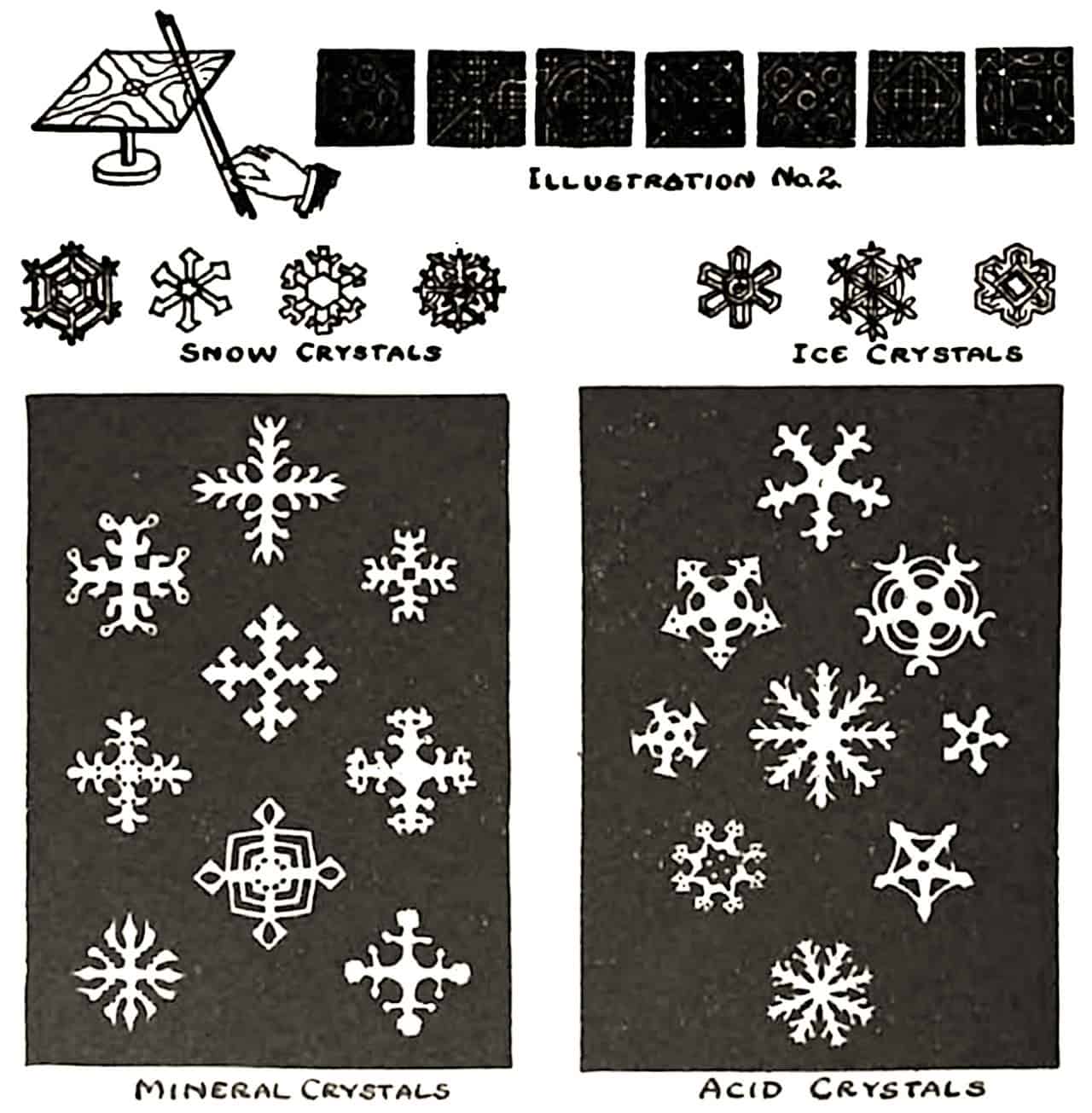
The experiments led Parkyn to investigate the influence of sound, light, vibration, and movement upon the mind. Drawing upon the ancient Greek concept of harmony and the Hermetic maxim “As above, so below,” he explored whether the same universal laws governed both the physical world and human consciousness. Working with electrical apparatus, musical vibrations were translated into visible geometric forms resembling flowers, shells, and other natural patterns. To Parkyn, these correspondences suggested that harmony expressed itself through sound, form, and living nature according to the same underlying principles, providing experimental evidence that the laws governing the external universe also operated within the human mind.
A Rosicrucian manual showing the investigation of cymatics
These investigations naturally led Parkyn to ask whether physical objects themselves could influence psychological processes. In 1900, he developed and patented the Magnetic Healing Cup, promoted as a concentrated “vital healing force” and described as “the last and greatest discovery of the nineteenth century.” Rather than simply marketing the device as a therapeutic product, Parkyn used it as a controlled psychological experiment. Distributed free of charge to patients who reported their conditions, the cups enabled him to collect observations on whether a tangible object, invested with therapeutic significance, could strengthen the effects of Suggestive Therapeutics by focusing the patient’s confidence, expectation, and belief. The experiment reflected Parkyn’s continuing effort to understand how external forms, physical symbols, and mental suggestion interacted according to the same universal laws he had been investigating through sound and vibration.
Parkyn’s experimental interests extended far beyond the treatment room. He investigated thought-transference, telepathy, muscle reading, blindfold demonstrations, and the psychological principles underlying so-called mind reading. Rather than presenting such phenomena as supernatural powers, he consistently sought natural explanations grounded in suggestion, unconscious muscular responses, heightened observation, and psychological influence. Public demonstrations frequently concluded with detailed explanations showing how apparently mysterious feats could be understood through scientific principles rather than occult forces. In this way, Parkyn attempted to separate legitimate psychical investigation from theatrical entertainment and popular superstition.
Parkyn experiments with suggestion at church. Link
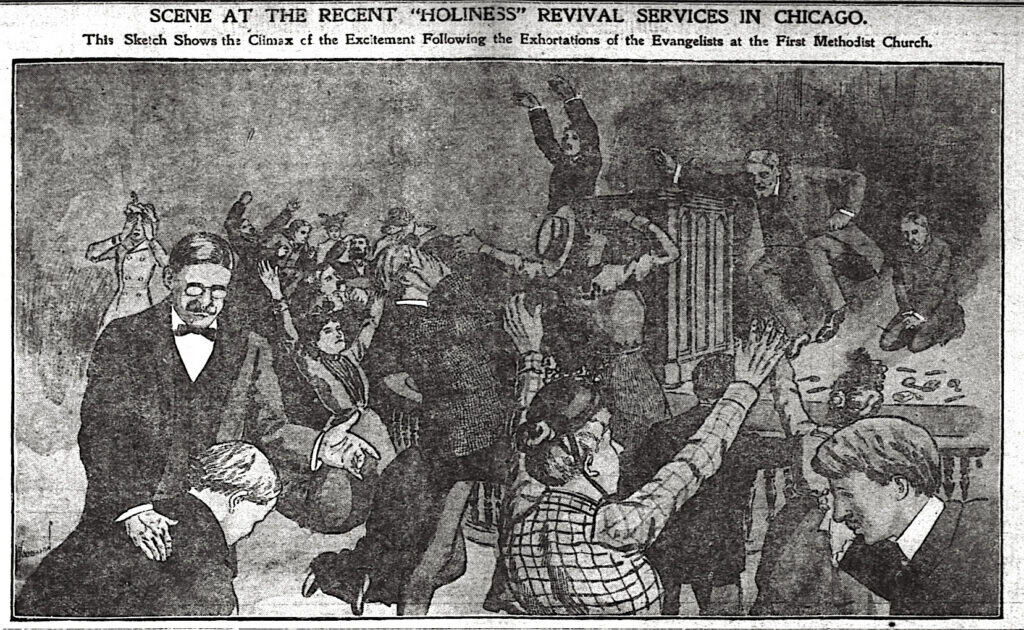
He likewise examined the psychology of religion and altered states of consciousness. Parkyn visited churches and religious revivals to observe the role suggestion played in faith healing, conversion experiences, and emotional religious expression, arguing that many extraordinary religious phenomena could be better understood through psychological law without diminishing the sincerity of those involved. His investigations also extended to the effects of hasheesh and other altered states, comparing chemically induced experiences with hypnosis in an effort to better understand the mechanisms of consciousness itself. To Parkyn, every unusual mental state represented another opportunity to investigate the laws governing the mind.
Parkyn becomes Chair of Suggestive Therapeutics at Grumbine’s College of Psychical Sciences and Unfoldment
By the fall of 1899, Parkyn had already established himself as one of America’s leading authorities on Suggestive Therapeutics. Yet while his public work remained firmly rooted in medicine and psychology, he had begun exploring a philosophical tradition that sought to understand the deeper laws governing mind, consciousness, and human development. This new direction led him to accept the position of Chair of Suggestive Therapeutics at J. C. F. Grumbine’s College of Psychical Sciences and Unfoldment, located only a few blocks from the Chicago School of Psychology at 3960 Langley Avenue.
JCF Grumbine of the order of the white rose
Grumbine’s institution differed markedly from Parkyn’s own school. Whereas the Chicago School emphasized the clinical study of suggestion, hypnosis, and therapeutic psychology, the College of Psychical Sciences presented a much wider curriculum devoted to psychometry, clairvoyance, inspiration, psychopathy, and what Grumbine termed his “Philosophy of Divinity.” It also served as the headquarters of the Order of the White Rose, a Rosicrucian fraternity whose advanced instruction drew upon Hermetic philosophy, comparative religion, and the esoteric traditions of both East and West. Through successive courses and the “Parlors of the Order of the White Rose,” students progressed into studies that promised to reveal “the secrets and mysteries of Magic and Occultism” while making “the mystic and potential powers of Divinity and Illumination” practical and operative. Membership in the Order was reserved for those who completed the full course of instruction and demonstrated mastery of its teachings. As Chair of Suggestive Therapeutics, Parkyn occupied a formal place within this educational environment and became closely associated with the Order itself.
Parkyn and Grumbine shared a conviction that genuine psychical research should be distinguished from what they regarded as the excesses of the contemporary occult revival. Grumbine criticized what he called the “occult rubbish” of the period, including the tendency within parts of the Theosophical movement to obscure practical truths beneath excessive “Oriental phraseology” and “mystic or cabalistic symbology.” Both men remained deeply interested in Hermetic philosophy and Hindu thought, but they believed these traditions contained enduring principles of natural law that should be understood through disciplined study and practical application rather than sensational mysticism.
Parkyn’s Hidden Pursuit of Esoteric Truth
The teachings put forward by the Order of the White Rose embodied the deeper esoteric dimension of the mental sciences that Dr. Parkyn was exploring and seeking to place on a scientific footing. Because the Chicago School of Psychology was established as the first institution to grant degrees in Suggestive Therapeutics, Parkyn carefully avoided including these esoteric doctrines in its curriculum, knowing that any association with Hermetic or mystical philosophy would invite censure from the medical profession. Yet while the public face of Parkyn’s teachings remained clinical, he would be actively engaged behind the scenes in starting institutes and publishing works that carried these teachings forward into the mental science and New Thought movement.
For Dr. Parkyn, the Hermetic doctrine of divine numbers and forms, joined with Hindu philosophy revealed the living structure of Natural Law itself. Suggestion was not simply a therapeutic technique but the outward expression of a universal principle. In the sacred geometry of the ancients and the metaphysics of the East he saw confirmation that thought, vibration, and form were inseparably linked, and that the laws governing them were as absolute as any in nature.
W. J. Colville, chair of Mental and Spiritual Science at the College of Psychical Sciences
Joining alongside Dr. Parkyn was the famed English-born author, spiritualist, and lecturer, W. J. Colville, who would serve as the chair of Mental and Spiritual Science at the College of Psychical Sciences and Unfoldment. Colville was a teacher at the affiliated Brooklyn School of Psychology and, similar to Parkyn, his teachings shared a core emphasis on inner causation, vibrational harmony, and the structured development of the self. Both men taught that healing, growth, and moral refinement were achieved by bringing the individual into alignment with universal laws, whether framed in spiritual or psychophysiological terms.
Both Colville and Parkyn taught that each individual responded to specific tonal frequencies and colors, and that healing could be significantly enhanced when these vibratory inputs were properly attuned in harmony through focused thought, color visualization, tonal resonance, and ethical alignment.
Their teachings were heavily influenced by the Seven Principles found in Hermetic and Hindu philosophy:
The Alchemical Tree of Life by Wolfgang Killian represents the Hermetic doctrine of the seven ancient levels of self-mastery. Parkyn and his colleagues sought to clarify and reformulate these ancient teachings into a demonstrable scientific system rooted in disciplined practice rather than mystical speculation.
Physical Body – (RED) The most apparent and “crudest” of the seven principles, forming the foundation for all others. It required good health, care, and discipline under the control of the mind.
Astral Body – (ORANGE) Also called the “ethereal” body, composed of finer matter that separated from the physical body at death. It retained the human form but had no life or intelligence, and was visible only to trained occultists
Vital Force(Prana) – (YELLOW) A universal life energy animating all living beings, which dispersed at death. It was the operative force in magnetic, mental, and absent healing, as well as in telepathy and thought transference.
Instinctive Mind – (GREEN) The seat of basic passions, desires, sensations, emotions, and appetites. It could be influenced by outside thought-waves to act without reason or reflection.
Intellect – (BLUE) Added reason to instinct, creating self-consciousness and deliberate will. It marked the early awareness of the Ego and could be developed through focused attention and vital energy.
Spiritual Mind – (INDIGO) Represented the soul’s impulse toward spiritual or cosmic consciousness. Associated with justice, compassion, and creative inspiration, it was viewed as the eventual destiny of all humanity.
Spirit – (VIOLET) The “Divine Spark,” representing full consciousness of Spirit. Moments of illumination at this level permanently transformed the individual, leaving a lasting recognition of the soul’s reality
The Psychic Research Company and a new direction
Parkyn’s time teaching with The College of Psychical Science and Unfoldment allowed for collaborative research with J. C. F. Grumbine and W. J. Colville, including the therapeutic use of sound and color harmony, concentration techniques for clairvoyance and mediumship, and methods to develop and test telepathy. This research was part of an initiative by Parkyn and Sydney Flower to shift their efforts away from simply promoting new schools of Suggestive Therapeutics and toward establishing a central hub for wide-scale research in the mental sciences. Parkyn had grown increasingly disillusioned with the methods employed by the Society for Psychical Research and sought a more disciplined, scientific approach to exploring the esoteric dimensions of mental science. Much of the experimental work he conducted with Grumbine and W. J. Colville would form the foundation for the methods and techniques later adopted in his own research efforts.
Parkyn envisioned building an international network of individuals dedicated to practicing and refining foundational skills such as concentration, awareness, and suggestion, intended to form the basis for focused research in esoteric practices such as; long-distance telepathy, absent healing, mediumship, and clairvoyance. This would be modeled in many ways on Grumbine’s school and the experimentations done under the Order of the White Rose. The goal was to collect data from a large and diverse participant base, while also generating credible material on topics that were being co-opted by fraudulent practitioners exploiting the growing New Thought audience.
The Psychic Research Company is established
With Parkyn still working to secure recognition for Suggestive Therapeutics within the professional medical field, there was a clear need for parallel research efforts capable of supporting large-scale experimentation and the collection of scientifically valid data. In response, the Psychic Research Company was established in June 1899 as a publishing house that would distribute research materials, document results, and publicly publish its findings. The establishment of the Psychic Research Company marked the first step toward creating an affiliated University of Psychic Science, regional Schools of Psychic Science, and even a Psychic Club to organize and support a community of committed participants. The company would be funded by J. V. Daniels and his family. They were longtime associates with Parkyn, and their story is under his bio on the people’s page. Daniels would become the main link to Europe for the network.
The Psychic Research Company Releases a Series of Mail Courses
In early 1900, under the new banner of the Psychic Research Company, a wide array of mail-order courses were released covering nearly every topic associated with the mental sciences of the New Thought movement. These included instruction in Hypnotism, Mesmerism, Personal Magnetism, Clairvoyance, Telepathy, Absent Healing, Mind Reading, Mediumship, Concentration, Self-Culture, Auto-Suggestion, and Zoism (a breathing technique course built off of the term ozone)
Mediumship course by the Psychic Research Co., 1900. While the course advertises that you can become a medium, it was really just an exposé on the clever tricks used by well-known stage performers.
The series was intended to establish the company’s presence in these rapidly expanding fields before competing practitioners could do so, while also creating a broad network of students who could participate in ongoing experiments and investigations. At the same time, many of the courses sought to demystify popular psychic claims. Subjects such as Mind Reading and Mediumship explained the methods behind well-known public demonstrations, presenting them as techniques of suggestion, psychology, observation, and misdirection rather than evidence of supernatural powers. Although most of the courses were published anonymously, many were actually written by Parkyn, Sydney B. Flower, J. V. Daniels, Lloyd Kenyon Jones, and other longtime associates. Additional authors were recruited through newspaper advertisements placed by Flower seeking writers with experience in psychic science and related subjects.
Parkyn was the anonymous author of the Mind Reading course
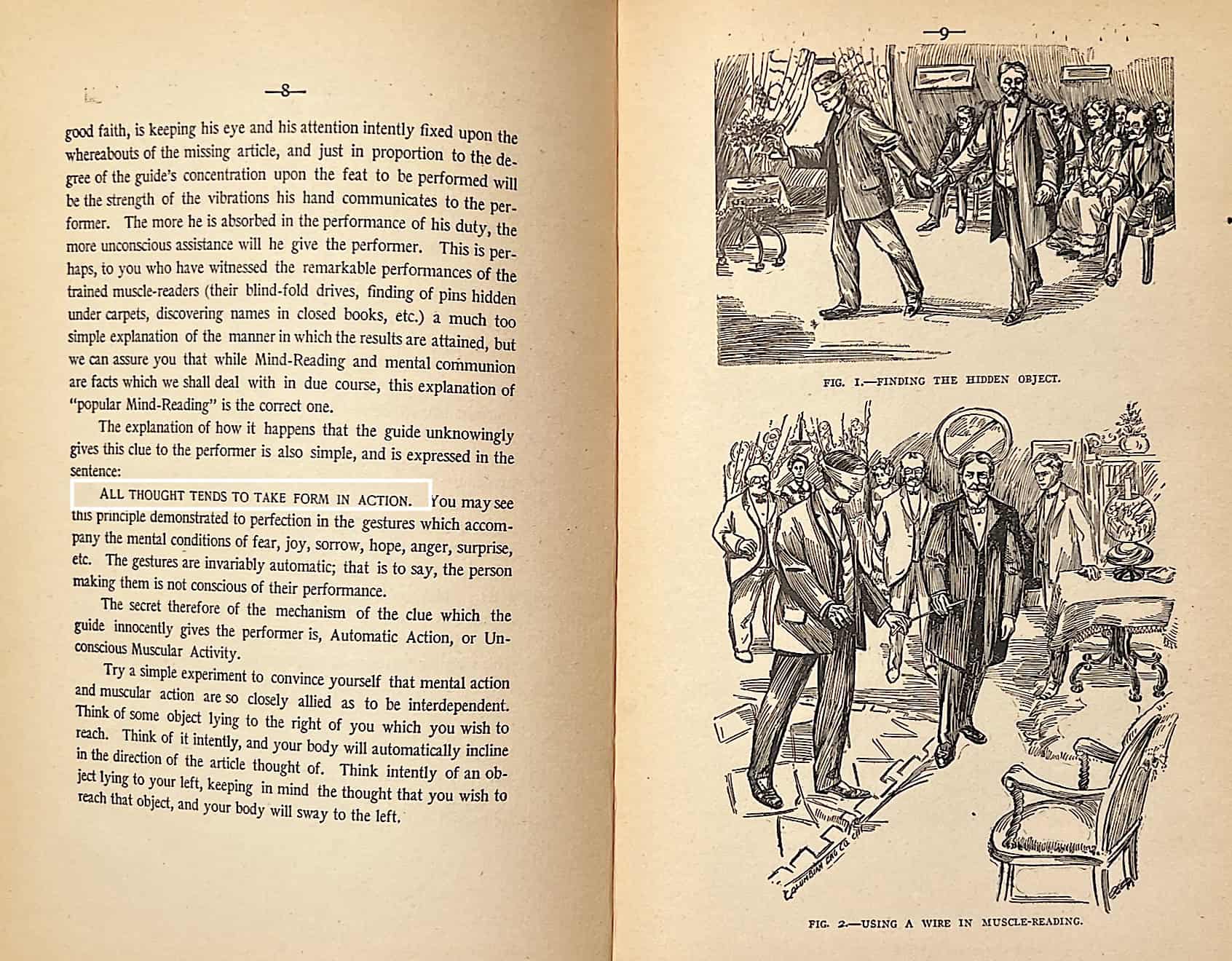
While the Mind Reading course was published anonymously, it was actually authored by Herbert A. Parkyn. It featured his signature phrase, “thought tends to take form in action,” used exactly as in his original mail course and worked as a continuation for the several chapters he had included in his mail course on stage hypnotism. The book included many illustrations clearly showing Parkyn himself conducting muscle reading experiments inside his Chicago School of Psychology. It followed exactly Parkyn’s lesson structure and therapeutic goals, presenting the structure of the mind and emphasizing repetition in a manner that mirrors his writings. Releasing these works anonymously allowed Parkyn to include ideas that would not have been appropriate to address in a formal medical context.
The Mind Reading course, published by the Psychic Research Company, shows Dr. Herbert A. Parkyn’s experiments at his Chicago School of Psychology and includes his famous quote, “Thought tends to take form in action.”
Parkyn, Flower, and Stanley L. Krebs Expose the Bangs Sisters
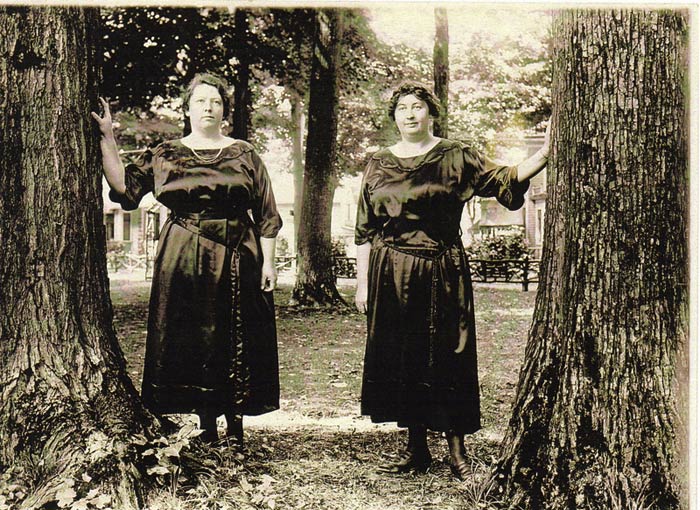
As part of the Psychic Research Company’s effort to investigate and publish the truth behind the psychic abilities claimed by prominent public figures, the group conducted a series of investigations into some of the era’s best-known mediums and psychics. Between the summer of 1899 and the spring of 1900, Dr. Parkyn, Flower, and Stanley L. Krebs conducted a systematic investigation of the famous Bangs Sisters, Chicago spiritualist mediums renowned for their slate-writing séances and “spirit portraits.” Convinced that the sisters’ demonstrations relied on deception rather than genuine clairvoyance, the three men worked to uncover and publicly expose the methods behind the performances.
The Bangs Sisters
Flower began the investigation by attending fifteen séances, bringing his own slates and sealing them with screws, string, and wax. Whenever the slates could not be secretly opened, no spirit messages appeared. Although he concluded that the phenomenon depended upon the mediums’ ability to manipulate the slates unnoticed, he was unable to determine exactly how the trick was performed.
Building on Flower’s work, Parkyn arranged a controlled sitting of his own. By carefully observing every movement, he discovered that the sisters secretly removed the sitter’s sealed letter through a narrow gap between the slates, passed it under a door to an accomplice in the adjoining room, and later returned it after the questions had been copied, answered, and the envelope expertly resealed. To independently verify the method, Parkyn invited his former student Stanley L. Krebs, then a leading investigator with the International Society for Psychical Research, to attend another séance equipped with a concealed mirror. Krebs confirmed Parkyn’s observations in every essential detail and concluded that the performance depended entirely upon sleight of hand, careful preparation, and distraction rather than supernatural powers.
On April 11, 1900, Parkyn publicly demonstrated the illusion before fifteen students at the Chicago School of Psychology. With his father, James Parkyn, serving as the hidden accomplice, he successfully reproduced the entire effect, even improving the method by replacing the wedge used by the Bangs Sisters with a nearly invisible loop of black thread. The demonstration showed that one of the era’s most celebrated spiritualist phenomena could be recreated through ordinary conjuring techniques, reinforcing Parkyn’s longstanding view that extraordinary psychic claims should be tested through controlled scientific investigation.
The University of Psychic Science
In early 1900, Dr. Parkyn established the University of Psychic Science as the educational and experimental headquarters for the investigations being conducted by the Psychic Research Company. Located at 3975 and 3977 Cottage Grove Avenue, just around the corner from the Chicago School of Psychology, it occupied offices above Oakland Music Hall, where lectures, demonstrations, and instructional programs were held. The university coordinated teaching, public lectures, and experimental research across Parkyn’s growing network of educational enterprises, with plans to establish affiliated Colleges of Psychic Science throughout the United States and abroad. The long-term vision was to unite these institutions into a single educational campus. When New Thought magazine was later established, its headquarters were moved to 3835 South Vincennes Avenue, only three blocks away.
William Walker Atkinson’s Arrival
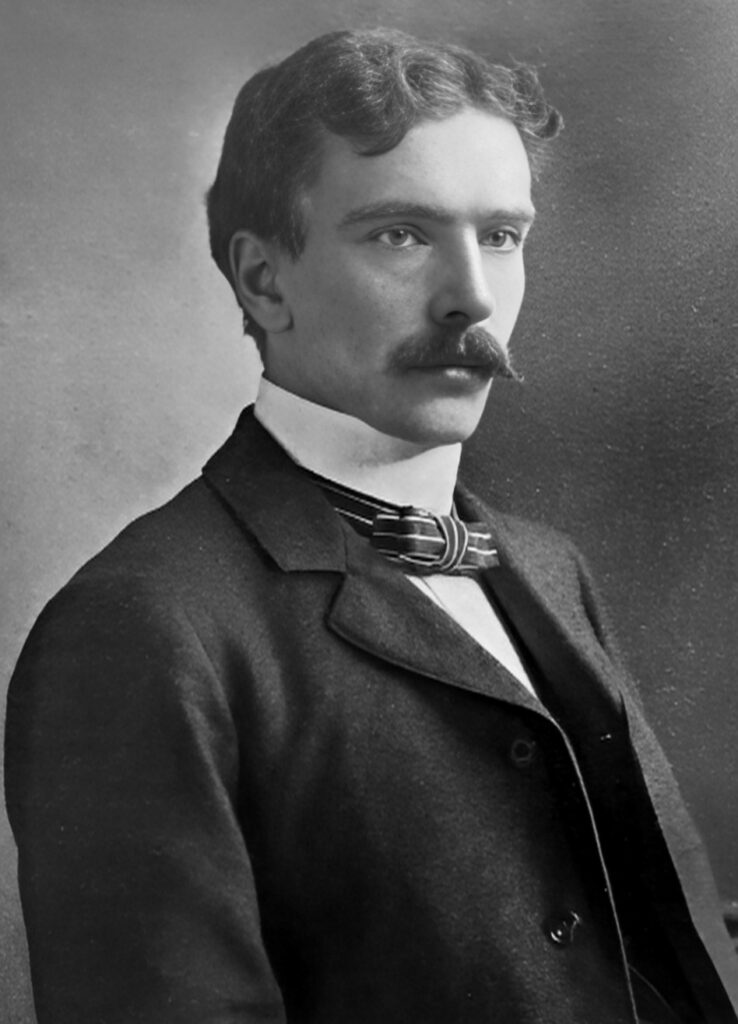
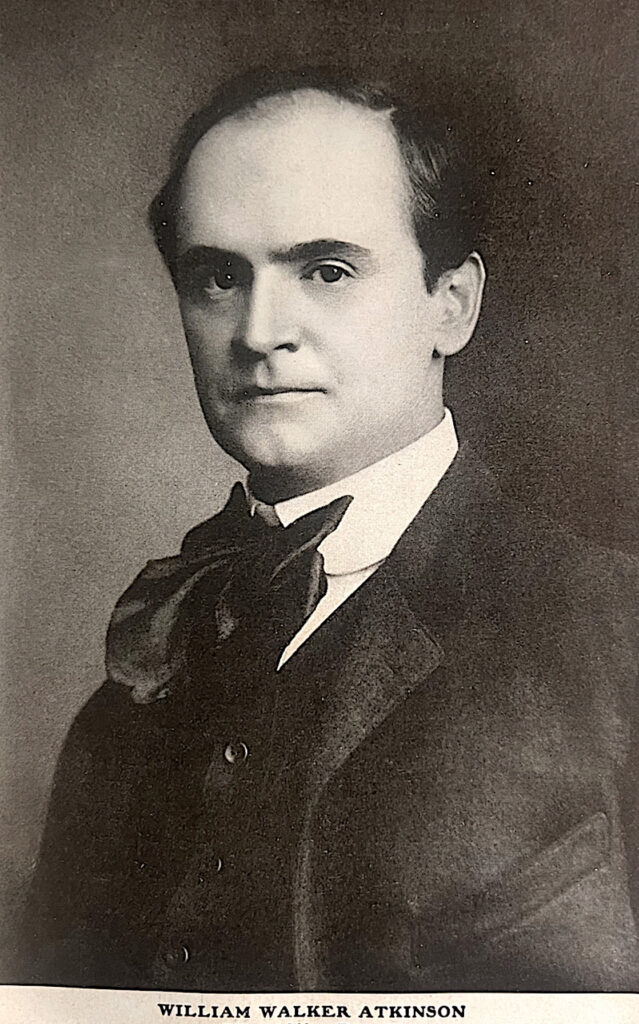
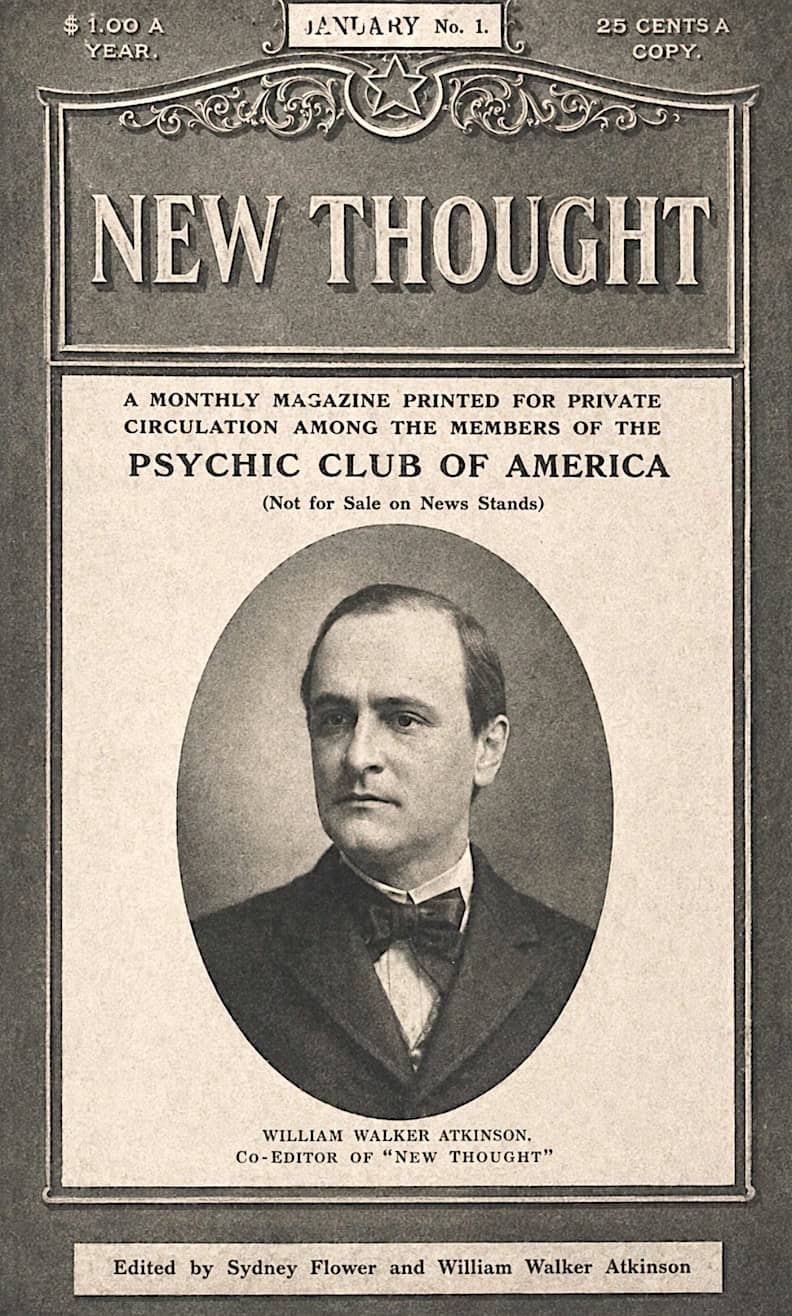
William Walker Atkinson
William Walker Atkinson entered this network during the summer of 1900 under circumstances very different from the later accounts that presented him as an established authority arriving independently in Chicago. His legal and business career had collapsed after a prolonged period of emotional and physical strain. On May 9, 1900, he disappeared from his office in Philadelphia, leaving behind his family and professional responsibilities. He reappeared six weeks later at the New York office of his employer, claiming that much of the intervening period was lost to memory except for a vague impression of Chicago.
The surviving evidence places Atkinson in Chicago during those missing weeks and identifies him in a formal photograph of the July 1900 graduating class of Parkyn’s Chicago School of Psychology. The most likely sequence is that Atkinson first received treatment through Parkyn’s clinic and then entered the school as a student. This interpretation also explains the speed with which he became involved in Parkyn’s institutions after relocating his family to Chicago. He did not arrive as an experienced New Thought teacher. He arrived following a mental collapse and was introduced to the system that would become the basis of his writing career.
Atkinson was soon placed at the University of Psychic Science, where he began lecturing on the power of the will, mental control, thought-force, vibration, thought-transference, and related subjects. His central lecture series became Thought = Force in Business and Everyday Life. The course translated Parkyn’s psychological teachings into a more dramatic and accessible form intended for the ordinary New Thought reader rather than the physician.
Parkyn did not present himself as the public teacher of this metaphysical branch. Atkinson became the visible lecturer and writer, while Parkyn remained behind the institution, directing the course of instruction and shaping its underlying system. The University of Psychic Science therefore served as the first controlled setting in which Parkyn’s Suggestive Therapeutics was reworked into the form that would later be recognized as Atkinson’s New Thought philosophy.
Atkinson Joins Suggestion
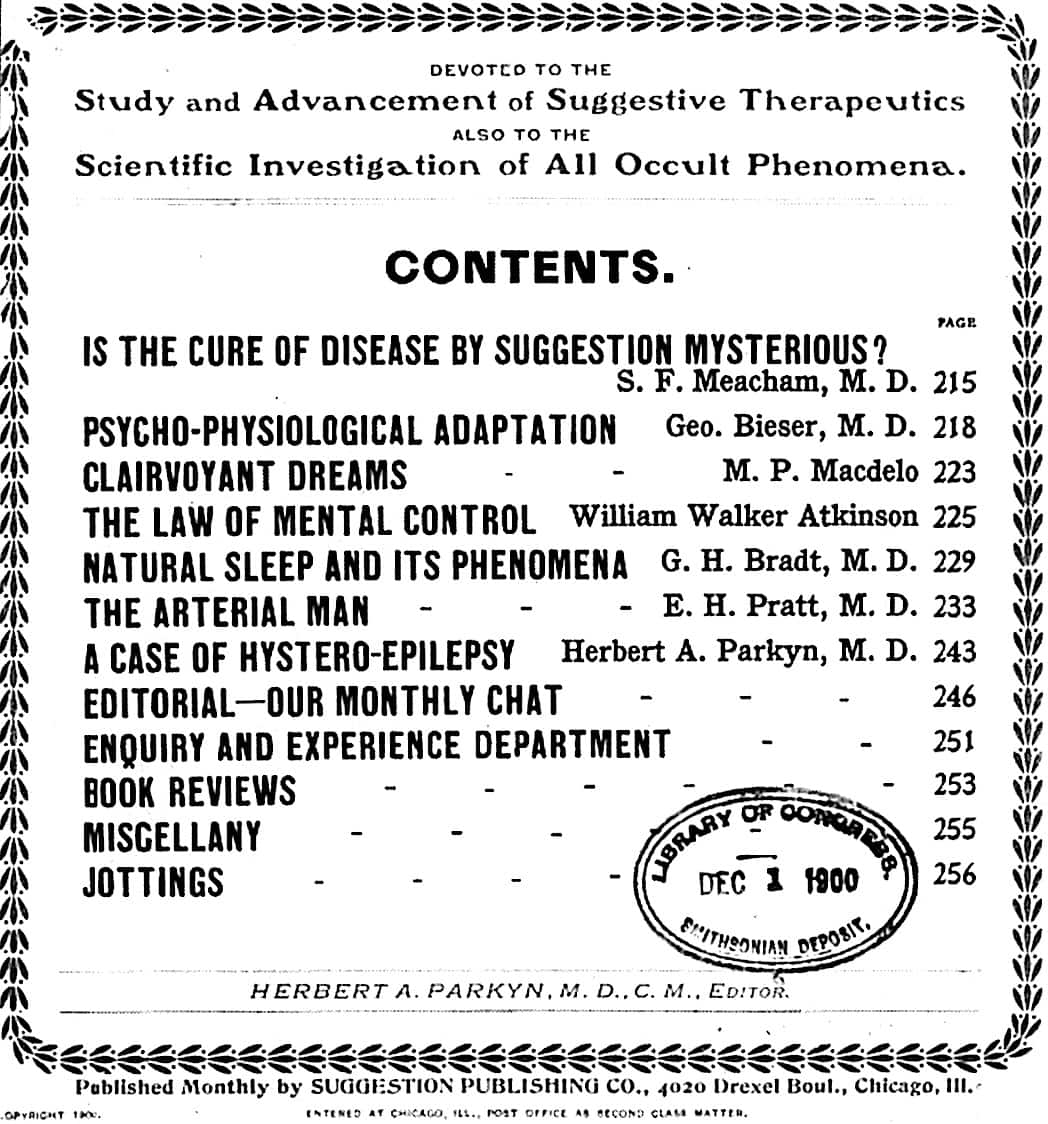
Atkinson’s first credited article in Parkyn’s Suggestion magazine appeared in December 1900 under the title “The Law of Mental Control.” It was followed by “The Functions of the Mind,” “The Real Self,” “Character Building by Mental Control,” “I Can and I Will,” and a continuing series on thought, will, character, and personal development. These articles did not merely report the clinical use of suggestion. They placed Parkyn’s teachings within inspirational narratives of self-mastery, spiritual development, hidden mental power, and almost limitless achievement.
Atkinson’s first published work on the New Thought in Suggestion Dec 1900
The difference in style was deliberate. Parkyn’s professional articles were directed largely toward physicians and serious students of psychology. Atkinson’s articles carried the same basic system to a popular New Thought audience that might have found the clinical material too technical. He filled the teachings with symbolic imagery, quasi-religious language, occult references, and forceful declarations of personal power, while repeatedly insisting that the results arose from natural law rather than supernatural intervention.
Parkyn actively cultivated this new voice. Suggestion introduced Atkinson to its readers as an experienced investigator and gifted writer even though only a few months had passed since his arrival in Chicago. The presentation gave him immediate authority and operated as a form of masked suggestion: readers were encouraged to accept the newly introduced writer as an established expert before they had any reason to question his background. The resulting style became so distinctive that Parkyn and others began referring to it as “Atkinsonia.”
Atkinson’s articles were soon reprinted in newspapers and journals outside Chicago. Readers within the New Thought movement responded enthusiastically to the combination of practical mental training, spiritual imagery, and promises of personal transformation. The writings gave Parkyn’s psychological system a form that could travel far beyond his school and medical practice.
The Creation of the Psychic Club and New Thought
The Psychic Club
Sydney Flower remained a central participant in this transition. He had already spent years working with Parkyn as a student, lecturer, interviewer, editor, publisher, and collaborator. Through the Psychic Research Company and the University of Psychic Science, Flower helped establish the organizational structure through which the more metaphysical side of Parkyn’s work could be developed without compromising the Chicago School’s medical identity.
In March 1901, Parkyn and Flower created the Psychic Club as a private association for investigators and practitioners who wished to exchange reports and participate in coordinated experiments. In May, Flower opened an affiliated School of Psychic Science in the Equitable Building, where he taught classes three evenings each week. The club initially maintained a reading room, distributed Psychic Research Company courses, and supplied books and pamphlets on mental science and psychic phenomena. It was soon reorganized as the nonprofit Psychic Club of America, with no dues or financial obligations, and attracted more than five thousand members during its first several months.
The Club adopted the ideal of forming a worldwide brotherhood of “Seekers after Truth under One Banner.” Its creed asked members to direct blessings of “health, happiness and success” toward all people and things. Members were also supplied with explanations of fraudulent mediumistic tricks, following Parkyn and Flower’s continuing effort to separate genuine psychological and psychic investigation from commercial deception.
The next major step was the creation of New Thought magazine. It continued the policy of adopting terminology already becoming popular with the public. Just as Parkyn and Flower had previously moved from Hypnotic Magazine to Suggestive Therapeutics and then Suggestion, the title New Thought identified the publication with the term increasingly used to describe the movement they were helping to shape.
William Walker Atkinson became the magazine’s principal writer and public voice. Many of his earlier articles from Suggestion were reprinted, and he continued converting Parkyn’s teachings into the “Atkinsonia” form developed under Parkyn’s direction. Thought = Force in Business and Everyday Life became one of the magazine’s chief promotional texts and was used as a premium for members of the Psychic Club. The 1901 edition had openly recommended Parkyn’s works as the best source for further study of hypnotic suggestion. In the 1902 edition, that recommendation was changed to the publications of the Psychic Research Company, avoiding the appearance that New Thought existed merely to promote Parkyn personally while leaving the underlying course essentially unchanged.
The close relationship between the publications was not concealed from readers familiar with the network. New Thought was heavily promoted in Suggestion, including extended articles describing its contributors and contents. Such treatment would have been highly unusual for a true rival. The two journals served different audiences and functions within the same developing movement: Suggestion preserved the authority of Parkyn’s medical and psychological work, while New Thought carried its principles into a more openly metaphysical and popular setting.
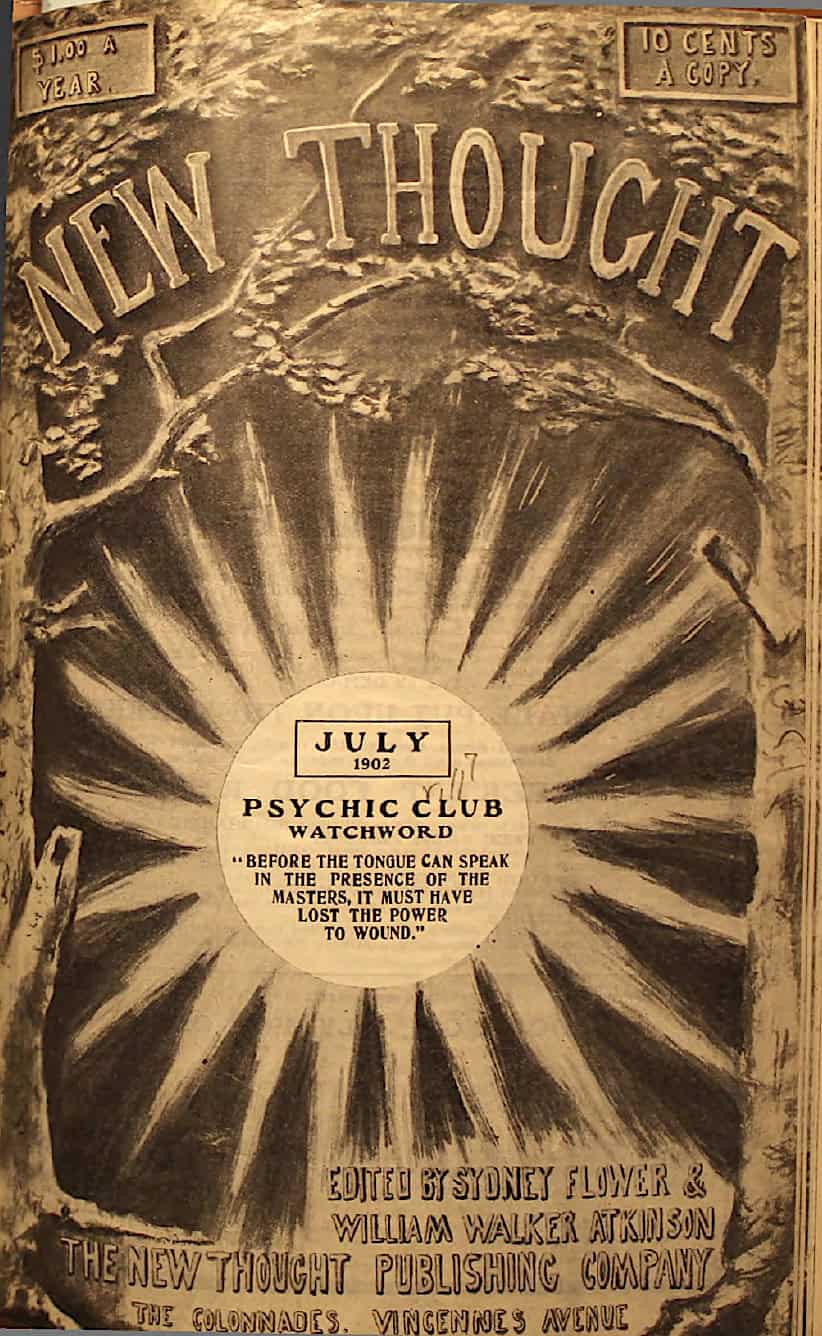
New Thought Magazine January 1902New Thought magazine
The “Suggestion Family”
By 1903, Parkyn’s network extended well beyond his own institutions. He referred to the writers, publishers, students, lecturers, and practitioners connected with Suggestion as the “Suggestion Family.” This was not simply a sentimental name for the magazine’s subscribers. It described a working alliance of publications and personalities that exchanged articles, advertising, endorsements, books, students, and public support. One of the most important relationships was with Elizabeth Towne, publisher of The Nautilus. Early exchanges between Towne and Parkyn included humorous editorial teasing, but they quickly developed into mutual respect and active cooperation. The Nautilus began carrying advertisements for Suggestion, Parkyn’s books, Atkinson’s Thought = Force, the Psychic Research Company, Parkyn’s schools, and publications issued by others within his circle. At times, a substantial share of the magazine’s advertising came from Parkyn and his associates. Suggestion, in turn, regularly featured Towne and promoted her work.
Elmer Ellsworth Carey Joins Parkyn
Elmer Ellsworth Carey of Suggestion magazine
A major addition to the network came in 1903 with the arrival of Elmer Ellsworth Carey. Carey had worked for years as a journalist, editor, publisher, lecturer, and promoter in California, Hawaii, and the Philippines. He had also traveled extensively through the Far East, where he developed a sustained interest in Eastern philosophy, occultism, diet, hygiene, breath control, and systems of physical and mental discipline. After returning to San Francisco, Carey became involved with the Theosophical Society and the Vedanta Society formed during Swami Vivekananda’s visit to the city. He also wrote analytical newspaper articles on mental science and contemporary psychological theories. His combination of editorial experience, Eastern studies, business ability, and interest in mental science brought him into contact with Parkyn. He began contributing to Suggestion in February 1903 and moved to Chicago that spring to study at the Chicago School of Psychology and join the magazine’s staff.
In May, Parkyn appointed Carey assistant editor and manager of Suggestion, as well as his personal representative in several ventures. Parkyn praised the speed with which Carey understood and began executing his plans, while Carey’s first editorial identified Parkyn himself as the quality that separated Suggestion from every other mental-science journal. In Carey’s description, the magazine’s authority came from the combination of Parkyn’s medical training, clinical experience, knowledge of the mind, and practical teachings concerning the “life essentials.” Carey’s knowledge of Eastern traditions would also become important as Parkyn’s network moved into the publication of Yogi literature.
Organizing Union New Thought
The movement’s publishers and teachers had discussed the need for a representative organization and national conventions for several years, but rivalries and doctrinal differences had repeatedly prevented lasting unity. By 1903, Parkyn’s Chicago network possessed the publishing strength, personal relationships, and organizational reach necessary to bring many of these groups together. The immediate catalyst was a banquet held in May 1903 during a visit by Elizabeth Towne. Parkyn, Carey, Flower, and Atkinson brought together members of Chicago’s many New Thought circles at the Masonic Temple. The gathering demonstrated that groups which had previously worked separately could meet cooperatively under a shared identity. It was followed by plans for regular Union New Thought meetings and a larger convention.
On June 28, 1903, approximately twelve hundred people assembled at the Masonic Temple for the formal organization of Union New Thought. The organization was designed not to impose a single theology but to provide a cooperative structure through which the different branches of New Thought could exchange ideas, coordinate activities, and present a united public presence. Parkyn’s role reflected the same method he had used throughout this period: he supplied much of the organizational structure while allowing prominent writers, lecturers, and editors within his circle to occupy the visible positions. The Chicago meetings were followed by major New Thought conventions, including Chicago in November 1903, St. Louis in 1904, and Nevada, Missouri, in 1905. These events linked Parkyn’s “Suggestion Family” with the principal organizations and personalities of the movement throughout the United States.
The Yogi Publication Society
Yogi Publication Society at 4000 Cottage Grove
In 1903, Dr. Parkyn, in collaboration with William Walker Atkinson and Elmer Ellsworth Carey, established the Yogi Publication Society to publish books and lessons on yogic philosophy, a subject of deep interest to Dr. Parkyn and the New Thought movement. The purpose of these works was to reveal the principles of the Law of Suggestion within the ancient teachings of Hinduism on the power of the mind, health, breathing, water consumption, diet, and hygiene. The death of Swami Vivekānanda in 1902 at the age of thirty-nine created a sudden void in the transmission of Hindu philosophy and its connection to New Thought ideas. A decade earlier, his electrifying speeches at the Parliament of the World’s Religions in Chicago had awakened widespread Western interest in Eastern mysticism. Dr. Parkyn had long studied the principles of Yogic philosophy and since his time at Grumbine’s College of Psychical Science and Unfoldment had regarded Vedanta as one of the clearest and most refined expressions of the Law of Suggestion within any spiritual system.
The creation of the Yogi Publication Society was intended to carry these teachings forward and establish them firmly within the New Thought movement. Under Parkyn’s guidance, Atkinson and Carey sourced material from existing traditions and developed new material specifically to introduce New Thought audiences to Hindu philosophy, presenting it with accessible interpretations in the familiar language of the movement. They drew on the teachings of Swami Vivekananda, the Order of the White Rose, and the Theosophical Society, blending them with Parkyn’s own system of mental science and physical culture. Carey added his extensive firsthand knowledge of Eastern traditions, gained through years of travel in Southeast Asia and immersion in Far Eastern philosophies, while Atkinson shaped the work into a straightforward and inspiring narrative. Although the Yogi Publication Society operated from Parkyn’s offices at 4000 Cottage Grove Avenue, official ownership was placed under Atkinson’s name, creating a deliberate distance that kept both Parkyn and Carey formally removed from the venture because of their affiliation with the Chicago School of Psychology
From Movement to Enterprise
Beyond the Chicago School
Parkyn’s growing interest in publishing coincided with an equally ambitious expansion into business and investment. Unlike many physicians who viewed commercial activity as separate from their professional work, Parkyn regarded successful enterprise as another expression of organization and practical psychology. Financial independence provided the resources necessary to sustain educational institutions while allowing ambitious projects to develop beyond the limitations imposed by tuition and book sales alone.
Beginning in the early years of the twentieth century, Parkyn and his father, James Parkyn, became increasingly involved in large-scale investment opportunities in Mexico. Their interest was hardly accidental. The family possessed generations of experience in agriculture, milling, transportation, and industrial development dating back to William Parkyn’s enterprises in Canada. As American investment flowed southward during the administration of Porfirio Díaz, the Parkyn family recognized opportunities that closely matched their own experience in agricultural production and land development.
The first major undertaking emerged through Parkyn’s cousin, Horatio Nelson Jackson, who had begun acquiring mining properties in northern Mexico. Encouraged by the success of these ventures, James Parkyn traveled extensively through the country investigating agricultural opportunities. Working with a group of Chicago businessmen, the family organized the La Luisa Plantation Association, a large agricultural enterprise devoted to sugar, coffee, and rubber production. Herbert served on the board of directors while his father became the principal promoter of the project, advertising its stock offerings through newspapers and the publishing network already associated with the Parkyn family.
The Motzorongo Plantation
The overwhelming response to the La Luisa investment campaign soon made possible an undertaking on an entirely different scale. The association acquired the Motzorongo Plantation in Veracruz, formerly the estate of General Carlos Pacheco, one of Mexico’s most prominent political leaders. Covering approximately 165,000 acres, more than 250 square miles, it became the largest American-controlled agricultural estate in Mexico at the time.
Large ad for Dr. Parkyn’s Motzorongo Plantation investment in Mexico
The project reflected Parkyn’s characteristic approach to organization. Rather than assembling investors solely from financial circles, he drew together an unusually diverse network that included industrialists, educators, ministers, publishers, businessmen, fellow members of the Order of Elks and Knights Templar, and numerous associates from the New Thought movement. Among the participants were nationally recognized manufacturers, bankers, religious leaders, and longtime collaborators who had previously worked with Parkyn through educational, publishing, and professional organizations.
Unlike many contemporary land companies, the Motzorongo Plantation was promoted not merely as a speculative investment but as a cooperative enterprise built upon principles of productive labor, fair treatment, and long-term community development. Advertisements emphasized clean worker housing, regular wages, modern agricultural methods, and opportunities for investors to inspect the property personally. These themes closely paralleled the language Parkyn had long employed in his educational work, where cooperation, individual improvement, and practical progress were presented as complementary ideals.
The Parkyn family maintained a controlling financial interest in the enterprise. Herbert distributed much of the family’s investment among his father, mother, sisters, and wife, ensuring that they retained majority voting control over the company. Additional investments came from members of the Jackson and Atkinson families as well as readers of Suggestion magazine who had followed Parkyn’s work for years. To provide direct supervision, James Parkyn relocated to the plantation and assumed responsibility for day-to-day operations, bringing decades of agricultural and milling experience to the developing enterprise. He would die at the plantation in 1909 from typhoid.
The Death of his wife, Aura Parks
On December 18, 1902, Parkyn married Aura Parks, a former patient whom he had treated for nearly two years following the suicide of her first husband. Known as a woman of beauty and refinement, Aura had inherited a substantial estate from her late husband and appeared to have recovered from the melancholia that had first brought her under Parkyn’s care. Their marriage, however, was tragically brief. In April 1905, less than two and a half years after their wedding, Aura took her own life following the death of her mother, an event that triggered a severe recurrence of the mental illness from which she had long suffered.
The tragedy quickly became a national newspaper sensation. Reports spread rapidly across the Midwest and beyond, alleging jealousy, financial misconduct, and neglect on Parkyn’s part. As the story circulated, many newspapers treated rumor as fact, repeating increasingly sensational accusations that bore little resemblance to the actual circumstances of Aura’s death. Her attorney publicly stated that Parkyn had exercised no control over her financial affairs, but the allegations continued to spread. Months later, one of the principal newspapers responsible for the story issued a full retraction and apology, acknowledging that its reporting had been based upon false information supplied by a correspondent and admitting that Dr. Parkyn bore no responsibility for his wife’s death. The paper further recognized that Aura had suffered a sudden recurrence of the same mental illness that had afflicted her before their marriage.
A newspaper article with a full retraction of the slander of Herbert A. Parkyn and the case of his wife, Aura Parks’ suicide
The episode profoundly affected Parkyn. Throughout his career he had emphasized the power of suggestion to influence individual thought and behavior. Now he witnessed those same psychological forces operating on a national scale through sensational journalism. In 1906 he devoted a six-part series in Suggestion magazine to condemning what he regarded as the irresponsible practices of the press, arguing that newspapers had become one of the most powerful, and most dangerous, forms of suggestion acting upon the public mind. For Parkyn, the experience was deeply personal, demonstrating how quickly false impressions could be implanted in public opinion and how slowly truth could overcome them once widely repeated.
Parkyn publishes his book Auto-Suggestion
Herbert A. Parkyn’s 1905 book Auto-Suggestion
Rather than withdrawing from public life, Parkyn responded by completing what would become the most influential book of his career. Published in the fall of 1905, Auto-Suggestion: What It Is and How to Use It for Health, Happiness and Success represented the culmination of nearly a decade of clinical practice, experimentation, and teaching. Much of the volume consisted of articles that had originally appeared in Suggestion magazine, carefully revised and organized into a systematic presentation of the principles Parkyn had been developing since his earliest investigations in Toronto and Minneapolis.
In Auto-Suggestion, Parkyn argued that the same psychological principle underlay every successful method of healing and self-improvement. Whether expressed through medicine, religious faith, mental healing, magnetic treatment, or personal discipline, the active force was the individual’s own auto-suggestion. He maintained that this process operated continually, shaping health, habits, emotions, character, and ultimately the direction of one’s life. By consciously directing these internal suggestions, individuals could overcome fear, eliminate destructive habits, improve health, and cultivate success. The book distilled years of observation into a practical system that could be applied by ordinary readers, making one of the most complex aspects of Parkyn’s psychology accessible to a wide audience. Within two years it had sold more than thirty thousand copies and became his most enduring publication.
Henry Clay Hodges and the Next Chapter of Suggestion
In November 1906, Dr. Parkyn surprised his readers by announcing that he had sold Suggestion magazine to Henry Clay Hodges, a wealthy Detroit industrialist and longtime member of Parkyn’s inner philosophical circle. In his farewell editorial, Parkyn explained that the decision had not been made because of a loss of interest in psychology or the New Thought movement. Rather, he had made a promise several years earlier to assist a close personal friend in financing an important business enterprise, and he believed the demands of that undertaking would make it impossible to continue directing the magazine. With genuine regret, he concluded that the only responsible course was to place Suggestion in trusted hands.
Henry Clay Hodges
Parkyn assured his readers that his departure did not represent a withdrawal from the mental sciences. He emphasized that he intended to continue his research and writing and promised that readers would still hear from him from time to time. More importantly, he expressed complete confidence that Hodges would preserve the character of the publication while expanding its influence through the considerable resources at his disposal.
Hodges was a relative
Parkyn’s confidence in Hodges was rooted in far more than business ability. Hodges was one of Detroit’s best-known industrialists, having amassed a fortune through insurance, manufacturing, real estate, and transportation enterprises. He was also closely connected to Parkyn through both philosophy and family history. Hodges belonged to what Parkyn often referred to as the “Suggestion Family” and shared the same commitment to the principles that had guided the magazine since its founding. The relationship extended even further. Hodges’ paternal great-grandmother was a Jackson, making the Hodges and Jackson families longtime acquaintances dating back to Petersham, Massachusetts, before both families eventually established themselves in the Burlington, Vermont region. Their professional histories also paralleled one another. While Parkyn’s grandfather had pioneered steamship construction on the St. Lawrence River, Hodges built steamboats for the Great Lakes and St. Lawrence trade, creating another connection between the two families.
Hodges kept the mission of Suggestion the same and filled it with longtime Parkyn collaborators
When Henry Clay Hodges assumed control, he deliberately preserved the publication that Parkyn had built. The magazine’s declaration of principles remained unchanged, and the only major editorial changes were the adoption of the new title, The Stellar Ray, reflecting Hodges’ interest in astrology, and the addition of an astrology department. Everything else remained substantially intact. As the direct successor to Suggestion, The Stellar Ray continued to serve as the central voice of the same “Suggestion Family,” while Hodges used his considerable financial resources to expand the magazine’s size and scope.
Rather than replacing Parkyn’s editorial circle, Hodges filled the enlarged publication with many of Parkyn’s longtime associates. Edgar L. Larkin headed the Department of Psychic Research, J. C. F. Grumbine directed the Department of Psychical Sciences and Unfoldment, Charles Brodie Patterson edited the Department of New Thought, and the magazine continued to publish contributions from familiar writers including Ella Wheeler Wilcox, Eleanor Kirk, and Yogi Ramacharaka. The continuity of both its contributors and its editorial mission demonstrates that the transition from Suggestion to The Stellar Ray represented an expansion of Parkyn’s publishing network rather than the creation of a new movement.
Parkyn closes the Chicago School of Psychology
The decision also brought the Chicago School of Psychology to a close in mid 1907. For more than ten years, the school had served as the leading teaching institution and experimental laboratory for Suggestion. By the time it closed, more than a hundred institutions were teaching Suggestive Therapeutics across the country, many of them opened by Parkyn’s network of collaborators.
The Black Sand and Gold Recovery Company
For many readers, Dr. Parkyn’s decision to leave Suggestion magazine appeared to mark a dramatic departure from psychology and the New Thought movement. In reality, the transition had been developing quietly for several years. Long before announcing the sale of the magazine, Parkyn had become deeply involved with a group of inventors, engineers, and businessmen who believed they had solved one of the greatest unsolved problems in American mining, the profitable recovery of gold and other valuable minerals from the vast black sand deposits of the Pacific Coast.
At the center of the enterprise was Thomas J. Lovett, one of Parkyn’s closest friends and neighbors. Lovett lived directly across Drexel Boulevard from Parkyn’s school and residence at 4001 Drexel Boulevard, while another close associate, John H. McFarland, also lived in the same building. The three men became close companions through the Oakland Club, later known as the Waupanseh Club, located only a half block down on Drexel. The club served as a gathering place for many of Chicago’s leading businessmen, inventors, and professionals, providing an environment where scientific ideas, inventions, and commercial ventures were discussed alongside politics and social affairs.
First formed the North Shore Reduction Company in 1903 with Sydney B. Flower
In 1892, Lovett had first patented his magnetic separator capable of extracting magnetic iron from black sand, but the opportunity to commercialize the invention didn’t emerge until 1903 after a Canadian government investigation confirmed that the black sand deposits along the north shore of Lake Superior contained enormous quantities of valuable minerals. Convinced that Lovett’s patented process offered the first practical means of exploiting this resource, Parkyn helped organize the North Shore Reduction Company in 1903 with Lovett, Sydney B. Flower, and a group of prominent businessmen from Chicago and Minneapolis.
Promotion of this earlier venture and solicitation of investors were conducted through New Thought magazine, with Sydney B. Flower serving as fiscal agent and using the magazine’s large subscription base. Flower, however, proved to be an unsuitable choice for managing the company’s finances. Instead of forwarding the invested funds to the company for the development and perfection of the process, he diverted nearly $100,000 into speculative horse-race gambling and high-risk stock market investments. The resulting loss of capital forced the Canadian operation to close and sent Flower into hiding. Having appointed Flower as fiscal agent, Parkyn accepted responsibility and assured Lovett and investors that, once an investigation by the United States government had been completed, he would personally assume the role of fiscal agent.
A 1903 ad for the Lovett Magnetic Separator with Sydney Flower as the fiscal agent in New Thought and one for Parkyn as the fiscal agent in Suggestion in 1906.
Forms The Black Sand and Gold Recovery Company
In 1906, the government concluded its investigation, confirming that the black sands of the Pacific Coast held vast quantities of valuable metals. This resulted in the formation of the Black Sand and Gold Recovery Company. In the June issue of Suggestion magazine, Parkyn devoted an extensive editorial and a multi-page advertisement to introducing the company to his readers. He acknowledged that Suggestion had traditionally avoided promoting speculative mining ventures but explained that he was making an exception because of his personal confidence in both the officers of the company and the scientific merits of the process they had developed. Serving as the company’s fiscal agent, Parkyn believed the enterprise represented one of the most promising industrial opportunities of its day.
Article about the company and process
After a full-sized Lovett Separator was publicly demonstrated at the Lewis and Clark Exposition in Portland, it drew widespread attention, including from some of the biggest industrialists and investors in the country. View promotional pamphlet HERE.
Parkyn stays involved in the New Thought Movement
When Dr. Parkyn sold Suggestion magazine in November 1906 and later stepped away from teaching at his Chicago School of Psychology in 1907, he did not abandon his lifelong commitment to the power of Suggestion or his determination to see that truth carried into every aspect of society. On the contrary, the decision was a deliberate strategic step, intended to give him greater freedom to influence and guide the New Thought movement from multiple directions.
By 1906 Parkyn’s work with his school had accomplished its purpose. Across the country new institutions had adopted his system, including major centers such as the Weltmer Institute and the St. Louis School of Suggestive Therapeutics, which were now accrediting thousands of new Doctors of Psychology. He had also built a wide network of magazines around the world that operated on the same shared principles and platforms, forming the “Suggestion Family.” Parkyn now saw his mission as using his name and connections to generate substantial wealth that could be directed into building a vast New Thought infrastructure across the western states. Just as Chicago had become the epicenter of the movement a decade earlier, the momentum was now shifting westward, with Denver rising as the next great center of New Thought and strong movements quickly taking root in Seattle, San Francisco, and Los Angeles. Parkyn left Chicago and the Midwest in the hands of powerful and wealthy caretakers such as Henry Clay Hodges and Sidney Weltmer, who were prepared to invest heavily in maintaining and expanding the strongholds already established there.
Dr. Parkyn sets his sights on Denver
Parkyn’s eyes were on the West, which he saw as both the future of the movement and the greatest opportunity, uniting vast, undiscovered and unclaimed wealth with the mass migration of spirited individuals who were seeking not only a better quality of life but also visions of a utopian future. He believed that in the West a well-built New Thought movement could endure and ultimately aspire to transform the world.
Coming Soon: Part II of the Herbert A. Parkyn Biography
Part II follows Parkyn’s remarkable work on the West Coast, exploring his collaborations with William Walker Atkinson, Alexander J. McIvor-Tyndall, Edgar L. Larkin, J. William Cashmere, A. Victor Segno, Harry Gaze, and many other leading figures of the New Thought movement. It traces his involvement with influential publications including The Swastika, The Balance, and The Segnogram, and examines his ambitious Southwest Pacific Railroad Company, a visionary enterprise to build a railroad and establish industrial and planned communities stretching from Denver to San Diego that came within reach of changing the course of Western American history.
External Links
Hypnotic Magazine 1896–1897 Monthly, Chicago, IL. Publisher: Psychic Publishing Company. Editor: Sydney B. Flower
Suggestion Magazine 1898–1906 Monthly, Chicago, IL. Publisher: Suggestion Publishing Company. Editor: Herbert A. Parkyn and M.J. Murphy; William Walker Atkinson, associate editor 1900-1901; Elmer Ellsworth Carey, associate editor.
Hypnotism up to date by Flower, Sydney Blanshard and Parkyn, Herbert A., Publication date 1896, Publisher Charles H. Kerr & Company, No 56 Fifth Avenue, Chicago.
The Continuing Collaboration of Herbert A. Parkyn, Sydney Flower, and William Walker Atkinson
Historians have claimed that Sydney B. Flower and William Walker Atkinson left Herbert A. Parkyn to establish competing organizations. This article reexamines that story and presents evidence that the three men continued working together…
Herbert A. Parkyn’s Foundation in Eastern Philosophy
This article examines Dr. Herbert A. Parkyn's early study of Eastern philosophy and the network of individuals and ideas that helped lay the foundation for the Yogi Publication Society and its publishing program.
The Science of Psychic Healing: A Bridge Between Yogi Philosophy and the Law of Suggestion
This article explores the book The Science of Psychic Healing and its close parallels with Herbert A. Parkyn's teachings and examines its role in connecting Eastern philosophy with the emerging science of mind.
The Yogi Publication Society started in the offices of Herbert A. Parkyn on Cottage Grove Ave.
This article shows that 4000 Cottage Grove Avenue was where the Yogi Publication Society began and served as the main hub for Dr. Herbert A. Parkyn's publishing, educational, and mail-order activities.
From Mental Breakdown to Atkinsonia: How Herbert A. Parkyn Turned William Walker Atkinson into a New Thought Phenomenon
This article explores how Dr. Herbert A. Parkyn's treatment, mentorship, and publishing network transformed William Walker Atkinson from a struggling attorney into the most prolific and influential writer in the New Thought movement.