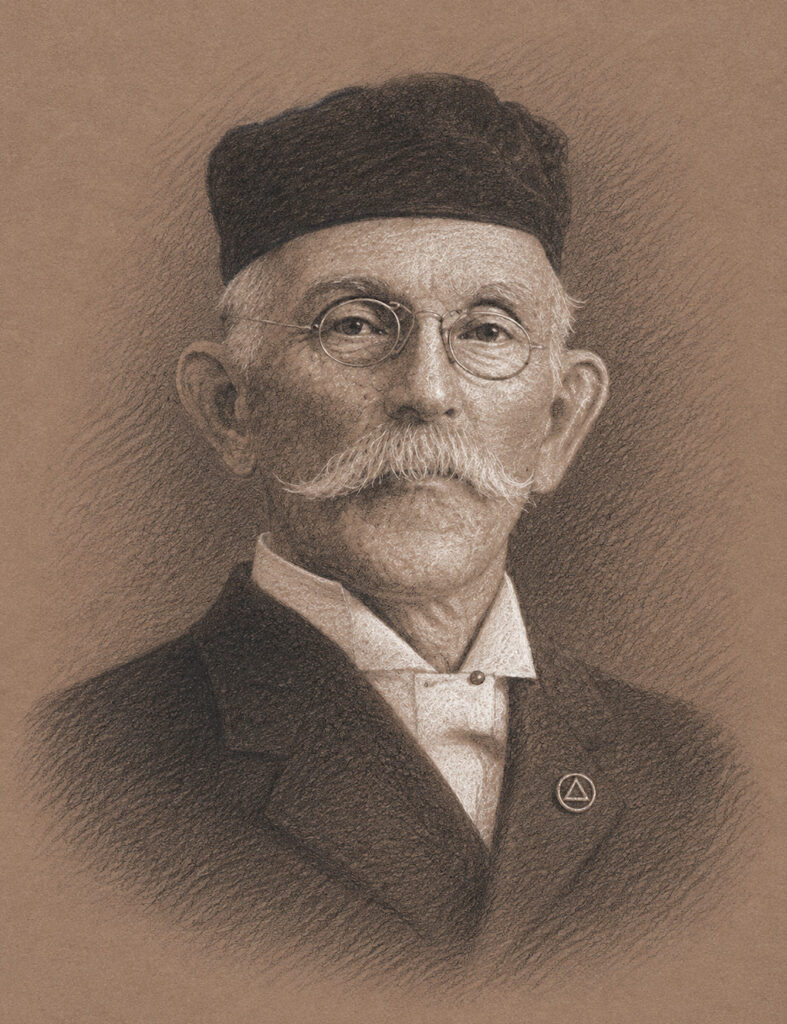
Larkin was a prominent astronomer and scholar of Eastern and Esoteric philosophy who joined Parkyn’s Suggestion magazine in 1903, becoming extremely popular in the New Thought movement.
Edgar Lucien Larkin (April 5, 1847 – October 11, 1924) was an American astronomer, scientific lecturer, author, and philosopher whose work connected the study of the physical universe with the ancient philosophical traditions of India, the nature of consciousness, and the laws governing mind and matter. Best known as the director of the Mount Lowe Observatory in California, Larkin became a widely read scientific commentator whose interests extended far beyond astronomy. His writings explored radiant energy, telepathy, Vedanta, ancient civilizations, the soul, and the possibility that intelligence was a fundamental property of the universe. Although he enjoyed an established reputation as an astronomer and popular science writer, his entrance into the New Thought movement came through Dr. Herbert A. Parkyn and his influential Chicago magazine, Suggestion.
In November 1903, Parkyn began publishing Larkin’s contributions in Suggestion, and by March 1904 had appointed him the magazine’s permanent Staff Writer, a distinction not previously granted to another contributor. This appointment introduced Larkin’s scientific and philosophical ideas directly into Parkyn’s established readership of physicians, psychologists, mental scientists, and students of New Thought. Their intellectual association united Parkyn’s teachings concerning the laws of suggestion with Larkin’s conception of thought as a natural force operating within the same universal order that governed the stars and planets. Larkin’s extensive knowledge of Hindu philosophy, his admiration for the ancient psychologists of India, and his arguments concerning the relationship between mind and matter gave a cosmic dimension to subjects already central to Parkyn’s work. Their collaboration also coincided with the establishment of the Yogi Publication Society in 1903, placing Larkin within the intellectual and publishing environment from which its early literature developed.
Larkin’s life was marked by an unusual combination of scientific discipline and philosophical speculation. He defended established astronomical methods against unconventional cosmological theories, yet maintained that science had barely begun to understand the relationship between matter and consciousness. His later books developed the conviction that a universal intelligence directed the operations of nature, while his interest in Theosophy, ancient civilizations, and Eastern philosophy continued until his death.
Early Life and Education
Edgar Lucien Larkin was born on April 5, 1847, near Indian Creek in LaSalle County, Illinois, into a poor farming family living in a log cabin. His early childhood was shaped by modest circumstances and the death of his father in 1858, when Edgar was eleven years old. His mother subsequently moved with him to Ottawa, Illinois, where they lived with his grandmother. There he attended public school and gained access to the private library of a German physician, which helped cultivate his interest in scientific learning. An experience on October 5, 1858, profoundly influenced the direction of his life when his grandmother showed him Donati’s Comet, one of the most spectacular astronomical phenomena of the nineteenth century. The sight inspired a lifelong fascination with the heavens and led him toward the study of astronomy.
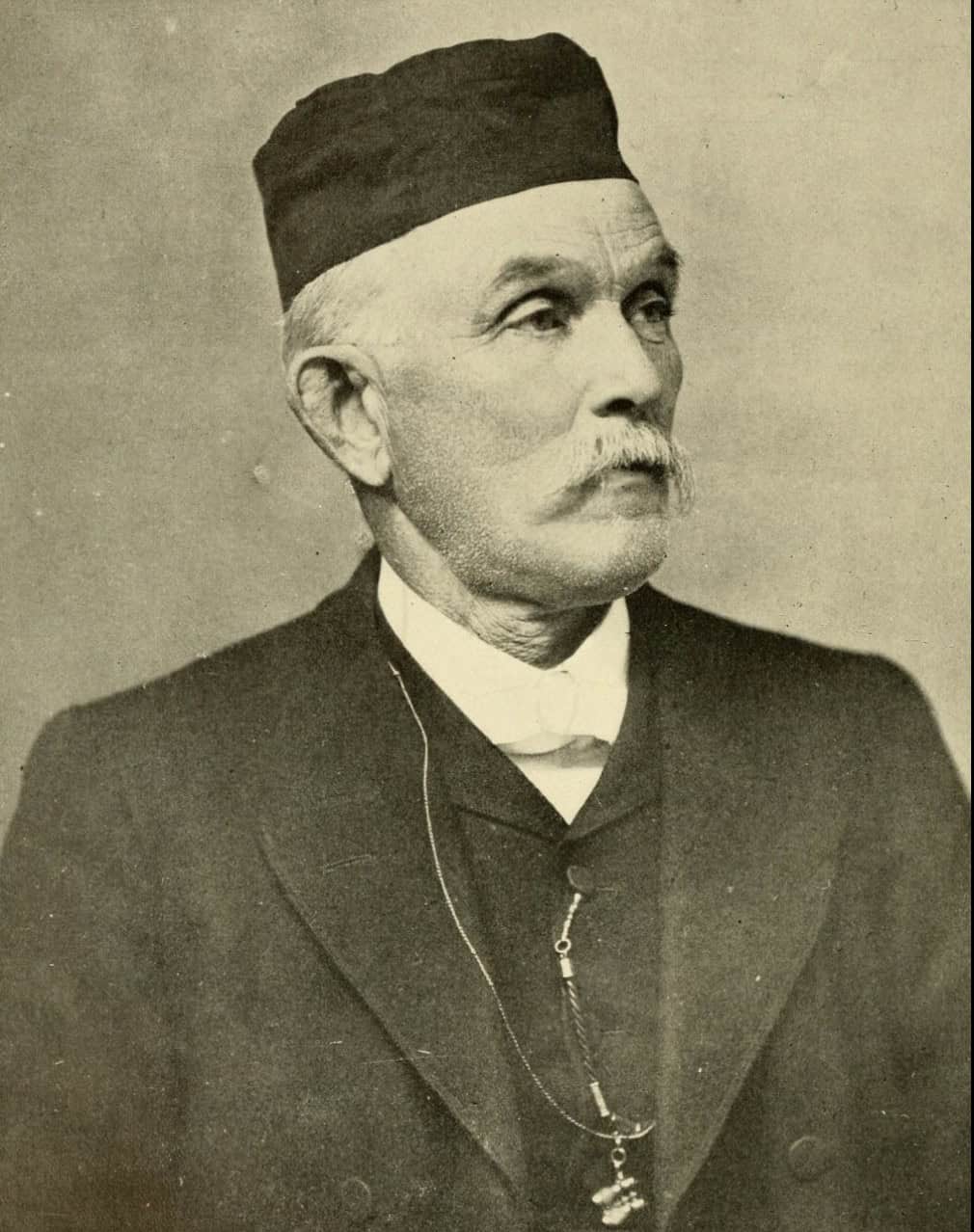
Prof. Edward L. Larkin
Larkin’s education continued through independent study, teaching, and his association with scientific institutions in Illinois. He taught in public schools and pursued astronomy during his spare time, eventually acquiring his own telescope and establishing a small observatory at New Windsor, Illinois, in 1880. His scientific interests were already extensive, and he became associated with the Mercer County Scientific Association in 1875, the Illinois Natural History Society in 1879, and the American Association for the Advancement of Science in 1883. In 1888, he was appointed director of the observatory at Knox College in Galesburg, Illinois, where he had also pursued studies. His work there brought him greater recognition among astronomers and helped establish his reputation as an experienced observer, lecturer, and scientific writer.
Larkin married Alice A. Everman at Earlville, Illinois, in 1869, and the couple raised a family that included their son Ralph. During these early decades, Larkin balanced family responsibilities, teaching, and scientific investigation, gradually developing the knowledge and experience that would later bring him to California. His interest in the relationship between scientific discovery and philosophical questions also began well before his association with New Thought. He later recalled that he had begun studying Oriental philosophy around the age of twenty, devoting several years to the religious and philosophical systems of ancient civilizations. These studies formed an intellectual foundation that would become increasingly visible in his published work.
Larkin Becomes the “Wizard of Echo Mountain”
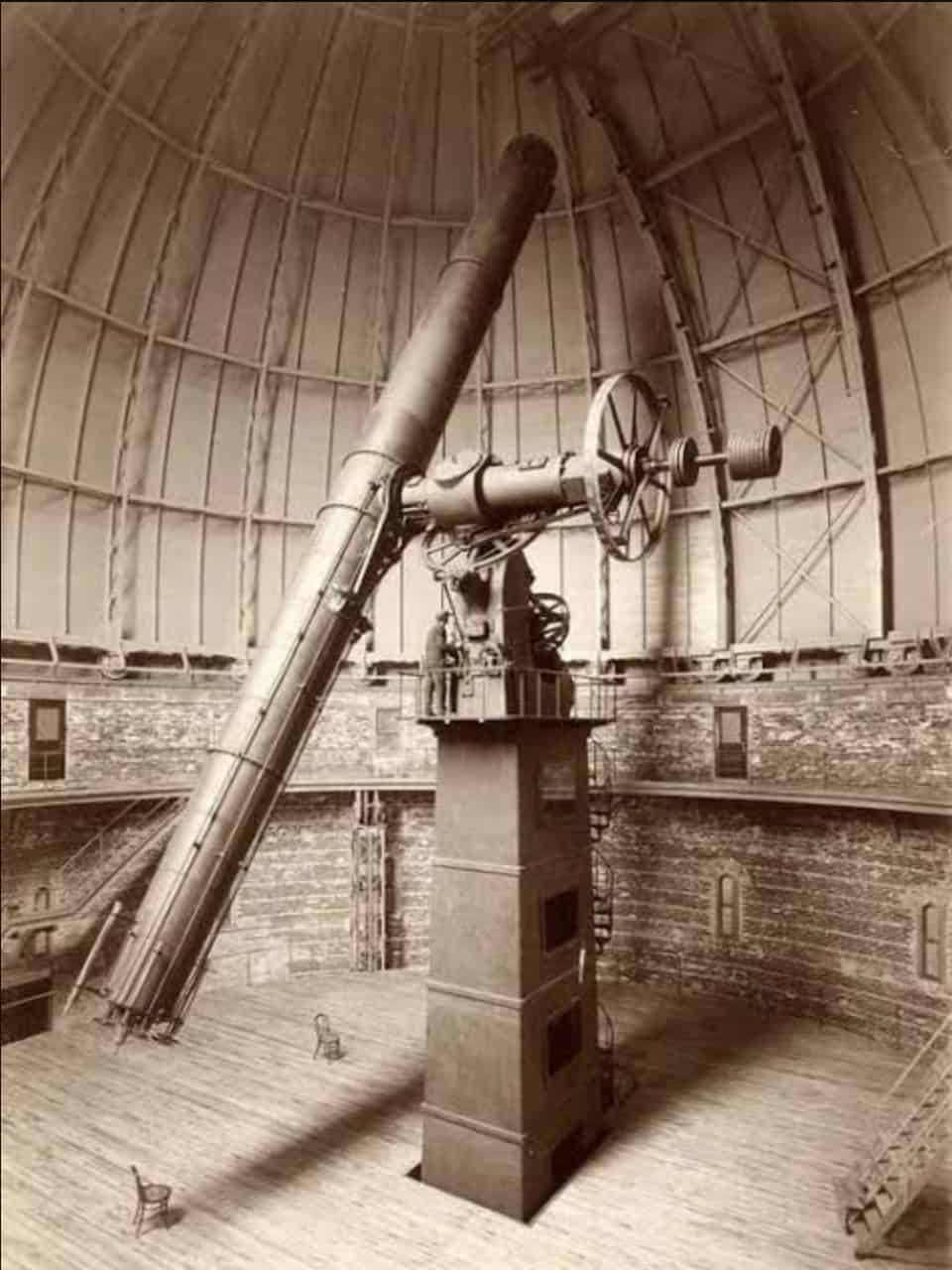
The Mt. Lowe Observatory, atop Echo Mountain in California.
By the late 1890s, Larkin’s health had deteriorated sufficiently to interrupt his scientific work. Seeking relief in the climate of Southern California, he traveled to Mount Lowe, where the astronomer Dr. Lewis Swift directed the observatory overlooking the Los Angeles basin. Swift, an internationally recognized comet discoverer, had established the observatory as a destination for both serious astronomical observation and public education. Larkin’s stay in the mountain environment improved his health, and he developed a close relationship with Swift, who encouraged him to continue his astronomical work. When Swift retired, Larkin accepted the directorship of the Mount Lowe Observatory in 1900, beginning the association with Echo Mountain that would define the remainder of his life.
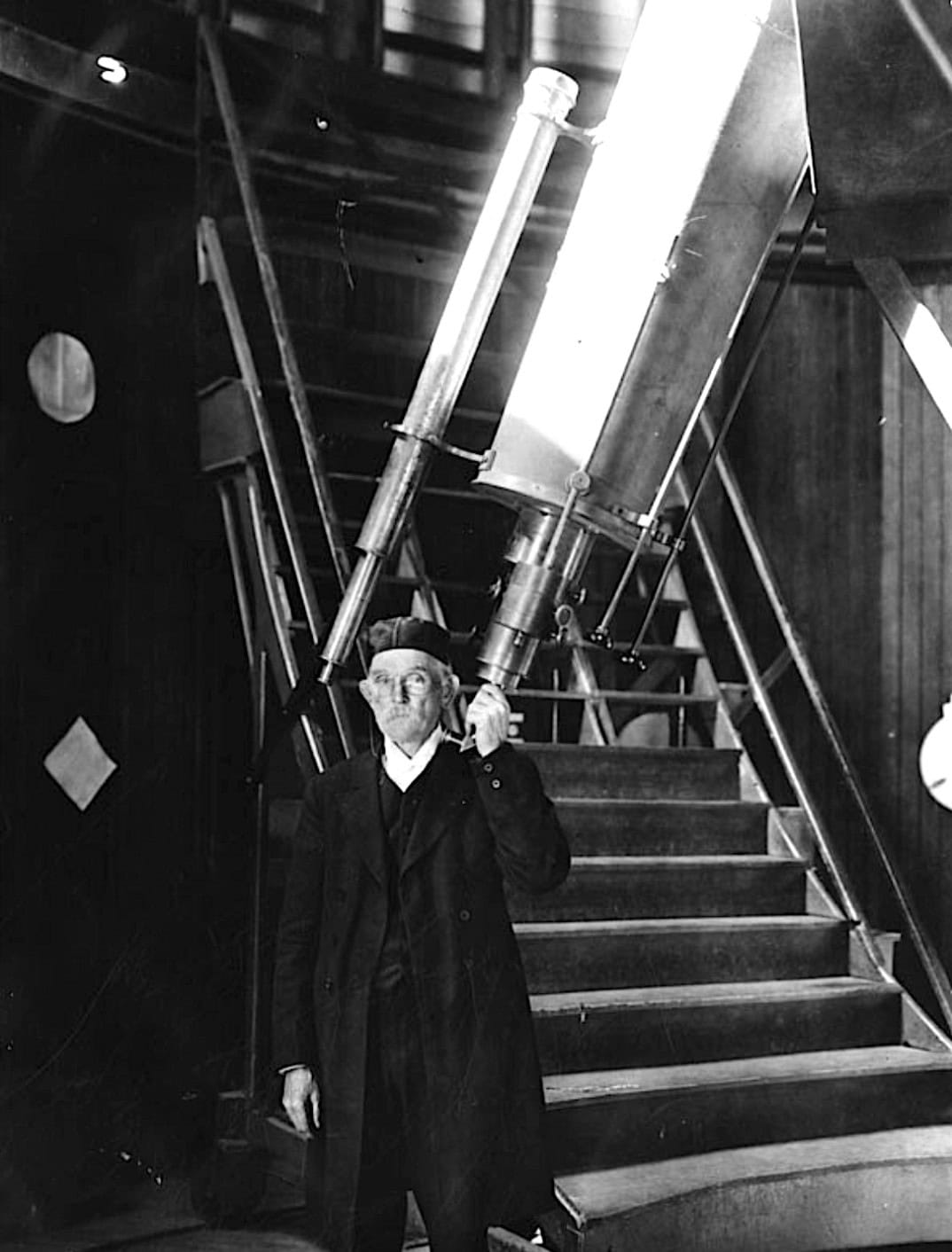
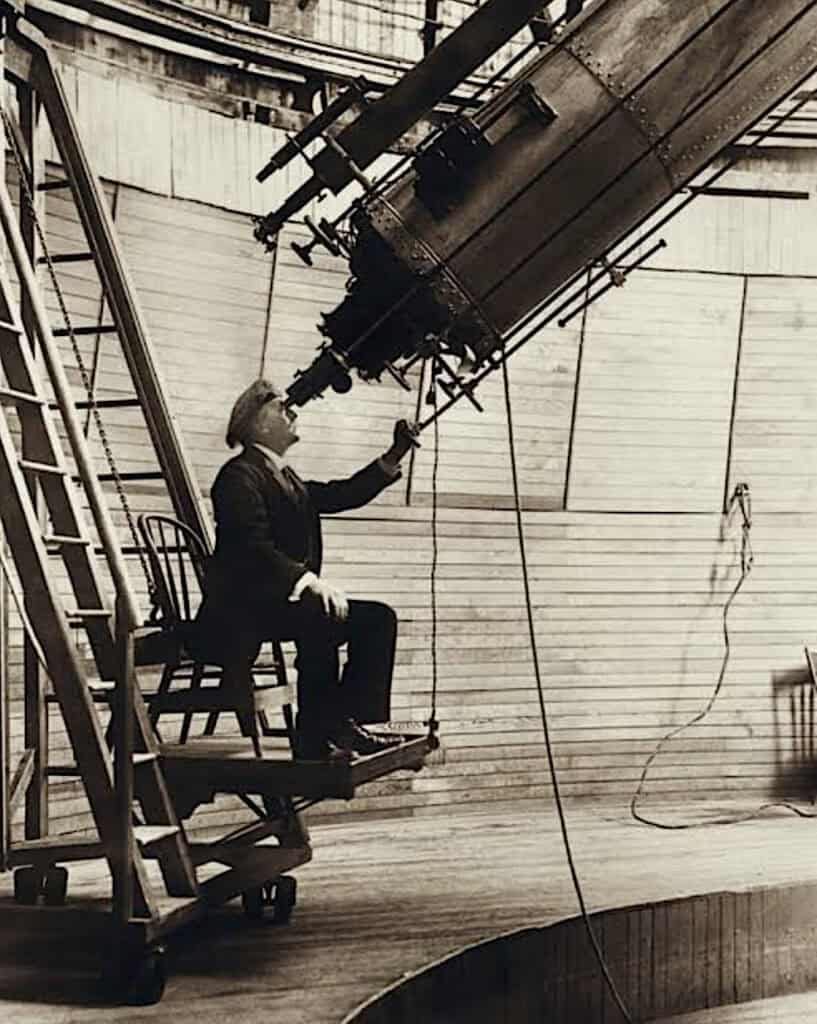
The Mount Lowe Observatory was equipped with a sixteen-inch Clark refracting telescope and a Brashear spectroscope, instruments that allowed Larkin to investigate the Sun, planets, stars, and other astronomical phenomena. Situated high above the Los Angeles basin and accessible by the Mount Lowe Railway, the observatory attracted tourists, students, and scientific enthusiasts from across the country. Larkin expanded its educational activities through public lectures, demonstrations, and special evenings arranged for schools and private parties. The Pacific Electric Railway, which eventually controlled the mountain railway system, promoted the observatory as the only astronomical observatory in Southern California regularly open to visitors. Larkin’s ability to explain complex scientific subjects in language accessible to ordinary readers and audiences made him one of the mountain’s best-known personalities.
In 1905, a destructive windstorm and fire devastated much of the development on Echo Mountain. Larkin and the photographer Charles Lawrence worked to save the observatory and its valuable telescope from the disaster, preserving one of the mountain’s most important scientific attractions. He continued directing the observatory and delivering lectures for many years, maintaining his scientific work while producing an extraordinary volume of writing for newspapers, magazines, and books.
Prof. Edward L. Larkin at the Lowe Observatory on Echo Mountain
Prof. Edgar L. Larkin joins Parkyn’s Suggestion magazine
In November 1903, Prof. Edgar Lucien Larkin started contributing articles to Suggestion magazine and by March 1904, Dr. Parkyn made him a permanent Staff Writer for his magazine. His life at Echo Mountain combined scientific investigation with an almost monastic dedication to reading and writing. Living in quarters adjoining the observatory, he maintained a substantial library containing scientific literature, ancient philosophy, and rare esoteric works. His interests extended from the newest discoveries in physics and astronomy to the writings of Hindu philosophers, the ancient Egyptians and Greeks, and the philosophical traditions associated with the mystery schools. He subscribed to numerous magazines associated with New Thought and related movements, following the development of mental science while continuing his own observations of the heavens.
Radiant Energy and Its Analysis
In late 1903, just before joining Parkyn’s magazine, Larkin published Radiant Energy and its Analysis. In it, he described light, heat, and electromagnetic radiation not only as measurable physical forces, but as outward signs of a deeper universal law linking the smallest atom to the largest star. Much like Parkyn, who taught that suggestion worked through definite natural laws, Larkin argued that the same principles guiding radiant energy in space also applied to the workings of the mind and human life. For him, energy was not just mechanical or thermal, but a living current, always in motion, that could be directed toward growth, healing, and transformation. In this view, the human mind functioned both as a receiver and a transmitter within this greater network of universal forces.
Prof. Larkin’s ideas lined up with Dr. Parkyn’s teaching that the laws of thought and the laws of nature were the same thing. In his book, he described the universe as one great field of energy in which every person takes part, with the ability to direct unseen forces with the mind. This provided more scientific support to Parkyn’s teaching that, by learning and applying universal laws, people could shape both their inner lives and their outer circumstances. By connecting the careful study of astronomy with the ideas of mental science, Larkin showed that the same forces governing the stars also flowed through the human mind, demonstrating that personal mental development was part of the same radiant order that governed the universe itself.
Prof. Larkin’s designation as “Staff Writer” for Suggestion magazine
Prof. Larkin being designated as Staff Writer was a first for Suggestion magazine, a distinction Parkyn had never granted to any other contributor and Larkin would be the only writer to ever bear this title with the magazine. This was a clear mark of Parkyn’s respect for the Professor and his contributions within the publication. While the magazine had featured longtime regular contributors who appeared every month for years, and its pages were also filled with renowned guest contributors each month, Dr. Parkyn still went out of his way to elevate the attention given to Prof. Larkin. Being Staff Writer set Larkin apart, signaling that his work was in complete accord with Dr. Parkyn’s philosophy of Suggestive Therapeutics and mental science. The title carried a message to readers that his voice was not only trusted but was a central source of authority that embodied Parkyn’s ideals.
Prof. Larkin’s articles in Suggestion magazine
When Prof. Edgar Larkin joined the staff of Suggestion magazine, he brought both the authority of his position as director of the Mt. Lowe Observatory and a rare combination of scientific discipline with deep knowledge of the world’s oldest esoteric traditions. In his Practical Psychology series, he stated that “thought is excessively refined matter” and “thought is power,” supporting the view of suggestion as a tangible natural force. He treated telepathy not as a mystical oddity, but as part of the lawful workings of the mind. He went further, arguing that thought could act on matter at a distance, a capacity “known for many centuries in the remote East, to the wonderful psychics of ancient India.”
Larkin devoted substantial attention to the Vedantic view that thought precedes matter. He described the “Hindu Vedanta” as “the most wonderful product of the human mind,” teaching that a thought form came first, followed by the materialization of its pattern. His admiration for the “psychics of India,” whom he called “the ablest psychologists that have appeared on earth,” was unreserved. These adepts, he explained, believed that mind “had precedence of all existing things” and possessed “illimitable power.” He frequently referred to the “wisdom of India” which taught that human minds are “parts of the mentality of nature” and can draw from the “universal store.”
To illustrate this, he cited the Grand Hymn of Creation from the Rig Veda:
The Rig Veda is the ancient Indian collection of Vedic Sanskrit hymns (sūktas). It is one of the four sacred canonical Hindu texts known as the Vedas.
“In the beginning there arose the Golden Child. He was the only born Lord of all that is. Whose shadow is immortality. Whose shadow is death. There was then neither nonentity or entity, neither atmosphere nor sky beyond. That ONE breathed, breathless, by ITSELF in essence. The covered germ burst forth by MENTAL heat. The ray shot across them. There is only one DEITY, the great soul. He is the soul of all being.”
To Larkin this ancient cosmology was a remarkable reference to the modern understandings of the present Psychic Age, stating:
“it was thought out by our ancestors, the ARYANS, in Central Asia many thousand years ago. The strange thing about it is that all the material universe is represented as being “ BORN of MIND,” as a GOLDEN CHILD. And, stranger still, the entire fabric of nature is conceived to be based on sex, duality and polarity.”
Larkin situated these principles in the present moment, observing a worldwide “psychic movement” driven by seekers exploring their inner being, a revival he linked to “living adepts” descended from prehistoric India. His articles gave readers a cosmic framework, showing that the mental forces they were learning to apply were the same forces that, in the oldest wisdom traditions, shaped worlds and moved stars.
Larkin’s Friend, Prof. Isaac Newton Vail
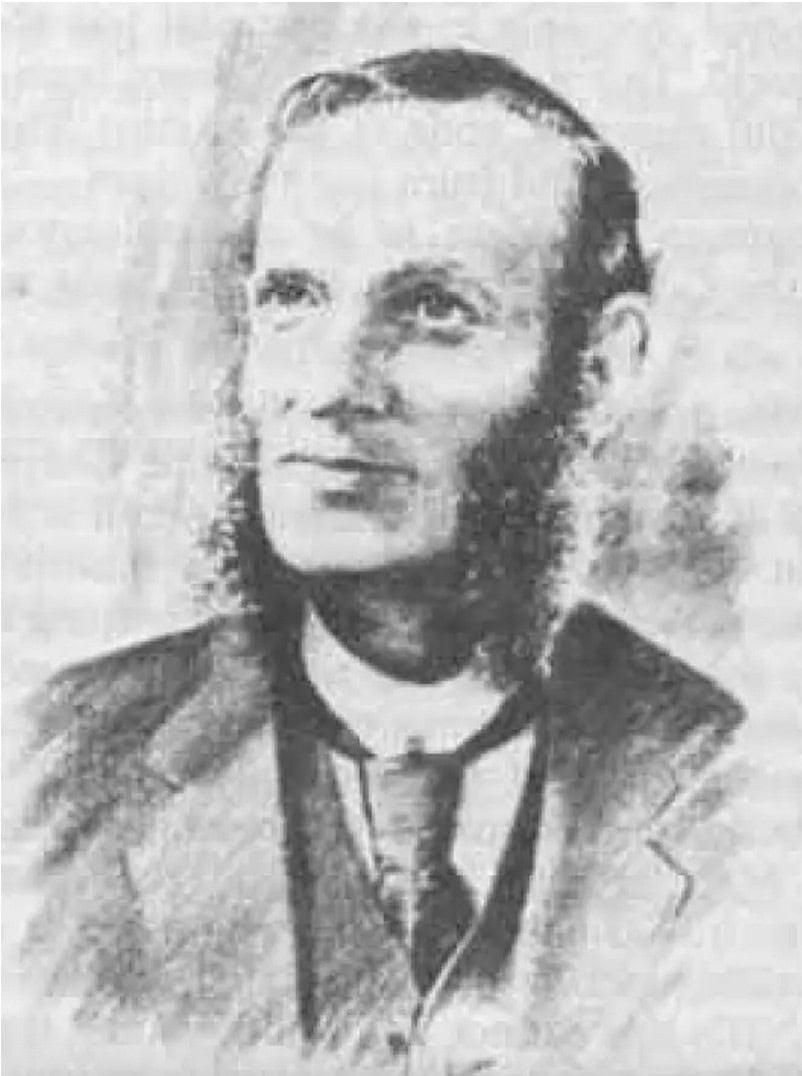
Prof. Isaac N. Vail
Dr. Parkyn and Prof. Edgar Larkin became acquainted through Prof. Isaac Newton Vail of Pasadena, California, whose work had become a major fascination for Dr. Parkyn. Prof. Vail had developed what he called the “Annular Theory” of the Earth’s formation. In his book The Waters Above the Firmament, he proposed that the Earth once possessed an “annular or ring system, such as the planet Saturn has now,” composed of “aqueous vapors” that formed a “sun-illuminated cloud canopy over all the earth, except the polar regions.” He argued that this theory explained past geologic revolutions and that present Earth conditions were the result of a succession of causes, specifically the “successive collapse of earth-rings and vapor canopies.” His works also included the illustrated The Waters Above the Firmament and The Flaming Sword.
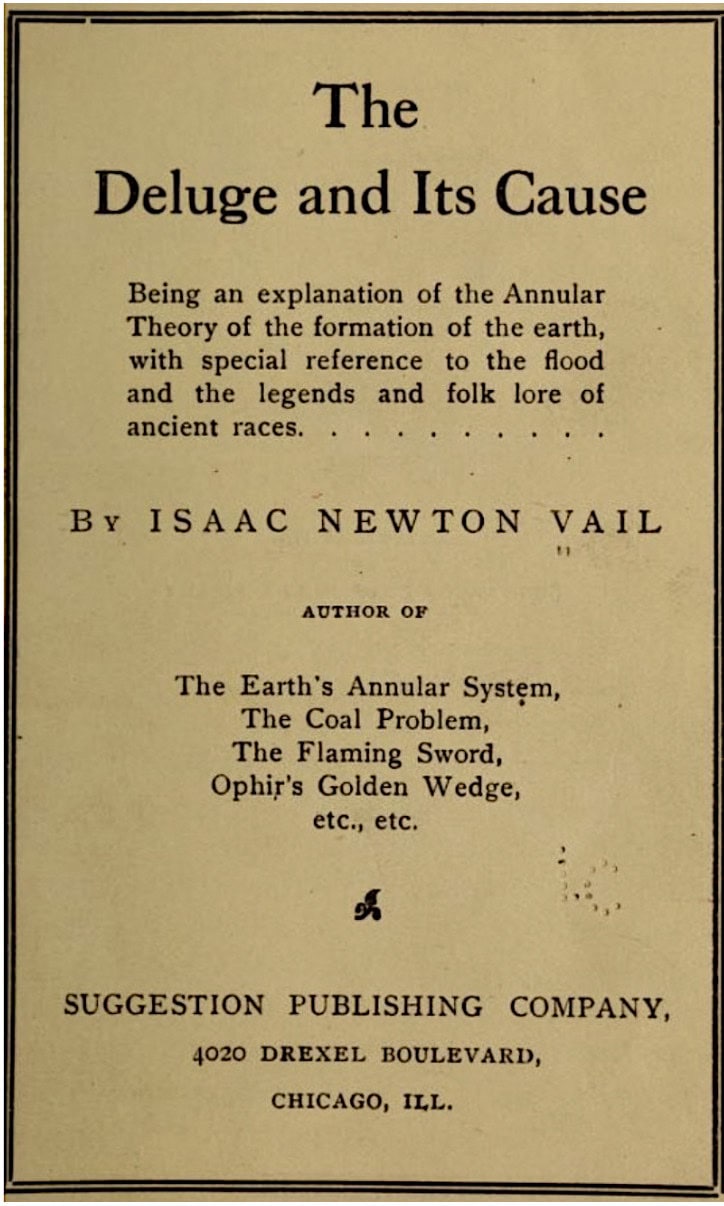
In January 1903, Dr. Parkyn reached out to Prof. Vail to invite him to contribute to his Suggestion magazine and also to assist him with launching and promoting his own periodical, Annular Theory. This resulted in a four-part series on Vail’s theories in Suggestion from February through May 1903 and also the publication of vail’s book, The Deluge and Its Cause, by Parkyn and his Suggestion Publishing Company. Dr. Parkyn’s fascination with Prof. Vail’s ideas led to many correspondences and several visits to Pasadena while he was traveling to and from Mexico. Through these visits, Parkyn also became well acquainted with Prof. Larkin, who was well known in Pasadena as “The Wizard of Echo Mountain.”
Vail and Larkin were longtime collaborators and Vail often visited Larkin at the observatory to explore the heavens and to discuss their theories and research. Parkyn recognized in Larkin someone who not only embraced the teachings of suggestive therapeutics but could also connect them seamlessly to the vast workings of the universe and the ancient philosophies of the Hindu masters. With Vail shifting his attention to his own magazine, Parkyn invited Larkin to carry on in the same vein by contributing articles on the connections between the mental sciences and the cosmic universe to Suggestion.
The Deluge and Its Cause by Prof. Vail. Published by Parkyn’s Suggestion Publishing Company.
Prof. Larkin is sent to The Nautilus magazine to build it into a major New Thought leader
With Dr. Parkyn’s promotion of Prof. Larkin as a featured writer in Suggestion magazine, Larkin swiftly emerged as one of the most respected and dynamic new voices in the New Thought movement. As he had previously done with Sydney Flower and William Walker Atkinson, Parkyn once again introduced a fresh and compelling voice into the New Thought discussion. Following his proven strategy, he first built Larkin’s reputation within Suggestion and then positioned him in another forum to extend the reach and influence of the core teachings.
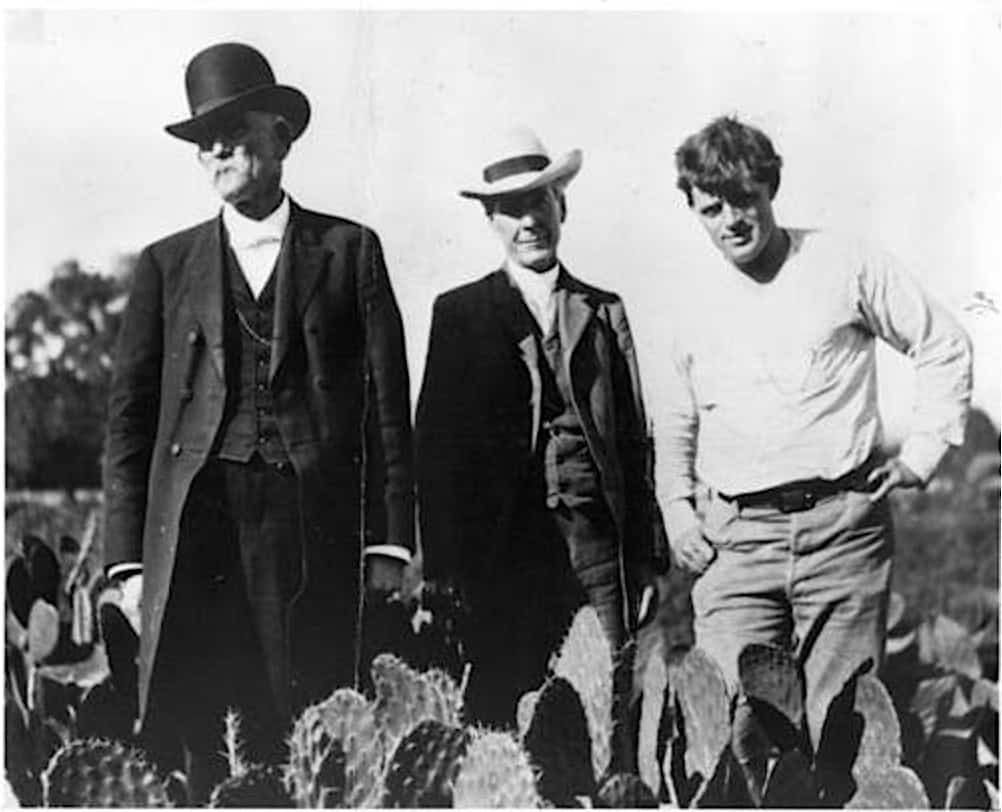
Prof. Edward L. Larkin had become a national celebrity. Picture with Luther Burbank and Jack London.
This time the chosen outlet was The Nautilus, the most trusted of the affiliated journals in the “Suggestion Family.” Dr. Parkyn had already helped elevate The Nautilus magazine and its editors, Elizabeth Towne and her husband William Towne, into admired voices in the movement through frequent editorial mentions, joint advertising campaigns, and Elizabeth’s regular contributions to New Thought magazine. Yet neither carried the sensational impact that figures like Atkinson, and now Larkin, brought to the stage.
Because Suggestion was anchored by Dr. Parkyn and supported by a roster of widely respected contributors, it stood as the foremost venue for serious leaders in the field. Its authority did not depend on celebrity writers. Instead, its stature allowed Parkyn to introduce and cultivate new voices, elevating them into recognized leaders of the movement. Once their names carried weight among the movement’s thinkers, and where Suggestion’s more scientific tone might limit their reach to general audiences, Parkyn would position them in more accessible venues.
*In 1905, Parkyn would send William Walker Atkinson and Alexander J. McIvor-Tyndall to visit Prof. Edgar L. Larkin at the Mount Lowe observatory to make plans for future collaborations.
Coinciding with Prof. Larkin’s arrival, The Nautilus expands to forty pages and unveils a new design
The timing of Prof. Larkin’s move to The Nautilus coincided with a major investment into the magazine that transformed it from the modest, coverless eight-page journal it had been for five years into a forty-page publication with a professionally designed cover. Its new look, from the striking cover to the page layouts, closely mirrored the style of Suggestion, signaling its official alignment with Dr. Parkyn’s circle of collaborators.
SuggestionThe NautilusProf. Larkin’s move to The Nautilus coincided with a full new layout design of the magazine that was strikingly similar to Suggestion magazine.
*Larkin would return to Suggestion magazine later, when it was being run by Parkyn’s relative, Henry Clay Hodges, as The Stellar Ray. He would head the Department of Psychic Research.
Larkin’s 1904 Letter on Thought, Matter, and Telepathy
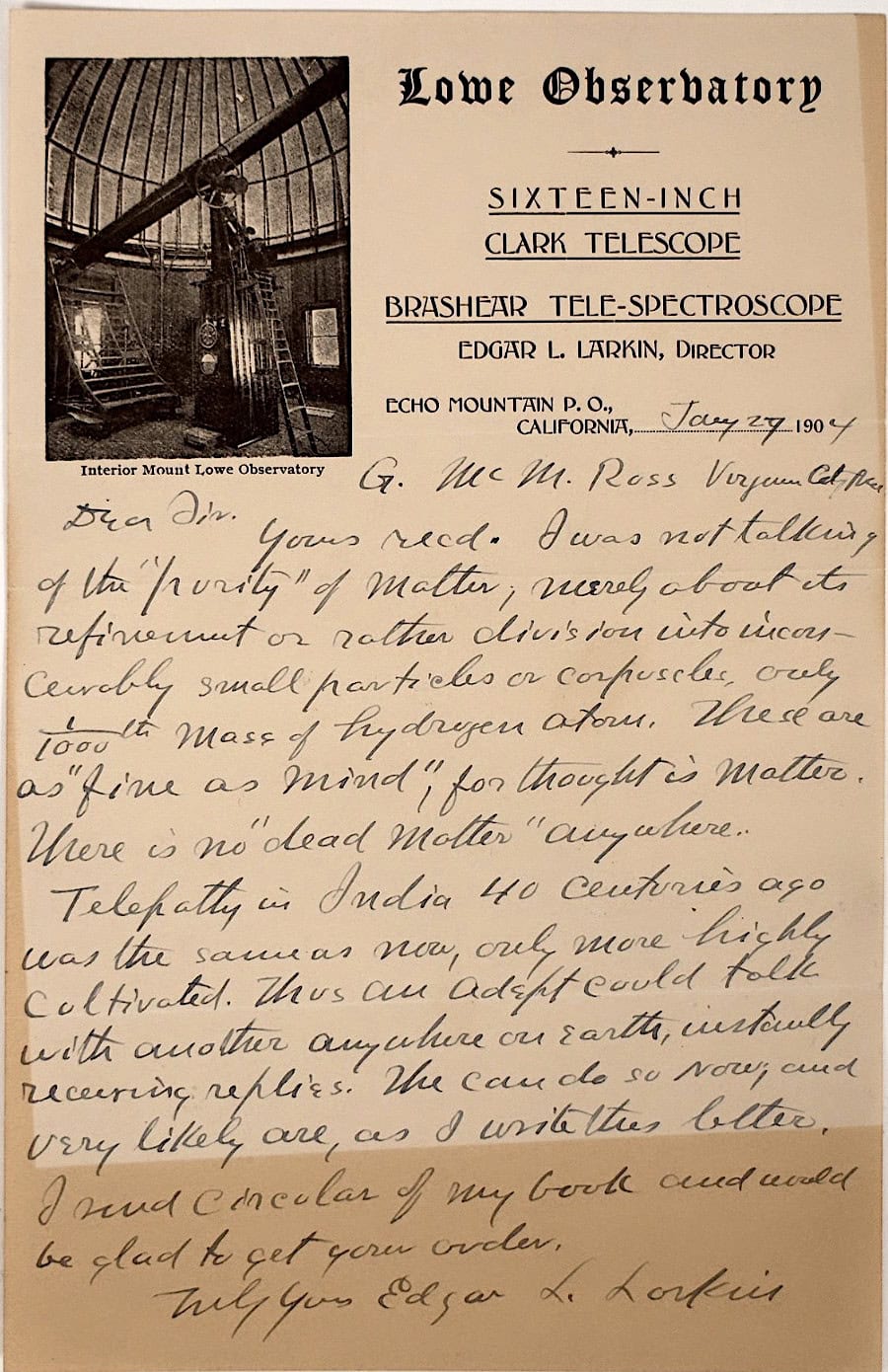
Prof. Edgar L Larkin letter
In early 1904, during the first months of his association with Parkyn’s Suggestion magazine, Larkin wrote a personal letter to G. McM. Ross of Virginia City, Nevada, providing a direct expression of the ideas he was developing in his Practical Psychology articles. Although Larkin was known primarily for his scientific work, his private correspondence reveals the extent to which his understanding of physical matter had become intertwined with his theories of mind and consciousness.
Larkin explained that matter could exist in states of extraordinary refinement, eventually becoming so subtle that it approached what he considered the nature of thought. He wrote that there were particles as fine as mind, declaring that “thought is matter” and “There is no ‘dead Matter’ anywhere.” His argument treated the universe as a continuous field of activity in which the distinction between physical substance and mental energy was a matter of degree. These ideas corresponded closely with his published statements that thought was an exceedingly refined form of matter and that mental forces operated according to the same laws governing the physical universe.
The letter then turned to the extraordinary mental abilities Larkin attributed to ancient India. He declared that “Telepathy in India 40 centuries ago was the same as now, only more highly cultivated.” He maintained that an adept could communicate mentally with another person anywhere on Earth and receive a response, suggesting that such abilities remained available to modern individuals willing to develop them. Larkin even proposed that he and his correspondent might accomplish the same feat, adding that he believed they could do so. This personal conviction helps explain the enthusiasm with which he described the ancient Indian psychologists in Suggestion, where he credited them with an understanding of the mind that modern science had only begun to approach.
How Did Larkin Distinguish Ancient Philosophy From Modern Occult Superstition?
Larkin’s admiration for Indian philosophy did not prevent him from becoming a severe critic of certain occult movements. By 1906, he was openly condemning what he regarded as the proliferation of superstition within Rosicrucian traditions, Gnosticism, Hermeticism, and related traditions of Western esotericism. His criticism was especially striking because he had spent decades studying ancient philosophical systems and had become a recognized contributor to the literature of mental science. His position reflected a distinction he drew between the natural laws he believed underlay genuine mental phenomena and the ceremonies, magical implements, and extravagant claims associated with some contemporary occult organizations.
In a statement published under the heading “Superstition Rife,” Larkin warned that “Magianism, rosicrucianism, gnosticism, occultism, together with Mosaic and Hermetic mysteries” were flourishing throughout America and Europe. He criticized the use of charms, locks of hair, wands, and other magical objects, associating such activities with irrational beliefs and unhealthy mental states. He went so far as to ask how physicians concerned with mental health could contend with the consequences of these practices, arguing that superstitions inherited from prehistoric ages continued to flourish even within universities and colleges.
This criticism adds an important distinction to Larkin’s intellectual character. He regarded ancient Indian philosophy as a profound expression of humanity’s understanding of consciousness, while rejecting the supernatural claims and ceremonial practices that he believed obscured genuine natural laws. His conception of telepathy and mental energy was itself highly speculative and was not established by conventional scientific methods, yet he considered these subjects legitimate areas of investigation. His rejection of magical superstition was thus compatible, in his own understanding, with his conviction that the universe contained mental forces still awaiting scientific explanation.
Larkin’s Astronomical Controversies and the Koreshan Movement
Larkin’s reputation as a scientist also brought him into conflict with religious and philosophical movements that challenged established astronomy. One such controversy involved the Koreshan movement, founded by Cyrus Reed Teed, whose followers maintained that humanity lived on the inner surface of a concave Earth. Their cosmological system rejected the conventional understanding of the Earth’s curvature, gravity, and the arrangement of celestial bodies, substituting an elaborate alternative model that they claimed could be demonstrated through observation and experiment.
Larkin challenged the Koreshans’ interpretation of an 1897 surveying experiment conducted in Florida, questioning whether their results could withstand independent scientific examination. He argued that their observations did not invalidate established mathematical and astronomical knowledge and questioned whether their experiment could be repeated without the difficulties that had affected the original survey. His criticism provoked an extended response from John S. Sargent in The Flaming Sword, the movement’s periodical, under the title “A Scientist Taken to Task.”
Sargent’s article devoted three pages to attacking Larkin and the conventional astronomical theories he defended. It criticized established explanations of gravity, the Earth’s curvature, and the behavior of light, while proposing that the universe operated through reciprocal forces of attraction and repulsion. The Koreshan interpretation also included theories about the transformation of matter into energy, the nature of the Sun, and the possibility that the entire physical universe constituted a living system. Although these arguments differed substantially from Larkin’s astronomy, their language concerning universal energy and the relationship between matter and spirit reflected the speculative scientific environment in which he worked.
The controversy is especially revealing because Sargent acknowledged Larkin’s considerable scientific knowledge while attacking his conclusions. He described the astronomer living high above the California landscape, surrounded by scientific learning and occult literature, and portrayed him as a man capable of contemplating immense astronomical distances while overlooking what the Koreshans considered elementary truths about the Earth. Larkin’s participation in the dispute illustrates his willingness to challenge unconventional cosmological claims, even as he pursued his own investigations into the nature of consciousness and the possibility of universal intelligence.
Within the Mind Maze and the Development of Universal Mind
In 1911, Larkin published Within the Mind Maze, or, Mentonomy, through the Standard Printing Company of Los Angeles. The book marked a further development of the philosophical ideas he had explored in Radiant Energy and his earlier magazine contributions. By this time, Larkin had moved well beyond the materialistic explanations of the universe that had influenced his early scientific thinking. His astronomical observations and investigations into the nature of electrons, matter, and energy had led him to argue that intelligence was involved in the organization and operation of the physical universe.
Larkin’s intellectual transformation was striking. He had once accepted Darwinian materialism as a satisfactory explanation of natural existence, but his later studies persuaded him that physical laws alone could not explain the organization of matter or the remarkable order of the heavens. In Within the Mind Maze, he declared, “There is not a great scientist now living not aware of the existence of Mind in the Sidereal Universe—a Dominating Mind.” His argument placed consciousness at the center of cosmology, proposing that the organization of matter required an intelligence operating through the fundamental constituents of nature.
He developed this argument through the behavior of electrons, which he believed presented a profound question concerning the origin of natural order. Larkin declared, “Surely and indubitably, electrons are directed by mind,” and described this proposition as a fundamental law of modern science. He maintained that electrons either possessed an internal intelligence enabling them to organize themselves or were directed by a mind existing beyond them. His preferred explanation involved a universal creative intelligence, which he described as a “majestic Master Mind” responsible for creating electrons and directing their activity in the formation of all existing things.
These arguments extended ideas Larkin had been developing for years. His earlier statements that thought was refined matter and that the human mind participated in a universal field of intelligence now became part of a more elaborate cosmological system. His theories of electrons and universal mind were philosophical interpretations, not established findings of physics, but they allowed him to reconcile his scientific interests with his longstanding admiration for Vedanta and the ancient Indian conception of consciousness preceding material existence.
Larkin’s conception of a universal intelligence also differed from conventional Christian theology. Although his writings frequently referred to God and the creative intelligence of the universe, he did not subscribe to the doctrines of Christianity. His philosophy was founded on the conviction that the universe expressed an intelligent order accessible through scientific investigation, philosophical reasoning, and the development of human consciousness. The distinction was important to his later work, which increasingly explored the soul and its relationship to a universal mind without confining those subjects to the doctrines of any particular religion.
Larkin’s Involvement with Theosophy and Atlantis
Larkin’s interests in Eastern philosophy and ancient civilizations continued alongside his astronomical and philosophical writings. He became associated with the Theosophical Society in 1907 and later with the Krotona Institute of Theosophy in 1914. These affiliations placed him within an organization devoted to comparative religion, ancient wisdom traditions, reincarnation, spiritual evolution, and the investigation of consciousness. His longstanding admiration for Vedanta and the psychologists of ancient India was compatible with many of the subjects explored in Theosophical literature, although Larkin maintained an independent approach to the relationship between scientific knowledge and philosophical speculation.
His interests also extended to the civilizations of ancient Egypt, Greece, India, and the Americas. He wrote about Atlantis, Mu, Lemuria, and other proposed lost civilizations, exploring theories that ancient peoples possessed knowledge of astronomy, cosmology, and the workings of nature that had subsequently disappeared. He traveled to Mexico and considered possible relationships between the pyramids of ancient Egypt and those of Central America, including the possibility that their builders had inherited knowledge from an earlier civilization. These ideas formed part of his continuing attempt to connect the history of human civilization with a universal system of scientific and philosophical laws.
Map of Lemuria
Larkin also wrote about the ancient Aryans and their philosophical traditions, developing a series titled The Aryans that appeared in Reason magazine around 1914 and 1915. His interest in the subject extended back to his early studies of Oriental philosophy and his discussions of the Rig Veda in Suggestion. He regarded ancient Indian cosmology as an extraordinary anticipation of his own ideas concerning universal mind, polarity, and the creation of matter through mental activity. The relationship he perceived between ancient religious texts and modern physics became one of the defining characteristics of his later philosophical writings.
Larkin’s interest in Lemuria also contributed to his association with stories about Mount Shasta and a supposed surviving civilization hidden within the mountain. Later accounts attributed extraordinary observations to him, including claims that he had seen evidence of a concealed settlement through a telescope. These stories became part of the mythology surrounding Mount Shasta, although their historical basis remains uncertain. His documented writings on lost civilizations provide a more substantial foundation for understanding his interests than the legends subsequently attached to his name.
The Matchless Altar of the Soul and Larkin’s Final Philosophy
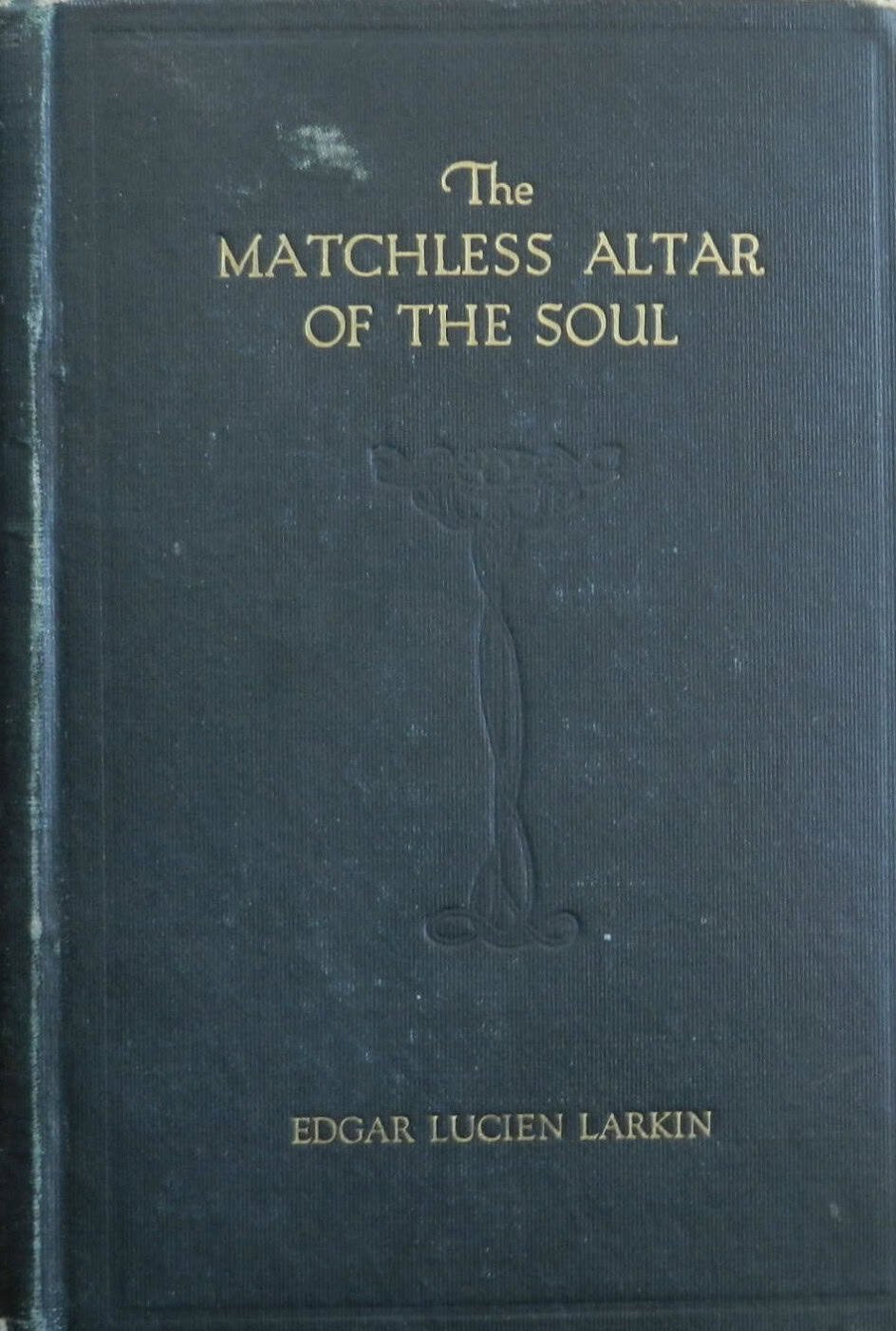
The Matchless Altar of the Soul by Edward Lucien Larkin
In 1916, Larkin published The Matchless Altar of the Soul, a 306-page work issued in Los Angeles under his own name. The book represented the culmination of his investigations into consciousness, ancient philosophy, and the relationship between the individual soul and the universal intelligence. Written at the Lowe Observatory, with a preface dated September 1, 1916, it addressed questions that had occupied him for decades and that had become increasingly important to his readers. Its publication during the First World War also reflected his concern with the meaning of existence, human suffering, and the possibility of a spiritual reality extending beyond physical life.
The book brought together Larkin’s ideas about the nature of mind, the powers of suggestion, the relationship between subjective and objective consciousness, and the philosophical teachings of ancient civilizations. Its subjects included scientific and philosophical arguments concerning the soul, the mysteries of consciousness, and the possibility that human thought participated in a universal creative intelligence. Larkin approached these questions through the same combination of scientific vocabulary, philosophical speculation, and ancient religious teachings that had characterized his contributions to Suggestion more than a decade earlier.
By this period, Larkin had developed a philosophical system in which the physical universe was understood as an expression of intelligence operating through matter and energy. The human mind was not an isolated phenomenon within that system, but a manifestation of the same creative activity that organized the stars, planets, atoms, and electrons. His arguments concerning suggestion, telepathy, and the mental abilities of ancient Indian adepts were connected to his conviction that consciousness possessed capacities that conventional science had not yet explained. The book carried forward the central proposition that had animated his earlier writing, that mind was a fundamental element in the organization of existence.
Larkin’s later philosophical writings also reflected the extraordinary breadth of his intellectual interests. He continued to engage with Theosophy, comparative religion, ancient cosmology, and the history of civilization while retaining his identity as an astronomer and scientific lecturer. His work illustrates the intellectual atmosphere of the early twentieth century, when discoveries concerning radiation, electricity, and the structure of matter inspired both legitimate scientific inquiry and ambitious philosophical theories about consciousness and universal intelligence.
Larkin’s Final Years and Death
Larkin continued his association with the Mount Lowe Observatory into the final years of his life, maintaining the mountain residence that had become inseparable from his public identity. His scientific lectures and extensive newspaper writing had introduced astronomy to thousands of visitors and readers, while his philosophical books reached an audience interested in the relationship between modern science and ancient wisdom. His published writings numbered in the thousands, with estimates approaching 9,000 newspaper and magazine contributions over the course of his career. His ability to communicate complex subjects in accessible language remained one of his defining accomplishments.
Edgar Lucien Larkin died on October 11, 1924, in Upland, San Bernardino County, California, at the age of seventy-seven, following a prolonged illness. His funeral services were held in Los Angeles, and his remains were cremated in accordance with his wishes. His son Ralph and his longtime friend Charles Lawrence subsequently scattered his ashes on a mountain summit near Inspiration Point, overlooking the landscape where he had spent so many years studying the heavens. The ceremony provided a fitting conclusion to a life closely associated with the mountains above Los Angeles and the observatory that had become his home.
.
Prof. Edward L. Larkin at the Lowe Observatory on Echo Mountain