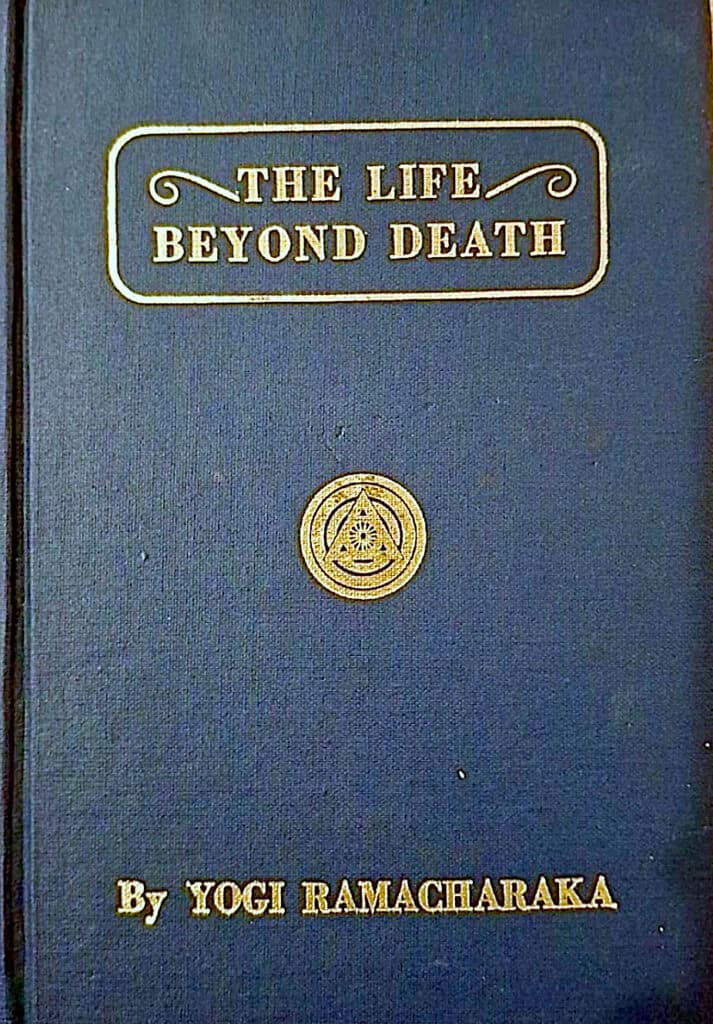
Published by the Yogi Publication Society in 1912, The Life Beyond Death by Yogi Ramacharaka is a systematic treatment of death, the astral world, reincarnation, and spiritual evolution. Instead of treating death as the termination of individual existence, the book presents it as a transition between states of consciousness within a much larger process of development.
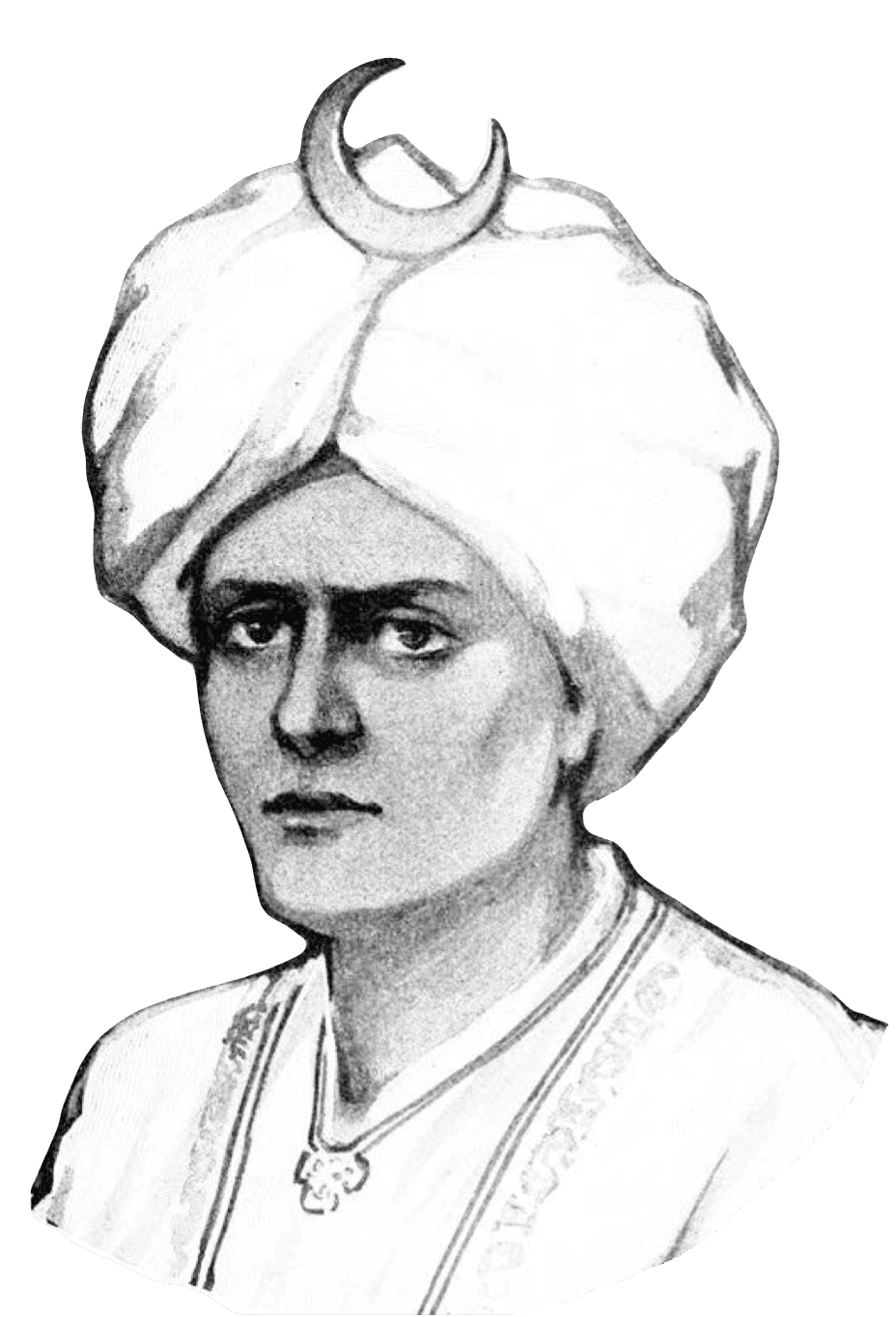
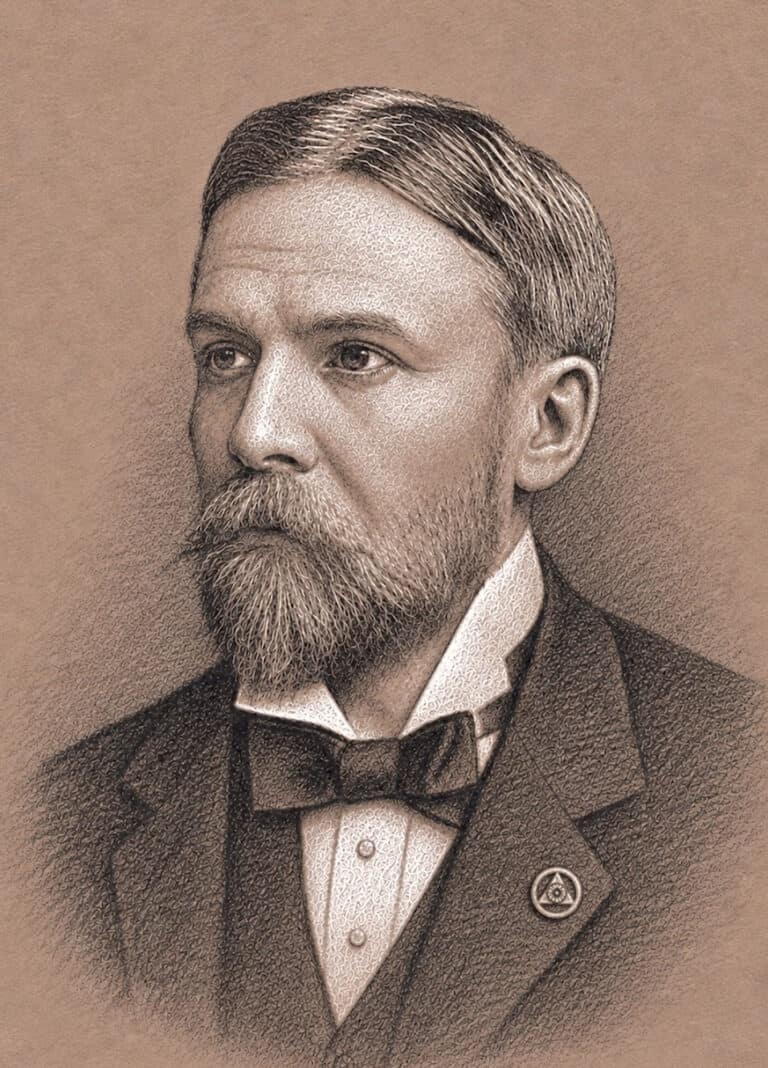
Yogi Ramacharaka
Its central proposition is expressed directly in the subtitle of the original edition: “That Which We Call Death Is But the Other Side of Life.” From this starting point, the work attempts to describe what happens as consciousness separates from the physical body, enters a period of soul-slumber, awakens upon the astral plane, experiences conditions corresponding to its character and beliefs, eventually passes through another period of rest, and finally moves either toward reincarnation or, in the case of sufficiently advanced souls, toward higher planes of existence.
The Life Beyond Death is much more than a general argument for immortality. It presents an elaborate map of postmortem existence and places death within the Yogi Publication Society teachings on Karma, reincarnation, mental development, spiritual evolution, and the continuity of consciousness. The book repeatedly insists that heaven, hell, judgment, punishment, reward, and rebirth should not be understood as arbitrary decrees imposed upon the soul from outside. Instead, individuals carry their own character, desires, memories, beliefs, attractions, and accumulated causes with them, and these internal conditions determine the environments and experiences to which they naturally gravitate. The result is a vision of the afterlife governed primarily by correspondence and cause and effect: the soul finds itself among conditions compatible with what it has become.
What Does The Life Beyond Death Teach About Death?
The foundation of the book is the assertion that there is, in an ultimate sense, no death. What human beings ordinarily call death is the dissolution of the relationship between the physical body and the consciousness that temporarily uses it. The physical organism dies, but the individual does not cease to exist. The book compares humanity’s fear of death to the fear that might arise from misunderstanding any unfamiliar transition. From the standpoint it presents, death appears terrifying primarily because physical consciousness identifies the person so completely with the body that the destruction of the body seems to imply the destruction of the self. Once the distinction between the person and the physical instrument is accepted, death becomes a change in conditions rather than an extinction of being.
This idea gives the entire work its distinctive tone. The purpose is not simply to convince readers that some vague form of existence continues after death, but to make postmortem existence seem like an orderly continuation of life. The individual does not suddenly become an entirely different being, receive unlimited knowledge, or lose the characteristics developed during earthly existence. Character continues. Consciousness continues. Desire continues. Affection continues. Mental development continues. The differences arise because the physical environment and physical body are no longer the dominant conditions through which these qualities are expressed. The person enters another phase of the same continuing life.
Why Does the Book Reject the Idea of Death as Extinction?
The argument rests upon the distinction between form and life. Physical forms continually arise, change, and disappear, but life itself is presented as an enduring principle expressing itself through those temporary forms. Human beings mistakenly observe the disappearance of a particular form and call the event death, whereas the book asks the reader to view it from the standpoint of the continuing consciousness. The body belongs to one particular stage of experience; when its usefulness has ended, consciousness moves beyond it.
For this reason, the book repeatedly uses sleep and awakening as analogies for death and subsequent existence. Sleep does not destroy the sleeper simply because waking consciousness temporarily disappears. In a similar manner, physical death interrupts one mode of conscious expression before another emerges. This analogy becomes increasingly important later in the book because the transition into the astral world is itself described as involving periods of “soul-slumber” separating different stages of experience.
What Are the Planes of Life?
One of the book’s most important concepts is that existence consists of many planes rather than a single physical universe followed by one undifferentiated spiritual world. A “plane” is not necessarily presented as a geographical location in the ordinary sense. It is better understood as a condition or degree of existence corresponding to particular rates or modes of vibration, consciousness, development, and expression. Different planes may coexist without their inhabitants ordinarily perceiving one another, just as forms of energy may occupy the same general space while remaining inaccessible to senses incapable of detecting them.
The physical world is only one portion of a much greater universe. Human beings perceive it because the physical senses and nervous system are adapted to its conditions. Other forms of existence remain invisible not necessarily because they are geographically distant, but because ordinary consciousness is not adjusted to perceive them. Death changes the conditions under which consciousness operates and opens the individual to another range of experience.
This concept allows the book to describe the afterlife without placing heaven somewhere above the clouds or hell beneath the earth. The postmortem world exists according to another order of manifestation. Within it are numerous degrees and subdivisions corresponding to the enormous variety of human development. Humanity does not become spiritually uniform merely by dying. The diversity visible among human beings on earth continues beyond physical existence.
What Is the Astral Plane?
The astral plane is the principal environment discussed throughout The Life Beyond Death. It is presented as the realm immediately beyond ordinary physical existence and the place through which most human souls pass between incarnations. Yet the book emphasizes that speaking of “the astral plane” as though it were a single uniform region can be misleading. It contains innumerable subdivisions, levels, and states, ranging from conditions closely connected with earthly desires to highly refined states of intellectual, moral, and spiritual experience.
The determining principle throughout this astral geography is compatibility. Souls gravitate toward conditions corresponding to their development, desires, sympathies, and dominant tendencies. This process does not require an external judge assigning individuals to particular locations. The individual’s own nature provides the attraction. A consciousness dominated by coarse physical desires remains near conditions through which those desires may continue to seek expression, while a consciousness whose strongest interests are intellectual, artistic, moral, devotional, or spiritual naturally rises into corresponding conditions.
This is one of the book’s most important answers to the traditional problem of divine judgment. The universe does not need to assign punishment or reward arbitrarily because individuals carry the causes of their future experiences within themselves. The astral world reveals rather than erases what a person has become.
What Happens Immediately After Death?
The book describes physical death as a gradual withdrawal rather than an instantaneous leap into an entirely unfamiliar existence. As the connection with the physical body ends, consciousness passes through a transitional period. The dying person may remain partially aware of earthly surroundings for a time, although the precise experience varies according to the circumstances of death and the individual’s condition. Those who die naturally are described as tending more readily toward the sleep-like state that follows, whereas sudden or violent death may leave the individual temporarily awake and confused because consciousness has been separated from the body before it was psychologically prepared for the transition.
According to the book, individuals who die suddenly may initially fail to realize that they are dead. They may perceive people and events around them through astral senses yet discover that they cannot interact with the physical world in the familiar manner. The text introduces “Astral Helpers” at this point—more developed souls who assist confused newcomers, explain their changed condition, and help them move toward the restorative sleep that normally follows death. Death is portrayed not as an abandoned journey into darkness but as an organized transition in which assistance is available.
Another important element is the review of the recently completed life. As consciousness withdraws from physical existence, memories ordinarily hidden beneath everyday awareness become accessible. The life is reviewed with extraordinary completeness, and the soul perceives not merely events but their significance, consequences, and relationship to its own character. The individual effectively becomes the judge of his or her own conduct. This review helps transform the experiences of the completed incarnation into lessons that can become part of the soul’s continuing development.
What Is the First Soul-Slumber?
Following the initial transition comes what the book calls the soul-slumber. This is one of the most distinctive features of its description of the afterlife. The newly disembodied soul does not necessarily enter immediately into full astral activity. Instead, it passes into a sleep-like condition during which the experiences of the completed earthly life are assimilated. Just as ordinary physical sleep allows the organism and mind to recover from the activities of the day, soul-slumber provides a period of psychological and spiritual adjustment between earthly existence and conscious astral life.
The duration and character of this condition differ according to the individual. Souls are not identical, and their postmortem experiences cannot follow a rigid timetable. The highly developed, the ordinary individual, the strongly materialistic person, and the spiritually awakened person bring different internal conditions into death. The transition reflects those differences.
The larger purpose of the soul-slumber is restorative and transformative. Earthly experiences have produced countless impressions, desires, emotional reactions, habits, memories, and lessons. These must be reorganized before the soul begins the next phase of conscious activity. Death does not instantly accomplish spiritual development; rather, the book describes development as an orderly process continuing through successive stages.
How Does the Soul Awaken After Death?
The awakening from soul-slumber is compared to birth into a new world. The individual gradually becomes conscious of the astral environment and discovers that existence has continued despite the loss of the physical body. Importantly, the awakened soul remains recognizably itself. Personal tendencies, sympathies, interests, and emotional relationships have not disappeared. What has changed is the field in which they can operate.
For many souls, this awakening is described as liberating. Physical limitations no longer restrict consciousness in the same manner, and individuals find themselves among others with compatible interests and characteristics. The social friction created on earth by the forced proximity of radically different personalities is reduced because astral attraction naturally brings similar individuals together. Higher forms of thought and aspiration can receive fuller expression.
The book is careful, however, not to describe every astral awakening as immediately blissful. Souls strongly attached to physical sensations may experience frustration because the physical means of satisfying those desires have disappeared. The same principle that creates happiness for more developed souls can produce discomfort for strongly materialistic ones. Again, there is no external punishment. The individual’s own desires determine the character of the experience.
How Is the Astral World Organized?
The book’s “astral geography” is based upon degrees of consciousness rather than conventional physical distance. The astral world contains planes and subplanes corresponding to the many stages of human development. Individuals naturally find themselves in the regions compatible with their strongest characteristics, much as people on earth voluntarily seek companions, environments, occupations, and communities reflecting their interests.
A useful way to understand the system described in the book is through several recurring principles:
Consciousness continues after physical death rather than beginning again from nothing.
Individuals gravitate toward astral conditions corresponding to their character and development.
Similar desires, beliefs, interests, and sympathies draw souls together.
Higher development permits access to wider ranges of astral experience.
Lower conditions are temporary rather than eternal.
Postmortem existence remains part of an ongoing process of education and evolution.
Karma operates through natural consequences rather than arbitrary judgment.
The ultimate movement of consciousness is toward greater development and freedom.
The astral world is less like a single supernatural country than an enormous spectrum of states. A soul’s position within that spectrum reflects what it is capable of experiencing.
What Happens to Less-Developed Souls?
The Life Beyond Death devotes significant attention to what it calls primitive soul states. The language reflects the evolutionary assumptions common to occult literature of its period, but the underlying idea is that human consciousness exists at widely differing levels of intellectual, moral, emotional, and spiritual development. Death does not erase these differences. Individuals whose consciousness remains centered almost entirely upon basic physical desires enter astral conditions corresponding to those desires.
Yet these states are not presented as eternal damnation. Even the least developed soul remains within the universal process of evolution. Its limitations determine what it can presently experience, but they do not permanently condemn it. Development continues through experience, and the soul eventually moves forward. The universe described by the book is hierarchical, but it is not ultimately hopeless. Every soul remains on the same vast path of unfolding.
This distinction is essential to understanding the work. Higher and lower planes do not represent permanently saved and permanently damned populations. They represent stages. Individuals may remain within certain conditions for long periods, but the fundamental direction of existence is evolutionary.
What Happens to Religious Beliefs After Death?
One of the more unusual sections of The Life Beyond Death concerns the persistence of religious expectations. The book rejects the idea that death instantly gives every person complete knowledge of spiritual reality. Someone who spent an entire lifetime believing deeply in a particular religious system does not cross the boundary of death and immediately abandon every conviction, symbol, expectation, and emotional attachment associated with that faith. Psychological continuity makes such an instantaneous transformation unlikely within the book’s system.
Instead, sincere religious beliefs may influence the form of astral experience. Souls sharing similar beliefs can associate with one another and collectively experience conditions corresponding to their religious expectations. A Christian, Hindu, Buddhist, Muslim, Spiritualist, or adherent of another tradition may initially encounter an astral environment interpreted through the symbols and assumptions familiar to that consciousness. The book does not regard these experiences as proof that every contradictory theological doctrine is literally correct. Rather, it treats them as expressions of consciousness within a responsive mental environment.
These religious heavens are temporary educational states. They provide comfort and fulfillment appropriate to the soul’s present development while allowing it gradually to move beyond limited conceptions. Spiritual evolution does not proceed by violently stripping individuals of deeply rooted beliefs. Instead, consciousness expands until narrower interpretations are naturally outgrown.
Does the Book Believe in Heaven and Hell?
The Life Beyond Death accepts experiences that human beings might describe as heaven and hell, but radically reinterprets their cause and duration. Heaven and hell are not eternal locations created for divine reward or punishment. They are states produced through the interaction of consciousness, memory, desire, belief, and karma.
A person whose earthly life produced love, generosity, constructive thought, intellectual aspiration, or spiritual development may experience profound satisfaction when the consequences of those qualities become apparent. Conversely, a person who caused suffering may encounter remorse when consciousness becomes capable of understanding the effects of those actions without the self-deceptions that previously concealed them. In this sense, the soul contains the materials of its own heaven and hell.
The important distinction is that suffering is corrective rather than vindictive. Remorse, frustration, and the exhaustion of destructive desires contribute to purification. Once the causes producing a particular condition have been exhausted or transformed, the soul moves beyond it. Eternal punishment would contradict the evolutionary structure of the entire book because it would permanently halt development.
What Is Astral Self-Expression?
The astral world is portrayed as unusually responsive to thought. Physical matter resists human desire and requires labor, tools, distance, and time to transform. Astral substance is described as far more readily shaped by mental activity. Thought becomes an important creative force in postmortem experience.
This explains why beliefs, desires, and imagination play such significant roles throughout the book. The individual is not merely placed within an externally constructed world; consciousness participates in shaping the forms through which experience occurs. The astral environment makes inner character more visible. Qualities concealed during physical life can express themselves more directly because fewer material barriers stand between thought and manifestation.
This also provides the mechanism behind many of the book’s descriptions of religious heavens, intellectual environments, companionship, and personal surroundings. Thought is not merely private commentary upon reality. Within the astral state described here, it becomes an active formative principle.
What Do Souls Do on the Astral Plane?
The book rejects the image of the afterlife as endless inactivity. Souls continue to pursue interests corresponding to their development. Intellectual individuals may continue intellectual exploration; artists may find opportunities for creative expression; spiritually inclined individuals may pursue contemplation and development; reformers and idealists may experience the fulfillment of aspirations that could only be imperfectly expressed during physical life. Higher astral states provide a field in which moral, intellectual, and spiritual energies accumulated during earthly existence can unfold.
The concept resembles a continuation and expansion of the individual’s highest interests rather than an eternal vacation. Earthly life produces tendencies and aspirations whose expression may be incomplete when physical death occurs. The astral period gives some of these energies an opportunity to develop and reach fruition.
Yet astral occupation remains temporary. However beautiful or satisfying these experiences may become, the astral plane is still an intermediate stage. The soul eventually exhausts the forces that brought it into a particular condition and moves toward another phase of its development.
Are People Reunited With Loved Ones After Death?
The book answers this question affirmatively but qualifies the idea through its law of attraction. Genuine affection creates a powerful bond between souls, and individuals whose inner natures remain harmonious may find one another after death. Physical distance does not operate in the same manner on the astral plane, so companionship depends more upon mental and spiritual relationship than geographical proximity.
The book distinguishes genuine love from mere physical attachment or social association. Two people may have lived together on earth while possessing little true inner harmony, whereas individuals separated physically may have developed profound spiritual sympathy. Astral companionship reflects the deeper relationship rather than merely the outward circumstances of earthly life.
This principle also means that relationships can change as souls develop. The afterlife is not presented as the permanent reconstruction of earthly households exactly as they existed. It is a continuing state of growth in which meaningful bonds endure because of genuine correspondence between souls.
Can the Dead Communicate With the Living?
The Life Beyond Death accepts the possibility of communication between disembodied and embodied consciousness, but it treats the subject cautiously. The mere existence of postmortem consciousness does not mean that every séance, mediumistic message, apparition, or claimed spirit communication is authentic. The astral world contains numerous conditions capable of producing misleading phenomena.
Communication is possible because consciousness remains active and because the astral and physical planes are not completely isolated from one another. Certain individuals possess greater sensitivity to impressions arising from the astral plane, and some disembodied souls remain sufficiently connected with earthly conditions to communicate. Yet the book warns against assuming that every communicating entity possesses great wisdom simply because it is dead. Death does not automatically create intelligence, morality, or spiritual advancement.
This point is especially important within the book’s philosophy. Since personality and character survive death, an ignorant person remains relatively ignorant immediately afterward, just as a wise person retains greater development. A message supposedly originating from a spirit must be judged by its content rather than accepted merely because of its alleged source.
What Are Earth-Bound Souls?
Earth-bound souls are individuals whose desires remain intensely attached to physical existence. They may crave possessions, sensual experiences, substances, relationships, power, or other earthly conditions even though they no longer possess physical bodies through which these desires can be satisfied. Their suffering comes from the mismatch between desire and the means of gratification.
This condition constitutes one of the closest equivalents to hell within the book. Yet once again the suffering is self-generated rather than imposed. The soul remains near the level corresponding to its own desires because those desires continually attract it there. As these impulses weaken through frustration, exhaustion, experience, and awakening, the individual becomes capable of moving beyond the earth-bound state.
The lesson extends directly into physical life. Habits and desires cultivated during life matter because death does not magically erase them. Character is something the individual carries forward. Spiritual preparation for death consists not merely in professing beliefs about another world but in developing a consciousness capable of functioning freely when physical supports disappear.
What Are Astral Shells?
The discussion of astral shells attempts to explain certain occult and mediumistic phenomena without attributing every manifestation to the active consciousness of a deceased individual. As the soul progresses beyond particular stages of astral existence, it leaves behind psychic remnants associated with discarded aspects of personality. These remnants may retain impressions, habits, memories, or automatic patterns without containing the complete conscious individuality that once animated them.
Such shells can potentially be stimulated under mediumistic conditions and may reproduce fragments associated with the deceased person. To observers, the resulting phenomenon might appear to be genuine communication with the departed individual even when the actual soul has moved beyond that state.
This idea allows the book to maintain belief in psychical phenomena while explaining why some supposed communications appear repetitive, trivial, mechanical, or inconsistent with genuine spiritual intelligence. Not everything encountered in occult investigation is necessarily what it appears to be.
What Is the Second Soul-Sleep?
After the soul has completed its period of conscious astral experience, another transition begins. Desires and energies that sustained astral activity gradually exhaust themselves, and the soul again enters a sleep-like state. This “second soul-sleep” separates the completed astral existence from the next major stage of development.
During this period, the experiences accumulated on the astral plane undergo what the book describes as a form of spiritual digestion and assimilation. Just as the first soul-slumber integrates the lessons of physical life, the second integrates the experiences of astral existence. The soul has changed since leaving the physical world. Destructive characteristics may have weakened through remorse or exhaustion, while constructive tendencies may have developed more fully through higher astral experience.
The second soul-sleep functions as preparation. The soul undergoes readjustment, receives renewed energy, and becomes responsive to the karmic forces determining what comes next. For most human beings, that next stage is reincarnation.
How Does Reincarnation Work in The Life Beyond Death?
Rebirth is presented as the natural continuation of the same evolutionary process that governs earthly and astral existence. The soul returns to physical life because further experiences are required for its development and because desires, tendencies, relationships, and karmic causes remain unresolved. Reincarnation is neither random nor imposed as punishment.
The book summarizes the mechanism through attraction. The soul’s accumulated character creates affinities with particular conditions, relationships, and opportunities. Karma provides continuity between what has been developed previously and what must be encountered next. The circumstances of birth form part of a much larger causal structure.
Importantly, the personality of a new incarnation is not described as a simple replay of the previous one. The experiences of past lives have been assimilated into deeper character. The conscious memory of previous personalities ordinarily disappears, while their accumulated lessons, capacities, tendencies, and unresolved forces contribute to the new individual. Reincarnation thus preserves continuity without requiring conscious recollection.
Why Don’t People Remember Their Previous Lives?
Within the book’s system, forgetting is largely necessary for effective development. If ordinary consciousness carried the detailed memories of numerous previous lives, the emotional burden and confusion could interfere with the work of the present incarnation. Instead, the essential results of past experience survive as character, aptitude, attraction, aversion, instinctive tendencies, and spiritual development. The person carries the consequences of previous experience without normally carrying the complete autobiographical record. What matters is not remembering every lesson but having been changed by it.
Does the Soul Immediately Awaken When It Is Reborn?
One of the more unusual teachings in the closing chapters is that the soul does not necessarily awaken fully at the moment of physical birth. The second soul-sleep continues into infancy, and consciousness gradually awakens as the developing brain and nervous system become capable of expressing it.
Childhood is interpreted as a progressive emergence of the reincarnating consciousness. The book even uses this idea to explain unusual intellectual development. A child prodigy may represent a case in which awakening occurs more rapidly than normal, while some individuals may develop their full intellectual powers relatively late in life.
Whatever one makes of this theory, it illustrates the consistency of the book’s larger model. Birth and death are not absolute beginnings and endings. Both are transitions in which consciousness gradually changes its relationship to different vehicles and environments.
What Happens Beyond Reincarnation?
The final chapter expands the scope of the work beyond the cycle of ordinary human rebirth. Reincarnation is not presented as endless. Earthly existence serves a developmental purpose, and once the lessons available through physical incarnation have been sufficiently mastered, the soul no longer requires repeated return to earth.
Beyond the ordinary reincarnation cycle lie higher planes and forms of existence that the book admits are extremely difficult to describe in terms understandable to ordinary human consciousness. The astral plane itself, despite its enormous range, is only one stage in a vastly greater universe. Souls that have outgrown the necessity of earthly rebirth continue their development upon higher levels.
Some highly developed beings may nevertheless return voluntarily rather than through karmic necessity. The book associates such voluntary return with great teachers and helpers who enter earthly conditions for the benefit of humanity. Liberation does not necessarily mean withdrawal from others. The highest development may express itself through conscious service.
What Is the Central Philosophy of The Life Beyond Death?
Beneath its elaborate descriptions of astral planes, soul-slumbers, reincarnation, and psychic phenomena, The Life Beyond Death presents a remarkably consistent philosophy: existence is continuous, consciousness develops through experience, and every individual moves through conditions corresponding to what he or she has become. Death cannot interrupt this process because death affects the physical vehicle rather than the underlying life.
Several major ideas hold the entire system together. Life is continuous rather than divided into a brief earthly existence followed by an unrelated eternity. Character survives death and matters beyond the immediate circumstances of physical life. Thought and desire possess consequences because they shape character and create affinities with future conditions. Karma operates as cause and effect rather than supernatural vengeance. Heaven and hell are temporary states generated through consciousness rather than permanent destinations assigned by an external judge. Reincarnation provides repeated opportunities for growth, while spiritual evolution ultimately leads beyond the necessity of physical rebirth.
The resulting worldview is simultaneously moral and evolutionary. Every thought, desire, habit, and action contributes to what the individual is becoming, but no failure is eternally final. Even suffering can become part of development because it exposes limitations, exhausts destructive tendencies, and creates opportunities for greater understanding.
How Does The Life Beyond Death Fit Into the Yogi Ramacharaka Teachings?
The Life Beyond Death is best understood as a later and much more detailed expansion of ideas already introduced throughout the Yogi Ramacharaka series. Earlier works had presented the human being as more than the physical body, described multiple planes of consciousness, taught reincarnation and karma, and treated spiritual evolution as the long-term purpose of existence. This book gathers those concepts together and asks a specific question: if those teachings are true, what actually happens between physical death and another incarnation?
The answer connects several major themes of the series. The physical body becomes a temporary instrument rather than the person itself. Mental character survives changes in bodily condition. Desire creates attraction. Cause produces corresponding effect. Individuals inhabit conditions suited to their state of development. Reincarnation supplies further opportunities for experience, while spiritual growth gradually expands the range of consciousness until physical incarnation is no longer necessary.
This continuity is particularly clear when The Life Beyond Death is compared with the original correspondence lessons in Yogi Philosophy. The earlier course had already taught that death resembles falling asleep and awakening again, that earthly existence is one episode in a succession of lives, that souls spend an interval outside the body before rebirth, and that increasingly developed souls eventually move beyond unconscious reincarnation. The 1912 book takes that earlier framework and develops the interval between incarnations into a detailed account of astral existence.
Why Is The Life Beyond Death Important?
The Life Beyond Death stands out within the Yogi Ramacharaka series because it attempts something more ambitious than simply defending immortality or reincarnation. It constructs a complete sequence linking physical life, death, postmortem consciousness, self-review, soul-slumber, astral awakening, religious experience, heaven and hell, companionship, psychic communication, earth-bound conditions, astral remnants, a second period of sleep, reincarnation, and eventual liberation from rebirth. The twenty chapters form a continuous journey rather than a collection of disconnected occult teachings.
Its deepest theme is not death at all, but continuity. Physical death becomes one transition among many. Birth is another. Astral awakening is another. Reincarnation is another. Even liberation from reincarnation opens onto still higher forms of existence rather than bringing development to an end. At every stage, the individual carries forward the results of previous experience while encountering conditions appropriate to further growth.
The book asks the reader to replace the familiar image of a human life as a short line beginning at birth and ending at death with a much larger evolutionary arc. Within that vision, the physical personality is one temporary expression of a consciousness whose history extends backward beyond the present incarnation and whose future extends beyond physical death. The astral world is not the final destination, reincarnation is not the ultimate goal, and even the highest conditions discussed in the book remain stages within a process that continues beyond ordinary human comprehension. The message running through the entire work is the same one announced at its beginning: what human beings call death is not the opposite of life. It is another phase within a life understood as continuous, developmental, and ultimately without end.