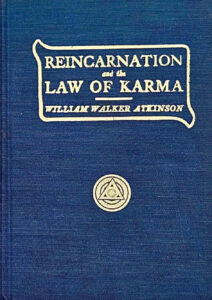
Reincarnation was one of the central teachings running through the literature of the Yogi Publication Society. It was presented as part of a complete explanation of human existence in which physical birth does not mark the beginning of the individual and physical death does not mark the end. The human being passes through repeated periods of embodiment, death, existence on other planes, rest and assimilation, followed by another birth into physical conditions. Each incarnation supplies new experiences through which character, consciousness, and spiritual understanding are developed. The personality belonging to a particular lifetime is temporary, while the deeper individual continues from life to life. In this system, reincarnation is inseparable from Karma, spiritual evolution, the survival of consciousness after death, and the eventual liberation of the individual from the necessity of repeated earthly birth.
What is reincarnation?
Reincarnation is the repeated embodiment of the continuing individual in successive physical lives. Birth is not regarded as the creation of a new soul. It is the entrance of an already existing spiritual individual into another period of earthly experience. Death likewise does not destroy that individual. It ends the physical portion of one incarnation and begins a series of postmortem states through which the experiences of the completed life are separated, assimilated, and carried forward.

This makes reincarnation very different from the simple idea of a person dying and then immediately becoming another person. A complete cycle stands between one physical life and the next. The individual enters physical existence, develops a personality appropriate to that life, accumulates experience, creates causes through thought and action, passes through death, continues in nonphysical states, assimilates the results of the incarnation, and eventually returns to physical embodiment. Reincarnation is one part of this much larger cycle.
The purpose of repeated incarnation is development. One lifetime cannot provide the range of experiences required for the complete development of the human individual. People enter life with radically different abilities, temperaments, attractions, weaknesses, intellectual capacities, moral development, and spiritual awareness. Reincarnation explains these differences as the results of a history extending far beyond the present personality. Human development is the work of many lives.
What actually reincarnates?
A major distinction in the YPS treatment of reincarnation is the difference between the personality and the deeper individual behind it. The everyday personality is associated with a particular incarnation. It has a name, physical body, family, nationality, social position, personal memories, habits, and circumstances belonging to that one earthly existence. These features do not constitute the whole individual.
Behind the temporary personality stands the continuing Ego, Individuality, Self, or spiritual principle, with terminology varying according to the system being presented. This deeper individual is the connecting center between successive incarnations. It does not begin with the birth of the physical body and does not disappear when that body dies.
This distinction also answers one of the most common objections to reincarnation. If a person has lived before, why does the present personality not remember those lives? The answer is that the present personality did not live them in its present form. The continuing individual did. The name, brain, family relationships, social identity, and ordinary memory of the present incarnation belong to the current embodiment. What survives from previous lives is found at a deeper level.
What is carried from one life to another?
Reincarnation does not require the ordinary conscious memory of every previous experience to be carried into the next life. What is retained is the result of experience. The individual carries forward acquired tendencies, capacities, character, inclinations, latent abilities, unresolved weaknesses, and the consequences of causes previously created.
An analogy is found within ordinary life. A person does not consciously remember every event that contributed to his education, yet the effects of those experiences remain in his knowledge, habits, judgment, and character. The forgotten experiences have not been useless merely because their details cannot be recalled. They have become part of the person.
Reincarnation extends this principle across successive lives. Experience is converted into character. Effort becomes capacity. Repeated action establishes tendency. Intellectual work contributes to mental development. Moral choices affect character. Spiritual effort increases the individual’s capacity for spiritual perception. The circumstances of a particular life disappear, while their deeper results become part of the continuing individual.
This principle was also used to explain abilities that seem to appear unusually early in life. The child who demonstrates extraordinary musical, mathematical, artistic, intellectual, or spiritual ability may be displaying capacities cultivated through previous incarnations. Genius is not treated as something arbitrarily bestowed upon one person and withheld from another. It represents development whose visible beginning may lie far earlier than the present lifetime.
Why do we not remember previous lives?
The absence of ordinary past-life memory is not considered evidence against reincarnation because memory is closely connected with the physical brain and the personality constructed during a particular incarnation. A new physical brain does not contain the ordinary cerebral records of the previous body. The surface consciousness begins its present life without direct access to the ordinary memories of former personalities.
Forgetting also serves a purpose. If every new life began under the full conscious weight of numerous former identities, deaths, griefs, enemies, attachments, failures, and relationships, the new personality could be overwhelmed by the past. A new incarnation provides a new field of action in which the accumulated results of previous experience can operate without requiring constant conscious recollection of their origins.
The deeper effects nevertheless remain. An unexplained attraction, aversion, aptitude, fear, sympathy, sense of familiarity, or immediate connection with another person could be interpreted within this system as an expression of causes extending beyond the present life. Such experiences do not by themselves constitute proof of a former incarnation. Within the reincarnation doctrine, however, they become intelligible as possible surface expressions of a much deeper continuity.
Exceptional memories of former lives were treated as possible when the barrier between the present personality and deeper levels of consciousness became unusually permeable. This belonged to the same YPS field of inquiry that included Clairvoyance, psychometry, telepathy, astral perception, and other forms of alleged supersensory consciousness. Reincarnation does not claim that memory is completely destroyed. It maintains that ordinary waking consciousness normally has access only to the memories required for the present incarnation.
How are reincarnation and Karma connected?
Karma supplies the law of continuity between successive incarnations. Reincarnation provides repeated lives, while Karma connects those lives through cause and effect. Every incarnation inherits conditions created in the past while simultaneously creating causes that will influence the future.
Karma is not simply punishment for wrongdoing. It is the operation of cause and effect in the moral, mental, and spiritual life of the individual. Thoughts, desires, motives, decisions, and actions produce results. Some consequences appear quickly. Others require conditions that may not arise during the present lifetime. Reincarnation provides the extended field within which those causes can eventually produce their effects.
This also means that Karma is not fatalism. The individual enters the present life under conditions partly shaped by previous causes, yet present thought and action continually create new causes. A person is both the recipient of the past and a creator of the future. Existing conditions may limit the immediate range of action, but they do not remove the ability to respond, learn, change direction, and establish new causes.
The future is neither completely predetermined nor disconnected from the past. Reincarnation and Karma create continuity without eliminating individual agency.
Does reincarnation explain differences between people?
One of the strongest philosophical arguments for reincarnation within the YPS system concerns the enormous differences visible at birth. Human beings do not enter physical life with equal capacities, dispositions, opportunities, health, intelligence, temperament, or surroundings. One person appears with exceptional intellectual ability, another with artistic genius, another with unusual moral strength, and another with powerful destructive tendencies. Some encounter favorable circumstances while others begin under severe limitations.
Reincarnation interprets these differences as stages and consequences within a much longer individual history. The present birth is not the first chapter. Each person enters it carrying development already attained and causes already established.
Heredity remains important because the physical organism is received through parents. Environment is equally important because it supplies the conditions under which the personality develops. Reincarnation adds a third factor. It asks why a particular continuing individual enters one set of hereditary and environmental conditions instead of another.
Under this view, heredity supplies the physical instrument, environment supplies the immediate field of experience, and Karma connects the reincarnating individual with circumstances appropriate to the causes and developmental needs carried into the new life.
How is a future incarnation determined?
Rebirth is not presented as a random movement from one body to another. The forces accumulated by the individual establish affinities that draw the reincarnating Ego toward conditions in which those forces can operate. Character, desire, unfinished tendencies, karmic relationships, and developmental requirements all contribute to the circumstances surrounding a future incarnation.
The principle is one of attraction and correspondence. The individual gravitates toward the conditions capable of providing the experiences required for further development and the working out of existing causes. Family, environment, abilities, limitations, opportunities, and relationships become parts of the field in which the next stage of the individual’s development occurs.
This does not require every event in life to have been individually arranged in advance. The doctrine allows for the interaction of countless individuals exercising their own wills within shared conditions. Karma establishes relationships and tendencies, while present choices continue producing new causes. Human life remains dynamic because the karmic histories of many individuals continually intersect.
Do people meet one another again in later lives?
Reincarnation also provides an explanation for the persistence of important human relationships. Individuals who establish powerful bonds may encounter one another again under different circumstances because relationships themselves create karmic connections.
The external relationship does not have to remain the same. People who were relatives in one incarnation might meet under entirely different conditions in another. Friendship, affection, hostility, obligation, dependence, betrayal, sacrifice, and shared work can all create causes that continue beyond a single lifetime.
This gives relationships an educational role. Other people become agents through whom character is tested and developed. Love may deepen into a less selfish form. Hatred may have to be overcome. Obligations may have to be fulfilled. Harm may eventually require restoration. Repeated association provides opportunities for unresolved relationships to change.
Reincarnation expands human relationships beyond the boundaries of one physical lifetime without requiring the social identities of one incarnation to remain permanently fixed.
Does a person always reincarnate as the same sex?
The physical sex of a particular incarnation belongs to the temporary bodily personality and is not necessarily a permanent characteristic of the reincarnating individual. Across a sufficiently long series of lives, incarnation as both male and female allows the individual to experience human existence from different physical, psychological, familial, and social positions.
This fits the larger purpose of reincarnation as education through experience. Complete development would be limited if the individual were permanently restricted to one set of human conditions. Changes in sex, nationality, social position, wealth, occupation, culture, and circumstance expand the range of experience available through successive embodiments.
The personality changes because the educational conditions change. The continuing individual remains the thread joining those different experiences.
Can a human being reincarnate as an animal?
The YPS presentation generally distinguishes reincarnation from the popular idea that a human being may return to earth as an animal. Once the individual has reached the human stage of development, reincarnation continues within the human order. The evolutionary movement is forward through increasing consciousness and individualization, not backward into lower forms.
This distinction is important because reincarnation was frequently confused with transmigration and metempsychosis. Those terms have been used differently in different philosophical and religious traditions, and popular accounts often reduced the entire doctrine to the idea that a person might return as an animal.
The reincarnation system presented in YPS literature is considerably more developed. Human rebirth is part of spiritual evolution. The individual repeatedly assumes human embodiment until the lessons available through physical incarnation have been mastered.
Is reincarnation a form of spiritual evolution?
Reincarnation and evolution are closely connected. Physical evolution explains the development of forms, while reincarnation provides a framework for the development of the individual consciousness using those forms. The human being is not created spiritually complete at birth. Consciousness develops through experience accumulated over many incarnations.
This helps explain why individuals appear to occupy very different levels of intellectual, moral, and spiritual development despite belonging to the same human species. Chronological age within a single incarnation says little about the total development of the continuing individual. A child may possess capacities exceeding those of adults because the deeper history of the individual is not measured by the age of the present body.
The idea sometimes expressed as older and younger souls follows from this principle. It does not necessarily mean that souls possess different absolute values. It describes different stages of development. One individual may remain strongly occupied with physical appetite and immediate gratification, while another is drawn toward intellectual inquiry, moral discipline, service, philosophy, or spiritual realization. These differences represent stages within an immense process of education. No single incarnation provides the final measure of a person.
What happens at death?
Death ends the connection between the individual and the physical body, but it does not immediately erase the personality or send the individual directly into another physical birth. The postmortem teachings found throughout the YPS catalog describe death as the beginning of a gradual transition.
The physical organism is discarded first. Consciousness continues on subtler planes or states corresponding to aspects of human nature that existed during physical life but were not dependent upon the dense physical body. The individual remains connected for a time with desires, emotions, thoughts, and attachments developed during the completed incarnation.
Death begins a process of separation. The physical instrument has been left behind, but the psychological effects of earthly life still have to be worked through. Lower desires and attachments gradually exhaust themselves. Finer emotional, intellectual, and spiritual elements remain for further assimilation.
The exact terminology varies between Yogi philosophy, Hindu philosophy, Theosophy, Hermeticism, Western esotericism, Rosicrucian teachings, and other presentations, but the underlying pattern is consistent. Death is a transition through successive states, not an instantaneous leap from one physical body into another.
What happens between incarnations?
The interval between lives serves an important purpose in the reincarnation cycle. Earthly experience must be assimilated before another physical incarnation begins. The individual passes through postmortem conditions corresponding to the character and consciousness developed during life, gradually releasing elements that belong only to the completed personality.
The higher results of experience are absorbed into the continuing individual. Love, intellectual development, moral achievement, spiritual aspiration, and lessons acquired through earthly experience are not lost. Their enduring results contribute to the character and capacities available in future incarnations.
A period of rest follows the struggle and activity of earthly existence. This is not merely inactivity. It is part of the rhythm of manifestation and withdrawal. Physical life provides concentrated experience. The period between incarnations permits that experience to be assimilated.
Eventually the forces drawing the individual toward physical experience become active again. Unfulfilled desires, karmic causes, unfinished development, and the continuing movement of evolution bring the Ego toward another incarnation.
Birth and death can therefore be understood as opposite movements within one recurring process. Birth moves consciousness into physical conditions. Death withdraws it. The interval between lives assimilates what has been gained. Rebirth begins another period of experience.
Is reincarnation immediate after death?
Reincarnation is not normally presented as immediate. The period between physical lives may be substantial because the individual must pass through the postmortem stages associated with the completed incarnation.
The duration cannot be reduced to a single fixed number of years applicable to everyone. Individuals differ greatly in development, attachment, desire, consciousness, and karmic conditions. The interval between incarnations can therefore differ as well.
This point separates the developed reincarnation doctrine from the simplified image of a soul leaving one dying body and immediately entering a newborn child. Between those events stands an entire portion of the individual’s existence.
How does reincarnation explain suffering and apparent injustice?
Reincarnation was repeatedly used to address one of the oldest religious and philosophical problems. Why do people who have apparently done nothing to deserve their circumstances experience suffering, disability, deprivation, or misfortune, while others begin life with extraordinary advantages?
If every individual begins existence at birth, these inequalities can appear arbitrary. Reincarnation extends the field of causation beyond the present life. Current conditions may have causes that cannot be found within the few years since the present body was born.
Karma and reincarnation thus provide an explanation of justice operating across a much longer period than one lifetime. The individual encounters consequences and opportunities connected with a history that ordinary memory does not encompass.
The doctrine does not require the conclusion that every suffering person is being punished for a specific former offense. Difficulty may provide development, may result from complicated interactions among many causes, or may create opportunities that could not exist under easier conditions. The central principle is continuity of causation, not a simplistic system in which every misfortune can be assigned to a particular unknown sin.
This distinction is vital. Karma is a law of cause and effect, while reincarnation provides the extended field in which that law operates.
Does reincarnation mean that everything is predetermined?
Reincarnation does not remove free will. Past causes establish conditions, tendencies, relationships, and limitations, but the individual acts within those conditions and continually produces new causes.
A person may enter life with a powerful temper, for example, but the existence of that tendency does not compel every angry action. The tendency represents material brought into the present field of experience. The individual’s response determines whether it is strengthened, controlled, redirected, or overcome.
The same principle applies to abilities and favorable circumstances. Talent brought forward from earlier development can be cultivated or neglected. Opportunity can be used or wasted. Wealth can become an instrument of selfishness or service. Difficulty can produce bitterness or strength.
The present moment is where past and future meet. Past Karma supplies part of the material. Present consciousness acts upon it. Those actions create future conditions.
Reincarnation gives human choice greater importance because its consequences are not confined to the remaining years of one physical life.
What role does desire play in reincarnation?
Desire is one of the forces binding consciousness to repeated physical embodiment. As long as the individual remains strongly attached to experiences available through material existence, those desires help draw consciousness back toward the conditions in which they can be expressed.
This does not mean that all desire is treated identically. Human development itself moves through different forms of desire. Crude physical wants may gradually give way to ambition, intellectual aspiration, moral purpose, love, service, and spiritual longing. The object and quality of desire change as the individual develops.
Reincarnation continues while lessons remain to be learned, karmic causes remain to be worked out, and consciousness remains attached to conditions requiring physical embodiment.
The conquest of desire does not mean becoming inert or indifferent. It means gaining mastery over forces that previously controlled the personality. The individual gradually ceases to be driven blindly by appetite, fear, passion, attachment, and external circumstance.
Is reincarnation the same in Hindu philosophy, Theosophy, Hermeticism, and Western esotericism?
The Yogi Publication Society brought together material from several traditions that did not use identical terminology or agree on every detail. Hindu philosophy and Yogi philosophy described rebirth through concepts drawn from Indian religious and philosophical traditions. Theosophical literature developed elaborate classifications of human principles and postmortem planes. Hermeticism, associated historically with Hermes Trismegistus, approached the development and destiny of the human being through another cosmological framework. Rosicrucian and Qabalah material brought reincarnation and spiritual development into other currents of Western esotericism, while Christian mysticism approached questions of preexistence, death, resurrection, judgment, and spiritual development through Christian language.
These systems should not be collapsed into a single historical tradition. Their terminology, origins, and metaphysical structures differ.
What made their appearance together within the YPS catalog significant was the recurring structure beneath those differences. Human existence extended beyond one physical lifetime. The visible personality was not the whole individual. Death did not terminate consciousness. Moral and mental causes survived the death of the body. Human development continued through successive states of existence. Earthly birth provided repeated opportunities for experience and development. Liberation required the individual eventually to transcend the conditions that made compulsory rebirth necessary.
The catalog therefore allowed readers to encounter reincarnation from several directions while repeatedly returning to the same fundamental problem of human continuity.
How was reincarnation presented across the different YPS systems?
The importance of reincarnation to the YPS catalog becomes clearer when the catalog is viewed as a collection of related systems instead of a series of isolated books. The teachings issued under Yogi Ramacharaka gave readers an extensive presentation of Yogi philosophy, Karma, spiritual evolution, the planes of existence, death, and rebirth. The works associated with William Walker Atkinson brought many of these ideas into direct contact with the American New Thought and occult environment in which the YPS operated.
Other YPS pseudonyms and authorial identities approached related questions from different directions. Swami Panchadasi and Swami Bhakta Vishita dealt extensively with psychic and occult phenomena, including subjects connected with Clairvoyance, the astral world, psychic perception, and survival beyond the physical senses. Theron Q. Dumont concentrated much more heavily on the development, discipline, and mastery of the individual mind and personality. Taken together, these different presentations allowed the YPS reader to move from the immediate training of thought and character to a much longer conception of the individual’s development across successive lives.
The Hermetic side of the catalog supplied another expression of this same concern with development under universal law. The Three Initiates presented The Kybalion as an exposition of Hermetic principles associated with Hermes Trismegistus. Its laws of Mentalism, Correspondence, Vibration, Polarity, Rhythm, Cause and Effect, and Gender placed human consciousness within an ordered universe governed by law. This provided a natural philosophical counterpart to the karmic principle that causes created by the individual must have effects, even when those effects extend beyond the visible circumstances of a single physical life.
The result was not one standardized doctrine expressed in identical language. It was a catalog in which Yogi philosophy, Hermeticism, Western esotericism, Rosicrucian teachings, psychic investigation, and mental development repeatedly returned to the continuity and development of the individual beyond the limits of ordinary physical consciousness.
How does reincarnation change the meaning of death?
Within a reincarnation system, death loses its character as the absolute opposite of life. It becomes a change of state.
The body dies because the physical organism has completed its period of usefulness. The continuing individual withdraws from it and proceeds through the postmortem portion of the cycle. The personality associated with the completed life is gradually stripped of what is temporary, while the permanent results of its experiences remain with the deeper individual.
Death is still important because a particular incarnation has ended. Opportunities belonging specifically to that personality and those circumstances have passed. Reincarnation does not make an individual earthly life meaningless. It gives each life a place within a much longer development.
Every incarnation is temporary, but its effects can be permanent.
What is the purpose of repeated earthly lives?
The purpose of reincarnation is not endless repetition. It is education through experience.
Physical existence provides conditions that cannot be duplicated merely by abstract knowledge. Courage requires circumstances in which fear can be confronted. Patience requires resistance and delay. Self-control requires impulses capable of being controlled. Compassion develops through contact with other lives. Judgment develops through decisions and their consequences. Intellectual power develops through thought. Spiritual awareness develops as consciousness learns to distinguish the permanent from the temporary.
Different incarnations supply different combinations of these conditions. Wealth teaches lessons that poverty cannot, while poverty provides experiences unavailable to wealth. Power creates one set of moral tests and dependence another. Health, illness, success, failure, solitude, family, responsibility, love, loss, intellectual achievement, and material limitation can all become conditions through which consciousness develops.
The object is not simply to accumulate experiences. It is to extract their lessons until the individual no longer needs the conditions that produced them.
Does reincarnation continue forever?
Reincarnation is a means of development, not the final destiny of the individual. Repeated earthly birth continues only while physical incarnation remains necessary.
As consciousness develops, the individual gradually masters lessons that once required repeated embodiment. Lower desires lose their power. Character becomes increasingly self-directed. Knowledge replaces ignorance. Conscious spiritual awareness replaces unconscious participation in the cycle.
Eventually, the individual reaches a stage at which compulsory earthly incarnation is no longer necessary. Different traditions describe this attainment through different terms, including liberation, illumination, adeptship, freedom, union, or release from the wheel of birth and death. The crucial idea is that reincarnation has an end because it has a purpose. The goal is not to become increasingly skilled at returning to physical life forever. The goal is to acquire the knowledge, character, self-mastery, and spiritual consciousness for which repeated incarnation provided the school.
What does liberation from reincarnation mean?
Liberation means freedom from compulsory rebirth. The individual is no longer drawn automatically into physical incarnation by uncontrolled desire, ignorance, unresolved Karma, and the need for experiences that can only be obtained through earthly conditions.
This does not necessarily mean annihilation or loss of individuality. Within the systems represented in the YPS catalog, higher spiritual existence is generally portrayed as an expansion of consciousness. The individual who has completed the ordinary cycle of human development enters a greater field of existence and knowledge.
The distinction between compulsory and voluntary incarnation can also become important at advanced stages. An individual who no longer requires physical incarnation for personal development may, within some esoteric systems, return for the instruction or assistance of others. Rebirth under those circumstances would no longer represent bondage to the cycle.
Freedom consists in mastery. The individual who was once carried unconsciously through birth, desire, death, and rebirth eventually understands the laws governing the process and rises beyond their compulsory operation.
What place did reincarnation hold in the worldview presented by the Yogi Publication Society?
Reincarnation was far more than an isolated belief in the Yogi Publication Society catalog. It helped connect many of the subjects that otherwise appear to belong to separate fields. Karma explained why actions could have consequences beyond one lifetime. Survival after death explained how continuity could persist when the physical body disappeared. The astral and higher planes supplied the intermediate states between physical incarnations. Mental and spiritual development explained what was being carried forward. Occult training concerned the deliberate development of powers and consciousness that ordinary evolution produced more slowly. Yoga supplied methods for gaining mastery over mind and desire. Hermetic and Rosicrucian teachings placed human development within larger systems of cosmic law. Mystical teachings addressed the eventual awakening of the spiritual Self behind the succession of personalities.
These ideas also appeared within the same intellectual world in which the YPS treated New Thought, suggestion, mental development, personal mastery, and the deliberate direction of thought. This connection is important because the YPS catalog did not isolate spiritual evolution from the development and control of the mind. Its many systems approached human development from different directions while placing increasing control of thought, desire, habit, character, and consciousness at the center of individual advancement.
This part of the YPS environment also reached back into the work of Herbert A. Parkyn, the Chicago School of Psychology, and Parkyn’s Special Mail Course in Hypnotism and Suggestive Therapeutics. That earlier system concentrated on suggestion, mental control, habit, character, the voluntary and involuntary activities of mind, and the deliberate development of the individual. Within the later YPS catalog, the scale of human development extended far beyond a single lifetime as these mental teachings stood alongside reincarnation, Karma, Yoga, psychic development, and spiritual evolution. Reincarnation gave many of these subjects a common chronology.
The individual existed before the present birth. Previous development helped shape the present character and circumstances. Physical life supplied another field of experience. Thought and action created new causes. Death ended the physical personality’s earthly activity without ending the deeper individual. Postmortem states allowed the completed incarnation to be worked through and assimilated. Karma and desire eventually drew the individual toward another physical embodiment. The process continued through successive lives as consciousness developed.
From this perspective, a human life was neither an isolated accident nor the entirety of existence. It was one chapter in an immense individual history. The infant entering the world was not spiritually beginning from nothing. The dying person was not approaching extinction. Genius was not without a history. Character was not merely the product of a few years of environment. Inequalities at birth did not represent the first conditions the individual ever experienced. Relationships could extend beyond a single lifetime. Actions acquired consequences larger than immediate reward or punishment. Death became part of a recurring rhythm, and human development expanded from decades into ages.
This was the larger meaning of reincarnation within the world presented by the Yogi Publication Society. Birth, life, death, the afterlife, Karma, rebirth, and spiritual evolution were parts of one continuous process. The personalities changed, the bodies changed, and the circumstances changed, but the deeper individual continued through them, gathering the results of experience until the lessons of physical existence had been completed and reincarnation itself was no longer necessary.