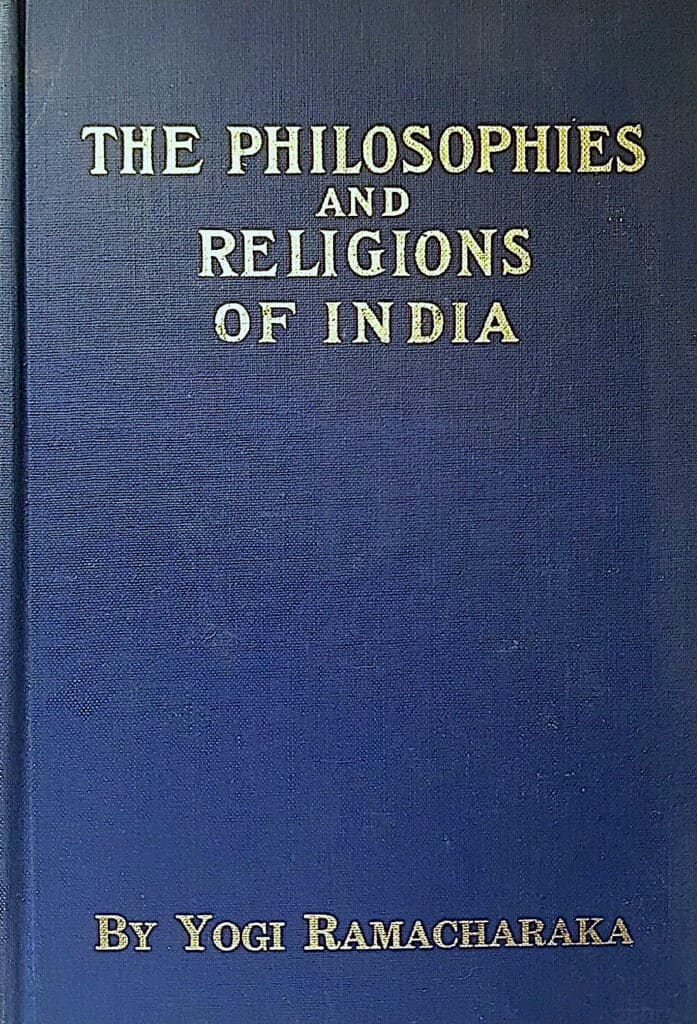
Published by the Yogi Publication Society in 1908, The Inner Teachings of the Philosophies and Religions of India by Yogi Ramacharaka explains the philosophical and religious traditions of India and the ideas beneath their diversity.
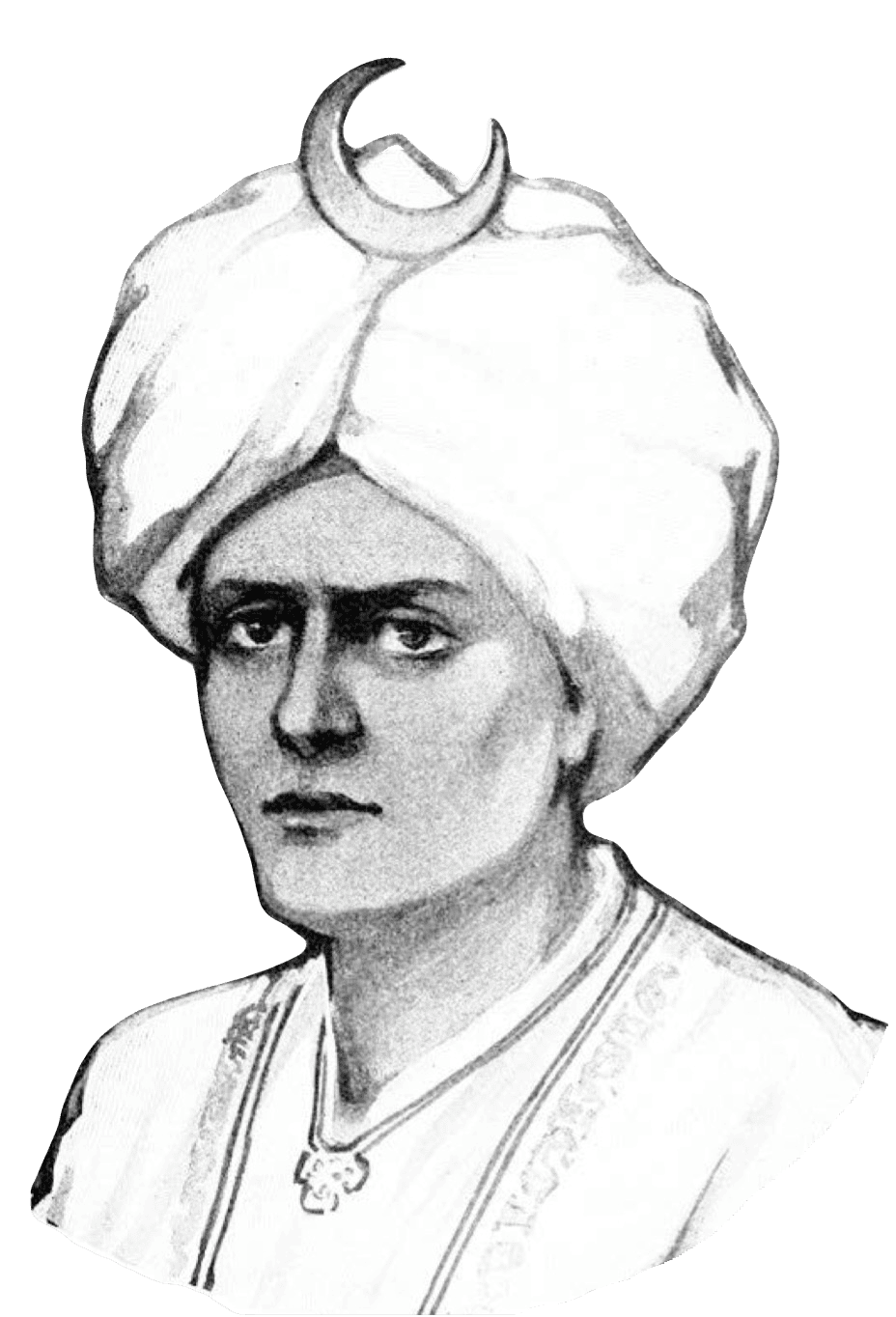
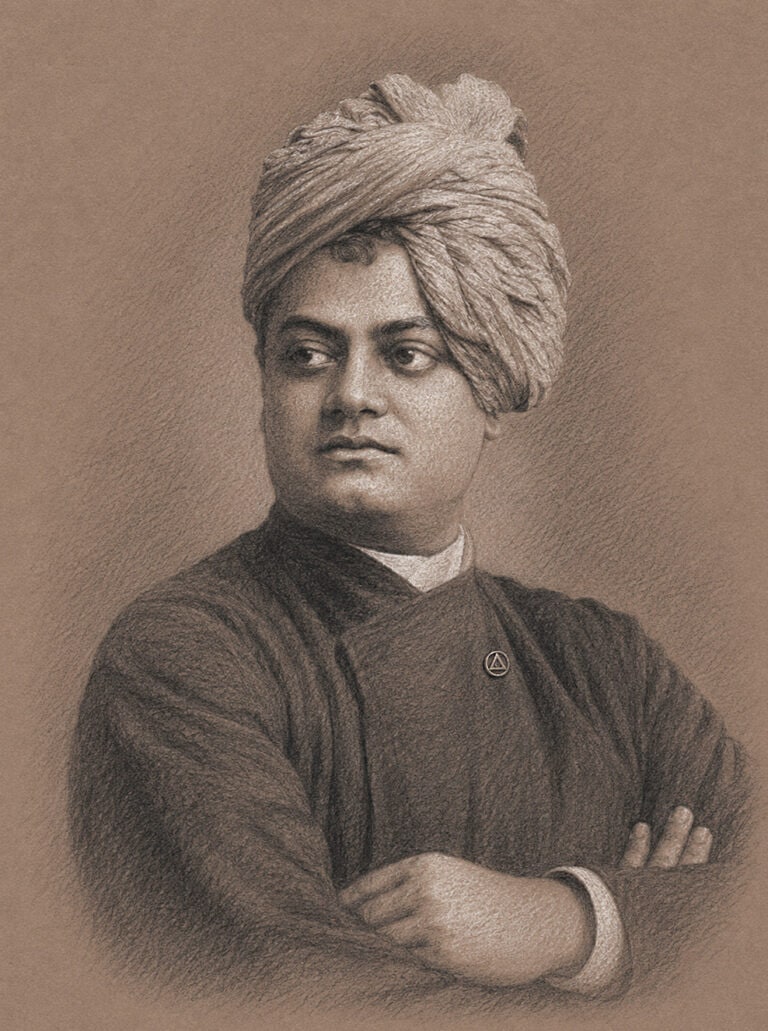
Yogi Ramacharaka
India had produced systems that disagreed over the nature of God, the soul, matter, creation, consciousness, and liberation; traditions built upon reason and others upon revelation; paths of meditation, devotion, ritual, knowledge, and action; and a religious world populated by divine personalities that could seem far removed from the austere metaphysics of the philosophers. Yet behind these differences, Ramacharaka finds a persistent search for something that does not change with them—the Reality behind the visible world and the true nature of the Self experiencing it.
This is the meaning of the “Inner Teachings” in the title. The different philosophies are not treated as interchangeable, and their disagreements are often substantial, but their outward differences are repeatedly traced back toward a common problem: the relationship of the One to the Many. Sankhya approaches it through Spirit and Nature; Vedanta through Brahman, Atman, and Maya; Patanjali through the mastery of consciousness; Buddhism through the destruction of ignorance and desire; and the devotional traditions through the relationship between the individual and the Divine. Beneath all of them, Ramacharaka asks the reader to watch for what he calls the “silken thread” of the One running through the many systems, sometimes openly declared and sometimes concealed beneath doctrines, symbols, divine personalities, and religious forms.
The Philosophical World of Ancient India
The journey begins with India itself and with the immense antiquity of its philosophical tradition. Long before many of the questions associated with later Western philosophy had assumed their familiar forms, Indian thinkers were debating the origin of existence, the relationship between mind and matter, the nature of consciousness, the survival of the soul, causation, free will, rebirth, and the possibility of an eternal Reality behind the world of change. Ramacharaka wants the Western reader to understand this intellectual setting before attempting to judge the individual systems that arose from it. Indian philosophy was not a single body of doctrine but a vast argument carried on across centuries, with schools accepting, modifying, or rejecting the conclusions of those that preceded them.
One of the assumptions running through much of this thought is the impossibility of absolute creation from nothing. Whatever appears must arise from something already existing in some condition, even though its form may change completely. The same reasoning is applied to the soul. If the essential Self is genuinely immortal, immortality cannot simply be granted at the moment of physical birth, for something having no existence before that moment would have no inherent claim to existence without end. reincarnation consequently enters the discussion as part of a much larger philosophical problem concerning the continuity of consciousness rather than as an isolated religious belief.
India’s philosophical schools gave very different answers to these questions, but they shared the conviction that human existence could be investigated and understood. Some relied heavily upon reason, some upon introspection, some upon the Vedas, and others upon disciplined states of consciousness. Their disagreements become the substance of the lessons that follow.
What Are the Inner Teachings?
The second lesson supplies the principle through which everything else is meant to be read. Behind the countless forms assumed by Indian philosophy and religion stands the search for the One Reality underlying the apparent multiplicity of existence. Ramacharaka deliberately uses expressions such as “The One” and “THAT” because any attempt to define the Absolute completely would place a boundary around what, by definition, cannot be bounded.
The problem begins with ordinary experience. Everything appears divided. There is self and other, subject and object, mind and matter, life and death, one person and another. Yet if an infinite Reality lies behind existence, nothing can actually stand beyond it, because something outside the Infinite would establish a limit to infinity itself. The question becomes unavoidable: how does the One appear as the Many?
Philosophies and Religions of India by Yogi Ramacharaka
No single answer is imposed upon all the systems. Sankhya retains a fundamental distinction between consciousness and Nature. Vedanta moves toward an uncompromising unity. Buddhism appears to reject ideas that other schools consider essential. Popular religion surrounds metaphysical principles with divine personalities and symbols. Yet Ramacharaka maintains that the same underlying truth can still be detected beneath their different languages. “THE ONE,” he writes, remains the “background,” “Foundation and Support,” and “Roof” of Hindu philosophical and religious thought.
Several ideas recur as this underlying teaching develops:
An ultimate Reality exists behind phenomenal appearances.
The true Self cannot be reduced to the physical body or ordinary personality.
Desire, ignorance, and identification with temporary conditions bind consciousness to phenomenal existence.
Karma expresses the continuity of cause and consequence.
Reincarnation continues while the causes producing embodied existence remain active.
Liberation requires some form of realization, knowledge, discipline, devotion, or freedom from attachment.
Different spiritual paths may approach the same central problem through different human faculties.
The purpose is not to pretend that every tradition says the same thing. It is to learn how apparently contradictory systems can grow around a smaller number of enduring philosophical problems. These recurring principles also form much of the foundation of the Yogi philosophy presented throughout the Ramacharaka writings.
Sankhya: Spirit and Nature
Sankhya, traditionally associated with Kapila, begins from one of the sharpest distinctions in Indian philosophy: the division between Purusha and Prakriti. Purusha is the conscious principle, while Prakriti is primordial Nature, the source from which the phenomenal universe develops. Everything that changes belongs to Prakriti. Matter belongs to it, but so do sensation, thought, emotion, intellect, and the mental machinery through which experience is received.
This last point is essential. Sankhya does not merely divide a material body from an immaterial mind and call the latter the soul. Mind itself belongs to Nature. Thoughts can be observed, emotions can change, memories can arise and disappear, and mental conditions continually move from one state to another. The conscious principle that knows these changes must be distinguished from the changing contents presented to it.
Purusha is that conscious witness. Sankhya recognizes a multiplicity of Purushas rather than resolving all individual consciousness into the single Absolute of Advaita Vedanta. Each Purusha is independent of Prakriti, yet consciousness becomes identified with the activity of Nature and appears to participate in its pleasure, pain, desire, fear, birth, and death.
The central error is one of identification. The individual mistakes the instruments and experiences of consciousness for consciousness itself. Liberation begins when Purusha recognizes that body, emotion, thought, and personality belong to the changing activity of Prakriti and are not the true Self.
The Three Gunas
Prakriti expresses itself through three fundamental qualities or tendencies known as the Gunas: Sattva, Rajas, and Tamas. They operate not only in human character but throughout manifested Nature.
Sattva represents equilibrium, harmony, illumination, clarity, and refinement. Rajas represents activity, movement, passion, desire, restlessness, and change. Tamas represents inertia, resistance, heaviness, darkness, and stability. The endless variety of Nature results from the different proportions and interactions of these three tendencies.
Their psychological application is especially important. Restless ambition and desire reveal the activity of Rajas; dullness and inertia reflect Tamas; clarity and equilibrium indicate Sattva. Yet Sankhya carries the distinction still further. Even Sattva belongs to Prakriti. A calm and illuminated mind may be a far better instrument than a turbulent one, but it remains an instrument. Purusha is the consciousness to which even the highest mental state appears.
Vedanta and the Search for Ultimate Reality
Vedanta occupies a commanding position in the discussion because it carries the search for unity further than Sankhya. Its very name refers to the “end” or latter portion of the Vedas and is closely connected with the philosophical teachings of the Upanishads. Ramacharaka describes it as the leading school of Hindu philosophy in India and emphasizes both its enormous influence and its capacity to accommodate widely differing levels of religious understanding.
At its foundation stands Brahman, the one infinite, eternal, and indivisible Reality. If Brahman is truly infinite, there can be no independent existence outside it. Anything entirely external to the Infinite would impose a boundary and contradict the very idea of infinity.
That conclusion produces the central difficulty of Vedanta. Human beings plainly experience multiplicity. The world appears filled with separate people, separate objects, separate minds, and separate events. If Brahman alone possesses absolute Reality, what exactly is this world?
Maya and the Appearance of Separation
Advaita Vedanta answers through Maya. The word is easily misunderstood when translated simply as “illusion,” because that can suggest that nothing exists at all. The point is instead that phenomenal existence does not possess the absolute, independent reality that ordinary consciousness attributes to it. The world is experienced, but its apparent separateness is not the final truth about it.
The problem resembles the distinction between appearance and the Reality underlying appearance. Human consciousness encounters forms and treats them as independently existing things. Vedanta pushes beyond the forms and asks what remains when all limitations and distinctions are removed.
Maya explains not only the apparent multiplicity of the external world but also the apparent isolation of the individual. The person experiences himself as a separate being because consciousness identifies itself with a particular body, personality, history, set of memories, and field of experience. From the standpoint of Advaita, this individuality belongs to the phenomenal appearance rather than to absolute Reality.
Atman and Brahman
The decisive teaching follows from this. Atman, the true Self, is not separate from Brahman. The seeker does not need to create a union between the individual Self and the Absolute because the supposed separation between them is itself part of the ignorance that must be overcome.
Liberation becomes realization rather than acquisition. Nothing has to be added to the Self. Instead, false identifications are removed. Body changes, thought changes, personality changes, and the circumstances of life change, yet consciousness continually mistakes these temporary conditions for its identity. Vedantic discrimination proceeds by separating the permanent from the impermanent until the true nature of the Self becomes apparent.
Knowledge in this sense cannot be reduced to learning the doctrine intellectually. A person may memorize the language of non-duality while continuing to experience life entirely through the consciousness of separation. The transformation occurs only when what has been understood as an idea becomes realized as truth.
Karma, Reincarnation, and Liberation
Karma and reincarnation operate within the world of conditioned existence. Thought and action create consequences; desires generate new causes; tendencies persist; and consciousness remains bound to repeated experience while the forces producing embodiment continue.
From the highest Advaitic standpoint, even the cycle of reincarnation belongs to Maya. This changes the highest purpose of spiritual development. The objective is not simply to secure a better future incarnation or improve the conditions of phenomenal life. Those concerns remain meaningful within ordinary consciousness, but liberation lies beyond the entire cycle of conditioned individuality.
Patanjali and the Discipline of the Mind
Patanjali
Patanjali’s Yoga System takes much of the philosophical foundation associated with Sankhya and adds a practical system of mental and psychic development. Ramacharaka is careful to distinguish Patanjali’s system from what he calls “our own Yogi Philosophy,” which he describes as eclectic and differing from Patanjali in important respects. He nevertheless recognizes the Yoga System as one of the three great systems of Hindu philosophy and notes its close relationship to Sankhya.
The problem addressed by Yoga is immediately recognizable: the mind rarely remains where the individual intends to place it. Thoughts follow sensations, memories, desires, fears, associations, and habits. Attention is continually captured by whatever happens to arise. A person may possess a philosophy of the Self while remaining almost entirely controlled by mental activity.
Patanjali turns spiritual development into a discipline of consciousness. Ethical preparation and self-control establish the foundation; bodily and breathing practices bring additional processes under voluntary direction; and attention is progressively withdrawn from its habitual dependence upon sensory impressions. The work becomes increasingly internal until the student confronts the movements of mind itself.
Concentration, Meditation, and Samadhi
Dharana is concentration, the ability to hold attention steadily upon a chosen object rather than allowing it to scatter. Dhyana deepens this steadiness into sustained meditation. Samadhi represents the culmination, in which the ordinary division between the observer and the object of contemplation is profoundly altered.
This is where philosophy begins to become experience. Metaphysical reasoning may point toward a Reality beyond ordinary consciousness, but Samadhi is presented as an attempt to know through direct realization what reasoning can only describe from outside.
Ramacharaka connects such states with forms of spiritual or cosmic consciousness familiar from his other writings. Yet he repeatedly insists that unusual experiences and powers are not themselves the purpose of Yoga.
Why Psychic Powers Can Become an Obstacle
Concentration may produce extraordinary mental or psychic abilities, but the acquisition of power can easily strengthen the very sense of separate personality that Yoga is intended to overcome. Cairvoyance, mental influence, unusual control of bodily processes, or other extraordinary phenomena may fascinate the student and redirect attention from liberation toward personal power.
The warning is severe: psychic development and spiritual development are not synonymous. A person may possess unusual abilities while remaining selfish, vain, undisciplined, or spiritually ignorant. The proper goal of Yoga is mastery of consciousness, not the performance of wonders.
The Six Systems of Hindu Philosophy
Indian philosophy traditionally recognizes six orthodox systems: Sankhya, Yoga, Vedanta, Nyaya, Vaisheshika, and Purva Mimansa. Sankhya, Vedanta, and Yoga receive the fullest treatment because of their importance to the philosophical structure being developed, while the remaining three reveal other dimensions of Indian intellectual life.
Nyaya and the Discipline of Reason
Nyaya is the great logical and analytical school. Its concern is not primarily mystical contemplation but the process by which knowledge is obtained and tested. Reasoning, evidence, inference, argument, and the recognition of error become philosophical disciplines in their own right.
Its presence is an important reminder that Indian philosophy cannot be reduced to mysticism. The civilization that developed elaborate systems of meditation also subjected thought itself to analysis. If ignorance is one of the causes of bondage, careless reasoning cannot be spiritually harmless.
Vaisheshika and the Structure of Nature
Vaisheshika approaches the phenomenal world through analysis and classification. It is especially notable for its atomistic tendencies and its attempt to understand the basic categories from which the material world is constructed.
This produces a striking contrast with the movement toward unity found in Vedanta. Instead of asking how all things disappear into one Reality, Vaisheshika asks how the apparent world can be divided into its most elementary principles. Yet this analysis does not become simple materialism. The spiritual principle remains distinct from the material structures being examined.
Purva Mimansa and the Authority of Tradition
Purva Mimansa represents a far more conservative direction. Its name means the “prior investigation,” in contrast with the “subsequent investigation” associated with Vedanta, and its attention falls upon the earlier, ritualistic portions of the Vedas. Ramacharaka describes it as the system most closely allied with orthodox ritual, ceremonies, creeds, and priestly authority.
Where other schools may appeal to reason even when their conclusions conflict with inherited interpretations, Purva Mimansa gives decisive authority to the Vedas and their traditional interpretation. This makes it important not because it resembles the more philosophical systems but because it demonstrates the enormous range contained within Hindu thought—from radical metaphysical inquiry at one end to the preservation of ancient religious forms at the other.
Buddhism and the Problem of Suffering
Buddhism arose from the same Indian intellectual world while breaking sharply with important elements of Brahmanical orthodoxy. Gautama Buddha directs attention away from speculative questions that do not contribute directly to liberation and toward something immediately present in human life: suffering.
The source of suffering is found in craving, attachment, and ignorance. Human beings attempt to secure permanence in a world where conditioned things continually change. They cling to possessions, sensations, relationships, beliefs, desires, and above all to the conception of themselves as enduring separate personalities. What is temporary is treated as permanent, and dissatisfaction follows.
The Buddhist path attacks the causes rather than merely their symptoms. Right understanding, right conduct, mental discipline, and freedom from craving gradually weaken the forces that keep consciousness bound to conditioned existence.
What Happens to the Self in Buddhism?
The Buddhist treatment of the Self creates one of the sharpest apparent conflicts with Hindu philosophy. Gautama refuses to affirm the ordinary conception of a permanent individual ego surviving unchanged through existence, and from the standpoint of many Hindu systems this appears to amount to a denial of the soul.
Ramacharaka argues that the difference is not as simple as it first appears. Advanced Hindu philosophy also denies that the ordinary personality is the true Self. Vedanta strips away body, thought, memory, personality, and conditioned individuality in its search for Atman. Buddhism and Vedanta reach different formulations, but both attack the assumption that the everyday personality represents an eternal and independent self.
Nirvana should likewise not be understood merely as annihilation. What is extinguished is the complex of desire, ignorance, and attachment sustaining conditioned existence. The difficulty of defining what lies beyond that condition is part of the reason Buddhist language can appear negative when compared with the positive language of Vedanta.
Why Buddhism Fell Outside Hindu Orthodoxy
The decisive division was not simply belief or disbelief in a personal God. Indian philosophical orthodoxy could accommodate systems in which a creator God occupied little or no central place. Buddhism’s greater challenge was its refusal to recognize the authority of the Vedas and its rejection of the religious privileges associated with the Brahmanical order.
It could inherit many of India’s philosophical problems while standing outside the orthodox systems that developed beside it. Buddhism belongs to the intellectual history of India while simultaneously representing a revolt against important parts of its established religious structure.
Sufiism and the Path of Divine Love
The inclusion of Sufiism broadens the discussion beyond Hindu and Buddhist traditions. Although Sufism developed within Islam, its mystical language and practices provide Ramacharaka with a striking parallel to Bhakti Yoga and the devotional traditions of India.
The Sufi approaches the Divine through love. Poetry speaks of the lover and Beloved, wine and intoxication, longing and surrender. These images are interpreted symbolically: the “wine” is the overwhelming experience of divine love, while intoxication describes the state in which ordinary self-consciousness is lost in devotion to the Beloved.
The resemblance to Bhakti is immediate. Hindu devotion likewise allows the Divine to be approached through personal relationships—as Father, Mother, Friend, Master, Child, or Beloved. What metaphysical philosophy expresses as unity may be experienced emotionally as the disappearance of separation between lover and Divine.
This becomes another expression of a principle found throughout the teachings: different human temperaments require different paths. The intellectual nature seeks through knowledge, the contemplative through meditation, the active through work, and the devotional through love. The forms differ because the people following them differ.
From the Many Gods to the One
The movement from philosophy into the religious life of India produces what can initially appear to be a contradiction. The austere metaphysics of the One now gives way to gods and goddesses, temples, sacred images, myths, ceremonies, divine incarnations, and intensely personal forms of worship.
The contradiction becomes less severe once religious symbolism is understood as another means of approaching realities that philosophy expresses abstractly. An infinite and impersonal Absolute may satisfy the philosopher while remaining almost impossible for the devotional temperament to love. A divine personality gives the worshiper a form through which reverence, affection, trust, prayer, and surrender can be expressed.
Early Vedic religion personified the great forces of Nature. Fire, wind, sun, storm, dawn, sky, and other powers assumed divine forms and accumulated myths, hymns, and ritual associations. Yet within this multiplicity appeared an increasing tendency to seek a unity behind the gods themselves. The divine forms could be understood as manifestations or personifications of powers rooted in a deeper Reality.
This makes it possible for Hindu religion to appear polytheistic at one level and monistic at another. The worshiper may direct devotion toward one divine form without necessarily denying the spiritual validity of another. The many forms become different approaches to something that cannot be exhausted by any one of them.
Brahma, Vishnu, and Shiva
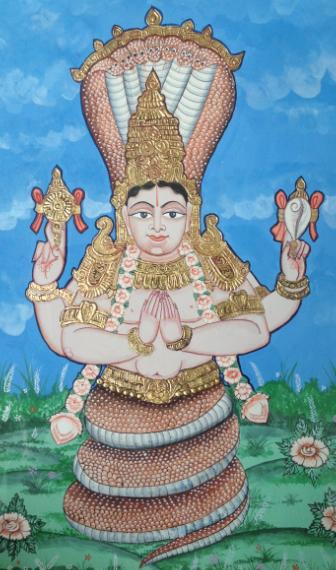
The Trimurti gives personal form to three vast cosmic processes. Brahma represents creation or projection, Vishnu preservation and sustenance, and Shiva dissolution and transformation. These are not simply events imagined to have occurred once at the beginning and end of the universe. They are processes continually visible throughout Nature.
Forms arise, endure, and disappear. Organisms are born, live, and die. Civilizations emerge and pass away. Cosmic manifestation itself is conceived cyclically rather than as a single movement from creation toward a final termination. Dissolution carries a meaning very different from simple destruction: what disappears as one form becomes part of the conditions from which new manifestation can arise.
Krishna and the Personal Divine
Krishna provides one of the clearest examples of the transformation of metaphysical principle into personal devotion. The Reality that the philosopher approaches through abstraction becomes a Divine presence capable of being loved, trusted, and surrendered to.
This does not necessarily abandon the higher philosophical conception. It approaches the same problem through another part of human nature. Where Gnani Yoga seeks to overcome separation through knowledge, Bhakti seeks to dissolve it through love.
The Different Paths of Yoga
The diversity of Indian spiritual practice rests upon the recognition that no single discipline is naturally suited to every person. Intellectual, devotional, active, and contemplative temperaments begin from different places, and a method that awakens one individual may leave another untouched.
Four approaches stand out across the discussion:
Gnani Yoga follows knowledge, discrimination, philosophical inquiry, and the search for the true Self.
Bhakti Yoga follows devotion, love, worship, surrender, and emotional union with the Divine.
Karma Yoga uses work and duty as spiritual disciplines by removing selfish attachment to the results of action.
Raja Yoga works through mastery of mind, concentration, meditation, and the deliberate development of consciousness.
These paths need not remain isolated from one another. Knowledge can deepen devotion; devotion can purify action; disciplined action can strengthen character; and meditation can transform intellectual understanding into direct experience. Their differences reflect different approaches to the same problem of overcoming the limitations of ordinary consciousness.
Hindu Wonder-Working and Psychic Phenomena
India’s reputation in the West had long been surrounded by stories of fakirs, Yogis, magicians, hypnotists, and wonder-workers performing apparently impossible feats. Ramacharaka does not simply accept all such reports as evidence of supernatural power. He distinguishes between fraud, illusion, suggestion, unusual psychological effects, and phenomena that he believes may result from genuine development of mental force, Prana, breath, concentration, and Will.
The distinction between psychic power and spiritual attainment is more important than the phenomena themselves. An extraordinary ability does not prove wisdom, purity, or liberation. A person may develop remarkable control over some mental or physical process while remaining governed by vanity and selfish desire.
This returns the discussion to the warning given in connection with Patanjali. Powers can become another form of bondage when the student begins seeking them for display, influence, or personal importance. The pursuit of the extraordinary may actually draw consciousness away from the far more difficult task of understanding itself.
The Vedas and the Foundations of Indian Thought
The Vedas
The final lesson returns to the ancient sacred literature from which so much of India’s religious and philosophical development arose. The Vedas belong to a tradition extending backward through long periods of oral transmission, when teachings were preserved and passed from teacher to student before assuming the written forms known to later generations.
Four principal Vedas are recognized:
The Rig-Veda preserves the great collection of ancient hymns and provides one of the principal sources for understanding early Vedic religion.
The Yajur-Veda is closely associated with sacrificial formulas, ritual procedure, and priestly functions.
The Sama-Veda arranges material particularly for chanting, melody, and liturgical use.
The Atharva-Veda contains a wider range of practical material, including formulas, healing, rites, and subjects associated with psychic or occult powers.
The philosophical importance of the Vedic tradition extends far beyond these collections themselves. From it came the Upanishadic speculation that became foundational to Vedanta and to the later exploration of Brahman, Atman, consciousness, and absolute Reality. What began in ancient hymns and ritual developed across centuries into some of India’s most radical philosophical inquiries.
The Sanskrit glossary concluding the volume serves an important purpose after this journey. Words such as Brahman, Atman, Maya, Purusha, Prakriti, Karma, Samadhi, and the Gunas cannot always be exchanged neatly for single English terms without losing part of their meaning. By the end, the reader has been introduced not merely to a collection of doctrines but to a philosophical vocabulary through which Indian thinkers framed the fundamental problems of existence.
What Unites the Philosophies and Religions of India?
After moving through systems that sometimes appear to contradict one another completely, The Inner Teachings of the Philosophies and Religions of India returns to the principle announced near its beginning: beneath the Many lies the search for the One.
Sankhya reaches toward liberation by separating consciousness from Nature. Vedanta presses beyond separation toward the identity of Atman and Brahman. Patanjali disciplines the mind so that consciousness may cease to be governed by its own modifications. Buddhism attacks craving, ignorance, and attachment to the separate personality. Bhakti and Sufi mysticism approach the disappearance of separation through love. Karma Yoga transforms ordinary action by freeing it from selfish attachment. The religious traditions give names, personalities, stories, and symbols to powers that philosophy attempts to express through abstract principles.
The systems remain different, but their great questions repeatedly converge. What is real? What is the Self? Why does consciousness experience separation? What binds the individual to suffering and repeated existence? What survives the continual changes of body, mind, and personality? And by what means can freedom be attained?
These questions give the work its unity. What first appears to be a catalogue of philosophies gradually becomes an investigation of the different ways human beings have attempted to answer the same fundamental problems.
From Philosophy to Realization
The final distinction is between knowing about spiritual truth and realizing it. Philosophy can describe Brahman, explain the relationship between Purusha and Prakriti, analyze Karma, or construct an argument concerning the Self. None of these accomplishments necessarily changes the consciousness of the person who understands them.
Each major path demands something beyond intellectual agreement. Vedanta requires discrimination until identification with the temporary is overcome. Patanjali requires control of the mind rather than merely a theory about it. Buddhism requires the actual weakening of craving and ignorance. Bhakti requires surrender through love. Karma Yoga requires action without selfish attachment. The philosophical systems may provide maps, but the destination is a transformation in consciousness.
This is why the image of the “silken thread” is so important. Ramacharaka does not ask the reader to choose a single outward form and dismiss everything else as error. He asks the reader to become capable of seeing through the forms. Behind competing doctrines, philosophical vocabularies, gods, ceremonies, schools, and methods stands the recurring search for the Reality beneath appearance and the Self beneath personality. The Many remain visible, but the purpose of the Inner Teaching is to train the mind to recognize the One running through them.