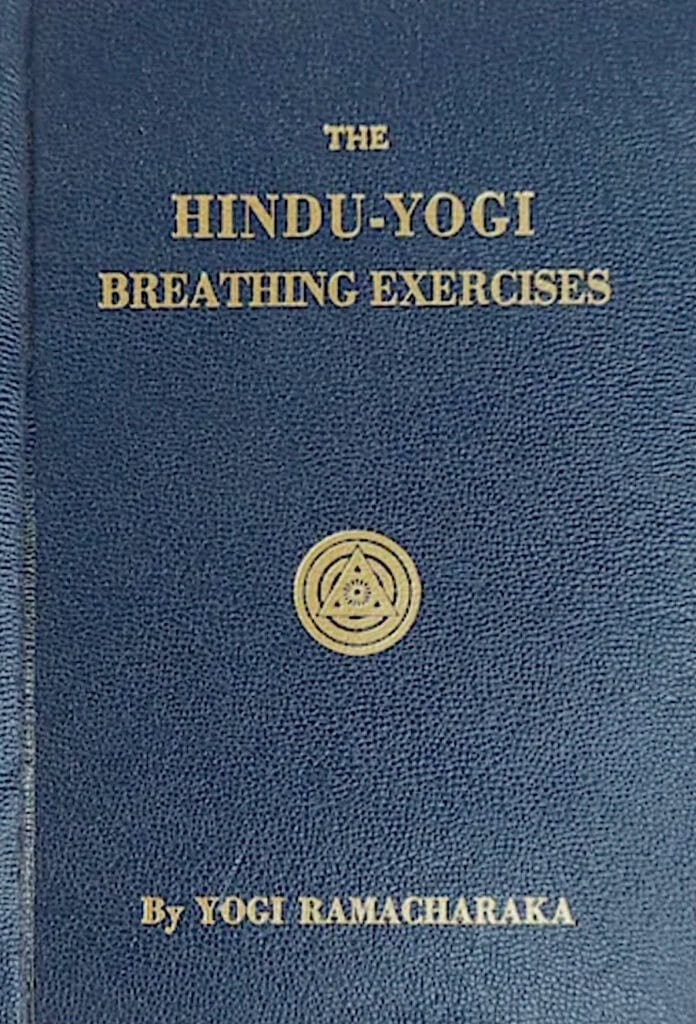
Hindu Yogi Breathing Exercises by Yogi Ramacharaka teaches that breathing is far more than a biological function. According to Ramacharaka, every breath is a means of absorbing prana, the universal life-force that sustains physical health, mental clarity, emotional balance, and spiritual development. By learning to breathe consciously and rhythmically, the student can strengthen the body, calm the mind, and cultivate greater vitality.
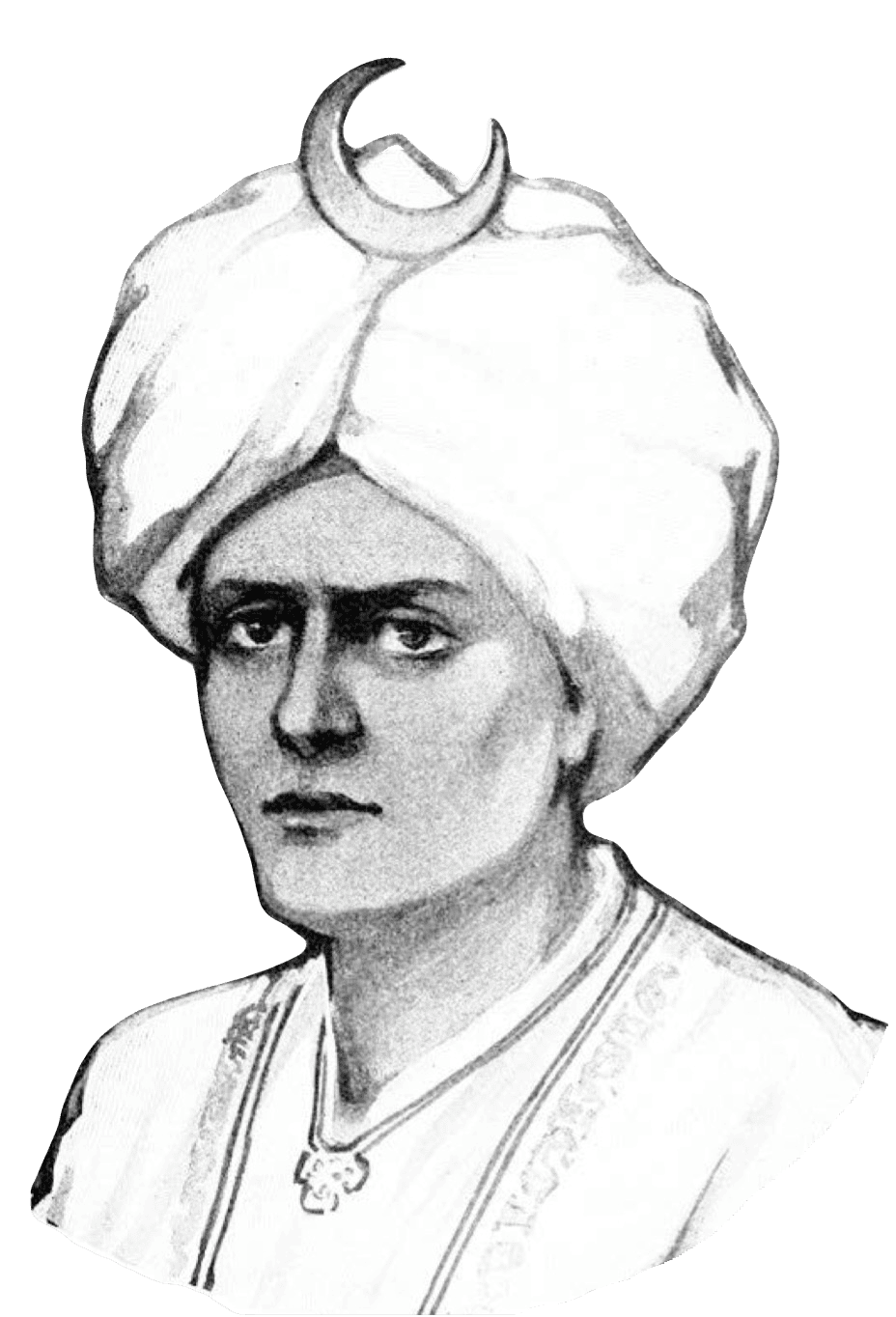
Yogi Ramacharaka illustration
At the heart of the system is the Complete Breath, a method that trains the individual to fully utilize all three regions of the lungs. Rather than breathing shallowly, Ramacharaka teaches a smooth, continuous inhalation beginning with the diaphragm, expanding through the ribs, and finally filling the upper chest before exhaling in the reverse order. He regarded this as the natural foundation upon which all other breathing practices should be built, improving lung capacity, circulation, and overall health.
A central practice is Rhythmic Breathing, in which inhalation, retention, exhalation, and the pause between breaths are performed according to a measured count. Ramacharaka believed that rhythm enables the nervous system to absorb and distribute prana more efficiently while producing greater mental calm and emotional stability. Throughout the book, he presents rhythmic breathing as one of the most effective methods for developing concentration, self-control, and inner harmony.
The work also includes a series of physical breathing exercises designed to strengthen the respiratory system and increase vitality. These include chest expansion exercises, rhythmic breathing while walking, and techniques intended to improve circulation and awaken dormant lung capacity. Each exercise gradually develops greater control over the breath while encouraging proper posture, deeper respiration, and increased physical endurance.
In addition to these physical practices, Ramacharaka introduces several specialized breathing techniques for cleansing and directing vital energy. The Cleansing Breath is taught as a method for refreshing the lungs and expelling stale air, while Vocal Breathing develops stronger voice projection through diaphragmatic control. More advanced exercises combine rhythmic breathing with visualization, teaching students to consciously direct prana throughout the body or project constructive thought through focused mental intention.
Throughout the book, Ramacharaka emphasizes several fundamental principles that govern all yogic breathing. He insists that breathing should always be performed through the nose, arguing that nasal breathing naturally filters, warms, and conditions the air while promoting better health than mouth breathing. He also stresses the importance of maintaining an erect posture to allow unrestricted movement of the lungs and diaphragm, and advises students to progress gradually, developing lung capacity and breath control through steady, disciplined practice rather than force.
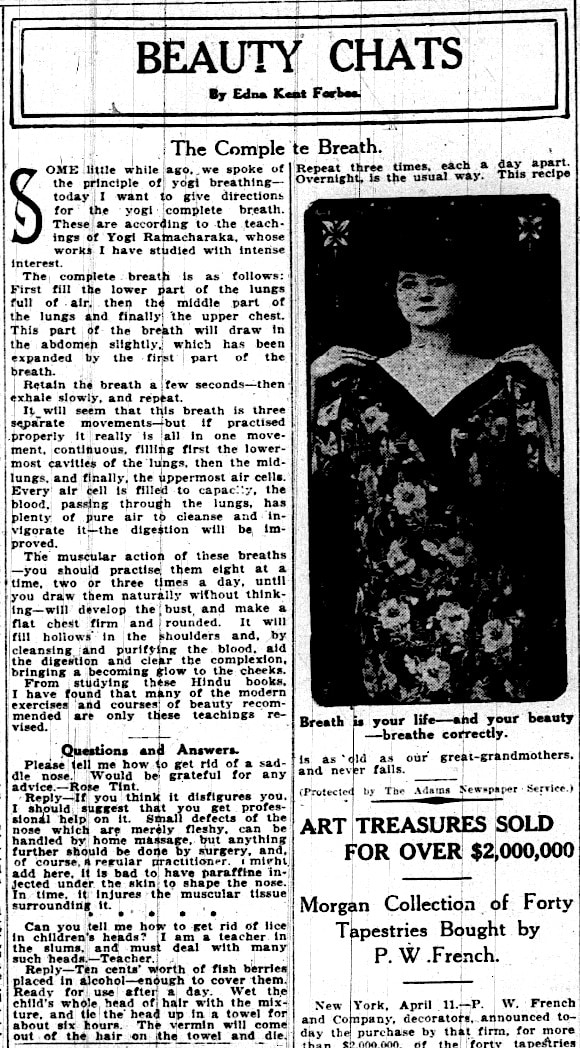
Yogi Ramacharaka and the teaching of Yogi breath became very popular among women and was heavily promoted in Beauty Chats.