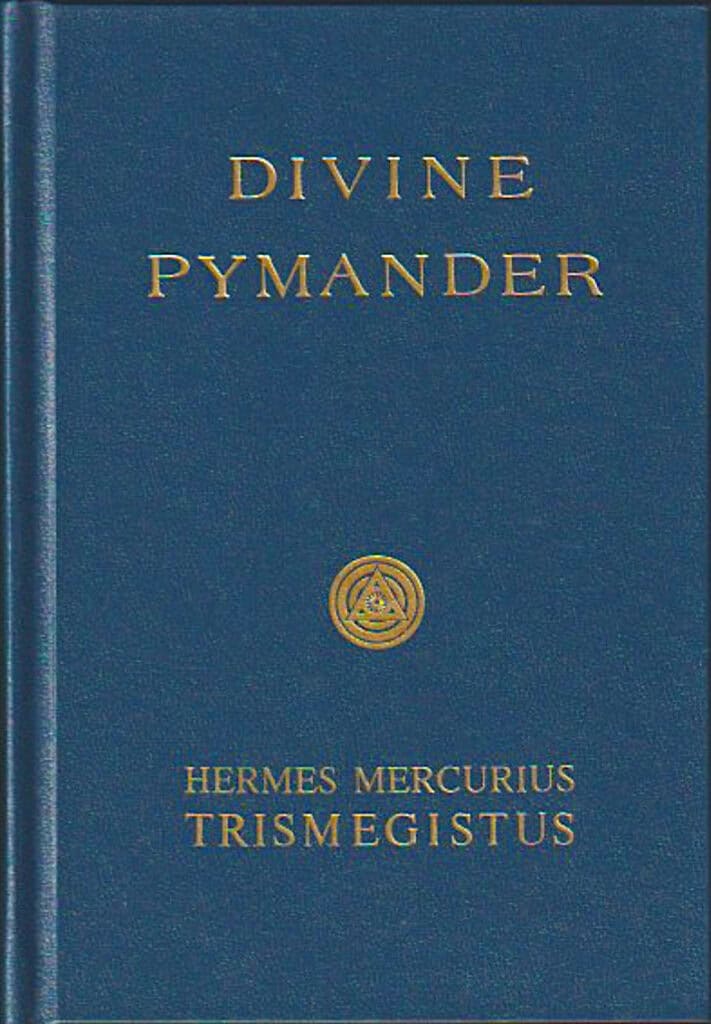
Hermes Mercurius Trismegistus: His Divine Pymander, Also, The Asiatic Mystery, The Smaragdine Table and the Song of Brahm is the 1889 edition of the ancient Divine Pymander, also called the Corpus Hermeticum, edited by Paschal Beverly Randolph and published in 1971 by the Yogi Publication Society. At the center of the volume are the seventeen books attributed to Hermes Trismegistus, based on John Everard’s English translation first published in 1650.
The work presents a complete Hermetic teaching on God, Divine Mind, creation, the structure of the universe, the divine and mortal nature of man, the soul, knowledge, regeneration, death, immortality, and the return of human consciousness toward its divine source. The importance of the YPS edition extends far beyond those seventeen books because it preserves the edition prepared by Paschal Beverly Randolph, one of the central figures in American Rosicrucianism. Randolph’s edition surrounds the Pymander with a remarkable Preface presenting it as a foundation of Rosicrucian teaching and adds The Smaragdine Table, the “Song of Brahm,” and a section titled “Brahm” that brings the Hermetic teachings into direct conversation with Vedic religion and the idea of a common divine wisdom expressed through the ancient traditions of East and West.
This edition is especially important to the history of the Yogi Publication Society. The Rosicrucian tradition established by Randolph would later be headed by R. Swinburne Clymer, a student and collaborator of Herbert A. Parkyn. The Randolph edition therefore brings the Divine Pymander into a Rosicrucian line that would become directly connected with Parkyn and his circle. It also belongs beside The Kybalion, published by YPS under the name Three Initiates, because Randolph’s volume places before the reader many of the ancient Hermetic teachings that would later appear in a new form in The Kybalion. Divine Mind, correspondence between the higher and lower worlds, cosmic law, masculine and feminine powers, transformation, the One source behind manifestation, and the ability of the awakened human mind to rise through different orders of existence are all present here. Randolph’s added material then carries these ideas into the Rosicrucian language of Will, Love, magnetic and psychic forces, hidden laws of nature, spiritual development, and the powers latent within man. For YPS, this single volume brought together Hermeticism, Rosicrucianism, alchemy, Vedic thought, and many of the ideas found elsewhere throughout its publishing program.
.
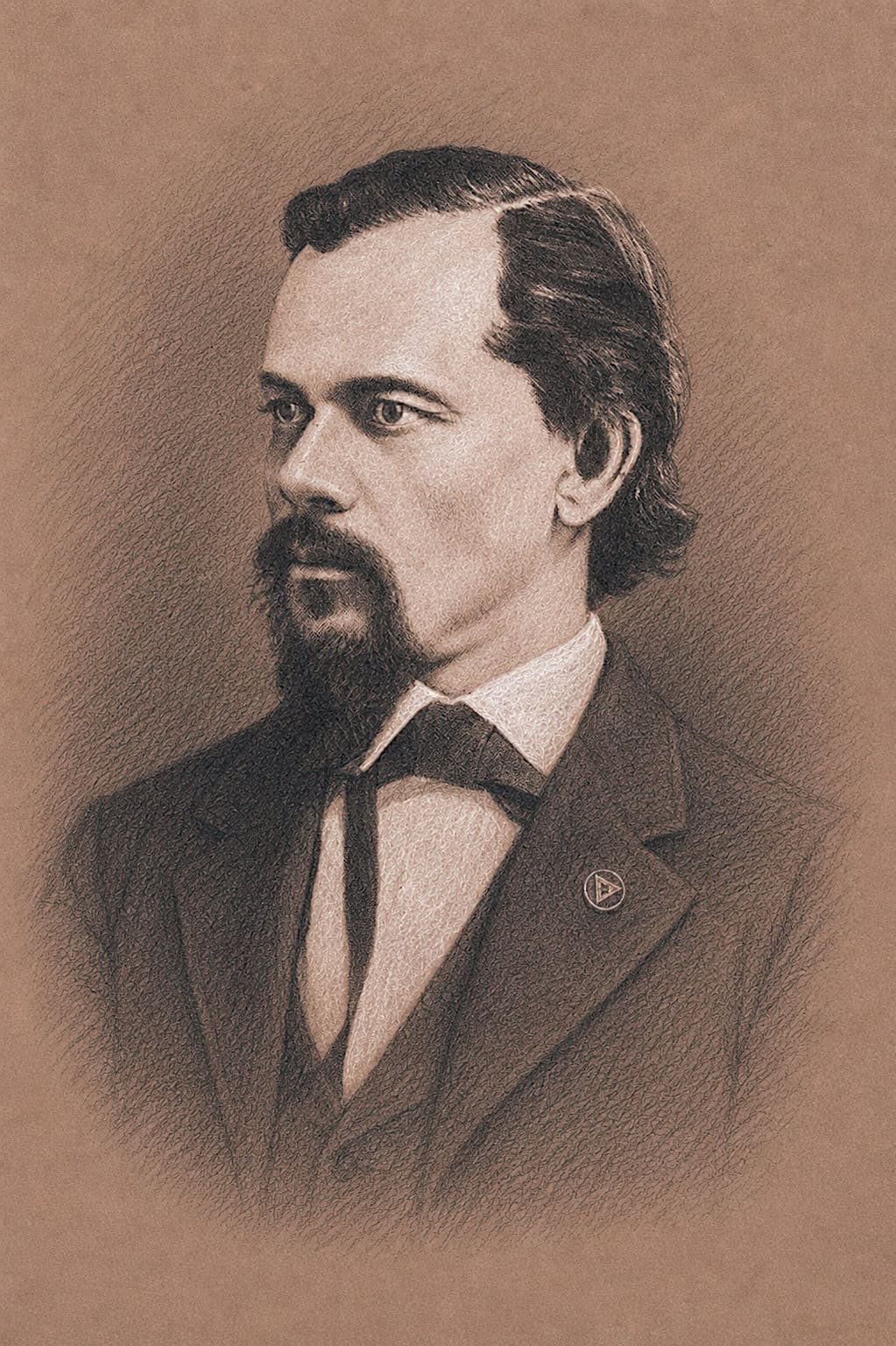
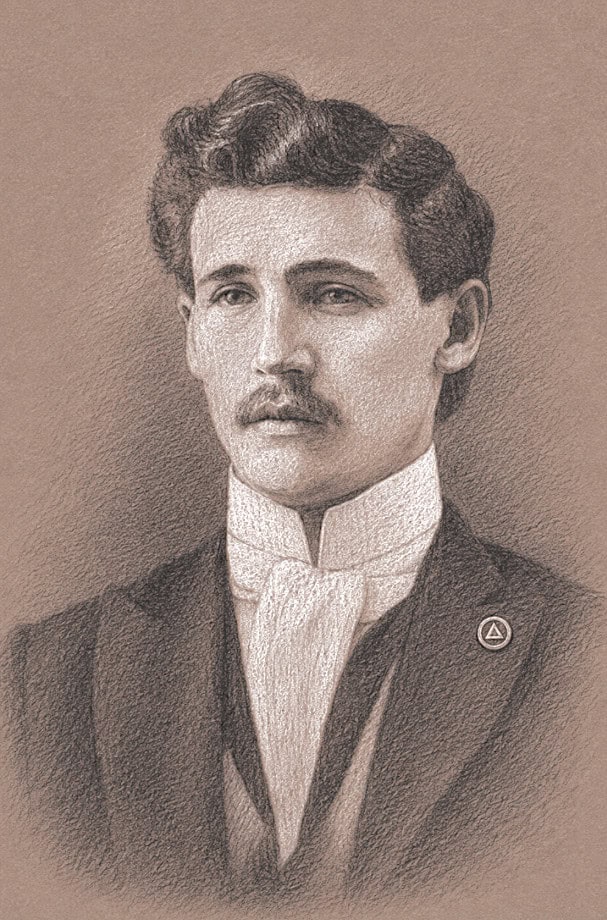
Paschal Beverly RandolphRosicrucian Brotherhood TRY symbolReuben Swinburne ClymerPaschal Beverly Randolph started the oldest Rosicrucian Brotherhood in America in the 1850s called the Fraternitas Rosae Crucis. Their motto,”TRY,” represented the active pursuit of higher cosmic truths. R. Swinburne Clymer, who was a student and collaborator of Dr. Parkyn, later became the Supreme Grand Master of the FRC.
What Does the Preface Say About The Divine Pymander?
The Preface begins by explaining the meaning of Poemander as “Shepherd of Men” and then describes the subjects of the work as Spirit, re-creation, immortality, and God. Hermes is presented as a figure of immense antiquity whose wisdom belongs to the earliest religious and philosophical history of mankind. Egypt, the pyramids, Thales, Pythagoras, Plato, Memphis, and Thebes are included in the account, as the Preface presents Hermetic wisdom as a source from which later systems drew knowledge. It also rejects the old Christian accusation that such ancient teachings must have been borrowed or corrupted from biblical revelation and argues instead that divine truth could have been known through other ancient peoples and traditions. The Vedas are specifically invoked as evidence that profound religious knowledge existed outside the Hebrew and Christian traditions.
The Preface explains that the edition was made from an old copy belonging to Paschal Beverly Randolph. From there, it explains why a book of this kind should again be placed before the public. The writers argue that materialism and skepticism have taken over society and that humanity requires knowledge capable of addressing the soul, God, immortality, moral character, and the meaning of existence. Intellectual accomplishment without spiritual development is inadequate because it cannot answer the deepest questions of human life. Science, philosophy, literature, political life, and intellectual culture may improve external conditions, but the authors argue that they cannot by themselves satisfy the human longing for knowledge of death, immortality, God, and the soul. The Pymander is presented as a work capable of restoring those questions to the center of philosophy.
The Rosicrucian Library
One of the most important passages in the Preface states explicitly that the Divine Pymander stands “at the head of the Rosicrucian Library.” It then tells the reader that within the books belonging to that series will be found “the creed of the Rosicrucians.” It goes on to identify the works through which this system had already been presented, including The Rosicrucian Manifesto, said to have been issued in 1871 by the Supreme head of the Order, The Asiatic Mystery, The Fire Faith, The Religion of Flame, The Force of Love, The Energos of Will, and The Law of Polar Mentality. The Divine Pymander was therefore being deliberately placed at the head of a defined body of Rosicrucian literature dealing with the ancient Hermetic teachings alongside Love, Will, mental polarity, spiritual force, and the hidden laws governing man and the universe.
It explains that these teachings had been developed through years of work and experience and describes the purpose of the Rosicrucian system as the recovery and communication of knowledge concerning the soul, spiritual development, invisible forces, and the laws governing human existence. It insists that the Rosicrucians were not attempting to establish another religious sect. Their stated aim was to investigate and teach the hidden laws operating through nature and man, including the powers and energies that ordinary physical observation could not reach. This makes the placement of the Divine Pymander at the head of the series especially important.
Love, Will and the Powers of the Soul
The Preface then develops a teaching in which Love and Will become fundamental powers of human and cosmic life. It rejects the proposition that knowledge alone is power and declares instead that goodness is power, with the deepest power belonging to the heart. Love is described as a force running through creation and connecting beings with one another. The soul participates in this universal power and can enter into sympathy, attraction, and spiritual relationship with other souls and with higher orders of existence.
This treatment of Love is closely connected with Will. Human beings are described as possessing powers that can be developed through disciplined use of the will, while uncontrolled passion leaves those same forces operating blindly. The Preface repeatedly presents spiritual advancement as the conscious direction of powers already present within the human constitution.
Its vocabulary moves freely among spiritual, magnetic, electrical, ethereal, psychical, and intellectual forces. These are presented as different aspects or levels of a universe filled with energies and forms of existence that extend beyond ordinary physical perception. Man can learn the laws governing these forces because he participates in the same universe from which they arise. It gives an unusually direct statement of what the Rosicrucian student is expected to develop. It speaks of Will, Magnetism, Power, the attainment of specific energy, and the cultivation of faculties that allow the individual to rise above ordinary limitations. It also speaks of “seven gates” through which the higher life may be approached, linking spiritual development with a graded process of initiation.
What Does the Preface Teach About the Soul?
The soul is described as possessing a polarity and structure that connect it with both physical existence and invisible worlds. The Preface speaks of the soul as capable of entering the ethereal realms after death and argues that the condition of the individual during earthly life influences the condition into which the soul passes.
Love again becomes decisive. Souls that have developed genuine love are described as capable of entering higher spiritual relationships, while lives dominated by selfishness and discord continue to carry those conditions beyond bodily existence. Human relationships are therefore given a spiritual importance extending beyond physical life.
The Preface also presents the soul as capable of rapport with forces and beings beyond ordinary sensory experience. It speaks of the superior pole of the soul as having direct magnetic and ethereal contact with the “Soul of Being,” the foundation of the universe. The universe is described as filled with powers, energies, intelligences, and orders of existence extending beyond the visible world.
This is one of the strongest bridges between Randolph’s Rosicrucian system and the Pymander itself. Hermes teaches that man belongs simultaneously to mortal and immortal orders. Randolph’s Preface develops that ancient teaching into a nineteenth-century language of soul forces, magnetism, ethereal existence, Will, Love, and the conscious development of hidden human capacities.
The Preface and the “Asiatic Mystery”
The “Asiatic Mystery” introduced in the Preface concerns the hidden constitution of human beings and the powers operating through polarity, sexuality, Love, Will, and the soul. Male and female are presented as complementary expressions of forces whose effects reach beyond physical generation. The Preface discusses spiritual and magnetic relationships between the sexes and treats these relationships as part of a larger law operating throughout nature.
The teaching is connected with what the Preface calls the development of the higher powers of man. These powers are described through such terms as Will, magnetic presence, special mental power, general power, and the development of specific energy. The language belongs to Randolph’s Rosicrucian system, yet its governing assumption is recognizably Hermetic. Man contains forces corresponding to forces in the greater universe, and knowledge allows those forces to be consciously developed and directed.
The Preface describes the world as containing many degrees of intelligence and life beyond ordinary humanity. Human existence occupies one level within a vast hierarchy. The soul is capable of advancement because it belongs to this larger order and possesses powers that can unfold through development.
What Does the Preface Say About Knowledge and Initiation?
The Preface makes a sharp distinction between intellectual knowledge and the knowledge sought by the Rosicrucian. Intellectual ability alone cannot produce spiritual power. The purpose of initiation is the development of character, Will, Love, perception, and the capacities of the soul.
Silence is given an important place in this discipline. The Preface explains that members are chosen and that secrecy serves a purpose because some knowledge requires preparation before it can be properly understood or used. The argument closely anticipates the teaching found later in the seventh book of the Pymander, where regeneration is followed by a “Profession of Silence.”
Knowledge in this system is therefore experiential. The student must become capable of the knowledge being sought. The same pattern governs the Pymander. Hermes does not simply tell Tat what regeneration means. Tat must undergo the change before he can understand it.
The Smaragdine Table and “As Above, So Below”
Randolph’s edition places The Smaragdine Table, or Emerald Tablet, immediately before “Brahm” and the seventeen books of Hermes. Its opening declaration gives one of the most famous formulations in the entire Hermetic tradition. What is below corresponds with what is above, and what is above corresponds with what is below, for the accomplishment of the wonders of the One.
The remainder of the tablet describes all things as arising from one through mediation and adaptation. The Sun is called the father, the Moon the mother, the wind carries the principle within its womb, and the earth nourishes it. The operation moves between heaven and earth and between the subtle and gross. What descends returns upward and carries with it the powers of both higher and lower worlds.
This short text provides a key for much of what follows. Man and cosmos are related because both belong to the same order. The visible can reveal the invisible. Processes occurring within nature can correspond with processes occurring within the soul. Spiritual ascent and cosmic structure can therefore be described through the same pattern.
The tablet also connects the book directly with alchemy. Separation of subtle from gross, ascent and descent, purification, and reunification could describe an alchemical operation while simultaneously serving as images of spiritual transformation. This double meaning became one of the enduring characteristics of Hermetic and Rosicrucian teaching.
What Is the “Brahm” Section?
The section headed “Brahm” introduces a striking Vedic counterpart to the Hermetic teachings that follow. It begins by identifying the original cause behind the Sun, Air, Moon, waters, and the created order as Brahm. This divine reality exists before creation and remains present through the countless forms creation assumes. The visible universe changes, while the source behind it remains.
Brahm is described as existing everywhere and as the source from which all beings proceed. The wise person is urged to contemplate this mysterious Being beneath the multitude of visible forms and to seek knowledge of creation, continuation, and destruction as expressions of one divine reality.
The section then gives the “Song of Brahm,” drawn from the Yajur-Veda. The speaker identifies himself with the Rudras, Vasus, Adityas, Sun, Ocean, firmament, fire, moon, and the divine powers. The movement is toward an identity that extends throughout creation. The divine presence is simultaneously source, sustainer, and indwelling reality.
The importance of this becomes clear when the reader reaches the Pymander. Hermes will teach that divine Mind stands behind creation and that man can awaken to a consciousness extending beyond bodily identity. Tat’s regeneration culminates in an extraordinary expansion in which he experiences himself beyond the boundaries of the body and throughout the cosmic order. Randolph’s placement of “Brahm” beside Hermes invites the reader to recognize a comparable spiritual pattern in the Vedic and Hermetic traditions.
Randolph on Hermes, the Vedas and the Bible
The “Brahm” section ends with a short statement signed “Paschal B. Randolph,” making this one of the places where Randolph speaks directly in his own name. He asks whether a man can be in love with such a God and answers that the divine presence is immense and surrounds humanity through countless forms.
Randolph then makes the purpose of the comparison explicit. When he reads the Bible, the Vedas, or “glorious Hermes,” he hears what he describes as the same fundamental spiritual message. Different religious traditions become witnesses to a divine truth that precedes their historical divisions.
This passage is important to the later Yogi Publication Society setting. YPS would build a catalog in which Yogi philosophy, Hermeticism, Christianity, occult philosophy, mysticism, and comparative religion repeatedly appeared beside one another. Randolph’s edition of the Divine Pymander already places Hermes and Vedic religion within the same volume and openly asks the reader to recognize the common spiritual truth behind them.
How Does Randolph’s Divine Pymander Compare With The Kybalion?
The relationship with The Kybalion becomes especially interesting because the Randolph edition contains three layers of teaching. The seventeen books preserve the old Hermetic discourses in Everard’s translation. The Smaragdine Table supplies the famous doctrine of correspondence. Randolph’s Rosicrucian material adds the nineteenth-century vocabulary of mental, magnetic, psychical, electrical, and ethereal forces, Will, polarity, spiritual development, and hidden laws. The Kybalion, published by YPS under the name Three Initiates, organizes a closely related field into seven principles called Mentalism, Correspondence, Vibration, Polarity, Rhythm, Cause and Effect, and Gender.
Mentalism has its deepest parallel in the Pymander’s teaching of Divine Mind. Poemander identifies himself as Mind. Mind exists with God at the beginning of creation. The divine Word proceeds from Mind, and the created order comes into manifestation through divine intelligence. Man possesses a share in this Mind, which gives him the capacity to know his origin and rise beyond purely bodily consciousness. The Kybalion turns this into its first principle and its declaration that the universe is mental.
Correspondence is stated directly in The Smaragdine Table. The higher and lower worlds correspond because both arise from the One. The Pymander develops the same relationship through God, cosmos, and man. The cosmic powers operating throughout the universe also operate upon human existence. The soul descends into the conditions of the cosmos and later ascends through them. The Kybalion formalizes this relationship as the Principle of Correspondence.
Gender also has strong precedents throughout the Randolph volume. The Pymander describes Divine Mind in masculine and feminine terms and presents generation through complementary powers. Randolph’s Preface greatly expands the subject through its teachings concerning male and female polarity, Love, magnetic relationship, generation, and the hidden forces operating between complementary human powers. The Kybalion later describes Gender as a universal principle active upon physical, mental, and spiritual planes.
Cause and Effect corresponds closely with the Pymander’s Providence, Necessity, Fate, and cosmic government. The universe is ordered. The seven Governors administer the sensible world, and the human soul encounters the consequences of its participation in that order. The Kybalion expresses the same commitment to a lawful universe through its Principle of Cause and Effect.
Polarity appears throughout Randolph’s Preface in a form much closer to the later language of The Kybalion. Male and female, higher and lower, spiritual and material, Love and its absence, positive and negative relationships, and different poles of the soul all appear in the discussion. The Pymander itself repeatedly works through paired conditions such as mortal and immortal, visible and invisible, sensible and intelligible, light and darkness, movement and rest. The Kybalion gathers such relationships into a single Principle of Polarity.
Rhythm has no identical formulation in the Pymander, yet the Hermetic universe is filled with cycles, circles, generation, dissolution, return, ascent, descent, and continual movement. The seven Governors operate through cosmic circles. Souls descend and ascend. Nature continually generates new forms as others dissolve. The Kybalion gives this recurring movement a defined law of Rhythm.
Vibration shows how the older Hermetic framework had been recast by the nineteenth and early twentieth centuries. The Pymander speaks constantly of motion and different levels of existence, but Randolph’s Preface moves much closer to the later language by describing magnetic, electrical, psychical, ethereal, mental, and spiritual forces operating throughout nature and man. The Kybalion unifies this field under the Principle of Vibration and applies it to matter, energy, mind, emotion, and spiritual existence.
The most important comparison may be transformation itself. The Pymander calls the process regeneration. The lower human being ruled by ignorance, desire, anger, deceit, envy, and other passions is transformed as divine powers become active within consciousness. Randolph describes a Rosicrucian discipline through which Will, Love, character, spiritual power, and higher faculties can be developed. The Kybalion calls its corresponding method Mental Transmutation and teaches that knowledge of mental law allows a person to change states of consciousness deliberately.
The three works therefore show successive expressions of a recognizable Hermetic structure. The Pymander presents Divine Mind, cosmic order, correspondence, regeneration, and the ascent of man. Randolph’s edition surrounds those teachings with Rosicrucian doctrines of Will, Love, magnetism, polarity, hidden force, spiritual development, and invisible levels of existence. The Kybalion reorganizes many of these ideas into seven stated Hermetic principles and places far greater emphasis on conscious mastery of mental law.
Why Was The Divine Pymander Presented as a Foundation of Rosicrucianism?
The Randolph edition does something more significant than associate Hermes with Rosicrucianism. Its Preface places the Divine Pymander at the head of the “Rosicrucian Library” and tells readers that the books of that series contain “the creed of the Rosicrucians.” The Pymander is being positioned as foundational literature for understanding the Rosicrucian system that follows.
The reason becomes clear from the teachings themselves. The Pymander supplies a complete account of the divine origin of man. Humanity descends from a higher order into bodily existence, becomes entangled in passions and material conditions, forgets its origin, and can recover that knowledge through spiritual awakening. The seventh book gives this process its clearest name, regeneration. The old human condition is displaced as divine qualities awaken within the individual.
This provides a powerful foundation for the Rosicrucian conception of initiation. The purpose is the transformation of the person. Knowledge of hidden laws has value because the student is being changed through that knowledge. Self-mastery, purification, control of the lower passions, development of higher faculties, knowledge of the soul, and conscious relationship with the divine order become parts of one process.
The Smaragdine Table supplies another foundation through correspondence. If above and below reflect one another, man can be understood as a lesser world corresponding with the greater cosmos. Nature can reveal spiritual law, while the transformation of substances can serve as a symbol for transformation of the human being. This principle lies behind much of Rosicrucian alchemy and its use of physical processes to describe inner regeneration.
Randolph’s Preface develops these Hermetic foundations into a Rosicrucian science of man. Love and Will become forces. The soul possesses powers extending beyond ordinary physical consciousness. Magnetic, psychical, ethereal, and spiritual conditions belong to a universe containing multiple levels of life and intelligence. The student develops by learning the laws governing these forces and bringing the lower nature under the control of the higher.
The relationship between secrecy and initiation also passes directly between the Pymander and the Rosicrucian framework. Hermes repeatedly warns against indiscriminate communication of spiritual knowledge. The seventh book joins regeneration with a “Profession of Silence.” Randolph’s Preface likewise defends secrecy and selection, arguing that certain teachings require preparation and should be entrusted to those capable of receiving them.
The historical importance of the YPS edition becomes even greater through R. Swinburne Clymer. Randolph’s Rosicrucian tradition would later come under Clymer’s leadership, while Clymer had been a student and collaborator of Herbert A. Parkyn. YPS later publishing the Randolph edition therefore places within its catalog a work that stood at the foundation of the same Rosicrucian current that became connected with Parkyn through Clymer.
This makes the Randolph edition an unusually important book for understanding the intellectual environment surrounding YPS. Hermes provides the ancient teaching of Divine Mind, correspondence, cosmic law, regeneration, and immortality. Randolph explicitly presents those teachings as foundational to Rosicrucianism and develops them through Love, Will, polarity, magnetism, psychic force, and the powers of the soul. Clymer later carries forward Randolph’s Rosicrucian line while maintaining his own connection with Parkyn. YPS then places Randolph’s Divine Pymander within the same publishing history that includes The Kybalion. These are concrete historical links between the Hermetic, Rosicrucian, and YPS traditions, not simply similarities discovered by comparing their doctrines.
What Do the Seventeen Books of The Divine Pymander Teach?
The seventeen books form the main Hermetic work beneath Randolph’s added material. They are presented as teachings of Hermes Trismegistus involving Poemander, Tat, Asclepius, and other speakers. Their subjects include God, Divine Mind, creation, the origin of humanity, the soul, Providence, Fate, sense, understanding, truth, regeneration, death, immortality, and wisdom.
The central movement begins with God and creation, descends through the cosmic order into human embodiment, and then reverses direction as the awakened soul seeks its return toward the divine. The universe and the human being are repeatedly explained through one another. To understand the cosmos is to learn something about man, while true self-knowledge eventually leads toward knowledge of God.
The First Book and the Search for Truth
The first book begins with religion, philosophy, and the search for knowledge. The proper life requires learning about the things that exist, how they are ordered and governed, by whom they are governed, why they exist, and toward what end they move. The person who studies these questions comes to recognize the divine Workman behind creation and gives thanks to the source of existence. The soul must then confront its attachment to the body. The way toward truth is described as difficult because the soul struggles against forces pulling in opposite directions. One leads toward the Good and liberty. The other draws toward evil, bondage, and bodily attachment. Spiritual progress begins when the higher movement gains control.
Hermes follows this with a series of propositions concerning existence. Bodies are changeable. Essence is immortal. Mind is in God, reasoning in man, and Reason in Mind. God stands first, the World second, and Man third. The world exists for man and man for God. The sensible portion of the soul is mortal while the rational portion participates in immortality.
Who Is Poemander?
The second book contains the great revelation from which the collection takes its name. Hermes enters profound contemplation until the activity of bodily sensation recedes. An immense being appears and asks what he desires to know. Hermes asks to understand the nature of things and to know God. The being identifies himself as Poemander, Divine Mind.
Hermes is shown infinite Light followed by darkness and a troubled watery nature. From the Light comes the Holy Word. Fire and air rise while earth and water remain below, and creation begins to take order. Poemander explains that the Light is Mind and God and that the Word proceeding from Mind is the divine Word. Creation therefore begins in Divine Mind and proceeds through intelligence, Word, Will, and archetypal order. The material cosmos is the manifestation of an intelligible pattern.
Seven Governors are established over the sensible world. Their government constitutes Fate or Destiny. The created universe is therefore lawful and ordered, with different levels of power linking the divine source to manifested existence.
Why Is Man Both Mortal and Immortal?
Man occupies an extraordinary place within Poemander’s revelation. Divine Man is created in the image of the Father and receives a share in the powers governing creation. He beholds nature and becomes attracted to his own form reflected within it. Nature responds, and the union of Divine Man with nature produces the condition of earthly humanity.
Human beings are therefore double. Through the body, man is mortal. Through his higher origin, he is immortal. He lives within Fate while possessing something that originates beyond Fate. This explains why self-knowledge becomes so important. The person who knows himself recognizes that his origin lies in Life and Light. The person who identifies himself entirely with bodily desire becomes attached to mortality. The spiritual problem is forgetfulness. Man has entered nature and forgotten the divine nature from which he came. Knowledge restores that memory.
What Happens to the Soul After Death?
Poemander gives a detailed account of what occurs when the body dies. The physical structure dissolves and the senses return to their sources. The irrational passions separate from the higher person, and the soul begins its ascent through the seven cosmic zones.
At each zone the soul relinquishes a power associated with embodied existence. Increase and decrease are left behind, followed by deceit, desire, ambition, rashness, attachment to riches, and falsehood. The ascending soul is progressively stripped of the forces that governed its lower existence. After passing beyond the seven zones, it enters the eighth nature and joins the divine powers in praise of the Father. The culmination is knowledge of God and participation in the divine. Hermes then becomes a teacher. He calls people away from spiritual sleep and asks why they remain surrendered to death when they possess the capacity to participate in immortality.
Creation in “The Holy Sermon”
The third book gives another account of creation. Darkness, water, spirit, light, the elements, stars, and heavenly circles appear through an ordered divine process. Living beings arise according to their kinds, and man receives the capacity to contemplate heaven and understand the works of God.
Human intelligence therefore has a spiritual purpose. Nature can be studied because its order reveals something about its source. Creation proceeds through continuing cycles of generation and renewal. Forms disappear while nature produces others. Death and generation become movements within a living cosmos instead of absolute beginnings and endings.
What Does “The Key” Teach?
The fourth book, “The Key,” brings God, the Father, and the Good together. God gives existence while requiring nothing in return. The Good belongs to the divine source and can illuminate the human mind. Hermes tells Tat that the soul can become divine while still inhabiting the body through contemplation of the Good. Ignorance prevents this because an ignorant soul becomes ruled by bodily passions. Knowledge restores the higher order.
The book contains one of the most striking Hermetic descriptions of humanity. Man is called a mortal God while the heavenly God is called an immortal Man. Humanity stands between worlds, physically occupying the earth while possessing a mind capable of reaching toward heaven. The same book describes Mind as a divine gift offered to humanity through the image of a great cup or bowl sent down from God. Those who immerse themselves in this Mind become participants in knowledge and understand why they were created. They rise toward the One and Only because they have recognized the Good.
How Can God Be Hidden and Present Everywhere?
The fifth book asks how God can be unmanifest while also being the most manifest reality of all. Hermes answers through creation. God cannot be confined to a generated form because every form is something made. The divine source exists beyond the individual appearances produced within creation.
Yet everything reveals the activity of God. The sun, moon, stars, sea, earth, human body, and ordered universe testify to the power responsible for them. God is therefore beyond every individual form while acting throughout all forms. No direction can contain the divine because every direction exists within the greater divine order.
Why Is God Called the Good?
The sixth book teaches that absolute Good belongs to God alone. Generated things are subject to alteration, motion, desire, suffering, and change. The divine Good is complete and self-sufficient.
Human beings frequently call temporary pleasures and advantages good, but Hermes distinguishes these from the Good itself. The divine Good gives without being diminished and exists beyond the instability of generated life. Knowledge and piety lead toward it. Ignorance keeps the person attached to temporary conditions and prevents recognition of the true source of happiness.
What Is Hermetic Regeneration?
The seventh book, “The Secret Sermon in the Mount of Regeneration, and the Profession of Silence,” is one of the central texts of the entire collection. Tat asks Hermes to reveal the meaning of regeneration. Hermes explains that it cannot be communicated as ordinary information. It must occur within the individual.
Hermes describes himself as having become “begotten in Mind.” His former identity no longer defines him. Tat initially struggles to understand because he attempts to perceive this new condition through ordinary bodily sight.
The process is explained through twelve torments of the lower nature. They include ignorance, sorrow, intemperance, desire, injustice, covetousness, deceit, envy, fraud, wrath, rashness, and maliciousness. Divine powers enter as these conditions lose their rule. Knowledge, joy, temperance, continence, justice, communion, truth, Good, Life, and Light replace the former powers.
Tat then experiences a radical expansion of consciousness. He no longer perceives himself as confined within the physical body. His awareness reaches through heaven, earth, water, air, living creatures, plants, and the processes of generation. Hermes identifies this as regeneration. The person who once knew himself through bodily identity now knows himself through Mind. The teaching closes with praise and silence. The regenerated student is instructed to guard the mystery he has received.
Why Is Ignorance the Greatest Evil?
The eighth book presents ignorance as the greatest evil because it prevents the soul from recognizing God and itself. Humanity is compared with people intoxicated or asleep, absorbed in appearances while unaware of the reality surrounding them. The solution is spiritual sobriety. The individual must awaken, look upward through the heart and Mind, and seek the truth hidden behind ordinary sensory experience. The senses alone cannot reveal God. The garment of ignorance must be removed before the soul can recognize its origin.
God, Motion and the Living Universe
The ninth and tenth books investigate motion, space, causation, life, soul, and the organization of the cosmos. Nothing moves without a mover. The visible universe behaves as a living body animated by invisible principles. Even apparent emptiness is filled with air and spirit. Physical space does not exhaust reality because the universe exists within an incorporeal order that cannot itself be reduced to physical dimensions.
God is the cause behind Mind, Spirit, and Light. Divine activity passes through creation without God being limited to any individual thing created. The tenth book gives an important sequence of God, Eternity, World, Time, and Generation. God produces Eternity, Eternity the World, the World Time, and Time Generation. Forms change continuously within this structure, while the deeper order remains. Death is therefore dissolution of a particular union and not annihilation of existence.
How Far Can the Human Mind Reach?
One of the most remarkable teachings asks the student to test the reach of consciousness. The soul is instructed to travel mentally to India, cross the ocean, rise into heaven, pass beyond bodily boundaries, conceive itself at different ages, and think beyond ordinary limitations of place and time.
The purpose is to demonstrate that Mind cannot be measured by the physical dimensions of the body. Human consciousness possesses the ability to conceive realities beyond its immediate sensory location. This exercise brings the cosmology of the Pymander back to the individual. The same man who appears physically confined to one place possesses a mind capable of moving through an immense conceptual universe.
The Divine Mind in Man
The later books continue to explain Mind as the divine principle operating within human beings. Mind belongs to God, while reasoning belongs to man. Through Mind, human consciousness can rise toward realities beyond ordinary sense.
The relationship can be understood as a descending chain from divine intelligence toward embodied life and an ascending path by which human consciousness returns toward its source. This is why knowledge has such an unusual meaning throughout the Pymander. Knowledge is transformative. The person who truly knows God cannot remain inwardly identical to the person who lived in ignorance.
Sense, Understanding and Truth
Hermes distinguishes ordinary sensation from understanding. Sensation gives awareness of physical conditions. Understanding allows consciousness to grasp meanings and realities that cannot be reduced to sensory impressions.
Speech can direct another person toward truth, but words cannot substitute for knowledge itself. The student eventually has to recognize truth through Mind. This explains the repeated teacher-pupil structure of the books. Hermes can give Tat the teaching, yet Tat must undergo the realization toward which the words point.
Death, Change and Immortality
The later books repeatedly return to change. Bodies alter, combinations dissolve, generations pass away, and new forms arise. The visible world exists in continual transformation. Hermes refuses to equate this transformation with absolute destruction. Death separates what had been joined. The deeper principles involved in existence continue within the larger cosmic order. The spiritual task is therefore to discover what part of man belongs to change and what part participates in immortality. Bodily identity belongs to the first. Mind opens consciousness toward the second.
What Is the Central Teaching of The Divine Pymander?
The seventeen books return repeatedly to one central human problem. Man possesses a divine origin but has forgotten it. Bodily existence surrounds consciousness with sensation, passion, desire, change, and mortality. The human being begins to identify himself with these temporary conditions and loses knowledge of the Mind from which he came.
Hermetic knowledge reverses this movement. The student first learns to recognize divine order in the universe. He then discovers the same order within himself. Knowledge of nature leads toward knowledge of man, and knowledge of man leads toward knowledge of God. Regeneration marks the decisive transformation. Ignorance gives way to knowledge. The lower passions lose their control. Life and Light become conscious realities. The person discovers that the physical body does not contain the full extent of his being.
Randolph’s edition makes the significance of that teaching unusually clear. Its Preface explicitly places the Divine Pymander at the foundation of a Rosicrucian library and develops the Hermetic conception of regeneration into teachings concerning Love, Will, magnetic and psychic power, the soul, hidden natural laws, invisible worlds, and the conscious development of human potential. The Smaragdine Table establishes the correspondence of higher and lower worlds. “Brahm” and the “Song of Brahm” place a Vedic conception of the one divine source beside Hermes. Randolph himself closes that portion by joining the Bible, the Vedas, and Hermes within the same search for divine truth.
This is also what makes the book so important within the history of the Yogi Publication Society. The edition connects YPS with Randolph’s Rosicrucian tradition, a tradition later headed by Parkyn’s student and collaborator R. Swinburne Clymer. Its ancient Hermetic teachings provide a revealing comparison with the Seven Principles later presented in The Kybalion. Its added Vedic material joins Eastern and Western teachings within the same book. And its Rosicrucian Preface presents the Pymander itself as a foundation for the system that follows. In one volume, YPS was preserving a line running through Hermes, Hermetic philosophy, the Emerald Tablet, Vedic wisdom, Paschal Beverly Randolph’s Rosicrucian teachings, and the later network surrounding Parkyn, Clymer, and the Yogi Publication Society.
Hermes Trismegistus, meaning “Hermes the Thrice-Greatest” (Ancient Greek: Ἑρμῆς ὁ Τρισμέγιστος), is the legendary sage traditionally regarded as the founder of Hermetic philosophy and one of the central figures in the history of Western esotericism. He emerged in Hellenistic Egypt during the first centuries CE as a fusion of the Greek god Hermes and the Egyptian god Thoth. Hermes was the divine messenger, patron of language, learning, and commerce, while Thoth was revered as the god of wisdom, writing, mathematics, science, magic, and sacred knowledge. Credited with inventing writing, recording the judgments of the dead, and preserving the wisdom of the gods, Thoth was regarded by the ancient Egyptians as the divine source of all knowledge. The title Trismegistus, meaning “Thrice-Greatest,” derives from an Egyptian epithet long associated with Thoth, emphasizing his supreme mastery of wisdom, knowledge, and magical power.
Hermes Trismegistus was traditionally credited as the author of the Hermetica, a body of philosophical, mystical, and practical writings that became the foundation of the Hermetic tradition. Among the most important are the Corpus Hermeticum, a collection of dialogues exploring the nature of God, creation, and spiritual enlightenment, and the Emerald Tablet, the brief but enormously influential work that introduced the Hermetic maxim, “As above, so below.” These writings teach the unity of the cosmos, the divine nature of the human soul, and the pursuit of gnosis—direct spiritual knowledge attained through inner transformation and rebirth.
The Hermetic writings profoundly influenced the development of Western alchemy, astrology, ceremonial magic, Rosicrucianism, Freemasonry, and Renaissance philosophy. During the Renaissance, scholars such as Marsilio Ficino regarded Hermes Trismegistus as a pre-Christian prophet who preserved an ancient universal wisdom revealed by God before the time of Moses. Although the Swiss scholar Isaac Casaubon demonstrated in 1614 that the Hermetic writings were composed during the early centuries of the Roman Empire rather than in remote Egyptian antiquity, their philosophical and spiritual influence continued to grow.
“An Earthly Man is a mortal God, …the Heavenly God is an immortal Man.”
Related Research Articles
The Sacred Geometry of the Yogi Publication Society Logo
This article examines the Yogi Publication Society logo and its sacred geometry meaning, comparing it with Hindu, Hermetic, Rosicrucian, Masonic, and Theosophical traditions to show the intention behind the publishing network.