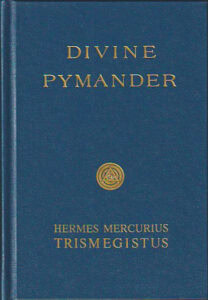
Hermes Trismegistus, meaning “Hermes the Thrice-Greatest,” is the legendary sage regarded as the foundational authority of Hermeticism. He arose from the religious and philosophical world of Hellenistic Egypt, where Greek and Egyptian traditions interacted closely, and came to represent a fusion of the Greek god Hermes with the Egyptian god Thoth. Both were associated with wisdom, writing, sacred knowledge, calculation, and the communication of divine truths.

The Roman Mercury was later incorporated into the same tradition, producing the expanded name Hermes Mercurius Trismegistus. Hermes was not a historical author in the ordinary sense. He became the name and authority under which a large body of philosophical, religious, astrological, magical, and alchemical literature circulated, presenting him as an ancient priest and teacher possessing hidden knowledge of God, humanity, nature, and the structure of the cosmos.
The writings attributed to Hermes became one of the principal foundations of Western esotericism. They taught that the universe is intelligible because the divine, cosmic, and human orders correspond with one another, that human beings contain a spiritual element capable of returning to its divine source, and that knowledge of God requires more than ordinary intellectual learning.
Through the Corpus Hermeticum, the Poimandres or Divine Pymander, the Asclepius, the tradition surrounding the Emerald Tablet, and later works attributed to Hermes, his name became attached to teachings on spiritual illumination, cosmology, divine Mind, the soul, astrology, magic, and alchemical transformation. Centuries later his authority would be invoked again by Renaissance philosophers, Rosicrucians, occultists, New Thought writers, and the Yogi Publication Society, most famously through the 1908 publication of The Kybalion under the name of the Three Initiates.
Who Was Hermes Trismegistus?
Hermes Trismegistus is best understood as a legendary religious and philosophical authority created through the meeting of Greek and Egyptian traditions. Greek settlers in Egypt identified their Hermes with the Egyptian Thoth because the two gods occupied similar positions within their respective cultures. Thoth was connected with writing, sacred learning, mathematics, divine speech, measurement, magic, and the preservation of knowledge. Hermes was the divine messenger, interpreter, guide, and patron of communication and knowledge. From this identification developed the figure of Hermes Trismegistus, the supremely wise teacher who could speak with the authority of both traditions.
The title “Trismegistus” means “Thrice-Greatest” or “Three Times Greatest.” Ancient and later writers supplied different explanations for the threefold greatness, but the title itself became a mark of supreme wisdom. Hermes was imagined as a priestly teacher whose knowledge encompassed theology, philosophy, astrology, medicine, magic, and the secret operations of nature.
Over time, writings attributed to Hermes were treated as records of ancient revelation. Their authority did not depend upon the biography of a known historical writer. The name Hermes functioned as the source from which the teachings were believed to descend.
Hermes, Thoth, and Mercury
The identity of Hermes Trismegistus developed through a chain of religious correspondences. The Greek Hermes and Egyptian Thoth were joined first. Roman tradition then identified Hermes with Mercury. This produced the form Hermes Mercurius Trismegistus, a name frequently encountered in later occult and alchemical literature.
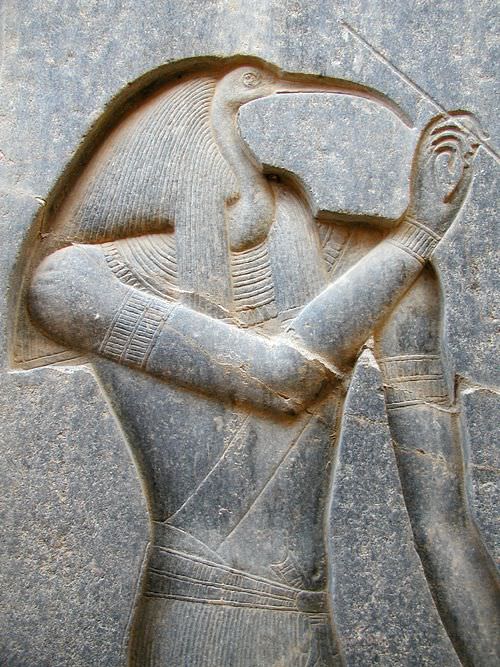
These associations matter because they reveal one of the central features of the Hermetic tradition. Knowledge could be transmitted through apparently different religious forms while pointing toward a common source. Greek, Egyptian, and Roman names could refer to corresponding divine functions.
That method of correspondence later became fundamental to occult philosophy itself. Gods, planets, metals, numbers, elements, colors, parts of the human body, and levels of consciousness could be linked because each expressed related forces on different levels.
What Are the Hermetic Writings?
The philosophical Hermetic writings were composed during the Hellenistic and Roman periods and circulated primarily in Greek, though Hermetic material also survives in Latin, Coptic, Arabic, and other traditions.
The most important collection is the Corpus Hermeticum, a group of religious and philosophical dialogues in which Hermes or a related teacher discusses God, Mind, creation, humanity, the cosmos, rebirth, and spiritual knowledge.
The texts usually take the form of instruction. A teacher reveals the structure of reality to a student. Knowledge is presented as something that transforms the knower.
This is one reason the Hermetic writings became so attractive to later students of occult philosophy. They do not simply describe a theological system. They describe an ascent in understanding.
The Corpus Hermeticum
The Corpus Hermeticum became the central philosophical collection associated with Hermes Trismegistus. Its treatises address the relationship between God and the cosmos, the origin of humanity, divine Mind, the spiritual condition of man, fate, the powers of nature, and the return of consciousness to its divine source.
Humanity occupies an unusual place in this system. Man belongs to the material cosmos through the body but also possesses a higher divine principle. This gives human life a double character. The individual can become absorbed in the sensory world and forget his origin, or he can awaken to the divine Mind within and begin the return toward spiritual knowledge. Knowledge in the Hermetic texts is thus closely connected with regeneration. The student changes as understanding deepens.
The Poimandres or Divine Pymander
One of the best-known Hermetic texts is the Poimandres, often rendered in English as the Pymander or Divine Pymander. It presents a vision of creation and spiritual illumination in which Poimandres, identified with Divine Mind, reveals the origin of the cosmos and the nature of humanity to Hermes.
The work became especially important because it brought together cosmology and spiritual psychology. Creation is described as an ordered unfolding from divine Mind, while humanity contains within itself the capacity to recognize and return toward its divine origin.
The Poimandres became one of the principal sources through which later readers encountered Hermetic ideas concerning Mind, Light, creation, the heavenly spheres, and spiritual ascent. It also became important to later Rosicrucian and occult writers who interpreted Hermes as an ancient transmitter of initiatory wisdom.
The Emerald Tablet
Hermes Trismegistus was also traditionally associated with the Emerald Tablet, one of the most famous short texts in the history of alchemy and Western occultism.
The Tablet became famous for the principle commonly summarized as “As above, so below.” The full tradition expresses a relationship between higher and lower levels of reality, with the operations of one level reflected in another. This idea became fundamental to later Hermeticism. The universe was the macrocosm, the great world. The human being was the microcosm, the little world.
Knowledge of one could disclose laws operating in the other. Astrology used this correspondence to connect celestial movements with earthly life. Alchemy connected transformations of matter with transformations of the human being. Ceremonial magic built systems of correspondences linking planets, elements, divine names, colors, numbers, symbols, and states of consciousness. The principle became one of the great organizing ideas of Western esoteric thought.
Hermes and Alchemy
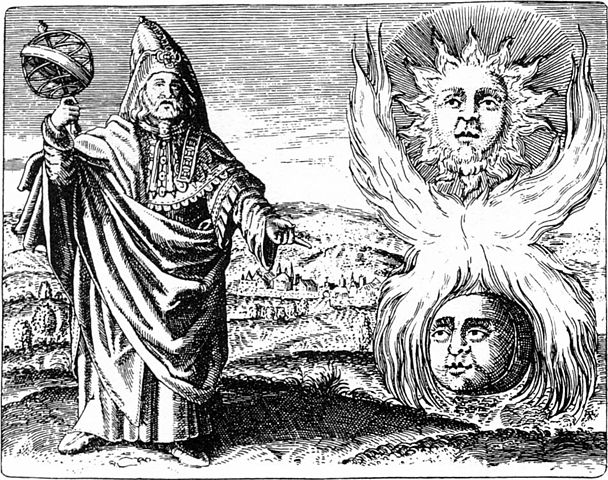
Hermes became deeply connected with alchemy, and the very word “Hermetic” came to be associated with alchemical operations and sealed vessels.
Alchemy developed a complex symbolic language of metals, planets, purification, death, rebirth, conjunction, dissolution, and transmutation. While some alchemists pursued physical transformations, later esoteric readers also interpreted the process spiritually.
Base metal could symbolize unpurified human nature. Gold could symbolize perfected consciousness. The furnace became the trials of life or spiritual discipline. The Philosophers’ Stone became the transforming principle through which the lower nature was brought into another state. Because the Emerald Tablet was attributed to Hermes, the Hermetic sage became one of the patron figures of this entire alchemical tradition.
Hermes and Astrology
Hermes was likewise associated with astrology. Ancient Hermetic literature includes material concerned with celestial influences, planetary powers, decans, fate, and the correspondence between heaven and earth.
Astrology fit naturally into the Hermetic worldview because the cosmos was understood as an interconnected order. The heavenly bodies were not isolated physical objects. They participated in a system through which divine and natural forces were expressed. The human being, as microcosm, stood within this network of relationships. This relationship between celestial and human orders became one of the most persistent elements of Western esoteric philosophy.
Hermes and Magic
Magical literature also circulated under the authority of Hermes. The Hermetic tradition supplied later ceremonial magic with ideas about divine names, planetary correspondences, spiritual beings, sacred images, ritual speech, and the relationship between the visible and invisible worlds.
Magic, in this sense, depended upon knowledge of correspondence. The magician sought to understand how forces operating on one level could be brought into relationship with corresponding forces on another. This same structure later became central to Renaissance magic, Rosicrucian systems, occult Qabalah, and ceremonial traditions.
What Does Hermeticism Teach About the Human Being?
One of the most important Hermetic teachings concerns the spiritual nature of humanity. Man is a being existing between worlds. The physical body belongs to nature and is subject to change, fate, and mortality. The higher principle within man participates in divine Mind. Spiritual ignorance occurs when consciousness identifies itself completely with the lower and material side of existence.
- Spiritual awakening begins when the individual recognizes the divine source from which consciousness comes.
- The Hermetic path is therefore a movement of remembrance and return.
- The initiate discovers that knowledge of God and knowledge of the true Self are closely connected.
Divine Mind and the Cosmos
Mind occupies a central position in the philosophical Hermetic texts. God is frequently described through terms associated with Mind, intelligence, life, and light. The cosmos is an ordered manifestation of divine intelligence.
Human beings possess mind because they participate in this greater order. This theme became especially important to later occult and metaphysical writers. By the nineteenth and twentieth centuries, Hermetic teachings about divine Mind could be read alongside new theories of mental power, consciousness, thought, and universal law. That reinterpretation would become central to modern occult systems such as The Kybalion.
Spiritual Rebirth in the Hermetic Writings
The Hermetic path does not stop with intellectual knowledge. The student is expected to undergo a form of spiritual rebirth. Ignorance, attachment, and domination by the lower passions must be overcome as the individual awakens to the divine principle within.
This is why Hermeticism became so closely associated with initiation. The teachings describe a change in consciousness that separates the ordinary condition of man from the awakened condition of the initiate. Later Rosicrucian and alchemical traditions would develop this idea through their own symbolism of death, purification, regeneration, and illumination.
Hermes and the Idea of Ancient Wisdom
For centuries Hermes Trismegistus was believed to have lived in extremely remote antiquity. Renaissance scholars sometimes placed him before Moses or close to the Mosaic period. This made his writings extraordinarily important because they appeared to preserve evidence of an ancient theology existing before many of the world’s later religious systems. Hermes consequently became one of the central figures in the idea of a prisca theologia, or ancient primordial theology.
According to this view, God had revealed spiritual truth to humanity in the distant past. Fragments of that truth survived through figures such as Hermes, Zoroaster, Orpheus, Pythagoras, Plato, Moses, and later Christian teachers. This concept became one of the great foundations of Renaissance esotericism.
Marsilio Ficino and the Renaissance Revival

Hermeticism received an enormous revival during the Renaissance through Marsilio Ficino. In fifteenth-century Florence, Greek manuscripts of the Hermetic writings became available to the circle surrounding Cosimo de’ Medici. Ficino translated them into Latin.
The translation gave educated European readers access to the philosophical Hermetic writings and helped transform Hermes into one of the major spiritual authorities of Renaissance thought. At the time, the texts were believed to be far older than they actually were. This apparent antiquity gave them immense authority. If Hermes had lived before Moses, then his teachings appeared to demonstrate that ancient pagan wisdom and Christian revelation shared common foundations.
Prisca Theologia and the Ancient Theology
The Renaissance doctrine of prisca theologia proposed that there had once been a pure ancient theology from which later spiritual traditions developed. Hermes occupied a central place in that lineage.
The idea allowed Renaissance thinkers to study pagan philosophy, Platonic thought, astrology, magic, and ancient religion while interpreting them as fragments of a divine wisdom that could be reconciled with Christianity. Hermeticism thus became a bridge between classical philosophy and Christian thought.
It also prepared the way for later attempts to reconstruct universal spiritual traditions extending across cultures and historical periods.
When Were the Hermetic Writings Actually Written?
Later scholarship showed that the philosophical Hermetic writings did not come from the remote antiquity imagined by Renaissance readers.
They were produced during the Hellenistic and Roman periods, largely within the first centuries of the Common Era. This historical revision changed the dating of the texts but did little to reduce their influence. By that point Hermetic ideas had already entered European philosophy, astrology, alchemy, magic, Rosicrucianism, and occult thought. Hermes remained symbolically ancient even after scholars revised the historical chronology.
Hermes and Rosicrucianism
Hermetic ideas became deeply embedded in later Rosicrucian thought. Rosicrucian traditions combined Christianity, alchemy, Hermetic philosophy, astrology, mystical symbolism, and the idea of hidden initiatory knowledge.
- The macrocosm-microcosm relationship became especially important.
- Human beings were understood as miniature reflections of the cosmos and as beings capable of spiritual regeneration.
- Hermes supplied an ancient authority for this worldview.
The Rosicrucian use of alchemical symbolism also strengthened the connection. Transformation of matter could become a symbolic language for transformation of the initiate.
Hermes and Qabalah
Hermetic thinkers also drew heavily upon Qabalah. During the Renaissance and later occult revival, Christian and occult Qabalists combined the Tree of Life, Hebrew divine names, numerical symbolism, astrology, alchemy, and Hermetic correspondence into increasingly elaborate systems.
This produced what is often called Hermetic Qabalah. The system became especially important within nineteenth-century ceremonial magic and organizations such as the Hermetic Order of the Golden Dawn.
Hermes, the Tree of Life, the Tarot, astrology, alchemy, and ritual magic could all be placed within one structure because correspondence was treated as a universal law connecting them.
Hermes and Western Esotericism

Few figures have had a longer symbolic life within Western esotericism than Hermes Trismegistus. His name appears wherever writers seek an ancient source for teachings concerning hidden laws, spiritual transformation, cosmic correspondence, astrology, alchemy, magic, divine Mind, and initiation.
The historical Hermes may be legendary, but the Hermetic identity became culturally real through the enormous literature built around it. Each period recreated Hermes according to its own concerns.
Ancient readers knew him as a revealer of divine philosophy. Medieval alchemists knew him as a master of secret operations. Renaissance philosophers treated him as an ancient theologian. Rosicrucians and occultists invoked him as a source of hidden wisdom. Modern metaphysical writers transformed him again into the teacher of universal mental and spiritual laws.
The Nineteenth-Century Occult Revival
Hermes returned to prominence during the nineteenth-century occult revival. The period saw renewed interest in ceremonial magic, alchemy, Qabalah, Theosophy, Rosicrucianism, astrology, mystical Christianity, and comparative religion.
Occult writers searched older traditions for universal laws that could unite religion, science, psychology, and spiritual experience. Hermes supplied an ideal ancient authority. His traditional teachings concerning correspondence, Mind, cosmic order, spiritual transformation, and hidden knowledge could be adapted easily to new systems of metaphysical thought.
Hermes and Theosophy
Theosophy also contributed to the modern revival of interest in Hermetic traditions. Theosophical writers frequently compared Egyptian, Greek, Indian, Buddhist, Christian, Qabalistic, and Hermetic teachings in their search for an ancient universal wisdom. Hermes could therefore be studied alongside Eastern teachers without being confined to the history of Egyptian or Greek religion. The same comparative method later appeared throughout early twentieth-century occult publishing.
Hermes and New Thought
Hermetic ideas entered New Thought through the increasing emphasis placed upon Mind, mental law, thought, vibration, correspondence, and the relationship between consciousness and experience. The ancient philosophical Hermetica do not present New Thought in its modern form. Early twentieth-century writers reinterpreted Hermetic language through the psychological and metaphysical interests of their own period.
This produced a distinctly modern Hermeticism in which the universe could be explained through mental principles and human beings could consciously learn to work with universal laws. The best-known YPS example of this development is The Kybalion.
Hermes Trismegistus and The Kybalion
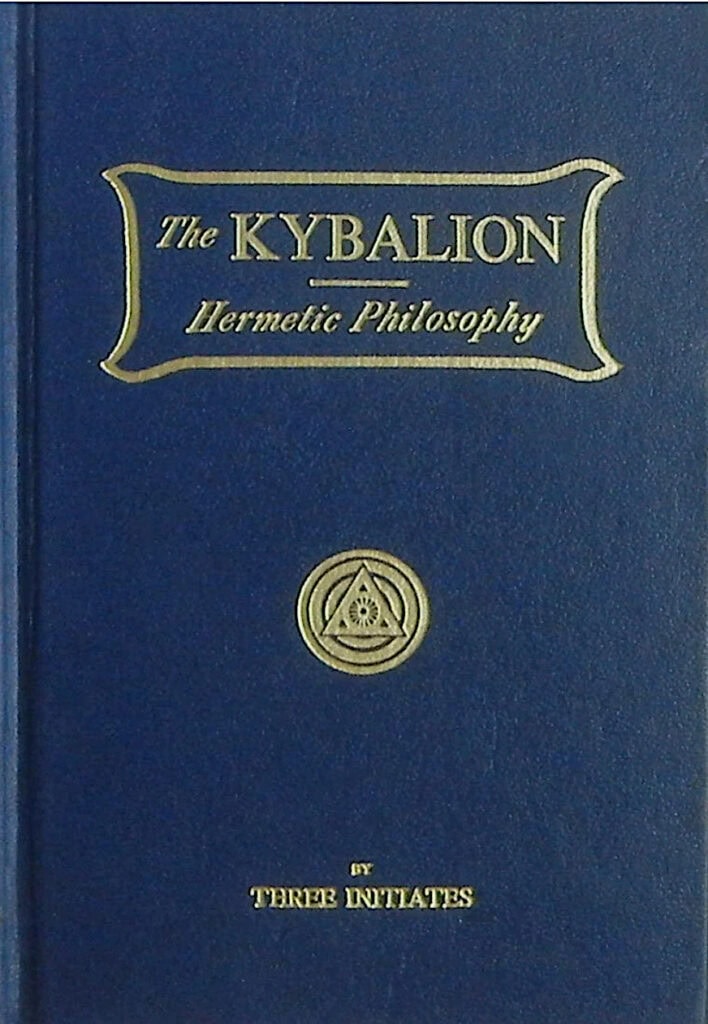
The Yogi Publication Society published The Kybalion in 1908 under the name of the Three Initiates.
The book presents itself as a study of “The Hermetic Philosophy of Ancient Egypt and Greece” and attributes its system to ancient teachings associated with Hermes Trismegistus. Its famous Seven Hermetic Principles are Mentalism, Correspondence, Vibration, Polarity, Rhythm, Cause and Effect, and Gender.
The book places the principle of Mentalism first and presents the universe as mental in character. Correspondence then expresses the relationship among different planes. Vibration describes continual motion. Polarity explains opposites as extremes of one underlying thing. Rhythm governs recurring movement. Cause and Effect describes lawful sequence. Gender operates throughout the planes of manifestation. These principles became one of the most influential modern presentations of Hermetic philosophy.
Is The Kybalion an Ancient Hermetic Text?
No. The Kybalion is a modern work published in 1908. Its importance lies in how its authors adapted the authority and vocabulary of Hermes Trismegistus to the mental and metaphysical philosophy of their own period.
The book does not simply reproduce the Corpus Hermeticum. Its emphasis upon Mentalism, mental transmutation, vibration, polarity, and conscious mastery reflects the intellectual environment of early twentieth-century occultism and mental science. Its invocation of Hermes nevertheless gave the system a claimed lineage extending back through the Hermetic tradition.
Hermes and the Yogi Publication Society
Hermes Trismegistus occupies an important place in understanding the larger publishing program of the Yogi Publication Society. YPS repeatedly placed Eastern and Western traditions beside one another. Yogi philosophy appeared through Yogi Ramacharaka. Hermetic teaching appeared through The Kybalion. Qabalistic, Rosicrucian, Christian mystical, psychic, and mental-science works entered the same catalog.
Hermes made that synthesis easier to understand from the Western side. The Hermetic doctrine of correspondence supplied a framework in which different traditions could be read as descriptions of the same laws operating on different levels.
This closely matched the YPS habit of moving between Yoga, psychology, mental science, psychic development, Christianity, Qabalah, occultism, and Hermetic philosophy without treating them as completely separate fields.
“As Above, So Below” and the YPS Worldview
Few Hermetic ideas fit the YPS publishing program as naturally as the principle summarized by “As above, so below.” It allows physical, mental, psychic, and spiritual processes to be studied as corresponding expressions of one ordered universe. That same kind of layered model appears repeatedly throughout YPS literature.
Yogi Ramacharaka presents physical, mental, psychic, and spiritual levels of human development. The Kybalion presents planes governed by common principles. Psychic books connect visible phenomena with unseen causes. Qabalistic books place the human constitution within larger cosmic structures. Hermetic correspondence supplies a Western vocabulary for this shared structure.
Why Hermes Remained Important to Modern Occultism
Hermes Trismegistus remained influential because the figure could serve several purposes at once.
- He represented ancient wisdom.
- He linked Egyptian religion with Greek philosophy.
- He supplied authority for alchemy and astrology.
- He became a foundation for Renaissance magic.
- He stood behind the principle of macrocosm and microcosm.
- He entered Rosicrucian and Qabalistic systems.
- He could be interpreted as a mystical teacher, philosopher, magician, alchemist, astrologer, or revealer of divine Mind.
- This flexibility allowed each later movement to find something in Hermes that spoke to its own concerns.
What Is the Lasting Importance of Hermes Trismegistus?
Hermes Trismegistus became one of the great symbolic teachers of Western spiritual history.
The historical figure is legendary, but the writings and traditions attached to his name profoundly shaped European and American religious, philosophical, magical, and metaphysical thought.
Through the Corpus Hermeticum and Poimandres, Hermes became a teacher of divine Mind, creation, the nature of humanity, and spiritual rebirth. Through the Emerald Tablet, he became the authority behind the correspondence of macrocosm and microcosm. Through alchemy, he became the master of transmutation. Through Renaissance philosophy, he became a representative of primordial theology. Through Rosicrucianism and occult Qabalah, he became one of the ancient sources of initiatory wisdom.
By the beginning of the twentieth century, Hermes had acquired yet another role. He became the ancient teacher through whom modern writers could present universal mental and spiritual laws.
That is the Hermes encountered in the Yogi Publication Society and The Kybalion. The Hermes of antiquity had become the authority behind Mentalism, Correspondence, Vibration, Polarity, Rhythm, Cause and Effect, Gender, and mental transmutation.
His enduring importance lies in that extraordinary continuity. Across nearly two thousand years, the name Hermes Trismegistus has remained attached to the idea that visible nature conceals deeper laws, that humanity contains a divine element capable of awakening, and that knowledge of the universe and knowledge of the human being are inseparably connected.