Alchemy is one of the oldest and most persistent traditions encountered in the history of Western esotericism. For many centuries it brought together experiments with metals and minerals, theories concerning the composition of matter, medicine, cosmology, astrology, religion, philosophy, and ideas about the hidden forces operating throughout nature. Its best-known objective was the transmutation of base metals into gold, usually through the discovery or preparation of the Philosopher’s Stone.
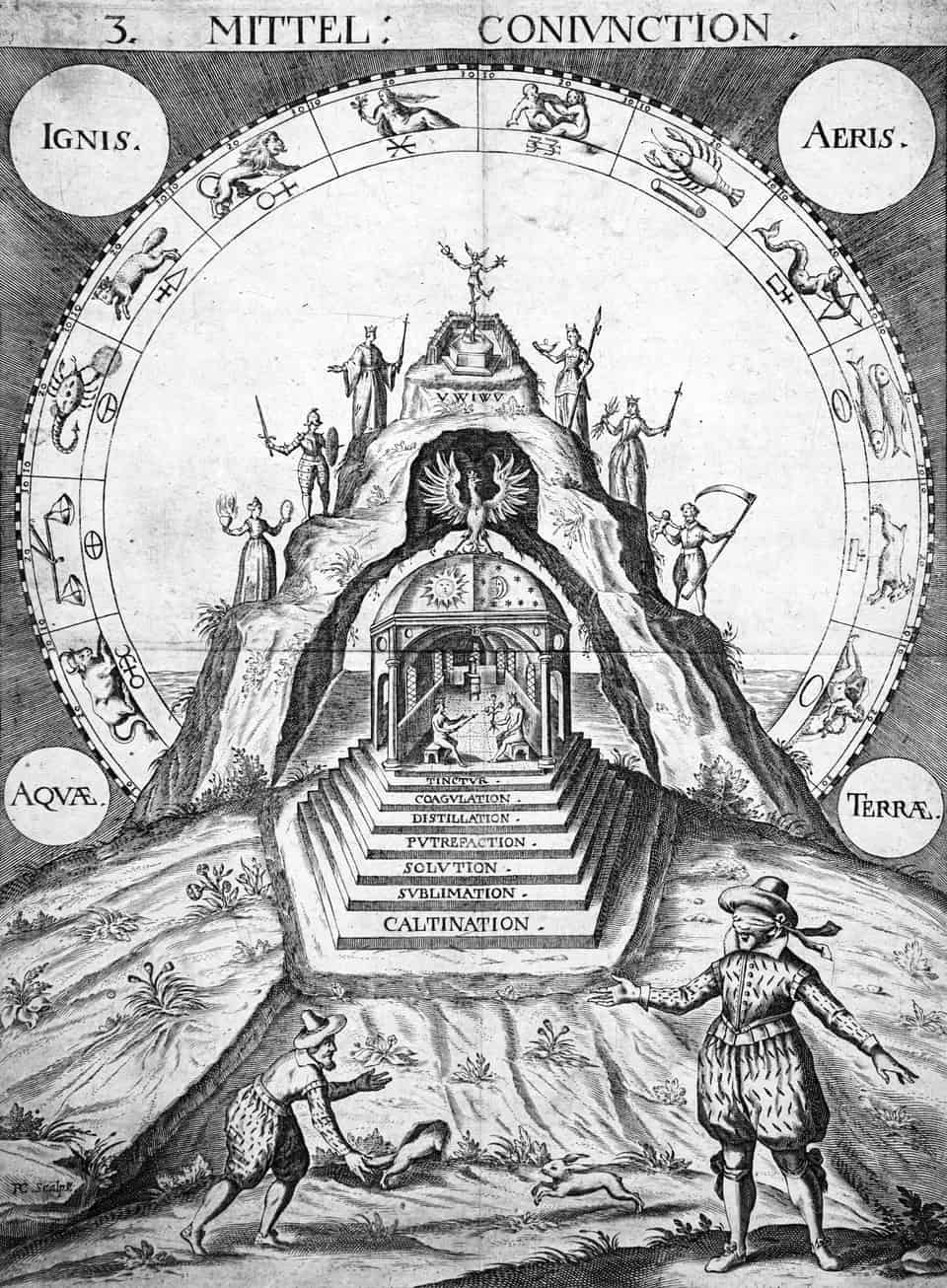
Yet the surviving alchemical literature contains a much larger system of ideas concerning generation, corruption, purification, death, rebirth, the relationship between spirit and matter, and the possibility that nature could be brought to a state of greater perfection through human art. These ideas passed through Greek, Egyptian, Arabic, Jewish, Christian, Hermetic, and Rosicrucian environments before entering the occult revival of the nineteenth century and the world of mental and esoteric philosophy in which the Yogi Publication Society appeared at the beginning of the twentieth century.
Alchemy is important to the history of the Yogi Publication Society because it belongs to the intellectual ancestry of several traditions represented in its publications. Hermeticism, Qabalah, Rosicrucian philosophy, Christian mysticism, Theosophy, New Thought, and the occult sciences all inherited concepts that had circulated through alchemical literature. By the period in which the Yogi Publication Society was operating, alchemy could refer to historical experiments with matter, a philosophy of nature, an initiatory language of spiritual transformation, or a symbolic model through which changes in consciousness were explained. Understanding those different meanings helps explain why alchemical ideas could exist comfortably beside discussions of mental transmutation, vibration, polarity, correspondence, planes of existence, psychic development, and the transformation of character in early twentieth-century occult literature.
What Is Alchemy?
The English word alchemy came through medieval Latin forms such as alchimia and alchemia, derived from Arabic al-kīmiyāʾ. The deeper origin of kīmiyāʾ has long been debated. Whatever its precise linguistic ancestry, the word became attached to a large body of techniques and theories concerned with the manipulation and transformation of substances. Alchemy was never a single doctrine controlled by one school. Different alchemists pursued different objectives and explained their work through different philosophical, religious, and technical systems.
The most famous alchemical objective was chrysopoeia, the production of gold. Alchemists commonly believed that metals were generated within the earth and that the differences between metals reflected differences in composition, maturity, purity, or proportion. If nature could produce gold, the alchemist asked whether art could understand and accelerate the same process. Lead, copper, iron, mercury, sulfur, salts, minerals, and other substances could be heated, dissolved, distilled, calcined, combined, separated, and recombined in an attempt to discover the processes through which matter changed.
This pursuit produced a rich technical vocabulary. Alchemical writings describe operations such as calcination, dissolution, separation, conjunction, fermentation, distillation, sublimation, coagulation, and fixation. Their precise meanings varied from author to author. Some referred directly to laboratory procedures. Others acquired philosophical or spiritual meanings. In many texts the two levels overlap so completely that attempting to classify a passage as purely chemical or purely symbolic can distort what its author was attempting to communicate.
Alchemy also pursued medicines and substances capable of preserving or restoring health. The Philosopher’s Stone could be described as a transmuting substance capable of perfecting metals, while the Elixir of Life or related preparations promised extraordinary medicinal powers. Alchemical medicine became an important part of the tradition, especially through the influence of Paracelsus and the chemical physicians who followed him.
The central idea connecting many of these pursuits was transformation. Matter was active and capable of change. Nature contained hidden processes that could be discovered, imitated, directed, and accelerated. The alchemist worked upon substances while attempting to uncover the laws governing those transformations.
Where Did Western Alchemy Begin?
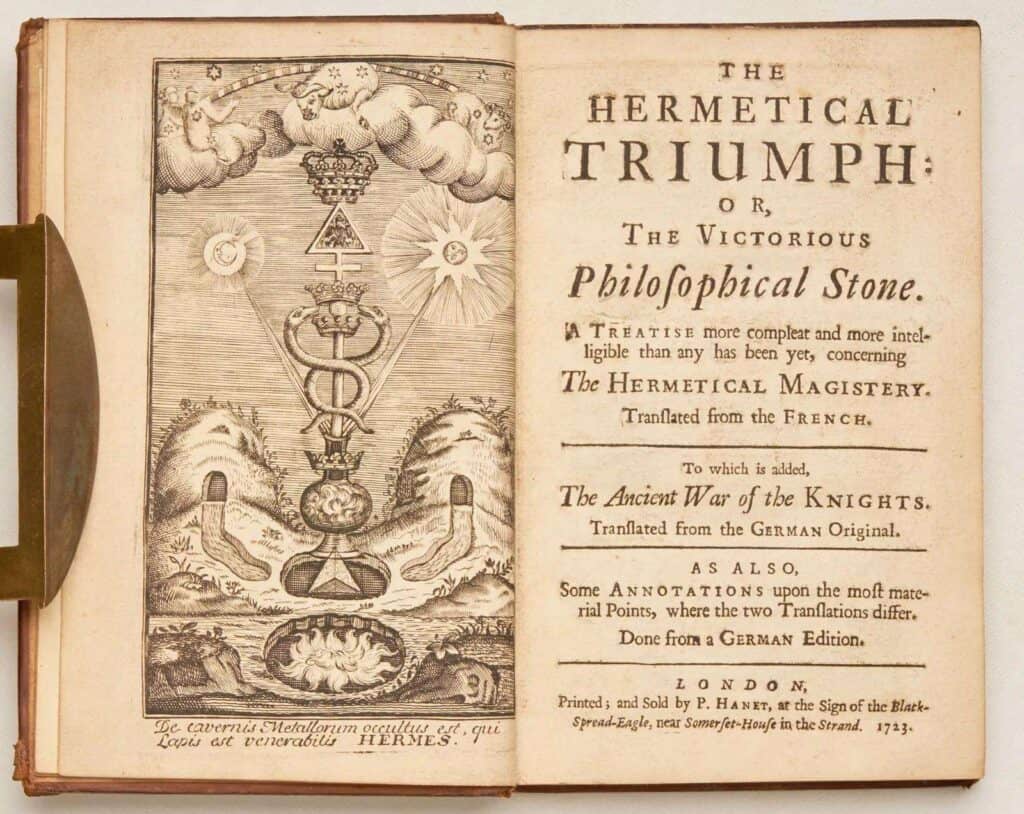
The form of alchemy that later entered medieval Europe developed from several streams of ancient knowledge, with Hellenistic Egypt playing a major role. Egypt under Greek and then Roman rule brought Greek natural philosophy into contact with Egyptian religious traditions, metallurgical knowledge, medicine, astrology, craft practices, and temple culture. Alexandria became one of the great intellectual centers of the ancient Mediterranean, and the environment associated with Egypt became central to later stories about the origin of alchemical and Hermetic wisdom.
Greek philosophical theories supplied an important framework for explaining transmutation. Aristotle had taught that terrestrial matter could be understood through combinations of qualities such as hot, cold, wet, and dry and through the four elements of earth, water, air, and fire. If substances differed because these qualities existed in different combinations, the possibility of changing one substance into another could be imagined within a coherent theory of matter.
Early alchemical writings developed theories and procedures for coloring metals, imitating precious materials, preparing alloys, and transforming substances. Over time these practices became associated with increasingly elaborate theories about the generation and perfection of metals.
One of the most important surviving figures in early alchemy is Zosimos of Panopolis, who lived around the late third and early fourth centuries. His writings reveal an alchemy that was already technical, philosophical, visionary, and religious. Zosimos discussed apparatus and laboratory operations while also describing visions of dismemberment, death, purification, and transformation. His works show why the later history of alchemy cannot be reduced to a simple choice between chemistry and mysticism. Those dimensions could exist inside the same intellectual world.
Why Is Hermes Trismegistus So Important to Alchemy?
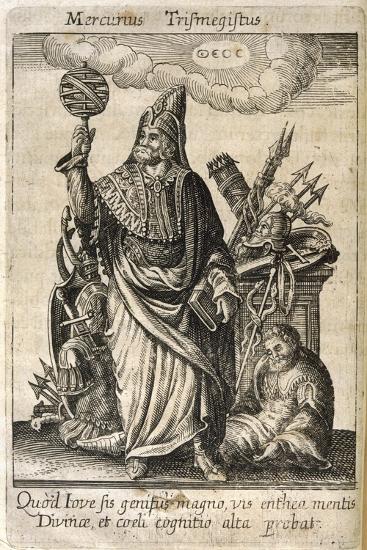
The figure of Hermes Trismegistus became one of the central authorities of the Western esoteric tradition. Hermes was a legendary sage created through the cultural identification of the Greek god Hermes with the Egyptian god Thoth. A body of philosophical, religious, astrological, magical, and technical literature eventually accumulated under his name.
The philosophical writings now commonly called the Corpus Hermeticum were composed during the early centuries of the Common Era. They discuss God, mind, creation, humanity, knowledge, spiritual regeneration, and humanity’s relationship with the cosmos. Other writings attributed to Hermes dealt with astrology, magic, medicine, and alchemical subjects. These different bodies of Hermetic literature were not one uniform system, but later readers frequently treated them as parts of a primordial wisdom descending from the ancient Egyptian Hermes.
Alchemy became deeply associated with this Hermetic inheritance. The legendary Hermes was presented as an ancient master of the secrets of nature, and alchemical writers frequently placed their science within a Hermetic lineage. The expression “Hermetic art” became closely associated with alchemy itself.
One text became especially important to this tradition, the Emerald Tablet. Its brief statements describe a relationship between higher and lower realities and a process involving unity, separation, ascent, descent, and the powers of the cosmos. The famous principle commonly rendered as “as above, so below” became one of the most recognizable formulations associated with Hermetic thought. Whatever interpretations were later placed upon it, the central concept of correspondence between levels of reality became immensely influential.
This history is directly relevant to the later Hermeticism represented in Yogi Publication Society literature. When early twentieth-century occult writers discussed correspondence, planes, vibration, polarity, transmutation, and the relationship between mental and material processes, they were participating in a long history in which Hermetic ideas had already been repeatedly combined with alchemy, astrology, magic, religion, and natural philosophy.
What Did the Arabic Alchemical Tradition Contribute?
Alchemy underwent major development in the Islamic world. Greek scientific and philosophical writings were translated into Arabic, studied, expanded, criticized, and incorporated into new systems of medicine and natural philosophy. Arabic alchemical literature became one of the principal channels through which ancient alchemical ideas eventually reached Latin Europe.
A vast body of alchemical literature became associated with Jābir ibn Hayyān, known in Latin Europe as Geber. The exact authorship and dating of the writings attributed to Jābir remain subjects of scholarly debate, and the collection appears to represent more than the work of one historical individual. The Jabirian corpus developed elaborate theories of matter, numerical relationships, balance, and the composition of metals. Sulfur and mercury became central explanatory principles in theories of metallic generation, although alchemical sulfur and mercury were philosophical principles as well as ordinary physical substances.
Islamic alchemists worked with distillation, sublimation, calcination, crystallization, dissolution, and other processes that became central to later chemical practice. They studied acids, salts, minerals, metals, medicines, dyes, perfumes, and compounds. Laboratory apparatus became increasingly sophisticated, and written descriptions of chemical operations became an important part of the scientific inheritance transmitted to Europe.
Arabic alchemy also preserved the association with Hermes. Hermes was incorporated into Islamic traditions concerning ancient wisdom and sometimes connected with the prophet Idris. This helped carry the image of Hermes as a primordial teacher of hidden natural knowledge across linguistic, religious, and geographical boundaries.
How Did Alchemy Enter Medieval Europe?
Beginning in the twelfth century, Arabic works on philosophy, medicine, astronomy, astrology, mathematics, and alchemy were translated into Latin. European scholars encountered a sophisticated alchemical literature containing both ancient material and centuries of Islamic development.
Latin alchemy expanded rapidly. Works circulated under the names of famous authorities such as Aristotle, Raymond Lull, Albertus Magnus, and Geber, even when those historical figures had not written the texts attributed to them. Pseudonymous attribution became a major feature of alchemical literature. Associating a work with an ancient sage or respected philosopher gave it authority and placed it within an imagined chain of secret wisdom.
European alchemists developed theories concerning mercury and sulfur, metallic generation, the Philosopher’s Stone, medicinal elixirs, and the purification of substances. Laboratories, furnaces, vessels, retorts, crucibles, and distillation equipment became familiar elements of the alchemical world.
Alchemy also developed an intentionally difficult literary language. Authors used allegory, mythology, planetary symbols, animals, kings and queens, marriages, deaths, dragons, lions, serpents, suns, moons, and mysterious substances bearing multiple names. Secrecy was itself part of alchemical culture. Knowledge of the art was frequently presented as something that should be concealed from the unworthy and communicated indirectly to those capable of understanding it.
This habit of concealment became one reason later occultists found alchemical literature so attractive. A text filled with cryptic operations and symbolic images invited multiple levels of interpretation.
What Was the Philosopher’s Stone?
The Philosopher’s Stone became the supreme object of Western alchemical pursuit. It was commonly described as a substance capable of completing the transmutation of imperfect metals into gold or silver. The Stone could also acquire medicinal and spiritual properties, depending upon the author and period.
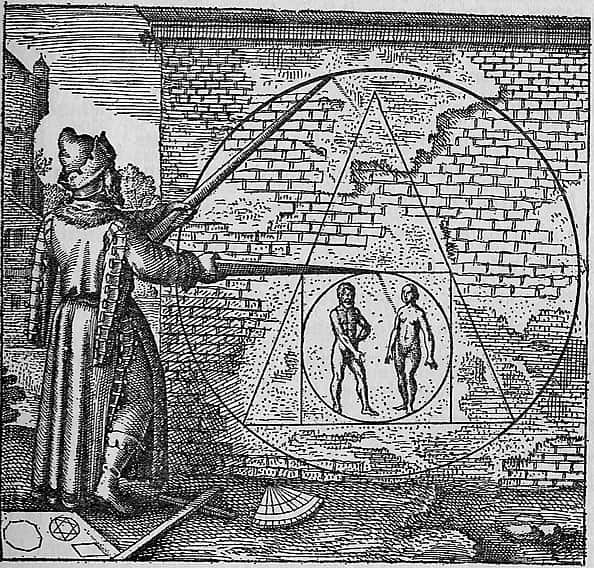
The terminology is deceptive because the “Stone” was not necessarily imagined as an ordinary rock. Alchemical descriptions could present it as a powder, tincture, medicine, substance, perfected matter, or mysterious agent possessing extraordinary powers of transformation.
Its production was usually described as the culmination of the Magnum Opus, the Great Work. The stages of that work varied considerably. Later alchemical literature often emphasized color changes associated with transformations of the material. Blackening, whitening, yellowing, and reddening became important signs, with the final red stage commonly associated with completion of the Stone.
The stages later known as nigredo, albedo, citrinitas, and rubedo acquired a rich symbolic history. Blackness could signify decomposition or putrefaction. Whitening represented purification. Redness represented completion, perfection, or the successful union of opposing principles. Modern summaries sometimes present these stages as if every alchemist followed one fixed sequence. Historical texts are far less uniform.
The importance of the Stone lies in the concept underlying it. An imperfect condition could be transformed into a perfected condition through a lawful series of operations. That idea became extraordinarily powerful once alchemical language was transferred from metals to the human being.
What Did Solve et Coagula Mean?
One of the concepts closely associated with later alchemical thought is solve et coagula, dissolve and coagulate. Matter is broken apart, purified, separated, recombined, and fixed into a new form. The language captures a recurring pattern throughout alchemical operations.
Separation mattered because the alchemist sought to distinguish useful, pure, subtle, or active principles from gross or impure material. Conjunction reunited what had been separated under altered conditions. The finished product was expected to possess qualities absent from the original material.
The pattern could be represented through death and resurrection. A substance dies, decomposes, or descends into darkness before being purified and regenerated. Alchemical illustrations frequently depict tombs, skeletons, ravens, marriages, hermaphroditic figures, kings and queens, suns and moons, and resurrected bodies to express these transformations.
These images later became highly useful to mystical interpreters because the same sequence could describe a transformation of the person. Old conditions are dissolved, conflicting elements are reconciled, and a new state is formed. This spiritual reading became increasingly visible in strands of early modern and later occult alchemy.
How Did Paracelsus Change Alchemy?
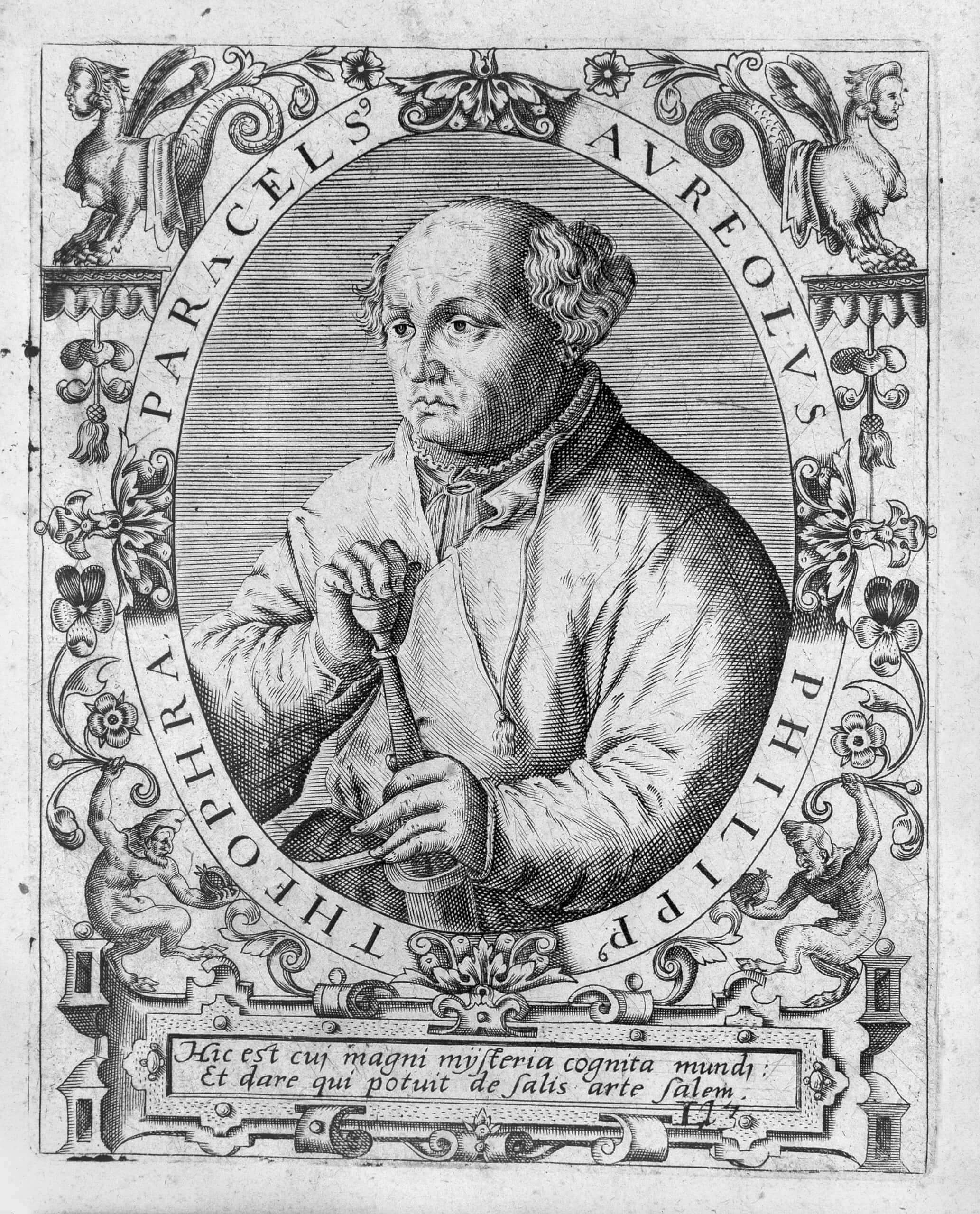
Paracelsus, born Theophrastus von Hohenheim around 1493, transformed the relationship between alchemy and medicine. He criticized important parts of established medical practice and argued for a medicine informed by chemistry, observation, and a different understanding of the forces operating within the human body.
For Paracelsus, alchemy had purposes extending far beyond the production of gold. The alchemist separated, purified, concentrated, and prepared substances so that their hidden virtues could become available. Chemical operations could produce medicines from minerals and other materials.
Paracelsian thought helped establish the tria prima, the three principles of sulfur, mercury, and salt. These should not be understood simply as the familiar substances bearing those names. They functioned as principles through which the properties and transformations of matter could be explained.
Paracelsian medicine also strengthened the idea that the human being and the cosmos corresponded to one another. The human body could be treated as a microcosm reflecting the macrocosm. Celestial, terrestrial, spiritual, and bodily processes existed within an interconnected universe.
This microcosm–macrocosm relationship became one of the major bridges connecting alchemy with later occult philosophy.
How Did Alchemy Become Connected with Rosicrucianism?
The Rosicrucian manifestos that appeared in the early seventeenth century entered a European intellectual environment already filled with alchemy, Paracelsian medicine, religious reform, Hermetic philosophy, astrology, and apocalyptic expectations. The anonymous Fama Fraternitatis, Confessio Fraternitatis, and Chymical Wedding of Christian Rosenkreutz presented the mysterious fraternity of the Rosy Cross as possessing a hidden wisdom capable of contributing to a reformation of knowledge and society.
The Chymical Wedding, published in 1616, is filled with alchemical imagery. Marriage, testing, death, purification, transformation, and regeneration are woven into an elaborate initiatory narrative. Rosicrucianism and alchemy became closely connected in the Western esoteric imagination.
Later organizations claiming Rosicrucian inheritance developed their own combinations of alchemy, mysticism, Hermeticism, Qabalah, initiation, and occult philosophy. Alchemical symbols could now describe both operations upon matter and operations upon the initiate.
This connection has direct relevance to the intellectual network surrounding the later Yogi Publication Society. Herbert A. Parkyn, whose Chicago School of Psychology became an important part of the environment from which the Yogi Publication Society developed, was a member of J. C. F. Grumbine’s Order of the White Rose, a Rosicrucian order. Parkyn’s documented connection to a Rosicrucian organization places this current inside the network itself and helps explain why Rosicrucian, Hermetic, mental-science, psychic, and occult subjects cannot be treated as completely separate worlds when reconstructing the intellectual environment around YPS.
.
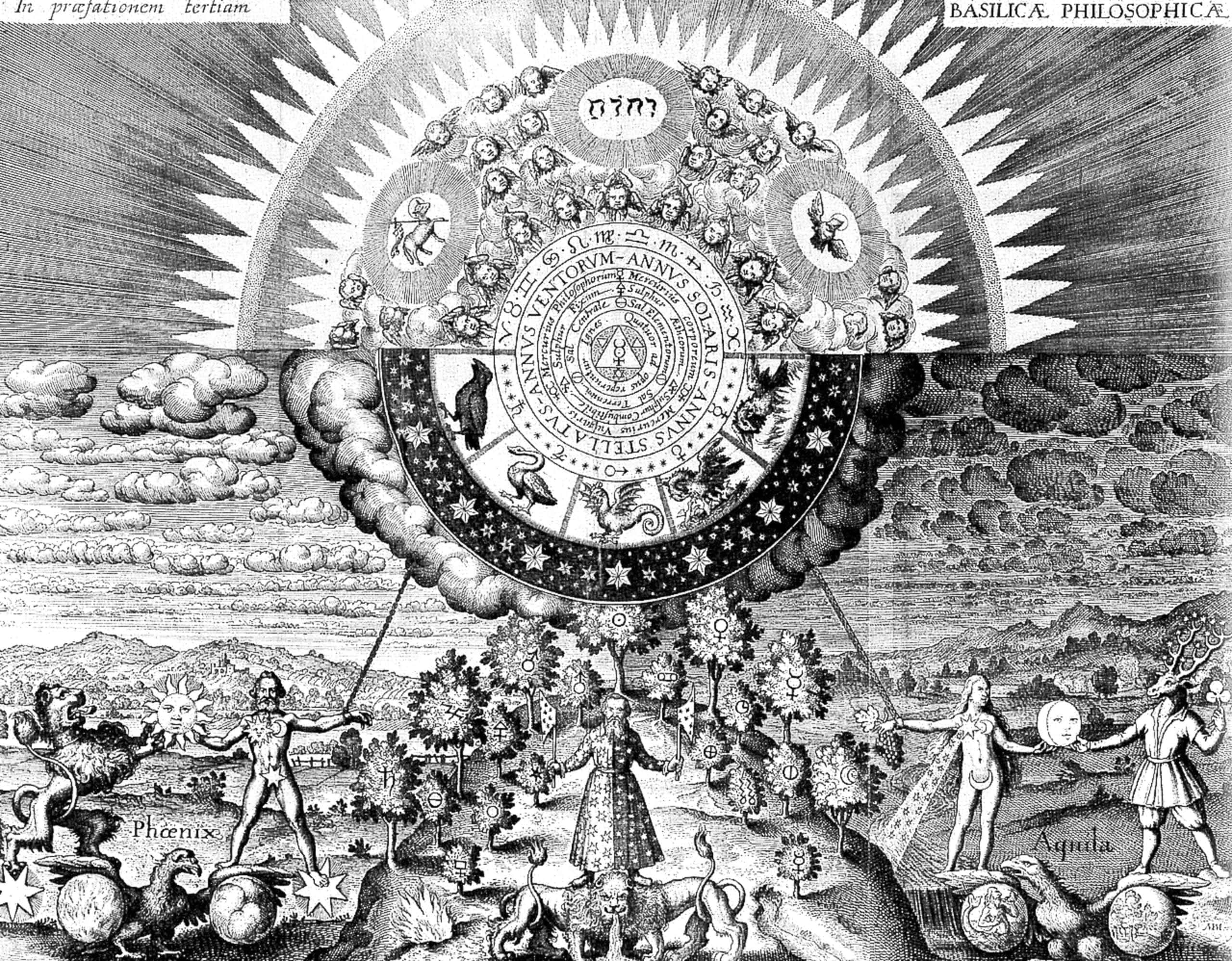
How Did Alchemy Become a Form of Spiritual Transformation?
Alchemy accumulated spiritual interpretations over many centuries, although the degree to which individual historical alchemists intended their laboratory writings to describe inner transformation varies greatly. Some texts were strongly religious while remaining concerned with physical operations. Others explicitly connected purification of matter with purification of the operator. Later interpreters pushed the spiritual dimension much further.
Christian alchemists could understand their work through the language of creation, fall, redemption, death, resurrection, and divine restoration. Matter itself could participate in a sacred history. The alchemist’s task of purifying corrupted material could mirror the restoration of fallen humanity.
The Philosopher’s Stone could then become more than an agent of metallic transmutation. It could signify divine wisdom, spiritual regeneration, perfected humanity, Christ, illumination, or the recovery of a lost primordial condition. Alchemical marriage could represent the reconciliation of opposites. The sun and moon could represent complementary powers. Death and putrefaction could precede regeneration.
This strand of alchemy intersected naturally with Christian mysticism. Both traditions could describe human existence as a process of purification and restoration through which an ordinary state was transformed into a higher one.
What Is the Connection Between Alchemy and Qabalah?
Alchemy and Qabalah developed from different historical traditions, but they became increasingly intertwined within Christian esotericism. Renaissance and early modern Christian Cabalists attempted to interpret Jewish Kabbalistic ideas within Christian theological and Hermetic frameworks. Later occult systems brought Qabalistic correspondences into contact with astrology, magic, Tarot, alchemy, and ceremonial ritual.
The Tree of Life provided occultists with a structure through which different planes, elements, planets, divine names, colors, metals, and states of consciousness could be related. Alchemical transformations could then be mapped onto Qabalistic structures, while Qabalistic concepts could be interpreted through alchemical imagery.
This synthesis became highly developed in nineteenth-century occultism. By the time YPS and related publishers were operating, Qabalism, Hermeticism, Rosicrucianism, alchemy, astrology, and occult psychology were frequently presented as interconnected branches of ancient or secret wisdom.
The historical relationships among these traditions are much more complicated than the unified systems created by later occult writers. For the history of YPS, however, those later syntheses matter because they formed part of the intellectual material available to writers and publishers at the turn of the twentieth century.
Why Were Opposites So Important in Alchemy?
Alchemy repeatedly works with pairs. Sun and moon, sulfur and mercury, male and female, active and passive, volatile and fixed, above and below, subtle and gross, spirit and body appear throughout its literature and imagery.
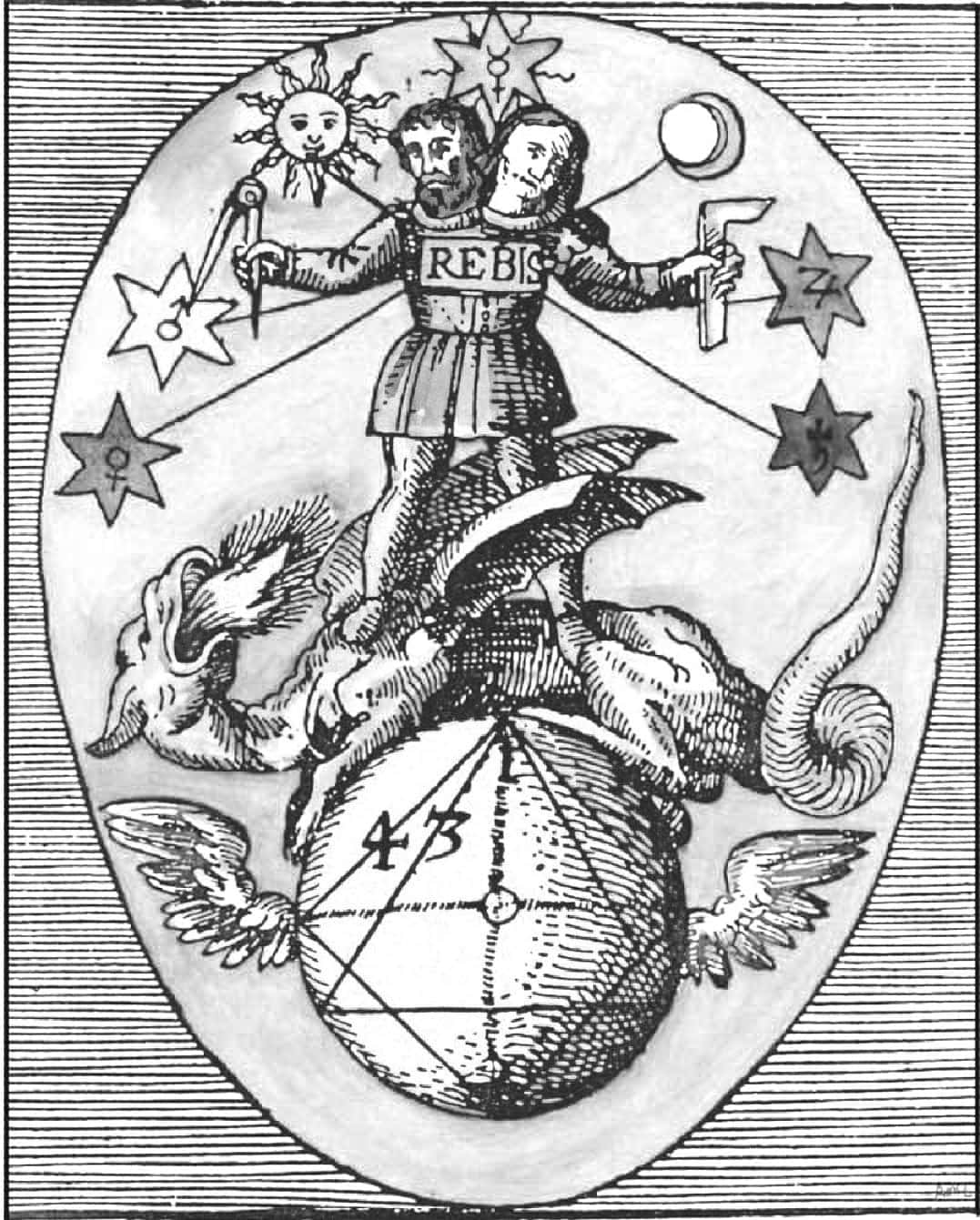
These pairs were often understood dynamically. The Great Work required separation and conjunction. Opposing qualities could interact, be purified, brought into equilibrium, or united in the production of something new. The famous alchemical Rebis, often depicted as a two-headed male and female figure, represents one expression of the union of divided principles.
Metallic symbolism also carried planetary correspondences. Gold was associated with the Sun, silver with the Moon, iron with Mars, copper with Venus, tin with Jupiter, lead with Saturn, and mercury with Mercury. The material world could thus be read through a network of celestial relationships.
This way of thinking is important when examining later occult discussions of polarity. The idea that nature operates through complementary poles did not originate with the Yogi Publication Society or The Kybalion. It had deep precedents in natural philosophy, alchemy, Hermetic symbolism, electricity, magnetism, and other fields. What changed in nineteenth- and early twentieth-century occult literature was the manner in which these older patterns were combined with the vocabulary of contemporary science and mental philosophy.
How Did Alchemy Survive the Rise of Modern Chemistry?
The relationship between alchemy and chemistry was gradual and complicated. Seventeenth-century investigators did not wake one morning as alchemists and become modern chemists the next. Figures associated with the Scientific Revolution could participate in intellectual worlds that modern categories divide sharply.
Robert Boyle, remembered as a foundational figure in chemistry, was deeply interested in transmutation and communicated with people pursuing alchemical knowledge. Isaac Newton devoted enormous effort to reading, copying, interpreting, and experimenting with alchemical texts. His surviving manuscripts demonstrate that alchemy occupied a significant place in his intellectual life.
During the seventeenth and eighteenth centuries, changing theories of matter, improved experimental methods, new approaches to measurement, and transformations in scientific institutions gradually altered the status of alchemy. Chemistry developed its own increasingly standardized concepts and methods. Traditional theories of metallic transmutation and the Philosopher’s Stone lost scientific authority.
Alchemy survived through another route. Its imagery, secrecy, Hermetic associations, and philosophy of transformation made it valuable to occultists, mystics, Freemasons, Rosicrucians, magnetists, Theosophists, and later esoteric movements.
The laboratory tradition and the esoteric tradition did not simply separate at a single historical moment. Their boundaries shifted over time. By the nineteenth century, however, occult writers were increasingly free to reinterpret alchemy as a science of spiritual, psychic, and mental transformation.
Why Did Nineteenth-Century Occultists Rediscover Alchemy?
The nineteenth-century occult revival brought renewed attention to Hermetic writings, Rosicrucianism, magic, Qabalah, astrology, alchemy, Eastern religions, psychic phenomena, and theories of hidden human powers. Old texts were translated and republished while new organizations attempted to reconstruct ancient systems into comprehensive occult philosophies.
Alchemy fit this environment extremely well. Its symbols already spoke of hidden forces, correspondence, transformation, polarity, purification, and the ascent from lower to higher conditions. Occultists could reinterpret the laboratory as an image of the human being and the Great Work as a program of personal development.
Theosophy also contributed to an environment in which Western esoteric traditions were compared and combined with Indian religious and philosophical concepts. Ideas drawn from Hindu philosophy, Buddhism, Hermeticism, occult science, reincarnation, and psychic development were increasingly presented within universal systems of spiritual evolution.
The influence of figures such as Swami Vivekananda also made Indian philosophical concepts more visible to American audiences. In the publishing culture that followed, Western occult concepts and interpretations of Yogi philosophy frequently appeared beside one another. The resulting literature did not represent a single ancient tradition. It was a modern environment in which ideas from many traditions were being translated, compared, reorganized, and incorporated into new systems.
How Did Mental Science Transform the Meaning of Alchemy?
A major shift occurred when the concept of transmutation was applied directly to thought and character. Nineteenth-century mental healing, New Thought, suggestion, personal development, and occult psychology increasingly treated thought as an active force capable of changing mental states and influencing conduct.
This is where alchemical language becomes especially important to the history surrounding YPS.
Herbert A. Parkyn had been teaching suggestion since 1895 and established the Chicago School of Psychology in 1896. His system developed the use of suggestion and auto-suggestion as methods through which habits, thoughts, expectations, emotional states, and behavior could be changed. His 1898 Special Mail Course in Hypnotism and Suggestive Therapeutics presented a systematic course in mental influence and self-directed suggestion.
This was not alchemy in the historical laboratory sense. It supplied, however, a concrete psychological mechanism for an idea that alchemical language could express extremely well. One mental condition could be changed into another. A destructive thought could be displaced through an opposing suggestion. Habit could be altered through repeated mental action. The individual could deliberately participate in the transformation of his own mental condition.
That conceptual meeting point between transformation and mental control became increasingly visible in New Thought and occult literature.
What Is Mental Transmutation?
Mental transmutation applies the ancient language of transformation to the mind. Instead of asking how lead becomes gold, the question becomes how fear becomes courage, weakness becomes strength, passivity becomes action, or one emotional condition becomes its opposite.
This use of alchemical language appears with unusual clarity in The Kybalion, published in 1908 under the name of the Three Initiates. The work explicitly uses the expression “Mental Transmutation” and presents it as a form of mental alchemy. The terminology joins the ancient concept of transmutation to a system concerned with mind.
The Kybalion describes mental states as capable of being changed through an understanding of principles including Mentalism, Correspondence, Vibration, Polarity, Rhythm, Cause and Effect, and Gender. Its principle of Polarity is especially important to its explanation of mental transformation. Qualities such as love and hate, courage and fear, are presented as different degrees along a common scale. Mental transmutation consists in changing the degree and moving the mind toward another condition.
The alchemical analogy is unmistakable. A substance begins in one condition and is transformed into another through knowledge of the laws governing it. In The Kybalion, the material being operated upon is the mental state itself.
How Does The Kybalion Connect Alchemy with Hermetic Philosophy?
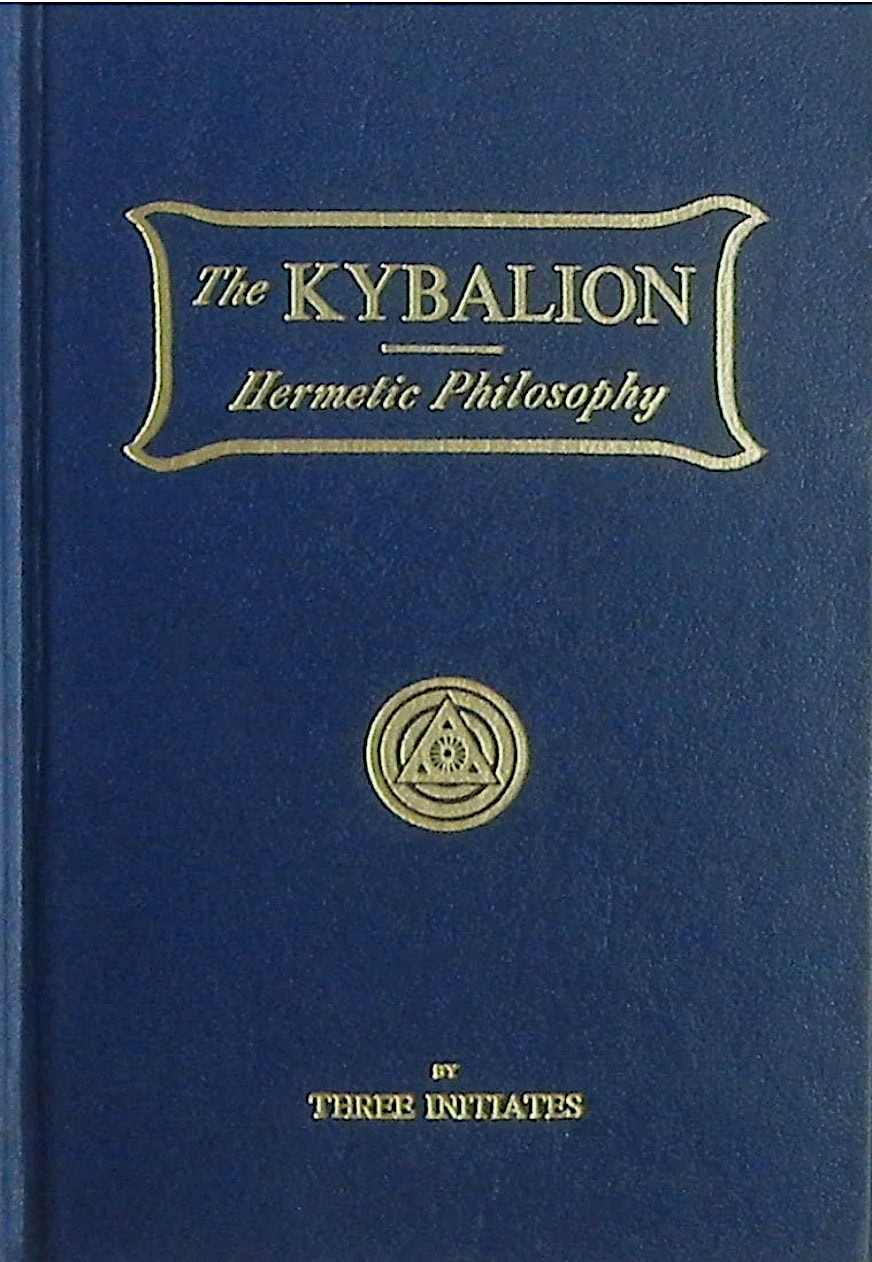
The Kybalion presents itself as a work concerning Hermetic philosophy and repeatedly invokes Hermes Trismegistus as the ancient source of its teachings. Its concept of mental transmutation draws upon the enormous authority accumulated around Hermes and alchemy while translating transmutation into the language of mind, vibration, polarity, and mental control.
The principle of Correspondence extends the Hermetic relationship between different levels of existence. The principle of Vibration describes reality through differences of vibratory condition. Polarity presents opposites as extremes of the same thing. Mental Transmutation then becomes the art of changing mental conditions by applying these principles.
This places The Kybalion at an important historical intersection. Its vocabulary belongs partly to the old world of Hermetic and alchemical philosophy and partly to the nineteenth- and early twentieth-century world of mental science, New Thought, personal magnetism, suggestion, and occult interpretations of contemporary scientific concepts.
That combination helps explain why the book can sound ancient and modern at the same time.
How Does Alchemical Transformation Relate to the Parkyn System?
The relationship becomes especially interesting when the YPS literature is examined beside the teachings already developed within Parkyn’s Chicago School of Psychology.
Parkyn’s system was built around deliberate alteration of mental conditions through suggestion and auto-suggestion. His teachings repeatedly emphasized replacing undesirable mental tendencies with desirable ones, establishing new habits through repetition, directing attention toward the desired condition, and converting thought into action. His characteristic formulas such as “Health, Happiness and Success” and “I Can and I Will” expressed a system in which the individual actively participated in changing his own mental condition.
The later language of mental transmutation gives this same general operation an esoteric and Hermetic vocabulary. Fear and courage can occupy opposite positions. One state can be moved toward the other. Mental conditions become subject to transformation through deliberate mental action.
This does not require claiming that Parkyn derived his system from medieval alchemy. His work arose from hypnotism, suggestive therapeutics, psychology, medicine, and the developing field of suggestion. The historical importance lies in the convergence. The language of alchemy supplied a centuries-old model of transmutation, while suggestion supplied a method through which mental transformation was being taught as a repeatable process.
That convergence belongs directly to the intellectual environment from which YPS developed.
Why Does Alchemy Matter to the Yogi Publication Society?
The Yogi Publication Society began in Chicago in 1903 within a network already involved in suggestion, mental science, New Thought, psychology, psychic research, occultism, and alternative religious philosophy. Its catalogue later crossed many of the boundaries that modern classifications place between these subjects.
Works issued under the name Yogi Ramacharaka presented interpretations of Indian philosophy, mental control, psychic development, Karma, reincarnation, and the development of human powers. Other publications entered more explicitly Western esoteric territory. The Kybalion presented Hermetic philosophy. Later works associated with Theron Q. Dumont, Swami Bhakta Vishita, and Swami Panchadasi dealt with personal power, mental influence, psychic phenomena, occultism, and related subjects.
The boundaries among these literary identities did not correspond neatly to separate intellectual traditions. Concepts moved across them. Mental discipline could be described through psychology, Yoga, occultism, magnetism, Hermeticism, or personal development. Psychic abilities could be discussed as clairvoyance, psychometry, telepathy, or personal magnetism. Transformation could be expressed through suggestion in one setting and through Hermetic transmutation in another.
Alchemy belongs within this network because it supplied one of the oldest Western vocabularies for the transformation of a lower condition into a higher one.
What Does Alchemy Reveal About the Intellectual World Behind YPS?
Following alchemy across its history reveals how ideas can survive by changing their language.
The ancient and medieval alchemist worked within theories of matter that no longer correspond to modern chemistry. Yet the central imagery of the art proved remarkably durable. Hidden forces operate beneath appearances. Nature contains laws that can be discovered. Opposing principles interact. The visible world corresponds to unseen processes. Something can be separated into its components, purified, recombined, and raised into another condition. Knowledge allows the operator to participate consciously in transformation.
Those ideas traveled exceptionally well.
They could be interpreted through Hermetic cosmology. They could become part of Rosicrucian initiation. They could enter Christian accounts of regeneration. They could be organized through Qabalistic correspondences. Nineteenth-century occultists could combine them with magnetism, electricity, vibration, psychic force, and theories of unseen energies. Mental-science writers could transfer the model directly to consciousness.
The world surrounding William Walker Atkinson, Herbert A. Parkyn, Sydney B. Flower, Grumbine, and the Yogi Publication Society was filled with precisely these crossings between systems. The same publishing and educational networks could discuss psychology, suggestion, New Thought, Yoga, psychic phenomena, Rosicrucianism, Hermetic philosophy, and ancient wisdom without treating them as mutually exclusive subjects.
Alchemy helps make that world intelligible.
Why Does Alchemy Remain Important to the History of Western Esotericism?
Alchemy survived because transformation is an unusually adaptable idea. Its historical practitioners sought to understand and manipulate matter, prepare medicines, investigate nature, and in many cases understand their work within religious and cosmological systems. Later generations inherited their symbols and gave them new applications.
For the history of Western esotericism, alchemy became one of the principal bridges between natural philosophy and occult philosophy. It connected Hermes with the investigation of nature, the laboratory with cosmology, metals with planets, physical purification with spiritual purification, and the transformation of substances with the transformation of the human being.
By the beginning of the twentieth century, those centuries of interpretation made it possible for a phrase such as “mental alchemy” or “mental transmutation” to carry an enormous amount of inherited meaning. The laboratory had become a model for the mind. The Philosopher’s Stone had become capable of representing human perfection. The transformation of metals could become a metaphor for the transformation of character. Hermetic correspondence could connect mental processes with universal processes.
This history is an important part of understanding the literature associated with the Yogi Publication Society. YPS appeared at a moment when ancient religious and esoteric vocabularies were being joined to psychology, suggestion, mental healing, New Thought, psychic research, and interpretations of modern science. Alchemy supplied that world with one of its deepest historical languages of transformation. In The Kybalion, the connection became explicit through the doctrine of Mental Transmutation, where the ancient art of changing one condition into another was carried into the realm of thought itself.
The result was a modern form of Hermetic philosophy whose language reached backward through centuries of alchemical and esoteric tradition while operating inside the mental-science environment of the early twentieth century. For the history of YPS, alchemy is thus more than an isolated occult subject. It is one of the historical pathways through which transformation, correspondence, polarity, hidden forces, and the deliberate alteration of the human condition entered the vocabulary of the literature that the Society published.