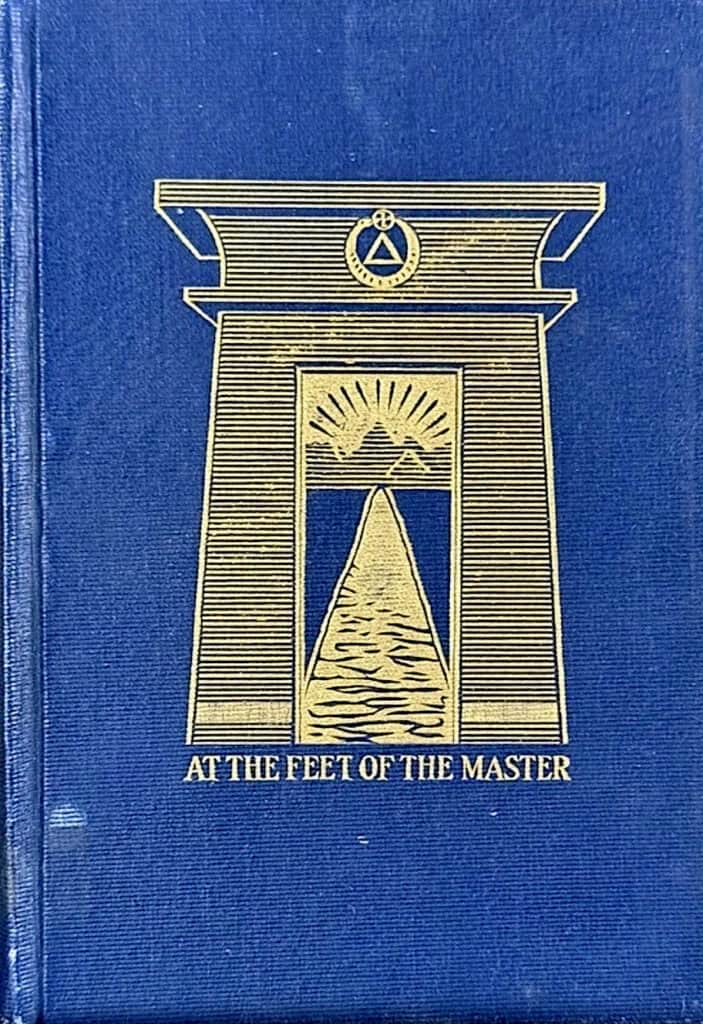
At the Feet of the Master, written under the pseudonym “Alcyone,” is one of the best-known spiritual works associated with the early Theosophical movement. At the time of its publication, its purported author, the fourteen year old Jiddu Krishnamurti, was being prepared by leaders of the Theosophical Society as the future “World Teacher,” a messianic figure expected to guide humanity into a new spiritual age. Annie Besant, then President of the Theosophical Society, who was also Krishnamurti’s legal guardian. The book presents itself as a series of teachings received from Krishnamurti’s spiritual Master during sleep.
The work is built around four fundamental qualifications considered essential for anyone seeking to enter the spiritual path: Discrimination, Desirelessness, Good Conduct, and Love. Together, these qualities form a practical guide to spiritual discipline and inner transformation.
The first qualification, Discrimination, teaches the importance of distinguishing between the eternal and the temporary, the real and the unreal, and the true needs of the soul from the passing desires of the physical personality. Spiritual progress begins by learning to recognize what has lasting value and directing one’s attention toward it.
Desirelessness follows as the discipline of mastering the emotions and overcoming attachment to material possessions, personal ambition, fear, worry, and discouragement. The text teaches that inner peace can only be attained when the mind is no longer governed by personal cravings or emotional instability.
Good Conduct is presented as the outward expression of spiritual development. It emphasizes faithfully performing one’s own duties without interfering in the lives of others, cultivating tolerance, accepting one’s karma with cheerfulness, serving humanity selflessly, and maintaining unwavering trust in the guidance of the Master.
The final and highest qualification is Love. More than simple affection or sentiment, the book describes love as complete self-forgetfulness and devotion to the welfare of others. The purpose of spiritual development, it teaches, is not personal advancement but becoming a channel through which divine love may flow into the world. In this way, the seeker’s ultimate goal is union with God through loving service to humanity.
Authorship Controversy
The logo for the Theosophical Society
While widely published and read as a Krishnamurti book, its actual authorship is heavily debated. Many scholars and biographers attribute the text’s composition to Krishnamurti’s mentor, the prominent Theosophist C.W. Leadbeater. Leadbeater claimed the text was dictated by Master Kuthumi, and the young Krishnamurti, whose English was unrefined at the time, simply wrote down his nocturnal impressions. Krishnamurti himself later stated that he had no memory of writing the book. Decades later, Krishnamurti largely moved away from the organizational doctrines of Theosophy, eventually declaring that “truth is a pathless land”
Related Research Articles
Yogi Ramacharaka: The True Meaning and Origin of the Name
This article breaks down the hidden symbolism and meaning behind "Yogi Ramacharaka", the pen name that was created by the Yogi Publication Society and shows the allegory that reflected the ideas the books were…