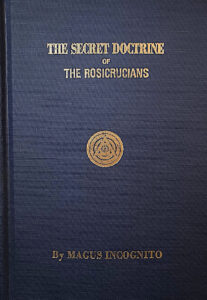
Magus Incognito was a pseudonym used by the Yogi Publication Society for the author of The Secret Doctrine of the Rosicrucians,. Published in 1918, the book presents a system of Rosicrucian cosmology, spiritual evolution, reincarnation, occult philosophy, and Seven Cosmic Principles.
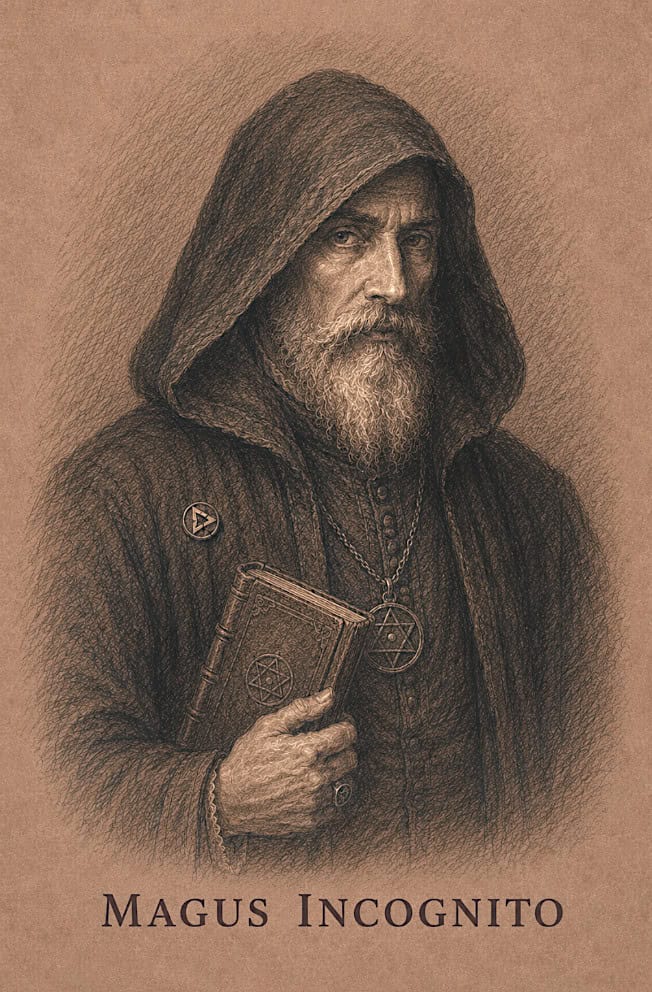
The identity behind the name was deliberately concealed. During the 1919 postal investigation of the Yogi Publication Society and its associated businesses, investigators sought information about the identities behind several names used on the network’s publications. When questioned about Magus Incognito, Arthur Gould, who was then managing the publishing operation, refused to disclose the identity behind the pseudonym. The historical record therefore does not establish Magus Incognito as a separately identifiable author, and the name is best understood as one of the pseudonyms employed within the Yogi Publication Society publishing network rather than as the documented name of a known individual.
The pseudonym itself was particularly appropriate for an anonymous writer on occult subjects. Magus Incognito may be translated as “The Unknown Magician” or “The Hidden Magician.” Magus is a Latin term derived ultimately from the ancient Persian magi, a priestly class traditionally associated with religious learning, astrology, and esoteric knowledge. In later Western occult usage, a magus came to mean an adept, magician, or master of the occult arts. Incognito, from the Latin incognitus, means unknown, unrecognized, or concealed. Together, the words effectively identify the author only as an anonymous or hidden occult adept.
Under this deliberately enigmatic name, The Secret Doctrine of the Rosicrucians presents its teachings as an exposition of the inner philosophical doctrines of Rosicrucianism. The work centers on the Seven Aphorisms of Creation and develops from them an extensive system concerning the Eternal Parent, the World Soul, the Universal Androgyne, the One and the Many, the Universal Flame of Life, the Seven Planes of Consciousness, and the Sevenfold Soul of Man. It later extends these teachings into reincarnation, the soul’s evolutionary progress, the aura and auric colors, and seven universal Cosmic Principles. The author repeatedly distinguishes these introductory teachings from supposedly higher Rosicrucian doctrines reserved for advanced initiates.