Copyright © 2026 D. Parkyn Jackson. Published by the Yogi Publication Society History Project. All rights reserved.
One of the most intriguing aspects of the Yogi Publication Society was the way it presented the identity of Yogi Ramacharaka. Instead of simply choosing an exotic pen name, the Society created a detailed biographical narrative and a carefully constructed name filled with symbolic meaning. Like much of the Society’s work, the story and meaning behind the pseudonym operated on multiple levels: as a narrative for readers and as an allegory that reflected the ideas the books were intended to teach.
In this article, we will break down the meaning of the name chosen for the pseudonym and the detailed backstory that was created for it.
The Symbolism Behind the Name Yogi Ramacharaka
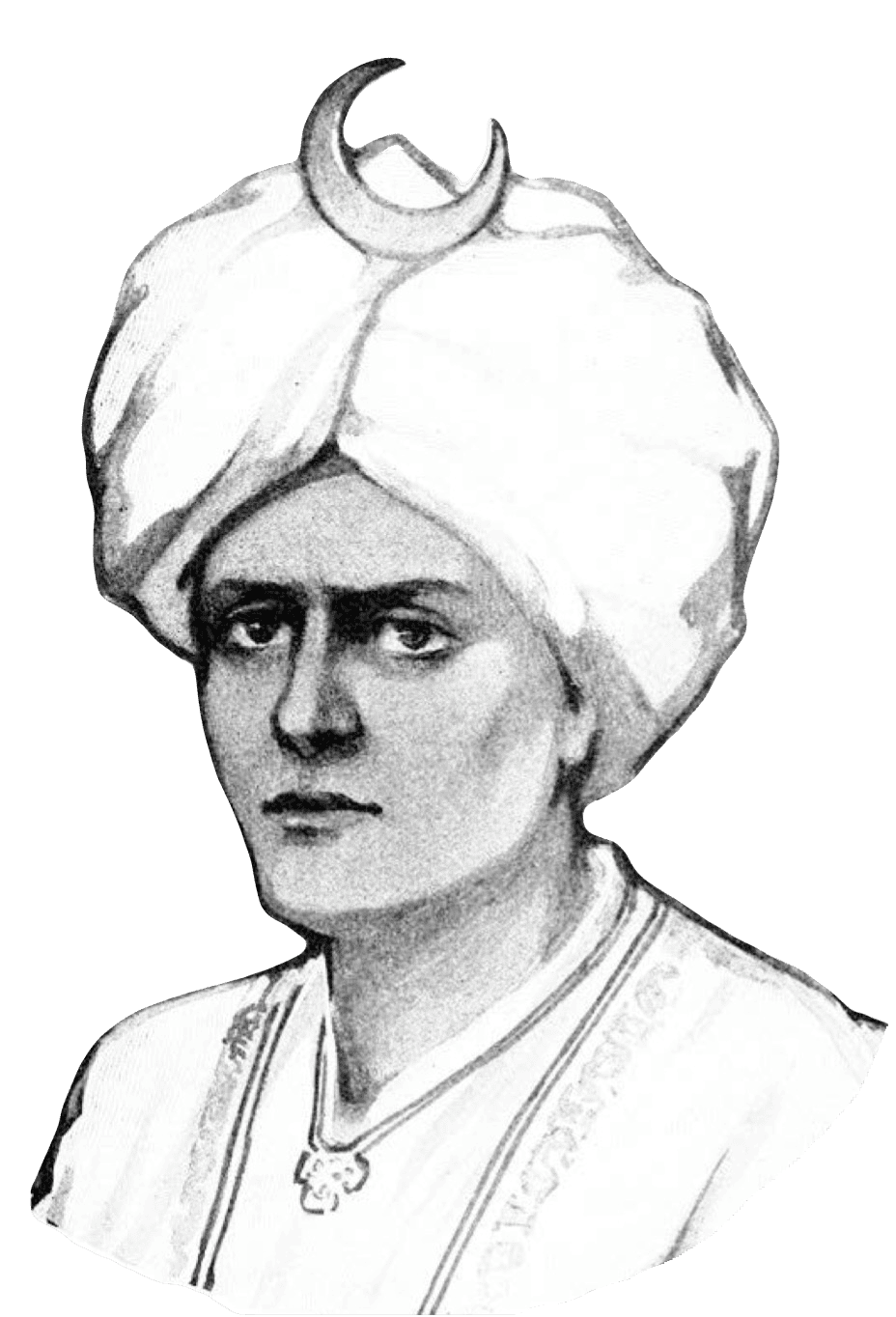
Throughout history, symbolic names have often been used to convey a teacher’s character, purpose, or philosophy. In the same way, the name “Yogi Ramacharaka” can be read as more than the identity of a single individual. Each part of the name carries its own meaning, and when combined, they present a concise summary of the ideals found throughout the Yogi Publication Society’s books: self-discipline, mastery of the mind, physical and mental health, moral character, and the pursuit of higher spiritual understanding.
Whether this symbolism was immediately apparent to readers or intended as a subtle clue by the Society’s founders, the individual Sanskrit terms work together to describe not only a person but also an ideal. Understanding those meanings offers another way of understanding what the Yogi Publication Society hoped its readers would become.
The name combines several Sanskrit elements associated with spiritual discipline and yogic health practices. Yogi comes from the Sanskrit root yuj, meaning “to unite” and refers to one who seeks union with the divine through disciplined living and self-mastery. Rama is the hero of the Ramayana and an incarnation of Vishnu, who represents virtue, harmony, devotion, and the uplifting of the heart and mind. Charaka is the ancient yogic physician and author of the Charaka Samhita, one of the foundational texts of Ayurveda, which emphasizes health through proper diet, hygiene, prevention, mental discipline, and balanced living.
Put together the name Yogi Ramacharaka represents:
“A disciplined practitioner whose self is in union with the divine harmony, devotion, and virtue that is brought about by right thinking and living.”
The Backstory of Yogi Ramacharaka
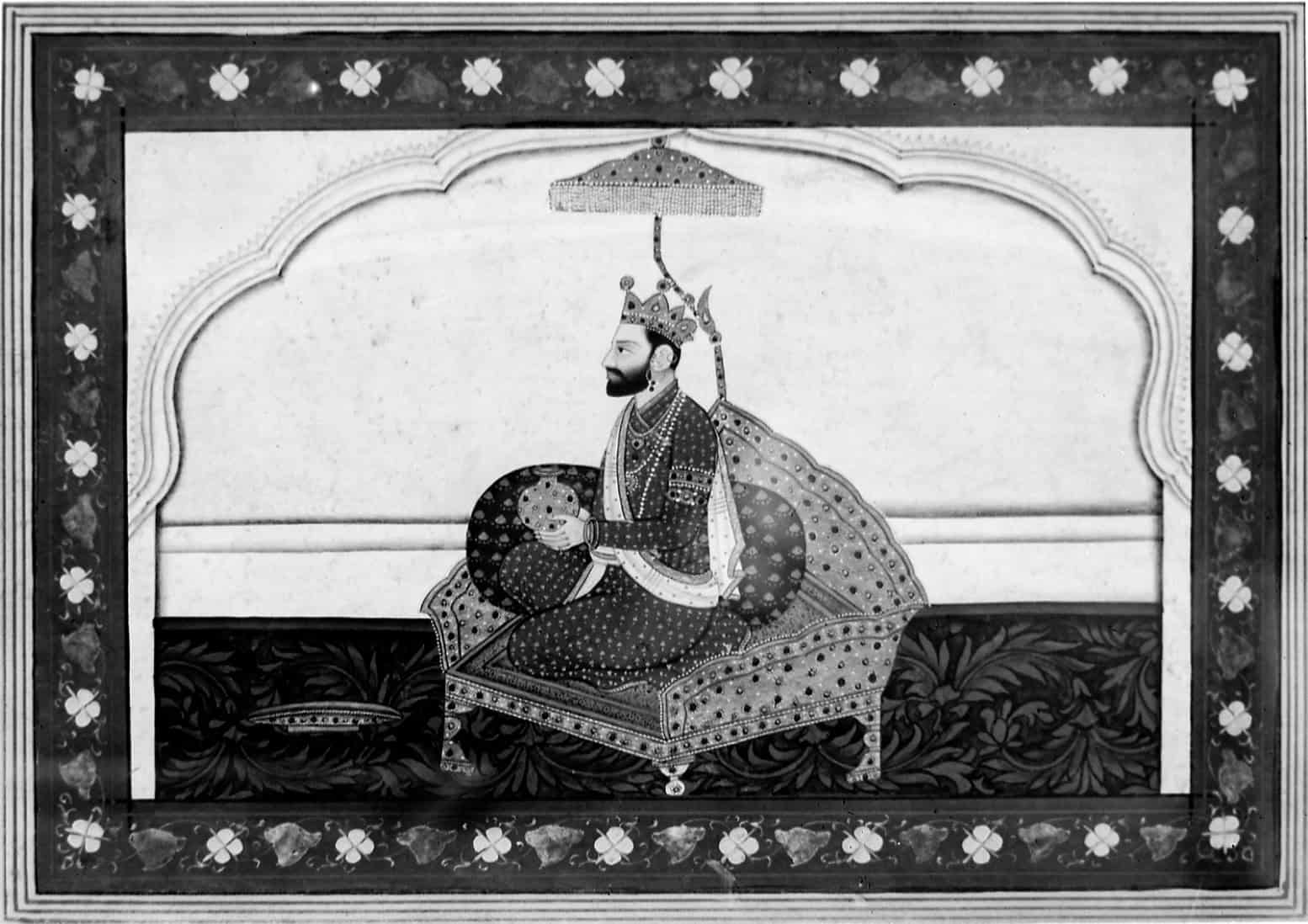
According to the Yogi Publication Society, Yogi Ramacharaka was born in India in 1799. From an early age he devoted himself to the search for truth, spending decades traveling throughout India and the East, visiting monasteries and lamaseries, practicing fasting and meditation, and studying with spiritual teachers. After nearly forty years of searching, he discovered what the books describe only as the “unnamed” principle that lay beneath all true philosophy and religion.
Soon afterward, he accepted a young Brahmin boy named Baba Bharata as his student. Together they retraced the master’s earlier journeys, but now with a new understanding of the principle Ramacharaka believed united the world’s wisdom traditions.
By 1893, sensing that his life was drawing to a close, the ninety-four-year-old teacher entrusted Baba Bharata with a final mission: to carry these teachings to the Western world. That same year Baba Bharata traveled to Chicago to attend the World’s Parliament of Religions, where his lectures attracted immediate attention.
Although urged to establish a new religion, Baba Bharata declined. Instead, he chose to preserve and share the teachings of his master. Because he lacked experience writing in English, he partnered with an unnamed English author. According to the published account, Baba Bharata supplied the ancient Sanskrit wisdom while the English author translated and organized it for Western readers. Together, they agreed to publish under the shared name “Yogi Ramacharaka.”
Reading the Story as an Allegory
Read as a literal biography, the story raises many historical questions. Read allegorically, however, the dates, names, and events begin to form a coherent symbolic narrative. Nearly every major episode corresponds to an important moment in the transmission of Eastern philosophy to the West and to the development of Suggestive Therapeutics, which eventually led to the founding of the Yogi Publication Society.
The Birth of Yogi Ramacharaka in 1799

The choice of 1799 seems to have been deliberate. That year Joseph Priestley published A Comparison of the Institutions of Moses with Those of the Hindoos and Other Ancient Nations, one of the earliest serious attempts to introduce Hindu philosophy to educated Western readers. The book was read by figures including Thomas Jefferson and John Adams and helped spark early American interest in Indian thought. When the Ramacharaka story is read symbolically, his birth marks the beginning of Eastern philosophy’s entry into Western intellectual life rather than the birth of a historical individual.
The Discovery of the “Unnamed” Principle in 1865
The next important date is 1865, when Ramacharaka is said to have discovered the “unnamed” foundation of his philosophy. The date matches the year Ambroise-Auguste Liébeault began treating patients through Suggestive Therapeutics in Nancy, France. He shortly after published Du Sommeil et des Etats Analogues, outlining his findings and establishing the foundation for what would be known as the Nancy School of Suggestive Therapeutics.
Dr. Herbert A. Parkyn, whose Chicago School of Psychology was the first institution in the United States to teach Suggestive Therapeutics, had come to the recognition that the Law of Suggestion was the unnamed principle that underlay most ancient religious and healing traditions. Read this way, Ramacharaka’s “discovery” represents not a mystical revelation but the recognition that Suggestion was the common thread running through systems that had long appeared unrelated.
The Appearance of the Student, Baba Bharata
Shortly after discovering the “unnamed” principle, Yogi Ramacharaka accepts a new student, an eight-year-old boy from a Brahmin family named Baba Bharata. Read symbolically, the appearance of this student closely parallels the early life of Swami Vivekananda.
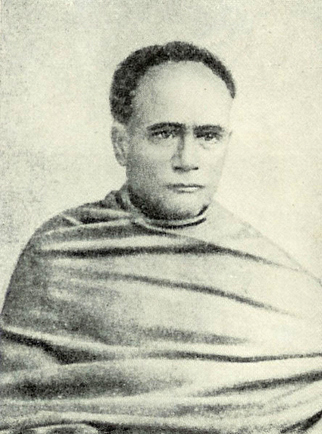
Vivekananda was born in 1863 and, at the age of eight, began his formal education under Ishwar Chandra Vidyasagar, one of nineteenth-century India’s leading educators and reformers. Vidyasagar, himself born into a Brahmin family, challenged traditional caste restrictions by opening Sanskrit education to students of all castes. He was also closely connected with the intellectual and religious circles that would later shape Vivekananda’s development under Ramakrishna.
The name Baba Bharata appears to carry its own symbolic meaning. In India, Baba is a respectful title often given to a father, teacher, or wise elder. Bharata is the ancient Sanskrit name for India and the soul of the nation itself. Together, the name can be understood as “Wise Father India” or “India the Teacher.” Rather than representing a single individual, Baba Bharata may represent India itself, as both the inheritor and the student of its own spiritual legacy. Its spiritual philosophies had grown ancient and obscured, but were now being reawakened through the rediscovery of their true foundation in the Law of Suggestion.
Retraces his steps with his student
The story then takes an interesting turn. After accepting Baba Bharata as his student, Yogi Ramacharaka does not continue searching for new truths. Instead, he retraces the same path he had already traveled, this time with his student beside him.
This second journey appears to represent a reinterpretation rather than a new discovery. The philosophical traditions of India are revisited with a different understanding. Religious practices that had long been viewed primarily as mystical or ritualistic are now understood as expressions of a deeper psychological principle, the Law of Suggestion. The old journey is walked again, but with a new understanding.
The 1893 World’s Parliament of Religions in Chicago
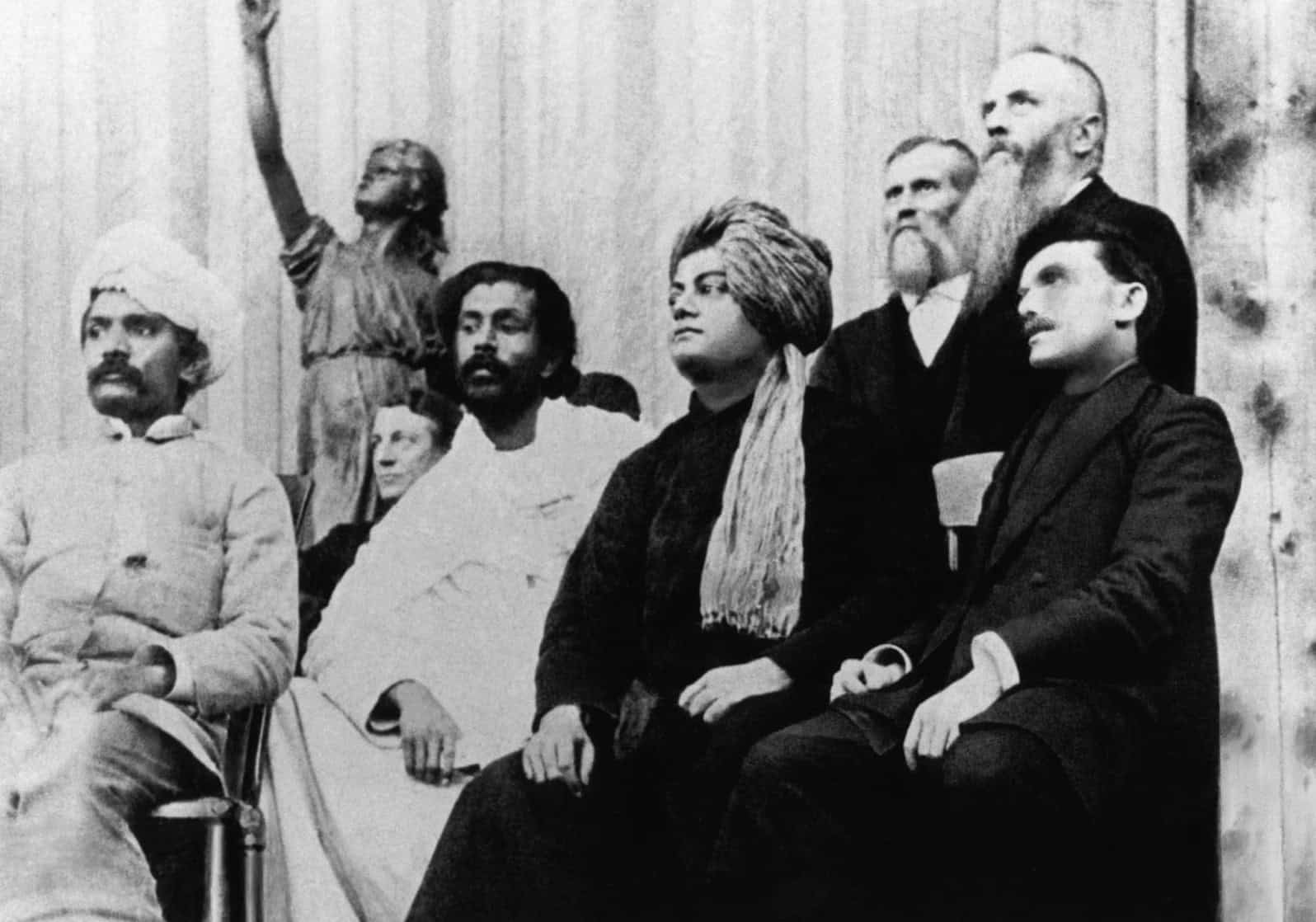
The story resumes in 1893, nearly thirty years after Baba Bharata first became Ramacharaka’s student. Ramacharaka, now ninety-four years old, senses that his time on Earth may be coming to an end. Ninety-four years have passed since 1799, the symbolic beginning of Hindu philosophy’s introduction to Western thought, yet its influence has remained limited. The time has come for the teachings to reach a wider audience.
Ramacharaka therefore sends Baba Bharata to the World’s Parliament of Religions in Chicago. The parallels to Swami Vivekananda are difficult to miss. Like Vivekananda, Baba Bharata arrives from India, quickly captures the attention of audiences, gains devoted followers, and introduces Eastern philosophy to Western listeners gathered in Chicago.
Within the allegory, Baba Bharata represents the moment when ideas that had been preserved and refined in the East begin their journey into the Western world.
Baba Bharata is urged to form a new religion
Following his success at the Parliament, Baba Bharata is encouraged to establish a new religion. This episode closely reflects similar debates that took place within the New Thought movement. As the movement grew, many leaders considered organizing their teachings into new religious denominations or formal institutions.
Dr. Herbert A. Parkyn of the Chicago School of Psychology consistently argued against that approach. He believed that Suggestion was not itself a religion but a universal psychological principle already present within the world’s great religious and philosophical traditions. Rather than creating another system, he believed the task was to recognize the common law that united them.
As Parkyn explained:
“It was not a new system that was needed, but a new understanding of the systems that already existed.”
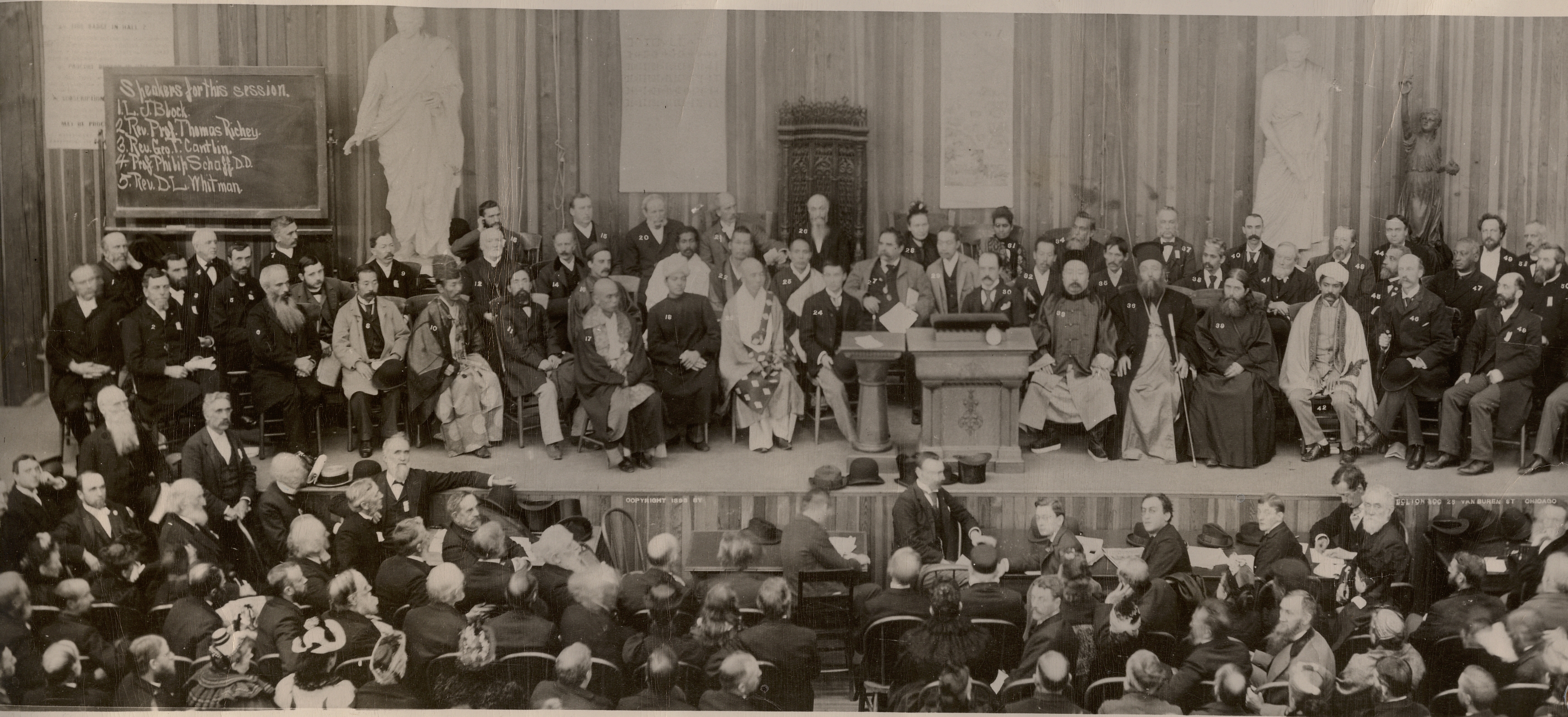
The English Author
The final stage of the Yogi Ramacharaka story introduces an “English author.” Although Baba Bharata is portrayed as a gifted teacher and lecturer, he recognizes that he is not the person to write the books that will carry his master’s teachings to the West. Instead, he joins forces with an English writer who can present those ideas in a form that Western readers will understand. Together they agree to publish under the shared name “Yogi Ramacharaka.”
This part of the story can be read on several levels. On the surface, it reflects the practical challenge of translating ancient Sanskrit teachings into language that English-speaking readers could easily understand. The Yogi Publication Society consistently presented Eastern philosophy through the familiar vocabulary of Western readers and avoided using complex or mystical terminology. Spiritual concepts were expressed in terms of modern psychology, mental science, and Suggestion, all familiar to modern New Thought readers. The “English author” therefore represents more than a translator. He is someone capable of interpreting one intellectual tradition through the language of another.
On another level, it is directly exposing the underlying truth of the writing relationship that had been at the core of the publishing network that brought about the YPS. This began with authors who were tasked with transforming the more technical and scientific ideas of the mental sciences and psychic research into terms easily digestible for the layperson. With the formation of the YPS, this relationship would continue, now in the realm of Yogi philosophy. In a 1919 Post Office Investigation of the Yogi Publication Society, it was confirmed that it was the work of several writers that created the Yogi Ramacharaka titles. LINK.
The backstory of getting assistance from another writer to make the text understandable to the “man on the street” would become a recurring theme within the publishing network, later used again as the backstory of the pseudonym Theron Q. Dumont a decade later.
This relationship between Dr. Herbert A. Parkyn and his student writers, like William Walker Atkinson and Sydney B. Flower, is documented in the following articles. As well as Dr. Parkyn’s many years of research into Eastern philosophy before the founding of the YPS.
Read the article: From Mental Breakdown to Atkinsonia: How Herbert A. Parkyn Turned William Walker Atkinson into a New Thought Phenomenon
Read the article: The Continuing Collaboration of Herbert A. Parkyn, Sydney Flower, and William Walker Atkinson
Read the article: How the Meaning of Theron Q. Dumont’s Name and Backstory Point Directly to Herbert A. Parkyn
Read the article: Herbert A. Parkyn’s Foundation in Eastern Philosophy
Elmer Ellsworth Carey and the Yogi Ramacharaka Narrative
There is also a special connection to Elmer Ellsworth Carey in the backstory of Yogi Ramacharaka. Carey had arrived in Chicago in early 1903, just a few months before the founding of the YPS, to succeed Atkinson as associate editor of Dr. Herbert A. Parkyn’s Suggestion magazine. Before coming to Chicago, he had spent years as a journalist traveling throughout Southeast Asia, while also studying Yogi philosophy, meditation, and Eastern occultism. He had developed a particular interest in health culture, hygiene, fasting, and dietary principles, including those found in Ayurvedic works such as the Charaka Samhita.
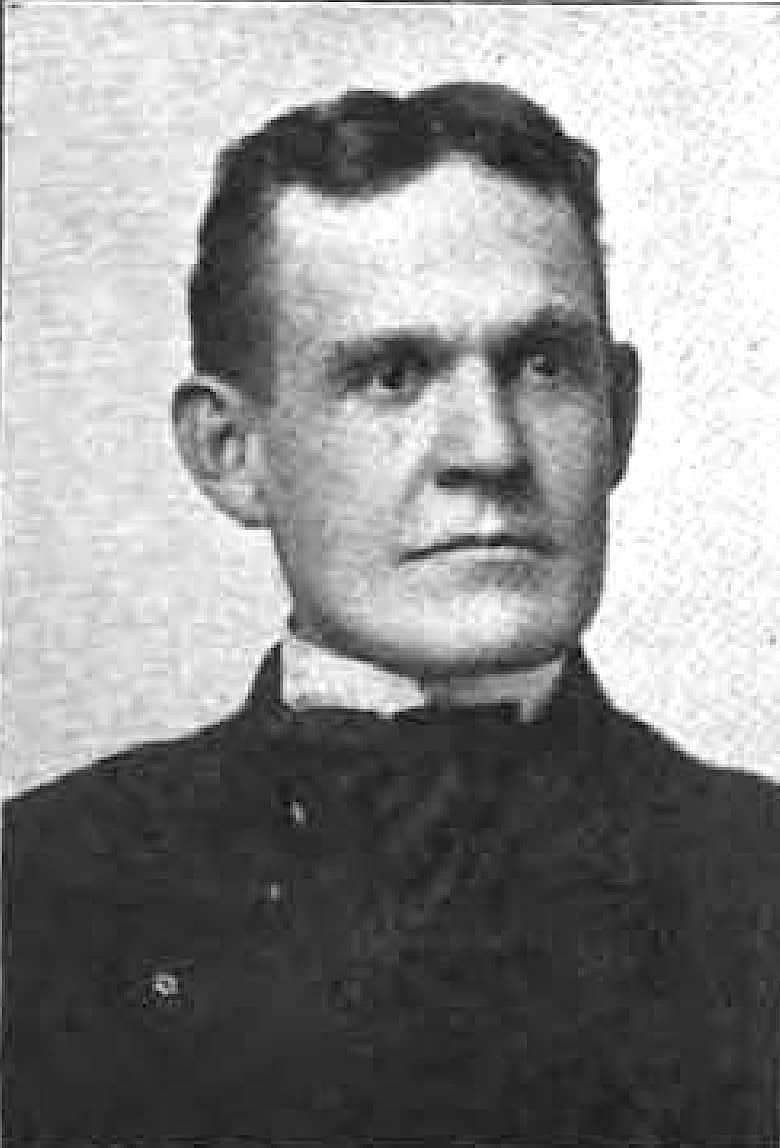
Like Swami Vivekananda, Carey was born in 1863 and was 40 years old when the Yogi Publication Society released its first publications in 1903. Like Yogi Ramacharaka, he had traveled extensively while studying under Hindu teachers and engaged deeply with ancient religious and philosophical texts. Carey practiced meditation deeply, advocated for health reform, adhered to a vegetarian diet, and gained recognition for his fasting experiments, notably a 45-day fast that was a new record at the time.
Upon returning to the United States, Carey became involved in San Francisco’s community of Eastern spiritual organizations. He joined both the Theosophical Society and the Vedanta Society, the latter established by Swami Vivekananda in 1900. This placed Carey in direct contact with two of the organizations that were the most influential to the formation of the Yogi Publication Society.
When Carey joined Parkyn’s circle in Chicago, he entered an intellectual environment where Eastern philosophy was analyzed alongside the Law of Suggestion. Parkyn’s teaching, which asserted that the Law of Suggestion constituted the foundational principle underlying ancient philosophical systems of religion and healing, offered Carey a new interpretive framework for his years of study; the “unnamed” foundation of Eastern philosophy.
The parallels between Carey’s past and the Yogi Ramacharaka narrative are difficult to ignore. Both Carey and the fictional Ramacharaka devote decades to studying Eastern philosophy, meditation, fasting, and health before arriving at a single unifying principle that gives those experiences new meaning. In the story, that principle remains “unnamed.” In Parkyn’s teaching, it was identified as the Law of Suggestion.

Conclusion
If you read the backstory of Yogi Ramacharaka as a straightforward biography, it leaves many questions unanswered. But if you see it as an allegory, the names, dates, and events start to fit together in a clear pattern. Ramacharaka’s birth in 1799 lines up with the early introduction of Hindu philosophy to the West. His discovery of the “unnamed” principle in 1865 matches the rise of Suggestive Therapeutics with Ambroise-Auguste Liébeault and the Nancy School. Baba Bharata’s journey is similar to Swami Vivekananda’s, and the English author represents the teamwork of several who produced the many Ramacharaka titles. Ramacharaka’s long search also reflects the life of Elmer Ellsworth Carey, who studied Eastern philosophy and eventually connected with Parkyn and the Chicago School of Psychology.
The backstory is more than just a made-up biography. It acts as a symbolic history, showing how the founders of the Yogi Publication Society saw the meeting of Eastern philosophy and Western psychology. Instead of treating them as separate, they saw that they both rely on the Law of Suggestion.
Sources & Citations
- "Who was Yogi Ramacharaka?" . Watkins MIND BODY SPIRIT Magazine.
- Charaka Samhita
- "Ramayana | Summary, Characters, Themes, & Facts | Britannica" . Encyclopedia Britannica.
- "The Ramayana, A Telling Of the Ancient Indian Epic" . Maxwell School
- "Ayurveda" .
- "What is Ayurveda? A Complete Beginner's Guide to Principles, Doshas & Healing" . Ayurveda.
- "WHO WAS YOGI RAMACHARAKA" . www.scribd.com.
- "The Science of Breath The Essential Works of Yogi Ramacharaka (The Library of Spiritual Wisdom) Instant EPUB Download | PDF | William Walker Atkinson" . Scribd.
- "A comparison of the institutions of Moses with those of the Hindoos and other ancient nations" , by Joseph Priestly, 1799
- "John Adams' View of Hinduism" . Hinduism Today.
- "The Roots of Vedanta in America" . American Vedantist.
- Du sommeil et des états analogues , by Ambroise-Auguste Liébeault, 1866, Paris.
- "Liebeault, Ambroise Auguste (1823-1904) | Encyclopedia.com" . www.encyclopedia.com.
- "The first school in the US to teach Suggestive Therapeutics" . The Des Moines Register. 1898-05-08. p. 16.
- "Herbert A Parkyn opens the Chicago School of Psychology" . Chicago Tribune. 1896-07-19. p. 33.
- "Swami Vivekananda and His 1893 Speech" . The Art Institute of Chicago. 2010-09-11
- "Suggestion (IAPSOP)" . iapsop.com.
- "Elmer Ellsworth carey travels to Orient regularly" . The Oregonian. 1901-12-25. p. 5
- "E. Ellsworth Carey writes on Health culture" . The Wichita Eagle. 1903-05-10. p. 16
- Elmer Ellsworth Carey is the city Editor of Freedom magazine in the Philipines" . Marion News-Tribune. 1899-06-25. p. 5
- "Elmer Ellsworth Carey on the use of distilled water for health" . The Wichita Eagle. 1903-05-16. p. 8
- "Elmer Ellsworth Carey beats the fasting record of Dr. Tanner of NY" . The San Francisco Examiner. 1909-02-14. p. 1
- Vedanta Society – Founded by Swami Vivekananda in 1900" .