Copyright © 2026 D. Parkyn Jackson. Published by the Yogi Publication Society History Project. All rights reserved.
The Kybalion was first published in 1908 by the Three Initiates and introduced readers to seven principles said to explain the foundations of Hermetic philosophy. Based on the teachings of Hermes Trismegistus, the book explains the laws governing the universe, the relationship between mind and matter, and how people can use an understanding of these principles in their own lives. Over the past century, it has become one of the most widely read books associated with Hermeticism, introducing generations of readers to ideas that had long been associated with Western esoteric traditions.
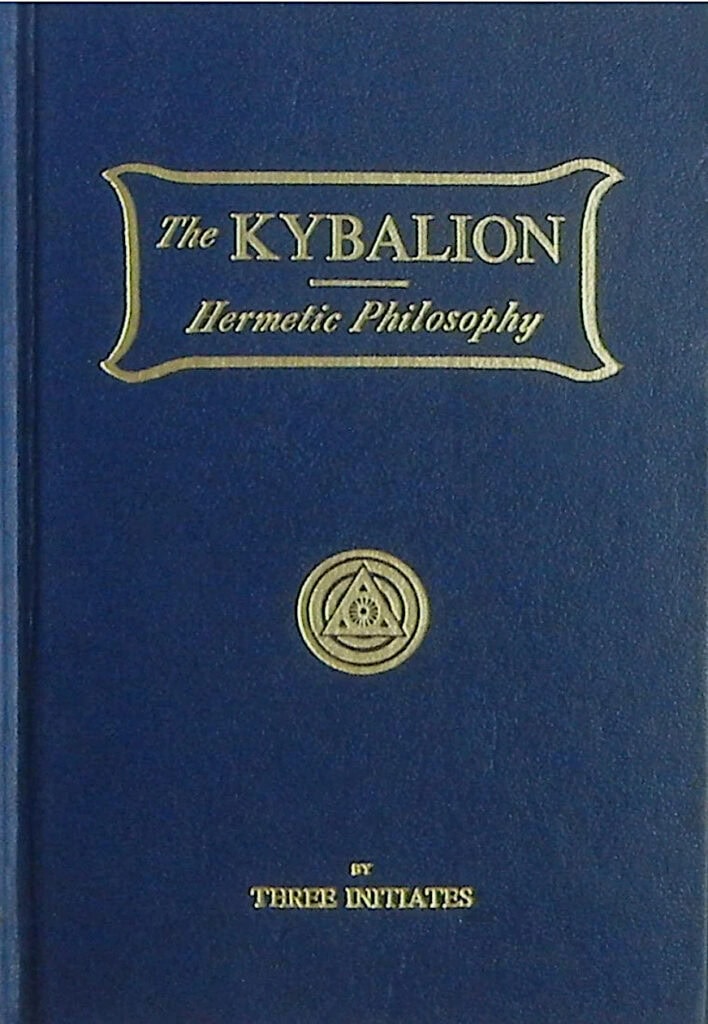
But there’s a controversy surrounding The Kybalion that anyone researching the book online is likely to encounter. A number of websites, social media commentators, and online communities insist that the book isn’t actually Hermeticism at all. They argue that its teachings come from the American New Thought movement, that its seven principles aren’t found in the ancient Hermetic writings, and that it has little in common with the philosophy of Hermes Trismegistus. Some have even gone so far as to ban discussions of The Kybalion from their communities, insisting that it has no place in a serious discussion of Hermetic philosophy.
At the center of their argument is the claim that the ancient Hermetic writings and The Kybalion teach two fundamentally different things. According to these critics, the ancient teachings were concerned with spiritual regeneration, divine knowledge, and the reunion of human consciousness with its divine source, while The Kybalion focuses on mastering mental states and applying universal principles to everyday life. Because of this distinction, they conclude that the book is simply a modern New Thought interpretation that shouldn’t be considered part of the Hermetic tradition.
Do The Kybalion and the Ancient Hermetic Texts Actually Teach Different Philosophies?
One of the central arguments used to dismiss The Kybalion is that the ancient Hermetic writings teach humanity how to reconnect with the Divine, while The Kybalion teaches people how to master their minds. This distinction sounds convincing until you examine what the two actually say. The ancient writings identify Divine Mind as the source of existence and teach that humanity must develop higher understanding to recognize its divine nature. The Kybalion begins with the same fundamental idea, declaring that THE ALL is Mind and that the entire universe exists within that Infinite Mind. If everything exists within Divine Mind, how could learning to understand and master the mind be considered something separate from the pursuit of divine understanding?
Divine Mind and the Principle of Mentalism
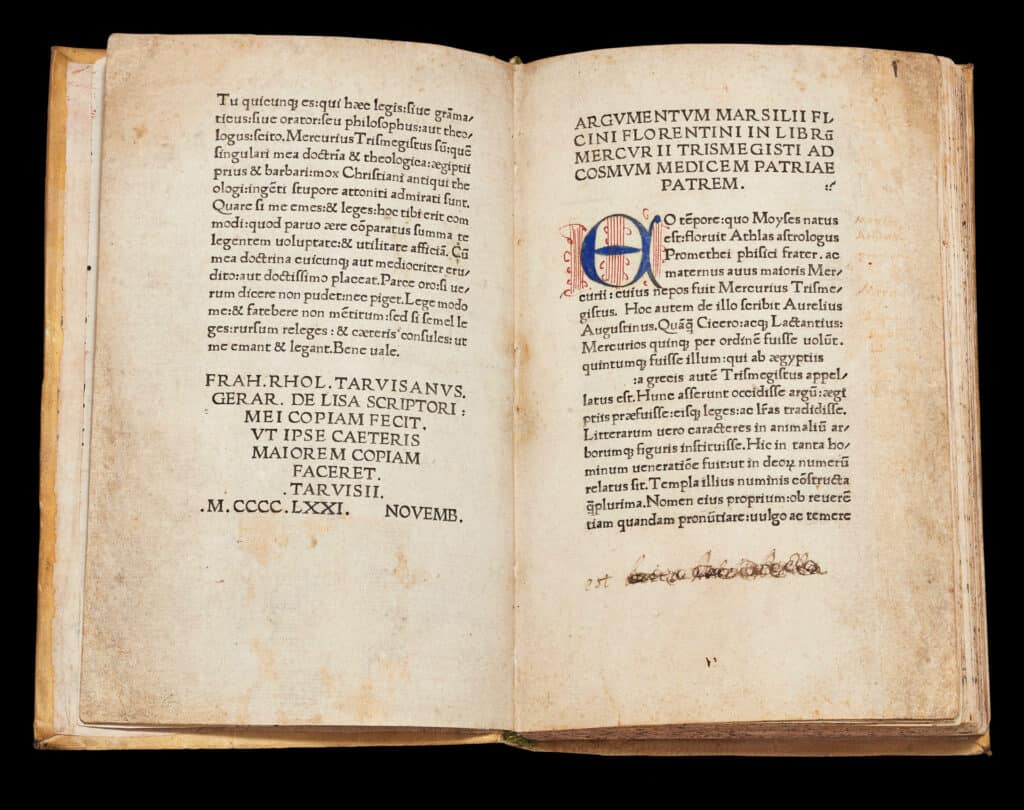
In the Corpus Hermeticum, Hermes teaches his son Tat that ordinary reasoning is not the same as possessing divine understanding. In the fourth treatise, often called The Cup or Monad, he explains that Mind, or Nous, is a divine gift that humanity must seek to attain. Those who awaken this higher understanding come to recognize their divine origin and their relationship to the source of existence. This is not simply a lesson about believing in God. It concerns a transformation in human consciousness through which the individual becomes capable of understanding the Divine.
Now consider what The Kybalion actually teaches. Its first principle, Mentalism, establishes that the universe exists within Infinite Mind. Its remaining principles explain the relationships and laws through which existence operates, including correspondence, vibration, polarity, rhythm, cause and effect, and gender. Mental transmutation teaches the student to recognize and consciously change mental conditions, overcoming the habits, emotions, and influences that keep the mind from developing higher understanding. The book presents this process as part of a much larger philosophy of spiritual advancement within the Mind of THE ALL.
Spiritual Regeneration and the Transformation of the Mind

The connection becomes even clearer in the thirteenth treatise of the Corpus Hermeticum, where Hermes teaches Tat about the twelve torments that prevent spiritual rebirth. Among them are ignorance, grief, uncontrolled desire, greed, deceit, envy, anger, and other conditions that dominate human consciousness. Hermes explains that these torments must be overcome through higher powers, including knowledge, joy, self-control, truth, and goodness. Only through this transformation can the individual attain the higher state of consciousness associated with divine understanding.
And what does The Kybalion teach its readers to do? It explains how to overcome unwanted mental conditions by consciously cultivating their opposites. Fear is overcome through courage, destructive emotions through higher mental states, and uncontrolled reactions through the development of will and understanding. Its teaching of mental polarity provides a method for working with the very conditions that Hermes identifies as obstacles to spiritual regeneration. Where Hermes describes the transformation and the divine qualities that replace the torments, The Kybalion explains how the student can begin working toward that transformation through mental discipline.
The critics would have us believe that cultivating joy, goodness, truth, and self-control is somehow different from attaining the divine qualities described by Hermes. But where exactly is this other goodness supposed to come from? Where does this supposedly separate form of joy exist? If THE ALL is Infinite Mind and nothing exists outside it, the idea that developing these qualities has nothing to do with Divine Mind makes little philosophical sense. The distinction depends on separating the exercise of mental development from the very divine reality within which The Kybalion says all mental activity takes place.
Different Methods of Teaching the Same Fundamental Philosophy
There is also an important difference in how the teachings are presented. The ancient Hermetic writings frequently communicate their philosophy through symbolic dialogues between a teacher and disciple, describing spiritual realization in language that assumes an understanding of the concepts being discussed. The Kybalion organizes its teachings into a system that readers can study, understand, and begin applying without belonging to an initiatory school. It takes the relationship between mind, consciousness, and divine reality and explains it through principles intended to be used in everyday life.
The difference between describing the goal of spiritual transformation and teaching someone how to work toward it should not be confused with a difference in the ultimate objective. The ancient Hermetic writings teach that humanity can attain divine understanding through the transformation of consciousness. The Kybalion teaches that consciousness can be developed through understanding and applying the laws of Mind. These are closely connected teachings, and dismissing one as incompatible with the other requires far more than pointing out that they were written centuries apart or use different methods of instruction.
Has Hermeticism Ever Been One Fixed System of Philosophy?
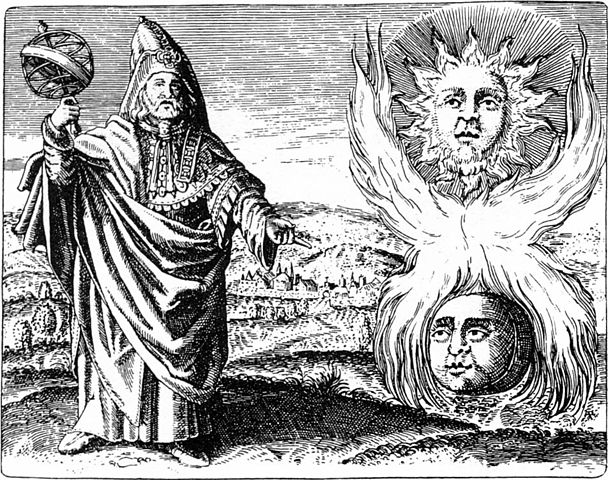
One of the biggest problems with the argument against The Kybalion is the assumption that the ancient Hermetic writings established a fixed set of teachings that every later expression of Hermeticism must follow. But the history of Hermeticism tells a very different story. For nearly two thousand years, its teachings have been studied, interpreted, and incorporated into different philosophical, religious, and esoteric systems. There has never been a single institution, religious authority, or universally accepted body of doctrine with the power to determine what Hermeticism must be.
Were the Ancient Hermetic Writings Ever One Unified Philosophy?
Even the ancient writings attributed to Hermes Trismegistus were not composed as one unified book or philosophical system. They were written by different authors over an extended period and contain different approaches to cosmology, divine knowledge, spiritual regeneration, and the relationship between humanity and the universe. The Corpus Hermeticum itself is a collection of writings assembled long after many of its individual texts were composed. Treating it as a single, definitive rulebook for all Hermetic philosophy ignores the nature of the writings themselves.
How Did Hermetic Philosophy Develop Through the Centuries?
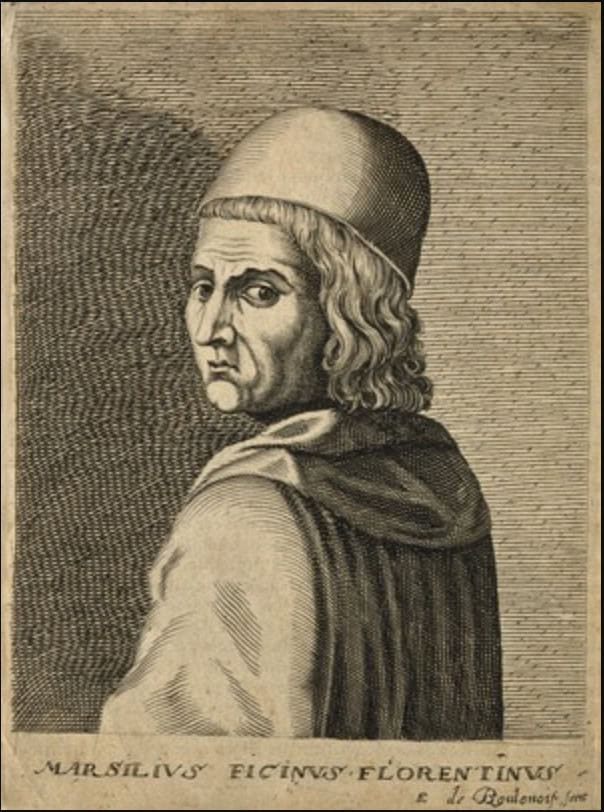
When these teachings reached Renaissance Europe, philosophers such as Marsilio Ficino and Giovanni Pico della Mirandola interpreted them alongside Platonism, Christianity, and Jewish Kabbalah. Later thinkers incorporated Hermetic ideas into alchemy, natural philosophy, and systems of ceremonial magic. The Rosicrucian movement continued this tradition, combining Hermetic philosophy with Christian mysticism, alchemy, and other esoteric teachings in its pursuit of universal knowledge.
None of these movements simply reproduced the ancient writings word for word. They studied them, interpreted their meaning, and developed systems of instruction suited to their own times. This is how philosophical traditions develop, and Hermeticism is no exception. If every interpretation that incorporated new language, ideas, or methods of teaching were automatically disqualified, a substantial portion of what historians recognize as the Western Hermetic tradition would have to be dismissed along with The Kybalion.
Why Should The Kybalion Be Judged Differently?
That is what makes the modern obsession with deciding whether The Kybalion is sufficiently ancient or sufficiently similar to the Corpus Hermeticum so misguided. Its publication date and instructional format cannot, by themselves, determine whether it belongs to Hermetic philosophy. The real questions concern the traditions from which its teachings developed, the people responsible for producing it, and how its principles relate to the philosophy attributed to Hermes Trismegistus.
And that brings us to a part of The Kybalion’s history that is almost entirely absent from the online debate. The book appeared among people and publishers connected to Rosicrucian organizations, Masonic circles, mental science, and Hermetic literature long before 1908. Those relationships deserve a closer look.
Was The Kybalion Part of a Rosicrucian Movement?
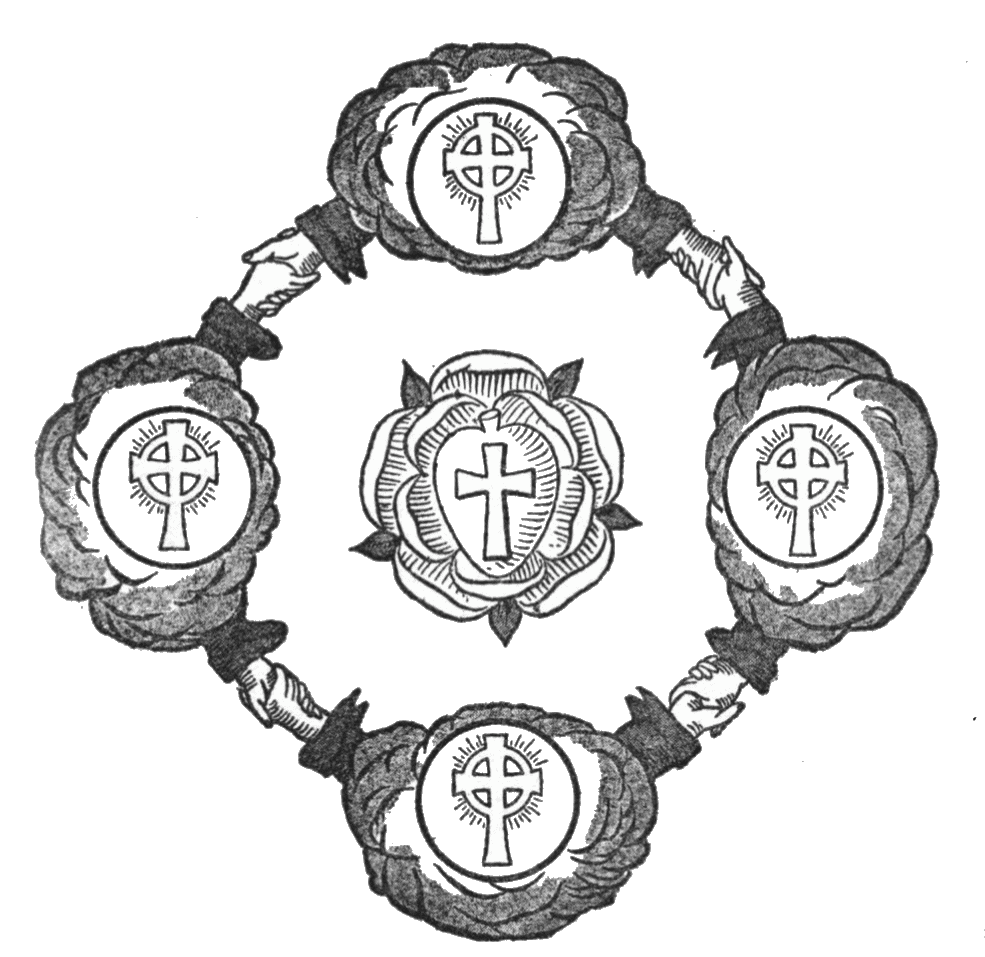
If we want to understand where The Kybalion came from, we need to look beyond William Walker Atkinson. The people surrounding the Yogi Publication Society were connected to a much larger world of Rosicrucians, Knights Templar Masons, Theosophists, occult publishers, and teachers of mental science. And once we start following those connections, a very different picture of the book’s origins begins to appear.
Some belonged to overlapping organizations, studied under the same teachers, contributed to one another’s magazines, or worked within publishing circles that circulated Hermetic and esoteric literature. Many were also interested in making teachings once reserved for initiates available to ordinary readers. That matters when we’re talking about a book like The Kybalion, which claimed to explain ancient Hermetic principles in language anyone could understand.
Paschal Beverly Randolph and the Rosicrucian Hermetic Tradition
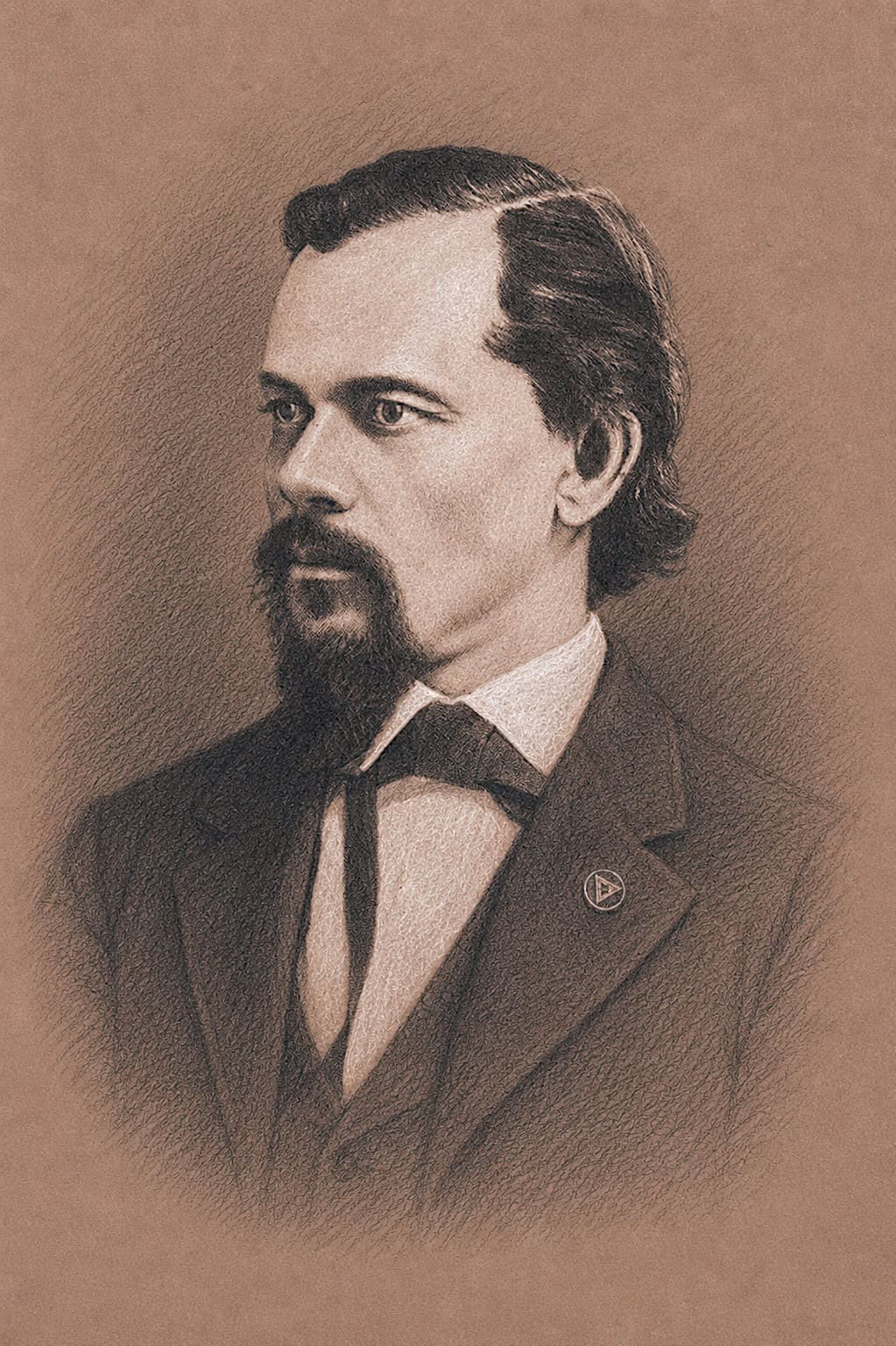
One of the best places to begin is with Paschal Beverly Randolph, an important figure in American Rosicrucianism during the nineteenth century. Randolph started the Fraternitas Rosae Crucis, where his teachings brought together Hermetic philosophy, the powers of Will, mental polarity, spiritual regeneration, and the development of human consciousness. His work shows that these subjects were already being studied together long before The Kybalion appeared.
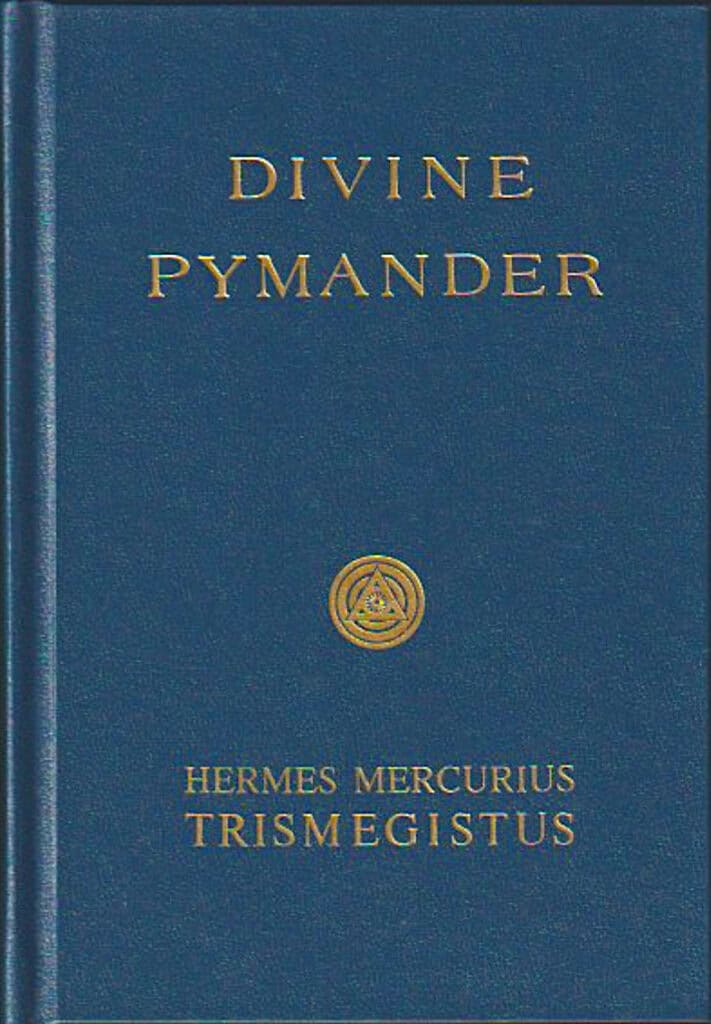
In 1889, the Randolph Publishing Company issued The Divine Pymander of Hermes Mercurius Trismegistus, an edition of the ancient Hermetic writings that included an introduction by Randolph presenting the book as one of the most important parts of the Rosicrucian Library. It also connected those writings with other Rosicrucian teachings dealing with Will, Love, and the Law of Polar Mentality. Nearly twenty years before The Kybalion, the Rosicrucian tradition was already presenting the ancient teachings of Hermes alongside ideas about mental polarity and the conscious development of the individual.
There’s another interesting detail in Randolph’s edition. It includes a section called Brahm, which brings Indian religious philosophy into a book devoted to Hermes Trismegistus. The section contains passages from the Vedas discussing the Universal Mind and the divine source of creation, followed by Randolph’s own reflections. In his signed commentary, he brings together the Bible, the Vedas, and Hermes as expressions of the same underlying spiritual truth. So the combination of Eastern philosophy, Hermetic wisdom, and the powers of Mind was not something invented by the authors of The Kybalion in 1908.
R. Swinburne Clymer and the Opening of Rosicrucian Teachings

The next important figure is R. Swinburne Clymer, who carried forward the Rosicrucian tradition associated with Randolph. Clymer joined the Fraternitas Rosae Crucis in 1899 and became its Grand Master in 1905. Clymer was also a graduate of Dr. Herbert A. Parkyn‘s Chicago School of Psychology, where he studied the laws of suggestion, concentration, mental control, and auto-suggestion.
Clymer wasn’t simply someone who had attended Parkyn’s school and moved on. He remained connected to its circle of students and publications, contributing to Parkyn’s Suggestion magazine. He was involved in the same world of mental science and esoteric instruction that would help shape the Yogi Publication Society.
In 1908, the same year The Kybalion appeared under the name of the Three Initiates, Clymer launched a magazine called The Initiates, devoted to Rosicrucian philosophy, alchemy, ancient mysteries, and spiritual development. The similarity in names catches the eye, although it doesn’t establish any connection between the authors. The documented relationships among the people involved are more revealing. Clymer’s magazine promoted the work of Henry Clay Hodges, who had purchased Parkyn’s Suggestion in 1906 and continued publishing it as The Stellar Ray. These connections were already in place when both The Kybalion and The Initiates appeared.
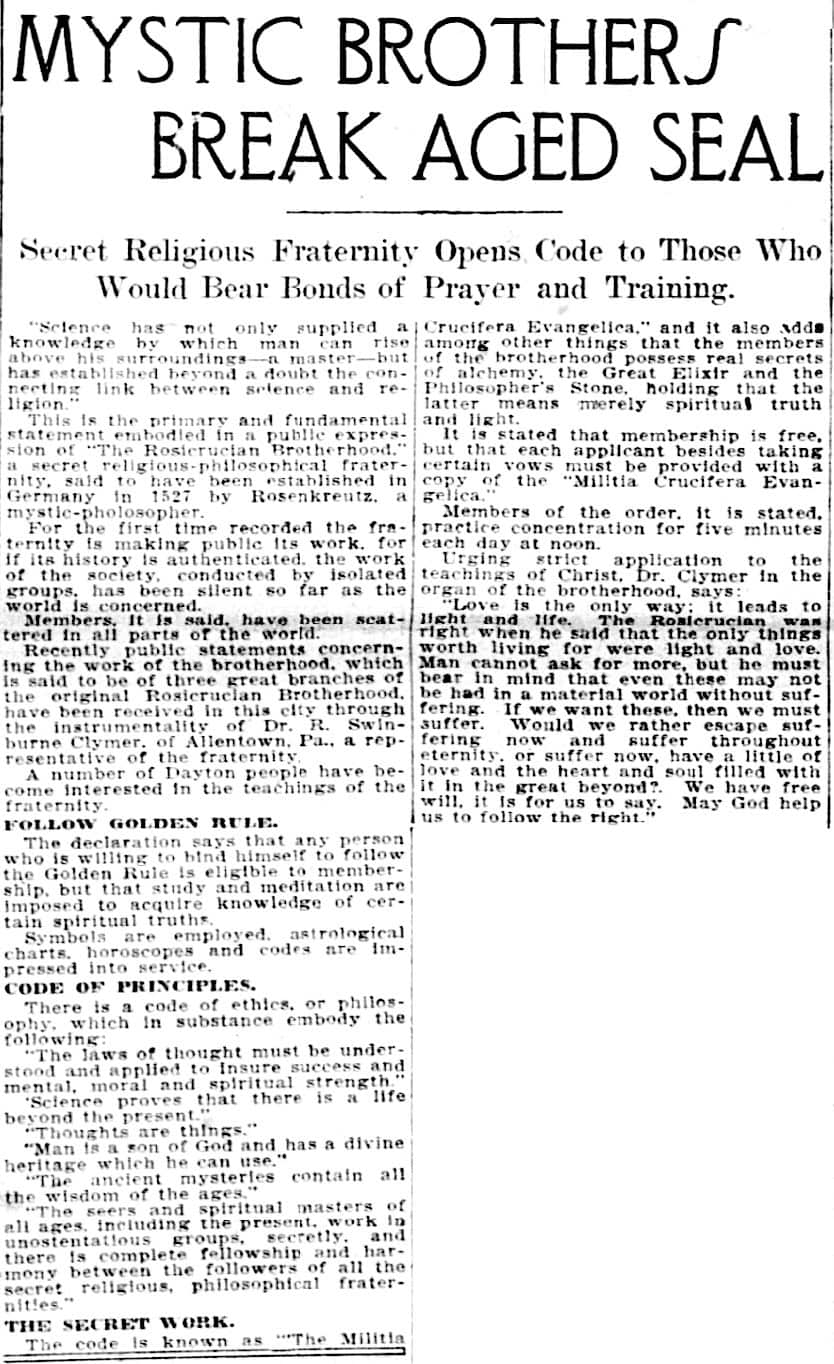
Then, in February 1909, a newspaper article featuring Clymer appeared under the headline Mystic Brothers Break Aged Seal, announcing that the Rosicrucian Brotherhood was opening teachings that had previously been kept within its private circles. The article described an invitation for outsiders to study ancient mysteries, alchemy, symbolism, concentration, and spiritual development.
And what was one of the central messages of this announcement? That the laws of thought needed to be understood and applied to develop mental, moral, and spiritual strength. The article also discussed thought as a force, humanity’s divine heritage, and the importance of concentration and disciplined study. In other words, here was an established Rosicrucian organization publicly teaching the application of mental laws as a path toward spiritual development, just months after The Kybalion had appeared with its own explanation of Hermetic principles and mental transmutation.
Herbert A. Parkyn and the Rosicrucian Order of the White Rose

The connections between Rosicrucianism and the origins of The Kybalion also lead directly to Dr. Herbert A. Parkyn. In addition to his association with Clymer, Parkyn was himself a member of J. C. F. Grumbine‘s Order of the White Rose, a Rosicrucian organization devoted to esoteric and spiritual instruction. His involvement places another important figure in the history of the Yogi Publication Society within the Rosicrucian circles of the period.
Parkyn had been teaching the laws of suggestion since 1895 and founded the Chicago School of Psychology the following year. His system explored the relationship between the voluntary and involuntary mind, the influence of thought upon physical and mental conditions, and the development of individual Will through suggestion and auto-suggestion. William Walker Atkinson became Parkyn’s protégé and later served as a principal lecturer at his University of Psychic Science, teaching within the system of mental science Parkyn had established. When the Yogi Publication Society began publishing in 1903, it operated from Parkyn’s offices at 4000 Cottage Grove Avenue in Chicago.
These connections are significant because they place the origins of the Yogi Publication Society within an existing circle of Rosicrucians and mental scientists. Parkyn was connected to both Clymer’s Rosicrucian world and Grumbine’s Order of the White Rose, while Atkinson was already involved in teaching the principles of suggestion and mental development through Parkyn’s educational system. By the time The Kybalion appeared in 1908, the philosophical ideas associated with the book had been circulating among this network for more than a decade.
The Knights Templar Masons and the Macoy Publishing and Masonic Supply Company
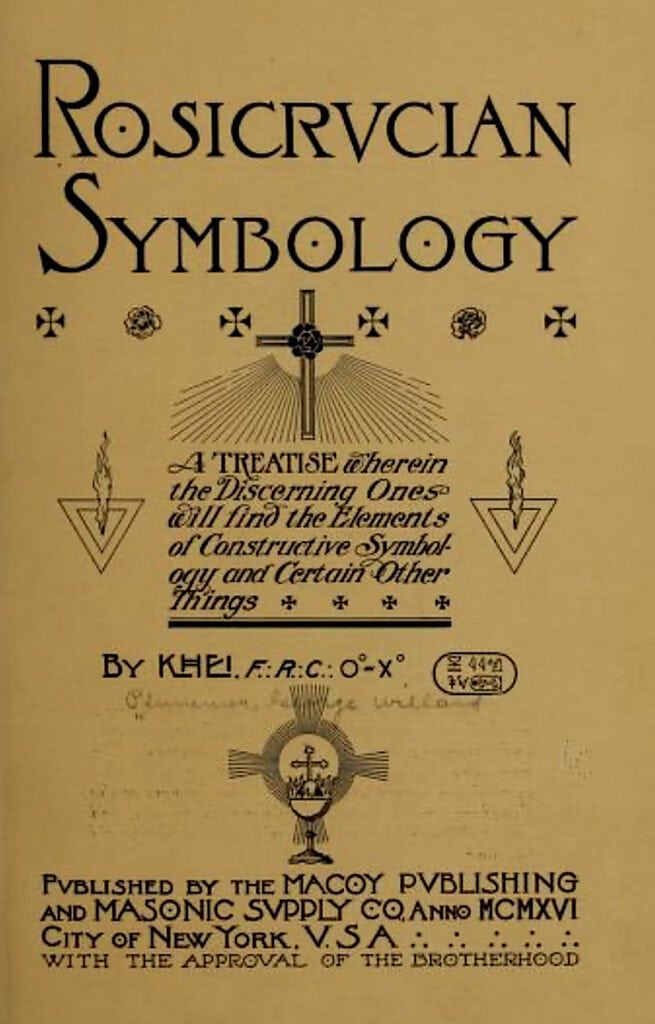
The connections also lead to the Knights Templar Masons and the Macoy Publishing and Masonic Supply Company. Robert Macoy was one of the most prominent Masonic figures in nineteenth-century America and the founder of a publishing business that became the most influential supplier of Masonic books and materials in the country. He also served for more than forty years as Grand Recorder of the Grand Commandery of Knights Templar of New York.
When Macoy died in 1895, his funeral was a major Masonic event. Some 500 Knights Templar marched through the streets of New York in full regalia, joined by leading Masons from across the country. And among those taking part was Dr. Parkyn’s uncle, John Henry Jackson, who was Grand Commander of the Knights Templar for the State of Vermont.
This wasn’t Parkyn’s only family connection to Masonry. His Jackson cousins were also Masons and Knights Templar, with several holding senior positions and later becoming Grand Commanders themselves. So when we look at Parkyn’s connections to Rosicrucianism and esoteric publishing, we also have to recognize that his own family was deeply involved in the senior ranks of Knights Templar Masonry.
In the early twentieth century, the Macoy Publishing and Masonic Supply Company acquired the Theosophical Society’s publishing interests, including the Theosophical Publishing Company, the Occult Publishing Company, and the Advanced Thought Publishing Company. Advanced Thought had already existed within the Theosophical publishing world for decades and had been associated with Annie Besant in Madras, India. It wasn’t a company that simply began when the Yogi Publication Society became involved with it in Chicago.
Why were Masonic publishers so interested in Theosophy and occult literature? Part of the answer lies in the Masonic search for the deeper meaning of its own symbols and traditions, including the Lost Word associated with the legend of Hiram Abif. The idea of recovering “that which was lost” encouraged the study of ancient religions, Hermetic philosophy, alchemy, and other mystical traditions believed to preserve pieces of a common ancient wisdom.
How These Networks Converged at the Yogi Publication Society
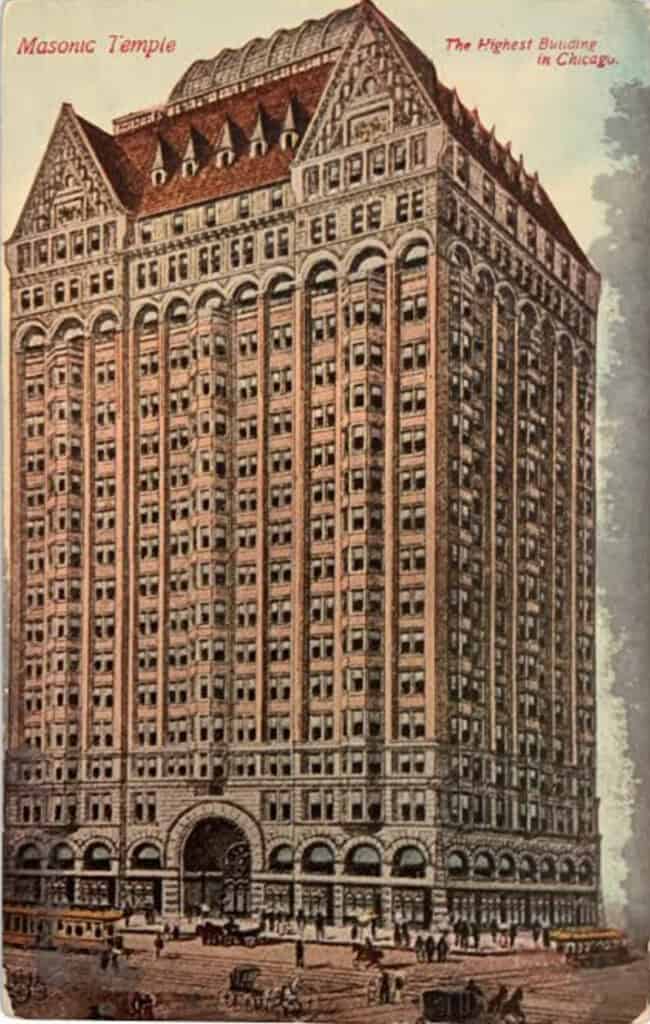
The Yogi Publication Society and the Advanced Thought Publishing Company later shared offices in Chicago’s Knights Templar Masonic Temple. With Advanced Thought’s connection to Macoy’s Theosophical publishing network, their presence at the same address raises important questions about the relationship between these publishers and the circulation of Hermetic, Theosophical, and other esoteric literature.
There’s also the question of the books themselves. Macoy’s acquisition of the Occult Publishing Company placed it in control of the American publishing rights associated with Light on the Path and The Illumined Way. Both had previously appeared through the Theosophical publishing network, and both were among the first works issued by the Yogi Publication Society. That’s a much more substantial connection than two publishers simply having similar interests. We’re looking at the movement of actual publications through the same publishing network.
And this brings us back to The Kybalion. Randolph’s Rosicrucian tradition had already been teaching Hermetic philosophy alongside Will, mental polarity, and spiritual regeneration. Clymer, a leader in the organization that continued Randolph’s Rosicrucian tradition, was connected to Parkyn’s Chicago School and was publicly opening Rosicrucian instruction during the years surrounding the book’s publication. Parkyn himself belonged to the Order of the White Rose and had family connections reaching into senior Knights Templar circles. Meanwhile, Macoy’s publishing interests were bringing Theosophical and occult literature into the same world of publishers associated with YPS.
Once these connections are put together, it’s difficult to keep treating The Kybalion as an isolated book that simply borrowed a few ancient names and attached them to modern psychological ideas. The people and organizations surrounding its publication had long been studying, teaching, and publishing Hermetic philosophy, Rosicrucian instruction, Eastern religion, and the laws of Mind. The combination of these subjects was already part of their intellectual world.
Who Decided What Counts as Hermeticism?
After following the philosophy and the history, we come to a rather absurd spectacle. A handful of self-appointed authorities on the internet now presume to decide who gets to study Hermeticism, which books they’re allowed to learn from, and which interpretations of an ancient philosophy are acceptable. And people actually listen to them.
Think about how ridiculous that is. A philosophy built around the pursuit of divine knowledge, the awakening of human consciousness, and the power of Mind now apparently requires the approval of some stranger on Reddit. The irony would be funny if it weren’t so intellectually lazy.
Hermeticism has been studied, interpreted, and taught by philosophers, alchemists, Rosicrucians, and countless others for centuries. Its teachings have influenced religious thought, science, medicine, psychology, and Western esotericism. Yet somehow, a few modern commentators have decided that they possess the authority to draw a line through that entire history and announce which parts count and which don’t.
There’s nothing wrong with studying ancient Hermetic writings or debating their meaning. But studying a philosophy doesn’t make someone its owner, and being able to quote ancient manuscripts doesn’t give anyone the authority to decide how others are allowed to understand or apply their teachings. That’s not scholarship. It’s gatekeeping, plain and simple.
The greatest irony is that this behavior runs against the very philosophy these people claim to defend. A tradition devoted to overcoming ignorance, developing higher understanding, and awakening the power of Mind has somehow become, in their hands, an excuse to discourage independent thought and tell others what they’re permitted to study. If your understanding of Hermeticism requires everyone else to stop thinking for themselves and accept your interpretation as the only legitimate one, perhaps it’s time to question how much of the philosophy you’ve actually understood.
So, Is The Kybalion Really Hermetic Philosophy?
Of course The Kybalion is Hermetic philosophy. At this point, it should be fairly obvious. The real question is how a book teaching so many of the same fundamental ideas found in the ancient Hermetic writings came to be dismissed as something entirely different.
The Same Fundamental Hermetic Philosophy
At the heart of both is the understanding that the universe proceeds from a divine intelligence, that the visible world expresses an underlying spiritual reality, and that humanity possesses the ability to recognize and consciously participate in that reality. The relationship between the divine Mind and the individual mind, the correspondence between different levels of existence, and the possibility of spiritual transformation through knowledge are not inventions of modern New Thought. These ideas have been part of Hermetic philosophy since antiquity.
The Kybalion explains them through its seven principles, using a language and method of instruction that readers can understand and apply. The ancient writings often express these ideas through revelation, dialogue, and religious symbolism. But the central philosophy is unmistakable. The book is concerned with the same questions about Mind, creation, the divine, and humanity’s ability to understand the hidden laws of existence. Its authors weren’t inventing an entirely different philosophy. They were explaining Hermetic ideas and asking readers to do something with them.
Is Gatekeeping Easier Than Understanding Hermeticism?
It’s easy to sit around arguing about which books count as Hermetic, which authors deserve recognition, and which century gets to claim ownership of the truth. It’s easy to memorize the names of ancient texts, repeat someone else’s interpretation, and spend hours online correcting people who dare to read something outside an approved list. None of that requires much effort beyond learning how to sound authoritative.
The Kybalion doesn’t simply invite readers to admire ancient wisdom from a comfortable distance. It challenges them to understand the laws of Mind, take responsibility for their own thinking, develop their Will, and apply what they’ve learned to their own lives. It asks something of the reader. And that is a considerably more demanding proposition than sitting behind a keyboard announcing that everyone else is studying the wrong books.
It’s tempting to wonder whether some of the loudest gatekeepers prefer keeping Hermeticism locked safely inside ancient manuscripts. As long as the discussion never moves beyond dates, translations, terminology, and arguments over authenticity, nobody has to demonstrate that they understand the philosophy well enough to use it. They can spend years debating the meaning of mental transformation without ever attempting to transform anything about themselves.
There’s a certain irony in people claiming to defend a philosophy devoted to the pursuit of wisdom while treating the possession of historical information as though it were wisdom itself. Knowing the title of every Hermetic manuscript doesn’t make someone a Hermetic philosopher any more than memorizing a medical textbook makes someone a physician. At some point, understanding has to become something more than an opinion expressed in an online argument.
What Have the Gatekeepers Actually Learned?
And that is what makes so much of this gatekeeping intellectually lazy. It substitutes classification for understanding and criticism for effort. It is far easier to dismiss The Kybalion as New Thought than to seriously examine its philosophy, trace its historical connections, or confront what its teachings demand of the individual. Declaring a book illegitimate takes a few seconds. Understanding the ideas behind it can take years. Applying them might take a lifetime.
The ancient Hermetic philosophers were concerned with knowledge that could transform the person who acquired it. Their writings were concerned with the transformation of the person seeking knowledge, not merely the classification of books. They were seeking an understanding of the divine, the universe, and the powers of the human mind. The Kybalion calls its readers toward that same pursuit.
So perhaps the people who spend their time policing the boundaries of Hermeticism should ask themselves a more uncomfortable question. After all the reading, arguing, correcting, and declaring what is and isn’t authentic, what have they actually learned to do? Because if the only thing your study of Hermetic philosophy has taught you is how to tell other people they’re not studying Hermetic philosophy, you may have missed the entire point.
Sources & Citations
- Newspaper. "Annie Beasant is part of Advanced Thought Publishing Company in 1891" . The Boston Globe. 1891-04-05. p. 17
- Website. Besant , Annie | Theosophy World" . www.theosophy.world. Retrieved 2026-06-11.
- Newspaper. Herbert A Parkyn opens the Chicago School of Psychology" . Chicago Tribune. 1896-07-19. p. 33. Retrieved 2025-04-22.
- PDF / Digital Archive. Occult and Theosophical Publishing bought by Macoy Masonic publishing . Masonic Voice and Review - Volume 9 - Page 43
- PDF / Digital Archive. Occult Publishing also put out all the Advanced Thought books . 1925
- Newspaper. Funeral for Robert Macoy with hundreds of Knights Templar and thousands on the street . https://www.newspapers.com/article/new-york-tribune-funeral-for-robert-maco/204011930/ 1895
- Newspaper. Burke Cosmic Consciousness by Macoy and Ali Nomad by Yoga Publication https ://www.newspapers.com/article/the-san-francisco-call-bulletin-burke-co/203991623/
- PDF / Digital Archive. W.J. Colville published by Macoy, 1913 https://iapsop.com/ssoc/1913colvillemysticlight_essays.pdf
- Website. John Henry Jackson , Knight Templar Grand Commander for the State of Vermont, https://www.findagrave.com/memorial/10913870/johnhenryjackson
- Website. Forum against The Kybalion https ://www.reddit.com/r/Hermeticism/comments/13v6ilx/psathekybalionisnotahermetic_text/
- Website. Post against The Kybalion being Hermeticism https ://medium.com/@nyxshadowhawk/the-kybalion-is-overrated-72aec409ca39