Copyright © 2026 D. Parkyn Jackson. Published by the Yogi Publication Society History Project. All rights reserved.
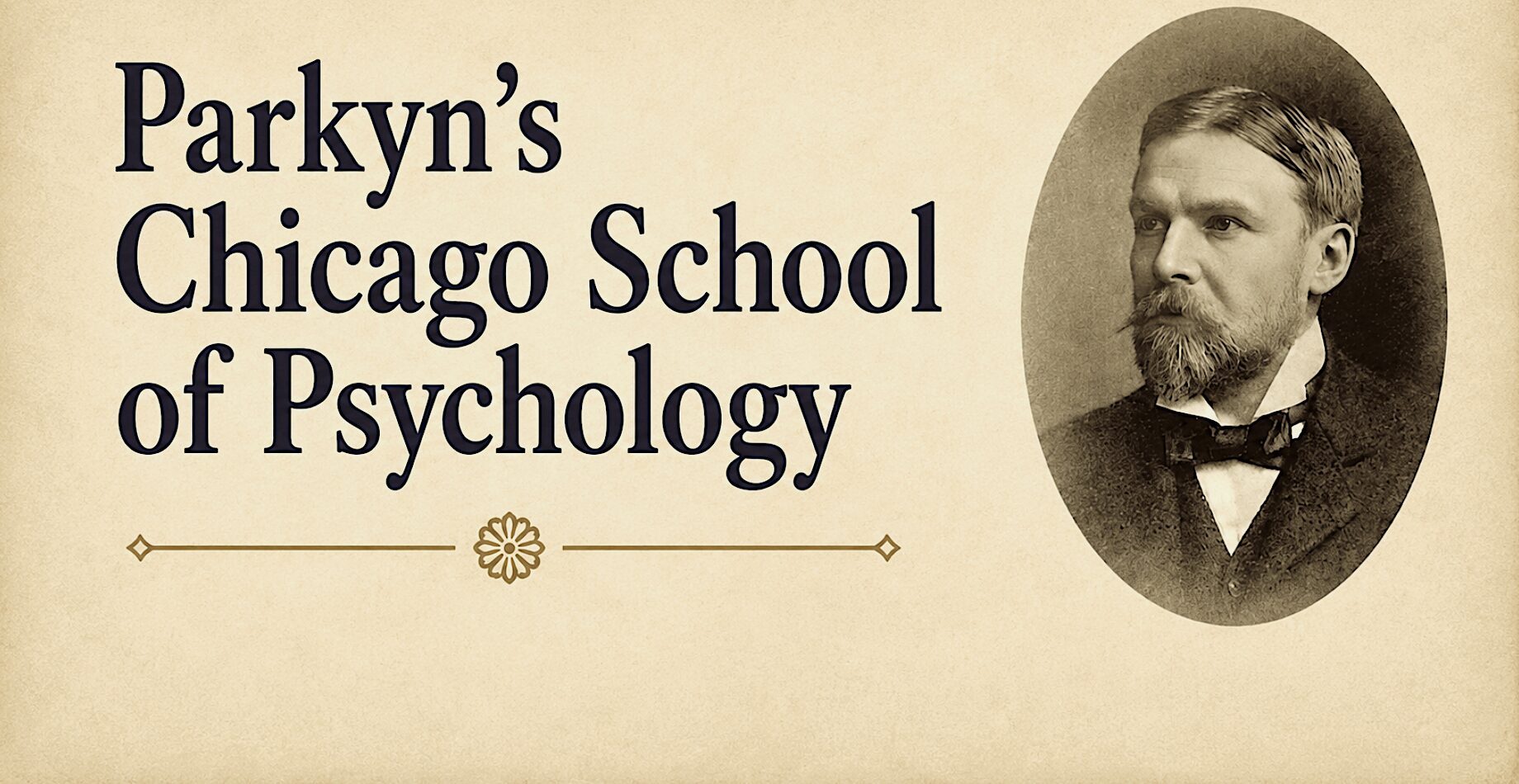
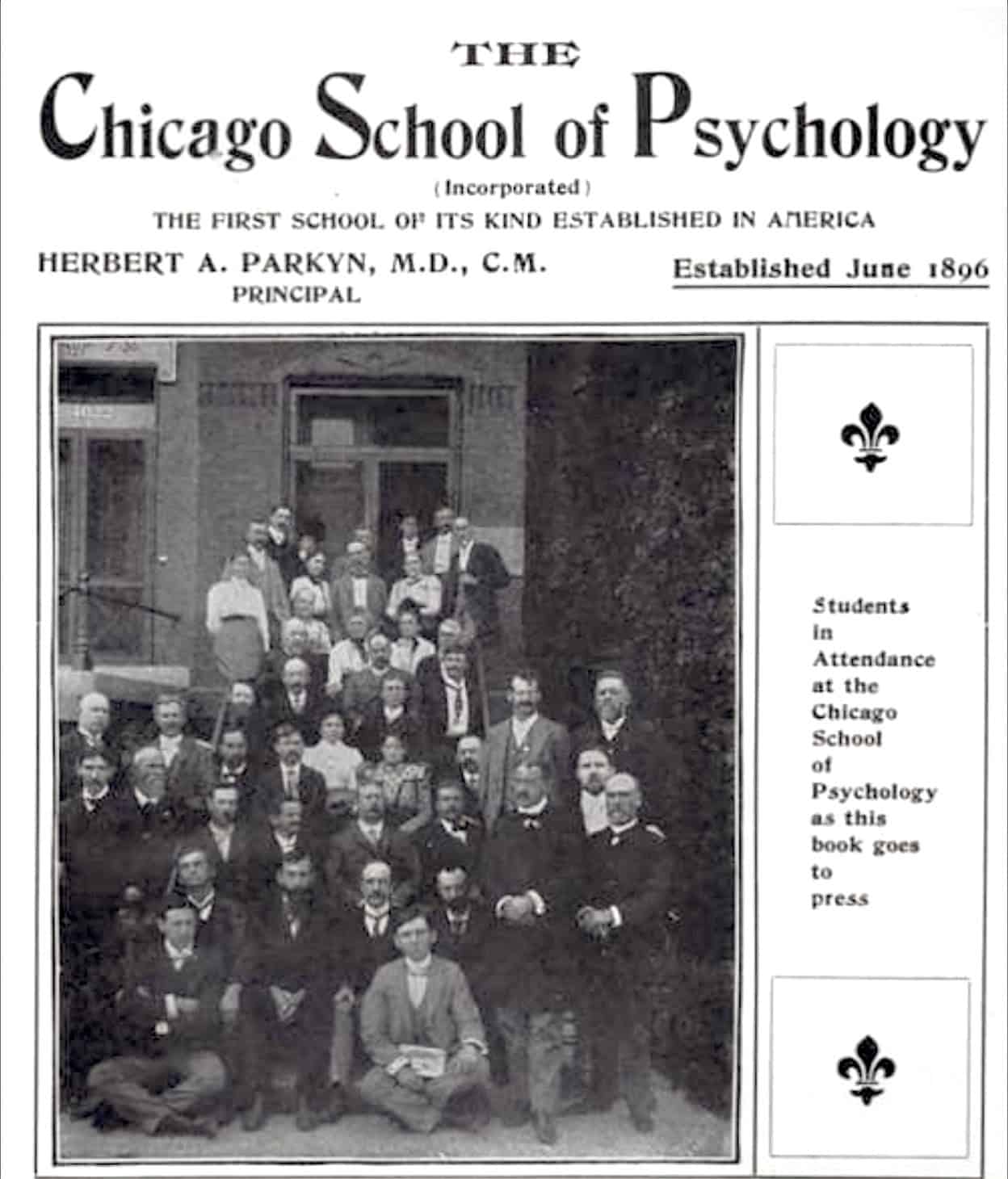
Dr. Herbert A. Parkyn’s Chicago School of Psychology played a major but often overlooked role in shaping American New Thought. Founded in June 1896, it was the first school in the United States to focus on teaching Suggestive Therapeutics and clinical hypnotism as sciences. While hypnosis was still linked to stage acts and dramatic shows, Parkyn created a serious school that treated suggestion as a real psychological and therapeutic field. The Chicago School soon became the eminent place in America to study suggestion. It was more than just a training school; it brought together doctors, teachers, healers, writers, publishers, and future New Thought leaders. They learned a structured approach to Suggestion that shaped their later work. Through its graduates, partner schools, and publications, the Chicago School became the primary source for spreading the science of Suggestion into the New Thought movement.
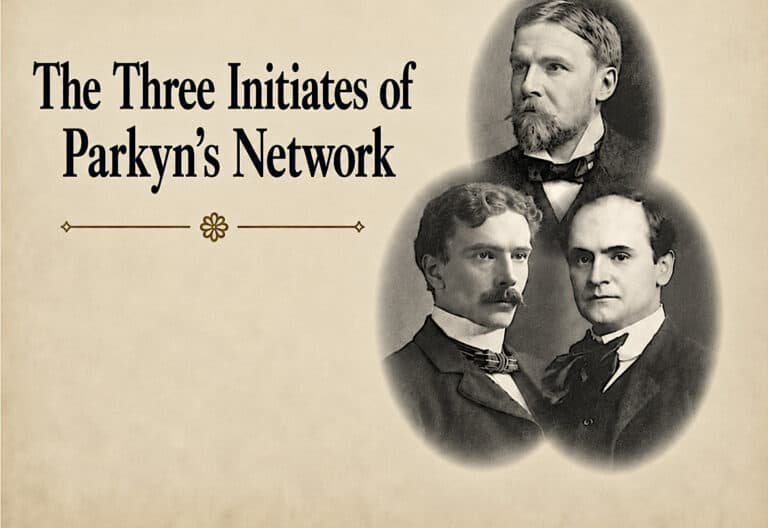
Among its graduates were many of the figures who would become leading voices in New Thought, including William Walker Atkinson, Sydney B. Flower, Stanley LeFevre Krebs, E. Virgil Neal, Elmer Ellsworth Carey, J. V. Daniels, Robert Sheerin, Reuben Swinburne Clymer, Alexander J. McIvor-Tyndall, and numerous others. Collectively, they carried the school’s teachings into books, magazines, correspondence courses, publishing houses, lecture platforms, and educational institutions across the world.
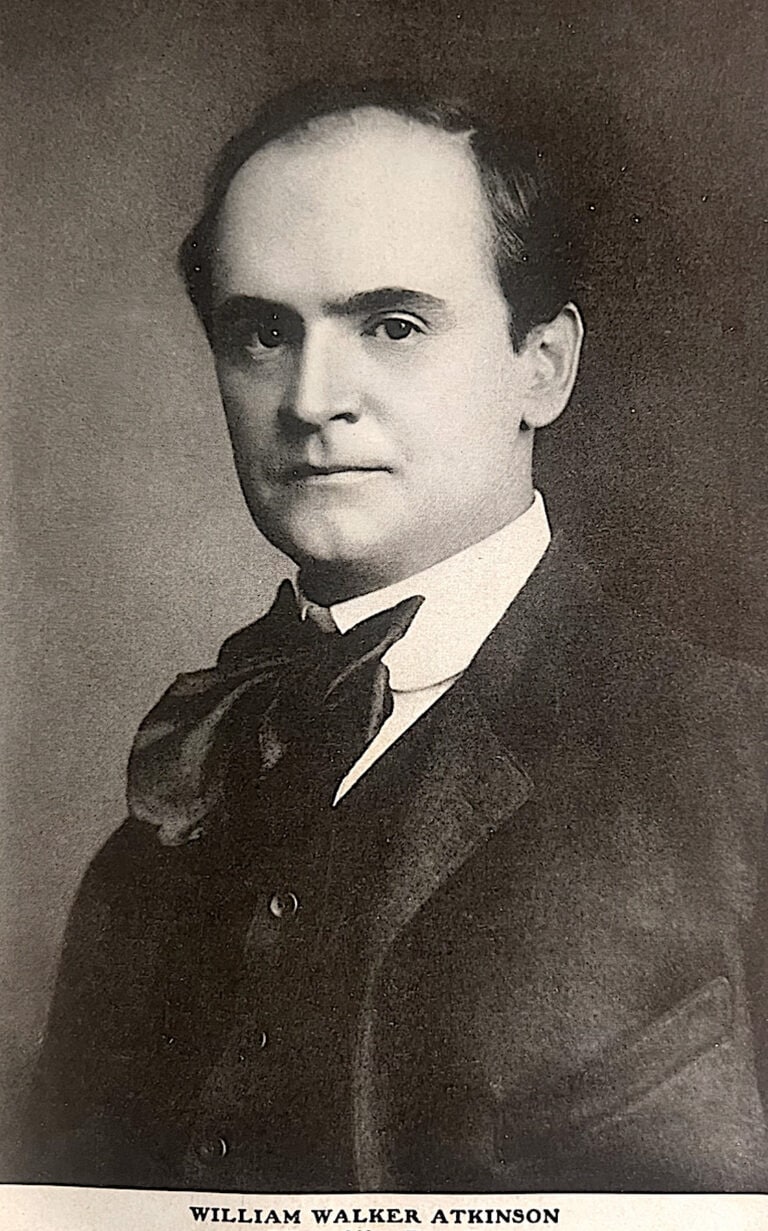
William Walker Atkinson, who played such a large role in YPS, studied for years under Parkyn, where he learned about suggestion, hypnotism, the subconscious mind, auto-suggestion, concentration, habit formation, and the use of mental influence. All topics that became central to his books.
The First School of Suggestive Therapeutics in America
The Chicago School of Psychology was inspired by the earlier work done at the Nancy School in France. Parkyn wanted to create an American counterpart to the great French school. While many people at the time saw hypnosis as just a curiosity or a form of entertainment, Parkyn saw suggestion as a natural principle that could revolutionize medicine, education, self-improvement, and daily life. He stayed away from dramatic trances and focused on practical, everyday uses of suggestion, showing that therapy could work without deep hypnosis or losing consciousness.
Parkyn taught that all healing systems depend on one main idea: “the power of the mind to help itself, and so to help the body.” This ability was seen as a natural human trait, “a part of the divine nature which is every man’s birthright,” and it works the same way for everyone, regardless of religious belief, being “as perfect in the atheist as in the religious fanatic.”
The “Aaron’s rod” of medical science
Parkyn described Suggestive Therapeutics as “the Aaron’s rod of medical science,” asserting that psychology is present in every effect and that treatment is incomplete without understanding how the mind works. He criticized traditional doctors for ignoring the body’s natural ability to heal and metaphysical healers for refusing to use medicine. He said, “The wise man is he who bends all things to his service in the evolution of good,” stating that the school instructs individuals on “how to heal themselves” by placing the body in the right mental condition for nature to complete recovery.
He emphasized that mental power alone is not sufficient in every case, citing the example that if “a man’s hand were dirty, all the faith in the world would not cleanse it,” and that physical means remain necessary. Similarly, the body is compared to an electric railway in which the brain is the dynamo and the organs the streetcars; if the trouble lies in the dynamo, psychological treatment is required, but if the obstruction is mechanical, then local physical treatment must be used, stating that “psychology and medicine together are well nigh invincible, and the one acts as a support and a stay to the other.”
A Clinical Laboratory for the Science of Suggestion
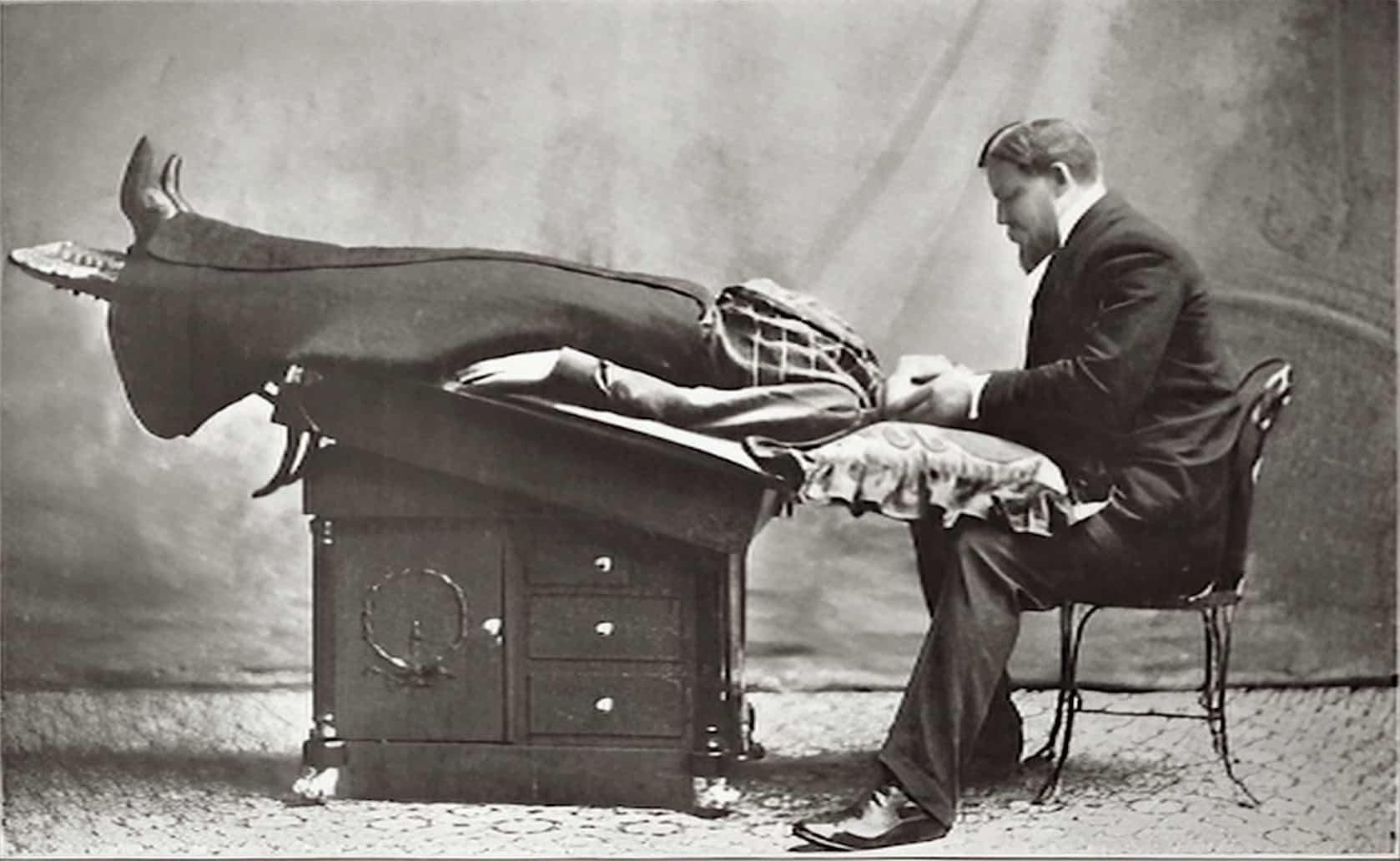
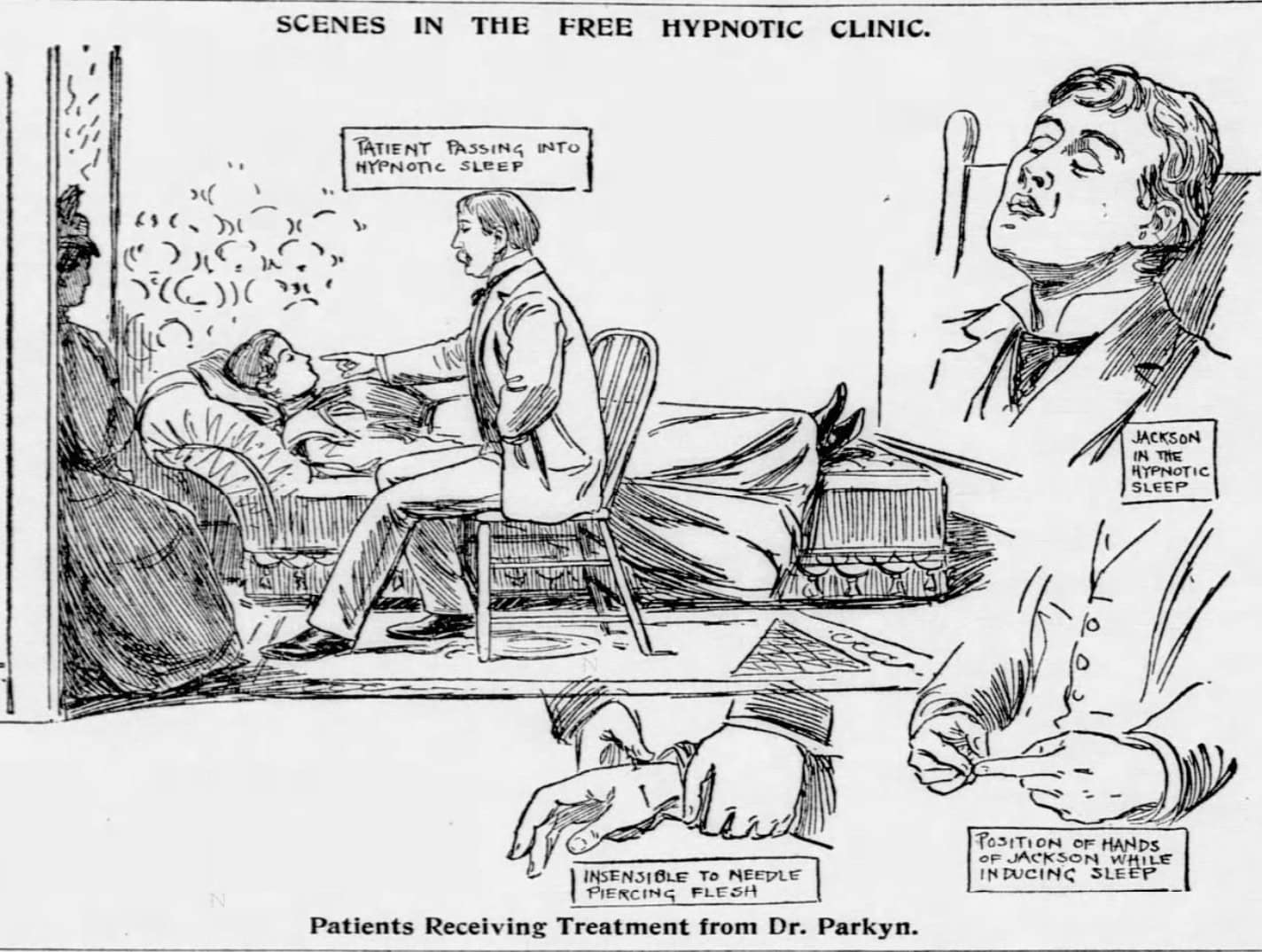
One of the school’s biggest innovations was its free public clinic, where students could watch and help treat real patients under Parkyn’s guidance. Three mornings a week, patients with nervous disorders, insomnia, chronic pain, and other conditions came to the clinic for treatment. No drugs or electricity were used. Every treatment relied only on carefully given verbal suggestions. The treatment room was set up to help people relax and be open-minded. Patients sat or lay down comfortably while Parkyn spoke calmly to help quiet their conscious (voluntary) mind and make their subconscious (involuntary) mind more open to suggestion. Students learned by watching treatments, discussing diagnoses, and reviewing results. Each month, they attended 12 lectures and 6 clinic sessions. Many students were already doctors or dentists who wanted ways to help patients without always using medicine.
The Philosophy of Auto-Suggestion
Parkyn taught that healing worked best when people focused their attention, built confidence, and replaced negative thoughts with positive ones. Illness often became worse through habits, fear, and expectations, but health could improve by creating new ways of thinking. Parkyn was one of the first to teach auto-suggestion. He taught people how to shape their own subconscious by repeating positive thoughts, focusing, and believing in what they said. Unlike hypnosis done by someone else, auto-suggestion meant guiding yourself and training your mind with discipline.
He was the first to use the phonograph to deliver auto-suggestions. He recorded affirmations and healing phrases on wax cylinders so patients could listen to them often, even at home, as part of their treatment. This approach aimed to strengthen mental conditioning by regularly exposing patients to spoken suggestions. Parkyn believed that the vibrations of the recorded voice matched the patient’s own frequency and could influence the subconscious mind.
The Life Essentials
Dr. Parkyn’s approach to suggestive therapeutics focused on providing the body with what he called the “life essentials” to build and maintain health. Parkyn’s five life essentials were fresh air (breath), sunshine (light, fire), hydration (water), food (earth), and exercise (spirit). He taught that the mind could strongly influence the body, such as by increasing blood flow to sick areas, but said this only worked well if the body had enough of these essentials, emphasizing the importance of nutrition and drinking two quarts of fresh water daily, saying;
“Thought tends to take form in action, and, with the life essentials properly supplied, thought action becomes a power in stimulating the organs of nutrition and elimination.”
Parkyn connected his five life essentials to the ancient Hermetic doctrine of the five elements, which taught that everything in nature arises from a combination of Air (breath), Fire (sunshine), Water (hydration), Earth (food), and Aether or Spirit (exercise, movement).

The Parent School of Suggestive Therapeutics
Known as the “parent school” of Suggestive Therapeutics in America, Parkyn oversaw a growing network of partner schools started by graduates across the United States and Canada. These schools used the same curriculum, maintained ties with the Chicago School, and trained new practitioners in Parkyn’s methods. Within a few years, partner schools opened in cities like Cleveland, St. Louis, Kingston, Minneapolis, New York, Brooklyn, Kansas, California, Portland, Vancouver, and more. Together, they created the first organized network in North America focused on practical psychology and Suggestive Therapeutics.
Over one thousand students earned the school’s Doctor of Psychology degree. For its time, the school was progressive: about one-third of its graduates were women, and several African Americans also finished the program, making it more open and accessible than most schools in the late nineteenth century.
In 1908, Parkyn closed the Chicago School of Psychology. He had previously started the Motzorongo Plantation Company, which became the largest American-owned agricultural property in Mexico, and in late 1906, he agreed to organize The Black Sand and Gold Recovery Company for a longtime friend. With these growing business commitments, it became too much for him to manage the school as well.
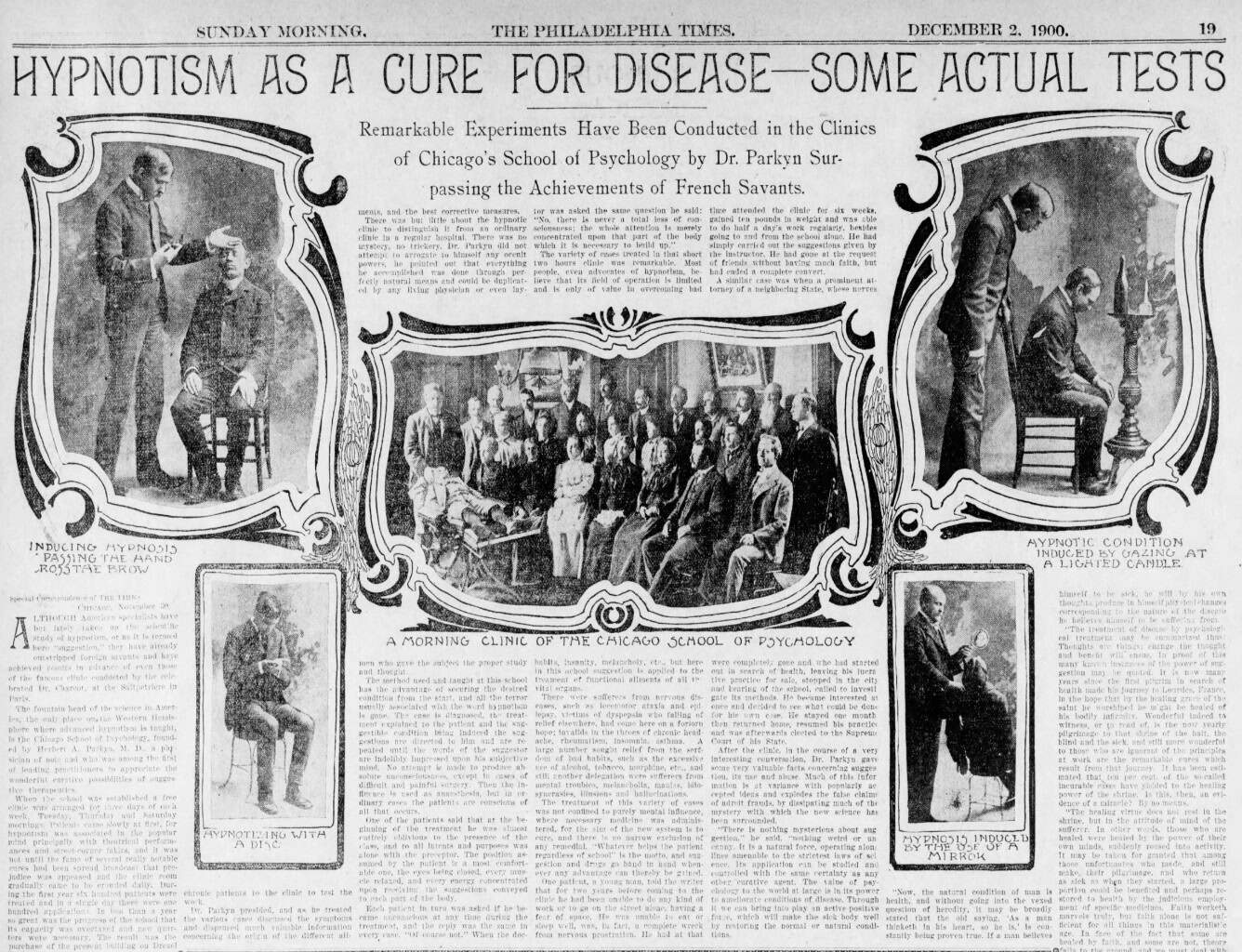
Even after the Chicago School of Psychology closed, Parkyn and its influence continued to grow. By 1908, over a hundred schools, clinics, and magazines in the United States and other countries were teaching the Chicago School’s approach to suggestive therapeutics and auto-suggestion. This network became known as the “Suggestion family.” Parkyn continued to support the movement by working behind the scenes and providing financial and legal help. In many ways, his large-scale business projects were intended to ensure he had the resources needed to protect and promote the Law of Suggestion.
Sources & Citations
- The first independent school in the US to teach Hypnotism". The Des Moines Register. 1898-05-08. p. 16. View source ↩
- "Chicago School of Psychology is incorporated at $2,500". Chicago Tribune. 1897-03-10. p. 10 View source ↩
- "Herbert A Parkyn opens the Chicago School of Psychology". Chicago Tribune. 1896-07-19. p. 33. View source ↩
- The Chicago School of Psychology mission statement pamphlet, 1896 by Dr. Herbert A. Parkyn View source ↩
- "Herbert A Parkyn and his hypnosis clinic in Chicago". The World. 1896-10-04. p. 21 View source ↩
- The Chicago School of Psychology". The Chicago Chronicle. 1896-08-09. p. 8 View source ↩
- Dr. Parkyn and his new Chicago Hypnotic Clinic". Chicago Tribune. 1896-02-09. p. 25 View source ↩
- "Aubrey T. Dodson was a graduate of Dr. Herbert A. Parkyn's Chicago School of Psychology. Diploma". Spokane Chronicle. 1906-11-20. p. 6 View source ↩
- "Dr Herbert A. Parkyn and the Chicago School of Psychology". The Philadelphia Times. 1900-12-02. p. 19. View source ↩
- Dr. Herbert A Parkyn chair of psychotherapeutics has hypnotized more people than any in the country". The Weekly British Whig. 1896-03-12. p. 7 View source ↩
- "The Chicago School of Psychology". The Chicago Chronicle. 1896-08-09. p. 8. View source ↩
- "Herbert A Parkyn and his hypnosis clinic in Chicago". The World. 1896-10-04. p. 21. View source ↩
- "Painless surgery at the Chicago School of Psychology". The World. 1896-10-04. p. 21 View source ↩
- "Dr. Parkyn on Suggestive Therapeutics at his school". The Republican. 1900-10-18. p. 7. View source ↩
- Book. Auto-Suggestion: What It Is and How to Use It for Health, Happiness and Success, by Dr. Herbert A. Parkyn. Suggestion Publishing Company, Chicago, 1905 View source ↩
- Book. A Mail Course in Suggestive Therapeutics and Hypnotism, by Herbert A Parkyn, Suggestion Publishing Company, 1900 View source ↩
- "Parkyn uses phonograph and law of vibrations". The Inter Ocean. 1898-03-18. p. 7 View source ↩
- "Herbert A Parkyn uses the phonograph to cure patients". The Inter Ocean. 1898-03-18. p. 7. View source ↩
- "Parkyn's new school". The Brownsville Herald. 1896-12-19. p. 6. View source ↩
- "About hypnosis and Dr Parkyn's school". Chicago Tribune. 1897-12-26. p. 21 View source ↩
- "Sydney Flower interviewed about the Chicago School of Psychology and hypnotism". The Plain Dealer. 1897-04-04. p. 5. View source ↩
- William Walker Atkinson: An Intellectual Biography by John Haller Jr, 2021 View source ↩
- "Motzorongo company". Leader-Telegram. 1902-10-25. p. 7. View source ↩
- "Black Sands and Gold recovery company". The Indianapolis Star. 1907-01-27. p. 24. View source ↩
- "The Ozark School of Psychology was opened by Dr. Joseph Kyle, a graduate of Parkyn's school". Christian County Republican. 1899-10-19. p. 1. View source ↩
- "Parson School of Suggestive Therapeutics. Both are graduates". Galesburg Enterprise. 1900-02-09. p. 4. View source ↩
- Three new schools of Suggestive Therapeutics in Des Moines, Minneapolis, and New York City". The Fargo Forum, Daily Republican, and Moorhead Daily News. 1898-03-16. p. 6. View source ↩
- California Institute of Mental Sciences run by Dr Smyth a graduate of Dr. Parkyn's School". The San Francisco Call Bulletin. 1897-10-10. p. 12. View source ↩
- "The Northwestern School of Psychology and Suggestive Therapeutics is opened by Dr. T.H. Storey". The Duluth News Tribune. 1897-08-23. p. 8 View source ↩
- "William Lee Howard starts The Astoria School of Suggestive Therapeutics in Oregon.Wrote for Hypnotic". The Daily Astorian. 1897-12-29. p. 4. View source ↩
- "List of Suggestive Therapeutic schools that are affiliated with the Chicago School of Psychology". The Jersey Journal. 1897-07-10. p. 5. View source ↩
- "List of Suggestive Therapeutic schools that are affiliated with the Chicago School of Psychology". The Sacramento Union. 1898-03-28. p. 3 View source ↩
- "Robert Sheerin's Cleveland School of Suggestive Therapeutics is affiliated with Parkyn's". The Sacramento Union. 1897-06-06. p. 9. View source ↩
- "Cleveland School of Suggestive Therapeutics by Robert Sheerin with Thomas Jay Hudson". The Plain Dealer. 1899-11-08. p. 6. View source ↩
- "Sydney Flower was establishing branches of the Chicago School of Suggestive Therapeutics". The Plain Dealer. 1897-04-04. p. 5 View source ↩
- "W. J. Chatterton graduate of Parkyn. Opens schools for the parent school in Chicago". Richmond Dispatch. 1899-11-12. p. 3. View source ↩
- "W. J. Chatterton worked with Dr. Parkyn, Thompson J Hudson and William James". The Pomona Daily Review. 1911-04-07. p. 6. View source ↩
- "Stanley Krebs was a resident graduate of the school". The Atlanta Journal. 1903-09-27. p. 19. View source ↩