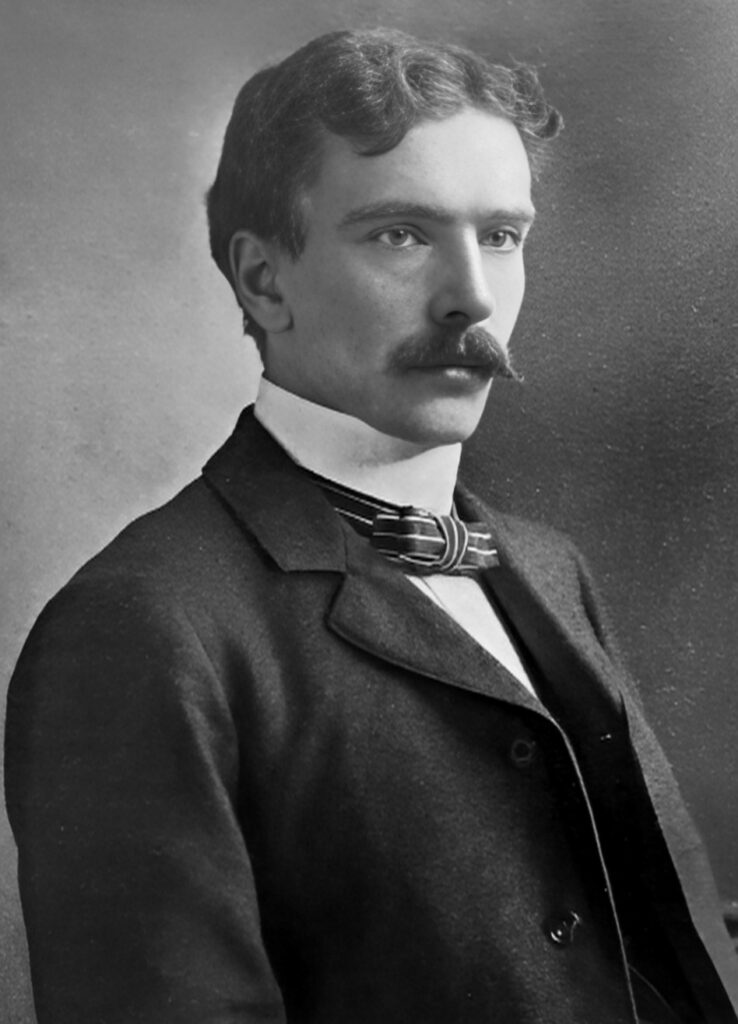
Flower was Parkyn's promoter, serving as secretary for his school and editor for several publications, including New Thought, and managing the Psychic Research Company.
Sydney B. Flower was a British-born Canadian-American journalist, editor, publisher, businessman, and one of the principal organizers of the early New Thought movement. Beginning his career in newspaper publishing in Winnipeg, Flower became one of the most influential publishers of mental science literature after joining Dr. Herbert A. Parkyn in Chicago during the mid-1890s. As Parkyn’s secretary, editor, and business associate, he helped establish the Chicago School of Psychology, edited several of its journals, organized a network of affiliated Schools of Suggestive Therapeutics, and played a central role in introducing the Law of Suggestion to a national audience.
Early Life
Born in England, Flower immigrated to Winnipeg, Manitoba, in his late teens, where he established himself as both an accomplished athlete and newspaper journalist. He was the tennis champion of Manitoba and the Dakotas in 1895, ranked among Winnipeg’s leading cricket players, and spent several years as a sports reporter for the Winnipeg Free Press.
Sydney Blanshard Flower
Meeting Dr. Herbert A. Parkyn
Flower’s association with Dr. Herbert A. Parkyn began in 1895 while covering the celebrated international hockey game between the Winnipeg Victorias and Parkyn’s newly organized University of Minnesota team. After interviewing Parkyn and becoming increasingly interested in his pioneering medical research into hypnotism and suggestive therapeutics, Flower resigned from the Winnipeg Free Press in December 1895 and relocated to Toronto, where he spent the winter working with Parkyn on Hypnotism Up to Date. Published in April 1896, the book introduced Parkyn’s scientific approach to hypnotism through a series of dialogues between Flower and Parkyn. It was followed up with a companion volume, A Study in Hypnotism, shortly after. That same spring, Flower accompanied Parkyn to Chicago, where they established the Psychic Publishing Company to publish and promote their educational literature.
Hypnotism Up To Date
“Hypnotism Up to Date” by Sydney Flower and Dr. Herbert A. Parkyn. Published by The Psychic Publishing Co., 1896.
Hypnotism Up to Date was written as dialogues between Flower, as the “skeptical inquirer”, and Parkyn, as “the doctor,” explaining hypnosis. It was first released under Sydney Flower’s name, but later advertised as co-authored with Dr. Parkyn, since the book is largely made up of Parkyn’s dialogue. In the introduction, Flower calls himself Parkyn’s “mouthpiece” and credits Parkyn with the valuable work of rescuing hypnotism from charlatans and presenting it in its true form.
The book follows Dr. Parkyn’s teaching that hypnotism is a natural mental state, and not a supernatural power and insists that hypnosis cannot compel crime or reveal secrets and that it is perfectly safe when practiced correctly. Hypnotism is presented as both a moral and medical force that can cure bad habits, relieve pain, and restore health. Finally, it criticizes the use of hypnotism in popular fiction like Conan Doyle’s A Parasite, for spreading false ideas about control and danger, asserting that hypnotism, rightly understood, is a valuable aid to science and human progress.
A Study in Hypnotism
A Study in Hypnotism follows a fictional narrative, tracing the experiences of a hypnotist named Richard Robinson who debates the power of suggestion with skeptics, while also falling into a romantic relationship with a beautiful high-society patient. The narrative is filled with debates over the mysterious power of hypnotism with Robinson arguing its genuinely scientific, entirely non-mystical nature, while his women patients repeatedly urge him to preserve the mysterious and supernatural aspects popularly associated with it. They insist that the sense of enchantment is part of the experience and that the occult atmosphere makes surrender both psychologically easier and socially permissible.
The novel draws on the well-known nineteenth-century archetype of “Richard Robinson,” a young, well-dressed, and educated man who moves easily between respectable society and its hidden erotic underworld. This figure originated in the 1836 murder of Helen Jewett, a beautiful young New York prostitute, whose death and subsequent trial of the accused young clerk, Richard Robinson, became one of the earliest media sensations of the penny press. By the 1890s, the popular image of the hypnotist had become closely intertwined with the Robinson archetype. Hypnotists in fiction and in sensational journalism were often portrayed as the libertine seducer and fashionable dandy whose mastery of hypnosis granted them unusual access to the private thoughts and emotions of women and rivals. Parkyn would work hard to transform this image into the idea that the modern hypnotist was a disciplined figure who used suggestion in a clear, non-mystical way for practical and therapeutic purposes.
Hypnotism Up To Date by Flower and Parkyn, 1896A Study in Hypnotism by Sydney Flower, 1896
Business Manager and Publicist
In April 1896, Flower became Dr. Parkyn’s business manager, secretary, publicist, and publisher, directing publicity for the newly established Chicago School of Psychology while organizing newspaper interviews, advertising campaigns, and promotional literature that introduced Parkyn’s work to a national audience.
Throughout their association, Parkyn and Flower remained closely tied to organized athletics. Roger Sherman, a longtime friend of Parkyn and secretary of the Kenwood Country Club, arranged for Flower to compete in championship tennis events at the club and for Parkyn to organize a hockey team at the club. Sherman was a former star football player for the Michigan Wolverines and also served as head coach of the Iowa Hawkeyes. He remained a close ally of Parkyn’s network in later years, as an Assistant State’s Attorney for Chicago and as president of the Illinois State Bar Association.
Building the Publishing Network
During the late 1890s and early 1900s, Flower edited a succession of influential journals, including TheHypnotic Magazine, Journal of Medical Hypnotism, Suggestive Therapeutics, Journal of Magnetism, and New Thought. Through these publications he introduced the work of physicians, psychologists, educators, and New Thought writers to an international readership while promoting Parkyn’s educational enterprises, correspondence courses, lectures, and clinical research. He also helped organize the growing network of affiliated Schools of Suggestive Therapeutics, transforming what began as a single Chicago institution into a coordinated educational movement extending across the United States and Canada.
The Hypnotic Magazine
The Hypnotic Magazine (Aug.1896- Dec.1897)
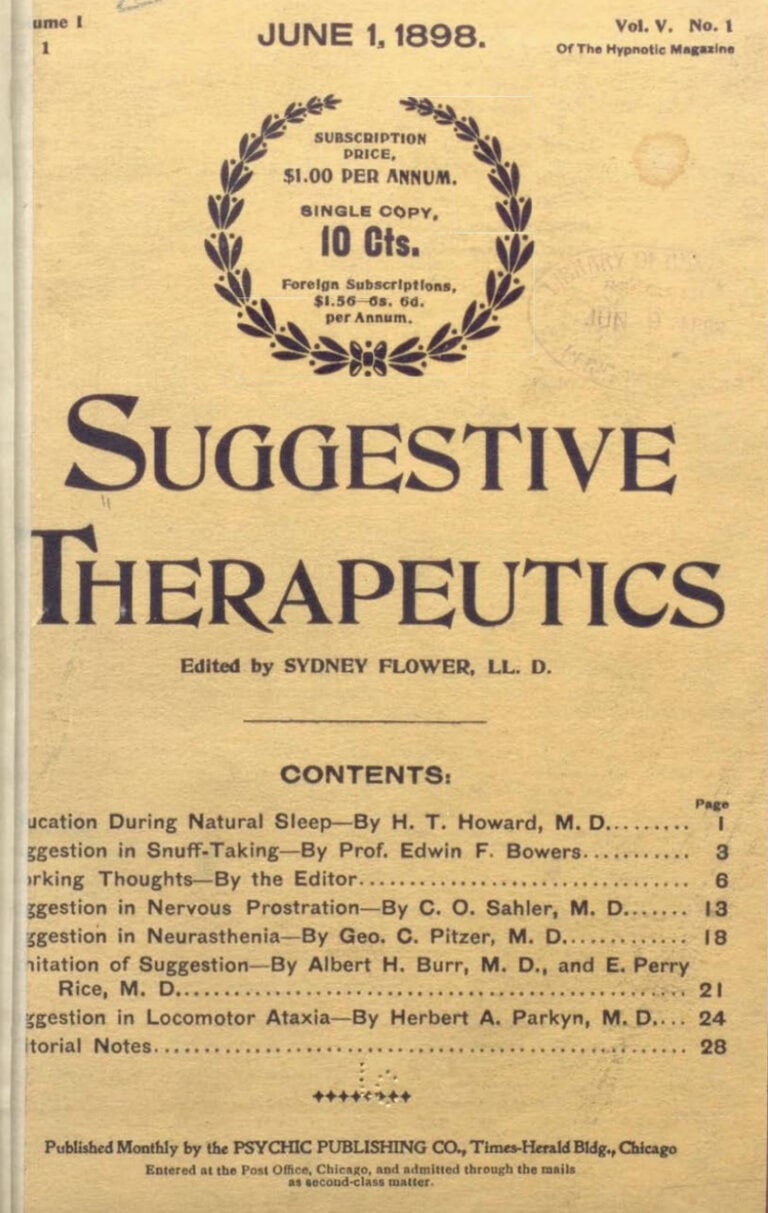
In August 1896, Dr. Parkyn and Sydney Flower founded The Hypnotic Magazine as an extension of the Chicago School of Psychology. Edited by Flower and published by the Psychic Publishing Company, the magazine was directed toward physicians and promoted the medical use of hypnotism and suggestion, featuring regular contributions from prominent figures in psychology, medicine, and psychical research including Dr. Thomson Jay Hudson, Dr. W. Xavier Sudduth, Dr. Mark Henry Lackersteen, Dr. George Wyld, Clark Bell (President of the Medico-Legal Society), Henry H. Goddard, William Lee Howard, Xenophon LaMotte Sage, and Edward B. Warman.
The central feature of each issue was the detailed reports from Dr. Parkyn on his most recent clinical cases, documenting the application of suggestion in treating physical and nervous disorders. These regular case records became an important resource for physicians and students throughout the world by providing systematic evidence of the practical results achievable through psychological treatment based on suggestion.
Through the magazine, Parkyn and Flower led a public campaign to legitimize hypnotism as a scientific practice, distancing it from mesmerism, stage performance, and fraudulent claims. The publication documented demonstrations showing limits of hypnotic suggestion, including resistance to criminal acts, and reported controlled investigations into telepathy, combining experimental inquiry with skepticism toward unverified claims.
The Journal of Medical Hypnotism
In January 1898, the magazine was renamed The Journal of Medical Hypnotism to distinguish medical hypnotism from unregulated drugless healing movements and to support a growing network of affiliated schools of suggestive therapeutics across multiple North American cities.
Their stated goals were as follows:
“The Journal of Medical Hypnotism is devoted to the exposition of the principles and practice of suggestive therapeutics. It is clear, simple, forcible, and direct. It teaches the science of suggestion, which is the essence of education. Its contributors are authorities in this work. There need be no mystery in hypnotism for those who wish to understand its phenomena. From the mystical magic of the past has evolved the scientific hypnotism of today. It is the duty of every parent, clergyman, lawyer, teacher, physician, and dentist to become familiar with the use and abuse of hypnotism. Knowledge is power. It is our work, through The Journal of Medical Hypnotism, to teach the public how simple in application and how powerful an agent for good hypnotic suggestion truly is.”
Promotion of New Schools of Suggestive Therapeutics
Many of the graduates of Dr. Parkyn’s Chicago School of Psychology had opened practices around the country, but only a few had gone on to establish schools to certify new practitioners. At the time, there were seven affiliated schools located in Des Moines, St. Louis, Minneapolis, Kingston, Kansas City, Chicago, and New York. Parkyn and Flower believed that many more were needed around the region and with Chicago being a hub for those drawn to the New Thought movement, the city should support multiple institutions dedicated to suggestive therapeutics.
Although Sydney Flower did not have formal medical training at major universities like Dr. Parkyn, he had spent two years studying and working directly under him. During that time, Flower became an accredited doctor of psychology through Parkyn’s school and had gained extensive experience in hypnotism, having observed and reported on thousands of cases alongside Parkyn. Flower had also participated in several hypnosis lectures and demonstrations, delivering the talks while Dr. Parkyn conducted live demonstrations on patients.
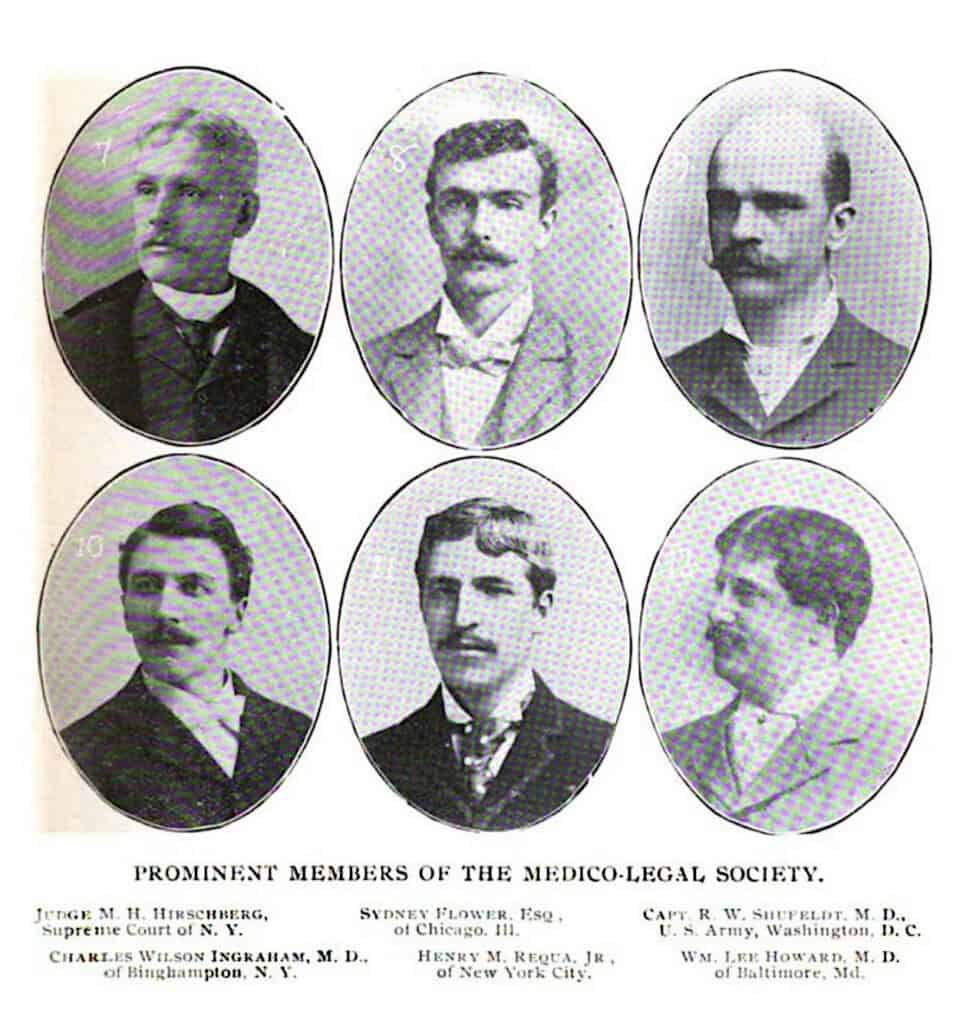
Flower had also served as Dr. Parkyn’s representative on the Medico-Legal Society‘s Psychological Section, where Dr. W. Xavier Sudduth served as chairman. This gave Flower credentials within the national psychological community and connected him with other members of the society who would also help to establish more schools with him and Parkyn. These included William Lee Howard, James R. Cocke, Clark Bell, and Thomas Bassett Keyes.
Sydney B. Flower as Dr. Parkyn’s representative for the Medico-legal Society
By 1898, he was qualified to personally oversee a campaign to establish more affiliate schools in several cities. As part of the effort, he arranged for the journal to be printed each month in the different city he visited to highlight the newly founded school. By the time he returned to Chicago, he announced that he had created three new schools.
The Journal of Suggestive Therapeutics
Suggestive Therapeutics
In June 1898, only six months after its previous rebranding, The Journal of Medical Hypnotism was renamed to Suggestive Therapeutics. Going forward, their primary focus would be identified as “suggestive therapeutics,” practiced through the controlled use of “suggestion.” This shift aligned them with other medically professional institutions they collaborated with that were using similar terminology, such as the Illinois College of Psychology and Suggestive Therapeutics, C. O. Sahler’s School of Suggestive Therapeutics at his Sanitarium, and George C. Pitzer’s St. Louis School of Suggestive Therapeutics.
Fully distance themselves from the word “hypnotism”
Parkyn and Flower had concluded that the word “hypnotism” should no longer appear in the magazine’s title. Parkyn describes this shift as follows;
“We use the term “hypnotism” only with considerable hesitation as it’s important for students to understand both the word and the state it describes. That said, based on hard-earned experience, we strongly encourage students of suggestion to avoid using the term “hypnotism” in both public and private settings. At the Chicago School of Psychology, the word has been deliberately abandoned and is used only during lectures for educational purposes. We have had many patients who would have avoided us entirely had they known we used hypnotism. Just as the word “love” evokes a web of associations, the word “hypnotism” triggers, for most people, ideas of the strange, sinister, or even evil. For that reason, most individuals instinctively avoid anyone labeled a hypnotist. You should never allow yourself to be described that way.”
Sydney Flower, with his characteristic wit, summed it up succinctly,
“With the May number died the name “ Medical Hypnotism,” so far as this journal is concerned. We begin the new volume with a fairer title, one that has never been sullied and degraded. It was supposed on our part that we might in time educate the public to the extent, at least, of robbing the word “ Hypnotism” of its terrors, and of reinvesting it with some shreds of dignity. But public prejudice is not so easily allayed, and we are fain to confess ourselves beaten on this tack. It is advisable, therefore, to accept defeat with unconcern, and acknowledge that we cannot afford longer to kick against the pricks. The new venture, an old friend with a new face, is commended to your care, and we trust that our readers will welcome this nursling, which, with urbane demeanor, we present for their delectation and information.”
The Flower Chicago School of Suggestive Therapeutics
With the change in the magazine’s name and the central focus on the affiliated schools, it was decided that adding a new downtown Chicago school would serve both to broaden their presence and to reinforce their claim to the term “suggestive therapeutics.” The magazine would also be relocated to the same building, with plans to launch a new publication connected to Parkyn’s Chicago School of Psychology. This new magazine would be titled Suggestions (later shortened to Suggestion), further strengthening their claim to both the terms “suggestive therapeutics” and ‘suggestion” in the Chicago region.
The Flower school would also serve a strategic purpose of attracting the growing lay public’s interest in mental science, a demographic increasingly targeted by various fringe and unlicensed practitioners drawn to Chicago’s expanding New Thought scene. Parkyn’s own institution, focused on legitimizing suggestive therapeutics within scientific and medical circles, was not positioned to accommodate this larger non-professional audience. As Sydney Flower explained in the inaugural issue of Suggestive Therapeutics, “The Chicago School of Suggestive Therapeutics has been opened for the treatment… and for the instruction of laymen in the science and practice of Suggestive Therapeutics. I leave to the other Chicago schools the work of instructing physicians and dentists in the practical application of suggestion, and am content to teach men and women of the lay brotherhood only.”
Flower would continue with the current version of the magazine he was editing and its Psychic Publishing Company and Parkyn would launch the new magazine using his school’s national recognition to quickly garner a large subscription base. To bolster Flower’s image as an expert in the field, a long and detailed article outlining his experiments and views on hypnosis was arranged in a major Chicago newspaper and syndicated nationally. Dr. W. Xavier Sudduth was brought into the piece to lend it additional authority and reinforce Flower’s credibility.
By mid June of 1898, both the “Flower’s Chicago School of Suggestive Therapeutics” and the newly named “Suggestive Therapeutics” magazine were launched. Parkyn’s new “Suggestion” magazine would follow soon after in August. The ultimate goal of the strategy was to operate two coordinated publications, each aligned with a separate institution, thereby solidifying their influence throughout the region and also overshadowing the charlatan practitioners. At the time, their existing periodical had a subscription base larger than the combined subscriptions of the next four leading New Thought publications, so launching another equally influential journal would allow them to fully dominate the field. With their widespread influence in the magazine field and their new branding, they positioned themselves as the primary publishing voice for medical schools of suggestive therapeutics across the country. This strategy established them as the leading authority in the field and attracted substantial advertising revenue from affiliated schools and related products, further magnified by the operation of two concurrent magazines.
Regulations for second class postal rates
At the time, magazines relied on qualifying for the heavily discounted second-class mail rate to be profitable, which required strict compliance with postal regulations. To obtain this rate, publications had to demonstrate that they were not merely serving as advertising vehicles for a business. Both editorial content and advertising were subject to close scrutiny by the postmaster. However, while educational institutions could be financially successful, they were not subject to the same commercial restrictions, as long as their publications offered the public useful information, such as research findings or expert commentary within their field. To meet these requirements, deliberate steps were taken to ensure that Suggestive Therapeutics magazine appeared as an independent, informative periodical rather than a direct extension of the Chicago School of Psychology.
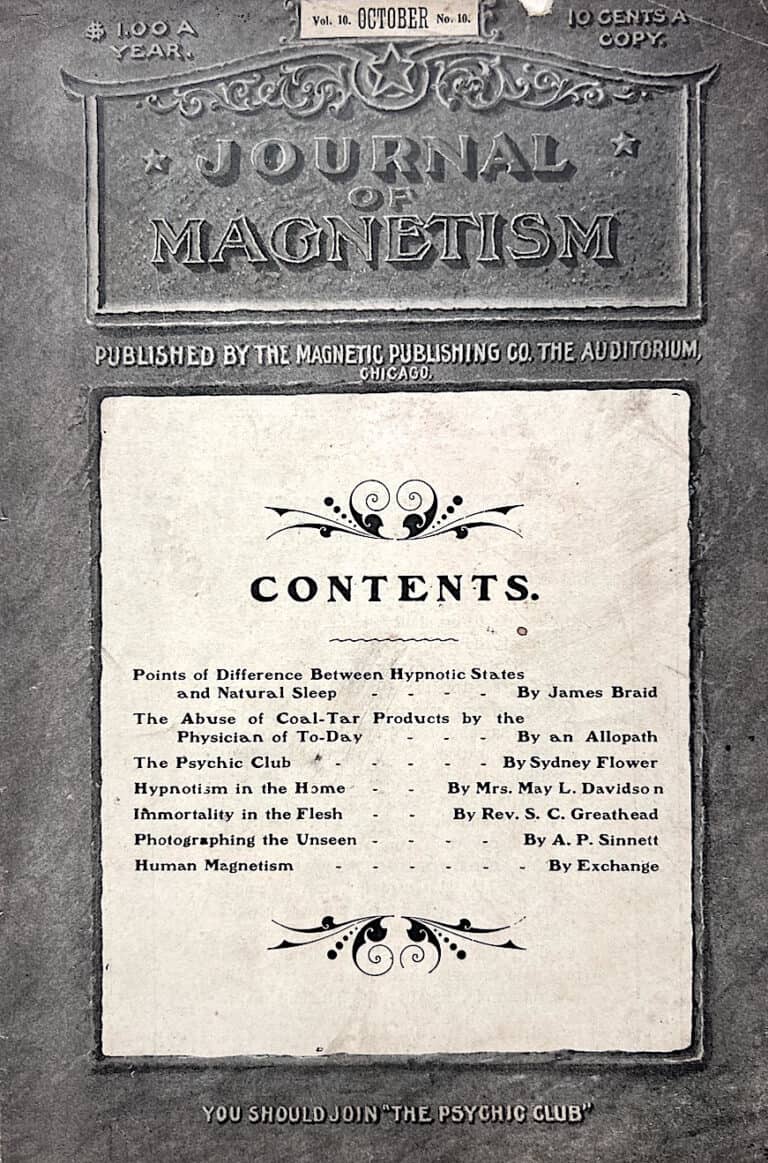
To emphasize this distinction, ads were created stating that Parkyn’s new magazine, Suggestions, was the continuation of The Hypnotic Magazine. They also made a deliberate effort to heavily feature Flower’s name with the title of his institution in all promotions, referring to it as “The Flower’s Chicago School of Suggestive Therapeutics.” The postmaster would eventually became aware of their collaboration and in June 1900, Suggestive Therapeutics was investigated by postal authorities following a complaint from a competing magazine. Although no fraud charges were filed, the journal’s second-class mailing privileges were revoked in July 1900 after investigators concluded it primarily functioned as a promotional outlet for the Chicago School of Psychology. The loss of mailing privileges led to the magazine’s closure by the end of 1900 after existing subscriptions were fulfilled. In its place, the Journal of Magnetism was started, with Lloyd Kenyon Jones serving as editor. Flower would eventually become the editor again and the journal would soon become the New Thought magazine.
Parkyn and Flower envisioned building an international network of individuals dedicated to practicing and refining foundational skills such as concentration, awareness, and suggestion, intended to form the basis for focused research in esoteric practices such as long-distance telepathy, absent healing, mediumship, and clairvoyance. The goal was to collect data from a large and diverse participant base while also generating credible material on topics being co-opted by fraudulent practitioners exploiting the growing New Thought audience. The establishment of the Psychic Research Company marked the first step toward creating a University of Psychic Science, regional Schools of Psychic Science, and even a Psychic Club to organize and support a community of committed participants.
This research was part of an initiative by Parkyn and Flower to shift their efforts away from simply promoting new schools of Suggestive Therapeutics and toward establishing a central hub for wide-scale research in the mental sciences. Parkyn had grown increasingly disillusioned with the methods employed by the Society for Psychical Research and sought a more disciplined, scientific approach to exploring the esoteric dimensions of mental science.
Flower would be the face and principal editor of the Psychic Research Company, continuing his long association with Parkyn through the publication of correspondence courses and investigations into psychic phenomena. Working with fellow graduates of the Chicago School, including Jay V. Daniels and Lloyd Kenyon Jones, the company produced instructional material on mind reading, psychical research, and related subjects that had originated at the Chicago School of Psychology.
Flower closes the Chicago School of Suggestive Therapeutics
In November 1899, Sydney Flower publicly announced that he would no longer treat patients, marking a formal end to his clinical practice and the closure of the Chicago School of Suggestive Therapeutics. In a written statement, Flower explained that his decision stemmed from a conviction that the treatment of disease required formal medical training and licensure, and that those without a medical degree were not adequately equipped to provide comprehensive care. While affirming the value of Suggestive Therapeutics for laypeople, Flower emphasized that it should not be practiced professionally by those without medical qualifications. He acknowledged the shifting and often inconsistent nature of mainstream medicine but maintained that physicians, despite their differences, had undergone rigorous training and earned the right to practice. In contrast, he argued that lay practitioners lacked both the depth of knowledge and the authority to diagnose or treat disease responsibly. His closure announcement both served as a direct challenge to the growing number of non-medically degreed practitioners and also to redirect attention toward the Psychic Research Company and the numerous mail courses it was preparing to launch.
The Psychic Research Company releases a series of correspondence courses
Personal Magnetism and Mind Reading courses from the Psychic Research Company.
In early 1900, under the new banner of the Psychic Research Company, a wide array of mail-order courses were released covering nearly every topic associated with the mental sciences of the New Thought movement. These included instruction in Hypnotism, Mesmerism, Personal Magnetism, Clairvoyance, Telepathy, Absent Healing, Mind Reading, Mediumship, Concentration, Self-Culture, Auto-Suggestion, and Zoism (a breathing technique course built off of the term ozone).
The aim was to flood the market before competing practitioners could do so, especially in fast-growing areas like Absent Healing and Telepathy, so as to be able to have a large pool for the experiments and also guide readers toward the truth behind many of these practices. Many of the courses, such as those on Mind Reading and Mediumship, were aimed at exposing the methods used by well-known performers, revealing them to be clever tricks rather than supernatural powers. They were presented as entertaining feats one could demonstrate to amuse friends, much like a magic show. The materials consistently rejected mystical explanations, insisting that these abilities were grounded in suggestion, psychology, and misdirection and not in any supernatural force. While most of the courses were published anonymously, many were authored by familiar collaborators such as Dr. Parkyn, J. V. Daniels, Lloyd Kenyon Jones, and Flower himself. Additional contributors were recruited through newspaper ads Flower placed seeking writers on psychic science topics.
The Absent Treatment course author is simply called “The Healer”
The Absent Treatment course, which was authored by “The Healer,” focused on what is also known as Distant Healing, a method in which the practitioner claimed to transmit therapeutic energy telepathically to paying clients at scheduled times each day. The Psychic Research course was publicly presented as a scientific experiment, the service offered distant treatment twice a day for one month at the unusually low cost of one dollar, compared to the five or ten dollars typically charged by others. Only those who experienced improvement were expected to pay; the rest were promised a full refund. This approach was framed as a way to gather meaningful data, not profit, and to better understand the conditions under which distant treatment produced results. The Healer was described in the advertisement as a gentleman of independent means who had no interest in publicity but wished to further the scientific understanding of the transmission of health thought.
Dr. Parkyn was the anonymous author of the Mind Reading course
While the Mind Reading course was published anonymously, it was actually authored by Dr. Herbert A. Parkyn. It featured his signature phrase, “thought tends to take form in action,” used exactly as in his original mail course and worked as a continuation for the several chapters he had included in his mail course on stage hypnotism. The book included many illustrations clearly showing Parkyn himself conducting muscle reading experiments inside his Chicago School of Psychology. It followed exactly Parkyn’s lesson structure and therapeutic goals, presenting the structure of the mind and emphasizing repetition in a manner that mirrors his writings. Releasing these works anonymously allowed Parkyn to include ideas that would not have been appropriate to address in a formal medical context.
The Mind Reading course, published by the Psychic Research Company, showing Dr. Herbert A. Parkyn’sexperiments at his Chicago School of Psychology and includes his famous quote, “Thought tends to take form inaction.”
Dr. Parkyn, Sydney B. Flower, and Stanley L. Krebs expose the Bangs sisters
The Bangs Sisters, Elizabeth and May Bangs, were spiritualist mediums from Chicago who rose to national prominence in the late nineteenth and early twentieth centuries. They became widely known for their séances in which they claimed to produce spirit communications, automatic writings, and “spirit portraits” of deceased loved ones. Their sessions attracted many devoted followers, as well as skeptics who suspected fraud. During the period from the summer of 1899 to the spring of 1900, Dr. Herbert A. Parkyn, Sydney B. Flower, and Stanley L. Krebs (a resident graduate of Parkyn’s school) worked to demonstrate that the Bangs Sisters’ performances were not genuine displays of clairvoyance or spirit communication, but rather an entertaining exhibition of highly skilled sleight-of-hand deception.
The Bangs Sisters’ slate writing performances claimed to produce automatic spirit messages inside sealed slates. During the séance, the sitter would write questions on paper, seal them in an envelope, and watch the medium bind the envelope between two slates with rubber bands or string. While the slates remained in view, the medium would announce impressions and clairvoyant names. After a period of waiting 20 to 30 minutes, taps or vibrations signaled that the spirits had written their reply. When the slates were opened, the sitter’s original letter would appear to be answered in a different handwriting, seemingly without anyone touching it.
Sydney Flower went first in the summer of 1899 to conduct a series of experiments with the Bangs Sisters, in which he brought his own slates and sealed them in multiple ways: screwed tightly together, bound with string, and covered with wax seals. He attended fifteen sittings in total, and in every case where the slates were secured so they could not be secretly opened, no spirit writing appeared. Flower noted that when the slates were left unsealed or only lightly fastened, results were frequent and impressive. While this led him to conclude that the supposed phenomena depended entirely on the medium’s ability to handle the slates unobserved, he was not able to discover exactly how the trick was accomplished.
Upon conferring with Flower, Dr. Parkyn arranged a controlled sitting of his own with the Bangs Sisters to further examine the performance and explore all the possible methods he and Flower had discussed for accomplishing the trick. He prepared four sheets of paper with invented questions, sealed them in an envelope marked so he could identify it later, and took careful note of every movement Miss Bangs made. He observed her sliding a wedge between the slates to create a slight gap. While she pretended to see clairvoyant initials in the air, she tilted the slates just enough for the letter to slide invisibly into her lap. She then placed the letter on a dark panel on the floor and pushed it under a door to her sister waiting in the next room. The accomplice opened the envelope, copied the questions, and prepared the replies. Parkyn later confirmed that when the letter was returned, it was reinserted between the slates through the same wedge gap, hidden by a tablet so the movement remained concealed.
With Dr. Parkyn having fully witnessed how the trick was accomplished, he called on his former student and frequent collaborator, Stanley L. Krebs, who was by then a leading member of the International Society for Psychical Research, to attend his own séance so the Society could formally discredit the Bangs Sisters’ claims of clairvoyance. Dr. Parkyn advised him to come equipped with a concealed mirror that he could discreetly place on his lap to watch everything happening under the table. Krebs described the entire procedure in detail, confirming the same steps Parkyn had observed. According to Krebs’s full explanation, the method worked in several stages: first, the wedge was inserted to create a gap between the slates. Then, while the sitter was distracted by conversation and the display of spirit initials, the letter was tilted out into the medium’s lap. It was then passed under the door to an accomplice, who steamed or moistened the envelope flap so it could be opened without damage. The reply was prepared, and the envelope was resealed so precisely that all identifying marks lined up perfectly. The letter was returned under the door, and finally, the medium used the wedge and a tablet to slide it back between the slates without being seen. Taps were heard on the slate, and the sitter was invited to open it, revealing what appeared to be a miraculous message. Krebs emphasized that there was nothing supernatural about the process. It depended only on careful preparation, precise handling of props, and skillful distraction. He concluded that the same trick could be performed by any trained conjurer.
After his experience, Parkyn decided to prove publicly how the effect was accomplished. On April 11, 1900, he staged a demonstration before fifteen students at his school. He recreated the Bangs Sisters’ process exactly. While his students watched, he sat at a table with slates and an envelope containing a question. His father, James Parkyn, was hidden in the back room to play the role of the accomplice. During the demonstration, Parkyn used a black linen thread with a loop in the middle rather than a wedge to remove and return the letter more smoothly. This improvement allowed him to avoid turning sideways in the chair or performing any obvious motions. The letter was passed to the adjoining room, opened, answered, and replaced in the slates in about half an hour. None of the observers detected how it was done. Parkyn noted that by simplifying the mechanism, he could perform the trick faster and with less chance of discovery.
The Psychic Club of America
The Psychic Club was established in 1901 and “organized for the purpose of enrolling a great Brotherhood of Seekers after Truth under OneBanner throughout the world.”
In March 1901, Dr. Parkyn and Sydney Flower came up with the idea of the “Psychic Club” as a way to create a private organization of practitioners and investigators who could share their results in psychic research. Shortly after, in May, a School of Psychic Science affiliated with Parkyn’s University of Psychic Science was opened in the Equitable Building, where Flower conducted teaching classes three nights a week. The Psychic Club served a practical function of offering a protected outlet for distributing the Psychic Research Company’s instructional materials, while the school provided Flower with a means to continue his work in a meaningful and financially viable way. Both were launched with Flower as president, giving him standing within the mental science community at a time when his controversy with the closure of Suggestive Therapeutics made it hard for him to serve publicly without inviting renewed scrutiny.
At the outset, the organization began simply as the Psychic Club of Chicago and maintained a reading room where local members could meet and share resources. In addition to distributing courses from the Psychic Research Company, the club offered a wide range of books and pamphlets related to mental science and psychic phenomena. However, these features were discontinued shortly after the club’s launch in response to growing demand for a purely fraternal organization focused on spiritual unity and shared mental practice, free from any appearance of being a commercial enterprise. The organization was then reorganized as the Psychic Club of America, a not-for-profit entity with no assessments, dues, or financial liabilities.
The Club quickly attracted attention and within its first several months, membership surpassed 5,000, with individuals joining from across the United States and Canada. Members were also sent a copy of the Journal of Magnetism and a set of instructions for three tricks intended to expose fraudulent mediumship. These included a method for reading and responding to questions sealed in an envelope without opening or tampering with it, techniques for producing writing on a slate, and instructions on how to create spirit photographs. The accompanying statement noted that these demonstrations were intended for amusement and educational purposes and not as part of genuine spiritualistic practice.
“We hope that these tricks will not offend those who admire Spiritualism for its beautiful philosophy. We give them away free and perhaps are advancing the truth by showing up the false. Of course, these tricks have nothing to do with the true phenomena of Spiritualism. They are simply for amusement, but they are also in some sort a protection against trickery on the part of public mediums for those who understand how they are done. This is our chief reason for giving them away.”
— Psychic Club of America
The Psychic Club’s creed: “Let all people and things receive blessings of health, happiness andsuccess.” (They would fluctuate between using “success” and “prosperity” in their creed)
“We believe in the dynamic force of individual thought and that thought sent forth from the human mind is a force working for good or evil. We believe also that every call for help or health sent forth in silent desire is heard, and attracts to itself some measure of this potential thought. We therefore ask our members to join themselves with us in sending and receiving these vast thought waves which we believe have a vibration that expresses itself materially. At the noon hour we ask that all our members, scattered all over the world, give up five minutes to silent determination to help in thought those who are less fortunate than they. This is accomplished by silently repeating the password (the password has vibratory properties of its own and is a magnet to attract to the speaker the fulfillment of desire) of the club followed by the benediction, ‘Let all people and things receive blessings of health, happiness and prosperity. I send my positive thought into the world. Let it find itself a home where it is most needed.”
— Psychic Club
This act of synchronized concentration was seen as a way to generate a continuous wave of psychic force, uniting members into what was called a battery of thought. The organization quickly began to expand through the formation of local chapters, each led by practitioners aligned with the club’s principles and its broader spiritual and therapeutic aims. The Psychic Club would soon become the foundation for a change in direction for the Journal of Magnetism, setting the stage for its rebranding as the organ of the Psychic Club under the new title New Thought.
New Thought magazine
New Thought magazine was created as the newsletter for The Psychic Club of America in 1901.
With the creation of the Psychic Club, Parkyn and Flower set in motion a strategy to reestablish a major magazine under Flower’s editorial leadership. Although the Journal of Magnetism had remained in circulation throughout 1901, it was struggling to gain momentum and had seen its subscriber base decline to around 4,000. Flower had previously been one of the most successful editors in the world of advanced thought publishing, and Parkyn was determined to restore him to the center of a thriving publication. With the Psychic Club of America structured as a private, non-profit membership organization, it became possible to develop a new magazine that would serve solely as the club’s official organ. It would not be sold on newsstands, and all advertising would be limited to content from the magazine’s staff or members of the Psychic Club. Under this arrangement, it was hoped that both the publication and Flower himself would be shielded from interference by postal authorities and could explore the psychical sciences as fully and freely as they saw fit.
As co-editor of New Thought with William Walker Atkinson, Flower became one of the movement’s most influential publishers. Although later histories often portrayed Flower, Atkinson, and Parkyn as pursuing separate careers, surviving documentation demonstrates that the three men continued working closely together.
A “Home Course of Instruction in the Mail Order Business” by Sydney Flower. Oct, 1901. LINK
Another key ambition behind the creation of the Psychic Club and its accompanying journal was to generate significant financial resources that could be directed toward large scale global experimentation in the psychic sciences. Dr. Parkyn and Flower also envisioned using the proceeds to fund legal and legislative efforts aimed at securing recognition for mental science practices and pushing back against the mainstream medical establishment, which was actively working to discredit and ban New Thought methods. To support this vision, it was decided that a large scale mail order business would be launched under Flower’s leadership and promoted through the new magazine. Through this enterprise a wide array of products would be marketed including more than fifty food remedies, various lotions and skin treatments, health cigars, and cures for ailments ranging from toothaches and dandruff to hair loss.
Home Course of Instruction in the Mail Order Business
The platform would also encourage fellow members of the Psychic Club to build their own mail order businesses. In October 1901 Flower put together a Home Course of Instruction in the Mail Order Business a guide designed to help other members replicate his methods and contribute to the growing wealth and influence of the Psychic Club community. The course was quickly put together following the exact same structure and examples found in the 1900 publication Secrets of the Mail Order Trade by Saw Sawyer. This economic initiative was further supported by the formation of the Psychic Club Success Circle, which introduced collective investment schemes with names like the “Cash Compelling Scheme” and “The Royal Ten.” These pooled ventures focused on investment in Flower’s mail order businesses and also extended into projects such as mining operations, a gold extraction company, and agricultural development in Mexico. Several of the same investment opportunities were also promoted in Parkyn’s Suggestion magazine.
New Thought magazine moves its headquarters to New York City
In late 1903 it was decided to move the headquarters of New Thought magazine to New York city. They would occupy offices at 27 East 22nd Street right around the corner from the Fowler & Wells Publishing Co. at 27 East 21st Street. With the momentum from the successful Chicago convention the time had come to establish a strong presence on the East Coast. By relocating New Thought magazine, the largest and most influential journal in the movement, into the heart of New York City, Parkyn and his collaborators would be positioned to influence the entire New Thought movement.
Millionaire enemies of New Thought in New York City
Dr. Parkyn and Sydney Flower understood that the move was not without its challenges. Over the previous three years, they had witnessed events affecting both their associates and themselves that convinced them they faced determined adversaries, particularly in New York. These powerful enemies seemed intent on stopping their shared goal of creating a new reality centered on personal self-knowledge and empowerment. Persistent rumors had circulated ever since Suggestive Therapeutics magazine was shut down in 1900, claiming that a group of extremely wealthy men in New York were working to suppress aspects of the New Thought movement they found threatening. Helen Wilmans and Sidney A. Weltmer, two of Parkyn’s associates, were also targeted by postal authorities that same year. Helen Wilmans publicly accused influential New York interests of orchestrating her arrest and indictments, describing her persecution as the result of “unjustifiable malice, backed by millions of dollars in the hands of narrow-minded old men.” There was substantial evidence supporting her claims. Despite being defended by both the Governor and a U.S. Senator from Florida, she was repeatedly prosecuted by the Federal Postal Authorities, who devoted enormous resources to pursuing multiple cases against her, even after earlier efforts had failed.
Sidney Weltmer faced similar challenges, ultimately taking his fight all the way to the Supreme Court, where he prevailed only after spending a fortune to secure a ruling in his favor. Even then, the government continued searching for ways to bring new charges in spite of the Supreme Court’s decision. These actions strongly indicated that powerful and wealthy interests were driving the prosecutions.
Sydney Flower investigated by Postal Authorities for mail fraud in New York
Within two months of moving to New York, the Sun newspaper started to publish a series of articles attacking Sydney Flower and New Thought magazine. These articles quickly escalated into what Dr. Parkyn and Flower interpreted as a coordinated campaign, likely backed by substantial money and influential interests determined to damage the credibility of New Thought magazine. The first of these pieces appeared in February 1904, alleging that Flower was operating dubious financial schemes under the guise of metaphysical teaching. The Sun characterized Flower’s investment solicitations as “get rich quick” devices and described them as preying on the public’s gullibility. They followed with a second article that suggested that he had even been involved in “horse doping” schemes. The language was inflammatory and presented as fact, even though it relied almost entirely on anonymous sources and the reporter’s own conjecture. Soon after The New York Times and The Washington Post joined in, publishing lengthy articles that amplified the same themes. The coverage presented these fraud claims as fact without showing that any investor had actually been defrauded.
An article about possible mail fraud by Sydney B. Flower and New Thought magazine in the Washington Post, 1904
Several of the articles went out of their way to draw a sharp distinction between Sydney B. Flower and Charles Brodie Patterson, repeatedly stating that Patterson and the Metaphysical League were the only true and reputable standard-bearers of New Thought. Even implying that members of the Metaphysical League merely shrugged their shoulders when asked about Flower, insisting that neither he nor his magazine spoke for them. This repeated framing implied that the purpose was not only to undermine New Thought magazine but also to fracture the movement by implying that only certain figures were legitimate. In April 1904, as the press coverage intensified, William Walker Atkinson, decided to distance himself from the turmoil and returned to Chicago where he would continue writing for New Thought.
Postal authorities stop the mail of New Thought magazine and Sydney B. Flower
In December 1904, the long series of accusations against Sydney Flower and New Thought magazine reached a decisive point when the Postmaster General issued a fraud order that barred Flower and his publication from receiving any further mail. The order instructed all post offices to stamp letters addressed to Flower as “fraudulent,” return them to senders or destroy them if they could not be delivered. Approximately 3,000 letters were being held by the New York post office when the ban took effect, with most of the letters containing cash or money orders sent by subscribers responding to Flower’s investment offers. Inspectors charged that over the preceding year, these solicitations raised as much as $75,000.
Article headline about the mail fraud case against Sydney B. Flower and New Thought magazine
Flower openly described his activities as experiments in finance, at one point writing that he was “amusing myself by experimenting with money in its earning capacity” and referring to his projects as “pecuniary yeast cakes.” He maintained that no one should be surprised by the speculative character of the ventures and that funds would be returned to any subscriber on request. Throughout this process, Flower and his counsel maintained that the Investment Fund had been closed months before and that investors had been or were being repaid in full. They also argued that speculative trading could and did legitimately generate high profits. They explained that the large returns promised in the so-called “Investment Fund” were generated through a system of “puts and calls,” a form of speculative trading then carried on in Chicago. Letters were produced from persons in Chicago attesting that such methods could commonly yield profits of 100 to 200 percent on money invested. Nevertheless, the Post Office determined that without evidence to substantiate these assertions, the promises were “probably false,” and the fraud order was ultimately issued.
Despite the serious action taken by the postal authorities and the repeated press coverage suggesting misconduct, no criminal conviction or court judgment confirming fraud was produced. The fraud order was issued as an administrative measure by postal authorities under their regulatory powers, without a trial establishing that Flower had deliberately deceived subscribers or failed to meet refund obligations.
Dr. Parkyn’s “Brother Elk,” Charles B. Lahan, buys New Thought Publishing Co.
Portrait of Charles B. Lahan, Exalted Ruler of the Elks Club, Chicago, 1903-1904
The fraud order would have effectively crippled New Thought magazine by cutting off access to the mails, which were essential for subscription renewals, fulfillment, and correspondence. By October 1904, with the New Thought headquarters already moved back to Chicago, Dr. Parkyn needed to find a way to prevent the postal authorities looming fraud order in New York from halting the magazine’s operations entirely. This became critical after the Western News Company, which handled a large portion of the distribution of the magazine’s circulation, learned that a fraud order would be issued. Western News informed the magazine that they would not continue to handle its distribution unless the Post Office confirmed that the fraud order was closed. Parkyn’s strategy was to arrange for The New Thought Publishing Company, which controlled the subscription lists and advertising contracts, to be sold and then incorporated under new ownership unconnected to Sydney B. Flower. To carry out this plan he turned to Charles B. Lahan, one of his most influential allies in the publishing world for assistance.
Charles Beecher Lahan was a prominent figure in the national publishing and newspaper industries. He had served as president of the National Typographical Union, was president of the Regan Publishing Company of Chicago, and edited the Second Class Mail Bag magazine. He was also the “Exalted Ruler” of the Benevolent and Protective Order of Elks in Chicago, where he and Dr. Parkyn had been “Brother Elks” for many years. As president of the Regan Publishing Company, he had worked with Parkyn and Flower for many years, since Regan was the printing house that produced their magazines beginning with The Hypnotic Magazine in 1896.
Under the terms of the agreement to take over The New Thought Publishing Company, Lahan committed to maintaining and completing all active subscriptions, some of which still had several years remaining, as well as fulfilling advertising contracts and paying outstanding obligations to contributors. He also incorporated The New Thought Publishing Company under Illinois law to formalize ownership and administration of the magazine. Drawing on his strong connections within the postal administration and the distribution networks, Lahan was able to have the mail fraud order lifted and secure the reinstatement of the magazine’s discounted second-class mailing privileges.
New Thought magazine continued publication with William Walker Atkinson remaining as its sole editor. Sydney B. Flower stepped away from the New Thought movement for several years and went to the West in hopes of avoiding other legal problems involving stock in the North Shore Reduction Company. He did, however, continue to collaborate with Dr. Parkyn on later ventures.
Flower moved to the Nevada mining country in early 1905 as investigations into his business affairs intensified. Through New Thought magazine, he had raised substantial sums from investors to finance mining ventures, but much of the money was subsequently lost through speculative stock trading and horse-race gambling. After working in the mining trade for a year, he was given the opportunity to start a journal on the booming industry. It was titled Goldfield Gossip, which he edited under the alias Parmeter Kent.
With the new journal’s success, Flower eventually had to come clean about his real name and history. He wrote down his whole story of leaving Chicago and coming to Nevada in an editorial, written in his wonderful style.
This led the authorities to find him and bring him back to Chicago to face charges. He ended up spending several months in prison, but always wanting to keep writing, he started another journal while in prison called The Yogi.
The Thinker magazine
Flower, Parkyn, and Atkinson reunite in The Thinker magazine. 1923
After his prison term, Flower joined the military during WWI and spent several years in service. In 1918, he became involved again in the New Thought movement, continuing to write, publish, and edit magazines and maintaining his long-standing collaboration with Parkyn. In 1920, he revived New Thought magazine, and in late 1923 relaunched it under the new title The Thinker, with Parkyn’s public return to active authorship. Parkyn contributed a year-long series on Auto-Suggestion, restating and clarifying the scientific system he had developed decades earlier. William Waker Atkinson would also return and publish a parallel year-long series titled Self-Treatment Through Thought-Force.
The Thinker continued the numbering sequence established when New Thought was revived in 1920 following its original cessation in 1910. The magazine adopted the subtitle “The World’s Leading Magazine of Constructive Thinking, Psycho-Analysis, Health, Hygiene, Happiness, and Success,” reflecting a continuation of the themes that had characterized the earlier journals published by Flower, Parkyn, and Atkinson since the 1890s. The Thinker reunited many of the contributors who had helped shape their earlier publishing ventures, including Ella Wheeler Wilcox and Charles Edmund DeLand, while newer voices expanded the magazine’s reach. These included a serialized contribution by Margaret Sanger on birth control and several articles by prominent journalist Arthur Brisbane
Later Life
In 1920 Flower married his second wife Ethel G Stahl. After Parkyn’s death in 1927, Flower returned to mainstream journalism and became a correspondent with the Waukegan News-Sun in 1928. He and his wife eventually settled in Oregon, where he died in 1943.
Sources & Citations
Newspaper."Hypnotism up to date" . Syracuse Herald-Journal. 1896-03-31. p. 3. Retrieved 2025-04-10.
Newspaper."Hypnotism up to date" . The Woman's Tribune. 1896-04-18. p. 3. Retrieved 2025-04-10.
PDF / Digital Archive.Flower , Sydney Blanshard (1896). Hypnotism up to date. The Library of Congress. Chicago, C.H. Kerr & Company.
PDF / Digital Archive.Sanger , Margaret (1922). The Birth Control Review. M. Sanger.
Research Articles
From Mental Breakdown to Atkinsonia: How Herbert A. Parkyn Turned William Walker Atkinson into a New Thought Phenomenon
This article explores how Dr. Herbert A. Parkyn's treatment, mentorship, and network transformed William Walker Atkinson from mental breakdown into the most prolific and influential writer in the New Thought movement.
The Chicago School of Psychology: The Birthplace of Suggestive Therapeutics in America
Herbert A. Parkyn’s Chicago School of Psychology was the first school in America to teach Suggestion and many of its graduates would become leading voices in New Thought, including William Walker Atkinson.
The Continuing Collaboration of Herbert A. Parkyn, Sydney Flower, and William Walker Atkinson
Historians have claimed that Sydney B. Flower and William Walker Atkinson left Herbert A. Parkyn to establish competing organizations. This article reexamines that story and presents evidence that the three men continued working together…