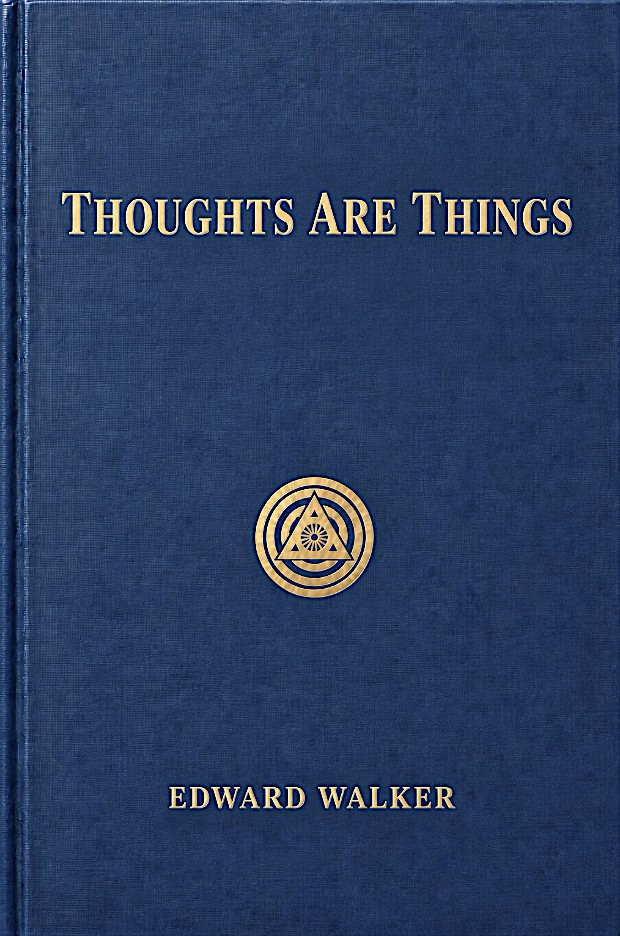
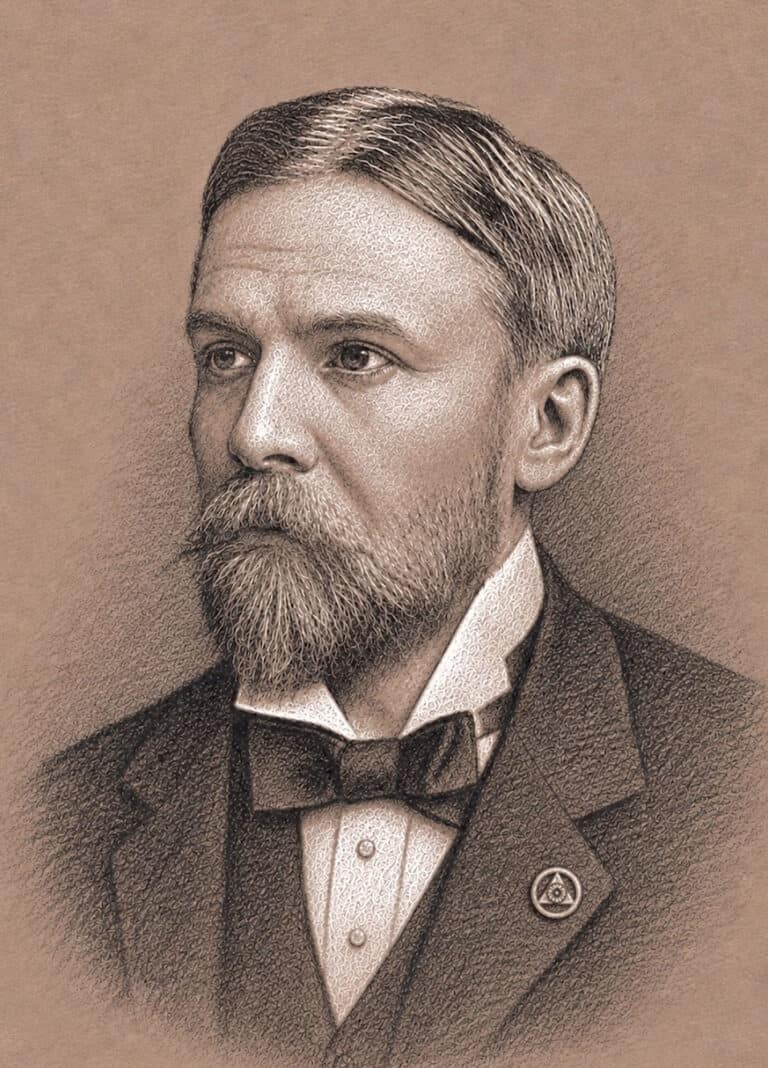
The book expands on the famous saying “Thoughts are Things,” by Prentice Mulford
The title itself draws upon the famous New Thought saying “Thoughts are Things,” by Prentice Mulford. From that starting point, the book develops a complete theory of thought as an active power. Thoughts create character and personality, radiate outward as mental currents, form atmospheres around people and places, attract corresponding people and conditions, supply patterns for future accomplishments, and can be consciously directed toward the development of abilities that remain latent within the mind. The six main divisions follow this progression through “Thoughts Are Things,” “Thought Currents,” “Thought Atmospheres,” “The Magnet of Thought,” “Creative Thought,” and “Your Latent Powers.”
The book’s central concern is the relationship between inner thought and outward life. It repeatedly returns to the idea that thoughts do something. They alter the thinker, influence other people, establish habits of mind, create an atmosphere around the individual, attract corresponding influences, and furnish the mental patterns from which future conditions are formed. The individual is presented as both a transmitter and receiver of mental influence, continually participating in a larger world of thought. The purpose of the book is to teach the reader how to understand that process and begin directing it consciously.
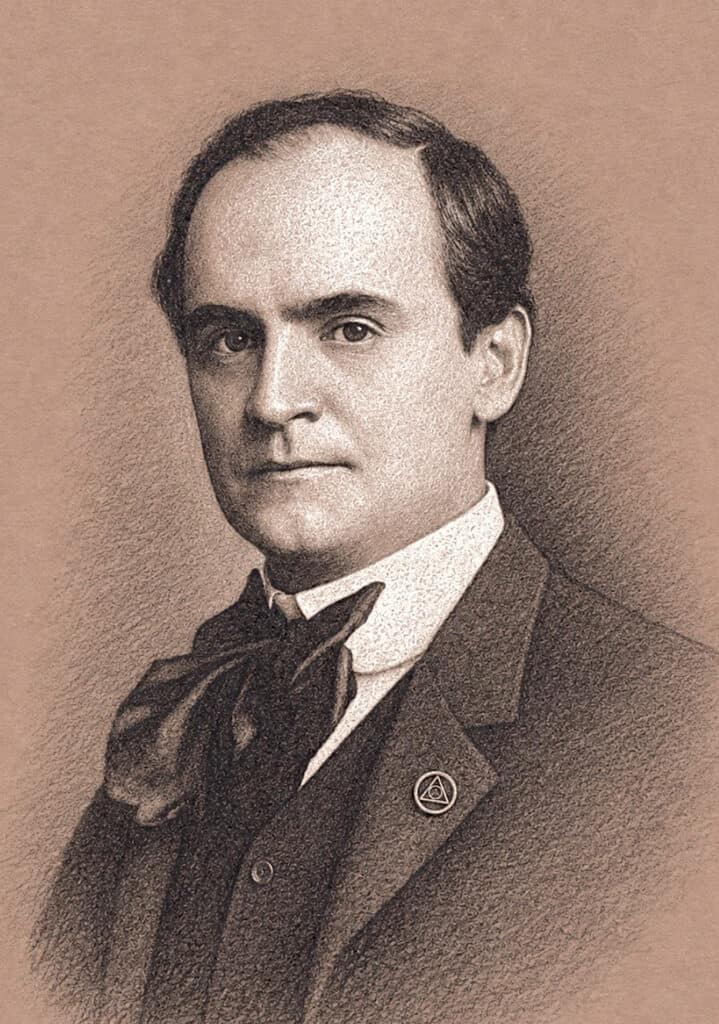
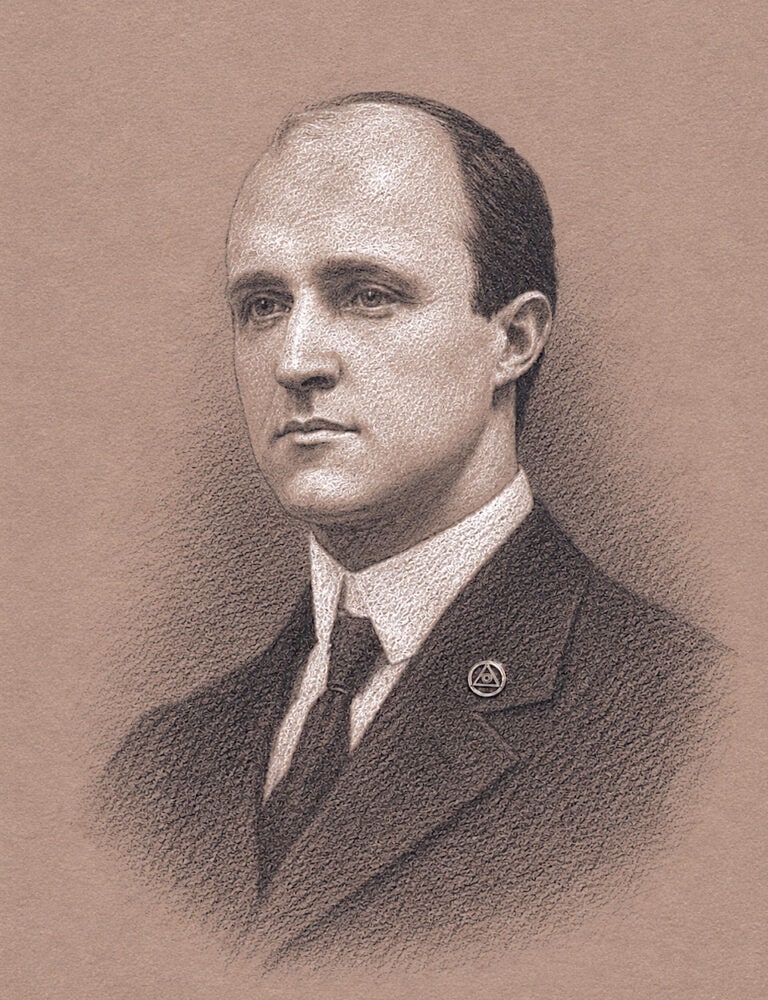
Edward Walker was a pseudonym that combined the names of EDWARD E. Beals and William WALKER Atkinson. (Atkinson would later claim the book in his Who’s Who in America profile as written anonymously)
.
Edward E. BealsWilliam Walker Atkinson portrait
What Does Thoughts Are Things Teach?
The opening chapter begins with the proposition that thought has a real existence and produces real effects. The title is developed into a much larger doctrine through four forms in which the power of thought becomes visible. Thoughts create character and personality. They tend toward the materialization of ideals. They attract corresponding people, things, knowledge, and conditions. They also radiate outward from the individual and influence other minds. These four expressions become the foundation for everything that follows.
The first is deeply personal. “We create our own character and personality by the thoughts we originate, harbor, entertain, or accept from others.” The present personality has been formed through previous thinking, while present thought is continually contributing to the person who will exist in the future. The book expresses this through the memorable statement that “We have been our own mental parents, and we will be our own mental children.” Thought is cumulative. The ideas repeatedly entertained become increasingly characteristic of the individual until they are expressed through temperament, conduct, expectation, and personality.
The second expression concerns ideals. Thoughts are described as mental things that tend toward material expression. Desires become “seed-thoughts” capable of developing, flowering, and producing results. An ideal begins within the mind before it can exist as an outward accomplishment. The book later returns to this principle in its chapter on Creative Thought and develops it into one of its most important teachings.
The third expression is attraction. The dominant thoughts of the individual form a kind of mental magnet that attracts corresponding ideas, knowledge, people, circumstances, and opportunities. The fourth expression is radiation. Thoughts are said to send forth currents that may reproduce corresponding thoughts, emotions, desires, and feelings in receptive minds. The human being is thus living within a constant interchange of thought, receiving influences from others while sending out influences of his own.
How Do Thoughts Create Character?
Character begins with repeated thinking. The book gives enormous importance to what a person permits himself to think because the mind is continually being shaped by the ideas that occupy it. Thoughts deliberately produced by the individual are part of this process, but so are thoughts “accepted from others.” This makes the individual’s mental environment important throughout the book. Conversation, companionship, surrounding attitudes, emotional conditions, and the prevailing ideas of other people can all become part of one’s own mental life when they are accepted and repeatedly entertained.
A passing thought and a settled mental condition are treated differently. Repeated thought develops continuity. A particular kind of thinking gradually becomes familiar, and that familiarity contributes to the general mental state of the person. The book later explains that these established conditions continue acting after the immediate thought has passed from conscious attention into the “subconscious regions of the mind.” Character is thus the accumulated expression of mental tendencies that have become established through repetition.
This gives the reader considerable responsibility for the direction of character. If present character has been produced through previous thinking, present thinking can be used to develop a different future character. Courage, confidence, determination, hope, ambition, and other desired qualities are to be deliberately cultivated until they cease to be occasional states and become characteristic states. The process of mental development presented later in the book depends upon this same principle.
What Are Thought Currents?
The chapter “Thought Currents” develops the outward movement of thought. Thought is presented as producing currents or waves that radiate from the individual. The book draws upon the vocabulary of energy, vibration, electricity, light, heat, and wireless communication to explain this mental transmission. It uses Professor Julian Ochorowicz’s discussion of a possible “dynamic correlate of thought” and then identifies expressions commonly used for the proposed phenomenon, including “thought-force,” “dynamic-thought,” “mind-power,” “thought-vibrations,” “thought-waves,” and “mental-currents.”
Every individual is said to be continually sending out mental currents of different degrees of power and character. When such a current reaches another mind possessing sufficient harmony with it, the current can reproduce the original thought, emotion, feeling, desire, or mental state. The strength of the current depends upon the strength of the original mental condition. A weak and passing thought produces little effect, while an intense desire, emotion, determination, or concentrated act of imagination may project much farther.
The book extends this beyond individuals. Groups of people create collective mental currents. Assemblies, communities, cities, and nations are described as possessing thought-waves produced by the combined mental activity of their members. A church, college, concert hall, business district, city, or country develops a recognizable mental character through the accumulated thinking of the people associated with it. The individual therefore lives within many overlapping fields of thought, some created by immediate companions and others by entire communities.
How Do We Receive the Thoughts of Other People?
Mental influence works through affinity. The book says people tend to receive thought currents having some degree of harmony with their own prevailing mental states. Similar mental conditions attract and strengthen one another, while opposing conditions encounter resistance. The individual’s own thinking therefore affects the kinds of outside mental influences to which he becomes most responsive.
This leads to one of the book’s recurring instructions. People should choose their mental companionship with the same care they use in choosing personal companions. The reader is told to avoid habitual association with thoughts that would be embarrassing if others knew they were being entertained. The point is larger than avoiding individual negative thoughts. By repeatedly entertaining a certain kind of thought, the individual places himself in greater harmony with similar currents and increases the likelihood that they will continue entering his mental life.
The solution is deliberate mental direction. The reader is told to establish thoughts conducive to strength, development, and well-being and thereby change the character of the mental currents with which he becomes associated. “We have the power to select our mental company.” Mental control begins by recognizing that attention and receptivity are themselves choices that can be trained.
What Is a Thought Atmosphere?
The next chapter brings the theory closer to everyday experience. Every person is said to possess a thought atmosphere produced by the general character of his thinking. Rooms, houses, offices, workshops, stores, and other places also develop atmospheres from the thoughts repeatedly expressed within them. A person entering a room may immediately sense its prevailing emotional character, just as meeting someone can produce an immediate impression before much has been said.
The book explains that thoughts arising from strong temporary states can be projected outward as currents, while the accumulated vibrations arising from the person’s habitual thinking remain nearer the individual and form the thought atmosphere or “aura.” This atmosphere contributes to what is ordinarily called personality. A confident person carries a different atmosphere from a fearful person. A hopeful person produces a different impression from someone dominated by discouragement. The inner mental condition is continually being expressed outwardly.
Places acquire the same quality. The book gives considerable attention to business establishments, observing that some offices seem filled with activity while others communicate stagnation. It describes experienced salesmen and business observers recognizing differences between prosperous and unsuccessful establishments through the atmosphere they encounter upon entering them. The combined thought of the people who occupy a place gradually establishes its prevailing mental tone.
This atmosphere can also be deliberately changed. The reader is told that a room, house, office, or store can be filled with stronger positive thought by persistently producing the desired mental condition and ceasing to contribute thoughts of discouragement and defeat. The same method applies to personal atmosphere. “Our personal thought atmospheres are just what we have made them by our mental states,” and the book says they can be altered through persistent changes in thinking.
How Does Thought Become Personal Magnetism?
The thought atmosphere provides the foundation for the book’s explanation of personal magnetism. A powerful personality affects others because the individual is continually expressing a strong prevailing mental state. Desire, confidence, enthusiasm, determination, courage, and concentrated purpose create an atmosphere that other people experience as personal force.
The magnetic person has established a sufficiently definite mental condition that it is expressed through the whole personality. The book’s treatment of magnetism therefore connects directly with its earlier teaching about character. A person cannot continuously think weakness, fear, hesitation, and defeat while expecting to radiate strength and confidence. The atmosphere follows the habitual state of mind.
The process is cumulative. Thought creates the inner condition, repeated thought strengthens it, the condition becomes part of character, character is expressed through personality, and personality affects others. The “magnetic” quality of the individual is the outward effect of the mental life that has been built within.
What Is the Magnet of Thought?
“The Magnet of Thought” expands the idea of mental attraction into one of the central laws of the book. “One of the things that thought is, is a Magnet.” The combined thoughts of the individual are said to form a thought magnet drawing toward the person “the persons, things, ideas, knowledge, and environment” that harmonize with his prevailing mental state and assist its expression in action.
The word “composite” is important. The magnet is formed by the combined character of the person’s thinking. A momentary wish has little significance when the rest of the mental life is moving in another direction. The effective force comes from the dominant pattern. Thoughts, desires, expectations, imagination, and will must increasingly point toward the same object.
Attraction also works through ideas and knowledge. Once a person becomes intensely interested in a subject, information connected with it begins appearing everywhere. Books that once would have been ignored become significant. Conversations reveal useful information. People with related interests become noticeable. New possibilities are recognized because the mind has become organized around a definite purpose. The book includes all of these experiences within the operation of the thought magnet.
The same law is applied to people and circumstances. Mental conditions create affinities. The individual becomes drawn toward people who correspond with his prevailing state and repelled from those who strongly oppose it. Environments are affected in the same way. The direction of the person’s thought gradually alters the relationships through which life is experienced.
How Does the Law of Attraction Work in Thoughts Are Things?
The Law of Attraction is presented as a process by which similar things seek corresponding conditions. The book compares mental attraction with forms of affinity visible throughout nature. Its thought magnet attracts what is in harmony with the person’s composite mental state and assists the movement of thought toward expression.
This law operates alongside action. The book repeatedly connects static thought with dynamic expression. The thought magnet draws toward the individual people, information, materials, and circumstances “conducive to the expression of our static thought into dynamic action.” Mental attraction supplies connections and materials that can become part of the realization of the dominant idea.
The person must first establish a sufficiently definite direction. Indefinite wishing produces an indefinite result because the mental forces are scattered. A clear desire organizes them. The individual begins seeing, seeking, attracting, and using things that correspond with the desired end. The stronger and more persistent the central thought becomes, the more completely the person’s mental activity becomes organized around it.
What Is Creative Thought?
The chapter “Creative Thought” begins where the thought magnet leaves off. Attraction gathers things that harmonize with the thought and assist its outward expression. Creative thought gives those materials a pattern. The book describes a universal tendency toward expression and manifestation and says the Law of Attraction draws the materials required for that expression.
The key to creative thought is the mental image. Every human creation begins as an idea before it exists in material form. Buildings, inventions, businesses, works of art, machines, institutions, and personal accomplishments must first be conceived mentally. The idea provides the design around which action and materials are organized.
The book makes this principle personal by telling the reader that “ideas, mental images, ideals, hopes, and aspirations” are the “moulds, patterns, or dies” of future material conditions. “We are making patterns today that will be materialized tomorrow.” Present thought is continually preparing the pattern for future expression.
This gives imagination a central role. Imagination allows the individual to form a mental picture of something that does not yet exist. The clearer and more definite the picture becomes, the more effectively thought, desire, attention, and action can be organized around it. The mental image becomes the pattern toward which the creative forces are directed.
Why Are Desire and Imagination So Important?
The book makes an important distinction between definite desire and vague wishing. Many ideals fail to become real because people “do not know how to desire” and do not clearly know what they want. They remain at the level of wishing, wanting, or fretting without establishing a definite mental pattern.
Desire gives the ideal direction and force. Imagination supplies its form. A person who possesses a strong desire but cannot picture the desired condition has force without a sufficiently clear pattern. A person who can imagine possibilities but possesses little desire may create pictures without sustaining the effort necessary to develop them. The book brings the two faculties together.
The reader is encouraged to decide what is wanted, construct a clear mental representation of it, and repeatedly return attention to that image. Through repetition the image becomes increasingly established within the mind. It begins influencing perception, judgment, behavior, attraction, and the use of opportunities. Creative thought thus depends upon sustained mental organization around a definite ideal.
What Are the Latent Powers of the Mind?
“Your Latent Powers” turns the creative principle inward. The same power used to create external results can be directed toward the development of the mind itself. The average person is described as merely “scratching the surface” of available thought-power while deeper mental resources remain undeveloped.
The mind becomes both creator and material. Thought can be used to strengthen attention, memory, imagination, will, reasoning, observation, confidence, and other faculties. The person is compared to someone possessing a largely unexplored territory within himself. The work of mental development consists of entering that territory and bringing unused abilities into conscious activity.
The book describes the mind as “a great unexplored forest” whose resources can be discovered and developed. Thought-power can be used for “the addition to, alteration, development and unfoldment” of the individual’s own mental machinery. The creative power that forms an ideal of an external achievement can therefore form an ideal of the person one intends to become.
This completes the circle established at the beginning of the book. Thoughts create character, and character determines much of the individual’s experience. Creative thought can then be turned deliberately toward character itself. The individual becomes capable of participating consciously in the process that had previously been occurring automatically.
How Does “Thoughts Are Things” Relate to Herbert A. Parkyn’s Teaching?
Herbert A. Parkyn was influenced by Prentice Mulford and referenced Mulford’s teaching of “Thoughts are Things” in the opening mission statement of his Chicago school of Psychology in 1896. Like Mulford, Parkyn taught that thoughts become established mental conditions and then express themselves through character, habit, personality, influence, and action. Parkyn had been teaching this process for years through suggestion and auto-suggestion. His 1898 Special Mail Course in Hypnotism and Suggestive Therapeutics explained that repeated thoughts impressed upon the mind tend toward expression and that repetition can establish new habitual responses. He summarized the process with “Thought tends to take form in action” and instructed students to keep desired thoughts stimulated through repetition until the desired action followed.
Herbert A. Parkyn
Thoughts Are Things begins from the same point in its treatment of character. “We create our own character and personality by the thoughts we originate, harbor, entertain, or accept from others.” Past thinking has created the present person, and present thinking is creating the future person. Parkyn’s teaching explains this through suggestion, repetition, involuntary mental action, and habit. Thoughts Are Things expresses it through habitual thought, subconscious continuation, thought atmosphere, and personality.
The importance of ideas “accepted from others” is found in Parkyn’s definition of suggestion. Parkyn taught that “anything that suggests is a suggestion.” Speech, surroundings, behavior, expectations, repeated statements, and other impressions can plant ideas in the mind. Thoughts Are Things likewise presents the individual as continually receiving mental influence from other people and says the character of one’s own thinking helps determine which outside currents gain entrance and become strengthened.
Repetition provides another direct connection. In Parkyn’s system, voluntary repetition can establish a thought until it becomes an involuntary habit. The same process applies to behavior. Actions initially requiring conscious attention become increasingly automatic through repetition, while new habits can be deliberately established to replace undesirable ones. Thoughts Are Things describes habitual mental states continuing their activity after the immediate thought has passed “into the subconscious regions of the mind.” These accumulated states then form the thought atmosphere surrounding the individual and contribute to personality.
Parkyn’s positive auto-suggestion also closely resembles the method used in Thoughts Are Things for changing character. Parkyn taught the individual to concentrate upon the desired condition and repeatedly affirm what was to be established. “I Can and I Will” expresses that method in its simplest form. Thoughts Are Things instructs the reader to select the desired mental condition, repeatedly cultivate it, and allow it to become part of the prevailing character and personality. The book applies the same process to courage, confidence, purpose, desire, imagination, and the development of latent abilities.
Personal magnetism creates another meeting point. Thoughts Are Things makes the individual’s prevailing mental state the source of the atmosphere experienced by other people. Strong thought creates strong personality. Confidence, desire, purpose, and determination radiate through the person and affect those who come into contact with him. Parkyn had already made personal magnetism and mental influence part of his system of suggestion. His teaching treated influence as something rooted in mental condition, attention, expectation, suggestion, and the responses produced between people.
There is even a reciprocal movement between thought and action in Parkyn that helps explain the social influence described throughout Thoughts Are Things. Parkyn wrote, “Thoughts take form in action. The converse of this is true also, for our actions take form in the thoughts of others.” An idea affects behavior, and the resulting behavior becomes an impression upon another mind. Thoughts Are Things expands this interpersonal process through its chapters on thought currents and atmospheres, where people are continually influencing one another through their prevailing mental states.
The final chapter on latent powers is also found in Parkyn’s system. Both teachings reject the idea that character and mental ability must remain fixed. Repeated mental exercise can strengthen desired faculties. The person can deliberately cultivate confidence, attention, will, imagination, memory, and self-control. Thoughts Are Things describes the mind as unexplored territory whose unused resources can be developed through directed thought. Parkyn’s auto-suggestion provides a method for accomplishing the same kind of deliberate self-education through repeated impressions and the formation of new habits.
The relationship extends across the whole structure of Thoughts Are Things. The book begins with thought creating character. It then shows thoughts moving between people, forming personal atmospheres, producing attraction, becoming patterns for outward expression, and finally being directed back upon the mind to develop new powers. Parkyn’s earlier system supplies a closely related psychological sequence through suggestion, repetition, involuntary response, habit, character, personal influence, auto-suggestion, and deliberate mental development. “Thought takes form in action” is one clear point of contact within that relationship, while the much larger connection lies in the complete process by which thought becomes established, becomes habitual, changes the individual, and finds expression in life.
Why Does Thoughts Are Things Belong in the Yogi Publication Society Catalog?
The later publication of Thoughts Are Things by the Yogi Publication Society fits directly with the subjects that run through the YPS catalog. Thought-power, personal magnetism, mental influence, attraction, subconscious mental activity, will, imagination, character building, and the development of latent faculties appear repeatedly throughout books issued under the different authorial identities associated with YPS. The vocabulary changes from one series to another, yet the central question remains remarkably consistent. How can the individual understand the hidden operations of mind and deliberately direct them toward health, happiness, success, self-development, and greater personal power?
Thoughts Are Things answers that question by beginning with the smallest unit in the system, the individual thought, and following it outward. Thought becomes character. Character becomes personality. Personality creates atmosphere and influence. Thought moves outward as a current and enters relationships with the thoughts of others. Dominant thought becomes magnetic and attracts corresponding ideas, people, knowledge, and circumstances. Imagination supplies patterns for future creation. Desire energizes those patterns. The same creative process can then be turned inward to develop the mind itself.
Related Research Articles
From Mental Breakdown to Atkinsonia: How Herbert A. Parkyn Turned William Walker Atkinson into a New Thought Phenomenon
This article explores how Dr. Herbert A. Parkyn's treatment, mentorship, and network transformed William Walker Atkinson from mental breakdown into the most prolific and influential writer in the New Thought movement.
The Law of Suggestion: From Hypnotism to Auto-Suggestion, New Thought, and Modern Self-Help
This in-depth article traces the remarkable history of the Law of Suggestion, from mesmerism and hypnotism through Parkyn’s development of waking Suggestion and Auto-Suggestion, and its later influence on New Thought, advertising, ancient wisdom…
What Did William Walker Atkinson’s “Who’s Who in America” Claims Really Mean?
This article examines Atkinson’s changing Who’s Who claims and shows why they cannot simply be read as proof of sole authorship. It traces when he claimed Yogi Ramacharaka, The Kybalion, the Arcane Series and…