Copyright © 2026 D. Parkyn Jackson. Published by the Yogi Publication Society History Project. All rights reserved.
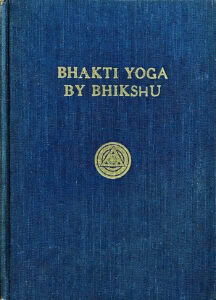
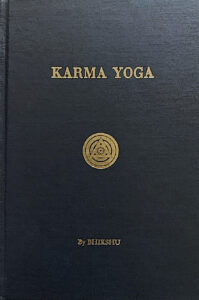
The identity of the author who wrote under the name Bhikshu remains an intriguing, unresolved question in the later history of the Yogi Publication Society. The pseudonym appeared on two YPS titles, Karma Yoga (1928) and Bhakti Yoga (1930), both published after the main period of William Walker Atkinson‘s YPS output. While various theories have been proposed over the years, the evidence points towards two possible figures: Swami Pareswara Bikshu and Charles Henry Allan Bennett, also known as Bhikkhu Ananda Metteyya.
The Case for Swami Pareswara Bikshu
Who Was the Author Behind the Name “Bhikshu”? The Case of Swami Pareswara Bikshu vs. Charles Henry Allan Bennett
Several modern researchers have identified the author of Karma Yoga and Bhakti Yoga as Swami Pareswara Bikshu, a teacher associated with the Holy Order of Krishna, the inner esoteric branch of the Latent Light Culture in Tirunelveli, South India. On the surface, this appears to be a reasonable conclusion. The books themselves direct readers to the Latent Light Culture, which had served as the official Indian representative of the Yogi Publication Society since its founding in 1905. The publisher’s note in Karma Yoga explicitly states that much of the teaching had previously been given privately and directs readers to the Latent Light Culture for further instruction, indicating that the organization functioned as more than a simple distributor. It acted as a teaching body, a publisher, and perhaps a custodian of material that had circulated within esoteric networks before reaching print.
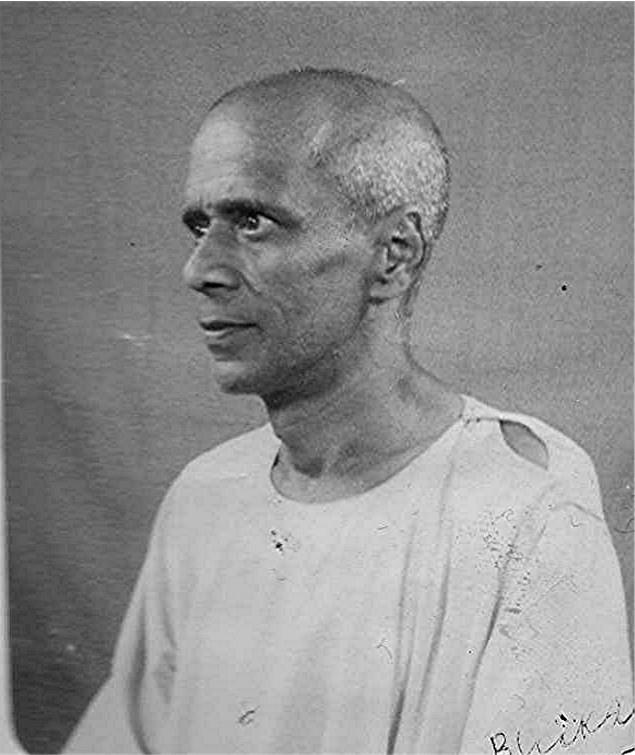
The difficulty is that the exact identity of Swami Pareswara Bikshu remains largely unknown. Beyond a few references linking him to the Holy Order of Krishna and identifying him as a teacher of David Curwen, the British occultist and member of Aleister Crowley’s O.T.O., very little biographical information has survived. In fact, much of what is commonly repeated about Pareswara Bikshu ultimately traces back to Curwen himself. After Curwen’s death, his pupil, the famed occultist Kenneth Grant published information he had received from him that identified Swami Pareswara Bikshu as Curwen’s guru. Beyond this chain of testimony, however, independent evidence for a historical figure by that name is surprisingly scarce.
This creates a significant problem. While Keneth Grant’s claim that a Swami Pareswara Bikshu was David Curwen’s guru it does not say that he was the author of the YPS titles. So the actual argument for him rests almost entirely upon the fact that the books emerged from the same organizational network in which Curwen claimed he was a member. While this certainly makes his involvement plausible, it does not necessarily establish authorship. He may have been the author, but he may just as easily have been an editor, compiler, teacher, or representative of the Latent Light Culture through whom the material was transmitted.
The Latent Light Culture
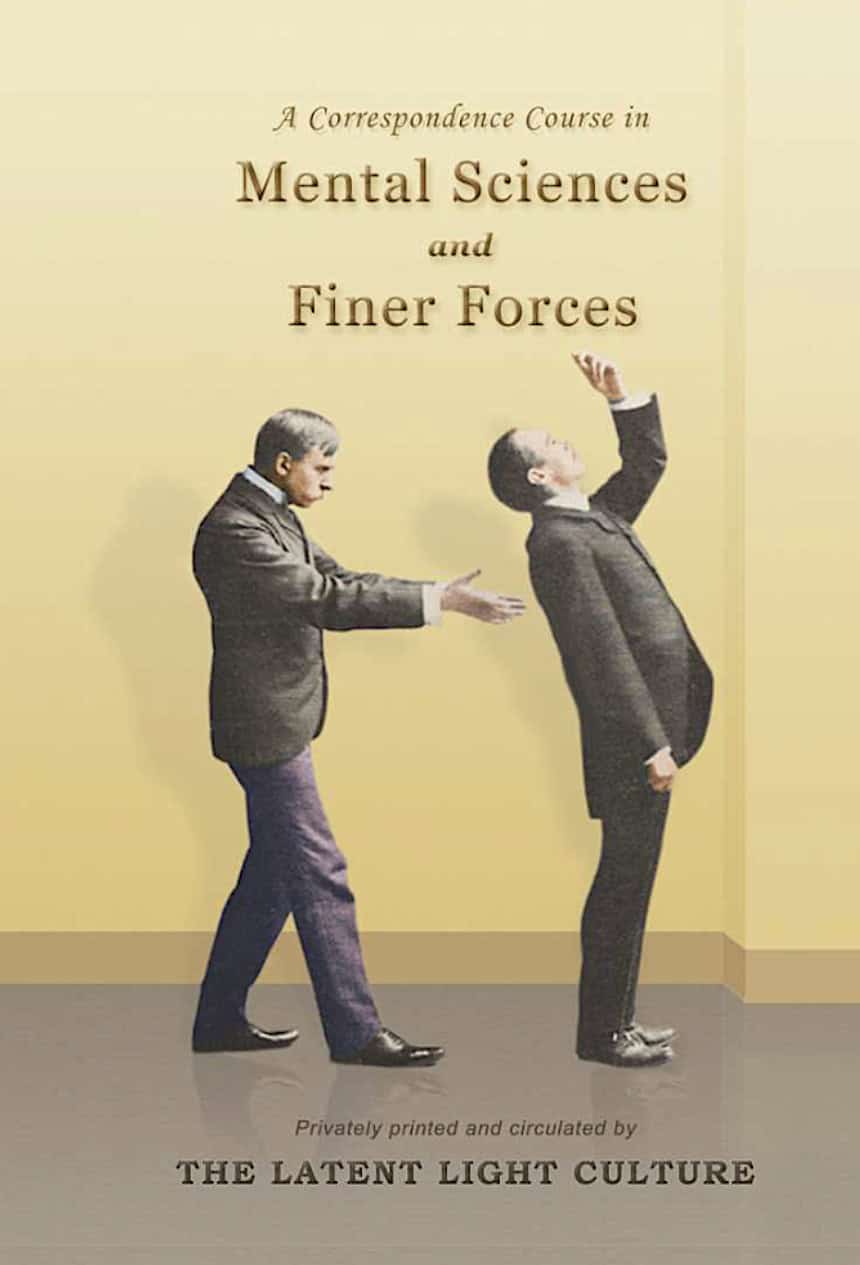
Understanding the Latent Light Culture itself is therefore essential. Founded in 1905 by Dr. T. R. Sanjivi, the organization spent its first two decades promoting subjects such as hypnotism, personal magnetism, suggestive therapeutics, psychic healing, telepathy, will culture, and character reading. These subjects formed the basis of its flagship correspondence course, Mental Sciences and Finer Forces and its monthly journal The Kalpaka. In the 1920s, the organization began introducing more advanced Yogic teachings through the Holy Order of Krishna and its graded instructional system. Only two years later, Karma Yoga appeared, followed by Bhakti Yoga in 1930. The timing strongly suggests that the Bhikshu books emerged directly from this evolving educational network.
The relationship between the Latent Light Culture and the YPS was also far deeper than a simple agency arrangement. In 1922, YPS published The Doctrine and Practice of Yoga by Swami A. P. Mukerji, the associate editor of The Kalpaka and a member of the Holy Order of Krishna. Mukerji’s teachings focused heavily on the development of Will-Force and, much like the earlier YPS books, attempted to interpret traditional Yogic teachings through the lens of modern psychology, mental science, and Western esotericism. Readers familiar with Yogi Ramacharaka‘s works immediately recognized numerous similarities in both language and subject matter.

Some later writers have suggested that Mukerji’s work and other titles put out by the Latent Light Culture borrowed heavily from earlier Ramacharaka material and have accused them of being plagiarists. Yet such accusations overlook the unusually close relationship that already existed between the two organizations. By the time Mukerji’s book appeared, the Latent Light Culture had been the official Indian representative of the YPS for nearly two decades. Publications and teaching systems were moving between the two organizations on a regular basis. Under these circumstances, it is often difficult to determine where one organization’s material ended and the other’s began. Rather than evidence of unauthorized borrowing, the similarities may instead reflect a coordinated effort by closely connected groups working within a shared intellectual and publishing network.
By the 1920s, additional links had emerged between the South Indian and Chicago networks. Among the most intriguing figures was Premel El Adaros, president of the Society for Transcendent Science in Chicago, who claimed to be the sole authorized representative of both the Holy Order of Krishna and the Latent Light Culture in America. Even more interesting, the Society for Transcendent Science maintained offices in the same Masonic Building that housed the Yogi Publication Society. The full extent of this relationship remains largely unexplored and deserves a detailed study of its own, a subject that will be examined in a future article.
Even today, traces of these connections remain visible. The Latent Light Culture’s modern website continues to advertise Mental Sciences and Finer Forces, the same foundational course first introduced in 1905. The curriculum includes subjects such as Hypnotism, Personal Magnetism, Character Reading, Suggestive Therapeutics, Psychic Healing, and related topics. More strikingly, the course uses a cover image taken directly from Herbert A. Parkyn‘s A Mail Course in Hypnotism and Suggestive Therapeutics, one of the foundational texts of Parkyn’s educational system. The use of a Parkyn illustration for a course that has been promoted for more than a century provides a remarkable visual reminder of the close relationship between the Latent Light Culture and the network of ideas associated with Parkyn and the Yogi Publication Society.

The Case for Charles Henry Allan Bennett
Among the various candidates proposed for the authorship of Karma Yoga (1928) and Bhakti Yoga (1930), few fit the evidence as closely as Charles Henry Allan Bennett (1872–1923), better known in later life as Bhikkhu Ananda Metteyya. While definitive proof remains elusive, the cumulative case for Bennett is remarkably strong and rests upon a combination of biographical, textual, historical, and publishing evidence that no other known candidate currently matches.
When the books themselves are examined, a distinctive picture begins to emerge. The author of Karma Yoga demonstrates a level of familiarity with Buddhism that goes far beyond the casual references found in most Western occult or New Thought literature of the period. The Dhammapada is quoted alongside the Bhagavad Gita. Hinduism, Buddhism, and Jainism are treated as parallel expressions of universal truth rather than competing religious systems. Buddhist concepts are explained accurately and sympathetically, not as exotic additions to a Hindu framework but as teachings the author clearly understands from within. The book moves effortlessly between Eastern philosophy, Western psychology, comparative religion, and occult thought. It reads less like the work of a conventional Hindu teacher and more like the work of someone who had personally inhabited multiple spiritual worlds.
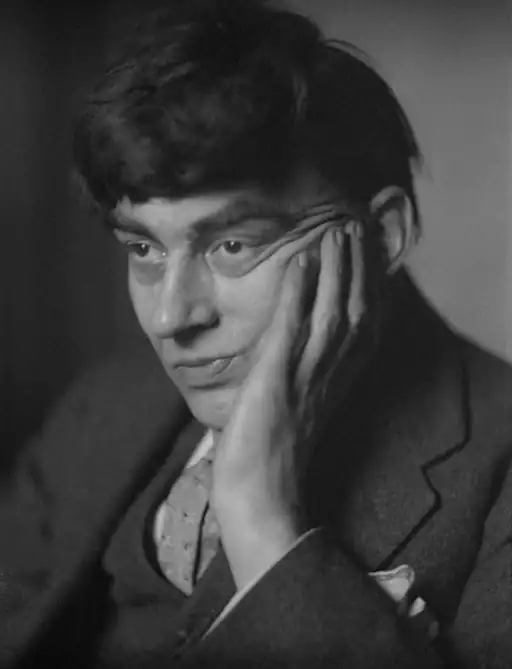
Bennett was a member of the Hermetic Order of the Golden Dawn and an influential teacher of Aleister Crowley
Few individuals of the period fit that description better than Bennett. Before becoming a Buddhist monk, Bennett was one of the most respected members of the Hermetic Order of the Golden Dawn. More importantly, he was the single greatest influence on the early spiritual development of Aleister Crowley. Long before Crowley became the most famous and controversial occultist of the twentieth century, Bennett introduced him to ceremonial magic, the Qabalah, Yoga, meditation, Buddhism, and Eastern philosophy. Crowley later acknowledged that Bennett had opened the door to many of the ideas that would shape his own spiritual career.
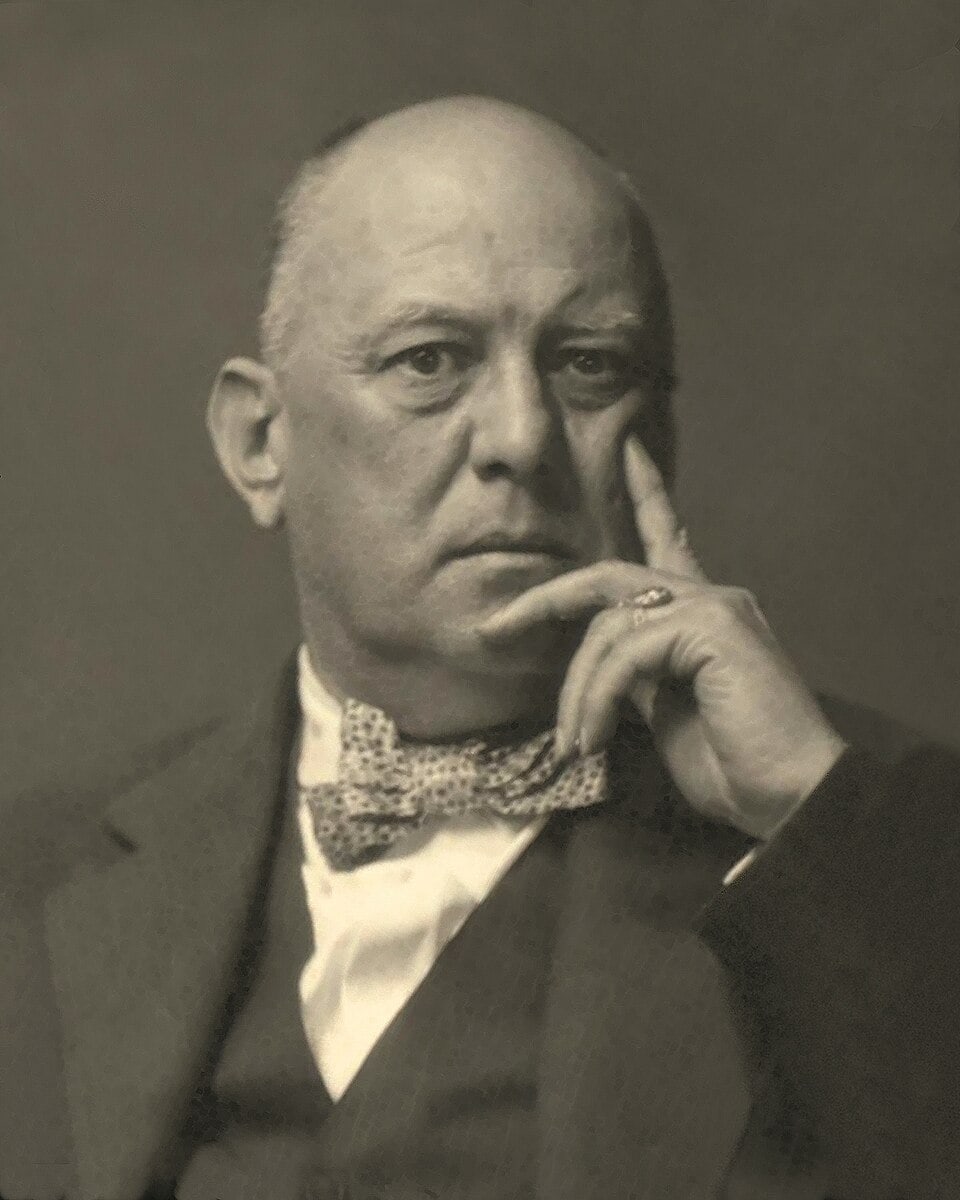
Bennett ultimately followed a very different path. Disillusioned with ceremonial magic, he turned increasingly toward Buddhism. In 1902 he became the first Englishman to receive full ordination as a Theravāda Buddhist monk, taking the name Bhikkhu Ananda Metteyya. He spent years studying and teaching Buddhism and became one of the earliest Buddhist missionaries to England. By the time of his death in 1923, he occupied a unique position within the English-speaking world. No one else combined advanced Golden Dawn training, intimate connections to Crowley, extensive knowledge of Yoga, and full Buddhist monastic ordination in quite the same way.
“Do what thou wilt shall be the whole of the Law.”
Throughout Karma Yoga, the author repeatedly employs the phrase: “Do what thou wilt shall be the whole of the Law.” This statement is not mentioned casually. It appears multiple times and is treated as a foundational principle of spiritual development. At one point it is described as the “only ordinance” through which the student learns to unite thought, will, and action. Rather than functioning as an isolated quotation, it becomes one of the organizing principles of the book’s philosophy.
This is extraordinary because the statement is universally associated with Aleister Crowley and Thelema. It does not arise naturally from traditional discussions of Karma Yoga, nor does it appear as a standard teaching in Hindu literature. Yet here it appears repeatedly in a Yogic text written under the name of a Buddhist monk. No individual was more closely connected to Crowley’s formative years than Bennett. Crowley himself credited Bennett with introducing him to Yoga, meditation, Buddhism, and much of the Eastern philosophy that later shaped Thelema. The repeated appearance of Crowley’s most famous maxim in a Yogic text attributed to Bhikshu does not prove Bennett’s authorship, but it is precisely the sort of connection one would expect from someone who occupied Bennett’s unique position at the intersection of Buddhism, Yoga, and Western occultism.
The title Bhikshu means an ordained male in Buddhist monasticism
The significance of this background becomes even more apparent when one considers the pseudonym itself. The word Bhikshu identifies the author as a “Buddhist monk.” While the term can have other meanings within Indian religious traditions, it is most widely known as a term for a Buddhist monk, and early twentieth-century readers would almost certainly have associated it with Buddhist monastic life. Bennett was not merely interested in Buddhism. He was literally a Bhikkhu. Few individuals connected with Western esotericism could have legitimately claimed such a title.

The YPS publishing environment surrounding the Bhikshu books
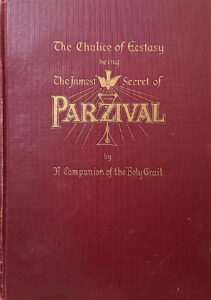
By the 1920s, the Yogi Publication Society was publishing works that increasingly reflected the same occult and esoteric world in which Bennett had operated. In 1923, the Society published two books by Charles Stansfeld Jones, Crystal Vision Through Crystal Gazing and The Chalice of Ecstasy. Jones, better known within occult circles as Frater Achad, was one of Crowley’s closest associates and a prominent member of the Thelemic movement. Two years later, in 1925, the Society published Qabalism by Dr. H. B. Pullen-Burry, another figure connected to Crowley and a member of the Order of the Golden Dawn.
During the period from 1923 to 1930, the Yogi Publication Society published only authors from the same interconnected world of Golden Dawn initiates, Thelemites, and occultists associated with Aleister Crowley. Bennett’s presence within that publishing environment would have been entirely consistent with the direction the catalog was taking during the period.
Bennett died in 1923, while Karma Yoga appeared in 1928, and Bhakti Yoga followed in 1930.
While Bennett’s death in 1923 would seem to pose an obstacle to his authorship, some of his other writings were first published after his death. The Religion of Burma and Other Papers appeared in 1929, demonstrating that manuscripts, lectures, and unpublished material remained available for later publication. The structure of Karma Yoga, with its eleven lessons, is actually more in line with a correspondence course that may have circulated privately before being assembled into printed form. The possibility that earlier manuscripts or lesson courses survived Bennett’s death is therefore entirely plausible.
This possibility becomes even more significant when one considers Bennett’s role as a teacher and publisher. He was not merely a writer of books but one of the most important interpreters of Buddhism and Eastern philosophy for Western audiences during the early twentieth century. He founded and edited both Buddhism: An Illustrated Quarterly Review and The Buddhist Review, published numerous articles, and lectured extensively throughout his career. Much of his work was originally delivered in the form of lectures and instructional teachings rather than books. Significantly, The Religion of Burma and Other Papers, published in 1929, was itself a posthumous collection assembled from lectures, essays, and previously unpublished material. The survival and later publication of such works demonstrates that Bennett’s teachings continued to circulate after his death and could easily have existed in forms other than formally published books.
Bennett Spent Considerable Time in Ceylon, which is right next to Tirunelveli
Geography also presents an intriguing possibility. Bennett spent considerable time in Ceylon, modern Sri Lanka, where he established many of his Buddhist activities and missionary efforts. Tirunelveli, the home of the Latent Light Culture and Holy Order of Krishna, lies directly across the Palk Strait on the southern tip of India. The two regions were closely connected by travel, trade, and religious exchange during Bennett’s lifetime. Given Bennett’s activities throughout South Asia, it would be surprising if he had no contact with the religious and intellectual circles of southern India. While no direct evidence has yet surfaced linking him to the Latent Light Culture, the geographical proximity and overlapping interests make such contact highly likely.
The publisher’s note to Karma Yoga states that much of the instruction had already been given privately before publication, suggesting that the material existed in some form prior to its appearance as a book. If the lessons originated as a course, lecture series, or teaching manuscript rather than a conventional book manuscript, there would have been ample opportunity for them to circulate among students, organizations, and affiliated publishers before eventually being gathered into their final form.
Such a scenario would help explain how a body of teachings associated with Bennett could have survived his death and appeared several years later under a different attribution. It would also account for the unusual combination of Buddhist thought, Yogic philosophy, Western psychology, comparative religion, and Crowley-related influences found throughout the text. Rather than being a book written from scratch in 1928, Karma Yoga may represent the publication of instructional material that had already been circulating within Buddhist, Yogic, and esoteric networks for years. This would not be unprecedented in Bennett’s case. Much of his surviving literary legacy originated in lectures, teachings, and articles that were later gathered and published, sometimes years after they were first delivered.
Conclusion
The true identity of the author behind Karma Yoga and Bhakti Yoga remains uncertain, and the evidence does not allow for a definitive conclusion. The books clearly emerged from the network of the Latent Light Culture and the Holy Order of Krishna, making Swami Pareswara Bikshu an understandable candidate. Yet the historical record surrounding him is surprisingly limited, leaving many questions unanswered.
Charles Henry Allan Bennett, on the other hand, presents a remarkably strong fit for the ideas, influences, and voice found within the texts. His unique combination of Buddhist monastic training, deep knowledge of Yoga, extensive experience teaching Eastern philosophy to Western audiences, and close connection to Aleister Crowley and the broader occult revival of the period aligns closely with the contents of the books. The repeated appearance of Crowleyan concepts, the sophisticated treatment of Buddhism, and the lesson-based structure of the material all point in directions that are difficult to ignore.
While no single piece of evidence proves Bennett’s authorship, the cumulative case is compelling. At the very least, the possibility deserves serious consideration. Whether Bennett was the author, the source of earlier instructional material, or simply an important influence whose teachings found their way into later publications, his connection to the Bhikshu books appears far stronger than has generally been recognized. Until new evidence emerges, the question remains open, but Bennett stands as one of the most plausible candidates yet proposed for the mysterious Bhikshu.
Sources & Citations
- Occultism in a Global Perspective by Bogdan Henrik , Gordan Djurdjevic Page 187
- East meets West : New Thought, Thelema, and The Holy Order of Krishna
- The Kalpaka Journal
- Kenneth Grant (occultist)
- On Kenneth Grant’s Typhonian Tantra - III by Phil Hine
- The Man Who Brought Buddhism to Great Britain : Allan Bennett By Victor M. Parachin
- Allan Bennett , Theravada Monk and Pioneer Publisher
- The Latent Light Culture Website
- Advanced Courses in Mental Sciences And Finer Forces by T .r.sanjivi
- The Occult in Modern Yoga : The Latent Light Culture and Yogic Breath Cultivation (Prāṇāyāma), 1905-1935
- Premel El Adoras
- Alan Bennett , Hermeticism
- The Eloquent Blood : The Goddess Babalon and the Construction of Femininities in Western Esotericism by Henrik Bogdan, University of Gothenburg
- True Identity of Swami Pareswara Bikshu To Be Revealed