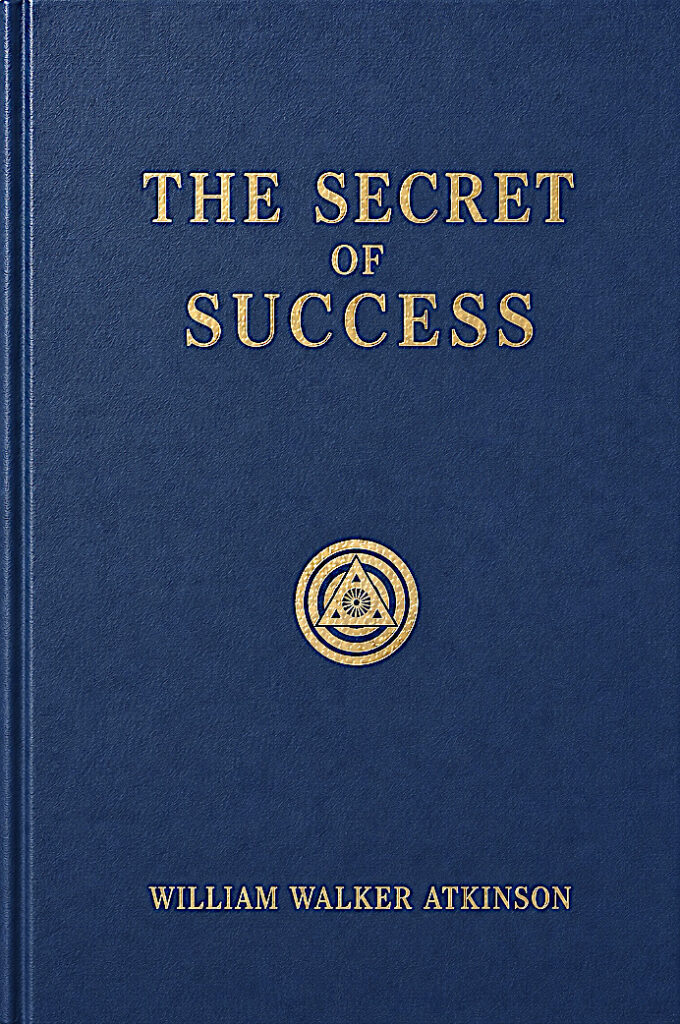
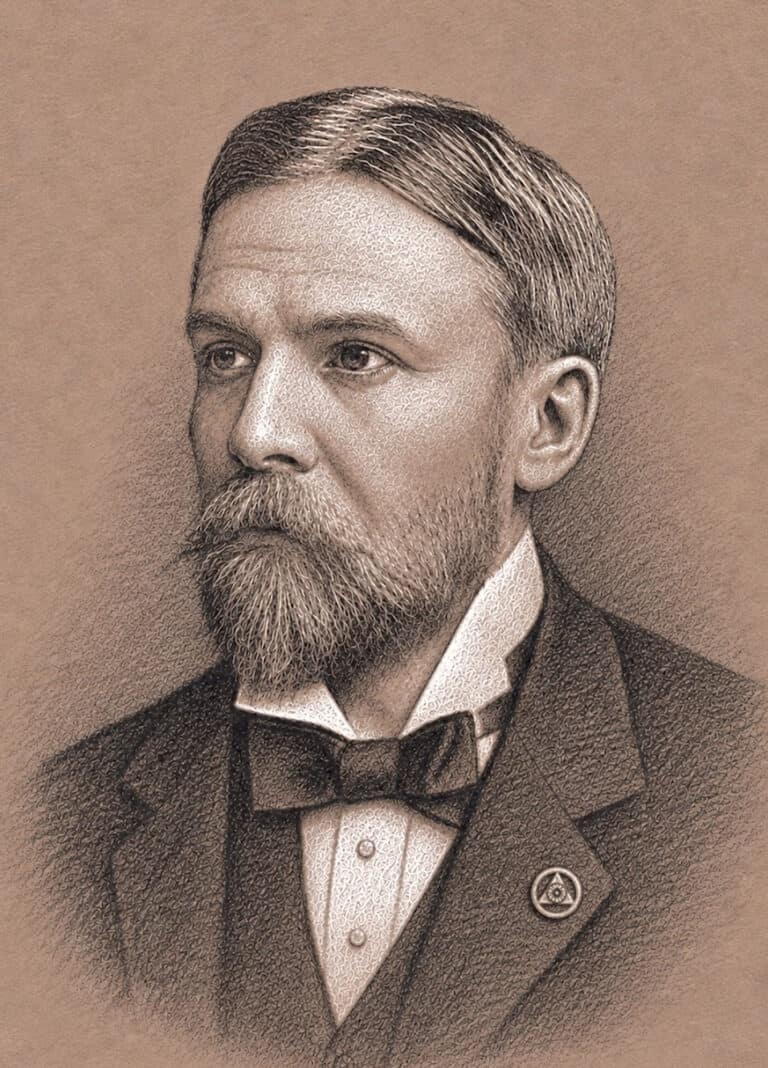
William Walker Atkinson’s The Secret of Success, was first published in 1908 by the Advanced Thought Publishing Company and then by the Yogi Publication Society. The book presents success not as the result of following a fixed collection of rules but as the outward expression of powers already existing within the individual.
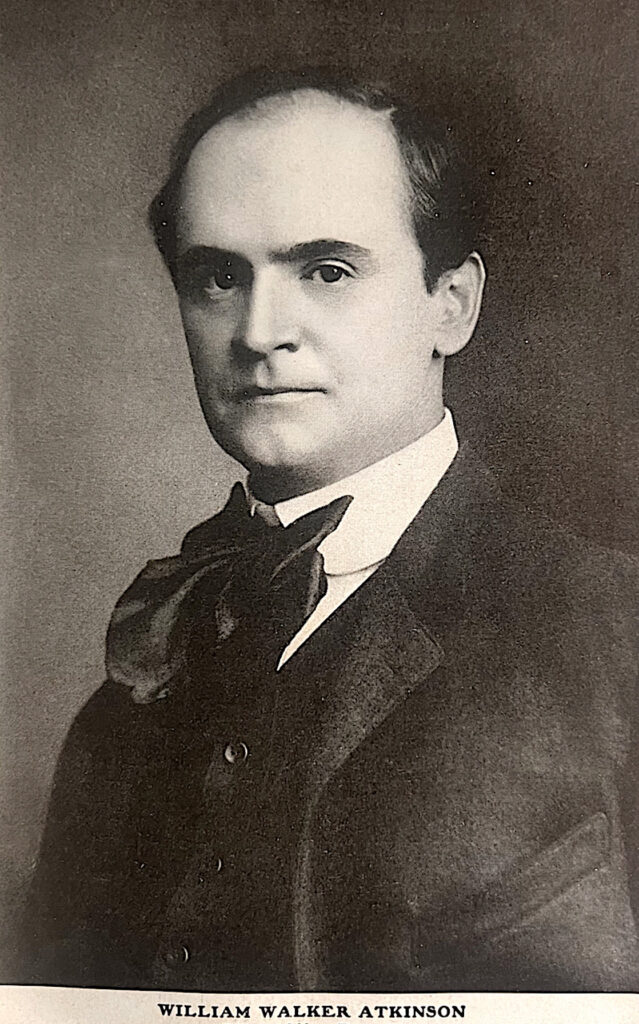
William Walker Atkinson
Atkinson begins by distancing himself from the conventional success literature of his period, which he regards as filled with easy advice and lists of virtues that are much simpler to preach than to practice. His alternative is to search beneath particular habits and methods for the mental qualities that make effective action possible in the first place. Success, in his widest definition, is “attainment”—reaching the goal toward which an individual has consciously directed himself. Because people differ in temperament, ability, circumstances, and purpose, there can be no universal road that every person can mechanically follow. The central problem is not learning how another successful person acted, but discovering and developing the powers through which an individual can determine and pursue his own course.
The answer William Walker Atkinson gives is individuality. Every person, he argues, possesses a distinctive inner center of identity and power, but most people permit only a small portion of it to appear in their lives. Instead of developing their own judgment, initiative, desire, will, and capacity for action, they imitate stronger personalities and allow themselves to be directed by prevailing opinions and expectations. The successful person is not necessarily the person who dominates others; Atkinson repeatedly distinguishes genuine individuality from the mere desire to acquire followers. The greater achievement is self-direction—the ability to become sufficiently conscious of one’s own powers that one no longer requires another person to determine the course of one’s life. The “secret” promised by the title is not a hidden formula for wealth. It is the awakening, organization, and expression of the individual himself.
What Is the Secret of Success According to William Walker Atkinson?
Atkinson identifies individuality as the fundamental secret of success because every other quality he discusses depends upon an individual becoming capable of acting from an internal center rather than merely responding to external direction. He compares the majority of people to a flock following a bellwether: they accept leaders because assuming responsibility for their own direction requires effort, confidence, and initiative. The comparison is deliberately provocative. His purpose is not to tell the reader to become the next leader of the flock, but to stop requiring a leader at all. A strong individual may lead when circumstances require it, but leadership is secondary to self-mastery. The real objective is to become what Atkinson calls, in effect, a law unto oneself in matters of personal judgment and action.
This makes The Secret of Success fundamentally a work about self-development rather than conventional business technique. Atkinson does not offer a formula specifying which profession to choose, how much money to seek, or what social position constitutes success. Different people may pursue entirely different ends and still embody the principles he describes. What matters is whether the individual is actually directing his own powers toward a consciously selected objective. Success becomes an internal process before it becomes an external result. Individuality must awaken; desire must supply motive power; will must direct that power; enthusiasm must energize action; mental imagery must give the mind a definite pattern; and personality must become an effective means through which the inner individual expresses himself in the world.
Why Does Atkinson Reject Fixed Rules for Success?
The rejection of universal formulas follows directly from Atkinson’s emphasis on individuality. No two people possess exactly the same temperament, abilities, circumstances, opportunities, or purposes, and no single sequence of actions can guarantee the same outcome for everyone. Successful people often succeed precisely because they depart from established methods and develop an original approach suited to their own conditions. To imitate the outward behavior of such people without possessing their circumstances or inner qualities is to copy the visible result while overlooking its cause.
Atkinson nevertheless does not abandon instruction. Instead, he shifts instruction from external rules to internal capacities. The reader cannot be told exactly what road to travel, but can cultivate the qualities required to travel intelligently: individuality, confidence, spiritedness, earnestness, enthusiasm, desire, will, mental concentration, constructive expectation, and an effective personality. These do not determine the reader’s destination. They increase the reader’s ability to choose and reach it.
The Individual, the Personality, and the Real “I”
One of the most important sections of The Secret of Success moves beyond ordinary success literature into Atkinson’s larger philosophy of mind. He distinguishes between the “I,” which he calls the Real Self or Individual, and the “Me,” which consists of the instruments and characteristics through which that self operates. The physical body belongs to the “Me” because the individual can observe and use the body. Vital energy likewise belongs to the “Me” because it animates the physical organism but is not itself the observing self. Atkinson then extends the argument to the mind. Thoughts, emotions, beliefs, feelings, and mental states continually change, yet the individual remains capable of observing those changes. The mind also becomes an instrument used by the deeper “I.”
This distinction is essential to Atkinson’s theory of success because it relocates personal power. A person who identifies completely with temporary emotions, fears, habits, bodily conditions, or circumstances experiences himself as something continually pushed and altered by outside forces. A person who begins to identify with the directing “I” can instead regard these conditions as parts of the personality capable of being educated and controlled. The mind is no longer simply the person’s master; it becomes something the individual can train. Personality ceases to be an unchangeable identity and becomes a collection of characteristics through which the individual expresses himself. This conception of the deeper self also places The Secret of Success alongside themes Atkinson explored under Yogi Ramacharaka and within his writings on Yogi philosophy, although here those ideas are directed toward individuality, personal development, and attainment.
What Is the Difference Between Individuality and Personality?
Atkinson gives unusual importance to the original meaning of “personality,” tracing it to the idea of the persona or mask through which an actor speaks. He uses the image to explain that personality is the outward character presented to the world rather than the deepest self behind it. Habits of speech, mannerisms, attitudes, emotional tendencies, expressions, social behavior, confidence, timidity, cheerfulness, and other visible traits belong to this outer personality. They are important because other people encounter the individual through them, but they should not be mistaken for the individual himself.
This distinction also makes personality change possible. If a person says, “I am timid,” “I am gloomy,” or “I have no confidence,” the undesirable characteristic is treated as an essential identity. Atkinson’s model encourages a different interpretation: timidity, gloom, and lack of confidence are conditions of the personality, while the “I” behind the personality remains the directing power capable of modifying them. The distinction between individuality and personality becomes practical. The individual supplies direction; personality can be educated into a more effective instrument of expression.
What Does Atkinson Mean by Spiritedness?
Atkinson uses “spiritedness” to describe the active expression of inner life, energy, courage, vigor, and self-recognition. He deliberately separates the word from vague notions of ghosts or disembodied spirits and instead connects it with being animated, alive, forceful, and conscious of power. Spiritedness is the psychological condition produced when a person ceases to think of himself primarily as weak, passive, dependent, or defeated and begins to recognize an inner source of initiative.
The concept bridges Atkinson’s metaphysical language and his practical psychology. The deeper Self may be described philosophically as the center of being, but success requires that this recognition become an active mental attitude. A merely intellectual belief that one possesses hidden powers accomplishes little. Spiritedness means feeling and expressing the reality of those powers through posture, thought, determination, confidence, and action. It is an assertion of mastery—not necessarily mastery over other people, but mastery over the faculties and conditions that belong to the individual.
Self-Recognition Comes Before Self-Expression
A recurring principle throughout The Secret of Success is that a person cannot effectively express a power that he persistently denies possessing. If the individual continually thinks of himself as powerless, incapable, unlucky, inferior, or dependent upon circumstances, his behavior begins to conform to that conception. Atkinson places recognition before manifestation. The individual must first awaken to the possibility that qualities presently weak or dormant can be strengthened.
This does not mean that simply declaring oneself powerful instantly creates ability. Atkinson’s method depends heavily upon cultivation, repetition, mental imagery, practice, and action. Recognition supplies the starting point. The desired quality must then be repeatedly called into expression until it becomes increasingly natural. In this respect, The Secret of Success repeatedly moves from thought to habit: first conceive the desired condition, then mentally and physically express it, and continue until the new mode of action becomes incorporated into personality.
The Latent Powers Within the Individual
Atkinson’s idea of “latent powers” does not refer to a single mysterious faculty. It describes a group of capacities that remain weak or undeveloped until consciously brought into use. Among the most important are earnestness, enthusiasm, desire, will, confidence, mental imagery, initiative, concentration, and the ability to influence one’s own mental state. The successful individual is not necessarily born with these qualities operating at extraordinary strength. Much of the book is devoted to the proposition that they can be cultivated.
Several of these powers operate together rather than independently. Desire determines what is wanted. Mental imagery gives that desire a definite form. Enthusiasm supplies emotional energy. Will holds the mind and action toward the selected direction. Auto-suggestion reinforces the desired mental state. Repeated action establishes habits. Personality then expresses the resulting inner condition to other people. The system becomes circular in a productive sense: inner states influence outward behavior, outward behavior reinforces inner states, and repeated experience gradually makes the cultivated quality easier to reproduce.
What Role Does Will-Power Play?
Will is important in The Secret of Success, but Atkinson does not treat it as an isolated faculty capable of accomplishing everything through sheer strain. Will functions primarily as a directing power. Desire supplies the motive energy that wants something; will organizes and holds that energy toward a purpose. Without desire, will has little reason to act. Without will, desire may remain scattered among competing wishes and impulses.
This distinction allows Atkinson to explain why merely wanting something is insufficient. A person may possess numerous desires without organizing any of them into sustained action. Effective desire must become concentrated, and will provides the means of concentration. The individual selects the desire worthy of development, refuses to dissipate attention among contradictory objectives, and repeatedly brings thought and action back toward the chosen end.
Soul-Force and the Power of Enthusiasm
Atkinson gives enthusiasm a much deeper meaning than ordinary excitement. He traces the term to its older sense of inspiration and describes genuine enthusiasm as an awakening of inner forces around an idea, purpose, person, or undertaking. A person who is truly enthusiastic does not merely think that something would be desirable; the idea has become emotionally alive. It produces energy, interest, persistence, and a readiness for action. For this reason Atkinson treats enthusiasm as a form of “Soul-Force.”
The practical importance of enthusiasm is that it multiplies the effectiveness of other faculties. Work performed without interest requires continual forcing, while work connected with a strong enthusiasm seems to release additional energy. Difficulties that would discourage an indifferent person become problems to solve. Attention becomes easier to sustain because the mind naturally returns to the object of interest. Other people also respond to genuine enthusiasm because emotional states are communicated through voice, expression, behavior, and attitude. The enthusiastic person influences both himself and his environment.
Earnestness Turns Enthusiasm Into Power
Atkinson is careful not to equate enthusiasm with uncontrolled emotionalism. Excitement without direction may expend energy without producing results. The valuable form of enthusiasm is joined with earnestness: a serious, concentrated conviction that gives weight to words and actions. Earnestness communicates that the individual actually believes what he is saying and is committed to what he is attempting.
This combination becomes particularly important later in the discussion of personal magnetism. The person who communicates conviction does more than present an argument intellectually. His entire manner reinforces it. Voice, facial expression, posture, attention, and emotional tone become coordinated around the same idea. Atkinson sees this unity of thought and expression as one of the reasons certain people naturally command attention.
Why Is Desire the Motive Force of Success?
Desire occupies one of the central positions in Atkinson’s system. He describes it as a motive force underlying human action: people act because something within them seeks expression, possession, achievement, change, avoidance, growth, or satisfaction. A weak desire generates little sustained effort, while a powerful and concentrated desire can organize enormous amounts of energy around a goal.
Atkinson does not advise suppressing desire. He advises mastering it. Desire is a useful servant but a poor master because uncontrolled desires can pull the individual in conflicting directions. The purpose of self-development is to determine which desires deserve reinforcement and then concentrate mental and practical energy upon them. A deliberately cultivated desire becomes more powerful when repeatedly contemplated, visualized, emotionally energized, and connected with action.
For Atkinson, the principal forces involved in achievement can be summarized as:
Individuality provides independent direction.
Desire supplies motive power.
Will concentrates and directs desire.
Mental imagery gives the desired result definite form.
Enthusiasm energizes sustained effort.
Auto-suggestion reinforces the chosen mental attitude.
Action translates the inner condition into practical results.
Personality communicates the developed inner state to others.
The Law of Attraction in The Secret of Success
Atkinson presents the Law of Attraction as a universal principle extending from physical nature into mental and human relations. Attraction and repulsion are treated as opposite poles of the same general law: things possessing affinity tend toward combination, while incompatible conditions tend toward separation. He then applies this principle to human thought, desire, relationships, opportunities, and circumstances.
Importantly, the discussion is tied to desire and mental imagery. A definite desire creates direction, while a persistent mental image keeps the mind oriented toward the corresponding goal. The individual then notices, approaches, influences, and combines with people, circumstances, and resources related to that objective. Atkinson also gives the process a mental-force interpretation, arguing that desire itself exercises an attractive influence. Within the worldview of the book, attraction operates both through changes in attention and behavior and through the mental forces Atkinson believed extended beyond the individual.
How Do Desire and Mental Imagery Work Together?
A vague wish does not provide the mind with a definite direction. Atkinson stresses the importance of forming a clear mental conception of the desired condition. Mental imagery gives desire something specific around which to organize itself. Instead of continually thinking about what is lacking, the reader is instructed to build and maintain an image of the quality, condition, or result being sought.
This principle applies not only to external achievements but also to character. A person seeking greater confidence should form a conception of himself acting confidently. Someone attempting to become cheerful should repeatedly hold and express the corresponding state. The image becomes a pattern toward which thought and behavior can move, particularly when reinforced through auto-suggestion and repeated action.
Fearthought and the Attraction of Undesired Conditions
Atkinson treats fear as one of the greatest obstacles to success because it reverses the constructive use of the same mental faculties. Desire, expectation, and imagination can concentrate the mind upon a wanted result, but fear concentrates it upon an unwanted one. The feared event becomes the dominant mental picture, attention continually returns to it, confidence declines, and action becomes hesitant or paralyzed. In Atkinson’s terminology, “Fearthought” becomes destructive not simply because fear feels unpleasant, but because it organizes mental energy around the very condition the person wishes to avoid.
His proposed remedy is replacement rather than direct struggle. He compares the process to eliminating darkness by admitting light rather than attempting to shovel the darkness out of a room. The individual should cultivate the positive quality opposite the feared condition, reinforce it with mental imagery and appropriate auto-suggestions, and repeatedly express it until the constructive state becomes stronger than the negative one. Confidence replaces apprehension; courage replaces timidity; purposeful action replaces paralysis.
This section makes auto-suggestion an explicit part of The Secret of Success. Character is not treated as fixed. Desired qualities can be deliberately pictured, suggested, rehearsed, and practiced until they become increasingly habitual. Success depends partly upon controlling the suggestions one continually gives oneself.
What Is Personal Magnetism?
Atkinson defines personal magnetism as the capacity of one person’s mental and emotional state to influence another. He rejects the need to imagine a literal magnetic substance surrounding a charismatic individual and instead emphasizes the contagious nature of mental states. Enthusiasm, confidence, earnestness, courage, and conviction are communicated through the total behavior of a person and tend to awaken corresponding responses in others.
The most important ingredient is earnest enthusiasm. A person who genuinely believes in what he is doing communicates that conviction through countless signals that cannot be reproduced effectively by words alone. Atkinson argues that highly magnetic individuals are commonly intensely earnest. Their attention is concentrated, their speech carries conviction, and their emotional state reinforces their message. The listener responds not merely to the proposition being stated but to the unified mental force with which it is presented.
Can Personal Magnetism Be Developed?
Atkinson believes it can. One of his most practical recommendations is rehearsal. A person who does not naturally possess the desired degree of confidence, enthusiasm, or magnetic expression can deliberately practice producing the corresponding mental and physical state. He even uses the analogy of acting: reproduce the feeling, rehearse the expression, and repeat it until the response becomes registered in what he calls the “habit mind.”
This is not presented simply as pretending indefinitely. Repeatedly acting a quality can help establish the mental condition associated with it until the behavior becomes increasingly genuine and automatic. The person initially practicing confidence may eventually experience confidence more naturally because thought, posture, voice, expectation, and behavior have repeatedly been organized around that pattern. Once again, the mechanism is the deliberate conversion of a consciously chosen state into habit.
Attractive Personality as the Expression of Inner Development
The final major lesson turns from inner power to the outward personality through which that power is encountered by other people. Atkinson treats personality as something capable of deliberate cultivation. Cheerfulness, confidence, self-respect, consideration, enthusiasm, and a sense of mastery all influence how an individual is received socially and professionally. Because success usually requires cooperation with other people, the ability to create a favorable and energetic personal impression becomes a practical asset.
Atkinson places particular emphasis on cheerfulness. He advises cultivating a genuine positive mental attitude not merely to appear pleasant but because the outward expression should arise from an inner condition. His memorable formula is “bright, cheerful and happy,” which he recommends holding mentally and visualizing until it becomes associated with one’s habitual expression. The smile he advocates is not a meaningless grin but an outward indication of an established internal attitude.
Self-Respect, Confidence, and Mastery
An attractive personality must also contain strength. Atkinson does not recommend becoming agreeable through submission or excessive concern with approval. The qualities of self-respect, confidence, and mastery give personality weight. A person who respects himself communicates that attitude to others; a person who continually assumes inferiority invites others to respond to that assumption.
Confidence likewise develops through expression. The reader is encouraged to think, imagine, speak, stand, and act from the mental position of greater capability. The purpose is not empty boasting but the gradual education of personality. Atkinson’s repeated principle is that the inner and outer person continually react upon each other. Thought alters expression, while deliberately altered expression can reinforce thought.
Success Is More Than Wealth or Social Position
Although The Secret of Success belongs to the success literature of the early twentieth century, Atkinson ultimately gives success a wider meaning than financial advancement. One of his standards is whether a person is doing his best in a worthy undertaking. An action may be valuable even when it does not produce the conventional reward expected by society. Courage, effort, fidelity to purpose, and the full use of one’s capacities can themselves constitute success.
This qualification prevents the book’s philosophy from becoming a simple doctrine that worldly winners are inherently superior. Atkinson admires strength, initiative, and attainment, but the deeper objective is expression of the individual. A person who develops his capacities and acts fully according to a worthy purpose may succeed in this larger sense even when circumstances prevent the expected external victory.
How Does Auto-Suggestion Function in The Secret of Success?
Auto-suggestion appears most clearly when Atkinson discusses the deliberate cultivation of mental qualities and the overcoming of fear. The reader is instructed to choose the opposite of an undesirable condition, hold a mental image of that quality, reinforce it through appropriate suggestions, and repeatedly express the desired state. The purpose is to transform a consciously chosen idea into an increasingly habitual mode of thought and action.
This mechanism runs beneath much of the book even when the term auto-suggestion is not being used. Spiritedness is cultivated through repeated recognition of power. Desire is strengthened by dwelling upon the desired object. Enthusiasm can be awakened and reproduced. Confidence can be practiced. Personal magnetism can be rehearsed until the appropriate state is registered in the habit mind. Cheerfulness can be visualized and expressed until it becomes characteristic. The recurring pattern is one of conscious mental direction followed by repetition and eventual habitual expression.
The Complete Mental System Behind The Secret of Success
Taken as a whole, Atkinson’s nine lessons form a coherent progression rather than an unrelated collection of motivational advice. The individual first recognizes a deeper “I” behind the changing personality. This recognition produces spiritedness and a sense of inner power. The reader then learns to awaken latent faculties, particularly will, earnestness, enthusiasm, and desire. Desire provides the motive force for attainment, while will concentrates it. Mental imagery gives it a definite direction. The Law of Attraction explains how the resulting mental orientation relates the individual to people, opportunities, and circumstances. Fear is treated as the destructive use of the same mental machinery. Personal magnetism describes the influence of strongly expressed mental states upon other people, and the cultivation of personality completes the process by giving the developed individuality an effective outward form.
The system can be understood as a movement from within outward:
Recognize the Individual or “I.”
Refuse to identify permanently with undesirable traits of personality.
Awaken spiritedness and the consciousness of personal power.
Choose a definite desire or purpose.
Form a clear mental image of the desired condition.
Direct desire through will and sustained attention.
Reinforce constructive states through auto-suggestion and repetition.
Translate the mental state into consistent action.
Develop a personality capable of expressing confidence, enthusiasm, earnestness, and self-respect.
Why The Secret of Success Matters in Atkinson’s Mental Science
The Secret of Success is especially useful for understanding how William Walker Atkinson translated ideas of mental power into the language of everyday achievement. The subject is nominally success, but beneath it lies a larger theory of mental development. The distinction between the Real Self and personality, the cultivation of latent powers, the directing function of will, the motive force of desire, the use of mental imagery, the deliberate employment of auto-suggestion, the formation of habits, and the communication of mental states through personal magnetism all belong to a much larger system than the title alone suggests.
The book also shows how easily Atkinson could move between metaphysical and practical language. The deeper “I” may be discussed as the Real Self, while the same argument immediately becomes a lesson in self-confidence. Desire may be described as a mental force operating under a universal Law of Attraction, but it is also the psychological motive that drives persistent action. Personal magnetism may be explained through mental induction, yet its practical manifestation is earnestness, enthusiasm, voice, expression, and behavior. Auto-suggestion operates as the bridge between these levels because it provides a method for deliberately introducing an idea, image, or attitude and repeating it until it becomes incorporated into habitual personality. This blending of mental training, metaphysical ideas, and practical instruction is also important for understanding Atkinson’s work within the publishing world surrounding the Yogi Publication Society.
What Is the Final Message of The Secret of Success?
Atkinson closes by returning to the warning with which he began. No book, including his own, can provide an infallible road to success. Blind obedience to another person’s formula would contradict the very principle of individuality that the entire work has attempted to establish. Advice may stimulate thought and reveal useful principles, but the individual must ultimately apply those principles according to his own nature, circumstances, abilities, and purpose.
The real secret is not a rule but a process of self-expression. The individual discovers the deeper directing “I,” recognizes that many apparent limitations belong to a changeable personality rather than an unchangeable self, chooses a worthy object of desire, concentrates will and attention upon it, uses mental imagery and auto-suggestion to cultivate the qualities required for attainment, translates those qualities into action, and develops a personality capable of communicating the resulting confidence and enthusiasm to the world. Success emerges when latent power becomes expressed power.
The Secret of Success is less a manual for obtaining a particular external reward than a course in turning potential into action. Atkinson’s successful individual is not the person who has discovered somebody else’s secret. It is the person who has ceased waiting for one. The power, direction, and responsibility are brought back to the individual himself, and the final lesson is essentially the same as the first: there is no universal path to attainment because the path must ultimately be made through the expression of individuality.