About This Publication
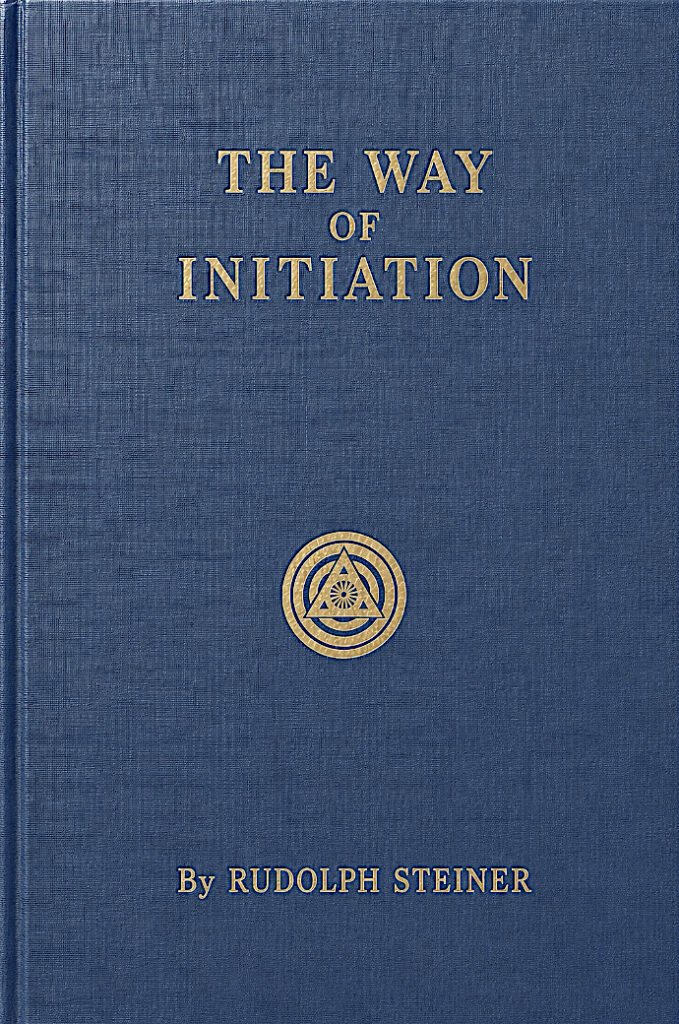
The Way of Initiation was first published in German in 1904 as Die Stufen der Einweihung and later expanded as Knowledge of the Higher Worlds and Its Attainment. This book is Rudolf Steiner’s main guide for systematically developing spiritual perception. It began as a series of articles in the Theosophical Society’s magazine Lucifer, and was then collected into a book. Steiner describes a disciplined path that allows ordinary people to develop higher consciousness and directly experience the spiritual realities behind the physical world. He makes it clear that initiation is not just for mystics. Instead, he believes anyone can gain spiritual knowledge if they are willing to commit to intellectual, moral, and meditative training.
The book is important in the history of modern esotericism, both for its ideas and for the people who helped bring it to English-speaking readers. When Max Gysi translated Steiner’s essays into English in 1908, the first editions included a foreword by Annie Besant, then President of the Theosophical Society. She strongly recommended the book as a practical guide for Western students of spiritual science. The volume also began with a detailed biographical introduction by the French philosopher Édouard Schuré, called “The Personality of Rudolf Steiner and His Development.” At that time, Steiner was not well known outside Germany. Schuré described him as a spiritual teacher who combined scientific knowledge with direct spiritual insight, relating stories about Steiner’s early experiences, his mentors, and his skill to connect modern thinking with ancient wisdom. These introductions helped build Steiner’s international reputation before he left the Theosophical Society and started Anthroposophy.
The main idea of the book is that people have hidden spiritual abilities similar to their physical senses. By practicing meditation, disciplined thinking, ethical self-improvement, and careful observation of nature and themselves, these abilities can slowly awaken. This lets students perceive what Steiner calls the supersensible worlds. Steiner does not see spiritual development as a way to avoid everyday life. Instead, he describes it as a way to sharpen perception, build character, and bring greater understanding into daily life.
Steiner stresses that moral advancement and spiritual progress go hand in hand. He often warns that trying to develop clairvoyance without also improving character can lead to self-deception or mental imbalance. Because of this, he tells students to learn to control their thoughts, emotions, and actions, and to develop qualities like calmness, open-mindedness, self-control, compassion, and the ability to see truth and goodness in all situations. His well-known idea is that for each advance toward higher knowledge, there should be three steps in moral development. This shows his belief that wisdom and character must grow together.
The book lays out a step-by-step path of initiation that starts with preparation and discipleship, then moves through symbolic stages called the Fire Trial, Water Trial, and Air Trial. These are tests of perception, independence, courage, and inner stability, not outward ceremonies. As students develop spiritual perception, Steiner says they gradually awaken higher organs of consciousness, often called lotus flowers or chakras. These allow them to directly perceive spiritual beings, life forces, and the hidden realities behind the physical world. He also explains that advanced students experience big changes in their dreams, becoming more conscious while asleep and seeing the spiritual world more clearly.
One of the book’s most unique features is Steiner’s description of the Guardian of the Threshold. This is a powerful symbolic and spiritual meeting that marks the shift to higher perception. Before entering the spiritual worlds, a seeker must face a clear image of the results of their past thoughts, actions, habits, and karma. Only by honestly seeing and changing these parts of themselves can they safely move forward on the path of initiation. After this, there is a higher stage where spiritual knowledge is joined with selfless service to others and active involvement in humanity’s growth.
The Way of Initiation goes beyond being an introduction to Anthroposophy. It offers a full philosophy of spiritual training based on personal responsibility, disciplined thinking, and ethical growth. The book combines ideas from Western esotericism, Christian mysticism, and Theosophy with Steiner’s own spiritual research. It is still one of the most influential modern guides for developing higher consciousness and spiritual perception in a systematic way.
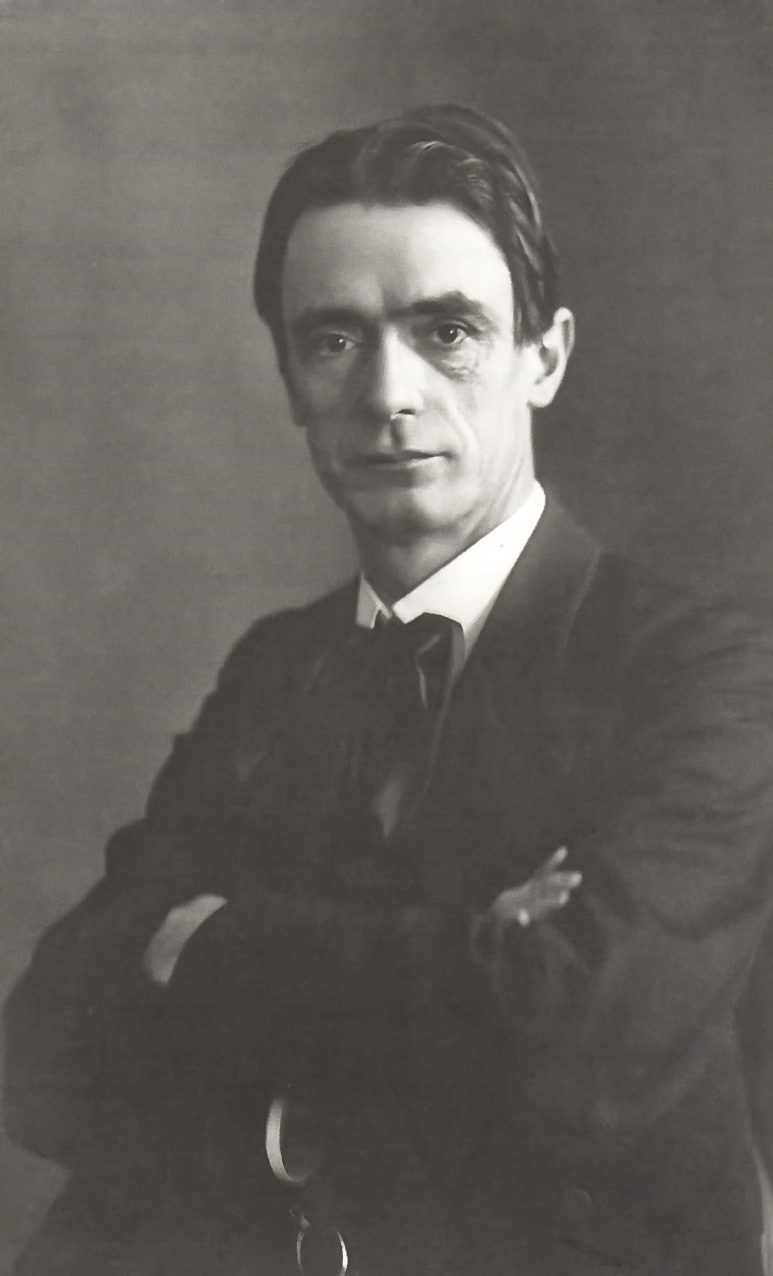
Rudolf Steiner
Rudolf Steiner (1861–1925) was an Austrian philosopher, educator, architect, social reformer, and esoteric teacher. He is best known for founding Anthroposophy, a spiritual philosophy that sought to unite scientific study and spiritual insight. As an important figure in the Western esoteric revival of the twentieth century, Steiner created a wide range of work across areas such assuch as education, agriculture, medicine, architecture, economics, religion, and the arts. His ideas led to the Waldorf school movement, biodynamic agriculture, anthroposophical medicine, and many cultural institutions that still exist today.
Steiner was born in what is now Croatia and studied in Vienna. He began his career as a philosopher and literary scholar and, early on, edited the scientific works of Johann Wolfgang von Goethe, whose holistic view of nature strongly influenced Steiner’s thinking. Steiner rejected both materialism and uncritical mysticism. Instead, he believed that methodical, disciplined thinking could be used to explore spiritual realities with the same seriousness as physical science. This idea became the basis of Anthroposophy, which he called a “spiritual science” focused on understanding humanity’s role in the universe’s spiritual evolution.
Steiner first worked as General Secretary of the German Section of the Theosophical Society, where he proved to be a respected lecturer and writer. During this time, he wrote many of his most important books, including The Way of Initiation (Knowledge of the Higher Worlds and Its Attainment), which introduced Western readers to structured methods of meditation and spiritual growth. As philosophical disagreements grew, especially about Christianity and the figure of Jesus Christ, Steiner left the Theosophical Society in 1912. He then founded the Anthroposophical Society, which became the center of his independent movement.
Steiner wanted to put his spiritual ideas into practice. In 1919, he started the first Waldorf School in Stuttgart for the children of workers at the Waldorf-Astoria cigarette factory. As a result, the school focused on developing students’ intellectual, artistic, emotional, and practical skills. Five years later, he introduced biodynamic agriculture, an early form of organic farming that treats the farm as a living whole connected to nature and the cosmos. He also helped develop anthroposophical medicine, inspired the creation of the natural health company Weleda, designed the Goetheanum in Dornach, Switzerland, as the center of Anthroposophy, and proposed the Threefold Social Order, which called for greater independence among society’s cultural, political, and economic spheres.
Steiner wrote many books and gave around 6,000 lectures during his life, covering topics like philosophy, religion, education, history, science, agriculture, medicine, art, and esotericism. Among his most important works are The Philosophy of Freedom (1894), The Way of Initiation (1904), and An Outline of Esoteric Science (1909). Together, these books explain his ideas about human freedom, spiritual growth, and the evolution of the universe.
One unique part of Steiner’s worldview was his detailed story of humanity’s spiritual evolution through earlier civilizations. He claimed to have studied the Akashic Records and taught that Atlantis and Lemuria were real stages in human history, not just myths. In Steiner’s account, the people of Atlantis had a dreamlike, clairvoyant awareness and were more connected to the spiritual world than people today. He said their civilization went through seven stages before it declined due to the misuse of spiritual powers and moral failings, culminating in great floods that destroyed Atlantis. Steiner linked the biblical Flood to this event, teaching that a spiritual leader, known as Manu and later as Noah, led survivors who became the founders of later civilizations. In this way, these ideas became a key part of Anthroposophical cosmology, underscoring Steiner’s belief that history is a process of spiritual evolution guided by higher beings.
Steiner’s impact goes well beyond spiritual circles. Waldorf education is now one of the largest independent school movements in the world, biodynamic farming has influenced modern organic agriculture, and Anthroposophical medicine is still practiced in many countries. At the same time, many of his spiritual and metaphysical ideas—such as clairvoyant research, reincarnation, Atlantis, and the Akashic Records—are still debated and are usually seen by mainstream historians and scientists as part of esoteric philosophy rather than science. Even so, Rudolf Steiner is known as a highly original and influential spiritual thinker whose ideas continue to shape education, farming, medicine, and Western esotericism more than a hundred years later.