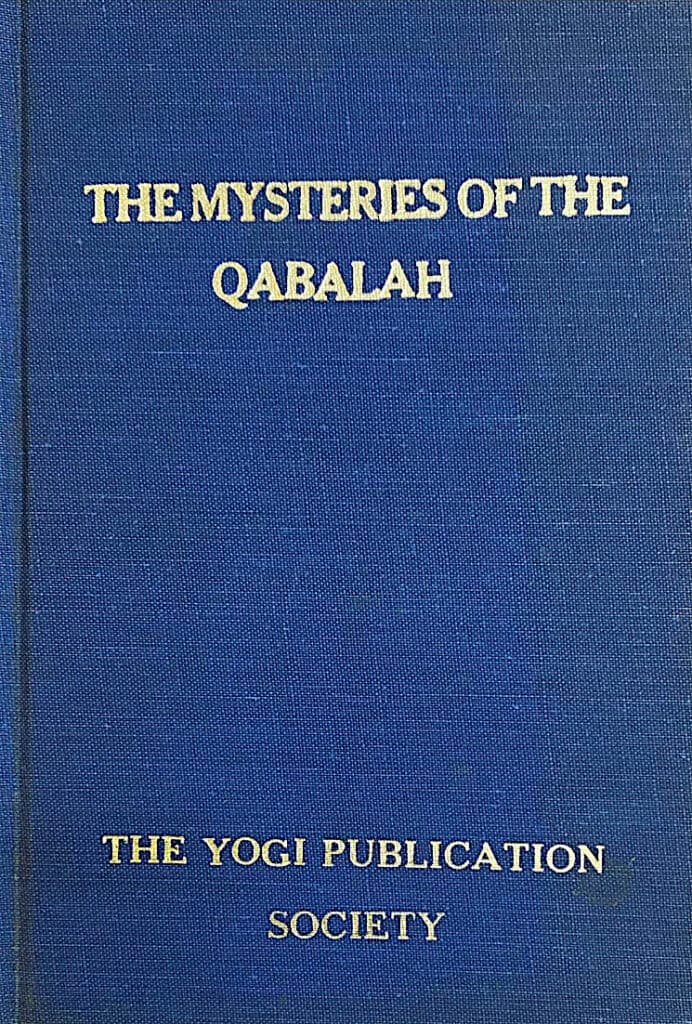
Mysteries of the Qabalah by Elias Gewurz, presents a detailed introduction to Qabalistic philosophy that blends traditional Jewish mysticism with modern Western esotericism. “Written down by seven pupils of E.G. and prepared for publication by one of them,” the work reflects many of the Theosophical and New Thought ideas that had become increasingly influential during the early twentieth century. Rather than presenting the Qabalah solely as a religious tradition, Gewurz uses it as a framework for explaining spiritual evolution, divine creation, and the development of human consciousness.
Presented as a series of inner-school lectures, the first examines the mystical structure of the Hebrew alphabet, while the second explores initiation, spiritual transformation, esoteric history, and the practical application of Qabalistic symbolism.
A main theme of the work is the mystical significance of the Hebrew letters. Gewurz teaches that the letters are far more than phonetic symbols; they are the structural forces through which creation itself unfolds. Each letter possesses its own spiritual signature, representing a distinct cosmic principle and stage in the evolution of human consciousness. Through detailed examination of individual letters, including Nun, he explains how their names, forms, and symbolic meanings reveal universal laws governing both the soul and the universe.
The book also introduces the traditional Qabalistic disciplines of Gematria and letter permutation. By assigning numerical values to words and comparing their relationships, Gewurz argues that language contains hidden spiritual structures. He illustrates this through examples such as BAL (“in God”), KABI (“my pain”), and ABIKh (“thy Father”), each of which possesses the numerical value of thirty-three. From these relationships he concludes that suffering and divine union are spiritually connected, presenting human suffering as an essential catalyst in the soul’s return to the Divine.
Gewurz advances the traditional cosmology of the Tree of Life, describing the ten Sephiroth as successive stages of spiritual consciousness through which the initiate gradually ascends. He also explains the Four Worlds of Qabalistic philosophy—Atziluth, Briah, Yetzirah, and Assiah—as successive levels through which spirit progressively manifests into material existence. Humanity, he argues, reflects this same universal structure, making the study of the Tree of Life simultaneously a study of both the cosmos and the human mind.
Blending traditional Qabalah with Theosophical concepts, Gewurz introduces the idea of the Brotherhood of the White Lodge, a hidden hierarchy of advanced spiritual beings guiding humanity’s evolution. Initiation is presented not as an outward ceremony but as an inner process of transformation in which the lower ego, symbolized by the serpent Nachash, is gradually overcome and transmuted into spiritual power. True spiritual advancement, according to the book, comes through mastery of the self rather than external ritual.
Throughout the book, Gewurz says that language itself is a creative force whose vibratory power shapes human experience. Words, numbers, symbols, suffering, and spiritual discipline are presented as interconnected aspects of a single universal system through which the individual may progress toward wisdom, self-mastery, and union with the Divine.
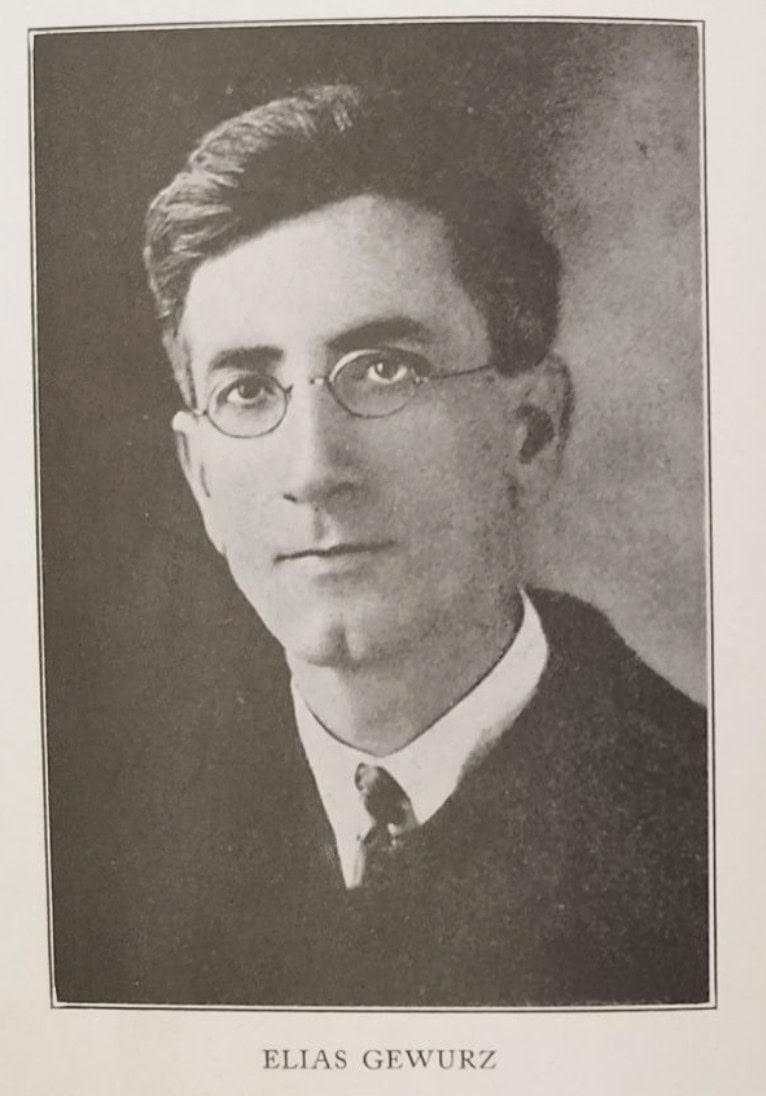
Elias Gewurz
Elias Gewurz
Elias Gewurz (1875–1947) was a Polish-American author, lecturer, and active member of the Theosophical Society, whose writings helped introduce Qabalistic philosophy to a wider English-speaking audience. Born on September 11, 1875, in Kraków, Galicia, Poland, he was educated in Vienna, Austria.
By 1908, Gewurz had transferred from the Austrian Section to the American Theosophical Society. During the First World War, while Galicia became a battleground between advancing Russian and German forces, he spent time writing in Las Palmas on Grand Canary Island before emigrating to the United States. Upon his arrival, he settled at the Krotona Theosophical Colony in Hollywood, California, where he delivered several lectures in 1915. Over the following decades he lived in San Francisco, where he worked as Assistant Librarian at the Olympic Club, later returned to Hollywood as a language teacher, and eventually settled in Ventura, California, supporting himself as a writer after becoming a naturalized American citizen.
Gewurz is best known for his influential works on Qabalah, particularly The Hidden Treasures of the Ancient Qabalah and Mysteries of the Qabalah. The Hidden Treasures of the Ancient Qabalah was first published by the Theosophical Book Concern at Krotona in 1915 after originating as a series of lectures delivered before the Krotona Lodge. The book was warmly received within Theosophical circles, with Gewurz donating copies to newly chartered lodges and their libraries. It was highly praised as an accessible introduction to one of the world’s oldest esoteric traditions. In 1918, the Yogi Publication Society issued its own edition.
Gewurz never married and remained devoted to writing, lecturing, and the study of Western esotericism throughout his life. He died in Ventura, California, on November 23, 1947.
Related Research Articles
The Sacred Geometry of the Yogi Publication Society Logo
This article examines the Yogi Publication Society logo and its sacred geometry meaning, comparing it with Hindu, Hermetic, Rosicrucian, Masonic, and Theosophical traditions to show the intention behind the publishing network.