

Cosmic Consciousness
About This Publication
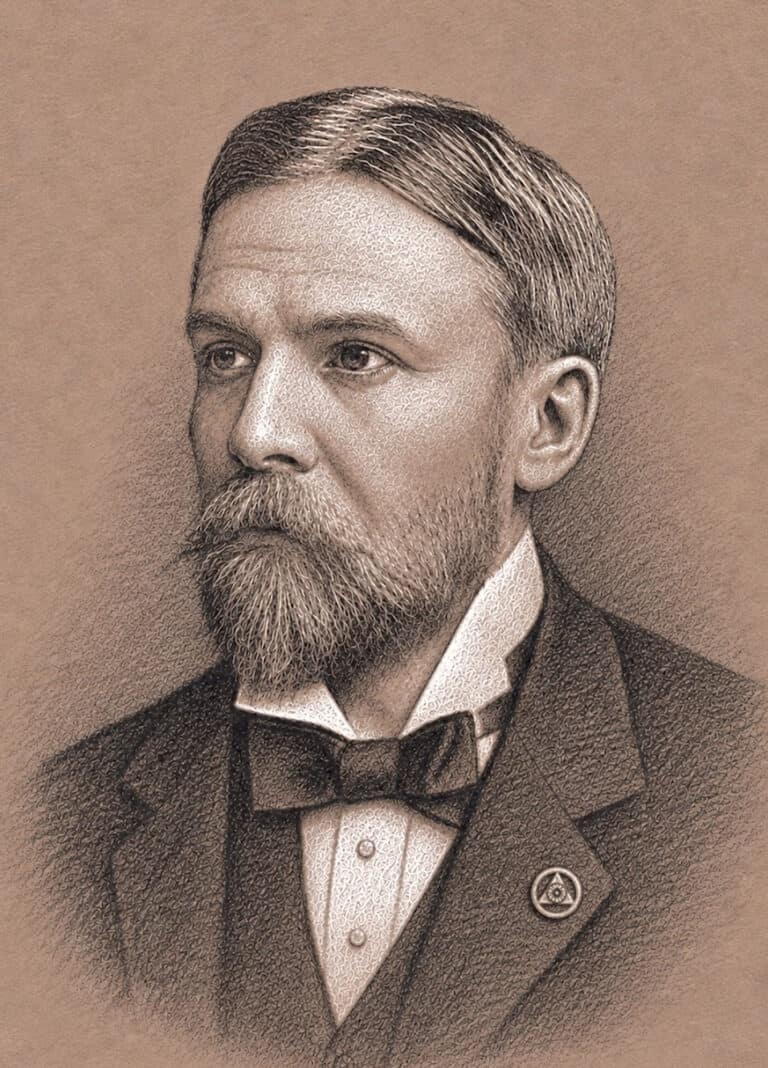
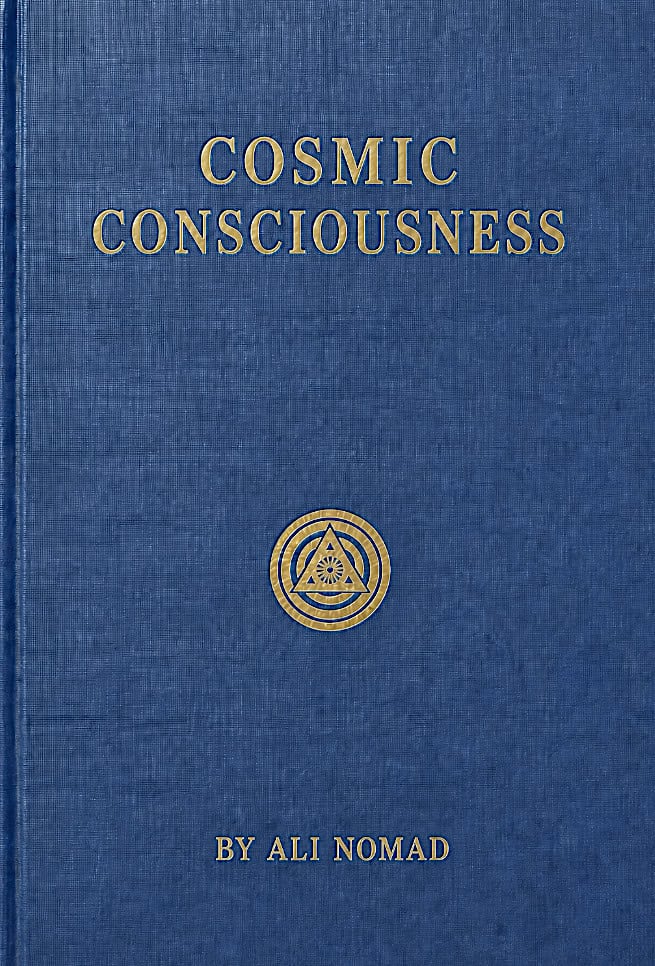
Cosmic Consciousness: The Man-God Whom We Await was published in 1913 by the Advanced Thought Publishing Company under the name Ali Nomad, the pseudonym of Alexander J. McIvor-Tyndall. The book examines what Nomad believed to be the next stage in the evolution of human consciousness, a state beyond ordinary self-consciousness in which the individual directly realizes a fundamental unity with humanity, nature, and the universal intelligence. Drawing from Christianity, Buddhism, Hindu philosophy, Yoga, Sufism, mystical experience, poetry, psychology, and psychic science, Nomad compares accounts of illumination across cultures and argues that experiences described as Nirvana, Samadhi, mystical union, spiritual rebirth, and the Kingdom of Heaven are different expressions of the same developing faculty. His “man-god whom we await” is not presented simply as a religious figure, but as the coming type of human being in whom this higher consciousness has become fully developed.
The title and central idea directly connect the book with Richard Maurice Bucke’s influential Cosmic Consciousness: A Study in the Evolution of the Human Mind, published in 1901. Nomad openly acknowledges Bucke’s work, discusses his classification of cosmic consciousness, draws upon cases Bucke had collected, and adopts his evolutionary idea that cosmic consciousness stands above ordinary self-consciousness much as self-consciousness developed beyond simpler forms of awareness. Nomad then develops the subject in his own direction, bringing Bucke’s theory into much closer contact with Eastern philosophy, Yoga, psychic development, spiritual evolution, love, sex, immortality, and the possibility that individuals can prepare themselves for illumination.
There is an important historical background to this relationship. Alexander J. McIvor-Tyndall was a close collaborator of Dr. Herbert A. Parkyn and established an affiliated School of Psychic Science connected with Parkyn’s University of Psychic Science. Parkyn, in turn, had significant personal and professional connections within Bucke’s medical circle in London, Ontario. This places Nomad’s 1913 treatment of Bucke within a much closer network than the shared title alone would suggest. The connections between Bucke, Parkyn, and McIvor-Tyndall are examined in greater detail later in this summary, while the book itself shows how Nomad took Bucke’s concept of cosmic consciousness and joined it to the psychic-science and Eastern philosophical subjects already circulating through the world in which he and Parkyn were working.
What Does Ali Nomad Mean by Cosmic Consciousness?
Nomad establishes his argument before the first chapter. Man, he writes, is fundamentally a spiritual being whose destiny is perfection, and perfected humanity becomes divine. He uses “Om” for the unknowable, omniscient and omnipresent source underlying existence. Immortality in this scheme does not simply mean surviving physical death. It means becoming conscious of one’s unity with Om while still embodied. Nomad calls this “at-one-ment.” Every great religion and philosophy, he argues, has been trying to lead humanity toward this same realization, even though their methods and terminology differ.
This is important because Nomad separates cosmic consciousness from ordinary psychic phenomena. Spirit communication, hypnotic phenomena, psychic experiences and astral travel may be genuine, he says, but none of them proves the transformation he is discussing. Cosmic consciousness transcends psychic phenomena. It is a liberation from the limitations of the senses and the ordinary personal self, allowing consciousness to glimpse a field that encompasses the cosmos itself. The experience is commonly accompanied by what its recipients describe as an extraordinary light. How that illumination is subsequently expressed depends upon the individual. In a religious temperament it may become religious revelation, in a poet it may become poetry, and in an intellectual it may appear as philosophical insight.
Nomad adds one of his most unusual ideas at the beginning of the book. He proposes that complete immortality or godhood is bisexual in the metaphysical sense. Every soul possesses a spiritual counterpart, and complete realization involves their union on the spiritual plane. He distinguishes this from the destruction of individuality through absorption into an impersonal Absolute. For Nomad, true spiritual completion is union without the loss of consciousness. He connects this principle with male and female polarity throughout nature and even interprets the emancipation and awakening of women as part of humanity’s movement toward a future race capable of this higher consciousness.
The New Birth and the Search for the Real
The first chapter presents cosmic consciousness as the “new birth” described in different forms by mystics throughout the world. Nomad moves freely between Hinduism, Buddhism, Christianity, Persian mysticism and Japanese spiritual traditions. What interests him is the common experience behind their different languages. The spiritual aspirant gradually discovers that ordinary sensory existence represents only a limited portion of reality. The search for enlightenment becomes a search for the Real beneath appearances.
Buddha’s longing for liberation provides one of Nomad’s central models. He interprets the intensity of Buddha’s search as the irresistible pressure of a consciousness approaching another stage of development. Similar states are examined through Hindu saints, Japanese Zen practitioners and the mystical language of union with the Beloved. Nomad also discusses Ramakrishna and his prolonged yearning for direct realization of the Divine Mother. Such experiences are not presented as isolated religious miracles. They become evidence for a recurring psychological and spiritual process.
The result is a comparative approach that runs through the entire book. Nomad repeatedly strips away the theological differences separating religions and asks what experience gave birth to their teachings. Hindu union with Brahman, Buddhist liberation, Christian rebirth and the Sufi union of lover and Beloved are treated as cultural expressions of a common expansion of consciousness.
Man’s Relationship to God and the Evolution of Consciousness
The second chapter expands the argument from individual mystical experience to human evolution. Nomad observes that civilizations repeatedly create images of perfected humanity. Gods are given human forms. Religious art portrays spiritual perfection through idealized men and women. Even when artists attempt to represent beings above humanity, they refine and spiritualize the human figure.
For Nomad, this persistence has meaning. Humanity contains within itself the potential for the state it has projected onto its gods. He treats the individual as a miniature expression of the universe and applies evolution to consciousness itself. Biological evolution has produced the human organism, while spiritual evolution continues through progressively expanded forms of awareness. The evolution of the individual reaches its highest point when a person becomes conscious of his own divine nature and establishes conscious union with the universal spiritual reality. Nomad gathers terms from several traditions for this state, including Nirvana, Samadhi, Brahm, Allah, the Absolute and Japanese Buddhist expressions for realization.
This is where the subtitle The Man-God Whom We Await begins to make sense. Nomad is describing what he believes will become a new type of humanity. The saints, prophets, mystics and exceptional thinkers of history are advance examples of a faculty that may eventually become normal.
The Three Areas of Human Consciousness
Chapter III gives the theory a clearer psychological structure by dividing human development into successive areas of consciousness. Nomad begins with physical consciousness, in which awareness is dominated by bodily existence and sensory experience. From this develops mental consciousness, characterized by reason, intellect, individual identity and the complicated activity of the mind. Beyond these lies what he calls soul consciousness, where the individual begins to perceive a deeper Self and feels an increasing attraction toward spiritual realization.
Each transition constitutes a kind of birth. Physical birth introduces the individual to sensory existence. Mental development creates the self-conscious human personality. Spiritual awakening opens another field. The higher Self has not suddenly been created. It was already present, but ordinary consciousness could not perceive it.
Nomad uses the Hindu doctrine of maya, or illusion, to explain the difficulty. The world experienced through the senses appears complete because the ordinary mind knows nothing beyond it. Cosmic consciousness does not require the destruction of the world. It changes the standpoint from which the world is experienced. The personality begins to understand itself as one expression within a much greater field of consciousness.
Why Does Selflessness Lead to the Higher Self?
Chapter IV confronts an apparent contradiction found throughout mystical literature. Spiritual systems tell the aspirant to discover the Self while also demanding the abandonment of selfishness. Nomad argues that the contradiction disappears once the personal self is distinguished from the higher Self.
Selflessness means weakening identification with the isolated personality. The individual who remains absorbed in personal possessions, status, appetites and fears cannot easily experience universal consciousness because his attention remains centered upon separation. The higher Self is reached as the boundaries of personal identity become less absolute. This explains why compassion, service, love and detachment appear so frequently in the lives of people whom Nomad considers illuminated.
Buddha becomes a major example because his desire for liberation expands beyond his own release from suffering. Compassion for the suffering of humanity becomes part of enlightenment itself. Cosmic consciousness is thus measured by its effects upon conduct. An experience that merely increases pride, selfishness or a sense of personal superiority would contradict the state Nomad is attempting to describe.
Richard Maurice Bucke and the Scientific Idea of Cosmic Consciousness
Chapter V brings Richard Maurice Bucke directly into the book. Nomad credits Bucke with giving the Western world one of its first systematic classifications of the phenomenon and specifically discusses Bucke’s public presentation of the idea before the British Medical Association in Montreal in 1897. Bucke proposed that a third form of consciousness was appearing in humanity. Simple consciousness belongs to animals and early human awareness. Self-consciousness distinguishes developed humanity. Cosmic consciousness would stand above self-consciousness in the same evolutionary relationship that self-consciousness stands above simple consciousness.
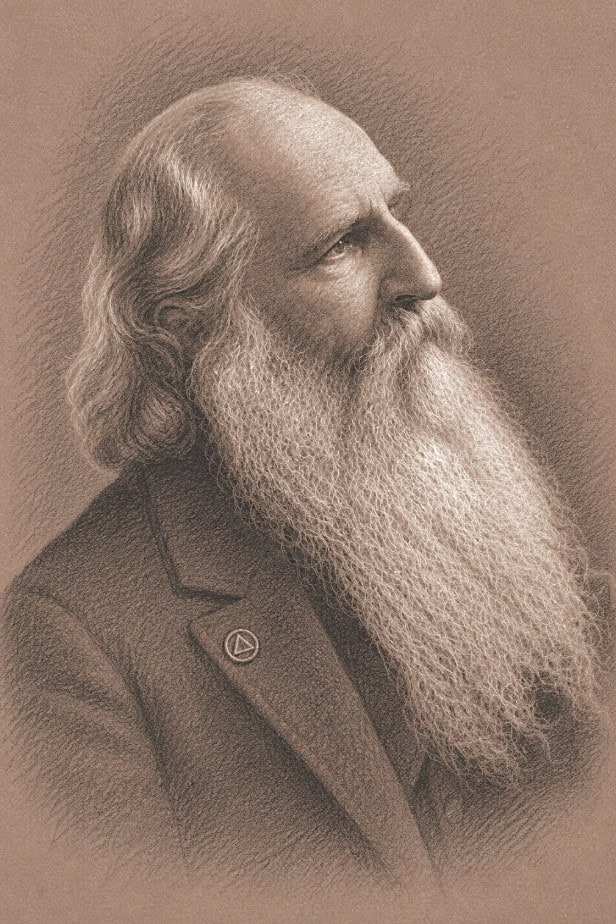
Nomad accepts this evolutionary framework and then widens it. Bucke had gathered historical and contemporary cases that he believed showed the appearance of this new faculty. Nomad compares those cases with religious illumination, Yoga, mystical literature and Eastern systems that had been describing liberation for centuries. In this sense, his book can be read as an expansion of Bucke’s thesis into the religious, occult and metaphysical world inhabited by the Advanced Thought and psychic-science movements.
The experience itself has recurring characteristics. There may be an extraordinary perception of light, an overwhelming feeling of unity, a certainty of immortality, intense joy, expanded sympathy and a sudden comprehension of meanings that previously seemed obscure. One account cited by Nomad describes the realization through the idea that the experiencer was everything and everything was himself, accompanied by the sensation of being everywhere simultaneously. Nomad emphasizes that such descriptions appear independently across cultures and eras.
The aftereffects matter as much as the moment of illumination. People frequently become less concerned with social distinction and material accumulation. Sympathy expands. Racial and religious divisions lose their former importance. Fear of death weakens. Simplicity becomes attractive. The individual may experience an increased responsibility toward humanity and an intense desire to communicate what has been discovered.
Bucke, Parkyn, and the London, Ontario Medical Connection
The importance of Bucke to Cosmic Consciousness deserves attention because McIvor-Tyndall was not writing from a circle entirely removed from Bucke’s Canadian medical world. Bucke spent the final decades of his career in London, Ontario. (Ontario Genealogy) Parkyn’s own medical education and professional relationships were also directly tied to the same London medical community. Parkyn had gone through medical and postgraduate education with Hugh A. Stevenson. Hugh and his brother William J. Stevenson became major physicians in London, where Bucke was one of the dominant medical figures of the period. The brothers were also involved in financing the medical college at the University of Western Ontario with which Bucke was associated. William J. Stevenson later became a graduate of Parkyn’s school, strengthening the connection between the London medical group and Parkyn’s work in Chicago.

This makes the appearance of Bucke’s theory in McIvor-Tyndall’s work more significant than a simple borrowing of a popular book title. McIvor-Tyndall was a collaborator within Parkyn’s psychic-science network, while Parkyn had longstanding educational and professional connections extending into Bucke’s own London medical environment. By 1913, when McIvor-Tyndall published Cosmic Consciousness, Bucke’s attempt to describe mystical illumination in evolutionary and psychological terms fit naturally into the kind of bridge between psychology, psychic research, mental science and Eastern philosophy that Parkyn’s network had been constructing for years.
Nomad is also explicit about his debt. He calls Bucke one of the first Western investigators to give the phenomenon a definite classification and repeatedly returns to his observations. Yet Nomad does not simply reproduce Bucke. His purpose is to integrate Bucke’s evolutionary theory with the much older traditions of illumination that he believed had already mapped the experience.
Religion as the Record of Illumined Consciousness
Chapter VI proposes that many religions began when individuals experienced cosmic consciousness and then attempted to communicate what they had experienced. Over time, the experience became doctrine, ritual and institution. Later followers often preserved the outer system while losing direct knowledge of the inner experience that created it.
This explains Nomad’s fascination with esoteric traditions. He examines Japanese religion, Buddhist teaching, mystical brotherhoods and Vivekananda’s interpretation of Vedanta. Behind their differences he finds repeated instructions concerning detachment, love, self-control, meditation and realization of unity. The results of genuine illumination, he argues, are strikingly similar even when the methods are different. Religion is not presented as an absolute prerequisite. It is one pathway and one language through which cosmic consciousness has expressed itself. Later chapters deliberately include philosophers and poets who reached comparable states outside conventional religious structures.
Moses and the Meaning Behind the Law
The brief chapter on Moses asks whether the Hebrew tradition also preserves knowledge of illumination. Nomad reads Mosaic law symbolically and searches beneath external commandments for an esoteric meaning connected with liberation and spiritual development.
This treatment follows the pattern established earlier in the book. Religious laws and symbols may survive long after their original spiritual meaning has been forgotten. Nomad is less interested in proving the historical details of Moses than in asking whether the Hebrew tradition contains another version of the same interior transformation he has found in India, Japan and other cultures.
Gautama Buddha and Liberation from the Personal Self
Buddha receives a much fuller treatment. Nomad examines his temperament, periods of trance, dissatisfaction with ordinary existence, confrontation with suffering and long struggle for liberation. He asks whether suffering itself is necessary for illumination and concludes that the important element is the intensity of the desire to know.
Buddha’s enlightenment represents liberation from the limitations of the personal consciousness. Nomad interprets Nirvana through his own theory of cosmic consciousness, resisting the idea that it means simple annihilation. The Buddha’s ethical teachings then become expressions of the consciousness reached through illumination. Compassion, simplicity, freedom from attachment and the overcoming of fear follow naturally once the individual no longer experiences himself as an isolated personality.
Jesus and the Kingdom Within
Nomad’s chapter on Jesus concentrates on the repeated Christian imagery of inner light, rebirth, love and the Kingdom of Heaven. Jesus is presented as another great example of cosmic consciousness whose teachings were shaped by the cultural and religious language available to him. Love becomes the strongest evidence. Nomad sees the commandment to love others as oneself as a direct expression of expanded consciousness. If the boundary separating self and other becomes less absolute, universal love is no longer merely an ethical rule. It describes the natural emotional condition of someone who experiences the unity of life.
Nomad accordingly interprets the Second Coming in evolutionary terms. The return of Christ can signify the appearance of Christ-consciousness within humanity. The expected transformation need not be confined to the physical return of one historical individual. It may describe the emergence of the same state of consciousness in increasing numbers of people.
Paul and the Sudden Experience of Illumination
Paul of Tarsus provides Nomad with an example of abrupt transformation. His conversion is interpreted as illumination. A former persecutor becomes a missionary after an overwhelming inner event, followed by withdrawal and a period of readjustment. Nomad stresses that withdrawal after illumination occurs repeatedly in his examples. A person who has experienced an expanded state may require solitude before returning to ordinary society. Paul’s later emphasis upon love, especially the love that “never faileth,” becomes for Nomad further evidence of the transformation. Here again, the test lies in the consequences. Cosmic consciousness enlarges sympathy and shifts the center of identity away from the personal self.
Mohammed and Revelation
Mohammed is approached through his unusual psychic temperament, periods of altered consciousness, uncertainty, struggle and the revelation associated with Mount Hira. Nomad interprets the decisive revelation as another form of illumination. He is interested in the pattern surrounding the experience. There is preparation, psychological strain, an overwhelming event, certainty of purpose and a changed life afterward. Mohammed’s subsequent conviction in his mission, combined with personal simplicity and devotion, becomes part of Nomad’s evidence. The inclusion of Mohammed alongside Jesus, Buddha and Moses reinforces one of the book’s strongest themes. No religion owns cosmic consciousness. Religions are historical expressions of an experience that transcends their boundaries.
Swedenborg and Repeated Contact with Another State
Emanuel Swedenborg offers a somewhat different case because his experiences were repeated and extended. Nomad traces Swedenborg’s movement away from a predominantly scientific and material orientation toward visionary states in which he believed himself capable of perceiving spiritual worlds. Nomad does not treat the difficulty of describing such experiences as evidence against them. Language was developed to describe sensory and intellectual experience. Someone attempting to describe another order of consciousness must translate it into symbols, religious images and analogies. Differences among mystical accounts may thus arise from the mind through which the experience is expressed.
Emerson, Tolstoy and Balzac
Chapter XIII turns to intellectual and literary examples. Ralph Waldo Emerson becomes one of Nomad’s clearest Western examples because his philosophy repeatedly points toward a universal Self, an Oversoul and a unity underlying individual existence. Emerson’s familiarity with Oriental philosophy makes the comparison even stronger.
Leo Tolstoy illustrates illumination through crisis. Nomad recounts Tolstoy’s despair, fear of death and loss of meaning, followed by a profound alteration in his values. Wealth, status and the artificialities of his social class lose their attraction. Simplicity, nature and the lives of ordinary people become more meaningful. Nomad interprets this change as characteristic of cosmic consciousness. Honoré de Balzac represents another form of the experience. Nomad is fascinated by Balzac’s intuitive and imaginative powers and especially by Séraphîta. He connects Balzac’s treatment of spiritual love with his own theory of counterpartal union. The mystical union of lover and Beloved may symbolize either the soul’s union with the Absolute or the spiritual union of complementary beings.
Cosmic Consciousness Through Poetry
Chapter XIV argues that poetry may be the natural language of illumination because ordinary analytical prose cannot adequately describe an experience beyond ordinary consciousness. Nomad examines Walt Whitman, Alfred Tennyson, William Wordsworth, Yone Noguchi and William Sharp, who also wrote as Fiona Macleod.
Whitman is important because his poetry repeatedly dissolves the division between the individual and the universe. Tennyson described unusual states from childhood onward in which ordinary individuality seemed to disappear into a larger awareness. Wordsworth’s profound encounters with nature are interpreted in similar terms. William Sharp gives Nomad an especially unusual case because of Sharp’s literary identity as Fiona Macleod. Nomad uses this to investigate the distinction between the everyday personality and a deeper Self capable of producing a strikingly different mode of expression. The poet becomes an instrument through which a larger consciousness can speak. The point is not that all poetry represents cosmic consciousness. Nomad distinguishes inspired poetic perception from mere technical verse. The genuine poet sometimes receives flashes of an order of consciousness that cannot be reached through reasoning alone.
Can Cosmic Consciousness Be Deliberately Attained?
The final chapter brings the historical examples back to the individual reader. Nomad identifies four traditional Yogic paths. Karma Yoga approaches liberation through action and acceptance of one’s duties. Raja Yoga works through mastery of mind and consciousness. Gnani Yoga approaches through knowledge and discrimination. Bhakti Yoga approaches through devotion and love.
Nomad does not promise that mechanically following any technique will produce illumination. The decisive factor is the condition of the aspirant. The exercises prepare the mind, weaken identification with the personal self and help consciousness perceive the higher Self, but genuine realization cannot simply be manufactured.
Love receives the strongest emphasis. Drawing upon Swami Vivekananda, Nomad describes love as higher than work, Yoga or intellectual knowledge when it reaches complete self-surrender. He then translates this religious language into human terms. Love of humanity can accomplish what devotion to a personal conception of God attempts to accomplish. Personal love expands into impersonal and universal love until the suffering of another is experienced almost as one’s own. For Nomad, this does not require abandoning human affection. Human love is the starting point from which divine love can be understood. When freed from possession and selfish attachment, it becomes evidence of the same unity revealed by cosmic consciousness.
The Man-God Whom We Await
The conclusion returns to the evolutionary idea announced by the subtitle. Nomad does not regard Buddha, Jesus, Mohammed, Paul, Swedenborg, Emerson, Whitman and the other figures in the book as supernatural exceptions belonging to an unreachable category. They are evidence of what humanity is capable of becoming.
Cosmic consciousness is presented as a new faculty appearing sporadically before becoming established in the race. This is where Nomad follows Bucke most clearly. Human beings once developed self-consciousness from simpler consciousness. A comparable transformation may now be occurring above self-consciousness. The illuminated figures of history are early appearances of that development. Nomad differs from a purely psychological reading of Bucke by giving the process an explicitly spiritual destination. Humanity is moving toward conscious godhood. The “man-god” is a human being who has awakened to his unity with the universal consciousness without simply ceasing to exist as an individual. Religion, mysticism, Yoga, intellectual insight, poetry and selfless love become different roads toward the same realization.
How Cosmic Consciousness Fits the Parkyn Network
This is one of the features that makes Cosmic Consciousness important to the history surrounding Parkyn and the Yogi Publication Society. McIvor-Tyndall was working in the same intellectual environment that had already joined experimental psychology, suggestion, psychic investigation and personal mental development. Evidence preserved from the period also places McIvor-Tyndall among the figures associated with the Chicago School tradition and later shows his Institute of Psychic Science operating under his name. (Wikimedia Commons)
The similarities are clearest in the book’s insistence that consciousness can develop, that mental states can be systematically studied, that apparently supernatural experiences should be investigated instead of dismissed, and that the individual possesses latent capacities far beyond those ordinarily exercised. Yet Nomad moves far beyond Parkyn’s clinical Law of Suggestion. His subject is the point at which psychological development becomes mystical realization.
There is also a revealing distinction in the opening “Argument.” Nomad specifically lists hypnotic phenomena and psychic experiences among things that do not, by themselves, establish cosmic consciousness. That is important for understanding what he was attempting to accomplish. A man who had spent years around hypnotism, mind reading and psychic science was distinguishing spectacular psychic phenomena from what he regarded as genuine development of consciousness. The goal was no longer simply to demonstrate unusual mental powers. It was transformation of the individual.
The final chapter brings the connection still closer to the literature that surrounded the Yogi Publication Society. Nomad’s four paths are Karma Yoga, Raja Yoga, Gnani Yoga and Bhakti Yoga, the same major divisions of Yogic development that were being presented to American readers through Yogi literature during this period. His discussion of the higher Self, the Absolute, concentration, liberation, mental mastery and the expansion of consciousness places Cosmic Consciousness naturally beside that literature, while its extensive use of Bucke gives the book a distinctly Western psychological framework.
Seen from McIvor-Tyndall’s position within Parkyn’s circle, Cosmic Consciousness becomes more than another early twentieth-century occult book. It represents an attempt to bring several streams together. Bucke supplied an evolutionary and psychological model for a new human faculty. Eastern philosophy supplied ancient descriptions of liberation and methods of attainment. Christianity, Buddhism, Islam and other religions supplied historical examples. Psychic science supplied a language for investigating extraordinary states of consciousness. McIvor-Tyndall then organized all of these around a single proposition that the next stage of human development is already visible in the exceptional men and women who have experienced illumination.
That is the central message of Cosmic Consciousness. Humanity has not reached the end of its psychological development. The mystics, prophets, poets and philosophers who have occasionally experienced a consciousness extending beyond the individual self are, in Nomad’s view, evidence of the next human faculty. The experiences called Nirvana, illumination, mystical union, the Kingdom of Heaven and cosmic consciousness are different attempts to describe that faculty. The future “man-god” is the person in whom this consciousness becomes established, and the eventual appearance of a race capable of living from that level of awareness is the evolutionary hope toward which the entire book points.
Sources & Citations
- Newspaper. "Dr. Hugh A. Stevenson obituary" . The Windsor Star. 1942-05-27. p. 15. Retrieved 2026-01-15.
- Newspaper. "Dr. Hugh A Stevenson went to the University of Toronto as the mayor of London, Ontario" . The Kingston Whig-Standard. 1942-05-28. p. 11. Retrieved 2026-01-15.
- Newspaper. "Dr. W. J. Stevenson is a graduate of The Chicago School of Psychology. Studied at Nancy" . The Oakland Republican. 1901-01-31. p. 5. Retrieved 2026-01-15.
- Newspaper. "Dr. Hugh A. Stevenson went to school at Queens and the McGill post grade medicine" . The Toronto Star. 1942-05-28. p. 12. Retrieved 2026-01-15.
- Newspaper. "Dr. William J. Stevenson's funeral and bio" . The Windsor Star. 1947-04-15. p. 7. Retrieved 2026-01-15.
- Newspaper. "Hugh and William Stevenson gift $300K to the University of Western Ontario Medical School" . The Windsor Star. 1947-04-25. p. 14. Retrieved 2026-01-15.
- PDF / Digital Archive. University of Western Ontario Report of the President 1947
- Newspaper. "W. J. Stevenson Obituary" . The Montreal Star. 1947-04-11. p. 22. Retrieved 2026-01-15.
- PDF / Digital Archive. Suggestion magazine V3 N5 December 1899 pg 22
- Government / Archival Record. "Richard M. Bucke, M.D. | APA Foundation" . www.apaf.org. Retrieved 2026-01-15.
- Newspaper. "Dr. Hugh A. Stevenson obituary" . The Windsor Star. 1942-05-27. p. 15. Retrieved 2026-01-15.
- Newspaper. "Dr. Hugh A Stevenson went to the University of Toronto as the mayor of London, Ontario" . The Kingston Whig-Standard. 1942-05-28. p. 11. Retrieved 2026-01-15.
- Newspaper. "Dr. W. J. Stevenson is a graduate of The Chicago School of Psychology. Studied at Nancy" . The Oakland Republican. 1901-01-31. p. 5. Retrieved 2026-01-15.
- Newspaper. "Dr. Hugh A. Stevenson went to school at Queens and the McGill post grade medicine" . The Toronto Star. 1942-05-28. p. 12. Retrieved 2026-01-15.
- Newspaper. "Dr. William J. Stevenson's funeral and bio" . The Windsor Star. 1947-04-15. p. 7.
Related People