Copyright © 2026 D. Parkyn Jackson. Published by the Yogi Publication Society History Project. All rights reserved.
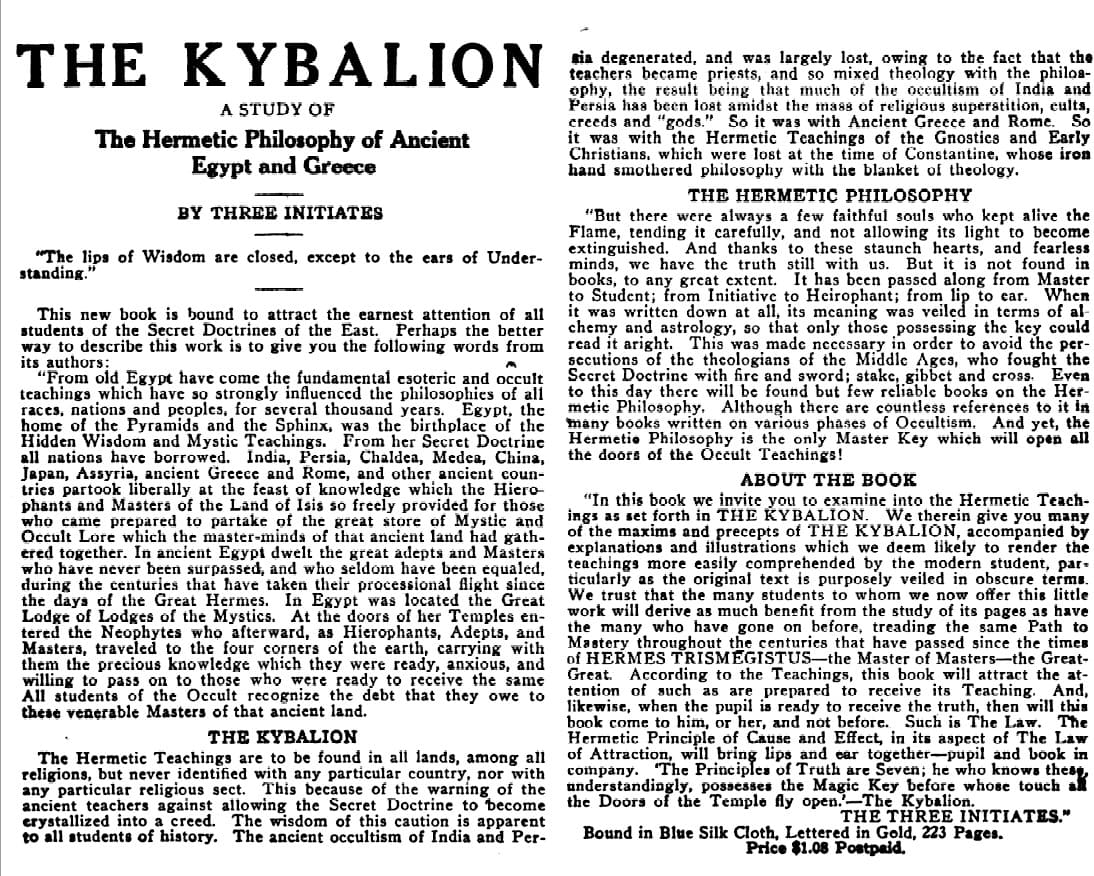
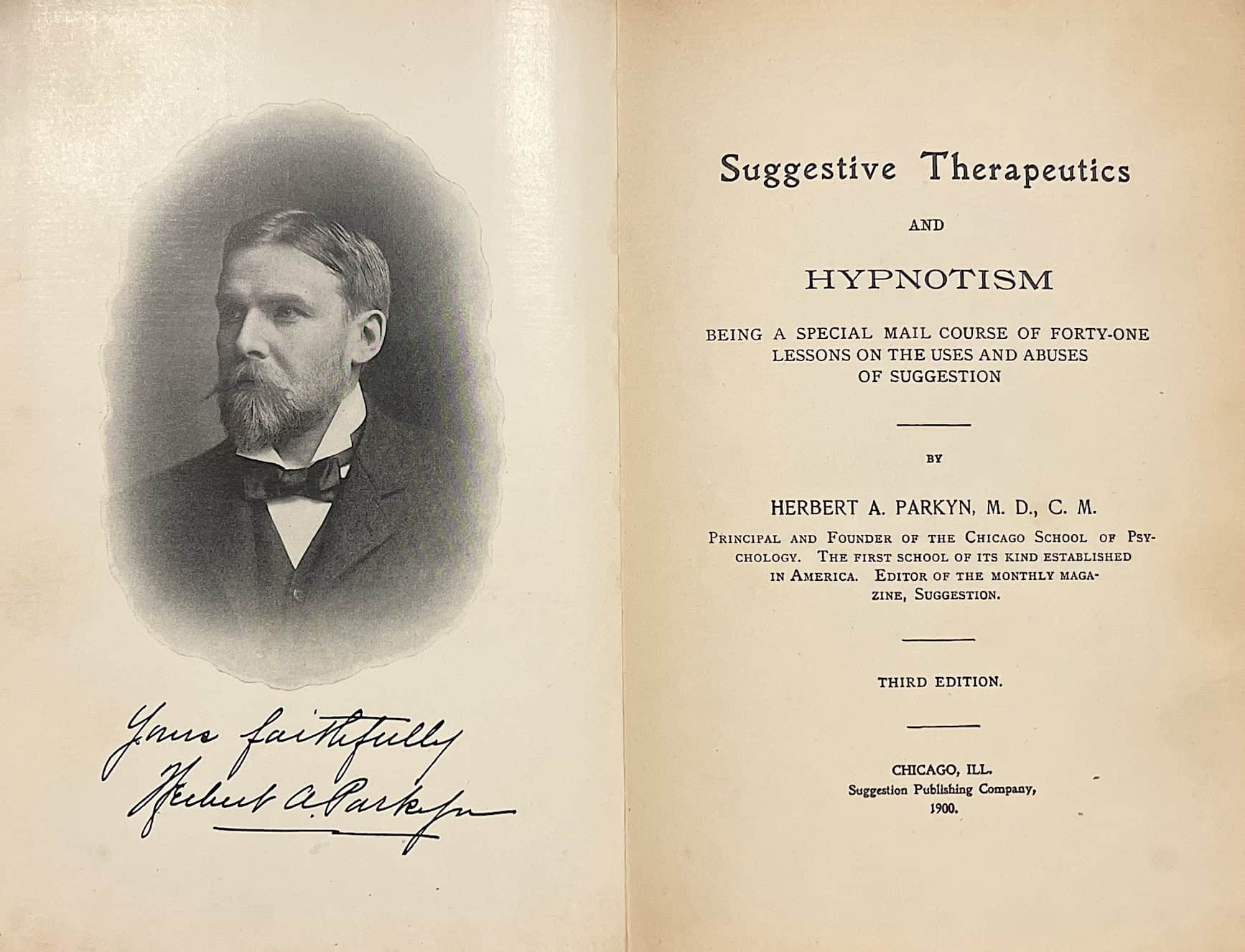
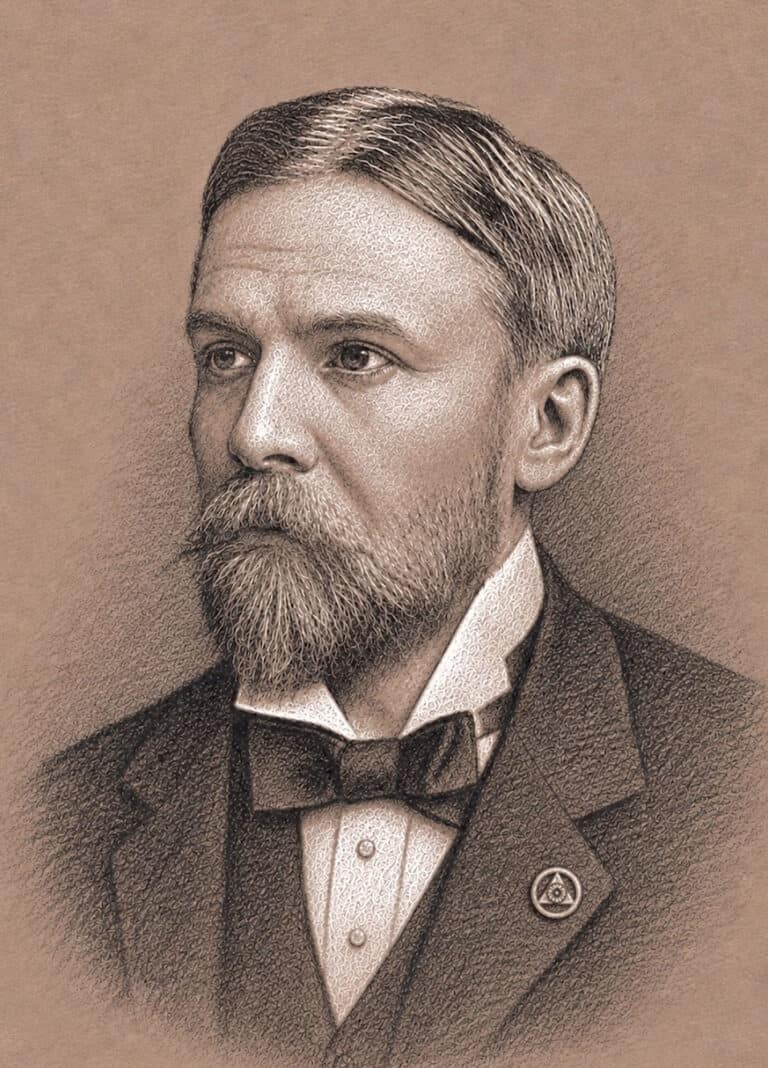
The Seven Hermetic Principles form the foundation of the Hermetic system presented in The Kybalion, but the method behind them had already been taught within the same network years before the book was published. Beginning in the 1890s, Dr. Herbert A. Parkyn developed his system of Suggestion around a series of natural laws governing the mind and its effect upon the body. By 1898, these teachings had been brought together in his Special Mail Course in Suggestive Therapeutics and Hypnotism, a course that would become the foundation for the schools, writers, and publishing ventures from which the Yogi Publication Society developed. The Kybalion did not simply appear in Chicago in 1908, where similar ideas happened to be circulating, but came directly from a publishing network in which Parkyn’s system had already provided a working explanation of the natural laws that the book would present under the Seven Hermetic Principles.
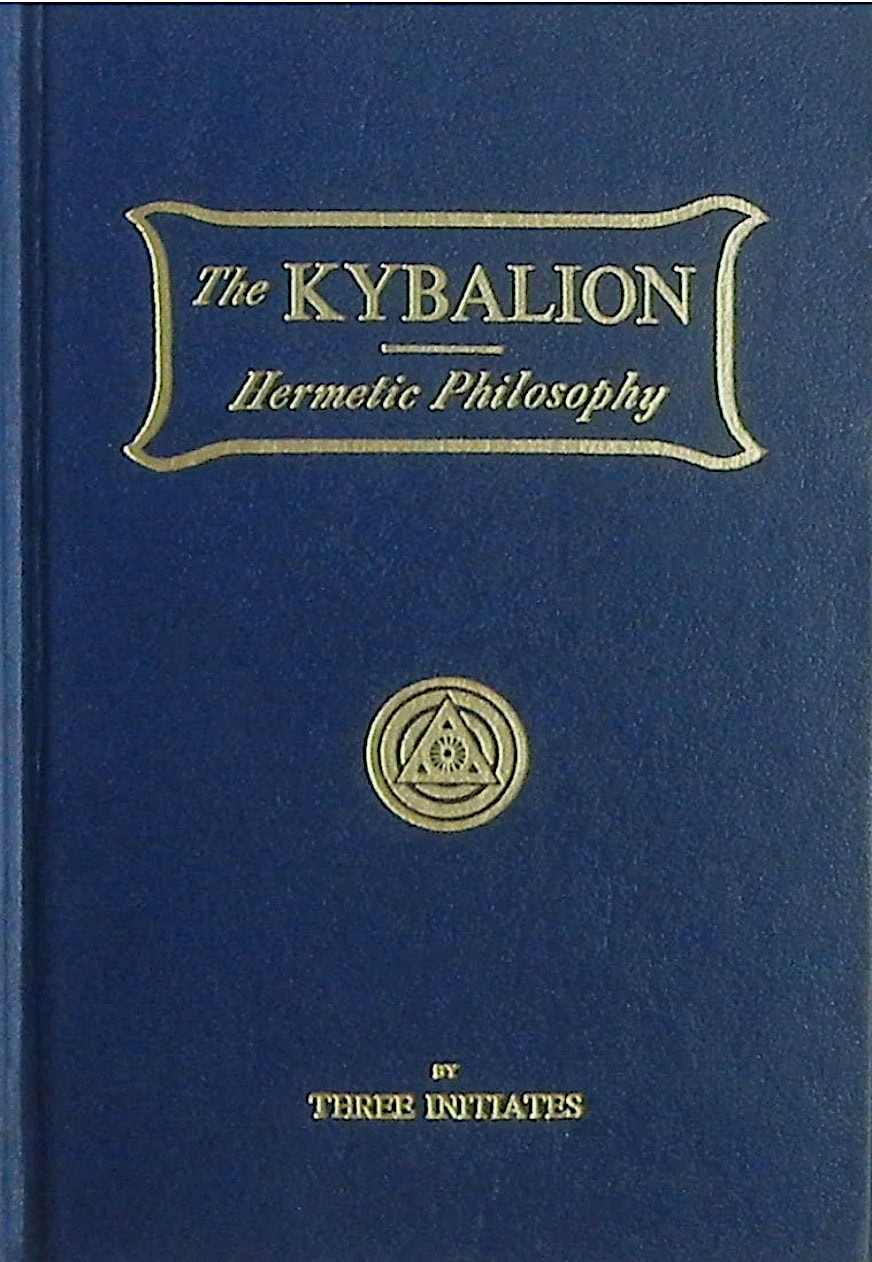
A principle-by-principle comparison of Parkyn’s teachings with The Kybalion shows how much of the later system was already present in his Laws of Suggestion. The relationship runs through all seven principles. Mentalism, Correspondence, Vibration, Polarity, Rhythm, Cause and Effect, and Gender each correspond to specific parts of Parkyn’s explanation of how the mind operates and how its laws may be used. The Kybalion itself helps to show this relationship by deliberately connecting its Hermetic philosophy with the Law of Suggestion. What Parkyn taught as laws governing the human mind are presented in The Kybalion through its seven principles and are shown to also be the same laws that govern the universe.
Examining the two systems side by side shows how closely they follow the same universal principles: “As Within, As Without” and “As Above, As Below.”
Parkyn’s Seven Key Principles of Suggestive Therapeutics
Parkyn’s system rested on a series of connected laws explaining how thought, Suggestion, mental states, and bodily action operated.
- That the mind is the originating power behind all physical states and that the universe of human experience is fundamentally mental.
- That there is a direct correspondence between the state of the body and the state of the mind; what exists within will express itself without. No ailment appeared that had not first been accepted, whether knowingly or through passive conditioning. “As within, so without”
- That everything moves according to vibration. Thought itself is vibratory, and Suggestions, tones, and even colors can be used to restore the body’s vital force and vibratory harmony. “Thought takes form in action.”
- That every thought has its polar opposite, such as fear and courage representing opposite poles of confidence. To produce the desired result, thought must be deliberately directed toward the desired pole. “I Can and I Will”
- That mental healing is cyclical, and Suggestion has to be repeated because the mind responds to rhythms. Habits are formed and reformed not in single moments, but through a steady rhythm of reinforcement. Nothing in nature occurs without rhythm, and the mind is no exception.
- That the cause of disease, failure, or fear is the direct effect produced by the mind and can be identified and reversed. If a person suffers, it is not because of chance, fatalism, or hereditary determinism, but because some aspect of their inner life has set that condition in motion.
- That the mind has a dual nature consisting of two faculties: the active voluntary mind and the passive involuntary mind. The masculine gender of the active mind wills, initiates, affirms, and commands, while the feminine gender of the passive mind receives, accepts, holds, and carries the suggestion into action.
The Seven Hermetic Principles
- Mentalism: “The All is Mind; the Universe is Mental.” Reality starts in the mind. Thoughts shape your world.
- Correspondence: “As above, so below; as below, so above.” Patterns repeat across all levels of the universe, from the big stars to the small atom.
- Vibration: “Nothing rests; everything moves; everything vibrates.” Everything in the cosmos is in constant motion and has an energy frequency.
- Polarity: “Everything is dual; everything has poles.” Opposites are the same thing at different levels; hot and cold are but different poles of temperature.
- Rhythm: “Everything flows, out and in; everything has its tides.” Life moves in cycles, waves, and pendulums that balance out over time.
- Cause and Effect: “Every cause has its effect; every effect has its cause.” Nothing happens by pure luck or chance; the universe follows law.
- Gender: “Gender is in everything; everything has its masculine and feminine principles.” Balanced creative forces exist in all things
Mentalism: Mind as the Originating Power
The first principle of The Kybalion says that “THE ALL is MIND” and that “The Universe is Mental.” Parkyn’s system says the mind is not merely a passive observer of physical existence but the originating force that produces physical states and determines how the individual experiences and responds to the world. Physical symptoms can be produced, intensified, diminished, or removed through mental action because the body’s involuntary processes are responsive to ideas accepted by the mind. A suggestion that becomes sufficiently established can produce a corresponding bodily condition, while an opposing suggestion can be used to reverse it.
Correspondence: What Exists Within Expresses Itself Without
Parkyn taught that inner mental conditions and outward physical expressions followed the Law of Correspondence. What has been accepted within the mind finds expression through the body, behavior, habit, and circumstance. The outward condition therefore provides evidence of an inward cause. Suggestive attempts to change the external effect by changing the mental condition corresponding to it. “As within, so without”
Vibration: Thought as an Active Force
Parkyn taught that everything in nature operates through vibration, including thought itself. Because Suggestion works by introducing and directing thought, it was therefore a means of deliberately influencing these mental vibrations and the conditions they produced. The same principle extended to tones, colors, and other forms of vibration, which Parkyn believed could influence the body’s vital force and help restore vibratory harmony. His statement that “Thought takes form in action” expressed the essential idea that thought, as a vibratory force, moves toward expression in the mind and body. “To change your mood or mental state, change your vibration.” The Kybalion.
Polarity: Directing Thought Toward the Desired Pole
Parkyn taught that every thought has its polar opposite, and that mental conditions could be changed by deliberately directing thought toward the desired pole. Fear and courage, for example, represented opposite poles of confidence, just as love and hate represented opposite poles of affection, and concentrating upon either would move thought in that direction. An undesirable mental condition should not be attacked or denied but displaced by deliberately establishing its opposite. Parkyn cautioned that Suggestions had to be expressed entirely in terms of the condition to be produced rather than the condition to be overcome. To develop courage, the thought must be “I can be courageous,” not “I cannot be fearful,” because the negative expression keeps fear before the involuntary mind and directs it toward the unwanted condition. Parkyn’s formula “I Can and I Will” expressed this principle of deliberately fixing thought upon the positive pole until the desired condition became established.
Rhythm: Repetition, Habit, and Reinforcement
Suggestion does not become powerful merely because an idea has been stated once. It depends heavily upon repetition. Ideas repeatedly impressed upon the mind become easier to accept, until acceptance develops into habit and increasingly automatic mental and physical responses. An undesirable condition can therefore be countered through the persistent reinforcement of its opposing pole. By repeatedly returning thought to the desired pole, the individual establishes a controlled rhythm capable of overcoming the rhythms of outside influences. Nothing in nature occurs without rhythm, and the mind is treated as part of that same natural order. “Rhythm may be neutralized by an application of the Art of Polarization.” The Kybalion
.

Cause and Effect: Finding the Mental Cause
Parkyn’s system taught that disease, fear, weakness, habit, and failure were not to be accepted simply as chance events or unavoidable products of fate, but as results governed by the Law of Suggestion. The task was to identify the mental process that had caused the condition and then introduce a different cause capable of overpowering the initial cause to produce the desired effect. This did not mean that every physical illness could be reduced to a single conscious thought. The involuntary mind could accept impressions passively, through repetition, environmental influence, fear, expectation, habit, or Suggestion. The individual might therefore be unaware of the mental cause that had become established. Suggestive treatment sought to reach precisely this involuntary level and replace the harmful condition with another.
Gender: The Voluntary and Involuntary Mind Recast as Hermetic Law
Parkyn’s last teaching is perhaps the most revealing because The Kybalion itself supplies the bridge between the two systems. Its Principle of Gender states that Masculine and Feminine principles operate on every plane, but when the book turns to Mental Gender it explicitly connects these principles with the theories dividing the mind into conscious and subconscious, voluntary and involuntary, and active and passive faculties. This is precisely the psychological structure at the center of Parkyn’s Suggestive Therapeutics. Parkyn’s active voluntary mind possesses the Masculine qualities: it wills, initiates, directs, reasons, chooses, and affirms. His passive involuntary mind possesses the Feminine qualities: it receives, accepts, holds, develops, and ultimately brings the impressed idea into expression. Suggestion therefore depends upon the interaction of these complementary faculties, with the active voluntary mind repeatedly impressing the desired condition upon the passive involuntary mind until it accepts and expresses it. If the active mind does not deliberately determine what is impressed upon the passive mind, the passive faculty remains receptive to active suggestions coming from the surrounding environment.
.
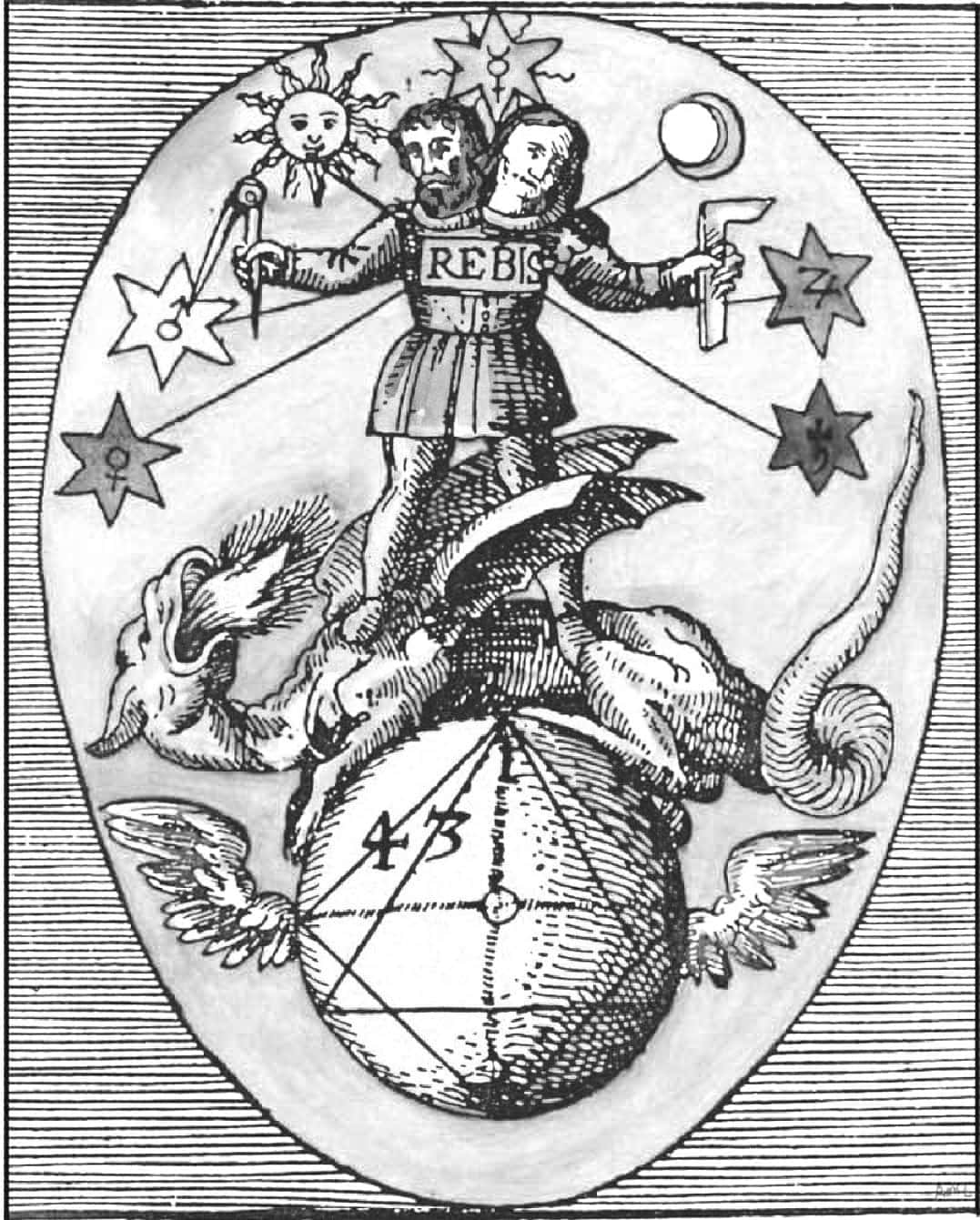
The section on Mental Gender in The Kybalion is immediately followed by discussions of Suggestion, hypnotism, mental influence, telepathy, and thought transference. This demonstrates that the author deliberately presented the Seven Hermetic Principles as the same system of mental laws that Parkyn had taught through Suggestive Therapeutics, but extended their application through the Law of Correspondence, “As above, so below.” What Parkyn had demonstrated as laws operating within the individual mind and body, The Kybalion presented as corresponding laws operating throughout the entire universe, from the Physical and Mental to the Spiritual planes.
“The lips of Wisdom are closed, except to the ears of Understanding.” Hermes Trismegistus