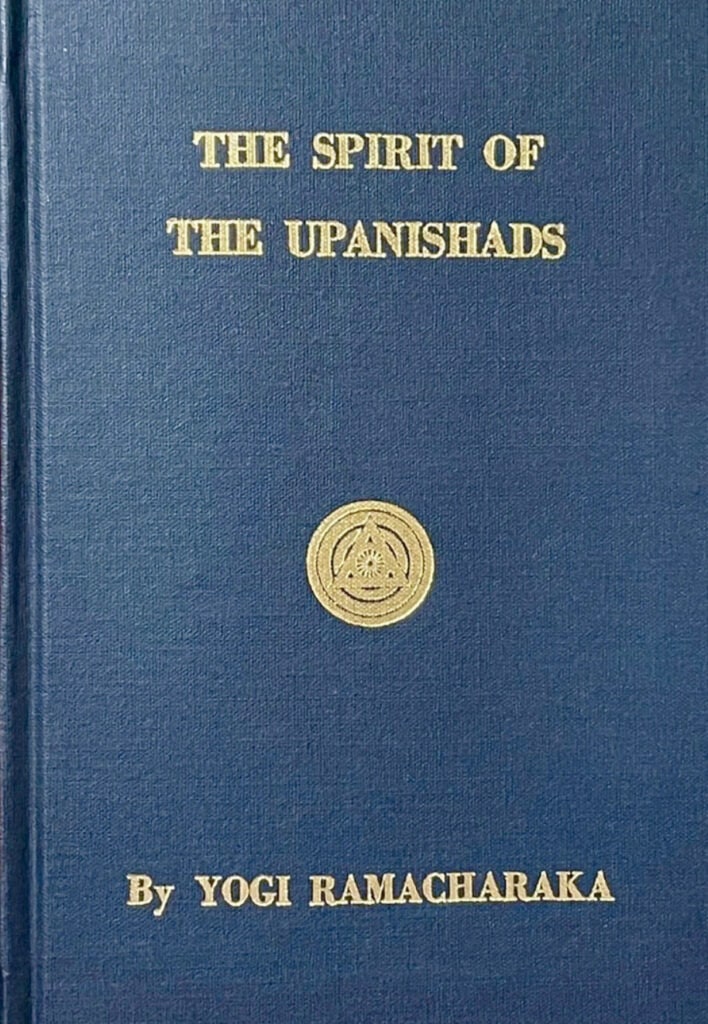
The Spirit of the Upanishads, also called the Aphorisms of the Wise, was put together by Yogi Ramacharaka and republished in 1907. The book aims to make the complex ideas from India’s ancient sacred texts easier for Western readers to understand.
Instead of translating just one text, this book gathers aphorisms, proverbs, and spiritual sayings from over fifty Eastern sources. The content is divided into fourteen sections that help guide readers from early spiritual interest to enlightenment. It looks at important questions, like what the true self is, what absolute reality means, how students and teachers relate, and the ideas of karma and freedom. The book focuses on realizing the individual soul and its unity with a universal divine consciousness. Rather than giving detailed academic analysis, it uses poetic and thoughtful quotes to inspire daily meditation, reflection, and self-exploration.
The Spirit of the Upanishads, by Yogi Ramacharaka and published by the Yogi Publication Society in Chicago in 1907, is not a continuous translation of the Upanishads or a conventional philosophical treatise. It is a carefully arranged collection of passages, aphorisms, sayings, and teachings drawn from the Upanishads and other Hindu philosophical writings, selected and adapted to present what the editors call the “Cream of the Hindu Philosophical Thought.”
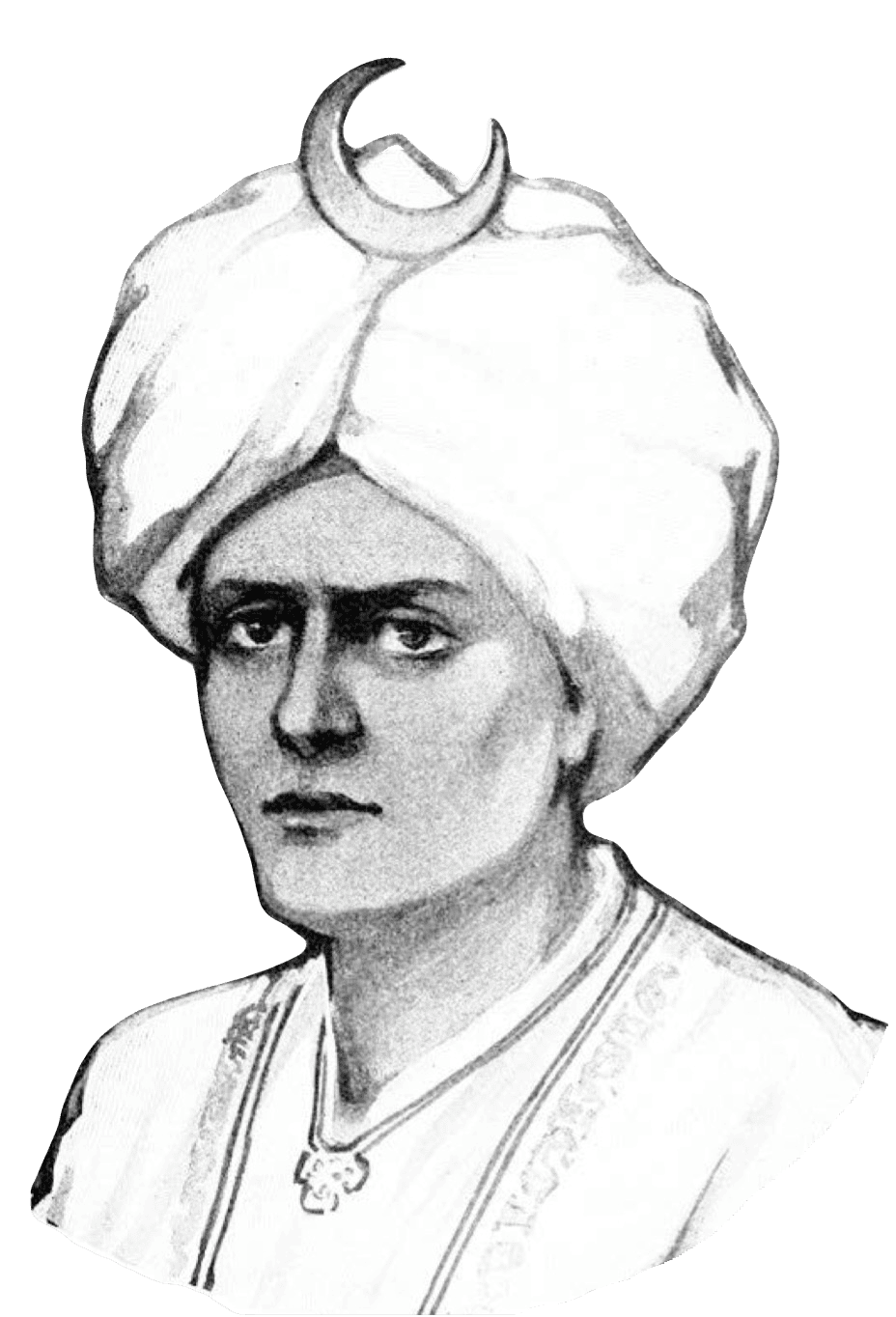
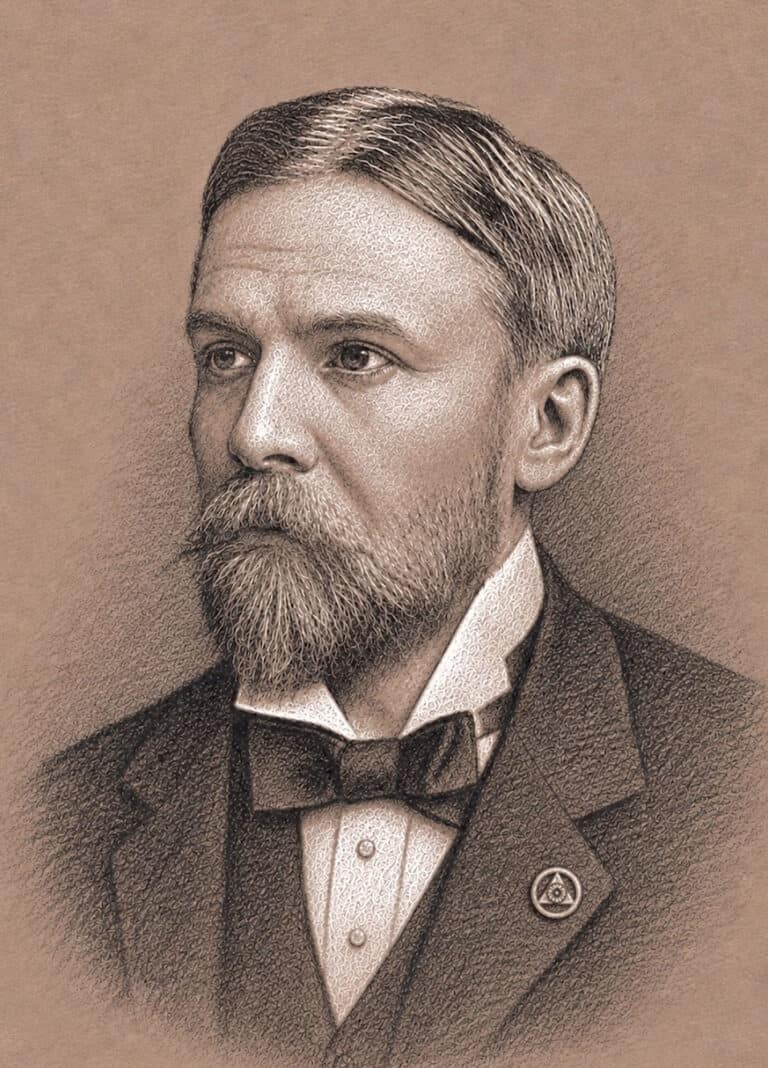
Yogi Ramacharaka
The preface explains that the selections were gathered from many authorities and arranged according to subject so that the central ideas of Hindu philosophy could be encountered directly rather than through a lengthy commentary. The book traces a spiritual progression from the Absolute and the Real Self, through the discipline required of the student, the role of the teacher, karma, devotion, freedom, spiritual knowledge, self-control, and finally to Yoga and liberation.
The central proposition of the book is that there is ultimately one Reality, one Self, and one universal consciousness behind the apparent multiplicity of existence. The ordinary personal self is temporary, conditioned, and associated with body, thought, sensation, desire, and circumstance, while the Real Self is presented as eternal, unconditioned, and identical in essence with the universal Reality called Brahman, the Absolute, Spirit, or simply “THAT.” Human bondage arises because consciousness identifies itself with the temporary instead of the permanent. Liberation therefore does not mean acquiring something that the individual presently lacks. It means awakening to what has always been true beneath the changing appearances of personal existence. The book’s many teachings on knowledge, self-control, non-attachment, devotion, meditation, and Yoga are ultimately different approaches to this single realization.
What Is The Spirit of the Upanishads About?
At its broadest level, The Spirit of the Upanishads is about discovering the permanent reality concealed beneath the changing experiences of ordinary life. The physical body changes, thoughts appear and disappear, desires arise and are satisfied or frustrated, relationships begin and end, circumstances improve and decline, and even the personality changes over time. Yet the book repeatedly asks what it is that knows these changes. Behind every experience there must be an experiencer; behind every thought there must be that which knows the thought; behind every perception there must be consciousness itself. The work directs attention away from the changing objects of consciousness and toward this witnessing consciousness, which it identifies as the Real Self.
This creates the philosophical foundation for nearly everything that follows. The world experienced through the senses appears divided into separate persons and things, yet this multiplicity is ultimately traced back to one underlying Being. The apparent distinction between the individual Self and the universal Self is therefore treated as a consequence of ignorance rather than an ultimate fact of existence. The spiritual path consists of gradually removing the habits of thought, desire, attachment, and identification that prevent this unity from being recognized.
The book’s essential teachings can therefore be summarized as follows:
The Absolute or Brahman is the ultimate reality underlying all existence.
The Real Self is not the body, personality, senses, desires, or changing mind.
The individual Self and the universal Self are ultimately one in essence.
Ignorance produces the experience of separation and bondage.
Desire and attachment strengthen identification with the temporary world.
Karma governs action and its consequences but cannot itself produce liberation.
Spiritual knowledge arises through realization rather than intellectual learning alone.
Self-control, discrimination, non-attachment, reflection, and devotion prepare the mind for realization.
Yoga is fundamentally the control and stilling of the thinking principle, not merely physical exercise.
Liberation is the realization of the unity that has existed beneath apparent separation all along.
The Threshold: Why Does Ordinary Life Fail to Satisfy?
The opening section, “The Threshold,” establishes the problem that the remainder of the book attempts to solve. Human beings naturally seek satisfaction through sensory experience, possessions, relationships, activity, and pleasure, but the selections insist that these things cannot produce lasting happiness because they are themselves temporary. Desire creates movement toward objects, enjoyment temporarily satisfies desire, and new desires arise. The individual therefore remains bound to a continuing cycle of attraction and aversion. What appears to be freedom is actually dependence upon external conditions.
The book connects this process directly with incarnation. Action motivated by pleasure, pain, likes, dislikes, and attachment produces further consequences, and those consequences perpetuate the cycle of embodied existence. Ignorance stands behind the process because the individual mistakes temporary experiences for the source of permanent satisfaction. Knowledge reverses the process. Once the person understands that the happiness being sought through external things actually belongs to the deeper Self, the compulsion to seek completion through changing objects begins to weaken.
This opening establishes an important distinction that runs throughout the work: knowledge is not merely the accumulation of information. A person may read philosophy, discuss religion, memorize scriptures, and understand metaphysical arguments while remaining completely identified with the personal self. Genuine knowledge must alter consciousness. The threshold of spiritual life is crossed when philosophy ceases to be an external subject and becomes an investigation into the nature of the person who is doing the knowing.
What Is the Absolute?
The section called “The Absolute” gathers some of the book’s most fundamental metaphysical statements. Brahman is presented as the reality beyond every limitation that can be imposed by thought. It is not simply a supreme being existing somewhere within the universe. It is the ground of existence itself, the reality from which all forms arise and within which all forms exist. Because every ordinary description distinguishes one thing from another, the Absolute cannot finally be contained within descriptive language. The book therefore repeatedly approaches it through negation: not this, not that, beyond qualities, beyond ordinary categories, beyond the distinction between subject and object.
The Absolute is nevertheless not portrayed as empty nothingness. It is consciousness, being, intelligence, and the underlying unity of existence. The Creator, Protector, Destroyer, gods, worlds, elements, living beings, and countless forms of nature are presented as expressions appearing within the One. Multiplicity does not destroy unity because the many forms never become independent of their source. Just as numerous waves remain manifestations of one ocean, the diversity of existence remains rooted in one Reality.
This is also why the book repeatedly associates the Absolute with unconditional bliss. Ordinary happiness depends upon conditions: a desired event occurs, an unpleasant condition disappears, an object is obtained, or a desire is satisfied. What depends upon conditions must disappear when those conditions change. The bliss of the Absolute is described as unconditioned because it does not depend upon external circumstances. Spiritual realization is therefore not simply an unusually intense pleasant emotion. It is consciousness becoming established in a reality that is not altered by the changing conditions of experience.
Why Can the Absolute Not Be Completely Described?
The difficulty is inherent in the structure of ordinary thought. To describe something is normally to distinguish it from something else. A thing has boundaries, qualities, relationships, and characteristics by which the mind identifies it. But if the Absolute is genuinely all-encompassing, there can be nothing outside it against which it can be defined. Every attempt to describe it therefore turns the unlimited into a limited mental object.
For this reason, the book frequently uses paradoxical expressions. The Absolute is nearer than anything yet beyond ordinary perception; it is the knower but cannot be made into an object of knowledge; it is present in every form yet cannot be confined to any form. These paradoxes are not presented merely as intellectual puzzles. They are intended to force the mind beyond its habitual way of dividing reality into observer and observed.
What Is the Real Self?
The section titled “The Real Self” brings the metaphysical argument into personal experience. If the Absolute is the underlying consciousness of existence, then the deepest Self within the individual cannot ultimately be separate from it. The book therefore distinguishes sharply between the personal self and the Real Self. The personal self includes the body, senses, personality, memories, thoughts, emotions, social identity, and changing mental states. These are experienced, and because they are experienced, the book argues that they cannot be the ultimate experiencer.
The Real Self is the consciousness in which these experiences appear. It is described as the “ear of ears,” the “mind of minds,” and the consciousness behind sensory and mental activity. It does not become young when the body is young or old when the body grows old. It does not become fundamentally improved by praise or diminished by criticism. Pleasure and pain arise within experience, but the witnessing consciousness itself remains behind them.
The book repeatedly expands this idea until the individual Real Self becomes indistinguishable from the universal Self. The same consciousness that appears individualized through one person is presented as the consciousness underlying all beings. Separation belongs to the forms through which consciousness is expressed, not to consciousness in its ultimate nature. The realization “I am THAT” therefore does not mean that the ordinary personality becomes cosmically important. It means precisely the opposite: the limited personality ceases to be mistaken for the whole identity.
Is the Real Self the Same as the Personality?
No. Within the philosophical framework presented in the book, the personality is temporary while the Real Self is permanent. Personality consists of changing characteristics, experiences, habits, memories, desires, and reactions. These may be useful and necessary within ordinary life, but they cannot constitute the deepest identity because they continually change.
The book repeatedly uses analogies to make this distinction understandable. A lamp may illuminate many objects without becoming those objects. The sun may appear reflected in many places without being divided into separate suns. Space appears separated by containers without actually being divided in itself. In the same way, consciousness appears individualized through different persons while remaining one in its fundamental nature.
The Way: How Is Self-Realization Attained?
“The Way” turns from metaphysics toward practice. Intellectual understanding is not dismissed, but it is declared insufficient. Reading books, discussing philosophy, performing ceremonies, and mastering arguments can point toward truth, yet none can substitute for direct realization. The student must turn attention inward and test philosophical teachings against consciousness itself.
The path requires discrimination between the permanent and impermanent. The individual learns to observe sensations, desires, thoughts, and emotions without automatically identifying with them. As this discrimination becomes stronger, the mind gradually stops treating every passing experience as part of the essential Self. The book describes liberation as requiring the cessation of desire because desire continually directs consciousness outward toward objects believed capable of completing the individual.
This does not mean that the aspirant must become intellectually passive. Reflection is repeatedly encouraged. The student is urged to examine experience, question assumptions, and seek the consciousness behind thought. But reasoning must eventually lead beyond reasoning. The mind can point toward the Self, but the Self is not simply another concept produced by the mind.
Why Are Books and Philosophy Not Enough?
The book compares merely intellectual knowledge with knowing the name of a medicine without actually taking it. A person may know the terminology of liberation while remaining bound by desire, fear, anger, vanity, and attachment. Similarly, a musician may understand musical theory without producing music, or someone may study descriptions of food without being nourished. Spiritual knowledge must become lived realization.
This is why the work places such emphasis on direct experience. The purpose of philosophy is to remove misunderstanding and orient consciousness toward truth. Once that purpose has been fulfilled, attachment to philosophical systems themselves can become another obstacle. The teaching is a means rather than the destination.
The Student and the Discipline of Self-Knowledge
“The Student” describes the qualities required for serious spiritual development. Discrimination, non-attachment, self-control, perseverance, and desire for liberation repeatedly appear as essential characteristics. The aspirant must learn to distinguish between what changes and what remains, between temporary pleasure and permanent fulfillment, and between the personal self and the Real Self.
The book strongly warns against spiritual knowledge that remains purely intellectual. A person may possess extraordinary learning and still be governed by desire. Conversely, someone whose intellect is less impressive may advance spiritually if the teachings have become incorporated into conduct and consciousness. The true student is therefore measured by transformation rather than by the amount of information accumulated.
Self-control is particularly important because the senses continually pull consciousness toward external objects. The problem is not that sensory existence is inherently evil but that uncontrolled attraction causes the mind to become dependent upon conditions. The student gradually learns to experience the world without allowing every sensation, desire, and emotional reaction to dictate the direction of consciousness.
What Is the Role of the Teacher?
“The Teacher” presents spiritual instruction as valuable but carefully limits the teacher’s ultimate role. A genuine teacher can explain doctrine, correct misunderstanding, direct attention, and provide methods of practice, but cannot perform realization on behalf of another person. The final movement must occur within the student’s own consciousness.
The book consequently distinguishes between external instruction and internal realization. Scripture and teachers point toward the Self, yet the Self must finally be discovered through direct knowledge. A competent teacher helps the student recognize what is already present rather than transferring some external spiritual substance into the pupil.
This section also repeatedly warns against confusing religious learning with spiritual attainment. Knowledge of the Vedas, ceremonies, doctrines, and philosophical systems may prepare the mind, but their purpose is fulfilled only when they lead toward knowledge of the Self. Once the essential truth has been realized, attachment to the means by which it was discovered is no longer necessary.
What Is the Teacher Ultimately Trying to Reveal?
The teacher is attempting to reveal that the apparent seeker and the Reality being sought are not ultimately separate. This creates one of the central paradoxes of the book. The student begins spiritual practice believing that liberation is something distant that must be attained. The culmination of the teaching reveals that the Self was never absent. What disappears is not distance from the Self but ignorance concerning the Self.
The Lesson: One Reality Behind the Many
“The Lesson” develops the doctrine of unity through a series of metaphors. The universe is described as an apparent multiplicity arising within a single underlying consciousness. Dream imagery becomes especially important. A dream may contain landscapes, people, danger, pleasure, movement, and numerous apparently independent objects, yet the entire dream exists within one consciousness. The book uses this analogy to suggest how the many forms of the experienced universe can arise without destroying the underlying unity of Being.
Another recurring image is the inverted cosmic tree whose roots are above and branches below. Manifest existence spreads outward into multiplicity, but its source remains in the unseen Reality. The wise person traces the branches back toward the root rather than becoming permanently absorbed in the forms.
The lesson is therefore not that the world simply does not exist in any sense. Rather, the world does not possess the independent and permanent reality ordinarily attributed to it. Forms appear, change, and disappear, while the underlying Being remains. Spiritual ignorance consists in taking the temporary form as ultimate reality.
What Does the Book Teach About Karma?
The section “The Law of Karma” distinguishes moral and religious action from liberation. Karma is presented as the law by which actions produce consequences. Good actions may produce favorable conditions, and harmful actions may produce suffering, but both remain within the realm of conditioned existence. Karma can modify experience; it cannot by itself reveal the unconditioned Self.
This distinction is crucial. The book does not reject ethical conduct. Self-restraint, truthfulness, purity, intelligence, spiritual culture, and control over the senses are praised as characteristics of genuine spiritual development. Yet moral action must ultimately be joined with knowledge. Good karma may improve the circumstances of existence, but liberation requires the destruction of ignorance.
The work therefore treats karma as both an ethical law and a mechanism of bondage. Actions performed through identification with the personal self create consequences that reinforce that identification. When action is performed without attachment to personal reward, its binding power begins to diminish. Liberation comes when the individual ceases to identify the Real Self with the actor who receives the fruits of action.
Can Good Karma Produce Liberation?
According to the book, no. Good karma can purify character, improve circumstances, and prepare consciousness for higher realization, but liberation is fundamentally a matter of knowledge. The reason is simple: action operates within the world of cause and effect, while the Real Self is presented as beyond conditioned causation. No finite sequence of actions can manufacture something that is already eternally present.
Devotional Worship and the Inner Meaning of Religion
The section on “Devotional Worship” does not simply reject religious devotion. Instead, it reinterprets devotion through the philosophy of the Self. External worship, sacred places, images, ceremonies, and religious forms may be useful when they direct consciousness toward spiritual reality. Their value lies in what they awaken rather than in the external form itself.
The body can become a temple, the inner Self the object of worship, and disciplined consciousness the true pilgrimage. Formal objects of worship are described as aids for those who have not yet realized the Essence directly. As realization deepens, the distinction between worshipper and worshipped begins to disappear.
This produces a movement from devotion toward unity. At first the individual loves God as something greater than himself. Eventually the seeker recognizes the divine Reality within all beings and within consciousness itself. Devotion is thereby transformed from attachment to a particular external representation into reverence for the universal Self.
Does the Book Reject Religion?
No. It distinguishes between religious forms and the spiritual reality those forms are intended to express. Ceremonies, scriptures, teachers, sacred places, and devotional practices can all serve legitimate purposes. The problem arises when the form becomes an end in itself and the practitioner forgets the realization toward which it was intended to point.
Freedom and the Power of Personal Effort
The brief section titled “Freedom” strongly emphasizes personal effort. The book rejects the tendency to attribute conduct entirely to fate, necessity, or divine decree. Even within the limitations of embodied existence, the individual possesses the capacity to direct attention, discipline thought, restrain desire, and move toward realization.
This emphasis prevents the doctrine of universal Being from becoming fatalistic. If everything ultimately arises within the One, it might seem that individual effort is meaningless. The book answers by treating effort itself as part of the process through which ignorance is overcome. The aspirant must act as though liberation depends upon persistent personal discipline because passivity simply leaves existing habits unchanged.
True freedom begins with mastery of the mind. A person whose consciousness is continually driven by desire, fear, impulse, and external circumstances is not free merely because no physical restraint has been imposed. Freedom is inward independence.
What Is Spiritual Knowing?
“Spiritual Knowing” sharply distinguishes realization from intellectual belief. The Real Self cannot be known in the same manner as an external object because it is the consciousness by which objects are known. The attempt to make the Self into an object therefore misses the point. Spiritual knowledge occurs when consciousness recognizes its own nature.
Reflection becomes the primary method. The student asks: Who am I? What is the body? What knows the body? What is thought? What knows thought? Am I the changing contents of experience, or am I that in which these changes are known? Through sustained inquiry, identification is gradually withdrawn from objects, sensations, and mental states.
The book suggests that this process eventually produces an inner quiet comparable to the stillness associated with Mount Meru. Desire for enjoyment diminishes because the individual no longer expects external things to provide the permanent satisfaction that belongs to the Self.
The Four-Fold Means of Spiritual Development
The section called “The Four-Fold Means” gives one of the clearest practical frameworks in the book. The four means are presented as Self-realization beginning with non-attachment, followed by control, and culminating in the desire for liberation. Within this framework the aspirant develops discrimination, self-restraint, patience, control of the senses, charity, sympathy, and the ability to withdraw attention from objects that continually excite desire.
Non-attachment does not mean indifference toward other people. In fact, the selections repeatedly encourage compassion, equality, goodwill, and freedom from anger. What must disappear is possessiveness and dependence. Wealth, pleasure, reputation, relationships, and social position become sources of bondage when the individual treats them as necessary to inner completeness.
The book is especially severe concerning desire because desire perpetually promises satisfaction while generating new dissatisfaction. Wealth creates fear of loss, pleasure produces craving for repetition, and social recognition creates dependence upon the opinions of others. The solution is not necessarily physical abandonment of every possession but the destruction of inward dependence upon them.
What Are the Main Qualities of the Spiritual Aspirant?
Across the sections on the student, the teacher, spiritual knowing, and the four-fold means, the book repeatedly emphasizes a recognizable group of qualities:
discrimination between the permanent and impermanent;
non-attachment to possessions, pleasures, and results;
control of the senses and thinking principle;
patience and perseverance;
truthfulness and moral discipline;
compassion and equal regard for others;
reflection upon the nature of the Self;
freedom from excessive anger, fear, and desire;
sincere longing for liberation;
direct realization rather than dependence upon intellectual belief.
These disciplines are not presented as separate moral accomplishments. They work together to quiet the mind sufficiently for the underlying Self to become apparent.
What Does The Spirit of the Upanishads Mean by Yoga?
The section “Union (Yoga)” is particularly important because the book defines Yoga primarily in terms of consciousness rather than physical exercise. One of its selections states directly that “Yoga is the control of the thinking principle.” The mind is controlled through practice and non-attachment, and liberation is described as existing within the purified mind rather than somewhere beyond the world.
The book explicitly criticizes reducing Yoga to physical exercises. Physical discipline may have value, but the spiritual purpose of Yoga is control of thought, destruction of latent desire, and realization of the Absolute. A person capable of difficult physical practices but unable to govern desire, fear, anger, or attachment has not accomplished the central purpose of Yoga as presented here.
Yoga is therefore the process by which the mind ceases continually projecting distinctions and becomes capable of recognizing the underlying unity of Being. As mental activity becomes quieter, the separation between subject and object becomes less absolute. The individual ceases to experience the Self merely as one small consciousness surrounded by an external universe and begins to recognize consciousness as the common ground of experience.
How Is the Mind Controlled?
The book repeatedly returns to two principal methods: practice and non-attachment. Practice repeatedly directs consciousness toward the Real Self, while non-attachment removes the desires that continually pull attention outward. Neither method is sufficient by itself. Attempting concentration while remaining intensely attached to external pleasures creates conflict, while attempting detachment without directing consciousness toward a higher reality can become mere suppression.
The ideal is disciplined inward attention combined with decreasing dependence upon the objects of experience. Thought gradually becomes quieter because fewer desires demand continual mental activity.
The Meaning of “I Am THAT”
One of the most important formulas throughout the book is the identification of the Self with the universal Reality: “I am THAT.” This does not mean that the personal ego should imagine itself omnipotent. The personal ego is precisely what the teaching attempts to transcend. The statement becomes meaningful only when “I” no longer refers primarily to the body, personality, history, possessions, and desires.
The deeper “I” is the witnessing consciousness itself. When stripped of every temporary identification, this consciousness cannot finally be separated from the consciousness underlying existence. The apparent individual therefore discovers that the Self being sought was never an isolated entity.
This realization also explains the book’s ethical emphasis on compassion and equality. If the same Self exists within all beings, hatred and cruelty arise from ignorance of the underlying unity. The enlightened person does not merely adopt kindness as an externally imposed moral rule but increasingly experiences other beings as expressions of the same fundamental Reality.
Liberation: What Does It Mean to Become Free?
The final and longest section, “Liberation,” gathers the entire argument into its conclusion. Liberation is not described primarily as traveling to another world after death. It is freedom from the ignorance that causes consciousness to identify itself with temporary forms. The liberated person may continue to live, act, speak, work, and experience ordinary conditions, but inward identification has shifted from the conditioned personality to the unconditioned Self.
The liberated state is repeatedly associated with equanimity. Pleasure and pain may arise, praise and blame may occur, possessions may come and go, and bodily circumstances may change, but the knower no longer derives identity from these fluctuations. This does not make the liberated person unconscious or emotionally dead. Rather, experience continues without the same possessive identification that previously transformed every event into a threat or promise to the ego.
The final selections push the doctrine of unity to its furthest point. From the standpoint of ordinary experience there are seekers, teachers, practices, bondage, progress, and liberation. From the standpoint of the Absolute, however, the underlying Reality has never actually become divided. The spiritual journey therefore culminates in the paradoxical realization that what appeared to be the attainment of freedom was actually the disappearance of the ignorance that made bondage seem ultimately real.
What Happens to the Ego in Liberation?
The ego is not portrayed as a physical object that must literally be destroyed. It is a pattern of identification. Consciousness identifies itself with the body, thoughts, memories, social identity, desires, and personal history and then interprets experience from that limited center. Liberation dissolves this identification.
The book repeatedly describes the resulting state as peace, fearlessness, bliss, and unity. When the separate self is no longer treated as ultimate, much of what produces fear disappears with it. Death threatens the body but not the universal Self. Loss threatens possessions but not Being. Criticism threatens the social personality but not consciousness itself. Liberation therefore transforms the individual’s relationship with experience rather than requiring the external world to become perfect.
Is Liberation Something That Happens Only After Death?
No. The book repeatedly describes liberation as realizable while living. The enlightened individual may continue inhabiting the body and participating in ordinary existence while recognizing that the body and personality are not the whole Self. This is one of the most important practical implications of the work.
Death therefore does not automatically produce enlightenment. If ignorance consists of identification with limitation, physical death by itself does not constitute spiritual knowledge. Liberation comes through realization of the Self, and that realization can occur during embodied life.
The Relationship Between Knowledge, Desire, and Liberation
One of the clearest patterns running through the entire collection is the relationship among ignorance, desire, action, and bondage. Ignorance causes the individual to identify with the limited personality. That identification produces a sense of incompleteness. Incompleteness produces desire. Desire produces action directed toward obtaining or avoiding particular experiences. Action generates karma, and karma perpetuates conditioned existence.
The spiritual path reverses the sequence. Discrimination exposes the temporary nature of external objects. Non-attachment weakens desire. Self-control reduces compulsive action. Reflection turns consciousness toward the witnessing Self. Spiritual knowledge destroys the fundamental ignorance from which the cycle began. Liberation follows not because the individual has accumulated enough religious merit to purchase freedom, but because the mistaken identity responsible for bondage has been seen through.
This gives the book an unusually unified structure despite its being assembled from many different sources. Nearly every topic ultimately returns to the same problem: What does the individual believe himself to be? If the answer is body, personality, possessions, desires, and thought, bondage follows. If consciousness realizes itself as the universal Self, the foundation of bondage disappears.
Why Is Desire Treated as Such a Serious Obstacle?
Desire occupies so much attention because it continually reinforces the assumption that fulfillment exists somewhere outside the Self. Every desire implicitly says that present Being is insufficient and that completion depends upon obtaining another object, experience, relationship, achievement, or condition. Even when a desire is fulfilled, satisfaction is temporary because the mind soon identifies another absence.
The book does not merely recommend suppressing desire through force. Suppression leaves the underlying belief intact. The deeper solution is knowledge. When the individual recognizes the Self as inherently complete, desire loses much of its psychological authority. Non-attachment therefore becomes the natural consequence of insight rather than an arbitrary punishment imposed upon the personality.
The Relationship Between the Individual and the Universe
The book repeatedly uses metaphors of space, light, water, reflection, dreams, and natural elements to explain how apparent individuality can coexist with ultimate unity. A pot appears to contain its own separate space, but breaking the pot reveals that the space was never actually divided from universal space. Numerous reflections of the sun may appear in different bodies of water, but there are not therefore numerous independent suns. Waves appear individually while remaining nothing other than ocean.
These metaphors communicate the relationship between the individual Self and Brahman. The body and mind create the appearance of limitation, but the consciousness appearing through them is not ultimately separate from universal consciousness. The spiritual path does not merge two things that were previously separate; it removes the apparent boundary that caused unity to be overlooked.
What Is the Central Message of The Spirit of the Upanishads?
The central message of The Spirit of the Upanishads is that the human being’s deepest identity is not the temporary personality but the eternal consciousness underlying all existence. The apparent separation between individual and universe arises through ignorance, identification, desire, and the activity of the mind. Spiritual life consists of gradually removing these obscurations through discrimination, non-attachment, self-control, reflection, devotion, spiritual knowledge, and Yoga.
The book therefore moves from metaphysics to psychology and finally to liberation. It begins by asking what is ultimately real, then asks what the individual truly is, then examines why that truth is not ordinarily recognized, and finally presents the disciplines through which recognition becomes possible. Karma, devotion, teachers, scriptures, philosophical study, self-restraint, meditation, and Yoga all occupy places within this process, but none is treated as the final goal. Their value depends upon whether they lead toward realization of the Self.
The Book’s Spiritual Progression
Although The Spirit of the Upanishads is an anthology rather than a continuous argument written by a single author, its arrangement gives it a clear progression. The fourteen parts move the reader through a sequence that can be understood as a complete spiritual path:
The Threshold introduces the dissatisfaction and ignorance that begin the search.
The Absolute establishes the one ultimate Reality behind existence.
The Real Self identifies that Reality with the deepest consciousness within the individual.
The Way explains why direct realization must replace merely intellectual knowledge.
The Student describes the qualities required of the seeker.
The Teacher explains the role and limitations of spiritual instruction.
The Lesson develops the doctrine of unity behind apparent multiplicity.
The Law of Karma explains action, consequence, rebirth, and the limitations of action as a means of liberation.
Devotional Worship redirects external religion toward realization of the inner Self.
Freedom emphasizes personal effort and inward independence.
Spiritual Knowing explains direct knowledge of the Self.
The Four-Fold Means develops discrimination, non-attachment, self-control, and desire for liberation.
Union (Yoga) describes control of the thinking principle and realization of universal Being.
Liberation presents the culmination in Self-knowledge, unity, fearlessness, peace, and freedom.
Read in this way, the collection is more than a miscellaneous book of quotations. Its arrangement creates a philosophical journey from ordinary consciousness to spiritual realization.
Why The Spirit of the Upanishads Matters
The Spirit of the Upanishads offers a compact presentation of the philosophical worldview that the Yogi Publication Society wanted its early twentieth-century Western readership to encounter as the essential wisdom of Hindu philosophy. Rather than translating one Upanishad from beginning to end, the editors assembled teachings from the Upanishads and numerous related philosophical sources and organized them around universal themes such as Self, consciousness, desire, karma, Yoga, knowledge, and liberation. The result is therefore best understood as a thematic anthology and interpretation of Indian spiritual philosophy rather than a literal edition of the Upanishads themselves.
Its deepest organizing idea is simple enough to state but expansive enough to encompass the entire work: the One Reality appears as the many, the universal Self appears as individual selves, and ignorance causes the individual to mistake the appearance of separation for ultimate truth. From that mistake arise desire, attachment, fear, karma, and bondage. From Self-knowledge comes the gradual dissolution of those limitations.
The final destination is not the glorification of the individual personality but its transcendence. The seeker begins by asking how the personal self can obtain truth, power, happiness, and liberation. The teaching gradually changes the question. It asks who this seeker actually is. When consciousness ceases identifying itself exclusively with the temporary body and personality, the division between seeker and sought begins to disappear. The ultimate realization of the book is therefore not “I have found the Absolute,” but the much more radical recognition that the deepest Self and the Absolute were never two separate realities.
In this sense, The Spirit of the Upanishads presents spiritual development as a movement from multiplicity toward unity, from external dependence toward inward freedom, from desire toward completeness, from intellectual belief toward realization, and from the temporary personal self toward the eternal Self. Its many aphorisms, metaphors, warnings, disciplines, and philosophical statements continually return to that same center. Beneath the changing forms of life stands one consciousness; beneath the many apparent selves stands one Self; and liberation consists in knowing that Reality directly.
The History of the Upanishads
Adi Shankara, the great expounder of Advaita Vedanta and principal commentator on the Upanishads
The Upanishads are ancient Sanskrit texts that form the philosophical core of Hinduism and make up the final part of the Vedas. Known together as Vedanta, (or “the end of the Vedas”) they moved Indian religious thought away from rituals and ceremonies and toward meditation, self-exploration, and the search for ultimate truth. Considered Shruti, or divinely revealed scripture, the Upanishads were written by unknown sages and forest hermits between about 800 and 500 BCE, with some later texts added in the centuries that followed.
The main idea in the Upanishads is that the ultimate reality, called Brahman, is the same as the true Self, or Atman, within each person. This is summed up in the well-known phrase Tat Tvam Asi (“Thou Art That”), which means the individual soul and the universal reality are one. The Upanishads say that not knowing this truth keeps people trapped in Samsara, the ongoing cycle of birth, death, and rebirth, which is shaped by Karma, where every action has consequences. The highest aim in life is Moksha, or freedom from this cycle, which comes through spiritual knowledge and self-realization.
Traditionally, there are 108 Upanishads, but thirteen are considered the main or Mukhya Upanishads. Some of the most important ones include the Isha, Kena, Katha, Prashna, Mundaka, Mandukya, Taittiriya, Aitareya, Chandogya, and Brihadaranyaka Upanishads. These texts introduced many key ideas that shaped Vedanta philosophy and still influence Hinduism, yoga, and spiritual practices around the world.