Major-General John Frederick Charles Fuller (1878–1966), known as J. F. C. Fuller, was a British Army officer, military strategist, historian, and author. He is considered one of the main architects of modern armored warfare. In addition to his military career, Fuller had a lasting interest in Western esotericism, Hermetic philosophy, ceremonial magic, and Qabalistic mysticism. He wrote several important works exploring the philosophical roots of the Western mystery tradition.
Fuller graduated from the Royal Military College at Sandhurst and served in different parts of the British Empire. He became internationally known during the First World War for his new ideas about using tanks and mechanized warfare. His writings changed twentieth-century military thinking and influenced leaders worldwide. While foreign armies often adopted his ideas faster than Britain did, Fuller is now seen as one of the leading military theorists of the modern era.
Alongside his military work, Fuller also studied the occult. In 1907, he joined Aleister Crowley‘s magical order, the A∴A∴, and became one of Crowley’s first and most important associates. During this time, he wrote The Star in the West (1907), which was the first major study of Crowley’s philosophy and magical system. This book helped introduce Crowley’s ideas to more people. As Fuller’s military career grew, he slowly distanced himself from Crowley, realizing that being closely linked to such a controversial figure could hurt his professional future. Even after they parted ways, Fuller kept his interest in mysticism and continued to study Hermeticism, Qabalah, comparative religion, and esoteric philosophy on his own.
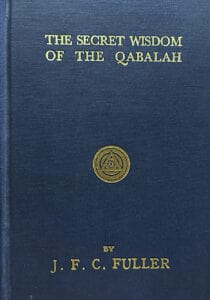
Fuller’s most important work on the occult is The Secret Wisdom of the Qabalah (1937). In this book, he examines Jewish mystical philosophy within the wider Western esoteric tradition. Instead of seeing the Qabalah only as ceremonial magic, Fuller presents it as a universal philosophy for spiritual growth. He focuses on the symbolism of the Tree of Life, the connection between people and the Divine, and the repeated theme of sacred trinities in different religious and philosophical traditions. By comparing Jewish mysticism, Hermetic philosophy, Christianity, and Eastern religions, Fuller aimed to show the common ground shared by many spiritual traditions.
Throughout his writings, Fuller combined the analytical discipline of a professional. In his writings, Fuller brought together the analytical skills of a soldier with a deep interest in metaphysics, symbolism, and the hidden forces behind human consciousness and society. His rare ability to connect military science, philosophy, and esoteric ideas made him a unique thinker of the twentieth century. He is remembered for changing modern warfare and for his lasting impact on the study of Western mysticism.