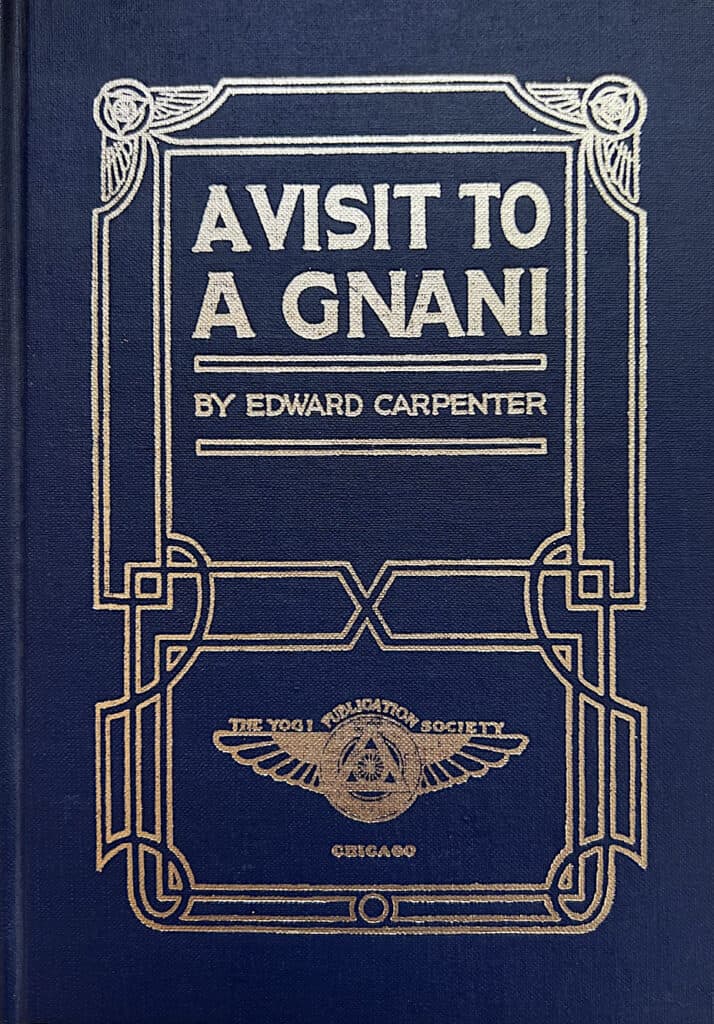
A Visit to a Gnani is one of the earliest Western books about Indian spirituality. British philosopher, poet, and social reformer Edward Carpenter wrote it, and it first appeared in his 1892 travel book From Adam’s Peak to Elephanta before being published separately in 1900. By describing his travels in India and Ceylon (now Sri Lanka), Carpenter helped introduce Western readers to Vedanta, yoga, and Hindu teachings on self-realization.
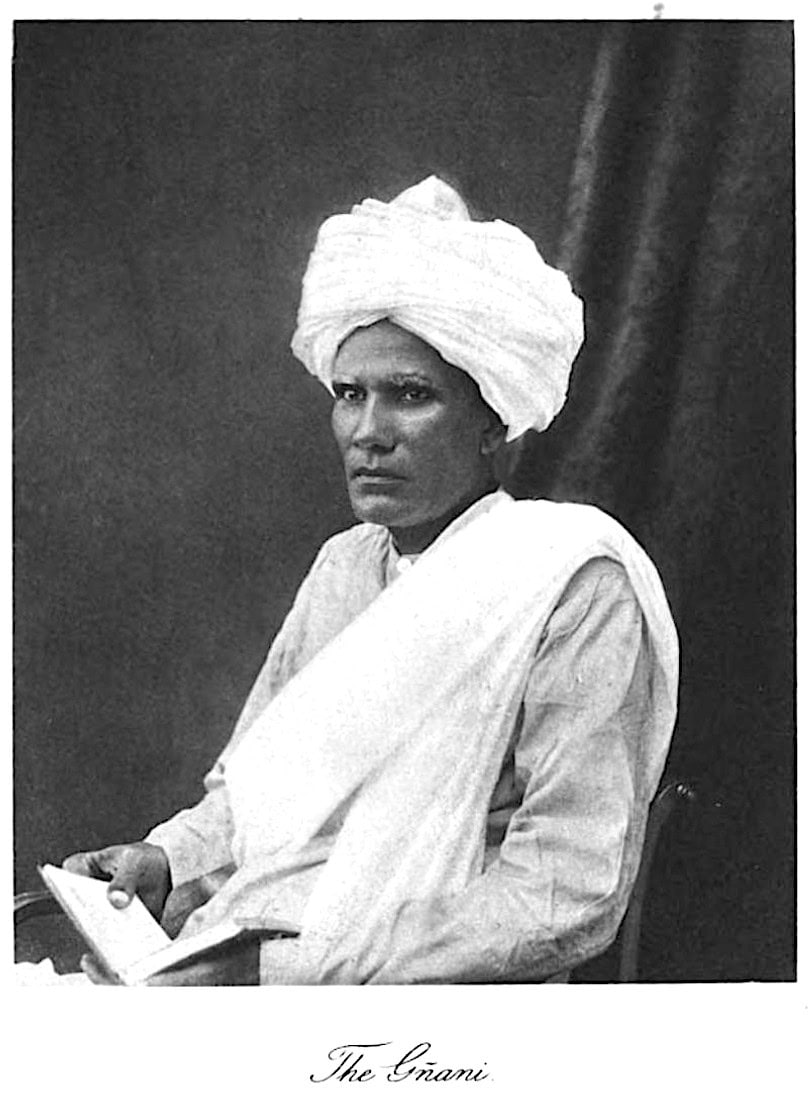
The Gnani, Ramaswamy
The main part of the book describes Carpenter’s meeting with Ramaswamy, a South Indian sage known as a Gnani, or enlightened person. Even though Ramaswamy was well respected for his spiritual wisdom, he lived simply and humbly, earning a living as a traditional grammarian. In their conversations, the Gnani explains that practices such as meditation, mental focus, self-control, and gradually letting go of the ego are key to spiritual growth. Rather than following strict religious rules or rituals, these teachings encourage people to look within, quiet their minds, and see the deep connection between all things.
One of the main ideas in the book is universal consciousness. The Gnani explains that each person is deeply connected to the greater reality that pervades the universe, and that people suffer because they believe they are separate. This clear explanation of Eastern philosophy gave many Western readers their first look at ideas that would later shape modern yoga, Vedanta, and New Age spirituality.
The book was highly influential among early twentieth-century intellectuals and spiritualists. Carpenter’s thoughtful approach to Indian philosophy helped spark greater Western interest in Eastern religions and influenced figures such as E. M. Forster, D. H. Lawrence, and Sri Aurobindo.
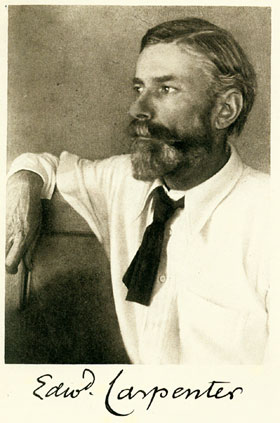
Edward Carpenter
Edward Carpenter (1844–1929) was an English philosopher, poet, author, and social reformer. He grew up in Brighton, studied at Brighton College and Trinity Hall, Cambridge, and was first ordained as an Anglican clergyman. Later, he left the ministry to focus on social reform, writing, and spiritual ideas. Inspired by Christian Socialism and writers like John Ruskin, Ralph Waldo Emerson, and Henry David Thoreau, Carpenter became known for supporting socialism, vegetarianism, simple living, and humanitarian causes.
In the 1880s, Carpenter became a key figure in Britain’s socialist movement. He joined groups like the Social Democratic Federation, the Socialist League, and the Fabian Society, and later helped start the Independent Labour Party with Keir Hardie and Ramsay MacDonald. He spoke up for workers’ rights, opposed industrial capitalism, campaigned against vivisection and capital punishment, supported women’s right to vote, and stayed committed to pacifism during both the Boer War and World War I.
Carpenter was open about being gay and lived for many years with his partner George Merrill. He was one of the first English writers to say publicly that homosexuality is a natural part of human sexuality, not a moral problem. His ideas about sexual freedom influenced people like Havelock Ellis and later writers such as D. H. Lawrence, Siegfried Sassoon, and E. M. Forster.
Along with his social and political work, Carpenter became very interested in Eastern philosophy and mysticism. His travels in India and Ceylon led him to write several important books that introduced many Western readers to ideas like Vedanta, yoga, meditation, and universal consciousness. Carpenter kept writing until his death in 1929.
Related Research Articles
The True Meaning of the Name and Back Story of Yogi Ramacharaka
This article breaks down the hidden symbolism and meaning behind "Yogi Ramacharaka", the pen name that was created by the Yogi Publication Society and shows the allegory that reflected the ideas the books were…