
Person Research Collection
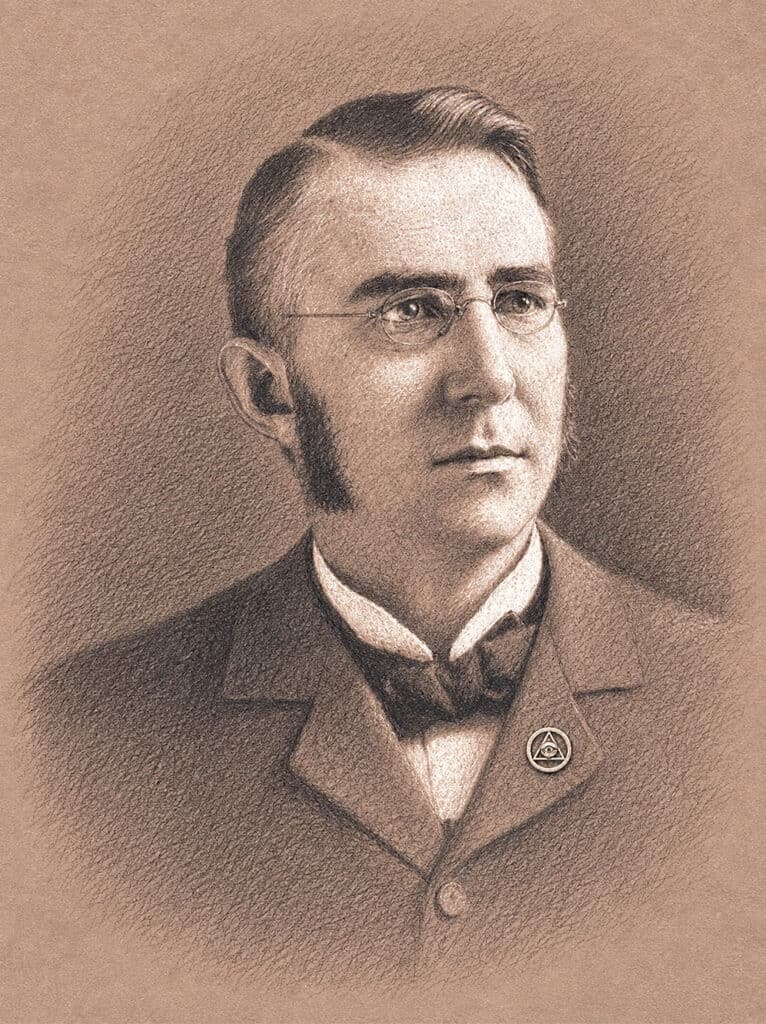
W. Xavier Sudduth
1853–1915
Sudduth was a prominent physician and pioneer of suggestive therapeutics who conducted over 1,000 experiments with Herbert A. Parkyn and later lectured at his Chicago School of Psychology.
Dr. William Xavier Sudduth was a prominent American physician, dental surgeon, medical educator, psychologist, and scientific researcher whose work extended across hypnotism, suggestive therapeutics, experimental psychology, music therapy, and agricultural science.
He served as dean of the Dental School at the University of Minnesota, held academic appointments in Philadelphia and Chicago, and became an internationally recognized authority on oral surgery and hypnotism. His close professional association with Herbert A. Parkyn placed him among the physicians investigating the therapeutic power of suggestion during the closing years of the nineteenth century. Their experiments in Minneapolis and Chicago contributed to the development of the psychological methods that Parkyn later taught through his Chicago School of Psychology.
Early Life, Family, and Medical Education
William Xavier Sudduth was born on January 18, 1853, in Springfield, Illinois, the son of Dr. James McCreary Sudduth, a physician who later became a prominent cattleman and agricultural pioneer in Montana. His father was associated with David Pratt and Morrison in the early cattle business and helped ship the first trainload of cattle over the railroad following its construction through Billings. The family maintained strong interests in medicine, education, agriculture, and social reform, interests that would remain central to Sudduth’s own career.
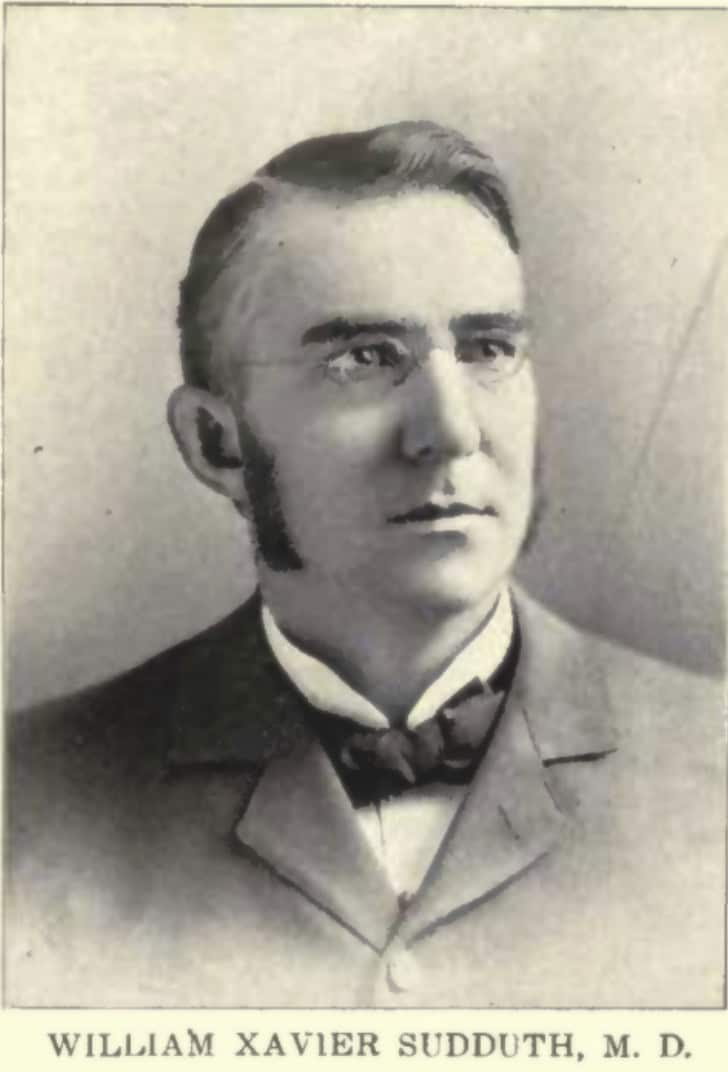
Two of his sisters, Margaret Ashmore Sudduth and Alice Sudduth Byerly, achieved national prominence through their leadership in the Woman’s Christian Temperance Union. Their father was also a supporter of temperance and Prohibition. Sudduth shared the family’s interest in addressing alcoholism and other forms of addiction, investigating hypnotism and psychological treatment as possible methods of overcoming habitual behavior. His work in this field would later intersect with Parkyn’s investigations into the treatment of dipsomania through suggestion.
Sudduth attended Illinois Wesleyan University, graduating in 1873. He subsequently pursued dentistry and medicine in Philadelphia and New York, graduating from the Philadelphia College of Dentistry and the College of Physicians and Surgeons of New York in 1884. He completed postgraduate studies at the Medico-Chirurgical College of Philadelphia in 1885 and continued his medical education at universities and clinics in Heidelberg, Vienna, Berlin, Paris, and Nancy. His European training introduced him to important developments in neurology, hypnotism, and psychological medicine.
In France, Sudduth studied the methods associated with the Nancy School of Suggestion, whose leading physicians, Ambroise-Auguste Liébeault and Hippolyte Bernheim, emphasized the psychological action of suggestion in producing hypnotic phenomena. Their work helped shift the medical understanding of hypnotism away from older theories of magnetic fluids and toward the influence of ideas upon the nervous system. Sudduth became an advocate of investigating these phenomena through clinical observation and experimentation.
Academic Career and the Study of Hypnotism
Sudduth began his academic career in Philadelphia, serving as professor of oral surgery and clinical demonstrator at the Medico-Chirurgical College until 1890. He also headed its dental and anatomy departments. The institution had incorporated the Philadelphia Dental College in 1886 and possessed an established history of research into hypnotism and dental anesthesia. Earlier investigators associated with the college included John H. McQuillan and William H. Atkinson, who had examined the use of hypnotic methods in dental procedures.
It was through this Philadelphia connection that Sudduth’s relationship with the Parkyn family began. Dr. John Holmes Jackson, a first cousin of Herbert A. Parkyn, studied dentistry in Philadelphia under Sudduth between 1886 and 1890. Jackson later introduced Parkyn to Sudduth, establishing the personal connection that led to their collaboration in Minneapolis. Jackson was also the brother of Samuel Hollister Jackson, who married Parkyn’s sister.
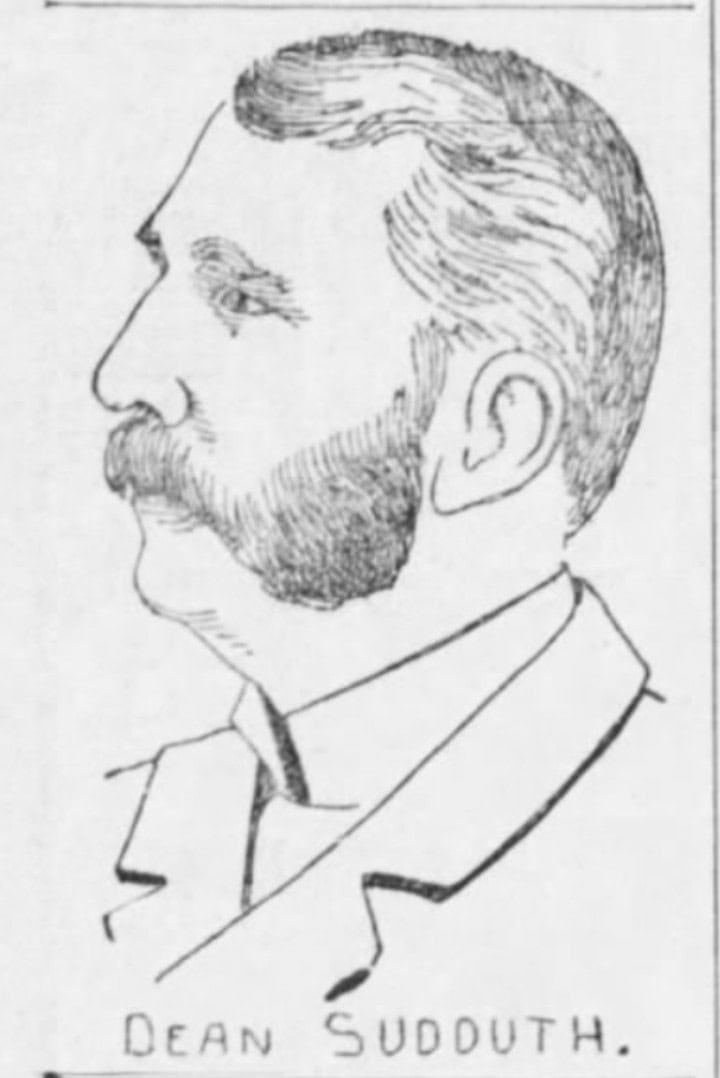
In 1890, Sudduth became dean of the Dental School at the University of Minnesota. By this time, he had devoted many years to the investigation of hypnotism, and his professional reputation extended beyond dentistry into neurology, psychology, and suggestive therapeutics. He obtained permission to conduct hypnotic experiments in the university’s medical clinics, examining the possibility of relieving pain and performing surgical procedures without chemical anesthetics.
During 1894, Sudduth worked closely with Dr. Parkyn in Minneapolis. Together they participated in more than one thousand experimental demonstrations involving hypnotism and suggestion. Their investigations included dental extractions, surgical operations, tumor removals, and the treatment of stammering, addictions, and nervous disorders. Sudduth had already developed an international reputation for oral surgery, and his investigations into hypnosis attracted considerable attention within the medical profession.
Their experiments also generated controversy. Some university authorities objected to the use of hypnotism in clinical procedures, and by late 1894 Sudduth was asked to discontinue these activities within the institution. The opposition contributed to his decision to leave the University of Minnesota in the spring of 1895.
Collaboration with Herbert A. Parkyn in Chicago
Following their departure from the university setting, Sudduth and Parkyn continued their experiments privately in Minneapolis before establishing a joint medical office at 100 State Street in Chicago in 1895. Their work combined medical treatment with investigations into the psychological and physiological effects of hypnotism, suggestion, music, vibration, light, and color.
Sudduth was already an experienced investigator of hypnotic phenomena, while Parkyn was developing his own understanding of the relationship between conscious thought, subconscious mental processes, and bodily functions. Their collaboration exposed Parkyn to an extensive program of experimental psychology and clinical demonstration. Parkyn’s subsequent work would place increasing emphasis on suggestion as the active therapeutic agent, independent of the production of hypnotic sleep.
The two physicians also conducted public educational demonstrations involving hypnotism, telepathy, thought transference, and mind reading. They approached these subjects through the study of mental processes, nervous activity, and physiological responses, seeking explanations for phenomena frequently associated with spiritualism and occultism.
Experiments Into Vibration, Sound, Light, and Color
Their investigations into music and vibration formed another important part of this work. They proposed that every individual possessed a characteristic bodily keynote, influenced by physical condition, nervous activity, and mental or emotional state. Illness and nervous exhaustion were interpreted as disturbances in the harmonious functioning of the organism. By identifying the appropriate musical tones and harmonies, they believed it was possible to restore balance and improve the patient’s condition.
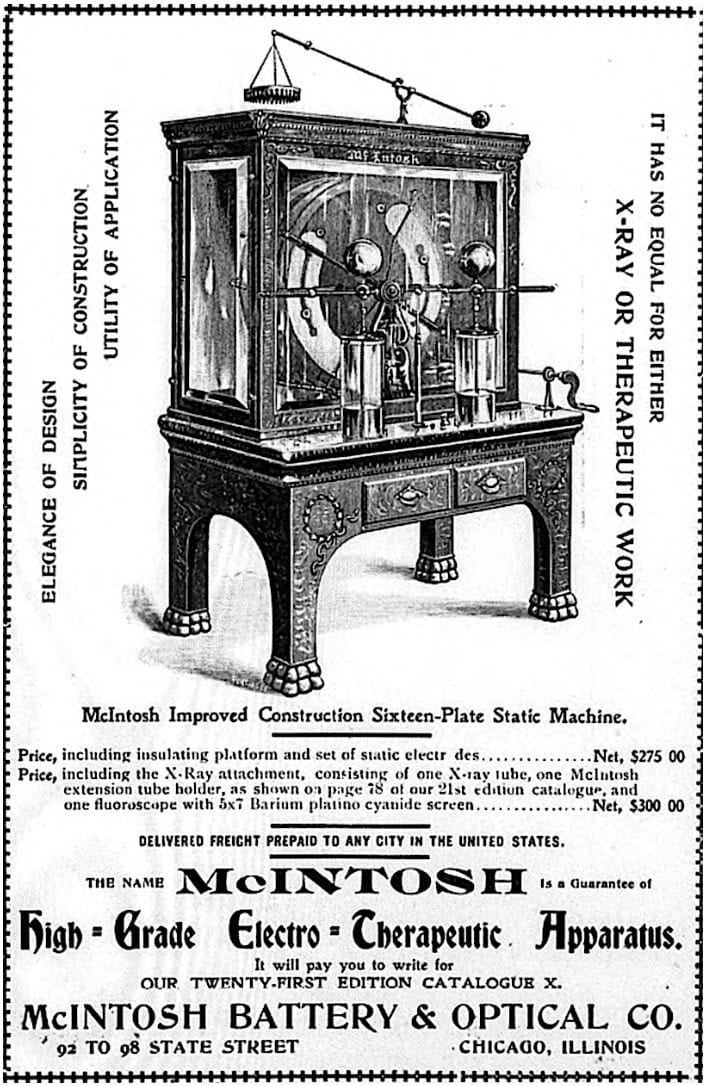
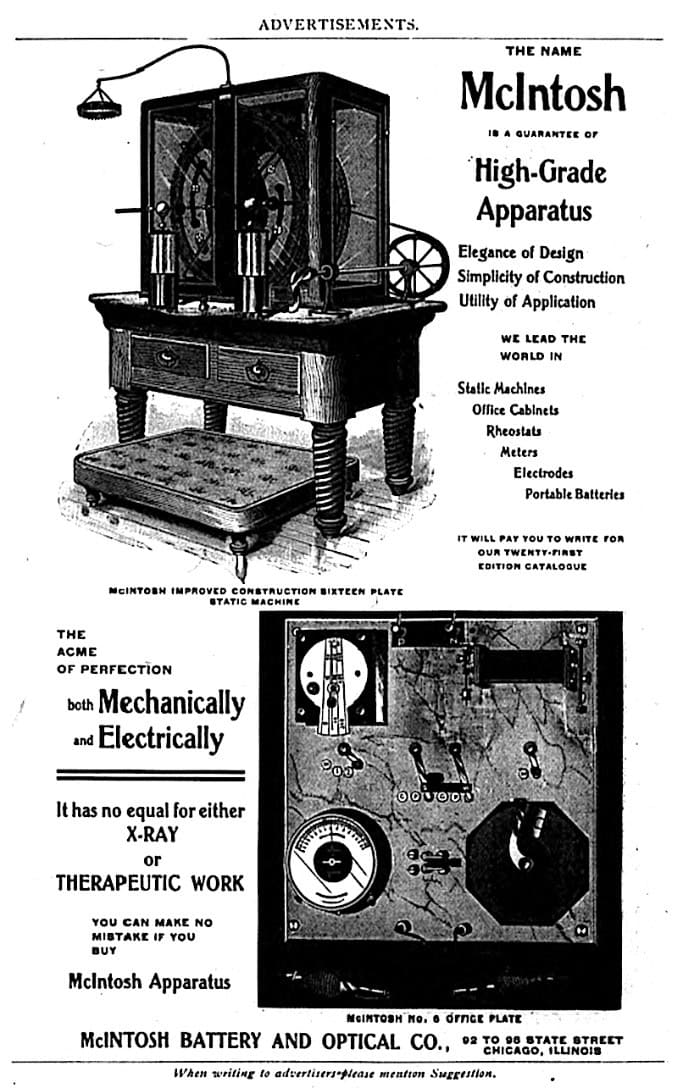
Sudduth and Parkyn’s experiments extended to the effects of vocal frequencies, sound, light, color, and electrical stimulation upon the nervous system. These investigations combined psycho-physical exercises with experimental methods for examining the relationship between sensory stimulation and mental states. The physicians’ interests extended beyond conventional hypnotism into the psychological effects of ritual, rhythm, and suggestion.
Following the death of his father in 1895, Sudduth traveled to San Francisco to attend to the family estate and subsequently returned to Europe for further scientific study. He returned to the United States in April 1896 and resumed his professional work in Chicago with Parkyn.
Medical Psychology, the Chicago School of Psychology, and Suggestion
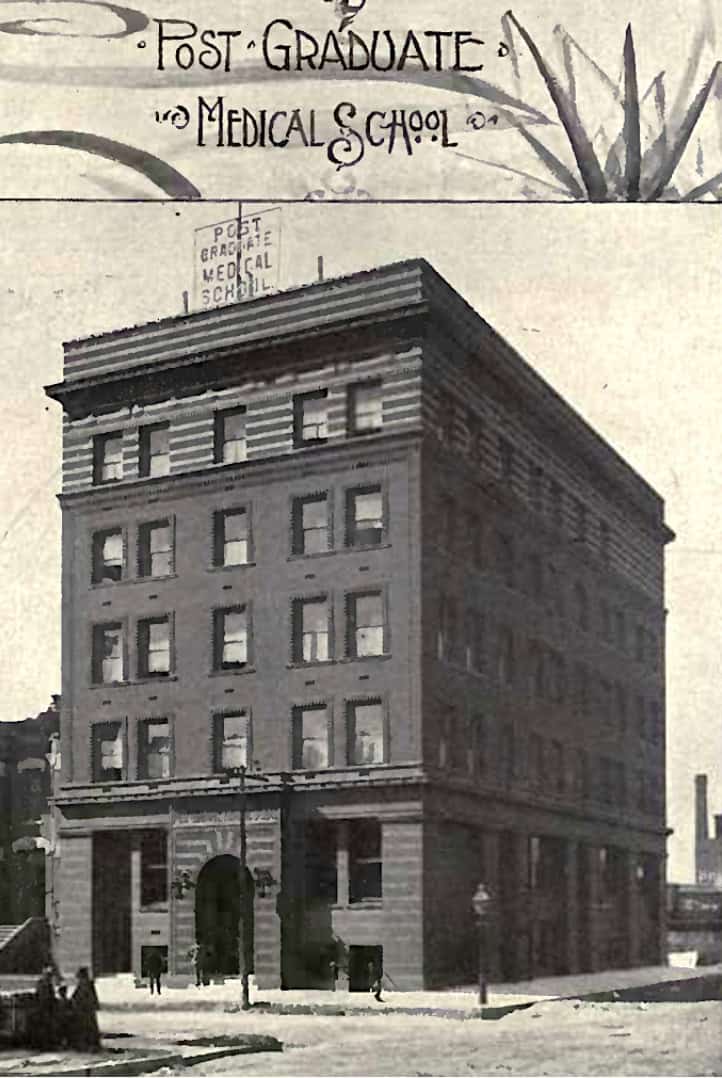
After returning to Chicago, Sudduth held several academic and professional appointments. He served as an extension lecturer at the University of Chicago and as professor of morbid psychology at the Chicago Post-Graduate College of Medicine. His work also included psycho-therapeutics and the direction of a psycho-physical laboratory. He became chairman of the Psychological Society of the Medico-Legal Society of New York, where he was associated with Thomson Jay Hudson and Professor Clark Bell.
Sudduth maintained a close relationship with Parkyn as the latter developed the Chicago School of Psychology, founded in June 1896. He frequently lectured at the school and contributed articles to Parkyn’s Hypnotic Magazine and Suggestion, publications devoted to hypnotism, mental therapeutics, psychology, and the application of suggestion to health and human behavior.
Parkyn began teaching suggestion in 1895 and subsequently organized his methods into a comprehensive system of psychological instruction. His Special Mail Course in Hypnotism and Suggestive Therapeutics extended these teachings to students beyond Chicago. Sudduth’s participation in Parkyn’s school and periodicals formed part of the scientific and educational environment from which Parkyn’s later influence upon New Thought developed.
Music Therapy and the Alpha Sanitarium
By the closing years of the 1890s, Sudduth had established himself as a specialist in nervous disorders and was operating a sanitarium at Lake Forest, Illinois. His therapeutic methods combined music with color and electricity, based on his theory that the human nervous system responded to specific harmonies and frequencies.
In March 1899, The Weekly Pantagraph of Bloomington, Illinois, described his use of music as a therapeutic agent, with color and electricity serving as auxiliary treatments. According to Sudduth, every person possessed an individual keynote that varied with daily physical and nervous conditions. His methods were intended to restore willpower and replenish vitality in patients suffering from nervous exhaustion.
During the same period, Sudduth served as superintendent of Alpha Sanitarium. His work placed him among physicians investigating the relationship between sensory stimulation, mental suggestion, and the restoration of physical health. Sudduth maintained that disturbances in the nervous system could be understood through the analogy of an instrument falling out of tune and that appropriately selected musical harmonies could influence the body’s return to a healthier condition. He drew upon the soothing effects of lullabies, the emotional influence of opera, and the different responses individuals experienced when exposed to particular musical notes.
Esotericism, Thought Transference, and Psychological Research
Sudduth also participated in Chicago’s intellectual and esoteric societies, where the boundaries between experimental psychology, religious philosophy, and psychical research were frequently examined. He was a member of the Chicago Esoteric Extension Association, which focused on sacred books, mysticism, tradition, and the esoteric aspects of sociology, ethics, and philosophy. Sudduth’s participation demonstrates his involvement in discussions extending beyond clinical medicine into subjects associated with Western esotericism and telepathy.
These interests overlapped with subjects explored through Parkyn’s publications and educational programs, where hypnotism, mental influence, and suggestion were examined alongside questions concerning the powers of the human mind. Sudduth approached these investigations as a physician and experimental researcher, while also participating in the esoteric organizations that brought together medical professionals, psychologists, philosophers, and students of mysticism.
Scientific Contributions and Professional Recognition
Sudduth’s professional accomplishments extended across several fields of medical science. He became internationally recognized for his work in oral surgery, including investigations into the classification of oral tissues and the relationship between microorganisms and diseases of the mouth and digestive system. His scientific contributions were substantial enough to be included in the eleventh edition of the Encyclopaedia Britannica. He served as an associate editor of the American Medical Journal and lectured for fourteen years before annual gatherings of the American Medical Association. He was affiliated with numerous medical, scientific, and psychical research organizations in the United States and Europe.
His research included investigations into prenatal influences upon children, the effects of music and color upon the mind, hypnotic anesthesia, nervous diseases, and the therapeutic applications of psychological suggestion. He was among the early physicians to employ hypnotism in connection with surgical procedures and advocated continued scientific investigation of its medical possibilities.
Agricultural Research and the Father of Dry Farming in Montana
In the later years of his life, Sudduth turned much of his attention toward agriculture and the development of non-irrigated farming methods in Montana. His family’s involvement in cattle ranching and land development provided an existing connection to the region, and he eventually assumed responsibility for ranching and agricultural interests inherited from his father. Sudduth established a farm at Fairview, near Broadview, Montana, where he conducted experiments in soil moisture conservation, summer fallowing, plant selection, and the cultivation of crops under conditions of limited rainfall. His investigations helped demonstrate the productive possibilities of land previously considered unsuitable for cultivation without irrigation.
He became especially interested in alfalfa, conducting extensive experiments into its root structure, resistance to winter conditions, adaptation to different soils, and possible uses as food and medicine. He investigated hundreds of varieties and explored methods of processing alfalfa into flour and other products.
His agricultural research earned him the title “Father of Dry Farming in Montana.” At the New York Land Show, he exhibited more than one thousand products derived from alfalfa and received a cup donated by Montana rancher Paul Van Cleve. His experiments attracted attention from farmers, agricultural researchers, and settlers seeking to cultivate the non-irrigated lands of the American West.
In 1914, Sudduth published an illustrated discussion titled Alfalfa—The Plant of Antiquity, examining the plant’s adaptability, root development, winter hardiness, and performance under different climatic conditions. The article included an early portrait of Sudduth and a photograph of him at his home. His agricultural writings reflected the same experimental curiosity that had characterized his earlier investigations into medicine and psychology.
Death and Legacy
Dr. William Xavier Sudduth died in 1915 at the Palace Hotel in Roundup, Montana, following a brief illness caused by pneumonia. He had arrived from Melstone suffering from a cold that rapidly developed into a serious respiratory infection. His condition deteriorated over the following days, and he died on a Sunday evening.
His daughter, Mabel Sudduth, was living in Saybrook, Illinois, while his sister Margaret resided in Brooklyn, New York. His wife had died some years earlier. Funeral services were arranged in Billings, Montana, where he was buried at Mountview Cemetery.
His relationship with Herbert A. Parkyn remains an important part of his history. Through their clinical experiments in Minneapolis, their joint medical work in Chicago, and Sudduth’s continued participation in Parkyn’s school and publications, the two physicians contributed to the development of suggestive therapeutics in America. Their association also connects Sudduth to the intellectual foundations of the Chicago network from which the Yogi Publication Society was established in 1903.
Sources & Citations
- Newspaper. Dr. Sudduth joined as Dean of Dentistry at Minnesota. He is famous in Europe". Minneapolis Daily Times. 1890-09-07. p. 3. Retrieved 2025-03-30.
- Newspaper. "Herbert A Parkyn is enlisted by Dr Sudduth as proficient in hypnosis" . The Evening Star. 1894-12-07. p. 1. Retrieved 2025-03-30.
- Newspaper. "Dr. Sudduth editor of the International Dental Journal" . Nashville Banner. 1890-02-08. p. 5. Retrieved 2025-03-31.
- Government / Archival Record. "Medico-Chirurgical College and Hospital of Philadelphia Records" . University Archives and Records Center. Retrieved 2025-03-31.
- Newspaper. "Sudduth a member of the Philadelphia medical society" . Daily Local News. 1888-06-21. p. 1. Retrieved 2025-03-31.
- Newspaper. "Dr. Sudduth of international fame" . Minneapolis Daily Times. 1890-07-09. p. 2. Retrieved 2025-03-31.
- Website. "School of Dentistry Timeline" . AHC Oral History Project. Retrieved 2025-03-31.
- PDF / Digital Archive. Unrivaled Chicago page 121
- Newspaper. "J Holmes Jackson graduates from the Philadelphia dental school" . The Kingston Whig-Standard. 1890-05-15. p. 1. Retrieved 2025-03-30.
- Newspaper. "Death announcement and life story of Dr. J. Holmes Jackson" . The Burlington Free Press. 1944-12-16. p. 9. Retrieved 2025-03-30.
- Website. CULTIVATING A“CHAIRSIDE MANNER” : DENTAL HYPNOSIS, PATIENT MANAGEMENT PSYCHOLOGY, AND THE ORIGINS OF BEHAVIORAL DENTISTRY IN AMERICA, 1890–1910 pg 239
- Newspaper. "De. Sudduth is offered the position of first dean of the Philadelphia Medical school" . The Weekly Pantagraph. 1890-05-16. p. 5. Retrieved 2025-03-31.
- Newspaper. "Dr. Sudduth chooses University of Minnesota over Philadelphia" . The Weekly Pantagraph. 1890-06-20. p. 6. Retrieved 2025-03-31.
- PDF / Digital Archive. Guide to Wisconsin newspapers , 1833-1957
- PDF / Digital Archive. History of Eau Claire county , Wisconsin page 502
- Newspaper. "Sudduth travels with football team and is a mascot" . Minneapolis Daily Times. 1894-11-17. p. 6. Retrieved 2025-04-24.
- PDF / Digital Archive. Operative Dentistry , Dr. Sudduth and the use of hypnotism in dentistry. Pages 185-189
- Newspaper. "Dr. Sudduth and Parkyn perform surgery on a neck tumor with hypnosis" . The Rochester Daily Post. 1894-11-06. p. 1. Retrieved 2025-03-31.
- Newspaper. "Sudduth and Parkyn give hypnosis demonstration" . The Minneapolis Journal. 1894-11-06. p. 6. Retrieved 2025-03-31.
- Newspaper. "Herbert A Parkyn is enlisted by Dr Sudduth as proficient in hypnosis" . The Evening Star. 1894-12-07. p. 1. Retrieved 2025-03-31.
- Newspaper. "Dr. Herbert A. Parkyn speaks about his use of Suggestion and working with Dr. Sudduth" . The Evening Star. 1895-01-07. p. 3. Retrieved 2025-03-31.
- PDF / Digital Archive. Dictionary of the University of Minnesota , page 191
- Newspaper. "Sudduth and Parkyn hypnotize mascot on way to football game" . Minneapolis Daily Times. 1895-12-31. p. 4.
- Newspaper. "Sudduth and Parkyn on hypnosis and crime" . Minneapolis Daily Times. 1895-04-16. p. 1. Retrieved 2025-03-31.
- Newspaper. Dr. Parkyn and Dr. Sudduth on hypnosis and crime
- Newspaper. "Sudduth and Parkyn on hypnosis and crime part 2" . Minneapolis Daily Times. 1895-04-16. p. 7. Retrieved 2025-03-31.
- Newspaper. "Dr. Sudduth must stop using hypnosis at Minnesota University" . Minneapolis Daily Times. 1894-12-06. p. 6. Retrieved 2025-04-01.
- Newspaper. "Dr. Sudduth angers dentists over hypnosis use" . Minneapolis Daily Times. 1894-10-19. p. 5. Retrieved 2025-04-01.
- Newspaper. "W X Sudduth steps down as Dean at Minnesota University" . The Minneapolis Journal. 1895-03-20. p. 6. Retrieved 2025-04-01.
- Newspaper. "Parkyn and Sudduth start hockey team but must stop hypnosis at U of Minnesota. Open private office" . Minneapolis Daily Times. 1894-12-06. p. 6. Retrieved 2025-04-01.
- Newspaper. "Herbert A Parkyn and Sudduth do demonstrations and experiments to show tricks with telepathy" . The Weekly Leader. 1895-04-20. p. 5. Retrieved 2025-04-07.
- Newspaper. "Parkyn and Sudduth leave for Chicago to open office and Sanitarium in Oak Park" . The Weekly Leader. 1895-07-27. p. 6. Retrieved 2025-04-07.
- Newspaper. "Dr. W X Sudduth steps down as Dean of Minnesota University dental school" . Minneapolis Daily Times. 1895-03-21. p. 3. Retrieved 2025-04-01.
- Newspaper. "W X Sudduth steps down as Dean at Minnesota University" . The Minneapolis Journal. 1895-03-20. p. 6. Retrieved 2025-04-01.
- Newspaper. "Dr. Sudduth appointed lecturer at University of Chicago" . Minneapolis Daily Times. 1895-05-20. p. 5. Retrieved 2025-04-01.
- Newspaper. "Herbert A Parkyn and Sudduth open an office together in Chicago" . Star Tribune. 1895-07-18. p. 5. Retrieved 2025-04-01.
- Newspaper. "Herbert A Parkyn receives his Illinois state board of health certificate for medicine and surgery" . Waterloo Republican. 1895-05-23. p. 3. Retrieved 2025-04-01.
- Newspaper. "Sudduth inherits a fortune goes to Europe. Parkyn stays to play football" . Star Tribune. 1895-09-29. p. 9. Retrieved 2025-04-01.
- Newspaper. "Parkyn and Sudduth leave for Chicago to open office and Sanitarium in Oak Park" . The Weekly Leader. 1895-07-27. p. 6.
- Newspaper. "Dr. Sudduth offices at 100 State Street" . The Weekly Pantagraph. 1895-11-22. p. 9. Retrieved 2025-04-22.
- Newspaper. "Parkyn and Suddth form a branch of the International Psychology Research Society" . Minneapolis Daily Times. 1895-02-12. p. 8. Retrieved 2025-04-22.
- Newspaper. "Dr. Sudduth in Hypnotic magazine" . The Times-Picayune. 1896-11-08. p. 6. Retrieved 2025-04-22.
- Newspaper. "Hypnotism in religion explained by Dr Hebert A Parkyn" . The Inter Ocean. 1901-03-17. p. 51. Retrieved 2025-04-22.
- Magazine. The Chicago School of Psychology and Hypnotic magazine 1895-1910
- Newspaper. "Dr Parkyn on using sound and vibration" . The Minneapolis Journal. 1898-03-30. p. 13. Retrieved 2025-04-29.
- Newspaper. "Parkyn uses phonograph and law of vibrations" . The Inter Ocean. 1898-03-18. p. 7. Retrieved 2025-04-29.
- Newspaper. "Dr. W. Xavier Sudduth on the Greek laws of Harmony and the shape created by tones" . The Chicago Chronicle. 1897-03-15. p. 7. Retrieved 2025-05-08.
- PDF / Digital Archive. Suggestive Therapeutics V5 N3 Aug 1898 page 115
- PDF / Digital Archive. Suggestion Magazine 1898--1906 Monthly , Chicago, IL. Publisher: Suggestion Publishing Company. Editor: Herbert A. Parkyn and William Walker Atkinson. Issue Nov. 1899 Pages 81-85
- Newspaper. "Sudduth cures body with harmonic vibrations" . The Minneapolis Journal. 1901-02-12. p. 9. Retrieved 2025-04-22.
- PDF / Digital Archive. Suggestion V5 Adverts 1900
- Newspaper. "Dr. Sudduth appointed lecturer at University of Chicago" . Minneapolis Daily Times. 1895-05-20. p. 5. Retrieved 2025-04-22.
- Newspaper. "Dr. Sudduth a member of the Esoteric Society" . The Chicago Chronicle. 1897-02-10. p. 7. Retrieved 2025-04-22.
- Newspaper. "Dr. Sudduth is Chairman Pyschological Society of Medico-Legal Society of New York city: Professor of" . The Courier-Journal. 1899-05-21. p. 21. Retrieved 2025-04-22.
- Newspaper. "Dr. Sudduth is made president of experimental psychology for International medico" . The Cleveland Leader. 1895-09-05. p. 2.
- PDF / Digital Archive. "The Hypnotic Magazine (IAPSOP)" . iapsop.com. Retrieved 2025-04-25.