Karma Yoga, published in 1928 by the Yogi Publication Society, presents itself as “The Yogi Philosophy of Thought-Use” and “The Yogin Doctrine of Work.” Written under the name Bhikshu, the book consists of eleven lessons designed to explain Karma Yoga as a practical discipline for people living active lives. Its central subject is the relationship between thought, conviction, will, action, experience, detachment, duty, suffering, and purposeful work. The publishers describe the lessons as teachings written by an Asiatic for English-speaking readers and state that much of the material had previously been taught privately in Yoga schools. They also warn that the lessons contain a large amount of compressed information and recommend repeated study. The book was copyrighted by the Yogi Publication Society in Chicago, while the Latent Light Culture of Tinnevelly, South India, served as its Indian agent.
One of the most striking features of Karma Yoga is Bhikshu’s repeated use of the maxim,
“Do what thou wilt shall be the whole of the Law.”
The phrase appears throughout the lessons as a compact statement of the book’s doctrine of purposeful action. Bhikshu presents it as an old Yogic rule and repeatedly connects it with the ability to bring thought, conviction, will, and action together around a definite purpose. In his explanation, the maxim does not authorize self-indulgence or impulsive desire. It calls for the removal of hesitation and divided purpose so that the Karma Yogi can discover what must be done and then do it with concentrated commitment. Bhikshu goes so far as to call it “the only ordinance” capable of fully teaching both what a person should do and what should be avoided. This repeated maxim provides one of the clearest keys to the entire book: Karma Yoga is the discipline of learning to think, will, and act as a unified person whose energies are directed toward purposeful work.
That emphasis also makes the book’s use of the phrase historically striking. Modern readers are likely to recognize “Do what thou wilt shall be the whole of the Law” from its association with Aleister Crowley and Thelema, yet Bhikshu does not present it in that framework. Within Karma Yoga, the words are placed inside a Yogic doctrine of work, duty, concentrated purpose, and mastery over divided thought. The phrase recurs often enough that it cannot be treated as a passing quotation. It functions almost as the governing formula of Bhikshu’s Karma Yoga and should be kept in mind while reading the remaining lessons.
The book belongs to a later phase of the Yogi Publication Society’s presentation of Yogi philosophy. Its opening lesson directly cites Yogi Ramacharaka and his Advanced Course in Yogi Philosophy and Oriental Occultism, using his earlier explanation of the difficulties Western students experienced when approaching Eastern teachings. This places Karma Yoga in direct conversation with the Ramacharaka literature that the Society had published since 1903. The book carries that instructional tradition into a dense examination of thought and work, mixing the Bhagavad Gita, Upanishads, Buddhism, Jainism, Western philosophy, psychology, science, Christianity, Islam, occult terminology, mantra, meditation, ritual, and social service into a single course of practical instruction.
What Is Karma Yoga According to Bhikshu?
Karma Yoga begins with a problem that had accompanied the Western reception of Indian philosophy for decades: the belief that Yoga requires withdrawal from ordinary life. Bhikshu quotes Yogi Ramacharaka’s observation that Western seekers often regarded Eastern philosophy as unsuitable for Western conditions because they associated it with meditation, seclusion, and escape from worldly activity. Karma Yoga rejects that interpretation. The true Yogi may live amid business, family obligations, social relationships, and the pressures of ordinary existence. Running away from legitimate duties can itself violate Dharma. The Karma Yogi described in the book is a purposeful man or woman who remains engaged with the world and learns how to work within it according to a disciplined philosophy of thought and action.
Bhikshu traces the Sanskrit word karma to the root kr, “to effect,” and then turns to the Bhagavad Gita for a more philosophical account. Karma is associated with the process through which ideas arise, assume form, and become manifested conditions. Later religious interpretations connected Karma Yoga with scripturally prescribed acts, while still later interpretations emphasized the duties and responsibilities of ordinary life. Bhikshu adopts a practical definition suited to the householder. A Karma Yogi may also practice Gnani Yoga, Bhakti Yoga, or Raja Yoga, but the defining characteristic here is purposeful activity. The practitioner has settled aims and participates consciously in the world’s affairs.
Is Karma Yoga a Philosophy of Action or a Philosophy of Thought?
For Bhikshu, the two cannot be separated. One of the most important claims in the book is that karma reaches deeper than visible action. Thought belongs to the causal process from which action develops. The table of contents summarizes Lesson IV with the striking statement, “Karma is Thought,” and much of the remaining book develops the consequences of that proposition. Thought is treated as an active element in experience: it forms, combines, conflicts, accumulates, influences conduct, and helps produce events.
This makes Karma Yoga a philosophy of “thought-use,” exactly as the subtitle announces. The practitioner learns to observe thoughts, encounter them consciously, withstand their effects, detach from them when necessary, direct them toward chosen purposes, and translate mental discipline into work. The book’s practical aim is mastery in the use of thought while remaining fully involved in life.
The Law of Karma: Thought, Action, and Consequence
Bhikshu surveys several interpretations of karma before constructing his own practical system. The Buddhist and Jain traditions receive considerable attention. He cites the familiar teaching attributed to the Buddha that human experience is founded upon thought and that painful consequences follow action rooted in harmful thought. The Law of Karma is compared with the Christian principle of sowing and reaping and with the scientific language of action and reaction. In the Buddhist and Jain formulations discussed by Bhikshu, karma operates with an impersonal severity: good and evil carry consequences that must work themselves out.
The Hindu treatment allows Bhikshu to move from moral causation into a deeper investigation of consciousness. Karma includes the entire structure surrounding an act: the person acting, the instruments through which action occurs, the circumstances in which it occurs, the activity itself, and forces that participate in its completion. Lesson III examines five factors of action derived from the Bhagavad Gita and uses them to challenge simplistic ideas of fate and personal identity. The human being is presented as psychologically complex, and the ordinary “I” cannot simply be treated as an indivisible unit standing outside the causal process.
Does Karma Yoga Teach Fatalism?
Bhikshu repeatedly resists passivity. Karma does not give the student an excuse to surrender to circumstances. The entire course is constructed around deliberate participation in the processes shaping experience. The practitioner questions himself, examines motives, studies thought, develops conviction, controls reactions, changes his relationship with circumstances, and continues acting.
This is one reason the book devotes so much attention to free will, predestination, doubt, faith, destiny, and the analysis of the acting self. The Karma Yogi lives inside a universe governed by causes and conditions while still possessing meaningful power over the direction of his own activity. The question becomes how intelligently that available power is used.
Faith, Doubt, and the Power of Settled Conviction
The first lessons devote substantial attention to Sradha, or faith. Bhikshu treats faith as an effective psychological power. A person whose mind is divided by doubt possesses less practical force than someone whose convictions have become settled. The book draws upon the Bhagavad Gita and the Taittiriya Upanishad to describe Sradha as a fundamental component of effective human mentality. A person’s usable power corresponds to the strength and organization of his convictions.
This does not lead Bhikshu into a simple demand for unquestioning belief. The book repeatedly addresses the doubter and treats questioning as part of instruction. Lesson III praises the ancient method of Samwada, or dialogue, in which the student raises objections and examines teachings before accepting the discipline demanded by Yoga. Self-questioning becomes a tool of consciousness. The individual can gather his activities together, examine impulses, and bring conflicting tendencies before a reflective center capable of judgment.
The practical message is that indecision dissipates force. A settled principle gives thought direction and action continuity. Faith becomes the mental structure that allows a person to continue acting through failure, fear, uncertainty, and temporary defeat. Bhikshu insists that a philosophy of Karma Yoga has little value if it cannot strengthen a person when circumstances become difficult.
Why Does Karma Yoga Place So Much Importance on Thought?
Lesson IV moves into the heart of the book. Thought is described as a constant function of the universe and as a formative power in human experience. The Karma Yogi must learn to face thought directly. Thoughts arise, enter awareness, interact with existing mental material, and pass onward. Attempting to fight every thought can give it additional force. Bhikshu teaches observation and management: recognize what has entered consciousness, understand its character, and learn when to allow it to pass.
The book’s description of thought is unusually expansive. Thought is more than private internal speech. Later lessons speak of thoughts as participating in many levels of existence and even describe human beings as aggregations of thought. Ideas, psychic entities, gods, Devas, human personalities, and higher purposes are placed within a universe conceived through different organizations or expressions of thought. Lesson VIII states that Hindu-Yogi philosophy recognizes a “universe of Thought,” giving the mental doctrine a metaphysical reach far beyond ordinary psychology.
How Does Aum Function in the Practice?
Lesson IV introduces Aum as a practical method for calming mental activity. The student is learning how to stand in relation to thought without becoming helplessly carried along by every mental movement. Aum serves as a stabilizing practice within this training. Its role fits the book’s repeated use of mantras as tools for concentrating an entire lesson into a short formula that can be remembered and applied.
The mantra exercises also show how Bhikshu connects philosophy with repeated mental practice. Ideas are meant to become usable habits. Reading a proposition once is insufficient. The student repeats, observes, experiences, and applies it until the teaching begins to influence conduct.
Learning Through Contact, Experience, and Suffering
Lesson V develops one of the book’s more demanding teachings: the Karma Yogi should not habitually avoid experiences because they generate uncomfortable thoughts. Contact with people, circumstances, ideas, and sensations provides the material through which consciousness is trained. A perception can generate a series of thought-forms that associate with other thoughts, conflict with them, combine with them, and contribute to an eventual event. Bhikshu tells the student not to fear contact with people or ideas.
This lesson includes a practical exercise in keeping a meditation notebook. The student is instructed to record unusual experiences and thought-forms encountered during meditation, writing them down fully but dispassionately. The immediate purpose is observation. The notes may later be compared with other experiences or with descriptions found in books, allowing the practitioner to study recurring mental processes without becoming absorbed in them.
Bhikshu’s treatment of suffering is severe by modern standards. Pain is treated as something from which instruction may be extracted, and he invokes the Stoic philosopher Zeno’s image of the wise person capable of maintaining inner happiness even under torture. The Sanskrit Dhira, translated in the discussion as the Hero, represents the person capable of meeting experience with courage. The exercise is intended to develop a consciousness that can endure contact without losing its center.
What Does Detachment Mean in Karma Yoga?
Lesson VI gives one of the clearest explanations in the book. Bhikshu prefers the word “detachment” to “non-attachment” because he wants to describe a positive mental attitude. Detachment is an active capacity to stand apart from an experience while still observing it. The student first learns to accept the universe of thought; the next step is to accept it without being controlled by it.
This state is connected with Vairagya. Attraction and aversion can both enslave attention. The Karma Yogi trains himself to observe an object, thought, or event without automatically being pulled toward it or pushed away from it. Bhikshu draws upon Sankara’s commentary on the Bhagavad Gita to explain the need to rise above these two forces. A thought may be allowed to develop while the practitioner watches its course. Intervention becomes necessary when actual harm is likely, but constant interference with every mental movement is discouraged.
Bhikshu compares the ideal condition to a fish moving through water or a bird moving through air. The Karma Yogi lives and works within the world while maintaining an inner equilibrium. The person remains active, but every event does not seize the center of consciousness. The lesson even recommends setting aside a small portion of each day—five minutes is suggested—for attention to something outside the ordinary concerns of the personal ego.
What Is the Meaning of “Neti, Neti”?
The practice of “Neti, Neti,” commonly rendered “not this, not this,” appears in Lesson VI as another method for loosening identification with passing mental content. Thoughts, circumstances, emotions, roles, and experiences enter consciousness, but the practitioner learns not to define the entire self through any single one of them.
This practice fits Bhikshu’s earlier argument that the ego is a multiplicity. If the ordinary personality consists of many tendencies, impulses, memories, thoughts, and reactions, then self-mastery requires the ability to observe those components without automatically identifying with each one. Detachment creates room for deliberate action.
Karma Yoga as a Doctrine of Work
The book continually returns to work. Its Karma Yogi is a worker who has learned to regulate the mental conditions surrounding action. The householder, professional, student, teacher, social worker, and religious seeker can all practice the discipline because the field of practice is ordinary life itself.
Bhikshu uses the figures of Janaka and Shuka to explore the possibility of spiritual realization without abandoning worldly activity. The ideal is sometimes described as “living as kings do,” suggesting a person capable of participating in affairs while retaining internal independence. The kingdom that matters is the “kingdom of Thought” announced on the title page. A person can select values, reject vanities, remove what is worthless, cultivate happiness, and allow the surplus of that happiness to flow outward to others.
Why Should Every Act Become a Sacrament?
Lesson VII extends the doctrine of work into sacramental action. Bhikshu revisits Vedic ritual and argues that ritual contains principles that can still have practical value for the Karma Yogi. The deeper aim is to change the quality with which ordinary actions are performed. Work can acquire the concentration, intention, and seriousness traditionally associated with sacred acts.
This gives Karma Yoga a religious dimension without requiring withdrawal into formal religious life. Daily action itself becomes the place where spiritual discipline is tested. The practitioner must bring attention, detachment, purpose, and responsibility into work. A sacramental attitude means that an act is performed consciously and given its proper significance.
Thought as a Living Force in the Universe
Lesson VIII expands the philosophy from personal thought-control into a much larger metaphysics. Bhikshu describes Hindu-Yogi philosophy as recognizing entire realms of thought. Thoughts may appear as ideas, psychic forms, Devas, human beings, and higher purposes. Human personality itself is described as an aggregation of thought.
This is one of the places where Karma Yoga connects with themes found throughout the later occult literature issued by the Yogi Publication Society. The language differs from the earlier Yogi Ramacharaka books, yet the underlying concern with thought as a formative power remains recognizable. It also brings the book into conversation with currents of Western esotericism, Hermeticism, Rosicrucian philosophy, Qabalah, and alchemy that had entered the Society’s publishing program through works such as The Kybalion by the Three Initiates and later writings associated with names including Theron Q. Dumont, Swami Panchadasi, and Swami Bhakta Vishita.
The comparison should not obscure what Karma Yoga itself says. Bhikshu grounds his discussion primarily in Hindu-Yogi concepts and his own unusual synthesis of religion, philosophy, psychology, occultism, and contemporary scientific language. Thought is treated as something that participates in the construction of events. Perceptions produce thought-forms; thought-forms interact; accumulated mental activity can reach a point at which a result manifests.
Death, the Dead, and the Continuity of Thought
Lessons VIII and IX take the argument into the subject of death. If thought belongs to levels of existence extending beyond ordinary physical consciousness, death does not end the discussion. Bhikshu considers the condition of the dead and the possibility of intercourse between the living and those existing on another plane. The book then examines ancient practices associated with remembrance of the dead, offerings, fire, incense, prayer, and ritual.
The table of contents describes Lesson IX as dealing with the proposition that worship began as worship of the dead. It discusses thilah, akshatas, tarpana, the fire mystery, incense, the Lord’s Prayer, the Islamic Fateha, the Eucharist, obligations toward other forms of life in nature, and duty toward the Universal Mind or Brahma. This wide comparative approach is characteristic of the book. Traditions are placed beside one another in an attempt to identify practical principles behind their different forms.
Why Are Fire and Sacrifice Important?
Fire functions both ritually and symbolically. Bhikshu’s discussion connects Vedic sacrifice with the activity of thought and transformation. The physical flame is only one expression of a larger principle. Fire can represent the agency through which conditions are changed, offerings transmitted, and different orders of existence brought into relationship.
The language also gives the book points of contact with alchemy and other forms of esoteric philosophy. Bhikshu himself later makes an explicit comparison with alchemy while discussing cumulative effects, using the addition of another unit to a chemical structure as an analogy for the point at which accumulated causes produce transformation.
From Personal Discipline to Service
Lesson X asks what happens when the Karma Yogi moves beyond selfish concerns. The answer is service. Bhikshu examines asceticism, social work, vicarious suffering, and the different conditions facing Eastern and Western practitioners. The Karma Yogi can become deeply involved in social service while maintaining the inner discipline developed in the preceding lessons.
The model offered is the Sun. The Sun gives light and warmth without partiality. In the morning practice described by Bhikshu, the Sun is addressed as Mitra, the Friend. This becomes an ethical image for the Karma Yogi. Other human beings are to be approached as companions in the enterprise of life. Friendliness, kindness, service, and useful work become outward expressions of the inner discipline of Karma Yoga.
The mature Karma Yogi does not cease working after gaining some measure of inner freedom. Bhikshu says the practitioner works with increased energy and thoroughness. Detachment is not indifference to humanity. It frees work from some of the personal reactions, fears, vanities, and demands for reward that can interfere with effective service.
The Power of Repetition and Cumulative Thought
The final lesson addresses a problem familiar to anyone engaged in prolonged mental or spiritual discipline: dryness. Practice may become dull. Results may seem absent. The student can lose enthusiasm, revert to old patterns, or wonder whether previous effort has accomplished anything.
Bhikshu answers with the principle of accumulation. Thoughts and intentions are not wasted simply because their effects cannot immediately be seen. The book compares repeated thought with mantras, affirmations, magic, and even processes in alchemy. Good intentions and constructive thoughts can accumulate until their combined force becomes sufficient to overcome an obstacle. Bhikshu uses the familiar image of the final straw that breaks the camel’s back to explain why a long period of apparently fruitless effort may suddenly produce a visible result.
This is one of the book’s clearest statements of its philosophy of thought-use. Mental activity has history. Repetition builds tendencies. Motives can remain below conscious awareness and later come to fruition. What appears to be one decisive thought or action may represent the visible endpoint of a much longer accumulation.
Why Is Watchfulness Necessary?
Because old tendencies can return. The final task is described as changing the center of life. A temporary period of enthusiasm does not accomplish this. The student must remain alert to reversion, mechanical behavior, loss of purpose, and the return of habitual reactions.
Watchfulness gathers the entire course into a practical discipline. The student observes thought, examines motives, encounters experience, learns endurance, develops detachment, acts purposefully, serves others, and continues the practice through periods in which little seems to be happening. Karma Yoga becomes a continuous education of attention.
Karma Yoga and the Yogi Publication Society Tradition
The publication history of Karma Yoga gives the book special significance within the later Yogi Publication Society catalog. The copyright page identifies the Society in Chicago as the 1928 copyright holder, while the title page names the Yoga Institute in New York and the Latent Light Culture in India. The publishers’ note identifies the Latent Light Culture explicitly as the Yogi Publication Society’s Indian agent.
The connection with the earlier Ramacharaka literature is explicit. Bhikshu opens the first lesson by quoting Yogi Ramacharaka’s Advanced Course in Yogi Philosophy and Oriental Occultism. The book can thus be read as a continuation of a subject the Society had introduced to its English-speaking readership through Yogi Ramacharaka decades earlier, though Bhikshu develops the material in his own vocabulary and with a far more eclectic range of references.
The result is a revealing example of how the Society’s treatment of Hindu philosophy changed over time. The early Ramacharaka books associated with William Walker Atkinson established a systematic Western-language presentation of Yoga, Vedanta, mental discipline, psychic development, health, and practical spirituality. By 1928, Karma Yoga could assume familiarity with that foundation and build a dense synthesis involving the Bhagavad Gita, Upanishads, Buddhism, Jainism, Sankara, psychology, relativity, behaviorism, Christianity, Islam, ritual, magic, social service, and occult philosophy.
How Does Karma Yoga Relate to the Mental Science Tradition?
Karma Yoga also belongs to a publishing environment that had long explored the practical power of thought. Decades before this book appeared, Herbert A. Parkyn and the Chicago School of Psychology had developed a systematic approach to suggestion, habit, mental influence, and the relationship between thought and action. Parkyn’s Special Mail Course in Hypnotism and Suggestive Therapeutics carried those principles to correspondence students, while publications connected with Parkyn and Sydney B. Flower helped move the discussion into the developing New Thought movement.
Karma Yoga is not a manual of suggestive therapeutics, and Bhikshu does not present his system as Parkyn’s. Yet several themes belong to the same intellectual world: repeated thoughts can accumulate into action; conviction increases effective mental power; mental habits shape conduct; ideas may produce effects beyond the moment in which they are consciously entertained; and disciplined thought can change the individual’s relationship with circumstances. The book’s insistence that thought eventually expresses itself through action also makes it relevant to the history of the thought-action principle running through the Society’s mental-science publications.
The same publishing history helps explain why Yogi Publication Society books can move so easily between Indian philosophy and subjects associated with Hermes Trismegistus, Hermeticism, Qabalah, Rosicrucian philosophy, Christian mysticism, alchemy, psychic research, and mental science. Writers and teachers associated with this larger environment included Atkinson, Parkyn, Flower, J. C. F. Grumbine, and figures presented under names such as Yogi Ramacharaka, Theron Q. Dumont, Swami Panchadasi, and Swami Bhakta Vishita. The Kybalion offered another influential treatment of mind and causation through the identity of the Three Initiates. Karma Yoga approaches the question from an explicitly Yogi framework and directs it toward work.
What Are the Main Teachings of Karma Yoga?
For readers seeking the central ideas of the book, its eleven lessons develop several connected principles:
Karma includes thought and the processes from which action develops.
Active life can serve as a legitimate field of Yoga.
Faith or Sradha gives organization and force to human activity.
Doubt should be examined through intelligent self-questioning.
Thoughts should be observed without automatically being obeyed or feared.
Experience, including difficult experience, can become material for training.
Detachment means maintaining equilibrium amid attraction and aversion.
The practitioner can work vigorously without allowing every result to dominate consciousness.
Ordinary work can acquire a sacramental character when performed consciously.
Thought participates in a larger metaphysical universe extending beyond individual psychology.
Service to humanity becomes a natural field for advanced Karma Yoga.
Repeated thoughts and intentions accumulate, even when their effects are not immediately visible.
Continuous watchfulness is necessary because established habits can reassert themselves.
These principles explain why the subtitle “The Yogi Philosophy of Thought-Use” is so important. Karma Yoga is not presented simply as a doctrine explaining why events happen to people. It is a practical course in learning how to use thought, meet experience, perform work, and develop a stable center from which action can proceed.
Karma Yoga as a Philosophy for Active Life
The deepest theme running through Karma Yoga is purposeful participation in life. The Western reader who begins with the assumption that Yoga means escape from work is asked to reconsider the premise. The world of activity supplies the Karma Yogi with the conditions needed for practice. Difficult people, unwanted thoughts, pain, responsibility, work, uncertainty, social obligations, and periods of discouragement all become material.
Bhikshu’s practitioner is expected to develop faith without abandoning inquiry, encounter experience without being overwhelmed by it, cultivate detachment without becoming passive, and perform useful work without making personal reward the sole measure of success. Thought matters because thought participates in action. Repetition matters because mental causes accumulate. Detachment matters because uncontrolled reaction prevents clear action. Service matters because the disciplined individual eventually directs acquired power outward.
The book closes this long course of thought-use with a simple aspiration: “Peace to all beings.” After eleven lessons on karma, thought, suffering, detachment, ritual, death, service, repetition, and work, the final aim is a form of activity capable of extending beyond the isolated self. Karma Yoga becomes a discipline in which the practitioner learns to govern his relationship with thought so that thought can be translated into deliberate action, useful work, and service within the world.
Bhikshu was the name used for at least two later Yogi Publication Society books, Karma Yoga (1928) and Bhakti Yoga (1930). The Sanskrit word bhikshu, often spelled bhikkhu in Pali, means “a mendicant” or “one who lives by alms.” In practice, it is the traditional title for a fully ordained Buddhist monk. This is not just a pen name chosen to sound Eastern; it shows the author is writing from the viewpoint of an ordained monk.
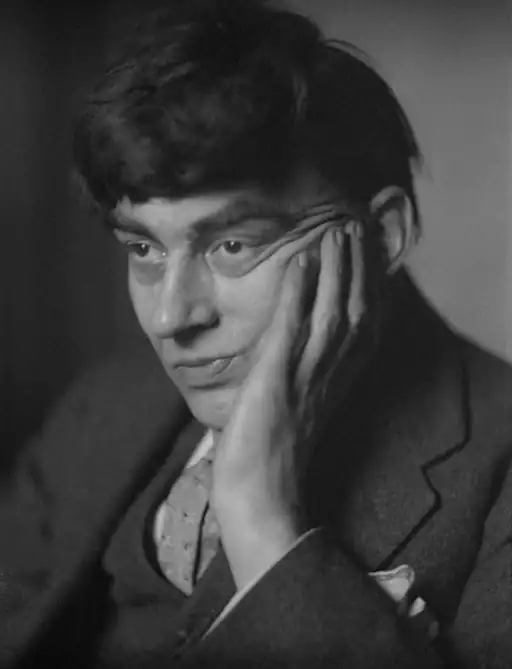
Charles Henry Allan Bennett
A strong candidate is Charles Henry Allan Bennett (1872–1923), who later became known as Bhikkhu Ananda Metteyya. Bennett was the first Englishman to be ordained as a Buddhist monk in the Theravāda tradition and played a key role in bringing Buddhism to England. Before becoming a monk, he was a leading member of the Hermetic Order of the Golden Dawn and was a major early influence on Aleister Crowley, teaching him about ceremonial magic, yoga, meditation, Buddhism, and Eastern philosophy. Very few people of his time had both deep Western esoteric knowledge and real Eastern monastic experience.
The details in Karma Yoga make Bennett’s authorship especially convincing. In the book, Bhikshu often quotes the phrase, “Do what thou wilt shall be the whole of the Law,” and treats it as a key idea in Karma Yoga, not just a modern occult saying. This phrase comes up several times and is called “the only ordinance” that helps the student bring together thought, will, and action. Since Bennett was close to Crowley, whose philosophy later focused on this same phrase, its use in a Yogic book by Bhikshu is very important. The phrase is not just a single quote but is part of the whole philosophy of the book.
Looking at all the evidence together, the case for Bennett is very strong. The name Bhikshu means an ordained Buddhist monk. The author shows deep understanding of both Buddhism and Yoga, moves easily between Eastern philosophy and Western esoteric ideas, often uses language linked to Crowley’s circle, and writes with the confidence of someone who has lived both traditions. Charles Henry Allan Bennett meets all these points. He was Crowley’s first major teacher, the first English Theravāda Bhikkhu, and one of the first Buddhist missionaries to the West. All the historical, philosophical, and textual evidence makes Bennett the best candidate so far for the mysterious Bhikshu who wrote the later Yogi Publication Society books.
Charles Henry Allan Bennett (Bhikkhu Ananda Metteyya)
Charles Henry Allan Bennett (1872–1923), who later became Bhikkhu Ananda Metteyya, was a remarkable but often overlooked figure in Western esotericism and modern Buddhism. He connected two worlds that rarely came together. Early on, he was a leading member of the Hermetic Order of the Golden Dawn and played a key role in Aleister Crowley’s spiritual growth. Later, he left ceremonial magic behind and became the first Englishman fully ordained as a Theravāda Buddhist monk, helping to introduce Buddhism to England. Few people had such deep knowledge of both Western occultism and Eastern spiritual traditions, which made Bennett especially suited to create the kind of synthesis seen in the later Yogi Publication Society books.
Charles Henry Allan Bennett was a member of the Hermetic Order of the Golden Dawn
Bennett was born in London on December 8, 1872, and faced hardship early in life. His father died when he was still a child, which left the family struggling financially. Although he grew up in a strict Roman Catholic household, Bennett gave up Christianity as a teenager because he felt it did not answer his deepest questions about suffering and existence. Unlike many others of his time, he approached religion with a scientific mindset. As a trained analytical chemist, he studied chemistry, physics, electricity, and mathematics, believing that spiritual truths should be tested as carefully as scientific theories.
Bennett’s severe asthma affected him throughout his life and shaped how he saw the world. His ongoing physical pain led him to believe that pleasure and material success could never bring true satisfaction. As a young man, he read Sir Edwin Arnold’s The Light of Asia, a poetic story of the Buddha’s life, which sparked his lifelong interest in Buddhism. Bennett later said this was the moment that changed the direction of his spiritual search. Even before he officially became a Buddhist monk, he had already accepted Buddhism as the philosophy that best explained suffering and how to overcome it.
Bennett’s search for deeper understanding first took him to the Theosophical Society and then, in 1894, to the Hermetic Order of the Golden Dawn, which was the most influential magical group of the Victorian era. The Golden Dawn brought together Hermetic philosophy, Kabbalah, ceremonial magic, Rosicrucian ideas, Egyptian religion, astrology, and Eastern philosophy, attracting many top esoteric thinkers of the time. Bennett moved quickly through its ranks and soon became known as one of its best practical adepts. He chose the magical motto Iehi Aour, meaning “Let There Be Light,” and helped Samuel Liddell MacGregor Mathers create the detailed system of magical correspondences that later became the basis for Crowley’s well-known Liber 777.
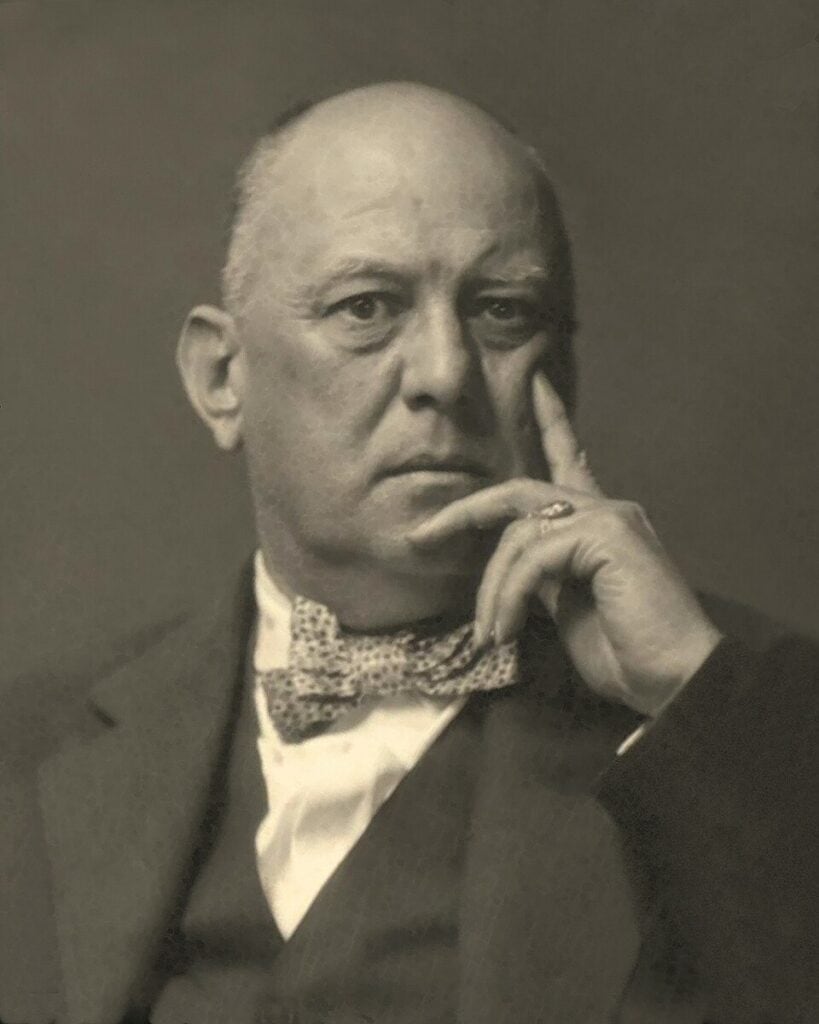
Bennett’s most important influence began in 1899 when he took the young Aleister Crowley as his student. Crowley quickly saw Bennett’s exceptional skills and later wrote that Bennett taught him more in one month than anyone else could have in five years. While living together in London, Bennett introduced Crowley to ceremonial magic, the Qabalah, yoga, meditation, Buddhist philosophy, and disciplined spiritual practice. Crowley later called Bennett his greatest early teacher, referring to him as “the White Knight” and saying he was one of the noblest people he had ever met. He often praised Bennett’s moral character, intelligence, and spiritual achievements, and credited him with shaping much of his own later work.
Aleister Crowley
This connection is especially important when you look at the later Yogi Publication Society book Karma Yoga. In that book, the author known as Bhikshu often repeats the phrase, “Do what thou wilt shall be the whole of the Law,” treating it as a key idea in Karma Yoga instead of just an occult saying. Since Bennett was the one who introduced Crowley to yoga and Eastern philosophy long before Crowley made that phrase famous in Thelema, its frequent use in Karma Yoga is one of the most interesting links between Bennett and the mysterious Bhikshu author.
However, Bennett’s life eventually took a very different path from Crowley’s. As he studied Buddhism more deeply, he slowly lost interest in ceremonial magic. Crowley later admitted that Bennett came to think magic “led nowhere” and that “he only cared for yoga.” Instead of seeking occult power, Bennett focused on meditation, ethical discipline, and the direct teachings of the Buddha. Even after their beliefs went separate ways, Crowley always respected Bennett as one of the greatest spiritual people he had ever met.
Looking for better health and real Buddhist training, Bennett went to Ceylon and Burma around the start of the twentieth century. There, he studied Pali, Theravāda teachings, meditation, and yoga with respected teachers. In 1902, he became the first Englishman to be fully ordained as a Theravāda Buddhist monk and took the name Bhikkhu Ananda Metteyya. From then on, he worked to spread Buddhism in the English-speaking world. He started the International Buddhist Society, edited Buddhism: An Illustrated Review, set up one of the first organized Buddhist missions to England, and helped lay the groundwork for what became the Buddhist Society in London. His impact on bringing Buddhism to the West was significant.
Related Research Articles
Yogi Ramacharaka: The True Meaning and Origin of the Name
This article breaks down the hidden symbolism and meaning behind "Yogi Ramacharaka", the pen name that was created by the Yogi Publication Society and shows the allegory that reflected the ideas the books were…